Landing in a new country should feel exciting, not like a race to get online.
But for most travellers, this is exactly what happens. You’re off the plane and straight into the usual scramble of overpriced airport SIMs, no signal, dodgy WiFi, or trying to navigate into town completely blind.
And in 2026, it’s actually gotten more confusing.
You’re no longer just choosing between local SIMs — you’ve now got eSIMs, international SIM cards, roaming plans, and regional bundles all competing for your money. Some are cheaper, some are easier, and some are just flat-out better depending on how you travel.
I’ve been travelling internationally long enough to remember when finding connectivity meant hunting down a phone shop, producing your passport, and hoping the staff spoke enough English to get you set up. Today, getting online is easier than ever, but choosing the right option has become far more complicated.
Well, that’s where this guide comes in.
This isn’t a generic “what is a SIM card” explainer. It’s a practical breakdown of the best international SIM options available right now, who they’re actually good for, and how to avoid overpaying for a setup that doesn’t match your trip.
Over the years, I’ve used everything from local prepaid SIM cards and international SIMs to modern eSIMs across dozens of countries. What I’ve learned is that there isn’t one universally “best” solution. The right choice depends on how often you travel, where you’re going, how long you’re staying, and how much convenience matters to you.
Because the goal isn’t just to get connected — it’s to get connected properly, without wasting time or money along the way.

Image: Nic Hilditch-Short
The Broke Backpacker is supported by you. Clicking through our links may earn us a small affiliate commission, and that's what allows us to keep producing free content 🙂 Learn more.
- Compare The Best International SIM Cards
- What is an International SIM Card?
- Who Actually Benefits From Buying an International SIM Card?
- International vs Regional SIM Cards: What’s the Difference?
- The Best SIM Cards for International Travellers
- Best Data Only Travel SIMs and eSIMs
- Should You Buy an International SIM Card?
Compare The Best International SIM Cards
This isn’t the whole roundup but it is my personal pick of the best international SIM cards worth looking into, each one serving a different little niche.
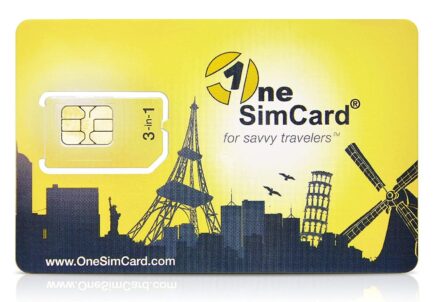
OneSimCard
- > e-SIM and Traditional SIMs available
- > Wide and reliable coverage
- > Low SIM-purchasing fees
- > $9.95 – $39.95

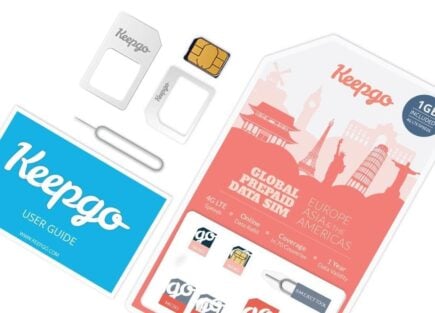
KeepGo Lifetime World SIM Card
- > Reliable connection
- > Prone to cutting rates
- > Coverage could be better
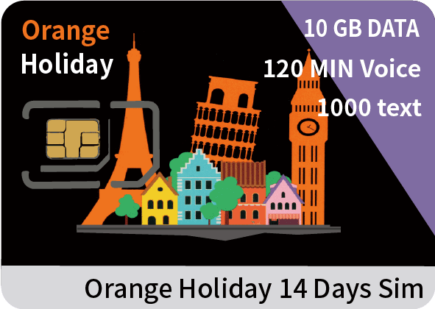
Orange Holiday Europe Prepaid SIM Card
- > Extremely reliable in Europe
- > Easily sufficient for a two-week holiday
- > Excludes a number of countries in Europe
- > $46.99
What is an International SIM Card?
International SIMs, roaming SIMs, travel SIM Cards whatever: a rose by any name can still order you a pizza when you don’t want to leave the guesthouse after all right? That’s what an international SIM card is, a SIM card (or an eSIM…) that will have you hooked up from “anywhere” in the world…
Why did you put ‘anywhere’ in quotes?
Because it’s a highly variable anywhere. “Anywhere” really means from the countries that the international SIM covers. Furthermore, international” doesn’t mean identical service everywhere.
Coverage can vary depending on the country and the local network the SIM connects to. Speeds, reliability, and pricing can change from place to place; just like they would with any mobile provider.
So the real trade-off here is simple:
- International SIM = convenience and consistency
- Local SIM = better value, more effort

If you’re travelling through multiple countries or just don’t want the hassle of sorting a new SIM every time, international SIMs make a lot of sense.
If you’re staying in one place and watching your budget closely, local options will usually come out cheaper.
How does an international SIM card work?
Without getting too technical, an international SIM card isn’t programmed to one specific network. It’s programmed to operate on a number of networks in a number of different geographical locations – specifically, networks using the GSM (Global Systems of Management Communications) framework. What this means is that whatever company you buy your Global Sim from will partner with local carriers and use their infrastructure.
That’s why to use your cell phone internationally with a travel SIM card it needs to be:
- GSM-compatible (many phones are).
- Unlocked, i.e. not tied to a provider.
Do be sure about that unlocked phone bit before you go ahead and buy a new one.
Who Actually Benefits From Buying an International SIM Card?

International SIM cards are not a “must-have” for every traveller, but for the right kind of trip, they make a lot of sense. At their core, they’re about convenience and flexibility, not squeezing out the absolute cheapest data possible.
They tend to work best for people who:
- Travel through multiple countries and don’t want to keep swapping SIMs
- Take shorter trips and value time over hunting down the best local deal
- Land late or on tight schedules and need data immediately
- Travel frequently and want one setup that just works across trips
- Don’t want to deal with SIM shops, paperwork, or language barriers
If that sounds like you, an international SIM can remove a lot of small but annoying friction points from your trip.
Where they make less sense is also pretty straightforward. You probably don’t need one if you;
- are staying in one country for a longer period
- are trying to get the absolute cheapest data possible
- are happy spending a bit of time finding a good local plan
- or already use an eSIM setup that covers your needs
In those cases, local SIMs (or even certain eSIM plans) will often give you better value.
Perhaps it’s helpful to think of international SIMs as a time-saving, hassle-reducing tool. They’re not always the most economical option, but if your trip involves movement, unpredictability, or just a desire to keep things simple, they can be exactly what you need.
International vs Regional SIM Cards: What’s the Difference?
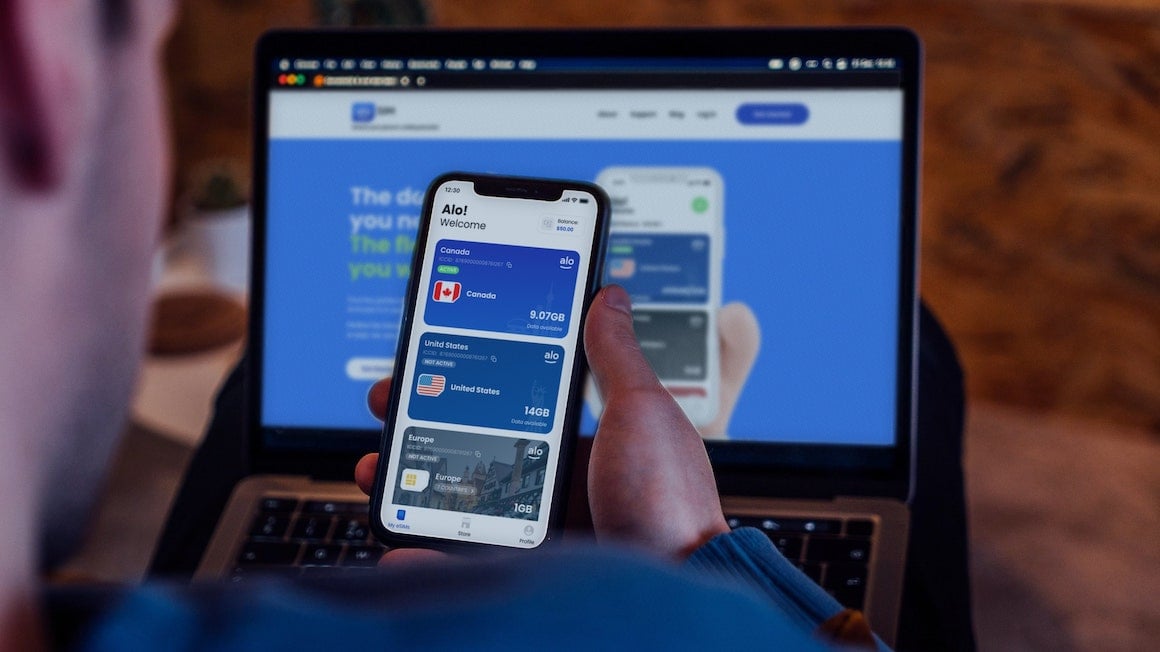
One alternative is to consider getting a Regional SIM rather than a full blown international one.
There are after all similar, yet different as both international SIMs and regional SIMs let you use your phone across borders. But they’re built for very different types of trips.
International SIM Cards (Global Coverage)
International SIMs are designed to work across multiple regions or even worldwide. You install one SIM and it connects to partner networks in dozens — sometimes hundreds — of countries.
Best for:
- multi-continent trips
- long-term travel
- digital nomads or frequent flyers
- International spies.
Think of it as the “one SIM for everything” option — maximum flexibility, less optimisation.
Regional SIM Cards (Multi-Country, One Area)
Regional SIMs sit in the middle. They cover a specific region such like Europe, Southeast Asia, or North America, and work seamlessly across countries within that area.
Best for:
- interrailing Europe
- backpacking Southeast Asia
- trips with multiple nearby countries
This is actually the “sweet spot” option for most travellers doing multi-country trips in one area.
Neither is “better”, rather it’s just about picking the one that actually fits your route, instead of overpaying for coverage you don’t need.
The Best SIM Cards for International Travellers

Not all international SIM cards are created equal so for this reason, we have curated a list of 9 of our favourites.
Each provider below has been selected based on a mix of what actually matters when you’re on the road: coverage across multiple countries, flexibility of plans, ease of setup, pricing logic, and, most importantly, the type of traveller it suits best.
Some options are better for long-term travel across continents. Others are ideal for shorter trips where you just want something that works without thinking too much. A few lean toward full functionality (calls, texts, data), while others focus purely on data and simplicity.
The goal here isn’t to crown one “best” SIM for everyone. Instead it’s to help you quickly figure out which option makes the most sense for your trip, so you don’t end up overpaying for features you don’t need — or worse, choosing a plan that doesn’t actually fit how you travel.
So take your jacket off and get into it…
#1 OneSim
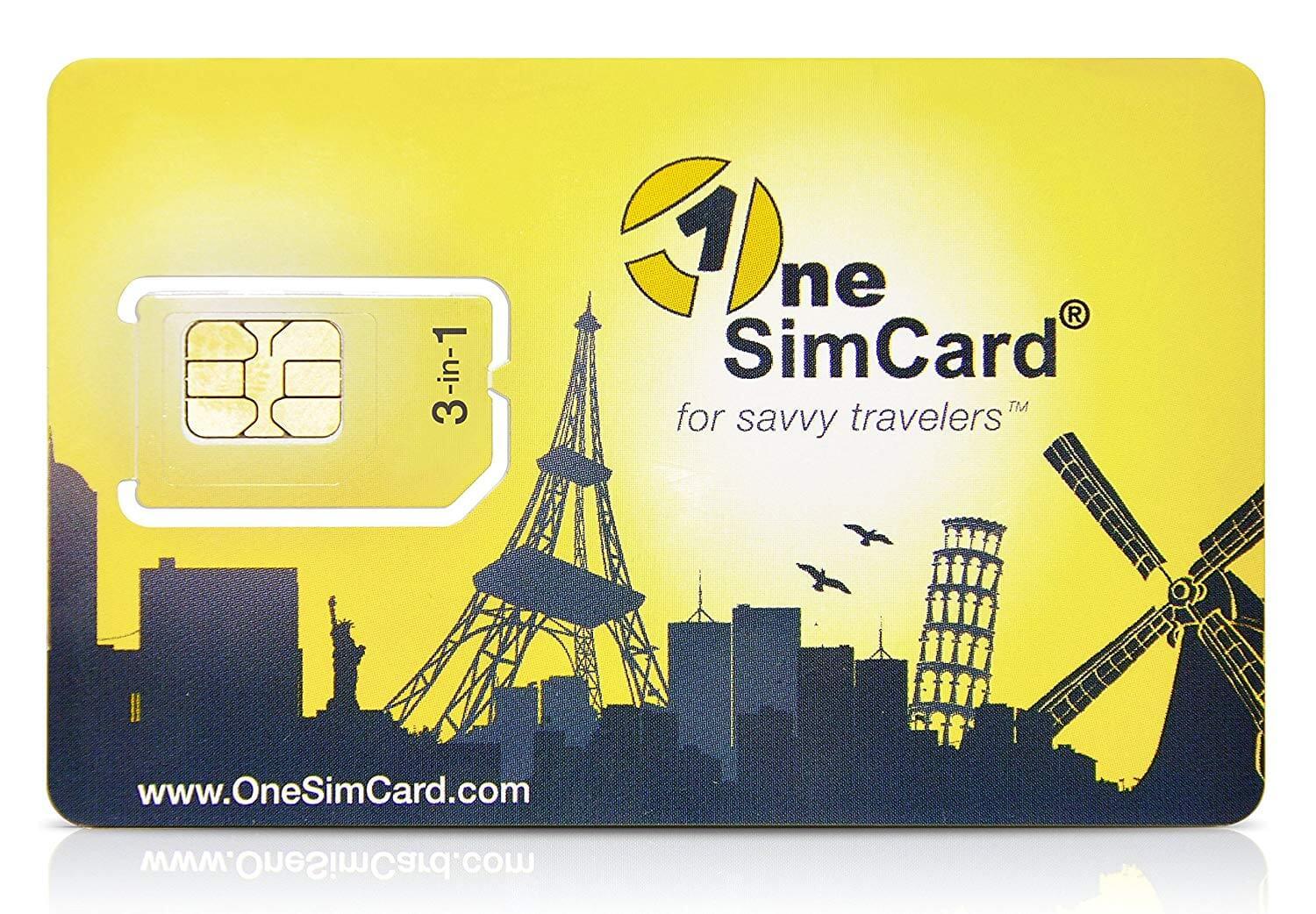
At a Glance
- Best for: Travellers who need calls, texts, and global coverage
- SIM type: Physical SIM + eSIM
- Coverage: 200+ countries worldwide
- Calls / texts: Yes (core feature)
- Pricing style: Pay-as-you-go + data bundles
- Biggest strength: Full mobile functionality (calls, texts, data)
- Main drawback: Expensive data and slightly dated user experience
Overview
OneSimCard is one of the more traditional international SIM providers and that’s exactly its appeal. While most modern options focus purely on data, OneSimCard still offers a full mobile service (calls, texts, and data), making it a strong choice for travellers who need more than just internet access.
What to Know
This is a pay-as-you-go style SIM, meaning you load credit and use it for calls, texts, or data depending on your needs. Data can also be purchased in bundles, but pricing is usually per MB rather than simple “X GB for Y days” packages.
Coverage is one of its strongest points, with service in 200+ countries, and features like free incoming calls in many destinations. It’s designed for travellers moving across regions rather than staying in one place.
Where it gets a bit clunky is pricing and usability. Data can feel expensive compared to newer providers, and the platform itself is less streamlined than app-based eSIM competitors.
This makes it better suited to:
- long-term or multi-country travel
- travellers who need a reliable number for calls/SMS
- backup connectivity rather than heavy daily data use
Worth It?
OneSimCard is worth it if you want a proper global phone setup, not just mobile data.
If you need calls, texts, and wide coverage across multiple countries, it does the job well. But if you’re mainly using data (maps, apps, streaming), there are cheaper and simpler options out there, especially in the eSIM space.
#2 GigSky

At a Glance
Best for: Frequent travellers who want global data without hassle
SIM type: eSIM (primarily)
Coverage: 190+ countries PLUS flights & cruises!
Calls / texts: No (data-only)
Pricing style: Prepaid data packages (fixed or capped “unlimited”)
Biggest strength: Massive global coverage + flexible plans
Main drawback: Not the cheapest for single-country use
Overview
GigSky is built around one thing: seamless global data. It’s a clean, modern eSIM provider designed for travellers who want something that works across borders without needing to think about it too much.
What to Know
GigSky operates as a data-only service, offering prepaid plans that range from small short-term bundles to larger multi-country or global packages.
Coverage is a major strength, with access to 190+ countries and a huge network of partners, plus niche extras like in-flight and cruise connectivity.
Plans are flexible:
- small short-term options (e.g. 1GB for a few days)
- larger packages (up to 50GB or more)
- global bundles covering multiple countries
Pricing varies quite a bit depending on destination and duration, but it’s generally positioned as mid-to-premium.
It works best for:
- multi-country trips
- frequent travellers who want one setup across trips
- people who value ease of use over absolute cheapest pricing
The main limitation is that it’s data-only, so no calls or SMS unless you use apps like WhatsApp.
Worth It?
GigSky is worth it if your priority is coverage and simplicity.
If you’re moving between countries or just want a reliable, no-fuss data setup, it’s a strong option. But if you’re staying in one place or chasing the lowest possible price, you’ll likely find better value elsewhere.
#3 WorldSIM
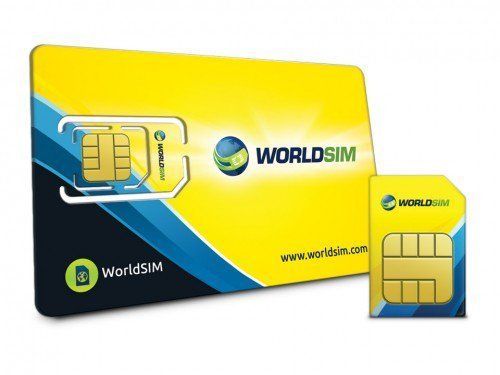
At a Glance
Best for: Travellers who want calls, texts, and global flexibility
SIM type: Physical SIM + eSIM
Coverage: 190+ countries worldwide
Calls / texts: Yes (core feature)
Pricing style: Pay-as-you-go + data bundles
Biggest strength: Full-service global SIM (calls, texts, data)
Main drawback: Data can be expensive and pricing isn’t always simple
Overview
WorldSIM gets a mention on this list because it’s another puller in the market with some comparatively awesome rates. It’s one of the more established international SIM providers, offering a traditional global SIM setup with calls, texts, and data included. It’s built for travellers who want one number and one system that works almost anywhere — without constantly switching SIMs.
What to Know
WorldSIM operates on a pay-as-you-go model, where you load credit and use it for calls, texts, or convert it into data bundles. It also offers prepaid packages, but overall pricing is less “plug-and-play” than newer fixed-data providers.
Coverage is strong, with access to 190+ countries and hundreds of partner networks, meaning your SIM connects automatically as you move between destinations. You’ll also typically get a UK or US number, with free incoming calls in many countries, which can be useful for business or staying reachable.
However, pricing varies heavily by country — and this is where things can get messy. In some destinations, data is reasonably priced. In others, it can get expensive quickly, especially outside major travel regions.
This makes it better suited to:
- multi-country travel where consistency matters
- travellers who need calls and SMS, not just data
- longer-term or repeat travellers who will reuse the SIM
Worth It?
WorldSIM is worth it if you want a full mobile solution that works globally, not just data.
It’s a solid choice for travellers who need a phone number, reliable coverage, and flexibility across multiple trips. But if you’re mainly using data — especially for short trips — it can feel overpriced and a bit outdated compared to newer, simpler options.
#4 Orange Holiday Europe
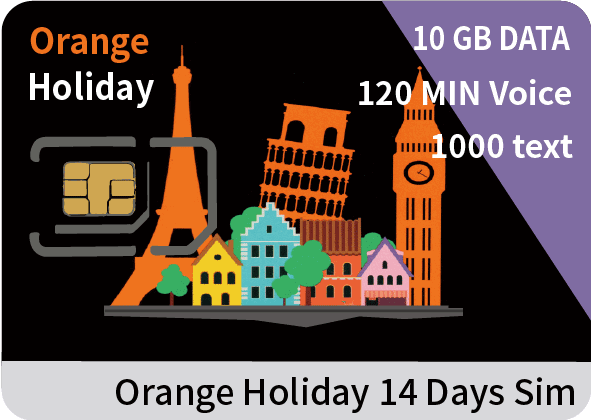
At a Glance
Best for: Multi-country travel across Europe with calls + data included
SIM type: Physical SIM + eSIM
Coverage: 30–40 European countries
Calls / texts: Yes (unlimited within Europe + limited international)
Pricing style: Prepaid bundles (fixed data + duration)
Biggest strength: Strong all-in-one Europe package (data + calls + SMS)
Main drawback: Only useful in Europe + not the cheapest option
Overview
Orange Holiday Europe is one of the most complete travel SIM packages for Europe. Unlike many providers that focus purely on data, this gives you data, calls, and texts in one bundle, making it feel much closer to a “normal” mobile plan while travelling.
What to Know
This is a prepaid bundle SIM, meaning you choose a package (usually 14 or 28 days) with a fixed amount of data, calls, and texts.
Typical plans include:
- 20GB–100GB data across Europe
- Unlimited calls/texts within Europe
- Around 120 international call minutes + 1000 SMS
Coverage is one of its biggest strengths. It works across 30+ European countries on major networks, with automatic roaming as you move between them.
In real-world use, it’s designed for:
- multi-country Europe trips
- interrail / backpacking routes
- travellers who don’t want to deal with switching SIMs between countries
Performance is generally strong thanks to Orange’s network size, one of the largest telecom operators in Europe.
The trade-off however is price. It’s not the cheapest option, especially compared to buying a local SIM in each country. And if you’re only visiting one destination for a few days, it can feel like overkill.
Worth It?
Orange Holiday Europe is worth it if you’re doing a multi-country Europe trip and want a proper, all-in-one mobile setup.
It’s one of the best options if you need calls, texts, and reliable data across borders without thinking about it. But if you’re staying in one country or trying to minimise costs, a local SIM or cheaper eSIM will usually give you better value.
#5 KeepGo
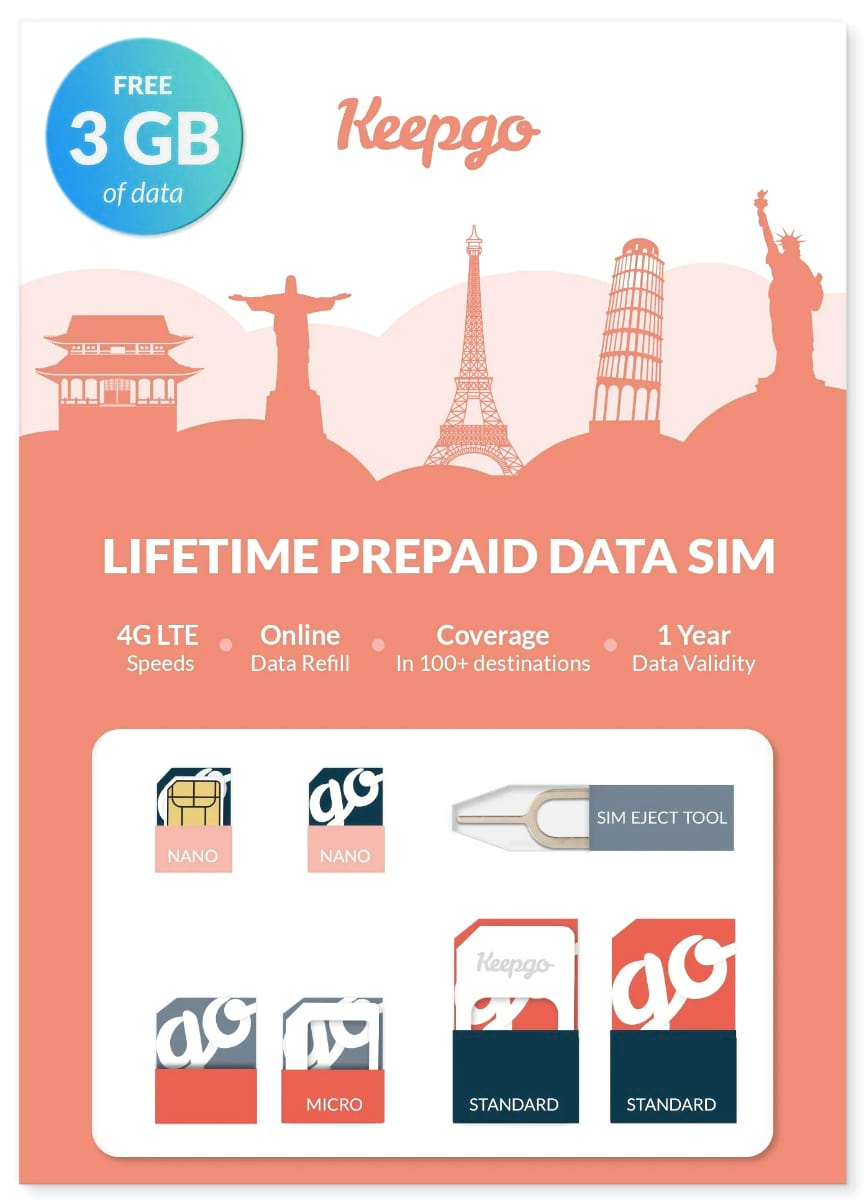
At a Glance
Best for: Frequent travellers who want long-term, reusable data
SIM type: Physical SIM + eSIM
Coverage: 100+ countries worldwide
Calls / texts: No (data-only)
Pricing style: Prepaid data bundles (no expiry with activity)
Biggest strength: Data never expires (with periodic top-ups)
Main drawback: Higher upfront cost and not ideal for short trips
Overview
KeepGo is built around a slightly different idea to most providers — instead of buying data for a single trip, you’re buying data that sticks with you over time. That makes it a great option for people who travel regularly and don’t want to keep setting up new plans every few weeks.
What to Know
KeepGo offers fixed-data bundles that work across 100+ countries, with one key difference: your data doesn’t expire as long as you top up at least once every 12 months.
Plans typically start at around:
- $8–$10 for 1GB
- scaling up to larger bundles with better cost per GB
Once installed, the same SIM or eSIM can be reused across multiple trips — you just top up data as needed, rather than buying a brand new plan each time.
Coverage is strong across major travel regions, and the setup is straightforward. It works particularly well for:
- frequent travellers
- digital nomads moving between countries
- people who take multiple trips per year
However, it’s not designed to be the cheapest option for a single trip. If you’re travelling once for a week or two, the upfront cost can feel high compared to other providers.
It’s also data-only, so no calls or SMS unless you use apps.
Worth It?
KeepGo is worth it if you want a long-term, reusable data solution rather than a one-off travel SIM.
If you travel regularly, it can save you time and hassle across multiple trips. But if you’re just heading away once and want the cheapest or simplest option, there are better-value providers for short-term use.
Best Data Only Travel SIMs and eSIMs
Are you turn-of-the-century generational that eschews actually phoning people online for commenting how much you miss them on their latest Insta post?! What a coincidence – me too! Rather than risking being ripped off when buying a local SIM card, get your hands on an international data card instead.
These are the best international data SIM/eSIM for those of us that scoot by without the extras.
#1 HolaFly

At a Glance
Best for: Simple, no-fuss data with competitive pricing
SIM type: eSIM
Coverage: 100+ countries (varies by plan)
Calls / texts: No (data-only)
Pricing style: Prepaid fixed-data packages
Biggest strength: Clean pricing and easy setup
Main drawback: Less brand recognition and fewer advanced features
At a Glance
Best for: Travellers who want unlimited data without counting gigabytes
SIM type: eSIM Coverage: 170+ destinations worldwide
Calls / texts: No (data-only, WhatsApp calls supported)
Pricing style: Fixed-duration unlimited data plans
Biggest strength: Truly unlimited data — no throttling on most plans
Main drawback: Pricier than data-capped alternatives for light users
Overview
Holafly has become one of the most popular travel eSIM providers for good reason: it keeps things simple. Rather than choosing a data cap and hoping it’s enough, you choose your destination and how many days you need — and you get unlimited data for that period. For travellers who rely heavily on maps, streaming, video calls, or remote work, that peace of mind is worth the slight premium over capped alternatives.
4S eSIM is a newer, streamlined option built for travellers who just want affordable, straightforward mobile data without overthinking it. It doesn’t try to do everything, it just focuses on delivering solid connectivity at a fair price.
What to Know
Plans are sold by destination and duration (e.g. 5 days, 10 days, 30 days) rather than by data volume. Pricing typically starts around $6–$19 for shorter trips, scaling up for longer stays. Coverage spans 170+ countries with strong performance across Europe, the Americas, Asia, and beyond.
Setup is entirely app-based — you scan a QR code and you’re connected, often within minutes. There’s no physical SIM to wait for, which makes it ideal for last-minute trips or travellers who didn’t sort connectivity before leaving home.
It works best for:
- travellers who use a lot of data (maps, streaming, video calls)
- anyone who’s ever run out of data mid-trip and paid roaming charges
- short to medium trips where unlimited is genuinely worth the extra cost
The main trade-off is price. If you’re a light data user, a capped plan from Saily or Jetpac will likely cost less. But for heavy users, the unlimited model removes all the mental overhead of rationing data.
Worth It?
Holafly is worth it if you use your phone heavily while travelling and don’t want to think about running out of data. It’s not the cheapest option per gigabyte, but for peace of mind and simplicity, it’s hard to beat.
#2 Saily

At a Glance
Best for: Budget-friendly data with strong security features
SIM type: eSIM
Coverage: 180+ countries
Calls / texts: No (data-only)
Pricing style: Prepaid fixed-data + regional/global bundles
Biggest strength: Competitive pricing and built-in security features
Main drawback: No calls/SMS and performance varies by region
Overview
Saily (From none other than Nord VPN) is one of the newer players in the eSIM space, but it’s quickly positioned itself as a strong value alternative to the bigger names. It’s particularly appealing if you want flexible data at a good price with a few extra features thrown in.
What to Know
Saily offers fixed-data plans across a wide range of destinations, with pricing often starting at around $3–$4 for 1GB over 7 days in many countries.
You can choose from:
- country-specific plans
- regional bundles (Europe, Asia, etc.)
- global plans for multi-country travel
Plans are generally simple, you pick your data amount (1GB, 3GB, 5GB, etc.) and validity period (usually 7–30 days).
Where Saily stands out is in its pricing and flexibility. Compared to premium providers, it often undercuts on cost while offering similar coverage — making it a solid choice for travellers who want value without going fully budget-mode.
It also includes extra security features (backed by the team behind NordVPN), like web protection and ad blocking — which is unusual for an eSIM provider and adds a bit of extra appeal.
However:
- it’s data-only (no number, no SMS)
- coverage quality still depends on local networks
- and like most budget-leaning providers, performance can vary in less developed regions
This makes it best suited to:
- short to medium trips
- multi-country travel on a budget
- travellers who mainly rely on apps for communication
Worth It?
Well, Saily is worth it if you want a good-value, flexible data setup without overpaying.
It’s one of the better options for balancing price and usability, especially if you don’t need calls or texts. But if you want unlimited data, guaranteed top-tier performance everywhere, or a full mobile setup, you may find stronger (albeit much pricier) alternatives elsewhere.
#3 Nomad

At a Glance
Best for: Balanced pricing + reliable all-round performance
SIM type: eSIM
Coverage: 190–200+ countries
Calls / texts: No (data-only, some plans may vary)
Pricing style: Prepaid fixed-data + optional unlimited plans
Biggest strength: Strong balance of value, coverage, and ease of use
Main drawback: No calls/SMS and pricing can add up for heavy users
Overview
Nomad is one of the most well-rounded eSIM providers out there — not the cheapest, not the flashiest, but consistently solid. It’s built for travellers who want reliable data, fair pricing, and a setup that just works without much thought.
What to Know
Nomad offers data-only plans across 190+ countries, with both country-specific and regional options available. Plans are typically fixed-data bundles (e.g. 1GB, 5GB, 10GB over 7–30 days), although some destinations also offer “unlimited” options — usually with daily high-speed caps before throttling kicks in.
Pricing is fairly competitive:
- The Global-Ex plan starts at around $39 for 10GB
- cost per GB can drop significantly on larger bundles
- regional/global plans available, but not always the best value
Setup is one of Nomad’s strengths. You can install via QR code or app in minutes, and top up data without reinstalling a new eSIM.
Coverage is strong in most destinations, with access to 4G/5G networks in many countries, although like all providers, performance can vary depending on the local carrier.
It works best for:
- short to medium trips
- multi-country travel (with regional plans)
- travellers who want a dependable, no-drama setup
Limitations:
- primarily data-only (no traditional calls/SMS)
- performance can dip in rural areas
- can feel slightly pricey for very heavy data users
Worth It?
Nomad is worth it if you want a reliable, middle-ground option that balances cost and performance.
It’s one of the safest picks for most travellers, especially if you just want something that works without overthinking it. But if you’re chasing the absolute cheapest data, or need calls and texts, you’ll find better fits elsewhere.
#4 JetPac

At a Glance
Best for: Affordable data with strong regional coverage
SIM type: eSIM
Coverage: 200+ destinations worldwide
Calls / texts: No (data-only, optional add-ons in some cases)
Pricing style: Prepaid fixed-data + some unlimited / daily-cap plans
Biggest strength: Excellent value for money, especially on regional plans
Main drawback: Data-only and performance varies by country
Overview
Jetpac has quickly become one of the most competitive value eSIM providers on the market. It’s particularly strong for travellers who want cheap, flexible data across multiple countries without stepping into the ultra-budget (and often unreliable) end of the market.
What to Know
Jetpac offers a wide mix of plans:
- single-country options
- regional bundles (Europe, Asia, etc.)
- global plans covering 100–200+ destinations
Pricing is one of its biggest advantages. Entry-level plans can start around $4 for 1GB (4 days) and then there are strong mid-range options like 30GB for ~$30 in Europe
That makes it one of the better-value providers, especially for Europe trips, Southeast Asia routes.
Worth It?
Jetpac is worth it if you want a strong balance of price, coverage, and flexibility.
It’s one of the better picks for regional trips or travellers who want good data without overpaying. But if you need calls and texts, or want guaranteed premium performance everywhere, you’ll need to look at more specialised (and usually more expensive) options.
Should You Buy an International SIM Card?

At this point, it really comes down to the decision you actually need to make: Do you want the simplest, most flexible setup, or the absolute cheapest way to get data?
International SIM cards aren’t automatically the “best” option, a lot of people don’t need them at all, they’re just the best option for certain types of travel.
If you’re moving between countries, travelling frequently, or just don’t want to deal with buying a new SIM every time you land, then they can make a lot of sense. You set it up once, and it works across your trip without any extra effort. Boom!
But if you’re staying in one place for a while, or you’re happy to spend a bit of time finding a local deal, you’ll almost always get much better value going local.
So think about your trip in simple terms:
- One country, longer stay – Get a local SIM
- One region (e.g. Europe trip) – Get a regional SIM
- Multiple countries or frequent travel – Then yep, you need the international SIM
That’s the real takeaway from this.
Get that right, and you won’t just save money, you’ll also save time, avoid hassle, and start your trip properly connected instead of playing catch-up!