Welcome to the ultimate review of the BEST OUTDOOR WATCHES!
One of the things that we take for granted in the modern era is the importance of a good, rugged watch. Most of us probably tend to use our smartphone and all of the amazing apps available to us in our day to day use.
The modern outdoor lifestyle offers many opportunities to track important data points and the technology is here to integrate that data into our daily routine. Do you want to track your fitness stats are you train for a marathon? Maybe you are keen on keeping tabs of the altitude every time you go out on a hike?
Whether you want access to topo maps in the mountains or to monitor your daily step count – there is a watch on my list for every type of outdoor/fitness enthusiasts. So, let’s get on with it and show you the best outdoor watches.

The Broke Backpacker is supported by you. Clicking through our links may earn us a small affiliate commission, and that's what allows us to keep producing free content 🙂 Learn more.
This isn’t your grandpa’s pocket watch—these outdoor watches can do everything from monitor your heart rate to access global navigation satellite systems to track your every move. With so many options on the market right now, you can choose the perfect travel watch for your own needs and your budget.
Maybe you already have an outdoor watch, but it isn’t holding up to the wear and tear you put on it, or the battery life isn’t long enough for your purposes. Through years of outdoor experiences, we’ve discovered what is necessary for the makings of a good outdoor watch, and we want to share our expertise with you, as well as give you the low down on how to decide what the best outdoor watch for your personal needs is.
So whether you need a reliable hiking watch for a 2-week excursion on the Annapurna track Nepal, or just a smartwatch with altimeter capabilities for the average weekend warrior camping trip, we’ll show you the best outdoor watch to fit your needs, style, and budget.
Want to find out what the best watch for backpacking is, well, read on amigos…
Here we’ve got a rundown of heaps of different options including the best camping watch, outdoor watches for men, GPS watches and more.
Quick Answer: These are the Best Outdoor Watches of 2026!
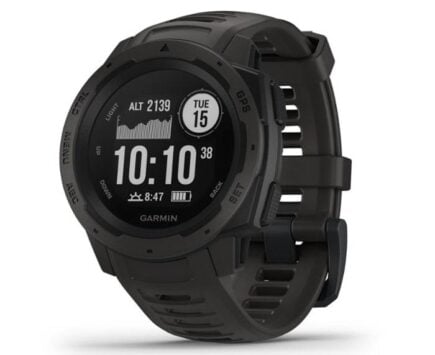
Garmin Instinct Solar GPS Watch
- Price > $239.99
- > Smart Device Compatible
- > Programmable Routes
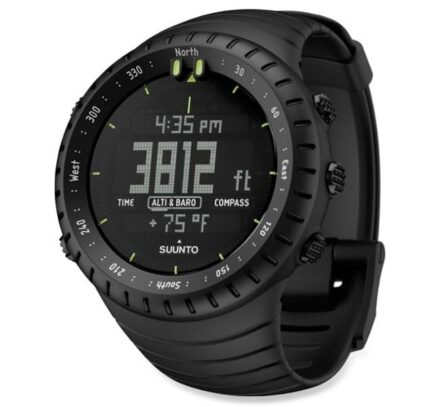
Suunto Core Watch
- Price > $199
- > Straightforward Interface
- > Pressure Readings Under Water
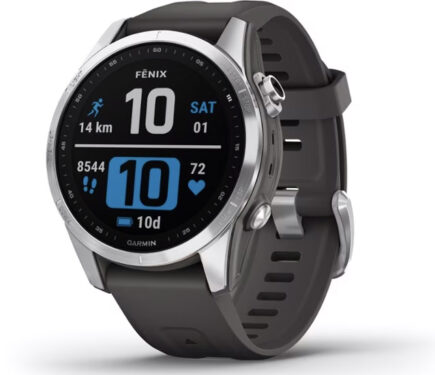
Garmin Fenix 7s Pro Multisport GPS
- Price > $650
- > Long Battery Life
- > Storm Warnings
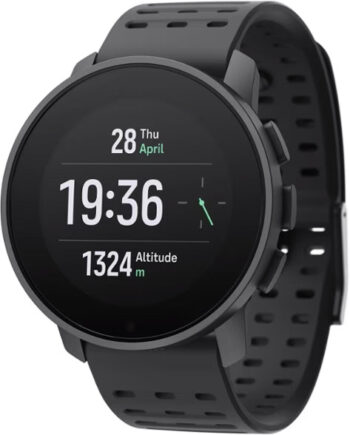
Suunto 9 Peak Pro Watch
- Price > $249
- > Accurate Altitude
- > Covered with a gorilla glass face
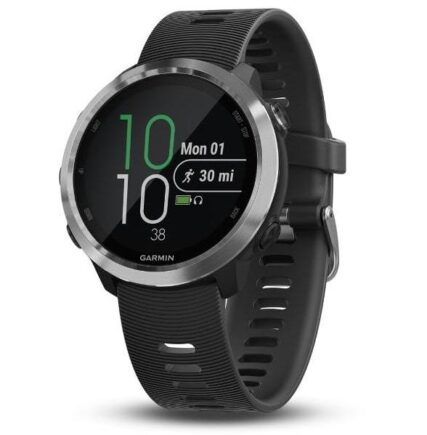
Garmin Forerunner 255 Music GPS Watch
- Price > $400
- > Heart-rate monitor
- > 14 days battery life
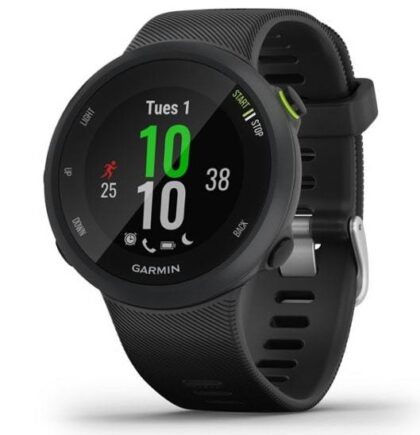
Garmin Forerunner 55 GPS Watch
- Price > $200
- > Built-in safety features
- > Emergency alert

Fitbit Versa 4 Watch
- Price > $199.95
- > 2 different global navigation systems
- > Different sized bands
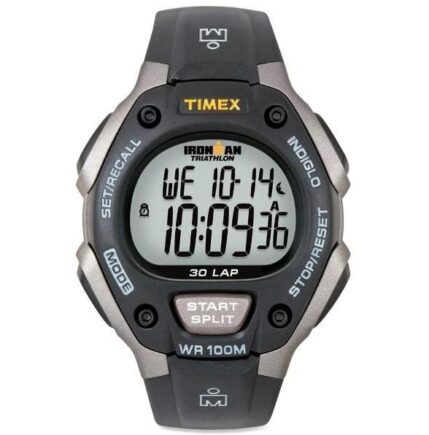
Timex Ironman 30-Lap Digital Watch
- Price > $51.25
- > Waterproof up to 100 meters / 328.1 ft
- > Illuminated backlight
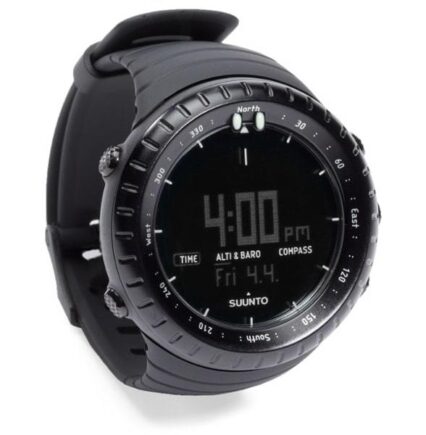
Suunto Core Watch
- Price > $199
- > Detects pressure changes
- > Precision accuracy up to 29,500 feet
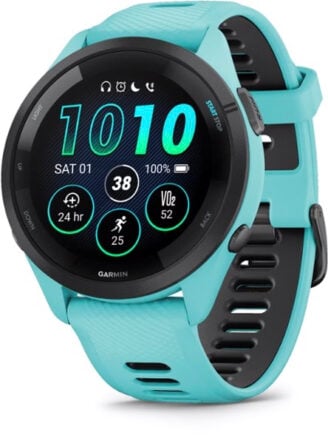
Garmin Forerunner 265
- Price > $449.99
- > Customizable smartwatch features
- > 2 separate satellite navigation systems
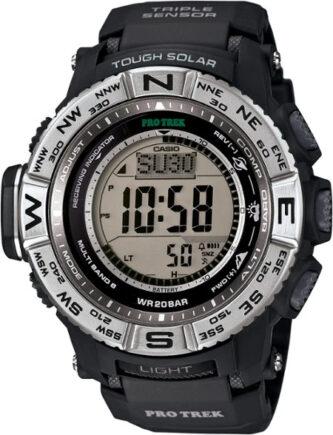
Casio Pro Trek PRW3500-1 Multifunction Watch
- Price > $330
- > Mud, shock, and water-resistant
- > LED-lit face with digital and analog readings
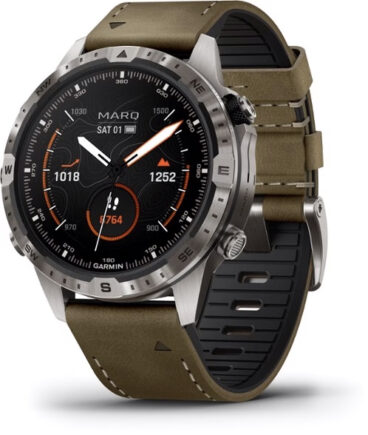
Garmin Marq 2 Adventurer Watch
- Price > $2100
- > Storage capacity for up to 2,000 songs
- > Waterproof up to 100 meters / 328.1 ft underwater
The Best Outdoor Watches of 2026: Performance Breakdown
Whether you’re in the market for a new watch, or just trying to learn more about outdoor watches for when you are ready to buy, this article is the right place to start! With years of outdoor experience, sport/fitness experience, and a taste for technology, we bring all the expertise to you, so you don’t have to do the legwork on researching many individual watches.
Below, I break down my top picks based on a variety of factors including price, technological capabilities, best uses, and battery life as well as including categories like the best outdoor watches as well as fitness and more everyday options.
Let’s start with my favorite current watch…
#1 – The Best Overall Outdoor Watch
Garmin Instinct X2 Solar GPS Watch
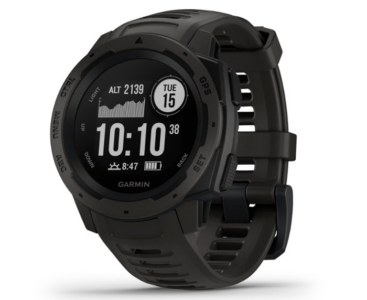
- Price -> $239.99
- Battery Type -> Lithium Polymer
- Display Size -> 1.27 inches / 3.23 cm
- Water Resistant Depth -> 100 Meters / 328.1 ft
- Tracks Steps? -> Yes
- Altimeter -> Pressure Based
- Gender -> Unisex
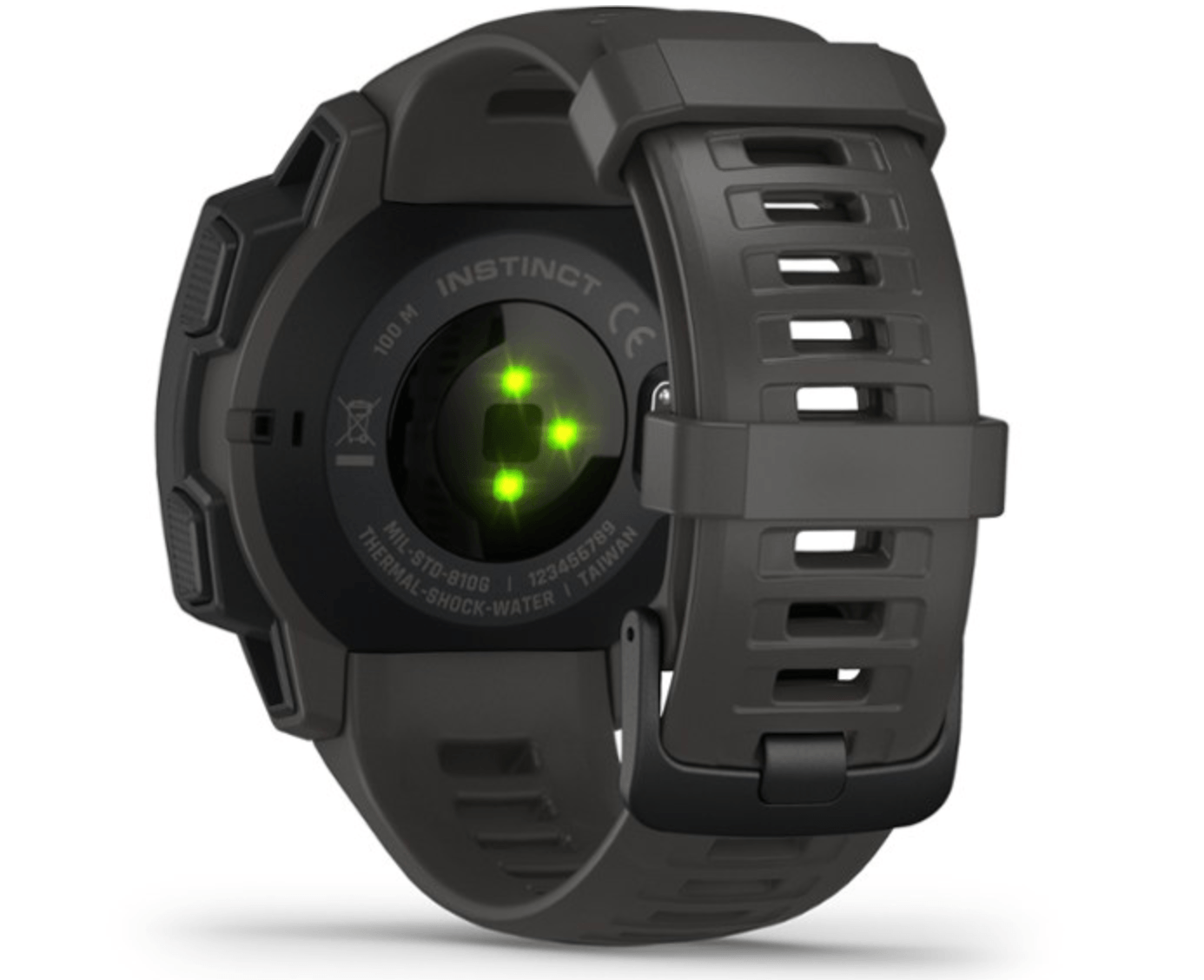
The Garmin Instinct 2X Solar is built for travellers who want a proper outdoor watch without stepping all the way up to the price of Garmin’s premium Fenix range. It’s chunky, rugged and built to U.S. military standards for thermal and shock resistance, while its 10 ATM water rating means swimming, kayaking and generally getting soaked aren’t going to cause it much concern.
There’s a serious amount of tech packed inside. You get multi-band GPS for improved positioning in difficult terrain, alongside a barometric altimeter, three-axis compass and Garmin’s TracBack routing for finding your way back along your route. It also covers the fitness side with heart-rate monitoring, Pulse Ox, sleep tracking and a frankly ridiculous number of activity profiles. Throw in smartphone notifications and Garmin Pay and it works perfectly well as an everyday smartwatch too.
Battery life is where the Instinct 2X Solar really starts showing off. Garmin rates it for up to 40 days in smartwatch mode and 60 hours with GPS running. Give the Power Glass lens enough strong sunlight and those figures climb considerably; under Garmin’s specified solar conditions, smartwatch battery life can theoretically become unlimited. For multi-day hikes where plug sockets are in short supply, that’s a pretty compelling trick.
Another feature we’ve grown surprisingly fond of is the built-in LED flashlight. It sounds gimmicky until you’re trying to find something in your tent at midnight, stumbling towards a hostel bathroom or packing up before sunrise. You can adjust the brightness, switch to red light and even use a strobe mode while running after dark.
Our team liked the original Instinct Solar because it packed loads of useful outdoor features into a watch that was easy to live with. The Instinct 2X Solar takes that formula and makes it substantially better. The improved GPS, monster battery life and solar charging make it particularly well suited to multi-day adventures, while the compass and navigation tools are genuinely useful once you get out onto the trail.
The main downside? It’s a big bastard. At 50mm across, the Instinct 2X Solar isn’t subtle and will swamp smaller wrists. But if you can live with the size, this is an exceptionally capable outdoor watch that delivers most of the features adventurers actually need without wandering into silly-money territory.
- Full Featured
- Easy to Use Interface
- Durable
- Inconsistencies in milage tracking
- Struggles with satellite communication under tree cover
#2 – The Best Non-GPS Watch
Suunto Core Watch

- Price -> $199
- Battery Type -> User replaceable battery (good up to one year)
- Display Size -> 1.875 inches / 4.76 cm
- Water Resistant Depth -> 30 Meters / 98.43 ft
- Tracks Steps? -> No
- Altimeter -> Pressure Based
- Gender -> Unisex
This is the perfect watch for the avid hiker, whose main goal is to navigate and record altitude during their trip. The digital watch face is backlit and easy to read, displaying the time, altitude, and compass direction all at the same time for quick reference.
This watch also includes a barometer, which can detect changes in atmospheric pressure and predict harsh weather. If there’s a storm coming, you’ll be the first to know when the storm alarm goes off. But don’t worry, this watch is water-resistant and that’s useful for more than withstanding a downpour. It even has accurate pressure readings up to 30 Meters /98.43 ft below the water’s surface for our underwater trekkers.
This watch doesn’t just tell you the time of day, it even lets you know how much daylight you have left with sunset and sunrise reminders! A simple watch with extraordinary technology, you have every tool you need to blaze your own trail.
This is another watch that will price you around the same price as a fitness watch, but luckily this watch battery will last for a year, so no need to worry about trying to find a place to charge it when you’re hiking through the middle of nowhere! Just replace the battery on your own about once a year.
Our team loved the features on this watch such as the barometer and the compass, they found these super useful for hiking, especially if there’s a risk of a storm. They told the alarm system has saved their arses on a number of occasions! The altimeter is also a useful feature for tracking their hikes in much more detail.
- Accurate Altitude
- Long Battery Life
- Storm Warnings
- Not Smartwatch Capable
- Battery Not Rechargeable
- Iffy Software Reliability
#3 – The Best GPS Watch for Hiking
Garmin Fenix 7s Pro Multisport GPS
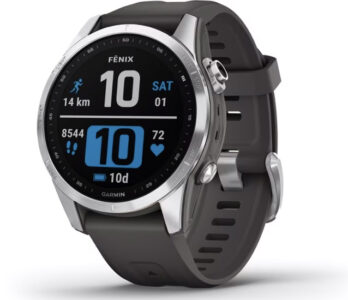
- Price -> $650
- Battery Type -> Lithium Ion
- Display Size -> 1.2 inches
- Water Resistant Depth -> 100 Meters
- Tracks Steps and Calories? -> Yes
- Altimeter -> Pressure-based
- Gender -> Unisex
This high-end watch comes with a high-end price tag, but what good investment doesn’t? If you like to ski, swim, hike, run, walk, sleep, or have a heartbeat… this watch can track it for you. And while you’re doing it, this watch will play your favorite song for you, too. Pair it with your smartphone to check your notifications quickly and conveniently.
This watch can seamlessly transition from a fitness watch with compatible apps and smartwatch capabilities to a rugged hiking watch with the push of a button and look good while doing it. Don’t let the looks fool you, however. This watch will hold up in the roughest conditions with a gorilla glass face and water resistance up to 100 meters below the surface.
Satellite navigation, a 3-axis compass, multiple global navigation systems, road maps, and topographical maps are all easily accessible– with this outdoor watch, you’ll never get lost!
Our team were big fans of this outdoor watch due to the addition of the preloaded topo and ski route maps, they found this was super useful for keeping them literally on track! They also loved that it has a battery saver mode for those longer than expected days on the mountain. They felt the number of additional apps and widgets mean they feel they have a real powerful device right on their wrist exactly when they needed it.
- Accurate Altitude
- Long Battery Life
- Storm Warnings
- Not Smartwatch Capable
- Battery Not Rechargeable
- Iffy Software Reliability
#4 – The Best Fitness Watch Overall
Suunto 9 Peak Pro Watch
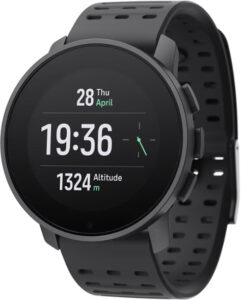
- Price -> $249
- Battery Type -> Lithium Ion
- Display Size -> 1.7 inches / 4.32 cm
- Water Resistant Depth -> 100 meters / 328.1 ft
- Tracks Steps? -> Yes
- Altimeter -> Pressure Based
- Gender -> Unisex
With more than 70 pre-configured sports modes, this watch is every health nuts dream. Take it swimming, running, or (of course) on a good, long hike! The wrist heart sensor will keep your heart rate in check while the GPS tracks your every move. In fact, it’s one of the most powerful watches Suunto has ever made!
This Google-based watch is already hooked up with Google Wear OS, Google Fit, and Google Pay, for a quick, convenient payment swipe on an after-run pick me up. If you already have a beloved fitness app of choice, no problem! You can download different apps to sync up with this smartwatch and record your workouts.
Whether you’re 100 meters (328.1 ft) underwater, climbing a rock wall, or anywhere in between, this rugged watch has got you covered with a gorilla glass face and water-, dirt-, and shock-proof exterior. So no matter how you like to get your body moving, this watch can definitely keep up with your pace!
The watch will automatically download local maps when connected to wi-fi and save maps for offline use, as well as the GPS function. But be sure to charge this fitness watch every day to make sure you have enough juice to record your next workout!
This watch isn’t the most inexpensive on our list, but if you are a fitness guru obsessed with tracking and logging your every step, with the added convenience and style of top smartwatches, this one is a game-changer.
Our team really love the route creation and turn assistance feature of this watch for their runs and bike rides. They love that it buzzes within 300 yards of a turn on your preplanned route meaning you can really maximise your efficiency and times. They also love the option to download songs from Spotify too, another game-changer for their runs!
- Accurate Altitude
- All Day Battery Life
- Storm Warnings
- Not Smartwatch Capable
- Battery Not Rechargeable
- Iffy Software Reliability
#5 – The Best Fitness Tracker for Men (Runners)
Garmin Forerunner 255 Music GPS Watch
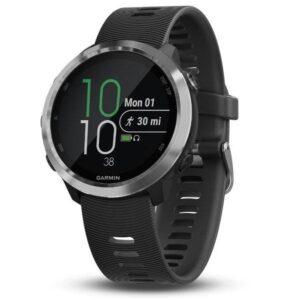
- Price -> $400
- Battery Type -> Lithium Ion
- Display Size -> 1.3 inches
- Water Resistant Depth -> 50 Meters
- Tracks Steps? -> Yes
- Altimeter -> Pressure Based
- Gender -> Unisex
Are you a big runner? Do you strive to achieve better form, balance, and vertical ratio? Have you ever wanted to record your ground contact time? This is the watch for you! It’s basically a personal trainer on your wrist.
With a heart-rate monitor located on the band, a triple-axis digital accelerometer, and a GPS, this watch can track your run down to the last drop of sweat (and it is water-resistant, so sweat away!)
Sync it up to your favorite streaming service to save tunes for when you’re offline and on the go, or download up to 500 songs with in-watch storage! The Garmin Pay feature allows an easily accessible way to pay when out and about.
With a battery life of up to 14 days when in smartwatch mode, this watch is great for the everyday fitness user. It’s worth mentioning if you do like to go out for a hike here and there, of course this watch is equipped with GPS, compass, and altimeter as well; but the battery won’t last as long in GPS mode, which is why this is better suited as a fitness watch mainly.
Our team feel this watch really works well as a one-stop watch for those who love to run, hike and head to the gym and has just enough features for each activity to really shine, without costing a fortune. One feature they really loved was the VO2 max recording and other performance tracking like showing you your training load.
- Accurate Altitude
- Long Battery Life
- Storm Warnings
- Not Smartwatch Capable
- Battery Not Rechargeable
- Iffy Software Reliability
#6 – The Best Fitness Tracker for Women (Runners)
Garmin Forerunner 55 GPS Watch
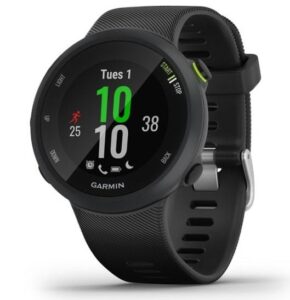
- Price -> $200
- Battery Type -> Lithium Ion
- Display Size -> 1.04 inches / 2.64 cm
- Water Resistant Depth -> 50 Meters / 164 ft
- Tracks Steps? -> Yes
- Altimeter -> No
- Gender -> Unisex
So, we’ve covered some of the best men’s outdoor watches, but what about something for the ladies?
If you’re a fitness lover and don’t have a workout buddy, this might just be the solution for you. This watch will not only track your calories, heart rate, sleep patterns, runs, workouts, and all that, but it even has built-in safety features to ensure your safety is a priority.
As a female runner myself, I have been out in the early morning hours alone on a run. Having a smartwatch to track my run and knowing it could send out an emergency alert with my location in case of a fall, bike-crash, or any other emergency would be life-changing.
Of course, it also has all the fun features as well! From fitness apps to music streaming, this watch is the perfect workout companion. With a battery life lasting up to seven days, don’t stress about it too much if you’re too tired after your workout to plug it in after you climb in bed.
Our team feels this watch brings a lot to the table for a little price tag and it’s super comfortable to boot. They love that for the cheaper price, it still houses all the key features they need for tracking their walks, workout and runs like their V02 max. In particular, they also felt that safety features like incident detection and built-in tracking also made them feel much safer whilst out on a run.
- Accurate Altitude
- Long Battery Life
- Storm Warnings
- Not Smartwatch Capable
- Battery Not Rechargeable
- Iffy Software Reliability
#7 – The Best Outdoor Watch Under $100
Timex Ironman 30-Lap Digital Watch
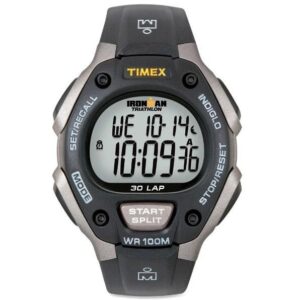
- Price -> $51.25
- Battery Type -> User replaceable battery
- Display Size -> 1.5 inches / 4 cm
- Water Resistant Depth -> 100 Meters / 328.1 ft
- Tracks Steps? -> No
- Altimeter -> None
- Gender -> Unisex
This watch is the least expensive on the list, and as such, it doesn’t have all the same specs as some of the others. But if you need a reliable watch that can keep up with your fast-paced needs, and aren’t big on smartwatch technology, then this is the perfect watch.
It is waterproof up to 100 meters (328.1 ft) so you can take it just about anywhere, and with the illuminated backlight and large digital numbers, you can read the face at a glance. So, when you’re taking a few laps around the track or pool, timing a bike ride, or challenging yourself to beat a countdown, this watch can record your times up to 100 hours and recall up to 30 laps.
Our team felt that if a reliable watch is all you need, look no further. They like that this watch was simple, tracked the basic things they needed for their runs and hikes and was also super light and comfortable. They also felt being on the cheaper side it was ideal for backpacking in areas where they might not want something that looked super flashy.
- Accurate Altitude
- Long Battery Life
- Storm Warnings
- Not Smartwatch Capable
- Battery Not Rechargeable
- Iffy Software Reliability
#8 – The Best Satellite Altimeter Watch
Garmin Forerunner 265
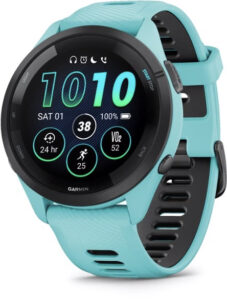
- Price -> $449.99
- Battery Type -> Lithium Polymer
- Display Size -> 1.3 inches / 3.3 cm
- Water Resistant Depth -> 50 Meters / 164 ft
- Tracks Steps and Calories? -> Yes
- Altimeter -> Pressure-based
- Gender -> Unisex
This outdoor watch can track your workout, count your calories and steps, and monitor your heart rate through the convenience of the wrist strap or more accurately through a chest strap! Having complete running and cycling metrics allows it to help you improve on your balance and form as well.
The swimming-specific features of this water-resistant watch are very useful in underwater depths up to 50 meters (164 ft). But if the fitness aspects aren’t enough to convince you, customizable smartwatch features and interface might be.
The more hardcore fitness buffs on our team really loved the extra functionality of this watch when it came to accurately tracking their races, training and workouts. These folks are the sorts of people who take running and working out super seriously and like to really analyse their performance in detail and they love that this watch allows them to do that with ease.
- Accurate Altitude
- Long Battery Life
- Storm Warnings
- Not Smartwatch Capable
- Battery life isn’t the longest
- Iffy Software Reliability
#9 – The Most Rugged Watch for Backpackers
Casio Pro Trek PRW3500-1 Multifunction Watch
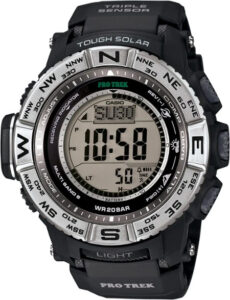
- Price -> $330
- Battery Type -> large-capacity solar battery
- Display Size -> 2.2 inches
- Water Resistant Depth -> 200 Meters
- Tracks Steps and Calories? -> No
- Altimeter -> Yes
- Gender -> Unisex
This rugged watch is made for the toughest adventurers whose fears know no bounds. This watch is mud-, shock-, and water-resistant up to an astounding 200 meters underwater! That’s at least twice the depth of any other watch on this list.
The design of this watch itself is made with the adventurer in mind. A large, LED-lit face with digital and analog readings allows one to view the time, temperature, compass direction, and more in just a split second. Not to mention the buttons are designed to resist dirt or mud build-up.
Knowing an outdoorsman is always on the go, the battery lasts about 2 years. This outdoor watch is rugged enough to withstand almost anything.
Our travelling team love many of the features of this watch but what is a super cool feature for them is the ability to have more than 30 times zones loaded onto this thing. Trust us, when you’re travelling a lot, have friends and family as well as business partners and customers all over the world, this is a game changer! On top of that our team loves to get dirty (keep your mind out of the gutter!) and this watch really offers them that next level of protection.
- Tough as Hell
- Deep water resistant depth
- Minimalist Design
- Massive display face
- Solar powered battery
- No fitness tracking capabilities
#10 – The Best High-End Outdoor Watch for Pros
Garmin Marq 2 Adventurer Watch
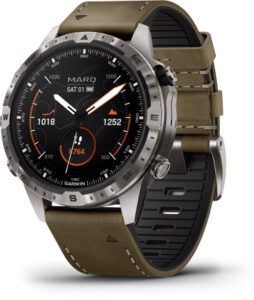
- Price -> $2100
- Battery Type -> Lithium Ion
- Display Size -> 1.2 inches / 3.05 cm
- Water Resistant Depth -> 100 Meters / 328.1 ft
- Tracks Steps and Calories? -> Yes
- Altimeter -> Pressure-based
- Gender -> Unisex
Although all the watches on this list look good, they can’t compete with this classy watch. For the day-to-day wearer who wants to look good and have the convenience of an outdoor watch, smartwatch, and fitness watch capabilities.
Don’t let the sleek looks fool you, however– this high-end watch has incredible features, including a storage capacity for up to 2,000 songs as well as access to streaming services. But that’s not the only apps available on this smartwatch, so customize it however you want.
This watch also comes with 3 different global navigation satellite systems, a barometric altimeter, and the Climbpro ascent planner, which allows every mountaineer to measure their climb’s gradient, distance, and elevation gain. If you are more of a golfer or skier than a climber, this watch has over 41,000 golf courses and 2,000 ski resorts programmed as well as many other sports and fitness-related apps and trackers.
Even though this watch looks decorative, it still has all the amazing features of other outdoor watches and is waterproof up to 100 meters (328.1 ft) underwater. You can still track your heart-rate, steps, calories, or even blood-oxygen saturation; but for this watch and all the high-end features, you’ll be paying the high-end price as well.
Wow, our team really fell in love with this watch and they couldn’t sing it’s praises enough. They felt that though it was pretty expensive, it really did offer everything you’d expect for the money and more. Above all else they loved that it was packed full of all the features you need from an outdoors watch; GPS, compass, Altimeter, VO2 Max, topographical maps ect, whilst looking so elegant and smart. This watch is one that can literally go everywhere with you, from a buiness meeting straight into the gym or the mountains, our felt it was really an incredible bit of kit.
- Superior craftsmanship
- Pulse Ox sensor monitors your blood oxygen saturation levels
- Receive emails, texts and alerts plus has music storage
- Very expensive
- Probably overkill for the average person
- No other cons – it is a badass watch

Now, you could spend a fat chunk of $$$ on the WRONG present for someone. Wrong size hiking boots, wrong fit backpack, wrong shape sleeping bag… As any adventurer will tell you, gear is a personal choice.
So give the adventurer in your life the gift of convenience: buy them an REI Co-op gift card! REI is The Broke Backpacker’s retailer of choice for ALL things outdoors, and an REI gift card is the perfect present you can buy from them. And then you won’t have to keep the receipt. 😉
Buy on REI!How to Choose the Best Outdoor Watch
#1 – GPS (Satellite) vs. Barometric Altimeters

Altimeters come in handy in many outdoor situations. Whether you’re hiking in high elevations, rock/mountain-climbing, or even skiing, having an accurate altitude reading is not only an interesting conversation piece but an important safety precaution.
Barometric Altimeters use pressure readings to determine altitude. The closer to earth you are, the higher the pressure, so the higher your elevation, the lower the pressure. The only issue is weather also effects pressure; so when there is a storm rolling in or a cold front/heat wave, it may affect your altimeter’s readings.
Some watches may try to combat these discrepancies by utilizing GPS readings as well, to determine if you are currently moving (so the pressure differences are likely due to a rising elevation) or in staying one location (pressure differences likely due to an incoming storm.)
The most surefire way to ensure your barometric altimeter is accurate would be to calibrate it every day (or at least when you need it to be accurate.) This can easily be done if you know your current elevation, which can be found on Google Earth.
An altimeter that uses satellite readings simply determines your elevation by getting a reading of how far you are from Earth much in the same way it determines your position on Earth. This isn’t necessarily accurate, as the satellites position also affects your altimeter reading.
This would mostly be accurate if there is a satellite orbiting basically directly above your position. If a satellite can get a reading, it is usually within 35 to 75 feet of your actual reading (GPS is much more accurate horizontally than vertically.)
But satellite readings aren’t always available, especially when in the deep wilderness. So, it’s hard to get an accurate reading. If accuracy is critical to your purpose, a barometric altimeter might be the best choice for you.
#2 – Performance Features

Another thing that one needs to consider is which performance features are most important for your needs. If your main purpose for wanting a watch is to track your daily health, like sleep tracking, calories burned, and your heart rate, a fitness watch might be right for you.
If your hobbies include hiking, skiing, rock-climbing, or even scuba diving, you might be more interested in a watch that supports GPS mapping– perhaps map download capabilities for when you’re off the grid, as well as an altimeter.
If you enjoy water sports, water resistance is important. Although all the watches on this list are water resistant, depending on how deep you dive, you may need to ensure they are resistant into a greater depth. Some watches even have special functions for underwater operation or are specialized to track you laps in the pool.
If you desperately want to stay connected with your favorite apps, ensuring your watch is compatible and customizable might be the most important aspect when looking to buy! So these are some things to determine before picking the best watch for you.
#3 – Smart Technology
Most people rely on smart technology in our daily lives. Whether it be for business or pleasure, having access to the our favorite apps, media, email, and of course our cell phones has become almost expected of us.
For some, this is a blessing– it makes work, school, and entertainment as easy and convenient as the push of a button. But others may want to escape the hyper-technological world and disconnect for a while. Or maybe some just don’t have a need or desire for smart technology in every aspect of their lives.
For these people, having a watch that connects to the world around them isn’t necessarily that important. Maybe you just want a watch that has a good, solid altimeter and a compass for when you get away and get off grid.
Whatever is the best fit for your lifestyle and needs should be the first priority for picking a watch. Also, watches with smart technology need to be charged on a regular basis. Which brings us to our next point.
#4 – Battery Life
For some people, choosing a watch with a long battery life is of the utmost importance. If we plan on using our outdoor watch on long hiking trips where we won’t have easy access to electrical outlets for charging our watches, then something with a long battery life is very important.
Of course, a watch that doesn’t have a rechargeable battery means the battery will need to be replaced. This could be once a year or two approximately, but when the time comes, you have to consider if the watch can be changed by you personally or if you will have to pay to have it serviced. How convenient is that for you?
If you don’t plan on staying off grid for too long, than the average smart watch or fitness watch might suit your needs. A lot of watches hold a charge for several days, especially if you aren’t using the GPS/mapping/bluetooth music functions. So this can be very functional for the average user.
#5 – Price
Price is always a selling point. Of course we all want to get the most for our money. There are a lot of factors that go into determining the price of a good watch. Most of which are the features we’ve already highlighted, but there are other features, as well.
Some rugged watches are made of really durable material, which may be more expensive than the average watch. There are also high-end watches that are made with quality material, like the best high-end watch on our list which is made with Italian leather.
But all of our budgets are different, and we have to find something that best fits our needs and our wallet. The most expensive watch on the list might not be the best, or even the best for you.
Therefore, once you determine what other features you require in your watch, finding one that hits hopefully all or at least most of your points within your budget should be relatively easy– especially since our list goes over watches within every price range.
| Name | Battery Type | Display Size (in) | Water Resistant Depth (m) | Price (USD) |
|---|---|---|---|---|
| Garmin Instinct Solar GPS Watch | Lithium Polymer | 1.27 inches | 100 Meters | 239.99 |
| Suunto Core Watch | User replaceable battery (good up to one year) | 1.875 inches | 30 Meters | 199 |
| Garmin Fenix 7s Pro Multisport GPS | Lithium Ion | 1.4 inches | 100 Meters | 650.00 |
| Suunto 9 Peak Pro Watch | Lithium Ion | 1.7 inches | 100 Meters | 249 |
| Garmin Forerunner 255 Music GPS Watch | Lithium Ion | 1.3 inches | 50 Meters | 400 |
| Garmin Forerunner 55 GPS Watch | Lithium Ion | 1.04 inches | 50 Meters | 200 |
| Fitbit Versa 4 Watch | Lithium Ion | 1.58 inches | 50 Meters | 199.95 |
| Timex Ironman 30-Lap Digital Watch | User replaceable battery | 1.5 inches | 100 Meters | 51.25 |
| Suunto Core Watch | User replaceable battery (good up to one year) | 1.875 inches | 30 Meters | 199 |
| Garmin Forerunner 735XT Run-Bundle | Lithium Polymer | 1.3 inches | 50 Meters | 449.99 |
| Casio Pro Trek PRW3500-1 Multifunction Watch | User replaceable battery | 2.21 inches | 200 Meters | 330 |
| Garmin Marq 2 Adventurer Watch | Lithium Ion | 1.2 inches | 100 Meters | 2100 |
How We Tested This Gear
There is no perfect or exact science when it comes to testing out travel and outdoor gear. Nevertheless, the team here at The Broke Backpacker does have a LOT of experience telling time throughout our lives and think we’ve gotten pretty good at knowing a good watch when we see one.
Whenever we test a piece of gear, one of our team takes it out for a spin and puts it through its paces. In all cases, we pay close attention to how well-made a piece of gear is, how heavy or light it is, what it feels like, and how well it fulfills its primary purpose.
Finally, we also take into account how an item is priced – for example, expensive items that perform averagely will lose points, whereas budget items may be given more leeway and minor failures treated more sympathetically.
FAQ about the Best Outdoor Watches
Still have some questions about the best adventure watches? No problem! We’ve listed and answered the most commonly asked questions below. Here’s what people usually want to know:

Our GREATEST Travel Secrets…
Pop your email here & get the original Broke Backpacker Bible for FREE.
Final Thoughts on the Best Outdoor Watches
By now, you are well-versed in the world of outdoor watches. In recent years, the technology and capabilities of the once-humble watch has exploded and us outdoor and adventure people are here to reap the benefits.
From heart-rate tracking and step count to email and blood-oxygen level readings, there is not much that some of these watches can’t do. Since I spend a lot of time in the mountains and work as a guide, I love having a watch that gives accurate altitude readings, storm alerts, and tracking points – all vital data points when leading groups in the mountains.
The best watch for your own needs to going to be different. Hone in on what sort of performance you need out of a watch and make your purchase based on that information.
From all of the watches on our list, it may be hard to pick a favorite. If you are looking for a good all a-rounder that will serve you in a variety of settings, go with our top pick: the Garmin Instinct GPS Watch.
Once you get your hands on a badass outdoor watch, there is no going back. You’ll see.





Update 2025: Having purchased and worn Pro Treks I have found they will not handle a battery change as we expect: Unscrew back, release security strip, change battery, reassemble and voila, it’s still not running. Hmm. I looked it up online and each model seems to require a “shorting” step to get the circuitry to restart, and after many attempts on two different models, no joy. Its NOT user friendly and servicing it yourself may result in abject failure. I don’t need that kind of hassle – neither did John Deere owners waiting for weeks during harvest to restart the onboard computer, which was proprietary and the company was not prepared to deal with lawsuits over crop loss because they created a failure mode that was unsatisfactory. Their resulting loss of consumer (and corporate) confidence also resulted in them not being able to retain business or their knowledge on simple restart procedures. It was as if they wanted crop failure, and in this modern era there is some reason to think so now.
Why build a watch we can’t simply replace a battery in and continue to use? Don’t know. Is it the first step to a subscription service based E watch requiring periodic wifi updates? In the rush to move into fancy all in one electronic devices I will reiterate a known requirement of outdoorsmen – two is one and one is none. If you don’t have a backup for a critical tool, then when it fails, you no longer have any tool at all. No canteen? Fighter pilots don’t, but their survival kit has a sponge which is an alternative while hiding in plain sight while potentially lethal enemies search for you. You sponge up morning dew or from another source. What do we do when an electronic device goes down and a battery change fails? We fall back on something that doesn’t need constant battery changes, like a magnetic compass. So, I decided a solar watch without the gizmos was a better choice teamed with the compass I would carry anyway as backup – long reserve time out of the sun, typically 180 days, day, date, and luminous hands I can read in the dark. That’s the information I would need – not altitude, as I don’t travel 800 miles to find mountains – not temperature, as I wear a keychain thermometer to tell me it’s 14F with no battery drain, not barometric pressure, as training and education plus reading the forecast keeps me informed of weather change that day. The old standards used for over a century still work, require no power source, and are proven. Old school, sure, so is the internal combustion engine and McDonalds, but it doesn’t mean obsolete or superceded yet. Not even. I will just stick to the standards – like a gas powered inverter generator, or a propane/isobutane cookstove, rather than leap into the low end of the development curve while everyone is flipping models with improvements every two years. The last improvement on solar watches was 15 years ago, it’s mostly a game of waiting for gorilla glass crystals and fighting off the latest fad in looks to churn a market newly exposed to it all. It will catch up soon enough how its simply flipping things to make another sale instead of building a reputation for a solid performer that will last two decades.
After some study over the last few weeks, conclusions: First, the ABC watch market isn’t selling to the larger buying public, it’s a niche market with numerous models with short market runs. That implies that the technolody isn’t stagnant and as new models are introduced there is some pressure on makers to offer “me too” models in looks. The basic engines that run these tend to remain static as their presentation changes.
There is also a major divide between digital and analog. Digitals are the main offering and for the most part rearranging the display creates the new model. Analogs have more issues, a driver pushing an axis requires stasis over it’s location over several model runs, same as any other analog watch. Even the introduction of multi axis stepper locations (TX) keeps them from being moved around as much as Marketing may like.
Stacking features also limit what can be offered, not expand, as conflicting physical issues won’t allow competing features to coexist as readily as we like. It’s hard to stack an LVD readout with backlighting and solar recharging. While Solar is a great way to achieve almost continous use, there are limits, too.
One way to determine a watch’s long term appreciation is to check on the resale market and reviews from owners. First, in the ABC watch market, there is a distinct difference between knowledgeable users and consumers entering the market. The experienced hiker knows and can utilize data they understand may be corrupted from sources – meteorology unfortunately baselines its barometric numbers as “pressure at mean sea level.” What you get for air pressure reported from Denver is actually for Denvers pressure as if it were at sea level, 5,000 feet lower. Weather services do this to get a common metric relating to weather calculations – which are all wrong for those needing to see altitude changes. The consumer, not knowing this, then reports “the altitude is always wrong!” not understanding there is a 5,000 foot “mistake” they are introducing into data they enter into the watch at that location.
Temperature is the same – if the watch is next to the skin, then it’s reporting skin temperature, not air temp. Explaining it has to be taken off and then fixed away from body heat doesn’t endear owners who expected the sensor and computations to correct for this.
There is also a price to pay for these observations – power must be consumed to enable the sensor and computer to send data to a display. When left constantly on, with a battery power source, it will deplete. After a certain run time then batteries need replacing, and if the battery is contained within the watch envelope, it needs a port to easily replace it. Taking the back off in the field with fiddly screws or a caseback isn’t a successful application for the general public. A battery port cover that lacks durability for frequent field changes is eventually a non seller, too. And that port must retain water resistance, which is already compromised with a sensor requiring direct contact with the air.
This directly leads to some watches getting a relatively accurate WR rating, some as low as 30 meters, but reviewers grossly overstating how that relates to physical activities. WR – water resistance – is not directly imputed by it’s numbers. While it may be thought that a WR30 rating would imply the ability to go 100 feet underwater, the WR system is manufacturer assess, there is no standard of testing, and it’s placement by market niche is what controls it. A WR30 rating is the next step above “hand wash resistant,” not “snorkel qualified.” Not at all – it’s another area where the experienced users understand the bait and switch used in the industry and how ISO standards are inflated, not directly measurable. The consumer who claims they were “duped” or “cheated” does have a valid point. What happened is that the clear language interpretation and their expectations based on it were misleading compared to the technical performance based in reality.
Where am I going with all this?
Ratings that put the Suunto Core as a “best of” recommendation. It’s a decent ABC watch with usable sensors and readouts, IF you already know that 1) garbage in garbage out 2) the water resistance is often highly overrated by the less knowledgeable 3) power consumption and frequent battery replacement means its not as convenient and it will compromise water resistance further. As for the “all black” LCD presentation, it’s not the better version – it takes a lot of direct light to make it work. A “positive” ie normal LCD display is frequently better for most.
That means all the hype about it being a great “military” watch is just that – many in the military did try it out and were less than impressed by it’s not so stellar performance. That also goes to how abusive real field use can be – an electronic device with display must be protected from abrasive contact with rocks, vehicles, and equipment. The duty standard, G Shock, even falls apart after a few years of continuous abuse. And Casio knows it, which is why you can purchase new straps, case armor etc. Suunto is not offering bezels, and many convert their strap to a standard fabric one with Nato or Zulu rings to wear it. Battery port covers are also not in ready stock, at best it’s a kit with battery and oring for the cover.
Heres the takeaway – for actual field performance, start with WR200 water resistance. A non electronic compass will last decades vs electronic, and a mechanical barometer/altimeter won’t need any batteries. Incorporated into a watch requires much better features and specifications that both users AND reviewers are knowledgeable about. If an all in one device is preferred, the current state of the art still shows that the traditional tools we have been using for over 100 years remain the mhch more infallible standard. And saying a cell phone can do it better isn’t well qualified – back to the power source and daily charges? It’s an exponentially expanding list of requirements, a cable, power backup good for enough recharges for the entire trip plus emergency delay, which then leads to a solar panel for recharging, etc. Which hikers and backpackers who have endured their learning curve with it’s discomforts already know – but the new entry level consumer discovers, on rare occasions, to actually be life and death.
Don’t rely on your gear, rely on what you know, first. A good watch, map and compass is the start, and remains the redundant back up. Know how to use them and the electronic “gucci” gear falls into it’s place as the luxury veneer.