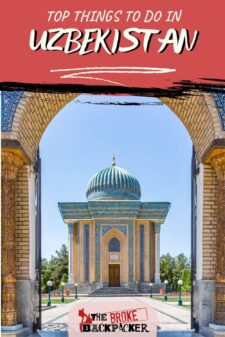
It’s official, after recently returning from one of the best trips I have taken in years, I can confirm that Uzbekistan is one of the most underrated backpacking destinations on the planet. It mixes ancient Silk Road cities dripping in turquoise tiles, fast trains that only cost a few quid, vast, epic desserts, and some of the friendliest people you’ll ever meet.
I spent just over 3 weeks exploring the country this autumn and fell head-over-heels. So here it is – the ultimate bucket list for anyone thinking about wandering the golden deserts and blue-tiled mosques of Uzbekistan.
Below you’ll find the best things to do in Uzbekistan, split by region. Expect the classics like Samarkand and Bukhara — but also wild mountains, crumbling shipwrecks, and a whole lotta hot tea.

The Broke Backpacker is supported by you. Clicking through our links may earn us a small affiliate commission, and that's what allows us to keep producing free content 🙂 Learn more.
Not To Be Missed Experiences in Uzbekistan
Before we get into the recommendations, I want to clarify that we presented these things to do as you would encounter them taking an overland route, classic Uzbekistan Backpacking route from the capital of Tashkent towards the desert city of Khiva.
The consequence of this is that while we may not start with a headliner, the post should hopefully function as some kind of itinerary should you want it to. We have also included prices and insider tips where appropriate.
Ride the Tashkent Metro
If you know anything about the Soviet Union then you may know that they really had a thing for metros. The one in Moscow is of course legendarily beautiful but there are plenty more scattered across the former USSR and Warsaw Pact region (aka the Iron Curtain).
The Tashkent metro is scattered with some glorious stations that mix art-deco, brutalist and classical design aesthetics while celebrating the great heroes and achievements of the communist bloc. Each station boasts a different theme but the notable ones (at least for me) are Kosmonavtlar with its cosmomaut-spaceship chic, Alisher Navoi for a stained-glass legend and Mustaqillik Maydoni that boast chandeliers that belong in a palace.
Fill Your Face at Chorsu Bazaar

You can ride the metro to Tashkent’s central Chorsu bazaar which is a visual delight as well as a shoppers paradise. You can find all manner of souvenirs here as products and wares from all over Uzbekistan make their way here. A lot of items are cheaper here than they are in Samarkand/Bukhara but you may get a greater choice the further you go into Uzbekistan.
Furthermore it is also a food heaven where you can pull up a stool and try all manner of stodgy delicacies at bargain prices.
What to stuff into your hungry face:
- Samsa: meat-filled pastries – still sizzling from the tandoor
- Lagman: hand-pulled noodly goodness
- Kurt: salty yoghurt balls (not for the weak)
- Naan bread: sacred. Warm. Essential.
Amirsoy Region and Ski Resort
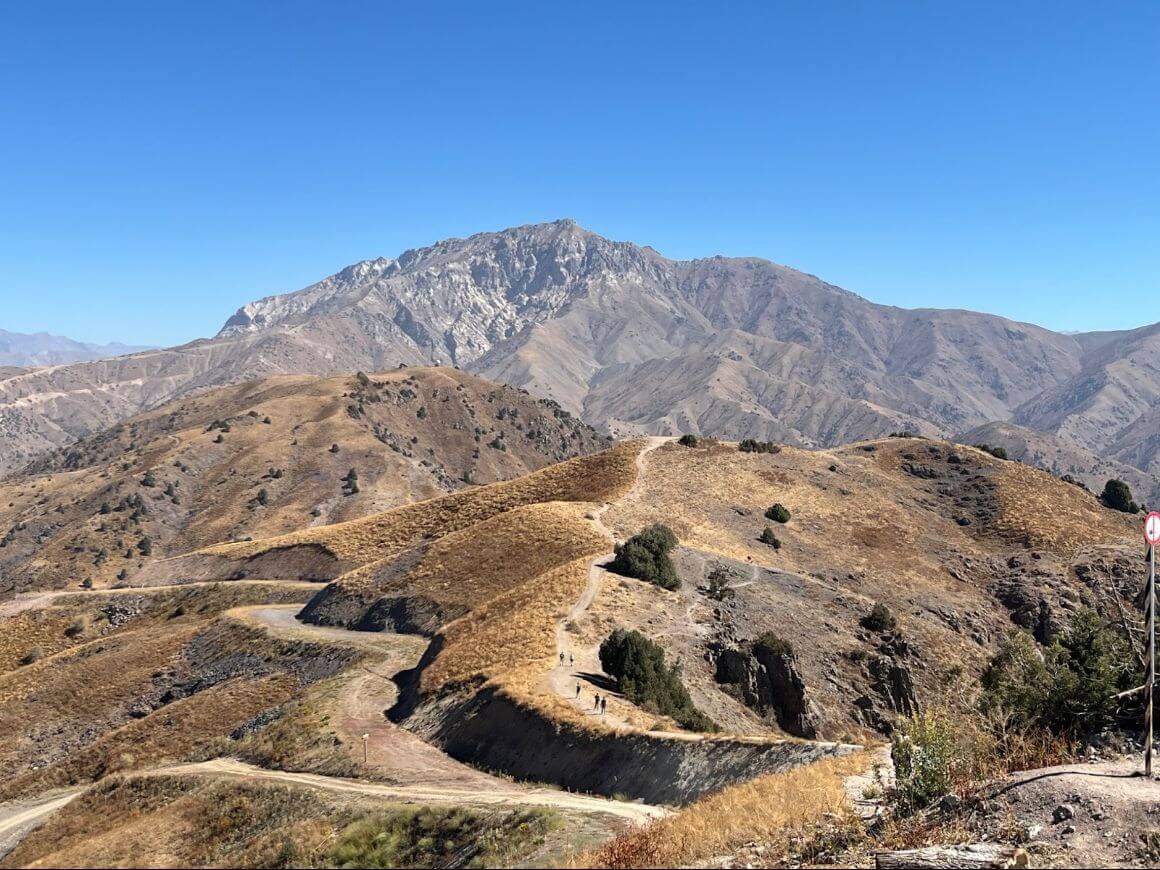
If you thought Central Asia was all desert heat and Silk Road dust, Amirsoy will slap that misconception right out of your skull. Just 70–90 minutes from Tashkent, this brand-spanking-new ski resort in the western Tien Shan mountains offers a full-blown Alpine vibe — except it’s way cheaper and you can brag that you’ve snowboarded in Uzbekistan.
Note that even in the dry months it’s well worth a day visit just to take the cable car over the mountains.
The cable cars whisk you up to sweeping peaks that look like they belong on a Swiss postcard, and the pistes cater to everyone from “I once went skiing on a school trip” to “I wear mirrored goggles indoors”. In summer, trade snow for hikes, zip-lines and clear mountain air that’ll cleanse the metro smog right out of your soul.
Bar Hop in Tashkent
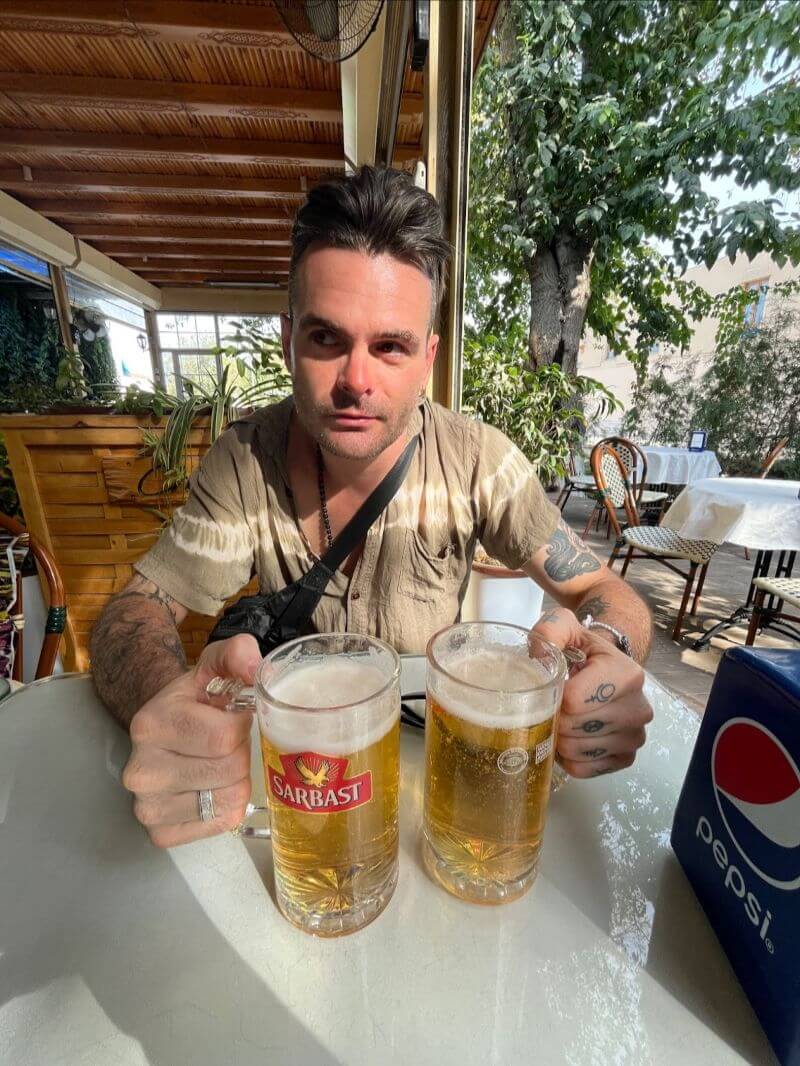
Tashkent is quietly brewing one of Central Asia’s coolest nightlife scenes — and by “quietly” I mean tucked behind unmarked doors, neon-lit basements and cocktail menus that absolutely should not cost under $5… but somehow do. Backpacker budget + boujee vibes = a very good time.
The clusters worth hitting are around Broadway Street and the Mirabad area — where you can bounce from craft beer to espresso martinis to “why am I suddenly dancing to Uzbek techno?”. Expect friendly locals, less friendly Russian models, surprising DJ sets, and a night that escalates faster and further than you planned.
Suggested hop:
- Steam Bar – start chill with craft beers
- Samarqand Darvoza – cocktails that slap
- Silk 96 – rooftop for that skyline flex
- Chillout Tashkent – you probably won’t chill
Ride The High Speed Train
If Uzbekistan’s Silk Road cities are the jewels, then the high-speed Afrosiyob train is the very comfortable (silky…) string that links them together. It zips you between Tashkent, Samarkand and Bukhara in as little as a few hours — cheaper than flights and about 200x more scenic.
Think spotless carriages, reclining seats, and enough legroom that your knees won’t scream in betrayal. You’ll whoosh past desert plains, villages, and the odd camel if you’re lucky — all while sipping tea and feeling smug that you’re not stuck in traffic on some dusty highway.
Where it gets you fast:
- Tashkent to Samarkand: ~2 hours
- Samarkand to Bukhara: ~1.5 hours
- Tashkent to Bukhara: ~4 hours
At time of writing, there is no high speed train to Khiva. You need to get the long train from Bukhara. Be sure to book ahead of you will end up in the cattle shed like we did.
A Quick Word About Travel Insurance
The good news is that Uzbekistan is a safe, sanitised and thoroughly welcoming destination. The days of travellers like ‘Bukhara Burnes’ being tossed into the ‘snake pit’ are long over and you can expect a successful trip. However I did get the worse case of ‘’Stan Stomach’ I have ever had and found myself pretty much shitting stomach acid one morning…very painful.
In the end I decided not to visit the hospital but it did cross my mind…and as I had travel insurance from SafetyWing in place, I would not have had to worry about the cost of treatment. Their business model is simple – two products which offer subscription style cover. Hit the reviews below for the full details or go to the site to grab a quote.
Sort out your insurance before you go. There are several good options, but our overall pick is SafetyWing. Most of the Broke Backpacker team has used it at one point or another, and we’ve filed claims for rabies jabs in Bali, a hospital stay in Mexico, and a clinic visit for a stomach bug that wouldn’t quit. All paid out.
It’s month-to-month, no lock-in, no itinerary required, and you can buy it after you’ve already left. A little over $2 a day if you’re under 40.
New SafetyWing customers: use code BROKEBACKPACKER for 8 free weeks of electronics theft coverage. You have to scroll down and click the pink camera on their landing page to enter it, and you have to do it before creating your account.
Sunrise at the Samarkand Registan

If there’s one single moment that will firmly and irretrievably etch Uzbekistan onto your heart forever, it’s probably gonna be the sunrise at the Registan. Those three monumental madrasas — a geometric fever dream of tiled mosaics and turquoise domes — glow gold as the sun peeks over Samarkand. It’s the kind of scene that makes even the most jaded traveller mutter “holy sh*t” under their breath.
Show up early, breathe in the stillness, and watch the city stretch awake around a place that was once the beating heart of the Silk Road. Crowds? Practically nonexistent at dawn. It’s just you, the stray cats, and centuries of history staring you down.
I have visited a LOT of very special places in my lifetime and even I was absolutely blown away.
Shah-i-Zinda — The Blue-Tiled Stairway to Heaven (Samarkand)
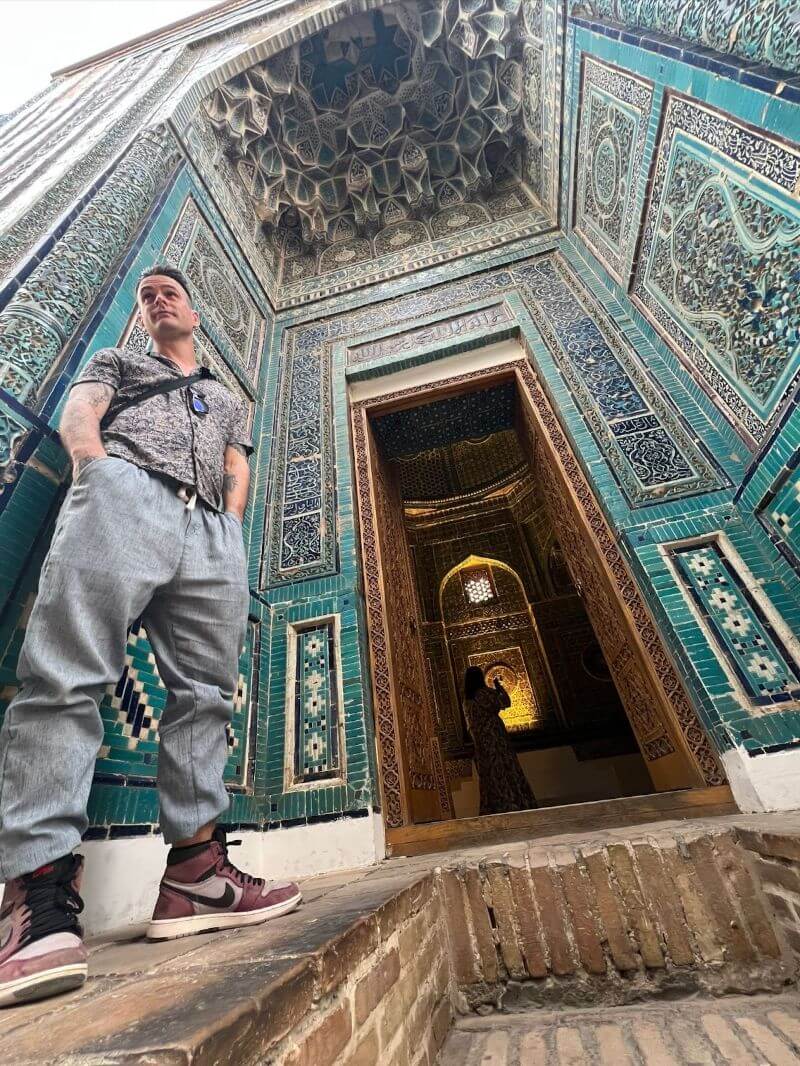
If the Registan is the headline act, then Shah-i-Zinda is the cult favourite that steals your soul – for me, this one was even better than the main act. This necropolis climbs a hillside in a cascade of impossibly blue mausoleums — every tile a tiny masterpiece, every archway a portal to somewhere sacred. The name translates to “Tomb of the Living King,” and legends say one relative of the Prophet Muhammad is buried here… meaning the spiritual vibes are strong.
Walk the long staircase — each step feels like ascending a kaleidoscope of turquoise, lapis, and sunlit patterns. The further you go, the quieter it gets too. Voices lower to whispers. Even the air seems to shimmer with centuries of prayer.
What you’ll love:
- Tiles so bloody beyond blue they’d make Photoshop blush
- Carvings sharp enough to slice your eyeballs (in a good way)
- A serene, mystical atmosphere you won’t forget
Visit Samarkands Atmospheric Cemeteries
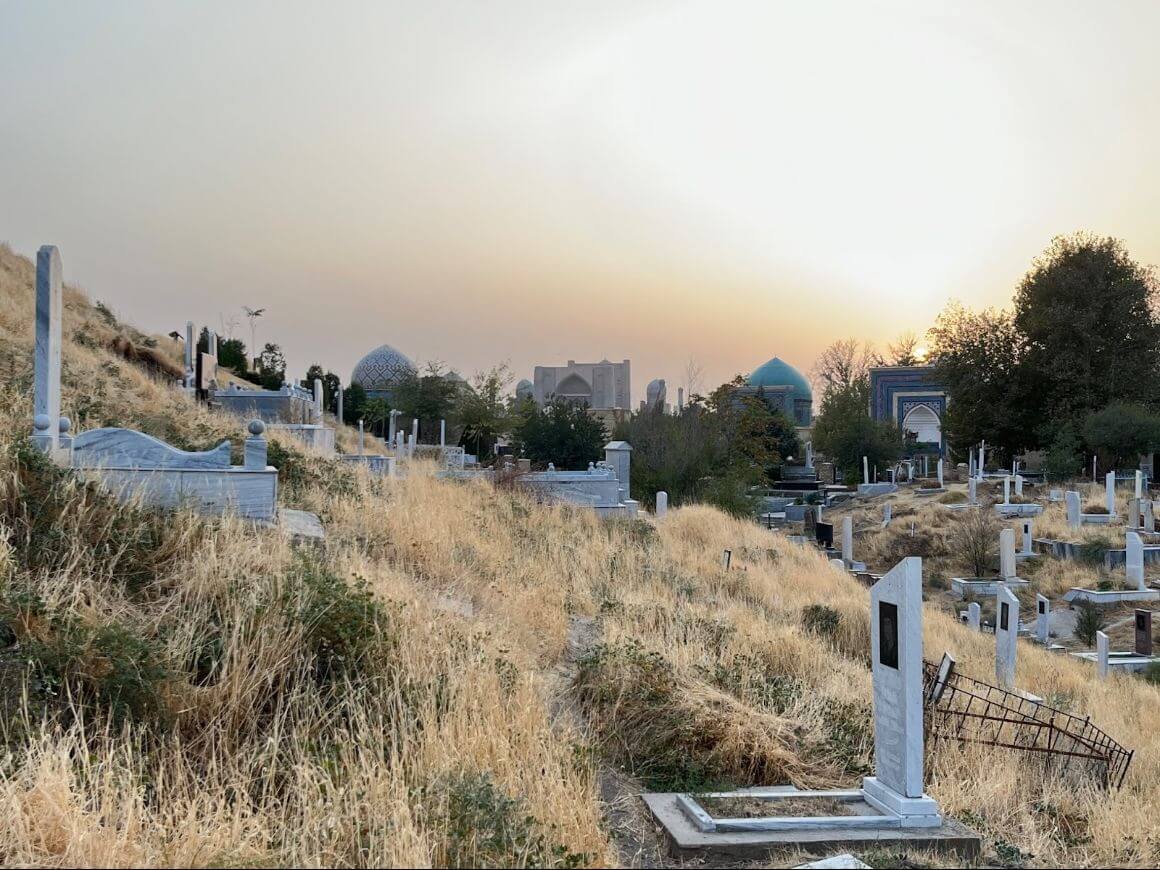
Samarkand does grandeur incredibly well, but it also knows how to tug on your heartstrings in the quiet places. Just a short wander from the big sights, you’ll find two historic cemeteries on the hillside: one Muslim and one Jewish. Both offer a raw, unfiltered window into the city’s soul.
The Muslim cemetery spreads across the slope below Shah-i-Zinda, simple tombstones stretching into the distance — a stark contrast to the ornate mausoleums above. The Jewish cemetery, nearby but tucked away, feels even more intimate: weathered headstones, Hebrew inscriptions, and a sense of a once-thriving community whose stories linger in the breeze.
I visited at dusk and it was eerie, peaceful and profound.
Silk Carpet Workshop

Silk Road city… silk carpets… It’s basically destiny. Visiting a silk carpet workshop in Samarkand or Bukhara is a peek behind the curtain of one of Uzbekistan’s most beautiful crafts. You’ll watch skilled weavers knotting vivid patterns by hand — each tiny thread adding up to months (sometimes years!) of work.
It’s quite mesmerising actually, with the clack of the loom, the dance of colours, the pride woven right into every design. Guides will explain how natural dyes come from walnuts, pomegranates, and indigo so you can pretend to be very cultured while secretly planning which one would look best in your living room.
What you’ll experience:
- Artisans who make patience look like a superpower
- Designs inspired by ancient domes and desert flowers
- The sudden urge to redecorate your entire house
Shopping at Bukhara
If you’re the kind of traveller who loves rummaging through history (and maybe hoarding a little of it), Bukhara is your playground. The old trading domes like Toki Sarrafon, Toki Telpak Furushon, Toki Zargaron, are still doing what they did centuries ago, which is separating Silk Road wanderers from their money in the most delightful way.
Expect an endless spread of carpets, hand-embroidered suzani textiles, jewellery that looks stolen from a princess, and absolute mountains of quirky Soviet memorabilia. One minute you’re admiring a museum-worthy rug… the next, you’re holding a vintage Lenin pin wondering whether to wear it ironically or with genuine price.
What to hunt for:
- Rugs + Suzani: heirloom-level pretty
- Soviet relics: medals, badges, watches, “CCCP” everything
- Local fashion: ikat jackets and silky robes that slap HARD
- Ceramics: blue-and-white pieces too lovely to leave behind
Kalon Minaret: The One Genghis Khan Didn’t Smash (Bukhara)
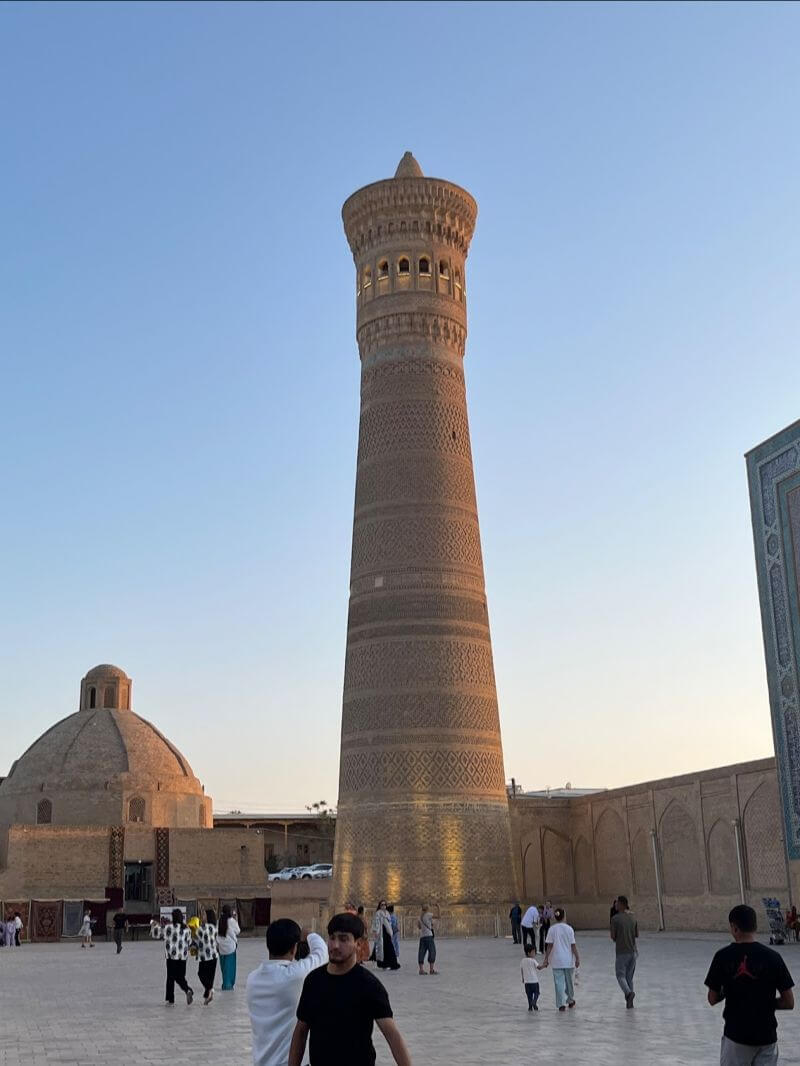
When Genghis Khan rolled into Bukhara in 1220, he reduced much of the city to rubble and smoke — but even he took one look at the Kalon Minaret and went, “Yeah, we’ll keep that.” And thank the travel gods he did. This 45-metre giant of baked brick still towers over the old city like a desert lighthouse, its bands of intricate patterns spiraling into the sun.
By day, it’s a proud relic of the Qarakhanid era. By night, lit up against the deep blue sky, it’s straight-up magic. Stand beneath it and you’ll feel the centuries press down in the coolest way possible.
What makes it legendary:
- Genghis-proof architecture
- Perfect photos any time of day
- Storytelling vibes baked into every brick
Golden Hour on Khiva’s Mud-Brick Walls
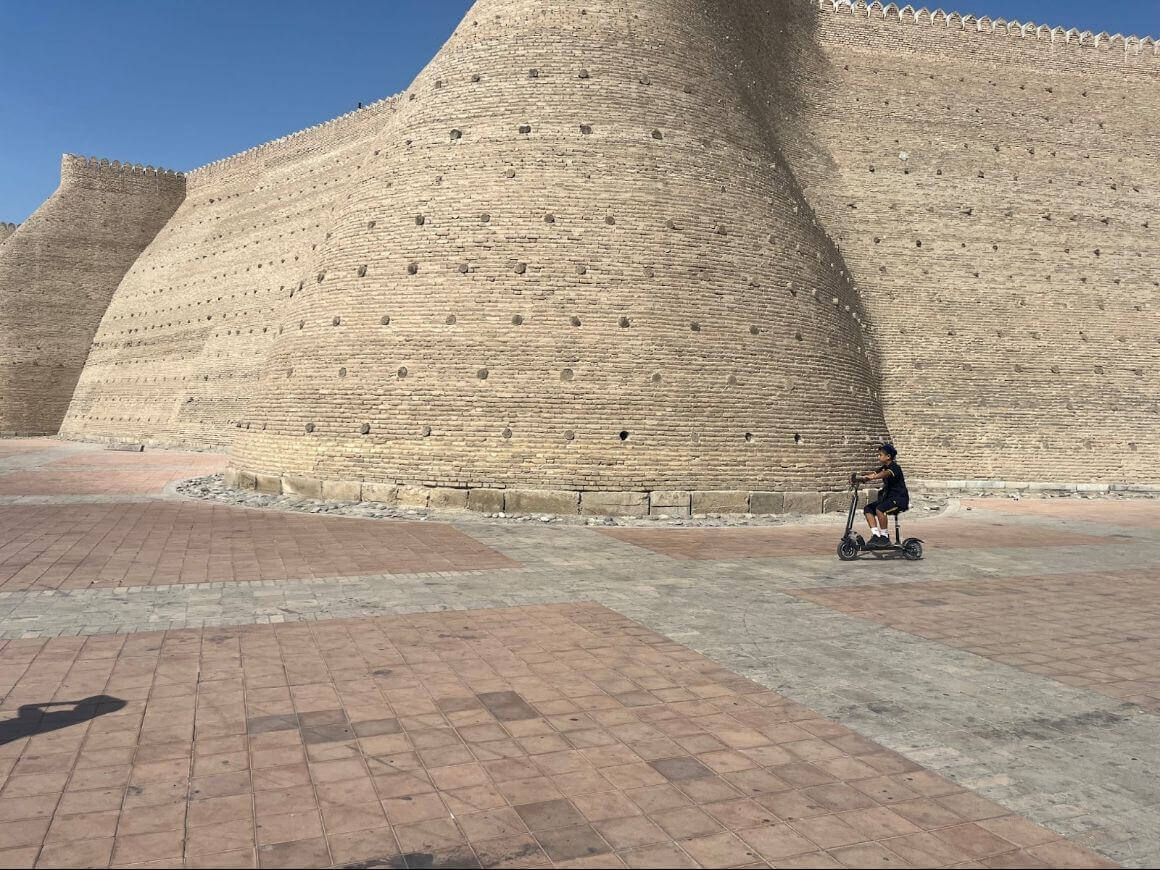
Khiva feels like someone hit pause on the Silk Road and left an entire walled city perfectly preserved for your eyeballs. And the best time to soak it all up? Golden hour, when the sun melts into the Kyzylkum desert and those sandy mud-brick walls turn pure honey.
Climb the city walls or find a rooftop and watch the minarets shift from sunlit gold to deep desert amber. Vendors pack away their souvenirs, shadows stretch long, and suddenly Khiva feels less like a museum and more like a living movie set that forgot the cameras were rolling.
Conquer the Islam Khoja Minaret (Khiva)
Khiva doesn’t do subtle and the Islam Khoja Minaret proves it. This striped beauty rockets 57 metres into the sky, making it the tallest in the city and the ultimate “yep, I climbed that” brag for your Insta caption.
The staircase is… let’s call it “character-building.” A narrow spiral, dim light, uneven steps, you’ll probably question your life choices more than once. But when you pop out at the top and see Khiva’s sea of mud-brick rooftops, turquoise domes and desert stretching to forever? Worth every sweaty heartbeat.
Visit the Ship Cemetery of the Aral Sea

Few places on Earth deliver a punch to the gut quite like the Aral Sea ship cemetery near Muynak. What was once a thriving fishing port is now a dried side bed dozens of kilometres from the water — a haunting monument to one of the world’s worst environmental disasters. Rusting fishing vessels lie abandoned in the sand, like giant steel fossils from a sea that vanished.
It’s eerie, unforgettable, and important. You’re not just ticking off a sight, you’re staring climate catastrophe in the face while clambering over boats that have no business sitting in a desert.
Why it sticks with you:
- Post-apocalyptic vibes but totally real
- Powerful look at Soviet-era water mismanagement
- Surreal photos of ships marooned in sand dunes
Mizdakhan Necropolis
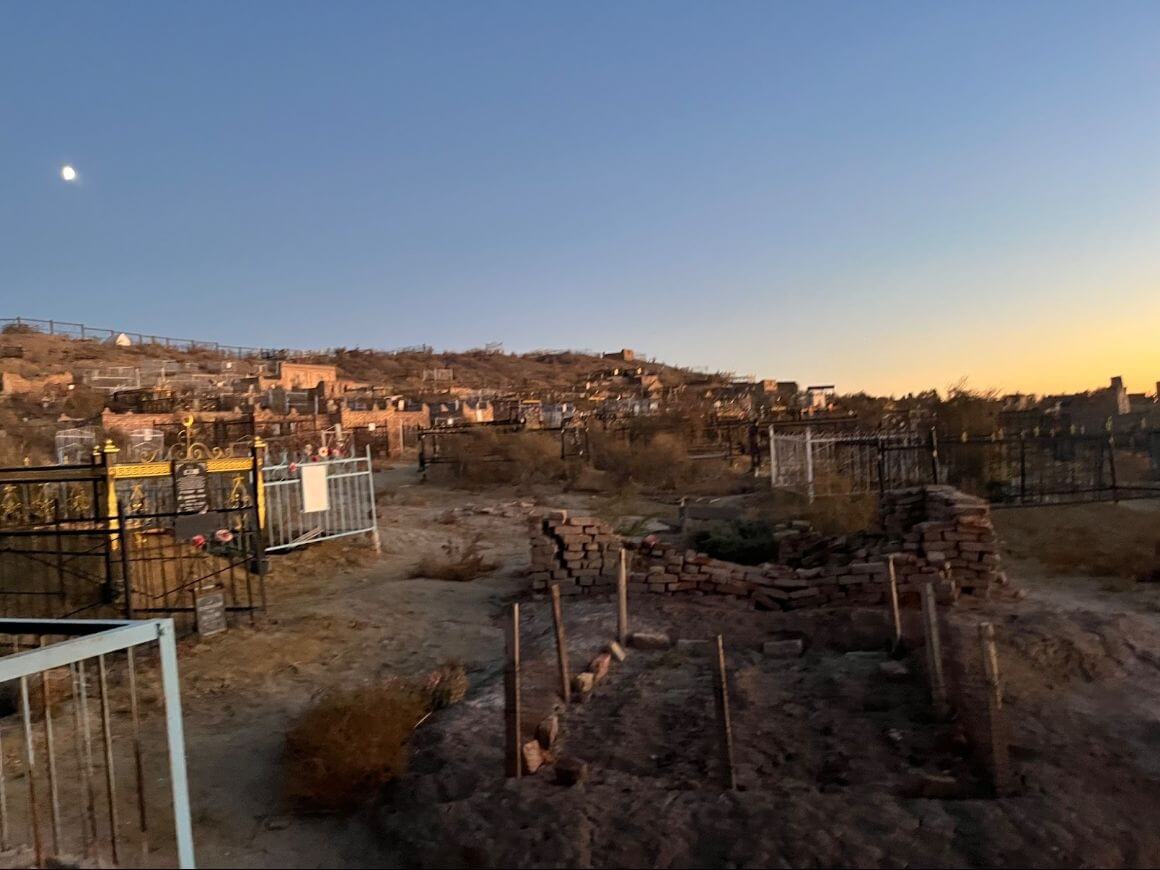
Just outside Nukus lies Mizdakhan, an ancient necropolis that feels like a dusty collision of archaeology, myth, and raw end-of-the-world atmosphere. Perched on a hill overlooking the vast Ustyurt Plateau, it’s a patchwork of crumbling mausoleums, Sufi shrines, and centuries-old tombs that have earned it a reputation as one of the most mystical sites in Karakalpakstan.
Wander through the maze of ruins and you’ll find legends everywhere: a supposed fragment of Adam’s tomb, a fortress linked to ancient Zoroastrians, and coins scattered around graves by visitors hoping for a little extra luck. It’s haunting in the best way — like stepping into a half-forgotten chapter of human history.
Final Thoughts
Uzbekistan is the kind of destination that grabs you with its beauty and then seals the deal with its warm hospitality. For affordable adventures, and stories older than most nations on Earth, there is nowhere quite like it.
If you’re craving a trip that feels both epic and underrated, where every day brings a new “I can’t believe I’m here” moment — Uzbekistan is calling.
- Check out our ultimate guide to backpacking in Uzbekistan.
- Sort your international sim card for Uzbekistan out to avoid unnecessary hassle.
- Our in-depth backpacking packing list has all the info you’ll need for your trip.