The pilgrimage towards the city of Santiago de Compostela in northern Spain may well sound outdated in a world where religion is declining, but it’s growth in popularity only reminds us that people are lacking meaning.
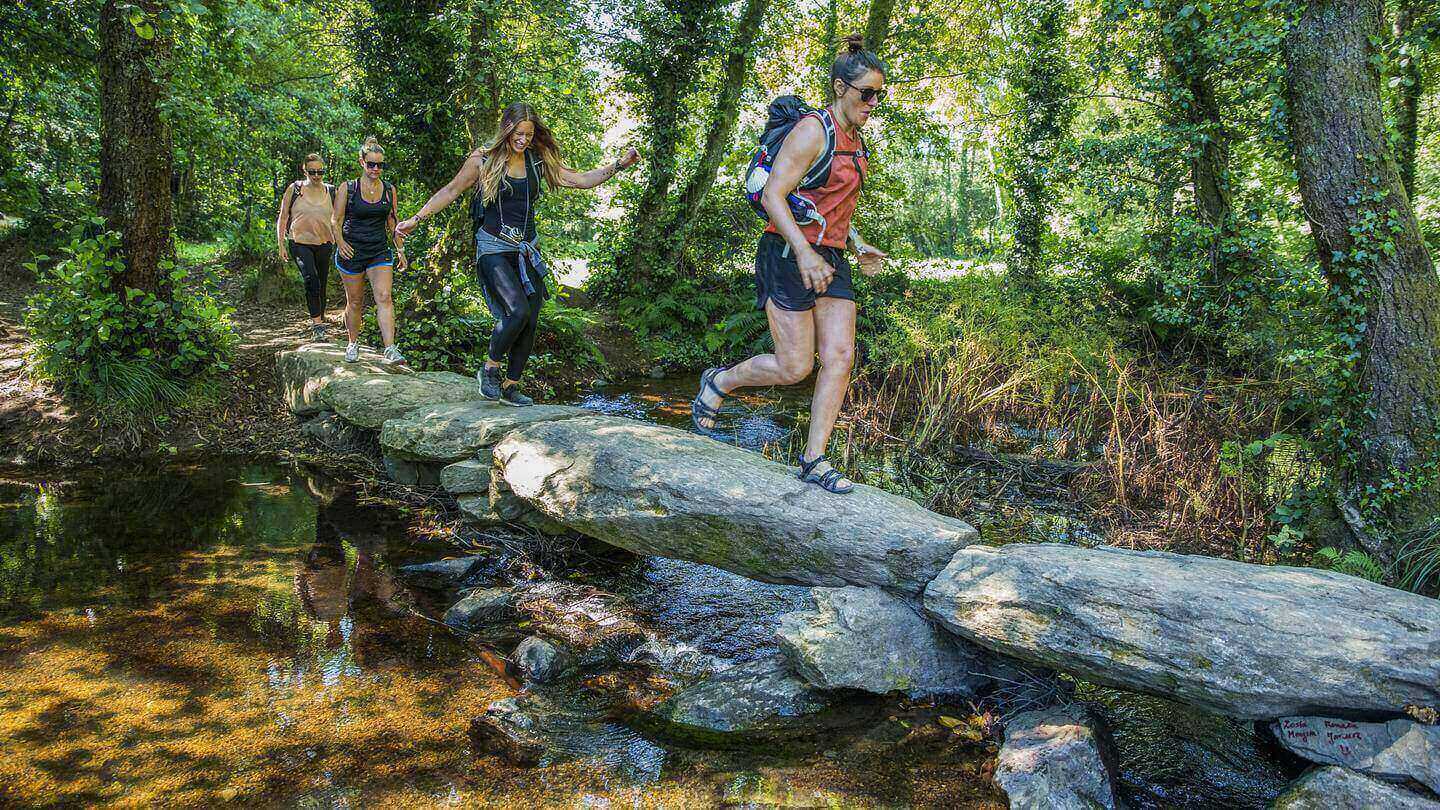
This is no standard long-distance hiking trip, but centuries old networks with ancient infrastructure and stories as old as time. It’s an athletic feat for some, but most are seeking camaraderie, spirituality, and a sense of connection. It’s also one of the few long-distance trails that could be walked without a smartphone, because the signage is so brilliant.
The Broke Backpacker is supported by you. Clicking through our links may earn us a small affiliate commission, and that's what allows us to keep producing free content 🙂 Learn more.
Sightseeing or Soul-Seeking?
The initial days on the trail are, for most of us, are experienced in a tourist mindset. Anxiety around gear, the photogenic spots, posting on socials, and all the quaint villages. But after a few days, the rhythm of the footsteps begins to put us in a trance, and one village to the next can appear similar and our backpack weighs us down.
It doesn’t take long for the pilgrim journey camino to make us feel vulnerable in a way that most modern travel rarely achieves. It is this forced vulnerability that acts as a psychological unlayering – we shed physical comforts and become detoxed from technology and this is mirrored in the shedding of the social masks we wear. It’s not uncommon to have a profoundly deep conversation with someone you met 3 hours ago, and this can be something rarely experienced in the workplace where our guard is up.
To walk as a pilgrim is certainly better when you have the right intentions and openness – but even for the stuffiest and superficial of visitors, it can soon make them vulnerable, especially if they’re struggling physically. We open ourselves up to more random encounters and we confide in others who are also struggling. A crumbling old village is no longer just an Instagrammable backdrop, but a moment to ask for help or share your story with a local host.
Daily practices

Again, it’s better to go in with the right attitude so that you can get to “that place” much quicker. Having the pilgrim mindset isn’t down to who we are as people, it’s simply a practice. Experts at viajecaminodesantiago.com often like to point out that understanding the culture and history of the path is a great first step. It helps understand the gravity of the undertaking and you will find more meaning in the rough days.
You can learn about ancient albergues and villages online, but you can also ask around. These daily activities can help:
- Setting a morning intention. Before the first light, it can be worth taking a moment to think about the day ahead and find gratitude.
- Take your time. The goal is simply to walk each kilometer as it comes. This helps stay in the present moment and not think about the finish line at the end of the week.
- Talking to locals. Breaking the bubble of the backpacker community can be worthwhile, and you do this by striking up conversation with locals, be it the farmers or shopkeepers. In rural areas, you will need some Spanish to get by.
- Evening reflection. When you get back to your accommodation, it’s great to reflect and write a few lessons or experiences that day. Using a mic recording on your phone can also be great to offload what’s on your mind as you approach the end of your day’s route.
Digital Disconnection
In 2026, we are rarely nowhere, but instead everywhere. Our friends can ring us when they want, our bosses can email on Sunday, and we get notifications from all apps, be it news, socials, or even just Duolingo.
The Camino trip is a rare opportunity to really put out phones down. It may sound extreme, especially if this was the sole goal of the trip, but actually, it’s extreme the amount of attention our phones hold over us. Drastic measures are required, and few (rural) places in the world can be navigated so easily without a phone.
Without the distraction of a glowing screen, our sleep is better because of less blue light, our sense feel sharpened, we are more in tune with our body and nature, and we can hear our inner thoughts (or, hopefully, lack thereof).
The taste of a simple crust of bread and a slice of Manchego cheese becomes extraordinary after a long hike where you’re low on salts. You may never have experienced food like it – you may even be tricked into think it’s just because Spanish food is so good (which, in fairness, it is).
The Meseta, which is the high, flat plateau of central Spain, can have moments of extraordinary quietness – until a vast eagle comes shouting overhead. These spaces manage to balance safety with wildness – we feel completely exposed, but actually, it’s one of the safest places in the world to hike.
The Journey Continues After You Reach the Cathedral
The arrival at the Praza do Obradoiro in Santiago can bring people to tears. For most, it is a moment of intense relief and achievement. In many ways, though, this feeling never leaves you as it can kickstart a more adventurous side to you. Whether that be from your hostel in Santiago, surrounded by fellow pilgrims, or somewhere far removed from this place.
The true depth of the Camino is revealed in how the traveler returns home. They may find they have a lower tolerance for material clutter, that they don’t need to reach for their phone every ten minutes, a higher capacity for empathy, or an appreciation for the slow way of doing things. Perhaps they now walk or cycle to work as they feel confident in their bodies.
There is a sense of post-traumatic growth through physical hardship. It’s when we find meaning and have realizations after hardship. Sometimes in life, we can get complacent and comfortable, and it takes an organized trip on a sacred land to inject some meaningful suffering back into our lives.