When I embarked on my backpacking trip around Southeast Asia, I did so with one goal in mind: to take as few flights as possible. It’s the perfect region to do so; 5 of the 11 countries that make up Southeast Asia are connected, after all.
The entire region is well-connected by a vast network of buses, trains, ferries, river boats, and border crossings. The journeys are far from glamorous, but more often than not the experience is worth more than simply getting from A to B. A border crossing can lead to an unexpected interaction with a local, a remote mountain pass can reveal some of the best views of your trip, and a long travel day can take you to places most visitors flying between capitals never see.
Not only is it gratifying… it’s also cheap as fuck. Overland travel is a dream for budget backpackers in SEA. There’s no forking out for taxis to the airport, checked-in baggage or that horrendously overpriced (but obligatory) airport pint.
If you’re a baby backpacker, crossing borders independently can feel a little daunting. Trust me, I get it. That’s why I’ve created this guide for everything you need to know about travelling overland through Southeast Asia, including visa requirements, border procedures, transport options, typical costs, currency exchange, and common scams to avoid.
By the time you’re done, you’ll be an absolute pro. Let’s get involved.
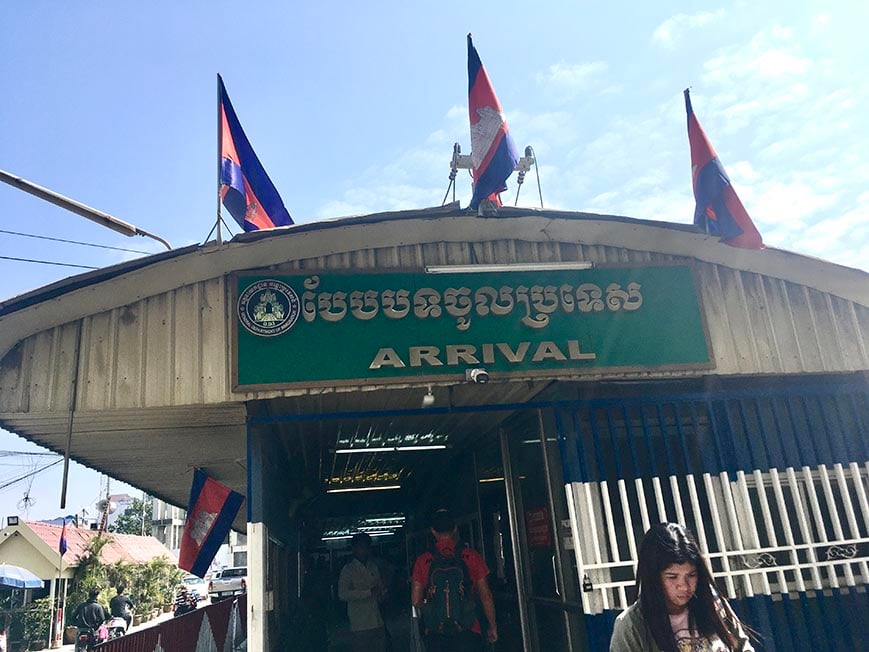
Photo: Nic Hilditch-Short
The Broke Backpacker is supported by you. Clicking through our links may earn us a small affiliate commission, and that's what allows us to keep producing free content 🙂 Learn more.
- Before You Cross Any Border in Southeast Asia
- How Southeast Asia Border Crossings Actually Work
- The Most Popular Southeast Asia Border Crossings
- Thailand to Laos
- Laos to Vietnam
- Laos to Cambodia
- Vietnam to Cambodia
- Thailand to Malaysia
- Malaysia to Singapore
- Border Crossings to Research Carefully
- Visas in Southeast Asia: What Travellers Need to Know
- How Much Does It Cost to Cross Borders in Southeast Asia?
- Overland vs Flying: Which Is Better?
- Sample Southeast Asia Border-Hopping Routes
- Final Tips for Smooth Border Crossings
Before You Cross Any Border in Southeast Asia
If this is your first rodeo, fret not: border crossings are a relatively easy affair. Millions of people move between countries such as Thailand, Laos, Cambodia, Vietnam, Malaysia, and Singapore every year without any issues. Most problems occur not because border crossings are difficult, but because travellers arrive unprepared.
Doing your homework beforehand can save yourself a massive headache, not to mention potentially hundreds of dollars in unexpected costs. Don’t pay the unprepared tourist tax if you can avoid it!
Passport & Entry Requirements
Before travelling to any border, always make sure that your passport meets the destination country’s validity requirements. Many Southeast Asian nations require at least six months of validity remaining on your passport, and some immigration officers may refuse entry if this requirement is not met. It is also wise to have several blank passport pages available for entry and exit stamps.
Countries like Indonesia can be pretty bloody strict on the condition of your passport too. Dog-eared pages are fine, but if you have any rips or damage to your biometrics page, you may be refused into the country. It only takes one immigration officer having a bad day to decide they don’t like the look of your passport and deny you entry at the border. Save yourself the headache and keep it pristine.
Depending on your nationality and destination, you may also be asked to show proof of onward travel, accommodation bookings, or evidence that you have sufficient funds for your stay. These checks are not always enforced, but they can happen so it’s best to prepare for them.
If you don’t have any actual onward travel booked, sort out a dummy flight ticket in case you get asked. They cost around $12, and it’s a completely legit ticket. It just expires within a day or two purely for the purpose of you flashing it to the immigration officer.
Visa policies change regularly, so never rely solely on information from travel forums or old blog posts (unless it’s this one 😉 ). Always verify current requirements through official immigration websites before travelling. A rule that applied six months ago may no longer be valid today. Keep informed, friends!
Cash, Currency & Border Fees
One of the most common mistakes people make is arriving at a border without enough cash. While Southeast Asia is becoming increasingly digital, many border areas still operate very differently from major cities. CASH IS KING!
Always check how much visas are for your next border crossing and what currency they prefer. Not only will this save you the headache of scrambling last minute at the border, but it’ll also save you from getting royally bent over by crappy exchange rates. When I was in Thailand, I remember specifically going to an exchange to get a crisp fifty-dollar bill, as the alternative to paying in Thai baht was a LOT spennier.
Carrying a small reserve of emergency US dollars can be extremely useful, particularly in countries where visa fees or border-related charges are sometimes quoted in USD. Small denomination notes are especially helpful, as officials, money changers, and transport operators may struggle to provide change for larger bills. Just FYI, the $100 bill is one of the most counterfeited notes in the entire world and I found this out the hard way at a Vietnam-Laos border crossing.
Carry. Small. Notes!
ATM availability also varies significantly between border crossings. Some major crossings have multiple ATMs, while others may have none at all. Exchange rates at borders are often less favourable than those found in cities, and card acceptance can be limited. Having enough local currency to cover transport, food, and unexpected expenses after crossing can prevent a great deal of frustration.
SIM Cards & Internet Access
Reliable internet access makes border crossings considerably easier, and the simplest way to guarantee it is to sort an eSIM before you leave. No hunting for a SIM stall at the border or awkward miming at a phone shop in a language you don’t speak. You step off the bus, and you’re connected. Job done.
Local SIM cards are widely available near airports and city centres, but don’t count on finding one at a land or river border. That’s exactly the moment you’ll want Google Maps, and exactly the moment you won’t have it.
Before you travel, download offline maps and grab a translation app that works without a connection. Both take about five minutes and will save you considerably more than that when you’re trying to explain your destination to a tuk-tuk driver at midnight.
Common Border Scams
Scams at border crossings exist, but they’re rarely sophisticated. Most follow the same tired playbook: unofficial ‘visa agents’ hovering near the queue insisting you need them to process your paperwork (you don’t), invented processing fees that appear nowhere on official signage, transport touts outside the gates quoting prices that bear no relation to reality, and dodgy exchange booths with rates that look great until you do the maths.
The closed-border trick is a classic. Someone tells you the crossing is shut, or that you need a mandatory health check, and then helpfully points you toward a paid service that will sort it all out. It won’t. Walk past them and check directly with immigration officials.
That said, if I’m gonna be real with you, sometimes arguing over a couple of dollars isn’t worth it. Even if it is for some bullshit fee. The smartest move is usually just to pay it and walk through. A dollar or two is not worth a standoff with a bored official who has the power to grant you entry into the country.
The best protection against all of it is arriving knowing what things actually cost. Check official government sources before you travel, carry small denomination notes, and treat anyone who approaches you unsolicited outside a border as someone whose interests are not aligned with yours.
How Southeast Asia Border Crossings Actually Work
If you have never crossed an international border overland before, the process can seem far more complicated than it actually is. The reality is that most Southeast Asia border crossings follow the same basic sequence, whether you are travelling between Thailand and Laos, Cambodia and Vietnam, or Malaysia and Singapore. Once you’ve done one, you can pretty much tackle them all.
The first step is exiting the country you are leaving. This usually means presenting your passport at an immigration counter where an officer will check your documents and stamp you out of the country. After that, you officially leave the departure country and enter what is often known as the border zone, or what I like to call…no man’s land.
From there, you simply make your way to the immigration facilities of the country you are entering. Depending on the crossing, this might involve a short walk across a bridge, a bus ride through a checkpoint, a train journey, or even a boat trip across a river. Once you reach the arrival side, immigration officers check your passport, visa, and any required entry documents before granting entry.
After immigration, there may be customs checks. In many cases, you walk straight through with little more than an airport security-style bag inspection. That said, random checks can happen, so don’t be surprised if it does happen. The final step is finding onward transport, whether that is a local bus, minivan, taxi, train, or ferry to your next destination.
This experience also varies slightly depending on how you cross the border. Walking crossings are often the simplest and give the most flexibility. Bus crossings are common on long-distance routes, with passengers usually leaving the vehicle briefly for immigration formalities. Train crossings tend to be efficient and organised, while boat crossings are popular on routes such as those along the Mekong and can feel like part of the adventure itself.
In terms of waiting times, they vary ENORMOUSLY! At quiet crossings, the entire process can take less than thirty minutes. At busy checkpoints, particularly during holidays and weekends, it is not unusual to spend one to three hours completing the journey from one country to the next. Factor this into your travel time and, for the love of God, don’t try to plan any tours or activities on the same day. This type of travel day is all work, no play.
The Most Popular Southeast Asia Border Crossings
One of the greatest things about travelling through Southeast Asia is how easy it is to move between countries. In the space of a few weeks, you can be exploring the temples of northern Thailand, cruising down the Mekong in Laos, wandering the streets of Hanoi, and relaxing on a Cambodian island.
The borders themselves often become part of the adventure. Some involve crossing famous rivers, others pass through mountain ranges, and a few connect some of the region’s most iconic travel routes. These are some of the most popular and well-travelled Southeast Asia border crossings that backpackers, long term travellers, and overland adventurers use:
Thailand to Laos
Chiang Khong to Huay Xai
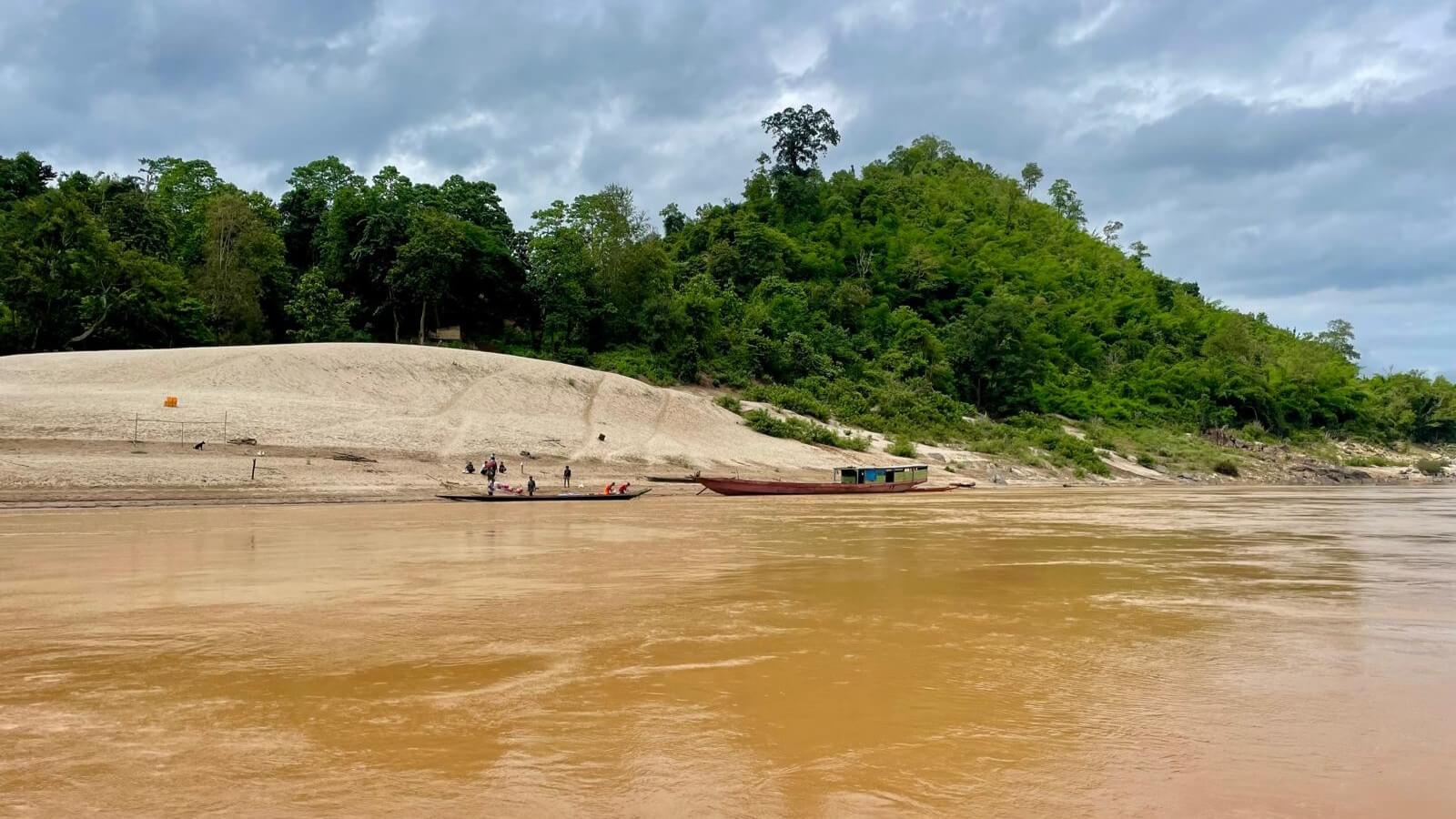
The Thailand Laos border crossing has to be one of the more iconic border crossings you can do in Southeast Asia. It’s by far my favourite, purely for the journey alone. You’ll actually cross the border from Chiang Khong in northern Thailand to Huay Xai in Laos, but the real pull is what comes after…
For most, this is the gateway to the famed slow boat journey to Luang Prabang along the Mekong River. It’s two days on a boat with backpackers and locals alike, sitting on seats that used to belong in minibuses and being entertained only by a deck of cards and a couple of BeerLaos. It’s up there with one of the coolest first impressions of a country you can get.
Getting across is straightforward. You simply cross the Friendship Bridge before completing immigration on the Laos side. Buses and minivans run regularly from Chiang Rai, and most people complete the crossing in around 30 to 60 minutes.
Visa requirements vary by nationality, so always check the latest rules before travelling. Many visitors can obtain a visa on arrival or use an approved eVisa. ATMs are available in both Chiang Khong and Huay Xai, making it easy to access cash before continuing your journey.
Scams are relatively uncommon here, although some travellers have reported overpriced transfers and confusion around transport to the slow boat pier. I personally did this crossing with a company that sorts everything for you, from picking you up n Chiang Rai all the way to getting off the boat in Luang Prabang. This worked perfectly for me as my first overland border crossing. I’m sure you can save a couple of dollars by doing it wholly DIY, but this crossing has a fair few steps involved with crossing the Friendship Bridge and getting to the pier.
It’s not complicated by any means, but forgoing responsibility onto a company will maximise your enjoyment of the journey itself. You can do the journey in any direction, but Thailand into Laos is the busiest and buzziest amongst backpackers. If you want a little more solitude or an off-the-beaten-path adventure, Laos into Thailand will suit you to a T.
Nong Khai to Vientiane
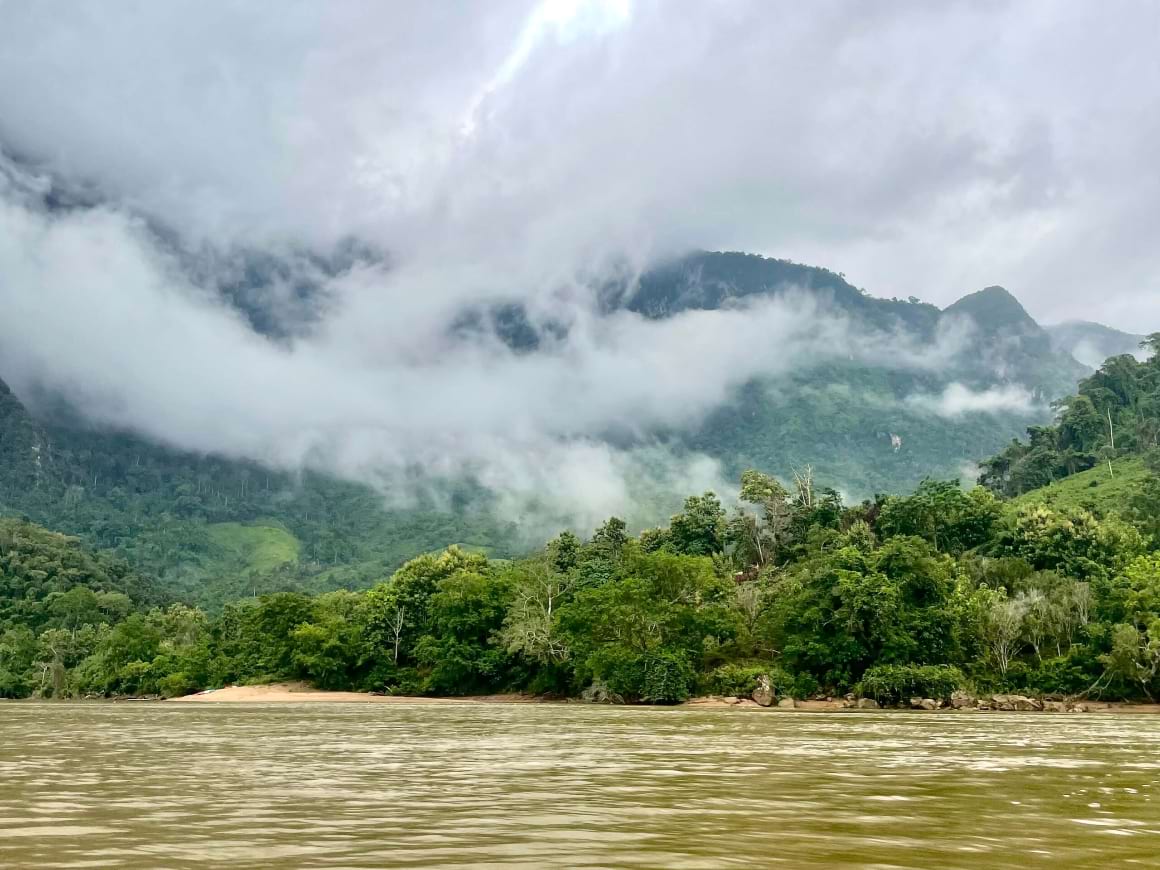
Photo: @taya.travels
Say hello to the busiest and most convenient border crossing between Thailand and Laos. It’s the busiest Thailand-Laos crossing and the one most travellers use when heading directly from Bangkok to Vientiane. Cross the Friendship Bridge, clear immigration on the Laos side, and you’re in the capital within the hour.
You’ve got a few ways to do it. Shuttle buses run throughout the day and are the most flexible option. The train crosses twice daily (08:35 and 17:25 from Nong Khai), takes about 30 minutes, and tends to have shorter queues than the bus.
But there’s a catch: visa on arrival isn’t available if you cross by train. Sort your eVisa before you leave home if you’re planning to use it, or cross by bus and deal with it on the Laos side. If you do pay on arrival, bring a passport photo or you’ll pay extra for one on the spot, and note there’s a $1 surcharge for crossing outside 08:00-16:00 or on weekends.
The border is open 06:00 to 22:00 daily. ATMs are available on both sides, and the whole process typically takes 30 to 90 minutes outside of peak periods. During public holidays and weekends, queues can stretch considerably longer, so build in some buffer if your timing is tight.
Laos to Vietnam
Tay Trang Border
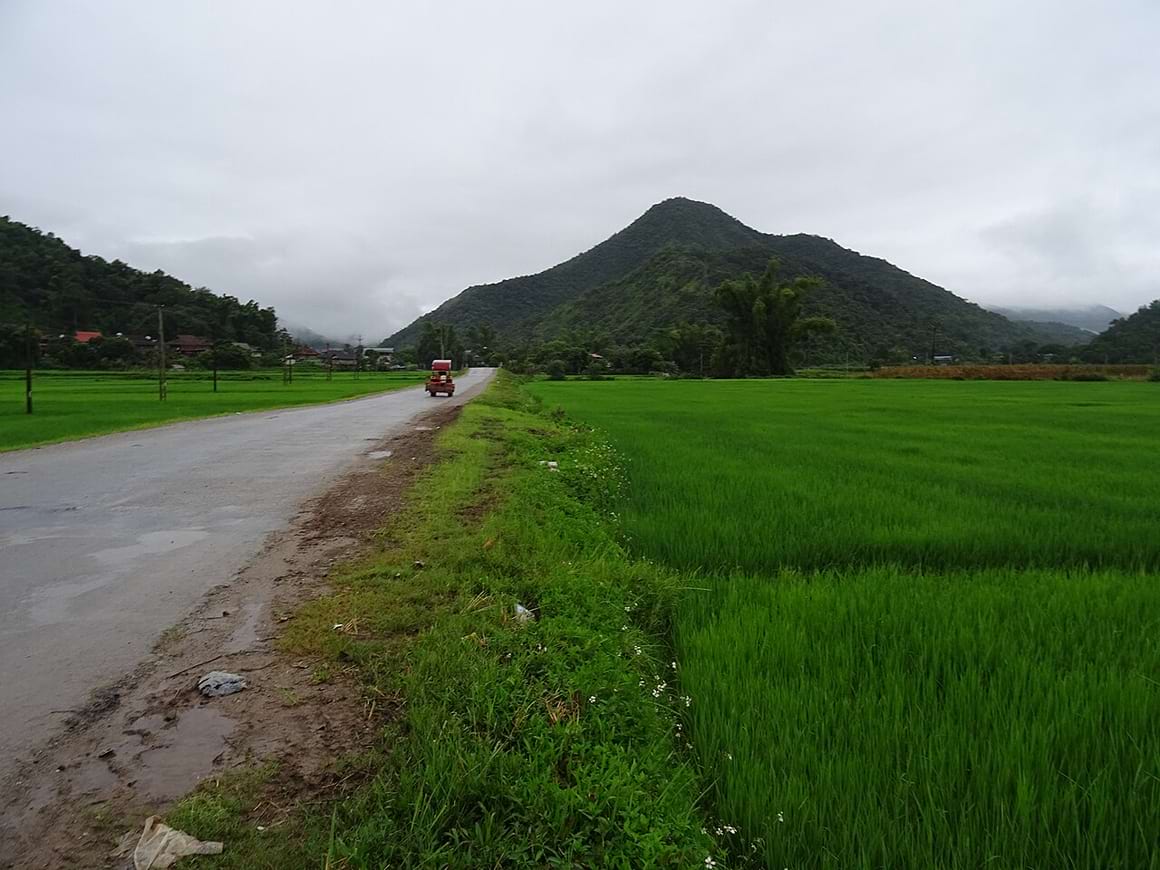
This is not a crossing you stumble across by accident. Tay Trang links northern Laos with Vietnam near Dien Bien Phu, and getting there involves winding mountain roads through some of the most spectacular scenery in the entire region. The journey is slow by design. You do it for the views rather than getting from A to B as quick as possible.
Most people cross by long distance bus or private vehicle. Border formalities typically take 30 to 60 minutes, and the remoteness of the location means queues are rarely an issue. What can be an issue is the road itself: weather-related delays and poor road conditions are a real possibility, particularly during the wet season, so build flexibility into your plans if you’re crossing between May and October.
The big thing to know before you go: visa on arrival for Laos is not available at this crossing. You need to sort your Lao visa in advance, either through the eVisa system or at a Lao embassy before you travel. Don’t assume you can wing it at the border. ATM access near the crossing is essentially non-existent, so arrive with enough cash to cover onward transport and food on both sides.
Nam Phao – Cau Treo Border
Nam Phao (Cau Treo on the Vietnamese side) is the main crossing between central Laos and central Vietnam. Long distance buses run on both sides, the border process typically takes 30 to 60 minutes, and it’s open to foreigners in both directions.
Lao visa on arrival is available at Nam Phao, which makes this one of the more flexible crossings on the Laos-Vietnam stretch. Vietnam eVisa is accepted at Cau Treo as a listed port of entry. There are no ATMs at the border itself, so carry enough cash to cover onward transport before you arrive.
One honest heads up: Cau Treo is the crossing most associated with unofficial charges. Travellers regularly get asked for around $1 for a stamp that has no official fee attached to it, and a similar charge appears on weekends and outside regular hours. Know the official costs before you get there, and as covered earlier in this guide, if someone with a stamp hits you with a small unexpected fee, paying it and moving on is usually the smarter call than digging your heels in.
Laos to Cambodia
Nong Nok Khien (Laos) / Trapeang Kreal (Cambodia)
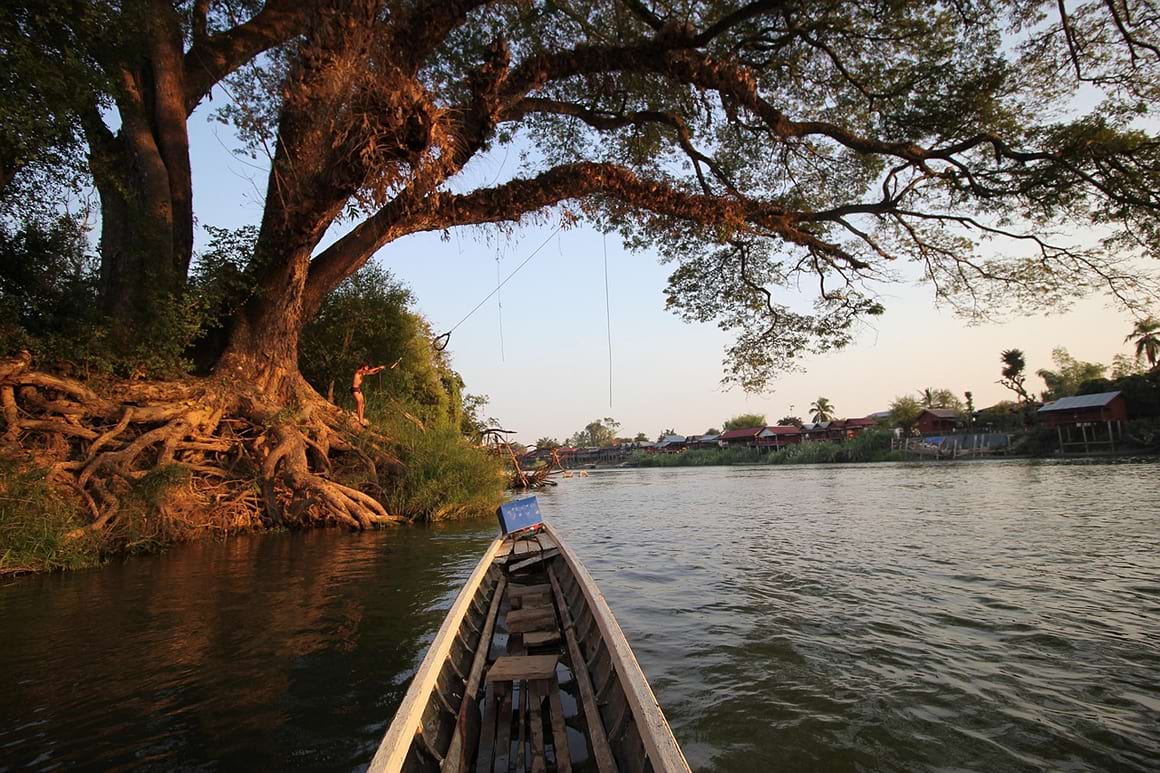
This is the only land crossing between Laos and Cambodia, and the one every backpacker coming through the Four Thousand Islands eventually passes through. If going down south is part of your Laos itinerary, you’ll most likely find yourself at this border crossing. From Don Det, you can head south towards Stung Treng and on to Phnom Penh or Siem Reap.
Getting to the border typically involves a combination of buses, minivans, and a short boat ride depending on where you’re starting from. The crossing itself usually takes one to two hours. Visa on arrival is available for both Laos and Cambodia here, and Cambodia eVisa is also accepted, so you’ve got options. There are no reliable ATMs at the border, so sort your cash before you arrive.
The honest bit: this crossing has a well-documented reputation for unofficial fees, particularly on the Lao departure side where a $1-2 ‘processing fee’ tends to materialise with no paperwork to show for it. Some travellers report having stamps withheld until it’s paid. It’s not official, it’s annoying, and it’s also usually a couple of dollars. Sucking it up and paying will save you an unnecessary standoff.
Vietnam to Cambodia
Moc Bai (Vietnam) / Bavet (Cambodia)
This is the busiest Vietnam-Cambodia land crossing and the one most people use between Ho Chi Minh City and Phnom Penh. It’s high volume, well-connected, and about as efficient as a busy land border gets.
Direct buses are the most common way to travel, with many operators handling much of the border process for passengers. Direct buses run regularly from Ho Chi Minh City, with the full journey to Phnom Penh taking around six hours, including the crossing. The border is open daily from 06:00 to 22:00.
Now for the fun part – the two immigration buildings sit around 300 metres apart with a no-man’s-land walk in between. Nothing complicated, just don’t be surprised when you clear Vietnamese immigration and find yourself trudging across open ground to reach the Cambodian side. Between you and me, being in this liminal space is my favourite part of overland crossings.
Visa-wise: Cambodia offers both eVisa and visa on arrival here. Vietnam does not issue visa on arrival at land borders, so you’ll need a Vietnam eVisa sorted in advance if you’re not eligible for visa-free entry. ATMs and exchange services are available on both sides.
The main irritation is touts around the border area pushing overpriced transport and dodgy exchange rates. For exchange, use the official counters in the city and rely on ATMs until you’re situated. For transport, walk away from the border gate before engaging with anyone, get a few quotes, and never take the first price offered.
As I did this border crossing as a direct journey with a transport company, I personally didn’t experience this agg. I got dropped off at the Cambodian border and picked up on the other side in Vietnam, so no dealing with potentially scammy taxis required.
Ha Tien to Prek Chak
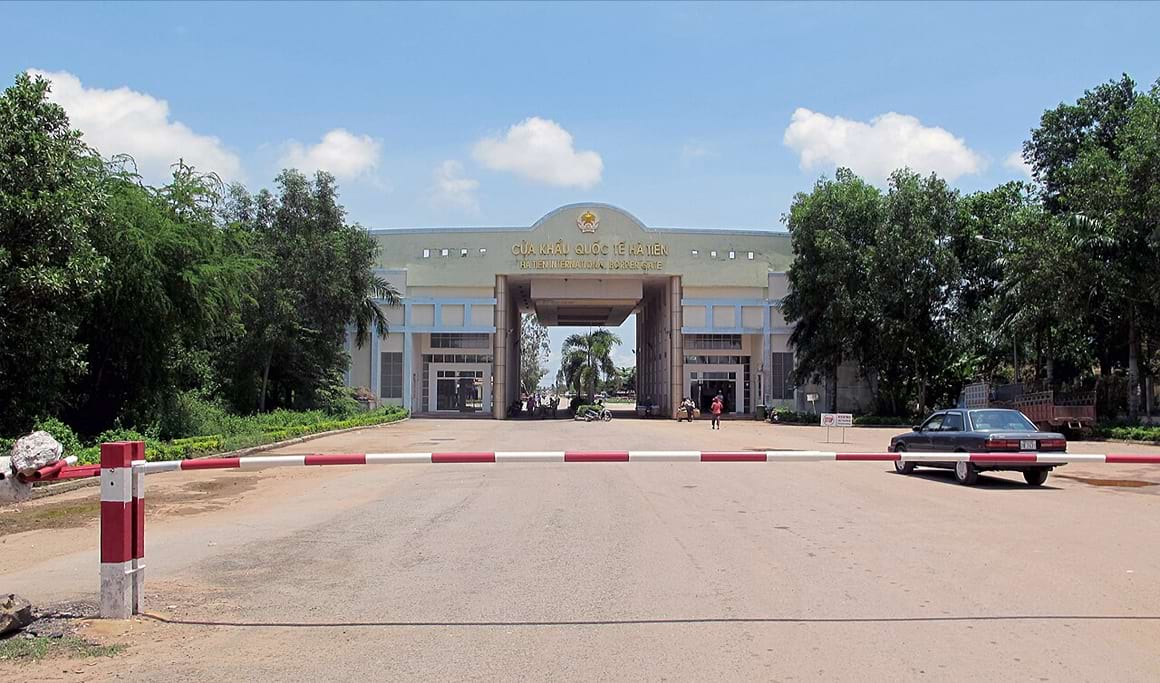
This is the crossing for Cambodia’s southern coast. If you’re heading to Kampot, Kep, or Sihanoukville in Cambodia or are coming from Phu Quoc in Vietnam (or vice versa), this is your border.
It’s significantly quieter than Moc Bai, the two immigration buildings are close together, and most people are through in under an hour. The border is open 07:00 to 18:00 daily, so don’t roll up late expecting to squeeze through.
One thing to know before you go: Cambodia eVisa is not valid at this crossing. You’ll need either a visa on arrival on the Cambodian side or a visa arranged in advance through the embassy. On the Vietnamese side, eVisa is accepted here, but no visa on arrival, so sort that before you travel. No ATMs at the border itself, so come with enough cash to cover the crossing and onward transport to wherever you’re headed.
Scams are relatively uncommon here compared to busier crossings, which makes it one of the more relaxed entry points in the region.
Thailand to Malaysia
Padang Besar
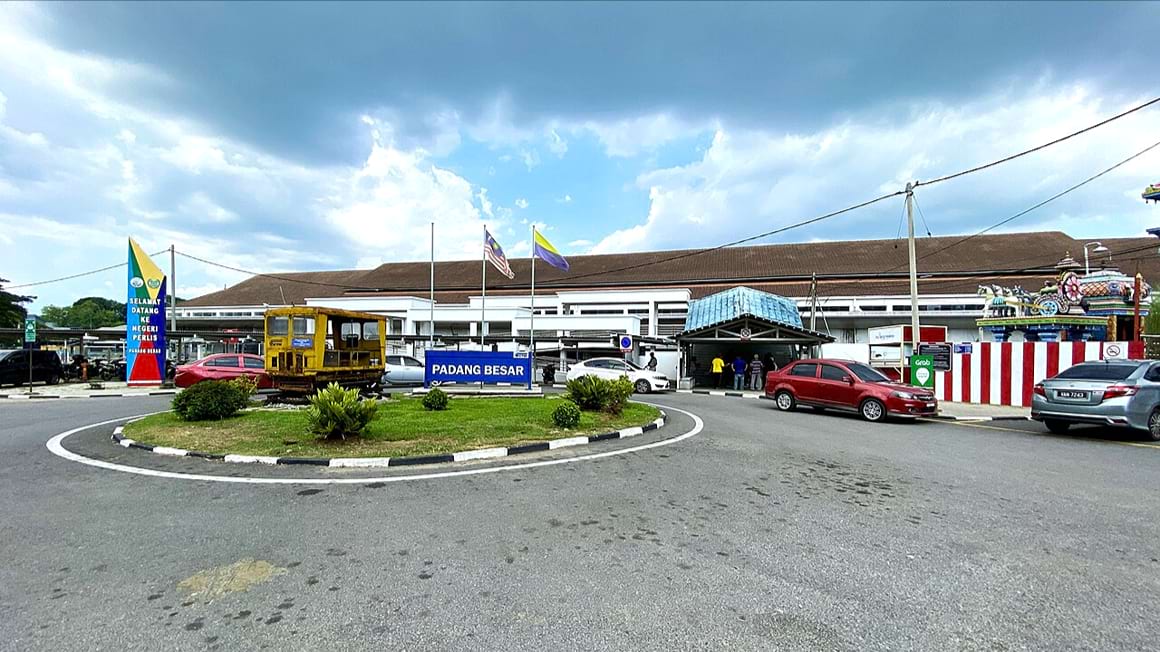
Photo: Slleong (WikiCommons)
The go-to crossing for anyone doing the Bangkok to Kuala Lumpur overland route by train. There’s no single through service between the two capitals, but the connection at Padang Besar is well set up. You take a Thai train south to Padang Besar, clear both Thai and Malaysian immigration inside the Malaysian station without leaving the building, then board a separate KTM train continuing south.
KTM ETS runs the full length of the peninsula from Padang Besar down to JB Sentral, making onward connections to Penang, KL, and Johor Bahru all straightforward from the one station.
One thing to watch: there are two Padang Besar stations, one on the Thai side and one on the Malaysian side. Rail passengers crossing the border use the Malaysian one. Don’t get off too early.
The crossing itself is efficient. Both immigration checkpoints are inside the same building; the process typically takes 30 to 90 minutes, and ATMs are available nearby. Buses and minivans also use this route if the train doesn’t work for your schedule. Thankfully, problems are rare here, just occasional delays tied to train schedules, so check timings before you commit to onward plans.
Sadao Border
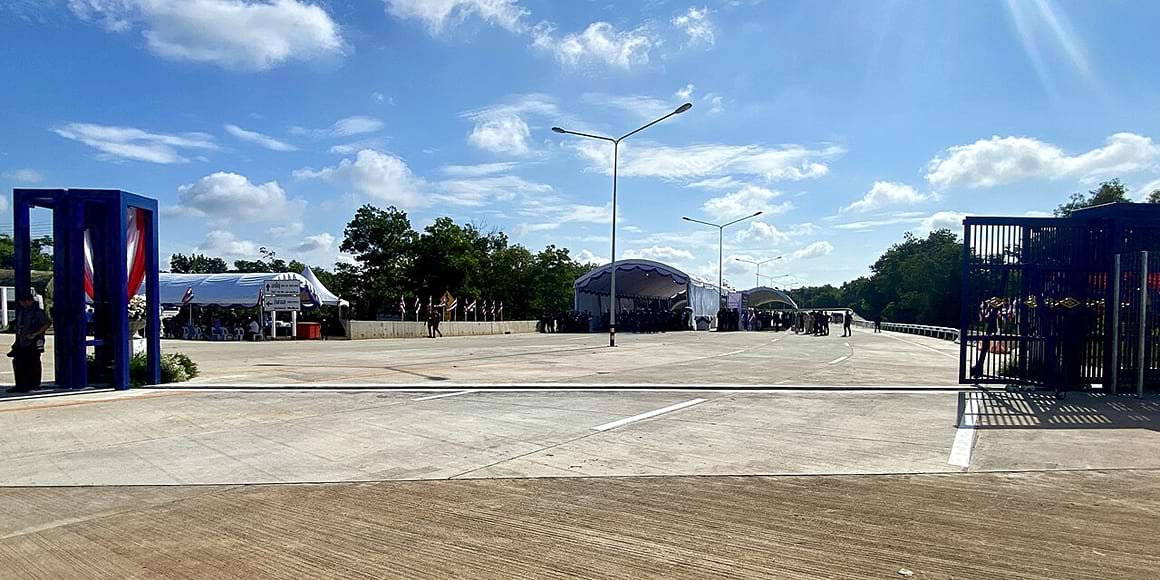
This is the busiest highway crossing between Thailand and Malaysia, and the one most long distance buses between the two countries use. If you’re on a Hat Yai to Penang or Bangkok to Kuala Lumpur bus, this is almost certainly where you’ll cross.
As of July 2026, a brand new Sadao CIQ complex is in operation on the Thai side, replacing the old crossing. The infrastructure is now shiny, new and well set up. Hours are 05:00 to 23:00 Thai time (06:00 to midnight Malaysian time), so it’s open late but not all night.
One important note: Bukit Kayu Hitam on the Malaysian side is not a visa on arrival entry point for Malaysia. Check your visa requirements for Malaysia before you travel.
Crossing times run from 30 minutes to two hours depending on traffic, and holiday periods can push that considerably higher. ATMs and exchange facilities are available on both sides. The main issue here is traffic congestion, particularly during holiday periods. Aside from occasional delays, it is a reliable and easy crossing.
Malaysia to Singapore
Woodlands Checkpoint
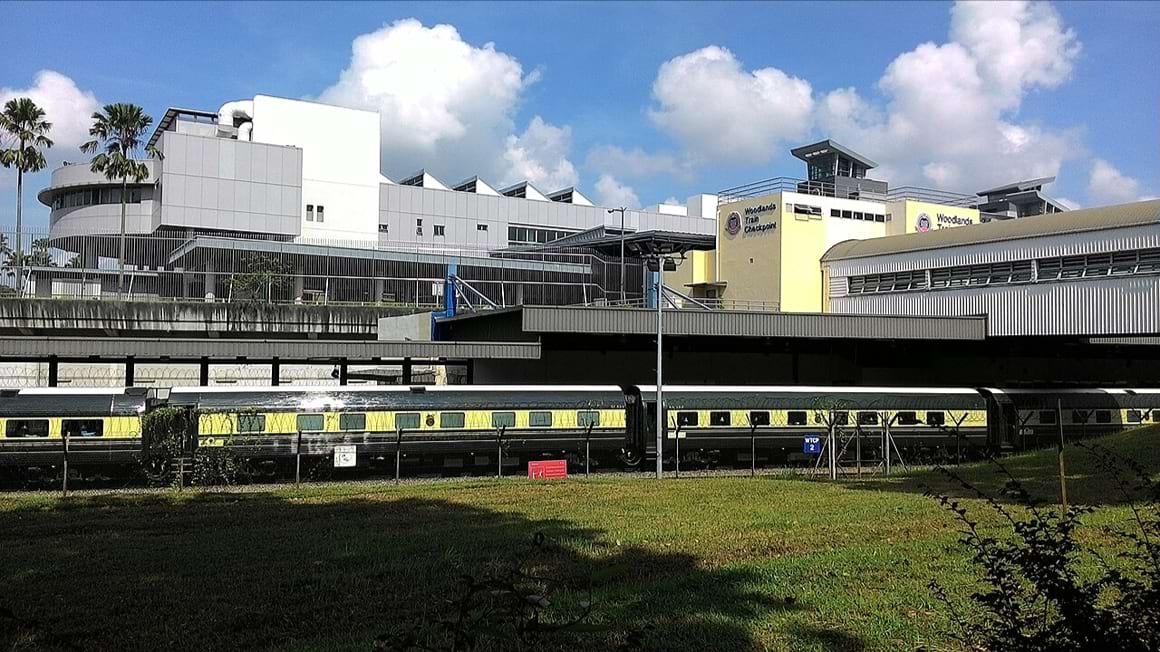
Photo: Joshua (WikiCommons)
The Woodlands Checkpoint casually happens to be one of the busiest land border crossings in the world, connecting Johor Bahru in Malaysia with Singapore. Whether you’re a backpacker, a commuter, or a day-tripper coming back from cheap food and a massage, you’re crossing in the same queue as everyone else.
Buses are the main option for travellers without their own vehicle, and the checkpoint runs 24 hours so you’re not tied to a specific window. Under moderate conditions, the crossing takes 45 to 55 minutes. During peak weekday rush hours and Friday evenings or public holiday weekends, waits of two to three hours are common. The worst times are Friday evenings heading into Malaysia, Sunday evenings heading back into Singapore, and weekday mornings when commuter traffic builds from around 5am.
Tuas Second Link
I’ll give you an inside secret. You don’t have to go through the Woodlands checkpoint at all to get to Singapore from Malaysia. Most backpackers don’t know this crossing exists, but it can save you a lot of time stuck in traffic.
The Tuas Second Link connects western Singapore with the Gelang Patah area of Johor, and on a typical day it’s considerably faster than Woodlands, averaging 20 to 25 minutes under moderate conditions compared to the best part of an hour via the Causeway.
One thing to get straight before you go: Tuas is a vehicular checkpoint only. You cannot walk across. You need to arrive by bus or private vehicle. Causeway Link buses serve the crossing from Jurong East and Boon Lay on the Singapore side, and the process is similar to Woodlands: get off with your bags, clear immigration, reboard. It’s less crowded and generally less chaotic.
The trade-off is location. If you’re heading to JB city centre, Woodlands makes more sense. Tuas puts you in the western part of Johor, which works well if that’s where you’re going but adds time if you need to get across town afterwards. During major public holidays, Tuas can back up too, so it’s not a guaranteed shortcut year-round, but for most trips it’ll save you a chunk of time.
Border Crossings to Research Carefully
Beyond the well-travelled routes between Bangkok, Siem Reap, Luang Prabang, and Kuala Lumpur lies a network of crossings that can take you somewhere far fewer people go. Corners of countries deemed as quieter destinations with thinner crowds and more adventure.
But with all travel that doesn’t follow a script, it’s worth a little more research and groundwork before you rock up.
Myanmar Borders
Myanmar sits in a different category to every other country in this guide, and it needs to be said plainly. Large parts of Myanmar, particularly border regions and rural areas, are active conflict zones. Most Western governments currently maintain do-not-travel or high-level advisories. Read your government’s travel advisory before you make any plans, and check to see if your travel insurance is even valid if you step foot in Myanmar.
For those who do decide to go, entry is primarily by air through Yangon or Mandalay. The land border picture is complicated and changes regularly. At the time of publishing, the only crossing consistently confirmed open for tourist entry is Ranong to Kawthaung from Thailand, via a short boat crossing. Crossings at Mae Sot/Myawaddy and Mae Sai/Tachileik have opened and closed repeatedly since the coup, and their current status shifts without much notice. Myanmar-China and Myanmar-Laos crossings are not open to foreign tourists.
The standard advice about checking blog posts or forum threads before crossing does not cut it here. What was true last month may not be true when you arrive. Verify directly with official immigration sources and your government’s foreign travel advisory, and build serious flexibility into any plans that involve Myanmar.
Lesser-Used Crossings
Beyond the main backpacker routes sits a network of crossings that most people never use, and a few that most people have never heard of. They’re not necessarily harder, just less documented, which means more legwork before you go.
In Borneo, the main land crossing between Malaysian Sarawak and Indonesian Kalimantan is Entikong to Tebedu, the primary road link between Kuching and Pontianak. It’s the only crossing in Borneo set up to handle international travellers with any ease.
A smaller crossing exists at Lubok Antu and Nanga Badau for those heading deeper into the interior, and from Sabah there’s a boat crossing from Tawau to Nunukan or Tarakan on the Indonesian side. Several other crossings along the 1,881km Malaysia-Indonesia border exist on paper but are not open to foreigners, so don’t assume any crossing you find on a map is usable.
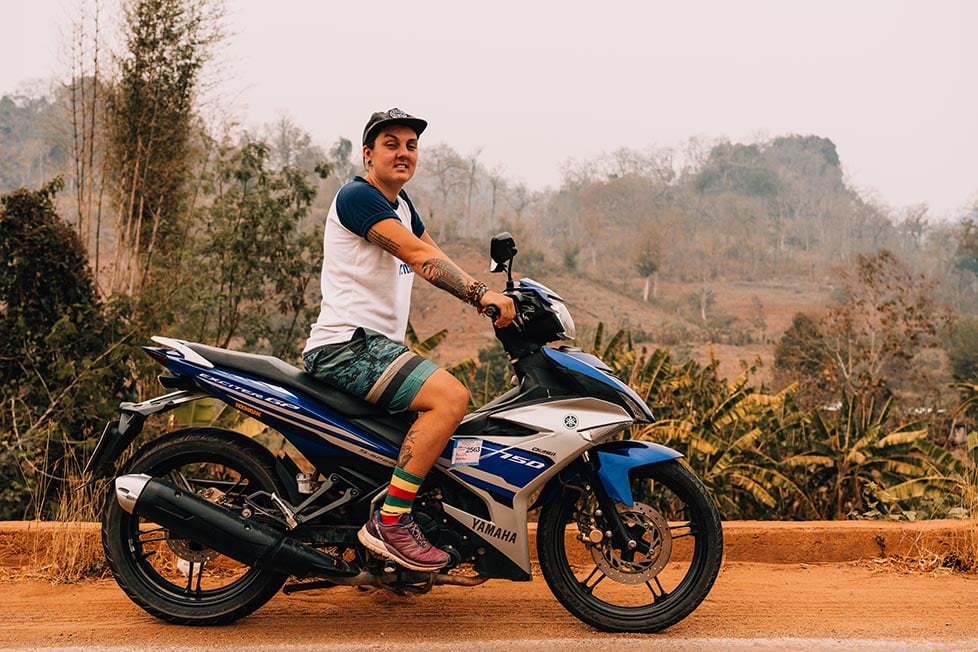
Image: Nic Hilditch-Short
In Laos, remote crossings into neighbouring countries can bring you to mountain villages and scenery that gets almost no tourist traffic. Vietnam’s smaller provincial crossings offer quieter alternatives to the main gateways, and the same goes for Cambodia and Thailand.
The consistent theme across all of these is the same: transport links are thinner, ATMs may not exist, accommodation can be limited, and immigration facilities are sometimes basic. It’s not to say they’re not worth doing. It just means arriving unprepared will cost you more time and stress than it would at a busier crossing. Research the specific route before you commit to it, not just the country.
Visas in Southeast Asia: What Travellers Need to Know
Southeast Asia is one of the more forgiving regions in the world when it comes to entry requirements, but every border crossing has its own rules, and those rules change more often than most travel guides keep up with. Getting this wrong can mean fines, denied entry, or an unplanned detour to a consulate. Getting it right is the difference between a lil bit of research BEFORE you get to the border.
Visa-Free Entry
The HOLY GRAIL of getting around in South East Asia. Most Western passport holders can enter at least some countries here without arranging a visa in advance, but the details vary more than people expect. Vietnam gives UK passport holders 45 days. Thailand currently offers 30 days, but always like to chop and change. Cambodia and Laos aren’t visa-free for most Western nationalities at all, so don’t assume.
Visa-free also doesn’t mean waltz straight through. Immigration officers can ask for proof of onward travel, accommodation bookings, or evidence you can actually afford to be there. Have those ready.
eVisas
Electronic visas have become increasingly common throughout Southeast Asia and are often the most convenient option for travellers crossing borders.
Apply online, pay the fee, arrive with it sorted. When it works it’s genuinely one of the better things to happen to overland travel in the region. Processing times run from a few days to a couple of weeks depending on the country, so don’t leave it the night before a morning crossing.
Use official government immigration websites only. There’s an entire industry of third-party agencies charging for something you can do yourself in ten minutes for free. Some of them are just expensive. Some of them are scams. Skip the lot.
Visa on Arrival
Available at plenty of airports and some land borders, but with limits that catch people out. Vietnam does not do visa on arrival at land crossings, full stop. Cambodia’s is available at airports and certain land borders but not all of them. Laos offers it at the main crossings but not the remote ones.
Show up without a passport photo, without cash in the right denomination, or without the correct form filled in, and you’ll be standing to one side watching everyone else walk through. As much as it sounds like the easy option on paper, as you don’t have to deal with governments’ (let’s be real) shoddy online systems, sometimes the visa on arrival is a stressful process in its own right.
It is also important to remember that sometimes visa on arrival isn’t even an option offered. Never assume that a visa on arrival will be available simply because it was available in the past.
Multi-Country Trips
String several countries together and the visa admin gets correspondingly more complicated. Map it out before you leave. Keep track of how many days you’re permitted in each country, because overstaying means fines, and a flag on your entry record that will follow you to the next border. It’s a silly mistake that’s easily avoided and not worth potential future headaches.
Sort your visas as part of planning your route. The travellers who do are the ones who spend their time actually enjoying the place rather than arguing with an immigration officer in a border town at 7pm.
How Much Does It Cost to Cross Borders in Southeast Asia?
Overland travel in Southeast Asia is cheap. That’s half the reason people do it instead of flying, and the scenery en route sweetens the deal too. Most crossings by bus, minivan, or train cost a fraction of an equivalent flight, and you actually get to see the place you’re passing through rather than a cloud.
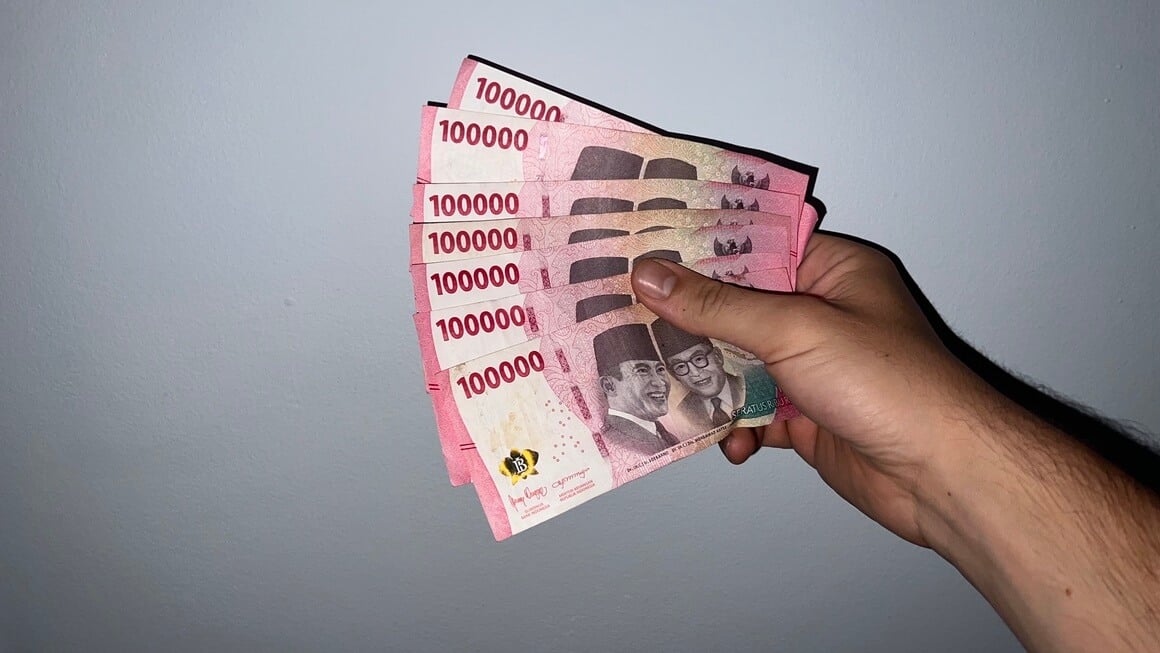
Photo: @joemiddlehurst
Transport Costs
Transport is almost always the biggest line on your border crossing day budget, and almost always still cheaper than flying.
The Chiang Mai to Chiang Khong bus runs around $16-18 with GreenBus, though factor in the Mekong slow boat to Luang Prabang on top of that and the overall cost climbs. Ho Chi Minh City to Phnom Penh via Moc Bai sits at around $20-35 depending on the operator. Giant Ibis and Kumho Samco are at the higher end of that range, and both are worth the extra few dollars.
Train travel between Thailand and Malaysia can come in cheaper than the bus on certain routes. Private transfers exist on most crossings if you’ve got money to burn and a strong preference for not sitting next to a stranger for six hours. Either way, most overland crossings in the region will set you back somewhere between $15 and $50 before visa costs, which by any measure is not a lot of money for crossing an international border.
Visa Costs
Costs vary significantly depending on your nationality, which country you’re entering, and whether you’re paying on arrival, using an eVisa, or qualifying for visa-free entry. For nationalities that need to pay, $25-50 per country is a reasonable ballpark. Check the official figures before you travel since fees change, sometimes without much notice.
Additional Expenses
This is where people get caught out. The small costs on a border crossing day have a habit of adding up faster than expected.
Tuk-tuks and shared taxis between bus stations, checkpoints, and town centres typically run $1-10 depending on distance, and they’re rarely avoidable. ATM withdrawal fees vary by country and bank but stack up quickly if you’re pulling cash regularly. A local SIM card costs $3-15 depending on where you are and how much data you need.
Then there’s the general tax of a long border day: snacks, drinks, a meal while you’re waiting, the coffee you need after three hours on a minivan with no air conditioning. Set aside an extra $10-20 for crossing day expenses and you won’t be scrambling.
Even with all of that accounted for, overland travel across Southeast Asia is one of the best value ways to see the region. The maths almost always works in your favour.
Overland vs Flying: Which Is Better?
There’s no universally right answer here, and anyone who tells you otherwise is trying to sell you something. It comes down to how much time you have, how much money you want to spend, and what kind of traveller you are.
Overland Travel
Overland travel is cheaper, more flexible, and considerably more interesting. The journey between Thailand and Laos, or Vietnam and Cambodia, is not dead time. It’s river crossings, mountain roads, small towns that no one has on their radar but can often be some of the most interesting parts of your trip. It’s the kind of slow accumulation of experience that makes a trip feel like something other than a series of airport transfers. You can stop when something looks worth stopping for. You can change your plans on the fly. You actually get to see the region you’ve come to see.
It also has a lower carbon footprint than flying, if that factors into your decisions.
The downsides, of course, do exist. A journey that takes an hour by air can take an entire day by road. Border queues happen, buses run late, and occasionally the logistics of stringing multiple connections together across several countries requires more planning than it looks like on paper.
Flying
Flying is undeniably the fastest way to travel around Southeast Asia. That’s the main thing it has going for it, and depending on your situation, faster might be exactly what you need. Low cost carriers connect most major cities across the region, and if you’re working with two weeks and a list of places you want to see, a one-hour flight beats a twelve-hour bus journey on the numbers.
What flying doesn’t give you is the journey itself. Every airport in Southeast Asia looks more or less like every other airport. You arrive without any sense of the distance you’ve covered or the landscape in between, and the hidden costs of flying, baggage fees, airport transfers, the taxi into town at the other end, have a way of making the cheap flight considerably less cheap by the time you’re actually at your destination.
My honest take? It honestly depends. If an overland journey is cool – go for it. It’s one of those experiences where the journey is just as important as getting to your destination. Other times, the flight is easy, quick and relatively quick. Is it worth adding another twelve hours for the sake of saving 20 bucks?
Sometimes you have to weigh up both options and answer honestly: overland travel is an adventure yes, but not one that is always worth the hassle.
Sample Southeast Asia Border-Hopping Routes
There’s no correct way to do this. Some people rip through five countries in three weeks and have the time of their lives. Others park themselves in northern Laos for a month and never look back. Both are valid. Here are three broad approaches to get you thinking.
Classic Banana Pancake Trail
The classic for a reason. Most first-timers start in Bangkok, head north to Chiang Mai, cross into Laos via Chiang Khong and the Mekong slow boat to Luang Prabang, continue into Vietnam, work their way south through Hanoi, Hoi An, and Ho Chi Minh City, then cross into Cambodia for Phnom Penh and Angkor Wat before looping back into Thailand. The route is well-trodden, well-connected, and packed with the kind of places that end up on people’s lists for good reason.
The trail gets a bad rep in some circles for being too popular, too easy, too full of other backpackers doing exactly the same thing. They’re not entirely wrong, but going off-the-beaten-path is still entirely possible here if you’re willing to put in the effort 😉
Mainland Southeast Asia Loop
If you’ve got more time, extend the Banana Pancake Trail south into Malaysia and Singapore for a full mainland loop. Thailand, Laos, Vietnam, Cambodia, Malaysia, Singapore, and back.
You’re covering an enormous amount of ground, crossing some of the region’s most interesting borders, and moving through landscapes and cultures that shift dramatically from one country to the next. It takes more planning and more time, but as long-term travel routes go it’s hard to beat.
Slow Travel Route
This all being said, not every trip needs to involve ticking countries off a list. Spending a month in northern Thailand and Laos, or making your way slowly from southern Vietnam through Cambodia over several weeks, gives you something that fast travel rarely does: enough time to actually get to know a place rather than just passing through it.
You’ll pass through fewer borders, with lower transport costs and considerably less time on buses. If the idea of crossing five countries in a fortnight already sounds exhausting, slow travel might just be your method of choice.
Final Tips for Smooth Border Crossings
Border crossings in Southeast Asia are rarely as complicated as they look on paper. Most of the problems people run into are avoidable with a bit of preparation. Here’s what actually makes a difference.
- Start early. Cross in the morning wherever possible. It gives you buffer time if something goes wrong, and onward transport is easier to find mid-afternoon than at dusk. Showing up at a border at 4pm with no accommodation booked on the other side is a situation that’s entirely avoidable.
- Carry cash. Small denomination US dollars alongside enough local currency to cover transport and food on both sides. ATMs are not guaranteed at every crossing, card payments even less so. Don’t rely on being able to sort it out when you arrive.
- Sort your admin before you leave. Check visa requirements for the specific crossing you’re using, not just the country. Complete any digital arrival cards in advance. Download offline maps for both sides of the border. None of this takes long and all of it matters when your data disappears the moment you step into no-man’s-land.
- Know the official costs. Before you get to any border, know what things are supposed to cost. Visa fees, processing fees, transport on the other side. When someone asks you for money you weren’t expecting, you’ll know immediately whether it’s legitimate or not.
- Build in flexibility. Queues happen, buses run late, and border crossings rarely go exactly to plan. If you’ve booked a tour or an onward flight that relies on clearing a border at a precise time, you’re asking for stress. Leave room in your schedule for things to take longer than expected.
- Be patient. This is the one that’s harder to prepare for but matters most. Arguing with an immigration officer, losing your temper in a queue, or making a scene over a two-dollar unofficial fee will not improve your situation. Slow down, stay calm, and remember that the crossing is just the preamble to wherever you’re actually going.
Get all of that right and border crossings stop being something to dread and start being something to look forward to.
Some of the best moments of travelling through Southeast Asia happen in transit. The slow boat on the Mekong, the mountain road into Dien Bien Phu, the moment you step off a bus into a city you’ve never been to before. In South East Asia, sometimes the journey is just as important, if not more, than the destination.