You’ve just landed in Mexico after a long-haul flight. Immigration took forever, your backpack is somewhere on the carousel, and all you really want is to get to your hostel. The only problem? You need to order an Uber, message your accommodation, and figure out exactly where you’re going. Without mobile data, even simple tasks suddenly become a lot more complicated.
Having travelled extensively around Mexico, we’ve learned that reliable data is one of those things you don’t appreciate until you don’t have it. In major destinations like Mexico City, Guadalajara and Cancún, finding WiFi is rarely difficult. But once you start moving around the country, changing buses in Mérida, navigating Oaxaca’s winding streets, working remotely from Puerto Escondido, or road-tripping through Baja, you very quickly realise that relying entirely on public WiFi isn’t always practical. Sometimes it’s slow, sometimes it’s unavailable, and sometimes you simply need information right now.
For years, the standard solution was to buy a local SIM card after arriving. Plenty of travellers still do exactly that, and if you’re spending several months in Mexico it can be a smart option. However, it also means spending part of your first day tracking down a store, comparing plans, dealing with registration requirements, and getting everything set up before you’re connected.
That’s why eSIMs have become such a popular alternative. They allow you to install a data plan before departure and get online almost immediately after landing. The challenge nowadays isn’t deciding whether to use an eSIM, it’s choosing the right one. Not all Mexico eSIMs offer the same coverage, speeds, network access, or value for money.
To help you cut through the marketing claims, we’ve compared the best Mexico eSIM providers, looked at how they perform across different parts of the country, and broken down which options make the most sense for backpackers, digital nomads, holidaymakers, and long-term travellers alike.

TABLE OF CONTENTS
The Broke Backpacker is supported by you. Clicking through our links may earn us a small affiliate commission, and that's what allows us to keep producing free content 🙂 Learn more.
- What Is an eSIM and Is It Worth Using in Mexico?
- Advantages of Having an eSIM vs a Traditional SIM
- Best eSIMs for Mexico Compared
- Mexico eSIM Pricing: What You Actually Need to Pay
- How to Set Up a Mexico eSIM Before You Land
- Is my cell phone compatible with the eSIM Card?
- Which Mexico eSIM Should You Buy?
What Is an eSIM and Is It Worth Using in Mexico?
An eSIM is a digital SIM card that lets you activate a mobile data plan without needing to insert a physical SIM into your phone. Instead, you purchase a plan online, install it in a few minutes, and connect to a local network as soon as you arrive at your destination. The eSIM phenomena is growing fast and with good reason.
For Mexico travellers, the biggest advantage is convenience. Rather than landing at the airport and searching for a SIM card kiosk, comparing plans, or trying to understand network options after a long flight, you can have everything set up before you leave home. In many cases, you’ll be connected the moment your plane touches down.
That immediate connectivity can make a surprisingly big difference. Whether you’re ordering an Uber from the airport, accessing directions to your accommodation, messaging your hostel about a late arrival, checking bus schedules, or logging into your banking app to pay for something on the go, having data available from the start removes a lot of travel-day stress.
It’s also particularly useful for digital nomads and remote workers. While Mexico has plenty of excellent cafés, coworking spaces, and accommodations with decent internet, WiFi quality can vary significantly between destinations. Having mobile data as a backup can save your workday when the connection at your accommodation isn’t quite as reliable as advertised.
Of course, eSIMs aren’t always the cheapest option. Travellers spending several months in Mexico may find that a local SIM card offers better long-term value. But for most visitors, the combination of instant setup, ease of use, and immediate connectivity makes an eSIM one of the simplest ways to stay connected while travelling around Mexico.
Advantages of Having an eSIM vs a Traditional SIM
An eSIM is a digital SIM card that allows you to activate a mobile data plan directly on your phone without needing a physical SIM card. Most modern smartphones now support eSIM technology, making it possible to get connected in just a few minutes.
For travellers in Mexico, the biggest advantage isn’t technology, it’s convenience. After a long flight, the last thing most people want to do is hunt around the airport for a SIM vendor, compare local plans, hand over their passport details, and fiddle around with a SIM tray while tired and jetlagged. With an eSIM, you can sort everything out before you even leave home and arrive with data ready to go.
That means you can step off the plane and immediately book an Uber, message your accommodation, access maps, check bus schedules, or look up directions without having to find WiFi first. It’s one less piece of travel admin to worry about, particularly on arrival day when you’re often dealing with unfamiliar surroundings and a dozen other logistics.
eSIMs are also particularly useful for travellers doing multi-stop trips. If Mexico is just one stop on a wider journey through North America or Latin America, many providers offer regional plans that work across multiple countries. Instead of swapping physical SIM cards every time you cross a border, you can often stay connected with the same eSIM throughout your trip.
There are financial benefits too. International roaming charges can still be surprisingly expensive depending on your home network, whereas most eSIM plans let you see exactly what you’re paying upfront. For many travellers, that predictability alone is worth the switch.
Another small but surprisingly welcome benefit is that you don’t need to remove your regular SIM card. Anyone who has ever wrapped a tiny SIM card in a receipt, hidden it in a wallet, and then spent three weeks worrying about losing it will appreciate being able to leave their home SIM safely in their phone while using an eSIM for data abroad.
Because eSIMs are delivered digitally, they eliminate the need for plastic SIM cards and packaging. It’s not the primary reason most travellers choose them, but it is a small environmental benefit alongside the convenience.
While long-term travellers may still find that a local Mexican SIM card offers better value for extended stays, eSIMs have become the easiest way for most visitors to stay connected from the moment they arrive.

Photo: Nic Hilditch-Short
And The Downsides…
Of course, eSIMs aren’t perfect. Most travel eSIMs for Mexico are data-only plans, meaning you won’t usually get a local Mexican phone number for making calls or sending traditional SMS messages. For most travellers this isn’t a major issue, apps like WhatsApp, FaceTime, Telegram, and Google Meet have largely replaced international calling, but it’s worth knowing before you buy. If you need to install a Mexico-only app, then you may find that you are snookered as you generally need a local number in order to confirm.
There can also be a slight learning curve if you’ve never used an eSIM before. Installation is usually straightforward, but it’s not quite as foolproof as simply inserting a physical SIM card. And if you’re travelling with an older phone, compatibility can sometimes be an issue.
Finally, while eSIMs are often the most convenient option, they aren’t always the cheapest. Travellers spending several months in Mexico may find better value from a local provider such as Telcel once they’re settled in.
For most visitors, though, these drawbacks are relatively minor compared to the convenience of arriving connected and avoiding the hassle of buying and managing a local SIM card.
Best eSIMs for Mexico Compared
Firstly, I need to say straight of the bat that over the course of our 3 weeks in Mexico we used 3 different eSIMs. This is because some worked in other areas but not others. This is apparently a common complaint amongst travellers in Mexico – the country is geographically rather large and each State operates with a degree of autonomy meaning that no single telecom provider has a country wide monopoly.
I would therefore highly recommend (1) testing an eSIM before buying (many offer a free sample allowance) and (2) buying for no more than 1 weeks worth of data so you can change provider as you travel around.
4S

Heads up: 4S eSIM is still a relatively new player. We’re actively road-testing it over the coming months and will keep this page updated as we go.
4S eSIM is a newer name in the eSIM space, and one that’s only just starting to pop up on travellers’ radars. They’re positioning themselves as a straightforward, travel-first data provider, offering eSIM plans for a growing list of countries at competitive prices. Setup is the familiar QR-code process, and everything runs through a clean, no-nonsense platform — which, at the very least, suggests they understand what travellers actually want: quick access, clear pricing, and no friction at the airport.
So far, our experience with 4S eSIM has been quietly promising. Coverage has been solid in testing, speeds have held up for everyday travel use (maps, messaging, bookings), and there haven’t been any nasty surprises hidden in the fine print. It’s still early days, and we’ll be continuing to test 4S eSIM over the coming months across different destinations, but the signs are good.
If they keep building coverage and maintain this level of reliability, 4S eSIM could end up being a strong alternative to the more established players.
And check this, readers can bag 15% off all sale items using the code TBB at checkout!!!!
Jetpac

Jetpac eSIM is a travel-focused digital SIM solution that lets you stay online in more than 200 countries. They offer prepaid data plans for specific destinations, regions, and even offer a global coverage option (international sim). Options range from small 1 GB packages to larger or unlimited plans, all activated instantly via QR code and managed through the Jetpac app.
What really sets Jetpac apart are its added travel perks and user experience: their eSIMs often come with features like unlimited hotspot sharing, free access to essential apps even after data runs out, and perks such as airport lounge access if flights are delayed.
Nomad

In a few words, I used Nomad myself in Mexico after reaching Oaxaca and finding my HolaFly eSIM (which had worked very well in Mexico City) stopped connecting!! That said I had to chance again when we got to Tulum as Nomad started running very slow. The moral of the story here is probably that you will need to buy more than eSIM during your Mexico visit.
Nomad are very affordable and their online support is decent. Recommended.
Nomad has become one of the most popular travel eSIM providers thanks to its straightforward pricing, easy-to-use app, and wide range of data packages. Rather than focusing on unlimited plans, Nomad specialises in flexible capped-data options that tend to offer good value for short and medium-length trips around Mexico.
For most travellers, Nomad hits a sweet spot between affordability and convenience. Setup is quick, hotspot use is generally supported, and the app makes it easy to monitor your remaining data or purchase additional top-ups if needed. This makes it particularly attractive for backpackers, digital nomads, and travellers who want more control over their spending.
Holafly

Holafly has earned itself a strong reputation in the world of travel eSIMs thanks to its simplicity, reliability, and truly unlimited data plans for many destinations. What really sets Holafly apart is peace of mind: their focus on unlimited plans means you don’t have to worry about running out of data mid-trip, whether you’re navigating city streets, booking transport, or streaming on the go. For frequent travelers or those heading to multiple countries, Holafly also offers convenient regional and global plans.
Yes, Holafly tends to be a bit pricier compared to some budget-focused competitors, but it’s a classic case of getting what you pay for here. You’re not just buying data —you’re buying a hassle-free, dependable connection that works the moment you land, backed by 24/7 customer support ready to help in multiple languages.
I have often used cheaper providers, but I have rarely used better.
Saily

Saily is an eSIM provider backed by NordVPN, who offer a range of flexible and affordable data plans for travellers visiting Mexico. Their plans start at $5.99 for 1 GB of data valid for 7 days, with options extending up to 20 GB for 30 days at $69.99. These data-only plans provide internet access through Mexico’s leading networks, ensuring reliable connectivity throughout your stay.
Saily also offers a referral program where you can earn $5 for each friend you refer, adding extra value to their service.
Saily are certainly not the cheapest eSIM provider out there although when my girlfriend used them in Mexico, her Saily eSIM did outperform my HolaFly eSIM in terms of speed and coverage. That said neither of them worked at all in some parts of Oaxaca State.
Firsty
Firsty is a game-changer for any budget-conscious traveller looking for hassle-free global connectivity. The Amsterdam-based startup takes a unique approach to eSIMs by offering a freemium model – users get the choice between free, ad-supported data or affordable high-speed paid plans. With coverage in over 160 countries, Firsty ensures that whether you’re a digital nomad, backpacker, or casual traveler, you can get yourself connected.
What makes Firsty stand out? Their Firsty Free plan lets users watch a short ad to unlock 60 minutes of free data, which can be renewed throughout the day. If you need uninterrupted, high-speed internet, the Firsty Fast plan starts at just €1 per day. It’s essentially a ‘try before you buy’ model which serves as an absolute steal for travellers.
SimOptions
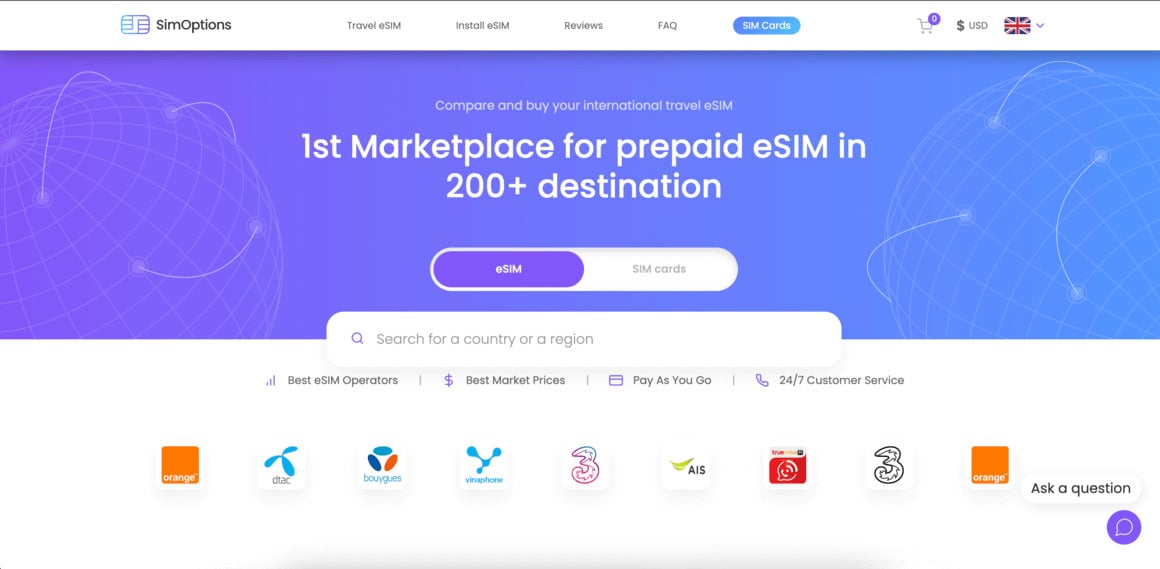
SimOptions is a reputable global marketplace that specialises in offering high-quality prepaid eSIMs for travellers in over 200 destinations worldwide. The platform has been dedicated to providing the best possible eSIM and international SIM options at the most competitive rates for travellers since 2018. They rigorously test and select eSIMs to ensure that you receive the best connectivity and service wherever you travel.
As well as effectively acting as a broker from a number of the best eSIM providers, SimOptions also offer their own eSIM products too.
Basically, SimOptions is kind of like a market comparison website for helping you find the best SIM for your travels. You simply type in your destination and they bring up the different eSIM options from a wide number of prospective providers and suppliers
Sim Local
Irish based Sim Local specialise in providing eSIM services, primarily targeted at global travellers to help them stay connected without incurring expensive roaming charges. Based in Dublin and London, Sim Local sells local SIM cards and eSIM profiles through their retail outlets, vending machines, and online platforms.
Sim Local offers a variety of eSIM plans that can be activated instantly and are designed to provide a convenient and secure way to stay connected in numerous countries. Their services are beneficial for those who travel frequently, as they provide the option to switch between multiple eSIM profiles on a single device, depending on the user’s location and needs.
They also offer pretty comprehensive customer support and a range of payment options, including Visa, Mastercard, Apple Pay, and Google Pay, all processed securely via Stripe.
Mexico eSIM Pricing: What You Actually Need to Pay
One of the biggest misconceptions about travel eSIMs is that they’re all priced similarly. In reality, Mexico eSIM costs vary quite a bit depending on the type of plan you choose. The biggest factors affecting price are whether the plan offers unlimited or capped data, how long it remains valid, whether hotspot use is included, and how much emphasis the provider places on customer support and app functionality.
While prices change regularly, the ranges below give a realistic idea of what most travellers can expect to pay.
Typical Mexico eSIM Price Ranges
| Trip Length | Budget Capped Plans | Mid-Range Plans | Unlimited Plans |
|---|---|---|---|
| 3–7 days | $4–$10 | $10–$20 | $15–$30 |
| 10–15 days | $8–$20 | $15–$35 | $25–$50 |
| 30 days | $15–$40 | $30–$60 | $50–$90+ |
Keep in mind that the cheapest plans usually come with fixed data allowances, while premium plans often focus on convenience, unlimited usage, or additional features such as hotspot access and customer support.
When Unlimited Data Is Worth It
Unlimited plans tend to make sense for travellers who know they’ll be using a lot of data throughout their trip.
This includes remote workers who need a reliable backup connection, travellers regularly tethering laptops or tablets, heavy users of social media and video content, and anyone planning to move around frequently rather than spending most of their time connected to accommodation WiFi.
They’re also useful for people who simply don’t want to think about data usage. Paying a little more upfront can be worth it if it means never having to monitor remaining gigabytes or purchase top-ups halfway through a trip.
When a Cheaper Capped Plan Is Enough
Not everybody needs unlimited data in Mexico. In fact, many travellers can get by perfectly well with a modest data package.
If you’re visiting for a short city break, spending most evenings connected to hotel or hostel WiFi, or mainly using your phone for maps, messaging, ride-hailing apps, and occasional browsing, a capped plan will often provide better value.
Many travellers overestimate how much data they actually use while abroad. If you’re not streaming video, uploading large files, or tethering other devices, a mid-sized capped plan can easily last an entire trip at a fraction of the cost of an unlimited package.
Ultimately, the best value isn’t necessarily the cheapest plan or the one with the most data—it’s the one that matches how you’ll actually use your phone while travelling in Mexico.
How to Set Up a Mexico eSIM Before You Land

One of the biggest advantages of using an eSIM in Mexico is that you can get everything ready before you travel. Most providers follow a very similar setup process, and in many cases you’ll be connected within minutes of landing.
Before You Buy
Before purchasing a Mexico eSIM, take a few minutes to check a few basics:
- Confirm that your phone supports eSIM technology.
- Make sure your device is carrier-unlocked and can accept plans from other networks.
- If you plan to use your phone as a hotspot for a laptop or tablet, check that your chosen provider allows tethering.
- Install your eSIM before departure whenever possible. It’s usually much easier to do this with a stable internet connection at home than while travelling.
Basic Setup Flow
The exact process varies slightly between providers, but it generally looks like this:
- Purchase your chosen Mexico eSIM plan.
- Install it using a QR code or the provider’s app.
- Label the eSIM so you can easily distinguish it from your regular SIM.
- Once you arrive in Mexico, switch your mobile data line to the eSIM.
- Test your connection and confirm that mobile data is working correctly.
Most travellers can complete the entire process in less than ten minutes.
iPhone Notes
- eSIM support is available on most recent iPhone models.
- You can usually keep your home SIM active alongside your travel eSIM.
- Consider labelling your plans (e.g. “Home” and “Mexico”) to avoid confusion.
- Disable data roaming on your primary SIM if you want to avoid unexpected charges.
Android Notes
- Many modern Android devices support eSIMs, but compatibility varies by manufacturer and region.
- Some Android phones allow multiple SIM profiles to be stored at the same time.
- Menu names differ between brands, but the setup process is broadly similar.
- Double-check compatibility before purchasing, particularly with older devices.

Photo: Nic Hilditch-Short
Is my cell phone compatible with the eSIM Card?
If you’re living in the Jurassic age, your phone might just not be compatible with a 5g eSIM for Mexico! Not every phone is … especially the Nokia 3210 you’ve had since high school! Basically, for your phone to be compatible with an eSIM it’s got to have this special microchip hardware installed, and unfortunately, a lot of older models don’t have this.
This even includes some iPhones that you might not think are that old, an iPhone 8 for example. In this case, you’re going to have to opt for an old-school SIM card in Mexico this time! * boomer alert! *
Need to stick to a traditional SIM card? We’ve got you covered too! Check out our guide to the best travel SIM cards and see which one suits your needs.
Which Mexico eSIM Should You Buy?
The best Mexico eSIM ultimately depends on how you travel. There is no single provider that’s right for everyone, and the cheapest option isn’t always the best value. It’s also worth bearing in mind that when I visited, I needed 2 as I had to change as I moved through the country – the HolaFly one that worked well in Mexico City. did not connect when I got to Oaxaca so I had to change to Nomad.
If you want unlimited data, minimal setup, and the peace of mind of never having to monitor your usage, Holafly remains one of the strongest options for most short-term visitors. It’s particularly well suited to holidaymakers, remote workers, and travellers who expect to rely heavily on mobile data throughout their trip.
On the other hand, travellers who mainly need data for maps, messaging, ride-hailing apps, and occasional browsing can often save money by choosing a capped-data provider such as Jetpac, Saily, or one of the other budget-friendly alternatives featured in this guide.
Whichever option you choose, setting up an eSIM before departure is one of the easiest ways to arrive in Mexico connected and ready to travel. Compare the latest plans, choose the one that matches your travel style, and enjoy your trip without worrying about finding a SIM card after you land.