In every hostel “where are you from, how long are you travelling for” chat, it breaks my heart when people skip Laos entirely, too short on time or chasing somewhere “more interesting.”
Whatever that means.
It stings just as much when people speed through, bopping between three big hitters and calling it a proper taste of the country. Laos and slow travel are a match made in heaven. You can’t absorb this country’s sleepy pace without matching it yourself.
So this isn’t a list of every temple, cave, and waterfall in Laos, though plenty of all three turn up below. It’s a route guide, built around how the country actually moves: by river, by mountain road, by overnight bus that claims it’ll take 12 hours but is closer to 24.
Whether you’ve got 10 days and need to choose hard between Luang Prabang, Vang Vieng, and Nong Khiaw, or closer to a month and can string the whole country together at a proper pace, this guide will help you work out direction, transport, timing, and how long each place actually deserves.
The best Laos route isn’t the one with the most stops pinned on a map. It’s the one that gives each place enough time to breathe, whether that’s a slow morning watching the monks in Luang Prabang or an extra day doing nothing much in Pakse.

Photo: @taya.travels
The Broke Backpacker is supported by you. Clicking through our links may earn us a small affiliate commission, and that's what allows us to keep producing free content 🙂 Learn more.
- My favourite Laos route
- How many days do you need in Laos?
- My favourite Laos itinerary for 10 days
- 14-day Laos itinerary: north plus south or deeper north
- Best stops to include in a Laos itinerary
- Getting around Laos
- When to visit Laos
- Entry, visas, and practical up-to-date notes
- Money, budget, and daily costs
- Food, culture, and responsible travel
- Mistakes I’d avoid when planning a Laos itinerary
- Choose your Laos route based on your vibe
- The Laos route I’d actually plan again
My favourite Laos route
Figuring out where to go in Laos is probably the easiest bit of planning you’ll do when backpacking Laos. So long as you’ve got Luang Prabang and Vang Vieng down on your itinerary, you’re golden. From there, you can add and tweak depending on how long you’ve got to dedicate.
Luang Prabang is a brilliant place to start or finish. The temples, the food scene, the waterfalls outside town, the whole slow Mekong and Nam Khan river atmosphere- it’s the gentlest possible introduction to Laos, or a calm way to end a trip if you’re working the route in reverse.
Nong Khiaw sits in the middle. If you’ve got over a week to spare, this will be the next natural addition to the itinerary. This is where the mountains take over, with epic viewpoints that’ll make you sweat for it. It’s quieter and slower than either Luang Prabang or Vang Vieng and still feels like a rare slice of going ‘off-the-beaten-path.’
Vang Vieng is the backpacker heart of the country. For the adventurers, this is where you can paramotor through the sky, float down the river on a tube and swing through the bluest of lagoons. It’s busier and more party-oriented than the other two stops, but you can lean into the chaos as much or as little as you like (it was a little too much in my case). Hostels here in VV reflect that: choose from your classic party spot to something more serene along the river.

Photo: @taya.travels
Vientiane doesn’t need to be part of this core route at all. It’s a necessary evil in a lot of people’s routes for onward travel, whether that’s heading south to Pakse and 4000 Islands, or leaving the country entirely. Most backpackers find the capital underwhelming compared to everywhere else on this list, so don’t feel obligated to build time around it. A night or two passing through is plenty.
If you’ve got the time, the south is ABSOLUTELY worth discovering! This is where I really fell in love with Laos, and so many people miss it. Pakse, the Bolaven Plateau, and 4000 Islands run at an even slower pace than the north (if you can believe it) and feel like a different country in places. Only add this leg if your schedule actually allows it though; rushing through the south defeats the purpose of going there at all.
The only upside to travel in Laos is its trains. The Laos-China is a BEAUTY – connecting Luang Prabang, Vang Vieng, and Vientiane directly and cutting journey times that used to mean a full day on a minibus down to a couple of hours. That said, don’t assume you can just rock up. Ticket availability, schedules, and station logistics (stations are often well outside town centres) still need checking before you travel, ideally a few days ahead in high season.
How many days do you need in Laos?
| Trip length | Best route | Best for | What to avoid | My honest take |
|---|---|---|---|---|
| 5 to 7 days | Luang Prabang and Vang Vieng | Short trips, temples, waterfalls, scenery | Trying to add the south | A good first taste, but not a full Laos trip |
| 10 days | Luang Prabang, Nong Khiaw, and Vang Vieng | The holy trinity done properly, mountains, rivers, and adventure without rushing | Bolting on the south or building real time around Vientiane | This is the starting point I’d actually recommend. Enough days to let each stop breathe without feeling rushed |
| 2 weeks | The core route plus a short extension south to Pakse and 4000 Islands, or extra slow days in Nong Khiaw | Travellers who want a proper taste of the south without sacrificing pace up north | Cramming the south into two or three days just to say you went, or padding out time in Vientiane | The sweet spot. Enough time to see most of the country without it turning into a checklist |
| 3 weeks or more | The full north to south route, with relaxed time in Nong Khiaw, the Bolaven Plateau, and 4000 Islands, plus room for lesser-visited spots | Slow travellers who want to get off the well-worn route and actually sit still somewhere | Overplanning every single day. Even with three weeks, trying to see everything will wear you out | This is where Laos really opens up, but only if you resist the urge to fill every day with something new |
My favourite Laos itinerary for 10 days
If you’re planning a first trip to Laos and only have one route to commit to, this is the golden ticket.
Ten days is enough time to actually feel what Laos’ about rather than running through a list of photo ops. This itinerary balances temples, rivers, mountains, waterfalls, food, caves, and viewpoints, with a practical, low-stress way to leave the country at the end. What it deliberately doesn’t do is try to squeeze the south in. Pakse, the Bolaven Plateau, and 4000 Islands need their own time and trying to bolt them onto a ten-day trip means rushing everywhere, including the places you came for in the first place.
The route is flexible too. Trim a couple of days off each stop, and it works fine as a 7-day trip. Add a few slow days, and it stretches comfortably to 14.
Days 1-3: Luang Prabang
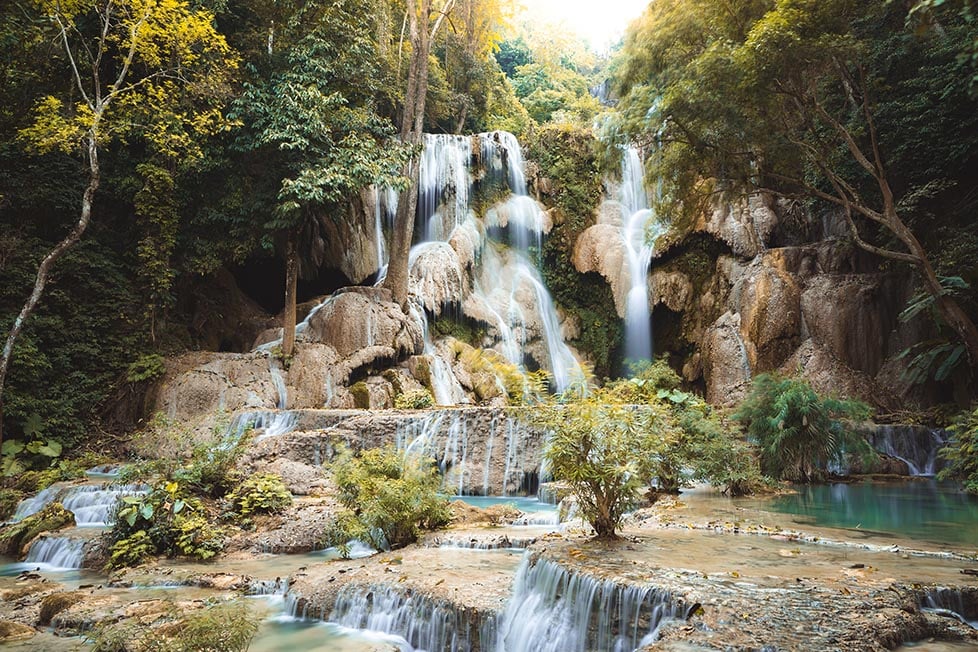
Image: Nic Hilditch-Short
Land here, get to your digs and slow down immediately. Temple hop in the mornings before the heat sets in, and watch the monks in their morning alms ceremony if you wake up early enough for it. It was a cool cultural experience when I visited a couple of years back, but I’ve heard whispers of it turning into a bit of a tourist attraction now. If you can keep a respectful distance and forbid yourself from being wound up by the behaviour of other tourists, I’d still say it’s worth going to witness for yourself.
Eat your way through the night market, and give yourself at least one full day for Kuang Si Falls. It’s pretty out of town, so if you don’t feel confident on a ped, I definitely recommend booking a tour to the falls to bestow the stress of travel on someone else. Three days sounds generous for one town, but days quickly blur here.
I arrived via the iconic slow boat from the Thai border. If you’re coming from the opposite way, then hop on a train from Vientiane/Vang Vieng.
- Spend a day swimming in the iconic Kuang Si Waterfall
- Visit Wat Xieng Thong, the most important temple in the city for golden hour
- Watch the alms-giving ceremony at dawn, though keep a respectful distance and put the camera down
- Hike up to Phou Si Hill at sunset, a 328-step climb above the old town that earns you one of the best views in the country for the price of a sweaty shirt
- Wander the old town in the early morning before the heat sets in, a UNESCO-listed grid of French colonial architecture, temple courtyards, and banging bakeries
- Eat your way through Luang Prabang night market
Stay as close to the old town as your budget allows. The UNESCO-listed centre is compact enough to walk everywhere, which means temples, the night market, the riverside, and the best coffee spots are all on foot. Drift too far out and you’ll be relying on tuk-tuks for every excursion, which gets old quickly. Either way, this sleepy town has a surprising amount of decent hostels, so finding good digs isn’t hard here.
White Elephant Hostel is the obvious choice for backpackers. It ticks all the usual backpacker boxes: cheap beds, central location, free breakfast, and a pool thrown in for good measure. It’s sociable, slightly boozy, and just enough energy to pull you out of your shell without feeling like you’ve been roped into ‘organised fun’.
View on HostelworldDays 4-6: Nong Khiaw
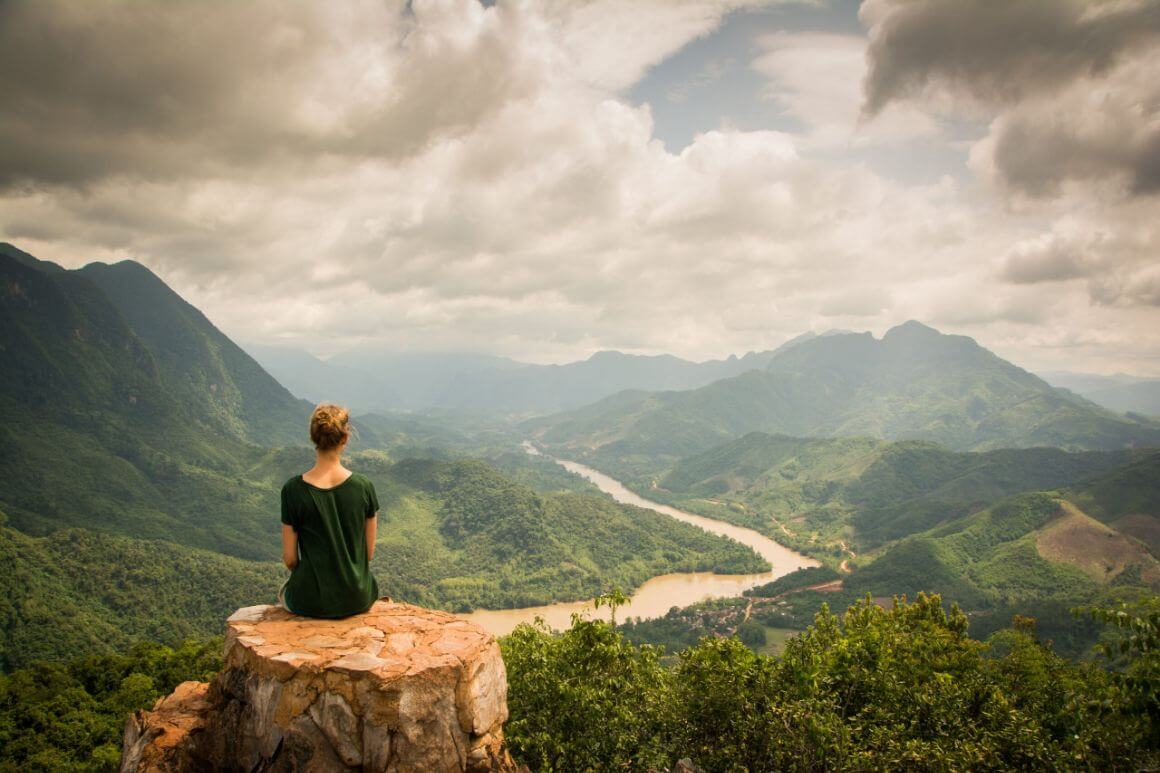
A scenic but bumpy minibus or boat ride gets you into proper mountain territory. You’ll notice the change in pace immediately; this village is all about viewpoint hikes, lazy boat trips up the Nam Ou, and not much in the way of nightlife. Three days here is about right, two if you’re tight on time, but don’t skip it altogether for the sake of more time in Vang Vieng. Nong Khiaw is the part of the route that most people get FOMO for not doing.
You can only get to and from here via a BUMPY minibus from Luang Prabang. Locals call it a free massage, so buckle up and get ready for the ride.
- Hike up to Som Nang viewpoint at sunrise
- Take the boat upriver to Muang Ngoi, an hour on the Nam Ou through karst scenery
- Book a multi-day trek with a local guide into the surrounding hills
- Rent a bicycle and ride the river roads south towards Ban Had Sao and Sop Vanh
- Trek to Pha Tok Cave
Nong Khiaw splits across two sides of the Nam Ou, connected by a bridge, with most of the guesthouses, restaurants, and activity agencies on the west bank and the quieter bungalow stays with river and mountain views on the east. If the view matters to you, the east side is where to look.
Nongkhiaw The Float House, located on the east side of the river, is a unique set of houses floating on the river. You get epic views of karst mountains, and boats heading lazily down the river. If you want to sit firmly in the middle of nature, this is a great spot.
View on Booking.comDays 7-10: Vang Vieng
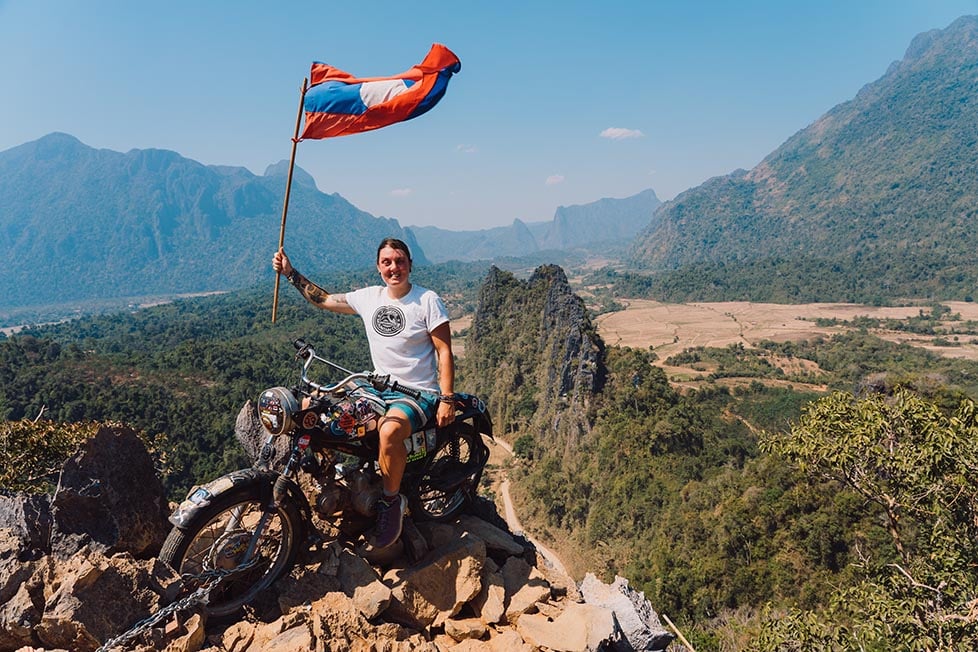
Image: Nic Hilditch-Short
Limestone cliffs, caves, blue lagoons, kayaking – Vang Vieng has it all. This is where the adventurers and adrenaline junkies really thrive and is a great counterbalance to the slower pace of the last six days. Your first day will probably be dedicated to travel alone, as returning from Nong Khiaw involves a minibus back to Luang Prabang before hopping on a train to Vang Vieng.
Three days gives you time for at least one proper caving or kayaking day plus a slower day for the lagoons, without trying to cram it all into 24 hours. I personally lost a lot of time in Vang Vieng tapping into the party backpacker roots…I’m nothing but a gal of culture. If you have longer to kill than ten days, I’d look at extending here first.
Dead easy. Take the train from either Luang Prabang or Vientiane, depending on which direction you’re travelling in.
- Tube down the river, tipsy or otherwise
- Rent a scooter and spend a day looping out to the blue lagoons
- Take a hot air balloon over the valley at sunrise – a truly epic activity worth the early wake up
- Watch the sunset from any of the riverside bars with a cold Beer Lao
- Hike or climb at Pha Ngern viewpoint for a sweeping panorama of the Nam Song valley
- Get involved in the nightlife scene, there are great bars and a real buzz amongst backpackers and locals alike
Vang Vieng has a wider range of accommodation than its backpacker reputation implies, from budget dorms on the main strip to genuinely quiet riverside stays with limestone views that have nothing to do with the tubing crowd. If quiet is the priority, look for guesthouses on the northern edge of town or across the river.
Golden Dragon House is a fab spot for backpackers. It’s got a pool, free brekky and is in the heart of Vang Vieng. Solo travellers will thrive here – it’s got a perfect social vibe without tipping into raucous party territory like a lot of other hostels in the city have.
View on Hostelworld14-day Laos itinerary: north plus south or deeper north
At least two weeks in Laos is where things start to get real tasty. You’ve got enough time for the slow lazy days that this country demands and enough time to squeeze some long ass travel days in to really start seeing a good breadth of Laos. You can either push south and get a proper taste of the other half of the country, or stay in the north and go slower and deeper than a ten-day trip allows. Neither is wrong, just pick your fancy and go from there.
The main thing to resist with 14 days is the urge to do everything. Trying to string together every northern and southern highlight into one itinerary turns a Laos trip into a transport marathon, and the last thing you want to do is spend most of Laos stuck on a bus. Trust me. The buses in Laos suck.
Option 1: North plus south Laos route
- Best for: travellers who want the full sweep of the country, temples and river towns up north, waterfalls and slow Mekong days down south.
- The route: Luang Prabang, Nong Khiaw, Vang Vieng, Vientiane, Pakse, Bolaven Plateau, 4000 Islands
Stop One to Four: Luang Prabang, Nong Khiaw, Vang Vieng, Vientiane
Keep the core northern route broadly similar to the ten-day itinerary, but tighten the days per stop slightly to leave yourself a proper chunk of time in the south. This only applies if you’re doing the minimum of 2 weeks; I ended up doing a full month and didn’t have to sacrifice any time at all. Yay for slow travel! If you’re not willing to cut time in the northern stops, then the deeper north itinerary may suit you better.
Getting south adds real distance. Wherever you stay in Vientiane, you’ll be looking at a flight to Pakse or a long overnight bus. Personally, my overnight bus broke down multiple times, turned a 12-hour journey into a 24-hour one, and I had to hitchhike the rest of the way. It’s a funny story in hindsight, but it felt pretty traumatic at the time. Would I still pick an overnight bus over a flight just to save 50 bucks? Probably. I am a broke backpacker after all.
Stop Five: Pakse
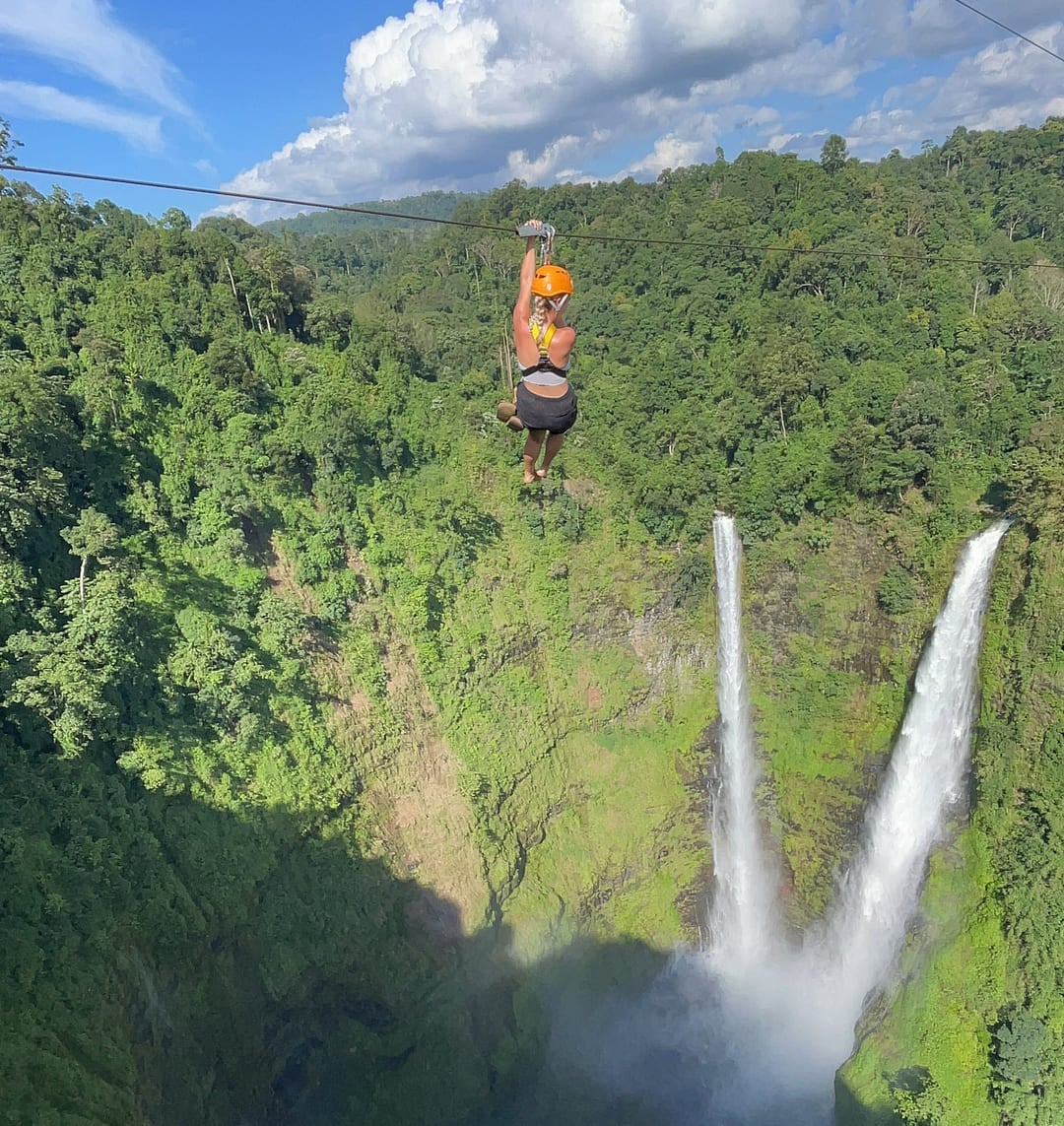
Photo: @taya.travels
After a hellish journey to get there, Pakse certainly rewarded me. It’s got epic temples that predate even Angkor Wat, and some of the best waterfalls I’ve seen whilst backpacking South East Asia. Arguably one of my highlights of the entirety of Laos was the zipline I took across Tad Fane Waterfall. Plus, Pakse is just a sick place to rent a ped and drive around, which is my main idea of fun anyhow.
Most people who have their eyes set on the Thakhek loop start from here as Thakhek is smack bang between Pakse and Vientiane. Unfortunately, the weather was not accommodating whilst I was here, but my main reason to return to Laos would be to finally tackle the loop.
Pay extra for a flight from Vientiane or firm the sleeper bus. In theory, it should only take around 12 hours, meaning you’ll wake up in Pakse, but in reality the ‘highway’ is shoddy at best and breakdowns are frequent. I hope the road conditions have improved from when I was there a few years ago!
- Head to Tad Fane Waterfall and take on the zip line to get the adrenaline pumpin’
- Visit Wat Phou, a Khmer temple complex that predates Angkor Wat
- Climb to Wat Phou Salao at sunset for panoramic views over the Mekong and the city
- Pick up Bolaven Plateau coffee at one of the local roasteries in town before committing to the full loop
- Rent a scooter and do the Pakse Loop, a multi-day ride through the Bolaven Plateau taking in waterfalls, coffee plantations, and hill tribe villages (Miss Noy Motorbike is the GOAT for motorbike rentals and route help)
Staying central is the practical choice in Pakse. The city centre keeps you close to cafes, street food stalls, the night market, and the tour and motorbike rental offices you’ll need for the plateau and day trips.
I stayed at Sanga Hostel and it was probably the best hostel I stayed in in Laos. The beds are wide, comfy, the AC is crankin’ and a good nights sleep was certainly had. The staff are super friendly and helpful and it’s in walking distance to most things in the city centre.
View on Booking.comStop Six: The Bolaven Plateau
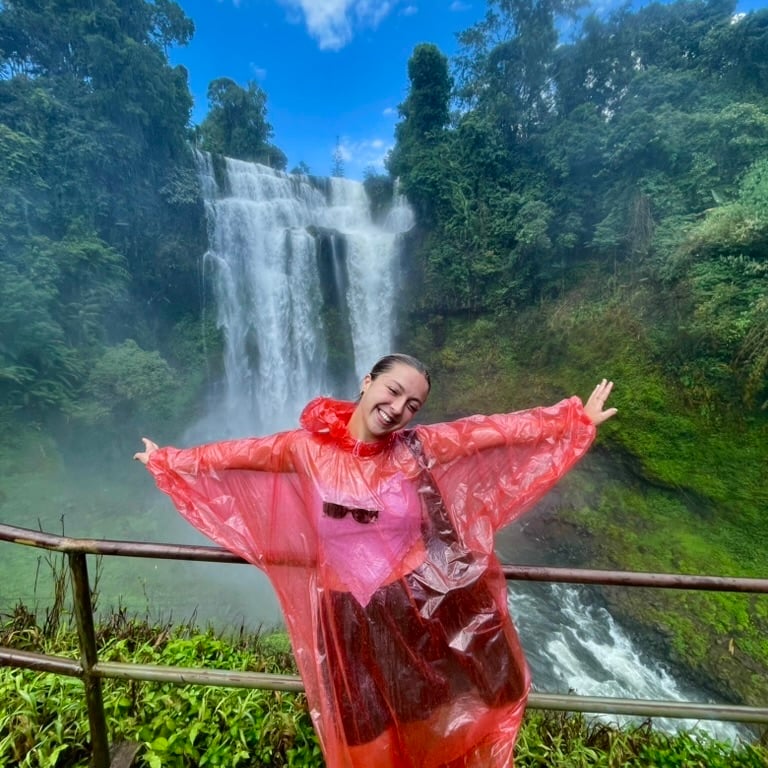
Photo: @taya.travels
If you’ve got the time, the Bolaven Plateau is certainly worth the detour. A scooter loop through the plateau takes you through waterfalls, coffee plantations, and considerably cooler air than anywhere else you’ll have been on this trip. Two days is the minimum to do the loop properly without rushing the roads. If you’re short on time, you can either do a day trip to the plateau from Pakse or skip it completely and head straight down to the 4000 Islands.
Just a short drive from Pakse. If you aren’t planning to do the Bolaven Loop, a day trip to see the plateau from Pakse would suffice.
- Swim at Tad Yuang, a more accessible waterfall with swimming above and below the falls
- Tour a coffee plantation in Paksong, the coffee capital of Laos
- Ride through ethnic minority villages of the Laven, Alak, and Katu communities, where the loop takes you past stilted wooden houses, traditional weaving, and rural Lao life
- Hike the Tad Tayicseua trail on the big loop, a jungle walk taking in six waterfalls in a remote valley that most people doing the short loop miss entirely
Accommodation on the plateau is functional rather than comfortable, and that’s fine because the loop isn’t about the beds. You’re sleeping somewhere cheap, getting up early, and riding. Don’t book anything with high expectations and you won’t be disappointed.
Give Garden Eco is a great homestay in Paksong, one of the stops you’ll find yourself in on the loop. Paksong runs a little colder than the rest of the country, so sleeping with an actual duvet is a dream.
View on Booking.comStop Seven: 4000 Islands
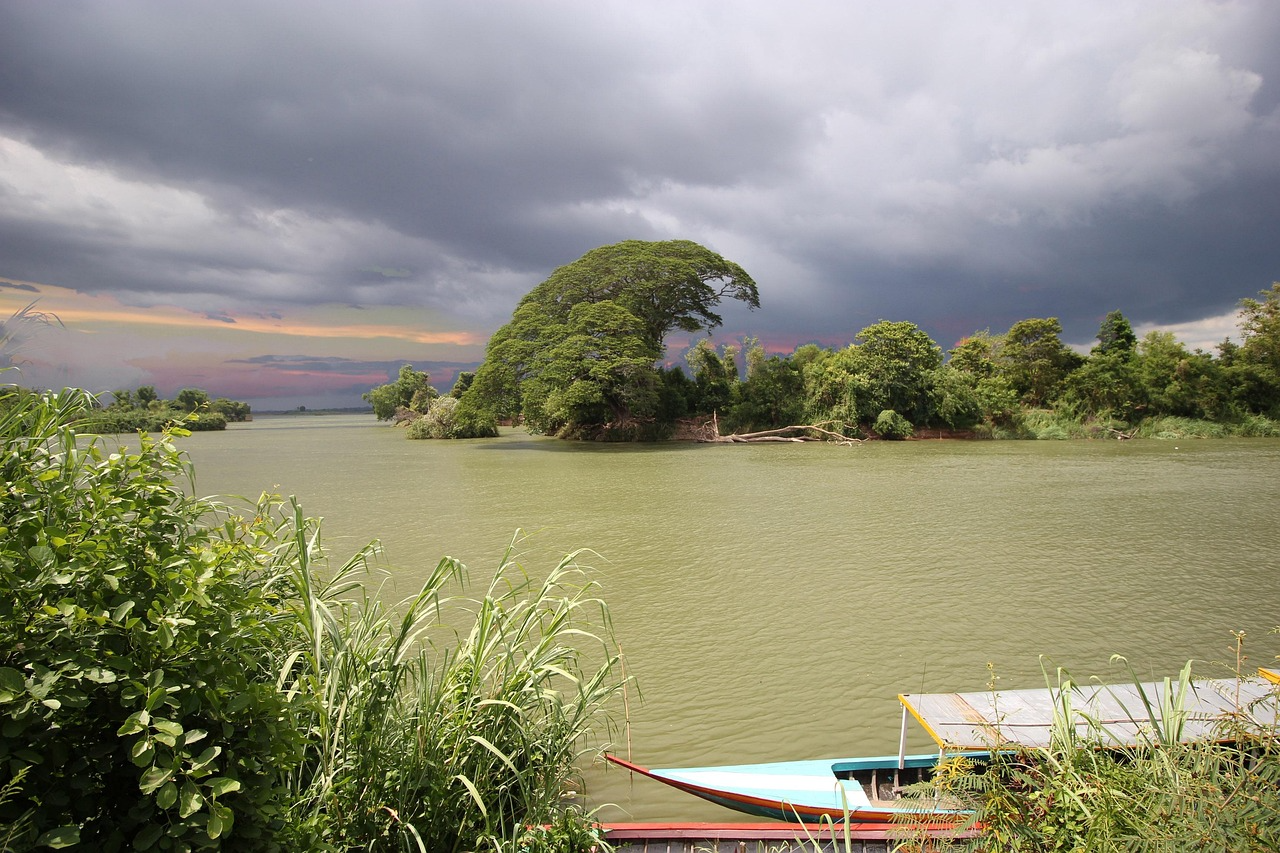
After nearly a month exploring a landlocked Laos, arriving in the 4000 Islands felt like quite the contrast and a wicked way to end a Laos trip. Pick one of the quieter islands, Don Det or Don Khon, and do VERY little for two or three days. I found a little bar on Don Det that served 30p pints and could add shrooms to any dish they served and was quite happy to call this my new home for three days.
There are no cars on the island, so rent a bicycle and cycle around, crossing the bridge over to neighbouring islands. It’s a slow, easy way to decompress before crossing the border into Cambodia or heading back north.
You’ll most likely have to get a bus from Pakse, totalling about 2.5-3 hours including the boat over to the islands themselves. It’s a cool journey after a couple of weeks of nothing but trains and buses.
- Chill TF out – the islands are the place to really decompress after weeks of adventure
- Rent a bike and cycle over to neighbouring islands
- Grab a beer at a riverside bar and watch the world go by. My favourite is Adam’s Bar – they do the most BANGING onion rings.
- Visit Li Phi Waterfalls on Don Khon, a 25-minute cycle from the bridge connecting Don Det and Don Khon
- Take a boat tour to spot Irrawaddy dolphins in the channels south of Don Khon, one of the last places in the world where the freshwater population survives, with no guarantees but dawn trips giving the best odds.
The main choice in the 4000 islands is between Don Det and Don Khon. Don Det is the backpacker reference point, busy with budget bungalows, hammocks, and cafes, and carries a mild (heavy on the mild) party reputation concentrated in the northwest corner near the bars. Don Khon is quieter and more scenic, with the waterfalls, the French colonial railway remnants, and a slower pace that suits most people who’ve already done a few weeks in Laos. The two islands are connected by a bridge so staying on one doesn’t mean missing the other.
There are no hostels in the 4000 islands, so it’s time to splash out on a private baby. Namknong view is a great budget option, overlooking the river with hammocks that are dangerous for wasting afternoons in. The accommodation itself is no frills but certainly clean and comfortable enough for you not to notice.
View on Booking.comOption 2: Deeper northern Laos route
- Best for: travellers who want mountains, slow river towns, trekking, and proper northern scenery without the long haul south.
- The route: Luang Prabang, Nong Khiaw, Muang Ngoi, Luang Namtha (or Oudomxay), Vang Vieng, Vientiane
This is the route for anyone whose eyes light up at karst peaks and river towns rather than motorbike loops and slow days along the Mekong in the south. It keeps you in the north the entire time, which means no scramble south and no bloated transit days eating into your actual trip.
Stop One and Two: Luang Prabang and Nong Khiaw
Luang Prabang and Nong Khiaw work exactly as described in the ten-day itinerary. Take your time here, especially in Nong Khiaw, because the pace is about to slow down even further.
Stop Three: Muang Ngoi
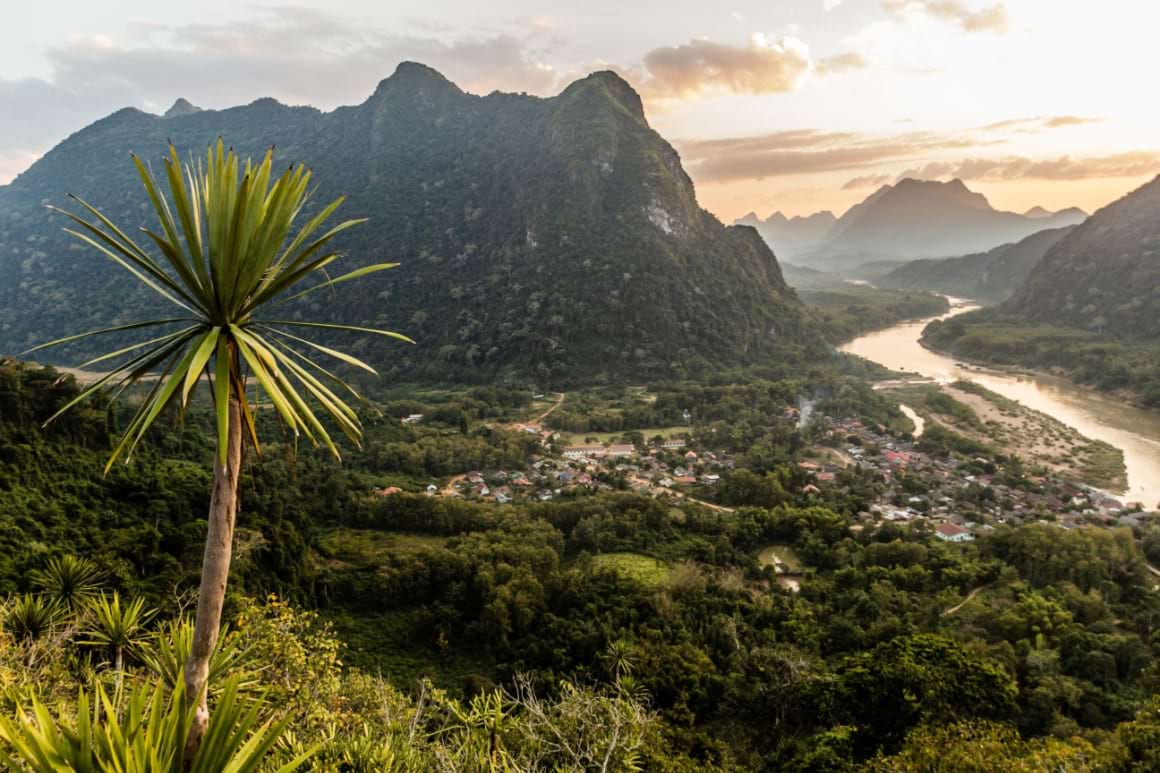
Muang Ngoi sits about an hour upriver from Nong Khiaw by boat on the Nam Ou and is only accessible that way, meaning it’s stayed relatively quiet and off the beaten path. The town is tiny, the wi-fi is nearly unusable, and there’s nothing much to do besides exploring the nature that stretches in every direction or lounging in a hammock. That’s the draw.
Caves, viewpoints, hikes to rural villages, and the Nam Ou itself fill the days if you want activity, but plenty of people come here and do very little on purpose. Two nights is the minimum; three is better if you want to actually hike out to the villages rather than just sit by the river, which is also a very valid use of your time.
Hop on a boat from Nong Khiaw for a scenic hour journey up the Nam Ou River.
- Hike up to Phanoy Viewpoint, a 30-minute climb with steep rocky sections above the north end of town, for a panoramic sweep of the Nam Ou
- Push on to Pha Boom viewpoint if you want a harder, higher climb south of town, a two-hour ascent that sees far fewer people
- Sit in a hammock by the river and do as little as possible
- Kayak the Nam Ou at your own pace, renting a boat by the half day from guesthouses on the main street and paddling stretches of river that look best from the water
Accommodation in Muang Ngoi is entirely at the budget to low mid-range end of the scale. This is a one-street village only accessible by boat. Don’t come expecting boutique options.
SuanPhao Guesthouse is on the more affordable options in the village, with hammocks on the balconies for you to really lean into slow river living. The terrace is a great place to chill, relax, and have a drink while enjoying the panoramic views.
View on Booking.comStop Four: Luang Namtha
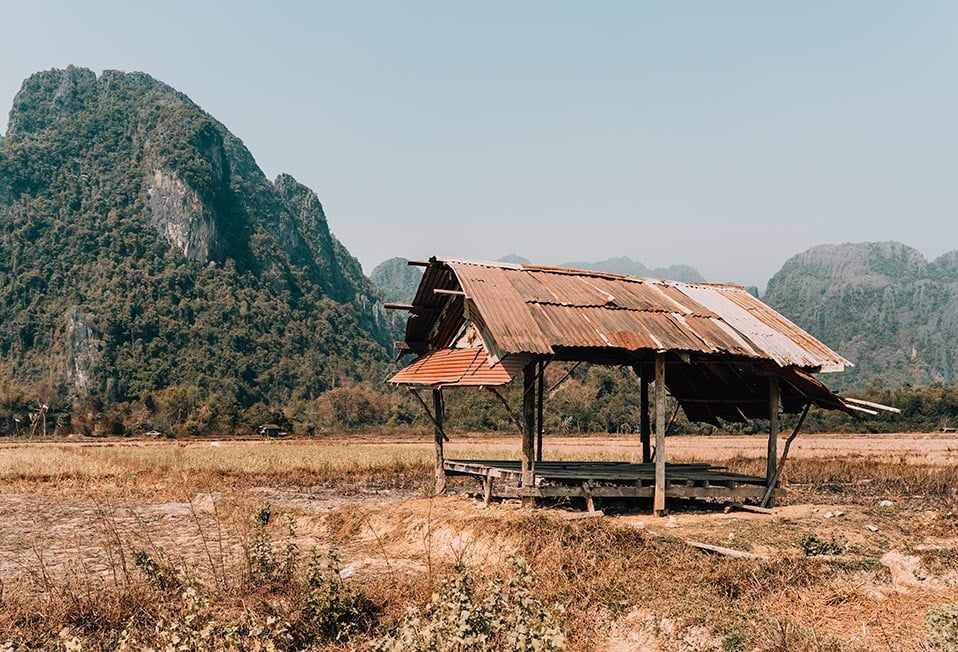
Image: Nic Hilditch-Short
Luang Namtha is home to some of the best trekking in the country, with old-growth jungle in the Nam Ha National Protected Area drawing most. If the nature doesn’t win you over, the culture certainly will, as this region is one of the most ethnically and culturally diverse in South East Asia.
The town itself isn’t particularly scenic, but it has everything you need: accommodation, restaurants, and trekking agencies all conveniently lined up on the main road. And trekking is the aim of the game here. A three-day, two-night route is about the right length, long enough to get deep into the jungle and spend a night in a tribal village without feeling the absence of comfort too much by the end.
Hop on a boat back down to Nong Khiaw as this is where the bus to Luang Namtha sets off from. It’s about a six hour journey, depending on road conditions.
- Visit the Golden Stupa at sunrise or sunset, set on a hill above town with panoramic views over Luang Namtha
- Trek the Nalan Trail, a popular route to a remote Khmu village on the banks of the Nam Ha River with an option to kayak back down the Nam Ha River the following day, combining jungle hiking and river travel in one efficient two-day loop
- Book a multi-day trek into the Nam Ha National Protected Area
- Head to Nam Dee Waterfall, just 6km north of town and easily reachable by bicycle or motorbike
Luang Namtha is small, so there isn’t really a ‘bad’ play to stay per say. This is mostly a place where you rock up and find a guesthouse. Like with Nong Khiaw, they’re cheap and no-frills but certainly serve as a decent enough base before heading off to trek.
Stop Five and Six: Vang Vieng and Vientiane
Vang Vieng and Vientiane close out the route as usual. Vang Vieng gives you the limestone scenery and activity fix after a slower northern stretch, and Vientiane serves as the exit point when you’re done.
The main advantage of this route over the north-plus-south option is that it breathes. You’re not cramming two very different halves of the country into a fortnight. You’re staying in one region and actually getting to know it. You’ll be a pro at going with the sleepy Laos pace by the end of it – any onward country will feel like a game of Mario Kart where the speed has dialled up.
Best stops to include in a Laos itinerary
| Place | Best for | How long to stay | Works well with | Skip it if | My honest take |
|---|---|---|---|---|---|
| Luang Prabang | Temples, food, waterfalls, rivers, slow travel | 3 to 4 days | Nong Khiaw, Vang Vieng | You want nightlife or fast travel | Essential for most first trips. It’s a non-negotiable in any Laos itinerary |
| Nong Khiaw | Mountain scenery, viewpoints, kayaking, slower pace | 2 to 3 days | Muang Ngoi, Luang Prabang | You struggle with bumpy bus rides, limited food options and slow evenings | The most underrated stop on the northern route. Most people wish they’d stayed longer, though the journey to get there is a slog |
| Muang Ngoi | River village life, caves, hiking, genuine switch-off | 2 to 3 days | Nong Khiaw | You need an ATM, reliable wi-fi, or air conditioning | Not for everyone, but for the right traveller it’s the best few days to get to know northern Laos better |
| Luang Namtha | Multi-day jungle trekking, hill tribe villages, Nam Ha NPA | 3 to 4 days | Nong Khiaw, Muang Ngoi | You have no interest in trekking, because that’s basically the whole point | One of the best trekking bases in the country. Skipped by most, which is their loss |
| Vang Vieng | Limestone scenery, caves, lagoons, kayaking, tubing | 2 to 3 days | Luang Prabang, Vientiane | You’re expecting a quiet experience | This is the most built-up and touristy town in Laos. You’ve got adventure, nightlife and backpacker buzz all rolled into one stop. |
| Vientiane | Onward travel, a day or two of temples and food | 1 to 2 days | Vang Vieng, Pakse | You’re hoping it’ll feel like a capital city worth building time around | Fine for what it is. Use it to rest, re-coop before your onward travel. |
| Pakse | Wat Phou, river sunsets, food, day trips, plateau base | 3 to 5 days | Bolaven Plateau, 4000 Islands | You’re tight on time and can’t squeeze in the south | I’d go back to Pakse for the waterfalls alone. A very underrated little city. |
| Bolaven Plateau | Waterfalls, coffee plantations, cooler air, scooter loops | 2 to 3 days | Pakse, 4000 Islands | You don’t ride a scooter | The scooter loop is one of the best days in southern Laos. Do it properly or not at all |
| 4000 Islands | Hammocks, cycling, Mekong sunsets, dolphins, doing nothing | 3 to 4 days | Bolaven Plateau/Pakse, Cambodia border crossing | You need pace and stimulation to feel like you’re travelling | The end of the road in the best possible sense. Come with no plans or expectations |
| Thakhek Loop | Caves, limestone scenery, Kong Lor, off-road riding, central Laos | 3 to 5 days | Vientiane, Pakse | You don’t ride a motorbike, as the loop doesn’t work any other way | One of the best loops in SEA that isn’t totally rammed yet. |
Getting around Laos
Moving between stops in Laos isn’t rocket science. You can easily book journeys through your hostel or 12goAsia. Don’t underestimate how long travel days can take here. You’d be mistaken to think that getting the first bus in the morning leaves room for a packed afternoon schedule – Laos’ sleepy pace applies to its transport too!
The general rule is to give travel a lot of flexibility to avoid stress. Build buffer days into longer journeys, don’t book non-refundable onward transport immediately after a long road or boat trip, and accept that things will occasionally take longer than planned. It’s pretty much the way things go in Laos.
The Laos-China Railway
This Chinese-built railway has been an absolute game changer for travel between stops in northern Laos. The line connects Vientiane, Vang Vieng, and Luang Prabang, cutting the journey between Vientiane and Luang Prabang from around ten hours by road down to roughly two hours by train. The train is nicer than most journeys I do in the UK and costs absolute pennies in comparison.
That said, a few things are worth knowing before you assume it’s straightforward. Train stations are typically located well outside town centres, often requiring a 20 to 30 minute tuk-tuk ride to get in or out. Budget that time and cost into your day. Tickets sell out, and buying on the day is difficult. Booking a few days ahead is strongly advised, especially in high season. Tickets can be bought at the station in cash, at city ticket offices, or via the official LCR app, though the app requires a Lao, Chinese, or Thai phone number. Third-party booking sites are the most straightforward option for most foreign travellers.
Another thing to keep in mind is that security is TIGHT. You have to put all bags through an airport-style scanner, and any lighters, aerosols (inc deodorant) and knifes/tweezers/scissors will be confiscated. Vapes are illegal in Laos, and twenty minutes in a police interrogation room and a 1 million kip fine later reminded me of that. Save yourself the same agg and bin them before arriving at the train station.
Buses and Minivans
Buses in Laos can often be a ballache. However long you think a journey may take, double it. Some roads are pretty shocking, and the drivers make a habit of picking up locals and chickens alike from the side of the road, even if you think the minibus is full enough already. Their commitment to always finding room is impressive. Any journey not covered by a train will probably be taken by a bus; just commit a full day to these journeys.
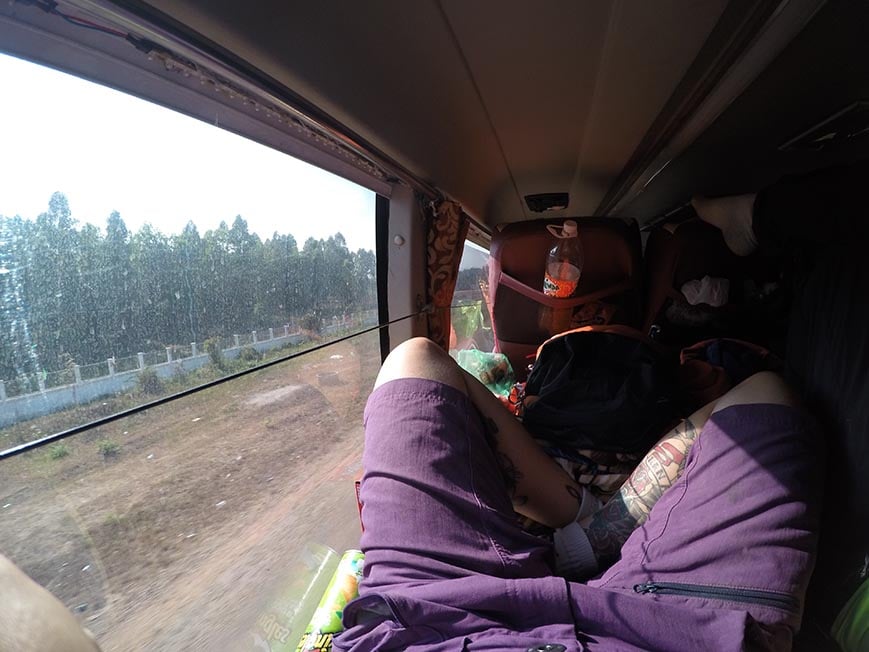
Image: Nic Hilditch-Short
Boats
I entered Laos via boat from the Thai border, and firmly believe that at least one journey in Laos should be made along the Mekong. If your schedule allows, I fully advocate for the two-day journey from Huay Xai to Luang Prabang – it’s a backpacker rite of passage.
Boats along the Nam Ou between Nong Khiaw and Muang Ngoi are the only practical way in and out of Muang Ngoi. Big on scenery, time and vibes.
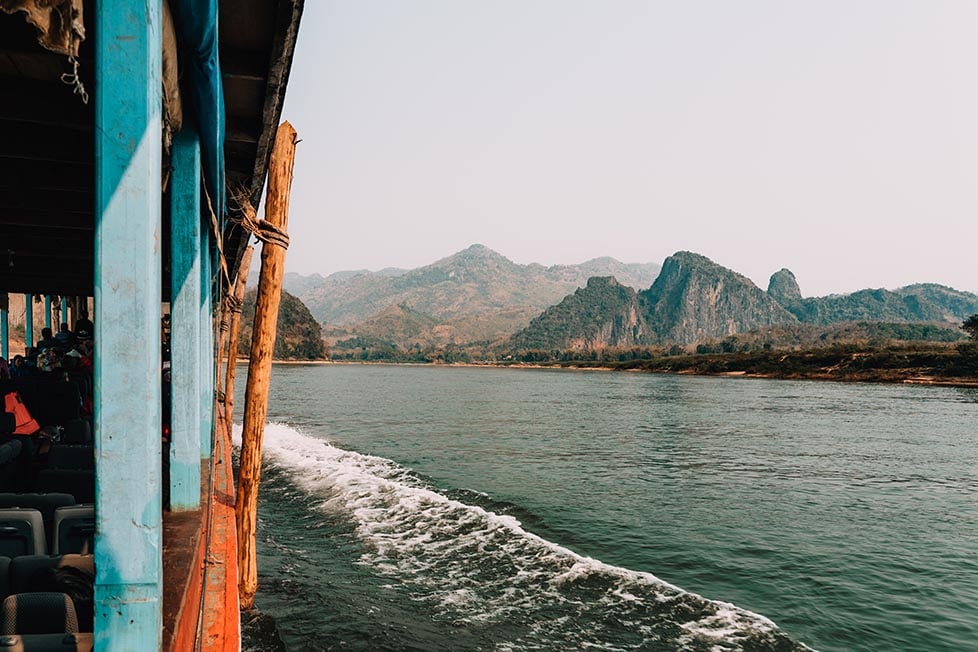
Image: Nic Hilditch-Short
Scooters
For getting around within stops, renting your own two wheels is the way to go. For stops like the Bolaven Plateau and the Thakhek Loop, the whole point is covering ground at your own pace.
The reality on the ground is that rental shops will hand over a bike without asking too many questions about licences or insurance. That doesn’t mean the risk disappears if something goes wrong: you are responsible for your own safety, and travel insurance policies vary significantly in what they cover for motorbike accidents. Wear a helmet, know your limits on mountain roads, and don’t ride anything you’re not comfortable with. Be especially careful in the rainy season where wheels on gravel roads have a mind of their own after a downpour.
When to visit Laos
The honest answer is that there’s no perfect month, just different trade-offs depending on what you’re planning to do and how much heat, rain, or mud you’re willing to tolerate.
- November to February is the golden period, with minimal rainfall and long days of sunshine.
- March to May marks the middle of the burning season, with haze affecting northern viewpoints, though Pi Mai Lao in April is worth experiencing if you plan ahead.
- June to October is significantly wetter, rewarding you with dramatic waterfalls and lush scenery at the cost of unpredictable roads and muddier trekking.
- September and October specifically can be visually stunning in the north if you don’t mind getting a little soggy.
| Season or period | Best for | What to know | Best itinerary fit |
|---|---|---|---|
| November to February | First-timers, temples, mountains, trekking, dry travel | Cooler, drier, and the most straightforward window for moving around. Peak season means higher prices and busier guesthouses, especially in Luang Prabang | Any itinerary will work well here! |
| March to May | Budget travellers, quieter crowds, Pi Mai Lao | Very hot, and haze from agricultural burning can affect northern viewpoints and air quality. Pi Mai Lao in April is worth experiencing but books out fast and disrupts transport | Shorter trips or Vientiane and south-focused routes where heat is slightly more manageable |
| June to August | Green landscapes, dramatic waterfalls, fewer tourists | Full rainy season. Roads and river routes can be unpredictable. Trekking gets muddier. Worth it for the scenery if you build flexibility into the schedule | Southern routes and town-based itineraries that don’t rely heavily on mountain roads or river transport |
| September to October | Scenery, waterfalls at full power, thin crowds | Still rainy with muddy mountain roads a daily reality. Some routes become unreliable. Visually one of the best periods in the north if you can handle the unpredictability | North-focused routes with loose itineraries and buffer days built in |
Entry, visas, and practical up-to-date notes
Visas
If, like me, you realise you need a visa for a country way too late, don’t fret. Getting a visa on arrival in Laos is easy and pretty bog standard amongst backpackers; just double-check that this is offered to your nationality. You can also apply for it online in advance; just give yourself at least 3-5 business days for it to be processed and make sure to print it out before you arrive. Visas are $50, and other currencies like Thai baht can be accepted, but you’ll get a crappy exchange rate for it, so bringing dollars is always best.
Some nationalities, including most ASEAN countries, Japan, Luxembourg, and Switzerland, qualify for visa-free entry, though double-check to make sure if this applies to you.
From September 2025, Laos introduced a digital immigration form (LDIF) replacing paper arrival and departure cards at major airports and the first Lao-Thai Friendship Bridge. The form must be completed online within three days before arrival. Verify whether this applies to your entry point before you travel.
Money
Paying by card is a mythical concept in Laos, so it’s safe to say you’ll pretty much be solely depending on wonga. ATMs exist in Luang Prabang, Vang Vieng, and Vientiane without much trouble, but get smaller in reliability as you get further off the main route. Muang Ngoi has no ATM at all, so stock up in Nong Khiaw before you head upriver.
USD is widely accepted alongside Lao kip, but having local currency for tuk-tuks, local food, and smaller guesthouses makes life easier. Small businesses looooove to do this thing where they pretend they have no change for larger notes, so try and keep smaller denominations on you if you can to avoid getting stung by this common tactic. Cards are accepted in some hotels and larger restaurants in the main towns, but don’t count on it.
SIM cards and connectivity
Picking up a local SIM wherever you touch down is relatively straight forward. I remember sorting mine from my hostel, and they literally took my phone off me and handed it back all sorted. eSIMs are increasingly usable in Laos if you’d rather sort it before you arrive. Connectivity drops off significantly in remote areas, Muang Ngoi included, so download offline maps before you head anywhere without a reliable signal.straightforward
Money, budget, and daily costs
Laos is a broke backpacker’s paradise. Unlike other neighbouring countries that have had costs rise in line with popularity in recent years, Laos has remained a relatively affordable country to travel. In fact, it was my cheapest amongst 12 months of backpacking in SEA!
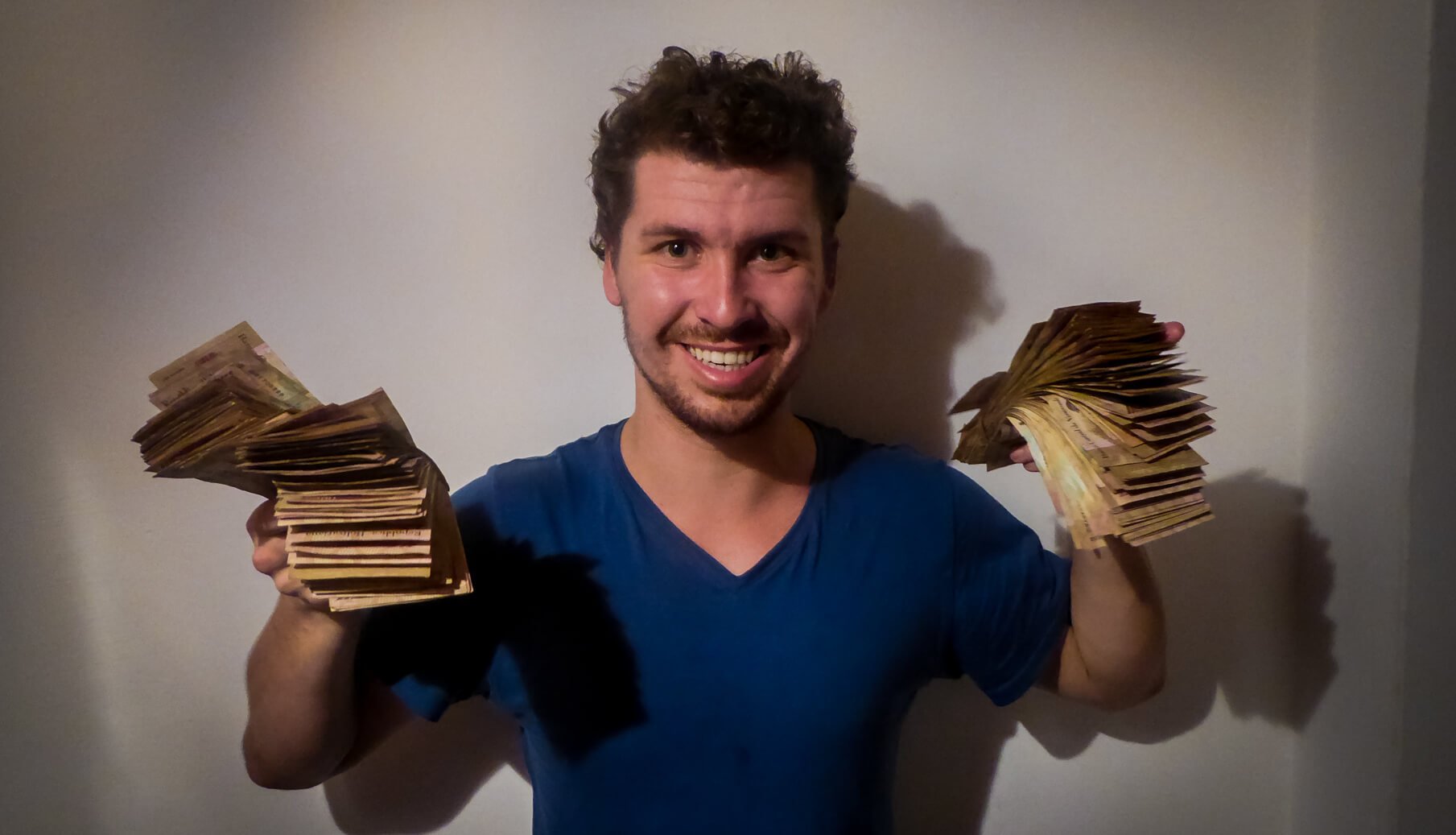
The base costs- a dorm bed, local food, the occasional Beer Lao- are delishly low. Where things creep up is transport and activities. Train tickets, private minivan transfers, boat tours, and organised treks can add up faster than you’d expect if you don’t keep an eye on things.
Luang Prabang is noticeably pricier than the rest of the north, both for accommodation and food, especially once you start eating anywhere near the main street. Smaller stops like Nong Khiaw, Muang Ngoi, and 4000 Islands are easier on the wallet day-to-day, though the price payoff means limited options, so don’t arrive expecting an array of boujey options.
| Traveller type | What it looks like | Estimated daily spend |
|---|---|---|
| Shoestring backpacker | Dorm beds, local food and street stalls only, public transport, free and low-cost activities | Around $20 to $30 per day. Transport days will push you over, so factor those in separately |
| Comfortable backpacker | Mix of dorms and budget privates, eating in restaurants as well as local spots, some paid activities and day trips | Around $30 to $50 per day. Luang Prabang sits at the pricier end of this range. Budget private rooms elsewhere can be had for $15 to $20 |
| Flashpacker | Private rooms throughout, eating and drinking freely, tours, activities, and the occasional upgrade | Anything from $50+ a day puts you firmly into the boujey territory. Boutique guesthouses, good restaurants, and day trips with guides all fit at this level |
| Adventure or trekking traveller | Budget accommodation but higher activity spend: multi-day treks in Luang Namtha, river tours, scooter hire, caving, kayaking | Budget base of $25 to $35 per day, but activity-heavy days in Vang Vieng or Luang Namtha can push individual days significantly higher. Plan for spikes rather than a flat daily rate |
Food, culture, and responsible travel
Laos moves at its own pace. The best thing you can do is match it, and that applies to how you travel as much as where you go.
- At temples and ceremonies: Cover shoulders and knees at temples, remove shoes before entering buildings, and treat the alms-giving ceremony in Luang Prabang as the daily religious ritual it is rather than a photo op. Keep it respectful by keeping your distance and not approaching the monks.
- In villages: Don’t treat villages as photo stops. Ask before taking photos of anyone, in villages, at markets, or anywhere else.
- Trekking tours: Research trekking and community tourism operators before you book, looking for programmes that compensate guides and village hosts fairly and return money directly to the communities involved. Don’t treat villages as stops on a highlight reel.
- Learn a bit of Lao: Brush up on a few basic Lao phrases before you arrive. You’ll always get a cheeky smile from the locals when you surprise them with a few phrases, even if it’s a hello or thank you.
- Food: Eat at the night markets, morning markets, and roadside noodle stalls rather than spending the whole trip in Western-style cafes. The local food is better, cheaper, and much more memorable.
- Vang Vieng: Be sensible in Vang Vieng around tubing and river activities. The Nam Song current is stronger than it looks, and the history of alcohol-related accidents on the river is something to keep in mind if you plan on getting a little merry when tipsy tubing.
- Shop local: Support local guesthouses, guides, and restaurants over international operations wherever the option exists.
- Nature days: Don’t leave rubbish at waterfalls, caves, viewpoints, or riversides – carry a bag for your own waste on hiking days. Leave no trace, people!
Mistakes I’d avoid when planning a Laos itinerary
- Rushing it. Laos is not Thailand. It is not Vietnam. The transport is slower, the roads are longer, and the best parts of the country reveal themselves to people who sit still long enough to notice them. Treating it like a highlights reel is the single fastest way to miss the point.
- Bolting southern Laos onto a short northern trip. The south needs its own time. If you’ve got less than two weeks, don’t even consider a whistle-stop tour. It defeats the whole point of Laos IMO, plus it just gives you another excuse to come back 😉
- Treating Vientiane as a destination worth building time around. For most backpackers, it isn’t. One or two nights in a hostel passing through is plenty. Don’t sacrifice days in Luang Prabang or Nong Khiaw to spend longer in the capital.
- Showing up at Kuang Si Falls at midday in peak season. Go early, go on a weekday if your schedule allows, and budget a full day rather than a rushed half-day trip. It’s worth doing it properly.
- Writing Vang Vieng off as a party town. Yes, there is decent nightlife in Vang Vieng, but it’s only a small part of it. The limestone scenery, caves, lagoons, and kayaking are all epic in their own right. Don’t let the bucket bar reputation stop you spending proper time outdoors while you’re there.
- Underestimating how long it takes to get places. If you’re not on a train, travelling in Laos generally sucks. The road to Nong Khiaw is beautiful, bumpy and slow. Getting to Southern Laos involves serious distances. Whatever your journey says it’ll take on paper, double it. Build buffer days and don’t book anything non-refundable immediately after a long road or boat trip.
- Forgetting that train stations sit outside town. Both Luang Prabang and Vang Vieng stations require a tuk-tuk transfer. Factor in the time and the cost, especially on early morning departures.
- Not booking train tickets early enough. In peak season, tickets sell out. You could swing it the day before, but give yourself some breathing room and book when you know you want to leave. Last minute Sally’s will be disappointed.
- Getting on a scooter without knowing what you’re doing. This is pretty standard 411 anyway – not just Laos. The Bolaven Plateau and Thakhek Loop are genuinely incredible to do, but don’t try and tackle it if you have no bike experience. They’re on mountain roads with steep drops, loose gravel, and generally sketchy conditions after a lot of rain. If the FOMO is killing you, you can always find mates in a hostel who are planning to drive it who will let you passenger-princess.
Choose your Laos route based on your vibe
Laos isn’t a country you plan around a checklist. It’s a country you plan around a feeling. Here are the routes that actually match different kinds of travellers.
If you want the classic first Laos experience
- Luang Prabang, Nong Khiaw, Vang Vieng
- The route most people mean when they say they’ve “done Laos”
- Works well with 10 days and leaves room to slow down in the places that deserve it
If you want the quiet mountain version
- Luang Prabang, Nong Khiaw, Muang Ngoi, with Luang Namtha as an extension if time allows
- Better for people who’d rather go deeper into one region than broader across the whole country
If you want the easiest route logistically
- Luang Prabang, Vang Vieng, Vientiane, all connected by the Laos-China Railway
- Fast transfers, no mountain minibuses, no boat logistics. The most straightforward way to see the north without the harder detours
- Good option for shorter trips or anyone who wants to spend their energy on the destinations rather than the getting-there
If you want the Mekong and waterfall version
- Vientiane, Pakse, Bolaven Plateau, 4000 Islands
- Coffee plantations, thundering waterfalls, slow Mekong days
- Cross into Cambodia from here if the trip continues south or continue further up north if you do the route in reverse
- Needs at least 10 days to dedicate; keep this in mind if you’re also bolting onto a northern itinerary
- A completely different Laos to the north: quieter, flatter, and at an even slower pace than everything else on this list
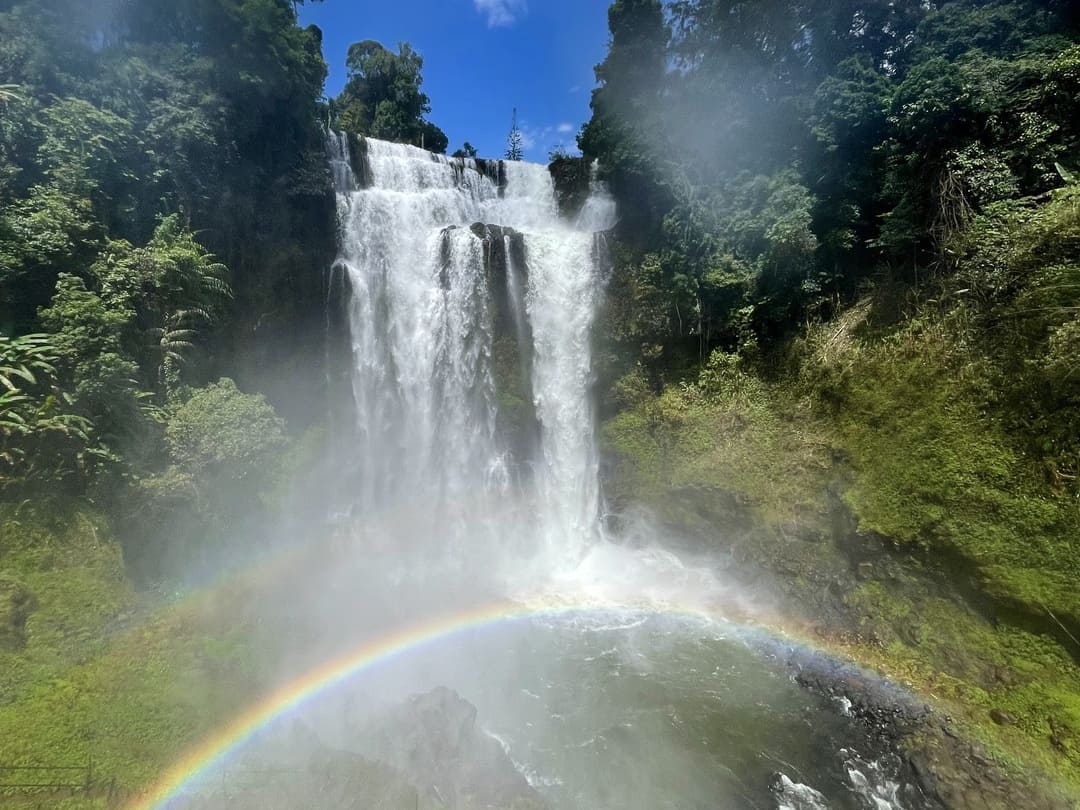
Photo: @taya.travels
If you want the adventure version
- Vang Vieng, Nong Khiaw (potential Luang Namtha add-on), the Thakek loop/Bolaven Plateau loop in whatever combination fits the time available
- Multi-day trekking, jungle camps, scooter routes through mountain roads, caving in central Laos. The full range.
- Only works if you’re genuinely comfortable with rougher travel, less reliable logistics, and days where things don’t go to plan.
- This is for the slow travellers only – not a route to attempt on a tight schedule
The Laos route I’d actually plan again
I’d change relatively little about my Laos route in hindsight. Nong Khiaw was still relatively undiscovered when I caught wind of it, and I’d definitely spend more time there and push further up north to Muang Ngoi and even Luang Namtha if time allowed. I’d also try to incorporate the Thakek Loop into my route, as I was gutted I couldn’t due to a pesky cyclone that had come through, leaving many caves flooded and closed.
My ideal Laos route:
Slow boat from Thailand into Luang Prabang – Nong Khiaw – Muang Ngoi – Vang Vieng – Vientiane just to head to Thakek – Thakek Loop – Pakse – 4000 Islands
The honest truth about Laos is that it doesn’t reward ambition. Yes, you should do Southern Laos, but never if you’re short on time. Yes, you could try and plan activities on the same day you’re getting on the morning bus, but that’ll only leave you tired and miserable. In short: you can try and rush, but Laos will probably have different plans for you anyway, so why force it?
You can plan a Laos itinerary down to the hour. You probably shouldn’t. Give each place more time than you think it needs, leave a day or two loose, and resist the urge to add one more stop at the end. That’s the only way you’ll feel as though you’ve ‘done’ Laos. Slow it down and enjoy, amigos!