There’s something I still can’t quite put my finger on as to why I keep coming back to Lombok. Always a natural graduation from Bali, I’ve ping ponged back and forth between the islands three times, spending nearly two months alone exploring it’s crevices. I’ve hiked, I’ve dived, I’ve partied and earned a killer tan in the process. There is always something so deeply satisfying about coming back and having the island reveal a new side of itself, almost in reward of my commitment to continue exploring.
If you’re over the crowds and chaos of Bali, allow me to introduce to you its smaller and chilled out sibling: Lombok. Here is where you come for beaches without the beach clubs, culture without the crowds and a slower pace of living that feels like a deep breath compared to its neighbour. That said, Lombok has a learning curve. It’s bigger and more spread out than first-timers expect, transport isn’t always obvious, and the best stuff, the Gili islands, the southern surf beaches, the traditional Sasak villages up north, doesn’t cluster conveniently in one place.
Without a bit of a plan, it’s easy to spend your first few days figuring out logistics and feeling like the promise of ‘Bali, but 20 years ago’ was a bit of a scam.
That’s where this Lombok itinerary comes in. Whether you’ve got three days or closer to two weeks, what follows is a practical, road-tested breakdown of how to do Lombok properly: beaches, surf, scenic drives, local culture, and island day trips, routed in a way that makes geographic sense.
It’s built for first-timers, backpackers, and short-stay visitors who want to make the most of the time they have rather than wing it and hope for the best. I’m diving straight into the itineraries below but scroll down for best time to visit, how to get there, getting around, and everything else you need to plan your trip.
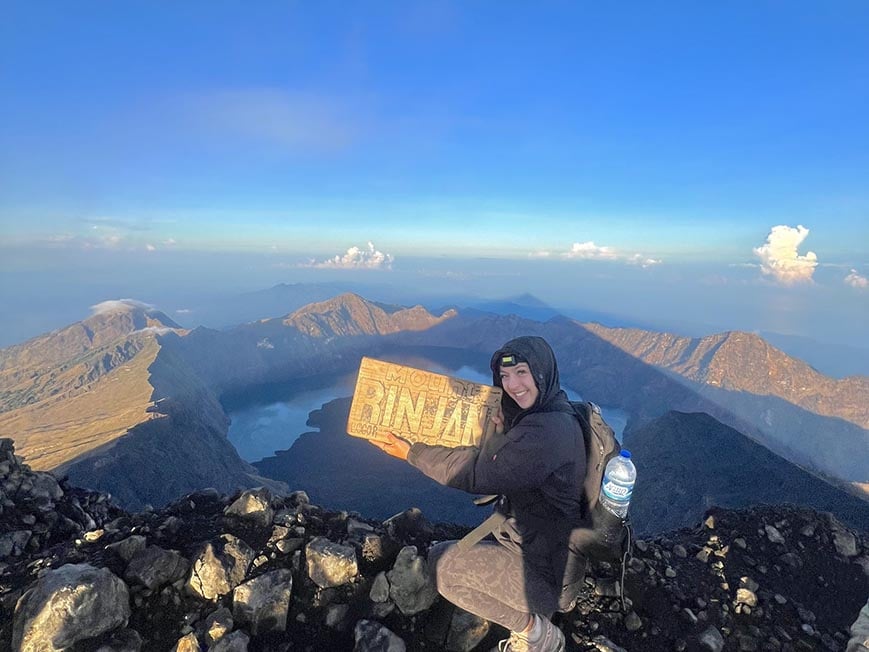
Photo: @taya.travels
The Broke Backpacker is supported by you. Clicking through our links may earn us a small affiliate commission, and that's what allows us to keep producing free content 🙂 Learn more.
- First, Decide What Kind of Lombok Trip You Want
- For Surfers and Beach Bums: 7 Days
- For Hiking Rinjani: 5 Days
- Lombok’s Nature and Culture: 7 Days
- For Diving and Snorkelling: 7-10 Days
- Best of Lombok: 14+ Days
- Best Time To Visit Lombok
- Getting to and Around Lombok
- Where To Stay In Lombok
- Practical Stuff: What to Know Before You Go to Lombok
- Is Lombok Still Worth Visiting?
- Staying Safe in Lombok
- How I’d Approach Lombok If It Were My First Trip
In my humble opinion, no trip to Indonesia is complete without making it to Lombok. For an island this small, Lombok really does pack a punch. It has surfing, diving, hiking, and pockets of culture you don’t even know existed until you stumble upon them. So it’s fair to say that the side of Lombok you’ll see depends on what you want to get out of it. It only makes sense that you have an itinerary that reflects that.
Surf and Beach
For the beach bums and ‘hey man’ backpackers. This itinerary will be concentrated on Lombok’s west and south coast. This is great for those short of time but want to see the best bits of Lombok’s coastal highlights. Be warned though: I know surfers here who have planned a week and ended up staying for a month.
Hiking Rinjani
For some, hiking Rinjani is the whole point of Lombok. It offers a challenge not available on Bali for backpackers insane enough to push themselves to the limit. I’ve only totalled five days here, but I’d recommend combining itineraries to decompress on a beach somewhere after reaching great feats.
Culture and villages
For those sitting somewhere in the middle of beach bums and adrenaline junkies, North Lombok is your call. With Rinjani as your backdrop, you’ll spend your days driving through rice paddies, exploring undiscovered waterfalls and staying in homestays in traditional villages.
Diving and snorkelling
This itinerary starts off the mainland, to Lombok’s Gili islands. Days here are spent with as little time on dry land as possible. You could easily spend the majority of your time here or eventually move on to the mainland’s west and south coast.
Best of Lombok
Like me and want it all? This best of Lombok itinerary will combine all of the best bits. Suited best to those who have a little longer to explore the island, you can dip your toe in surfing, hiking and beach bumming till you can safely tick Lombok off.
You’re most likely going to want to dip your toe in a couple of different spots on each itinerary, so use these as your starting point. All of these itineraries are highly customisable, so you can take what interests you and leave what doesn’t.
For Surfers and Beach Bums: 7 Days
This itinerary is built around stops rather than rigid daily schedules because how long you linger at each place depends entirely on the surf, the weather, and how much you want to move. Budget at least two nights per stop to make the travel worthwhile. A scooter is essential for the south coast stops.
Stop 1: Kuta Lombok (2-3 nights)
A trip to Kuta Lombok is not the same animal as Kuta Bali – and thank God! The town has grown fast over the last decade but hasn’t yet lost the scrappy, low-key vibe that made it worth visiting in the first place.
The main strip has enough warungs, surf shops, and cheap accommodation to keep you comfortable without ever feeling like a resort town. It’s decked out with hostels, cafes and co-working spaces, indicating how it’s become a bit of a dark horse with digital nomads in recent years.
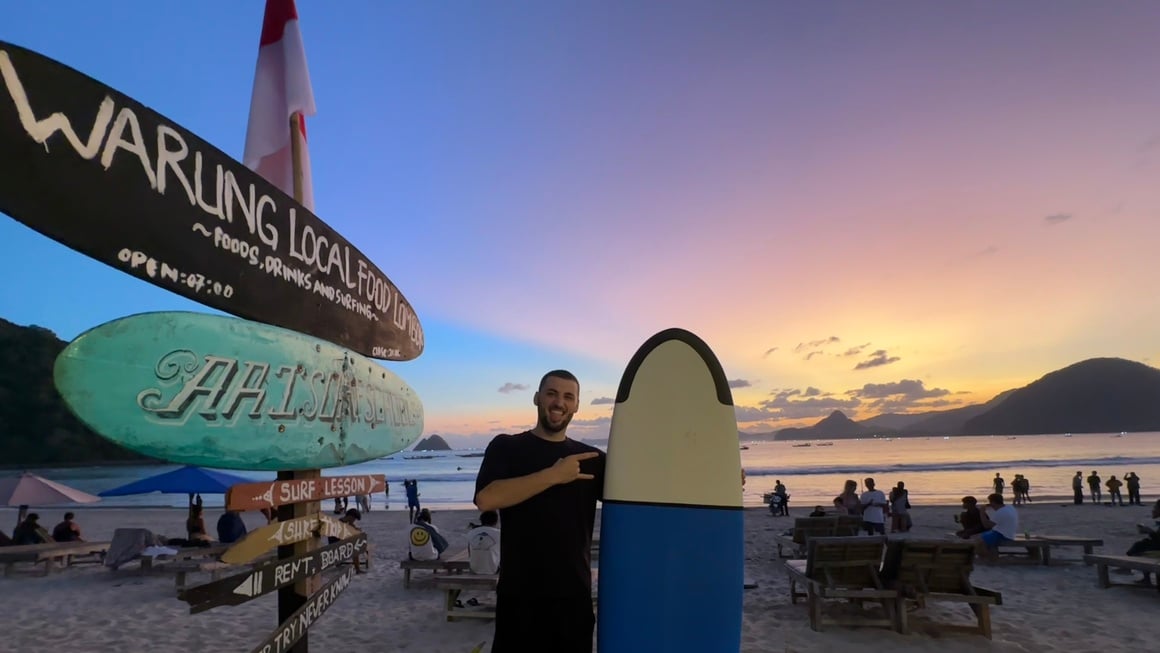
Photo: @joemiddlehurst
As promised, surf is the aim of the game here. Here are a couple of different spots that should be on your radar.
- Gerupuk: A 20-minute ride east, is the most accessible and most varied surf zone on the south coast. The bay holds multiple breaks ranging from forgiving inside waves suitable for beginners to fast, punchy outside walls that will keep experienced surfers occupied for days. If you only surf one spot on Lombok, make it Gerupuk.
- Selong Belanak: A 30-minute ride west of Kuta and one of the best beaches in Lombok. The waves are long, consistent, and forgiving, and the crescent of white sand behind it is the kind of beach you end up staying at longer than planned. Several surf schools operate here if you want to dip your toe in.
If you’re in it for the love of the beaches rather than conquering its waves, you should definitely check out Tampah Beach and Pandanan Beach. They’re some of the rare spots where you can swim and even snorkel rather than getting assaulted by current and waves. For a break between surfing, they serve up a slice of calm.
I stayed in a couple of different places in Kuta, but Lara Homestay was by far my favourite. It had a pool, drinking water and some cute resident cats, which was a bargain at its price point.
Stop 2: Tanjung Aan and the Southeast Coast (1-2 nights)
While Tanjung Aan is easy to do as a day trip from Kuta, basing yourself here for a night or two opens up the southeast coast in a way that rushing back to town doesn’t allow. I’d only suggets doing this if you’re easy on time, if not, commuting from Kuta will suffice just fine.
Accommodation options are limited and low-key, but it gives you a head start on getting the beach at dawn and dusk when it’s at its quietest and most worthwhile.
From here you can explore more of the south east coast, but honestly, Tanjung Aan is worth a couple days pit stop in its own right.
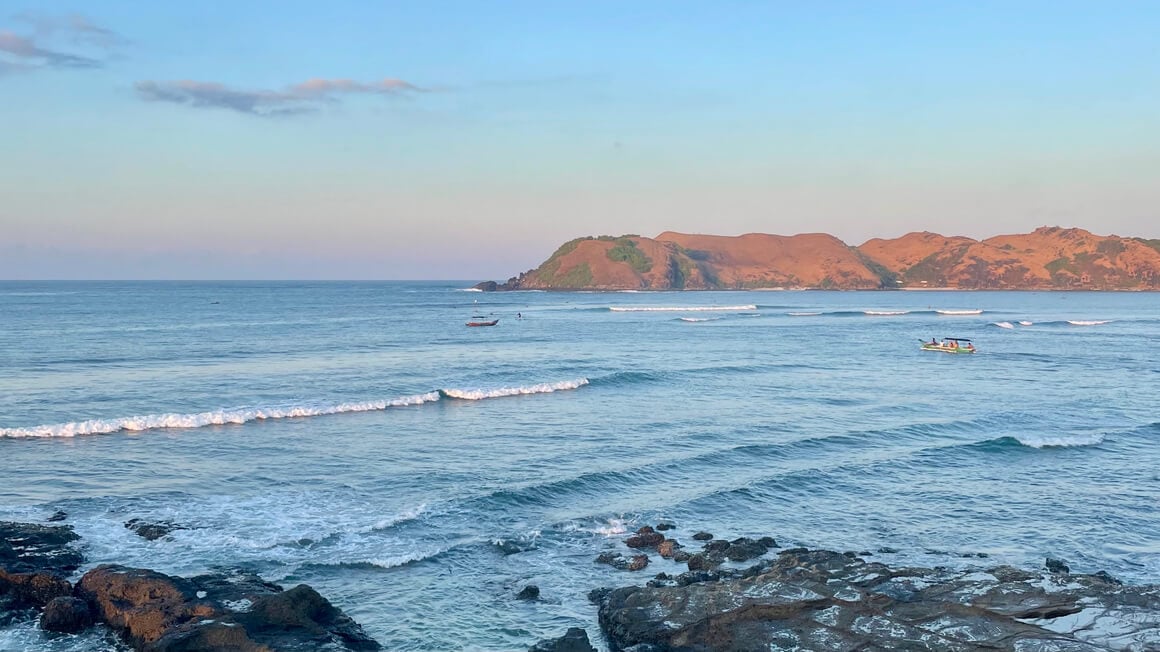
Photo: @danielle_wyatt
Stop 3: The Gili Islands (2-3 nights)
It’s time to leave the mainland and slow the pace down a little. Welcome to my favourite region in Indonesia <3 Depending on the time of year, it is possible to surf, but mainland Lombok is the superior option. Instead, this stop is purely to decompress and lean fully into the beach bum life.
If you have the time you can island hop and stay in at least two of the three Gilis, as they all offer something a little different…
- Gili Trawangan: the biggest and busiest of the Gilis. My personal fave, days here are occupied by snorkelling, diving and partying until the early hours of the morning…It’s a proper backpacker hub, retaining its scrappy, low-key island energy that people love about it so much.
- Gili Air: Not quite as chaotic as Gili T, not nearly as quiet as Gili Meno. Gili Air serves as the perfect middle ground between amenities and crowds. It’s super chill here, letting the beaches speak for themselves.
- Gili Meno: AKA honeymoon island. The quietest of the Gilis, it’s all about powder white beaches and quiet, solitude living.
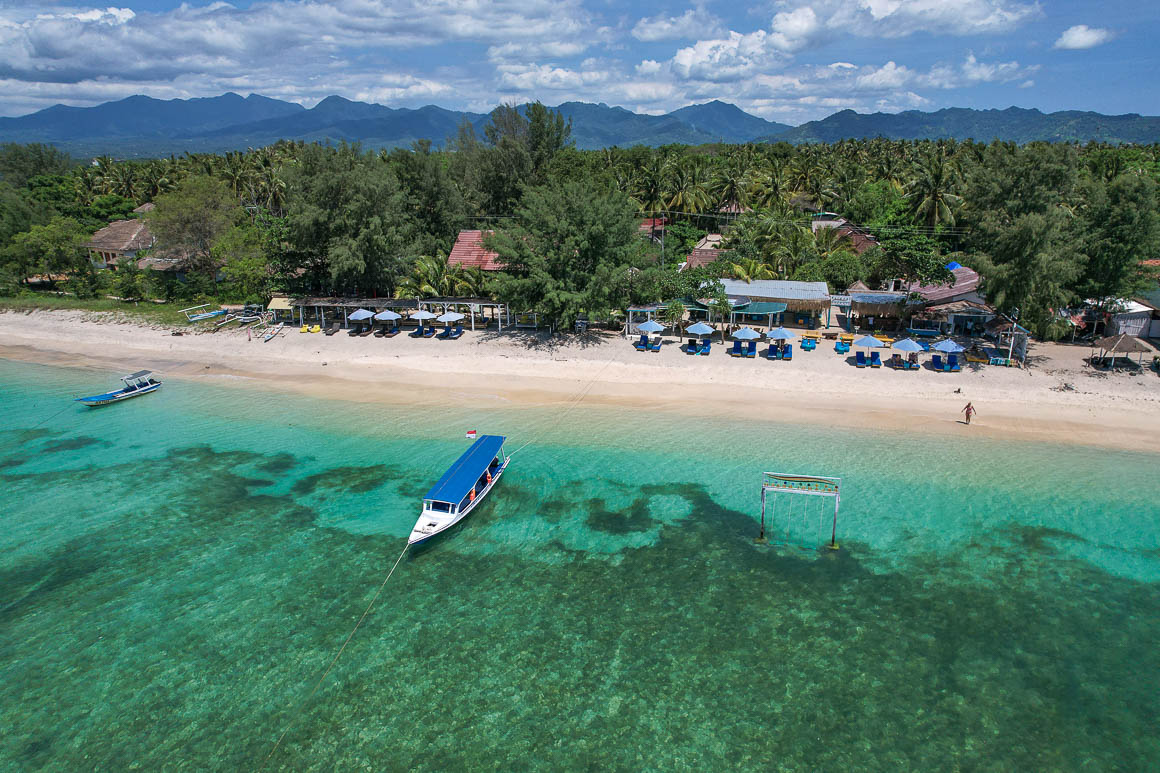
Photo: Samantha Shea
So, what to do in the Gilis? The beaches here are INSANE for snorkelling, it’s truly crazy how much you can see just swimming a few metres off of the coast. The corals are vibrant and I’ve never seen so many turtles in my life. Boat tours are popular between the islands so you get a taste of each island and its underwater life.
If snorkelling doesn’t quite scratch that itch, diving surely will. Same again, crazy corals, the chance to see reef sharks, turtles and other palaegic life if you catch them on a good day…
You’ve got good nightlife in Gili T, with beach bars and clubs coming alive post sunset. Honestly, sitting with a Bintang watching the sun set on the west coast is basically ingrained in daily life here. I’ve stayed in a couple of different hostels in Gili T, but my favourite was by far M Box Gili Trawangan for the social vibes alone.
Budget must-knows:
- This is a beach and surf itinerary, which means your biggest costs outside accommodation are going to be scooter rental, surf lessons, and boat transfers to the Gilis.
- Budget around $35-45 a day on the mainland if you’re eating at warungs, sleeping in dorms, and riding your own bike.
- The Gili Islands will push that up to $45-55 a day without much effort, since everything costs more on an island with no roads and no motorcycles.
- Splash out on a dive, a surf lesson, or a private room and you’re looking at $60-70 a day without it feeling excessive.
For Hiking Rinjani: 5 Days
Some people are here for one reason and one reason only: hauling their asses up Mount Rinjani, arguably one of the coolest volcanoes in Indonesia. I’ve given this its own dedicated itinerary as although most tours span from 2-3 days, you really need a day either side to prep and decompress.
Perfect if you’re short on time and are only interested in Rinjani itself, otherwise this itinerary is best mixed and matched with another in this guide so you can really get a feel of Rinjani and all of its glorious dimensions.
Stop 1: Sembalun Village (1 Day)
This’ll be your starting point to tackle the beast (the beast being Rinjani). Most tour providers, this one I recommend, will pick you up from either Senggigi, Mataram and the Bangsal harbour area. If you’re coming from the south coast, be prepared to head up to these areas for pickup or practise your sweet talking to see if they’ll pick you up from further afield for a small fee.
This area is the epitome of north Lombok: quaint, green, and beautiful. It’s home to some beautiful waterfalls that don’t get nearly half the footfall of the most popular spots in Bali and are way more impressive (you can see where I sit on the Bali v Lombok debate 😉 ). If you have a couple of days before your trek I definitely recommend you check them out. If you arrive, like most people, the day before, definitely just chill out around the village and conserve your energy…you’re going to need it.
Stop 2: Mount Rinjani (2-3 Days)
The main event. You can opt for either two or three days here. Two days means heading up to summit and coming back down the way you came. Done and dusted. You get the challenge, breathtaking views at summit and camping experience, all while being able to return to civilisation within 48 hours.
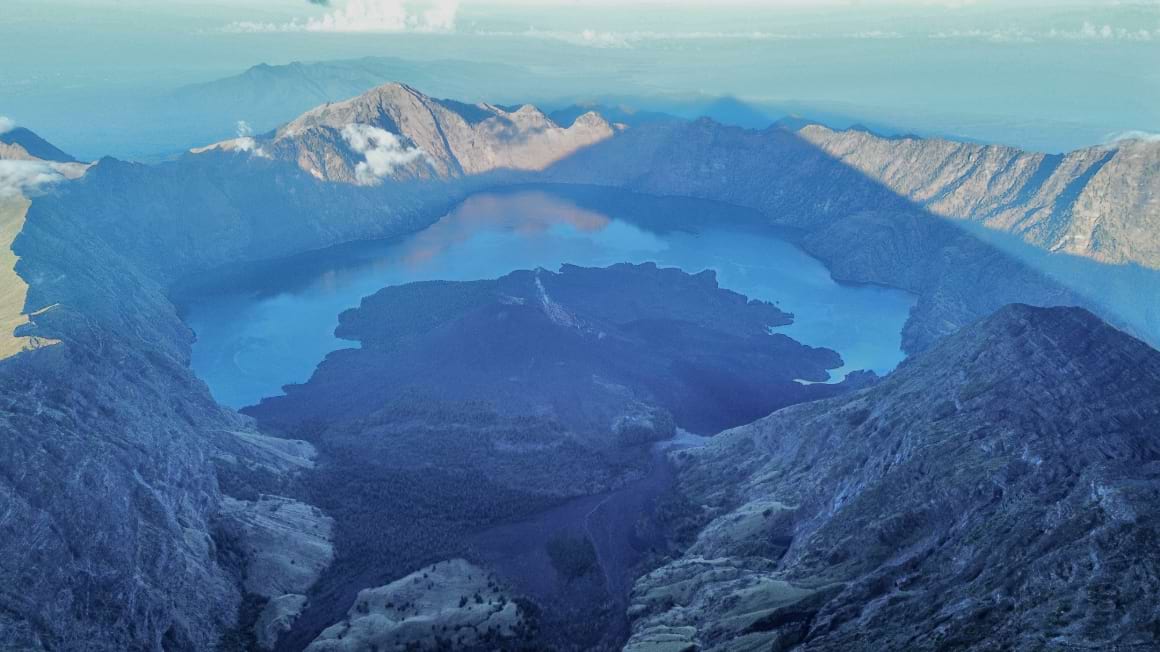
Photo: @taya.travels
The more challenging and arguably more rewarding option is the three days. You start in Sembalun Village, summit and head down to the volcano’s lake, before hiking back up to Senaru Crater and ending your journey in Senaru village.
It’s a lot of change in elevation but being able to soak in the hoat springs of the lake and the hike up to Senaru Crater make it completely worth it to me. I was really close to tapping out after summitting but I’m really glad I pushed through and stayed the extra day. Masochistic? Sure. But a lot of fun.
Stop 3: Your Choice of Civilisation (1+ Days)
Okay, so you’ve assaulted your body for three days. Where the hell do you chill out?!
You’ve got a couple of different options here. Stick around north Lombok to explore those waterfalls you didn’t get chance to see if you still have the energy. If doing as little as humanly possible is on the agenda, I’d head down to the south coast or the Gili islands to get some serious sunbathing in.
After my trek, I headed to Gili Air for a good massage and plenty of coconuts on the beach. I checked into parida bungalow and slept for a solid 18 hours. It was one of the rare spots on the island where you won’t get woken to the call of prayers, which was definitely needed when I was in recovery mode.
This itinerary is best paired with another on this list, so pick your poison and do whatever it is you need to decompress.
Budget must-knows:
- Guided packages run $150-250 per person, depending on group size, operator, and whether you’re doing two days or three, and that’s before you factor in accommodation, food, and getting yourself to the trailhead.
- Pre-trek in Sembalun is cheap: homestays are $10-20 a night and there’s not much to spend money on beyond warung meals. If you’re staying just the night before, this is most often included in your trek price.
- Post-trek recovery depends entirely on where you end up – the Gilis will run you $45-55 a day, the south coast closer to $35-45.
Lombok’s Nature and Culture: 7 Days
Of course, North Lombok is so much more than Mount Rinjani. Quite possibly my favourite region to drive through in South East Asia, North Lombok is teeming with waterfalls, rice terraces and quaint villages.
Northern Lombok looks deceptively easy to navigate on paper but that pesky Mount Rinjani means roads are never straightforward and getting from A to B takes much longer than you’d expect. If you want to see all of North Lombok in its glory, you’ll need at least two bases.
Stop 1: Mataram / Senggigi
Most travellers blow past Mataram on the way somewhere more photogenic, which is a fair call, but in doing so, you miss little pockets of local life that make Lombok, well, Lombok.
Culture hotspots you can’t miss:
- Kebon Roek Traditional Market in the old port district of Ampenan. The market opens around 4am and runs until early evening, sitting on the main road between Mataram and Senggigi. Go before 9am while it’s still alive.
- Pura Lingsar: Built in 1714, it’s considered the holiest temple in Lombok and sits about 6km east of the city centre amid rice fields. What makes it worth the detour is that it’s multi-denominational: one section is Hindu, the other is for followers of Wektu Telu, Lombok’s local syncretic take on Islam.
- Mayura Water Palace and Pura Meru: If you’ve got extra time in the city, these spots are both in central Mataram and easy to fold into the same morning.
- Bukit Malimbu. Get here 30 mins before sunset for some truly incredible views of the three Gilis, all from one vantage point.
- Pura Batu Bolong. A great way to round off the day coming back from Bukit Malimbu. It’s a Hindu temple located on a rocky cliff in Lombok and is quite impressive to watch the after effects of the sunset from this scraggly cliff. Bring a sarong to cover up.
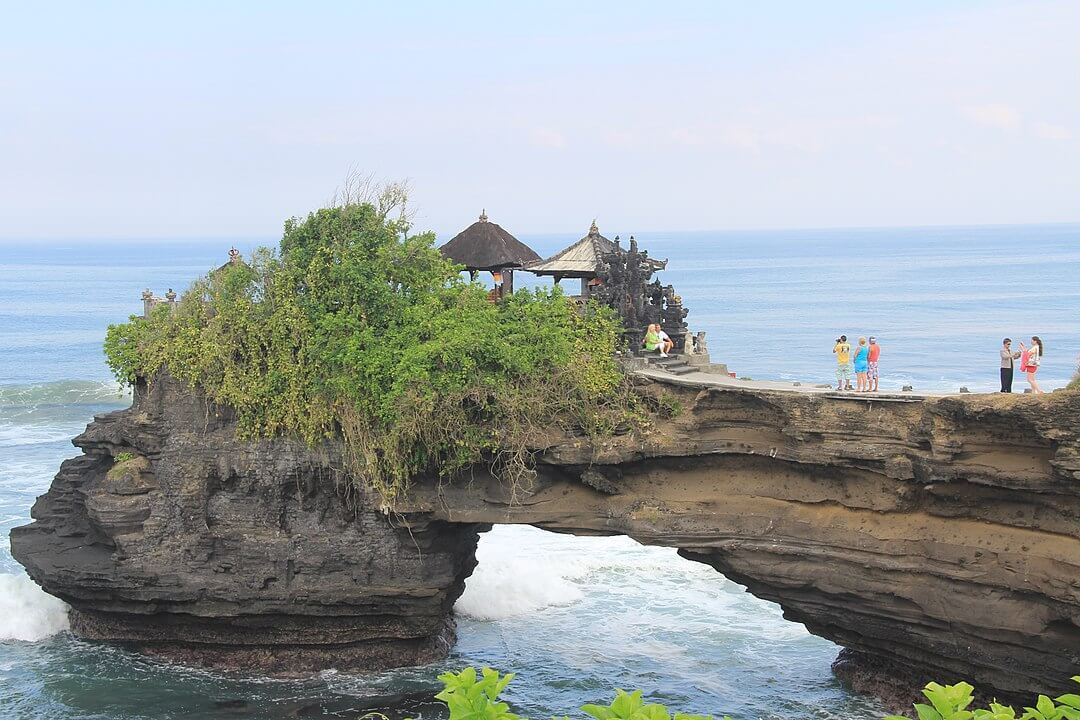
Photo: Paracetamol (WikiCommons)
Stop 2: Senaru
The drive up from Senggigi takes roughly two hours and gets increasingly dramatic as you push north. By the time you reach Senaru you’re on the lower slopes of Rinjani, and it’ll feel significantly different from the other sides of Lombok you’ve explored thus far. It’s a chance to really slow down and take in village life. If you’re debating on hiking Mount Rinjani, you’ll either start or end here, depending on what tour provider you choose.
If you’re just here to chill out and photosynthesise amongst the greenery, I urge you to stay in Senaru Garden Homestay. It’s a family-run place with enough volcanic jungle vibes to keep you content!!
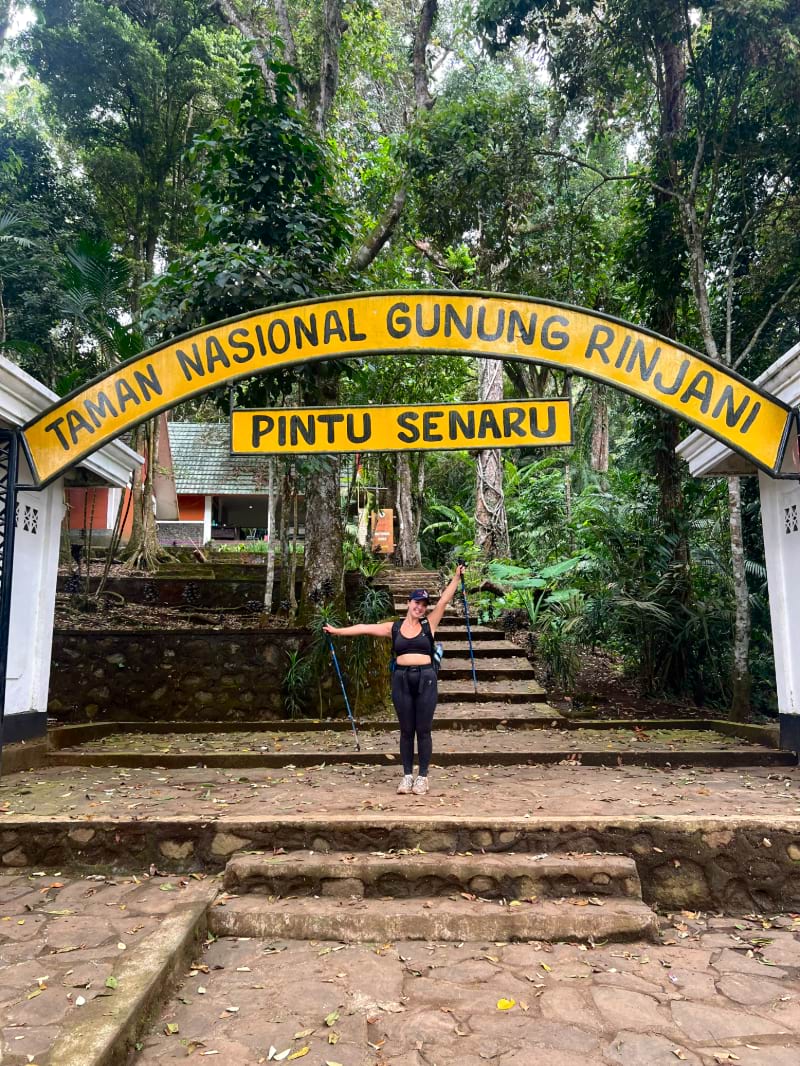
Photo: @taya.travels
- Chasing waterfalls is the aim of the game here. Sendang Gile and Tiu Kelep are the main draws, accessed via the same trail. The path involves a couple of shallow river crossings, a muddy jungle trail, and about 20 minutes of walking but both waterfalls allow you to swim! If you want to take out the stress of planning your day, this is a really great waterfall tour to join and it even takes you to Bukit Selong too.
- A traditional Sasak village walk in Senaru is worth doing while you’re based here. The community maintains traditional homes, farming practices, and Wektu Telu beliefs, which I definitely recommend you hire a local guide to show and talk you through. Beleq is one of Lombok’s many indigenous villages and dates all the way back to the 14th-century. The village has a rich cultural history, as well as plenty of Sasak houses and a village hall.
- Masjid Kuno Bayan Beleq is a 20-minute drive from Senaru in Bayan village and fits logically into a half-day of exploration. It’s the oldest mosque on Lombok, reportedly dating to the 17th century, and is a cool insight into Lombok’s history. The mosque itself is simple, essentially a collection of bamboo huts, but is surrounded by lush paddy fields. A quick stop off, but a cool insight into Lombok’s long Islamic history nonetheless.
- Saifana Organic Farm is a community-based regenerative farming project, and guided tours walk you through organic growing methods, seasonal crops, and what it actually takes to farm at this elevation.
Stop 3: Sembalun
The road between Senaru and Sembalun is one of the better drives on the island. It starts a little rough then opens into winding mountain roads as the altitude climbs and the temperature drops noticeably. This isn’t one you’ll want to rush, the views are beautiful and the roads demand your attention.
Sembalun sits in a wide valley ringed by mountains, with cooler air, crisper evenings and very few tourists around.
- Bukit Selong is a short climb from the valley floor with three separate viewpoints overlooking the patchwork fields. One of my favourite things to do in Lombok is hauling myself up here in the early morning to catch sunrise and beat the crowds. The views here are truly incredible.
- Pergasingan Hill is the bigger commitment of the two: a 2-3 hour hike delivering panoramic views of Rinjani, best done at sunrise. You’ll need to arrange a guide the evening before through your guesthouse. The predawn start is rough but the payoff is worth it. Go at sunrise or just go during the day and accept a different but perfectly decent view.
- Strawberry farms: What to do after you’ve napped off those early starts? Well, strawberries grow in this region and you’d be a fool not to visit at least one strawberry farm. You can pick them straight from the plant or buy them by the kilo. It’s a rare treat after living a relatively berry-less life in South East Asia.
Stop Four: Tetebatu
Tetebatu gets called the Ubud of Lombok constantly, which I’d have to refute. Tetebatu is the Ubud that I wanted, but didn’t get. Ubud is packed with tourists and trendy cafes. Tetebatu is still quiet and genuinely feels authentic. It sits on the southern slopes of Rinjani in central Lombok, surrounded by rice terraces, jungle trails, and small working villages.
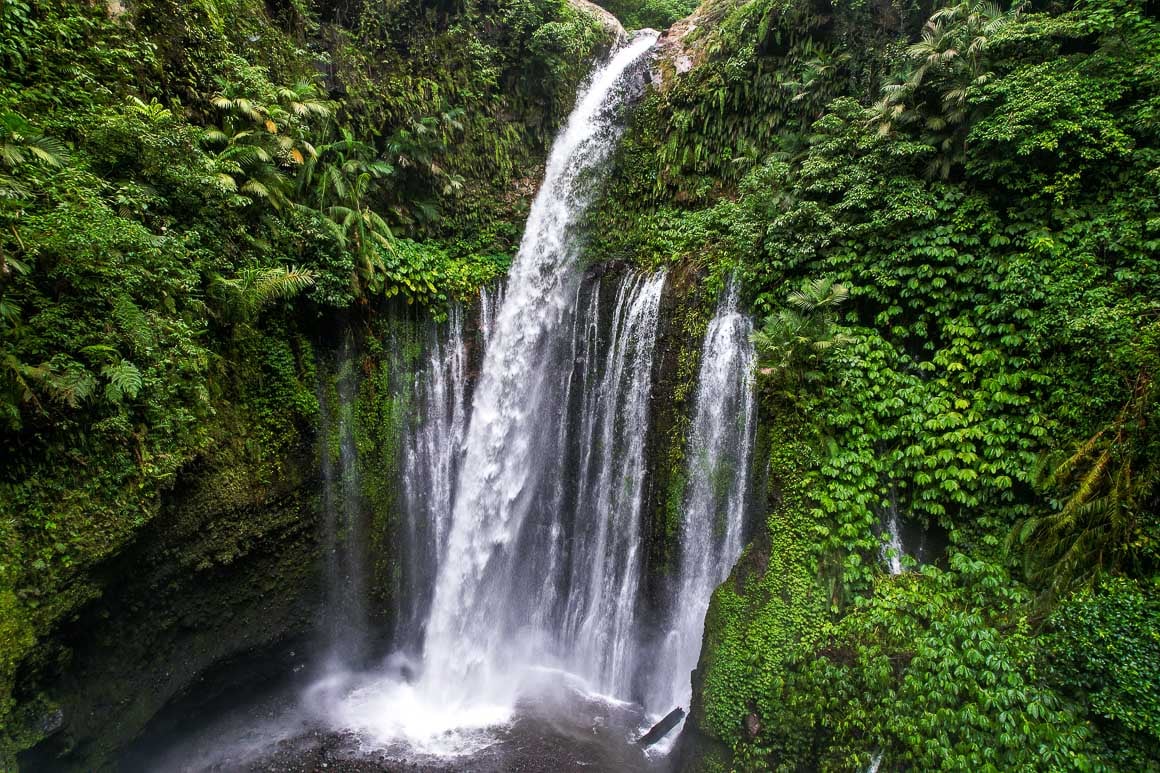
Photo: Samantha Shea
My favourite way to explore this region is on my two wheels. The roads are fab and you’ll be driving through some of the prettiest rice paddies I’ve seen in Indonesia. If you don’t drive a bike, there are a couple of places you could rent an e-Bike from too.
- Tetebatu Waterfall and neighbouring Air Terjun Sarang Walet are your main points of call here. The walk down takes you over a makeshift bamboo ladder into a canyon that feels deep in the jungle. For Sarang Walet, you’ll cross bamboo bridges and wade knee-deep through water before the waterfall appears – the approach is part of the experience. Both are swimmable.
- Tetebatu Monkey Forest feels a world away from Bali’s Monkey Forest. The monkeys here aren’t habituated to humans and keep their distance, which makes for a more genuinely wild encounter. Black langurs are the rarer species, staying high in the canopy and are usually detected first by the sound of rustling branches above you.
- Traditional hand weaving is alive here. Women work at handlooms in small village workshops, producing sarongs and textiles with symbolic patterns passed down through generations. Watching is welcome; trying it yourself usually is too. Buying is greatly appreciated 🙂
Optional Add-On: Sade Village
Sade sits between Tetebatu and Kuta, about 25-30 minutes from the airport, so it works either as a stop when heading south from Tetebatu or as a standalone add-on if you’re already based in Kuta.
The village has been inhabited for over 15 generations by the same Sasak families. It’s not just a tourist attraction or museum; people genuinely still live here, preserving generations-old traditions. Houses are built with alang-alang grass roofs and woven bamboo walls, with floors traditionally finished in a mixture of clay and buffalo dung – antibacterial, (surprisingly) odourless, and functional.
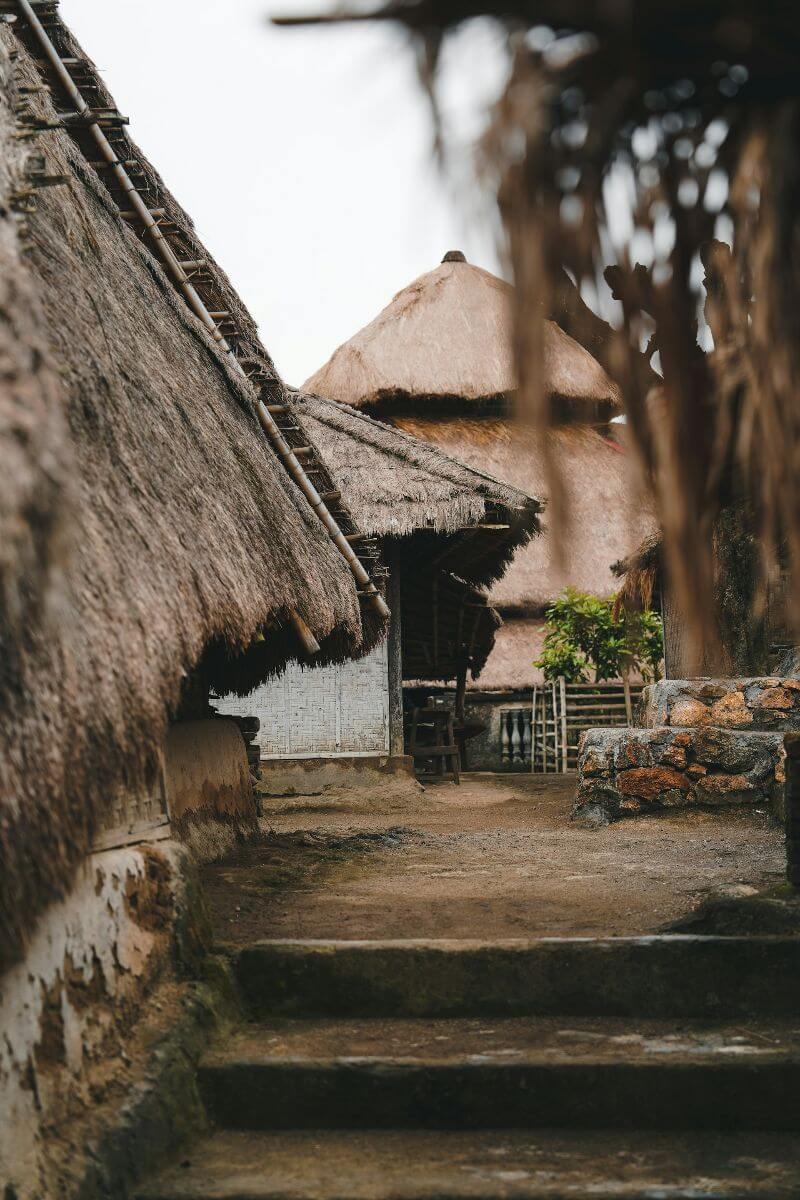
This is definitely to be done with a local guide, whom you can meet at the entrance of the village. They’ll give you SO much context that you’d miss out on solo, including some pretty unique marriage customs that’ll trip you up – an open mind is required here!
Most visitors spend 1-2 hours. Dress modestly (shoulders and knees covered), go in the morning or late afternoon, and leave a donation of around 50,000 IDR on the way out. You should tip your guide separately.
Budget must-knows:
- This itinerary is almost entirely free or very cheap once you factor out accommodation and transport. The stops – markets, temples, waterfalls, village walks, strawberry farms – carry little to no entrance fees, and warung meals in the north are as cheap as Lombok gets.
- A scooter is essential throughout and will run you $5-8 a day, which is well worth it given how spread out everything is.
- Expect $30-40 a day across all four bases if you’re sleeping in homestays or budget guesthouses and eating locally.
- The one place costs creep up is if you add guides for Pergasingan Hill or the Sasak village walks, which are worth every rupiah but worth factoring in separately.
Stop 1 : The Gili Islands
The Gilis are where most people start and for good reason – it’s the headline act for diving and snorkelling in Lombok. All three Gilis sit on a shallow reef system with warm, clear water and conditions which make for pretty gnarly diving/snorkelling year round. I chose to do some dives with dpm diving Gili and couldn’t recommend them enough, the dive masters were super chill and knowledgeable.
IF (and I mean if) you’ve concluded that you really can’t squeeze the Gilis in, a snorkel trip from the mainland is a great way to explore the Gilis, snorkel its waters and be back at your digs in Lombok by the evening. It’s the best you can do given the circumstances.
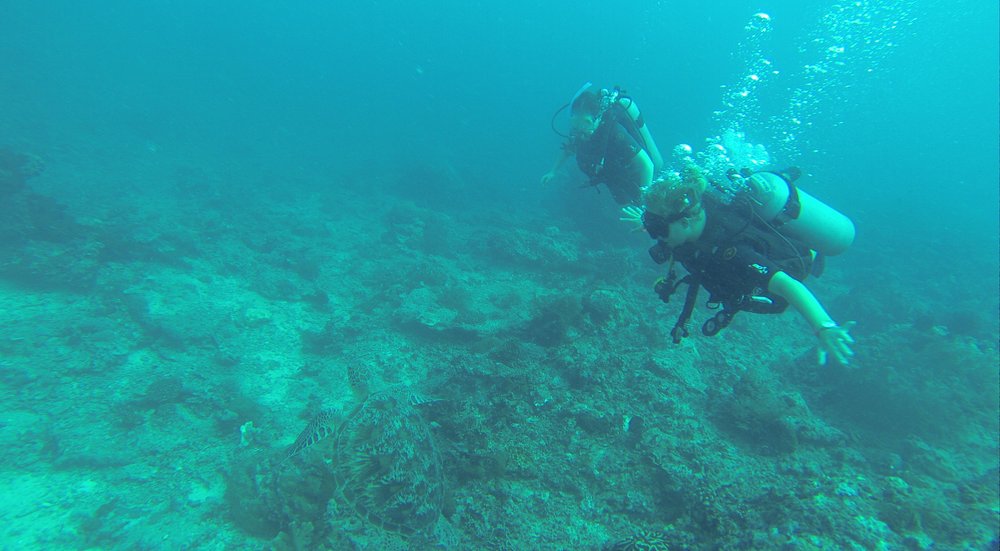
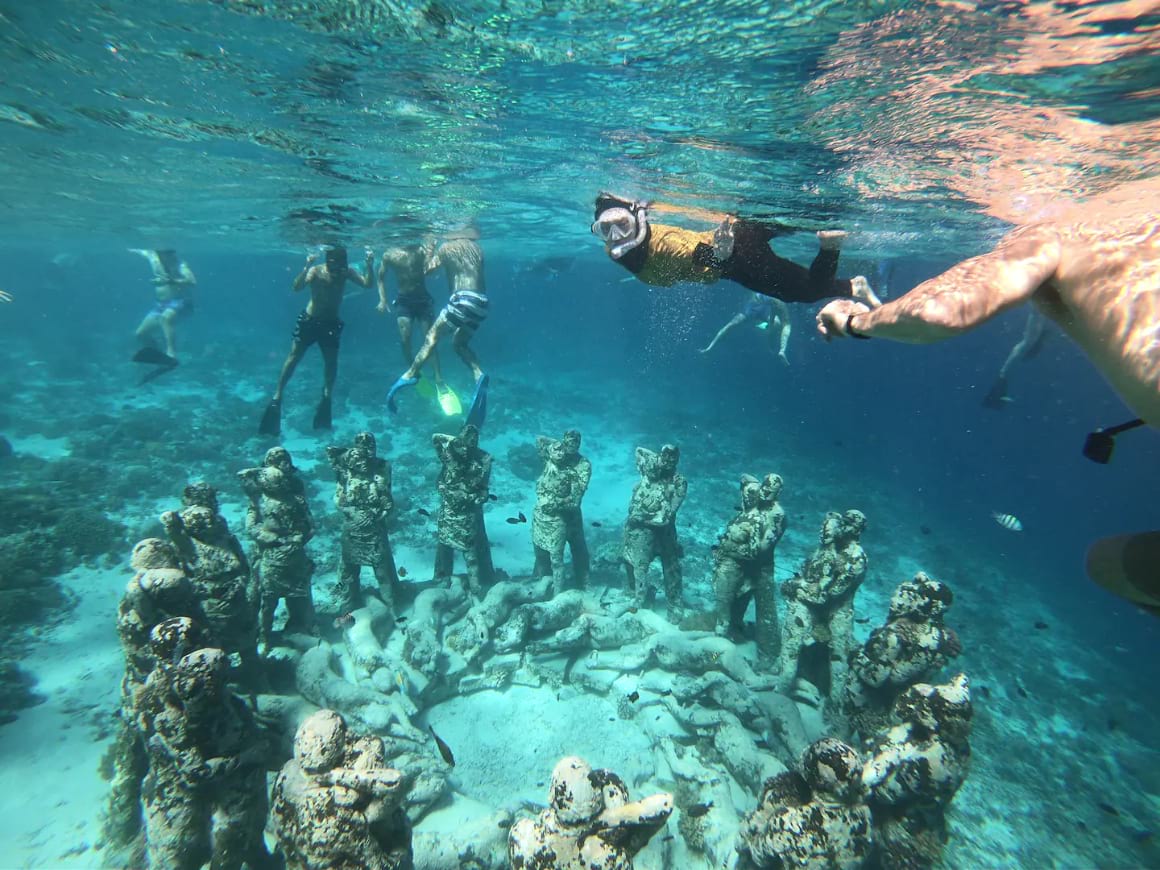
- For snorkelling: Pretty much every beach on every island will treat you to colourful coral and a chance of spotting a turtle or two. Nothing needed, just your own snorkel (or hire from the beach) and a couple of colours to kill. If you don’t have the time to cover all three Gilis, a snorkel tour will tick off at least two of ’em and will visit the famous underwater statue.
- For diving: The Gilis have sloping reefs, coral gardens, and drift dives across around 25 named sites, with conditions running from easy to moderate. New to diving? Well, you’re in luck, the Gilis is one of the easiest and cheapest places to get your Open Water in the world. A broke backpacker’s dream.
Some of the best dive sites in the Gilis:
- Bounty Wreck
- Meno Wall
- Hans Reef
- Shark Point
- Mirko’s Reef
- Deep Turbo
Stop 2: Sekotong and the Secret Gilis (Southwest Lombok)
Once you’ve done the main Gilis, you’re ready to graduate onto the next stage…the secret Gilis. It’s the same quality of reef without sharing it with hordes of boats. Sekotong is on the southwest peninsula, past the ferry port at Lembar, and feels firmly off the beaten path.
Many locals consider this the best snorkelling area on Lombok. The main islands to hit are Gili Nanggu, Gili Sudak, and Gili Kedis, usually done as a day trip by local boat from Sekotong village. This is a tour that I never got to do as it was only on my radar after leaving Lombok (classic) but it’s one of my top reasons for wanting to come back.
Further out, Gili Asahan and Gili Layar are less visited and have some of the healthiest coral in the region. Gili Layar features diverse coral formations with occasional small reef shark sightings.
Sekotong’s calm, clear conditions and gentle currents make it a solid intermediate-level area for diving. Guides who know the area well can point you toward pygmy seahorse, ghost pipefish, and frogfish tucked into the colourful reefs – here is aaaaaaall about macros, not pelagics.
Stop 3: Belongas Bay (South Lombok)
Now, this stop isn’t for everyone and is very much optional. But for experienced divers looking for a challenge exploring some of Indonesia’s best reefs (amongst the likes of Raja Ampat and Komodo), Belongas is calling. There’s one proper resort on the beach. Phone signal is limited. This is where serious divers come for one reason.
Belongas Bay is one of three places in the world where you can see both species of hammerhead shark. The headline dive site is The Magnet, a seamount pinnacle rising from 80 metres, where schools of hammerheads congregate alongside barracuda, tuna, mobula rays, eagle rays, and white-tip reef sharks. The Cathedral is the other key site: dramatic underwater rock formations with reef sharks, tuna, and occasional mantas.
This is advanced diving only, and that’s not a formality. Between June and October the site requires Advanced Open Water certification with a minimum of 100 logged dives; outside that period the minimum is 50 dives. If you’re serious about your diving, this deff deserves a place on your bucket list.
Stop 4: Pink Beach and East Lombok
I would usually say that Pink Beach is very much not worth the journey for most people staying in Kuta. The snorkelling, however, is excellent. Here, and the rest of East Lombok, are the quietest spots on this itinerary and where you’re most likely to have the reef to yourself. The coastline here is still largely undiscovered by the tour boat crowd, and the diving and snorkelling reflect that.
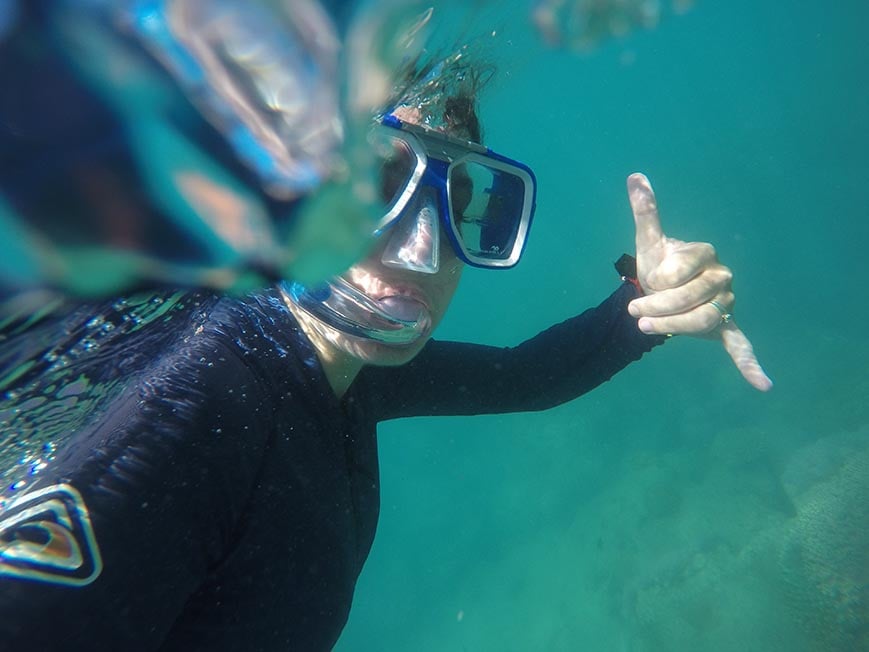
Image: Nic Hilditch-Short
- Pink Beach: It gets its name from the crushed red coral that mixed with white sand. It’s not as vibrant as it used it be, but the reefs offshore remain fairly good for snorkelling, with clownfish, angelfish, and soft corals close to the surface.
- The East Lombok Gilis (Gili Kondo, Gili Bidara, and Gili Petagan): These are largely undiscovered spots with abundant natural coral, and in some places the seabed is coral all the way down rather than sand which is pretty bloody cool if you ask me. Gili Kondo and Bidara are the most accessible and can be combined into a day of island hopping from a mainland base.
Budget must-knows:
- The Gilis will be your most expensive base at $45-55 a day before you’ve touched the water
- Add a two-tank dive ($40-60) or an Open Water course ($250-350) and costs climb fast.
- Sekotong and East Lombok bring that baseline back down to the standard $30-40 a day.
- Belongas Bay is its own thing: the diving alone runs $80-120 a day, including the boat transfer, so factor that in separately, regardless of where you’re based.
Got time to kill and really want to sink your teeth into everything Lombok has to offer? I’d suggest spending two weeks at the absolute minimum in Lombok. That gives you time to cover the Gilis, north Lombok and shred some waves down on the south coast. More time grants absolute flexibility; chop and change anything that you don’t care for.
Stop One: The Gilis (5+ Days)
I’d spend a minimum of five days on the Gilis. Split your time between two if you want a change of scenery, but the beaches are similar across the Gilis – only the vibe changes. I could spend a month on Gili T in its own right so do with this what you will.
My Gili non-negotiables:
- Dive. Getting your PADI is cheap as chips here if you’ve not got it and fun diving here is low-stress and high reward.
- Snorkel. If diving doesn’t do it for you, snorkelling surely will. Bring your own or rent at the beach. Pretty much any part of the coast along all three Gilis is decent for snorkelling, but check Google Maps for reviews of the best spots.
- Catch the sunset. Come 6pm everyone migrates over to the west side of the island for a Bintangs and the sky’s nightly colour show.
- Party. Only applicable to Gili T, but not to be missed.
- Eat. There’s an impressive lineup of restaurants across Gili T and Air, and beach bumming takes up a lot of energy, right?
Stop Two: North Lombok (3+ Days)
From the Gilis, I’d take a local boat over to the mainland. Don’t bother with the tourist boat, it’s a little bit quicker but costs four times the price.
From there I’d head either straight to Senaru to start the Rinjani trek or pick a village from the Northern Lombok itinerary to set up camp and enjoy Lombok’s rolling greenery. This is the stop that takes the most amount of planning, just because it takes longer to get to and is more off the beaten path.
If you really don’t have time to squeeze in northern Lombok, seeing the best bits on a tour will still let you feel like you can tick it off. This one visits Sendang Gile and Tiu Kelep waterfall, along with Selong Hill for those rice paddy views. They’ll drop you off to your accom on the west or south coast, come dark. I did a DIY version of this tour from the south coast, but it was a long day with driving factored in and I actually missed out on Selong Hill. This is the way more chilled-out alternative if you don’t fancy driving yourself for a good chunk of the day.
My Northern Lombok must-dos:
- Hike Mount Rinjani. For the adrenaline junkies. It’s a challenging three days, but amongst some of my favourites in the 3.5 months I’ve spent in Indonesia.
- Visit Bukit Selong. It’s not a demanding hike compared to Pergasingan Hill, but you’ll be rewarded with sweeping views of hills and rice paddies, all at the foot of Gunung Rinjani National Park.
- Drive around and get lost. My favourite activity!! This region is absolutely STUNNING, and there’s nothing better than renting your own two wheels with the plan of driving around with little plan.
- Tetebatu Waterfall. Not the most impressive waterfall I’ve been to in Indo, but definitely one of my favourites. Head towards the end of the day to have the place completely to yourself (bar a village dog or two to keep you company).
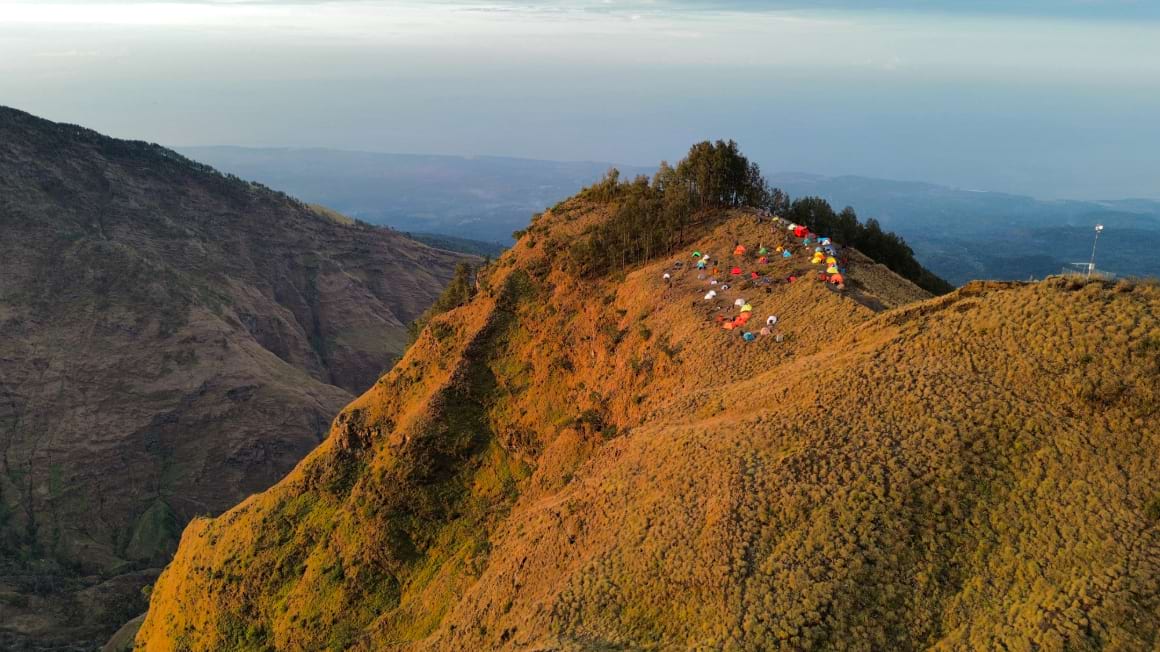
Photo: @taya.travels
Stop Three: The South Coast (5+ Days)
Visiting the north is a great way to break up chunks of time on the coast, but it’s time to get back to business. If you’re a surfer, you’ll truly be in your element. Use Kuta as your base and rent a scooter to explore different points along the coast – I don’t think moving around is worth it here.
Yuli’s Homestay was my favourite homestay that I checked into in Kuta. They’ve got three swimming pools (unnecessary, but impressive) and a kitchen so you can cook or even just keep leftovers good to go.
The South Coast best bits:
- Spend an afternoon on Tanjung Aan. Hike up Bukit Antara to watch the sunset. In rainy season (or short thereafter) the hills are green and luscious.
- Shred some waves at Selong Belanak Beach. It’s busy for good reason; there’s surf here to suit every level. Beginner waves start at the shore, whilst the more intermediate breaks require a taxi boat out.
- Cafe hop. Lombok’s cafe scene is just a diluted version of Bali. It’s banging coffee, without the crowds.
- Chill out on Tampah Beach. A quiet beach without surf, forcing you to really work on your tan.
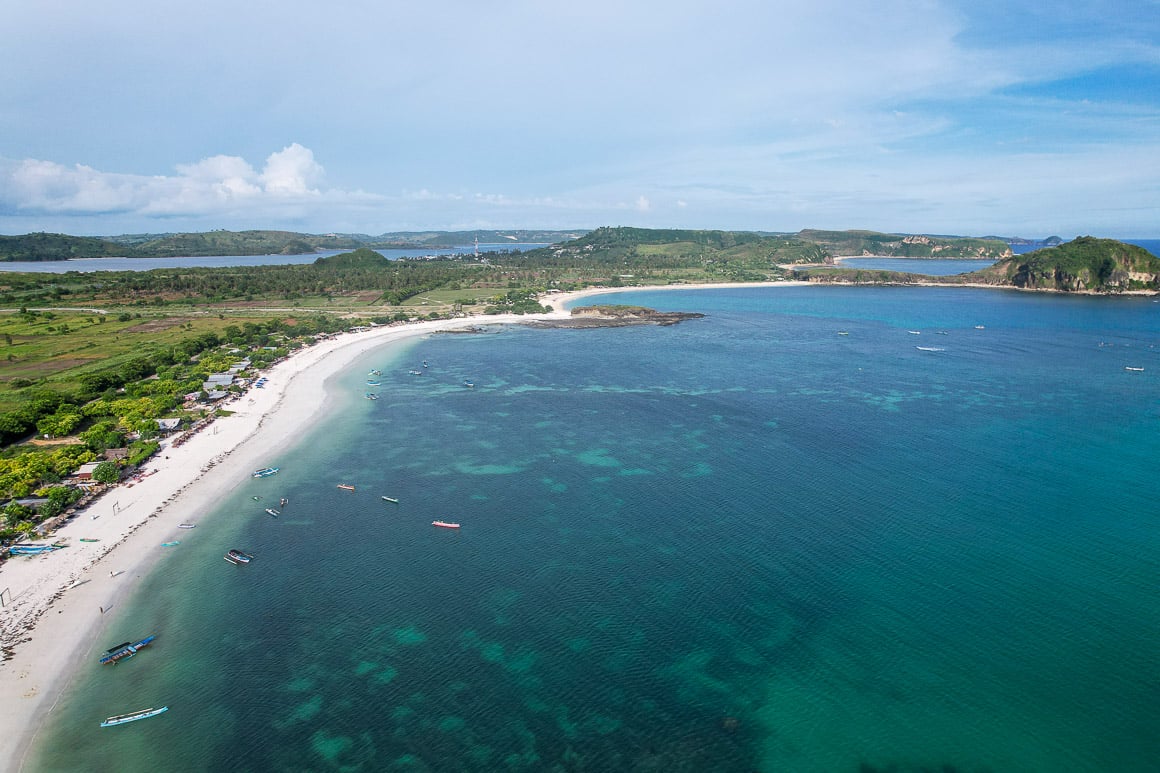
Photo: Samantha Shea
Budget must-knows:
- Two weeks in Lombok means touching almost every price point on the island, so expect your daily average to shift depending on where you are.
- The Gilis are the most expensive stretch at $45-55 a day before diving or activities, and if you’re getting your Open Water while you’re there add $250-350 on top as a one-off.
- North Lombok brings costs right down to $30-40 a day, with the Rinjani trek the one big variable at $150-250 depending on whether you go two days or three.
- Back on the south coast you’re in the same $35-45 a day territory as the rest of the mainland.
Lombok’s temperatures stay pretty consistent year-round, hovering in the high 20s to low 30s regardless of when you show up. What changes is everything else: the rain, the crowds, the surf, the road conditions, and frankly the whole feel of the place. Figuring out the best time to visit Lombok makes a bigger difference here than on a lot of Indonesian islands.
Dry Season (May to October)
This is peak season. The skies are clear, the roads are dry, and snorkelling around the Gilis is at its best with strong underwater visibility. Kuta Lombok and the surrounding beach hubs fill up fast, and while the energy feels pretty buzzing, it loses its ‘off the beaten path’ charm that you might be looking for. Surf is also more consistent during this period, particularly on the south coast breaks around Kuta and Gerupuk.
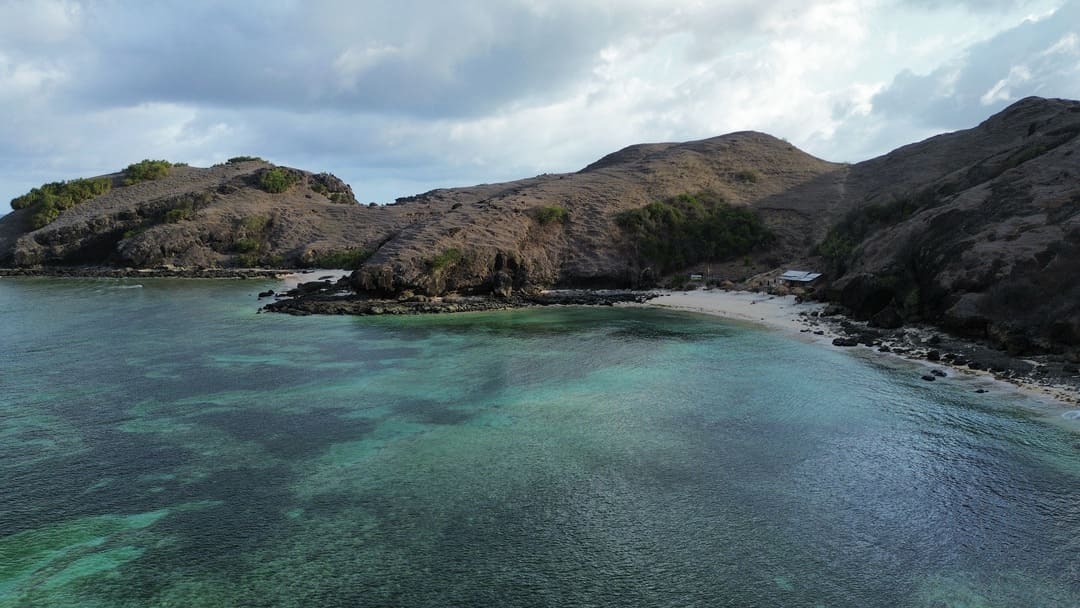
Photo: @taya.travels
Wet Season (November to March)
Wet season gets a worse reputation than it deserves. Rainfall is typically short and sharp, often under an hour a day, and it rarely derails a well-planned itinerary. This is actually my favourite time to travel to Lombok as everything is so bloody green. I’ve been in both dry and wet seasons, and the difference is like night and day. The trade-offs may be bigger to some though: surf conditions can become unpredictable and roads in more remote areas get muddy and difficult if you want to explore Lombok by bike.

Photo: @taya.travels
Shoulder Season (April and November)
April and November are quietly the best months to visit if you want the benefits of both seasons without committing to either extreme. Crowds are manageable, prices haven’t yet hit peak levels, the landscape still looks lush, and the weather is largely cooperative. If your dates are flexible, aim here.
| Average Temperature | Chance of Rain | Crowds | Overall Grade | |
|---|---|---|---|---|
| January | 28°C / 82°F | High | Calm | 😀 |
| February | 28°C / 82°F | High | Calm | 😀 |
| March | 28°C / 82°F | High | Calm | 😀 |
| April | 28°C / 82°F | High | Medium | 😀 |
| May | 28°C / 82°F | Average | Busy | 😀 |
| June | 27°C / 81°F | Low | Busy | 🙂 |
| July | 26°C / 79°F | Low | Busy | 🙂 |
| August | 26°C / 79°F | Low | Busy | 🙂 |
| September | 27°C / 81°F | Low | Busy | 🙂 |
| October | 28°C / 82°F | High | Medium | 😀 |
| November | 28°C / 82°F | High | Calm | 😀 |
| December | 28°C / 82°F | High | Calm | 😀 |
Lombok is not a big island on paper, but distances here have a way of taking longer than the map suggests. Road quality varies significantly depending on where you’re headed, and a journey that Google Maps says will take 45 minutes can easily turn into 90 minutes. In some parts, it was driving down roads that had no reason to hold that title, other times it was stuck in a traffic of buffalo!
Getting to Lombok
Most people arrive from Bali, and you’ve got three options depending on your budget, patience, and how prone you are to seasickness.
- The fast boat: this is the most popular option for tourists. The route from Bali to Lombok takes around 1.5-2 hours, depending on sea conditions. Many routes stop at the Gili Islands along the way, which makes it a convenient option if you’re planning to go there anyway. This is one of those rare instances where buying online is significantly cheaper than in person, so make sure to buy only directly on or on 12GoAsia.
- Flying: it’s faster but rarely the better deal once you factor in airport time. The flight from Denpasar to Lombok International Airport takes around 40 minutes and is significantly closer to the south coast than the pier. If you’re planning to start in north Lombok, this option makes the least sense.
- The public ferry: The broke backpacker call. It’s slow, but it’s cheap and is how the locals cross the Strait. Tickets run around 75,000 IDR per person, or 130,000 IDR if you’re bringing a scooter – the only crossing where you can. Bring snacks, download something to watch, and set your expectations accordingly.
Scooter
This is always my winner. A scooter gives you the freedom to stop when something looks interesting, reach beaches that public transport won’t take you near, and set your own schedule. That said, it’s only the right call if you’re a confident rider.
Some roads in the south are in poor condition, and I definitely wouldn’t recommend if you’re not confident navigating rocky and muddy side roads to get down to some beaches. Some of the main arteries in the south coast are exceptional to learn on, just use google reviews to give you an indicator as to how the roads are to get to your destination.
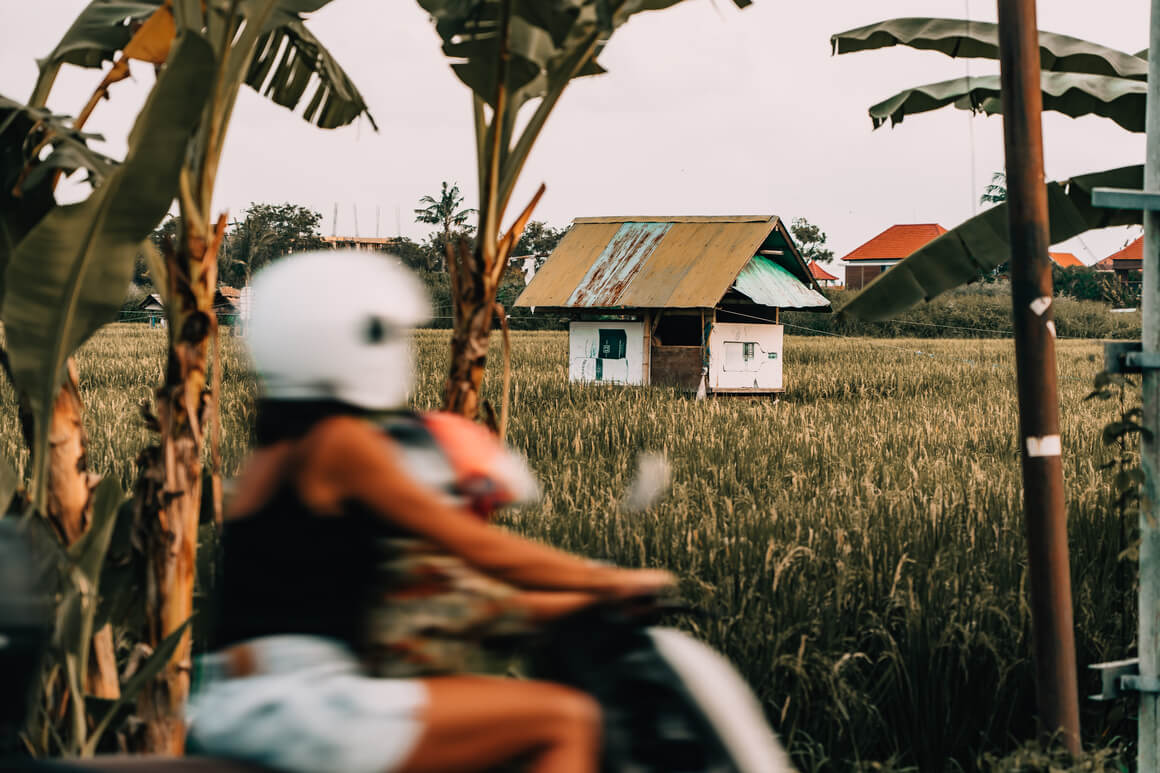
Image: Nic Hilditch-Short
Private Driver
I’d only recommend this for longer day trips and for those who can’t drive a scooter. I tend to solely get by without hiring a taxi, but for points up in the north, the distances are too great to tackle on a bike unless you’re considering doing it over multiple days. Getting a private driver takes the stress out of long journeys and demanding terrain. If you split it between a couple of mates, it feels reasonable and often makes more sense than burning yourself out on a scooter.
Gojek/Indrive
Fine for short hops around Mataram, Senggigi, or within Kuta town, but it’s not a practical solution for a full-island itinerary. Driver availability on Grab drops off significantly once you move away from the main centres and is all but non-existent on the south coast. I had managed to book a couple of taxis on Indrive on the south coast, but it was few and fair between and anyone’s guess if they would actually show up (I nearly missed my flight because of this!).
Public Transport
I was under the impression that the public transport links and next to non-existent in Lombok. Most locals have their own transportation, so there is little reason to have buses running through villages. The closest you’ll get here is shared mini buses, working out to be cheaper than a private driver, but still not public transport per say.
Figuring out where to base yourself in Lombok? You’ve got a couple of different options depending on what you want out of your trip. We’ve got a dedicated article diving into the nitty-gritty of where to stay in Lombok for you to sink your teeth into if you’re still unsure of where to base yourself.
If you’re backpacking like me, you’re in luck. Lombok has a bunch of cool hostels serving the surfers, to the digital nomads, to those who tapped out of the chaos of Bali and accidentally stayed for two months. It happens.
Buuuuuut if you’re looking to splash the cash a little, why not do it in Lombok? You’ll find that your bang for buck is almost tenfold that of Bali. Resorts in Lombok don’t have to cost the earth, and it’s a more affordable way to experience a rare slice of luxury for us fellow backpackers.
For specific accommodation picks, I’ve tried to include all of the places that I divvied up my time in Lombok in. Peruse the itineraries that catch your eye, and you’ll find my personal recommendations there.
Okay so you’ve pulled the trigger, booked that flight and FINALLY put Lombok in your calendar. But before you can get to the fun stuff: you gotta lock down the practical stuff. Here’s everything you need to know before arriving on the island.
- SIM card: Order one online and pick up at the airport through sites like Klook to avoid airport-inflated prices. Telkomsel and XL Axiata are the most reliable networks on Lombok. If you’d rather sort it before landing, an eSIM through Gigsky or Nomad works well and activates the moment you touch down.
- Cash: Lombok runs on rupiah and a lot of it is cash-only, particularly at local warungs, markets, beach vendors, and smaller guesthouses. ATMs are available in Mataram, Senggigi, Kuta, and on the Gili Islands, but get sparse quickly once you move into rural areas. Withdraw what you need before heading north or into more rural regions.
- ATM fees: Most ATMs in Lombok charge a withdrawal fee on top of whatever your home bank takes. BCA and BNI tend to be the most reliable machines with the fewest issues for foreign cards. Avoid the standalone ATMs inside convenience stores where possible.
- Cards: Larger restaurants, dive operators, and some hotels in tourist areas accept card, but don’t count on it. Always have cash as a backup.
- Plugs: Indonesia uses Type C and Type F plugs (the standard European two-pin). Bring an adapter if you’re coming from the US, UK, or Australia. I always pack my trusty worldwide adapter and let it do the rest from there.
- Language: Bahasa Indonesia is the national language. English is spoken reasonably well in tourist-heavy areas like Kuta, Senggigi, and the Gilis, but drops off fast in rural villages and the north. Learning a handful of basics goes a long way: terima kasih (thank you), berapa harganya? (how much?), and tidak (no) will all earn you some brownie points.
- Bargaining: Not universal, but expected at markets and with transport that isn’t metered or app-based. Start lower than you’re willing to pay, stay friendly, and keep it light and easy.
Is Lombok Still Worth Visiting?
I include this question because the development happening in Lombok in the last few years is hard to ignore. But, development or not, Lombok IS absolutely still worth visiting.
In 2016, the Indonesian government allocated ten different regions across the country that would have special funding to grow into mini ‘Balis’ in an attempt to develop tourism, Mandalika in southern Lombok being one of them. As a result, the island is developing, and fast. Massive construction and development have paved the way for high-end luxury resorts, cafes and roads so wide their intended capacity seems somewhat concerning to those who have visited Lombok when it was still regarded as a ‘hidden gem’.
So, what now? Well, the ‘authentic’ side of Lombok is still very much alive, and luckily, you don’t have to go to great lengths to hunt for it like you do in Bali. Stay in guesthouses, eat at warungs and make sure any money you spend goes to local businesses. It may one day feel like Bali 2.0, so if you want a distinctly Lombok experience, you gotta come now!!
Lombok is genuinely safe by Southeast Asian standards, but a few things are worth knowing before you arrive.
Scooter safety
A scooter is the best way to get around Lombok, and most travellers will rent one at some point. Always wear a helmet, drive on the left, and avoid riding at night on unlit roads. It’s a great place to learn as the main arteries are wide and relatively quiet compared to its Balinese neighbour.
Saying that, getting down to some beaches and bays are downright treacherous – especially during or after monsoon season. Check google reviews before making your journey to see what people say about the roads. If you’re not confident on a bike, it’s not worth taking the risk.
Swimming conditions
The water around Lombok looks calm in a lot of places. It isn’t always. Strong currents run between the islands and along stretches of the south coast, and conditions can change quickly. Do not attempt to swim between islands – the Strait of Lombok has some of the gnarliest currents in the world.
At surf beaches, ask locally before getting in if you’re unsure about conditions, and pay attention to what experienced surfers are doing. If you’re snorkelling, be especially aware around the Gili Islands where boat traffic is heavy and vessels don’t always see swimmers in the water.
Alcohol
Stick to beer or imported spirits. Locally produced spirits carry a real risk of methanol contamination, and there have been deaths linked to adulterated alcohol across Indonesia in recent years. Buy sealed bottles and open them yourself. Drink spiking has been reported in bars across Lombok and the Gili Islands, so keep an eye on your drink and don’t accept anything from strangers. As always, keeping your wits about you and operating with a bit of common sense is always the way to go.
Drug laws
There are VERY strict drug laws in Indonesia. Possession can hold a sentence of up to 12 years, whilst more serious offences can result in life imprisonment or the death penalty. I like to dabble here and there on my travels – Indonesia is not one of those places.
Petty theft
Petty theft happens, mostly in busy tourist areas. Keep valuables out of sight, don’t leave bags unattended on beaches, and use a locker or hotel safe for anything you can’t afford to lose. A money belt is worth using on travel days. Keep your scooter locked when parked in busy areas like Kuta and Senggigi.
Don’t Forget Your Travel Insurance for Lombok
Travel insurance isn’t optional in Lombok. It’s the thing that determines whether a scooter accident or a diving incident costs you a bruised ego or your entire savings.
Sort out your insurance before you go. There are several good options, but our overall pick is SafetyWing. Most of the Broke Backpacker team has used it at one point or another, and we’ve filed claims for rabies jabs in Bali, a hospital stay in Mexico, and a clinic visit for a stomach bug that wouldn’t quit. All paid out.
It’s month-to-month, no lock-in, no itinerary required, and you can buy it after you’ve already left. A little over $2 a day if you’re under 40.
New SafetyWing customers: use code BROKEBACKPACKER for 8 free weeks of electronics theft coverage. You have to scroll down and click the pink camera on their landing page to enter it, and you have to do it before creating your account.
How I’d Approach Lombok If It Were My First Trip
The first thing to figure out is how long you’ve actually got. Lombok’s a beast, and there’s no way you’ll conquer it all if you only have a week to spare. And that’s A-okay! It took me three different trips to feel as though I could fully tick Lombok off, and even then, I’d happily go back to fill in the inevitable hidden gems I’ve heard about since the last trip.
If this is your first trip, pick a realistic number of bases and commit to them rather than trying to cover the whole island in four days on a scooter. You’ll see more by doing less, which seems counterintuitive, but trust me on this one.
Lombok is less of a checklist and more of a warung lunch that turns into a two-hour conversation, a road that looked unremarkable on the map and turned out to be one of the better drives of your trip, a waterfall you had entirely to yourself because you got there an hour before anyone else.
Absolutely, the surf breaks are worth their weight in gold. But equally so is the snorkelling in the Gilis, hiking in the northern villages and driving through the rice paddies to get in between them all. What makes something ‘worth it’ is all down to what YOU want to see or do. So pick an itinerary, or part of, mix or match, or use it as a loose starting point and go from there.
Come with a rough plan. Leave room in it. The island will fill the gaps.





Indonesia is a very large country with a very wide territory with thousands of islands on both sides of the equator. Although often classed as part of Southeast Asia, many of the islands are far from the main backpacker routes in Southeast Asia and much of Indonesia is closer to Australia than Thailand, Cambodia or Laos. If you all want to travel to Indonesia, we also have very exciting tourist information, you can see it via the website which we will share here abkhaziya . net
When i was in parts of bali and particularly over toward lombok in gili trawangan, gili air and gili meno, i was constantly woken really early in the morning by the external speakers blasting the prayer. this seemed odd to me given prayer is normally a quiet personal matter. i used to look for concrete buildings distant from noisy places to stay in rather than thatched huts as they are more sound proof and more likely to have air conditioning. i would suggest a rating on each accommodation place indicating how close it is to ferry terminals, nightclubs, temples and main roads for those of us who are light sleepers. recent oppressive laws passed by the blinkered and foolish government of indo (given 80% of their income comes from tourism) do not favour tourism, rather they favour opportunities to extort bribes for not enforcing these ridiculous laws. One can rate the corruption of a police force anywhere by the ratio of how much time they spend looking for or investigating crime and dealing properly with it vs how much time they spend extorting bribes for not doing so. I have lived in places where the latter is all they ever do and they have zero interest in the former! new laws: https://www.abc.net.au/news/2022-12-06/indonesia-bans-cohabitation-between-unmarried-couples/101739410
i recommend avoiding all the muslim areas of indonesia for both these reasons unless you can get well away from busy areas with temples and police. .