I crawled through a mineshaft barely shoulder-width, the outline of a vein of silver that tumbled into the bowels of Potosi’s Cerro Rico.
My only view was the soles of my guide Sergio’s rubber boots, flickering in the beam of my headlamp. I was surrounded by thousands of tonnes of rock.
The crushing weight of the mountain was something physical, that you could touch, not just feel. If the mountain rumbled just inches, we would be squished like insects.
This was my second day in Potosi, a city built at an impossible 4000m of altitude at the skirts of the world’s largest silver mine.
I would go so far as to say that this is one of the three most important cities in South America, and luckily for its few intrepid visitors, the visitor numbers do not reflect this.
Beyond the mine, there are hot springs frequented by the Incas, a quaint colonial town and some of Bolivia’s most fascinating museums to explore.
- Going Inside Cerro Rico…
- Should You Visit the Mines at All?
- The Potosí Nobody Sticks Around For…The City Itself
- Ojo del Inca… The Hot-Spring Half-Day
- How My 3 Days Actually Fit Together
- Where I Stayed in Potosí (and What to Look For)
- What I’d Skip
- The Practical Stuff…Altitude, Getting There & Money
- Is Potosí Worth 3 Days?
Going Inside Cerro Rico…
While I think that Potosi would be a fixture on Bolivia’s tourist trail without the mines, they are undoubtedly the city’s star attraction. As I planned my trip to Bolivia, they were one of my two non-negotiables alongside the Uyuni Salt Flats. The mountain is known as the Cerro Rico, or rich hill, and was once the world’s largest silver deposit.
I was given the details of a tour by the manager of La Realeza, my guesthouse, which was run by an ex-miner. I paid $30 for this experience offered by Koala Tours.
My guide, Sergio, vivified the experience by pointing out details of life in the mine. At the entrance to the Cerro, he gestured at children carrying bags of rocks; these, he said, were specks of ore scrounged from the slag heaps at the base of the Cerro Rico, a job that he did when he was a teen.
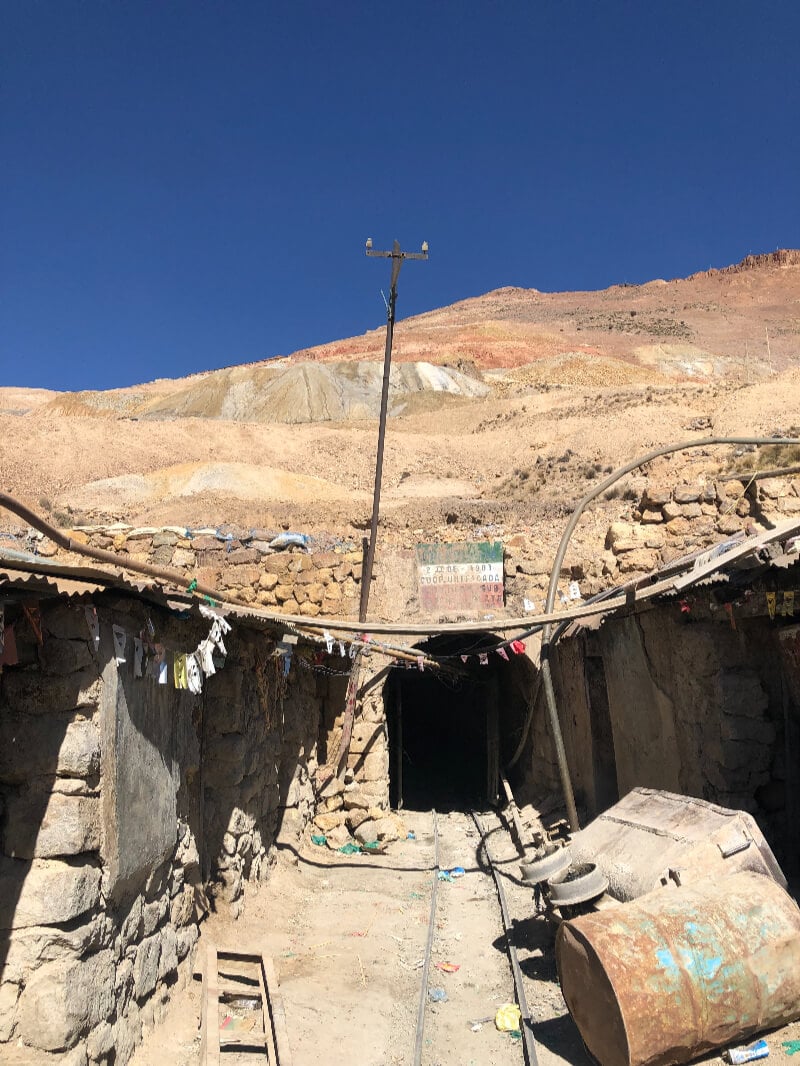
Photo: Tom Hennessy
The Broke Backpacker is supported by you. Clicking through our links may earn us a small affiliate commission, and that's what allows us to keep producing free content 🙂 Learn more.
The tour began with a minibus ride through the winding streets of Potosi up to the Miners’ Market.
It is customary to buy gifts for those toiling in the mines, and it is a beautiful moment to light up a haggard miner’s face with a gift. The options are also quite unlike anything found elsewhere.
The miners drink a 96% strong whiskey from hand sanitiser bottles; this was the same price as a soft drink. Crazy bang for your buck! Coca leaves, chewed by workers from the beginning of Potosi’s mines, were also available.
In the end, I opted for a stick of dynamite, which I was sold without any questions! Far from a gimmick, this is the bread and butter of mining here, partly why the Cerro Rico looks set to collapse at any time.
The next stop was a warehouse just outside the mine shaft to get dressed in mining gear – overalls and a headtorch.
Despite the boiler suit, my shirt collar was still stained by the dust that wafts through the tunnels, so dress down for your mine visit. I would also recommend buying a high-quality face mask.
My tour did not provide a covering, and my bandana was not up to the job of preventing convulsive coughing. There are lots of nasties filtering through the mine, like silicosis and asbestos, so do not risk your lungs.
The Mine Tour Begins
With gifts in hand and kit on, we entered the mine shaft. The entrance to the tunnel is a terrifying total black against the ochre of the Cerro Rico. Tours visit the oldest tunnel, first dug by the Spanish Conquistadors, with the original wooden supports and strips of llama skin holding up the entrance. With the rattle of mine carts coming from below, you are conscious of entering a whole new realm.
At first, progress through the mountain is easy. The tunnel is spacious, though the vast pits the Spanish hacked from the rock alongside the passage are disconcerting. Potosi is a chilly place, but it gets very warm from the instant you go below, so lose your coat for the mines.
An exhausted man in a mud-stained Real Potosi football shirt halted his minecart alongside us to receive some gifts. Between gulps of the 97% whisky, he told us about life in the mine.
Far from the tonnes of silver that once bankrolled the Spanish Empire, the Cerro is increasingly depleted, and miners can only hope for enough low-grade copper or lithium ores to subsist. In fact, working in tourism is the most lucrative hope for the rank-and-file miner.
The tunnels pretty quickly narrow and begin to ascend and descend as they track the veins of silver. This is when you become fully conscious that you are in the heart of an unimaginably huge mountain.
For some, this can be overwhelming. The weight of rock above is no longer an abstract thing at this point, and the vulnerability you feel is hard to express. There is no shame in turning back at this point, as several members of my group did.
As you go further into the mine, the conditions also get tougher. It gets very hot and claustrophobic. The mixture of being breathless from altitude sickness and claustrophobia is a pretty rare mix!
That said, the clickbait tagline of “The World’s Most Dangerous Mine” that you might see on TikTok is overblown. While up to 80 people die in the mine each year, these deaths do not happen in the older, sturdier tunnels in which tours run.
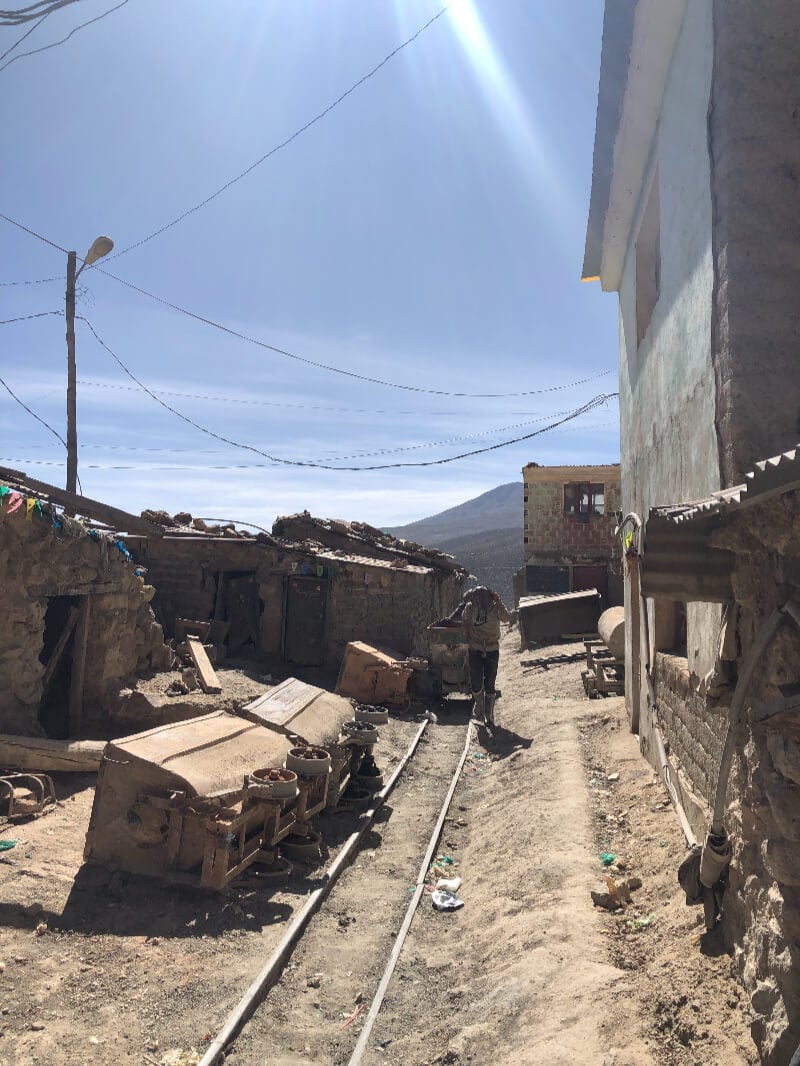
Photo: Tom Hennessy
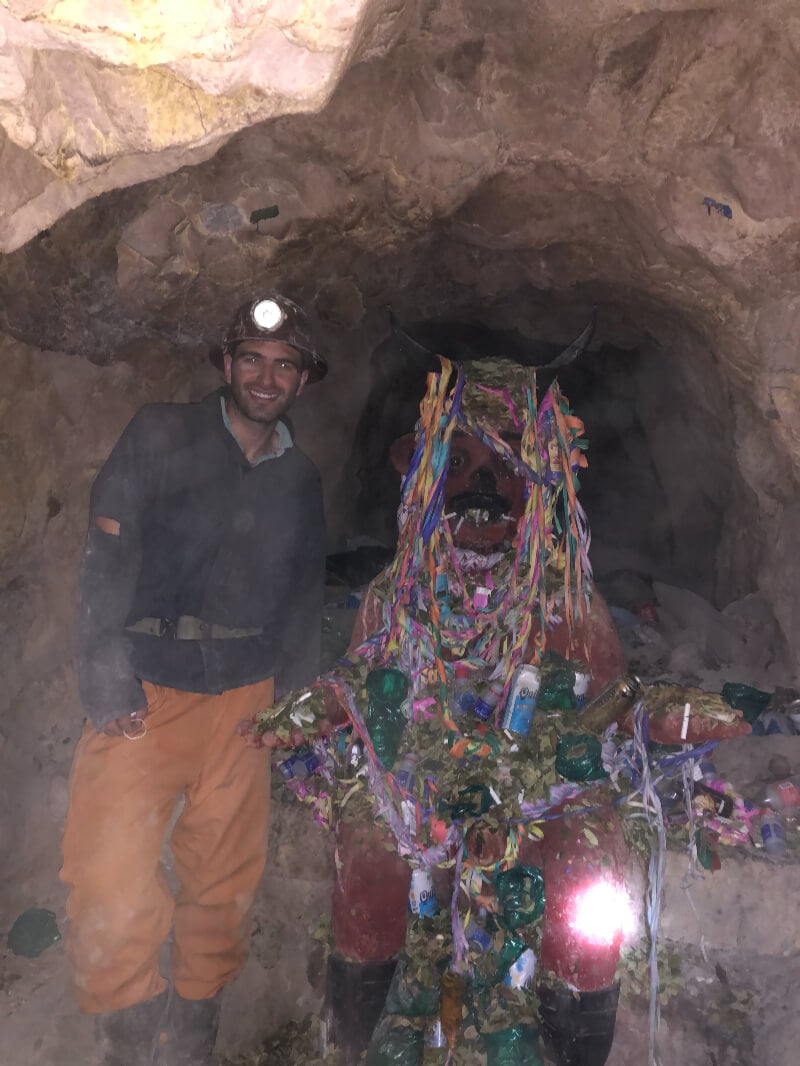
One of the most bizarre sights within the mine is El Tio, a statue of what appears to us as the devil. El Tio is the patron god of the mine, an image of the devil fused with ancient Andean beliefs. Though terrifying, he has been a source of comfort for generations of miners and an object of genuine devotion for current workers.
The Andean World was divided into three realms or pachas: Hay Pacha, the heavens, Kay Pacha, the surface and Ukhu Pacha, the underworld. Ukhu Pacha is associated with the ancestors and the living dead.
El Tio helps workers to communicate with those who came before, and also can bestow wealth upon miners.
In Spanish, Tio, meaning uncle, is a name that you might use like ‘buddy’, he is a friend to the miners by protecting them from tunnel collapses or guiding them to life-changing precious metals.
This help does not come free, with miners giving Tio offerings in exchange for his support. Consequently, his statue is littered with coca leaves, spent beer cans and cigarettes. I gave him a cookie and a splash of Powerade, which was enough for safe passage, but not enough for any silver.
Should You Visit the Mines at All?
This is a question worth taking some time to think about, as visiting the mines is less straightforward than most South American attractions. This is because they are a dangerous workplace in one of the poorest parts of Bolivia, a place where people often suffer and die, rather than merely a background for an Instagram story.
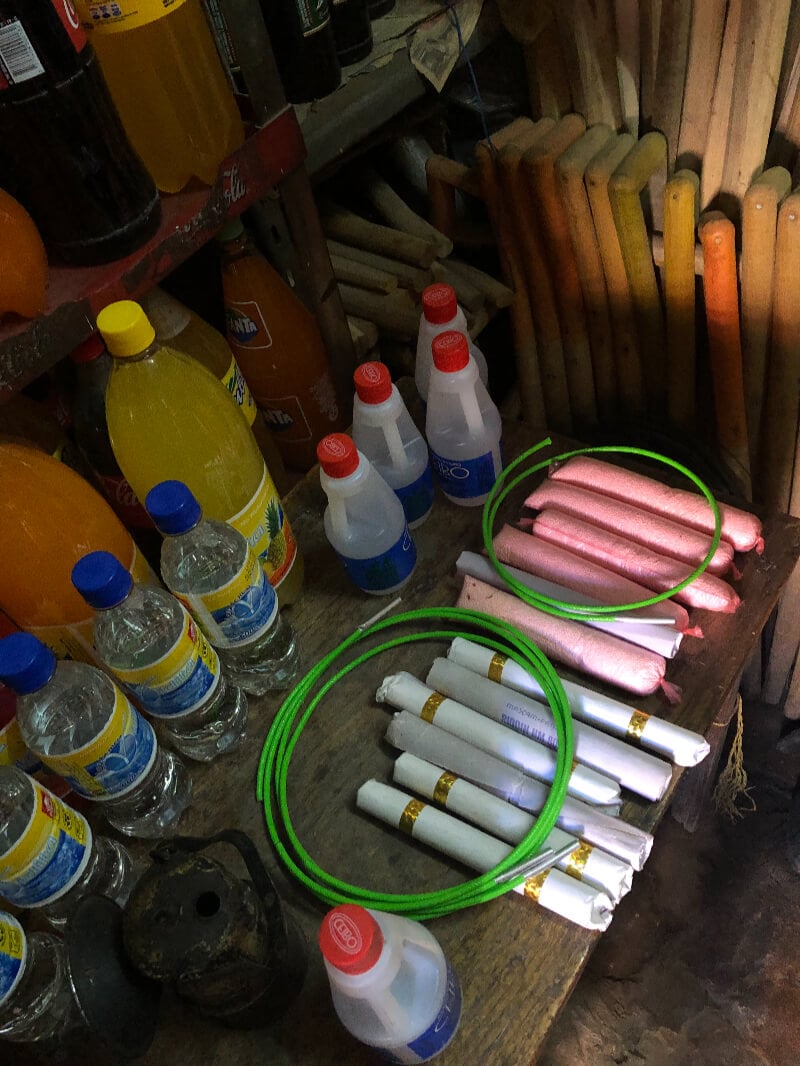
Photo: Tom Hennessy
It can feel ghoulish and like it minimises indigenous struggles by using these hugely hardworking but impoverished miners as photo ops. Many people who decided not to go to the mines voiced opinions like these, and I respect this point of view.
But I went anyway. While it is possible to have a poverty-safari experience, it is equally possible to have an illuminating tour that helps local communities.
In a very poor department of Bolivia, opportunities are few, and it is telling that being a tour guide is a coveted job.
It is one of the only ways to make money in the mine that doesn’t require going deeper and further into the Cerro Rico. Even if it helps only a few families, the tourism industry still has a positive impact on Potosi’s miners.
It also raises awareness of the conditions in Potosi and its wider history. Many people I met in Bolivia had very little idea of the scale of the suffering that occurred within the Cerro over centuries.
Up to 1 million indigenous people and African slaves died mining and smelting the silver deposits here to bankroll the Spanish Empire. After seeing the mountain firsthand, many looked to learn more. I would recommend the wonderful The Mountain that Eats Men by Ander Izagirre.
The Potosí Nobody Sticks Around For…The City Itself
While Potosi is known mostly for its mine, it would still be one of Bolivia’s most picturesque, and more importantly, interesting cities. For starters, this place was RICH.
Despite its 4067m of altitude, in its pomp it was home to 120,000 people, the largest city in the Western Hemisphere and the same size as London. While most of the wealth unfortunately ended up in Spain, a good deal crystallised into the beautiful, balconied colonial streets and churches that remain today.
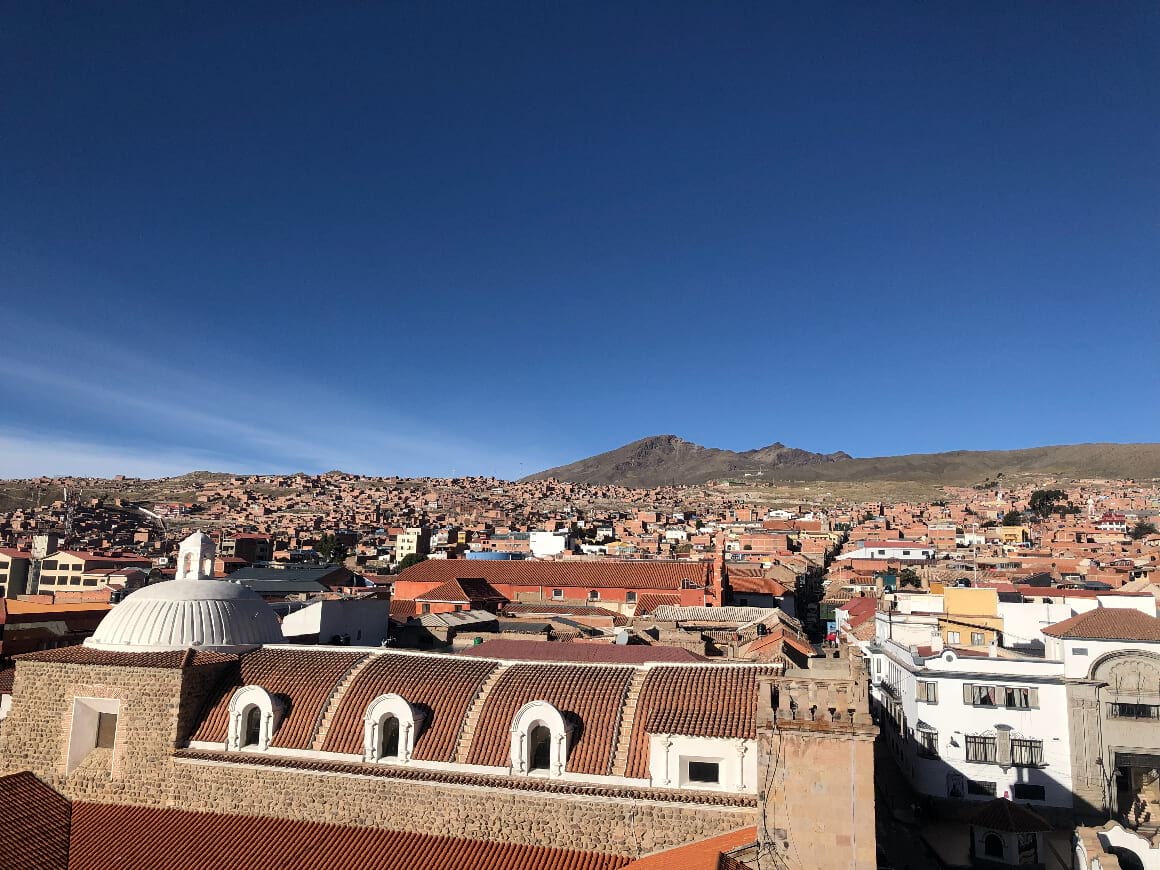
Photo: Tom Hennessy
Before venturing around the city, or down the mine, I would recommend visiting the Casa de la Moneda, once the royal mint and now a museum of the city and its mine. Here, the silver of the Cerro Rico was cast into coins and bars to circulate as far afield as China and India, not to mention funding the Spanish Empire for centuries.
The first coins were irregular and embossed with the arms of the first Conquistadors; they got more regular, and interestingly, they produced coins here for many other countries like the United States and Britain.
The floors of the mint are scarred by the hooves of the mules that once turned the machines. You do not have to be a coin collector to be fascinated by the first global currency!
I particularly enjoyed the collection of art, particularly the famous La Virgen del Cerro Rico painting by an anonymous indigenous artist. It displays the mountain as an apu, a holy living mountain, but one with the characteristics of the Virgin Mary, while the discovery of the silver deposits plays out on its flanks.
The museum does have a strict no-photo policy, so unfortunately you cannot capture images of this. I paid 40Bs for entry ($3.40).
Next, I would recommend visiting El Catedral de Potosi. This was built for the wealthy Spaniards to worship, and it feels like a carbon copy of a church in Spain.
I got a personal tour for $5, and my guide pointed out interesting details like a replica of the Virgen de Cochabamba, an object of pilgrimage further North in Bolivia and a panel that, he claimed, was the only one in the world to show Christ’s circumcision. He later admitted he had made this up years ago and that no one had ever questioned it!
The star of the show is undoubtedly the bell tower. This puts you high above the streets of Potosi and eye level with the Cerro Rico. I gazed out over the cityscape, watching a religious parade and soaking up the vibes of one of the world’s highest cities.
The other Church really worth visiting is Convento del San Francisco, which was built for the city’s indigenous population to worship in.
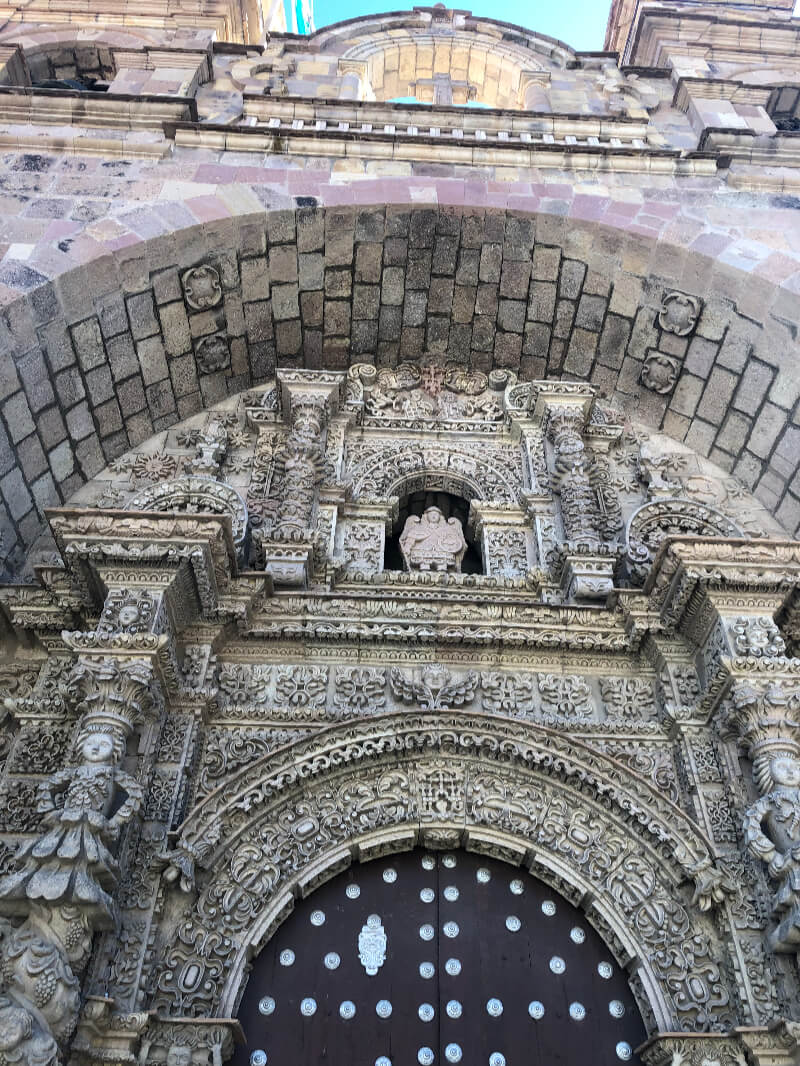
Photo: Tom Hennessy
This has lots of indigenous imagery woven into its interior, like the sun god and moon goddesses, concepts of the Andean underworld and holy mountains. Beneath the Church are catacombs and an underground river. Its tower also offers brilliant views of Potosi. Entry is 25Bs ($2.15).
Convento de Santa Teresa is also a great fixture on the trail for architecture lovers. This boasts a beautiful collection of religious art, a Moorish-inspired chapel and a still active community of nuns within the convent. Entry costs 25Bs ($2.15).
A great advantage of Potosi’s historic centre is how compact it is. You can reach all of the main attractions with 2km of walking.
You particularly appreciate this when you are at 4000m of altitude! This makes for a wonderful experience of roaming its streets and soaking up an older world.
There is bound to be a procession of some sort. As well as the religious procession I saw from the cathedral, there was a street party to celebrate the founding of a major school.
The heart of the city is the Plaza 10 de Noviembre, flanked by religious buildings and shaded with mature trees. It is a great place to take a breather from the altitude and chill with the Potosinos who congregate there to chat, play chess or read newspapers.
There are lots of great eateries surrounding this plaza. I frequented El Tenedor de Plata, which offered a good mix of comfort foods like spaghetti bolognese and burgers as well as Bolivian specialities like charque, dried and salted llama.
Cafe de la Plata was also a great spot for a coffee break or to relax with a glass of wine.
Ojo del Inca… The Hot-Spring Half-Day
Ojo del Inca, just outside of the village of Tarapaya, is a brilliant restorative spa break after braving the mines and doing some high-altitude sightseeing. This has been a tourist attraction since Inca times, with the Emperor Huayna Cápac travelling all the way down from Cusco to take the waters.
Ojo del Inca, the Inca’s eye, is a striking, perfectly round green lake about 100m in diameter. It is now closed to swimmers owing to strong currents caused by the volcanic activity that heats it.
However, stone pools fed by the lake are open for swimming. The naturally heated water is a pleasant 35 degrees Celsius and full of minerals that make you feel as if you have been to a spa!
You can visit as part of a tour that will conveniently drive you straight to the lake, or you can get a collectivo bound for Tarapaya from Mercado Chuquimia near the old bus terminal in Potosí on Avenida Antofagasta.
Ask the driver to stop at Ojo del Inca and walk down the path adjacent to the road sign. It will lead you to the pools in about 10 minutes. Entry costs 10Bs, about $1.
I enjoyed Ojo del Inca, which was a nice bit of self-care after the mines, but honestly, if you have visited hot springs at places like Salar de Uyuni or the Colca Canyon, it is pretty skippable.
How My 3 Days Actually Fit Together
Alright then, let’s have a look at my breakdown for three days here.
Day 1
I arrived in Potosi from Uyuni at 10 am. I was somewhat acclimatised to altitude from being on the Altiplano for 3 days, but I was pretty stonked by how hard it was to move around in Potosi.
I settled into my hotel, Hostal Realeza, and then went out to Cafe de la Plata for a coffee.
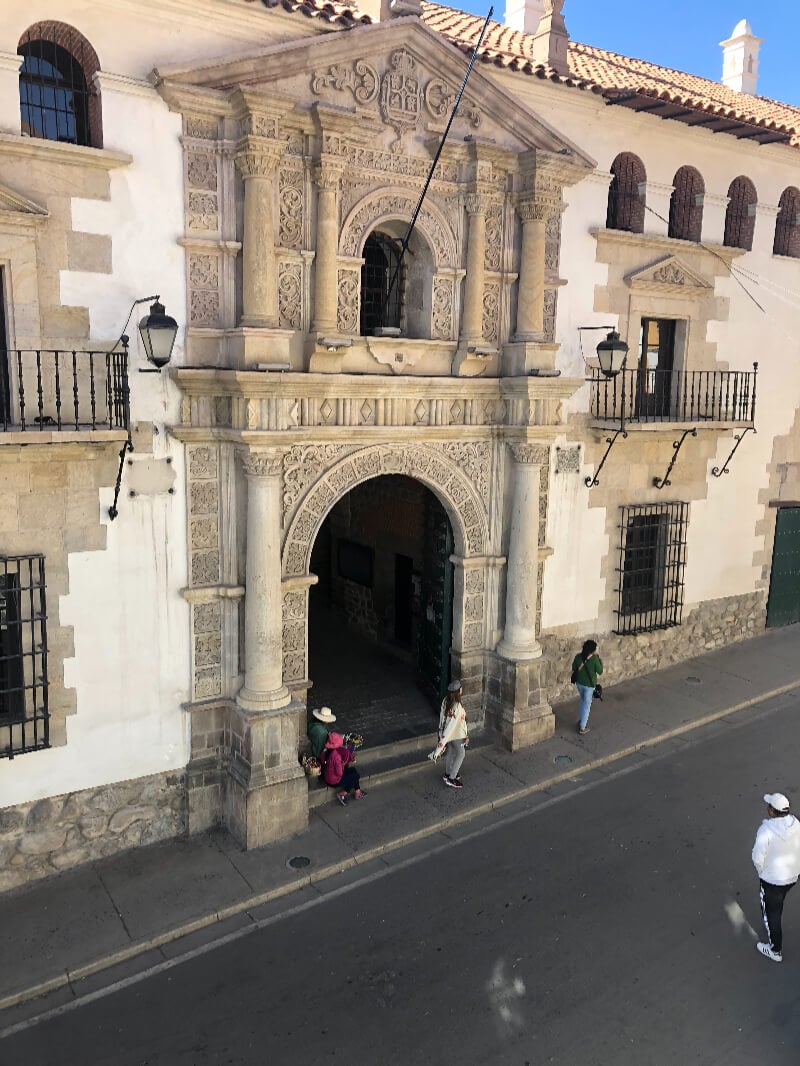
Photo: Tom Hennessy
I visited Casa de la Moneda and El Catedral de Potosi, which gave a good sense of Potosi’s history before exploring more.
I hung out in Plaza de 10 Noviembre and then went out for dinner at El Tenedor de Plata.
Day 2
Woke up early to go into the mine. The tour ended around 12 pm.
I showered at my hotel and processed what I saw over lunch in Cafe de la Plata.
I then spent the afternoon visiting Convento de San Francisco and Convento de Santa Teresa.
I joined in a street parade celebrating the foundation of a school in Potosi, and drank some wonderful Potosina beers with some travellers I last saw when staying in Buenos Aires.
Day 3
Visited Ojo del Inca for some hangover and mine relief.
I returned to Potosi, walked around the city centre, and then caught my bus to Santa Cruz de la Sierra.
If I were to return, I would have given myself more time on my first day to experience the city naturally instead of cramming so many big museums in. I also would have been sure to arrive with local currency to save myself the exhausting walk from the bus station.
Where I Stayed in Potosí (and What to Look For)
I stayed in Hostal Realeza. This cost me $24 a night. There are cheaper options like the Koala Den Hostel, which offers a shared dormitory, but I was pretty tired and cold after my 3-day-long Salt Flat tour.
It was not luxurious by any means, but it was clean, had hot water, and was well heated. Which is important given the biting cold of nights at 4,000m. The best part of staying here was the location.
It puts you right in the centre, next door to the Casa de la Moneda and just down the street from the Cathedral and the Plaza 10 Noviembre.
I would recommend staying in the centre. You feel a lot more immersed in the city, and you can take regular breaks from the altitude, which is an important consideration.
What I’d Skip
I really enjoyed pretty much everything that I saw in Potosi, but I am aware that not everyone will have three days to explore it properly.
I think that the main thing to skip in the city is some of the churches. If you see either the Catedral de Potosi or the Convento de San Francisco, you will have a fascinating look at colonial Potosi and a brilliant view over the city. The other two are not essential.
Likewise, Ojo del Inca is more of a nice-to-have than an essential fixture. It was cool and relaxing, but honestly not completely life-changing.
As long as you visit the mines, Casa de la Moneda, one of the cathedrals, and have ample time to soak up the old world vibes of Potosi, you will have seen the city’s highlights.
The Practical Stuff…Altitude, Getting There & Money
- Altitude: honestly, this was brutal. I was already partially acclimatised from being at 2500m – 3500m for a week, but I really struggled initially. Things like walking uphill are hard, and you will feel out of breath often. Coming from sea level could involve nausea and headaches.
- My best tips for coping are pacing yourself by not going down the mine straight away, drinking lots of water, staying off the booze, at least initially, sipping coca tea and taking soroche pills if you feel it is getting intense.
- Getting in and out: This was pretty smooth, if not a bit uncomfortable. The bus station in Potosi is about a 45-minute walk from the city centre, so make sure to get a taxi. The station itself is fairly modern and easy to navigate. It offers connections across Bolivia. The buses themselves are pretty ramshackle, so do not expect heating and even bathrooms are not guaranteed.
- Money and daily costs: The biggest variable is the Cerro Rico mine tour: at about $30 for a reputable operator, it will effectively double your daily cost. Excluding the Cerro, a budget of about $40-$50 USD will comfortably get you a bed for the night, three meals and multiple museum entries.
- ATMs in Potosi are plentiful and take international cards. With its current currency struggles, you can get better value than the official exchange rates by sending yourself money at Western Union or bringing physical US Dollars or Euros to trade at a Casa de Cambio.
- Many places aimed at tourists accept cards, but generally locals prefer cash.
- Small ground-level practicalities: Be sure to bring a warm coat as the nights are very cold; remember to apply sunscreen as the UV-heavy altiplano sun is no joke. A lot of eateries and some museums close on Sundays; also remember that the churches are active religious buildings, so your visit may clash with a scheduled mass.
I never felt in danger in Potosi. The area around the bus station was pretty ramshackle, but not edgy. The centre was well lit and busy with families at all hours. It felt far more quaint and old-world than I had expected. Areas closer to the mines do have a bad reputation after dark.
Is Potosí Worth 3 Days?
My answer to this is that Potosi is definitely worth 3 days. I really enjoyed being immersed in one of the most important cities in South America and having enough time to process everything.
The locals were lovely, and it is one of the less tourist-saturated destinations in Bolivia, so people are genuinely curious about your story. Leaving enough time for impromptu interactions really elevated my stay above a sightseeing trip.
Even if you do not feel comfortable visiting the mine for safety or ethical reasons, there is plenty to see and feel in Potosi. It also helps that it is very conveniently located within Bolivia. Chances are that if you visit the country, you will see either La Paz or Uyuni, and likely Sucre. Sitting between these three attractions, it is easy to include Potosi as your bus will pass by or near.
Even just a whistle-stop day of seeing the Cerro Rico and Casa de Moneda is worth including for those on a quick trip. The compactness of the city is a friend for fast travellers.
I found the experience of Potosi to be quite similar to Sucre, which was also beautiful, old-worldy, and maybe more comfortable, but I found Potosi to be more interesting. If you are seriously pressed for time, you could consider skipping Sucre.
So whether this is a flying visit or an expedition into the almost fantastical wealth and cruelty that gilded Potosi’s story, you should be excited to visit. This is one of those cities that truly changed the world, and still beats with a lively indigenous culture and kind-hearted locals. ¡Buen Viaje !