The Maldives has long been associated with overwater villas, infinity pools, and honeymooners sipping champagne. Even today, when I talk about this beautiful island nation, many are shocked to hear about the concept of local islands with $40 guest houses and a thriving public ferry system.
The first time I went was to tick off my goal of scuba diving in the Maldives. The underwater life took my breath away, yes. But what amazed me more is how much cheaper than anticipated I could do it for.
Once there, I discovered a different side: one that is wild, budget-friendly, and surprisingly welcoming to solo travellers and backpackers.
Having spent 8 weeks over 4 different trips, hopping between local islands, riding public ferries, snorkelling with nurse sharks and mantas, and chatting over sweet black tea with friendly islanders, I can tell you this: backpacking the Maldives is possible.
Sure, I didn’t drink cocktails by a private infinity pool, but I did eat fresh fish grilled over an open barbecue, stayed in local-run guesthouses, and swam with turtles, sharks and rays off the beach for free.
Backpacking the Maldives takes a bit more planning than other budget destinations, but the rewards are massive.
In this freshly updated guide, I’ll share everything I learned:
- Where to go in this stunning marine paradise.
- How to get around without breaking the budget.
- Logistical info that covers safety, getting around, and other important stuff.
- And so much more to make your Maldives adventure magical.
Whether you’re travelling solo, as a couple, or just craving island life without breaking the bank, here’s how to backpack the Maldives the smart, slow, and sustainable way!
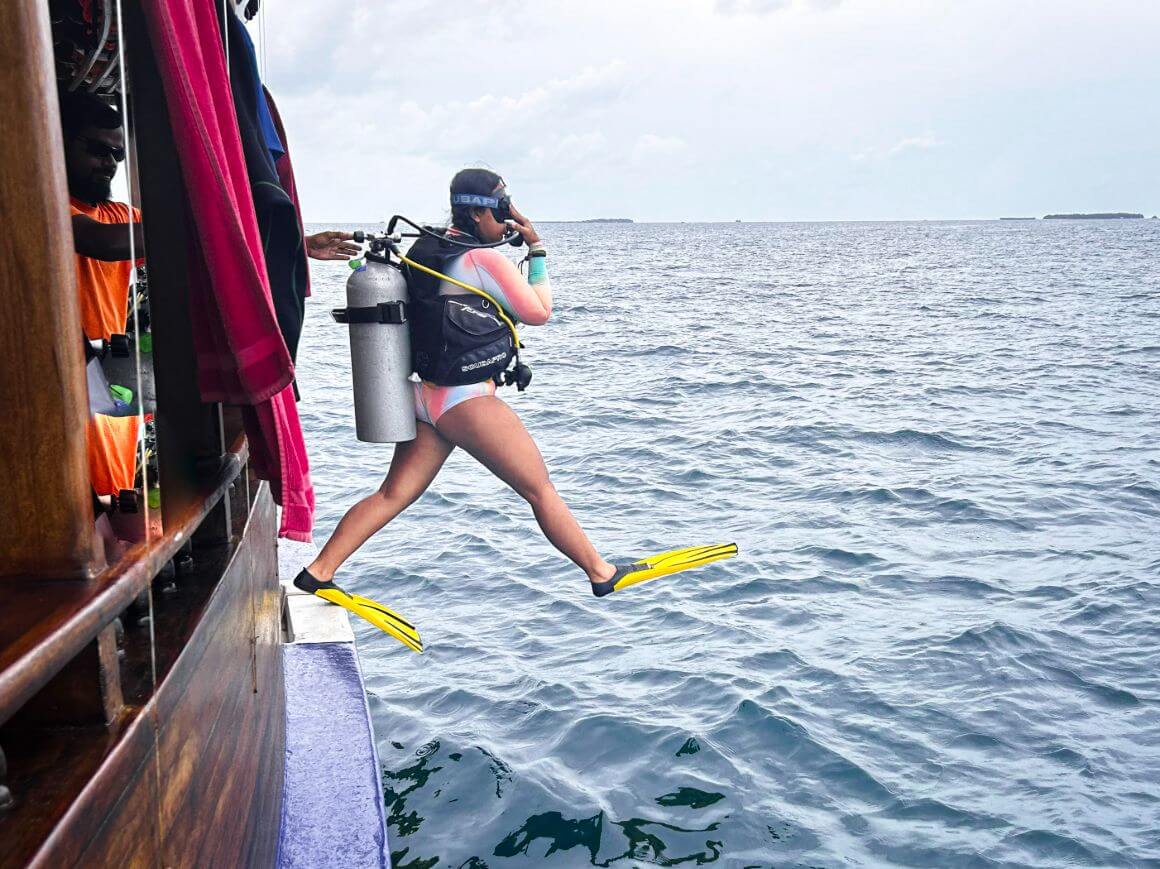
Photo: Avantika Chaturvedi
The Broke Backpacker is supported by you. Clicking through our links may earn us a small affiliate commission, and that's what allows us to keep producing free content 🙂 Learn more.
Why Go Backpacking in the Maldives?
Yes, the Maldives can be a dream destination for broke backpackers too. Since 2009, locals have been allowed to open guesthouses on inhabited islands, creating opportunities for budget travellers like us to ditch the resorts and experience authentic island life. Think sunrise fishing trips with locals, spicy Maldivian curries, and ferry rides that cost less than a coffee back home.
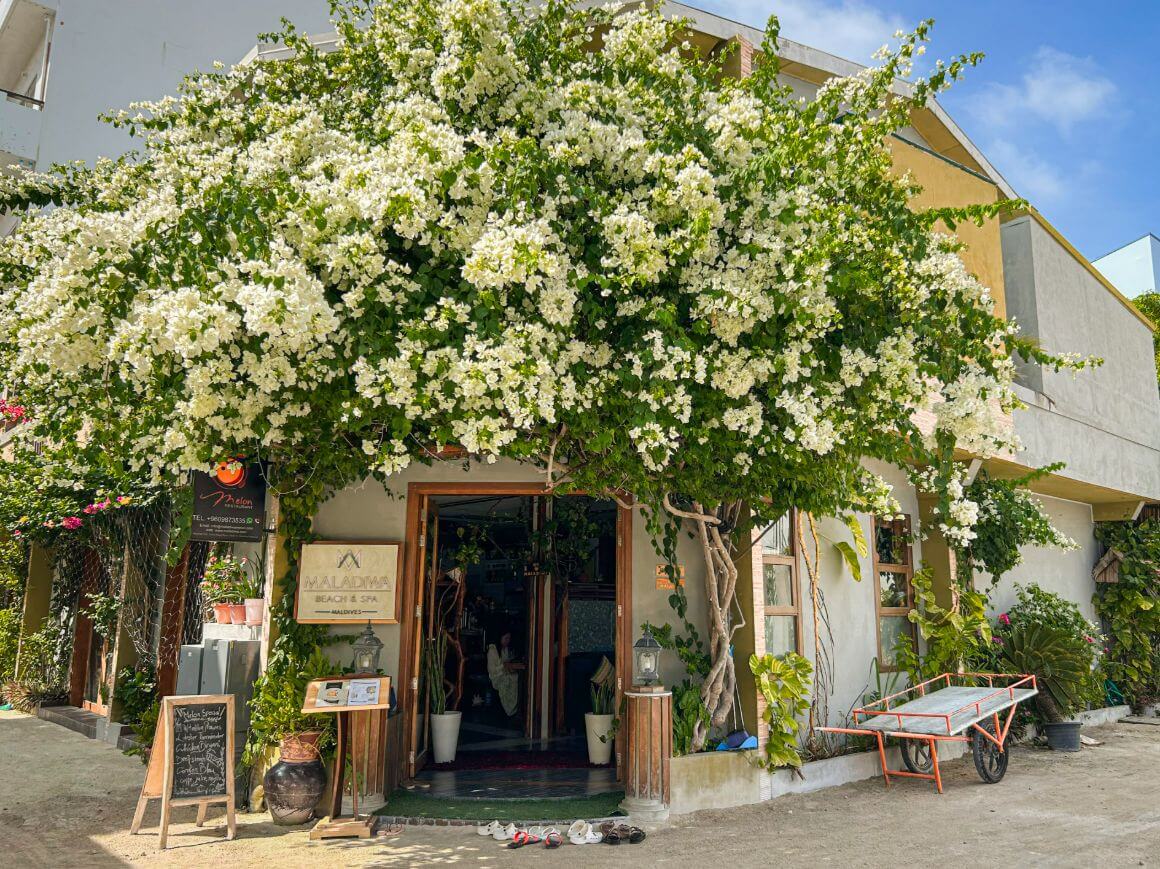
Photo: Avantika Chaturvedi
My number one reason for going backpacking in the Maldives would be to discover a very different side of this island nation – one that is not widely known despite the Maldives being a very tourism-oriented country. And of course, to break the stereotypes that only bank-breaking luxury travel is the kind you can enjoy in this country.
But of course, go backpacking in the Maldives also because coral reefs teeming with life can be accessed just a few meters from the beach. Very few other places can offer stingrays, reef sharks, turtles, eels and more just by snorkelling off a beach, without having to pay for full-fledged snorkel tours or scuba diving courses.
If you’ve ever dreamed of white-sand beaches and turquoise waters but thought it was out of reach, this one’s for you!
- Best Travel Itineraries for Backpacking the Maldives
- Best Places to Visit in the Maldives
- 8 Top Things to Do in the Maldives
- Backpacker Accommodation in the Maldives
- Maldives Backpacking Costs
- Best Time to Travel to the Maldives
- Staying Safe in the Maldives
- How to Get Into the Maldives
- How to Get Around the Maldives
- What’s New For Backpacking The Maldives?
- Maldives Culture
- FAQs About Backpacking in the Maldives
- Final Advice Before Visiting the Maldives
Best Travel Itineraries for Backpacking the Maldives
The Maldives is not really a “see it all” kind of destination. There are 1,192 coral islands here, spread across 26 atolls! Each of these atolls is known for its unique marine life. For example, Fuvamulah in the deep south is where pelagic shark species like tiger, thresher and hammerhead sharks can be frequently seen. Alternatively, Baa Atoll on the west is where filter feeders like manta rays and whale sharks often congregate.
But it is easy to build an itinerary around a few local islands, depending on several factors like what it is you are most interested in, the time of the year you are visiting, your Maldives scuba diving experience and your budget. Most of these itineraries can also be easily linked by public ferries or speedboats that take under two hours to reach.
However, some islands are very far away from the only international airport in the capital of Male, and will require water journeys that are sometimes half a day long. But if you do not have that time to spare and have a couple of extra hundred dollars on hand, just take a domestic flight instead!
10-Day Backpacking Itinerary – The Best of Maldives
Day 1 and 2: Malé + Hulhumalé
Fly into Velana International Airport (MLE) at the capital city of Malé and stay in a guesthouse on its sister island, Hulhumalé ($50-60 per night). To get the closest you can to a hostel dorm in the Maldives, try staying at Nap Corner in Malé for a sleeping pod situation for just $24 – it’s the cheapest accommodation option in all of the Maldives!
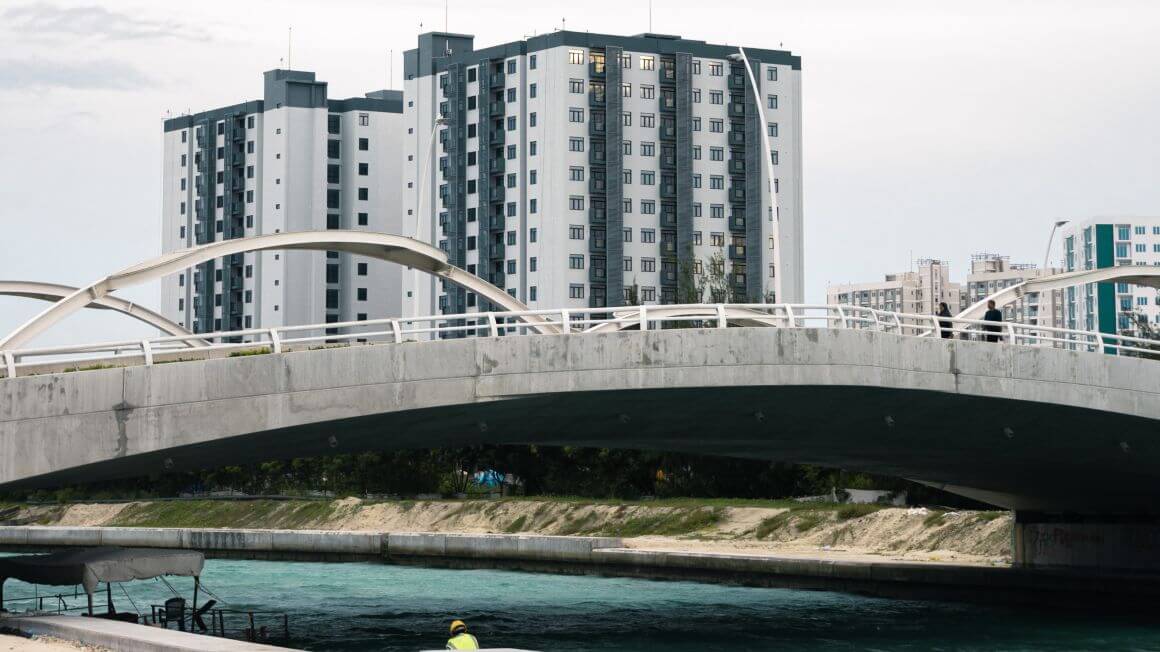
Exploring Malé city: Though small, it is a fascinating glimpse into the bustling, urban and chaotic Maldivian life, in the most densely populated city in the world. Visit the 17th-century Friday Mosque (Hukuru Miskiy), stroll through the Malé Local Market and Fish Market, grab lunch at a local café (fish curry for ~$5 USD) and take a sunset walk on the Hulhumalé beach promenade.
Also, check out the Malé Swimming Track, an enclosed, calm area of the ocean where locals often go swimming. There is even a water slide! If you are a certified diver, you might also want to do a two-dive day with Dive Maldives in the famous “Shark Tank” dive site, where hammerheads, stingrays and tiger sharks often frequent.
Days 3 to 6: Ferry to Rasdhoo Island
Rasdhoo Island has a burgeoning backpacking scene. It is also a great place to be if you want to get a taste of scuba diving with a PADI DSD (Discover Scuba Diving) programme, properly start your journey into the scuba diving life with an Open Water (Level 1) or Advanced Open Water (Level 2) course or, if you are already certified, get some fun dives in.
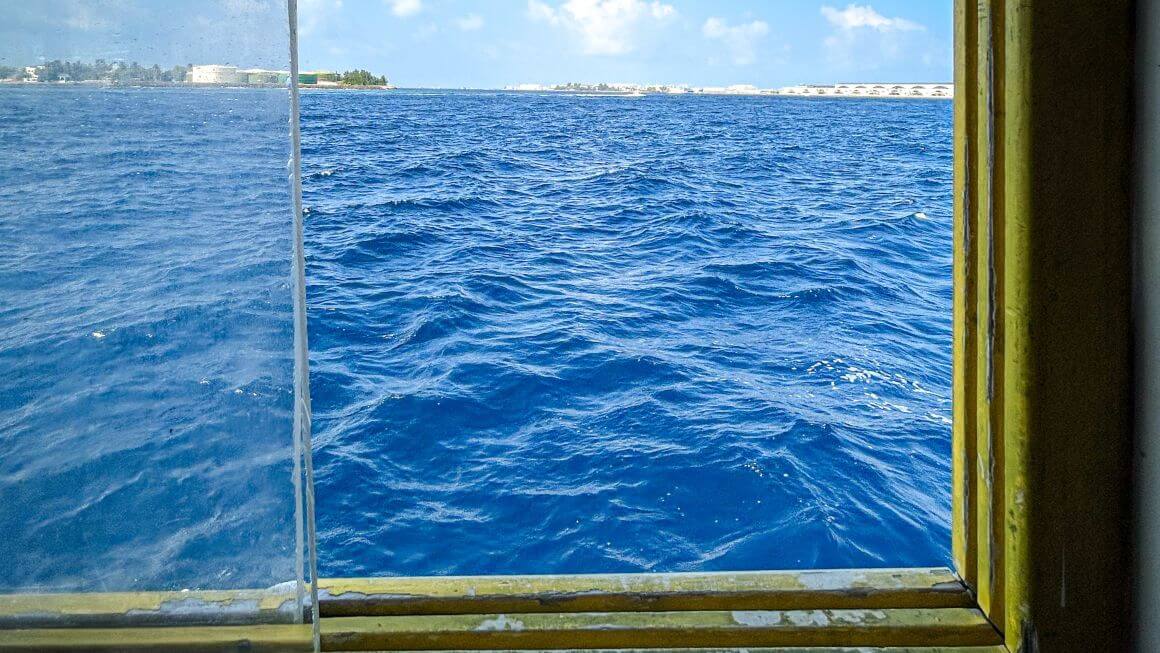
Photo: Avantika Chaturvedi
Days 7 to 9: Rasdhoo to Malé to Maafushi Island
Maafushi Island is probably the first place that you will get recommended by anyone who knows about the backpacking scene in the Maldives. While there are still no hostels around like the rest of the country, it is still sees many backpackers thanks to its cheap guest houses ($35-50), its many water activities on offer including jet skiing, kayaking and parasailing, and of course, having one of the only local island bars in an otherwise dry, Islamic nation helps too!
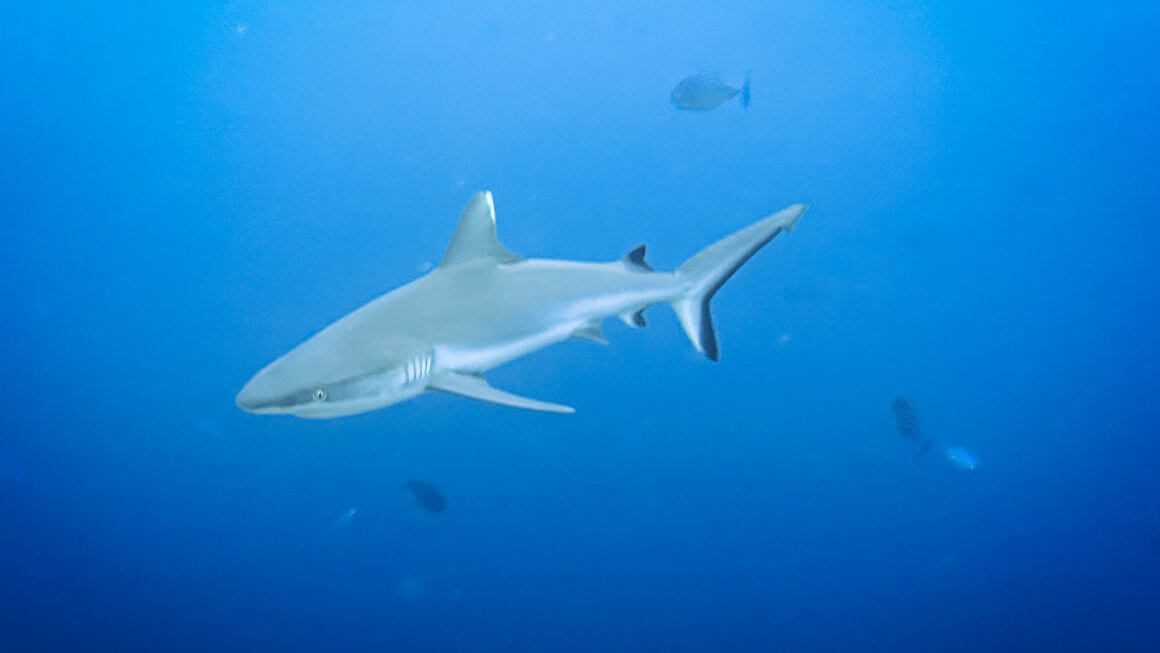
Photo: Avantika Chaturvedi
Snorkel with reef sharks and rays right off the Bikini Beach (free) in Maafushi or take a tour to snorkel at a shipwreck for up to $60. To get a taste of the famous resort island life of the Maldives, you can even take a day trip to a nearby resort starting at $75. This price includes round-trip transfers, pool access, unlimited snacks or a buffet meal and sometimes even cocktails!
Day 10: Return to Hulhumalé or onward travel
Time for a travel day!
3-Week Backpacking Maldives Itinerary – The Complete Circuit
If 10 days do not feel enough, and if you are ready to take your Maldives backpacking adventure to the next level, here are a few more added islands over 3 weeks to fully get a feel of the most iconic places that the Maldives has on offer!
Days 10 to 13: Maafushi to Malé to Maamigilli
From Maafushi, return to Malé by speedboat or public ferry and travel to Maamigili. One way to get there now is via speedboat which takes a little over 2 hours and costs $130. The cheapest option is the 6-hour-long public ferry, which costs only $35.
Still a lesser-known island, Maamigilli is the place to stay in the Maldives if you crave some slow days, friendly locals, a less touristy vibe and the best chances to spot a whale shark in the entire country! Maamigilli is a marine protected area for its abundance of whale sharks. Several tour operators take you out to see (and swim with) these gentle giants for $80. Chances are, you won’t come back disappointed as there is a 75% chance of a whale shark sighting in these waters!
Days 14 to 16: Mamigilli to Malé to Thulusdhoo
It is very easy to reach Thulusdhoo from Malé. Just hop on a public ferry, which runs every day except Fridays. The 1.5-hour journey costs $3.
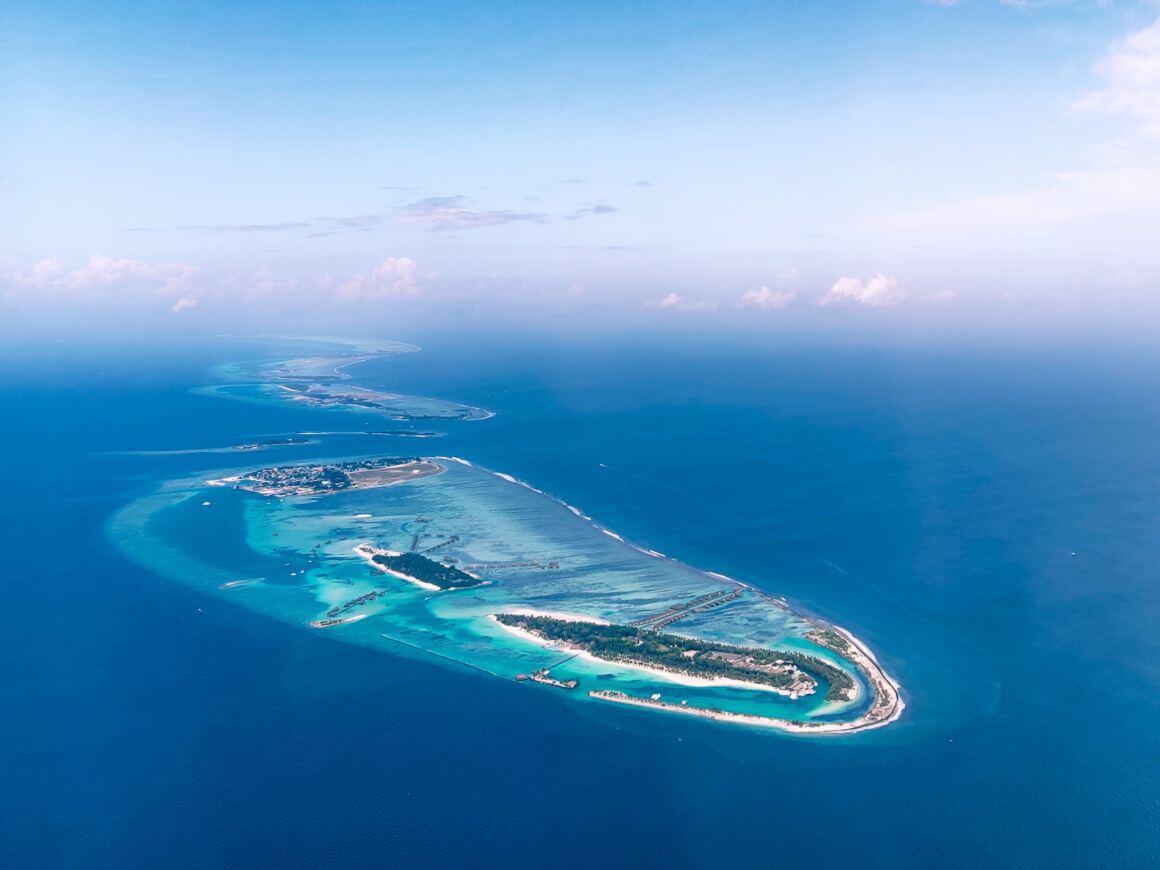
Thulusdhoo Island is known for its surf breaks and a relaxed backpacker vibe. Cokes and Chickens are two of the country’s most famous surf breaks. If surfing is not quite your jam, you can hit the house reef for some fantastic snorkelling. Thulusdhoo also has a vibrant social scene without the crowds of Maafushi.
Days 17 to 20: Thulusdhoo to Malé to Dharavandhoo
The easiest way to get to Dharavandhoo Island is by flying from Malé. The 20-minute flight costs $135, whereas the 2-hour-long speedboat costs $65. However, the cheapest option is to take the cargo ferry, which takes 8 hours and costs $25.
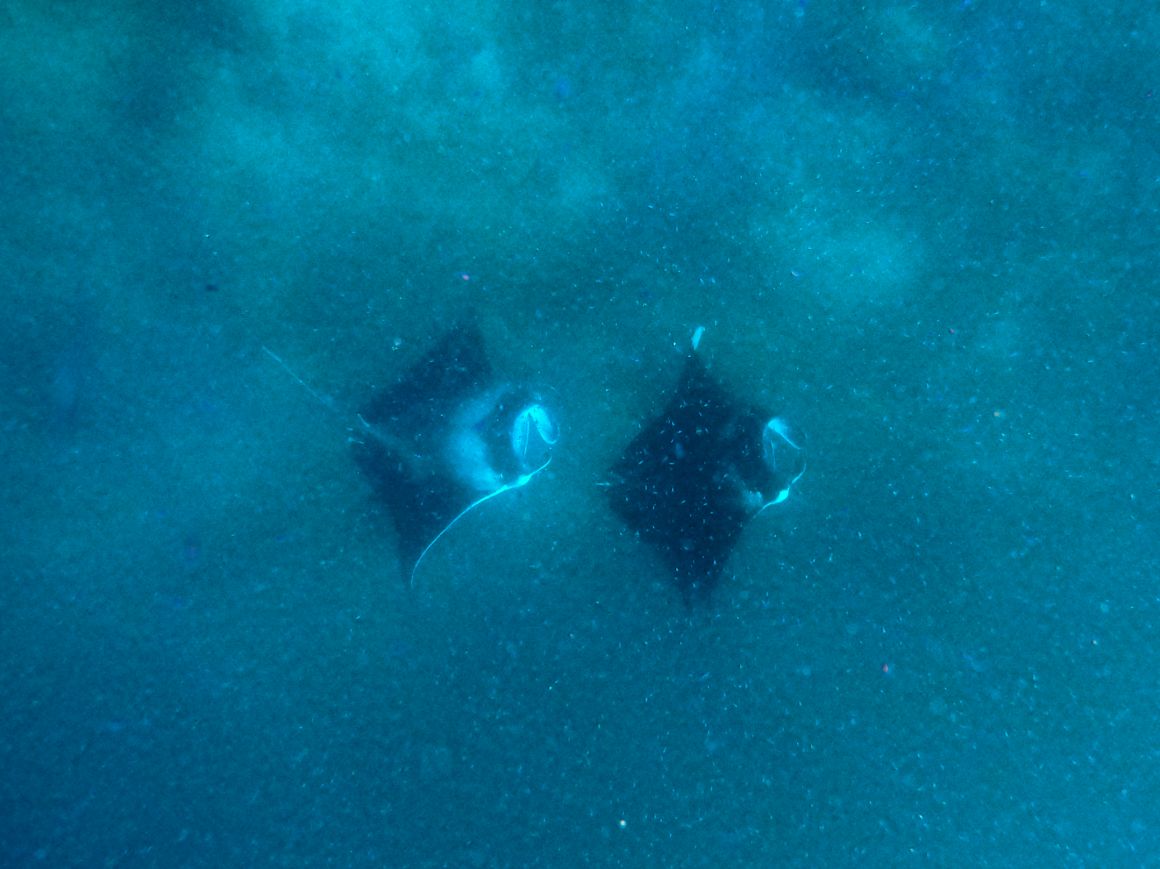
Dharavandhoo, in the Baa Atoll, is a gem inside the UNESCO Biosphere Reserve, famous for the Hanifaru Bay manta ray aggregation during the monsoon months between May and November. Think thousands of filter-feeding manta rays barrel rolling around you in this once-in-a-lifetime experience!
Best Places to Visit in the Maldives
Don’t miss these islands!
Maafushi
Maafushi is the backpacker hub of the Maldives, and for good reason. It was one of the first local islands to welcome independent travellers, and it is packed with affordable guesthouses, lively cafés, and easy access to budget-friendly excursions. Just a short ferry or speedboat ride from Malé, Maafushi is the perfect jumping-off point for snorkelling with nurse sharks, diving shipwrecks, or hopping over to pristine sandbanks.
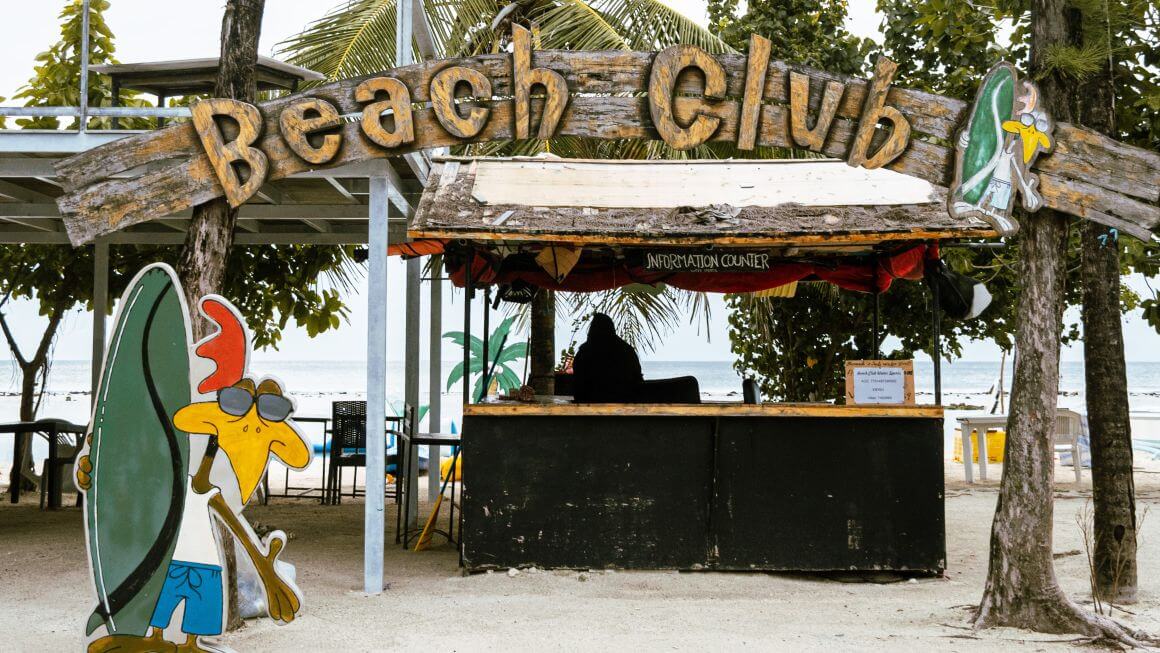
For those not looking to spend money on organized tour, beach bumming on the island’s designated bikini beach was my favourite way to unwind. It is also a great place to go snorkelling. In one snorkel session, I saw triggerfish, turtles, an eagle ray, a stingray, reef sharks, and a host of other marine life here.
A good thing to know is that it is more developed and touristy than other islands. But still, Maafushi retains a warm, local vibe. Maafushi delivers the full Maldives experience without the luxury price tag.
Gulhi
Gulhi is a tiny gem of an island that feels like a peaceful retreat from the more touristy hubs, especially its neighbour, Maafushi. Gulhi is many times a short stop on many island hopping tours from Maafushi, but I think it is worthwhile to spend a few nights at one of Gulhi’s handful of guesthouses to truly get acquainted with the Maldivian way of life.
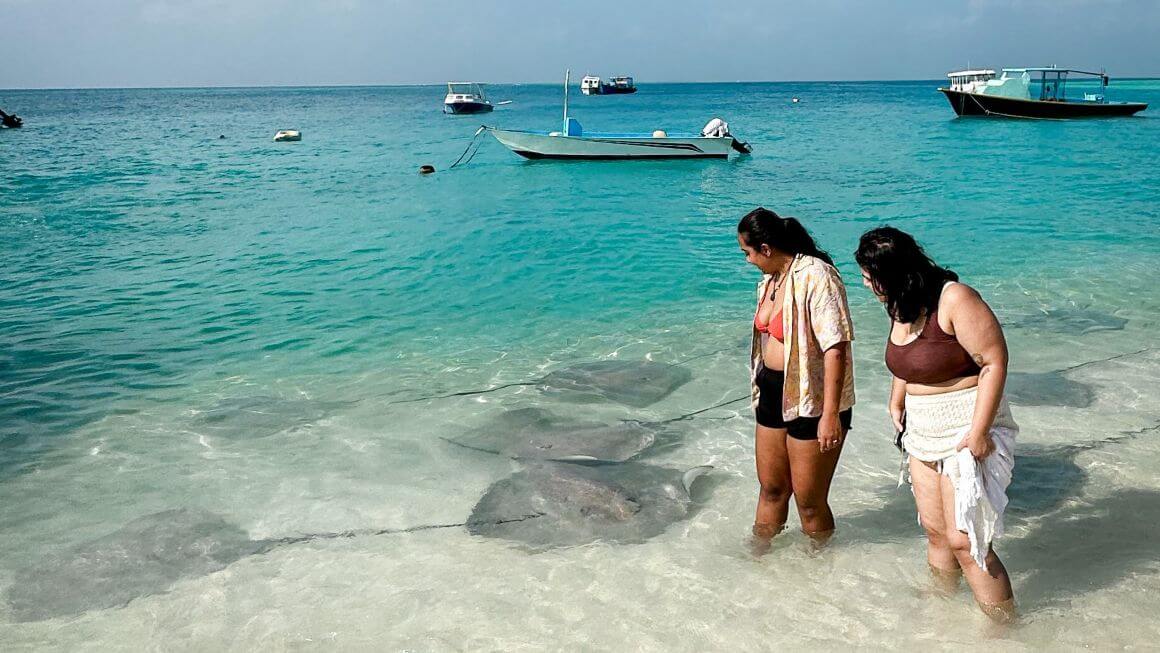
Photo: Avantika Chaturvedi
Apart from its powdery white sands, swaying palm trees, and a lagoon so clear it looks photoshopped, watching fishermen haul in their catch, sipping sweet tea at a corner café, and chatting with friendly locals who were genuinely curious about visitors were my favourite parts.
Thulusdhoo
Thulusdhoo blends surf culture with laid-back island life, making it one of my favourite local islands to visit in the Maldives. This island is best known for its legendary surf breaks, Cokes and Chickens, that attract surfers from around the world, but especially a lot of Dutchies and Aussies.
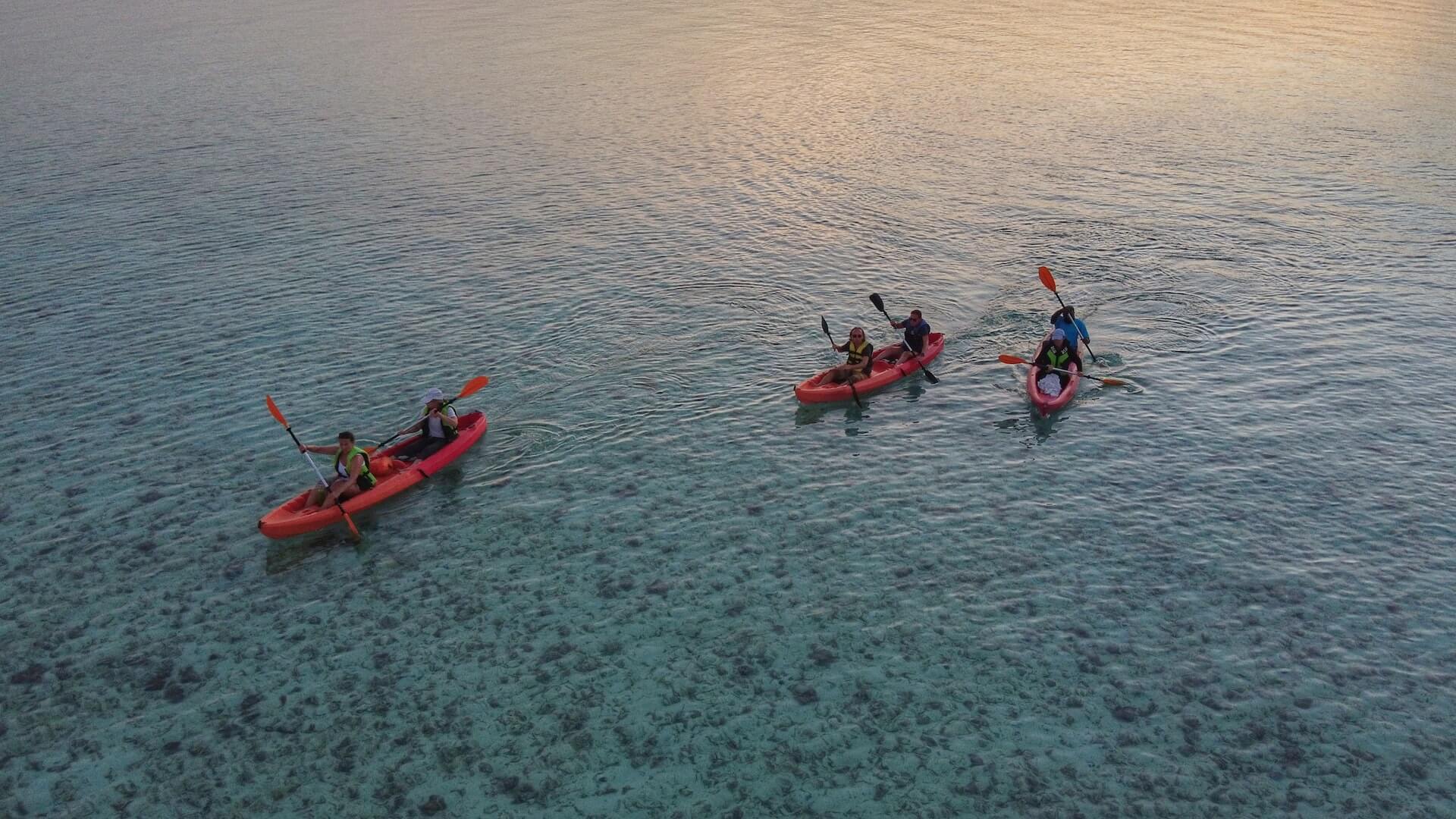
Even if you are not serious about the surf like me, the island has plenty to offer: a beautiful bikini beach, excellent snorkelling, and a youthful, creative vibe thanks to its growing community of local artists, surfers, and small business owners.
Just wandering Thulusdhoo’s sandy lanes and watching the sunset with surfers lined up was enough of a “thing to do”.
Rasdhoo
By far, I think Rasdhoo is where I’ve had some of my favourite scuba dives in the Maldives. Rasdhoo is a paradise for divers and snorkelers, and anyone even remotely curious about the underwater life. While there are several good dive schools around, Rasdhoo’s house reef is fantastic too. My favourite dive sites around the island include Madivaru Corner, Rasdhoo Channel for spectacular drift diving and Beyru Kandu for its sightings of grey reef sharks and Napoleon wrasses.
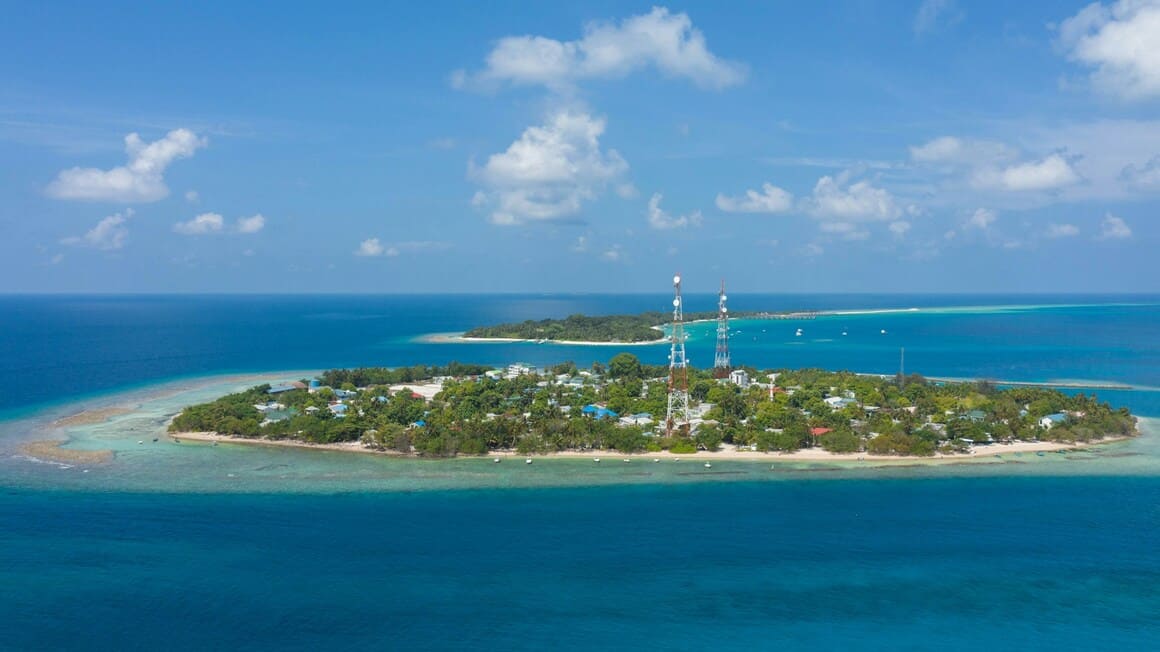
Despite its growing popularity, the island retains a friendly, local feel. Guesthouses are affordable, the cafés serve up hearty Maldivian meals, and the sunsets from the bikini beach are unforgettable. I especially loved how walkable and social the island was and how easy it was to meet fellow travellers. Rasdhoo is small in size but huge in experience.
Fuvamulah
Fuvahmulah is unlike any other island you will visit in the Maldives. Located in the far south, it is the country’s only single-island atoll, and it feels more like a hidden jungle paradise than a beach destination. It is far and not the easiest to reach, but in my experience, that is exactly what makes it all the more worth it!
What sets it apart is its freshwater lakes, black sand beaches, and rich inland landscapes dotted with taro fields and mango trees. It is one of the very few islands in the country where you need to rent a bike to get around because it’s too big to walk. But, of course, the one thing that makes Fuvamulah what it is: the chance to dive with tiger sharks. The raw thrill of watching these majestic apex predators glide past just meters away is an unforgettable experience.
Dharavandhoo
Tucked in the heart of Baa Atoll, Dharavandhoo Island sits inside the UNESCO-listed Biosphere Reserve, and it is the best jumping-off point for snorkelling in Hanifaru Bay, one of the world’s largest manta ray aggregations. Time your visit just right (in the heart of monsoon, close to the full moon) and it will feel like being inside a living documentary with hundreds of giant mantas spinning just beneath the surface, mouths wide open.
The island itself is calm and community-centred, with eco-conscious guesthouses and pristine beaches. I spent my mornings diving, my afternoons slurping on mugu riha with roshi, and my evenings wandering quiet sandy lanes and popping into a convenience store every now and then (it is a cultural experience, after all!)
Getting Off the Beaten Path in the Maldives
Want to escape the “backpacker beach” circuit? The real adventure in the Maldives is finding these quiet off the beaten path corners, where life moves slowly and you feel like you have the reef to yourself. Try islands like:
- Fulidhoo – One of the smallest inhabited islands, with strong cultural traditions and a relaxed, non-touristy vibe. Fulidhoo is known for its cultural bodu beru music and dance traditions, strong house reef, and access to shark and manta ray snorkelling for budget travellers.
- Guraidhoo– A quiet alternative to Maafushi, ideal for travellers seeking affordable guesthouses, local life, and easy ferry connections to nearby islands like Maafushi and Gulhi.
- Ukulhas – A standout for its eco-conscious tourism and wide bikini beach, Ukulhas in North Ari Atoll has an up-and-coming backpacker scene with some amazing cafes, but is still relatively lesser known.
- Omadhoo – Omadhoo offers a peaceful island atmosphere, excellent snorkelling excursions to whale shark zones, and a good mix of local culture and small-scale tourism without the crowds.
8 Top Things to Do in the Maldives
These were my favourites:
1. Snorkelling with Nurse Sharks
If you are in Maafushi and do not take the Nurse Shark snorkelling tour, did you even go to Maafushi? A tour from Maafushi can take you snorkelling in the eye of a swarm of docile nurse sharks, one of the best things to do in the Maldives. It is scary to jump in at first. But if you listen to your local operator’s directions carefully, not only are you sure to have a spectacular time, but you also get some killer shots for the ‘gram! The tour also often includes other stops like a sandbank and reef snorkelling, but the sharks are the real stars!
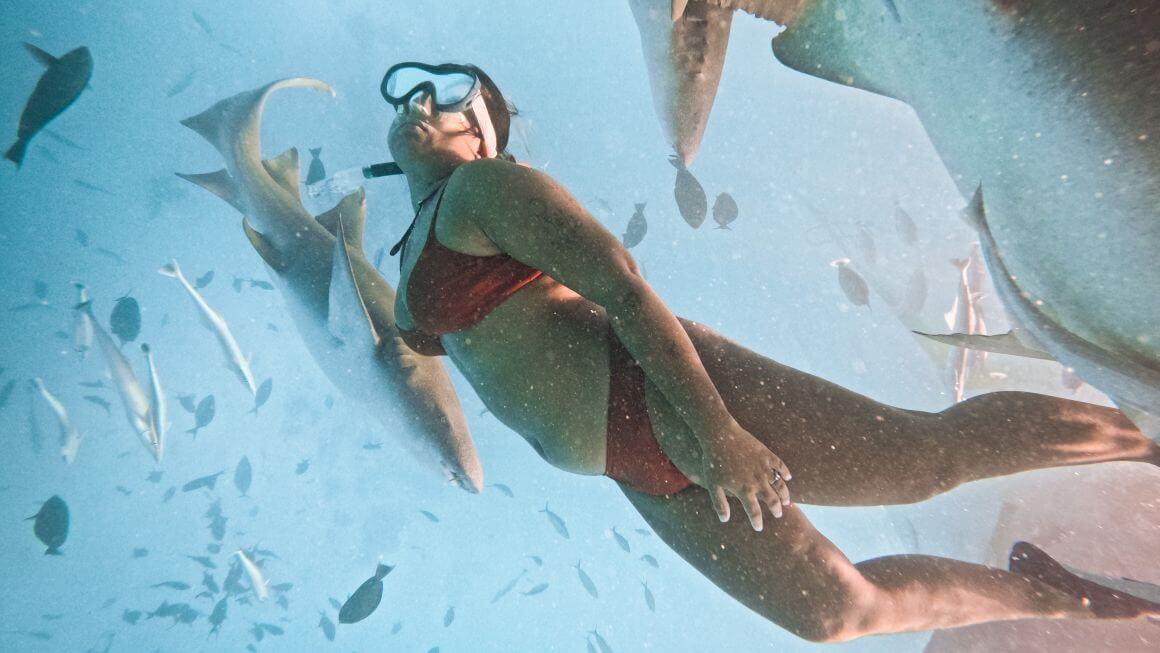
Photo: Avantika Chaturvedi
2. Scuba Diving
Scuba diving is a rite of passage while you are in the Maldives. Whether it is a simple Discover Scuba Diving program, a full-fledged course (or two), or certified divers chasing some fun dives, there is no Maldives without scuba diving. DSDs and fun dives usually set you back $110+ with gear rental, while courses are more expensive at $400, and more of a “special little treat” for your hardcore backpacking days!
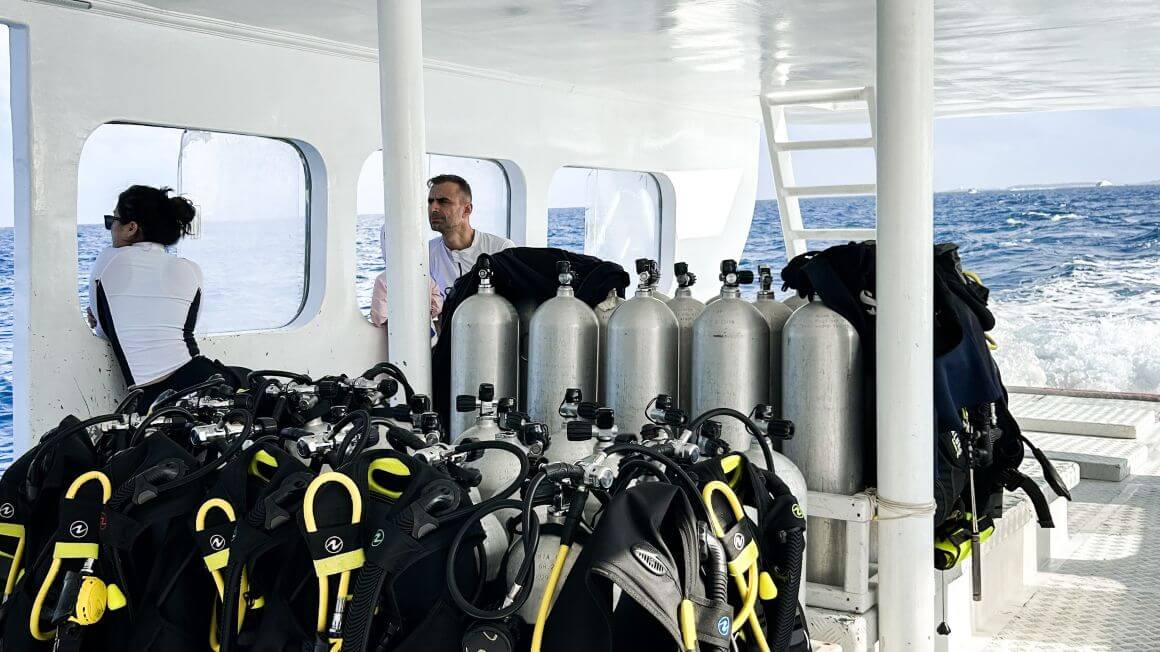
Photo: Avantika Chaturvedi
3. Snorkelling at Keyodhoo Shipwreck
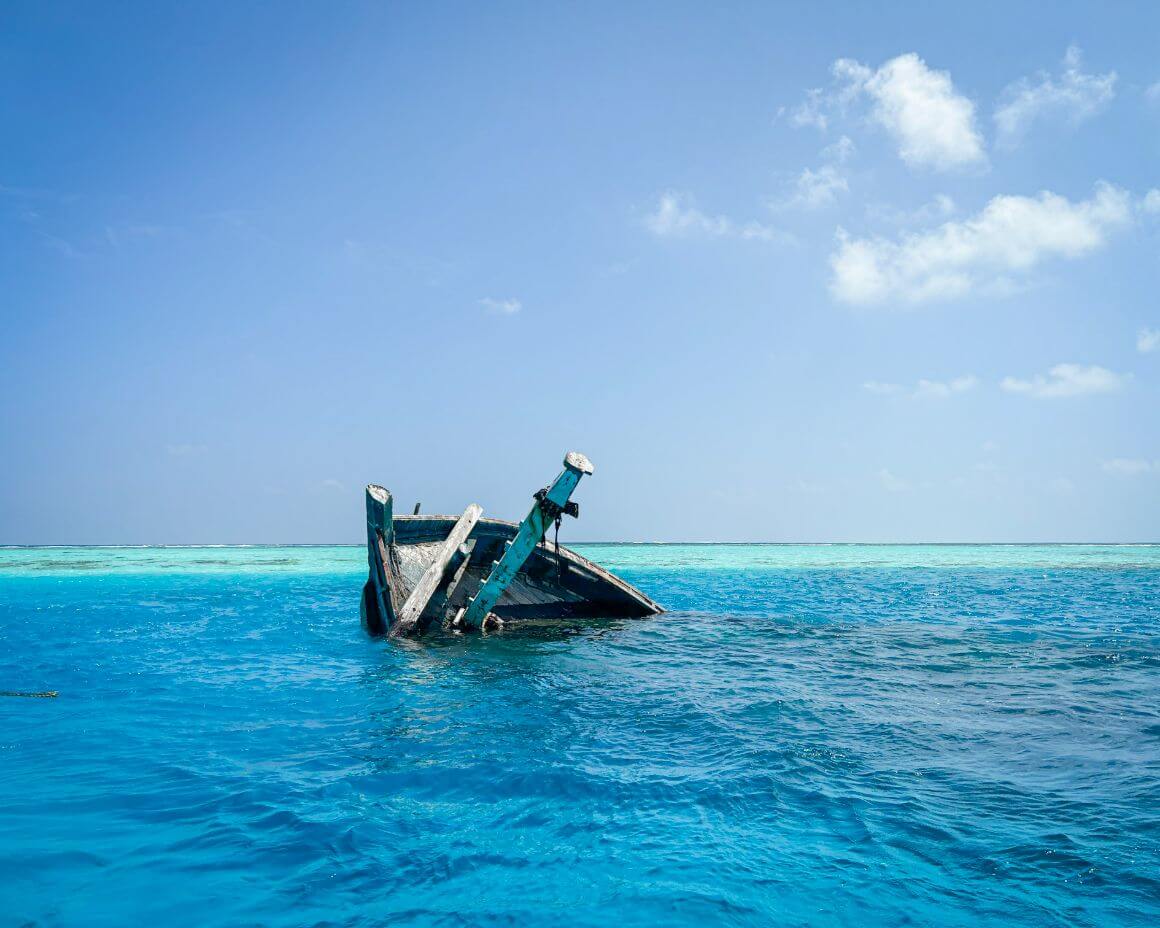
Another popular stop on many tours departing from islands like Gulhi and Maafushi, Keyodhoo is a semi-submerged shipwreck that looks like something straight out of a movie, and it is one of the most picture-perfect snorkel spots. The boat, rusted and encrusted with coral, lies tilted just below the surface, surrounded by clouds of fish.
For about $25, I joined a half-day snorkel trip from Maafushi that included this wreck as one of the stops, athough you can expect to pay $60+ now. There are schools of fusiliers, batfish and even the sneaky moray eel lurking near the hull. The wreck itself has become a manmade reef, alive with coral growth and marine life. It is eerie, beautiful, and incredibly photogenic.
4. Island Hopping on Local Ferries
Forget speedboats – the slow ferry is where the real adventure begins. Hopping between islands on public ferries is not only budget-friendly (often just $1 to $5) but also a window into everyday life in the Maldives. I love people watching on these public ferries, and of course, the small collection of snacks on board is always welcome!
The schedules can be a bit irregular, and ferries don’t run on Fridays. Some routes run daily, others less frequently, so planning ahead is key, but the payoff is worth it. If you’ve got time, this is the most authentic and affordable way to explore the atolls, and you will see a side of the country that most resort-hoppers completely miss.
5. Swimming at the Largest Manta Ray Aggregation
Swimming with hundreds of manta rays in Hanifaru Bay was one of the most mind-blowing wildlife encounters I have ever had. Located in the Baa Atoll, this UNESCO Biosphere Reserve hosts the largest seasonal gathering of manta rays in the world from May to November.
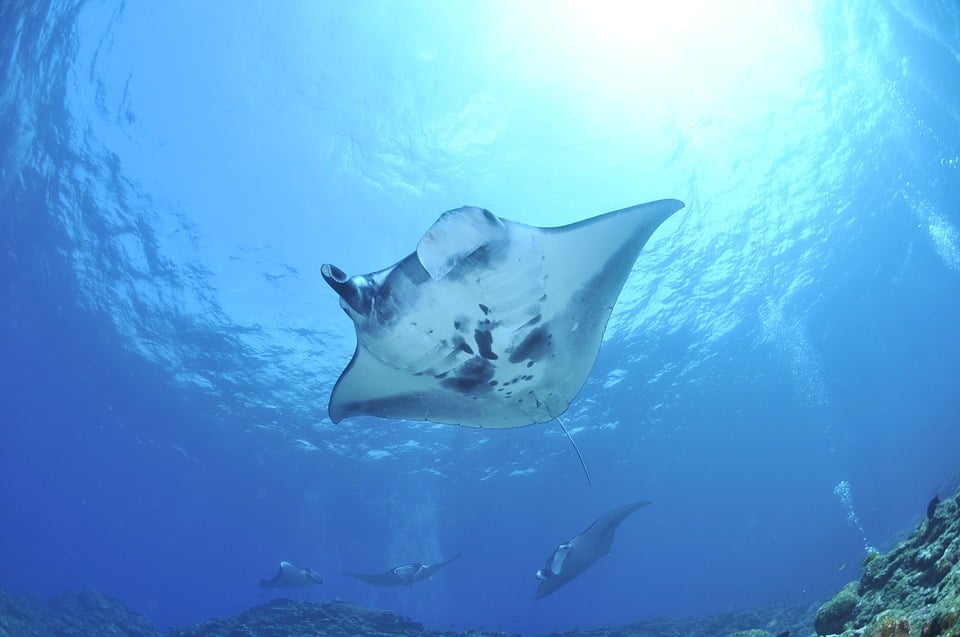
I took a snorkel tour for about $60. The sheer size and grace of these creatures is sure to leave you speechless. We were instructed to float calmly, no diving or chasing, and the mantas often came within inches, their wings brushing the water around us.
The experience was tightly regulated (as it should be), but even the brief time in the water felt transformative. If you are in the Maldives during manta season, this is the bucket-list experience: not just for divers, but for anyone who dreams of swimming with these giants.
6. Trying Hedhikaa
Every afternoon, island cafés across the Maldives come alive with the clatter of plates and the scent of deep-fried spices for hedhikaa time. Hedhikaa refers to a variety of savoury snacks, often made with tuna, coconut, onions, and chilli, and served alongside sweet black tea.
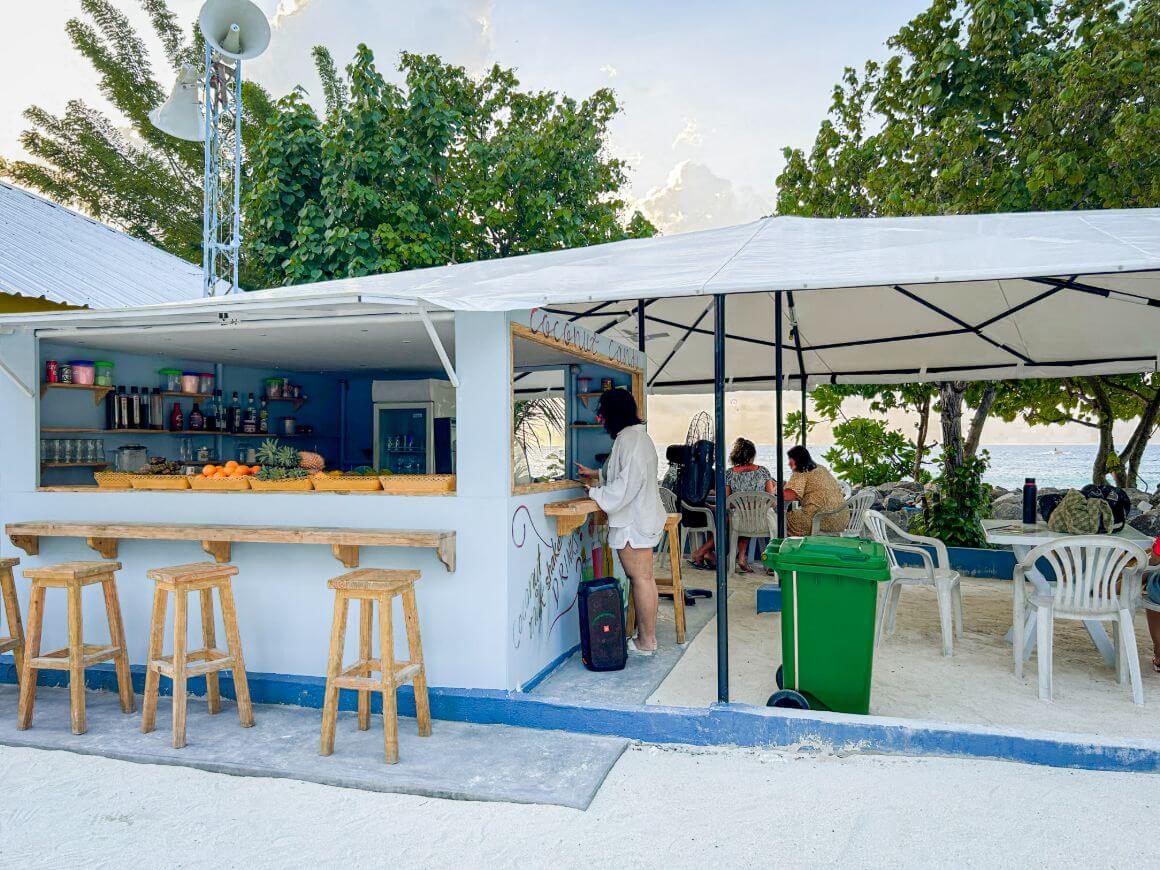
Photo: Avantika Chaturvedi
Think golden-brown bajiya (tuna samosas), gulha (fried fish balls), and masroshi (coconut-stuffed flatbread). For just $1–3 USD, you can grab a plate full of these bites and settle into a plastic chair with locals unwinding after the day’s heat. Some cafés even offered sweet treats like bondibaiy (sticky rice pudding) or banana fritters.
This daily ritual became one of my favourite parts of backpacking in the Maldives. It was not just about the food, but about slowing down, people-watching, and savouring the rhythms of island life. For backpackers, hedhikaa is also one of the cheapest (and most delicious) meals you will find anywhere in the country.
7. Night Fishing on a Dhoni
Locals swear by it, and it’s one of the most enjoyable excursions around. For $60+ USD, you’ll head out on a dhoni boat, drop a hand line into the sea, and (if you’re lucky) catch your dinner.
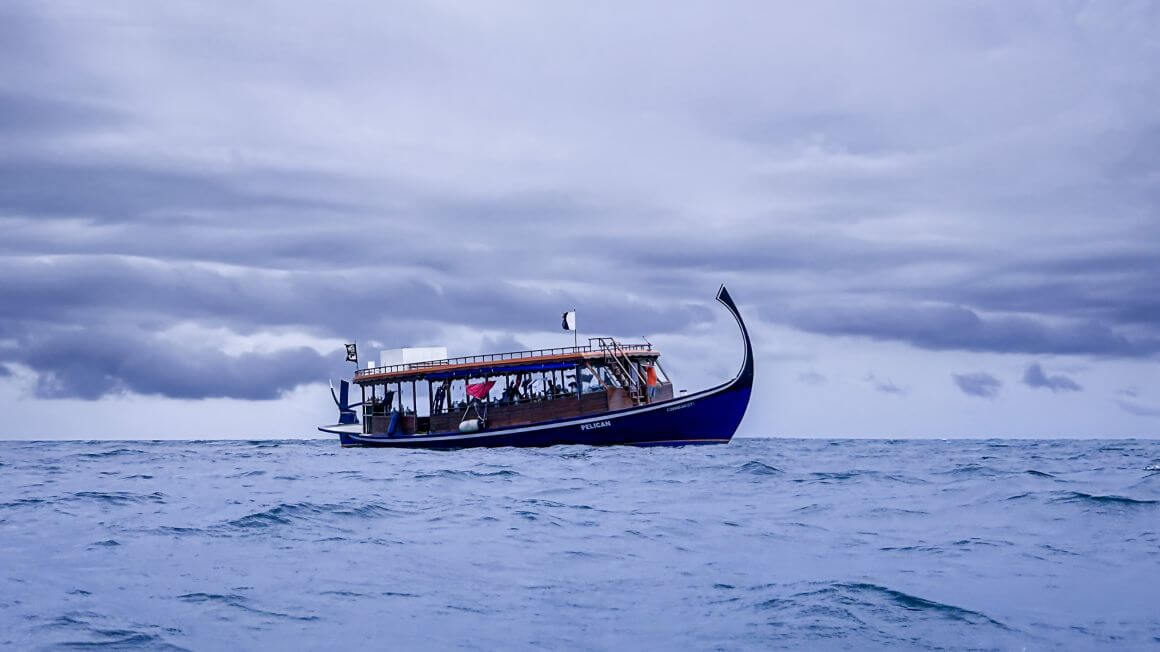
Photo: Avantika Chaturvedi
There is something magical about being out on the open sea under a sky full of stars, and a night of fishing on a traditional Maldivian dhoni (traditional wooden fishing boat) gave me just that. Just head to the harbour during sunset and negotiate a price with a local fisherman, and off you go! The fishermen are happy to guide you to use the simple hand lines with bait and show you how to fish the old-school way. No rods, just patience and instinct.
Most trips include a beach barbecue afterwards where your catch is grilled on the spot and served with rice, salad, and chilli sauce. It is a rare chance to experience a tradition that’s been part of Maldivian life for generations.
8. Surfing in Thulusdhoo
The Maldives is not widely known for surfing, but that is such a shame because Thulusdhoo has a burgeoning surfing and backpacking scene that is at par with more popular surf destinations nearby like Sri Lanka and Bali. This North Malé Atoll island is home to Cokes and Chickens, one of the Maldives’ most iconic reef breaks.
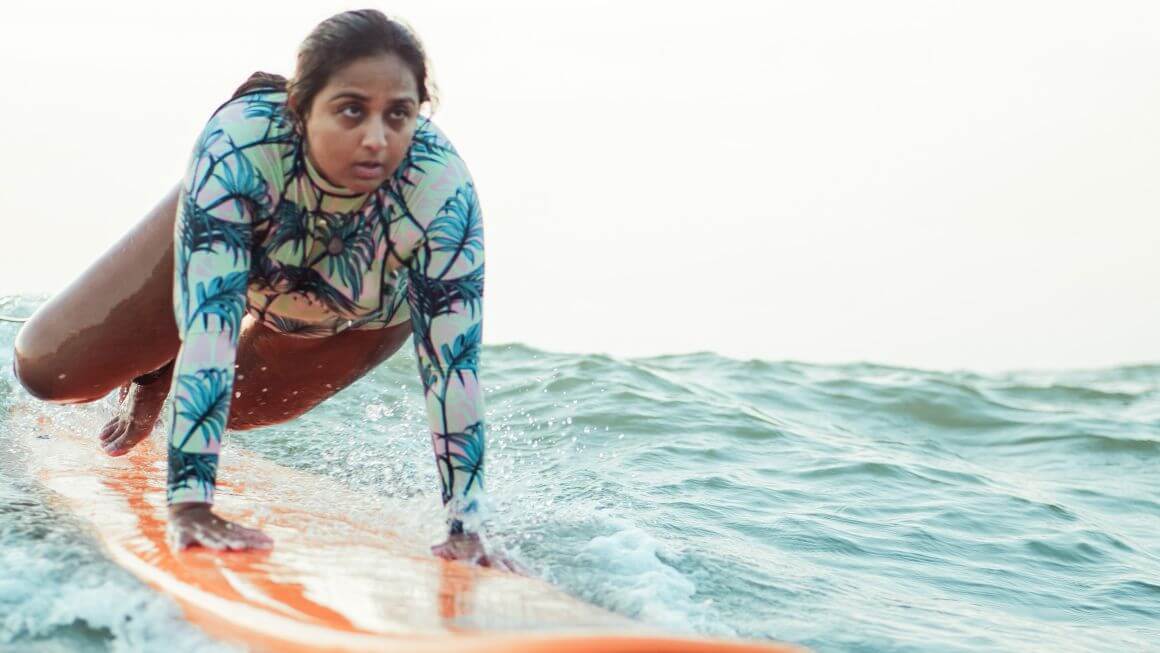
Photo: Avantika Chaturvedi
Surf camps and budget-friendly guesthouses line the beach, and board rentals ($10–20 USD/ day) or lessons (about $30 per session) are easy to find. Even if you do not surf, the laid-back vibe of the island makes it a fun place to hang out. Think smoothie bowls, hammock naps, and long beach walks at golden hour. Thulusdhoo has managed to maintain its local charm while embracing a surf culture that feels inclusive and unpretentious.
Backpacker Accommodation in the Maldives
There’s so much more than places to stay in the Maldives here! Local islands now have a growing number of budget guesthouses, and while you won’t find dorm rooms or hostels in this part of the world, you can find private double rooms which cost $40-60 per night, often with breakfast included. Here are some that are worth checking out:
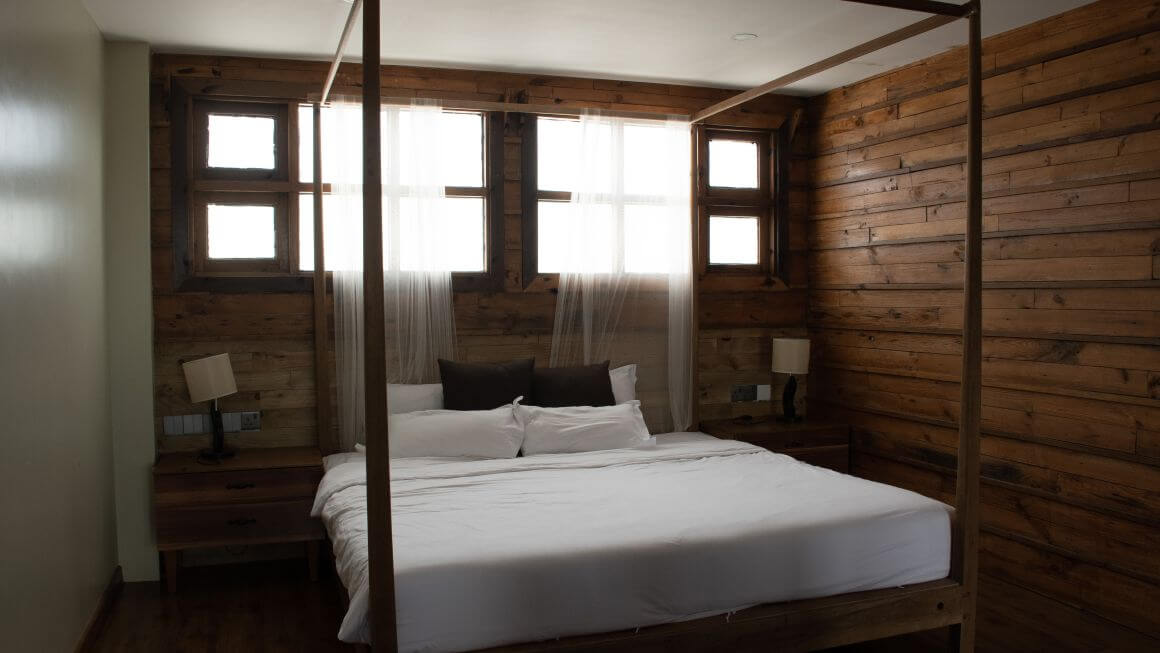
Photo: Avantika Chaturvedi
Finimas Residence, Thimarafushi
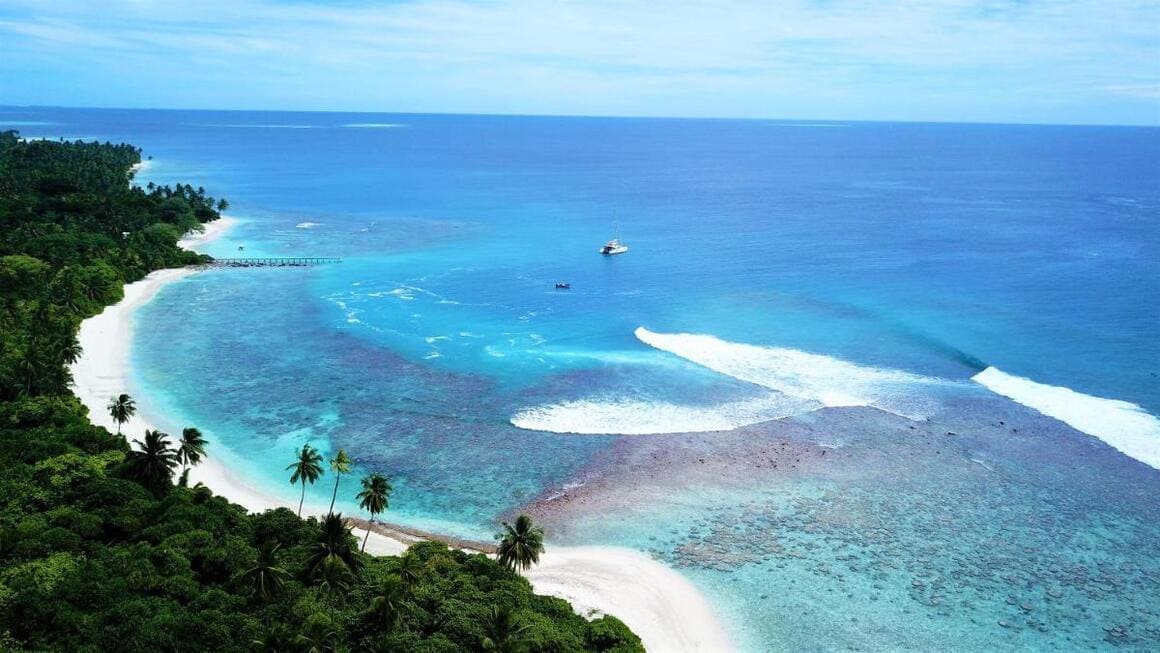
For $40, you get an air-conditioned twin room with a private bathroom and breakfast included and free Wifi. They also have private beach access and a restaurant serving traditional and global dishes.
Surf Trip Maldives, Thulusdhoo
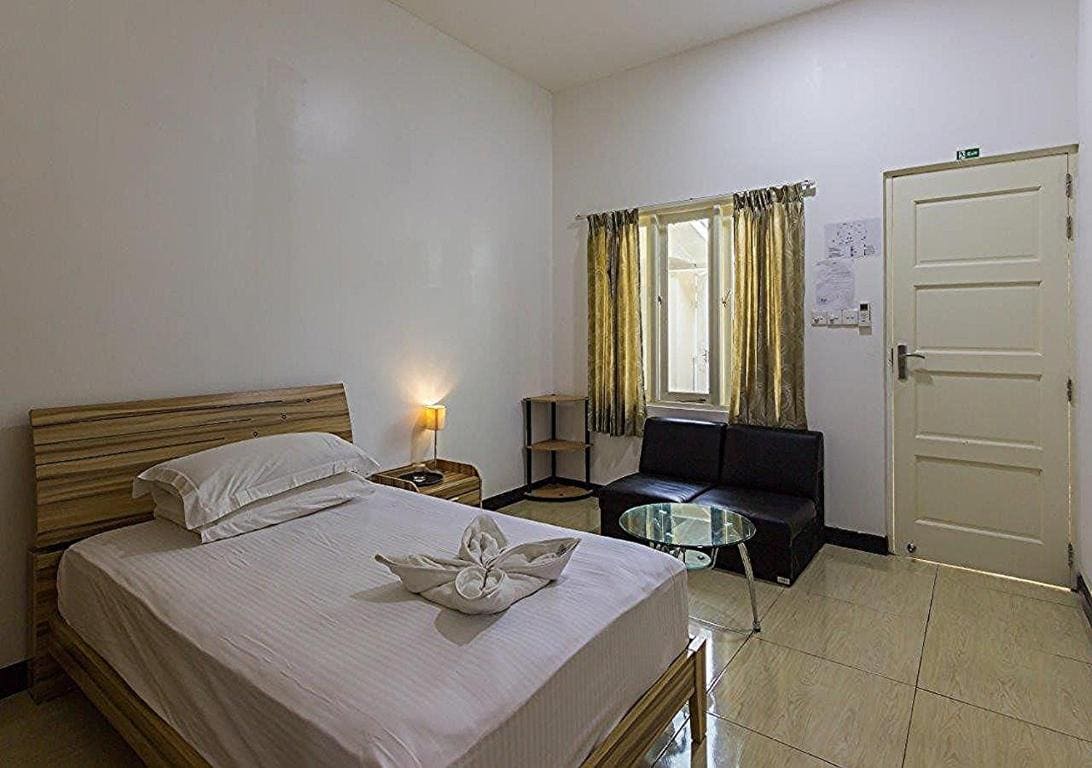
For $50, you get a clean and spacious single room with air conditioning, private bathroom and free Wifi. The guest house is located right on Bikini Beach and also helps arrange surf trips and other excursions.
Adroit Sunset View, Guraidhoo
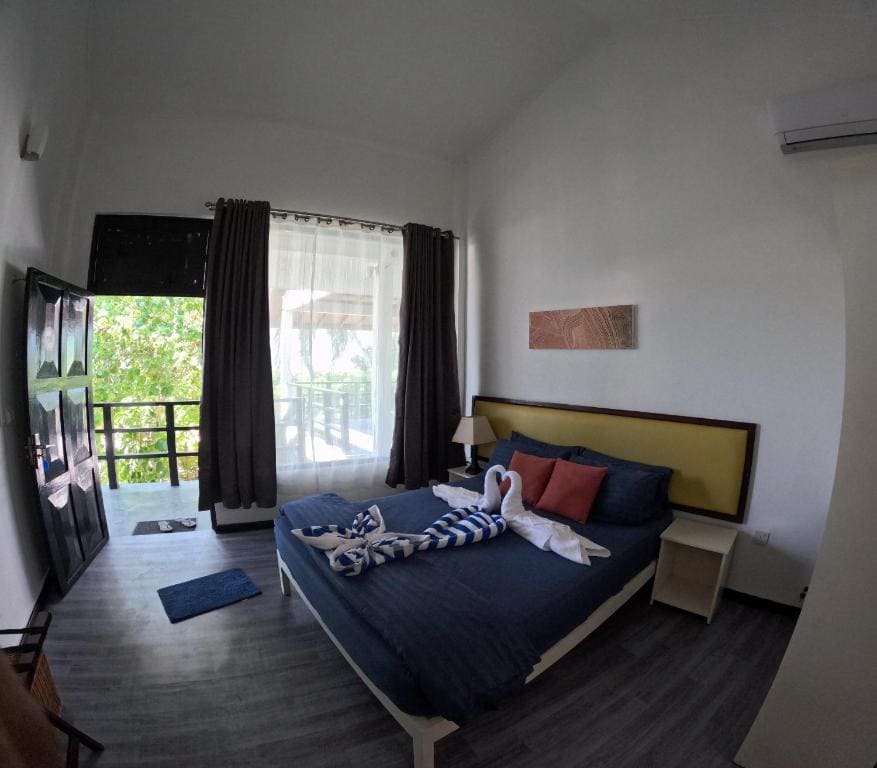
At $104 per night, you get a twin room with breakfast included, air conditioning and free Wifi. The guest house is located on the beach, has an on-site restaurant and can also help arrange excursions.
Nap Corner, Male
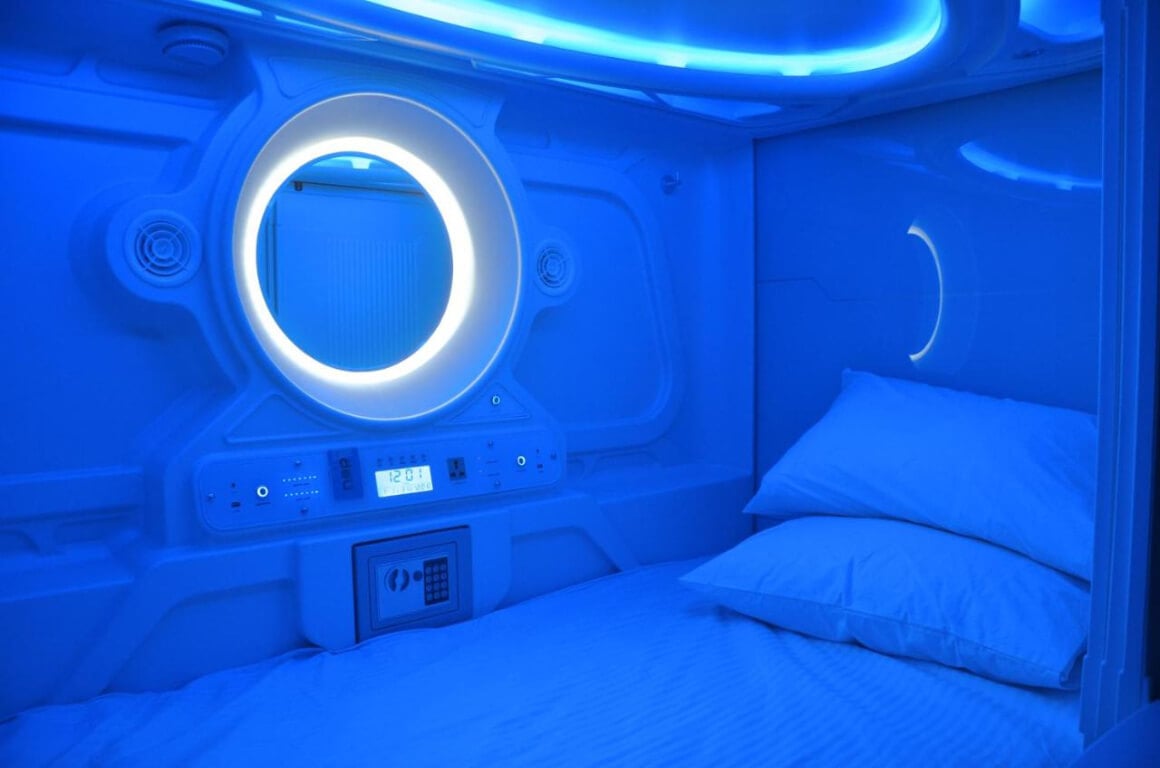
Nap Corner is a pod-like dormitory-style accommodation. For $24, you get an air-conditioned pod with a shared bathroom. They also have hourly rates if you want to get a quick nap in before flying or taking a ferry out!
Elysian Hideaway, Maafushi
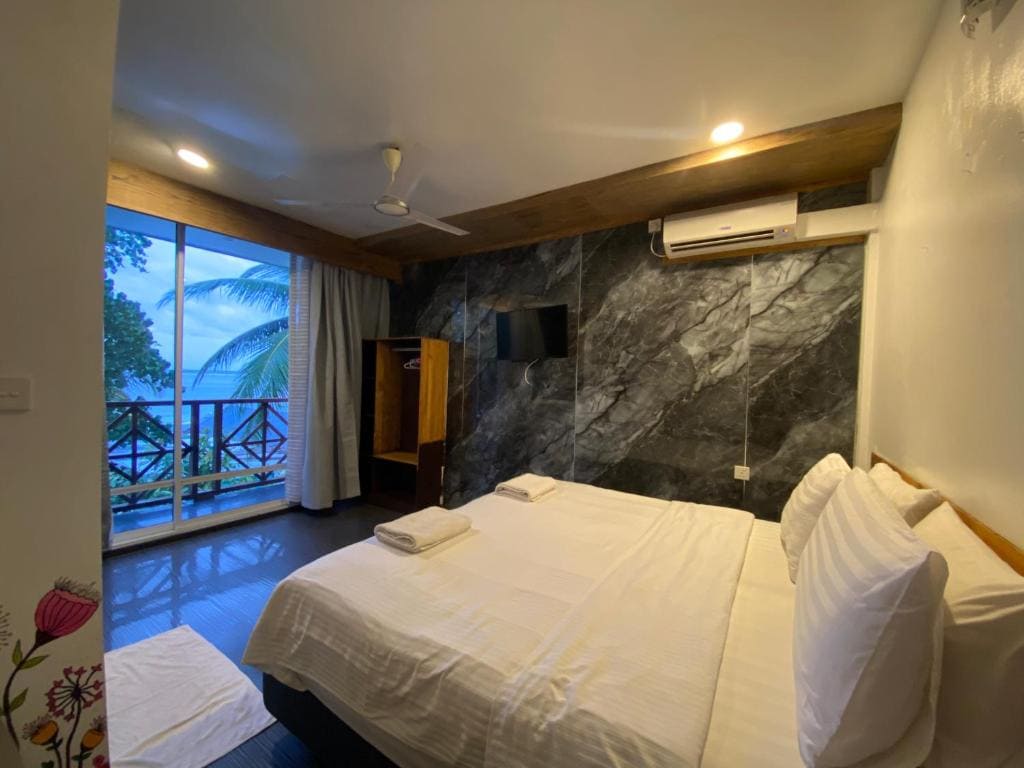
For around $50 for a double or twin bed with an en suite bathroom, you get air conditioning, direct beach access and free Wifi. Bikini Beach is just a few minutes away, and the guest house also helps arrange excursions for you at an additional cost.
Maldives Backpacking Costs
A Daily Budget in the Maldives
Here’s what you can expect to spend here these days. Even without villa stays, the Maldives is spenny.
But you can definitely cut costs if you skip tours, cook your own food (which is rare, unfortunately), ditch the booze, travel slower, and strictly stick to public ferries. A shoestring backpacker could aim for under $40/day.
| Expense | Broke Backpacker | Frugal Traveler | Creature of Comfort |
|---|---|---|---|
| Accommodation | $24-40 | $50-100 | $101+ |
| Food | $4-7 | $10-15 | $20+ |
| Transport | $5-10 | $20-40 | $50+ |
| Nightlife | $0-10 | $11-25 | $30+ |
| Activities | $0-20 | $30-45 | $50+ |
| Totals per day | $33-87 | $121-225 | $251+ |
Money in the Maldives
The currency is the Maldivian Rufiyaa (MVR). You can find ATMs in Malé and some larger islands like Maafushi, but they’re unreliable elsewhere. I withdrew most of my cash in Malé. Many restaurants and guest houses also accept USD widely. Many guesthouses accept cards, but small shops prefer cash.
Always carry smaller Rufiyaa notes for ferries and snacks.
Travel Tips – Maldives on a Budget
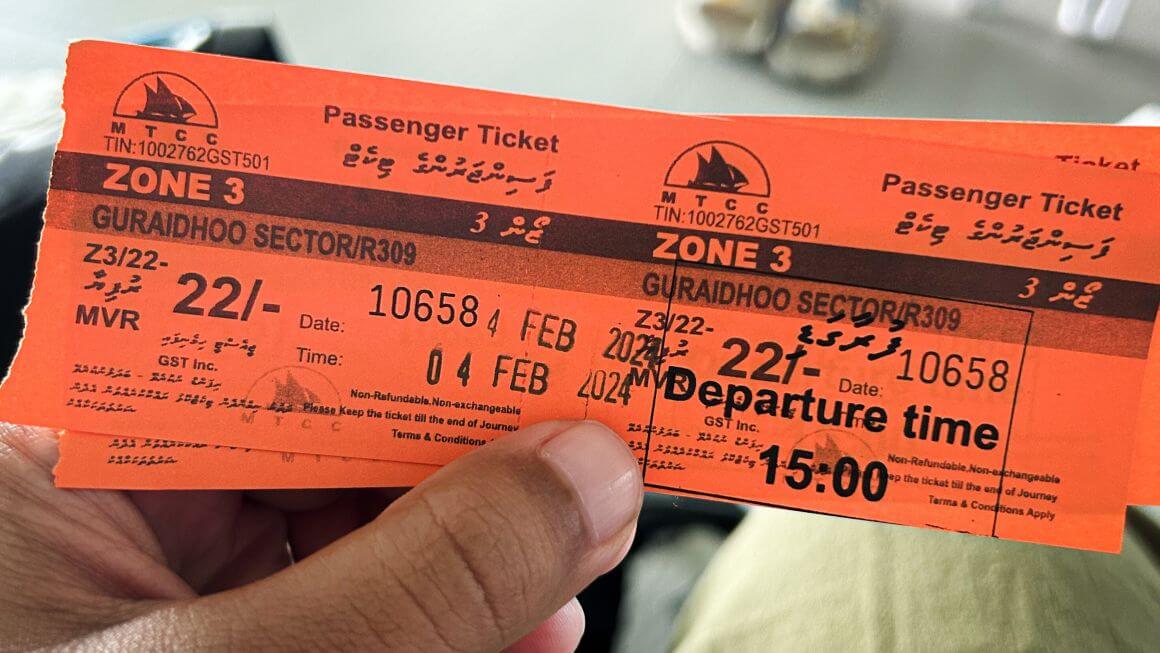
Photo: Avantika Chaturvedi
- Take public ferries: They’re slow but scenic and cost next to nothing.
- Eat local: Skip resort-style restaurants. Tea shops and home-cooked meals are delicious and cheap.
Book tours with guesthouses: They bundle activities for lower rates than independent agencies - Travel with a reusable water bottle: It is easy to find filtered water in most guesthouses and restaurants.
- Hit the convenience store: Convenience stores are easy to find across most islands in the country. Buy fruits and yoghurt for breakfast, soft beverages to pair with meals and ice creams or chocolate for dessert instead of spending at the restaurant.
Best Time to Travel to the Maldives
The Maldives is a year-round destination where activities do not come to a halt even during the rainy season. However, the best time to visit the Maldives is during the dry season from October to April. This is when the skies are clear, the seas are calm, and the water visibility is at its best for diving and snorkelling. But this is also when prices go up and islands feel a little more crowded.
May to June and September are good shoulder seasons to visit for fewer crowds and lower prices. You can expect a couple of rainy afternoons, but most days are sunny or partly cloudy, and the sea is still warm and swimmable.
Peak monsoon is when the crowds are thinnest and prices are cheapest. You might have to snorkel or dive while it rains, but there is a romantic charm to being in the sea when it rains. This is also the best time to spot manta rays and whale sharks.
What to Pack for the Maldives
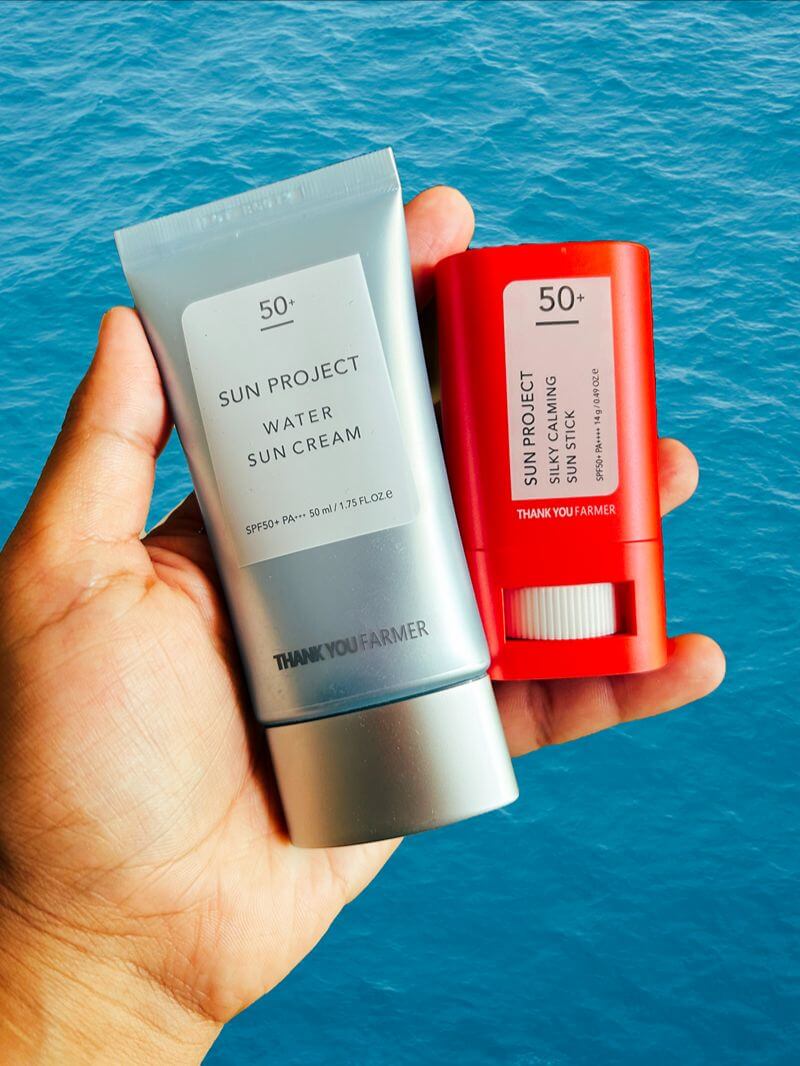
Photo: Avantika Chaturvedi
- Lightweight cotton clothes to keep cool (modest for public areas)
- Bikinis for bikini beaches and full-length swimwear for public beaches
- Snorkel and mask to save on rental fees and go snorkelling off the beach for free
- Sunhat, sunglasses and reef-safe sunscreen (the corals and your skin thank you)
- Day pack for tours
- Flip flops or sandals
- Mosquito repellent for evenings
- International power adapter and power bank
Staying Safe in the Maldives
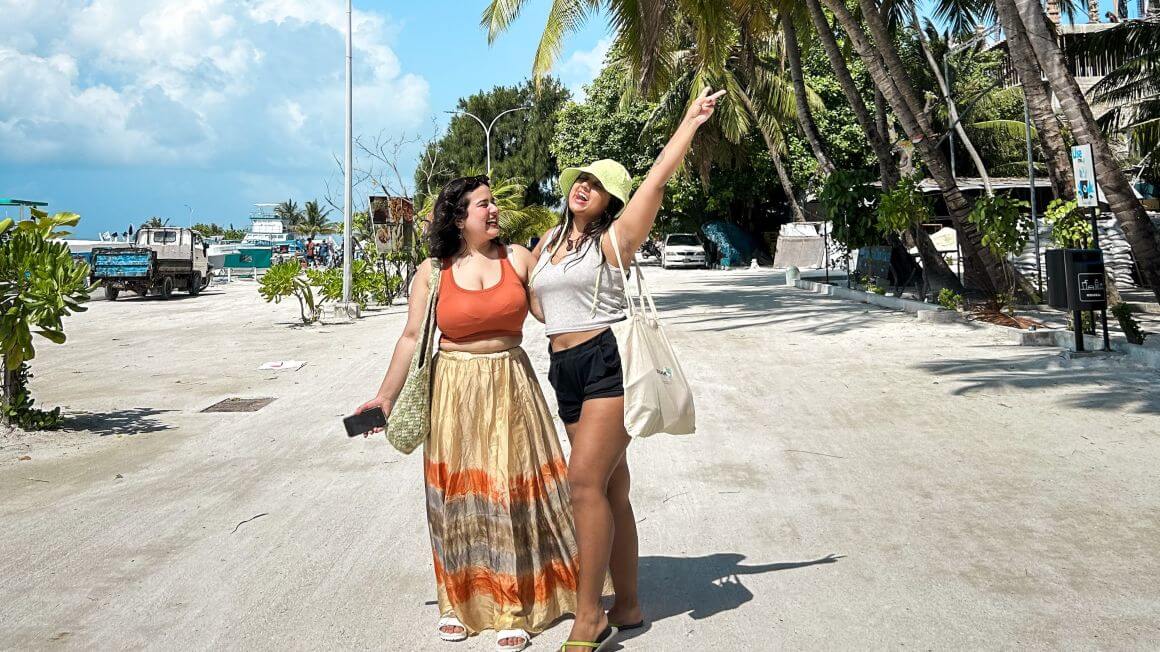
Photo: Avantika Chaturvedi
Sex, Drugs, and Rock ‘n’ Roll in the Maldives
- Drugs: The Maldives has very strict laws against drugs, with severe penalties. However, getting weed is easy on almost every island. Just ask a surfer/ diver in his twenties to sort you out!
- Alcohol is only available in resorts or “floating bars” near some local islands like Rasdhoo, Maafushi and Thulusdhoo (the ones with the biggest backpacker scene). These can be expensive, but alcohol isn’t hard to find either. Just find the right local to take you under their wing!
- Solo female travel: While solo female travel isn’t very popular outside the popular islands, I have still felt incredibly safe through my multiple trips to the Maldives. The islands are small and close-knit, and I was often greeted with smiles and genuine curiosity. That said, it is a conservative Muslim country, so make sure to dress modestly off the beach, cover up when walking through towns, and always ask before taking photos of locals.
Getting Insured BEFORE Visiting the Maldives
I use SafetyWing for my travel insurance. It is affordable, covers diving, and gives me peace of mind. Never skip insurance in island nations, where medical evacuations can get expensive if needed.
Sort out your insurance before you go. There are several good options, but our overall pick is SafetyWing. Most of the Broke Backpacker team has used it at one point or another, and we’ve filed claims for rabies jabs in Bali, a hospital stay in Mexico, and a clinic visit for a stomach bug that wouldn’t quit. All paid out.
It’s month-to-month, no lock-in, no itinerary required, and you can buy it after you’ve already left. A little over $2 a day if you’re under 40.
New SafetyWing customers: use code BROKEBACKPACKER for 8 free weeks of electronics theft coverage. You have to scroll down and click the pink camera on their landing page to enter it, and you have to do it before creating your account.
How to Get Into the Maldives
Entry Requirements for the Maldives
The Maldives has a free 30-day visa on arrival for all countries and 90 days for passport holders from India, Pakistan, Russia, Malaysia and Sri Lanka. However, entry to the country for Israeli passport holders is banned.

Photo: Avantika Chaturvedi
You might get asked for proof of accommodation and a return flight out of the country at immigration, but that is rare. Visitors must fill out the IMUGA Traveller Declaration form within 96 hours before their flight time for arrival, and also for departure.
How to Get Around the Maldives
Inter-Island Travel in the Maldives
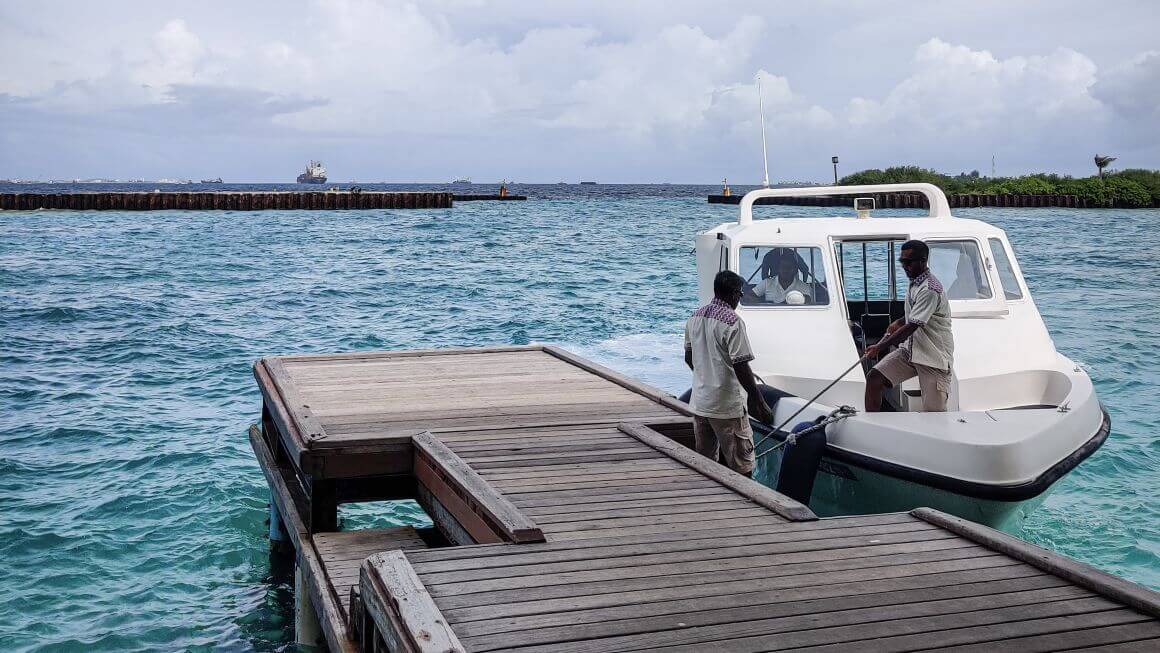
- Public Ferries: The cheapest way to get around the country ($1-5 depending on the length of the journey). However, the schedule is limited, especially on Fridays. And for many islands, you must come back to Male and change ferries.
- Speedboats: These usually cost $60-130, depending on the distance. They have more flexible routes, are quicker and overall more tourism-friendly. Atoll Transfer is great for booking speedboats in advance.
- Domestic Flights: Domestic flights cost $100–150 one-way and are only worth it for far atolls like Fuvamulah, where there are no ferries or speedboats going. Popular airlines include Maldivian, Manta Air and Villa Air (Flyme).
This Maldives Route Calculator is perfect for island hopping and figuring out the most convenient mode of transport to get around.
Travelling within the island is easy, as most of them can be walked end to end in 20 to 30 minutes! Most guesthouses also offer free buggy services for your luggage. For bigger islands like Fuvamulah or Gan, renting a bicycle ($5), e-bike ($15) or fully automatic scooter ($20-25) is recommended.
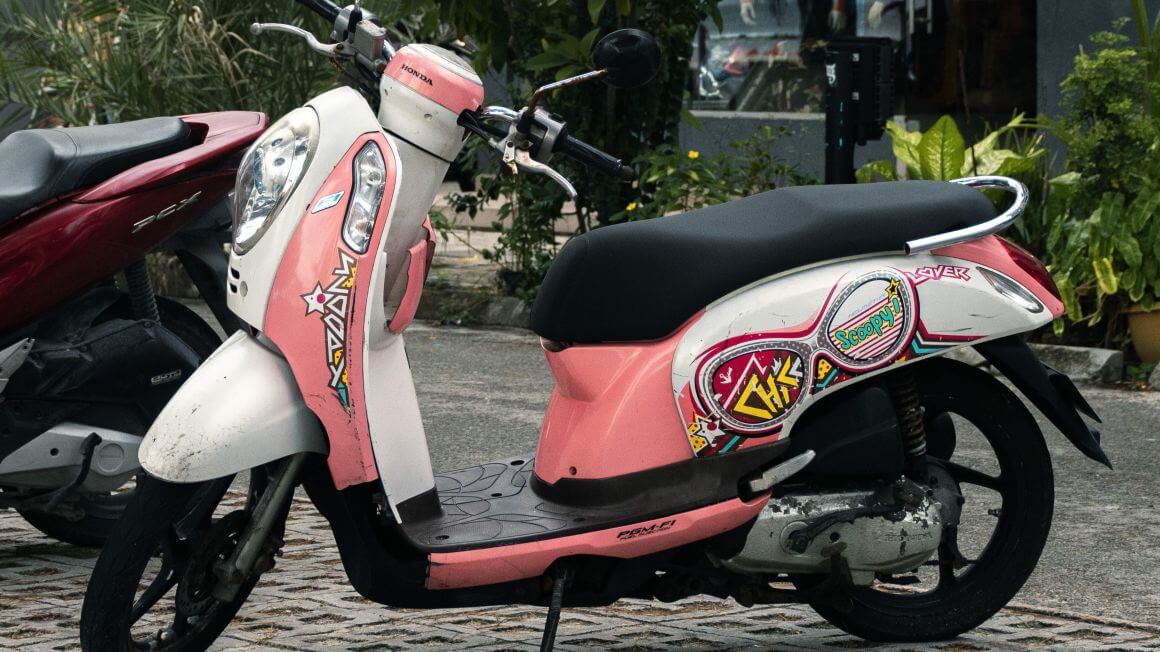
Photo: Avantika Chaturvedi
What’s New For Backpacking The Maldives?
The Maldives is becoming a lot more developed than before, despite the country virtually running out of room around Male.
The government are now building the Greater Male Connectivity Bridge linking the capital with Villingili, Gulhifalhu and Thilafushi. This will make movement around these four islands much easier going forward, but won’t change much in the more tourist-populated spots including the resorts.
Other than that, the main difference in recent years is that it is much more expensive than before. Sure, there is a small backpacker scene offering an alternative to the mega-expensive resorts that go viral on Instagram. But even “cheap” guesthouses are still expensive, and hostel culture isn’t a thing here yet.
Maldives Culture
Useful Travel Phrases for the Maldives
The language spoken in the Maldives is Dhivehi, though most locals working in tourism or otherwise speak English well. However, learning a few local phrases can go a long way in breaking the ice.
- Salaam Alaikum – Hello and goodbye
- Shukuriyyaa – Thank you
- Haalu kihineiy? – How are you?
- Maafune – Excuse me
- Eheh – Yes
- Aai – No
- Thibaage – Please
What to Eat in the Maldives
Food in the Maldives is simple, spicy, and delicious. Tuna and coconut are the hero ingredients, appearing in everything from breakfast mash to fried pastries. However, unfortunately, many restaurants on local islands have only a few options for traditional Maldivian food. So it’s better to ask your guesthouse owner to point you towards the hole-in-the-wall cafe where locals like to eat.
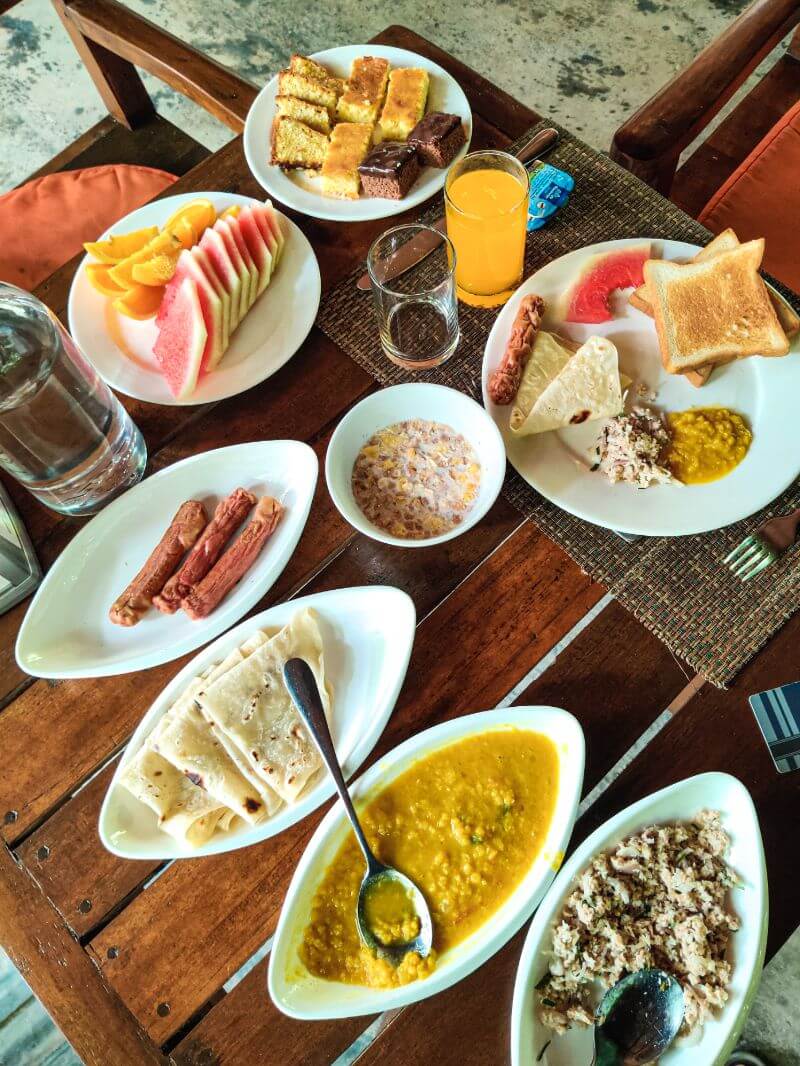
Photo: Avantika Chaturvedi
Eating locally not only saves you money, but also introduces you to a side of Maldivian life that you would have completely missed in a resort.
Must-Try Dishes in the Maldives
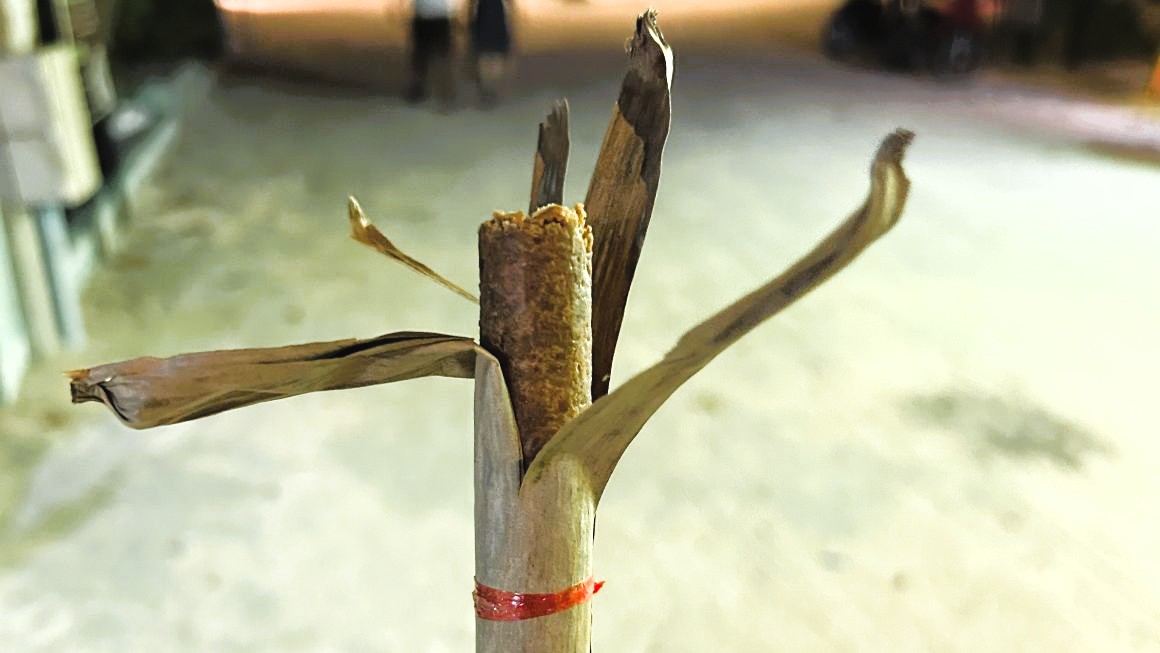
Photo: Avantika Chaturvedi
- Mas huni: A mix of shredded tuna, coconut, onion, and chilli eaten with roshi (flatbread) for breakfast.
- Garudhiya: A clear fish broth with rice, lime, and chilli (a true comfort food on rainy days!)
- Hedhikaa: Fried tea snacks served in the afternoons that are filling and addictive.
- Bondibaiy: A sweet sticky rice dessert served on special occasions.
- Addu Bendi: A sweet delicacy made of grated coconut, golden syrup and jasmine-flavoured water, wrapped in a dry banana leaf.
A Brief History of the Maldives
The Maldives has a rich and complex history shaped by its geography, trade, and religion. First settled over 2,500 years ago by seafarers from Sri Lanka and India, the islands became a strategic stop along ancient maritime trade routes. Early Maldivians practised Buddhism, evident in archaeological remains like stupas and inscriptions. In 1153 CE, the Maldives converted to Islam under the influence of Arabs and North African traders, and it remains a 100% Muslim nation today.
In the 16th century, the Portuguese briefly occupied the Maldives before being ousted. The Dutch and then the British followed, with the Maldives becoming a British protectorate in 1887. Independence was achieved peacefully in 1965. In 1968, the monarchy was abolished, and the country became the republic it is today. Now best known globally for its luxury tourism, it is also a country balancing tourism with tradition, something you can feel on every local island.
FAQs About Backpacking in the Maldives
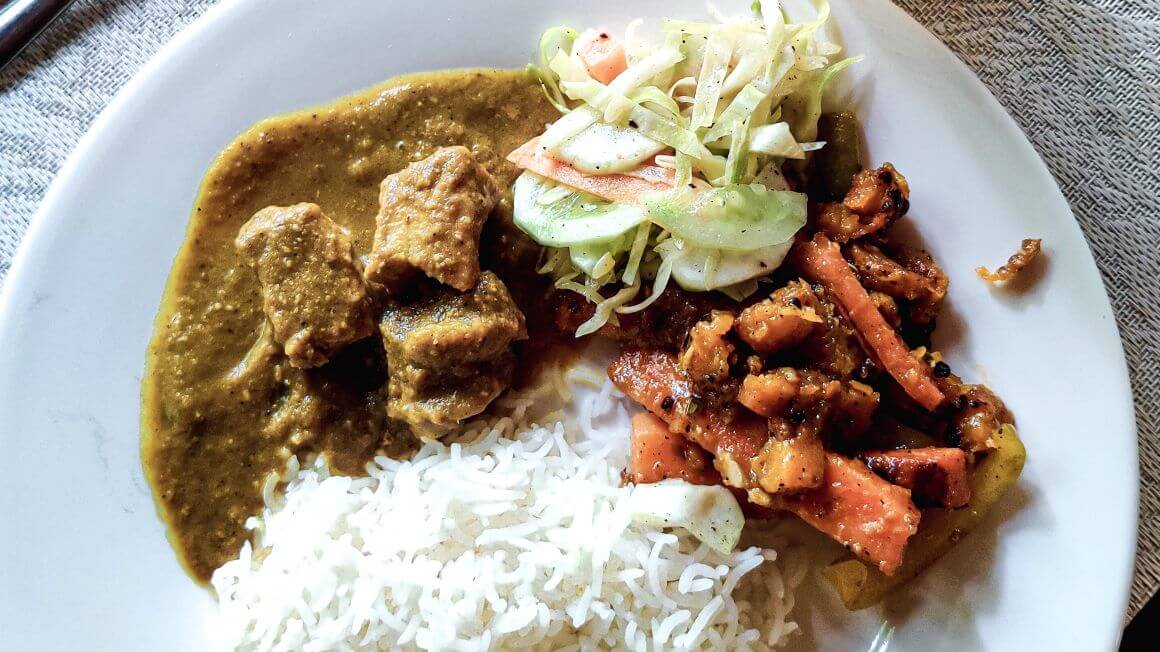
Photo: Avantika Chaturvedi
Final Advice Before Visiting the Maldives
If there is one thing I hope you take away from this, it’s that you don’t need a honeymoon budget to experience the Maldives. It’s not just a place for luxury travellers, it is also for the curious souls, slow travellers, ocean lovers, and budget backpackers who want more than just a beach. With a backpack, a flexible itinerary, and an open mind, this island nation becomes one of the most rewarding and unexpected budget travel destinations in the world.
Pack light, go slow, eat local, and let the islands work their magic on you. Talk to locals and catch the ferry, even if it takes five hours. Try the fish curry you can’t pronounce. Backpacking the Maldives shattered all my assumptions, and I’m sure it will yours too.
Photo: Avantika Chaturvedi