Dreaming of lost cities, surreal landscapes and vibrant living culture? Want to dive into Incan ruins, history and soak in the epic Andean mountains? Wanting to not just see, but experience this magical place but feel like Cusco and Machu Picchu alone will not satiate your wanderlust?
Well, Just beyond Cusco lies a patchwork of ancient ruins, lively Quechua villages, colourful markets, and dramatic mountains that is the Sacred Valley.
With a number of impressive Incan sites, bustling towns and endless adventures, this area is much more than just a side mission to Machu Picchu, it’s a worthwhile exploration in its own right.
But where do you start, and which areas are more worth your time than other? Well, this Sacred Valley itinerary will answer all your questions and more.
Let’s get to it.
Essential Sacred Valley Information

The Broke Backpacker is supported by you. Clicking through our links may earn us a small affiliate commission, and that's what allows us to keep producing free content 🙂 Learn more.
Alright then, before we crack on with a breakdown of each day on my Sacred Valley itinerary, let’s have a look at some information essential for your visit.
What is the Sacred Valley?
In short, it is a fertile valley carved out by the Urubamba valley between Pisac and Machu Picchu. With a warm climate and fertile lands, it has played host to numerous civilisations over thousands of years. The Incas left the greatest mark on it, and today you can still experience the remnants of their lost world with a fraction of the tourists drawn to better-known sites like Machu Picchu.
For me, it was one of the highlights of my time backpacking in Peru, and I was just mesmerised by their surreal atmosphere.
Should I Buy the Boleto Turistico?
I would highly recommend any Sacred Valley visitor to buy the Boleto Turistico. This is a ticket that grants access to 16 Sacred Valley sites and museums for 10 days and costs only 130 soles ($37/£28). You’ll save money once you’ve visited two sites, as each entry costs 70 soles. If you’re planning on spending a decent amount of time in this area on your Peru Itinerary, it’s a solid purchase.
It is quite simply an essential expense for your Sacred Valley adventure, even though I recognise that parting with £28 can feel expensive for a broke backpacker. You can buy this at the COSITUC office on 103 Avenida del Sol in central Cusco, at the gate of any included ruin or online before you travel.
How to get to the Sacred Valley
Your adventure will begin in Cusco. The best way to get from the old capital to the valley towns is by collectivo. These are minivans used by Peruvians to get around, and they usually cost between 2-8 Soles ($0.5 – $2) per trip. They have no schedule; they leave when the bus is full, so do not rush and just embrace the journey. Just think of them as a great way to keep costs down in Peru!
7-Day Sacred Valley Itinerary
This suggested 7-day itinerary will allow the visitor to get under the skin of this ancient and enigmatic region whilst packing in a great deal of adventure.
7-Day Sacred Valley Itinerary
- Day 1-2 in Pisac: Pisac Ruins | Market Day
- Day 3-4 in Urubamba: White Water Rafting | Taste Peruvian Cuisine | Mirador Tantanmarka | Horse Riding
- Chinchero Day Trip: Church Built on Inca Foundations | Weaving Cooperatives | Poc Poc Waterfall
- Yucay Day Trip: Inca temple platform | Neolithic rock paintings
- Day 5-7 Ollantaytambo: Inca Fortress and Temple | Salineras de Maras | Moray Ruins | Intipunku Hike | Machu Picchu
Pisac: 1–2 Nights
Pisac is both a charming modern town with yoga retreats and fortune tellers, and a dramatic archaeological site filled with Inca temples and dwellings. It is a place with so many intangibles that keep you there longer than you first bargained for, so be ready to extend your stay!
Pisac’s modern town has a laid-back feel, with tarot readers, yoga studios, and artisan shops arranged around a neat central plaza. It’s more tranquil than Cusco and a great spot to relax in the warm and spiritual atmosphere. Plus, it’s one of the safest places in Peru to visit.
The hostels here were my personal favourites, and they can serve as a great base for day trips to sites like Chinchero.
Fun fact: “Pisac” means “partridge” in the native Quechua language. This probably references its curving terraces that resemble a bird’s wing in flight.
Getting There
Adventurous travellers can hike to Pisac from Cusco via Sacsayhuaman, Q’enqo, Tambomachay, and Puka Pukara (some highly recommended things to do in Cusco). Follow the well-marked trail past these ruins and catch a collectivo from Puka Pukara to Pisac.
For an easier option, head to Calle Pavitos in Cusco and hop in a collectivo for just 2 soles. The journey takes around 40 minutes.
Activity 1: Explore the Pisac Ruins
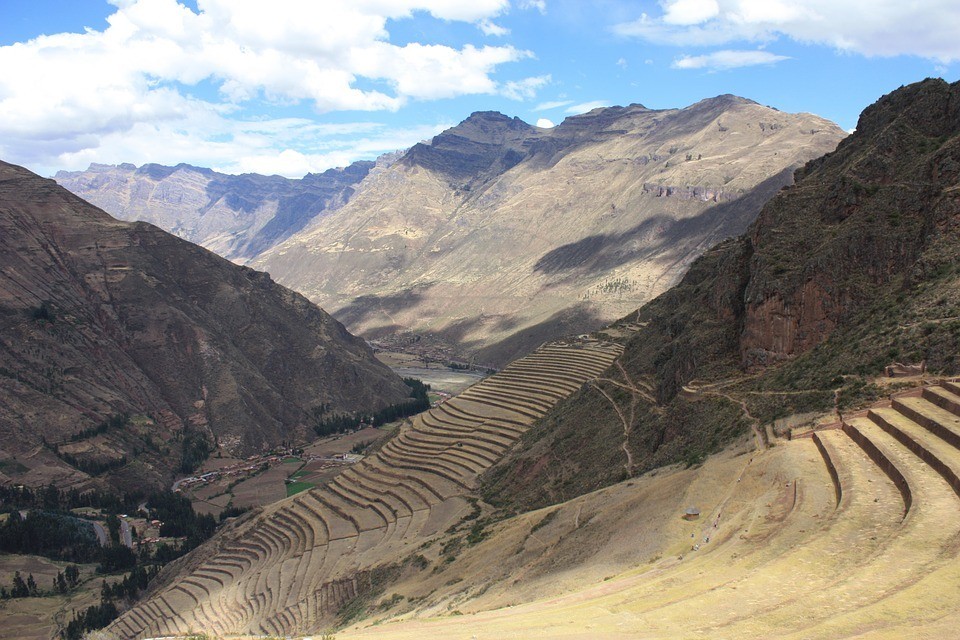
The main draw here is the spectacular Inca ruins – an entire mountainside carved into terraces, homes, temples, and storage structures. It’s one of the most impressive Incan ruins besides Machu Picchu you’ll see in Peru.
Spend a night in Pisac or devote a long day trip to appreciate the scale and serenity.
To begin the hike to the ruins, walk directly from the plaza to the gate of the archaeological site. The original Inca steps lead up to incredible layers of terraces and villages hewn into the living rock. After the 2–2.5-hour climb, you can sit back and watch the alpacas grazing at the summit. Bliss.
Entry is included with the Boleto Turístico.
Activity 2: Market Day
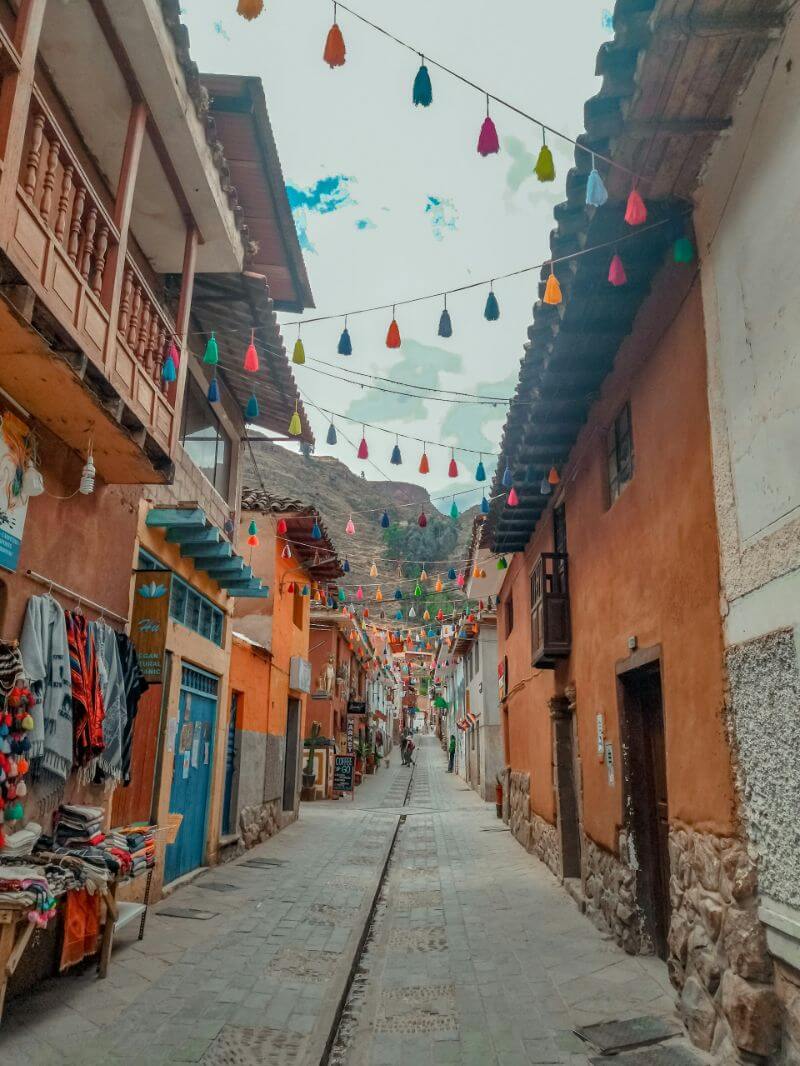
Every Sunday, Pisac’s streets fill with a traditional artisan market. Unlike tourist-driven markets in Cusco, locals gather to sell quinoa, potatoes, and handwoven alpaca garments. The vibe is relaxed and community-driven, with authentic goods and no hard sell.
Where to Stay
You are spoilt for choice of good hostels in Pisac.
- Wolf Totem Steam Punk Guesthouse features stunning mountain views, a pool, its own café and comfortable beds with privacy curtains.
- Sacred Valley Mystic Tribe offers more than a bed – this hostel boasts campfire nights, yoga classes and Spanish lessons just outside of the town.
Urubamba: 1–2 Nights
Urubamba enjoys a perfect location, mild climate, fertile land, and towering snowy peaks nearby. It’s ideal for unwinding, whether at a spa, in a stylish café, or by simply soaking in the slow rhythm of rural life. It is centrally located within the valley, so it is a great base for visiting smaller towns, but without a great hostel infrastructure like Yucay and Chinchero.
Activity 1: White Water Rafting
The Urubamba River offers Class I–III rapids. Enjoy an adrenaline rush with a backdrop of stunning Sacred Valley scenes.
Activity 2: Taste Peruvian Cuisine
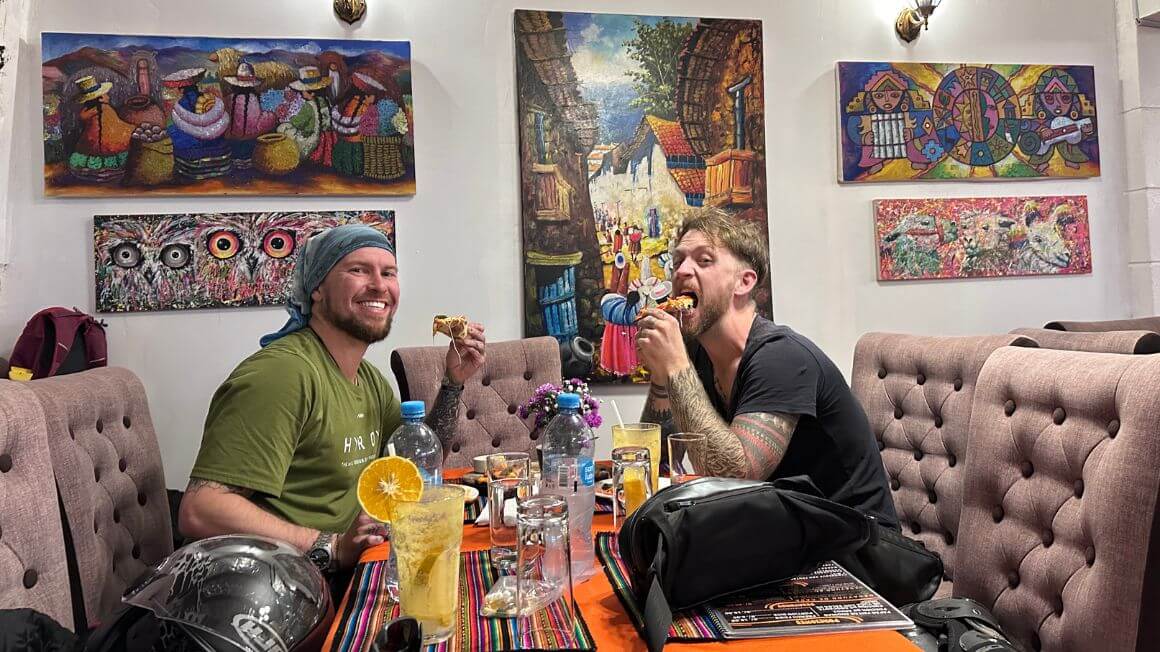
Peruvian food is gaining international acclaim; for example, Central in Lima was named the Best Restaurant in the World this year! For elevated local fare, try Casa Colonial Resturante and Bar, offering refined takes on classics like the lomo saltado.
Activity 3: Walk to Mirador Tantanmarka
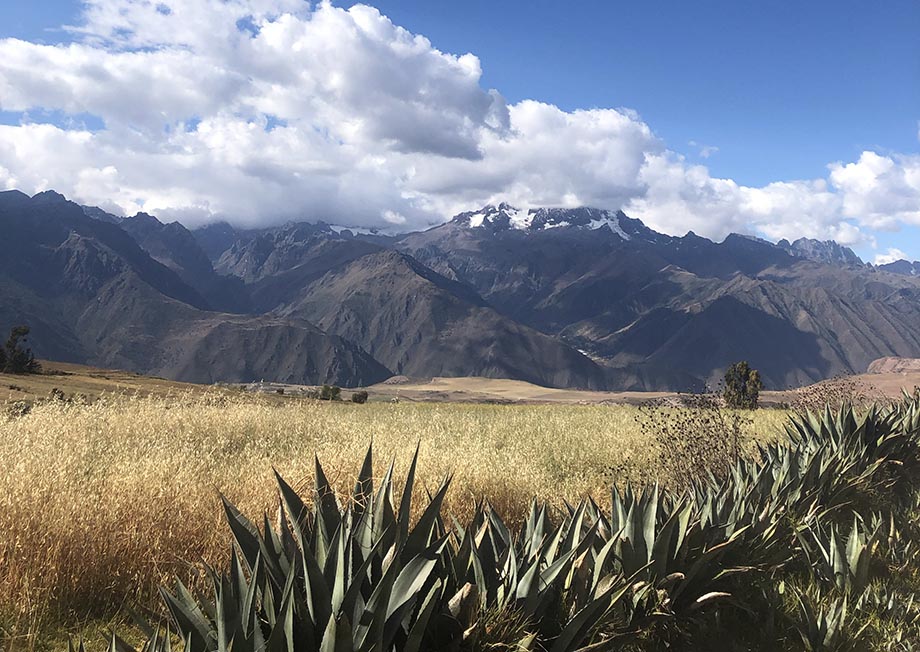
A 2-mile trail from the Plaza de Armas leads to a viewpoint overlooking Urubamba and the Sacred Valley. Huge snow-capped peaks loom on the other side as the town weaves its way through the valley below. The 2-hour round trip is perfect for walking off a big lunch!
Activity 4: Horse Riding
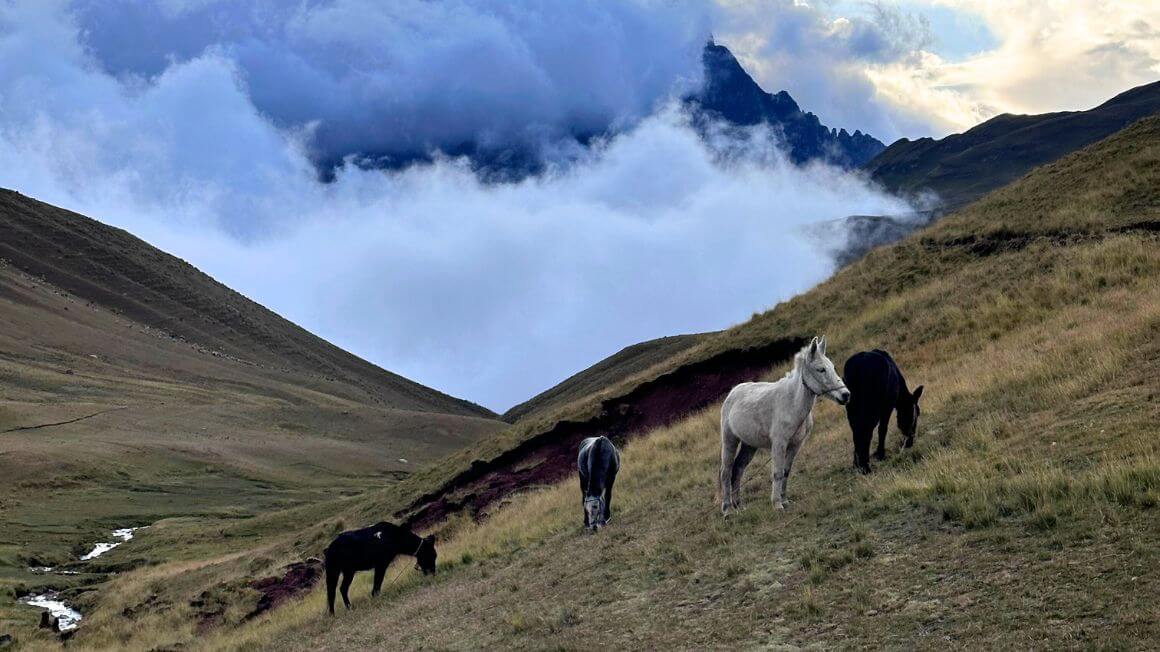
Several local agencies offer riding tours, with Lunas Horses being my top pick. The rhythmic clip-clop and sweeping views add so much to experiencing the Sacred Valley and make it a darn sight easier than using your own legs!
Where to Stay
- Valle Verde offers a fantastic terrace with mountain views and a buzzy common area.
Chinchero: Take a Day Trip
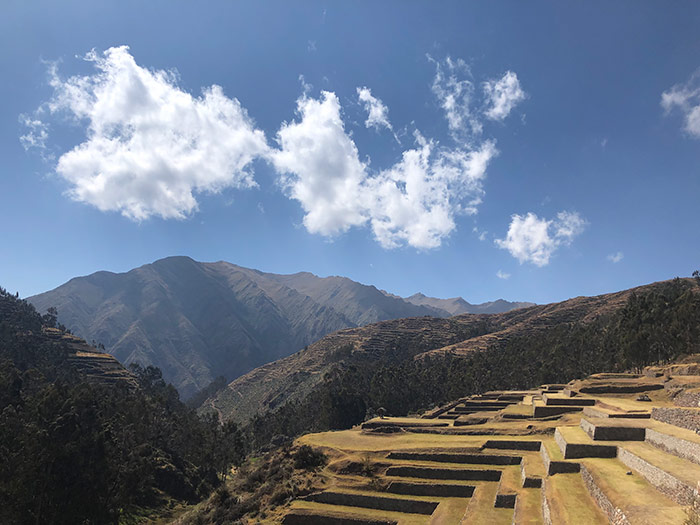
Once a key Inca hub, Chinchero at one time housed massive storehouses and terraced farmland. When Manco Inca retreated from Cusco after the failure of his siege, he burned down the town to deny it to the Spanish. The 43 hectares of perfectly preserved terraces offer a stunning glimpse into Inca agricultural mastery. Entry is included with the Boleto Turístico.
Activity 1: Church Built on Inca Foundations
Chinchero’s church sits atop the former palace of the Inca emperor Tupac Yupanqui, blending Spanish colonial architecture with impeccable Inca stonework. Inside, vibrant Baroque murals and a rare cochineal-red ceiling dazzle visitors. Cochineal red is one of the most expensive dyes in the world, and this blood red ceiling is saturated with it – certainly not something you see every day.
Activity 2: Weaving Cooperatives

Chinchero is a Mecca for traditional Peruvian textiles. Visit collectives like the Center for Traditional Textiles of Cusco for demonstrations of age-old spinning and weaving techniques. If you make it as far as Peru, you will be familiar with the distinctively gaudy ponchos and jumpers, but come and see the real deal in Chinchero. It is also satisfying to know that any purchases you make will directly benefit the local people here.
Activity 3: Hike downhill to the Poc Poc Waterfall
Follow an original Inca trail downhill from the ruins to the twin-streamed Poc Poc waterfall. Then continue to Urquillos village and catch a collectivo back to Chinchero to escape the slog of ascending back up the trail.
Yucay: Day Trip from Urubamba or Ollantaytambo
Yucay, not to be confused with the UK, was once the main city of the Sacred Valley, but is today a pretty colonial town just a 10-minute drive from Urubamba. Many claim it has the nicest climate and vibe in the Sacred Valley.
It is not full of landmarks, but it is a great place to soak in the mystical atmosphere of the mountains while watching locals have a kick about. The abundant expats from Europe and America certainly find something worth staying for. The town is easily reachable by collectivo from other valley towns.
Activity 1: Visit the ruins of an Inca temple platform
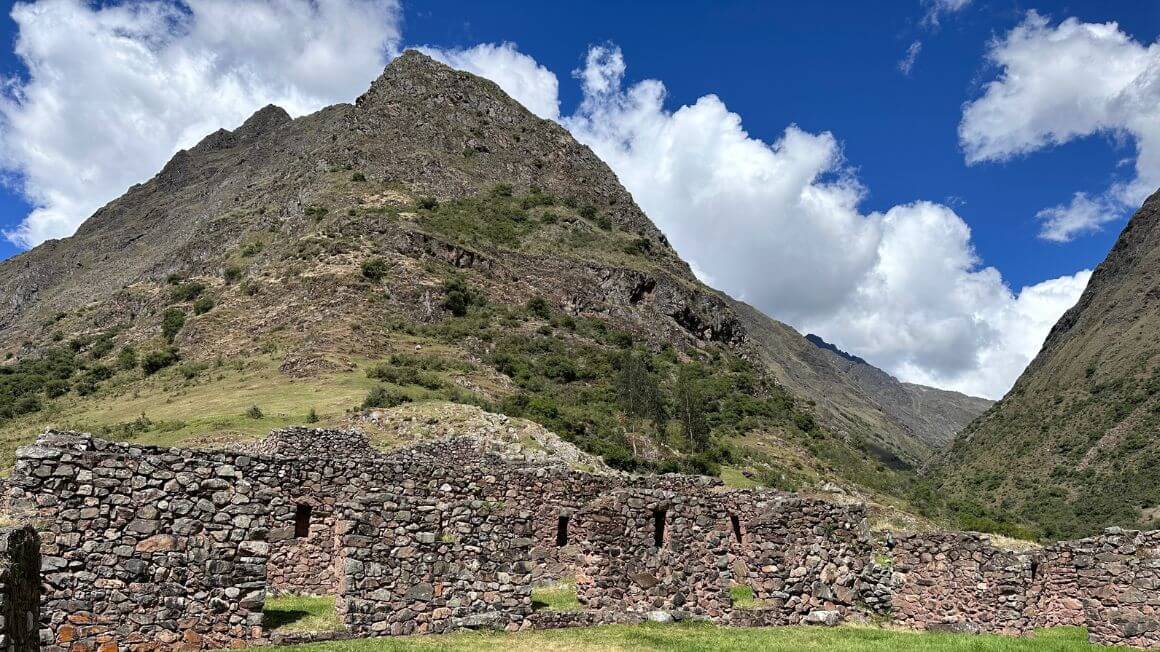
The terraces for the now-gone temple in Yucay are the largest in the Sacred Valley. To ascend these gigantic steps, you’ll climb an original Inca staircase. The site includes the fascinating “Mythological Stone”, a representation of the Andean universe.
Activity 2: See Neolithic rock paintings in Saywa
In the nearby Saywa area, archaeologists found paintings that are 4000 years old. Drink in the mystery of this ancient site on the short walk from the centre of Yucay.
Ollantaytambo: 3 Nights
Known locally as Ollanta, this town is popular but with good reason. It offers so much more than just being the gateway to Machu Picchu by train; this is an awe-inspiring town and region. Laden with history, close to some of the best walks in the Sacred Valley and suffused with great eateries, Ollanta has something for everyone.
Activity 1: Inca Fortress and Temple
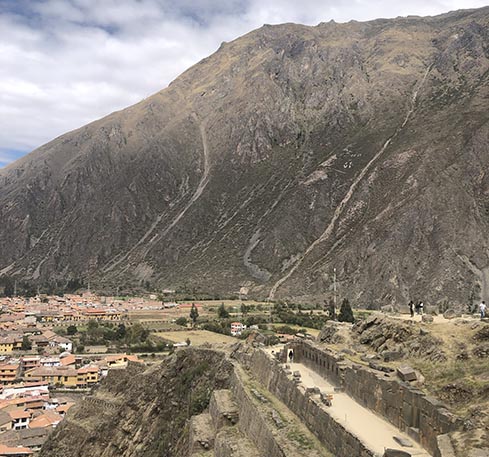
Ollanta’s archaeological complex, included in the Boleto Turístico, looms large over the town. A sun temple, agricultural terraces and dwellings were chiselled into the valley sides millennia ago. What is more, Manco Inca, the native resistance leader, famously repelled the Spanish from these heights with floodwaters and clouds of projectiles.
It is unclear where the archaeological site begins and ends. Unlike many ruin sites, Ollanta’s Inca infrastructure, canals, drainage systems, and streets remain in daily use. The effect of watching drains carved by the Incas, still keeping the town clean, is completely unique.
Activity 2: Salineras de Maras
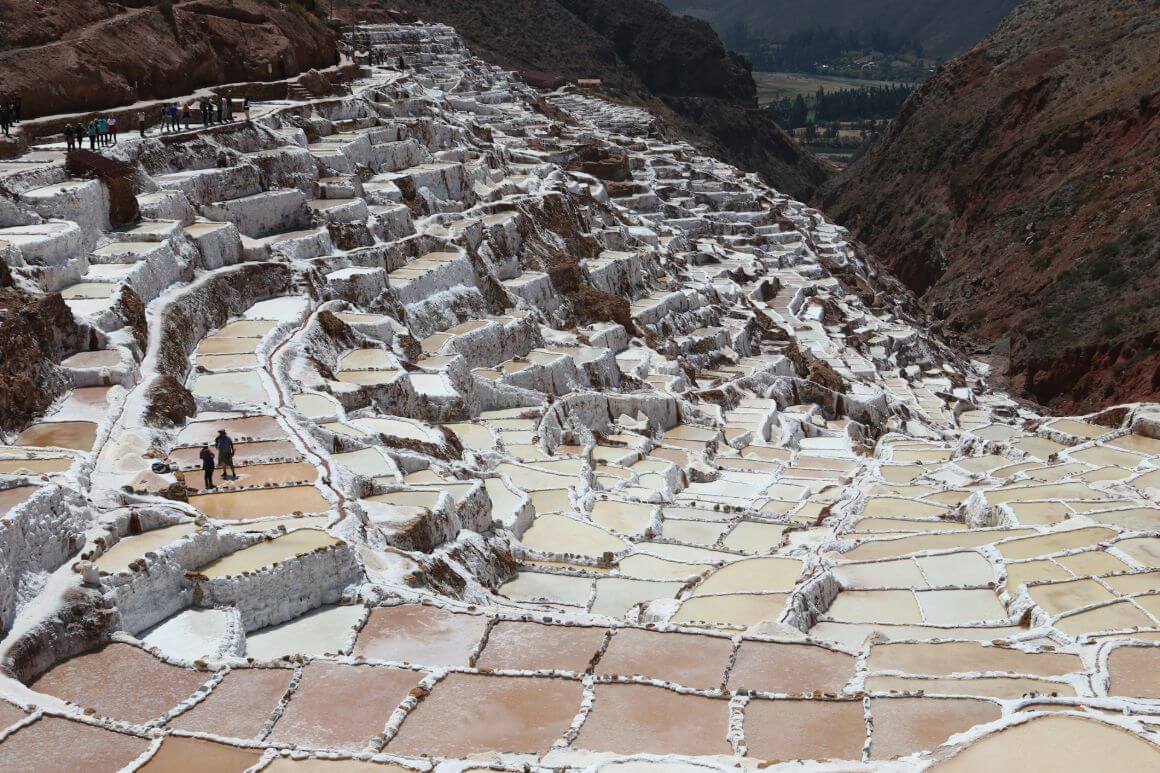
Centuries-old salt pans stretch across the hillside like a checkerboard at the impressive Salineras de Maras. Walk from Media de Luna (ask your collectivo driver to stop) and take in the mines at your own pace and without hordes of tourists from vantage points away from the main mirador.
Activity 3: Moray Ruins
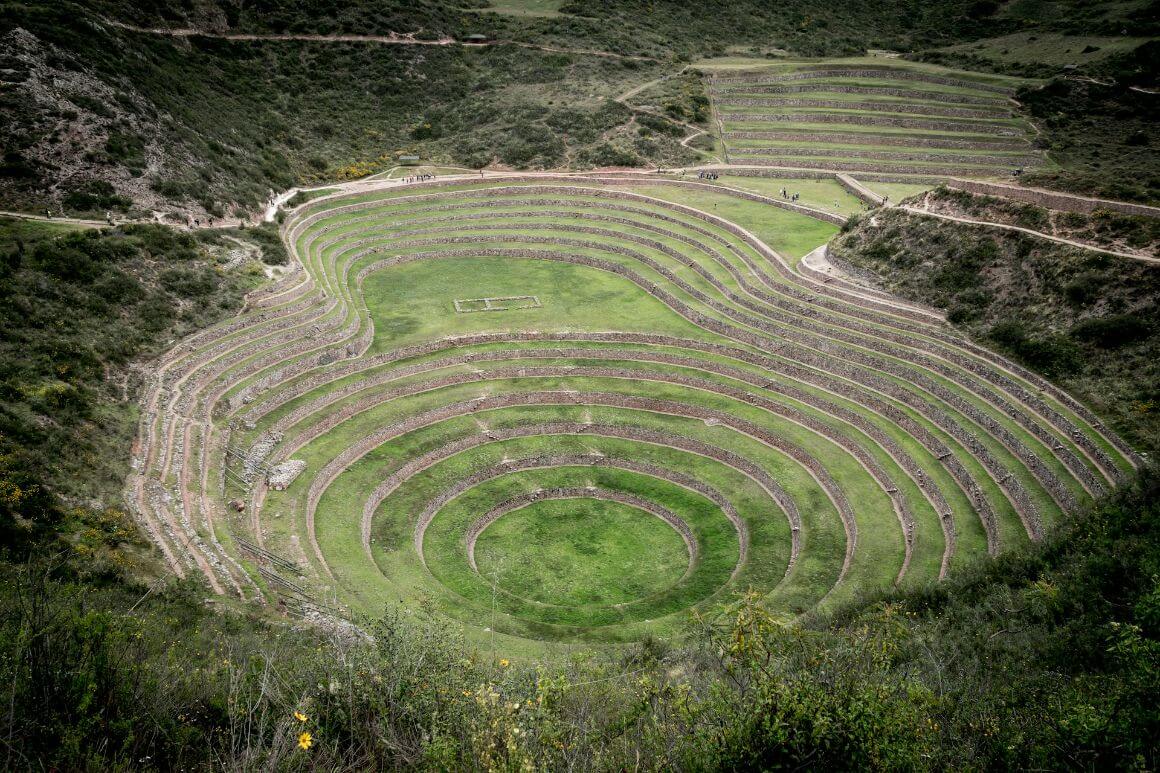
This mysterious ruin is comprised of concentric terraces, possibly used for experimenting with how plants grow at different microclimates or maybe for water ceremonies. In truth, no one really knows. Their size and mystery are why Moray’s three massive terraced sinkholes inspire wonder. Access them by getting a collectivo to Maras and taking a flat 6km stroll along a marked path.
You can combine Moray and Salineras in a single 27km trek; which takes around 8 hours.
Activity 4: Intipunku Hike
This is an 18km hike to the Inca Sun Gate, via a trek along the Inca Trail. The stone trapezium offers mountain vistas and demonstrates the sophistication of ancient astronomy. Start from the Inca Bridge in Ollanta and follow the clear trail. Allow 5 hours for this mountain jaunt.
Activity 5: Machu Picchu
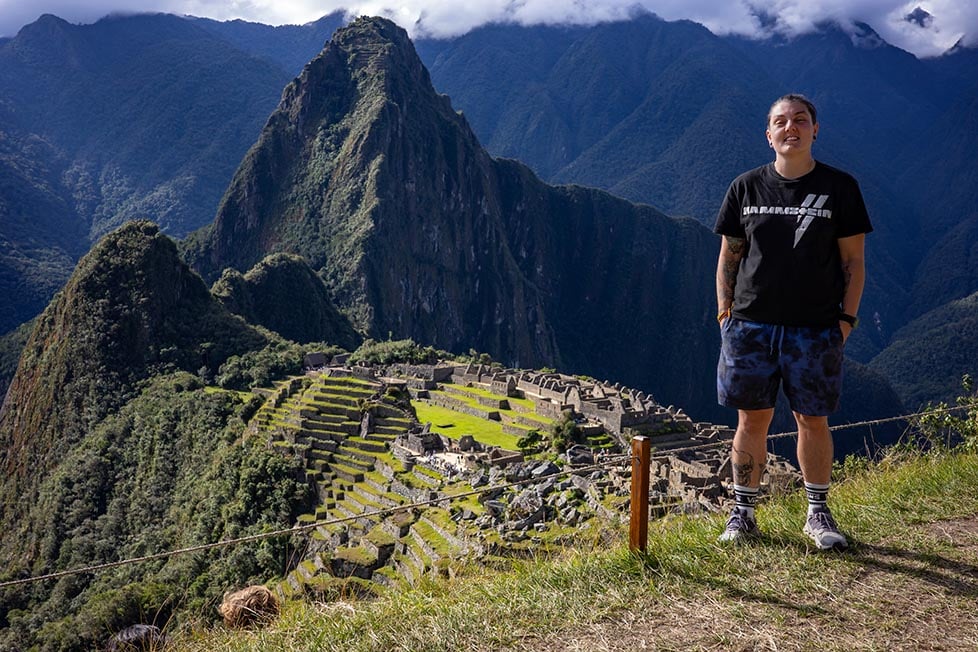
Ollanta is the closest train station to Machu Picchu, offering an easy transition to the next stage of your Peru adventure. Alternatively, to save money, travel by collectivo to Hidroeléctrica and hike the train tracks to Aguas Calientes. This is a well-trodden route, and the trains are easy to hear and avoid as they travel very slowly.
Where to Stay
- Hostal Chaska Wasi offers a great central location. Teresa, the owner, is extremely friendly and has an encyclopaedic knowledge of the hikes in the surrounding area.
Elsewhere in the Sacred Valley
If you happen to have some time to spare or fancy hanging around for a few extra days, here are some suggestions on some other great spots to visit.
Andahuaylillas
Home to what’s often called the “Sistine Chapel of the Americas”, a richly decorated Baroque church. Take a collectivo to Urcos and ask to be dropped off at Andahuaylillas. Entry is free during Mass.
Choquequirao
Machu Picchu’s wilder, larger sibling. These unsung ruins are actually three times as large and are also obscured on a jungle-covered mountaintop. The catch is that this citadel requires an arduous four-day trek but rewards the brave with vast ruins and solitude.
Tipón
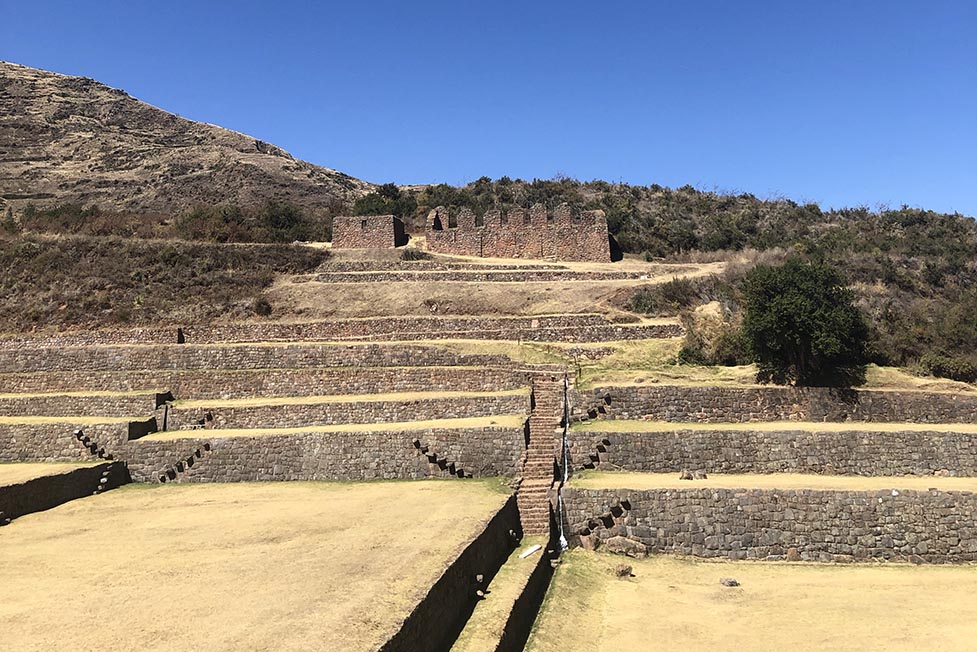
A serene site of fountains, canals, and terraced gardens, all flowing with spring water. Catch a collectivo to Urcos and ask the driver to stop at Tipon. The walk-up is 15 minutes from town. Entry is with the Boleto Turístico.
Don’t Forget Your Travel Insurance for the Sacred Valley
Accidents happen when you’re trekking around steep Inca ruins, so make sure you’ve got yourself covered.
Sort out your insurance before you go. There are several good options, but our overall pick is SafetyWing. Most of the Broke Backpacker team has used it at one point or another, and we’ve filed claims for rabies jabs in Bali, a hospital stay in Mexico, and a clinic visit for a stomach bug that wouldn’t quit. All paid out.
It’s month-to-month, no lock-in, no itinerary required, and you can buy it after you’ve already left. A little over $2 a day if you’re under 40.
New SafetyWing customers: use code BROKEBACKPACKER for 8 free weeks of electronics theft coverage. You have to scroll down and click the pink camera on their landing page to enter it, and you have to do it before creating your account.
Final Thoughts on the Sacred Valley Itinerary
Of my two months in Peru, I find myself reminiscing on my time spent in the Sacred Valley more often than almost anywhere. Whether it was sharing lunch with friendly locals, gazing awestruck at Incan ruins completely alone or watching the sun rise over glaciated peaks, there was just something enchanted about the place.
I am not the only one to feel this mystical energy; it is literally in its name! In more concrete terms, there is something for everyone here – history buffs, foodies, hikers, adventure sport fans or those looking to recharge will also love this overlooked region.
- Check out our Backpacking Peru guide for in-depth info for your trip.
- Use our Where to Stay in Peru guide to plan your adventure.
- Then there are the most epic beaches in Peru for the beach bums.
- Backpackers and frugal travellers can use our budget travel guide.