Venezuela travel note:
Recent U.S. activity in Venezuela has sharply escalated instability, and conditions (including transport and safety) can change with little warning. TBB cannot recommend travel to Venezuela right now. If you still plan to go, check your own government’s travel advice and your insurer before booking.
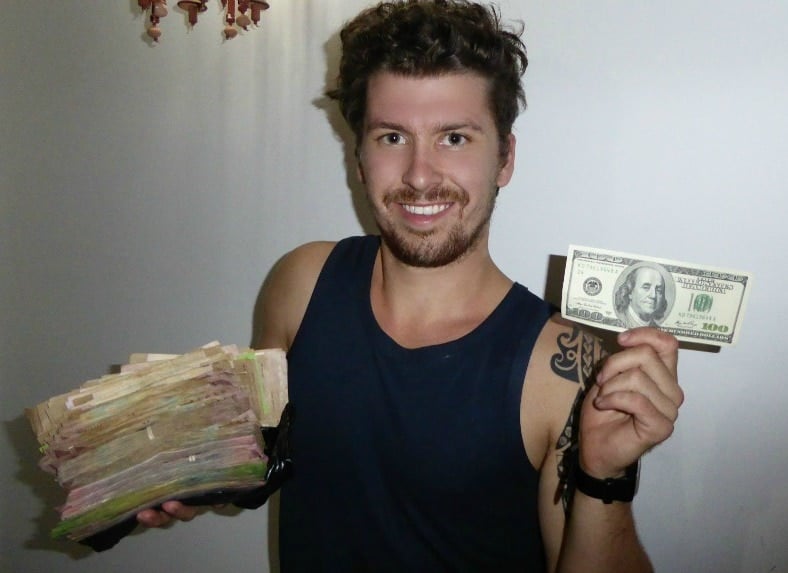
Venezuela was once the richest country in South America, then a series of terribly bad decisions destroyed the economy and led to massive hyperinflation. By the mid-2010s, the economy had collapsed and Venezuelan bolivars (the currency at the time) were virtually worthless.
What did this mean for tourists? Great news! Venezuela was essentially the cheapest country in the world and you could live like a king for $10 a day here. Of course, this wasn’t such good news for locals who struggled to afford basic necessities, and things had to change.
Fast-forward to today and Venezuela is much more expensive than it once was. The US dollar has replaced the bolivar (which is still used for small transactions) as the main currency. This means the economy is a lot more stable now (albeit far from perfect). However, it is at least much safer than before.
I guess splashing out a little more is better than getting mugged the moment you step outside the airport, right???
If you’re on this page, you’re probably an adventurous traveller looking for cool adventures in countries where few tourists go. And Venezuela absolutely ticks the boxes for that.
I’m going to give you a full breakdown of how to manage money in Venezuela, and how much you can expect to spend here.
Alright then, folks, if you’re considering backpacking around Venezuela, you’ll want to know in more detail about costs and how to go about managing, getting hold of and spending your money. Luckily for you, I’ve been there and done it, so let’s get things going.
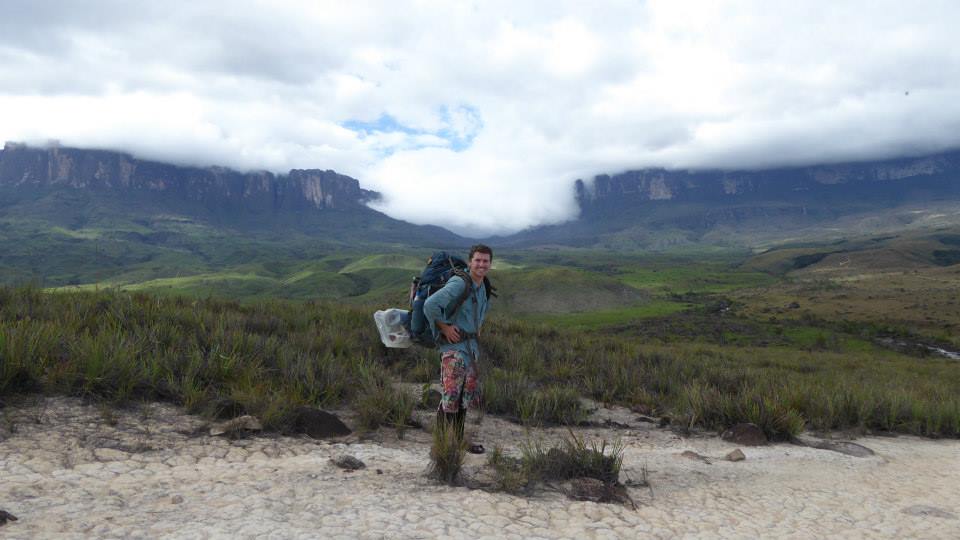
Photo: Will Hatton
The Broke Backpacker is supported by you. Clicking through our links may earn us a small affiliate commission, and that's what allows us to keep producing free content 🙂 Learn more.
How to Manage Money in Venezuela
Let’s start with the boring stuff. Venezuela is a tricky country to travel in, so you’ve got to plan and prepare a little more than you would for a Bali beach break or a weekend in Washington DC. The first thing you’ve gotta know is that the US dollar is now the main currency here. Bolivars still exist, but are generally used exclusively for small purchases and small change.
Now, one of the main reasons why Venezuela is a difficult country to visit is that it’s pretty isolated from the Western world these days.
Your Visa, Mastercard or AMEX won’t get you far here. Sure, you may find the odd place where they work, but the odds are not in your favour (we never had success paying by card, and I had to give up trying to use my Mastercard in even an upmarket supermarket here as they required my passport details and it became a messy bureaucratic nightmare… which ended in failure regardless).
What this means is that you should BRING CASH! And lots of it… It’s a bit of a headache that you’re travelling to a country that became known for muggings, kidnappings and worse in recent years, yet expected to bring a ton of cash with you.
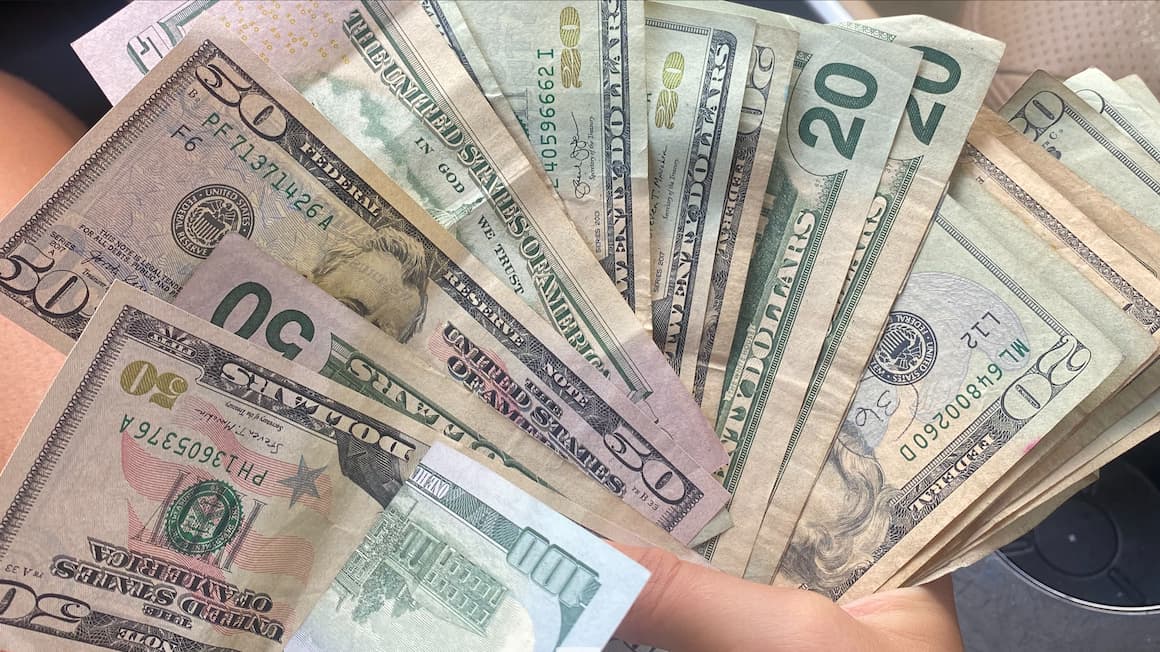
Photo: @amandaadraper
If you haven’t stopped reading at this point and decided to book that Bali beach break instead, then you should also know that you need a lot of small change. That means many $5 and $1 bills. At worst, you may need them for police bribes, at best, you’ll find numerous places with a shortage of change in both USD and bolivars, meaning you need to spend near enough the exact amount, otherwise you’ll lose money.
You want some good news? Venezuela uses Zelle for some payments. It won’t work everywhere, but it’s your best cash alternative.
Oh, and don’t bother trying to use ATMs here. You’ll be hit by horrendous exchange rates, low withdrawal limits, cash will be in Bolivars anyway, and that’s if it even works in the first place… which is unlikely enough to begin with.
Is Venezuela a Cheap Country?
Unfortunately, not anymore… Venezuela is just about the most expensive country in South America. It is more comparable in price to a Western European country these days.
Now there are massive variations in expected spending depending on what you get up to. If you stick to Caracas, Los Llanos, Colonia Tovar, Merida and other easily-accessible spots you can reach by bus, then Venezuela won’t destroy your budget.
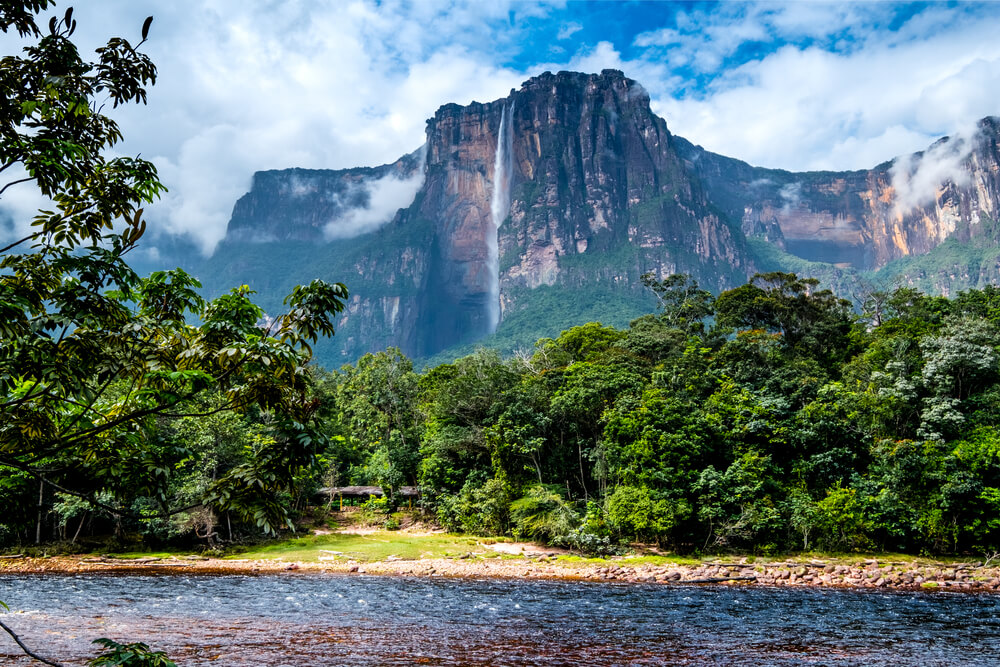
If, however, you want to visit Angel Falls, you can only go there by plane, and you can only go with a guided tour, with $750 the absolute minimum you can expect to spend. But in reality, you’re far more likely to find packages for $1,000 or above.
Now Mount Roraima is super awesome, but a 6-day trek (the standard length) will set you back a minimum of $650. And unlike Angel Falls, that doesn’t include the transport required to get there.
If you want a glimpse into Venezuela, it’s not cheap but not crazy expensive either. If, however, you want to see all the best bits, then Venezuela will cause some serious damage to your bank balance.
Cost of Flights to Venezuela
Gotta hate politics. Because Venezuela has bad relationships with “the West”, it’s not the easiest country to get to, especially from Europe or Canada. Fortunately, the thawing of relations in a post-Maduro world has at least seen the US reintroduce flights from Caracas. A return from there is now loosely $500-600.
It does have some flights from very unusual destinations such as Iran and Russia, purely because it has good relationships with those countries. In practice, those flights are mostly empty. Supply and demand isn’t how they operate out here!
I got return tickets to Caracas from Bogota in neighbouring Colombia. They cost a whopping £371.83 (around $500) with no baggage beyond a tiny backpack and no extras such as food or selected seats.
This was around 3x what I paid to get back home to the UK from Miami. Yikes. Where’s Ryanair when you need them?
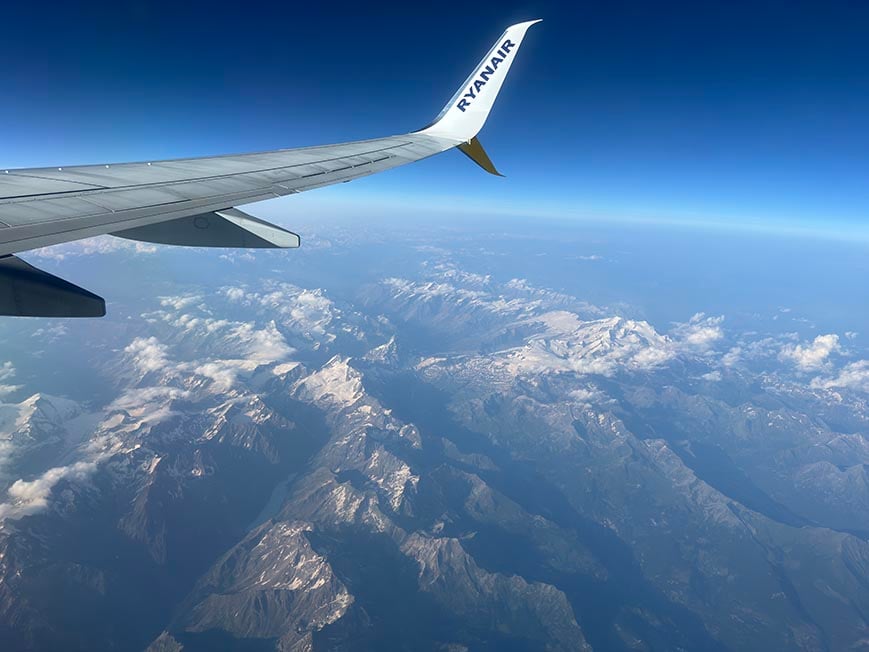
Image: Nic Hilditch-Short
Unfortunately, Venezuela isn’t a country where you can wing it, rock up without proof of onward travel, and see where your adventure takes you.
You’ve gotta have return tickets when you come here, preferably to your home country, otherwise you may get held at immigration for a looooong time on the way out (speaking from experience here), and that’s if they let you in to begin with.
Cancun is one of the most popular destinations connecting the world with Venezuela. A return ticket from there costs around $650+ and only runs a couple of times a week.
Panama City is another common connecting airport, and from here you can expect to pay at least $600 for a return ticket.
At best, you’ll find return flights to Bogota for around $300. Not including whatever you have to spend on top to get to Bogota in the first place, of course.
Keep an eye on good old Booking for the best deals!
Cost of Accommodation in Venezuela
Accommodation isn’t cheap out here, but it’s not crazy either unless you want to tackle the country’s main attractions. Then it does get a little out of hand (Angel Falls, I’m looking at you here)…
Whilst you will find a handful of options available on Booking, there are pretty limited offerings for broke backpackers.
I recommend finding somewhere to stay on Airbnb. We stayed with a local for just under $29 per night, which was split between the two of us, so a little over $14 each per night. Prices do change throughout the year, of course.
Here is the excellent Airbnb we stayed at with our host, Antonio, which I thoroughly recommend if you want to ease yourself into Venezuela alongside someone who lives there and knows the country well, on top of introducing you to awesome local experiences!
In general, places to stay in Caracas start from around $20 per night, and you can halve this if you go with a friend or partner.
Chacao is the more upmarket part of the city, where most foreigners will stay. We ended up in La Candelaria, which we also found pretty safe. Safety should be your priority over price when looking for accommodation here. However, don’t believe the common misconceptions about Venezuela; it’s generally much safer than plenty of other places in the region.
Most properties in Caracas are like maximum security prisons these days, with bars on the windows and reinforced doors, often with multiple doors to get through before you can get inside. That’s not a bad thing, though, given the recent past of this place. All part of the authentic Venezuela experience!
In Merida, prices are pretty similar to those in Caracas. Likewise, on popular Isla Margarita.
It’s not such good news in the trickier parts of the country to reach. It’s $75 a night for just about the cheapest place in Los Roques.
Angel Falls cannot be reached independently, and you will require a lodge (with flights from Caracas, all meals and transport to the falls plus other spots in Canaima National Park) for around $1,000. This does at least cover you for around 4 days.
You can stay in Santa Elena de Uairen for just $12 a night. If that name doesn’t ring a bell, it’s the base town you visit ahead of a Mount Roraima trek.
Hato El Cedral, the best safari lodge in Los Llanos, will set you back $100 a night per person. However, it includes 3 meals a day and at least 2 activities, which makes it fantastic value.
Head to Lake Maracaibo for the Catatumbo Lightning and you’ll end up spending $35 per night at least.
With a bit of luck, Couchsurfing can save you a bit of cash here, but many hosts have left the country in recent years, so you may struggle to find a decent place to stay.
Cost of Transport in Venezuela
Gonna be honest with you here, getting around Venezuela isn’t particularly easy. As with much of the country, a lot of the transport infrastructure has fallen into disrepair, and there was no money left to replace it.
Whilst there are still a few budget-friendly options here, you can expect some pretty shoddy vehicles which definitely wouldn’t be allowed to function in Western Europe or the US. And the safety standards of those vehicles are… yeah, pretty questionable really!
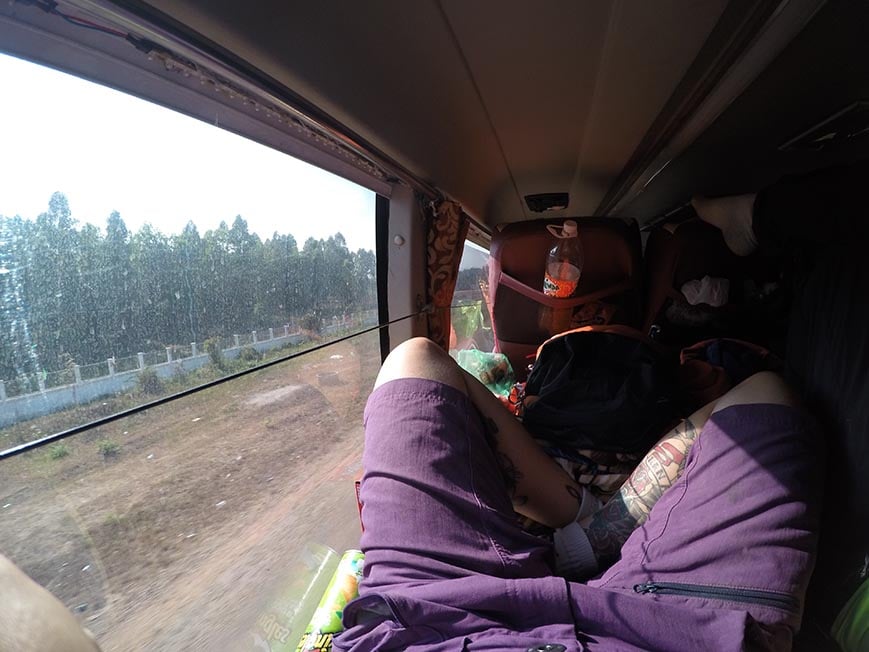
Image: Nic Hilditch-Short
Short-Distance Buses
Be careful here, a “short-distance bus” in Venezuela can mean a 6-hour journey. You can tell them apart from long-distance buses because they are pretty bashed up and in terrible condition.
The one we went on (briefly… before deciding the risk wasn’t worth it, getting off, and splashing out on a long-distance bus instead) even had a sharp metal lining right by my seat with a giant serrated edge, which I probably would’ve ended up sleeping on had we stayed here.
Not to mention the fact that short-distance buses are wayyyy more prone to random police checks and pickpocketing. They stop many times across a single journey. I’ve heard stories of fellow Western tourists being interrogated by police for hours when they take these buses. Honestly, not really worth the hassle at the end of the day.
The only good news here is that they’re fairly cheap. You’re looking at around $10-15 to take one of these. I mean, if you’re a true broke backpacker, then you gotta do it, but I’d recommend splashing out a little more on the better quality long-distance buses.
Long-Distance Buses
These don’t make regular stops, are rarely searched by police, and in the case of one bus we took from Hato El Cedral back to Caracas, even had Wi-Fi! They’re a much safer alternative to short-distance buses.
Speaking of that bus between Caracas and the incredible safari ranch Hato El Cedral (well, Elorza is actually the final stop), it costs $31 for a one-way ticket. Which is still pretty decent and in line with other lengthy bus journeys in South America.
Caracas to Merida costs $35, and Caracas to Maturin (where you’ll need to go to visit the Orinoco Delta) is $25 to give you an idea of how much bus travel costs in the country.
Internal Flights
This is the least budget-friendly option. It will set you back three figures to get around in the air, but it will also save you a ton of hassle and logistical headaches on the road, so it’s definitely still a good option.
Some example prices you can expect to pay for a one-way flight include:
- Caracas to Lake Maracaibo (Catatumbo Lightning): $95 with Conviasa
- Caracas to Porlamar (Isla Margarita): $82 with Conviasa
- Caracas to Puerto Ordaz (Orinoco Delta): $94 with Conviasa
- Caracas to Los Roques: $125 with Conviasa
- Caracas to Maturin (Orinoco Delta): $82 with Conviasa
- Porlamar (Isla Margarita) to Lake Maracaibo (Catatumbo Lightning): $105 with Conviasa
- Porlamar (Isla Margarita) to Puerto Ordaz (Orinoco Delta): $88 with Conviasa
Return flights generally cost just under double as a rule of thumb.
As you may have noticed, all of these flights are with Conviasa. That’s because they’re the local budget airline. Laser Airlines also covers a few of these spots, but will cost more to travel with.
If you go to Canaima National Park to visit Angel Falls, then you will usually end up paying for a mandatory tour for around the $1,000 mark. These generally include flight costs, but check with your agency first.
Photo: @amandaadraper
Car Rental
If you’re up for an adventure, then you can rent a car to get around. But this is going to be a lot of hassle as a foreigner.
You’re going to be a top target for bribes from police, which will send costs soaring a lot. Then there’s the fact that this is Venezuela, and petrol shortages aren’t uncommon, so there’s a chance you’ll be left stranded.
If you do still want to go ahead with this, then you’re looking at $116+ in daily costs with Hertz, not including mandatory refuelling to a full tank before you return the car. Amigo’s Car Rental has a slightly better offering beginning at $72 per day from Caracas. With ACO, you’re looking at upwards of $68.
Now prices change often. These are just to give you a rough guideline. But when you take into account both price and the problems you’re likely to face, car rental really isn’t the best method of transport in Venezuela. I strongly recommend against it.
Caracas Metro
Some good news, getting around the capital by metro is super duper cheap! We’re literally talking $0.15 per ride here.
Now, around 90% of trains are out of action because they cost too much to maintain or replace, which means you’ll have to wait a while, sometimes 15+ minutes for a train to arrive. There are also frequent power cuts, and the air conditioning doesn’t always work. But it’s really cheap and pretty safe these days. Absolutely worth the minor inconveniences that come with it.
Inner-City Buses
Just like the Caracas metro, buses within the same city literally cost pennies. I wouldn’t recommend them, however, as they aren’t safe and are a prime target for the few bad guys still operating in the country.
Cost of Food in Venezuela
When it comes to eating out, Venezuela isn’t dirt cheap like Bolivia, but we aren’t quite talking Switzerland prices either. Or even close!
Fast food is pretty affordable. You’re looking at $1 for a hot dog, up to $5 for a standard burger. A staple of Venezuelan food, the arepa, will cost you literally pennies.
Head to McDonald’s and you can buy a Happy Meal for $5, a burger for $5 and a large burger meal for $7. The great thing about McDonald’s is that you can use it to compare prices for almost identical products across the world, and in Venezuela, it’s pretty mid-range.
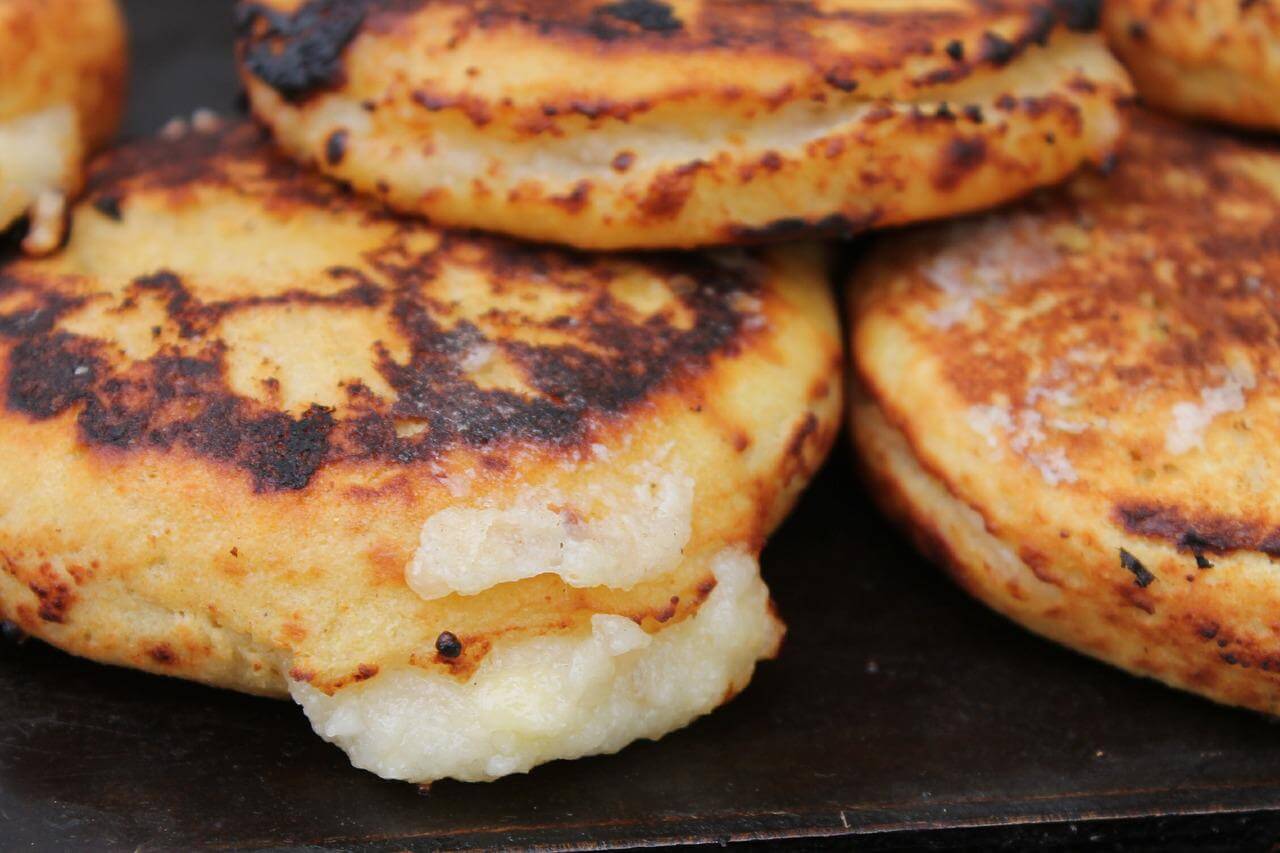
A more substantial restaurant meal starts from around $15. In supermarkets, we found some of the most ridiculous prices I’ve ever seen. Would you pay $22.15 for a box of Corn Flakes, $37.01 for a tub of M&Ms or $28.55 for a single packet of crisps? Those are real prices we saw in Caracas!
The good news is that under 5% of products are priced at these ridiculous prices. The majority of products cost roughly 70-90% of what you might find in Western Europe.
Cost of Alcohol in Venezuela
Now Venezuela is expensive; however, the cost of getting drunk is incredibly cheap! A single Polar beer, which is the main beer brand in the country, will cost around $1 at most bars. Polar kinda sucks in terms of taste, but if you drink enough of them, you’ll quickly forget that!
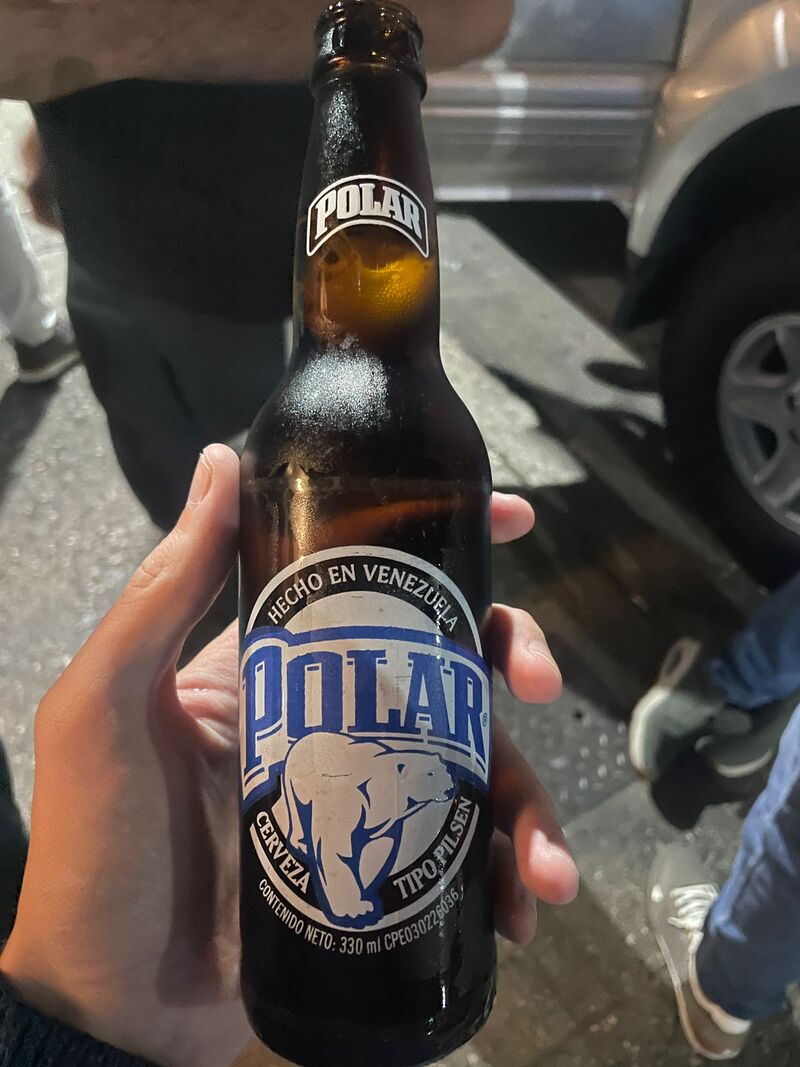
Image: Alex Brown
Alcohol is also pretty cheap in supermarkets, depending on what brand you buy. We saw tons of cheap rum, including a litre of Superior – that’s the brand name, not necessarily the quality… for just $4!
So if nothing else, you can relive your student days by getting hammered on cheap booze! Just remember, this is still Venezuela, so it isn’t smart to lose control of yourself at night if you aren’t with some reliable buddies who can take care of you if something goes wrong.
Cost of Activities in Venezuela
It’s kinda tricky to put a price on activities in any country, let alone Venezuela, where price changes aren’t uncommon. You can walk around a park for free, spend thousands on a dream luxury experience, or anything in between.
It’s also worth noting that despite the economy being in its best shape in recent history, it still isn’t perfect and you can expect prices to creep up gradually over time.
But let’s try and narrow this down to a few things that the average Venezuela traveller may have on their hitlist.
A lot of museums are free to enter. Other smaller sites will cost around the $5 mark to visit. But let’s be honest, you don’t come to Venezuela for the museums.
You’re far more likely to be interested in some of these activities:
Safari at Hato El Cedral in Los Llanos
This costs a minimum of $100 per person per night. They advertised the price as $120; however, so don’t be surprised if you end up paying a little extra. But you get incredible value for money, with accommodation, 3 meals a day, and at least 2 activities a day included.
The activities include some pretty cool things like feeding caimans, spotting pink dolphins, fishing for piranhas, riding horses through the plains (I even had a crocodile scuttle across the path in front of my horse, which was pretty awesome), and finding more incredible animals like anacondas, anteaters and monkeys.
Visiting Angel Falls
Now I’m sure you want to visit Angel Falls. You can’t get there overland, and there are only flights twice a week, on Sundays and Thursdays, which means you have to spend either 3 or 4 nights in Canaima (the national park where Angel Falls are located).
Most Angel Falls packages include flights, accommodation and often meals but exclude the $40 entry fee to the national park. They usually cost around the $1,000 mark, although you may be able to shave $100 off that price if you shop around.
Mount Roraima
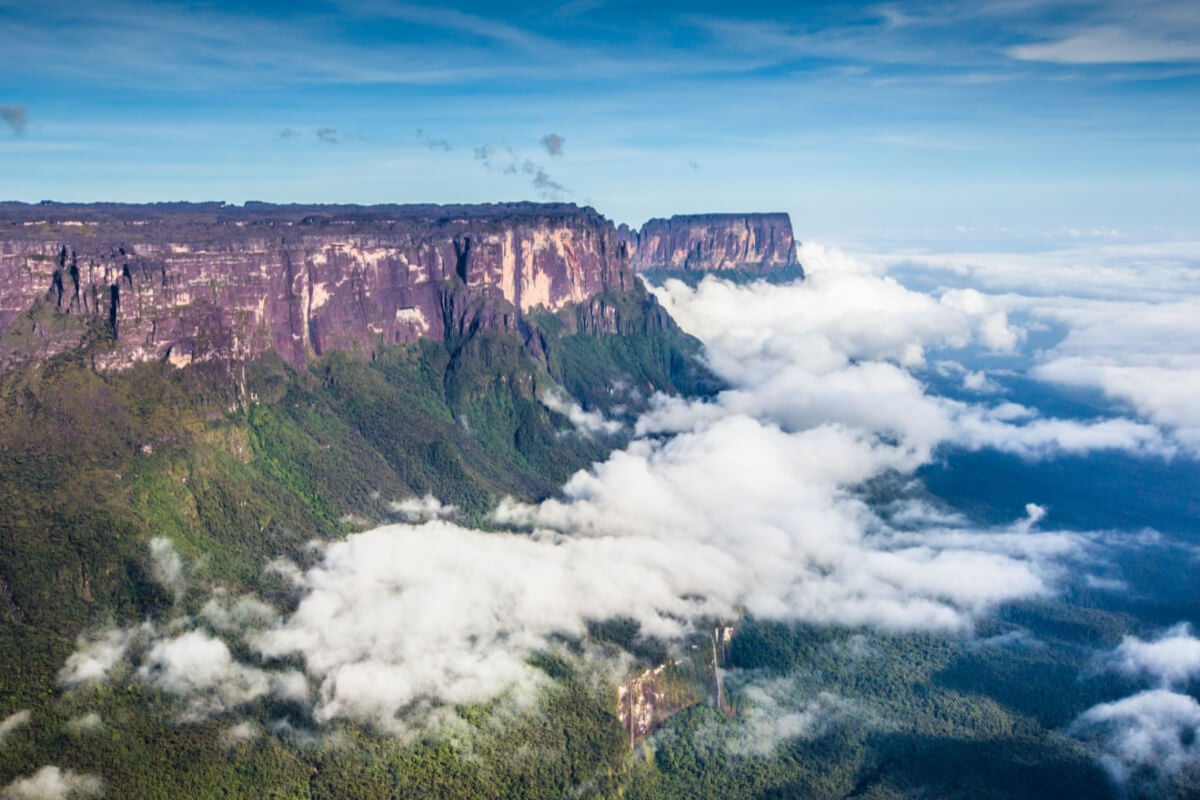
Elsewhere, another bucket list activity is Mount Roraima. If you’re an experienced traveller who has seen a lot of the world and is already familiar with the Alps, Himalayas and Andes, then you may be wondering why Roraima is worth your time and not “just another mountain”.
Well, it’s a tepui (tabletop mountain) and 35% of the plants of wildlife there cannot be found anywhere else in the world. Plus, the views are super amazing!
The downside is that Roraima will cost you a fair bit. We’re looking at upwards of $650 here for 6 days and 5 nights. It’s a challenge, and certainly not cheap, but it’s definitely worth it.
Orinoco Delta
If you’re bored of visiting amazing places, then you may want to do something a little more mundane, like staying in the Amazon, meeting indigenous tribes and spotting more breathtaking wildlife. Oh, wait, that’s actually pretty fun too.
I’m talking about the Orinoco Delta here, home to the Warao people, sloths, capybaras, anacondas, tarantulas, and so much more! Spending 2 nights here will set you back around $370, whilst you’re looking at around $475 for a 3-night visit. This completes the hat-trick of budget-busting bucket list activities in Venezuela.
Los Roques
Los Roques is home to some of the best snorkelling experiences on the planet. Unfortunately, it won’t come cheap, even if you have your own equipment. National park entry is $50, and you need to fly there, which will most likely set you back around $200. Accommodation isn’t cheap either, with $75 the minimum you can expect to pay here. If you fancy a boat ride, they start from $20 but can cost 3-figure sums, so keep an eye out for guys charging you a much higher rate.
Other budget places to visit
Whilst there are other incredible things to see and do in Venezuela, these are the most popular. It’s also worth noting that some prices can be a bit ridiculous in this country (hello $50 cable car ride in Merida).
If you want to keep costs down, I recommend sticking to Caracas, Los Llanos and some of the mainland beach destinations (such as Choroni and Morrocoy) as well as the likes of German-style town Colonia Tovar and adventure sports capital Merida.
Additional Venezuela Travel Costs
I’ve covered the main things, but there are two other key expenses to be aware of when travelling to Venezuela.
The first is visas. It’s good news for Europeans, most of us have visa-free access to Venezuela, which means we can just turn up and hope for an easy ride through immigration.
I have bad news for Canadians, Americans, Africans (the whole continent except South Africa) and people from most Asian countries – you guys need a visa.
Costs start from $30, but vary depending on all sorts of factors such as your nationality and the embassy you apply from. Expect to pay a lot more rather than taking this figure as an exact price.
The second extra expense is an eSIM. Now, not many eSIM providers operate in Venezuela; fortunately, Nomad offer some excellent packages to make your travels through this tricky country a lot easier.
They start from 1GB for 7 days, costing $9, although I recommend the 3GB plan, which lasts for 30 days and costs $24. You should make sure you have enough data, as this can be a difficult country to navigate without a phone.
My Top Tips for Budget Backpacking in Venezuela
Venezuela is not the no-go zone people still think it is. But it’s still a Latin American country. We aren’t talking Singapore or Japan here. This means that you should put safety as your number one priority, even if it means splashing out a little more money.
If I had to recommend a few ways to travel safely, yet in a budget-friendly manner, they would be to:
- Avoid the short-distance buses. They aren’t so safe, have a lot of problems, and at around the $30 mark, longer-distance buses aren’t going to obliterate your budget anyway.
- Get an eSIM. You absolutely want to stay connected here. Especially when you first arrive. You will also need access to Yummy and Ridery (the Venezuelan Uber equivalents). Nomad have great Venezuela packages available.
- Eat street food. Look, having burgers and arepas every day probably isn’t the best thing for your diet, but for a couple of weeks, it will help you stretch your budget further in Venezuela for cool things like safari experiences and snorkelling.
- Use Airbnb to find accommodation. Sure, other platforms work here, but Airbnb can help you find places to stay with locals. Aside from being super friendly, Venezuelans can be a great source of knowledge to help you get around this wonderful country.
- Watch out for crazy supermarket prices. Remember that $28 packet of crisps I mentioned earlier? Well, you can find that in a Venezuelan supermarket, but you can also find $1-2 packets of a different brand. Whenever you see something with a ridiculous price tag, there is generally a much cheaper alternative available.
- Bring a filtered water bottle. Why waste endless money on water bottles every day when you could just purchase a filtered bottle that you can reuse? What makes these so great is that they filter out nasty bacteria, making tap water safe to drink anywhere in the world!
- Get good insurance. Not many travel insurance providers cover Venezuela. Fortunately, SafetyWing does. It’s not nice splashing out on insurance, but when something goes wrong (and trust me, things do go wrong on the road, especially in adventure destinations like this), you’ll be very glad that SafetyWing have got your back.
Sort out your insurance before you go. There are several good options, but our overall pick is SafetyWing. Most of the Broke Backpacker team has used it at one point or another, and we’ve filed claims for rabies jabs in Bali, a hospital stay in Mexico, and a clinic visit for a stomach bug that wouldn’t quit. All paid out.
It’s month-to-month, no lock-in, no itinerary required, and you can buy it after you’ve already left. A little over $2 a day if you’re under 40.
New SafetyWing customers: use code BROKEBACKPACKER for 8 free weeks of electronics theft coverage. You have to scroll down and click the pink camera on their landing page to enter it, and you have to do it before creating your account.
FAQs on Costs in Venezuela
I’m sure you’ve got a few extra questions on travel costs in Venezuela, so I’ve put together a few FAQs to make things a little easier.
Final Thoughts on the Cost of Travel in Venezuela
Right then, folks, we’ve reached the end. I hope this post has dispelled some of the myths when it comes to travelling around Venezuela on a budget. Sure, it’s not the cheapest destination in the region, or the world, any more, but it can still be done on a backpacker’s budget if you know how… and well, now you do!
Venezuela is one of my favourite places in the world to travel to, and it’s given me some of my most memorable experiences. I always love encouraging experienced travellers to put aside the disinformation and go for it.
Hopefully, this post has gone some way to doing that.