During a recent weekend visit to the fair city of Girona (where we lay our scene), my girlfriend and I were assailed by a criminal who attempted to rob both of our telephones. A quick bit of vigilante Brazilian Jiu-Jitsu and a mid-traffic wrestling match ensured that he was promptly apprehended and arrested, although both of our devices were unfortunately damaged during the ensuing tussle.
Most of what remained of our short trip was spent in hospital, police stations and then the courthouse (on a Sunday no less), which is not what I would typically consider a leisurely weekend getaway.
In this post, we will talk about what exactly happened (as much as a pending criminal court case allows) and what it taught us about the safety of Europe in 2026, the realities of navigating a foreign criminal justice system, the efficacy and importance of travel insurance and how the fuck one is supposed to cope in this modern age without a functional smartphone!

Image: Nic Hilditch-Short
The Broke Backpacker is supported by you. Clicking through our links may earn us a small affiliate commission, and that's what allows us to keep producing free content 🙂 Learn more.
So, Tell Us What Happened…
A few Saturdays since, at around 1.30 am, my partner and I were talking back from Girona’s picturesque old town (which was used as King’s Landing in Game of Thrones after Dubrovnik booted them out) on the way to our suburb Airbnb. Which, of course, we thought was a great place to stay in Girona…
By the way, I had arrived around 10 pm the previous night and during the short walk from the train station to the Airbnb kind of felt ‘something off’ in the atmosphere – the streets seemed a tad shady, and there was nowhere to buy food, and I could barely even get a beer at 10 pm on a Friday in Spain!
About 20 minutes into our walk, I paused for breath and to relieve myself of the delicious, cold Turia beer I had drunk prior to leaving the last bar while my girlfriend continued to walk on ahead. I also began to record a quick voice note documenting my thoughts in the city (I am a travel blogger after all). At this point, I noticed her walking back towards me with an, erm, strange and unfamiliar gentleman sporting a black bandana following her. He promptly tried to snatch my phone from my hand – twice – and failed, at which point I advised him to go forth. Fortunately, I had managed to film his attempts, by the way.
We continued to walk back towards our apartment while this character (who I didn’t take for a Girona local…) continued to follow us. On multiple occasions, I instructed him in quite clear terms to cease and go away.
After maybe half a block, I began to call the Police (I called 999, the UK emergency number, which apparently defaults to 112, the Spanish Emergency Number), and my girlfriend pulled out her phone to record the incident on video, at which point he grabbed her phone, pushed her and attempted to make away. She attempted to grab it back; a struggle ensued, at which point I involved myself.
As there is (so I believe) a live criminal case pending, all I will say next is that when the Police arrived (some 2- 3 minutes later), Johnny Bandana and I were lying in the middle of the road, with me holding onto him. He was then arrested, and my girlfriend and I were questioned at the side of the road. My phone was, by this point, cracked but working, whereas my girlfriend’s appeared to be a total write-off (a month-old iPhone 17 no less).
The Police then took us to a medical centre for assessment. Both of our injuries were mild, but I believe they needed to be properly and formally documented for the purposes of any criminal action. We then spent the next 3 hours in the police station, giving statements until around 5.30 am, when we were sent to walk home along the exact road where the incident had happened. Lovely stuff.
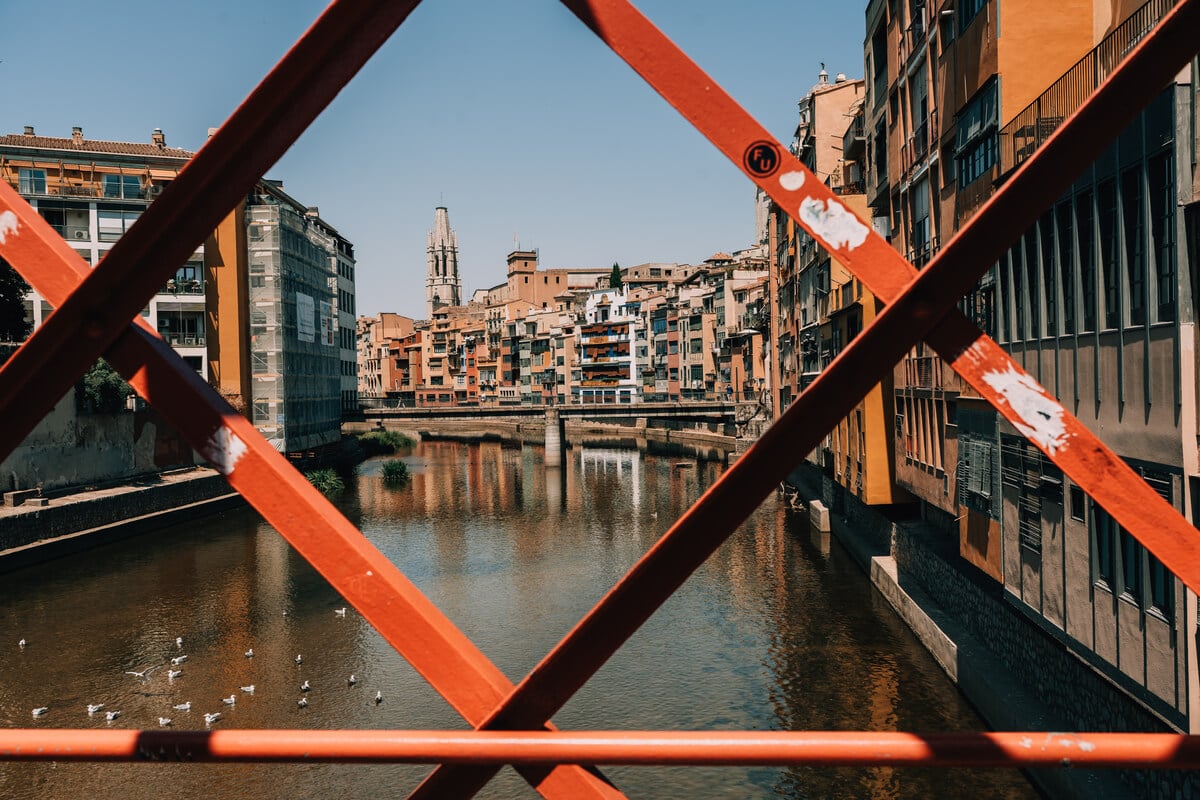
Image: Nic Hilditch-Short
Before leaving, we were instructed to attend the courthouse the next day at 12 pm midday.
At around 10.30 am the next morning (which was of course Sunday…) after maybe 3 hours of troubled sleep, I awoke to my phone ringing, and it was the courthouse asking us to come immediately as they were ready ‘to start’. We got dressed and walked there, and about 30 minutes later – with minimal sleep, no breakfast and not even a coffee – we found ourselves at Girona’s Court House for reasons which had not actually been explained to us at any stage.
The Court Clerk explained that a French Translator had been arranged for my girlfriend and that an English Translator would be available for me via telephone (apparently the world is running low on English speakers…or at least English speakers who bothered to learn a second language) although rather than explain precisely why we’re in need of a translator or why we were there all, we were simply instructed to wait on a hard wooden bench (where waited until around 12 pm…the time we were originally told to arrive).
At around 12 pm, the French translator asked my Girlfriend to follow him into a room, and I didn’t see them again for some 45 minutes. When they emerged, I was ordered straight into the room they had just left.
What I saw when I entered felt to me to be akin to a full-blown criminal trial – rather impressive for an offence that had occurred barely 12 hours earlier. Seated at the front of the room was a raised bench behind which sat 3 people whom I presumed to be Judges (although perhaps one was the recorder and the other the prosecutor?). Slightly below them and positioned to their left was a rather sorry-looking gentleman who I was soon to discover was the Defence and sat in the gallery some 6 feet away from me- last night’s Mystery Assailant, hand-cuffed, and flanked by two police officers.
Behind me was an LED screen on which an English translator appeared. The signal quality was less than perfect, but she explained to me that I had to answer all questions put to me truthfully and that failure to do so could result in fines or some quality Spanish jail time. Nice.
Let me pause here. Some 12 hours earlier, my girlfriend and I had been walking home on vacation. Now, after being attacked and kept awake all night, I found myself hungry, in bad need of a coffee, taking part in a criminal court case, in a foreign court in a foreign language, totally unaware of my rights or responsibilities, with absolutely nobody for support. I have had some scrapes in my time, but this one was unnerving.
As it was, I did my best to answer all of the questions put to me as fully and clearly as I could recall. The defence lawyer did, of course, ask me;
“Well, what were you doing out on the street at 1.30 am?!”
And the classic
“How much had you had to drink?”
But that was the extent of it.
At the end of my testimony, I was asked to sign two statements printed in Spanish and Catalan, which I refused to do. The Court then offered to translate them to English, but said that it would mean waiting around for another 60 – 90 minutes of wooden bench time. Finally, at around 2 pm, we signed our Court Documents (translated into English and French) and left Court for that long overdue coffee and then jumped a train headed to the beach town of Llança. We haven’t heard a single word since.
At the beach over some beers, wine, tapas and sunburn, I reflected. What had the defendant actually been charged with? We had never even got his name. Was he now going to be sentenced and sent straight to jail? What, if anything, had he said in his defence? Had he accused me of starting the incident or of using excessive force in restraining him, and if so, was this something I needed to be concerned about? Should we have contacted our embassies and/or obtained legal representation ourselves?
To be clear, at all times we had been treated only and entirely like the victims, and I had no particular reason to worry, but as I say, we had spent the day involved in a criminal court case in a foreign system, and nothing had been explained to us. The human mind will worry, especially after such high stress with so little sleep.
I then decided to write this guide. So lets get to it….

Image: Nic Hilditch-Short
Is Spain Still Safe?
Let’s put my experience into some perspective before anybody concludes that Spain has suddenly become the kind of lawless hellscape that the rising far right across Europe tries to suggest it has. It hasn’t. Not yet anyway. Spain remains a generally safe country to visit and, somewhat inconveniently for the narrative of this article, the latest crime figures for both Barcelona and Girona are actually moving down, not up (although then again the death toll in Gaza is also moving down).
Barcelona recorded 169,022 criminal offences in 2025, a fall of 6.1% on the previous year, while theft fell 7.6%. The downward trend has continued into 2026: during the first six months of the year, recorded crime fell another 11.2% and reported thefts dropped by a pretty remarkable 21.1%. Girona tells a similar story. Overall crime fell 1.5% in 2025, while robberies involving violence or intimidation dropped by 24.2%. The most recent figures show violent robbery falling another 17%.
So far, so reassuring. Except there is another way to read those numbers.
Barcelona still recorded 87,321 thefts in 2025, which is around 239 every single day. Even after the substantial reduction this year, another 35,092 thefts were reported during the first six months of 2026. Theft remains by far the city’s most common crime, and crimes against property account for more than 80% of all recorded offences. There is also a very real problem with repeat offenders: authorities identified hundreds of prolific offenders during 2025, with one relatively small group collectively linked to thousands of thefts and robberies.
And Girona isn’t immune either. While violent robberies are falling, theft in the city actually rose 6.8% over the latest twelve-month reporting period, from 2,954 cases to 3,135. In other words, my experience doesn’t prove that Girona is dangerous, any more than falling headline crime figures prove that street crime isn’t a problem. Still, after telling our Airbnb host about the experience, her response was the classic;
“Oh yes, over the last year that street has become very unsafe…I should have told you”.
Statistics measure trends across hundreds of thousands of people; travellers experience cities one street and one encounter at a time. You can be standing in a city where crime has fallen 10% and still have somebody try to take your phone. But I wouldn’t say it’s one of the worst cities in the world to visit by any means.
The takeaway isn’t “don’t go to Spain.” I’d happily return to Spain tomorrow (or when I am compelled to return to give further testimony). But nor am I going to play the increasingly tiresome travel-writing game of pretending that pickpocketing, phone theft and street robbery in some Spanish cities are imaginary problems dreamed up by nervous tourists or that you can avoid it by using “common sense” or “street smarts”. I’m 12 years into this job and have been to Colombia, Venezuela, Iran, Pakistan, Lebanon, and my Girlfriend grew up in Africa, FFS. Even original TBB founder Mr Will Hatton himself was robbed in Barcelona, so anybody who says that they are too savvy to be robbed is fucking cunt.
Barcelona, which is a short train ride away, in particular has a serious and exceptionally persistent theft problem, and Girona records thousands of thefts and hundreds of violent robberies each year. Falling crime is good news, but it doesn’t make those crimes disappear.
It may be worth running some similar analysis for Italy, France and Greece, but for today, this is all we have time for, folks.

Image: Nic Hilditch-Short
From Mugging to Courtroom in 12 Hours: What the Hell Happened?
One of the strangest things about the entire incident wasn’t the attempted robbery itself. It was the astonishing speed with which we went from walking home after a few beers to sitting inside a Spanish courtroom.
At the time, nobody properly explained what was happening. But having subsequently looked into the Spanish criminal justice system, I can make considerably more sense of it.
What we appear to have stumbled into was Spain’s juicio rápido, or fast-track criminal procedure. This system exists to deal quickly with relatively straightforward offences where police have identified or arrested a suspect, particularly when somebody has effectively been caught in the act. Theft and robbery are specifically among the offences that can qualify.
This explains why everything happened so bloody quickly. The police arrested the suspect, took us for medical assessment, obtained our statements and instructed us to appear at the duty court the following day. Spanish law actually provides for victims and witnesses to be summoned directly to the Juzgado de Guardia as part of this accelerated procedure.
What felt to me like a full criminal trial may therefore have been the initial judicial stage of a fast-track prosecution rather than necessarily the final trial. Depending on what happened outside the room while I was sitting on that wooden bench, the case could potentially have proceeded in several different directions.
Should I Have Been Worried?
Probably not.
Everything the police and court did suggested that my girlfriend and I were being treated as the victims and witnesses. Nobody cautioned me as a suspect, nobody accused me of an offence, and nobody suggested I needed legal representation.
Nevertheless, there was one aspect that bothered me.
I had physically apprehended another human being until the police arrived.
Spanish law does recognise self-defence and the defence of another person, but it isn’t carte blanche to beat seven shades out of somebody because they tried to nick your iPhone. Broadly speaking, the law looks for an unlawful attack, a rational necessity for the force used to stop or repel it, and an absence of sufficient provocation by the person claiming self-defence.
That distinction matters.
Defending your partner during an ongoing robbery is one thing. Continuing to attack somebody after the threat has passed is potentially something very different. Likewise, there is a difference between using enough force to restrain somebody and using the opportunity to punish them.
I’m deliberately not going into the finer details of what happened during our struggle while proceedings may still be live, and I’m certainly not going to pronounce myself legally vindicated based on some internet research. What I can say is that the police arrived while I was holding the suspect, assessed the situation and arrested him rather than me. From that moment onwards, I was consistently dealt with as a victim/witness.
Had that changed, had a police officer told me that my actions were being investigated, I would have wanted a lawyer before answering further questions.
Did We Need a Lawyer?
As victims/witnesses, apparently not. Had either of us become suspects, that would have been a very different situation; somebody investigated for a criminal offence in Spain has rights including access to a lawyer, interpretation and the right not to incriminate themselves.
That doesn’t mean legal advice wouldn’t have been useful. It really, really would have been, and we cannot ever rule out the possibility that we could have implicated ourselves in something (such as taking a piss in public) simply by giving statements.
Sitting in that courthouse, I had no idea what the defendant had been charged with, what he’d told police, whether this was a trial or preliminary hearing, what happened after I gave evidence, or whether there was anything further expected of me.
Even a ten-minute conversation with somebody who understood Spanish criminal procedure would have made the entire experience considerably less bewildering.
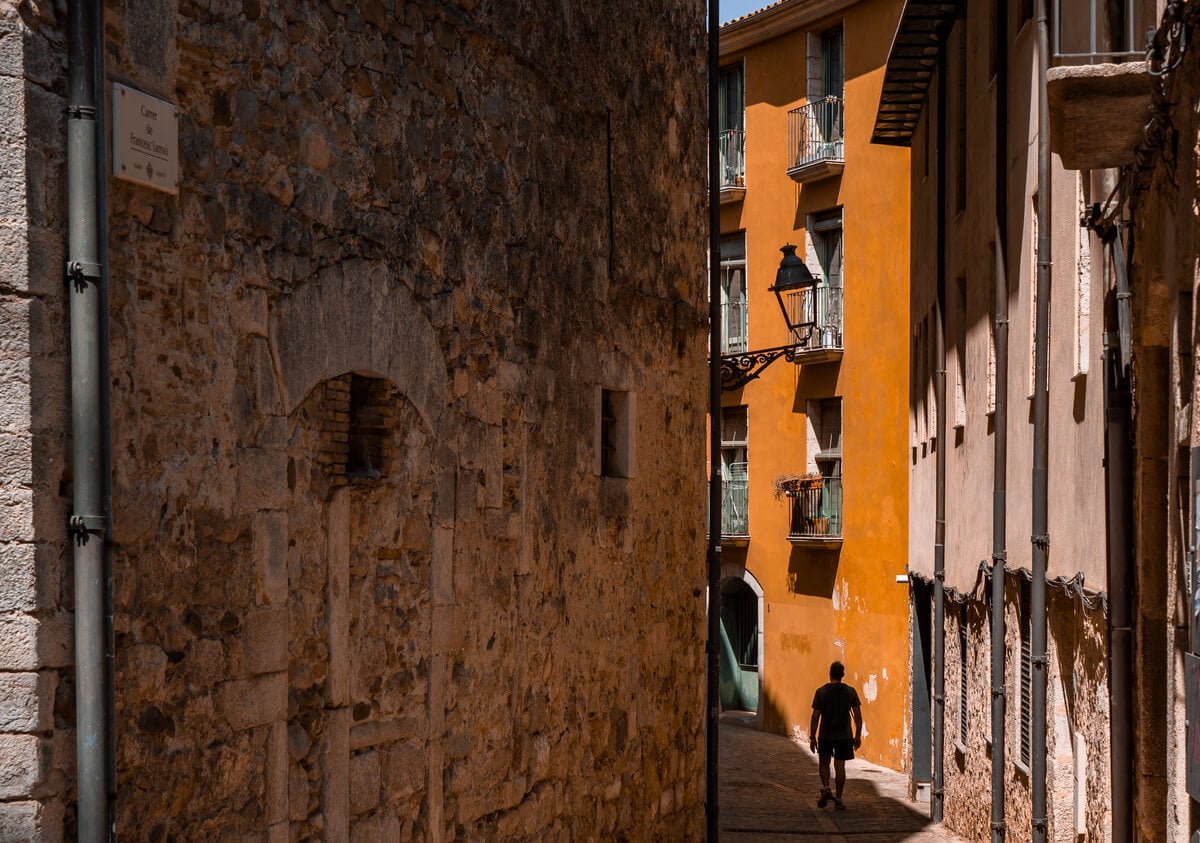
Image: Nic Hilditch-Short
What Rights Does a Foreign Victim Have?
More than I realised at the time.
Victims in Spain have rights to information, assistance and support throughout criminal proceedings. If you don’t understand Spanish or the relevant regional language, in our case Catalan, you can also be entitled to free interpretation when giving evidence to police, prosecutors or the court.
Which explains why my girlfriend was provided with a French interpreter while my English translator suddenly materialised on a video screen.
Foreign victims can also be entitled to translations of certain important decisions and information necessary for participating in proceedings.
This is also why I stand by one decision I made that morning: I refused to sign documents written entirely in Spanish/Catalan when I couldn’t understand what they said.
The court offered to have them translated. It meant another hour or so sitting on that fucking bench, but so be it.
Never sign a legal document you cannot read simply because you’re tired, intimidated or desperate to get out of the building. Looking back, I am very concerned and disappointed that I needed to push back before the court even offered to translate them.
Should You Call Your Embassy?
Not automatically.
Being the victim of a crime abroad doesn’t mean you need to ring the British/French Embassy before you’ve even rung your mum. Local police and courts remain responsible for investigating and prosecuting the offence, and a consulate cannot swoop in and take control of proceedings.
But consular assistance becomes much more relevant if you’re detained yourself, seriously injured, struggling to communicate with authorities or need help finding appropriate local assistance.
In hindsight, I don’t think we particularly needed consular intervention.
What we needed much more urgently was somebody to spend five minutes explaining what the fuck was happening.
Try Travelling Without a Phone in 2026
One of the less dramatic consequences of our attempted robbery turned out to be one of the most instructive. Sure, phones might ruin many a trip, but they also make them possible in our digital age.
My girlfriend’s month-old iPhone 17 was essentially destroyed during the struggle, while mine was cracked and damaged but, mercifully, still clinging to life. And it was only then that I realised just how completely modern travel has become dependent on carrying around a fragile £1,000 rectangle of glass.
Think about what your phone actually does when you’re travelling.
It’s your map. Your translator. Your camera. Your train timetable. Your taxi rank. Your hotel reservation. Your banking terminal. Your two-factor authentication device. Your contact book. Your travel insurance paperwork. Your email. Your boarding pass. In some countries it’s effectively your wallet as well. I mean, try losing it in China, and you’ll barely get out of your hotel room.
Lose it, and you haven’t simply lost a telephone. You’ve potentially lost the control panel for your entire trip.

Image: Nic Hilditch-Short
The Boarding Pass Problem
Airlines provide a particularly absurd illustration of where we’ve ended up.
Ryanair moved to essentially 100% digital boarding passes in November 2025, meaning passengers are now expected to access their boarding pass through the Ryanair app.
Fortunately – and look, I genuinely applaud them for displaying this rare and probably never to be repeated outbreak of humanity – if you have already checked in online and your phone is subsequently lost, stolen or dies, Ryanair says it will issue you an alternative boarding pass at the airport free of charge. If the phone dies after you’ve passed security, staff should also be able to assist you at the gate.
The important words there are “already checked in.”
If you arrive at the airport having not completed online check-in, Ryanair can still charge you its airport check-in fee. We hadn’t, so thank The Good Lord Michael Leary himself that we were able to check in on my cracked phone.
So imagine you’ve been robbed. Your phone is gone. Perhaps your laptop is back home. Your email password is stored in a password manager that wants to authenticate you through, you guessed it, your missing phone. You finally reach the airport and discover that the administrative distinction between “I checked in, and then somebody stole my phone” and “somebody stole my phone before I managed to check in” can potentially cost you money… Yes, that’s what you get for picking a classic Ryanair destination!
What a time to be alive.
In case you plan to fly budget some time soon, here are Ryanair’s current digital boarding-pass rules
The Bigger Problem Is Getting Back Into Your Digital Life
The airline is only one part of it.
The real nightmare can begin when you try to log into anything from somebody else’s device. Google wants to send a notification to your phone. Apple wants a verification code. Your bank doesn’t recognise the device. Your password manager wants two-factor authentication. The Airbnb address is buried somewhere inside an app. Your insurance policy number is in an email account you’re struggling to access.
This is where the security measures designed to protect you if your phone gets stolen can produce a wonderfully Kafkaesque side effect: they can also protect you from accessing your own life. On this point, maybe I should write a 10-part Netflix drama about a traveller who loses his phone in a mugging and discovers it’s easier to start a brand new life with a new identity?
If you’re travelling as a couple, there’s a lesson we learned the hard way (and no, not that women seem to get emotional around the same time each month): don’t treat two phones as genuinely independent backups if both contain essentially the same critical information and both are exposed to the same incident.
In our case, both phones became involved because my girlfriend pulled hers out to record what was happening after the man had already tried to grab mine. That’s completely understandable in the moment, but it also meant we’d suddenly put both of our primary communication devices into the same fight.
In retrospect, once one phone was under threat, the other phone should probably have stayed hidden and become the emergency lifeline.

Image: Nic Hilditch-Short
Build Yourself a Low-Tech Escape Hatch
I’m not suggesting you print the entire internet and carry it around Europe in a lever-arch file. But this experience has changed what I think travellers should keep independently of their phones.
Before a trip, make sure you have another way of accessing your primary email account and important passwords. Keep your travel insurance policy number and emergency contact somewhere accessible. Know how to contact your bank if your phone disappeared. Keep a copy of your passport details somewhere secure. If you’re travelling with somebody else, make sure each of you can access essential bookings rather than everything living exclusively on one person’s device.
And crucially, think about two-factor authentication before you lose the device providing the second factor.
None of this is particularly sexy travel advice. Nobody is going to make an Instagram Reel called Ten Incredible Ways To Store Your Backup Authentication Codes.
But neither was spending the weekend navigating hospitals, police stations, a foreign court and onward travel with one dead phone and another that looked like it had just completed a tour of duty in Fallujah.
Until this happened, I’d always thought of losing my phone abroad primarily in terms of the financial loss.
I don’t anymore.
The phone is replaceable. It’s losing access to everything inside it that can really fuck your trip.
And This Is Why We Had Travel Insurance
Confession time. Despite what I always tell you lot to do, the truth is that if we’d had to sit down and actively buy travel insurance specifically for this short trip to Girona, I’m not entirely convinced we would have bothered.
It was a quick European break. Spain. A short flight from the UK. What could possibly go wrong….?
Fortunately, because we travel frequently, we have an annual travel insurance policy with Taurus that we got before heading to China in May. We do this every year (fresh market comparison as soon as we get the renewal notice). We bought it to cover all of our trips throughout the year rather than having to remember to take out a new policy every time we jumped on a plane. On this occasion, thank fuck we did.
By the time we got home, we had two damaged phones, including my girlfriend’s practically brand-new iPhone 17. Considering neither phone had been dropped, lost through carelessness or left behind in a bar, but had been damaged during an attempted robbery for which we had police and medical documentation, we at least had a pretty substantial paper trail showing exactly what had happened.
Making the Insurance Claim
We waited until we were back in the UK to start the claim with Taurus and, so far, the process has been pretty straightforward.
We submitted details of the incident and received a response within around 48 hours. We were then instructed to take the phones to Apple for assessment, so we took both devices to the Apple Store in Manchester.
There was, however, a catch.
We had to pay for the repairs ourselves upfront.
That is worth knowing because “I’m insured” does not necessarily mean you can hand your broken £1,000 phone to somebody and let the insurer sort everything out behind the scenes. Depending on the policy and claim, you may still need enough available cash or credit to cover repairs or replacement while the claim is being processed.
At the time of writing, we’ve paid Apple out of pocket to the sum of £1,200 in total, submitted the relevant documentation and are now waiting for Taurus to reimburse us.
So I’m not going to give them a triumphant five-star review just yet. An insurance company responding quickly when you make a claim is good; actually paying the claim is the bit that counts. I’ll update this article once we know the final outcome. But let’s just say, this is why you take out travel insurance!

Image: Nic Hilditch-Short
Keep Every Bloody Piece of Paper
Our experience with the Spanish authorities was exhausting, but it produced something extremely useful from an insurance perspective: documentation.
We had reported the crime immediately. The police had attended the scene. There was an identifiable suspect and an arrest. We’d given formal statements. We’d been medically assessed. We’d subsequently attended court.
In other words, there was very little ambiguity about whether something had actually happened.
If you’re robbed abroad, report it to the local police and get whatever crime report, reference number or written confirmation they can provide. Keep medical reports if you’re injured. Keep photographs of damaged property. Keep receipts and proof of ownership where you have them, and don’t throw away damaged items until the insurer tells you what they need.
And if you’re going to pay for an expensive repair yourself, speak to the insurer first rather than simply assuming they’ll reimburse whatever you spend.
Annual Insurance Suddenly Makes A Lot More Sense
This episode has also changed how I think about annual travel insurance.
For somebody taking one big international trip per year, buying insurance specifically for that trip may make perfect sense. But if you’re constantly disappearing for weekends, taking cheap European flights or adding spontaneous trips throughout the year, an annual multi-trip policy removes one very obvious point of failure:
you don’t have to remember to buy insurance.
That’s exactly what saved us here.
I don’t know whether I would have spent money insuring a quick weekend in Girona. I do know that I was very fucking pleased to discover that I’d already done it.
And perhaps that’s the broader lesson. Travel insurance isn’t only for getting helicoptered off a mountain in Nepal or spending three weeks in an American intensive-care unit. Sometimes it’s there for a completely ordinary European weekend that goes spectacularly sideways somewhere between the last bar and your Airbnb.
We’ll reserve final judgment on Taurus until the money actually lands back in our account.
But right now, I’m certainly glad we bought the policy.

Image: Nic Hilditch-Short
What This Experience Taught Me
I don’t want the takeaway from this story to be “Girona is dangerous” because that’s not what the statistics say, although I fully and entirely stand by the fact that my first instinct was correct.
Nor do I want it to be the usual travel-blog platitude that bad things can happen anywhere, because while technically true, that’s not especially useful either.
The lesson to be taken away is that travel experience doesn’t make you bulletproof. Between us, my girlfriend and I have spent years travelling all over the world, including plenty of places considered considerably more challenging than Catalonia. Yet the incident that landed us in hospital, a police station and a criminal court happened during an innocuous weekend break in Spain.
There are also things I would do differently. Once somebody has already attempted to grab one phone, don’t produce the second one to film them, and if you do, keep some distance.
Preserve one functioning device as your emergency lifeline. Call 112. Get somewhere populated and well-lit if you can. While restraining our attacker worked out for us, I can’t actually recommend chasing or fighting a thief over a telephone. Phones can be replaced – people are rather harder to repair (although then again there are a few billion too many of us right now…).
If something does happen, document everything. Report it to the police, get a crime reference or report, accept medical assessment if you’ve been injured and keep every piece of paperwork you’re given.
If you’re dragged into a foreign legal process, ask what your status is, request an interpreter and don’t sign something you cannot understand. If anybody suggests that your actions are under investigation, that’s the point at which I’d stop treating proceedings casually and seek proper local legal advice.
Then there’s the boring stuff that suddenly doesn’t seem quite so boring. Have travel insurance, even for the supposedly easy trips. If you travel regularly, an annual policy means you can’t forget to insure an impromptu weekend away. Make sure losing your phone doesn’t lock you out of your email, banking, bookings and authentication. Keep important information accessible somewhere other than the device most likely to be stolen.

Image: Nic Hilditch-Short
And finally, keep some perspective.
Spain remains somewhere I’d happily travel in the future. Girona remains a beautiful city, and one ugly encounter doesn’t change that. But beautiful, generally safe cities still contain thieves, violent people and prolific repeat offenders. Acknowledging that isn’t fearmongering; it’s part of travelling with your eyes open.
Would I have preferred to spend that Sunday wandering Girona’s medieval streets rather than sitting hungry and bewildered on a wooden bench in a Catalan courthouse? Obviously.
But travel isn’t always the carefully curated sequence of sunsets, tapas and charming old towns we sell ourselves. Occasionally somebody tries to nick your girlfriend’s phone, you end up wrestling a stranger in the middle of the road, and twelve hours later you’re giving evidence through a video interpreter to three people whose job titles you still don’t entirely understand.
You deal with it. You learn from it. And then, eventually, you go and get that fucking coffee.