Let’s be frank, the demographical data we hold about our readers suggests that if you are reading this now then you are pretty damned lucky.
Yes, it may be raining where you are, I’m pretty sure your girlfriend is cheating on you and your favourite sports team probably just lost again (Go local sports team!). But, if you are reading this then you are lucky enough to be fluent in the language of international business, you probably hold a relatively powerful passport, and presumably, have enough money to think about doing a spot of travelling sometime in the near future. All of that very much places you amongst the winning ticket holders in life’s giant lottery.
So considering the lucky little leprechaun you are, you may well be wondering whether you need travel insurance. After all, insurance is something that only unlucky people ever need… right?
With all of that in mind, we are today going to look at whether you need travel insurance, what kind of travel insurance you might need, and how much travel insurance you need (if any).
That being said, the short answer is yes – for most trips. The main exceptions are EU/UK citizens traveling within the EHIC/GHIC zone, very cheap trips with nothing to lose, and travelers already covered through a credit card or existing policy. Read on for the specifics.
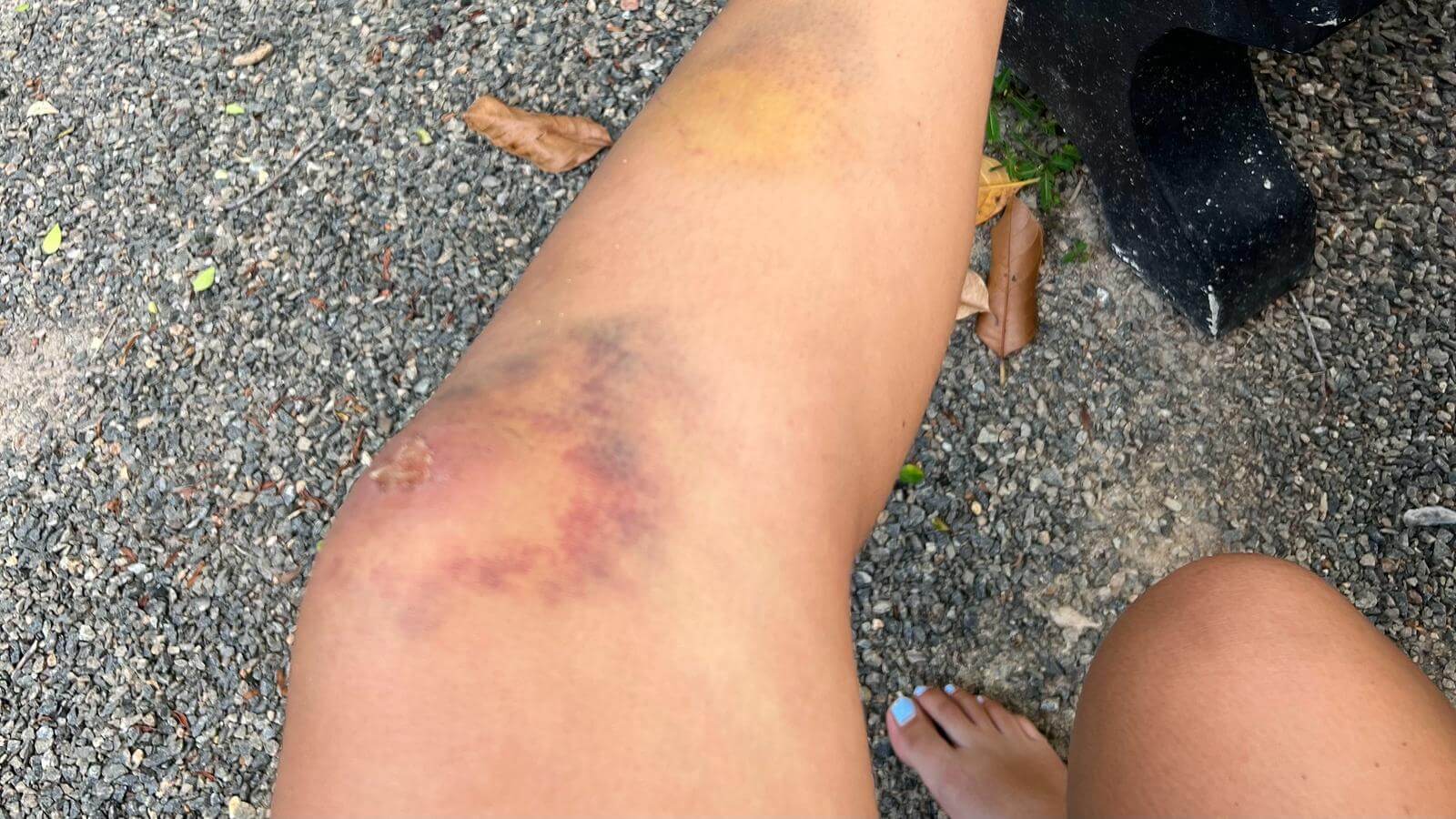
Photo: @amandaadraper
The Broke Backpacker is supported by you. Clicking through our links may earn us a small affiliate commission, and that's what allows us to keep producing free content 🙂 Learn more.
Why You (Yes You) Might Need Travel Insurance
In this post, we are going to examine what travel insurance is, what it can cover and who might benefit from it. We will look at where it might be useful to have travel insurance, what to look for when choosing it, and how much it costs. We will also look at who does not need travel insurance.
But one question that many travellers will be asking is, do I need travel insurance and why do I need insurance? Cos the travel insurers are also desperate for you to start travelling again too…
Who Does NOT Need Travel Insurance?
Ok so legitimately, there are a few scenarios where travel insurance might not be all that helpful to you. To offer up two examples, if you are an EU citizen travelling to another EU country then you are fully entitled to health care as long as you have your EHIC card (and possibly even if you don’t), similarly UK citizens can obtain a UK Global Health Insurance Card (GHIC) which offers the same coverage.
Therefore you don’t need to worry about getting travel insurance to cover your medical costs. Whilst travel insurance may still be helpful to protect against things like flight cancellations and lost luggage, it’s a matter of doing the maths and working out whether it’s cost-effective; personally, I would not bother to insure a €50 Ryanair, carry-on only, stay in a hostel-type trip.

Photo: @taya.travels
Other than that and a few other niche examples, let’s look at who else probably does not need travel insurance.
- The Insanely Rich – If you are rich enough to not care about losing a $4k holiday or racking up a $50k medical bill, then you don’t need to worry too much about getting travel insurance. Sure, whilst $50k is still 1000 times the cost of a $50 travel insurance policy, it’s all ultimately just pocket change isn’t it? But of course, in reality the rich are some of the biggest bean counters going so rest assured, even Jeff ‘Pee in a Bottle Ya Bastards’ Bezos probably travels with insurance when he flies to space in his private, phallic shaped rocket.
- The Ridiculously Lucky – There is lucky and then there is lucky. So are you the kind of person who wins the lottery without even entering? Or perhaps you once fell out of a plane and landed on a trampoline? If this is you then don’t waste your money on insurance – even if you are late for your flight the pilot will wait for you and if your bag is lost, you’ll probably just pick up somebody else’s filled with designer clothes that fit you perfectly.
- Smart People – Only stupid people ever need to make insurance claims. Smart people don’t get malaria (the biggest killer in history) as they can outfox mosquitos and they are far too cunning to get jacked by professional criminals. (Sarcasm guys!!)
- Keith Richards – As well as being insanely rich, ridiculously lucky and pretty smart, Keith Richards is also immortal. Therefore, if you are Keith Richards then you really do not need to get travel insurance and do not need to read any further – after all those coconut trees won’t climb themselves now.

Now that that is out of the way, let’s resume our attempts at being moderately sensible. In the next section, we shall examine what exactly travel insurance can help with. Or, you can just hit the button below to get a quote from either of our two preferred travel insurers provided.
Why Do I Need Travel Insurance?
Let’s look at some of the things that travel insurance can cover. This list is not intended to be exhaustive or intimately detailed but rather, is here to offer a flavour.
Sickness and Medical Costs – Visiting a Doctor or getting hospitalised abroad can prove crushingly expensive. During our 10 years of living dangerously, team Broke Backpacker have endured bike crashes, tropical diseases and so much more. The problem here is that if you need medical assistance, you need it and will have to pay whatever they tell you and will not be in a position to barter or shop around.
Every year, thousands of travellers have accidents or get sick when travelling. Some countries have free (UK) or low price (India) healthcare but others (Japan, the US) have disgracefully expensive healthcare systems.
Lost Luggage – Every year, airlines lose hundreds of thousands of bags. They shouldn’t, but they do. Some eventually turn up but others don’t. If you arrive on your travels and have no clothes to wear, then that sucks (unless you’re at a nudist beach!), but having to re-wardrobe out of your own pocket may mean burning through your travel budget on the very first day.
Theft or Loss – Sadly, tourists are a target for criminals. Whether it is a violent street mugging in Girona or a raided hotel room raid in Marbella, electronics, jewellery and passports are stolen from travellers far too frequently.
Trip Cancellation – If something happens and you are not able to take your trip, then trip cancellation may reimburse you the cost of the flight, accommodation or whatever. The cancellation has to occur for a “legitimate” reason such as war or sickness and not just because you changed your mind.
Trip Interruption – This is when something goes wrong on your trip and you are forced to hastily re-arrange at your own cost. Examples may include your hotel burning down and so you are forced to pay out for a second one, or a missed connection flight.
Personal Liability – This is when your error or negligence causes somebody else’s loss. Let’s say you sneeze and the Taj Mahal collapses as a consequence leaving you with the $500 repair bill – personal liability insurance may indemnify you here.

Photo: Chris Lininger
Evacuation and Repatriation – This aspect of travel insurance cover can help when you need to evacuate a particular location or flee a country. If you break your leg on a mountain and need a helicopter, then travel insurance may cover the hefty cost of the heli-evac. Be sure your policy offers comprehensive travel insurance coverage, especially if you’re going to be heading to remote locations.
Or, if a natural disaster strikes and you are forced to leave the country on an emergency flight, then the repatriation clause may cover this.
Death – Granted, dead people are not really in a position to make insurance claims. However, dying abroad is seriously expensive and so travel insurance can help with the hefty cost of sending a traveller’s body home – the alternative is that the grieving family is left with the bill. Not fun.
Is Travel Insurance Mandatory?
Usually, travel insurance is not mandatory although it is almost always advisory.
However, there are currently 60 countries where you may actually be obligated to obtain travel insurance. This means that you may be asked to provide proof of cover before you are even allowed to enter or maybe even before you can even board a flight.
Usually, though, there are different rules for different nationalities so whether or not you need to buy insurance for your destination might depend on what passport you hold. This is not simply a case of wanton favouritism and discrimination, but rather reflects the various arrangements that countries have between themselves.
And as mentioned above, whilst some EU countries require visitors to obtain insurance before entering, this requirement does not apply to passport holders from other EU or the UK as they are all members of the EHIC and GHIC schemes.

Photo: @monteiro.online
Finally, some countries that mandate insurance (Belize for example), make you buy insurance from them, upon arrival. Whether or not you already have cover is irrelevant here, you will still be obligated to buy the mandatory policy. Note that usually, the policy is purely for medical costs and nothing else. Therefore in cases like this, you may still wish to purchase your own cover before leaving home; and ultimately, it is better to be overinsured than underinsured.
What Travel Insurance Do I Need?
If you are still reading then I guess you have decided that you probably do need to get travel insurance. Smart move. So the next question to ask is exactly what travel insurance do you need?
A lot of travel insurers really specialise in covering “Square John” trips such as 2-week, set vacations to safe, family-friendly, resort-type destinations. These kinds of policies are fine a lot of the time but if you read the small print you may find that they are not suitable for backpackers or adventure tourists.
For example, if you are going trekking, then you need to ensure your insurance covers trekking and that it also covers the exact altitude you will be trekking at.
If you are going backpacking, or on any kind of adventure trip then it may be wise to avoid straight-laced insurers and instead go straight to the backpacker insurance specialists like World Nomad. Yes, they are more expensive but you are paying for the expertise and paying to make sure your exact trip is actually properly covered.
Additionally, if you travel with any expensive or specialist gear (be it a laptop, camera or skis) then you may need to insure it separately. You might also want to look at travel insurance companies if that will be your primary accommodation type too.
How Much Travel Insurance Do I Need?
Whatever policy you go for will probably include all of the protection we set out in the previous section headed “Why Do I Need Travel Insurance?” (there are a few exceptions that we shall explore later). Some policies also include little extras such as rental car cover but the above is a good starting point. Therefore the next thing we are going to focus on is the amounts covered and the policy excess’.
Medical costs can by far prove to be the most costly expense when making a claim as bad accidents or long hospital stays can cost tens of thousands of bucks or more. Most policies we have seen offer medical cover ranging from $500k – $1 million.
Lost luggage on the other hand tends to be capped at $1000 – $1500 with a single item limit of $500. Whilst this is barely half the cost of a laptop, it is unfortunately pretty standard in the travel insurance sector. If you travel with valuable gear that you cannot afford to lose, then perhaps consider taking a separate, dedicated gadget cover.
Trip cancellation and interruption is often also limited to a few $k so if you are booking a once in a lifetime cruise worth $10k, then pay attention and make sure the cancellation cover is sufficient. Alternatively, if you find a customisable policy then you can tailor it to meet your needs – although this will increase the cover cost substantially.
Basically, it is not for us to tell you how much cover you need but the figures we have offered above should give you a rough figure of what you can expect to find.
What Is A Travel Insurance Excess (Deductible)?
A policy excess is an amount that you have to pay out of your own pocket before you can claim on the insurance policy. For example, I recently had to get a bunch of tetanus and rabies shots in India (Meeow indeed) which cost me a total of $40.
As the excess on my policy is $50, I was NOT able to claim this back from my insurance. This sucks but once again, it is pretty much an industry standard.
How To Find Travel Insurance
We live in an age of market comparison sites and if you google “how to find travel insurance” you will be greeted with a plethora of comparison engines all promising to help you find the best, cheapest and perfect travel insurance for your trip. For example, you can get specific European travel insurance which is cheaper than say a policy covering the USA as well.
But, (and it’s a big, fat, stinking, hairy butt) using comparison sites to find travel insurance can actually be pretty foolhardy. I shall explain why.
Firstly, not all insurance companies appear in all engines. Market comparison sites only feature companies who are willing to grant them a backhander for successful referrals and if a company is not willing to engage in this wanton bribery, they will simply not appear in the search.
To really illustrate this, let us tell you now that both of the companies we personally use for our trips are absent from the most popular market aggregator engines.

Furthermore, if you actually get into the details and look into the small print you will sometimes find that the suggested companies can’t actually cover your trip.
For example, back in 2022 I used a few market comparison sites to insure a trip to India and out of the 5 top choices, 3 of the companies couldn’t actually cover my destination, something I only caught by reading the small print.
In summary, whilst market comparison sites can be a useful tool, do remember that there are other tools in the shed.
Who Is The Best Travel Insurer?
There is no such thing as ‘the best’ travel insurance provider just as there is no such thing as ‘the best’ colour. Rather, all have different strengths and weaknesses and all have a place in the spectrum.
However, over many years of travelling and quite a few insurance claims made along the way, we have identified a few who we prefer and who we now use to cover most of our trips. If you like, you can check out our long in-depth post about all the best travel insurance companies. you can just check out our top 3 recommendations that fit most travellers below.
Let’s meet them!
SafetyWing
SafetyWing has been around since 2018, cooked up by a bunch of Norwegian nomads who got fed up with insurance that assumed you had a return flight booked. These days it’s actually two quite different products: Essential, a rolling monthly emergency medical plan that’s our team’s default and one of the cheapest reliable options going (about $2.24 a day if you’re under 40), and Complete, a proper annual international health plan for people who want routine doctor visits and specialist care covered too, not just emergencies.
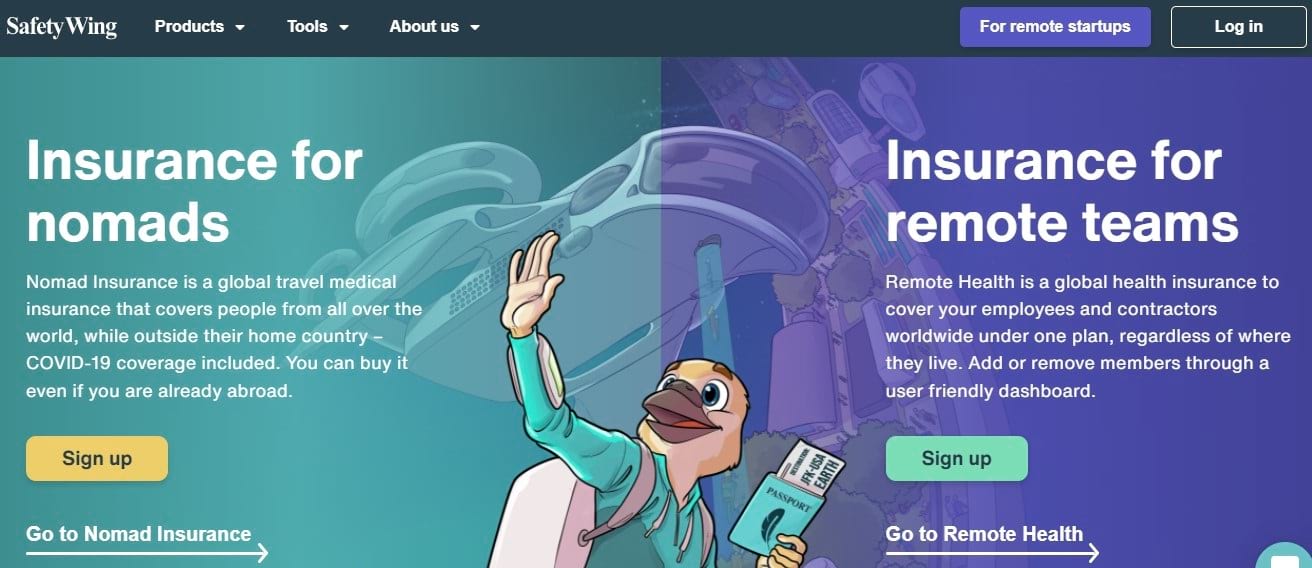
Essential covers emergency dental (up to $1,000, provided you get treatment within 72 hours of things going wrong) and lost checked luggage (up to $500 an item), but don’t go in expecting trip cancellation, it doesn’t offer any at all. Complete adds a version ($300 a trip) but it’s not going to rescue an expensive non-refundable booking either.
Seven of the twelve-strong Broke Backpacker team have used SafetyWing between us, filing three claims and getting paid out on all three. One, Will’s suspected appendicitis in Mexico, took a fair bit of back and forth before it was sorted, but nobody walked away empty-handed.
For more info, why not check out our detailed SafetyWing insurance review? SafetyWing’s pricing is about as no-nonsense as it gets, plug in your age and travel dates below and see exactly what you’d pay:
Need help deciding between Safety Wing or Hey Mondo? Check out our helpful guide.
World Nomads
World Nomads have been protecting, connecting, and inspiring independent travellers since 2002, and they’re built for the exact kind of unpredictable, activity-heavy trip most straight-laced insurers don’t really get.
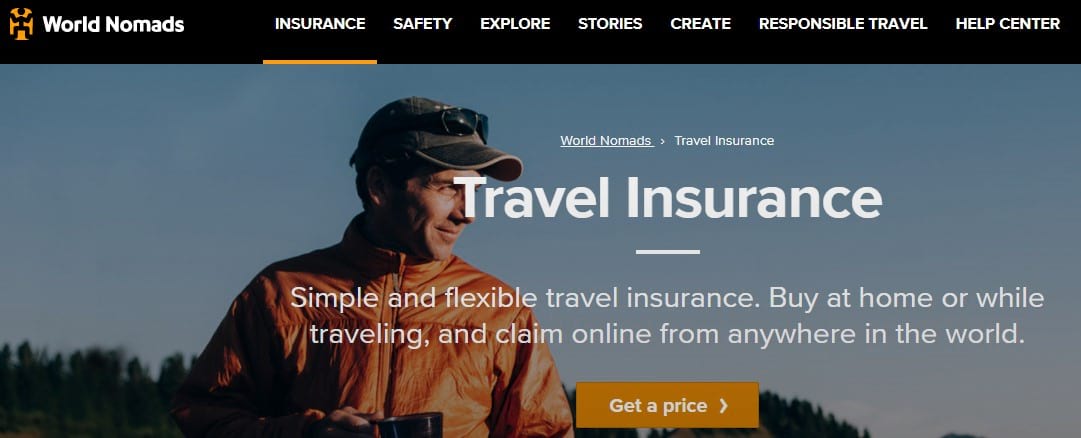
Standard plans now cover 250+ activities, climbing to 340+ on the top-tier Epic plan, numbers high enough that I gave up trying to find something they didn’t cover. Trip cancellation and interruption come included as standard too, which is more than SafetyWing or Genki can say, and it typically works out to somewhere around $5 a day for a Standard plan (though this varies a lot by nationality, so get your own quote).
Founder Will had his backpack nicked in Bangkok, electronics and all, and was paid out in full within three weeks off the back of a police report and some receipts. Make of that what you will.
Get a quote below or read our in-depth World Nomads review!
Faye
Faye is US-only, and if that’s not you, skip ahead. But if you are a US resident with non-refundable bookings you don’t want to lose, this one’s worth your attention. Trip cancellation, up to 100% of your non-refundable costs, comes included in the base plan, not bolted on as an extra. On top of that sits their Cancel For Any Reason (“CFAR” for those in the know) add-on: 75% back for literally any reason, no sick note, no dead relative, no proof of anything, you just decide you’re not going.
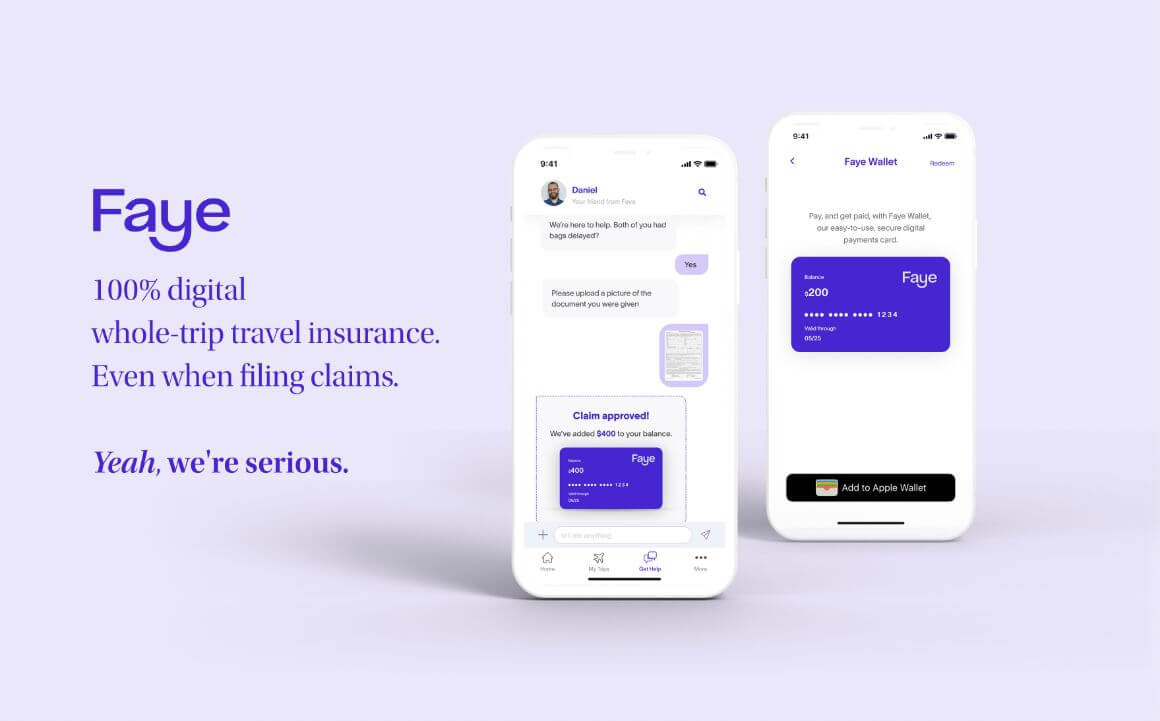
Everything runs through the app, claims included, and payouts land in a digital wallet rather than a check that takes three weeks to clear. Adventure sports are narrower than most competitors here, but not in the way people assume: it’s specifically things like deep scuba, unroped rock climbing, and genuine technical mountain climbing (ropes, crampons, the works) that need the add-on. Regular trekking, at any elevation, is covered under the standard plan.
Senior Editor Samantha used the CFAR add-on herself when a Thailand trip fell through, 75% of her non-refundable costs back, paid straight to her Faye Wallet within 20 days.
Want a real quote? Pop your trip into the box below and Faye will spit out an actual quote in under a minute.
You can read our full Faye travel insurance review if you’re a sucker for detailed policy info.
Staying Safe on The Road
In our humble opinion, it is very important to get travel insurance before leaving home. But, prevention is always better than a cure and the best course of action is to take absolute care out there, and hopefully, you will never actually need to make a travel insurance claim.
Whilst you want to have fun when travelling, please act sensibly and don’t indulge in any stupid behaviour that would get you into serious trouble back home. I mean, whilst you may well get away with riding a scooter blind drunk in Thailand, that does not mean you should do it.
Likewise, don’t wear expensive jewellery or wantonly flash electronic items in poor countries as this will make you a shiny beacon for thieves. Basically, just use “common sense” and if you don’t have any common sense (it’s actually far less common than the moniker would have you believe) then go and check out our pretty extensive library of safety themed content.
Finally, wear a money belt and think about seeing a doctor or travel nurse 12 weeks before your departure to check whether your travel vaccinations are in order. Anyway, lecture over!
Final Thoughts on Travel Insurance
By now you will hopefully have decided for yourself whether or not you need travel insurance. Personally, I think it is very important for most trips but you need to decide for yourself.
If you think you will be OK without it then we wish you the best of luck. If on the other hand, you do want to get your ass covered, then you hopefully have all of the info you need to find the right policy from the right provider to suit your needs.
Take care out there.