Sri Lanka is a country of two halves. Head north, and you’re surrounded by rolling green hills that seem never ending. Head to the coast and, of course, you’ve got the beaches. This is what we’re all here for after all.
It seems to be the underdog in the surf scene at the moment, even giving big dogs like Bali a run for its money. The coastline is beautiful, the breaks are reliable, and it’s got a super mellow vibe to match.
I spent just over six weeks exploring the south coast and I was constantly surprised at what Sri Lanka threw my way. Sure, you’ve got beaches for swimming, beaches for surfing, but it’s the little nooks and crannies where you’ll find no one but yourself and the odd street dog that really blew me away. Compared to the likes of Thailand, there are SO many untouched little coves waiting to be discovered here.
I’ve broken down my favourite beaches in Sri Lanka, but walk a little further, long after Google Maps says the beach officially ends, you’ll be rewarded with some truly stunning beaches. This list is just the starting point to get ya there 😉
The Broke Backpacker is supported by you. Clicking through our links may earn us a small affiliate commission, and that's what allows us to keep producing free content 🙂 Learn more.
When Sri Lanka’s Beaches Are at Their Best
For a country so small, you’d think that there’d be a short window for the golden era of beach hopping each year, right? *Buzzer* WRONG. The great thing about how the mysterious forces of Mother Nature work in Sri Lanka is that when it’s one coast’s off season, it’s the other’s prime time. You’ve got year-round beach bumming opportunities here, baby.
The south coast’s season runs from December to April, in which time the skies are clear, the surf is reliable, and rain is minimal. As April comes round, it switches, with most tourists and expats flocking to the east coast, where A-bay gets its time to shine for a couple of months. May to September is all about surfing on the east coast, with gnarlier and more intermediate breaks and a refreshingly slower pace from the tourist-centric south coast.
The bit in between is a bit of a no man’s land; beaches on both coasts could be equally glorious or a complete washout, depending on how the weather swings that year. So long as you don’t mind a couple of downpours and rougher seas, September to December is a wicked time to visit to tackle ’em both and have the best of both worlds!
| When you are visiting | Coast to prioritise | What to know |
|---|---|---|
| November to April | South and west coast | Peak season for the south coast beaches in this list. Dry, calm seas, and the best surf conditions. Accommodation books up fast in December and January, particularly around Mirissa and Weligama. |
| May to October | East coast | The southwest monsoon hits the south coast hard from May through August. Head to Arugam Bay instead, which is in its prime during these months with consistent swells and sunny skies. |
| Shoulder months (October, November) | South coast starting to open up | October can be hit or miss on the south coast, but November is when conditions start to improve. Fewer crowds and lower prices make it worth the occasional downpour. |
| Monsoon period (May to August, south coast) | East coast only | The south coast isn’t unvisitable during monsoon, but expect rain, rough seas, and limited surf. If the south coast is your priority, this is the window to avoid. |
Hiriketiya Beach: My Personal Fave
- Best for: Surfers of all levels, swimmers, digital nomads, and anyone who books three nights and ends up staying two weeks.
- Vibe: Super intimate and boho.
- Good for swimming? Yes, generally. The horseshoe shape of the bay keeps conditions relatively calm, though currents can pick up. Check with locals on the day, and note that during rougher months, it can be difficult to swim at all.
- Good for sunset? Very good.
- Facilities: Top-notch. Bars, restaurants, surf schools, and board rentals are all within walking distance of the beach.
- How easy is it to reach? Moderate. The closest train station is Dikwella, though many travellers arrive via Matara, where trains are more frequent, and then take a tuk-tuk for the final stretch.
- How long to spend: Stay in Hiriketiya for two days minimum, but most people stay much longer.
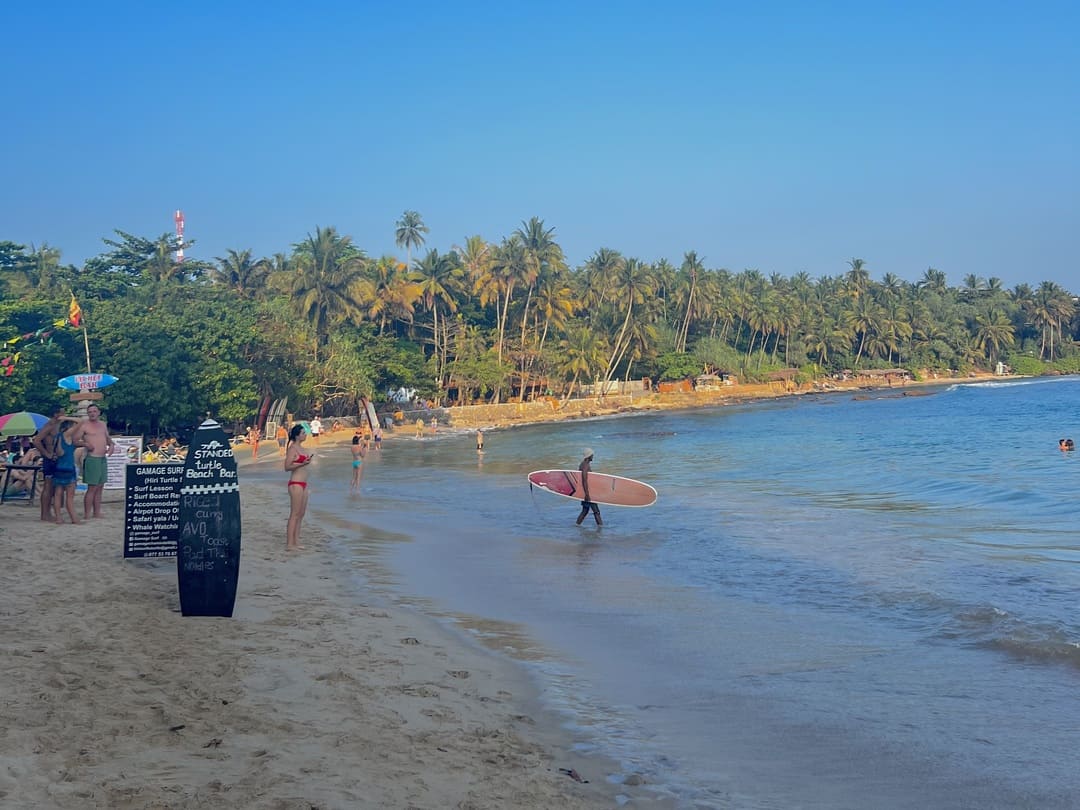
Photo: @taya.travels
Hiriketiya is a horseshoe bay ringed by jungle, with surf schools, yoga studios, and co-working spaces packed into a very small footprint. It is, by far, my favourite beach on the island. It takes a little more effort to get to compared to the likes of Mirissa and Weligama, but you’ll surely be rewarded by the boho-surf vibes that Sri Lanka has made a name for itself in recent years. For such a chilled vibe, there’s a surprising amount to do here.
Sunbeds line the bay that you can rent for the day or snag for free if you order drinks or rent a board. In terms of its people-watching score: I give it a 10. You’ve got surf schools with armies of newbies lining the coastline, all the way through to the more experienced further out, tackling the big boy waves. This is probably the one beach I could spend every day for a week at and not get bored. If I had to give it any criticism, it would be that it gets pretty hectic in the highest of seasons. If you want a more remote-feeling, the hidden bays surrounding Hiriketiya may be more up your street.
- What to do here: Get in the water, whether that’s surfing the beach break as a beginner, taking on the fast reef left-hander on the eastern side of the bay, or just swimming in the shallows.
- Why it’s worth it: Hiriketiya has built one of the best all-round scenes on the south coast, with surf schools, yoga classes, live music nights, and cooking classes all packed into a place you can walk end to end in ten minutes. It’s become busier every season, but there’s still enough here to make it worth the detour off the main coastal strip.
- What to know before you go: The beach itself is small. At peak season in December and January, it fills up fast, so get down early if you want space. Board rental runs around 1,000LKR per hour, and surf lessons are easy to arrange directly on the beach.
Best Place to Stay Near Hiriketiya Beach:
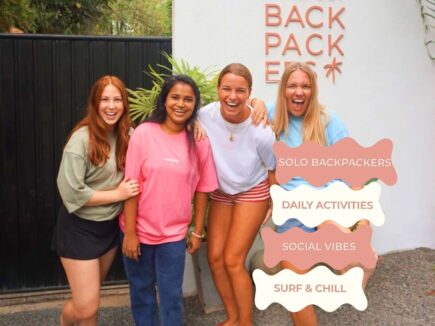
Barefoot Backpackers Hostel, Hiriketiya Beach
This strictly solo-travellers only hostel is a goldmine for backpackers. During the high season, this place truly comes alive with a packed schedule of activities in their spacious common area and sea-view garden. Expect social dinners, beach volleyball tournaments, and a whole lot more to keep your days occupied.
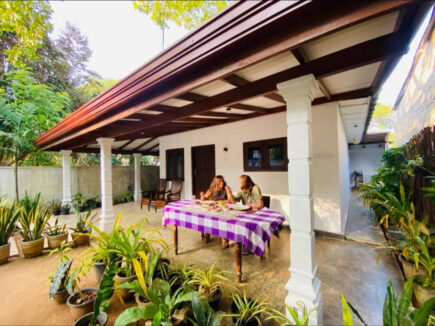
Mountain Peak Homestay Hiriketiya
A ten-minute walk from the beach, this homestay trades prime location for a host who makes you feel at home from the get go. Rooms are spacious with modern bathrooms and AC, there’s a kitchen if you need it, and breakfast is the kind that actually sets you up for a surf. By day one it already feels like somewhere you’ve been coming back to for years.
Ahangama Beach: The Bali Underdog
- Best for: Surfers, sundowners, and anyone who wants a beach town with actual personality.
- Vibe: Laid-back and surfy, with a boho edge. Think roastery coffee, beachfront rice and curry, and a crowd that’s mostly surfers and slow travellers.
- Good for swimming? In parts. The main beach has a reef and can be rough, but calmer coves nearby are better options. Worth checking conditions locally.
- Good for sunset? Very good. West-facing over the Indian Ocean, with bars set up exactly for this purpose.
- Facilities: Solid. Surf shops, cafes, restaurants, and bars line the beachfront.
- How easy is it to reach? Easy. Accessible by train or bus from your place in Galle or Matara, and tuk-tuks run from nearby towns.
- How long to spend: Full day minimum, though most people end up staying longer than planned.
Ahangama has all the ingredients that turn a one-night stop into a week-long stay: great surf, banging food, and the perfect people-watching base. To me, Ahangama is what Bali wants to be, laid back and effortlessly cool. You’ve got cafes lining the beach serving up your avos on toast and smoothie bowls to the more upscale cocktail bars to see off the day’s sunset in style.
This one is for the surfers or, like me, the people who like to oggle at the surfers. Ahangama covers about three miles of coast, threading sand-bottomed beach breaks for beginners with rocky points and reef breaks where intermediates can chase glassy lefts, rights, and A-frames. Just note that the main beach isn’t ideal for swimming due to the reef and sometimes choppy conditions. For a dip, head to one of the calmer coves nearby and ask locally before you jump in.
- What to do here: Rent a board and get in the water, whether you’re a complete beginner or an intermediate looking to work through the reef breaks. When you’re done, dry off and work your way along the beachfront bars and cafes. The food scene is honestly some of my favourites on the south coast.
- Why it’s worth it: Ahangama is a vibe. The surf is good, the food is good, and the crowd is ultra cool. It attracts a lot of expats, and it won’t take you long to figure out why.
- What to know before you go: The beachfront bars and restaurants skew pricey by Sri Lankan standards; most are European-owned and priced accordingly. It’s worth the splurge every once in a while, but to get back to local pricing, head one street back from the sand and you’ll eat a lot better for a lot less.
Best Place to Stay Near Ahangama Beach:
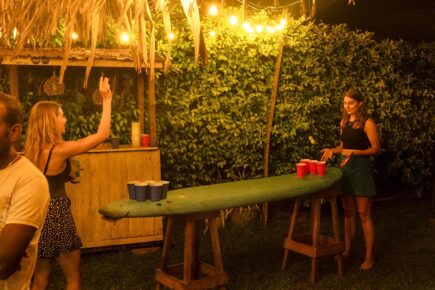
YoYo Surf Hostel
If you came to Sri Lanka to surf, find a crew, and maybe occasionally send an email so you don’t run out of money, YoYo Surf Hostel is the place for you. It’s a locally owned, family-run spot that’s managed to dodge the sterile hostel chain’ vibe in lieu of something a little more real. The hostel’s living room is where the daily transition from surf mode to social mode happens effortlessly.
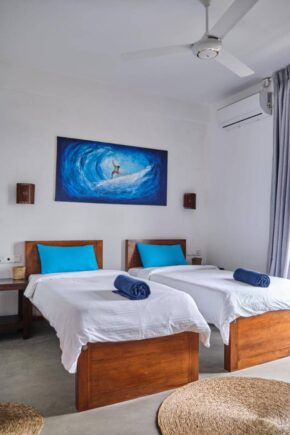
RUMA Surf Hotel
Two kilometres from Ahangama station, this hotel welcome you with a fruit platter and staff who are on hand for whatever you need. Breakfast is a cut above, there’s free snorkelling gear and a ping pong table knocking about, and the rooftop restaurant has sea views worth lingering over. Book a sea-view room if you can: watching surfers from your balcony is a perfectly valid way to spend a morning.
Arugam Bay Beach: Best on the East Coast
- Best for: Surfers of all levels, and anyone travelling during the south coast monsoon season.
- Vibe: Laid-back and international, with a surf culture backbone.
- Good for swimming? Yes. The crescent-shaped bay is ideal for beginners, and the main beach is calm enough for a swim on most days during the season.
- Good for sunset? Less so than other spots on this list. Sunrise is the real show here.
- Facilities: Well set up. Surf schools, board rentals, gear shops, beachside bars, and a solid food scene all within walking distance of the main beach.
- How easy is it to reach? Moderate. From Colombo, it’s about 6.5 hours by car via the southern highway, with no direct train. Buses run from Colombo and the south, or hire a private car from Ella or the south coast.
- How long to spend: Three days minimum, though most people end up staying a week, or even basing their entire Sri Lanka trip around it!
Photo: @danielle_wyatt
Arugam Bay has been on the surf world’s radar for decades, and the secret is well and truly out. The die-hard surf crowd has been diluted in recent years by beach lovers and beginner surfers, which has broadened the scene without killing it. Boasting a series of right-hand point breaks for every level, plus beach breaks and some reefs, the variety here is excellent, and the town that’s grown up around it has enough bars, cafes, and cheap eats to keep you busy between sessions. It’s busier than it used to be, but there are still enough waves to go around and heaps of great places to stay.
The other thing Arugam Bay has going for it is timing. Being on the east coast means the swells work when the south coast is deep in monsoon, which almost singlehandedly makes Sri Lanka a year-round surf destination. Come between July and September for the best conditions, and get in the water early before the wind swings onshore after midday.
- What to do here: Surf Main Point, a long right-hand reef break that works for intermediates and above, or stick to the beach break in the bay if you’re still finding your feet. When you’re out of the water, Kumana National Park is close by for wildlife spotting, with elephants and a wide variety of bird species, and the local seafood spots along the main strip are worth a meal or two.
- Why it’s worth it: Arugam Bay is on the east side of the island, which means the swells work when the south coast is in monsoon. If you’re travelling between April and October and want surf, this is your only real option in Sri Lanka, and it’s a good one.
- What to know before you go: The wind on the East Coast swings onshore after noon most days during peak season, so morning sessions are the move. Plan your surf early and save the afternoons for everything else.
Best Place to Stay Near Arugam Bay Beach:
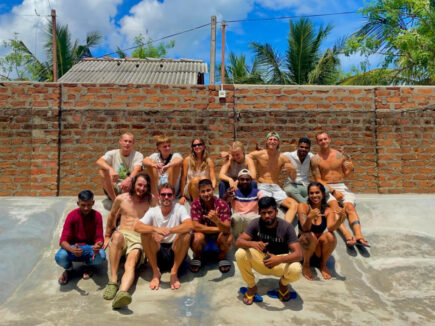
Hangten SurfSkate Hostel
Hangten SurfSkate Hostel is a true labour of love, and it’s obvious from the moment you arrive. If you’re in Arugam Bay for the surf, this place will feel like your new home. The vibes are spot on – super social and welcoming – attracting the best kind of people. And get this: there’s a full-on skate park in the backyard! Perfect for pros or newbies like myself who will try everything at least once ?
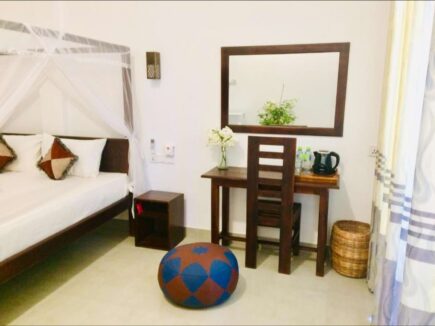
Tropicana Home Stay
This spot is literally 20 metres from the beach…you can’t get much more beach bum than that! The rooms are clean and comfortable, the air conditioning solid, and the WiFi fast and reliable for those needing to catch up on a spot of work. It’s a classic case of Sri Lankan hospitality here, so you know you’re in good hands.
Kabalana Beach: The Upcoming Surf Spot
- Best for: Intermediate and advanced surfers chasing The Rock, beginners on the beach break, and non-surfers who just want a long, good-looking beach without the crowds of bigger spots.
- Vibe: Laid-back and unpretentious. Surfers on the breaks, local kids playing football and volleyball, and all kinds of travellers, with boutique hotels and surf camps backing the sand.
- Good for swimming? With caution. The currents can throw you about, so don’t expect a calm swim, and the reef break area is for surfers only. The calmer sections of the beach break are fine for a splash around.
- Good for sunset? Very good. One of the best sunset views in Ahangama, with beach shacks and bars to watch from.
- Facilities: Decent. Sunbeds for rent, a handful of bars and restaurants on the rock wall, and surf schools and board rentals at the beach.
- How easy is it to reach? Easy. Local buses run along the Matara Road that parallels the shoreline, and it’s a short tuk-tuk from Ahangama town.
- How long to spend: Half day to full day, or use it as a base and stay nearby.
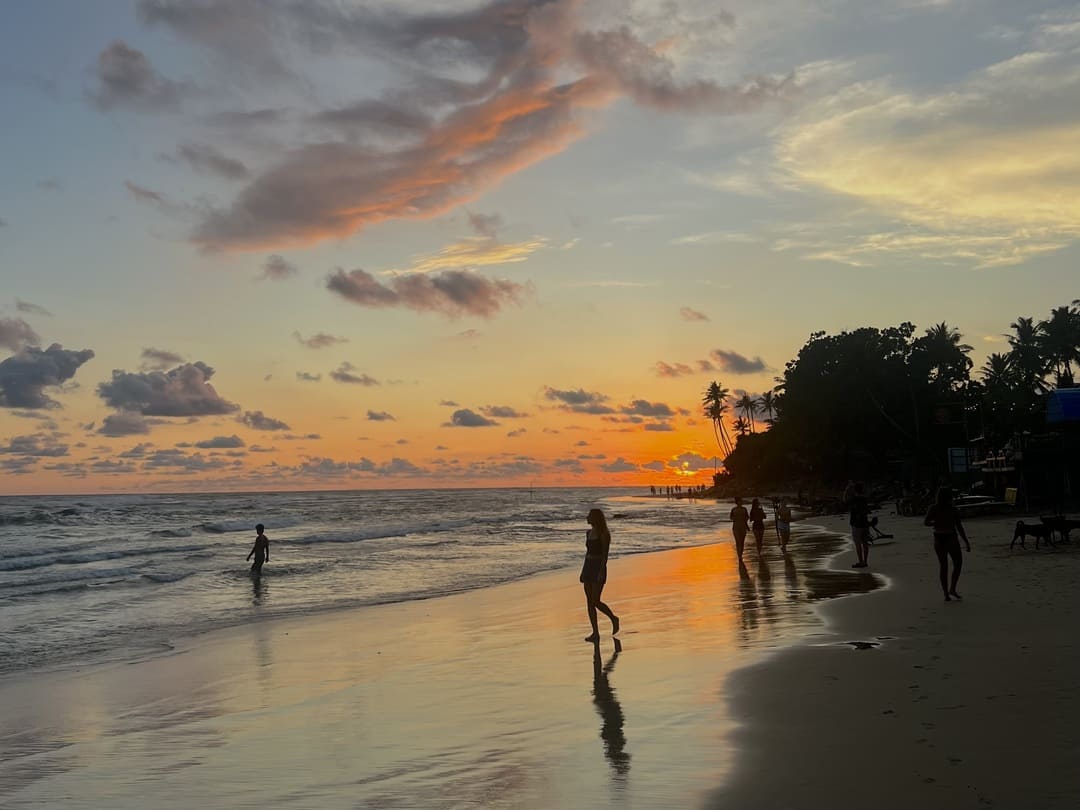
Photo: @taya.travels
Just up the road from Ahangama lies Kabalana, the smaller and scrappier little sibling making a name for itself in the surf scene. It’s markedly quieter than Ahangama, with two breaks that cater to pretty much anyone willing to get on a board. A lot of people will lump this beach in as an extension of Ahangama, but anyone who knows the difference will be rewarded with fewer crowds and a stretch of sand that’s just made for that post-surf chill out.
At the right time of year, between January and April, at low tide, the sand stretches wide and golden, lined with palm trees, making it one of the better-looking beaches on this stretch of the south coast, regardless of whether you’re getting in the water. For those partially still undiscovered vibes, Kabalana Beach can’t be beaten.
- What to do here: Watch or surf The Rock, an offshore A-frame reef break that produces long lefts and rights and is widely considered one of the best waves on the south coast. If you’re not at that level yet, the beach break is a solid learner spot with surf schools on hand. When you’re done, grab a sunbed and a cold drink from one of the shacks on the rock wall.
- Why it’s worth it: Kabalana is what Ahangama was a few years ago, wide, golden, and not yet overrun. At the right time of year, between January and April, at low tide, it stretches 500 metres of golden sand lined with palm trees. The surf is legitimately good, and the beach is legitimately pretty, which isn’t always a combination you get in the same place.
- What to know before you go: The beach is sensitive to the tide, and at high tide, much of the sand can disappear, with water coming all the way up to the sunbeds. Check the tides before you plan a beach day.
Best Place to Stay Near Kabalana Beach:
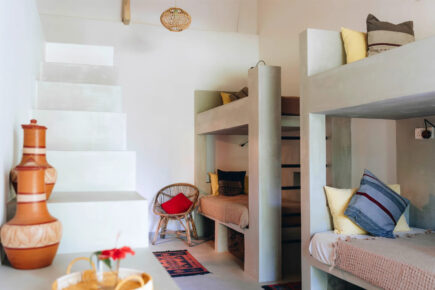
Mellow Hostel Sri Lanka
Kabalana Beach is right on your doorstep at Mellow Hostel, a space created for surfers and slow travellers who want to connect. The vibes here are, you guessed it, super mellow, making extending your stay a little too easy if you ask me. They offer board rentals, yoga, chilled out dorms and a co-working space: basically all the components you need to kick it back on the south coast.
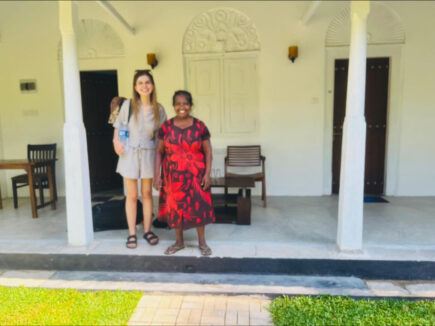
Boardwalk Surf Villa
Close to the beach and a few decent cafes, but tucked back enough that you won’t hear anyone else’s holiday. The garden is lovely, the setup is simple, and the host family are the kind of warm, attentive people that make you want to stay an extra night.
Madiha Beach: For Sleepy Beach Vibes
- Best for: Anyone who wants a quiet south coast base with good snorkelling, decent surf, and none of the noise of Mirissa or Weligama.
- Vibe: Slow and local.
- Good for swimming? Yes, in parts. The reef creates a protected swimming lagoon on the eastern side of the beach, and nearby Polhena Beach has an excellent natural pool inside the reef where the water is calm and clear.
- Good for sunset? Good. Wide ocean views with beach shacks set up for exactly this purpose.
- Facilities: Minimal, but it does the job. A handful of cafes and beach shacks, sunbeds for rent, and snorkel gear available near the beach.
- How easy is it to reach? Easy enough. The nearest train station and bus stand are both in Matara, about four kilometres away, with a short tuk-tuk from there.
- How long to spend: Full day, or use it as a quieter base for exploring the surrounding coast.
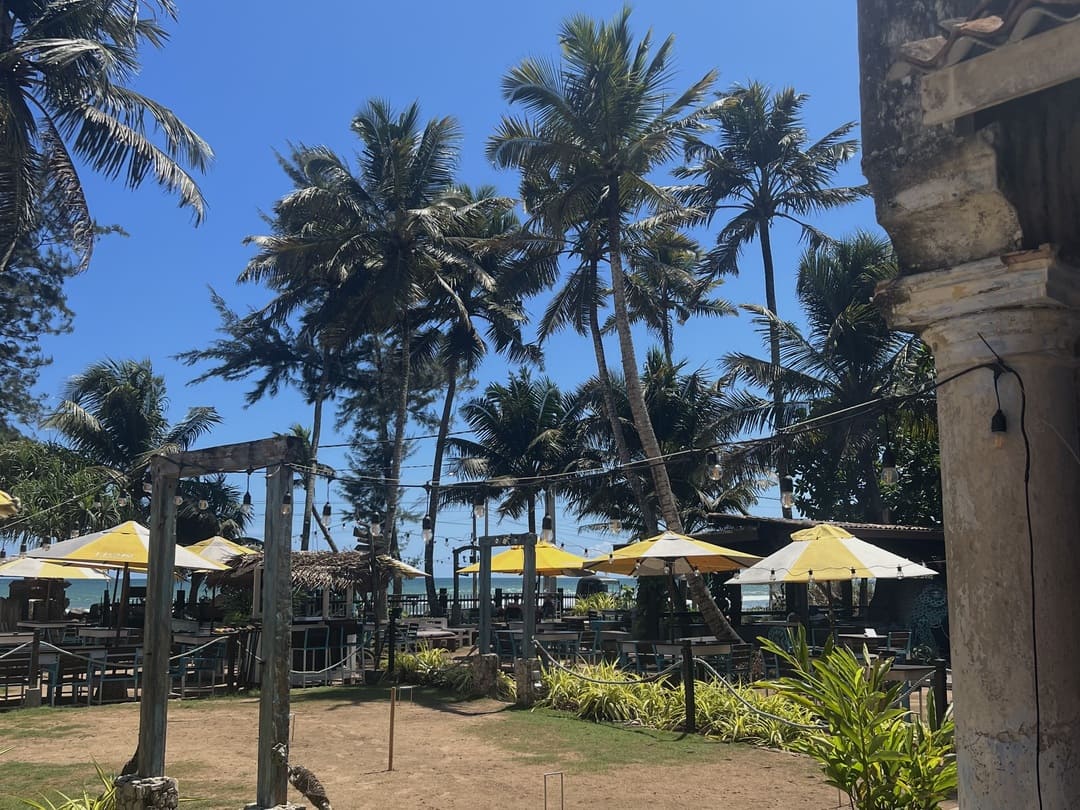
Photo: @taya.travels
Most people come to Madiha in the evening for the infamous Doctor’s House every Wednesday and Saturday, but never in the day, to really see what this stretch of coast is all about. I can’t say I’m upset, the less discovered it remains, the better! I’ve heard whispers of its likes to Bali in decades gone by, a sleepy beach town where the surf is serious and the vibes are chill.
The breaks here tend to cater more towards the intermediate and expert crowds, but that’s not to say that you shouldn’t base yourself here for the vibes and drive to other, more forgiving breaks just up the coast. It’s quiet enough that it feels like a deep breath compared to the other heavy hitters on the surf scene, but built up enough that you still have infrastructure to rely on. X is a wicked hostel, with a swimming pool and co-working space that is notorious for making backpackers and digital nomads stay longer than anticipated.
- What to do here: Surf the local reef breaks if you’re intermediate or above, or snorkel the reef-protected pools, where the coral is thriving, and you’re likely to share the water with tropical fish, soft coral, and the odd turtle.
- Why it’s worth it: Madiha sits close enough to Mirissa and Weligama to use as a day-trip base, but feels like a completely different kind of south coast. Life here still feels local, with small cafes, friendly guesthouses, and a community that’s not massively impacted by tourism like other spots on the coast.
- What to know before you go: The main Madiha Beach has suffered coastal erosion in recent years and is now backed by a line of sandbags. It’s still worth visiting, but head to Polhena Beach nearby for the better swimming and the more attractive stretch of sand.
Best Place to Stay Near Madiha Beach:
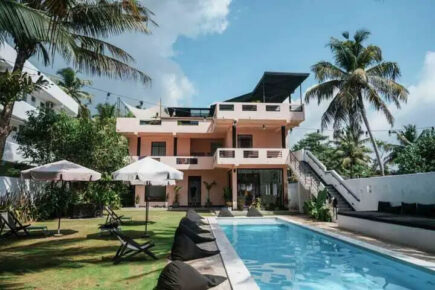
Spindrift Madiha
Spindrift Madiha is a gorgeous hostel with an awesome rooftop restaurant, amazing food and cocktails, and an epic co-working space. The dorms are coay with comfy beds and some storage for your clothes. This is one place where two nights quickly turn into two weeks.
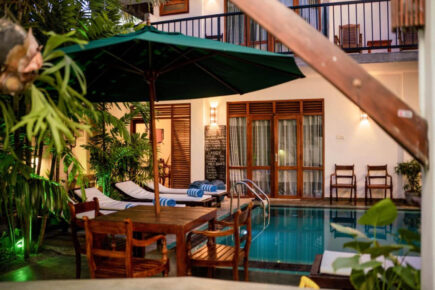
Bienvenido Cozy Madiha
The rooms are clean and well-furnished, with a comfy bed, good lighting, and AC and fan controls right above the headboard so you’re not fumbling in the dark at 3am. The staff are warm, breakfast is worth waking up for, and Madiha Beach is a few steps from the front door.
Weligama Beach: Best for Beginners Surfers
- Best for: First-time surfers, anyone who’s been putting off learning, and backpackers who want a beach town with a full social scene.
- Vibe: Lively and surf-focused. Hundreds of boards dot the water every morning and evening, with surf schools lined up all along the promenade.
- Good for swimming? There are better spots. The bay is sheltered and calm, but the water gets crowded with surfers, particularly in the mornings and evenings. Go mid-afternoon or head to Jungle Beach nearby for a swim without the boards.
- Good for sunset? Good. Post-surf, everyone heads to one of the beachfront shacks to grab a beer and watch the sun dip.
- Facilities: Excellent. Surf schools, board rental, cafes, restaurants, bars, and accommodation at every price point all within walking distance.
- How easy is it to reach? Very easy. On the main coastal train line between Colombo and Matara, with regular buses running along the coast road.
- How long to spend: Two to three days minimum to get a few surf sessions in and find your feet.
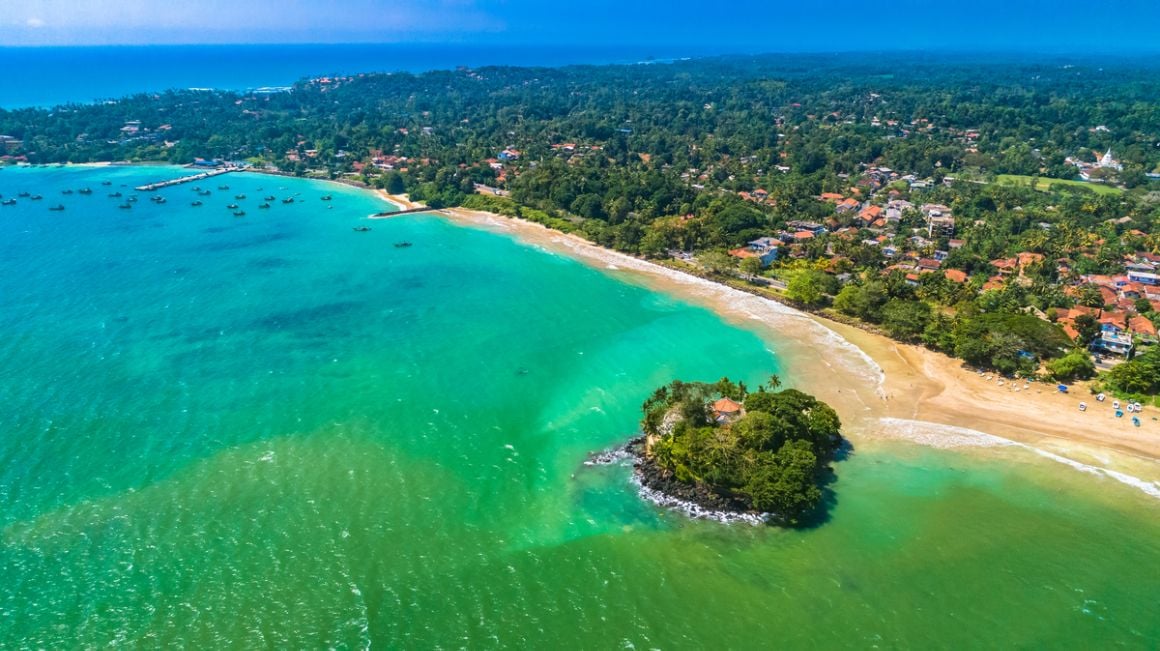
When you first think of surfing in Sri Lanka, your mind should go to Weligama. She is the OG surf town, and she’s got the infrastructure to prove it. Board rentals, schools and beachside shacks line the bay here for one reason and one reason only: to get you out there and shredding. Newbie surfers should start here as the breaks are accessible, reliable and rarely aggressive. As the bay is so big, it’s got breaks to accommodate the more intermediate folk, too.
If you’re not surfing, the beach is wide enough to wander and tan for a while. Whilst Weligama Beach is the big name, the little coves and bays surrounding it are really worth a rekkie too. Either on your own two feet or a set of wheels, you should really try to explore Weligama’s nooks and crannies, especially if you’re looking for surf that’s less saturated. Weligama has some mega hostels, surf-related or otherwise, making it a perfect base for backpackers looking to lock in and get mega good at riding those ways (a great feat I never managed to achieve!)
- What to do here: Book a surf lesson. The large crescent-shaped bay has a mellow beach break with a sandy bottom, and the waves roll in, creating clean A-frames that make it one of the best places in the world to catch your first wave.
- Why it’s worth it: Weligama has built an entire town around the idea of learning to surf. The schools are well run, the waves are consistent, and the social scene around the surf camps means you’ll have people to debrief with at the end of the day. It’s the most frictionless entry point into surfing in Sri Lanka.
- What to know before you go: If you progress quickly and want more of a challenge, reef breaks like Rams and Plantations are a short tuk-tuk ride away, and Midigama, further along the coast, has faster waves that suit intermediates. You won’t outgrow the area in a hurry.
Best Place to Stay Near Weligama Beach:
Wake N Flow, Weligama
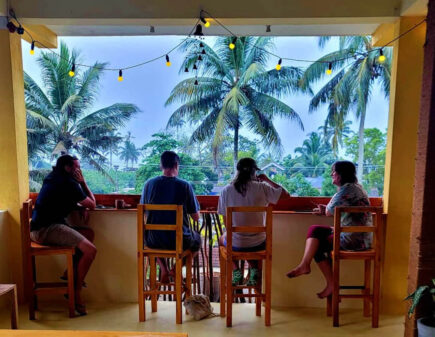
A short walk from the break, with a big pool and a rooftop that pulls the crowd together at the end of the day. The staff are friendly and on it, and the mix of surfers, digital nomads, and backpackers means there’s always someone to share a story with over a sunset drink.
Dumi House
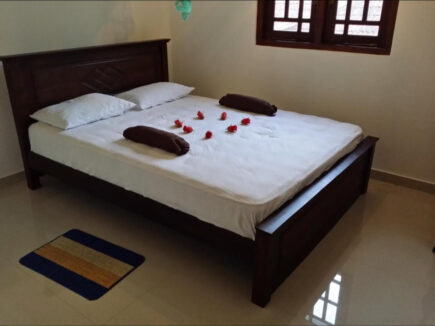
Bang in the middle of everything, with the beach, cafes, a supermarket, laundry, banks, scooter rental, and the bus station all within a few minutes on foot. Tucked back far enough from the main road that you won’t be woken up by traffic. Basic, but it covers everything you actually need.
Hikkaduwa Beach: Best for Turtles
- Best for: Snorkellers, families, and anyone who wants a coral reef on their doorstep without needing a boat.
- Vibe: Relaxed and well-worn, with a mixed crowd of families, couples, and repeat visitors who come back year after year. More laid-back than the Narigama strip further along.
- Good for swimming? Yes. The reef sits just one to three metres down, making it snorkelable directly from shore, and the sheltered water is calm enough for families.
- Good for sunset? Good. West-facing with beachfront cafes set up for evening drinks.
- Facilities: Solid. Snorkel hire, dive operators, surf schools, restaurants, and guesthouses are all within easy reach of the sand.
- How easy is it to reach? Very easy. About two hours by train from Colombo, right on the main coastal line. Visit Weligama
- How long to spend: A full day minimum, two if you want to properly explore the reef.
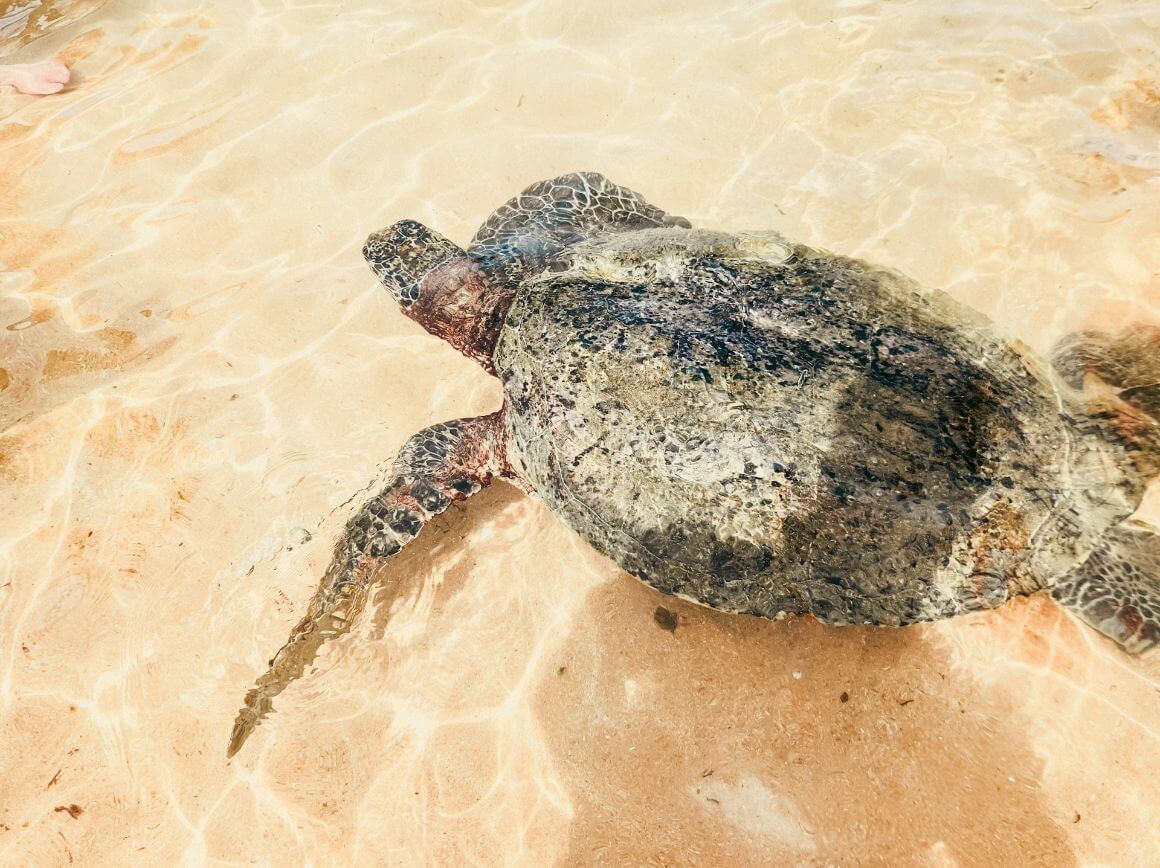
There aren’t many beaches in Sri Lanka where you can wade in up to your waist and find yourself eye-to-eye with a sea turtle. Hikkaduwa Beach is one of them. Green sea turtles are present year-round, and the reef sits just metres from shore, meaning it’s a rare beach that’s centred around snorkelling, not surfing.
The coral system sits just metres from shore at a depth of one to three metres, which means snorkelling here requires nothing more than a hired mask and the ability to wade out past your knees. The water is calm and clear between November and April, and shared year-round with green sea turtles that have been coming to this stretch of coast long enough that they seem entirely unbothered by the company.
Saying that, I would be cautious of somewhat shady ethics going on with the turtles here. Feeding them seaweed is a cool experience, just don’t be that tourist who picks up a turtle purely for a photo op. Let’s be responsible travellers AND human beings!
- What to do here: Hire a mask and snorkel and get in the water. Green sea turtles are present year-round, and the reef sits close enough to shore that you don’t need to go far to find them. The coral sanctuary is protected as a national park and accessible directly from the beach, with visibility at its best between November and April.
- Why it’s worth it: Very few beaches in Sri Lanka put you this close to an active coral reef. The turtle sightings are reliable, the water is calm, and the beach works just as well for a family afternoon as it does for a serious snorkel session.
- What to know before you go: Some locals feed the turtles to draw them closer to shore, which guarantees sightings but is a practice worth being aware of. If you’d rather see them behaving naturally, head out early in the morning before the crowds arrive and the feeding starts.
Best Place to Stay Near Hikkaduwa Beach:
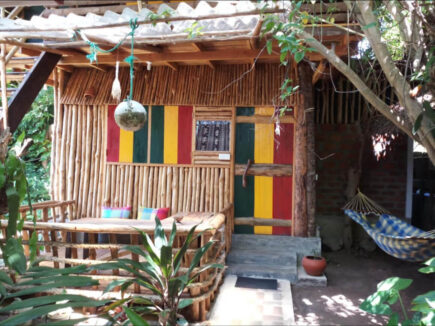
Chami’s Place
This is a unique set of bungalows seemingly carved out in the jungle with the beach at your doorstep. The hosts are the kind of people you end up spending more time with than planned, the treehouse vibes are as good as it sounds, and the curry is worth asking for the recipe. If you’re lucky, they’ll teach you how to make it.
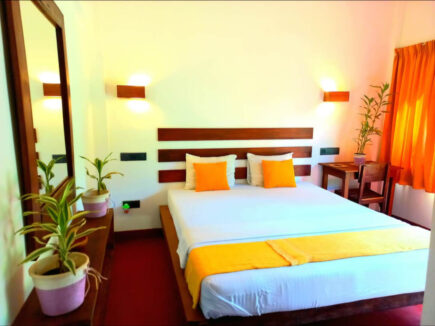
Coco Garden Villas
The host is an absolute gem – his local reccs are 10/10 and they make a mean cup of cinnanon tea. The space is clean, well located, and perfect for a solo traveller or couple.
Mirissa Beach: Best for Vibes
- Best for: Sunset chasers, whale watchers, beginners learning to surf, and anyone who loves a bit of people watching.
- Vibe: Lively and social, pulling in a mixed crowd of backpackers, couples, and families. Busy in peak season, but big enough to never feel overwhelming.
- Good for swimming? Yes, mostly. The main beach is good for swimming, but currents can be strong at times, so always risk-assess.
- Good for sunset? Exceptional. Parrot Rock, a small rocky tidal island near the beach, is one of the most popular sunset spots on the south coast, with panoramic views over the bay.
- Facilities: Excellent. Beach bars, surf schools, restaurants, and whale watching operators are all within walking distance of the sand.
- How easy is it to reach? Easy. About three hours from Colombo by car via the expressway, with buses and tuk-tuks running from Galle and Weligama.
- How long to spend: Two to three days to fit in a whale watching trip, a beach day, and a sunset or two. But there are some great hostels here if you wanna bed down for longer.
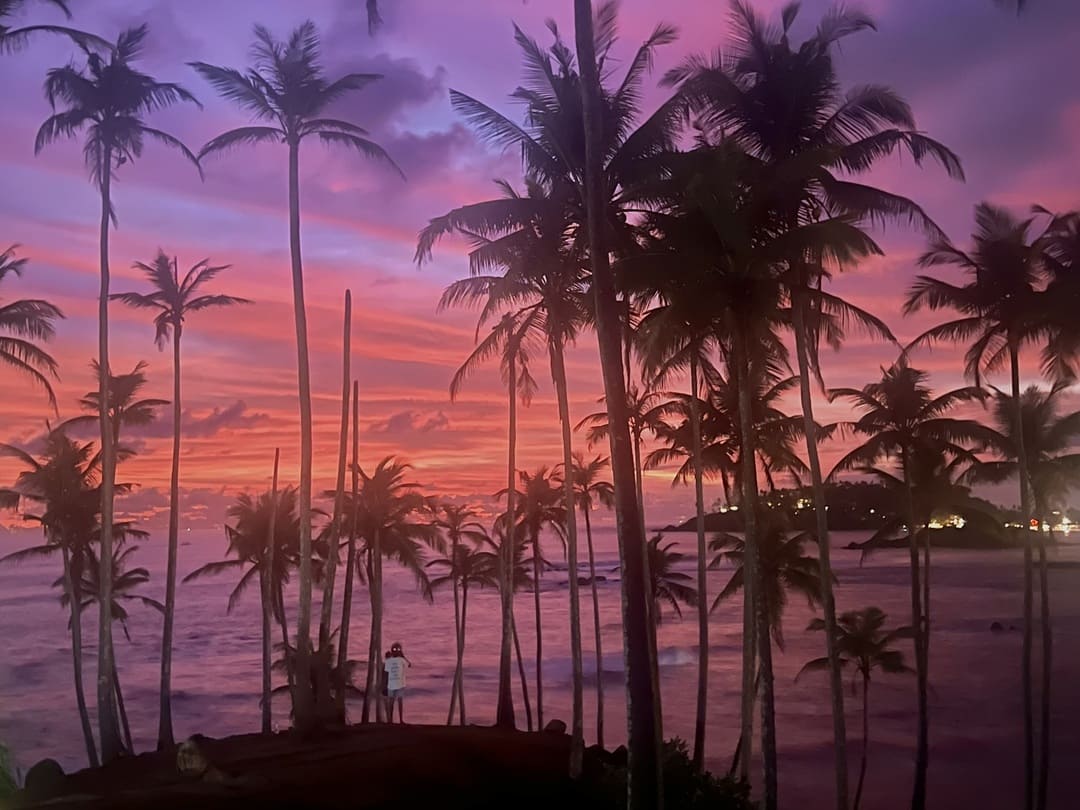
Photo: @taya.travels
Look, Mirissa Beach doesn’t win any awards for the most beautiful beaches in the world, but for people watching alone, I couldn’t not include it on this list. From surfers and those topping up their tan, to the occasional breach of a whale tail, there’s a lot going on here. Mirissa is arguably the buzziest point of the south coast, and its beach is no different.
Grab a coconut from a beach vendor, and you’ve got use of the sunbeds all day. Or maybe you’d rather head out and tackle the break – it might be a little unpredictable for beginners at times, and I think the surf is a lot better in the next bay up in Weligama IMO. My fave part of this beach has to be Coconut Hill – you guessed it, a hill lined with coconut trees jutting out into the sea. It’s by far the best place to watch the sunset from, as you can spot fishermen and surfers alike soaking up the last golden rays. If you’re lucky, whale watching is possible from the coast, or you can head out on a tour to get a closer look for yourself, and the Sea Gods are looking down kindly on you that day.
- What to do here: Book a whale watching trip for the morning, when seas are calmest, and sightings are most reliable, with blue whales and dolphins regularly spotted just a few kilometres offshore. Back on land, climb Parrot Rock before the sun drops and secure a spot at one of the beachfront bars for the aftermath.
- Why it’s worth it: Mirissa has the full package: insane sunsets, whale watching ops and the chance to swim and surf.
- What to know before you go: Whale watching season runs from November to April – book with a responsible operator.
Best Place to Stay Near Mirissa Beach:
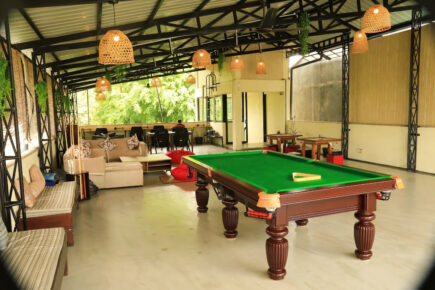
JJ’s Hostel
The boutique hostel offers backpackers in Sri Lanka a dose of luxury without losing value. Set five minutes from the shores of the idyllic Mirrisa Beach, you’ll quickly set your watch to island time. The communal space is part wide open garden, part alang-alang bungalow, which invites lounging by the pool or interacting with backpackers from around the globe.
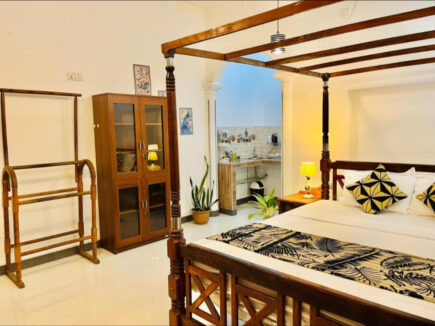
Lucky Beach Mirissa
The location is solid, the grounds are beautiful, and the rooms are clean and comfortable with AC that’ll actually keep you cool at night. Breakfast is freshly cooked every morning and changes slightly each day, which is a small joy when other hotel brekkies start to feel samey samey.
Talalla Beach: Best Hidden Gem
- Best for: Anyone who wants a south coast beach that hasn’t been packaged up and sold yet.
- Vibe: Quiet and unhurried. Fishermen work from outrigger canoes, and the traditional beach seining, where villagers pull nets ashore, is a daily fixture. Small retreats, a handful of guesthouses, and not much else.
- Good for swimming? Yes. Swimming is safe most of the day, though the beach drops away fairly quickly, so keep an eye on younger swimmers.
- Good for sunset? Good. West-facing bay, although the vibe here is more minimart beers in the sand than more upscale joints on other beaches.
- Facilities: Minimal. One beachfront restaurant in high season – don’t come expecting much beyond the basics.
- How easy is it to reach? Moderate. The nearest major town is Matara, about 12 kilometres away, from where you take a local bus or tuk-tuk.
- How long to spend: Half to a full day.
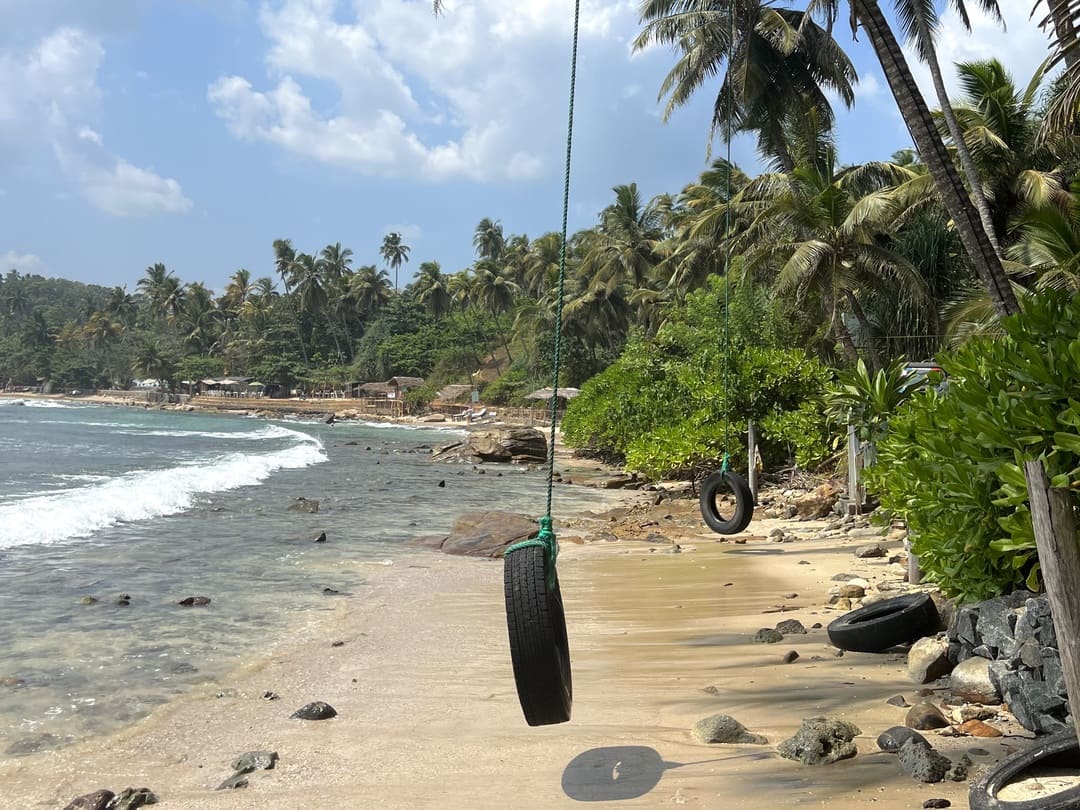
Photo: @taya.travels
Wedged somewhere in between Matara and Hiriketiya is a stretch of coast unassuming to most. It’s got little in the way of tourist infrastructure, but what it lacks in beach bars and surf schools, it makes up for with a vibe, so chill and serene you’ll be surprised it’s not on more people’s radars. Talalla will give you a glimpse of what Sri Lanka’s coastline might have felt like decades ago, long before the tourists arrived.
It’s a relatively wide stretch of coast, with mostly locals milling about and fishermen going about their work during the day. The water here is made for swimming, not surfing, but rip currents mean only certain parts of the beach are safe to swim in, depending on the day. Always ask the locals or don’t wade too far in if you’re unsure. There are a couple of spots to grab a coconut from, but in low season, it’s a DIY job here! Grab some short eats and something cold roadside before heading down for a proper breather from the usual beach crowds.
- What to do here: Swim, read, and watch the fishermen pull nets in at dawn.
- Why it’s worth it: Talalla is what the rest of the south coast used to be before the guesthouses multiplied and the beach bars got Instagram accounts. Local families still come here on Poya days to swim and picnic.
- What to know before you go: The surf here is inconsistent and rarely gets above knee to waist height, so if daily surf is the priority, base yourself at Weligama or Hiriketiya instead and come here for a day trip.
Best Place to Stay Near Talalla Beach:
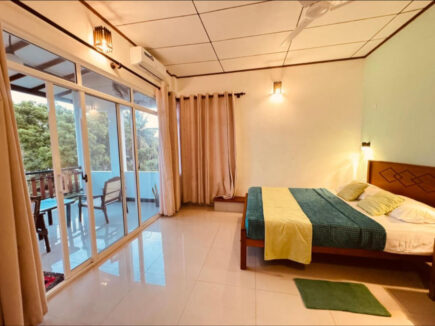
KVA Talalla Beach Villa
This place sits right on the beach with a garden that’s much bigger than you’d expect, shaded and cooled by the sea breeze with spots to eat, read, or do yoga before crossing directly onto the sand. The rooms are large and comfortable, the terrace is worth the price alone, and the host family are the sort of warm, unhurried people that make you want to book an extra night.
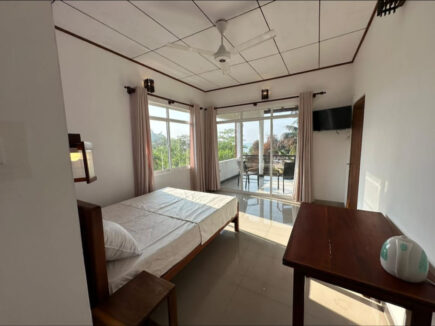
Talalla B&B
This place sits on a stretch of beach that feels almost private, with a spacious terrace and garden looking straight out to the water. The rooms are big and comfortable with AC, and a balcony just made for sunsets.
Tangalle Beach: Best for Getting Off the Beaten Path
- Best for: Wildlife seekers and anyone who wants a wilder, less packaged stretch of the south coast.
- Vibe: Remote and unhurried. Wide open sands, sea turtle nesting grounds, and a raw natural atmosphere far from the crowds.
- Good for swimming? Not really. The main beach has a powerful shore break and potentially strong currents on larger swells. For calm, safe swimming, head to Goyambokka lagoon one kilometre west, which is relatively more sheltered.
- Good for sunset? Very good. Open ocean views with nothing in the way, making it one of the most beautiful spots in Sri Lanka.
- Facilities: Limited. A handful of guesthouses and restaurants out on the main road.
- How easy is it to reach? Moderate. Tangalle town has bus connections from Matara and Colombo, with tuk-tuks covering the last stretch to the beach.
- How long to spend: Anything from half a day to two nights minimum. You can really slow it down here.
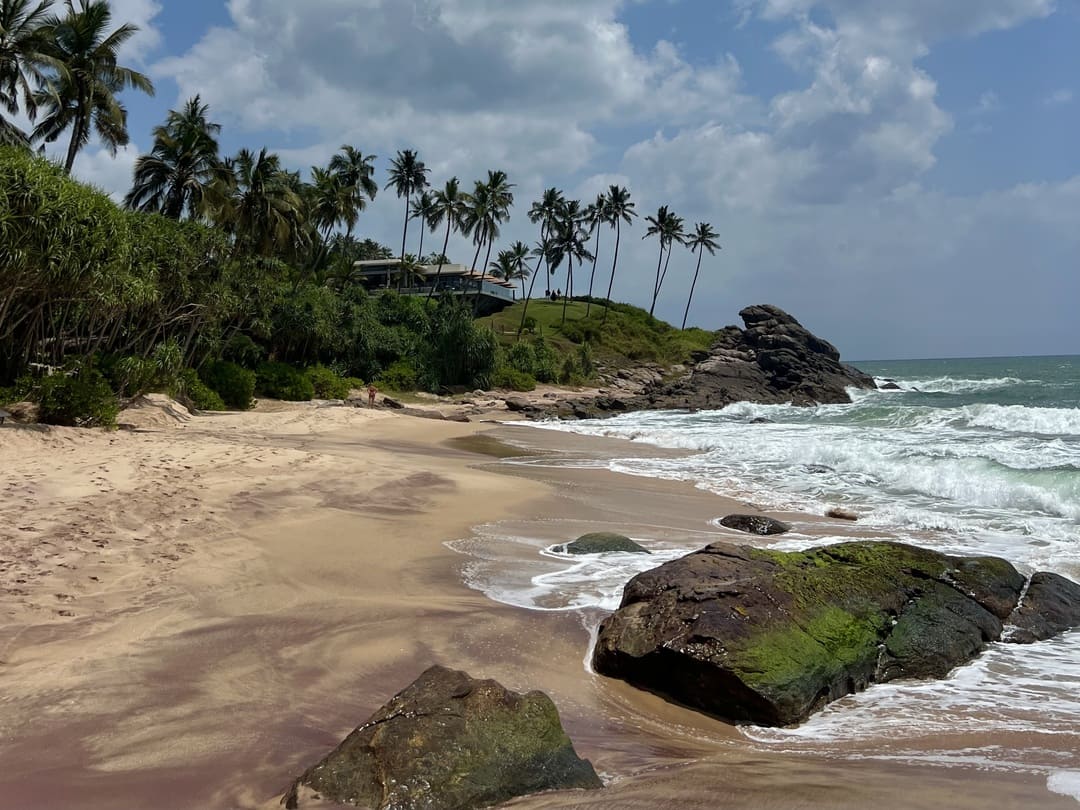
Photo: @taya.travels
Enveloped by lush jungle and tropical palms, Tangalle has a good mix of coastal views and greenery to balance it out. This is a local beach and very much feels that way. Come Poya, this otherwise quiet beach comes alive with the buzz of locals gathering to swim, play volleyball and generally chill out. For a feel of how the locals get to enjoy their beaches, Tangalle is a great afternoon stop.
Paraiwella Beach, just off the main Tangalle strip, is a teeny tiny little cove with the perfect conditions producing next to no waves – a rare shocker in Sri Lanka. Perfect for the inspiring mermaids like myself, you’ve got no fear of being taken out by a wave or surfer on said wave, just stretches and stretches of calm blue waters.
- What to do here: Swim, walk the beach, and let the day go at whatever speed suits you. Hire a kayak and paddle through the mangroves at Tangalle Lagoon for an hour or two, or pick up a bicycle and work your way along the headlands between bays. The fishing community is still active on the beach most mornings, and watching the nets come in is worth an early start.
- Why it’s worth it: Tangalle is one of the few spots on the south coast where the beach hasn’t been entirely reorganised around tourists. It’s calm, relatively uncrowded, and set up well enough to be comfortable without being so developed that it loses the point.
- What to know before you go: The best conditions are between November and April, when the southwest monsoon has cleared. Outside that window, the sea can pick up, so check before you swim if you’re visiting in shoulder season.
Best Place to Stay Near Tangalle Beach:
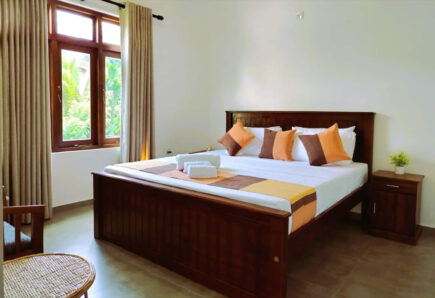
Haven18
This homestay is a beautiful space, with huge lounge and bedrooms hosted by a gem of a family. Having a fridge and washing machine is more useful than you’d expect, especially if you’re kicking it back for a while. Cafes, restaurants, supermarkets and the beach are all minutes away.
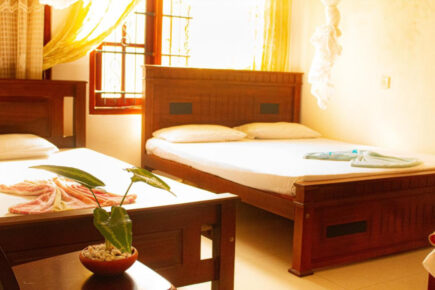
Golden Town Hotel
The family who run this homestay are warm and well-mannered, and the small kitchen and restaurant on site has fans, plug sockets, and wifi that actually holds up. It looks further from the action than it is on the map, but two minutes on foot puts you wherever you need to be.
Overrated vs underrated
Every beach list has its consensus picks, and this one is no different. But consensus and quality aren’t the same thing, and a few beaches on the south coast have built reputations that their actual experience doesn’t quite back up.
Beaches that I think are overrated
Mirissa is the beach everyone tells you to go to when they’re giving you tips for Sri Lanka, and enough people go that it’s become the busiest point on the south coast. I have no beef with Mirissa, but the beach itself isn’t particularly pretty by Sri Lankan standards, the strip is loud and crowded in peak season, and finding a quiet corner of sand is more or less impossible between December and March. If whale watching is your priority, book the trip and go. If you’re hoping for a dreamy, uncrowded beach day, you’ll find better options further along this list. Families and first-time visitors who want a full-service resort experience with everything in one place will still get what they came for.
Hikkaduwa Beach is built up in a way that feels more package-holiday than backpacker, and the turtle situation is uncomfortable if you look at it honestly. A significant portion of the sightings is driven by local guides feeding the turtles to draw them in, which means a lot of tourists are essentially paying to watch wild animals being trained for their benefit. If you want to swim with turtles the right way, it’s worth going early, skipping the guided feeding sessions, and asking locally about where to find them behaving naturally. Don’t partake in shady animal ethics just for the sake of a pic – you can enjoy the beach without it.
Beaches that I think are underrated
Talalla and Madiha are the south coast as it used to be before the guesthouses multiplied and the beach bars became bougie. These are places where you can still find a nook of sand to yourself, where the fishing community is still alive and thriving, and where the pace of life hasn’t been reorganised around tourist throughput. They feel like Sri Lanka twenty years ago, which sounds dramatised until you’ve spent a week on the busier stretches of the coast and understand exactly what’s been lost.
Lack of crowds means you’re trading facilities, and are committing to grafting a little more to get there. These aren’t beaches for people who want convenience. They’re for slow travellers, surfers who don’t need a packed lineup, and anyone who finds the most interesting version of a place before everyone else does. Go now, because who knows what these beaches will look like in the future?!
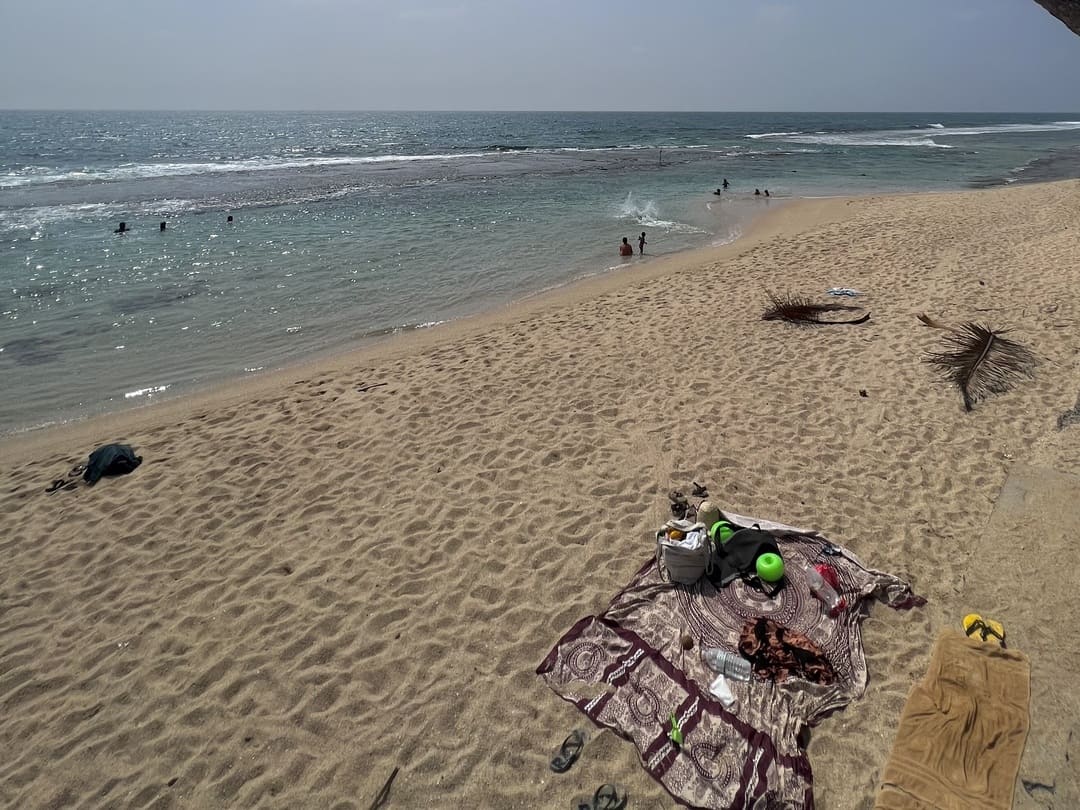
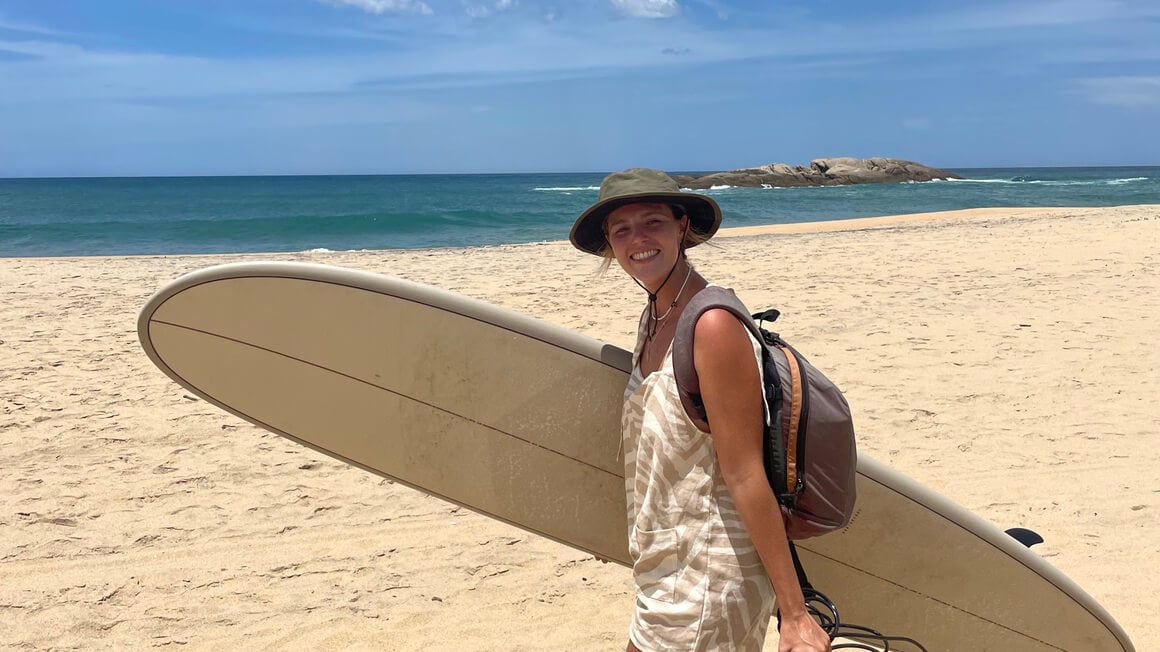
Photo: @taya.travels
Planning the Logistics
Sri Lanka looks compact on a map, but it takes three times as long to get around as you expected. The roads are good in places, slow everywhere else, and a distance that looks like an hour on Google Maps will often take two. Island time is very much in force here. If you’re planning to do a full sweep of the south coast in one day, you’re preparing yourself for a sore bum sat on a bike all day with very little beach time in between. Despite this, though, Sri Lanka is well worth the effort!
The coastal train is your best friend on the south coast. The coastal line runs from Colombo Fort all the way down to Matara, stopping at or near Hikkaduwa, Weligama, Midigama, Ahangama, and beyond. It’s slow, cheap, and one of the more scenic things you can do on the island without trying. The Colombo to Galle leg takes around two and a half hours, and Galle to Matara adds another forty to sixty minutes.
For beaches without a nearby station, Hiriketiya and Talalla included, a tuk-tuk from the nearest town covers the last stretch for a few hundred rupees. Arugam Bay on the east coast has no train access at all. Buses run from Colombo and take around six and a half hours, or you hire a private driver from the south coast, which is the easier option if you’re already there.
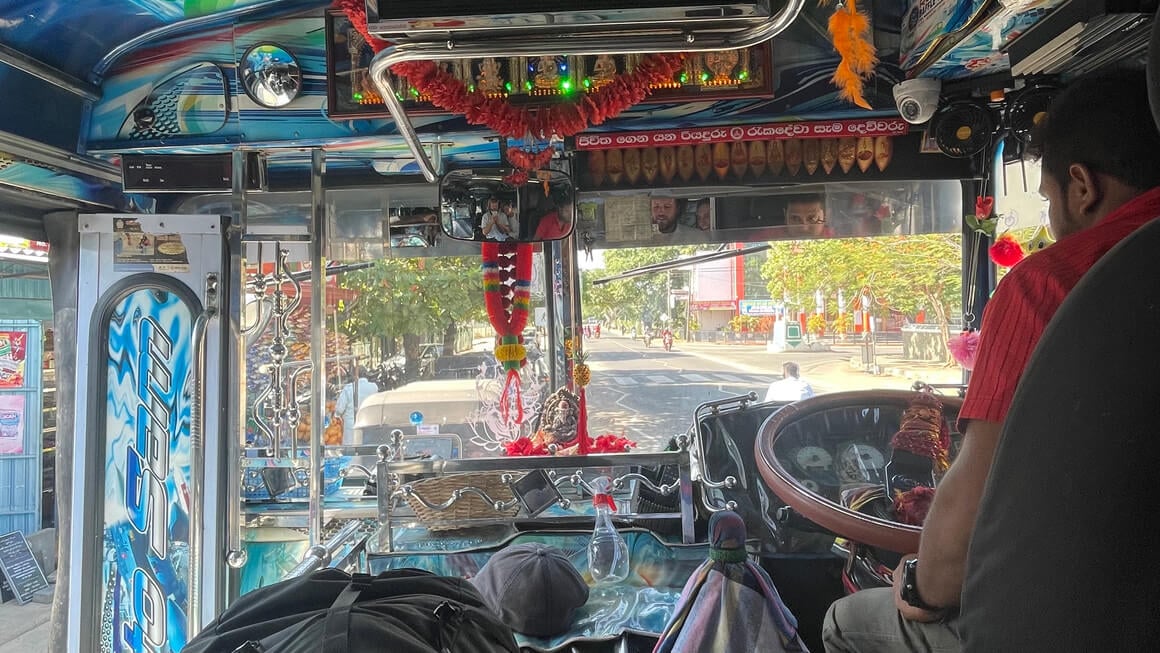
Photo: @danielle_wyatt
Buses were my preferred mode of transport on the south coast as they’re cheaper, more frequent and cover more ground than trains. But they are, shall we say, an experience. They’re slower (unless your driver has a death wish), often cramped, and can get sweatttty in the midday heat. They work fine for short hops between towns, which is what most journeys along the south coast look like. Tuk-tuks are for the final stretch: getting from a train station or bus stop to the beach itself or short trips between nearby spots if you haven’t rented your own wheels.
Two bases are the right number for most South Coast trips. One in the Ahangama or Weligama area covers Kabalana, Hiriketiya, Mirissa, and Madiha within easy striking distance, and one further east around Hiriketiya covers the quieter end of the coast. Hikkaduwa sits at the Galle end and works well as a first or last stop, given how easy it is to reach from Colombo. If you’re combining the south and east coast, treat Arugam Bay as a separate chapter entirely. It’s most likely going to be in an opposing season anyway, and the travel day to get between the two is quite a beast.
How would I choose between these beaches
Don’t have time to scour through every beach on Sri Lanka’s coast? I don’t blame ya. Here’s how I’d choose if I wanted maximum beach bum time with minimum effort.
- If I had one week: Hiriketiya and Ahangama Beach
- If I had two weeks: Hiriketiya, Madiha, Weligama and Ahangama Beach
- If I were travelling with kids: Madiha, Mirissa, and Hikkaduwa Beach
- If I were a beginner surfer: Hiriketiya and Weligama Beach
- If I cared most about serious surf: Arugam Bay, Ahangama and Kabalana Beach
- If I wanted quiet: Tangalle and Talalla Beach
Mistakes to avoid
- Getting the coast wrong for the season: The southwest monsoon hits the south coast hard between May and August. If you’re travelling in that window and you’ve booked a week in Mirissa, you’re going to have a bad time. Check the monsoon table above before you commit to anything.
- Ignoring surf and current conditions: This applies even if you’re not surfing. Reef breaks create strong currents in the channels around them, and swimming near an active surf break without understanding what’s happening in the water is how people get into trouble. Ask locally, read the flags, and if in doubt, stay out.
- Trying to visit too many beaches: Sri Lanka looks small and moves slowly. A map that suggests Hikkaduwa to Arugam Bay is a straightforward day trip is lying to you. Pick two bases, do them properly, and save the rest for next time. The people who try to tick off every beach in ten days are the same people who spend most of those days on a bus.
- Assuming every beach is safe for swimming: Some of the prettiest beaches on this list are not straightforward swim beaches. Currents, shore breaks, and reefs make certain spots feel a bit scary to get into, particularly outside the dry season. Look for local warning flags, ask your guesthouse before you get in, and don’t assume that calm-looking water means safe water.
- Assuming the prettiest beach is the best place to stay: A stunning stretch of sand with no reliable food, no transport links, and nowhere to fill a water bottle gets old quickly. Factor in practicalities before you commit to a base. The beaches with the best infrastructure aren’t always the most photogenic, but they’re the ones you’ll actually enjoy living on for a few days.
- Touching the turtles: It sucks how this has to be a point. If a guide is encouraging you to get close to, touch, or feed a turtle, walk away. The best turtle encounters happen early in the morning, without a guide, when the animals are behaving naturally. Anything that involves baiting wildlife for a better photo isn’t worth the photo.
If I were planning the trip again
One base on the south coast was the right call, and I wouldn’t change it. Sri Lanka is one of those rare places where you don’t have to be constantly moving to feel as though you’re seeing it all; you just need a good base and a pair of wheels to take you to see the rest. I was around the Ahangama area, but I’d love to use Hiriketiya as a second base, purely because that place has a special place in my heart.
Aragum Bay feels like my natural graduation when I inevitably come back. The timing has to be right, May to September, when the south coast is in monsoon, and the east is at its best, and I haven’t made that work yet. It’s on the list. Based on everything I’ve heard from people who’ve been, it deserves its own trip rather than being tacked onto the end of a south coast run.
I’d actually also try to surf more! I’m a beach bum at heart, the sandy towel and my Kindle calling me more than getting pummelled by the waves, but I do regret not giving it more of a go. Next time, I think I’m going to find a social lil surf camp in Weligama and lock in. Next time, you’ll see me, I’ll be a pro. Watch this space.
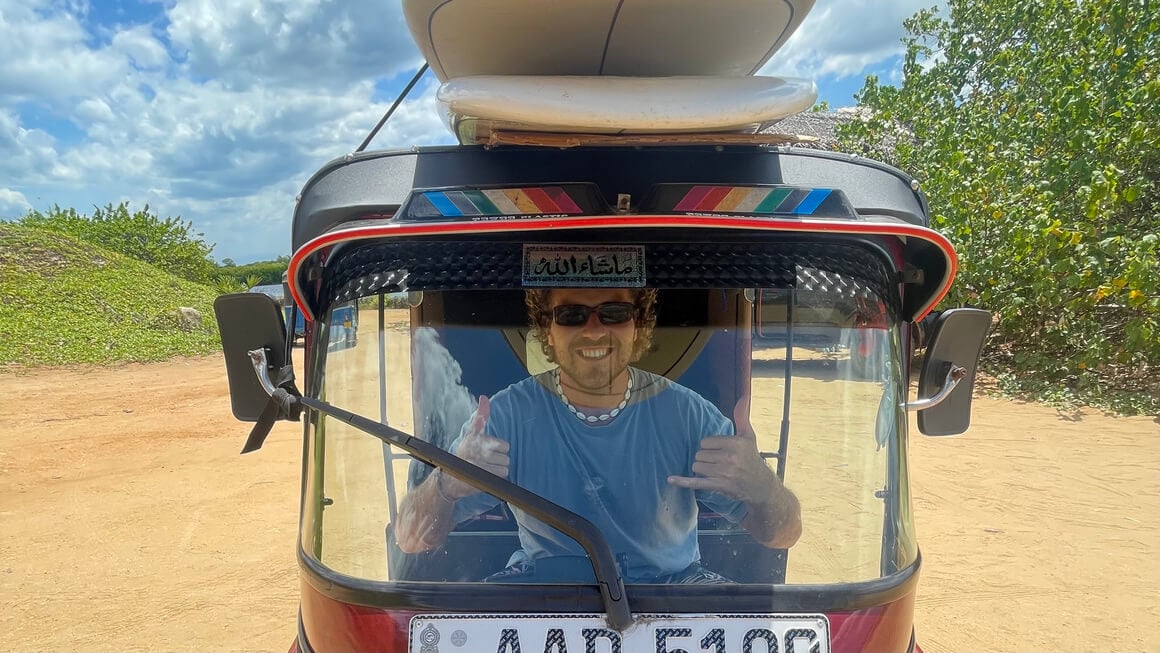
Photo: @danielle_wyatt