Venezuela travel note:
Recent U.S. activity in Venezuela has sharply escalated instability, and conditions (including transport and safety) can change with little warning. TBB cannot recommend travel to Venezuela right now. If you still plan to go, check your own government’s travel advice and your insurer before booking.
Venezuela is one of the most fun countries in the world to travel in. However it isn’t the easiest to get around.
One of the many logistical problems here is managing money. As a European I take it for granted how easy it is to go to a shop, tap your card and that’s that. Sorry folks, it isn’t so simple here.
How difficult is it? Well, it can be manageable if you know what you’re doing, but it’s still tricky enough for me to decide it’s worth writing a short guide about it.
Let’s cut the waffle and get stuck straight into this.
What is the Currency in Venezuela?
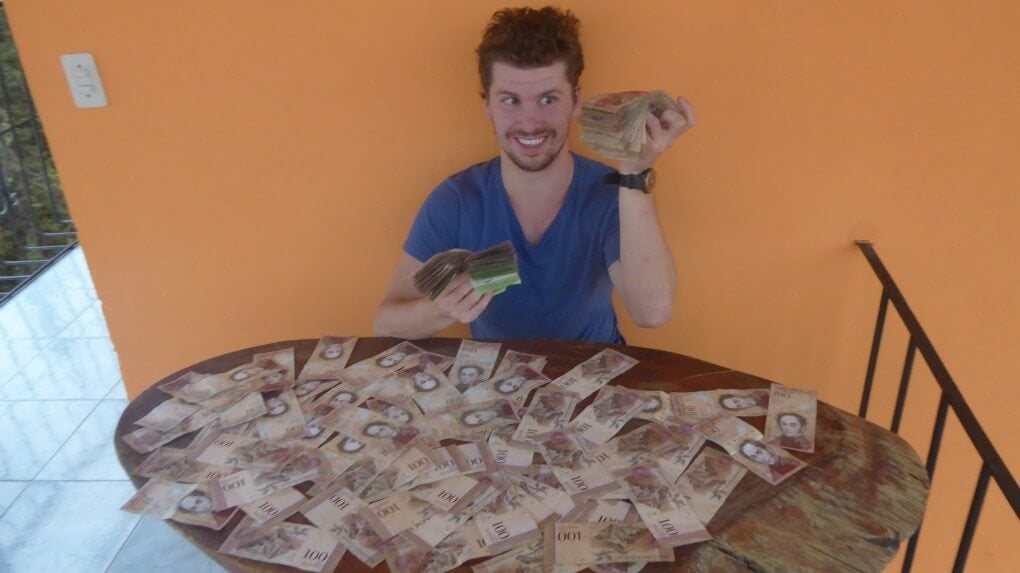
The currency used in Venezuela now is the US dollar. Bolivars still exist, but are only used for very small transactions and for change. The only time I came across something similar when backpacking in South America was in Ecuador.
Inflation destroyed the Bolivar so badly that it was scrapped multiple times and replaced with a new version of the Bolivar, which then went out of control. My Airbnb host in Caracas told me that $1 today is worth over 100 trillion of the original bolivars. Spare a thought for the poor cashier counting all of those out!
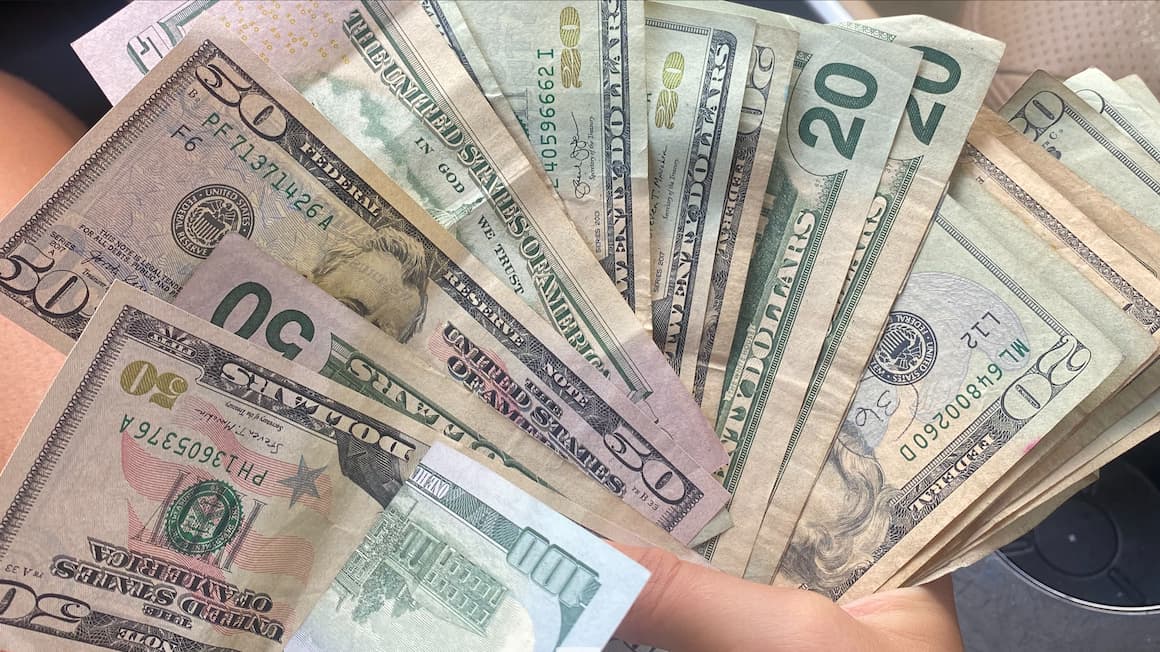
Photo: @amandaadraper
The Broke Backpacker is supported by you. Clicking through our links may earn us a small affiliate commission, and that's what allows us to keep producing free content 🙂 Learn more.
When I first went to Venezuela in March 2025, $1 was worth 68 of the latest iteration of Bolivars. Seven months later, I wrote this article, and $1 was worth 204 Bolivars. By the time you read this, I’m sure it will be a lot more.
The good news is that Bolivars will play a very minor part in your Venezuela trip. The US dollar is king now, and Bolivars are little more than a small inconvenience.
Can I Use My Card for Payments in Venezuela?
Maybe… but probably not. Foreign cards generally don’t work here. There are exceptions, and with each passing day, you’ll find a tiny number of establishments starting to accept them.
But for now, the general rule is to assume your Visa/Mastercard/AMEX, etc., won’t work out here and rely on cash (or Zelle… if that works for you).
When I tried paying with my card in a modern supermarket in Caracas, they asked for my passport details. This wasn’t something that I felt entirely comfortable doing anyway, but the payment didn’t work, and I ended up paying with cash in the end.
You should travel to Venezuela with the assumption that your card won’t work, and anything else is a bonus!
Will Venezuelan ATMs work for me?
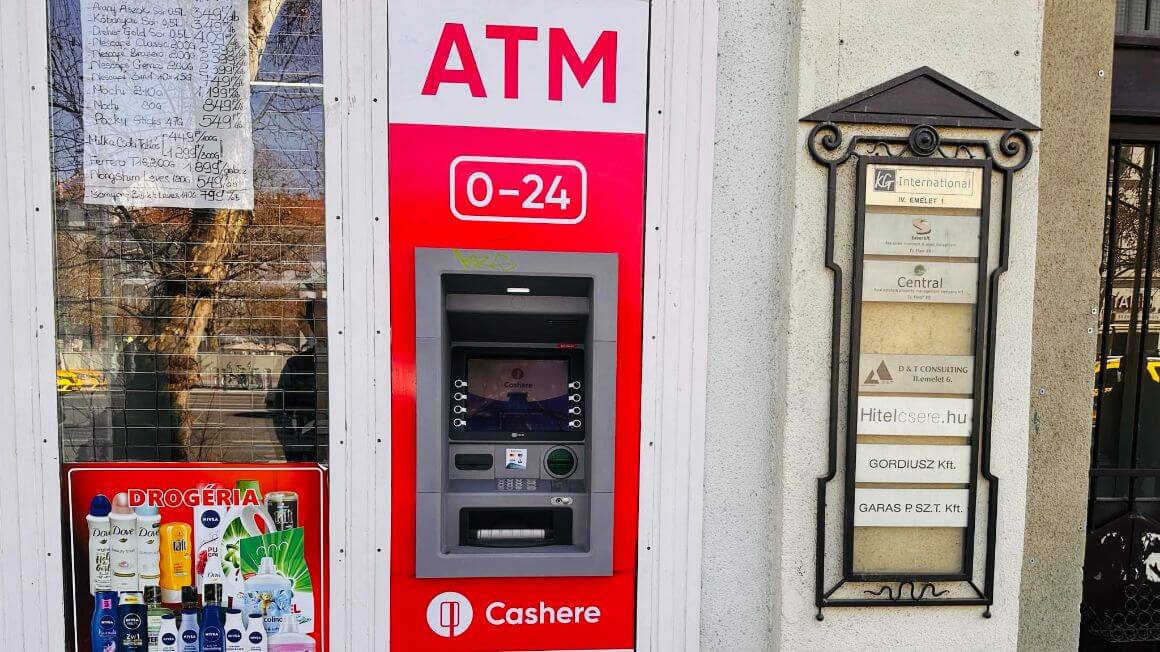
Photo: @travelling.mandala
Possibly, but they aren’t even worth trying. Venezuelan ATMs come with three main pitfalls to keep in mind:
- They have high withdrawal fees. Whilst fees will vary per ATM, it will cost you a fair bit to take money out here, often around $5-10.
- They have low withdrawal limits. You can only take a small amount of cash out at any time, meaning you’ll have to make multiple withdrawals, which will end up costing you a lot in fees every time.
- Cash received will be in bolivars. Instead of getting anything useful, you’ll be stuck with a ton of Bolivars, not the USD you really need. As mentioned previously, they won’t be particularly useful to you.
Oh, and the exchange rates are terrible too. People generally use the black market to get Bolivars at much better rates than the official ones. You shouldn’t do this, as you won’t need to get bolivars, but ATMs will give the official rate, which is yet another reason to avoid them.
Are There Any Digital Payment Methods Foreigners Can Use in Venezuela?
In Venezuela, you can use Zelle in some circumstances. When we first booked our safari experience at Hato El Cedral in Los Llanos, they wanted us to pay via Zelle. We couldn’t do this and ended up paying in cash when we arrived a few weeks later.
Now, I’d be careful with this payment method. Zelle is meant to be used for domestic transactions, and if you have an account in the US, then there’s no guarantee it will work in Venezuela.
Whilst you should be aware that Zelle is a possible payment option, you should also try not to rely on it. If it works, great. But bring enough cash to have a plan B just in case it doesn’t.
Is Western Union an Option for Receiving Money in Venezuela?

Not reliably. Western Union is a lot of hassle to deal with; there are many barriers to overcome, and you won’t end up being able to access a lot of money even if you are able to receive it.
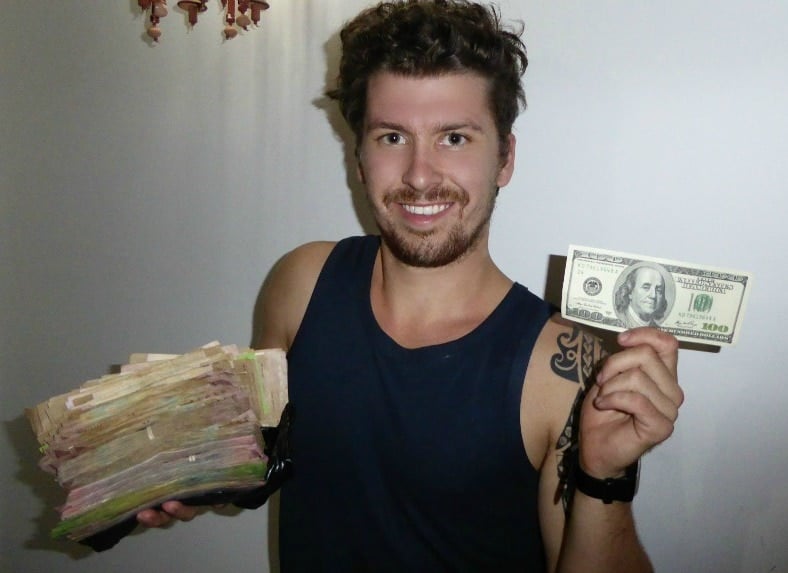
Not all Western Union branches will let you take out US dollars. And those that do will restrict the amount you can receive, usually to around $100, before fees. Worse still, in the likely event you receive Bolivars (which you don’t want), they will come at the official rate (which means you lose a ton of money), and you’ll end up with impractical piles of cash.
Western Union is another barely viable alternative to only bringing cash, which most likely won’t work, and even if it does, it will leave you without a satisfactory amount of money regardless.
How Much Cash Should I Bring Here?
Not many things suck about Venezuela. Backpacking around this amazing country is one of the coolest experiences you can imagine, despite the lies many people push. But the cash situation… yeah, that kinda sucks to be honest with you.
You need to have enough cash to cover all expected expenses during your trip, and more. You NEED an emergency fund if you spend more than expected here. You’re a bit screwed if you run out of money here. No… you’re completely screwed.
Venezuela is an expensive country. You need to budget accordingly, come here with a pre-planned itinerary and know exactly what you’re doing. You can’t just wing it here.
I recommend using Airbnb to book accommodation, as this is something you can pay for before you travel, at least.
You need to prepare not just for unexpected higher costs (prices rise quickly in Venezuela), but also unplanned problems such as having to bribe police. Yeah, this happens here…
On top of that, you should bring a lot of low-value dollar bills, such as $1 and $5. This is because many establishments have little or no change, or will offer a small amount of change in Bolivars instead (good for using on cheap street food at least). If you have small bills, you should be able to pay the correct amount. You will, of course, need a fair few $10 and $20 bills for higher expenses, and perhaps the odd $100.
Whatever you bring, make sure it’s too much. Whilst Venezuela is much safer than before, it isn’t generally a smart move to carry lots of cash anywhere you go. And that means this isn’t ideal, but this is a country that isn’t well-connected with the outside world, and having a lot of cash is necessary.
FAQs on Money in Venezuela
Here are some of the most common questions we hear from people who are looking to visit Venezuela, but are confused about the money situation… which is fair, it’s kinda tricky to get your head around.
What’s the Safest Way to Manage Money in Venezuela?
It sounds counterintuitive, but you need to bring cash and make sure you have enough to last the whole trip. It’s common for alternatives such as foreign cards or Zelle to fail, and you can be hit by unexpected expenses, so you should have more cash than you need, but split between your wallet/purse (small amount), a money belt and other hidden spots in your clothing/luggage (larger amounts).
ALWAYS sort out your backpacker insurance before your trip. There’s plenty to choose from in that department, but a good place to start is Safety Wing.
They offer month-to-month payments, no lock-in contracts, and require absolutely no itineraries: that’s the exact kind of insurance long-term travellers and digital nomads need.
SafetyWing is cheap, easy, and admin-free: just sign up lickety-split so you can get back to it!
Click the button below to learn more about SafetyWing’s setup or read our insider review for the full tasty scoop.
Final Thoughts on Money Management in Venezuela
Venezuela is amazing to visit, but managing money here is a real pain in the arse. The second-biggest I’ve had this year, after falling off a horse in Kyrgyzstan, but that’s a story for a different day.
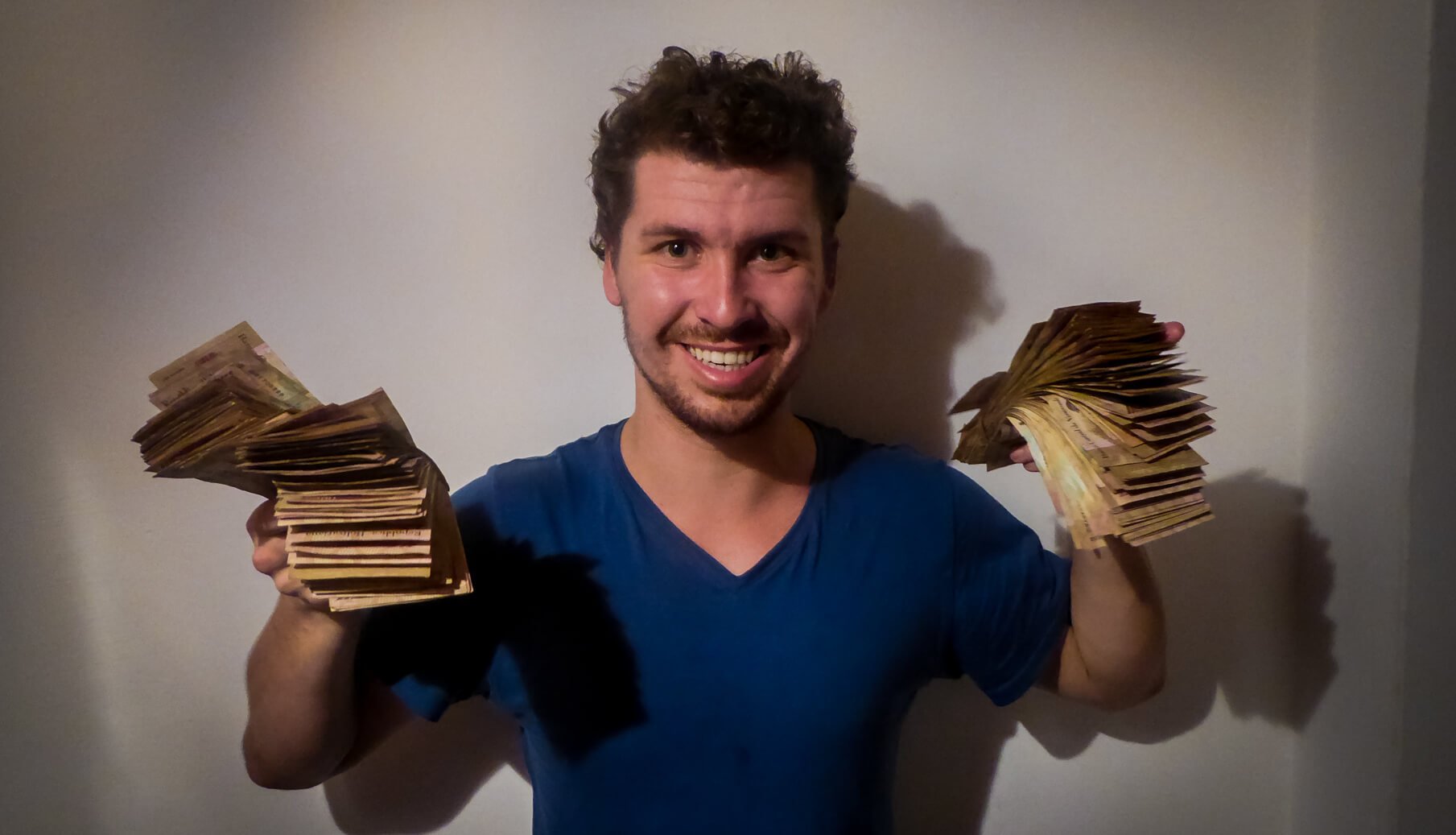
You’ve got to bring a ton of cash here (in US dollars), far more than it’s wise to bring to any country if I’m completely honest. And make sure a lot of it is in small bills. And you need to go in with the expectation that foreign cards won’t work at all. Oh, and Zelle may not work either, despite many Venezuelans depending on it.
Avoid ATMs at all costs. They probably won’t work anyway, but will screw you over hard if they do. Also, try using Airbnb to book accommodation before going, so you can pay in advance and remove the need to carry extra cash for accommodation.
On the plus side, you won’t need to worry about bringing any Bolivars or exchanging them once you’ve arrived.
If you take out money management and shitty infrastructure, Venezuela is a lot of fun. Go out there and have the time of your life, amigos! You won’t regret a thing.