Interrailing feels like the epitome of all of the best bits of travelling in Europe. I mean, what sounds better than grabbing a coffee outside a Parisian cafe in the morning, watching the French countryside blur into the Pyrenees as the train punches south, then rocking up in Barcelona with the whole evening ahead of you?! Living the Euro summer DREAM, baby.
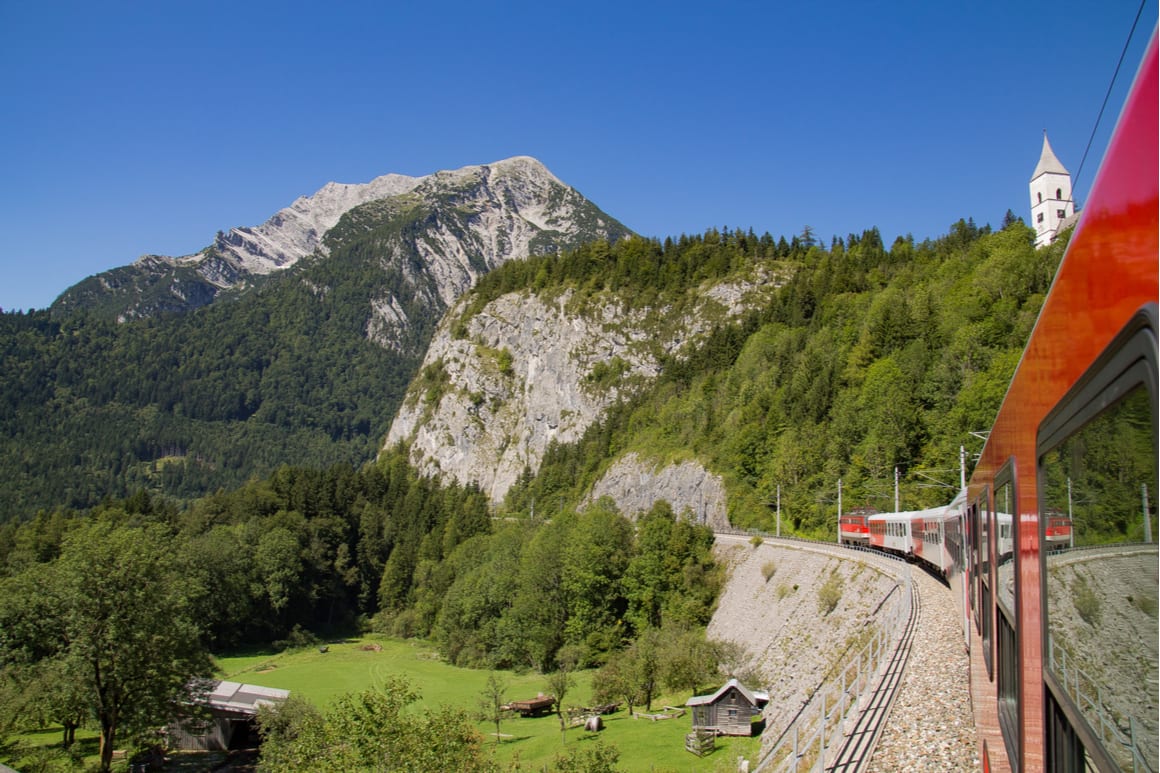
It gives you the freedom to change countries on a whim. To chase hidden cities you had never heard of before, just because a backpacker told you about it the day before on your hostel pub crawl. To watch castles, coastlines, and mountain villages drift past your window instead of spending half of your time in the airport departure lounge.
For years, the Interrail pass has been seen as the ultimate key to Europe, giving travellers the chance to explore dozens of countries with one ticket and almost unlimited flexibility.
But is the romance of interrailing still alive today? Or have rising pass prices, costly seat reservations, and cheap budget flights killed the interrailing dream?
The answer depends entirely on how you travel. From breathtaking scenic rail routes and overnight sleeper trains to hidden reservation fees and money-saving tricks, this Interrail Pass guide dives into what the Interrail experience is really like today. And, more to the point, whether it still delivers one of the greatest adventures in Europe.
Let’s get into it.
The Broke Backpacker is supported by you. Clicking through our links may earn us a small affiliate commission, and that's what allows us to keep producing free content 🙂 Learn more.
- What Is an Interrail Pass?
- Types of Interrail Pass Explained
- How Much Does an Interrail Pass Cost
- The Hidden Cost: Seat Reservations Explained
- Is the Interrail Pass Worth It? (The Real Calculation)
- Is Interrail Worth It For You Specifically?
- How to Use Your Interrail Pass – Practical Steps
- Top Tips to Get the Most from Your Interrail Pass
- Interrail vs Individual Tickets: The Quick Summary
- Frequently Asked Questions
- My Honest Take: Is Interrailing Still Worth It?
What Is an Interrail Pass?
Some of you already know the drill. Others are reading this because you’ve heard the word ‘interrailing’ thrown around by that one friend who spent three weeks sleeping on trains and came back insufferable, albeit well-travelled. Either way, here’s what you need to know.
Here’s the short version: an Interrail Pass is a single ticket that gives you flexible train travel across up to 33 European countries. Instead of booking a separate ticket every time you want to move between cities, you just hop on participating trains whenever you like throughout your trip. High-speed services, regional routes, even some ferries are all fair game, connecting everything from major capitals to tiny mountain towns that barely show up on Google Maps.
For the full breakdown of eligibility, pass options, and participating countries, head straight to Interrail.eu. Don’t rely on some random blog for that stuff. Well. Apart from this one 😉
One thing that trips people up: Interrail and Eurail are not the same thing. Interrail is for European residents, UK travellers included post-Brexit. Eurail is the version built for non-Europeans visiting the continent. Same trains, different passport situation – even that one tripped me up when I first heard about it.
As for history, the pass launched in 1972 and almost immediately became the defining rite of passage for a generation of backpackers in Europe chasing cheap adventure. That spirit hasn’t gone anywhere. It’s just a lot more digital now, with the Rail Planner app handling route planning, train times, reservations, and your mobile pass all in one place. Think of it like an Interrailing for dummies – it takes the guesswork out of literally everything.
Types of Interrail Pass Explained
There are three passes to know about. Here’s what each one actually does.
Global Pass
The big one. A Global Pass gets you train travel across 33 European countries on a single ticket, with no need to book individual journeys every time you move. It’s built for people who want to cover serious ground, or at least keep their options open.
It comes in two flavours. A Continuous Pass gives you unlimited travel every day for a fixed stretch of time, good for fast-paced trips where you’re barely stopping. A Flexi Pass gives you a set number of travel days to use within a longer window, which works better if you’re planning to actually stay somewhere for a few days before moving on. Pass durations run from 4 travel days within a month up to 3 months of continuous travel.
If spontaneity is the whole point of your trip, this is the pass you want.
One Country Pass
Exactly what it sounds like. One country, unlimited travel, between 3 and 8 days to use within a month. It’s the better choice if you’re going deep on a single destination rather than ticking off a highlight reel across six countries in a fortnight.
The value varies depending on where you’re going. Germany, Switzerland, and Italy tend to offer the most bang for your money, mostly because individual tickets in those countries are expensive enough to make the pass look very reasonable by comparison.
The New Interrail Plus Pass
The newest option, and the one worth paying attention to if France, Italy, or Spain feature heavily in your route. The Plus Pass bundles many seat reservation costs into the upfront price, which matters because reservations on TGV, Frecce, and AVE trains can run anywhere from €15 to €30 per journey. On a busy itinerary, those fees stack up faster than you’d expect…trust me.
It costs more than a standard pass, but you get more predictability in return. Not every reservation is covered, though, so check the exact terms on Interrail.eu before committing so you don’t get stung.
How Much Does an Interrail Pass Cost
Prices vary depending on how long you’re travelling, your age, and whether you go first or second class. Here’s the quick breakdown before we get into the numbers.
Youth travellers aged 12 to 27 get 25% off the adult fare. Seniors aged 60 and over get 10% off. Children aged 4 to 11 travel free with a Child Pass, up to two per adult. Under 4s don’t need a pass at all.
First class passes cost roughly 30% more than second class. Honestly, for most backpackers it’s not worth it. The one exception is overnight trains, where upgrading to a sleeper cabin gets you a private bed rather than a shared bunk with five strangers.
Global Flexi Pass Prices, Second Class
| Pass Duration | Youth (12 to 27) | Adult (28 to 59) | Senior (60+) |
|---|---|---|---|
| 4 days in 1 month | €212 | €283 | €255 |
| 5 days in 1 month | €239 | €318 | €286 |
| 7 days in 1 month | €286 | €381 | €343 |
| 10 days in 2 months | €335 | €447 | €402 |
| 15 days in 2 months | €415 | €553 | €498 |
Global Continuous Pass Prices, Second Class
| Pass Duration | Youth (12 to 27) | Adult (28 to 59) | Senior (60+) |
|---|---|---|---|
| 15 days in a row | €357 | €476 | €428 |
| 22 days in a row | €440 | €586 | €527 |
| 1 month in a row | €522 | €696 | €626 |
| 2 months in a row | €620 | €826 | €743 |
| 3 months in a row | €717 | €956 | €860 |
The best place to buy is directly through Interrail.eu. It’s the official retailer, prices are the same as anywhere else, and you’re not handing a cut to a middleman. Trainline and Rail Europe also sell passes if you prefer, but watch out for booking fees on top.
There is a catch. Of course there is.
Your pass covers the train travel itself, but on many high-speed and international routes you still need to pay a separate reservation fee on top. Sometimes for every single journey. This is the bit that blindsides most first-time Interrailers, so pay attention.
The good news is it’s not universal. Some countries you can hop on almost anything for free. Others will bleed you dry in reservation fees before you’ve even left the station. Here’s the breakdown.
France
The worst offender. TGV reservations are compulsory and cost either €10 or €20 depending on availability. The cheaper places sell out first, so book early if you’re planning your backpacking trip to France, or you’ll automatically end up paying the higher rate. Eurostar between Paris and London costs a flat €35 in standard class on top of your pass. The French will always get you somehow!
Italy
Slightly better but still unavoidable on high-speed routes. Frecciarossa trains require mandatory reservations at €13 per journey. If your itinerary involves Rome, Florence, and Milan in quick succession, those fees will stack up. Note that Italo, the private high-speed operator, doesn’t accept Interrail passes at all, so stick to Trenitalia.
Spain
AVE and Alvia high-speed trains require reservations, typically €8 to €20. Reservation availability can be frustratingly limited during summer, when all the backpackers flock to the country. Worth booking a couple of days in advance to save yourself any heartbreak.
Germany and Switzerland
The bright spots. Most regional and long-distance German trains require no reservation at all. Switzerland is the same. In both countries, you can generally just show up, board, and show your pass. If you’re focusing on backpacking in Germany, this is where your Interrail pass starts showing its value.
Night Trains
Night trains are a separate category entirely. Technically, your pass covers the rail portion, but you still pay for your sleeping accommodation. Basic seats may cost as little as €5, couchettes usually range from €15 to €35, and private sleeper cabins can easily reach €45 or more.
This is exactly why the new Interrail Plus Pass has started gaining attention. It bundles many reservation costs into the pass price upfront, helping travellers avoid constant surprise fees on popular high-speed routes. Still, coverage varies, so it is important to check exactly which reservations are included before booking.
One of the smartest tricks is using slower reservation-free alternatives whenever possible. Before locking in a route, check int.bahn.de to see whether regional trains can replace expensive high-speed services. In countries like Germany, Austria, and Switzerland, this can save you a huge amount of money while giving you a far more scenic journey at the same time.
Is the Interrail Pass Worth It? (The Real Calculation)
In all honesty? It depends entirely on how you travel. For some people it saves hundreds of euros and turns Europe into a spontaneous, open-ended adventure. For others, it’s an expensive mistake they could have avoided by booking point-to-point tickets three months in advance.
So before you hand over your cash, let’s actually work out which camp you fall into.
When it’s worth it
The pass comes into its own when you’re crossing three or more countries and want the freedom to change your mind along the way. It’s especially powerful in Germany, Switzerland, Austria, the Netherlands, and much of the Balkans, where reservation fees are minimal or nonexistent. This makes backpacking in Eastern Europe less of a ballache as you can just turn up, hop on the next train, and go.
Night trains are where the pass really starts pulling its weight. An overnight route saves you a hotel night and only burns one travel day on your pass. Do that a few times across a two-week trip and you’ve saved a LOT of money on accommodation. The math really starts to work in your favour.
The other thing the pass buys you that no point-to-point ticket can is flexibility. Rail strike? Plans changed? Fell in love with a city and want two more days? With a pass, adapting costs you nothing. With individually booked tickets, it can cost you a bomb.
When it’s NOT worth it
Interrail becomes much harder to justify financially on trips focused heavily on France, Italy, and Spain. High-speed trains in these countries often require mandatory reservations costing €10 to €35 per journey, which quickly eats into the value of the pass before you’ve even got going.
It’s also hard to justify for short trips covering one or two countries with fixed dates. If you’re happy booking every train months in advance and have zero interest in spontaneity, advance point-to-point tickets will almost always beat the pass on price.
The tipping point for most travellers is somewhere around three countries and five or more major train journeys, particularly if flexibility is the whole point of the trip. Below that threshold, do the maths before you buy.
Now let’s check out some real-life examples to delve even deeper into the Interrail pass:
Example 1 – The Classic Backpacker (7-country, 2 weeks):
Let’s run the numbers on a route that pretty much every Interrailer considers at some point:
London → Paris → Amsterdam → Berlin → Prague → Vienna → Venice
Booked well in advance, you might find: Eurostar London to Paris from around £44, Paris to Amsterdam from around €35, Amsterdam to Berlin from around €38, Berlin to Prague from around €35, Prague to Vienna from around €25, Vienna to Venice from around €70. Total if everything goes perfectly: somewhere around €250 to €300.
Now compare that with Interrail. A 7-day Global Pass for an adult costs €381. Add mandatory reservations: €35 for Eurostar, €20 for Paris to Amsterdam, and €13 for the Frecciarossa into Venice, and your Interrail total lands around €450.
On paper, the advance tickets win. But that calculation only holds if absolutely every part of your itinerary goes to plan. Which, let’s be real, never happens when travelling. In reality, changes will happen, trains will be missed, and you might fall in love with a place and want to spend a day longer. Buy individual tickets close to summer departure dates, and you’re looking at dramatically higher prices across the board, particularly on Eurostar, where walk-up fares regularly hit £180 or more.
For a flexible two-week trip across multiple countries, the pass doesn’t always win on raw cost. But it almost always wins on sanity.
Example 2 – The Weekend Explorer (2 – 3 countries, 5 days):
London → Brussels → Cologne → Amsterdam
Now compare that with a shorter five-day trip. Booked well in advance, you might find: Eurostar London to Brussels from around €51, Brussels to Cologne from around €25, and Cologne to Amsterdam from around €25. Total if everything goes to plan: roughly €100.
Using Interrail instead, you’d need a 4-day Global Pass at €283 for adults, plus around €41 for the Eurostar passholder reservation. Total: around €324.
The maths here is pretty brutal. Advance tickets beat the pass by over €200 on a route this short. The countries involved have some of the cheapest train fares in Europe, the journeys are quick, and unless you’re planning to wildly deviate from the itinerary, you don’t need the flexibility a pass provides.
One thing worth knowing is that, in peak summer, ICE trains on the Brussels to Cologne and Cologne to Amsterdam legs require mandatory seat reservations, which will add a small extra fee on top of whichever option you choose.
Even still, in this situation, Interrail makes very little financial sense. The route is short, the countries involved have cheap advance fares, and there is limited need for flexibility. In this instance, it’s worth just booking the trains and pocketing the difference. This is exactly why comparing the maths instead of blindly buying a pass can save you some serious wonga.
You can now see a bit more clearly when it makes sense to use the Interrail and when not to use Interrail. Ultimately, it must make sense for YOU!
Is Interrail Worth It For You Specifically?
The honest answer is: it depends entirely on the kind of traveller you are. Here’s how it breaks down.
Solo travellers
This is where the pass really sings. Travelling alone means plans shift constantly, and the flexibility to stay an extra two days somewhere you love, or bail on a city that’s not clicking, without eating the cost of a non-refundable ticket, is worth real time, effort and money. Trains are also one of the more social ways to move around Europe solo, and having a pass means you can just hop on the next one without overthinking it. The Interrail pass is all about flexibility, something that solo travellers massively rely on.
Couples
It works well if you’re both covering serious ground and moving frequently between cities. Where it gets complicated is if one of you wants to slow travel and the other wants to keep moving. If your itinerary is fluid enough to justify the pass, great. If you’ve already decided where you’re going and when, point-to-point tickets will usually be cheaper.
Families
Potentially excellent value. Up to two children aged 4 to 11 travel free per adult pass holder, and under-4s don’t need a pass at all. On expensive rail networks like Switzerland and Germany, those savings stack up fast. One thing to factor in: children still need to pay passholder reservation fees on high-speed and international routes, so “free” doesn’t mean zero extra cost. Budget for that before you buy.
Seniors (60+)
The 10% senior discount makes longer trips more attractive, and first class passes are arguably most worth it for this group. Quieter carriages, more space, and better sleeping arrangements on overnight trains make a real difference on a multi-week trip compared to roughing it like the rest of us scrappy backpackers 😉
Youth travellers (aged 12 to 27)
The best deal going. A 25% discount on adult prices, combined with the flexibility to roam wherever the mood takes you, makes Interrail one of the cheapest and most freewheeling ways to see Europe at this age. If you’ve ever considered it, this is the window to do it.
Again, it boils down to the type of traveller you are and your age bracket. I guess like most things in life, right?
How to Use Your Interrail Pass – Practical Steps
As much as I’ve yapped about all of the intricacies of Interrailing, actually using the pass is easy peasy. There’s a little bit of prep needed before you leave for your trip, but once that’s sorted, everything runs fairly smoothly. Here’s what you actually need to do.
- Buy your pass from Interrail.eu, Trainline, or Rail Europe. Prices occasionally differ slightly, so it is worth comparing before purchasing
- Download the Rail Planner app the moment you buy. This is where your mobile pass lives, where ticket inspectors will check your validity, and where you’ll plan every leg of the trip. Don’t leave home without it set up and working
- Activate your pass inside the app before your first travel day. You’ll need to enter your passport or ID number and choose a start date. Pick carefully, as once that date begins, the pass becomes non-refundable and the validity period is locked in. If you’re buying weeks ahead of your trip, you can activate it any time up to 11 months from purchase
- Before boarding each train, add the journey to your pass inside the app. This is how the system knows you’ve used a travel day, and it’s what inspectors check. Miss this step, and you risk being treated as fare-dodging even with a valid pass in your pocket
- Where reservations are required or recommended, book them as early as possible, especially for summer travel in July and August. TGV trains in France and Frecciarossa services in Italy have mandatory reservations that sell out weeks ahead
- Reservations can be made through the Interrail reservation portal in the app, at station ticket offices, or directly through national rail operator websites
- Your Global Pass includes one outbound and one inbound journey within your home country, covering travel from your front door to the border and back again. Multiple train connections are included on each journey, so you’re not limited to a single train. UK travellers: Eurostar counts as your home country journey, so factor that into your planning
- Still a dinosaur? Fear not, paper Interrail passes still exist. It’s worth knowing about if you’re the type to smash your phone on the first day, or prefer life a little more analogue. The downside is you lose the app’s real-time journey tracking and have to fill in your travel diary manually before each journey
- A new important update: you need to bring the app online within 24 hours before each journey. If the app hasn’t connected to the internet within that window, your ticket goes inactive, and you can’t travel. Not ideal if you’re planning to go fully offline in the mountains, so it’s worth noting that as soon as you re-enter civilisation and get service, you hop on the app to bring it online
Top Tips to Get the Most from Your Interrail Pass
And because I’m such an angel, I’ve decided to throw in some of my top tips for interrailing so that you can crush it on your next trip.
- One of the smartest Interrail strategies is using night trains whenever possible. Routes like Vienna to Venice, Paris to Berlin, and Zurich to Prague let you save a full hotel night while covering huge distances as you sleep
- Germany is arguably the best Interrail country in Europe. Most Deutsche Bahn regional trains require no reservation at all, so you can jump between cities freely without haemorrhaging money on fees every time you move
- Before booking expensive high-speed routes, check int.bahn.de for slower regional alternatives. They often take longer, but many are reservation-free and surprisingly scenic
- If you’ve locked in travel dates, get your reservations sorted immediately. Summer trains through France, Italy, and Spain fill up weeks in advance, particularly TGV and Frecciarossa services
- Your pass also unlocks discounts with several ferry operators, including Stena Line (up to 30% off), Superfast Ferries between Greece and Italy, SNAV Ferries across the Adriatic, and Tallink Silja Line across Scandinavia and the Baltics. Worth factoring in if ferries are part of your route
- For most daytime journeys, second class is absolutely fine. First class is worth considering on overnight trains, where a proper sleeper cabin makes a meaningful difference to how functional you are the next day
- Finally, there is the environmental side. Train travel produces less CO₂ than flying the same routes, making Interrail one of the most sustainable ways to explore Europe without sacrificing adventure
Interrail vs Individual Tickets: The Quick Summary
Still on the fence? Here’s the cheat sheet.
Go with Interrail if you:
- Are visiting three or more countries
- Are travelling for more than three weeks
- Want the freedom to change your plans mid-trip
- Are spending serious time in Germany, Switzerland, Austria, or the Balkans, where reservation fees are low or nonexistent
- Plan to use night trains to cut accommodation costs
- Are travelling as a family with kids under 12 who can ride free
- Prefer showing up and figuring it out over locking everything in months ahead
Go with individual tickets if you:
- Have fixed travel dates and a set itinerary you’re not deviating from
- Are booking well in advance and happy to stay locked in
- Are mainly travelling through France, Italy, or Spain, where mandatory reservation fees eat into the pass value fast
- Are only visiting one or two countries
- Are taking a short trip of five days or fewer
- Don’t mind planning every single journey yourself
The tipping point
For most travellers it comes down to this: three or more countries, five or more major train journeys, and a preference for flexibility over rigid planning. Hit all three and the pass almost always makes sense. Fall short on all three and individual tickets will likely beat it on price.
Frequently Asked Questions
Here are some of the most commonly asked questions I get when it comes to an Interrail Pass:
My Honest Take: Is Interrailing Still Worth It?
Yes…for the right kind of trip. And that caveat is doing a LOT of work in that sentence.
If you’re crossing three or more countries, travelling for a week or longer, and want the freedom to change your mind without eating the cost of a non-refundable ticket every time, the Interrail Pass is still one of the best ways to move around Europe. The ability to wake up in Vienna, decide you fancy Prague, and just get on a train is kinda the whole point in interrailing, and that alone is hard to put a price on. Add in the night train angle, where a single travel day doubles as a hotel night, and your value for money goes up exponentially.
If your trip is short, your dates are locked, and you’re mostly travelling through France, Italy, or Spain, do the maths before you commit. Individual tickets will often win on price, and there’s no shame in that.
The honest answer most people are looking for: if you’re still asking whether it’s worth it, you probably need more than two countries and more than five days. Get there, and the pass starts making sense. Stay below that threshold, and individual tickets will almost certainly beat it on cost.
Buy smart, book your reservations early, and don’t let anyone convince you that first class is worth it for a daytime journey. It isn’t. Save your money for a banging meal in the next country.