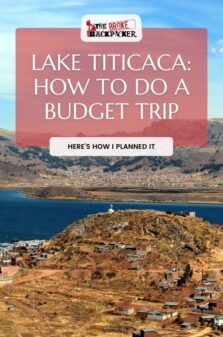
The main emotion that I got when seeing Lake Titicaca – which is split between Peru and Bolivia – for the first time was just sheer bemusement. There I was, almost 4000m above sea level, high up on the parched, altiplano, yet still standing on the shore of what looked like an inlet of the ocean.
It only gets more enchanting as you take to the waters on a boat tour. The artificial Uros islands, still home to indigenous communities, float by like a mirage and Isla Taquile still subsists off the millenia old agricultural terraces built by the ancestors of the Incas.
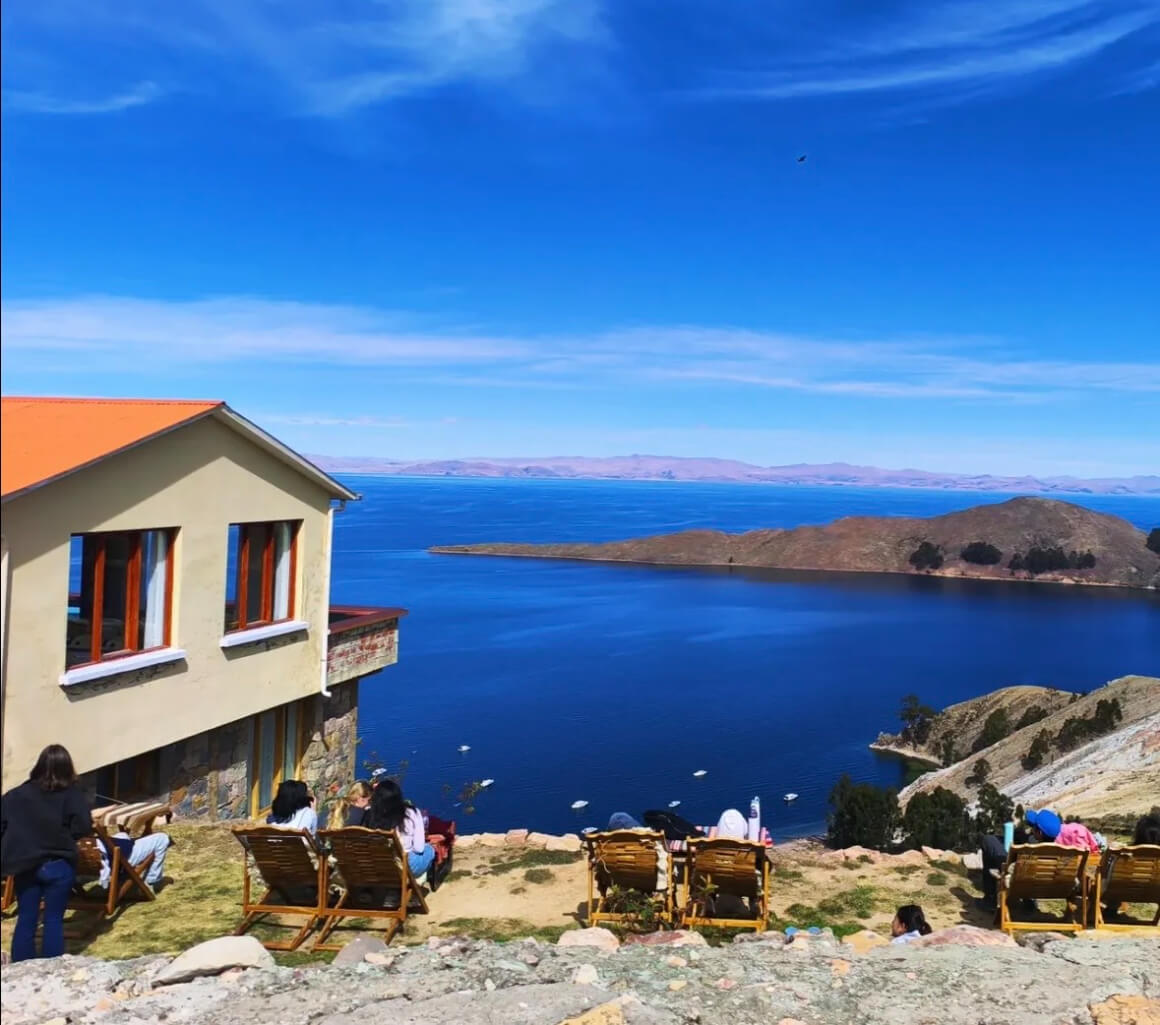
Across the border in Bolivia, Isla del Sol sits like a jewel in the lake. This is the Andean answer to the Garden of Eden. In traditional belief, this is where all life began and it is still a site of pilgrimage for indigenous peoples.
This guide will give you a full overview of things to do in Lake Titicaca, whether you have a day to dip into it or 4-5 days, how to visit its islands and a true picture of what they are really like to visit.
Lake Titicaca Planning Basics
Lake Titicaca’s natural beauty does not come straightforwardly, but it is one of the most beautiful places I visited whilst travelling around South America. At a height of 3800m, you will feel the altitude of this improbable lake. Even coming from Arequipa at a pretty high 2335m, each step felt harder than it should, and slight inclines required lots of rest breaks.
Fortunately, Titicaca does not require particularly strenuous exercise. Even if you are unaccustomed, a trip to the Uros islands will be perfectly fine. The only care you need to take is hiking on Isla del Sol, which will be best enjoyed after a few days of acclimatisation.
I visited Titicaca in August during the dry season, which runs from April to November, and enjoyed perfect visibility and sunshine. Visiting the rainy season, December to March, is still possible, but you will risk rainstorms and fog during your boat trips.
The Broke Backpacker is supported by you. Clicking through our links may earn us a small affiliate commission, and that's what allows us to keep producing free content 🙂 Learn more.
An important point is that Lake Titicaca is split between Peru and Bolivia, so a border crossing is needed if you want to visit both the Uros Islands and Isla del Sol. But I think for most people backpacking in Peru and Bolivia, it’s pretty common to visit both sides of the lake, and the crossing is one of the easier and more chilled ones.
I visited both the Peruvian and Bolivian sides. I started in Puno, as I was in Arequipa, a six-hour drive away, and I could integrate Copacabana on the Bolivian side into my route to La Paz easily enough. Puno is not the prettiest town, but it offers excellent proximity to the Uros Islands, Islas Taquile and Amantani, as well as the enigmatic Sillustari ruins. Travellers in Cusco and Arequipa can easily add Titicaca to their trip without a big diversion.
Copacabana may have slightly less variety than Puno, but it does have Isla del Sol. This is the most historically important island on the lake – it contains many Inca ruins and is still a holy place for many Andeans who believe that it was the birthplace of the sun. The views of the nearby snowcapped Cordilliera Real are also worth visiting. Its closeness to La Paz is helpful for travellers too.
How I Got There (And What I’d Do Next Time)
This part matters more than I expected. Timing, routes, and border logistics can quietly eat into a day if you’re not careful.
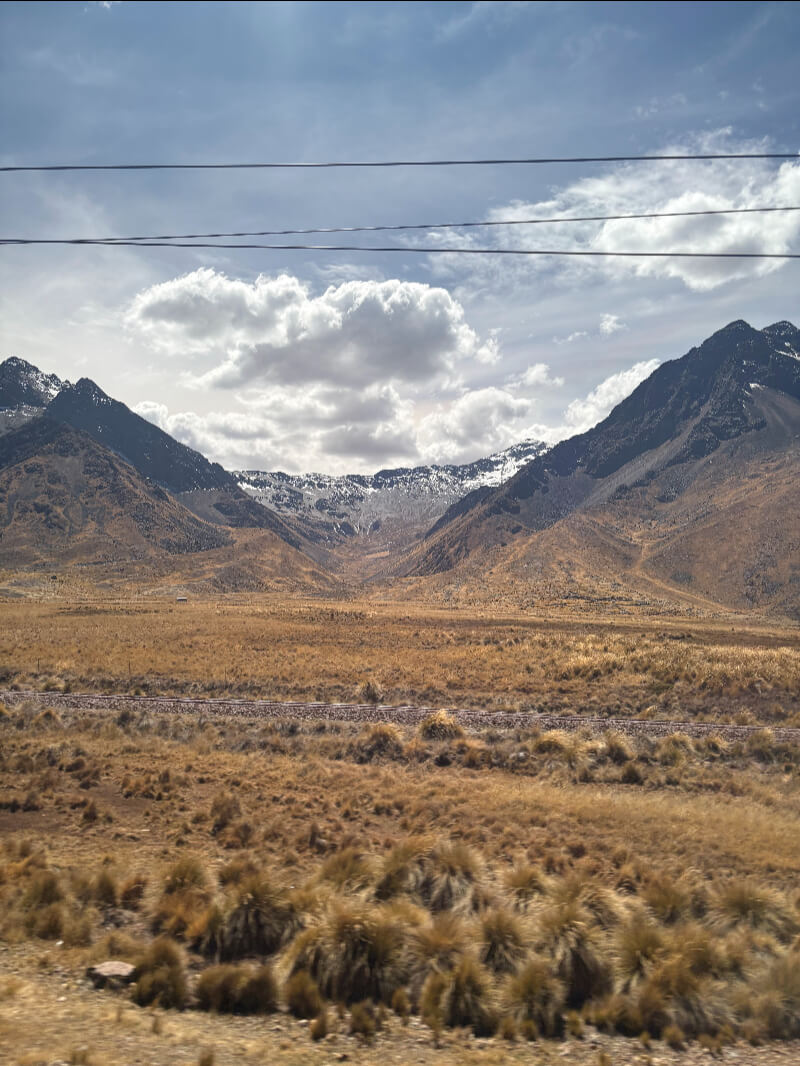
I took a Cruz del Sur bus from Arequipa, which took six hours. Owing to the short journey time by South American standards, it was not suitable for a night bus. The views of mountains, distant smoking volcanoes and highland lakes only added to the brilliant experience. From further afield, like Cusco or Huacachina, it may be advisable to take a night bus to save yourself the cost of a night’s accommodation and the boredom of a day on a bus.
Though from Cusco, there is the special option of taking a train to Puno. The line traverses the Andes and offers incredible views of the altiplano, mountains and herds of vicuñas. It also includes a luxury dining experience and a stop at the Abra la Raya Mirador.
If this is out of your budget, taking the bus during the day offers comparable views as the road to Cusco often runs parallel to the train tracks.
It was four hours from Puno to Copacabana, and I found the border crossing straightforward. I was granted a 90-day visa for Bolivia on arrival.
Within Puno, the main way to get around was by taxi. Uber does not work there. Taxis were very cheap; I paid 8 soles ($2) for the 15-minute trip to my hostel from the bus station. Just make sure to agree on a price before the ride to avoid extortionate rates. In Copacabana, I had no need for transport as it was more of a village than a town.
Copacabana is four hours away from La Paz, and 10 hours away from Cochabamba. If you are crossing into Peru from La Paz, the route will pass Titicaca, so it would be rude not to pop in!
Where I Stayed
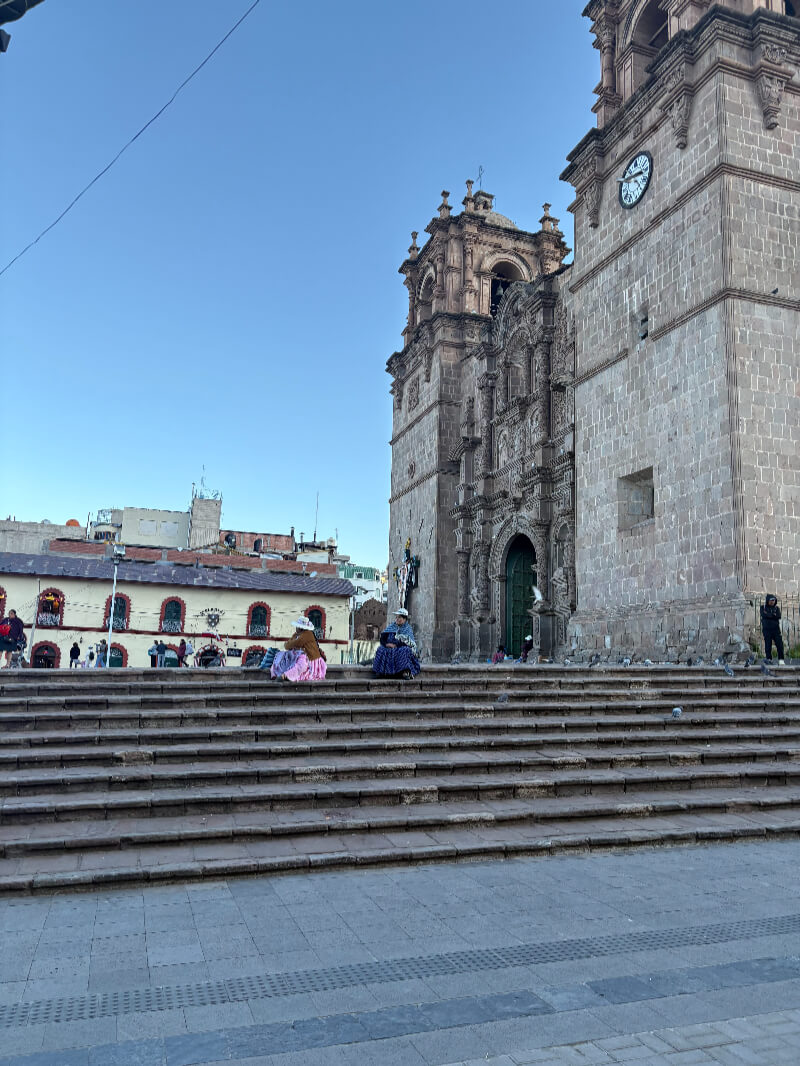
I stayed in Kantaya hostel, just off the Plaza de Armas. This accommodation was both cheap and promised hot water, which is not something to take for granted in Puno.
Puno is best for people travelling in Peru without much time to see Titicaca. It offers a day trip to the Uros Islands and Taquile in a day, which gives a good idea of what the lake is all about. Copacabana is best for those with a few days to spare, who would prefer a more immersive experience of the lake by visiting Isla del Sol for a few days. There are quite a few decent hostels in Copacabana if you do decide to stay there.
- Price range: $10
- Location: Convenient for the main square and walking distance to the docks
- Comfort: Hot water and thick blankets included.
- Noise: There was no loud street noise.
- Wi-Fi: Wi-Fi was included and strong.
Stay here if you are a Broke Backpacker and wish to meet like-minded travellers in a hostel that is as comfortable as it gets in Puno. There is also a kitchen for hostel-pasta enthusiasts.
I also stayed on Isla del Sol for two nights and experienced slightly more discomfort, but this was compensated for by the views. Forget warm showers, though the cold nights were alleviated by ample alpaca blankets. Having said that, it was one of the most unique places I stayed whilst in Peru, and it certainly was memorable.
Things to Do in Lake Titicaca
There are many ways to experience Lake Titicaca. Those in a rush can easily dip into the highlights, while slower travellers can enjoy a long immersion into the watery lakeworld. I have put some itineraries together for the best experience of Lake Titicaca.
Option 1: One Day in Lake Titicaca from Puno – The Classic Day Trip
This is the most common way to visit the islands that sit within Peru. This is how I experienced the Uros Islands. My bus from Arequipa got in at 9 pm, and I was able to get a ticket for a full-day trip to the Uros islands and Isla Taquille for 90 soles, leaving the following morning.
The day began with a 7 am departure. A minibus sent by the tour agency collected me and drove me down to the docks, which were packed with people taking the same trip. Interestingly, the SS Ollanta was docked next to the pier. This was the first steamship on Lake Titicaca and was brought up into the mountains from the coast piece by piece using thousands of mules.
Having got onto the boat, I settled in for the half-hour journey to the Uros Islands.
The floating Uros Islands are the main tourist attraction in Titicaca. These are islands made of reeds by the indigenous Uru people. Far from a gimmick, this aquatic way of life helped them to avoid both the Inca conquerors and later the Spanish by just moving their settlements to another part of the lake whenever one hassled them with taxes.
The Norwegian explorer Thor Heyerdahl even theorised that the Uru people are the last remnant of an ancient civilisation that once crossed the ocean on their reed vessels. He sailed from Africa to the Caribbean on a raft to put his idea to the test. While his theory did not catch on, the voyage shows the ingenuity of these people.
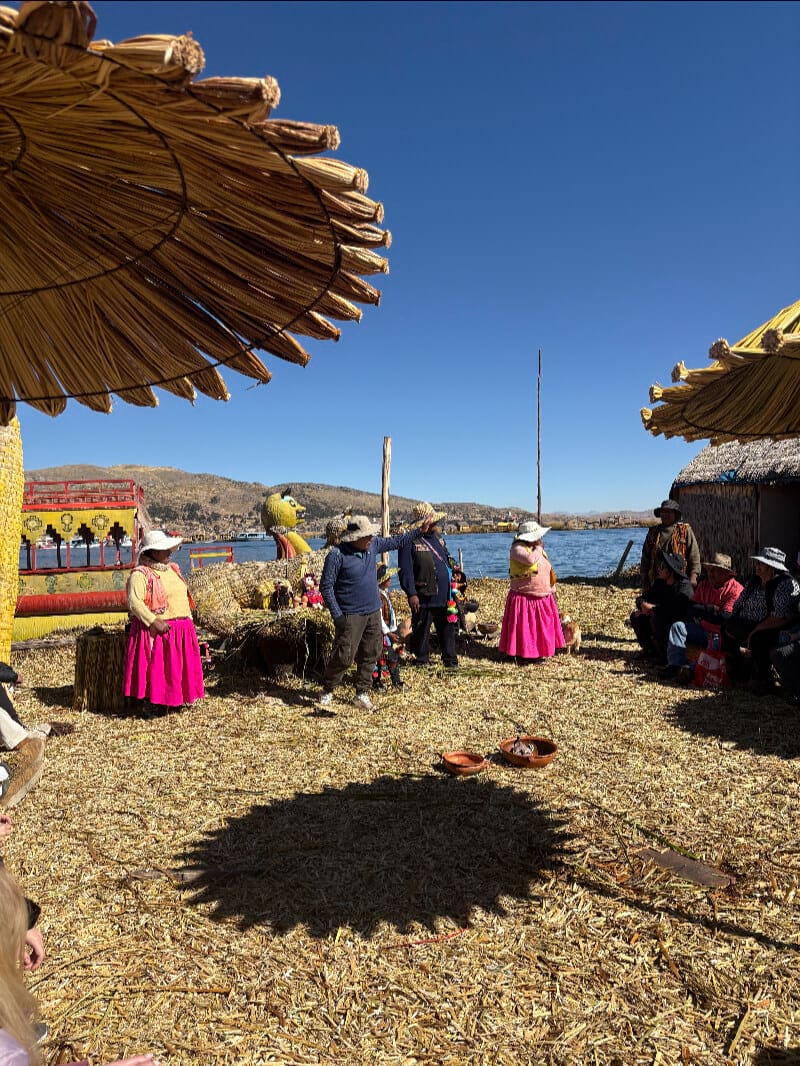
The sensation of walking on one of these artificial islands is truly strange. It slightly sags with each step, and you are very conscious that there is water below, yet some people do not leave these islands for years. There is everything that you need to live out here; schools, churches and hotels bob out on Titicaca. As a plus, you can even eat the Tortora reeds, making the Uru people more or less self-sufficient.
The biggest question that I was asked about the Uros Islands is whether it is a tourist trap. On my day trip, I did not have too many organic interactions with the islanders. On the flip side, there were no pushy sales tactics or forced dance performances that made it feel like a theme park. They basically just say hola and go about their daily routines in their floating society, which is pretty unique.
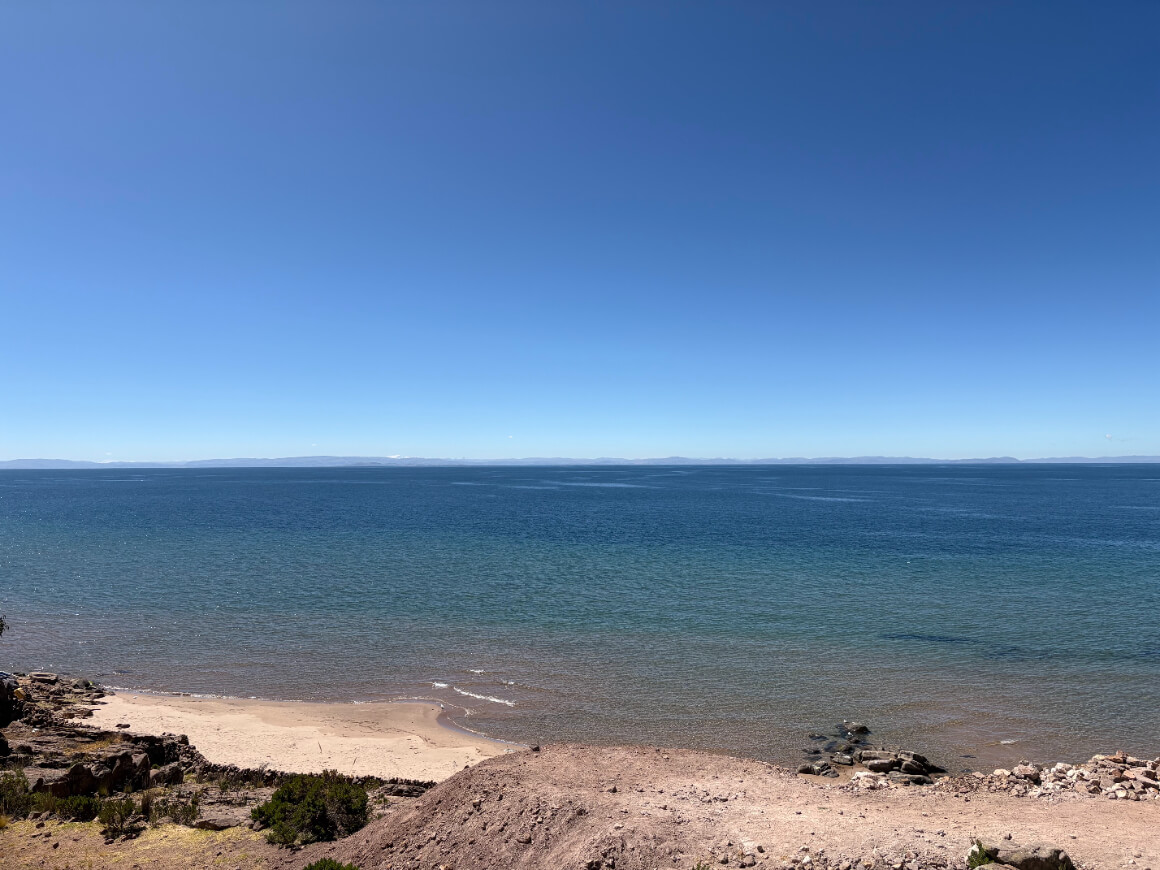
The next stop, Isla Taquile, was about two hours out, which meant a lovely spell of staring at the hypnotically blue waters gliding past. Bring some snacks for this, as it is a long while until lunch.
Taquile is just about in Peru’s share of Lake Titicaca. The island is roughly a half-hour walk across. The views across to the towering snowcapped peaks of Bolivia’s Cordillera Real against the blue immensity of Titicaca were particularly memorable. While I was conscious of the altitude, it was mostly flat, so there were no real problems. I managed to walk across the island leisurely enough, but was too time-pressed by my boat departure time to have a good look at its beaches.
My favourite dimension of the island was its living culture. The island’s economy mostly runs on selling fine woven goods to visitors. The men of the island are supposed to prove their worth in a marriage by the quality of their weaving. The in-laws will rigorously inspect their knitted hats before agreeing to a union, so these textiles are of brilliant quality. Seeing the same terraces that were created by their ancestors, still planted with potatoes and corn, felt like stepping back in time.
Option 2: 2 days in Puno
There are two itineraries that I would suggest if you have two days to spend in Puno.
The first would begin much as the one-day option did with the Uros Islands, but with a twist. You will arrive by kayak. This is a four-hour round trip, allowing you to feel the watery world of Titicaca to a different degree than day trippers.
Pulling up to these islands at eye level will be a pretty spectacular view. You can spend all day paddling between islands or staying on a floating island for far longer than daytrippers, giving you the benefit of being able to interact with the locals in a more natural way.
After paddling back to Puno, you will have time to visit the Sillustani Cemetery. This is a 1500-year-old ruin on the shores of Lake Umayo, 40km from Puno. Constructed of massive, delicately carved blocks and up to 12m tall, Sillustani shows the genius of the ancient inhabitants of Titicaca. I visited for a sunset that felt enchanted by the lost memories of the ruins.
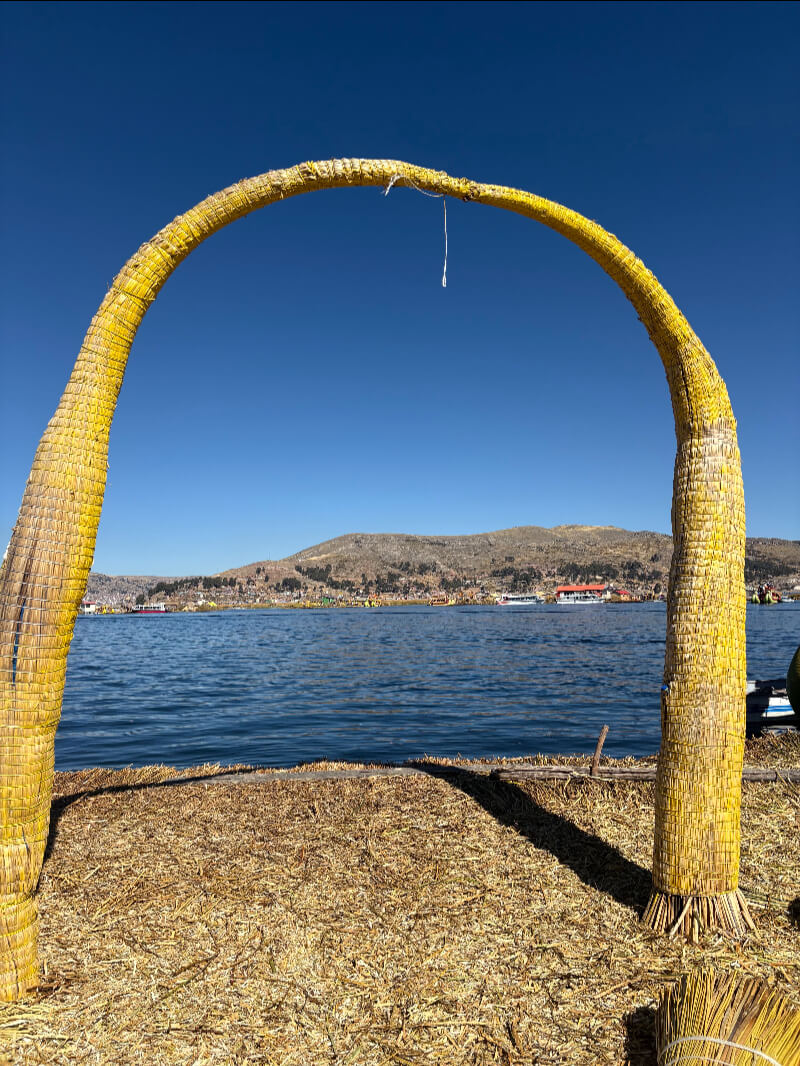
The second day will be a whole day on Taquile. This will give you more of a chance to soak in the views of Bolivia and walk the beaches that I only caught a glimpse of on my day trip. You will return in time to catch an onward bus to destinations in Peru like Cusco or Arequipa, as well as over to Copacabana in Bolivia.
The second option for two days in Peruvian Titicaca is to do a one-night homestay on either Isla Taquile or the Uros Islands. Overnighting on an island has lots of advantages for the independent traveller. You will not be hassled to quickly see the sights and move on; you have time to have real interactions with locals, and the sunsets on the islands are simply the best!
Option 3: 2 Days on the Bolivian Side
The Bolivian side of Titicaca feels immediately different. The mountains loom much larger, and the echoes of the Andean past ring louder. It is a place much better felt than just seen on a whistlestop tour. While you can visit Isla del Sol on a day trip from Copacabana, you need at least a night on the island to do an extensive hike. If you have gone all the way to South America, at least carve out time for this! For me, it was the start of my time travelling around Bolivia, a country I fell in love with.
Isla del Sol is the largest island on Lake Titicaca. It is a 90-minute boat ride from Copacabana. This was my favourite place on the lake because it is practically marinated in history. There is nothing quite like strolling along an Inca road, admiring the seamless joint of lake and sky.
People come from far and wide to remember the religious significance that this island once had to the Incas. The sun and the Andean creator god, Viracocha, emerged from Isla del Sol, as did the ancestors of the Inca, who would move from Titicaca to found Cusco with the help of a golden staff.
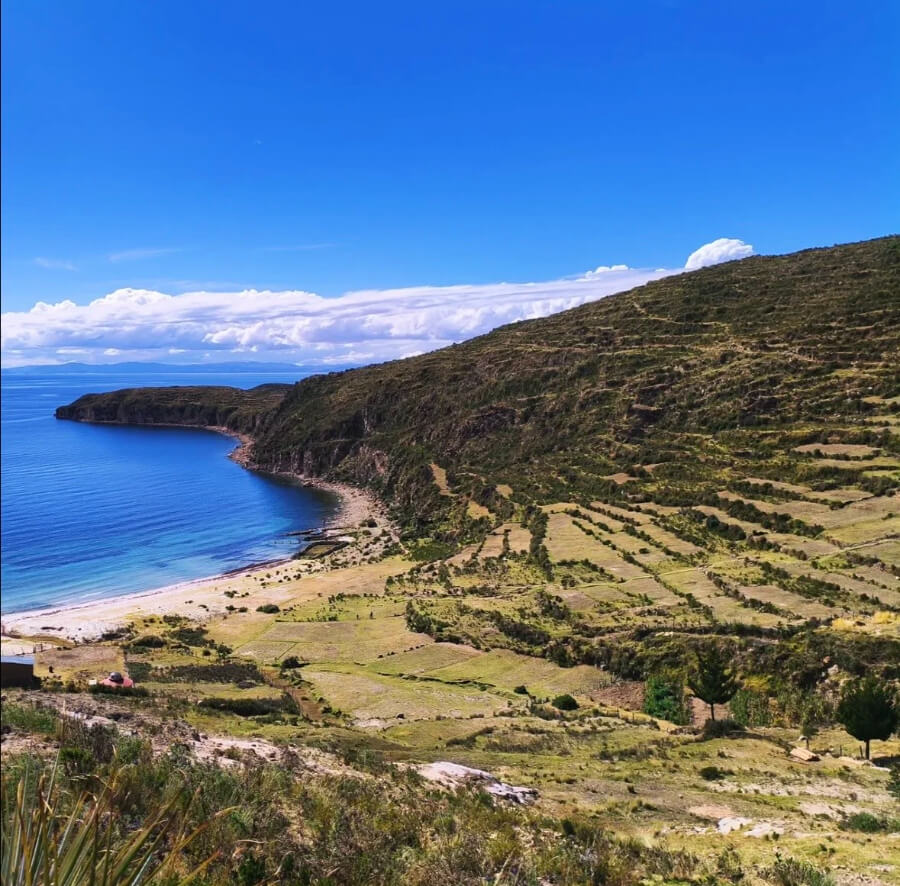
You will see offerings of coca leaves on the stones of the ruined temples. On the winter solstice, there is a big indigenous jamboree featuring panpipes, chicha beer and ponchos to celebrate the birth of the sun.
The two main villages on Isla del Sol are reachable by ferry from Copacabana. They are Yumani in the South and Challapampa in the North. Yumani is the larger and has more options for accommodations, while Challaparpa boasts beaches and a little museum displaying artefacts that were discovered on the island.
It is important to bring cash onto Isla del Sol as there are no ATMs and it is essentially a cash-only society. One thing to know is that the Bolivian side of Lake Titicaca is much less developed, which is frankly amazing, but it can make things a little more difficult.
Day 1 – Full Island Hike
If you only do one thing on Isla del Sol, make it this 18km hike. The easy gradient means that you will struggle too much with the thin air, allowing you to focus all of your energies on the lake views and the Aymara villages that the route crisscrosses through.
Assuming that you stay in Yumani, begin the “Camino al Norte” to the ruins of Chinacara. Stop for some lunch at Challapampa before continuing onto the ruins on the Northern tip of the island. Much of the track was built by the Incas, and it is hard not to think of the thousands who once walked these steps before. It is about 2-3 hours each way of walking, but you will inevitably stop a lot for views and sightseeing.
Chinacara is a mysterious ruin on the Northernmost tip of Isla del Sol. Its literal translation from Quechua is the brilliant phrase: “the place where one gets lost”. When you see the sprawling maze of rooms and corridors, you will understand why.
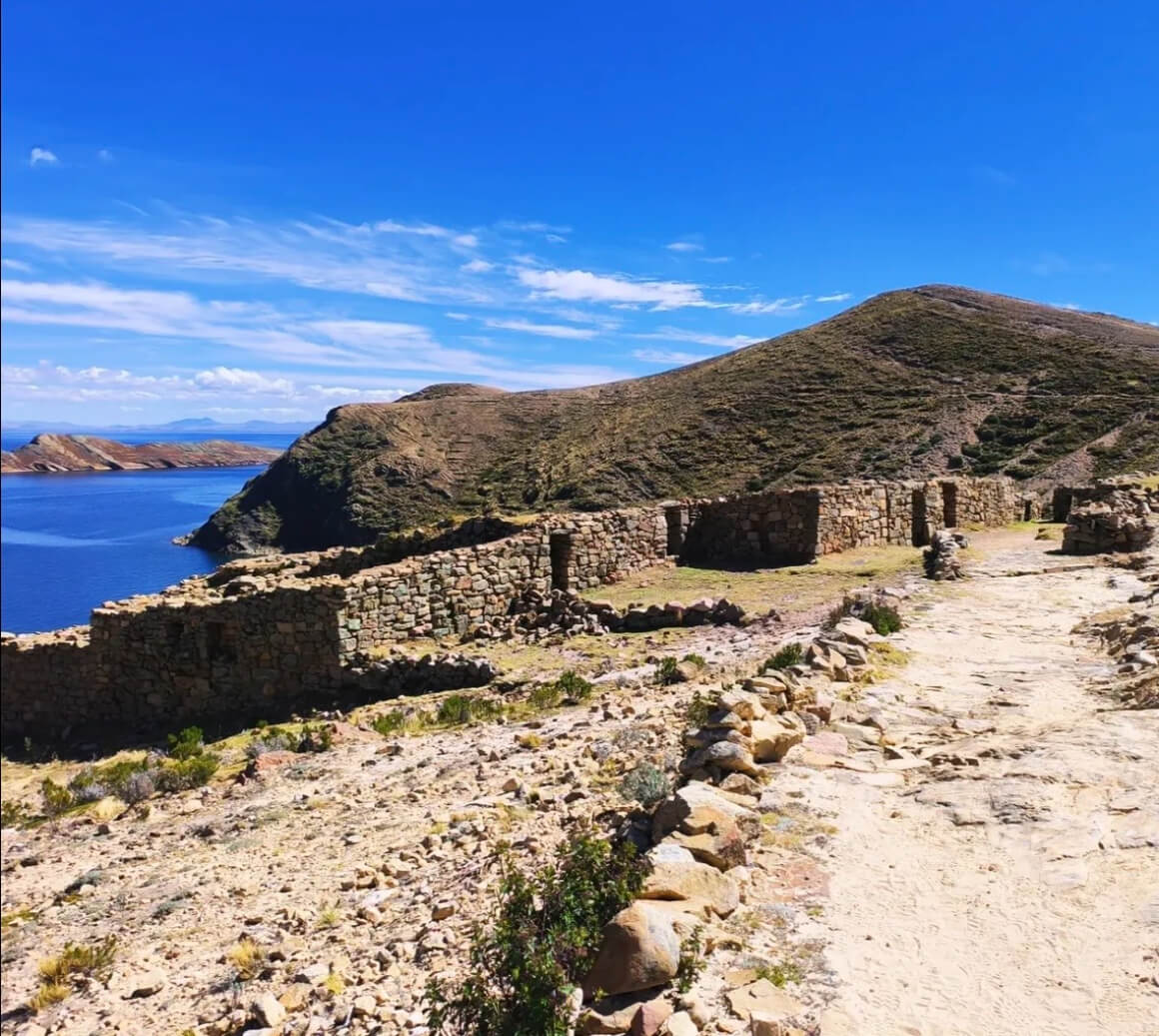
It seems like it was designed for perfect lake views, with each line of sight pointing to the lake and the mountains behind. I would recommend climbing a hill above the complex for sweeping views of the island.
The ruin even has an Inca fountain that is believed to have healing properties, as well as what the locals call “the sun’s footprints”. See for yourself if these attractions are for real.
Chinacara is a 20-minute walk from Challapampa, and can be reached by boat from Yumani if you do not fancy the 3-hour walk from the South.
Day 2 – Templo del Sol
This is the most historically important place on the island. As the exact birthplace of the sun, it was the destination of ancient pilgrims and is still where the winter ceremony is held for the devout today. The Inca temple complex is built around the crag where the sun emerged, and is in good nick considering the efforts of fifteen centuries.
The temple is located on the southern extremity of the island, just a 20-minute walk from Yumani and does not require an entry fee.
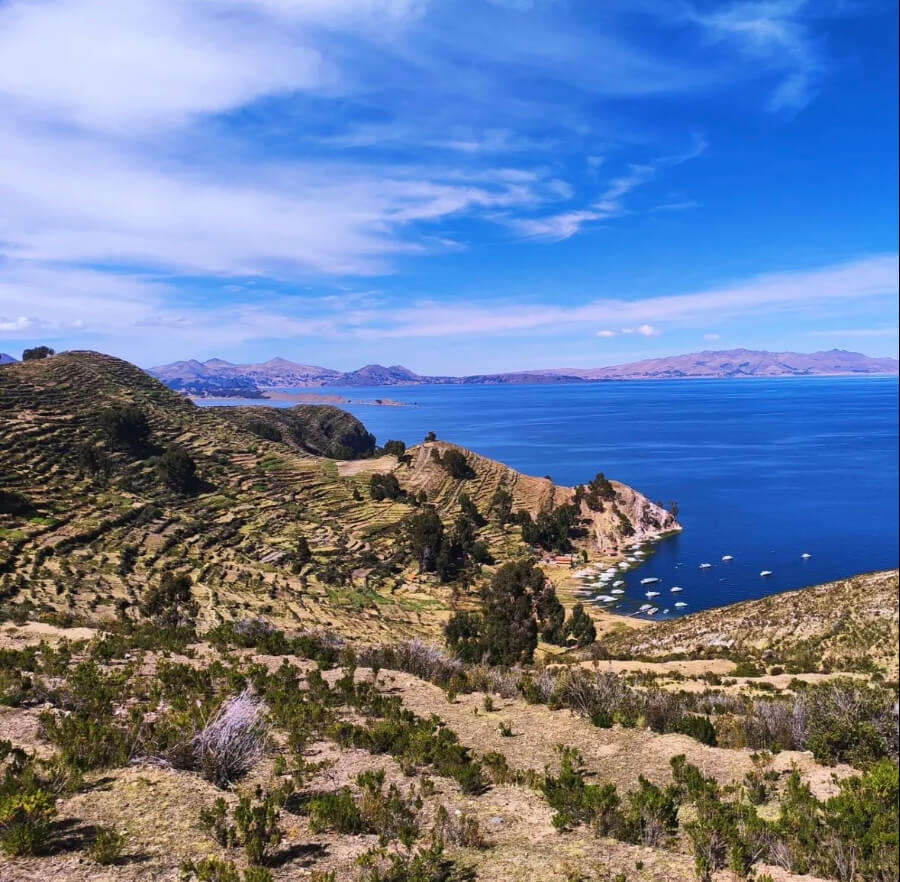
Spend the rest of the day sunbathing, strolling along the beaches and admiring mountain views. There is little internet connection here, so embrace the digital detox by bringing a book. Catch the last ferry back to Copacabana at 16:30 from Yumani.
Option 4: 3-4 days on Lake Titicaca
This offers the perfect timescale to really experience the best of Lake Titicaca without rushing. Extra days are very helpful for acclimatising to the altitude, and, happily, there is a clutch of brilliant archaeological sites like Sillustani and Tiwanaku peppering the lakeshore to entertain you during the transition to almost oxygen-free air.
Although there is more to see on the Peruvian side, I think that it lends itself better to a day trip than the Bolivian side. While I was tired by the end of my day trip to Taquile and Uros, I felt like I had a good idea of what the floating islands were all about, and my time on Taquile did not feel too constrained.
Unless you plan to do a homestay on the Uros Islands, which would be incredible, I would focus on the Bolivian side. So after one day in Peru, the second day will be spent crossing the border to Bolivia and enjoying an afternoon in Copacabana.
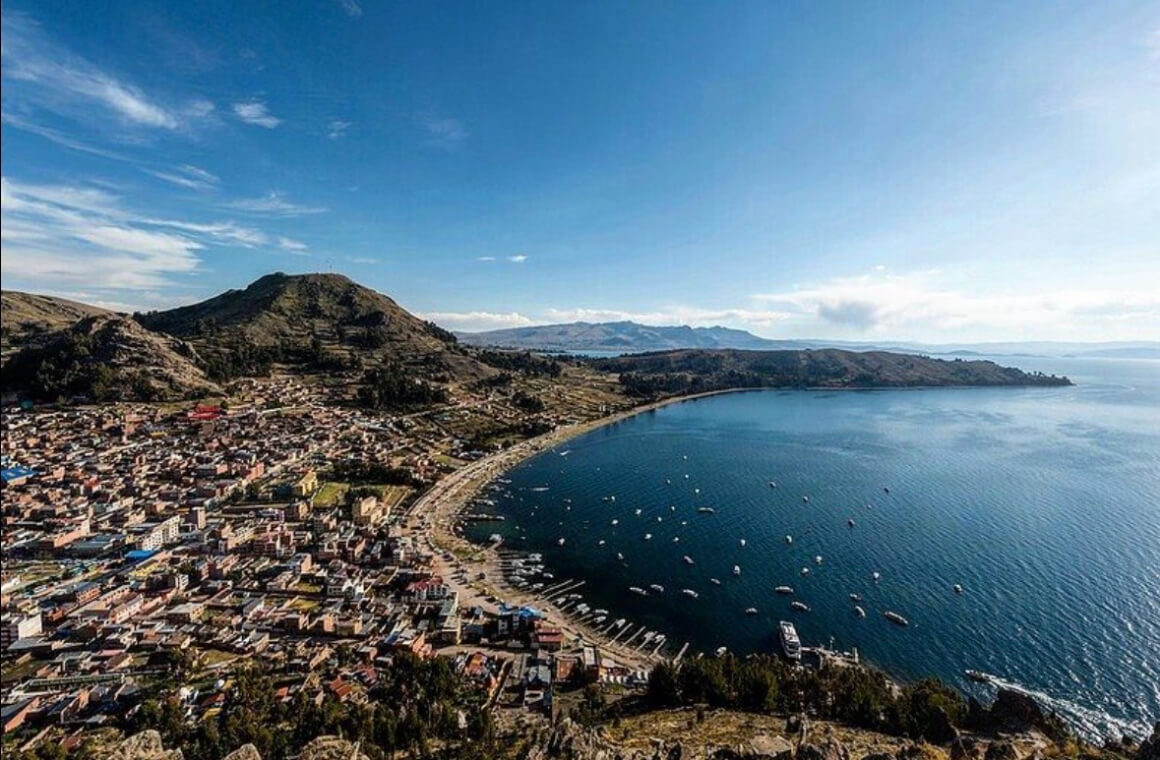
While a lot chillier than its Brazilian namesake, the beach views contend with those of Rio for beauty. Particularly from atop Cerro Calvario, a hill named for the site where Jesus was crucified in Jerusalem. A steep 30-minute climb gives you a sweep of the bay dotted with fishing boats tapering up to distant mountains. Interestingly, there are also recreations of the stations where the cross was carried, so you will encounter pilgrims on the way up.
Copacabana is also home to the patron saint of Bolivia, Our Lady of Copacabana, a guise of the Virgin Mary that has been worshipped here for centuries. A basilica holds an image of her, believed to work miracles. Go and visit for yourself, or watch the traffic jam caused by taxi drivers from across Bolivia travelling here to get their new rides blessed!
Another must for your afternoon on Copacabana is to eat some trout. Invasive trout have devastated the native catfish stock, so fishermen are helping the struggling species by catching boatloads of delicious fish. Combined with locally grown potatoes and quinoa, it may be the most sustainable meal going.
Spend the following two days on Isla del Sol.
How Much Did My Lake Titicaca Trip Cost
| Category | What I paid | What it included |
|---|---|---|
| Accommodation | $89 | Five nights – three in hostel dorms and two in a private room on Isla del Sol. |
| Tours/Boat trips | $35 | A day trip to the Uros Islands, Isla Taquille and both crossings to and from Isla del Sol. Meals not included. |
| Food & drinks | $30 | Puno and Copacabana are very cheap to eat out in. A meal will only set you back $2-3. A beer is about the same. |
| Local transport | $20 | Included taxis to and from the Puno bus terminal and a bus between Puno and Copacabana. |
| Entry/port fees + tips | $9 | Includes the fee to visit the Uros Islands as a tip for my day trip guide. |
| Souvenirs/extras | $5 | I bought a reed model of an Uru boat to support the local artisans. |
| Total trip cost | $188 | Or $37.60 per day |
- I spent five nights on the shores of Lake Titicaca, beginning with two nights in Puno, another across the border in Copacabana, and I stayed on Isla del Sol for two nights. Accommodation is generally in line with or a little cheaper than the general costs across Peru.
- The surprises in terms of cost on Lake Titicaca were only pleasant. Puno is one of the poorest departments of Peru, and consequently, things are priced differently from those in Cusco. I was very surprised to buy a burger and chips on the main square for 10 soles ($2.50). Like the rest of Bolivia, Copacabana is also very affordable for travellers.
- The only other surprise is that cards are not accepted everywhere. Withdrawing cash is necessary to pay for tours and some hostels. In Peru, use Banco de la Nación for commission-free cash withdrawals. In Bolivia, Banco Union offered the best rates, but trading physical USD or Euros, or sending myself money on Western Union, yielded even better conversion rates.
- I could have chosen a cheaper tour, as I had the frustration of people on the exact same boat as me paying up to $10 less! I made the mistake of booking with the first tour operator I found, as I was tired from a long bus journey! Be more proactive readers!
What I Packed
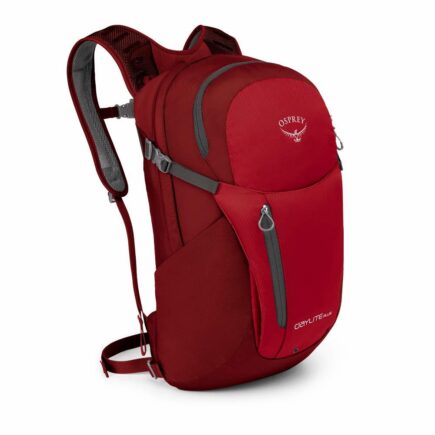
Osprey Daylite Plus
Any city slicker needs a SLICK daypack. In general, you can never go wrong with an Osprey pack, but with its array of awesome organisation, durable materials, and a comfy build, the Daylite Plus will make your urban jaunts buttery smooth.
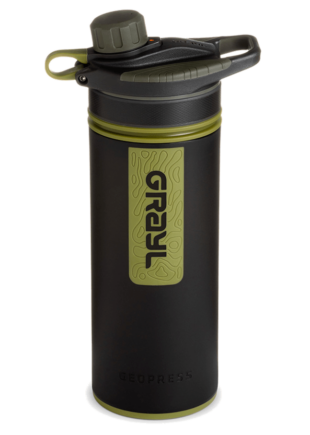
Grayl Geopress Filtered Bottle
Save $$$, save the planet, and save yourself the headache (or tummy ache). Instead of sticking to bottled plastic, buy a Grayl Geopress, drink water no matter the source, and be happy knowing the turtles and fishies thank you (and so do we!). 🙂
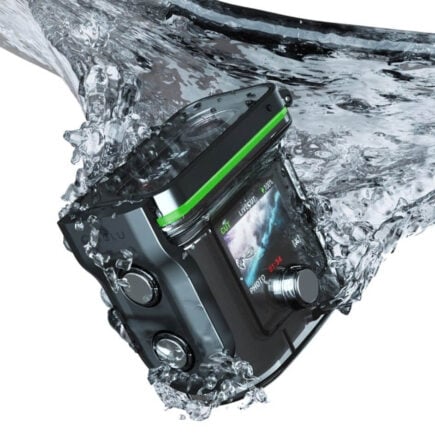
OCLU Action Camera
Wait, it’s cheaper than a GoPro and… better than a GoPro? The OCLU action cam is the cam for budget backpackers that want to immortalise all their wildest adventures – including that time you dropped it off a Himalayan mountain – WITHOUT breaking the bank.

Solgaard Solarbank
Resourceful travellers know how to find power outlets anywhere on the road; smart travellers just pack a solar power bank instead. With 4-5 phone cycles per charge and the ability to top up literally anywhere the sun is shining, there’s no reason to ever get lost again!

Petzl Actik Core Headlamp
ALL travellers need a headtorch – no exceptions! Even in the hostel dorm, this beauty can save you in a real pinch. If you haven’t got in on the headtorch game, DO. I promise you: you’ll never look back. Or at least if you do, you’ll be able to see what you’re looking at.
Mistakes I’d Avoid
- Not giving myself more time to experience local culture in Puno – Puno was not the prettiest city outside of its stunning Plaza de Armas, but I was not aware of how culturally rich it is. It has some of the best-preserved indigenous culture anywhere in the Andes, and they love to party. I really wish I had factored this into my itinerary for Peru when I was planning my trip.
On my last night, they celebrated the founding of an important local school, which brought out crowds of locals twirling in traditional skirts and masks with fireworks overhead. If you can tie your trip in with the La Candelaria festival between 2-12 February. Expect traditional masks, dancing, and chicha-fuelled revelry for 10 days on end. - Not shopping around for my tour – I overpaid for my tour to the Uros Islands by about $4 by being lazy and just taking the first option I found instead of comparing prices.
- Not bringing cash – I did not realise that you had to pay an entry fee for the Uros Islands, and I did not have quite enough on me to pay the fee. Luckily, I got an emergency loan from a kind Sicilian, but it would have been less stressful to just bring the cash!
- Not booking my bus far ahead of travel – I was surprised to learn that I had another day in Puno after not finding a seat on the bus to Copacabana. It was no trouble really, as I had time to explore the Sillustani Cemetery, but those on a tight schedule should book ahead using a platform like BusBud or Red Bus.
- Not bringing sun cream – Lake Titicaca is a chilly place, by night it goes as low as freezing, but I underestimated the power of the sun at this high altitude, which gave me some nasty sunburn on the boat trip.
Would I Go Back?
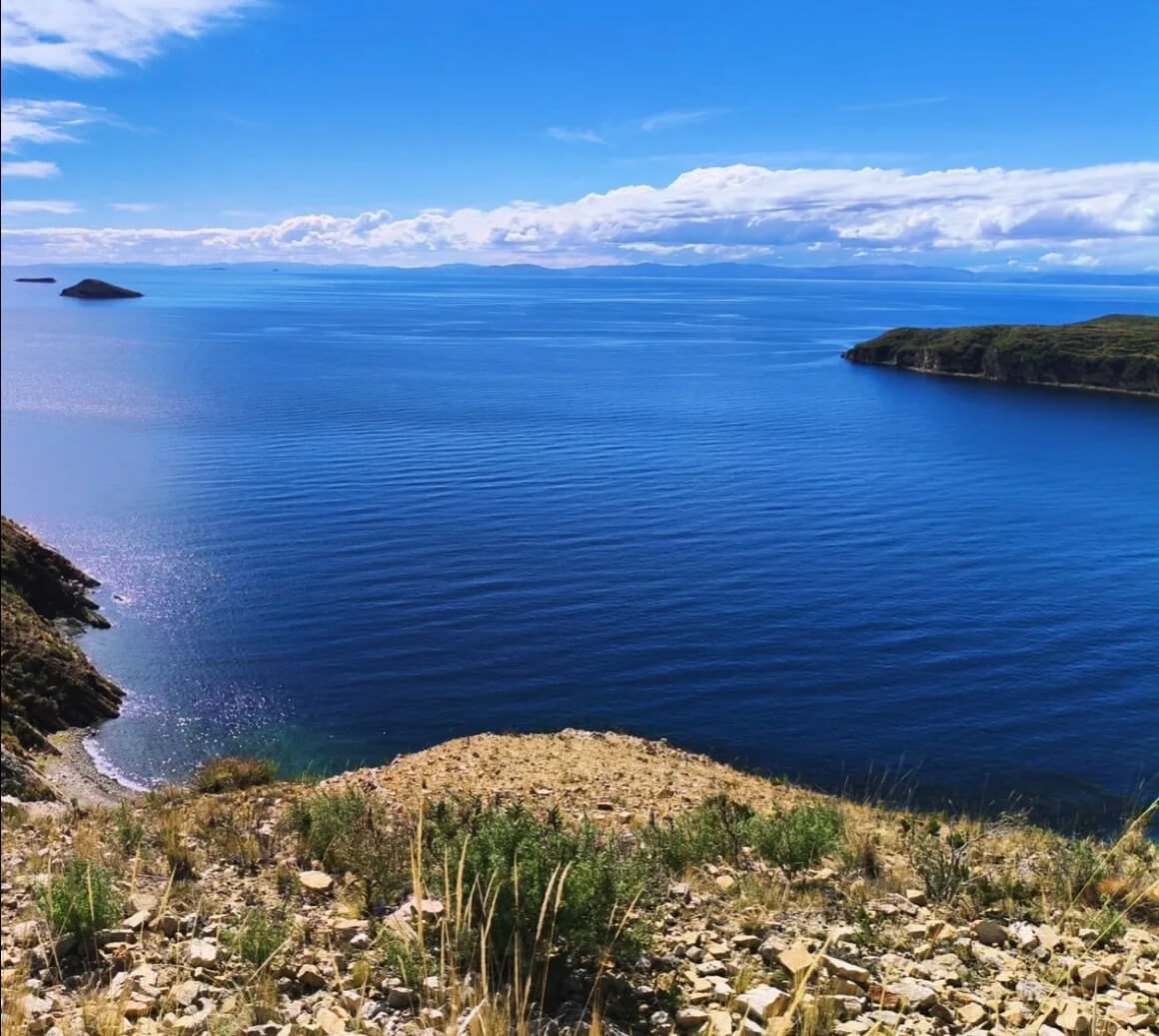
I would absolutely go back to Lake Titicaca. The Uros islands were like something out of a fantasy novel, and I wish that I had the time to do a homestay to properly experience their floating lifestyle.
I would also one hundred per cent return to Isla del Sol. There was something so magical about that island. I felt the most at peace that I had for months after hiking through Inca ruins all day, and watching the sunset over the peaks with a beer in hand. I would repeat the three-to-four-day itinerary to fit in another stint on this gem.
The first step to your Lake Titicaca visit is seeing where you can slot it into your Cusco or La Paz-focused itinerary. There is a benefit to booking accommodation early, but wait until you are in Copacabana or Puno for tours, as anything online will be heavily gringo-taxed!