It’s time to rethink everything you thought you knew about South Africa. Period. This isn’t just a safari stop or scenic pitstop at the tip of the African continent. Oh, now, it’s much more than that! It’s more of a full-on sensory experience that will rewrite your idea of travel altogether.
Now, let me set the scene a bit here. Picture wild coastlines that stretch for forever and a day, buzzing cities that come alive with rhythm and creativity, and mountains that rise up like ancient giants. But wait, there’s more! What about wildlife encounters that feel straight out of a dream? South Africa doesn’t just check all the boxes – it tears up the checklist and hands you a whole new one altogether.
What makes the country truly special isn’t just the landscapes (although they’re next level!). Or the history (which runs deep and powerful). Or the food and wine (which are both enough reason to book that flight). For me, it’s the way all these things collide into something truly unforgettable. It’s a kind of chaos, beauty, and soul that stays with you long after you’ve left.
Of course, with so much going on, from surf towns to mountain escapes and cultural hubs to hidden gems, it’s easy to get overwhelmed by choice. That’s where I come in. I’ve compiled this ultimate guide of the 30 best places to visit in South Africa for 2025.
These aren’t just big-name attractions. They’re the spots that capture the essence of what makes this place so endlessly captivating. So, whether you’re here for the stories, the scenery, or simply chasing that feeling of wanderlust, consider this your starting point.
Let’s dive in, shall we?
The Best Places to Stay in South Africa
Now, when it comes to places to stay in South Africa, the variety is about as wide as the culture itself. From vibrant city hostels and beachside hotels to tranquil lodges and everything in between.
Each region offers its own charm and atmosphere, whether it’s the vibrant Cape Town, the buzzing Johannesburg, or the laid-back Durban, there’s always the perfect spot for your trip to South Africa.
Here are a few options for accommodations in South Africa to consider for your trip:
MINT Hotel 84 on Katherine, Johannesburg – Best Hotel in South Africa

The Broke Backpacker is supported by you. Clicking through our links may earn us a small affiliate commission, and that's what allows us to keep producing free content 🙂 Learn more.
Now, you’ll have a hard time trying to find a better stay in Johannesburg than MINT Hotel 84 on Katherine. Located in the heart of Sandton, just minutes away from the Gautrain station and the Sandton City Mall, you’ll have the best of both worlds here. Smart design and comfort come together effortlessly in this modern hotel!
Think clean lines, leafy balconies, and minimalist rooms with all the essentials. Bonus is that there is a rooftop café and co-working spaces that make it the perfect spot for both business and leisure travellers.
Luxe Suites Boutique Hotel, Durban – Best Budget Hotel in South Africa
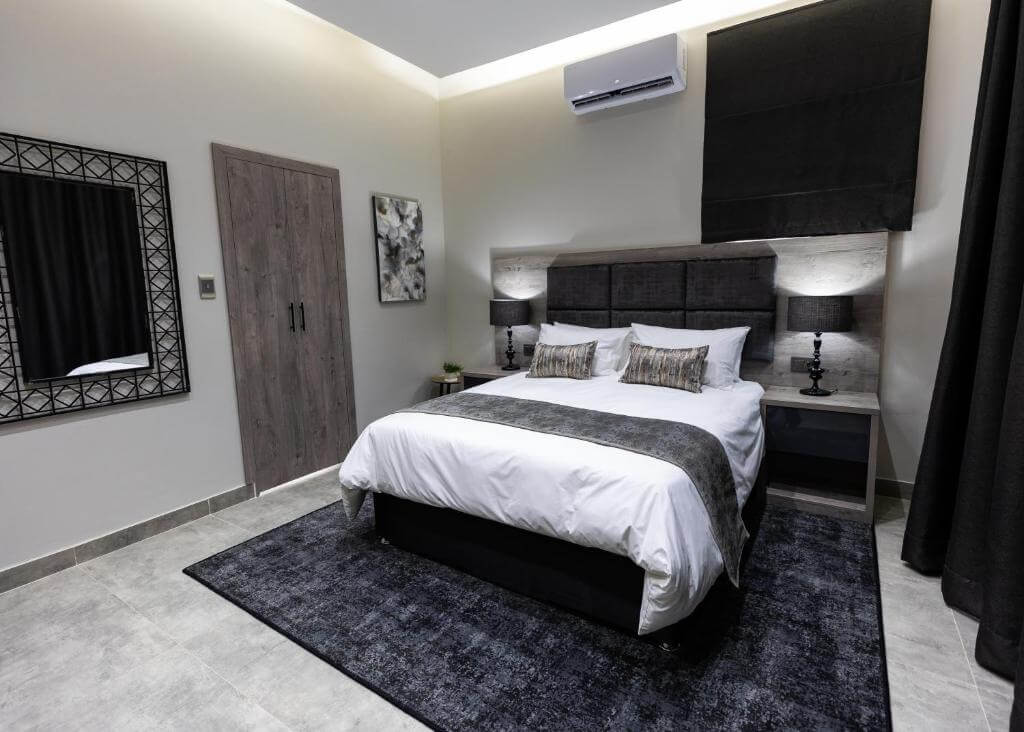
Staying at the Luxe Suites Boutique Hotel feels like stepping into a stylish Durban home with a touch of elegance. You’ll be greeted by warm hospitality, rich textures, and modern African-inspired décor that reflects the city’s coastal charm.
From plush bedding to thoughtful details, every corner is designed for comfort. It’s really the kinda place where you instantly feel relaxed, pampered, and perfectly at ease.
Villa Viva, Cape Town – Best Hostel in South Africa

Villa Viva Hostel in Cape Town is perfectly positioned between the vibrant heart of the city and the iconic Table Mountain. It’s just minutes away from the trendy Kloof Street and a short ride to the beaches of Camps Bay and Clifton. That being said, it’s the perfect base for exploring the culture, coast, and natural beauty that is Cape Town.
It boasts colourful murals, a lush garden, and a poolside bar so you can spend your days kicking back and relaxing. Whether soaking up the sun, joining a local braai, hiking Lions Head at sunrise, or unwinding on the yoga deck, you’re covered!
Staying Safe in South Africa
South Africa is generally a safe destination for tourists, especially in well-known areas like Cape Town, Durban, the Garden Route, and the Kruger National Park. But like any country in the world, there are areas with higher crime rates, but these are typically away from the main tourist hubs. In cities like Cape Town, Johannesburg, and Durban, sticking to popular neighbourhoods, using reliable transport (like Uber of the Gautrain), and avoiding walking alone at night are smart ways to stay safe and out of potential trouble.
Locals are warm and welcoming, and popular destinations are well-equipped to keep visitors safe. After all, tourism is a key part of the economy in South Africa, so it’s in the best interests of locals to do so. At the end of the day, with smart planning and local advice (and of course, following basic safety precautions), South Africa is a massively rewarding and secure place to explore.
It’s also a great idea to take out travel insurance before your trip, covering both medical needs and trip cancellations. It’s honestly such a small step that adds such a massive piece of mind to your trip. This means that you can focus on the important things, like soaking up the adventure, culture, and beauty that South Africa has to offer.
The BEST Places to Visit in South Africa
Backpacking through South Africa means diving headfirst into a country that’s packed with contrasts. From city buzz, coastal charm, mountain escapes, and wildlife-rich parks. Where you stay also depends on your vibe. Cape Town blends nature and culture, Johannesburg is raw and electric, while Durban and the Garden Route offer laid-back beach atmospheres and scenic drives.
The best way to see it all is to pick one, two, or three spots as your base. From there, you can explore nearby regions, whether it’s hiking the Drakensberg or safari-hopping your way through the Lowveld. With plenty of hostels and lodges, South Africa makes it easy to travel light and roam far.
Let’s now dive into the most epic places to visit in South Africa:
1. Cape Town – One of the most amazing places in South Africa
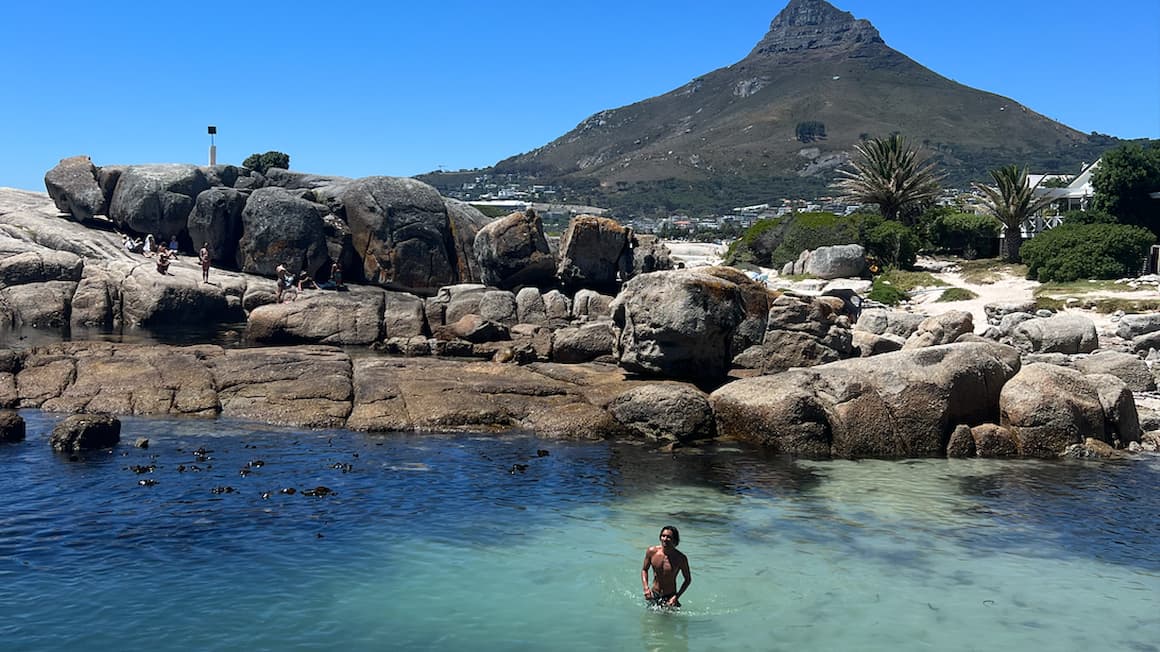
- Visit Robben Island
- Mountain-meets-ocean landscape
- Coastal city
- Take the cable car up Table Mountain
Why it’s awesome:
Kicking off the best places to visit in South Africa is none other than Cape Town, one of the best cities in the world! Nestled between the turquoise Atlantic Ocean and towering mountains, it offers a great mix of rich history, vibrant urban life, and stunning natural beauty. Whether you’re exploring poignant historical landmarks or sipping on delicious wines, Cape Town delivers a deeply moving and unforgettable experience.
What to do there:
Cape Town is absolutely buzzing with things to do and see! You can jump on the Table Mountain Cable Car for epic views of the surrounding peninsula. Or pay a visit to Robben Island, the famous island site where Nelson Mandela was imprisoned. There’s also the colourful streets of the Bo Kaap to wander around, the stunning Kirstenbosch Botanical Gardens, or visiting the Zeitz MOCCA museum of contemporary African art. End your trip visiting a local vineyard in Constantia with a dinner at one of the world’s best restaurants.
How to visit:
You can fly into Cape Town International Airport, which is about a 25-minute drive from the city centre. Taxis, ride-hailing services, and buses are all readily available. Many of the city’s cultural attractions have modest entrance fees, and guided tours are widely offered if you’re keen on context and company!
2. The Garden Route – Awesome place to visit in South Africa with kids!
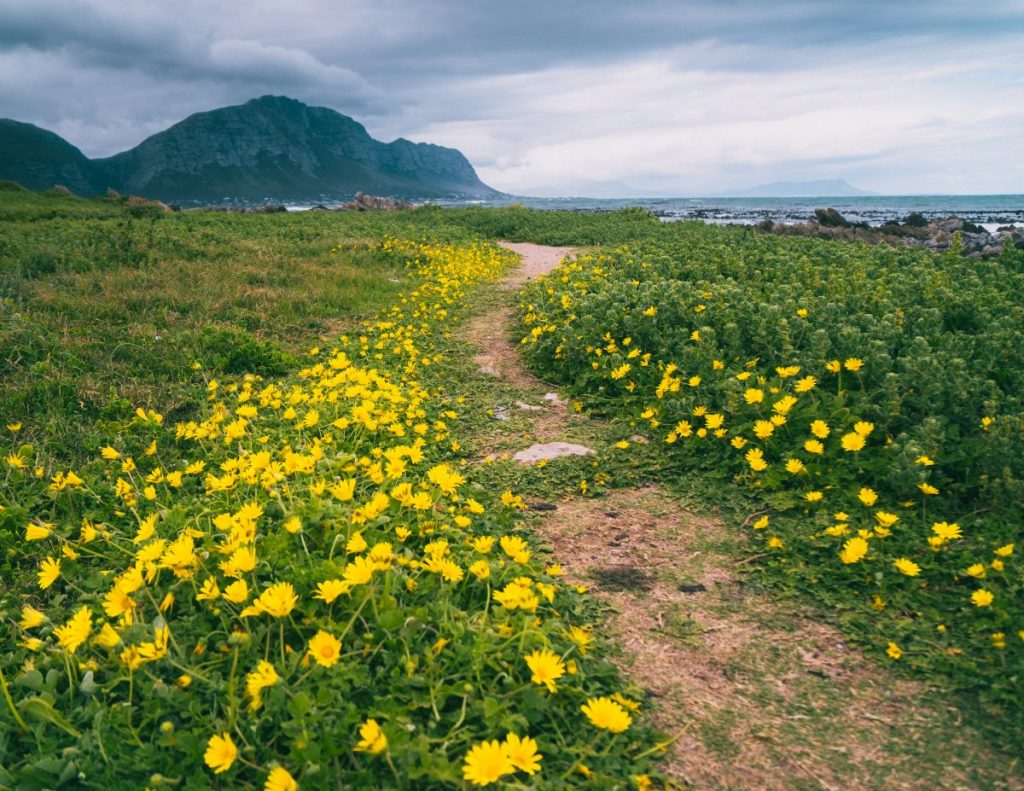
- Coastal and forested landscapes
- Scenic drive through Tsitsikamma
- Visit beaches, lagoons, and mountain passes
- Plenty aof dventure activities and wildlife
Why it’s awesome:
Next up is the breathtaking Garden Route, a legendary stretch of coastline that offers one of the best road trips in the world. The stretch winds between the Western and Eastern Cape and is packed with charming towns, lush forests, and stunning coastlines. There are plenty of outdoor activities and a trip strikes the perfect balance between relaxation and adventure. It’s an ideal trip for solo explorers, couples, and families alike!
What to do there:
The Garden Route has so many epic activities to choose from, starting in Mossel Bay and ending in Storms River/Tsitsikamma. Along the way, you can hike in the Tsitsikamma National Park, bungee jump off Bloukrans bridge (the highest commercial bungee in the world!), or kayak along the Storms River. You can also spot elephants in the wild at Addo Elephant Park or relax and unwind on a lagoon cruise in Knysna.
How to visit:
You can either begin your Garden Route adventure by flying directly into George Airport, or you can drive up the N2 from Cape Town (my recommendation). A rental car is essential to really take advantage of the route and experience it fully. Accommodations range from cosy guesthouses and backpackers to luxury lodges and tented campsites. Most national parks and reserves charge small entrance fees, and booking other fun activities in advance is highly recommended!
3. The Kruger National Park – A beautiful outdoor place to visit in South Africa
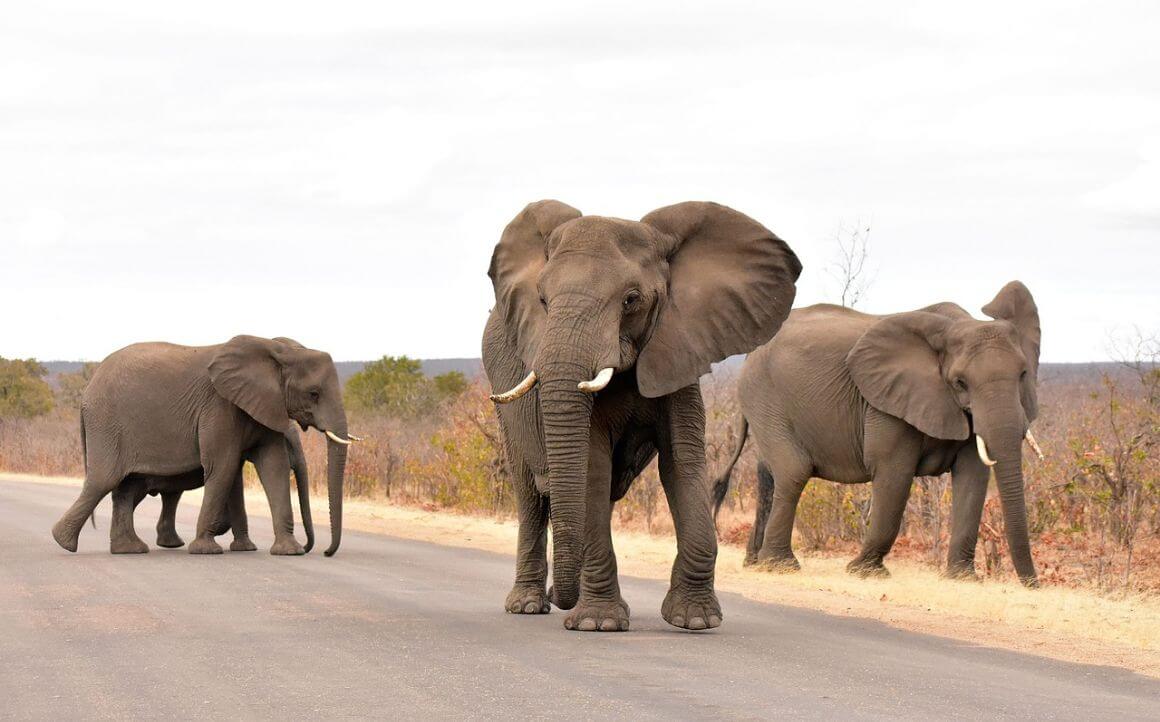
- Big Five game viewing
- Vast savanna and bushveld landscapes
- Sunrise and sunset game drives
- One of Africa’s largest game reserves
Why it’s awesome:
Now, no list of the best places to visit in South Africa would be complete without the Kruger National Park. It’s one of the continent’s most iconic destinations, covering an area of nearly 20,000 square kilometres (7,722 square miles). Here, you will have the opportunity to see the Big Five in the wild (lion, leopard, rhino, elephant, and buffalo). It’s truly a once-in-a-lifetime kinda trip where nature, conservation, and adventure all come together.
What to do there:
Kruger is all about those unforgettable wildlife experiences. From sunrise or sunset game drives, to heading out on a walking safari with an experienced guide. Or simply going birdwatching to try and spot some 500 species of birds that call the park home. There are campsites all the way to luxury lodges that you can stop over for the night, as well as explore cultural sites like the Masorini Ruins or Thulamela.
How to visit:
You can fly into the Kruger Mpumalanga International Airport near Nelspruit or the Hoedspruit Airport, both with easy access to the park gates. Alternatively, you can drive from surrounding cities or a large hub like Johannesburg, which is between 4 and 6 hours’ drive away. Entry to the park requires you to pay a daily conservation fee, and accommodations range from budget all the way to high-end luxury. Booking is essential, especially during holidays and South Africa’s winter safari season (May to September).
4. Hermanus – A very cool place in South Africa to go for a day

- Amazing land-based whale-watching
- Charming coastal town
- Cliffside walking trails
- Awesome boutique wine farms
Why it’s awesome:
Hermanus is none other than South Africa’s ultimate whale-watching destination! It’s tucked away along the southern Cape coastline and is a real gem, offering some of the best land-based whale-watching in the world. From June to November, Southern Right whales migrate close to shore, putting on a truly spectacular natural show. But there’s plenty more to the small town than whales – think nature, wines, and small-town charm.
What to do there:
For starters, you can hit the Cliff Path, a 12-kilometre (746 miles) coastal trail that offers front row seats to the whale activity. You can also hop on a whale-watching boat tour to get an even closer look at the whales in their natural habitat, or even visit the Whale Museum. Foodies will love the local seafood restaurants, while wine lovers can enjoy award-winning wines and explore the Hemel-en-Aarde Valley. Adrenaline junkies can head to the nearby Gansbaai for some shark cage diving to get the juices flowing!
How to visit:
Hermanus is a 1.5 – 2 hour drive from Cape Town, making it ideal for a weekend getaway or simply an epic day trip. There’s no airport in Hermanus, so access is strictly by road. Accommodations range from cosy guesthouses and self-catering apartments to high-end luxury boutique hotels with stunning sea views. Peak whale season gets super busy (September and October), so remember to book early to avoid missing out on tours and accommodation, as this is the best time to visit South Africa if this is a priority for you.
5. Robben Island – One of South Africa’s coolest historical sites!
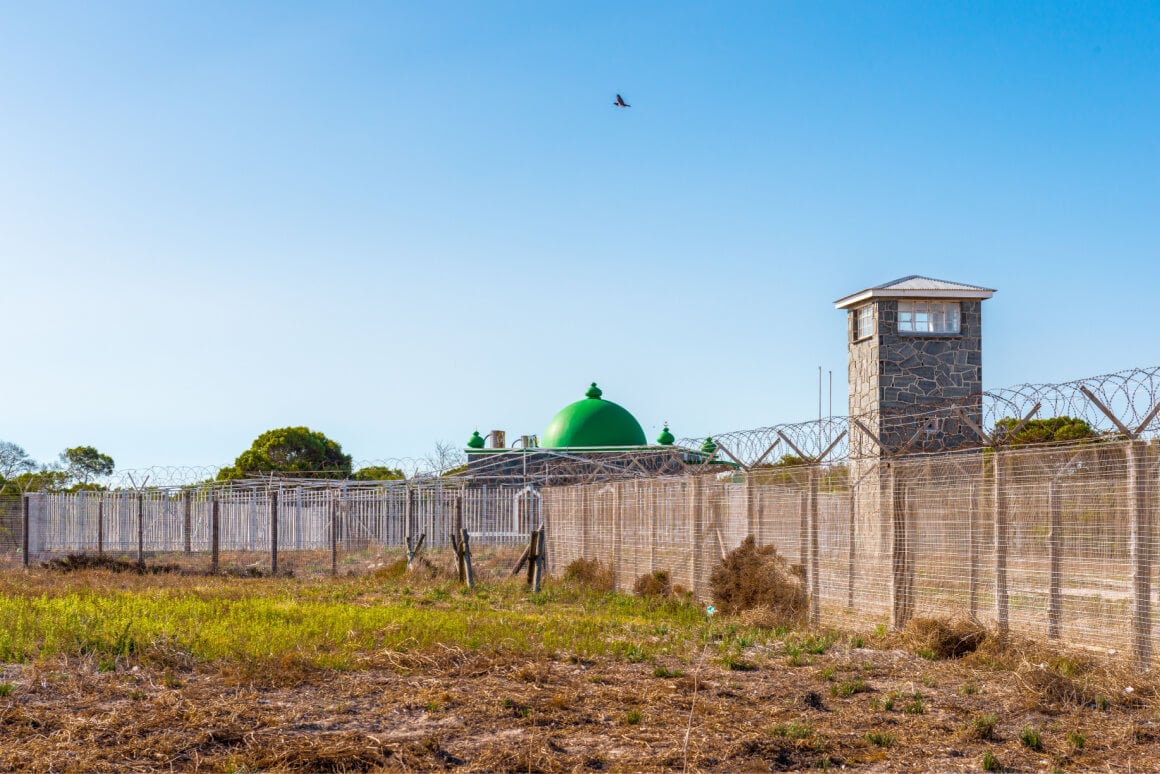
- UNESCO World Heritage Site
- The former prison of Nelson Mandela
- Guided tours by former political prisoners
- Panoramic views of Cape Town across the bay
Why it’s awesome:
Robben Island is one of South Africa’s most iconic and poignant historical sites, situated just off the coast of Cape Town. It served as a prison during the apartheid era and was home to South Africa’s most famous president, Nelson Mandela, for 18 of his 27-year sentence. Today, it’s a recognised UNESCO World Heritage Site and a deeply moving symbol of resilience and overcoming oppression. A visit isn’t just a sightseeing mission – it’s a journey through South Africa’s turbulent past and a must-visit for all travellers.
What to do there:
The Robben Island experience starts off with a ferry ride from the V&A Waterfront, during which you’ll be treated to panoramic views of Table Mountain. Once you reach the island, you’ll hop on a guided tour with a former political prisoner. You’ll visit the maximum security prison, Mandela’s former cell, and the famous limestone quarry where inmates were put to work. The stories that are shared along the way bring the sombre history of Robben Island to life in a powerful and personal way.
How to visit:
Robben Island is easily accessible by ferry from the Nelson Mandela Gateway at the V&A Waterfront. Ferries operate daily, weather permitting, and the whole tour lasts about 3.5 to 5 hours. Booking in advance is essential, especially in the peak summer season (December to March), as space is limited. I’d always recommend bringing a hat, comfortable walking shoes, and sunscreen as you prepare for the deeply moving day out.
6. Hogsback – A beautiful and scenic place to check out in South Africa
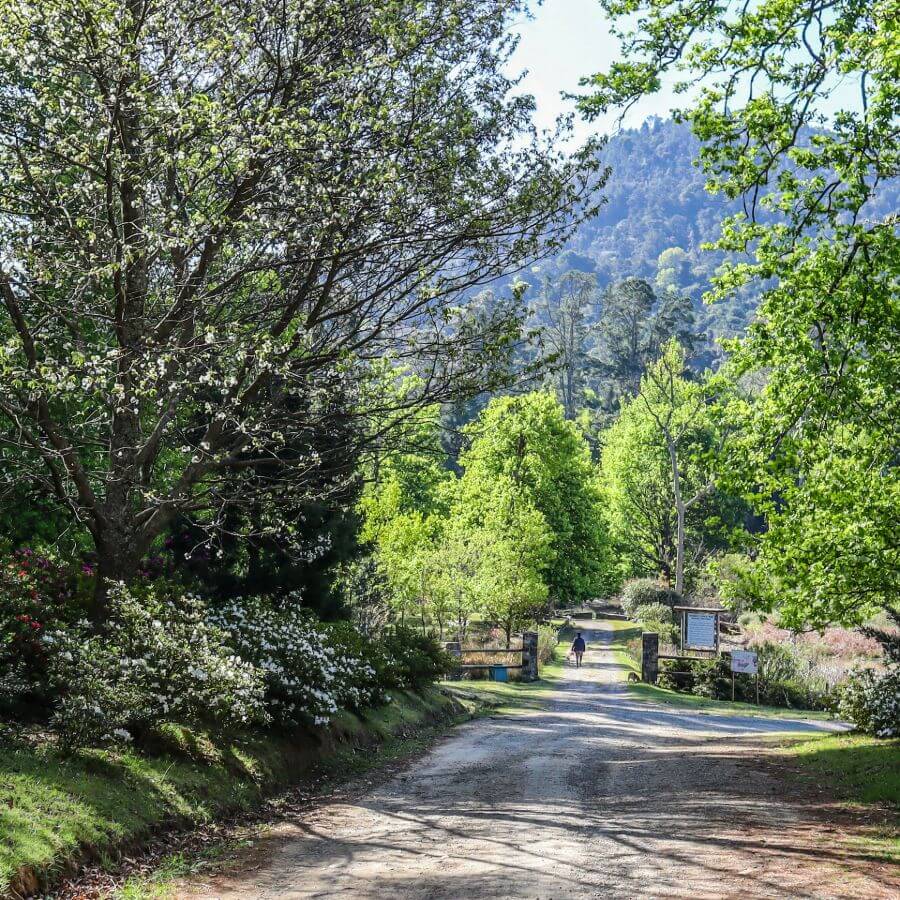
- Mystical forests and waterfalls
- Hiking, birding, and mountain biking
- Quirky art and craft scene
- Alleged inspiration for Tolkien’s Middle-earth
Why it’s awesome:
Hogsback is one of South Africa’s most enchanting hidden gems, located in the Amathole Mountains of the Eastern Cape. The area has a super magical and almost otherworldly feel as the mountains are often covered in mist, along with surrounding Afro-montane forests. It is also rumoured to have been the inspiration behind some parts of J.R.R. Tolkien’s The Lord of the Rings, as his family hailed from the area. It’s the ideal destination for nature lovers, artists, and those looking to unwind and unplug in a unique setting.
What to do there:
The Hogsback Hiking Trails are a great starting point, winding through dense forests and past waterfalls, treating you to incredible views over the Tyhume Valley. You can enjoy birdwatching, forest bathing, and exploring local botanical gardens. There are also some more adventurous activities like mountain biking, horse-riding, and abseiling for the adrenaline junkies. There’s also a thriving local art scene, with quaint crafts shops, galleries, and the iconic Eco Shrine. The Labyrinth at the Edge is also unmissable – a stone maze set on a cliff with epic panoramic views.
How to visit:
Hogsback is a 2.5 – 3-hour drive from East London, making it an ideal spot to visit for the weekend or the perfect stopover on a road trip up the coast. The drive up the mountain is something special, as it winds past lush scenery with epic views. Accommodation ranges from rustic backpackers and cosy forest cabins to charming guesthouses and romantic eco lodges. Winters get chilly (June to August) and can even see snow sometimes, while summers are lush and green. I’d pack for all weather conditions, including something warm and something waterproof, as conditions can always change up in the mountains.
7. Johannesburg – A great place in South Africa if you love to shop!
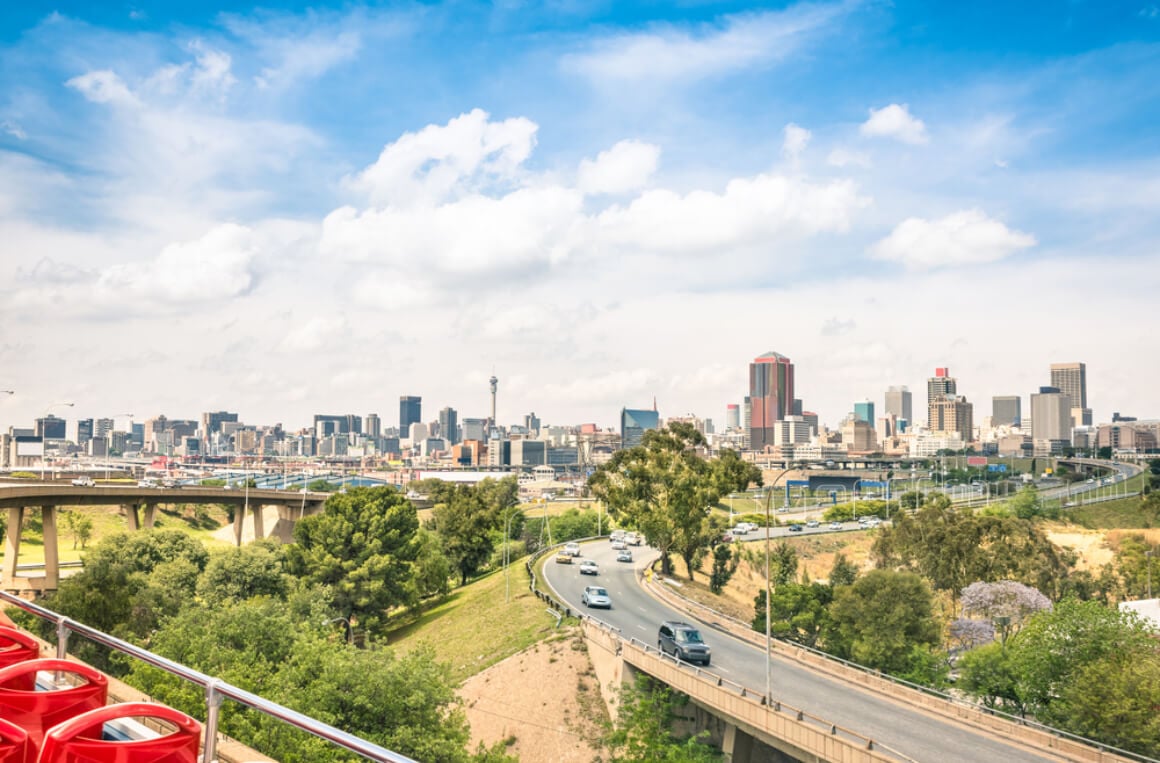
- Rich culture and history
- Buzzing nightlife and shopping
- Thriving art and food scene
- Gateway to apartheid history
Why it’s awesome:
Johannesburg, or Joburg as it’s affectionately known, is South Africa’s largest city, a dynamic blend of history, energy, and creativity. It’s honestly the beating heart of the country’s economy and cultural scene, with plenty of skyscrapers and historically significant sites. A somewhat reflection of South Africa as a whole, with plenty of stories to be told in its streets and in my humble opinion, a truer reflection of the country.
What to do there:
You can head out and explore Soweto and visit the iconic Vilakazi Street, home to both Nelson Mandela and Archbishop Desmond Tutu. The Apartheid Museum is also a must when visiting Joburg if you wish to truly understand South Africa’s complex past. Maboneng and Braamfontein both buzz with art galleries, street culture, and plenty of awesome cafes. If you’re looking for a bit of a nature fix, you can head out to the local botanical gardens or the Zoo Lake.
How to visit:
Flying into OR Tambo International Airport is one of the easiest ways to access Johannesburg. It’s the busiest airport in South Africa, with plenty of daily flights at a reasonable fare, depending on the time of day. Accommodation-wise, you can expect to find everything from sleek city hotels to boutique guesthouses and quirky Airbnbs. While Joburg has a reputation for safety concerns, staying in well-known areas and heading out on guided tours will ensure that you have a safe and enriching visit.
8. Blyde River Canyon – One of the nicer places in South Africa to sightsee!
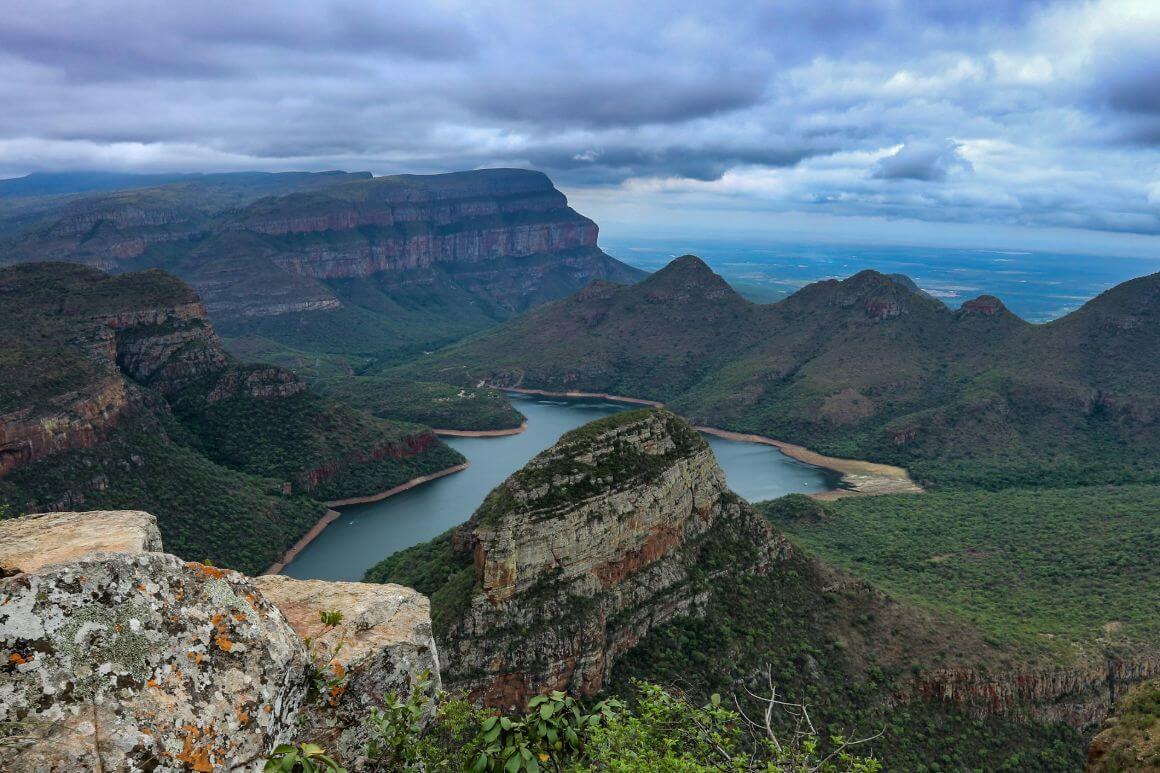
- Jaw-dropping viewpoints
- Lush subtropical vegetation
- One of the world’s largest canyons
- Adventure and nature rolled into one
Why it’s awesome:
The Blyde River Canyon in the Mpumalanga province is one of the most breathtaking natural wonders in South Africa. It is also, casually, the third-largest canyon in the entire world! Unlike most arid canyons, this one is covered in lush vegetation, with vibrant greenery and teeming with life. It also forms part of the Panorama Route in the area and offers unparalleled views, outdoor adventure, and awesome geographical marvels.
What to do there:
You can stop at some pretty iconic viewpoints like God’s Window, Bourke’s Luck Potholes, and the Three Rondawels for epic photo ops! There are also scenic trails to go hiking on, you can go white-water rafting, or cruise on the Blyde Dam and do some hippo and crocodile spotting. Nature lovers and bird watchers alike will be in outdoor heaven here too, with such a lush paradise in the canyon’s diverse ecosystems and forested slopes.
How to visit:
Located in Mpumalanga, as I briefly mentioned above, the Blyde River Canyon is about a 1.5-hour drive from Kruger National Park and 4 – 5 hours from Johannesburg. It is best explored by car, especially the Panorama Route road, which is one of the most scenic drives. Accommodation-wise, you can expect to find campsites, lodges, and chalets, with options to suit every budget. If you’re looking for slightly fewer crowds and clearer views, I’d recommend visiting early. Besides, the early bird catches the worm!
9. Kgalagadi Transfrontier Park – An unknown (but awesome!) place to see in South Africa!
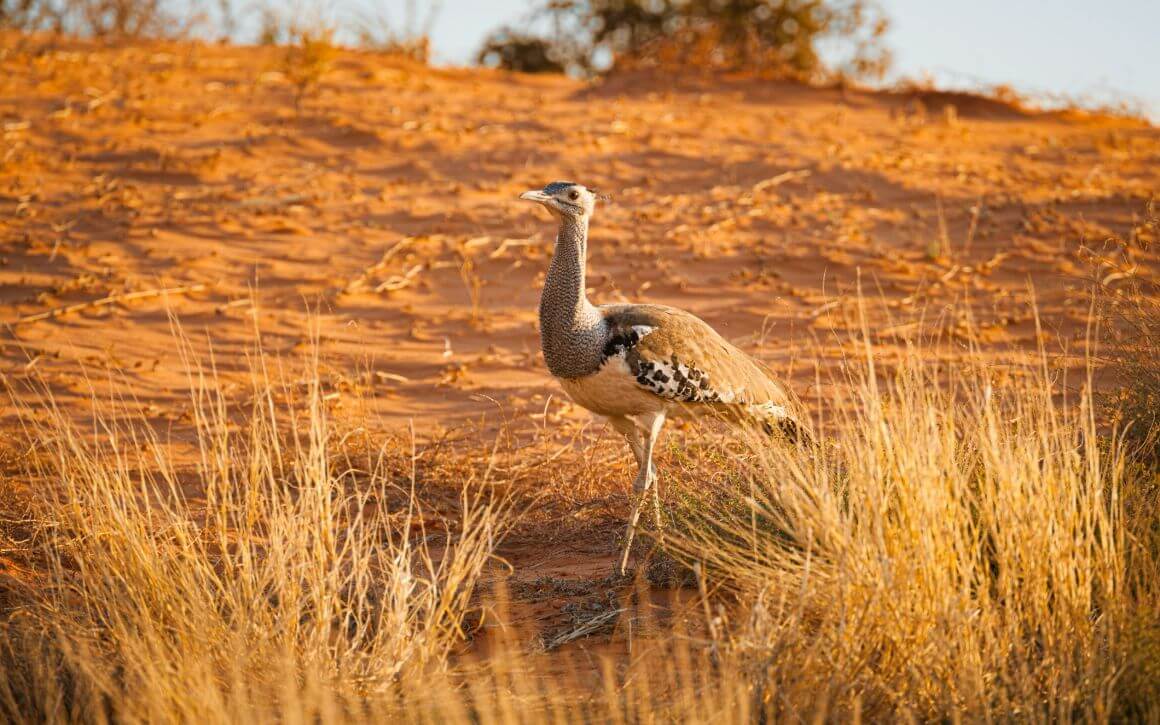
- Remote, rugged beauty
- Excellent predator sightings
- Stark red dunes and open skies
- Stunning conservation area
Why it’s awesome:
The Kgalagadi Transfrontier Park is a vast, semi-arid wilderness area that stretches across both South Africa and Botswana. You can expect stunning landscapes, rich wildlife, including some special big cats, and, of course, the iconic red sand dunes. It’s far away from crowds and civilisation, so you’re in for an untamed safari experience that’s raw and properly off the beaten track.
What to do there:
The park is a proper dream for all wildlife enthusiasts, with regular sightings of the rare black-maned lions, cheetahs, and leopards, as well as massive raptor populations. You can head out on your own self-drive safaris or join a guided game drive for an elevated spotting and photo experience. The dry terrain and sparse vegetation also make for easier animal spotting, especially along the Auob and Nossob riverbeds.
How to visit:
Access to the park is mainly via the Twee Rivieren gate, which is roughly a 9-hour drive from Upington. While a regular car works, a 4×4 is recommended to be able to explore deeper into the park, or cross-border routes into Botswana and Namibia. In terms of accommodation, you can expect to find rustic camps and wilderness lodges. Remember, this isn’t the big city life, so pack plenty of supplies and fuel. It might seem like a mission, but the rewards are well worth it!
10. Knysna – A must-visit place to visit in South Africa on the weekend!
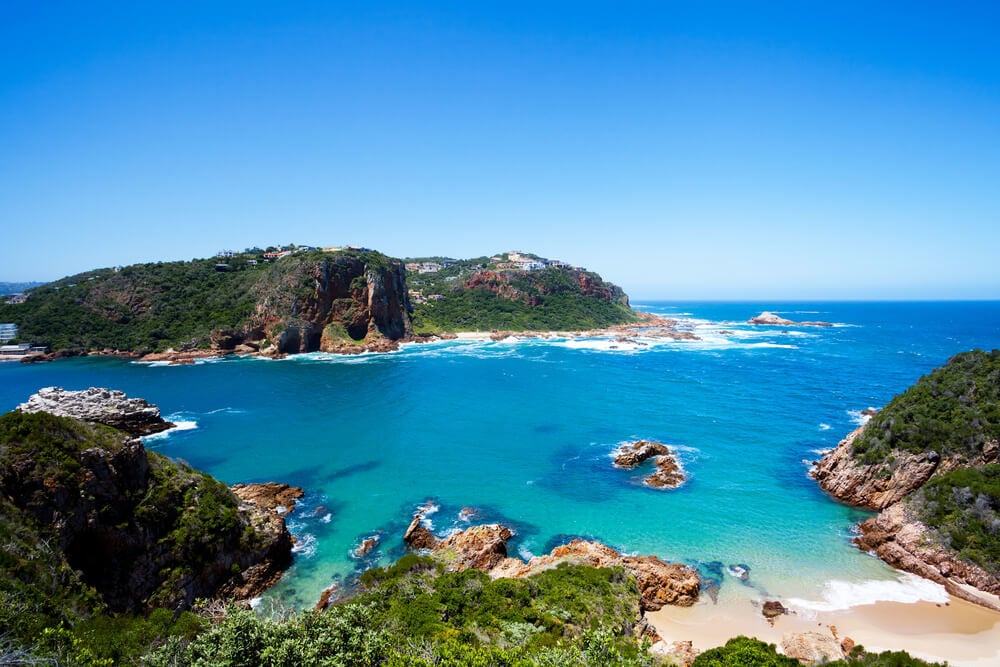
- Stunning lagoon and forest scenery
- Charming town with artsy flair
- Famous oysters and seafood
- Outdoor adventures and relaxed vibes
Why it’s awesome:
Knysna is one of the crown jewels of the Garden Route road trip, nestled between the ocean, a beautiful estuary, and indigenous forests. The town is known for its laid-back charm, stunning natural beauty, and a pretty epic food scene. Whether you’re after nature, art, or simply just kicking back at the water, you can rest assured knowing Knysna has you covered.
What to do there:
You can start off your visit by taking a cruise on the Knysna lagoon or going for a hike in the surrounding Knysna Forest Reserve. For some dramatic and wild coastal views, you can visit the Knysna Heads or explore the town a bit and find a cute craft market or art gallery. If you’re a foodie, you’re in for a treat if you happen to be in the town during the famous Knysna Oyster Festival. If not, there is still epic seafood and oysters to be had year-round.
How to visit:
Knysna is easily reached via the N2 highway and usually takes about 5 – 6 hours from Cape Town. If you find yourself in Port Elizabeth, the drive is a mere 2.5 hours. Overall, Knysna is an essential stop along the Garden Route, with plenty of accommodation ranging from boutique hotels and cosy Airbnbs, and everything in between. I’d recommend exploring the town and surroundings by car, and while day trips are cool, longer stays and weekend visits are awesome.
11. Cradle of Humankind – A fascinating educational place to visit in South Africa
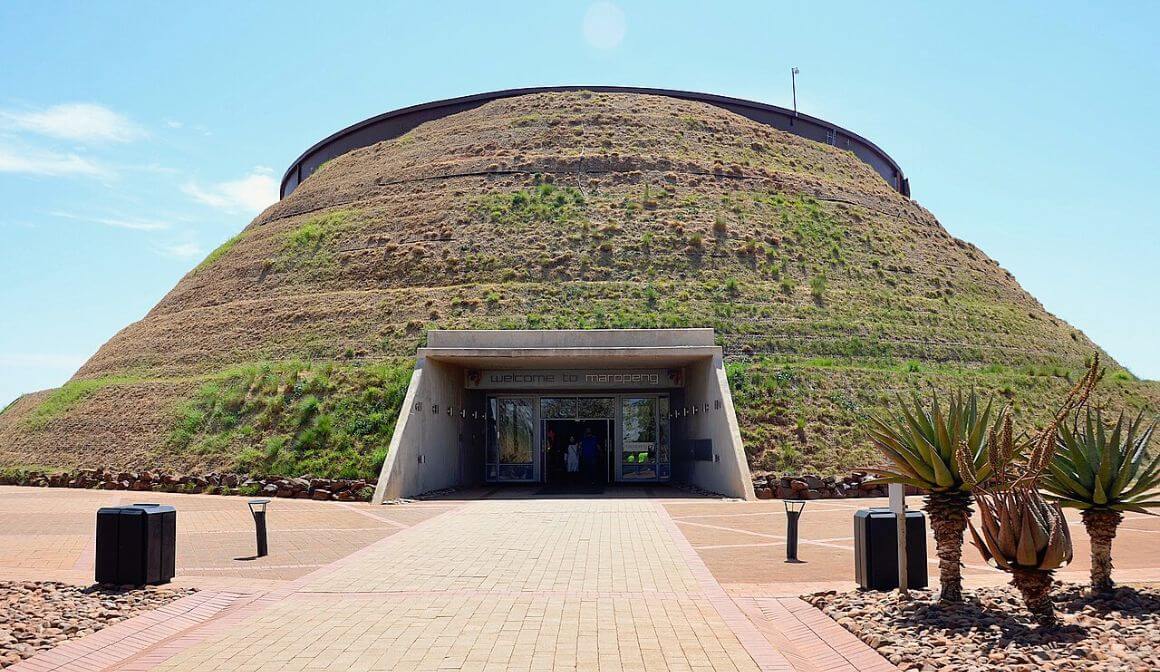
- UNESCO World Heritage Site
- Fascinating fossil discoveries
- Scenic landscapes and underground caves
- Insightful museums and guided tours
Why it’s awesome:
Now, the Cradle of Humankind is one of the most important paleoanthropological sites in the world and offers a peek into the early origins of humanity. Just a short drive from Johannesburg, this recognised UNESCO World Heritage Site is home to fossil sites, insane caves, and captivating museums. Some of the oldest hominin fossils were discovered here, including Australopithecus and Homo naledi so it’s a real must-see for the curious-minded, history buffs, or science lovers.
What to do there:
You can explore the famous Sterkfontein Caves, where many ground-breaking fossils have been discovered. Or you can visit Maropeng, an award-winning visitor centre that takes you on an interactive journey through human evolution. You can also go on guided tours of the caves, learn about early hominids, and check out some realistic exhibits. The surrounding area is also incredibly picturesque and offers great hiking trails, wildlife experiences, and picnic spots in the Magaliesberg region.
How to visit:
Located about 45 minutes from Johannesburg, or an hour from Pretoria, the Cradle of Humankind is super easy to access by car. The area also has various accommodation options, from country lodges to eco-retreats, perfect for a quiet weekend getaway. You can also pop in for the day if you don’t have time on your side. Guided tours are highly recommended in order to really get the most out of the geological and archaeological richness of the site.
12. Clarens – Quite the quirky place in South Africa
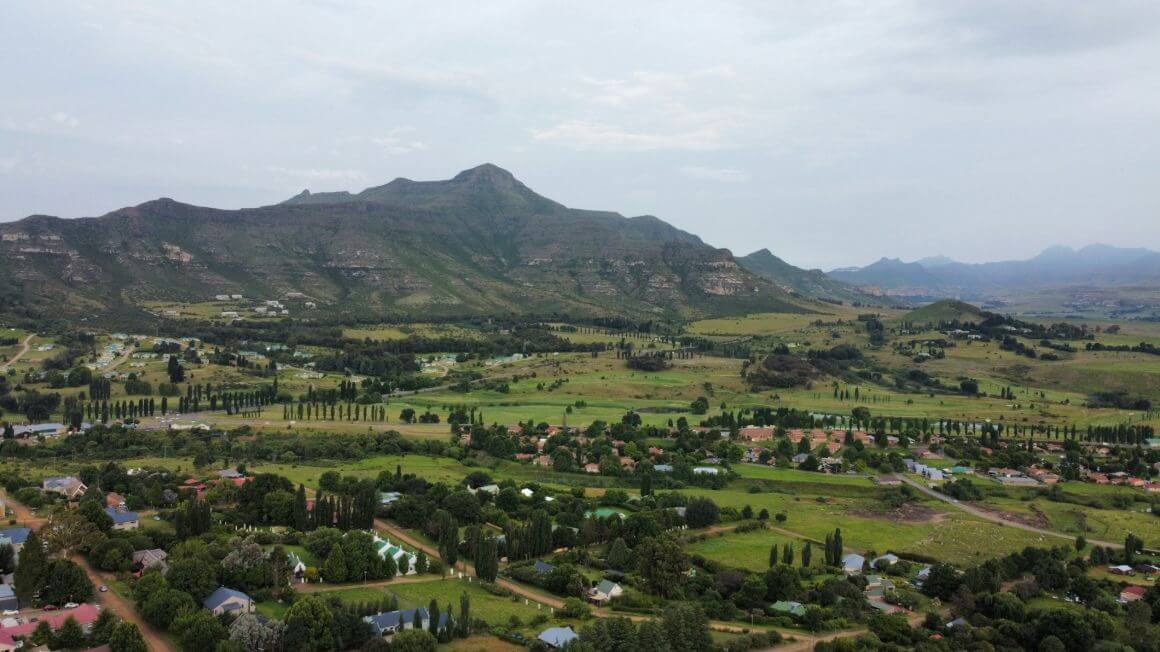
- Relaxed pace and small-town charm
- Outdoor activities in Golden Gate Highlands
- Artistic village with cosy cafes and galleries
- Stunning surrounding sandstone cliffs and mountain views
Why it’s awesome:
Clarens is a charming little mountain village that’s tucked away at the foothills of the Maloti Mountains in the Free State, near the Lesotho border. It’s a super popular escape for city slickers looking to unwind a bit, known for its art, surrounding scenery, and warm hospitality. The town blends nature and culture incredibly well, with both its golden-hued landscapes and vibrant arts scene. It’s honestly the perfect venue for a relaxing weekend and scenic road trip.
What to do there:
One of the best things to do in Clarens is to simply stroll around the main square, where you’ll find local craft shops, awesome restaurants, and art galleries. If you’re chasing adventure, you can go hiking, mountain biking, or horse riding nearby or visit the Golden Gate Highlands National Park for wildlife viewing and stunning rock formations. If you’d like to tap into your cultural side, you can explore the Basotho Cultural Village or browse some of the town’s pottery museums and antique shops.
How to visit:
Clarens is roughly equidistant between Johannesburg and Bloemfontein, and takes about 3.5 hours to reach by car. It makes for an epic weekend getaway, with a wide range of accommodation available from charming guesthouses to fully-equipped self-catering cottages. The town is best explored on foot, but having a car is essential if you want to explore the nearby parks and attractions. It’s one of the best places to visit in South Africa if you’re after a refreshing break and you enjoy art, nature, and peace and quiet.
13. Prince Albert
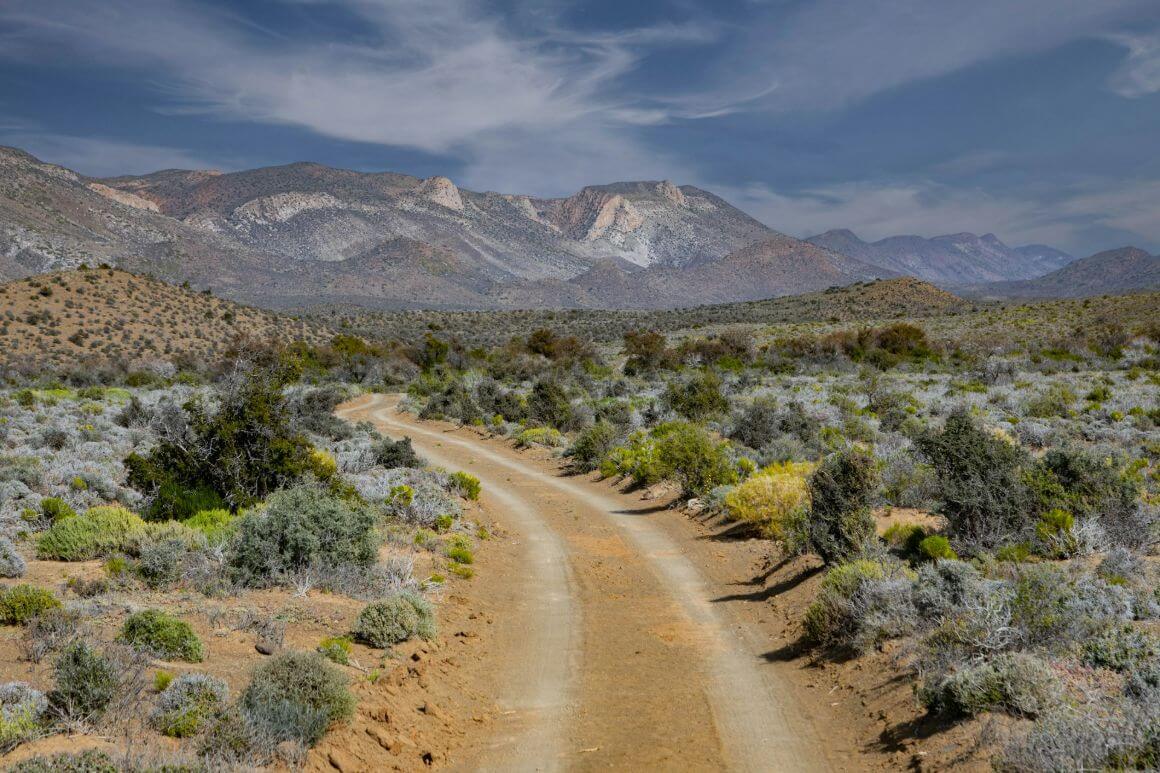
- Historic town set against the Swartberg Mountains
- Stargazing, olive farms, and slow living
- Gateway to the Swartberg Pass
- Cape Dutch architecture and Karoo hospitality
Why it’s awesome:
Prince Albert is a beautifully preserved town in the Great Karoo, known for its heritage buildings, welcoming locals, and stunning natural beauty. It’s truly a serene destination that celebrates a much slower pace of life with its blend of history, landscapes, and art. It’s the ideal location for those who are looking to escape the city and enjoy a bit of tranquillity and experience a little taste of Karoo culture.
What to do there:
You can wander through the town’s streets that are lined with incredible architecture, a mix of Victorian, Cape Dutch, and Karoo influences. There are local markets, galleries, and the Price Alert Art Route that you can visit to get inspired and meet resident creatives. You can also drive the iconic Swartberg Pass, a UNESCO site, sample some of the local cheese, olives, and preserves, and stargaze in some of the country’s clearest skies.
How to visit:
Prince Albert is reachable via the N1 highway, about 4.5 hours from Cape Town and about 2 hours from the town of Oudtshoorn. The drive itself is very much a part of the whole experience, especially if you approach via the Swartberg Pass. In terms of accommodation, you can expect charming guesthouses, heritage homes, and luxury farm stays. The town is best explored on foot, but I’d definitely recommend having a car for the surrounding mountain passes and roads.
14. Coffee Bay
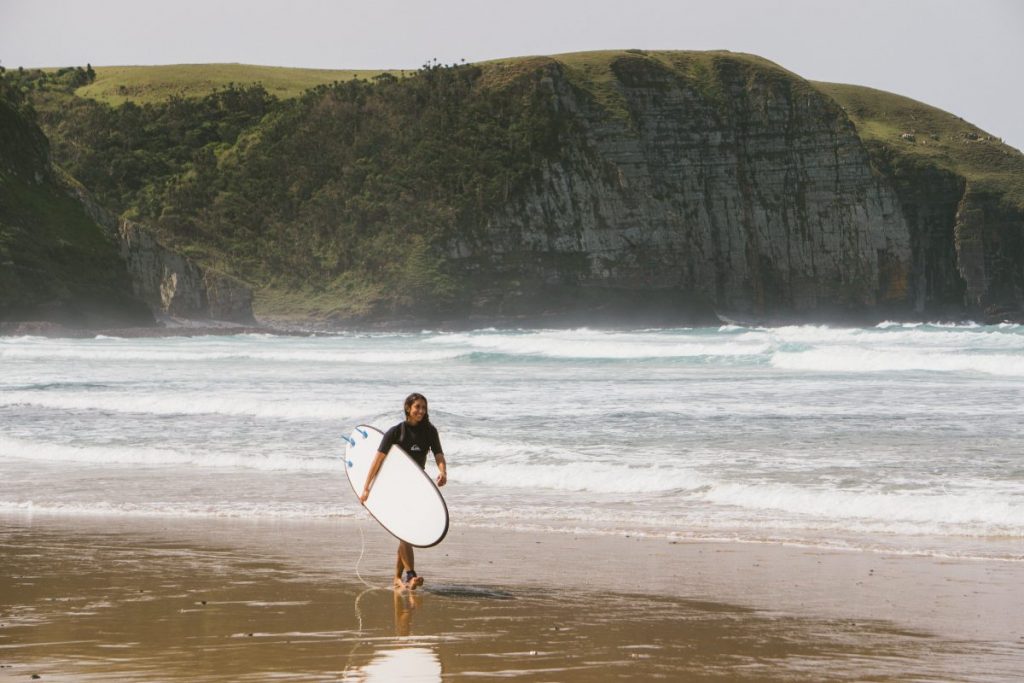
- Authentic Xhosa culture and warm hospitality
- Rugged cliffs, unspoiled beaches, and rolling hills
- The iconic Hole in the Wall rock formation
- Surfing, hiking, and fishing adventures
Why it’s awesome:
Coffee Bay is one of the most stunning places to visit in South Africa, a remote coastal village located along the Wild Coast of South Africa. The scenery is insane, with incredible rock formations like Hole in the Wall, untouched beaches, and traditional Xhosa villages nearby. It’s such an off-the-beaten-track experience, with cows roaming the beaches, incredible waves, and a place where you can relax, unwind, and feel totally wild and free.
What to do there:
You can’t miss the iconic Hole in the Wall, a striking rock arch in the sea that is steeped in local legend. You can also hike along the coastal trails, enjoying stunning ocean views along the way, go surfing, swimming, or beachcombing the uncrowded shores. It’s the perfect place for nature lovers, photographers, and those looking to tap into the local Xhosa culture.
How to visit:
Coffee Bay is about 5 hours by car from East London, and it’s quite the adventurous ride to get there. You can expect rough rural roads full of potholes, but hey, that’s all part of the adventure! A car works just fine, but a high-clearance vehicle is recommended. Accommodation-wise, you’ll find rustic backpackers, chilled lodges, and beach chalets often with epic sea views. The village is small and walkable, but you definitely need your own transport to be able to explore the nearby trails and villages
15. Durban
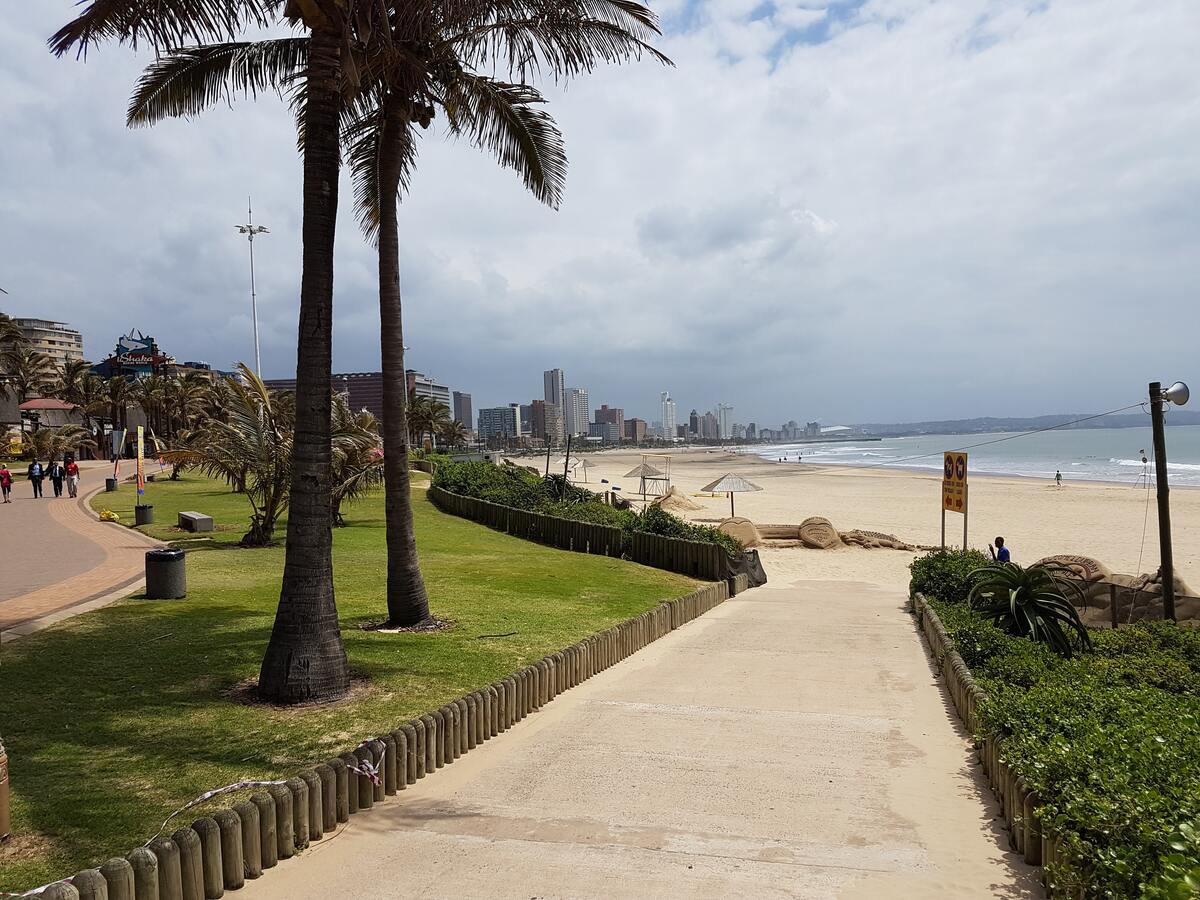
- Epic surfing and beach scene
- Subtropical climate and laid-back lifestyle
- Strong Indian and Zulu influences
- Warm Indian Ocean waters and golden sands
Why it’s awesome:
Durban is one of South Africa’s most exciting coastal cities, where beach life, diverse cultures, and city life vibes all collide. It boasts warm ocean waters, a rich Indian and Zulu heritage, and a buzzing promenade full of walkers, runners, skaters, and cyclists. The city really is the perfect blend of adventure and relaxation, and it’s a city that always feels alive, sunny, and full of flavour.
What to do there:
Some of the best things to do are centred around the beach and promenade, with cycling and strolling along the Golden Mile a must! The beach culture is also huge and chilling on the golden sands or catching the perfect wave at New Pier is essential for any surfer. Then there’s the buzzing Victoria Street Market, uShaka Marine World, and a ridiculously delicious curry and bunny chow scene. Rounding off the experience is a great nightlife, museums, and other cultural sites.
How to visit:
Durban is well-connected by both air and road, with King Shaka International Airport a mere 30 minutes from the city. It’s perfect for a weekend stay, but longer trips are recommended with plenty to do and see both north and south of the city. Accommodation ranges from boutique guesthouses, beachfront hotels, and equipped Airbnb’s, with plenty of options to choose from. A car is essential to get around, although ride-hailing services work perfectly fine too. The beachfront promenade is also easy to explore on foot or by bicycle.
16. Drakensberg Mountains – A beautiful outdoor place to visit in South Africa
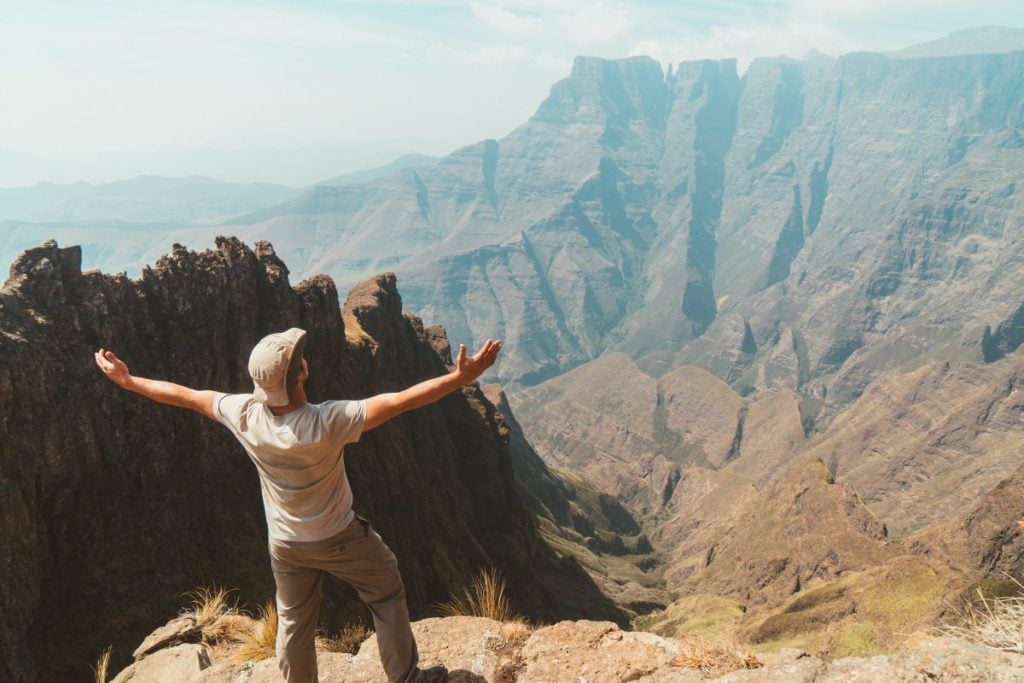
- Towering peaks and dramatic cliffs
- Ancient San rock art sites
- Stunning valleys and lush scenery
- World-class hiking trails
Why it’s awesome:
The Drakensberg, translated to “Dragon Mountains”, are one of the best places to visit in South Africa if you love hiking. They’re a UNESCO World Heritage Site, and the incredible blend of cultural significance and natural beauty. You’ll find towering basalt peaks, ancient cave art, and rolling hills, all packaged up into one epic gift for nature lovers, peace seekers, and hikers.
What to do there:
It’s all about the outdoor adventures here, with iconic hikes like the Amphitheatre and the Tugela Falls, the world’s second-highest waterfall. You can explore caves decorated with 3000-year-old San rock art, birdwatch, and even find incredible climbing opportunities. For downtime, there are spa retreats, horse riding, and my favourite, trout fishing.
How to visit:
The Drakensberg is a 3 – 5 hour drive from Durban or Johannesburg, with easy access via towns like Winterton and Underberg. Accommodation ranges from rustic backpackers and camping sites to luxury mountain lodges. Many areas fall within the uKhahlamba-Drakensberg Park, with entry fees assigned to dedicated reserves. The summer months (November to March) offer lush greenery, while the winter months (May to August) are crisp, bringing clear skies and sometimes even snow.
Our GREATEST Travel Secrets…
Pop your email here & get the original Broke Backpacker Bible for FREE.
17. Stellenbosch – A very cool place in South Africa to go for a day
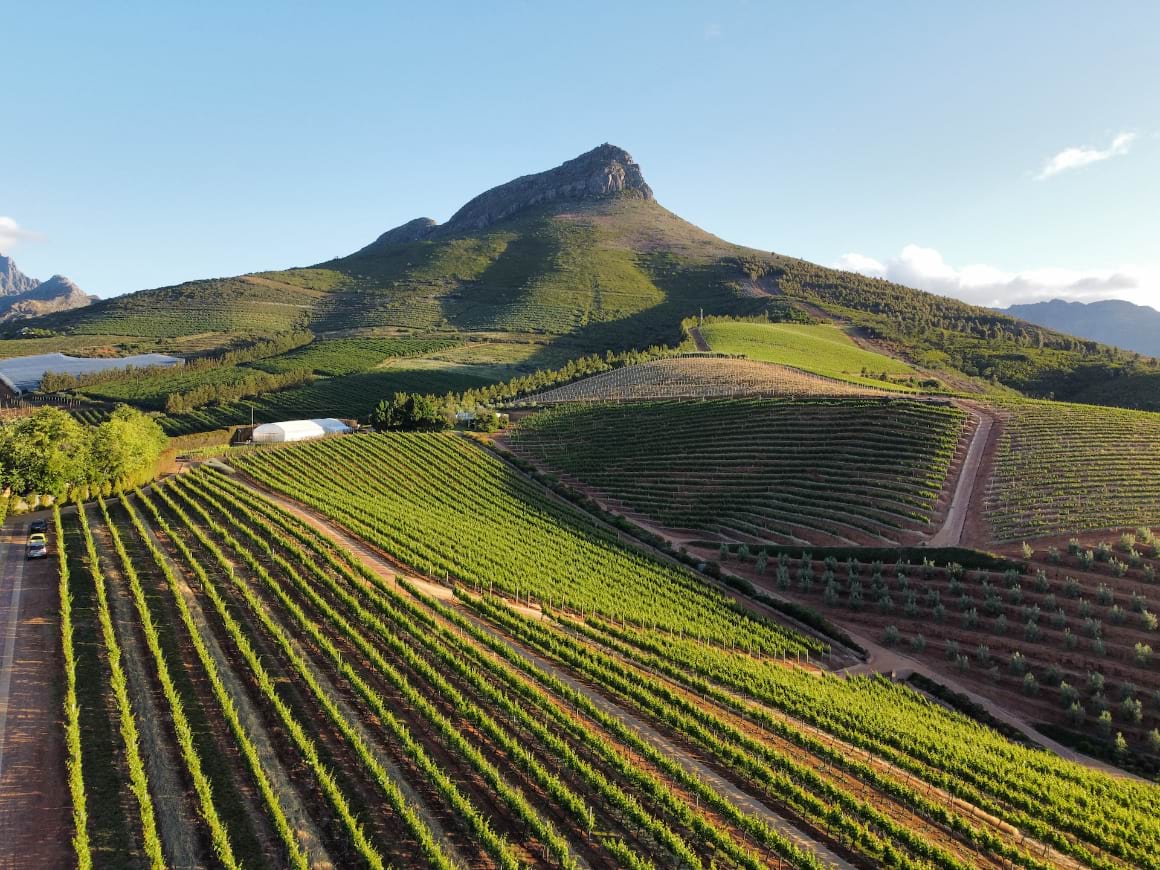
- Cape Dutch Architecture
- World-renowned wine estates
- Oak tree-lined streets
- Surrounded by mountains and vineyards
Why it’s awesome:
Stellenbosch is none other than South Africa’s wine capital and one of the country’s oldest towns. Located a mere hour’s drive from Cape Town, it’s a super charming town that blends historic elegance with a youthful and energetic vibe thanks to its university. The town is surrounded by vineyards and makes for the perfect place to relax and unwind with epic nature, food, and culture.
What to do there:
Wine tasting is an absolute must when visiting Stellenbosch, especially at estates like Spier, Delaire Graff, and Tokara, high up on the Helshoogte Pass. You can also take a leisurely stroll through the historic centre of the town to admire some of the stunning Cape Dutch buildings. Another must is the Stellenbosch Village Museum as well as local art galleries, or heading on a hike through the Jonkershoek Nature Reserve. Expect plenty of amazing mountain views and outdoor vibes.
How to visit:
Stellenbosch is easily accessible from Cape Town and less than an hour’s drive away, normally about 45 minutes depending on traffic. Most wine estates offer tastings and cellar tours, with pre-booking advised but not always necessary. You can also head out on a guided tour if you’d prefer not to drive (highly recommended!), but they are also super convenient, insightful, and visit several estates. Winning!
18. Castle of Good Hope
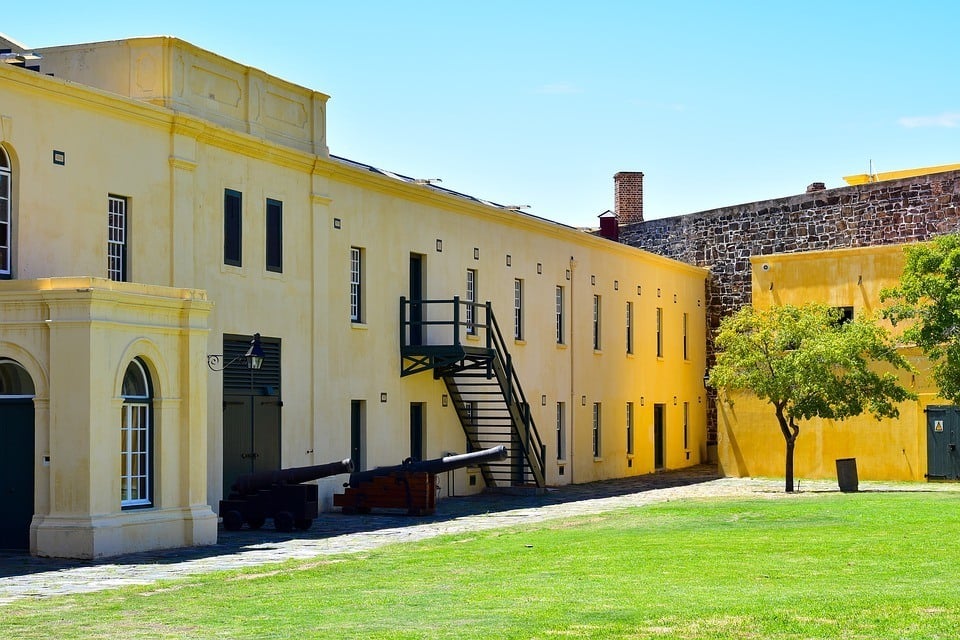
- Pentagonal fortress
- The oldest surviving colonial building in South Africa
- Military museum and exhibitions
- Central location in Cape Town
Why it’s awesome:
The Castle of Good Hope was built in the 17th century by the Dutch East India Company and is a striking example of Cape Town’s early colonial history. It’s a super well-preserved fortress and offers a sneak peek into the strategic importance of the city. It also casually boasts amazing views of Table Mountain, beyond its thick stone walls.
What to do there:
You can explore dungeons, historic rooms filled with artefacts and military memorabilia, and bastions as you walk through the fortress. The castle also houses art exhibitions and the William Fehr Collection, as well as a scenic courtyard. For a deeper understanding and historical context, you can head on a guided tour.
How to visit:
The castle is located bang in the city centre and easily accessible by bus, car, or on foot. It’s open daily with a modest entrance fee, with guided tours running regularly throughout the day. They provide a much more in-depth understanding of the architecture, history, and role in South Africa’s colonial past.
19. Addo Elephant Park – Great place to visit in South Africa for couples!
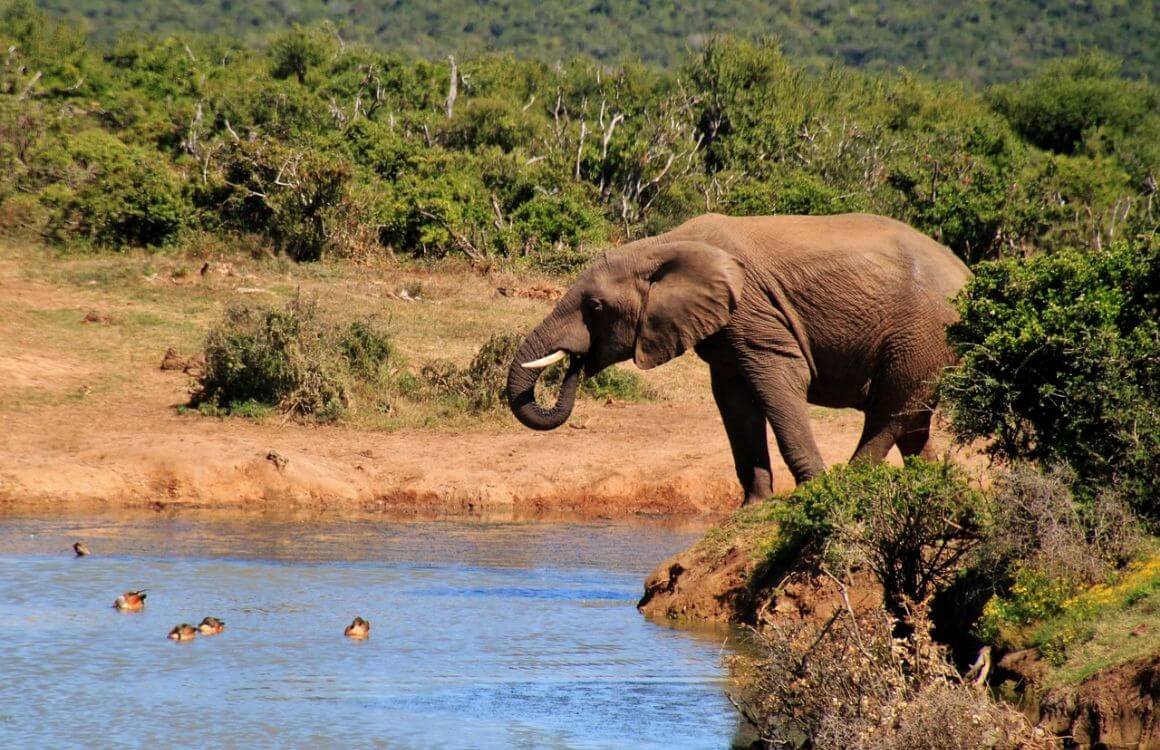
- Over 600 elephants
- The third-largest national park in South Africa
- Malaria-free safari destination
- Home to the Big Five
Why it’s awesome:
Addo Elephant Park offers a world-class safari experience without the risk of contracting malaria, making it perfect for families and first-timers. Located near the city of Port Elizabeth, the park is known for its large herd of elephants, incredible scenery, and the opportunity to see the Big Five in their natural habitat.
What to do there:
The main thing to do in the park is to head out on game drives to spot lions, leopards, buffalo, elephants, and rhinos. Ticking off all five is a is an incredible feat! You can also head out birdwatching, go hiking on the trails, or horse riding to add to the epic outdoor experience.
How to visit:
The easiest way to reach the park is to fly into Port Elizabeth and then take the 45-minute drive to the park entrance. From there, you pay the entrance fee, which is a daily conservation fee, and rather modest if I may say. There are basic campsites and slightly bougee’ier lodges within the park that I recommend booking in advance. This is especially relevant during local school holidays and peak wildlife viewing seasons such as early spring and winter.
20. District Six Museum – An awesome place to visit in South Africa for half a day!
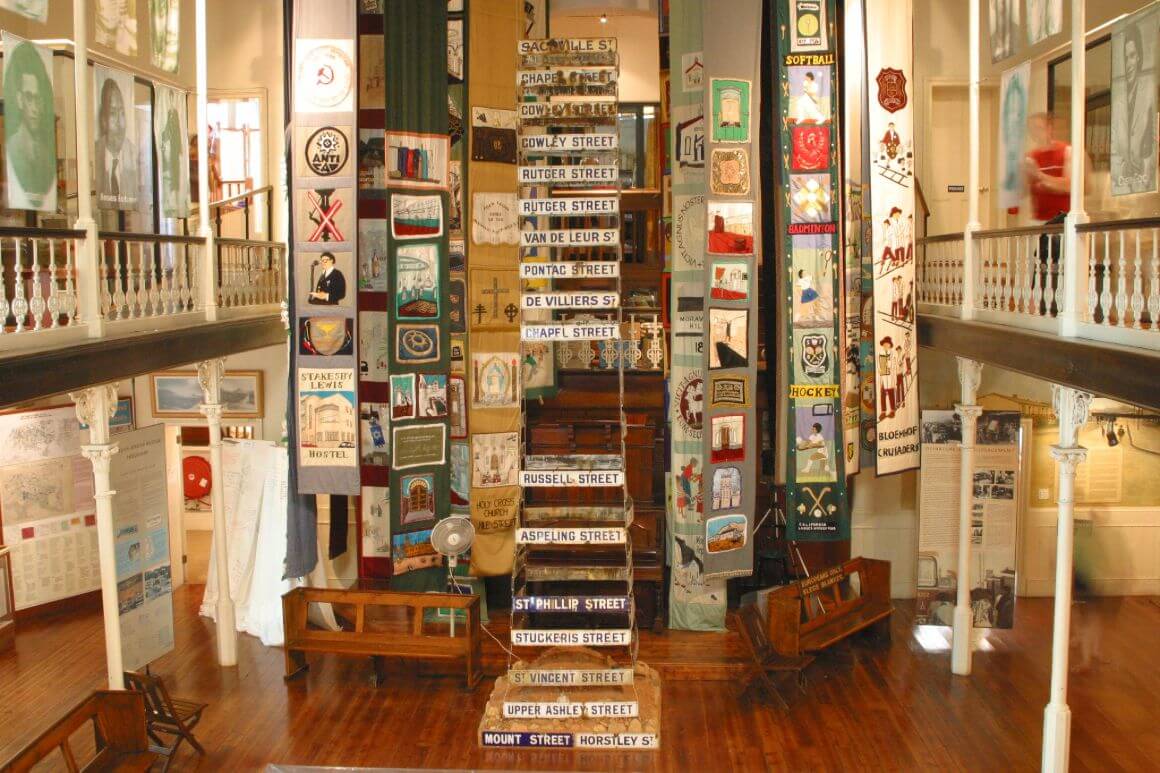
- Honours a once-thriving multicultural community
- Personal stories and photos
- Centrally located in Cape Town
- Focus on the apartheid-era forced removals
Why it’s awesome:
The District Six Museum is a powerful tribute to a vibrant community that was torn apart by the apartheid regime. There are personal narratives, preserved artefacts, and interactive exhibits that contribute to telling the story on behalf of the 60,000 residents who were forcibly removed. It’s honestly a must-visit for getting a deeper understanding of South Africa’s painful and complex past.
What to do there:
You can walk across the old street map that is laid out on the museum floor, marked with handwritten notes from former residents. You can also explore the exhibits that are filled with family photos, household items, and even street signs. A great suggestion is to join a guided tour, often conducted by a former resident, who provides firsthand accounts of life before, during, and after the removals.
How to visit:
The museum is centrally located in Cape Town and easily accessible by public transport, car, and on foot. It’s open most days, with a small entrance fee. If you wish to get a deeper, more personal perspective on one of South Africa’s most poignant histories, then I’d suggest hopping onto a guided tour.
21. Table Mountain National Park – Awesome place to visit in South Africa with kids!
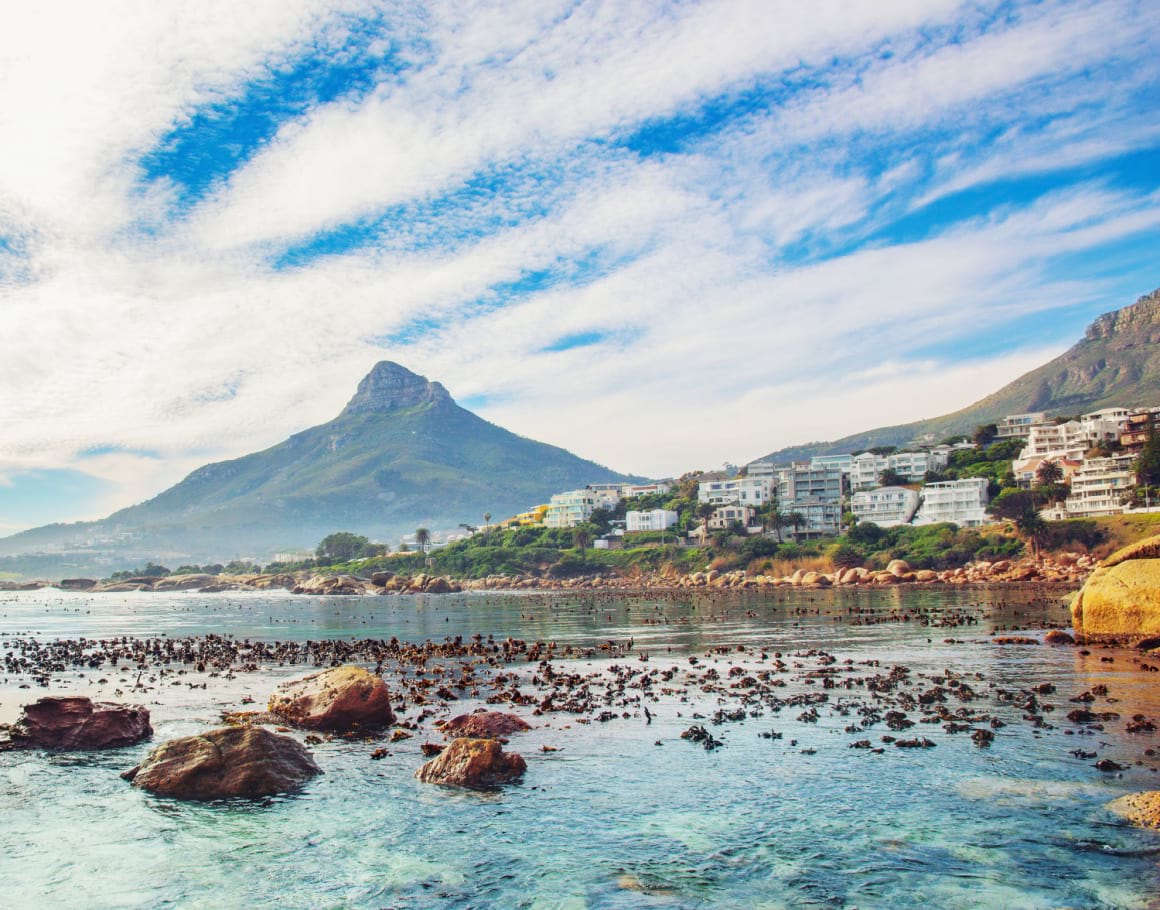
- Encompasses Table Mountain and the Cape Peninsula
- Rich biodiversity and unique fynbos vegetation
- Hiking, cable car, and panoramic views
- Part of a UNESCO World Heritage Site
Why it’s awesome:
Table Mountain National Park stretches all the way from Signal Hill to Cape Point and is an epic natural playground. It’s stacked with lush landscapes, stunning ocean views, and steep cliffs, home to some of the world’s rarest plants. Table Mountain is also a proper bucket list highlight for all nature lovers and adventurers alike. It’s one of those things to do in South Africa that you just can’t miss.
What to do there:
From the Table Mountain Cable Car to hiking trails like Platteklip Gorge and Lion’s Head, the views are second-to-none. You can also explore Cape Point’s rugged coastline and see animals like eland, bontebok, ostriches, and zebra and visit penguins at Boulders Beach. For a more relaxing and tranquil outing, head to Silvermine Dam or Kirstenbosch Botanical Gardens within the park.
How to visit:
The park is accessible from just about anywhere in Cape Town and is open throughout the year. Entry points and fees vary by section, so plan ahead and do your research! The cable car operates daily, weather permitting, and guided hikes and tours are widely available. Remember to always pack for all conditions as the weather can change quickly – expect four seasons in a day in Cape Town!
22. Paternoster – A must-see for foodies!
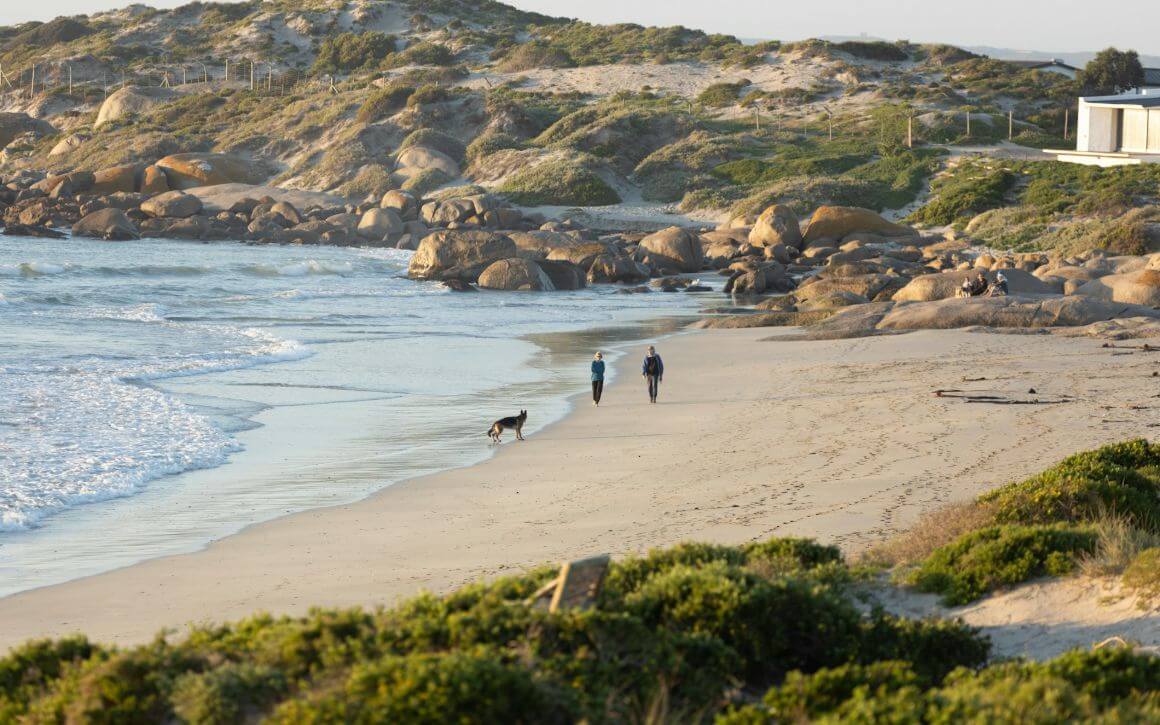
- Traditional whitewashed fishing village
- Fresh seafood and local cuisine
- Peaceful, romantic atmosphere
- Pristine beaches
Why it’s awesome:
Paternoster is one of South Africa’s oldest fishing villages and a proper hidden gem on the West Coast. It’s known for its serene beaches that go on forever, quaint cottages, and incredible sunsets. It’s the ideal getaway for couples, artists, and foodies alike, and in recent years, it’s become one of the best places to visit in South Africa for delicious cuisine!
What to do there:
You can enjoy long walks on the beaches, kayaking, and soaking up the local flora and fauna – some of the most unique in South Africa. You can also browse local art galleries and visit the Columbine Lighthouse. One of the unmissable activities is to have a meal at Wolfgat, one of the world’s best destination restaurants that serves creative dishes using locally foraged ingredients.
How to visit:
Paternoster is about a 2-hour drive from Cape Town, making it an easy weekend visit, or at a push, a day trip. The village has cosy guesthouses and great boutique hotels, and is super walkable, although getting there is essential by car. You can explore nearby nature reserves and also spot wildflower blooms during springtime.
23. Cederberg Mountains – Certainly one of the most exotic places to see in South Africa
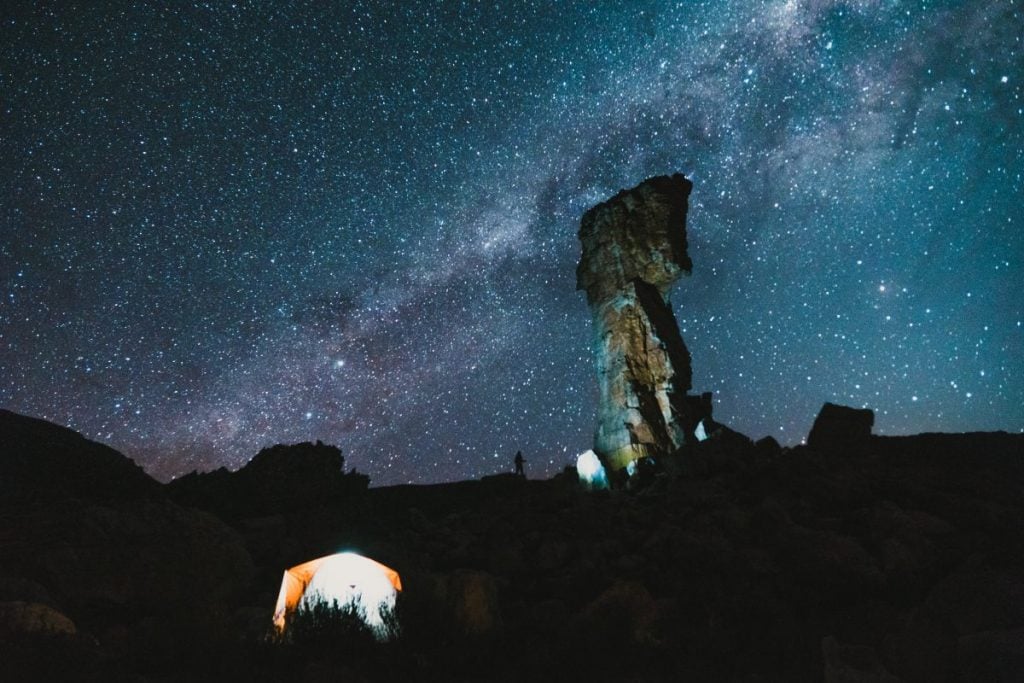
- Dramatic sandstone rock formations
- San rock art sites
- Rugged, remote beauty
- Hiking, stargazing, and rock climbing
Why it’s awesome:
The Cederberg Mountains offer taw, untamed landscapes and are just a few hours from Cape Town. The area is known for towering sandstone rock formations, ancient San art, and some of the most insane views in the entire country. It’s the perfect location for some proper peace and quiet, as it’s pretty secluded and allows you to really reconnect with nature.
What to do there:
You can hike to the iconic rock formations like the Maltese Cross and the Wolfberg Arch and dip in refreshing mountain rock pools. Then you can explore ancient San artworks on the rocks and inside the caves, head out rock climbing, and sample some of the local rooibos tea grown exclusively in the region.
How to visit:
The Cederberg is a bout a 2.5 – 3 hour drive from Cape Town, accessible by means of a normal car, although a high-clearance vehicle is recommended. There is plenty of accommodation available, ranging from rustic campsites and cosy cottages to high-end luxury retreats. The location is pretty isolated, so remember to pack the essentials and clothes for hot days and cool nights.
24. Apartheid Museum – Possibly one of the most important places to visit in South Africa
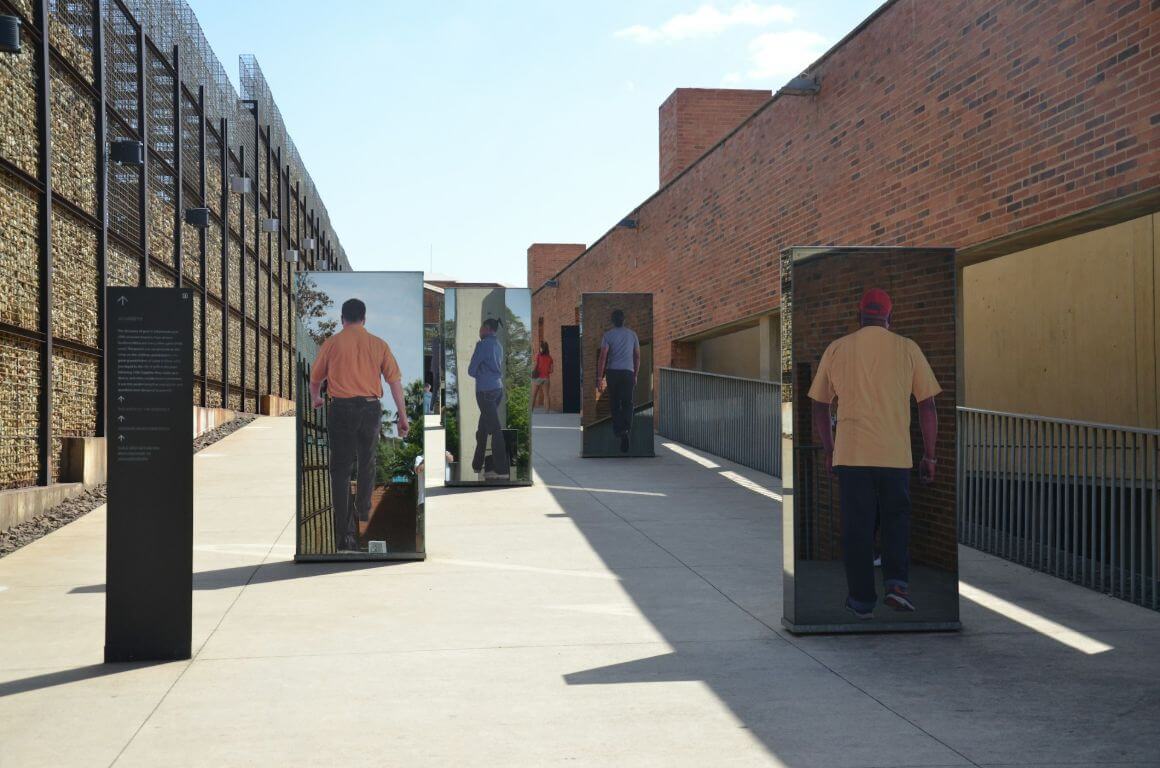
- Symbolic and thought-provoking design
- Documents the rise and fall of apartheid
- Located in Johannesburg
- Powerful multimedia exhibits
Why it’s awesome:
The Apartheid Museum is one of the most historically important places to visit in South Africa. It provides a deeply moving and honest look at the atrocities that occurred during the regime and the country’s struggle for freedom and equality. It sheds light on and tells the story of the injustices through personal stories and striking visuals.
What to do there:
You can walk through powerful exhibits that feature film footage, personal accounts, and photographs, following the path of apartheid from inception to democracy. You can reflect in the Garden of Remembrance and make sure you don’t miss the Mandela exhibit for insight into his extraordinary life.
How to visit:
The museum is about 15 minutes from central Johannesburg and easily accessible by car, taxi, or ride-hailing apps. It’s open most days with a reasonable entrance fee, and you should allow at least 2 hours for your visit. Wear comfortable shoes too to avoid sore feet! The experience is mostly self-guided and spread across several exhibition halls.
25. Jeffrey’s Bay
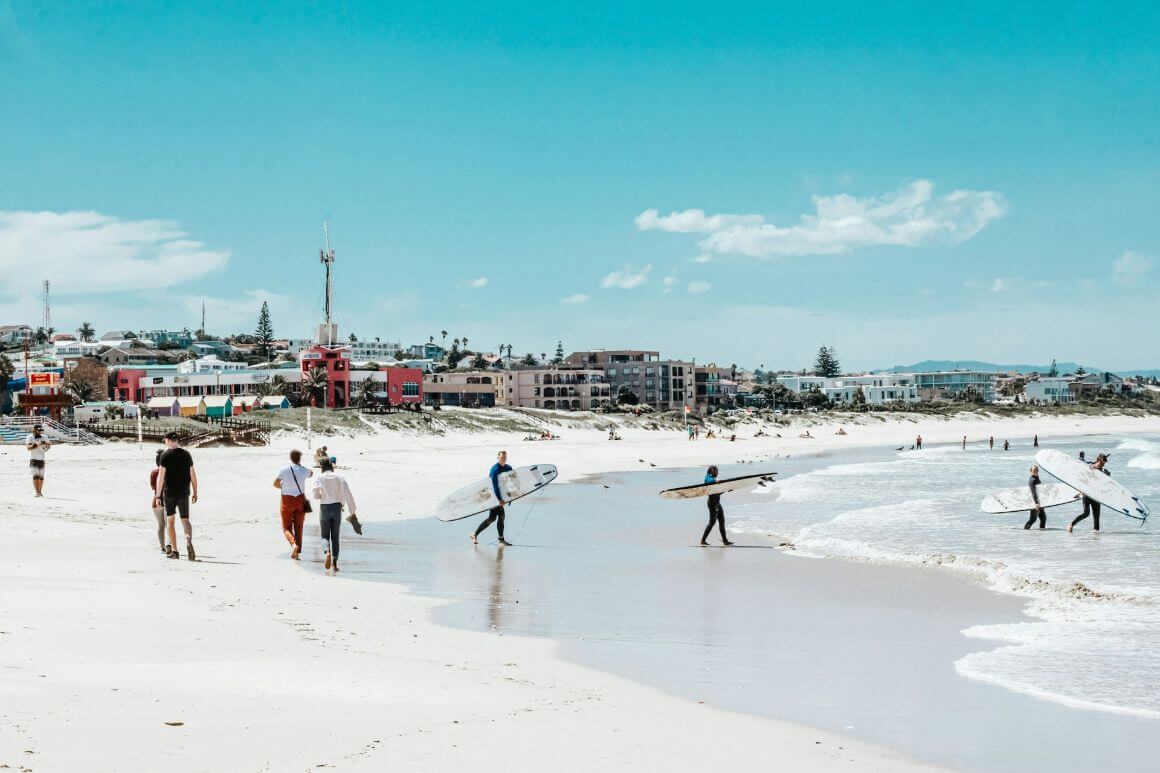
- World-renowned surf spots
- Stunning beaches and sand dunes
- Relaxed coastal vibe
- Watch dolphins playing in the waves
Why it’s awesome:
Jeffrey’s Bay, or J-Bay as it’s known, is a paradise for surfers and beach lovers alike. It’s famous for its legendary surf spot called Supertubes and is a laid-back coastal town in the Eastern Cape. It’s a year-round destination for sun, sea, and outdoor adventure, with amazing waves, fishing, and laid-back coastal charm.
What to do there:
You can go surfing at the world-class surf spots or take a lesson if you’re a beginner. You can swim, sun tan, and stroll along Dolphin Beach, explore the shell museum, or go sandboarding in the nearby dunes. The town also boasts great seafood, local markets, and one of the most incredible sights – dolphins surfing the local waves!
How to visit:
J-Bay is about a 75-minute drive from Port Elizabeth and easily accessible via the N2 highway. There’s plenty of accommodation in the town, from backpacker hostels and a campsite to seaside apartments and luxury units. Most of the town is walkable, but I’d recommend having a car to explore the surrounding areas and towns like Cape St Francis.
Get insured for your trip to South Africa
ALWAYS sort out your backpacker insurance before your trip. There’s plenty to choose from in that department, but a good place to start is Safety Wing.
They offer month-to-month payments, no lock-in contracts, and require absolutely no itineraries: that’s the exact kind of insurance long-term travellers and digital nomads need.

SafetyWing is cheap, easy, and admin-free: just sign up lickety-split so you can get back to it!
Click the button below to learn more about SafetyWing’s setup or read our insider review for the full tasty scoop.
Final Thoughts on The Best Places to Visit in South Africa
South Africa is one of those countries that leaves its mark on you. Forever. One moment you can be sipping award-winning wines in and amongst rolling vineyards, the next you can be spotting elephants on a sunrise safari in the Kruger Park. And if adventure is not your thing, then maybe wandering through the colourful streets of the Bo Kaap or watching the waves crash onto the shore in Camps Bay is more your vibe. It’s a country that truly has it all.
But beyond the landscapes, as breathtaking as they are, it’s also the people who make a visit to South Africa unforgettable. They’re warm, friendly, resilient, and full of spirit. South Africans really have a way of making you feel instantly at home. Whether you’re sharing stories around a traditional “braai”, learning the local slang, or getting directions from a stranger, there’s a sense of connection that lingers long after your trip ends.
So, wherever you go on your mission to find the best places in South Africa, you can expect big smiles, an infectious culture, and moments that will last a lifetime. The “rainbow Nation” is calling, and I recommend you take the call. Prepare to have your socks knocked off!
- Our ultimate Backpacking in South Africa guide is an essential read before you travel.
- Don’t forget the essentials with our in-depth backpacking packing list.
- Backpackers and frugal travellers can use our budget travel guide.