Tucked away in the Irish Sea, the Isle of Man is home to a totally unique history and landscape. Viking history and fascinating folklore intertwine and are visible all along a rugged coastline inundated with incredible beaches and hidden glens.
There’s no better way to discover this under-the-radar natural beauty than on foot. The Raad ny Foillan (the ‘Way of the Gull’) is an epic 100 mile coastal path around the entire island that is truly underappreciated.
I was lucky enough to spend a year living on the Isle of Man, and completed the full hike in 2024.
We’re talking glorious beaches, dreamy camping spots, dramatic clifftops, and a solid dose of pubs. I am convinced that taking on the Raad ny Foillan is the best way to experience the Isle of Man’s superb natural beauty, and can’t wait to do it again in reverse.
If a full circumnavigation of an island on foot isn’t enough, you can throw in some side-quests to see wild wallabies (yes, in the middle of the Irish Sea…), the largest working water wheel in the world, native cats with no tails, and Manx Laughtan sheep (with a surprising number of horns).
This guide will cover all you need to know for a full Isle of Man 360. Read on for an (ambitious but fully doable) six-day itinerary, beach recommendations, gear picks and the best campsites around.
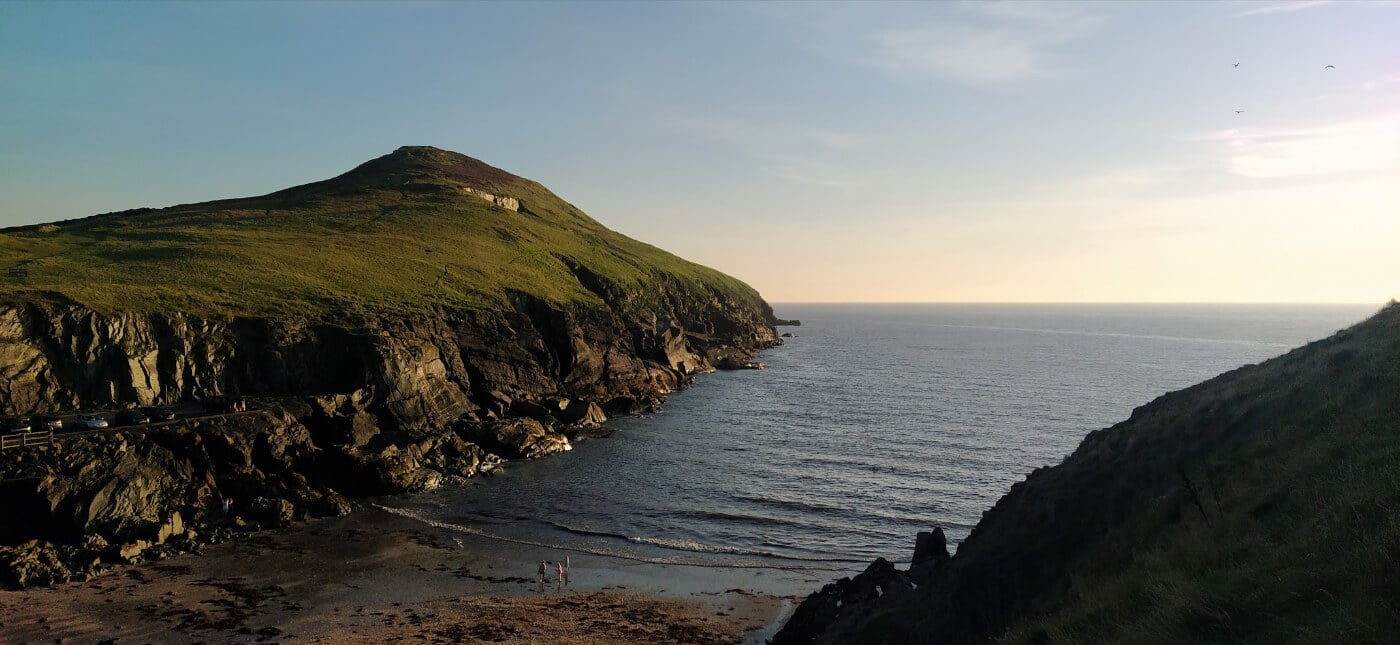
Photo: Ciaran Nye
The Broke Backpacker is supported by you. Clicking through our links may earn us a small affiliate commission, and that's what allows us to keep producing free content 🙂 Learn more.
- About the Raad Ny Foillan
- How Long Does It Take?
- Raad ny Foillan Day-By-Day Itinerary
- Where to Stay on the Trail
- What to Pack for the Raad ny Foillan and Best Times to Hike
- Getting There and Getting Around
- Tips for Hiking the Raad Ny Foillan
- How Much Does It Cost?
- What Wildlife is There to See on the Raad ny Foillan?
- Is it beginner-friendly?
About the Raad Ny Foillan
The Raad Ny Foillan is a long-distance coastal path, looping round the entire circumference of the Isle of Man. The name translates from Manx Gaelic as the ‘Way of the Gull’, which feels quite fitting when you’re traversing the tops of cliffs with seabirds wheeling overhead and the Irish Sea down below.
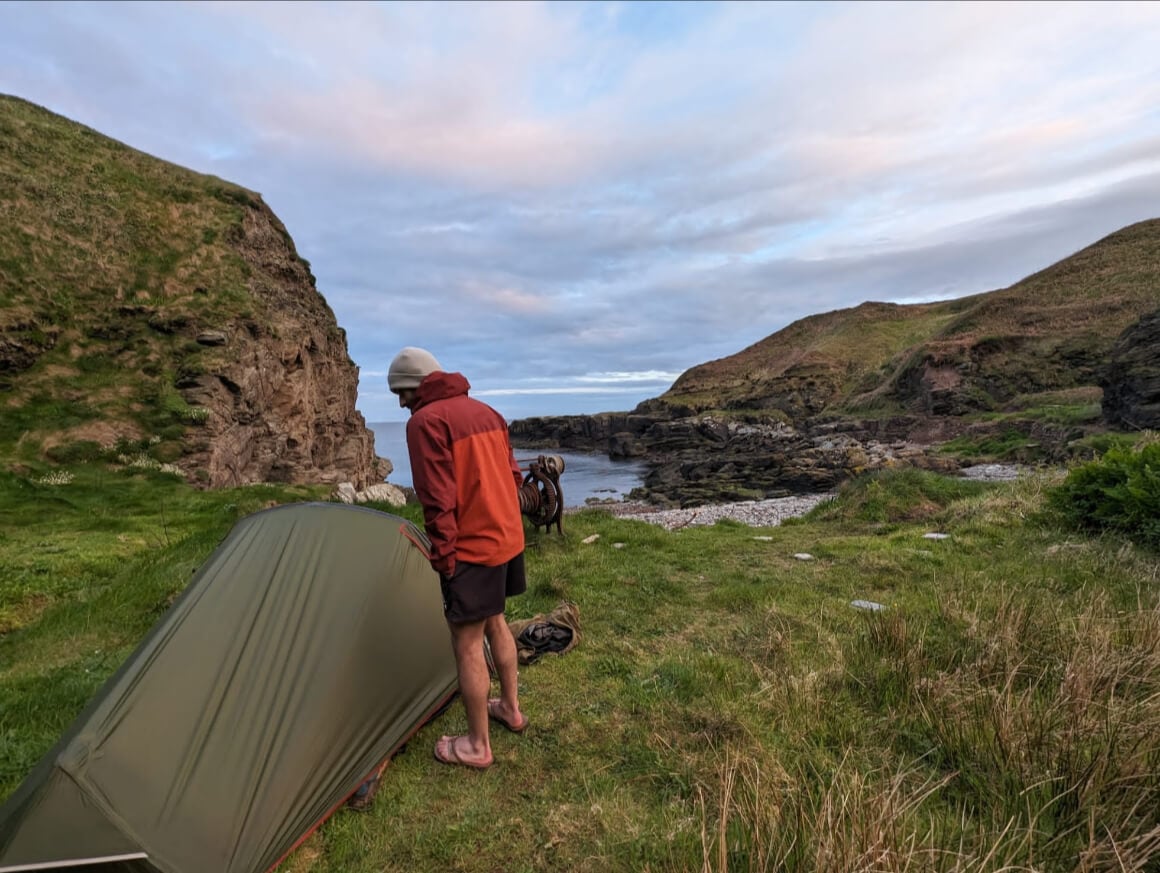
Photo: Ciaran Nye
Whilst not the longest of long-distance paths out there, completing the full route is no Parkrun – the roughly 100-mile route incorporates some challenging sections, spanning expansive beaches, exposed clifftop paths and stunning ‘glens’. Throw in some wild Isle of Man weather, and you’re guaranteed not to be bored in one of the most stunning places in the country.
As someone who is prone to getting severely lost, I also appreciated that navigating the Raad ny Foillan is relatively simple – you basically make sure the sea stays on the same side as when you set off and carry on walking until you end up where you started.
Is the Raad ny Foillan Worth It?
Absolutely.
The ever-changing landscape and chance to delve into fascinating and unique Manx history make the Raad Ny Foillan an under-the-radar adventure that’s well worth your time whilst travelling in the UK.
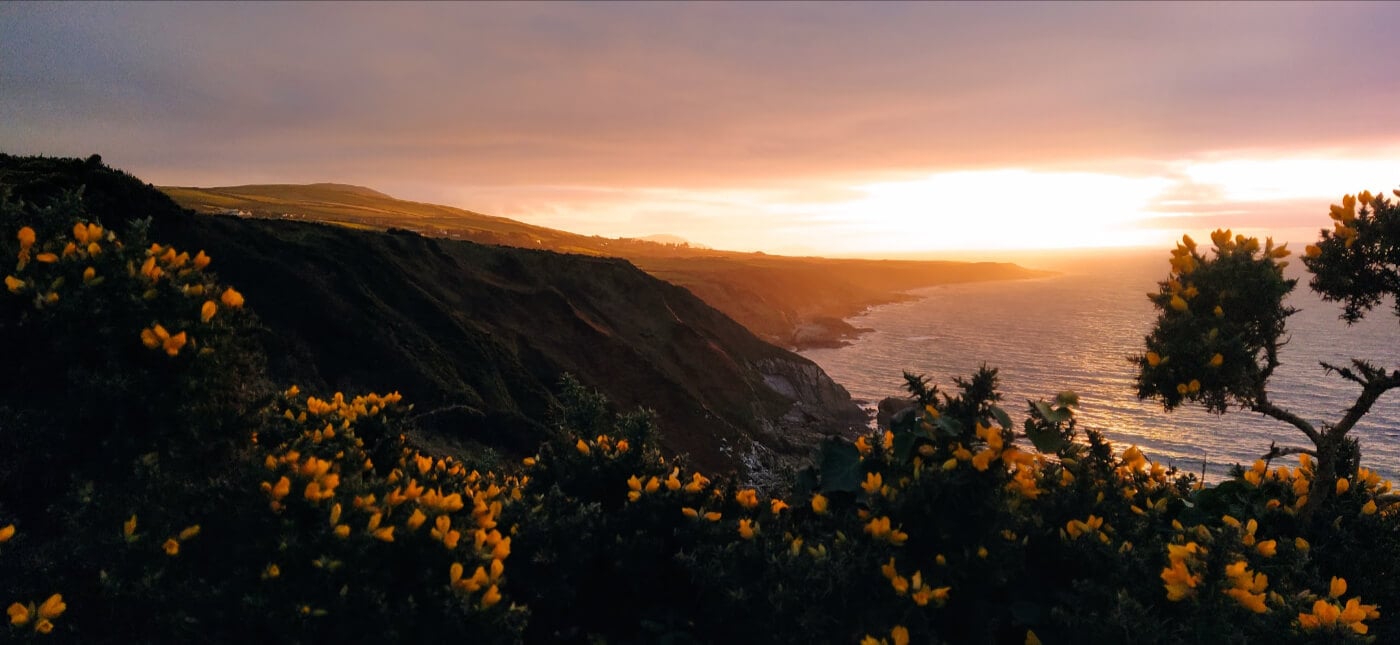
Photo: Ciaran Nye
The fickle Manx weather means you may not be guaranteed a full week of glorious sunshine and low wind, but it guarantees you a truly unforgettable journey, whatever surprises come your way.
The place has a wild authenticity and rawness that the Raad Ny Foillan showcases in abundance. The island boasts a genuinely stunning and highly varied coastline, and incredibly, it’s the only entire nation in the world to be recognised as a UNESCO Biosphere Reserve.
How Long Does It Take?
This is, naturally, a matter of preference.
Use the below as a rough guide. Remember, there are around 100 miles (160km) to cover in total.
- 4 days – fast and tough
- 5 – 7 days – well-balanced
- 8-11 days – more leisurely
For reference, we completed the hike in four and a half days, but would’ve appreciated a bit more flex for beach time and food stops. Overall, 5-7 days seems ideal if you also want to incorporate some sightseeing/rest stops.
It’s worth flagging that you should also keep in mind the weather when deciding how to split up the route – slippery clifftop paths (especially south-west sections) are not to be rushed, so try and build in a bit of flex-time if you’re opting for more of a route-march.
Raad ny Foillan Day-By-Day Itinerary
To give you a sense of the landscape and all there is to explore, the overview below is based on a 6-day itinerary, starting and finishing in Douglas.
You will likely want to adjust your own journey to suit accommodation choices (e.g. if you’re camping, you’ll want to reach campsites or more secluded spots). As the route is a full loop, you can also start from wherever you fancy.
Straight after this 6-day plan, you’ll find a table containing a list of selected locations on the route and some trail notes. This way, you can freestyle your own itinerary depending on which spots take your fancy for breakfast/lunch/dinner/beers.
The route is clearly marked: look out for the distinctive blue and white trail markers shown below. trail markers
It’s also definitely worth buying the Ordnance Survey Isle of Man paper map for around a tenner, not least so you can highlight a big circle around the Island showing where you walked.
Day 1: Douglas to Castletown (~30km)
Fuel up with a fry-up or similar, then you’ll kick things off, leaving Douglas along a mix of promenade and coastal paths before quickly settling into quieter terrain. The scenery here is fantastic, but just a taster of what’s to come. This initial section along Marine Drive covers cliffs, open farmland, and wide views out across the Irish Sea.
Early on, you’ll pass Port Soderick. An amazing charity called Heroes on the Water here provides military and other service men and women opportunities for physical and therapeutic rehab through activities like kayak angling.
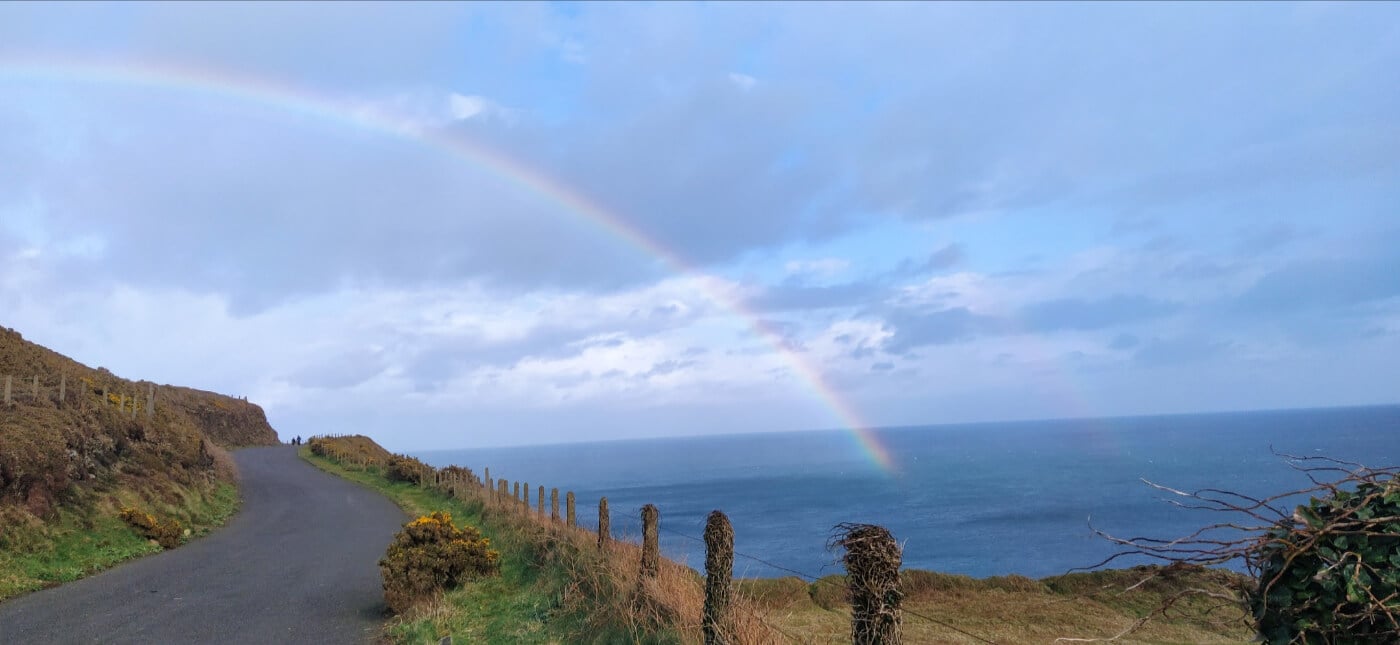
Photo: Ciaran Nye
If they’re open (10 am-2 pm Tuesday-Saturday), it’s well worth popping in to say hello and donate if you’re able to. Stopping here for a friendly chat and a cup of tea to learn more about their work was a highlight of the day.
As you head south, the trail becomes more rugged in places, with side paths offering the chance to explore some awesome headlands and look out for sea life.
Rolling into Castletown, you’re greeted by one of the island’s most historic towns, with its medieval castle sitting right on the waterfront. Check out the Castle Arms (aka the Glue Pot) for an evening drink.
Day 2: Castletown to Port Erin (~24km)
Leaving Castletown, you follow the coast round to the town of Port St Mary, home to some great coffee shops (e.g. Cornhouse Coffee) and shops to stock up on trail snacks.
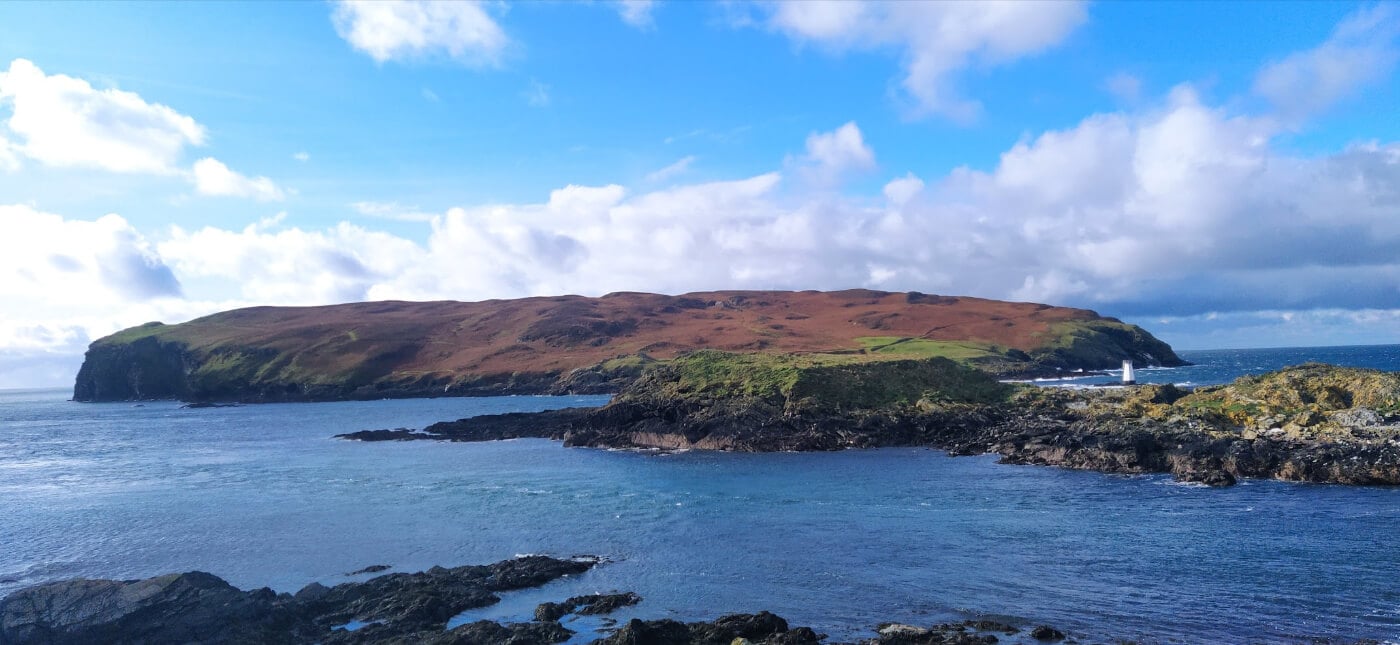
Photo: Ciaran Nye
A highlight of the entire route is the stretch from Port St Mary to Port Erin. You’ll cross ‘the Chasms’ (careful not to fall in) and trace the dramatic coastline south. Here you’ll come across the Calf of Man (a small island with a bird observatory and a few lighthouses), and a unique cafe called ‘The Sound’ with panoramic views.
This is a true hotspot for some superb wildlife. Keep an eye out for grey seals, dolphins and basking sharks. If you’re not pushed for time, you can arrange a boat trip around the Calf (departing from Port St Mary or Port Erin).
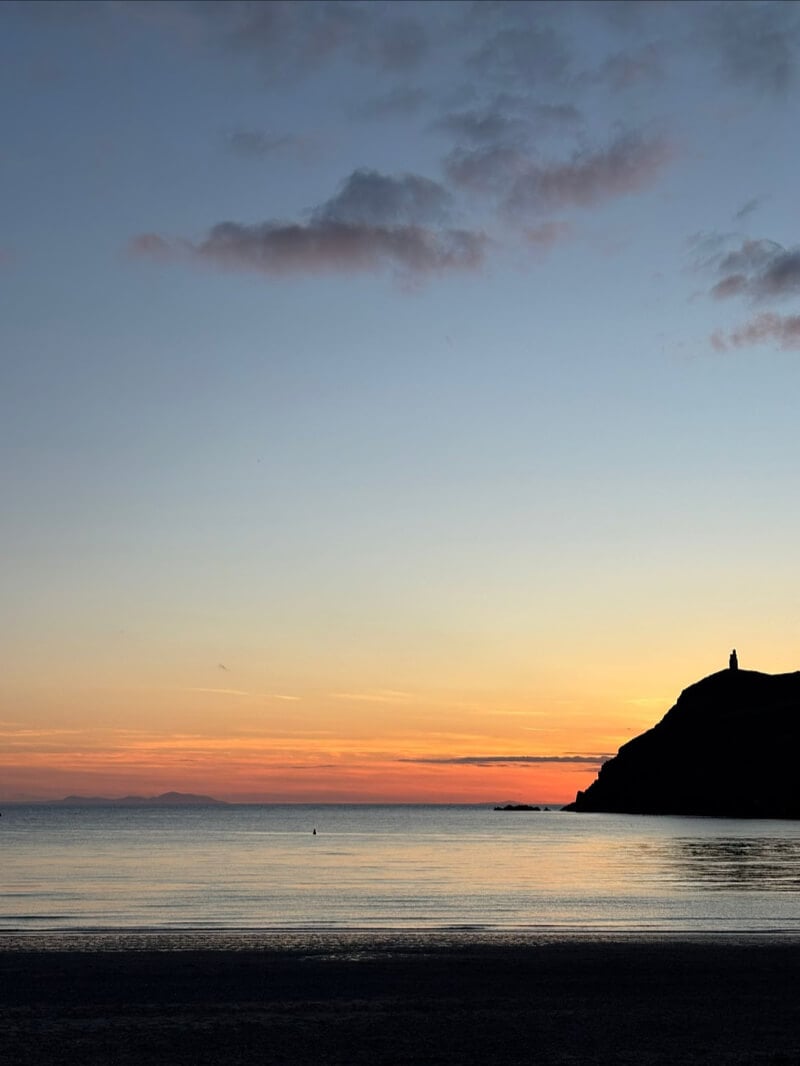
Photo: Ciaran Nye
Day 3: Port Erin to Peel (~22km)
An absolute cracker of a day.
Coming out of Port Erin, take a moment to head up Milner’s Town (on Bradda Head).
The Raad ny Foillan then takes you along arguably the island’s most dramatic coastline here, especially around the Niarbyl area.
This section offers rugged coastal hiking, with constant ups and downs that start to add up by the afternoon.
Have a wander round beautiful Glen Maye before continuing north, and when you see the tower (Corrin’s Folly – built 1806) on Corrin’s Hill, you’ll know the bright lights of Peel are near.
Head to the Black Dog and test the exceptional produce of their widely-renowned pizza oven (recommend the Salty Dog with Manx Queenies), then to the White House.
Day 4: Peel to Glen Wyllin (~14km)
(The suggested distance is shorter today, to allow for an afternoon of rest, but it might be worth going further to reduce the distance to cover on Day Five.)
After the ruggedness of Day 3, the landscape starts to change.
As you leave Peel and Fenella Beach behind, the west coast gradually gives way to flatter terrain as you head north, with longer, more exposed sections of beach flanked by lower, undulating cliffsides.
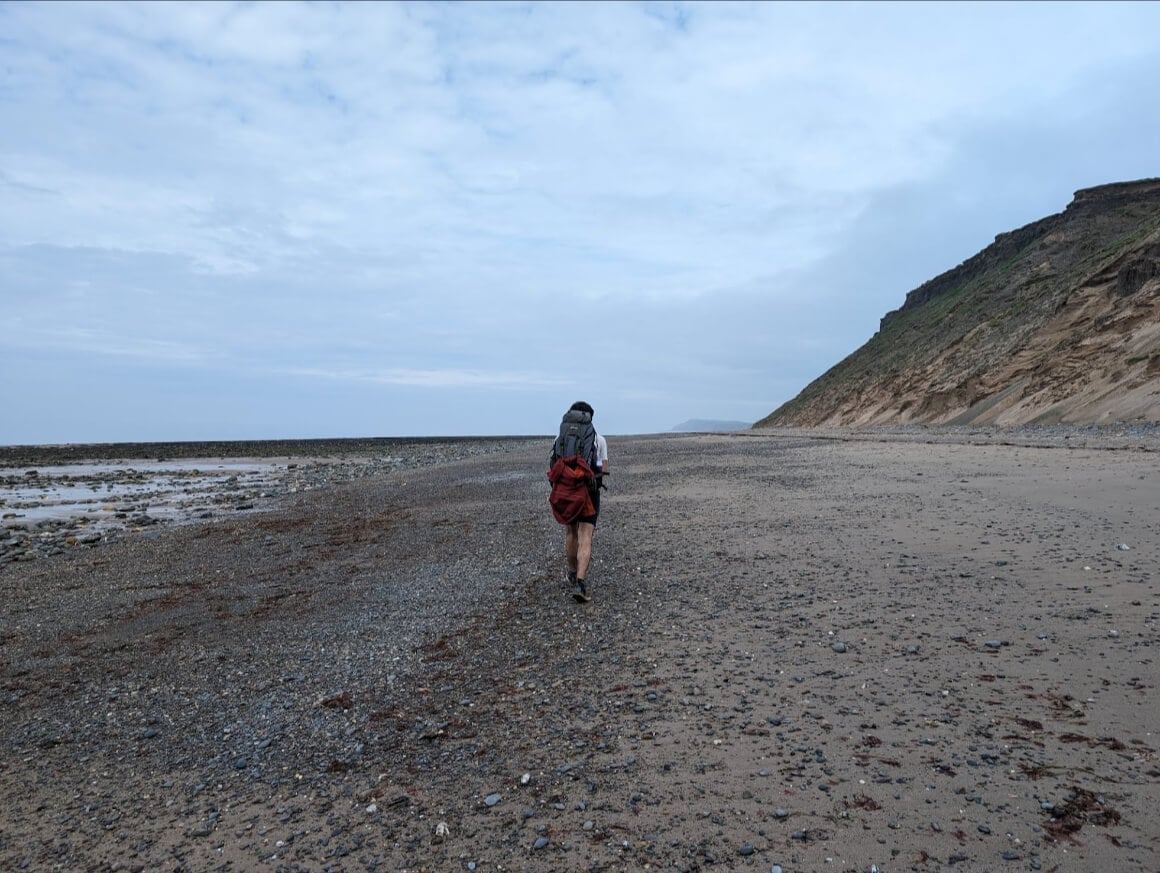
Photo: Ciaran Nye
You may see just a handful of people and/or horses along the beach over many hours of hiking.
Glen Wyllin Campsite is a natural stopping point for the night, which offers both camping pitches and cabins/tents already set up, as well as some well-earned hot food and drinks.
Day 5: Glen Wyllin to Ramsey (~35km)
Big day incoming.
Setting out from Glen Wyllin, you head straight into one of the longest and most exposed stretches of the entire route, crossing the wide-open northern plains.
The landscape quickly flattens, and you’ll spend long stretches moving through big skies and seas that feel surprisingly remote. If you have time, venture inland towards the Curraghs, and you may be lucky enough to spot the wild wallabies that roam the area.
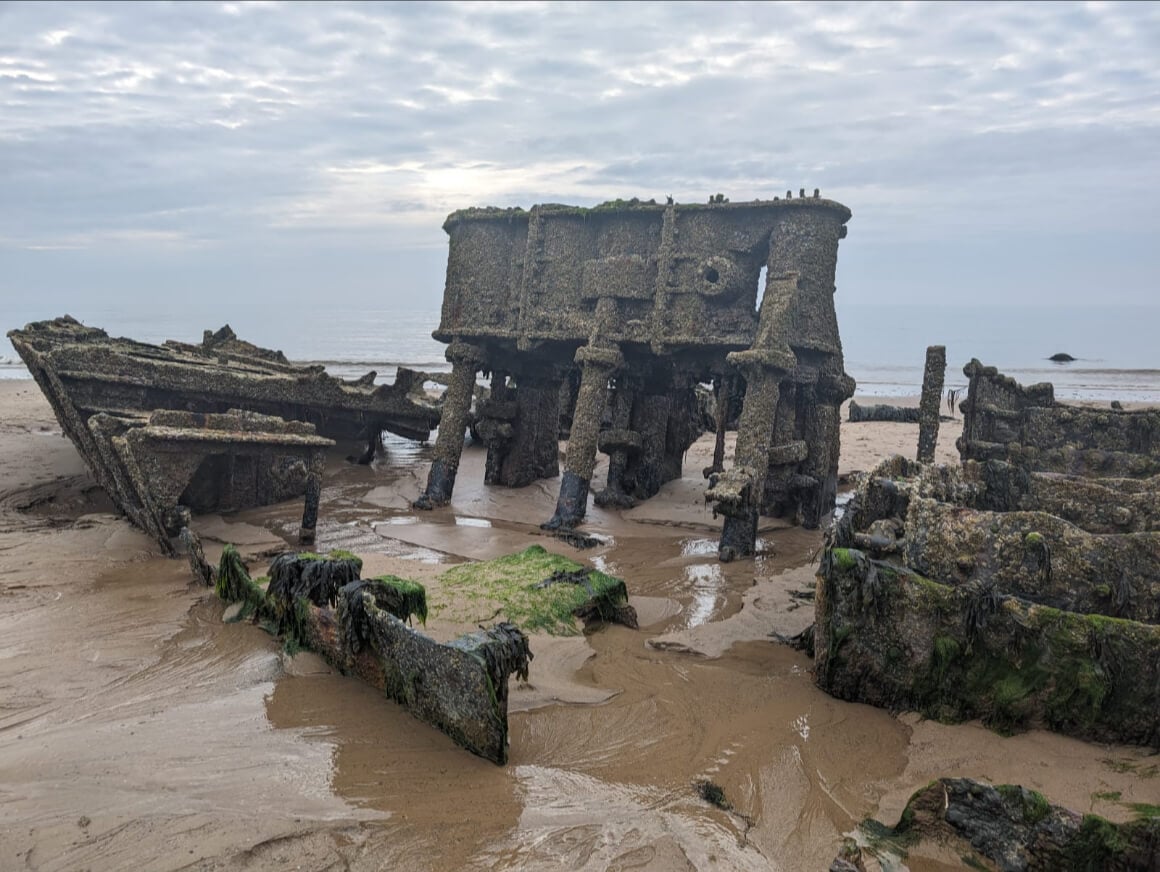
Photo: Ciaran Nye
As you pass Jurby and continue north, the coastline becomes more stark and windswept. Be sure to check out the shipwreck of ‘Pasages’ near Jurby, visible at low tide.
Reaching Point of Ayre- the island’s northern tip – feels like a big milestone, with its solo lighthouse and constant wind. There is a small kiosk here for teas and coffees.
If you walk along the beach on this section, be sure to check tide times here to avoid getting caught out: Tides and Flapgates.
Day 6: Ramsey to Douglas (~35km)
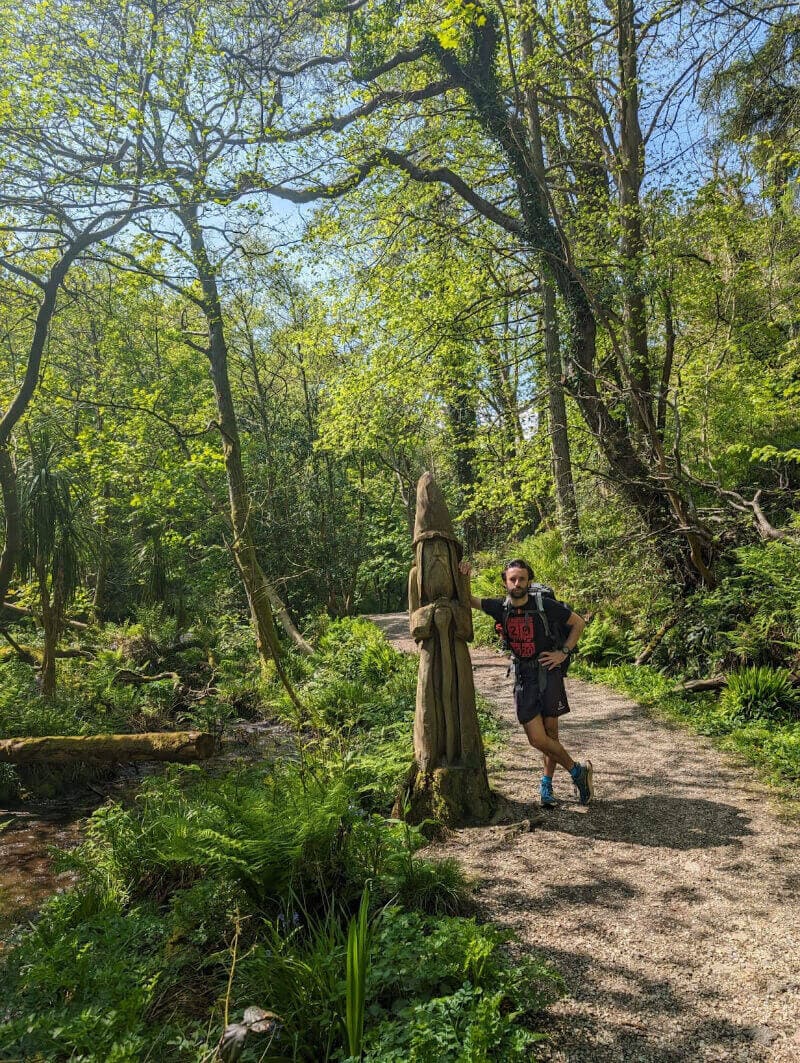
Photo: Ciaran Nye
The final day is a big one, with some of the best scenery on the East Coast.
Leaving Ramsey, the trail climbs quickly onto the cliffs around Maughold Head -a standout section with sweeping views and a return to more rugged land after the flatter north coast.
From there, the route heads south past Port Mooar and into Laxey, a good spot to stop for a pork bap at the Laxey Beach Cafe or a gelato from The Shed (both on the seafront).
If that’s not enough, while this may not have been on your bucket list, Laxey is also home to the world’s largest working water wheel (a.k.a. Lady Isabella).
The home straight takes you through beautiful scenery at Garwick Bay and greenery at Groudle Glen, before the trail leads you (via Onchan) back into Douglas.
Waypoint Table
| Location | Notes |
|---|---|
| Douglas | Capital city.Wide variety of restaurants, cafes and shops (including outdoors shops for gear). Many hotels/guesthouses. Arrival point for ferries. |
| Little Ness | Dark Sky spot, great headland for a picnic. |
| Port Soderick | Heroes on the Water charity. |
| Isle of Man Airport | Near Ballasalla. Flights from many UK cities/Ireland. |
| Castletown | Historic town with fantastic pubs. |
| Gansey | Try the whitebait at the Shore Hotel. |
| Port St Mary | Excellent coffee shops |
| Kallow Point | Bird watching spot |
| Sugarloaf/Chasms | Incredible scenery. Take care. |
| The Calf of Man | Stop for a feed at The Sound Cafe. Look out for seals at Kitterland. |
| Port Erin | Beautiful beach with waterside restaurants and bars. |
| Bradda Head/ Milners Tower | Check out the view from Miners Tower on a clear day. |
| Fleshwick Bay | Stunning coastline |
| Niarbyl | Picturesque bay with small dwellings and a cafe. |
| Dalby | Small village with church |
| Glen Maye | Stunning bridged gorge and waterfall |
| Corrin’s Folly | Tower, built 1806 |
| Peel | Easy-going beachside town with a range of pubs and food stops. Check out Fenella Beach and grab a pizza at the Black Dog. |
| Glen Mooar | Sizeable waterfall called Spooyt Vane, Manx Gaelic for ‘White Spout’. |
| Glen Wyllin/Kirk Michael | Camping site with amenities |
| Jurby | You’ll spot Jurby church from afar, on the edge of the coastline. Look out for the ‘Pasages’ shipwreck on Jurby Beach. |
| Blue Point | Birdwatching spot with panoramic views. |
| Point of Ayre | Northerlymost point on the Island. Lighthouse with a small kiosk for hot drinks. |
| Ramsey | Charming town with old steel bridge, many restaurants and cafes. Previous shipbuilding hub. |
| Maughold | Beautiful headland with lighthouse |
| Port Cornaa | A local favourite spot. Pebble beach with remains of an old, unfinished Beltite factory and 18th century lime kilns. |
| Dhoon Glen | Dramatic glen and waterfall |
| Laxey | Stunning seaside town with beachside cafes and harbour. Worth a detour to see King Orry’s Grave (the largest megalithic tomb on the Isle of Man, dating back 4,000 to 5,000 years). |
| Groudle Glen | Look out for the wizard… |
| Onchan | Large village parish – last stop! |
| Douglas | Congratulations! |
Where to Stay on the Trail
Accommodation along the Raad ny Foillan is fairly straightforward – you’ll find a mix of campsites, B&Bs, and small hotels spaced around the island, so whether you’re carrying a tent or travelling lighter, there are options for a good mix of overnighters.
Camping
For a true backpacking experience, I’d highly recommend camping. With the seemingly endless picturesque spots the Raad Ny Foillan delivers, it’s well worth the extra kilos to be able to wake up to a sea view in your private clifftop penthouse.
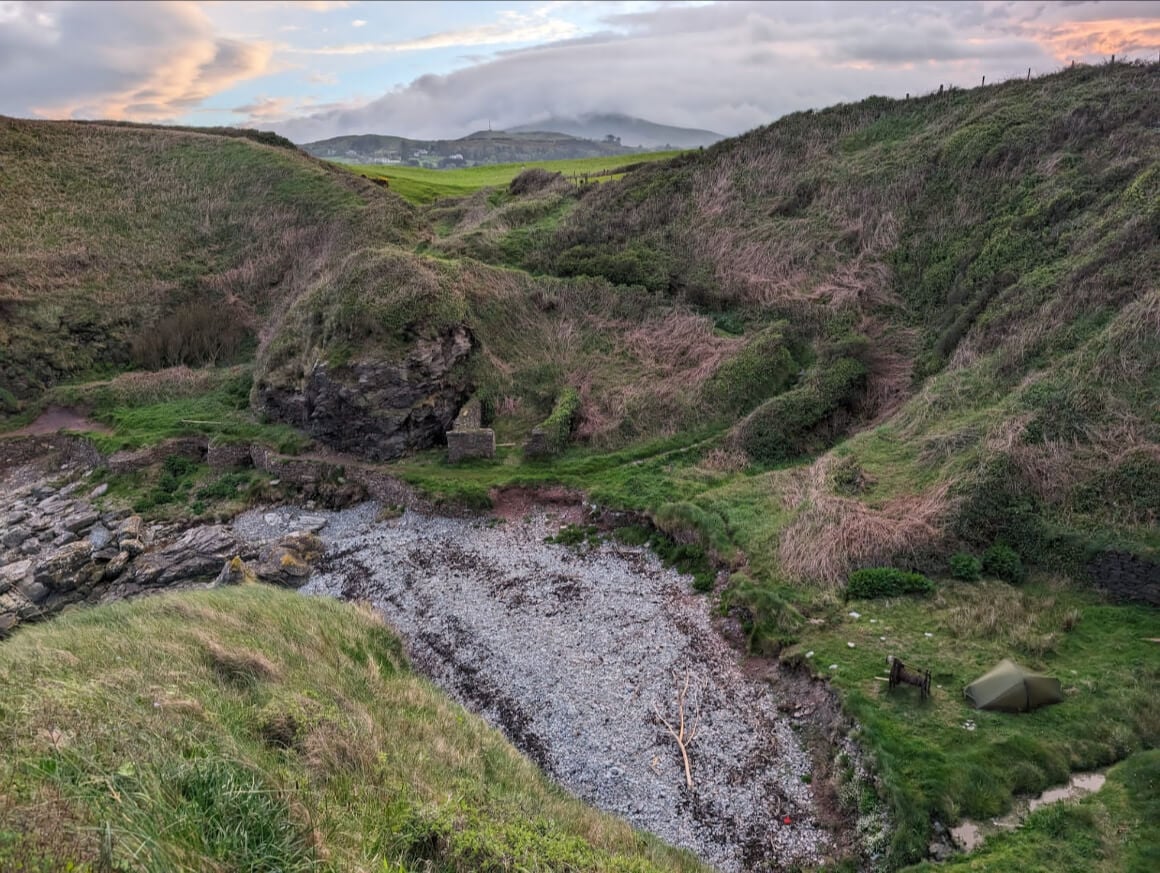
Photo: Ciaran Nye
There are a bunch of fantastic campsites on the island, including some epic camping pods/glamping options for a night of recovery. Without even asking, we also had several kind locals offer us spots of land to camp on.
Here are a few excellent campsites on/near the coastal path that are well worth considering:
- Isle of Man Camping, Douglas
- Glen Dhoo Campsite, Douglas
- Glendown Farm Campsite, Port St Mary
- Peel Campsite, Peel
- Glen Wyllin, Kirk Michael
- Laxey Campsite, Laxey
Guesthouses/BnBs
There are loads of awesome spots for a good night’s sleep on the Raad ny Foillan, especially in the main towns like Douglas, Castletown, Peel, Ramsey, and Laxey.
With a full hike likely to take around a week, even if you’re camping most of the time, it’s well worth checking out a room for a celebratory final stop or some mid-route recuperation. Plus, honestly, one of my big tips for visiting the UK is to stay at a proper family-run B&B; you can’t beat the hospitality.
Because everyone’s journey is likely to be different due to fitness, time allowed, weather and personal choice, it’s best to plan B&B stays around your own daily mileage rather than sticking rigidly to a fixed itinerary.
To save you time, here are a number of recommendations to get you started:
- Adelphi Guesthouse, Douglas: A comfy, good value spot in Douglas, just a few mins wander from the trail!
- Voyage Hostel, Douglas: A smart and comfortable hostel, perfect as a start or end point. Shared kitchen is ideal for pre-hike food prep!
- Fernleigh Guesthouse, Peel: A lovely family-run guesthouse with hearty breakfast options!
What to Pack for the Raad ny Foillan and Best Times to Hike
One word of advice: don’t be surprised if you’re basking in glorious sunshine for lunch, to suddenly be met by a surprise mini-gale or hailstorm within half an hour.
The Manx weather is anything but boring.
The best times of year to hike are likely to be May-September, essentially across spring and summer. When the sun is shining on the Isle of Man, it’s a truly glorious place.
The fickle nature of coastal weather makes it essential to be well kitted out for a range of possible climates (and only adds to the sense of adventure). Read on below for our pick of the best gear to keep you happy out there in the wilderness.
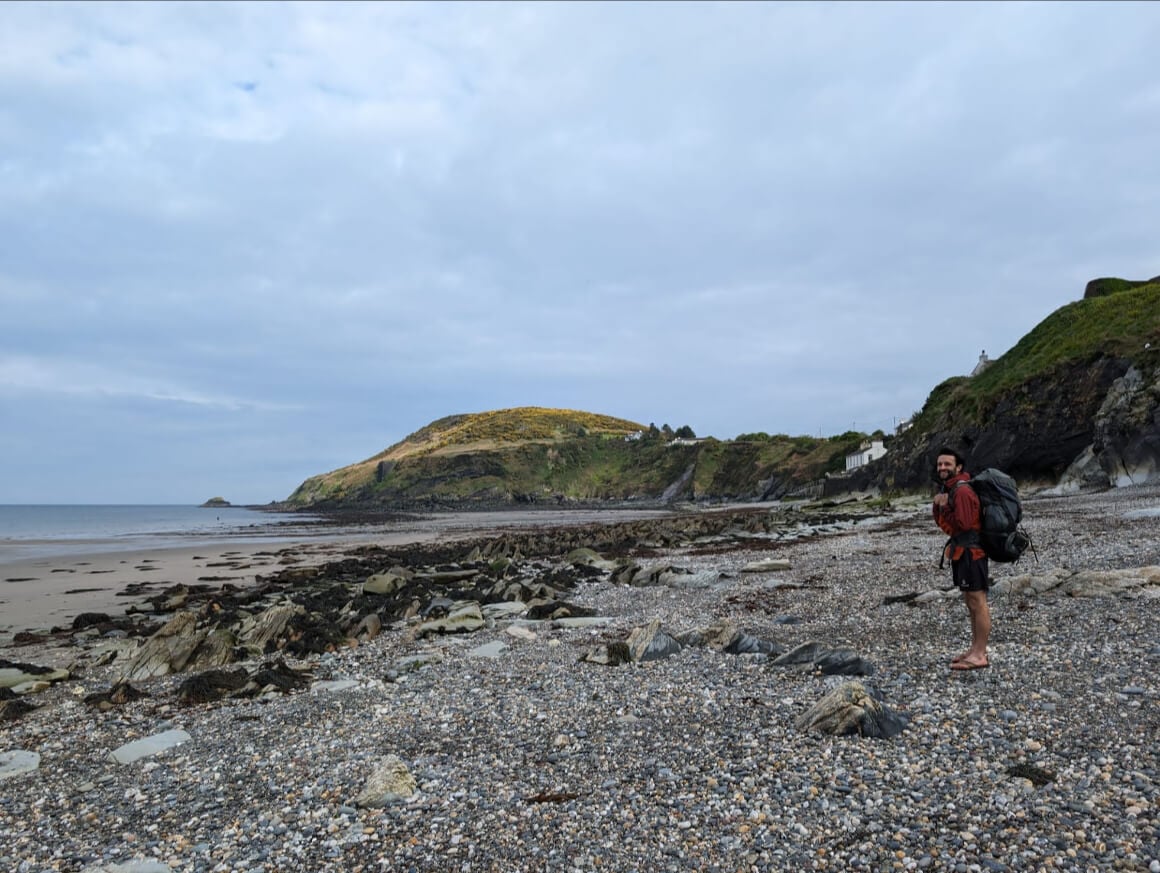
Photo: Ciaran Nye
- Clothing: (Ideally) lightweight, quick-drying shirts, trousers, and shorts.
- Base layers: To keep the Manx wind at bay.
- Mid Layer(s): Go for fleece or soft shell.
- Arc’teryx Beta AR Jacket: Or hiking poncho (good for keeping cool).
- Waterproof Trousers: Ideally can be put on over shoes.
- Patagonia Down Sweater Hoodie: You will need it!
- Hat and Gloves: Sun hat if desired; warm beanie and gloves (even in spring and summer, just in case or for evenings when camping).
- Abaco Sunglasses: Protect your eyes!
- Water Bottle(s): There are long sections without shops/cafes, so worth carrying a couple of litres.
- Sleeping Bag: if camping.
- First Aid Kit: Grab basic medications and blister treatment from a pharmacy before leaving.
- Headtorch: With spare batteries/ charger. A real adventure isn’t complete without one.
- Sunscreen: High SPF for sun protection.
- Physical Map: OS Isle of Man Landrange Map.
- Micro Fibre Towel: Compact, dries fast and gets the job done.
- Footwear: Hiking boots/shoes, trail runners or hiking sandals.
- A good travel camera: well worth the extra weight.
- Black Diamond Carbon Trekking Poles: Can be an absolute boon on uphill sections.
Getting There and Getting Around
Everything you need to know about beginning the trek…
How to reach the Isle of Man (ferry/flights)
The quickest way in is flying to the Isle of Man Airport. There are loads of direct flights from cities like London, Manchester, Liverpool, and Dublin, which usually take around an hour.
The airport sits in the south of the island, near Ballasalla, so you’re already close to the route if you’re heading clockwise.
Alternatively, you can take the ferry with the Isle of Man Steam Packet Company. There are a number of routes from Liverpool, Heysham, and Dublin, with a crossing time of ~2.5-4 hours.
Ferries arrive right into Douglas, which makes things very straightforward. You can step off and pretty much start walking.
Public Transport On the Island
For a relatively small island, the public transport here is solid. Buses connect most of the key towns along the route. Check out Bus Vannin for the latest timetables.
This gives you a lot of flexibility to break the trail into sections if you’d rather stay put in one place and day hike.
There are also a few ‘heritage’ transport options (the Isle of Man Steam Railway, the Manx Electric Railway and the Snaefell Mountain Railway), which can be cool experiences and useful for linking sections if short on time.
Tips for Hiking the Raad Ny Foillan
- Tides matter -a few sections (especially around bays and rocky coves) can be affected by tides. Check timings if you’re unsure, or be prepared for a short inland diversion.
- Weather exposure – this is a fully coastal route, and the wind can be tough. Even on a nice-looking day, expect to feel it and pack proper layers.
- Navigation is straightforward – the trail is generally well-marked, but don’t rely on signs alone. A GPX track or map app is still worth having, especially in more remote stretches, alongside a paper OS map.
- Plan food stops – the north coast in particular is more remote, with fewer places to resupply. Stock up before leaving towns like Peel or Ramsey.
How Much Does It Cost?
The Isle of Man isn’t necessarily a budget destination in and of itself, but do it right, and you can still get by in true Broke Backpacker style. Below you’ll find a run-down of how much stuff is likely to cost, and some money-saving tips.

Excluding flight costs, we managed to get by on around £30 per day by camping each night and using the camping stove for most meals, plus eating out on average once a day.
Overall Daily Budget
- Backpacker: £30–£60 per day (camping + mostly self-catered)
- Mid-range: £70–£130 per day (B&Bs + mix of eating out)
- Comfort: £140–£250+ per day (hotels + regular meals out)
Accommodation
Accommodation is the biggest expense on the island. Budget options are limited, but not impossible. Campsites are your best bet for a budget trip, while B&Bs are the most common choice along the route.
- Camping: £10–£25 per night
- B&Bs / Guesthouses: £50–£90 per night
- Hotels: £100–£180+ per night
Food
Food costs depend heavily on how often you eat out. Supermarkets/small shops are available in most towns, but are more limited on the north coast.
- Self-catering: £10–£15 per day
- Supermarket supplies + occasional meals out: £20–£40 per day
- Eating out regularly: £40–£70+ per day
Transport
Getting to the island is your main upfront cost. Buses are very reasonable if needed.
- Ferry: £30–£80 (foot passenger)
- Flights: £40–£120+ depending on season
- Buses: £2–£10 per journey
It’s worth keeping an eye on flight prices. Flights can either sell out or quickly become expensive; on the other hand, you can grab some excellent value last-minute deals if you’re lucky and remain vigilant.
What Wildlife is There to See on the Raad ny Foillan?
The Raad ny Foillan is one of the better coastal hikes in the British Isles for wildlife spotting, mainly because you’re constantly moving through clifftops, quiet bays, farmland, and exposed headlands. The variety of habitats means you might be lucky enough to spot an incredible array of creatures. Even if you’re travelling solo in the UK, you won’t be alone on this trail!
Seabirds
- Manx shearwater – Calf of Man
- Puffins – Calf of Man
- Black Guillemots – Peel Harbour
- Kittiwakes – Chasms and Sugarloaf
- Peregrines – Maughold
Marine life
- Grey seals – Calf Sound
- Porpoises – Kallow Point in Port St Mary
- Bottlenose dolphins – east coast
- Risso’s dolphins: east and south coast
- Minke whale: west coast
Land wildlife
- Manx Loaghtan sheep – common across the island
- Wallabies – north, inland (Curraghs)
- Manx (tailless!) cats – the Manx Cat Cafe in Douglas!
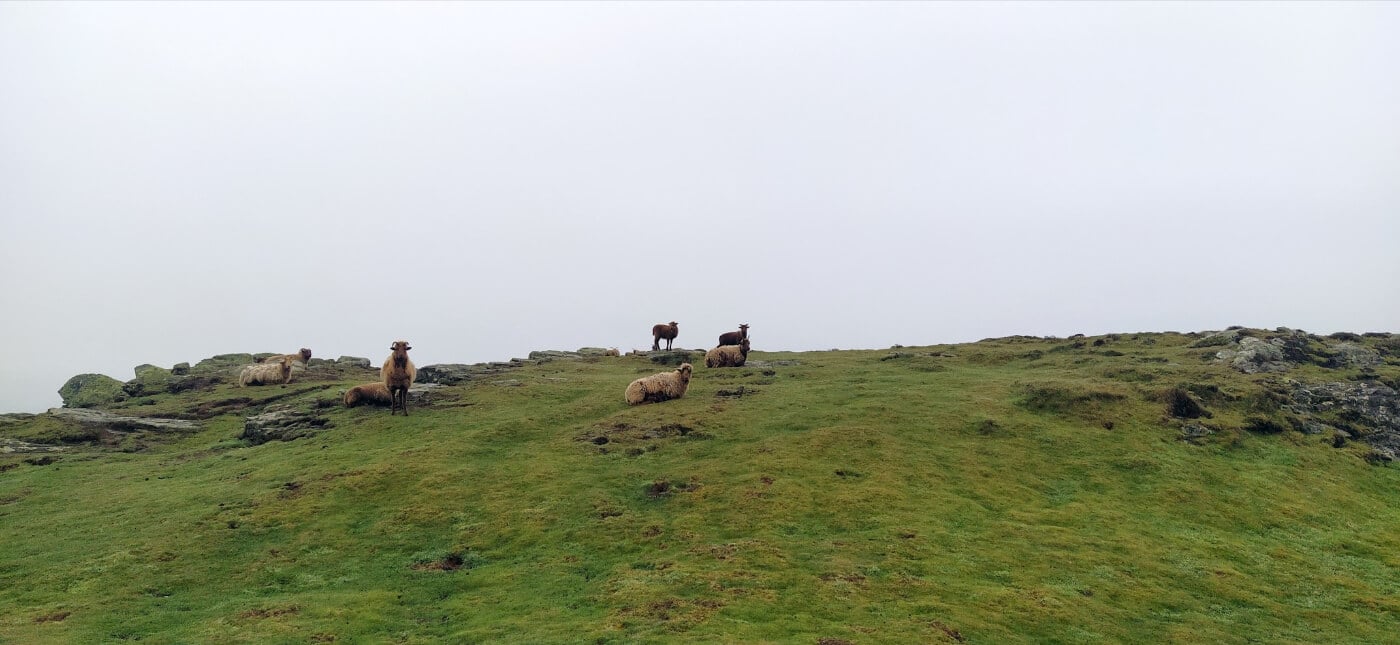
Photo: Ciaran Nye
Can you wild camp?
Like most parts of the UK, wild camping without landowner agreement is not strictly permitted. However, if you ask permission from locals wherever possible, remain discreet, leave no trace, set up camp late and leave early, you are unlikely to have any trouble.

In 4 days hiking the Raad ny Foillan, we were offered no less than three camping spots from friendly landowners (who simply saw our backpacks and wanted to help), as well as a spare by someone at the pub!
Be respectful and open, and the Manx people are as genuine and friendly as they come. Also, be sure to respect the unique environment found on the Isle of Man, the only whole-nation UNESCO Biosphere in the world.
Is it beginner-friendly?
Overall, the Raad ny Foillan would represent a fantastic introduction to long-distance hiking for anyone wanting a week-long adventure.
Whilst the elevation gain may not look too challenging compared to some European routes, do not be fooled: there are sections with big drops and tricky paths that take some tackling, and are sure to provide a good workout.
Add in the possibility of a strong Manx wind that blows in all directions, and it’s a recipe for an awesome journey on foot.
Again, the Raad ny Foillan is not a super long or technical hike, but do not underestimate the challenge, particularly if you’re looking to rattle through it in five days or less.