It’s just part of the modern travel ritual now. You land in a new country, shuffle through immigration, maybe grab a questionable airport coffee and then immediately start hunting down a SIM card.
Because let’s be honest, without data, you’re basically lost as a stranger in a strange land.
I’ve done it more times than I can count now, 50+ SIM cards across different countries, most of them used briefly and then forgotten ending up in the sea. It works… but it’s clunky, inconsistent, and very much a leftover system from a pre-digital era.
And here’s the thing, travellers are starting to move on.
This isn’t some “future of travel” concept anymore. eSIMs are already becoming the default setup for a lot of people who travel regularly. No shops, no swapping, no faffing about with trays and pins. You land, you switch on data, and you’re good to go.
Which is exactly why this guide exists.
We’re going to break down what eSIM actually is, how it works, whether your phone supports it, what it costs, and which providers are actually worth your money — so you can skip the airport chaos entirely and land connected, not scrambling.

What Is eSIM?
You probably already half figured this out for yourself. In simple terms, an eSIM is a digital SIM card.
Instead of inserting a physical chip into your phone, you install a SIM profile directly onto it. No tray, no pin, no tiny bit of plastic to inevitably lose somewhere between countries.
For travellers, there are even more uses…
For one, you can set everything up before you even leave home, so that you land in a new country, switch your data on, and you’re connected straight away. No airport kiosks, no queues, no trying to decode confusing prepaid plans while half-asleep.
It also makes switching between plans much easier. Moving countries? You just download a new one and you’re done.
For travellers, eSIM isn’t some flashy bit of tech innovation, rather it’s just a much simpler way to get mobile data abroad without the usual hassle.
The Broke Backpacker is supported by you. Clicking through our links may earn us a small affiliate commission, and that's what allows us to keep producing free content 🙂 Learn more.
How eSIM Works
But how exactly does an eSIM work? You may well ask. Isn’t there an essential physical silicon component in a SIM? You may wonder.
Whilst phones absolutely do need a silicon component to make them call and data ready, the reality is that *most* (maybe even all) current-generation phones already have an embedded SIM card built in. When you download an eSIM, it simply copies the relevant data onto this SIM and then resets again when you are finished with the package.
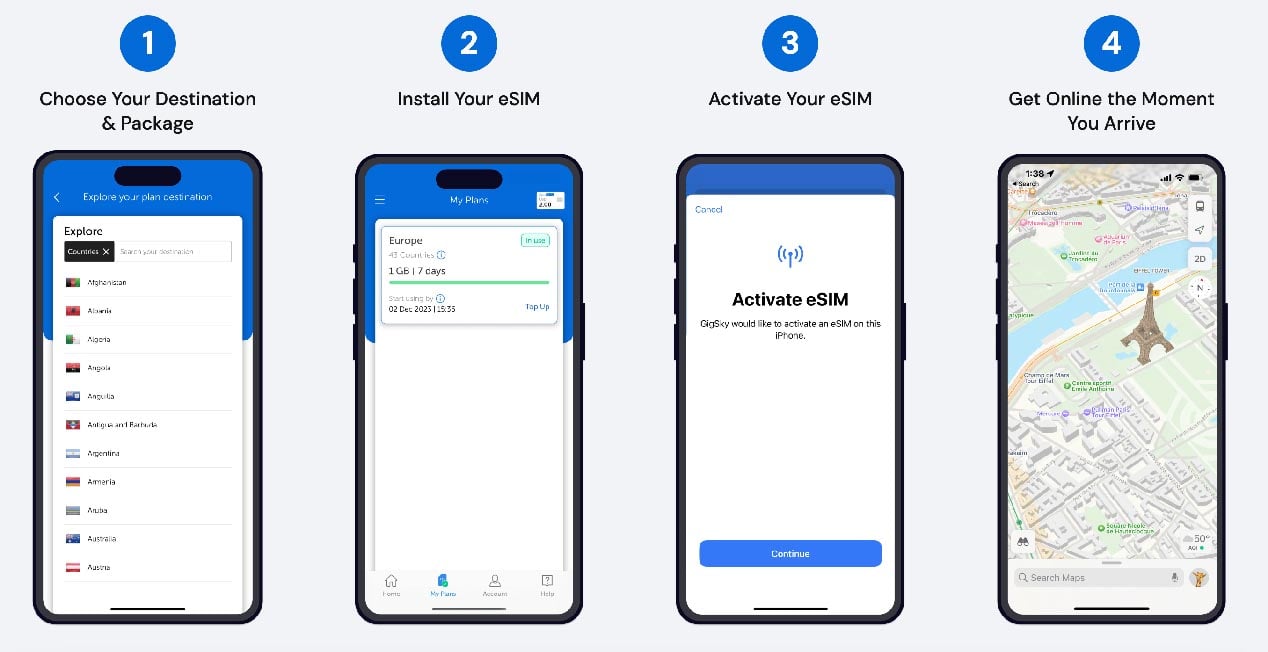
Perhaps best of all though, you can have multiple eSIM packages installed onto your device at once and can easily switch between them – in fact you can even have your home number running simultaneously with your travel data package meaning you never have to miss another unsolicited sales call again.
Just as we had rewritable floppy disks, cassette tapes, and VHS videos in the ’80s, now we finally have rewritable SIMs.
Looking for more data so you can use your laptop whilst traveling? Have a look at some of the best travel routers for some more heavy-duty options.
Are All Phones eSIM Ready?
Worth flagging before we go any further: if you have an iPhone 14 or later bought in the US, Canada, Japan, Mexico, or anywhere in the Middle East, or if you have an iPhone Air regardless of where you bought it, you don’t even have a physical SIM slot. eSIM isn’t just a convenient option for you, it’s the only option. Figure this out before you land somewhere expecting to grab a local SIM, or you’ll be paying your home carrier a pound of flesh in roaming fees just to find your hostel on Google Maps.
As I said, most current generation phones have the embedded SIM card component inside them. However, some older but still very common models may not be eSIM ready, including the iPhone 8 & 10.
Note that some phones also have this feature turned off and the embedded SIM card may be locked (though this is being phased out by law in the UK). This is quite possibly the case if you got your phone under a contract from a network provider; they generally have an agreement with the manufacturer to disable the embedded SIM to lock you in. Bastards.

Photo: General Artists Corporation-GAC-management (WikiCommons)
However, you can usually take your phone to a repair shop and have them rectify this. It may technically be a breach of your phone contract but as long as you keep up any payments due under the contract, nobody’s gonna care.
If you bought your phone outright, it will almost definitely be good to go.
If your phone is NOT eSIM ready, then check out our Best International SIM Cards. Rather than offer a full entire list of all compatible devices, we instead direct you to check the official manufacturer/device settings from your phone – or maybe read the section below.
How to Check if Your Phone Supports eSIM
Start with your phone settings. Head into your mobile or network settings and look for options like;
“Add eSIM,”
“Add mobile plan,”
“SIM manager.”
If you see anything along those lines, you’re in business.
If nothing shows up, then don’t panic just yet. The next step is to check your exact phone model online. Head to the manufacturer’s website (Apple, Samsung, Google, etc.) and look at the specs; most will clearly state whether eSIM is supported.
Now, here’s where some people get caught out: your phone also needs to be unlocked.
If it’s tied to a specific carrier, you might not be able to use third-party eSIM plans at all.
Also note that support can vary depending on the exact version of your phone. The same model name can have different hardware depending on where it was sold (looking at you, US vs international variants). So make sure you’re checking your specific model number, not just the general name.
Do this check before you buy anything. It’s a simple step, but it saves you from the rather annoying situation of paying for a plan you can’t actually use!
Where Can You Use eSIM?
eSIM is now available in some form or other in the vast majority of global countries. The only exceptions are Egypt and Russia where legislators (i.e. the state surveillance agencies) don’t like the concept as it limits their ability to spy on you (although I must point out the flip side is that it possibly makes it even easier for the tech giants to spy on you instead).

For the same reason, Chinese bought iPhones may have the eSIM capacity disabled on them. However, any iPhone bought outside of China, will still work with eSIM inside China. Make sense? Good.
Still the salient fact is that some form of eSIM package is available in more or less every country. Some carriers cover, or offer packages, in many different countries, whereas other carriers specialise in one country only. The point is that if you shop around, you should be able to find an eSIM package no matter where you go.
eSIM coverage has expanded fast over the last few years, and most major travel destinations are now well supported. For the average traveller, it’s no longer a question of “does this country have eSIM?” but more “does my provider offer a good plan for it?”
This distinction matters.
Because eSIM isn’t tied to one single network. It’s all about the provider you choose and the deals they’ve stitched together with local carriers. Some will offer strong coverage and fair pricing in a country, others… not so much.
When you’re browsing plans, you’ll generally come across three types:
Local eSIMs
These are built for a single country. Usually the best value if you’re staying put for a while, as they tend to offer more data for less money.
Regional eSIMs
Cover multiple countries within a region – such as Europe, Southeast Asia, or North America. Ideal if you’re hopping borders and don’t want to keep switching plans.
Global eSIMs
One plan that works across a large chunk of the world. Super convenient, but you’ll often pay a premium for that flexibility.
For most trips, it’s just a case of picking the right type based on how you’re travelling.
That said, it’s not completely foolproof. Some countries still have tighter telecom regulations, certain phone models behave differently depending on where they were purchased, and not every provider has equal coverage everywhere.
Nothing deal-breaking, just a little reminder that it’s worth double-checking your specific destination and provider before you buy, rather than assuming “global” always means seamless.
Is an eSIM Actually Good for Travel?
So how good is this fancy eSIM stuff? Does it actually do the job it’s supposed to do and get you connected?
Well for most travellers, eSIM is genuinely one of the easiest ways to stay connected on the road.
It’s not perfect, but it’s a clear upgrade on the old SIM card routine. And as I pointed out earlier, depending on your phone, it could be your only option.
Where it really wins is convenience. You can set it up before you leave, land in a new country, switch your data on, and you’re instantly connected. No hunting for airport kiosks, no queues, no messing around with SIM trays while jet-lagged and half-aware of your surroundings.
It also shines if you’re moving around a lot. With a physical SIM, every new country can mean a new card, a new plan, and more faff. With eSIM, you can just switch profiles or download a new plan in a couple of taps. For multi-country trips, that’s a big deal.
Compared to physical SIMs, it’s less friction at every step:
- no physical swapping
- no risk of losing your home SIM
- no dealing with shops or language barriers
- no leftover plastic piling up in your bag
But – and this is REALLY important — it’s not magic…
The actual service quality still depends on the local network your eSIM provider is using. In most cities, you’ll be absolutely fine. In more remote areas, performance can vary just like it would with a normal SIM.
Setup is also easy… once you know how. If you’re not particularly tech-confident, the first installation can feel a bit unclear (QR codes, activation steps, etc.). After that though, it’s straightforward.
And finally, a lot of eSIM plans are data-only. That’s fine for most travellers using WhatsApp, iMessage, or Telegram, but if you’re expecting a local phone number for calls and texts, you’ll need to check that before buying.
How Much Does eSIM Cost?
eSIM pricing isn’t fixed. Like regular SIMS, it depends on where you’re going, how much data you need, how long you’re travelling, and which provider you choose. A 1 day 1MB plan will of course be substantially cheaper than a 30 days 50GB plan.
To offer some really quick randomnly plucked examples;
- GigSky – Albania, 21 days, Unlimited $56.24
- JetPac – China, 30 days, 40GB $34.99
- HolaFly – Europe, 8 days, Unlimited $35

Image: Nic Hilditch-Short
But once you start looking around, you’ll notice most plans fall into three broad categories;
Fixed-data plans
The most common option. You pay for a set amount of data (e.g. 5GB, 10GB, 20GB) valid over a certain number of days. These are usually the best value for short trips where you have a rough idea of your usage.
Unlimited plans
Sounds great on paper, and sometimes they are. But “unlimited” often comes with fair usage policies or speed throttling after a certain point. Good for heavy users, just worth reading the fine print.
Regional or global bundles
These cover multiple countries under one plan. Super convenient if you’re moving around, but typically priced a bit higher than single-country options.
But let’s be clear about something. eSIM is not always the absolute cheapest way to get data abroad.
If you land, find a local shop, navigate the options, and buy a physical SIM in person, you can often get more data for less money. That’s still the budget-maximiser route.
Rather what you’re paying for with eSIM is convenience. You’re paying to skip the queues, avoid the confusion, stay connected the moment you land, and switch plans easily if your trip changes. For a lot of travellers, that trade-off is more than worth it.
When comparing plans, don’t just look at the headline price. Pay attention to;
- how much data you actually get
- how long the plan lasts (validity period)
- whether hotspot/tethering is allowed
- whether it includes calls and texts (many don’t)
A cheap plan that runs out in three days or throttles your speed into oblivion isn’t much of a bargain.
Think in terms of value, not just price, and pick something that actually fits how you travel.
Downsides of Using eSIM

Image: Nic Hilditch-Short
eSIM is a solid upgrade for most travellers but it’s not completely foolproof. There are a few limitations worth knowing before you rely on it as your only way to get online.
- First, not every phone supports eSIM.
Most newer devices do, but older phones – or certain budget models — don’t. Even if your phone does support it, it might still be network locked, meaning some eSIM plans simply won’t work. This is especially common with phones bought on contract.
- Then there’s the setup.
For many people, it’s quick, you scan a QR code, follow a few prompts, done. But if you’re not particularly tech-confident, the process can feel a bit unclear compared to just buying a SIM and having someone install it for you. And if something goes wrong, troubleshooting isn’t always as simple as swapping cards as you’re dealing with settings, profiles, and sometimes customer support.
- Another key limitation: a lot of eSIM plans are data-only.
That’s fine if you rely on apps like WhatsApp or iMessage, but if you need a local number for calls, texts, or verification codes, you’ll need to check carefully before buying.
- eSIM can also be a bit less flexible if you’re someone who
- switches between multiple devices regularly
- uses older phones
- prefers simple, plug-and-play solutions
In those cases, physical SIMs can still feel more straightforward.
There are a couple of other considerations too. Things like privacy preferences, reliance on apps to manage your plan, or specific network restrictions in certain countries. These won’t affect most travellers, but they’re worth being aware of depending on how and where you travel.
None of this makes eSIM a bad choice.
It just means it’s not a perfect one-size-fits-all solution, and a quick bit of prep goes a long way to making sure it works exactly how you expect it to.
Best eSIM Providers for Travel
There isn’t one single “best” eSIM provider for every traveller.
Some are better for unlimited data, others win on price, some have stronger country coverage, and a few just make the whole process dead simple. The right choice depends on how you travel, whether you’re hopping between countries, staying put for a month, or just want something that works the second you land.
So instead of throwing random names at you, here’s a quick way to narrow it down based on your style;
- Best for unlimited data: go for providers that specialise in high-usage plans (ideal if you stream, hotspot, or don’t want to think about limits)
- Best for budget travellers: look for fixed-data plans with strong local pricing. This is more effort, but better value
- Best for multi-country trips: regional eSIMs that cover multiple destinations without switching
- Best for ease of use: providers with clean apps, quick setup, and reliable activation
From here, you can dive into the individual providers and see which one actually fits how you travel, not just which one looks best on paper. We’ll show you a few to get your quest for the perfect travel eSIM provider started.
GigSky

At a Glance
- Best for: Global coverage & frequent travellers
- Coverage: 190–200+ countries + cruises & airlines
- Data Packages: start at £4/$5 for small plans
- Strength: Wide global reach + flexible plans (including subscriptions)
- Usually offers: Fixed data, regional/global plans, and some unlimited options
- Good choice if: You want one setup that works almost everywhere without thinking
GigSky is one of the more globally focused eSIM providers out there. While a lot of competitors are strongest at the country or regional level, GigSky leans heavily into worldwide connectivity — with coverage across 190+ countries and even support on things like cruises and certain airlines. That makes it particularly appealing if your trips aren’t neat and predictable. Think long-term travel, multi-continent routes, or bouncing between places where coverage can get patchy.
It also offers a wide range of plan types. You’ve got standard fixed-data packages, some unlimited-style plans (with daily limits), and even subscription options that keep you connected across multiple countries without needing to constantly buy new plans.
The trade-off? Well pricing can be a bit inconsistent.
GigSky isn’t always the cheapest option, especially for single-country trips where local or more specialised providers often undercut it. And while it does offer “unlimited” plans, they typically come with daily high-speed caps before throttling kicks in. Humbug.
Overall, GigSky leans toward coverage and flexibility over pure value.
Holafly

At a Glance
Best for: Unlimited data & hassle-free travel
Coverage: 200+ destinations worldwide
Data Packages: start at £3–$4/day (unlimited)
Strength: Unlimited data with simple, duration-based pricing
Usually offers: Local, regional, and global plans with unlimited data
Good choice if: You don’t want to think about data limits at all
Holafly stands out for one simple reason , they remove the mental load. Every plan is built around unlimited data, so instead of trying to guess how many GB you’ll burn through, you just pick how many days you need and get on with your trip. That makes it ideal for heavier users such people running maps all day, uploading content, hotspotting, or just not wanting to stress about their usage.
It also leans heavily into ease of use and coverage. With support in over 200 destinations and strong performance in cities and tourist areas, it’s designed to just work when you land.
Where it falls short? Price. Holafly is rarely the cheapest option. In fact they can appear pretty expensive when laid out side by side against the rest. You’re paying for convenience and peace of mind, and “unlimited” often comes with fair usage policies behind the scenes. It’s very much a premium, convenience-first provider, best suited to travellers who value simplicity over squeezing every penny out of their data plan.
Nomad
At a Glance
Best for: Balanced pricing + flexibility
Coverage: 160–190+ countries
Data Packages: start at £4/$6 for small data bundles
Strength: Affordable fixed-data plans with good global coverage
Usually offers: Local, regional, and global fixed-data packages
Good choice if: You want decent value without sacrificing flexibility
Nomad sits in that sweet middle ground. It doesn’t try to be flashy, there is no blanket unlimited data, no heavy branding, but it delivers solid coverage, fair pricing, and flexible plans. For a lot of travellers (especially backpackers and digital nomads), that’s exactly what you want.
Plans are typically fixed-data, meaning you choose how many GB you need for a set period. This can work out cheaper than unlimited options, especially for shorter trips or lighter usage. And with coverage across 160+ countries, it’s a reliable all-rounder.
Overall, Nomad leans toward value and flexibility. It’s a good choice if you want a dependable, no-nonsense option without paying premium prices.
If you do want to try Nomad, then hit the button below and use the Discount Code BACKPACKNOMAD in order to get a very tasty discount of your first purchase and if you want some more info then have a look at our Nomad eSIM review.
Who Is an eSIM Best For?
eSIM isn’t for everyone, but for a lot of modern travellers, it makes life a whole lot easier.
It’s a particularly good fit if you;
- Land and want data instantly (no queues, just switch it on & go)
- Travel short-term and don’t want to waste time sorting SIMs
- Move between countries and don’t fancy swapping cards every few days
- Work remotely or travel long-term and need something flexible
- Just don’t want to deal with local SIM shops, paperwork, or language barriers
In short, if you value convenience, speed, and flexibility, eSIM is probably your move.
That said, physical SIMs do still have their place. You might prefer a traditional SIM if you:
- are trying to get the absolute cheapest data possible
- use an older or unsupported phone
- need a local number for calls and texts
- prefer having in-person help if something goes wrong
- Are staying in one place for a long time.
There’s no right or wrong choice here. But if your priority is landing connected, staying flexible, and cutting out unnecessary hassle then eSIM is very kinda hard to beat.
Should You Switch to an eSIM for Travel?
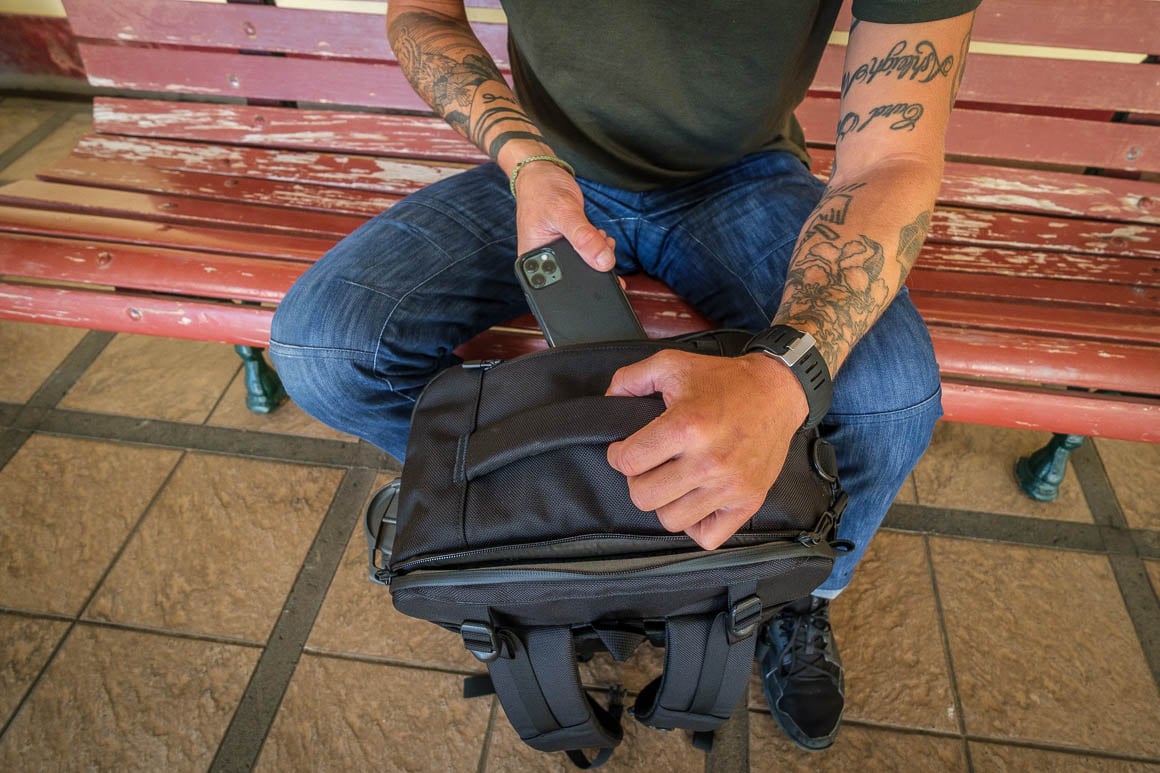
For most modern travellers, the answer is a solid, resounding yes – eSIM is absolutely worth it.
eSIM won’t magically transform your trip, but it does remove one of the most annoying, time-wasting parts of travel – getting connected. You land, switch it on, and you’re good to go. No queues, no plastic, no messing around when you’re tired and just want to get to your accommodation.
It’s especially useful if you’re travelling short-term, moving between countries, working remotely, or simply don’t want to deal with local SIM shops every time you land somewhere new.
That said, it ain’t perfect. As we said, It’s rarely ever the cheapest option, some plans are data-only, and setup can feel a bit unfamiliar the first time. If you’re on a tight budget, using an older phone, or need a local number with in-person support, then a physical SIM might still make more sense.
But for most people, those trade-offs are minor compared to the upsides.
If you’re thinking of using an eSIM, just do two very quick checks before you buy:
- make sure your phone supports it (and is unlocked)
- compare a couple of providers based on your destination and data needs
Do that, pick the right plan, and you’ll land connected, not scrambling. I bet that once you’ve travelled like that a couple of times, it’ll feel very hard to go back.