Kathmandu can be chaotic and peaceful at the same time. The busy traffic, narrow streets, wild motorbike drivers, and the bad air quality shouldn’t deter you though. The city is full of colours, temples and stupas.
Many travelers often feel that Kathmandu is too chaotic and only spend a short time in the city, but Kathmandu has so much to offer. I first visited Nepal over 10 years ago, and since then, Kathmandu has come to feel like home.
There is so much to do in the city, and with 3 days in Kathmandu, you have time to explore the major attractions, and get to know Nepali culture and history. It gives you enough time to visiting the World Heritage Sites, explore Thamel, and even go on a day trip to Bhaktapur.
Best Time to Visit Kathmandu
The best time to visit Kathmandu is in autumn/early winter (October to mid-December) and spring (March-May). The weather is the best during these times, not too hot nor too cold.
Autumn is the most popular time to visit Nepal, as it is the best time to go trekking in Nepal. In recent years, the monsoon season lasted until the end of September, so if you are planning to go trekking, I recommend visiting Nepal from October onwards.
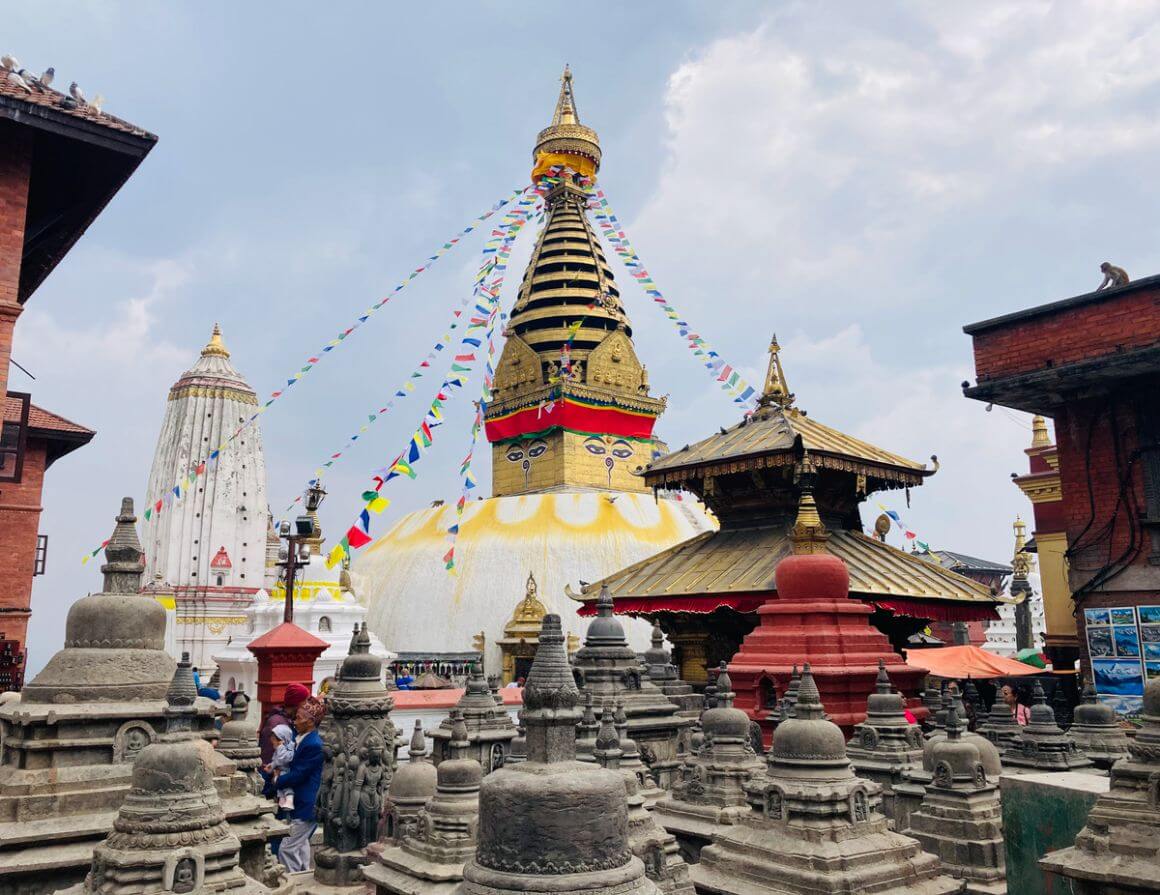
Photo: Travelling Mandala
The Broke Backpacker is supported by you. Clicking through our links may earn us a small affiliate commission, and that's what allows us to keep producing free content 🙂 Learn more.
Spring is the second-best time to visit Kathmandu (and Nepal in general). However, the air pollution is high during this period, which can affect views of the mountains.
Ultimately, the weather patterns can be unpredictable, but generally, autumn and spring are the best times to visit Kathmandu. Lately, I have noticed that the views are better in the beginning of winter (December) than in spring, but it is difficult to predict the weather each year with 100% certainty.
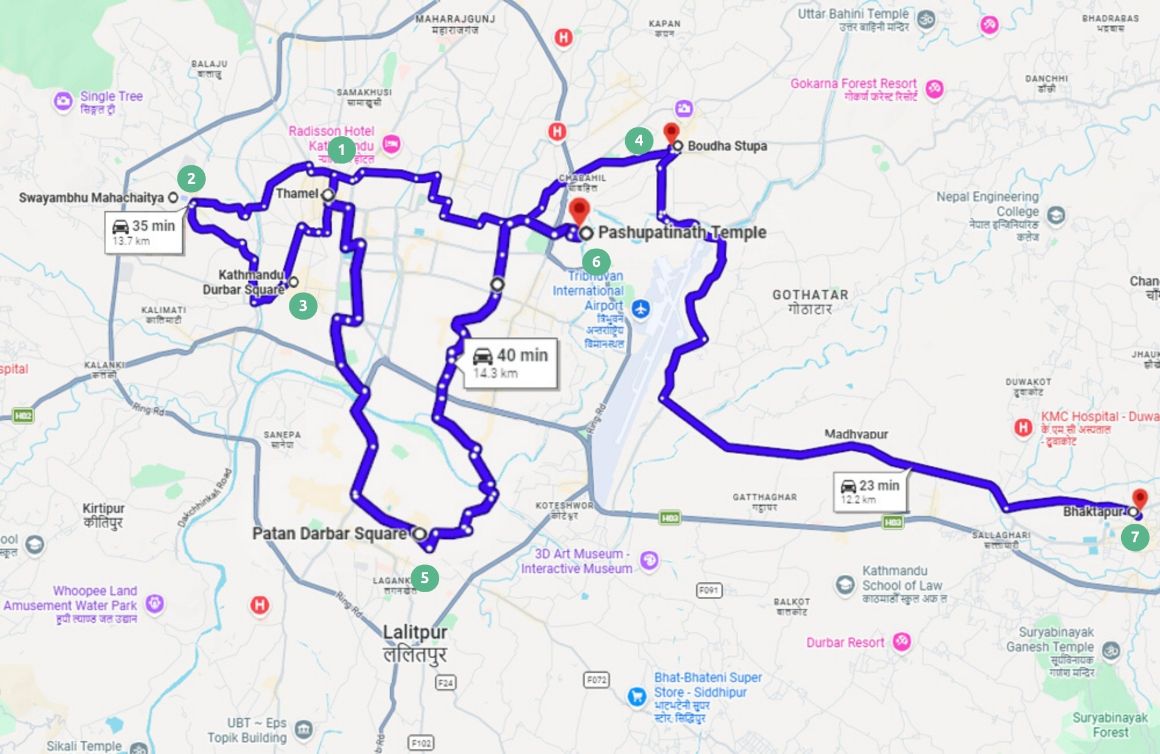
Map: 3 Days in Kathmandu
Map of main attractions to visit on a three-day trip to Kathmandu: Thamel, Swayambhu Stupa, Kathmandu Durbar Square, Boudha Stupa, Patan, Pashupatinath Temple, and Bhaktapur.
3 Days in Kathmandu Itinerary
Most travelers stay in Kathmandu for a few days before and after going on a trek. There are many things to do in Kathmandu, and to see the most iconic sites, you would need to fit several attractions into a 3-day itinerary.
One time, my brother came to visit me in Kathmandu, and I had exactly three days to show him the best of the city. We followed a similar itinerary at the time and have since then adjusted it to help other travelers make the most out of their stay in Kathmandu.
This itinerary includes one day exploring Kathmandu, one day in Patan, and a third in Bhaktapur. So, you get to visit all three cities of Kathmandu Valley.
It is perfect for visiting the must-visit sites in Kathmandu and learning about Nepali culture. It also offers additional activities, so you can customize the itinerary to better suit your preferences.
Day 1: Main Attractions in Kathmandu
Start the day early with breakfast at Himalayan Java in Thamel. It has a nice ambience and serves great coffee. The best way to kick-off your first day in Kathmandu.
Breakfast in Thamel is the best way to get into the vibe of Kathmandu: narrow streets, crazy traffic, colourful shops, music, and the smell of incense in the air.
Stop 1: Swayambhunath Stupa (Monkey Temple) (1 hour)
After breakfast, head to the Swayambhunath Stupa (also called the “Monkey Temple”). It is close to Thamel (around 30 minutes’ walk), but it is better to take a taxi to save time.
The Swayambhunath Stupa is one of the seven World Heritage Sites in the Kathmandu Valley. It is on a small hill, and I love the view of Kathmandu from here.
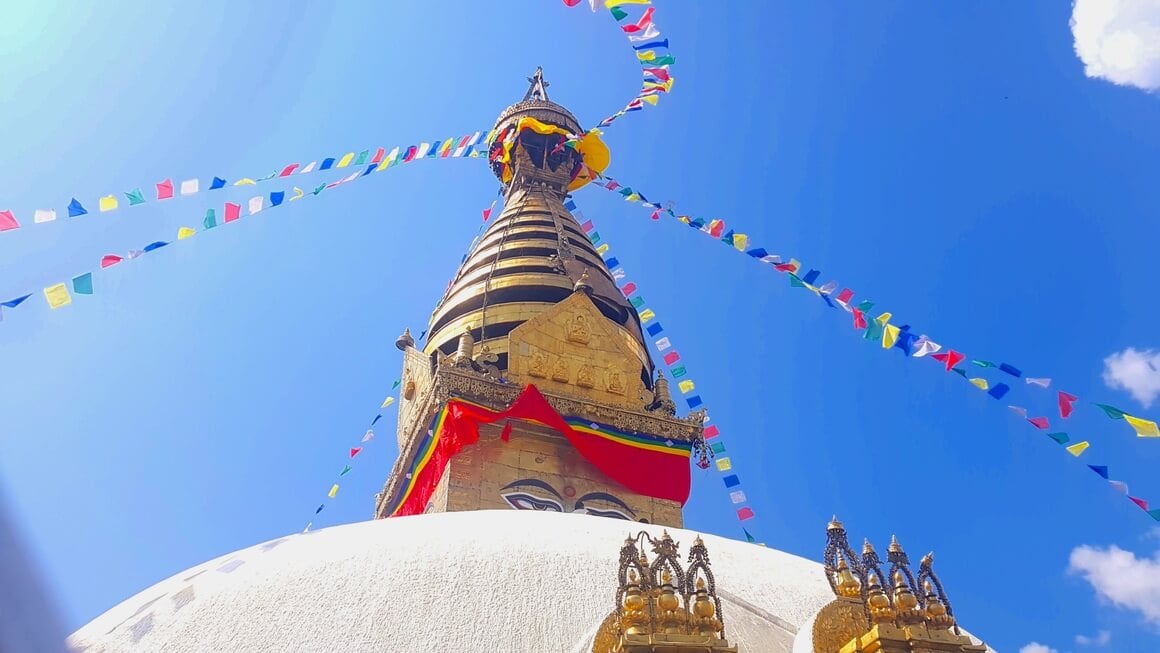
It got its nickname because there are many monkeys by the temple. There is a legend that a Buddhist deity, Manjushree, meditated here. While meditating, he let his hair grow long, and he got lice. Then, the lice were transformed into monkeys, who are now considered the guardians of the temple.
Be careful of the monkeys, as they can attack you or grab stuff off you. Don’t bring any food with you, because then they’ll definitely come after you.
Stop 2: Kathmandu Durbar Square (2 hours)
After the Monkey Temple, the next stop is the Kathmandu Durbar Square. There are three durbar squares in Kathmandu Valley, one in Kathmandu, one in Patan, and another in Bhaktapur. All three durbar squares are part of the UNESCO World Heritage Sites in Kathmandu.
“Durbar” means “palace”, and the Kathmandu Durbar Square served as the royal seat during the Malla period between the 12-18th century. Today, you can visit the old palace buildings, temples and courtyards at the Kathmandu Durbar Square.
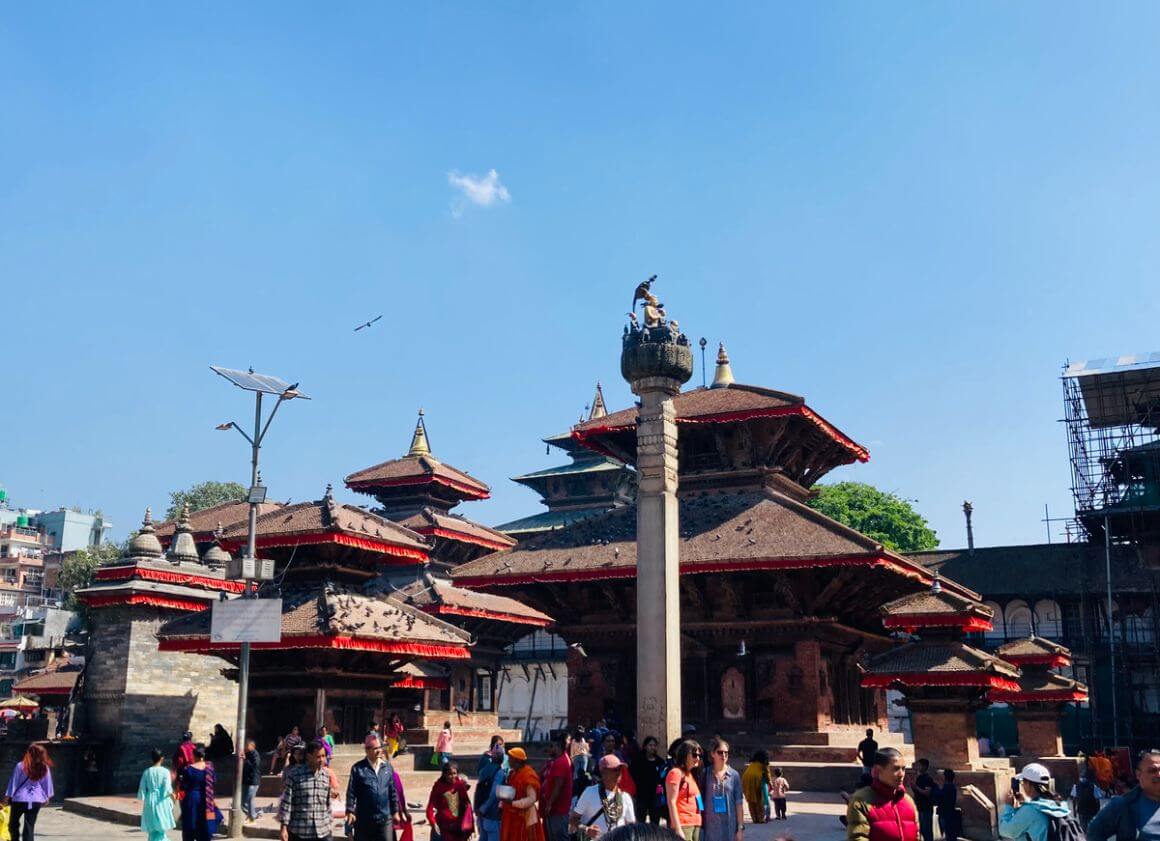
Photo: Travelling Mandala
Many buildings and temples are built in traditional Newari architecture: red bricks and wood-carved windows. The temples and buildings are majestic and some of the best you’ll see on your Nepal trip. Newari people were the original inhabitants of the Kathmandu Valley, and the Kathmandu Durbar Square is one of the best places to see Newari architecture.
Must-see sights within the Kathmandu Durbar Square are the Hanuman Dhoka (old Royal Palace), Kasthamandap Temple, Taleju Temple, and the Kumari Ghar (where the Kumari, Living Goddess, lives). The Kumari is a young girl chosen through a strict selection process, and is worshipped as the reincarnation of Taleju, a Hindu Goddess.
Visiting Kathmandu Durbar Square feels like being in the past and the present at the same time. The historic buildings take you back in time, while everyday life unfolds around you with street vendors and locals going about their daily routines. It is definitely one of the most amazing places in Kathmandu.
Stop 3: Lunch and Explore Thamel (2 hours)
After visiting the Kathmandu Durbar Square, you’ll start to get hungry by now. Thamel is close to the Durbar Square, and I recommend going back to Thamel for lunch.
For local food, try Newa Momo or Yangling Tibetan Restaurant. They are budget-friendly, but the food is very good! For international food, Forest & Plate, OR2K, and Roadhouse are great.
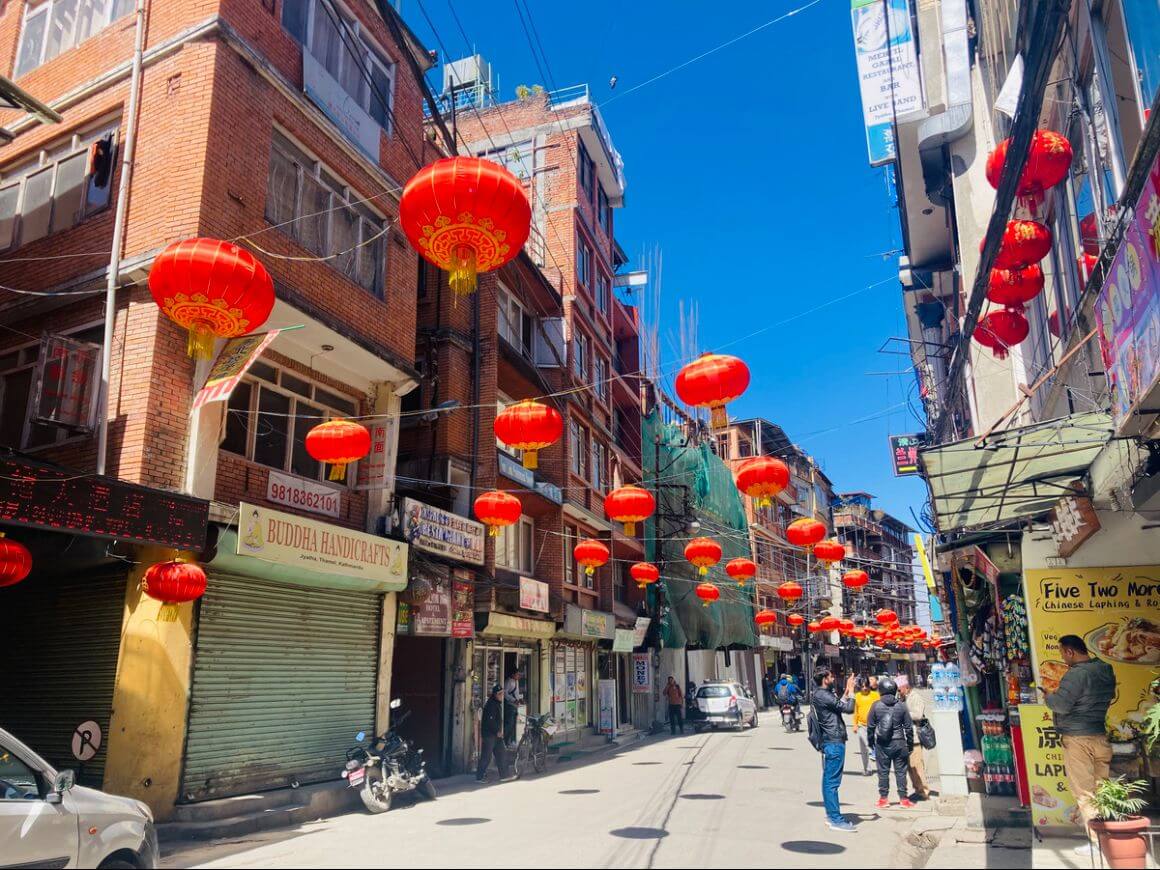
Photo: Travelling Mandala
After lunch, you should spend some time exploring Thamel, or if you feel tired, you can also go back to your hotel for a quick break.
Thamel has so much to offer. There are many restaurants, bars, trekking shops, and places to buy souvenirs. On the first day in Thamel, it is better to just browse what’s on offer, warm up your bargaining skills, and come back to shop another day.
Stop 4: Boudhanath Stupa (1-2 hours)
After lunch break, the last stop is to visit Boudhanath Stupa (in short “Boudha Stupa”). It is a World Heritage Site in Kathmandu, and it is one of the most important Tibetan Buddhist sites outside of Tibet.
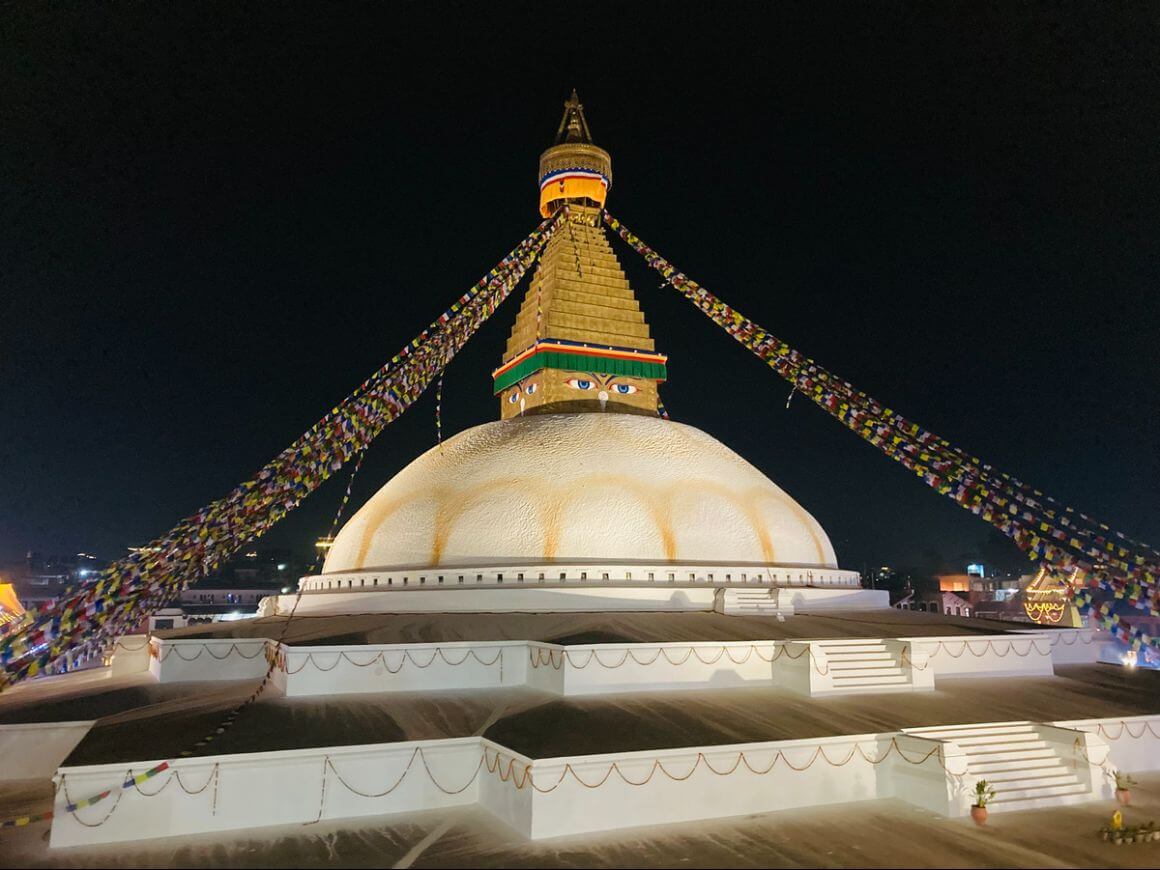
It’s a very peaceful, beautiful place, but still, there are always many people visiting. What I love most about the stupa is that it is surrounded by lots of nice rooftop cafes and restaurants. After you check out the stupa, I recommend stopping by one of the restaurants and having some snacks and drinks.
My favourite time to come here is during sunset, so the best time to visit is late afternoon and get a good spot on the balcony of one of the restaurants. If you stay here until the evening, then you can decide if you have dinner here in Boudha or head back to Thamel.
Day 2: Patan and Pashupatinath Temple
On Day 2, again, I recommend starting with a good breakfast in Thamel, so you have energy for the rest of the day.
Stop 1: Cooking Class in Patan (3 hours)
I have always enjoyed trying food in a new country, and learning to make new dishes is even more fun!
There is a cooking class in Patan that I have done on one of my earlier visits to Nepal, and it is great to learn how to make Nepali dishes from a local. I also got my brother to take this short cooking class, and he loved it too.
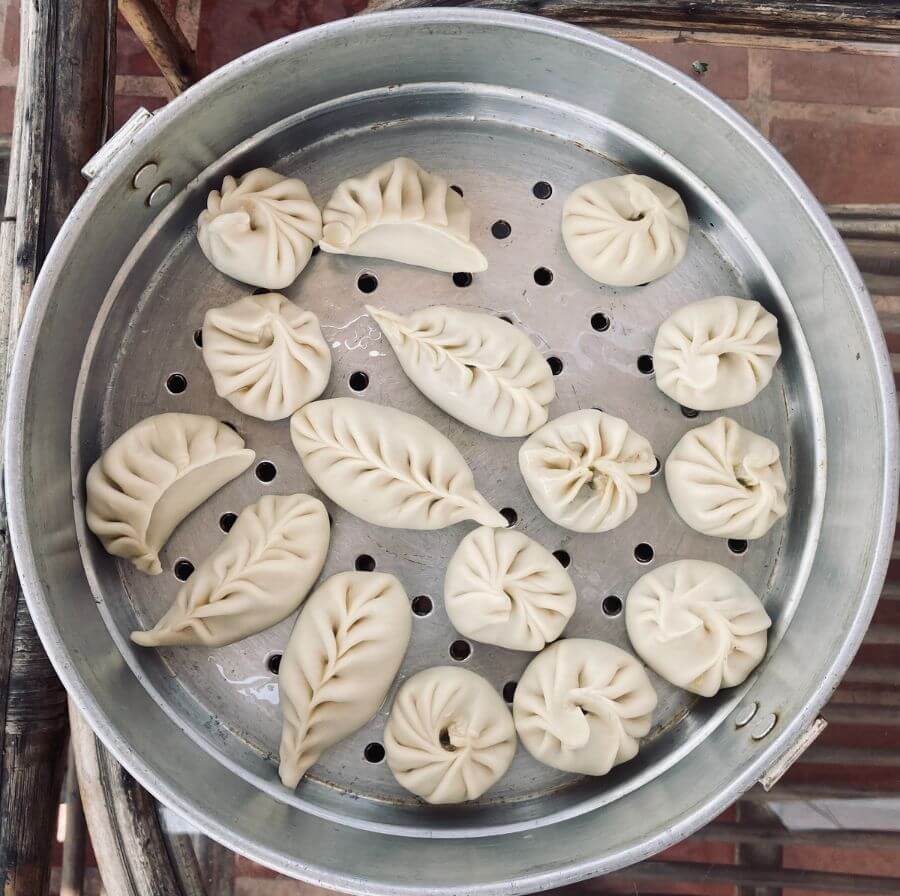
Photo: Travelling Mandala
The cooking class is not just about making the dish, but you also learn a lot about Nepali culture from your host. During the cooking class, you make two of the most popular Nepali dishes: dal bhat and momo. (Vegetarian options also available)
After you finish cooking, you get to eat everything you have cooked. Let’s just say you don’t leave the cooking class hungry. The cooking class is held in Patan, close to the Patan Durbar Square, so once the cooking class is over, you can explore Patan more.
Stop 2: Patan Durbar Square (2 hours)
The Patan Durbar Square is a little bit smaller than the Kathmandu Durbar Square, but it is definitely worth a visit. It is closed off from traffic, so you don’t have motorbikes or cars wildly driving past you.
The Patan Museum is a must-see within the Patan Durbar Square. It is a great place to understand more about Nepal’s history and culture, as well as to learn more about Buddhism and Hinduism.
The museum is pretty big, and you can easily spend 1-2 hours here checking out the exhibition. From the top floor, you get a pretty nice view of the Patan Durbar Square.
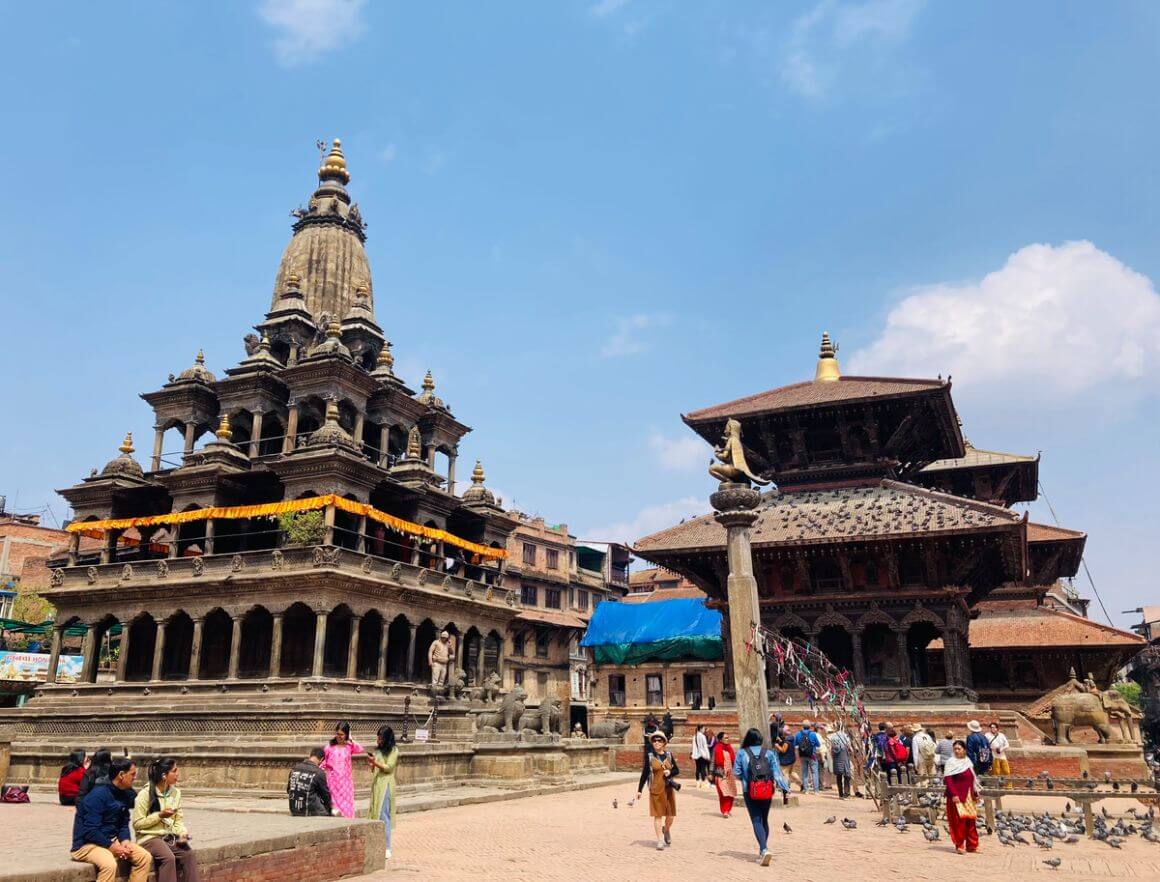
Photo: Travelling Mandala
People often joke that Patan is the perfect place to “get lost” because wherever you go, you always end up finding something interesting, a temple or a stupa.
After you explore the Patan Durbar Square and you still want to visit some of the other temples in the area, I recommend visiting the Kumbeshwar Temple (a five-storey temple) and the Mahabuddha Temple (a temple with thousands of engraved images of Lord Buddha).
After exploring Patan, have a quick snack at one of the rooftop restaurants overlooking the durbar square or go to Honacha, one of the oldest eateries in Patan. Honacha in itself is an adventure, and you must try their Newari snack “bara” made of lentils and eggs.
After the snack, head to Pashupatinath Temple for the rest of the afternoon.
Stop 3: Pashupatinath Temple (2-3 hours)
The Pashupatinath Temple is one of the most sacred Hindu temples in Nepal, and it is the largest open-air cremation site in Nepal.
It is located along the Bagmati River in Kathmandu. The Bagmati River is considered a holy river and flows into the Ganges River, the most sacred river in Hinduism.
When you visit the Pashupatinath Temple, you can see the open-air cremations by the riverbank. After the cremations, the ashes are dispersed into the river, which is believed to wash away sins. It can be a sad place to visit, as you see families saying their final farewells to their loved ones during the cremation ceremonies.
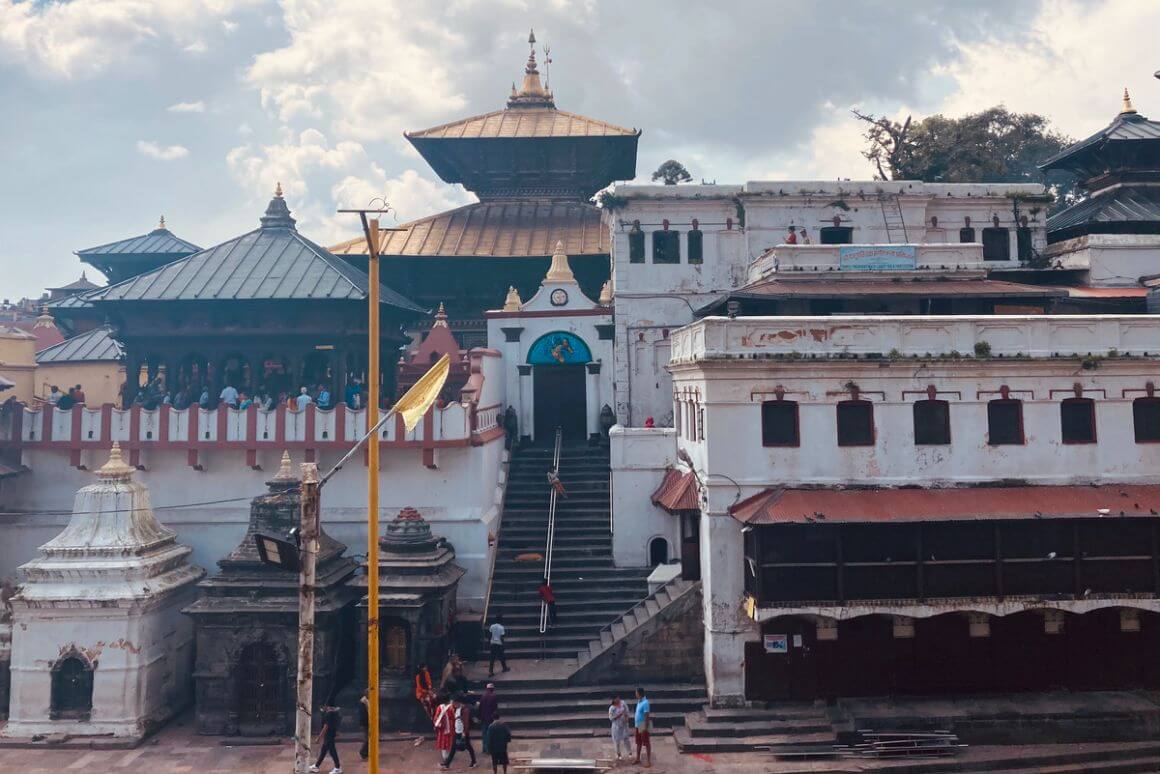
The temple complex is very large and can take 1-2 hours to explore the whole place. It includes the main temple, the Pashupatinath Temple, as well as smaller temples and shrines. The entry to the main Pashupatinath Temple is restricted to the followers of the Hindu religion, but you are allowed to explore the rest of the temple complex.
Every day, around 6-6:30 pm, a special ceremony (Aarti) is performed by the riverbank. The Aarti ceremony is performed by Hindu priests, and it is believed to cleanse the mind and soul.
It is good if you arrive at the Pashupatinath Temple by 3 pm so you have time to explore the temples before the Aarti ceremony starts. The Aarti ceremony is very popular for locals, so the best is to explore the temple grounds by 5 pm and then go to sit by the riverbank to make sure you have a good spot for the ceremony. It gets really crowded, so watch out for your belongings.
After you watch the Aarti ceremony, I recommend going back to Thamel for dinner.
Day 3: Day Trip to Bhaktapur
Day 3 of this itinerary takes you to Bhaktapur! Bhaktapur is my favourite place in Kathmandu Valley, and you really can’t miss it while you are in Nepal.
Visiting Bhaktapur is like taking a step back in time: ancient temples, red brick houses and wood-carved windows (typical Newari architecture), and narrow, cobblestone streets. When you walk around Bhaktapur, it feels like you’ve gone back in time.
The main attractions in Bhaktapur are the Bhaktapur Durbar Square, Dattatreya Square, Taumadhi Square and Pottery Square. The place is rich in history, and you can even have a coffee in one of the temples turned restaurants.
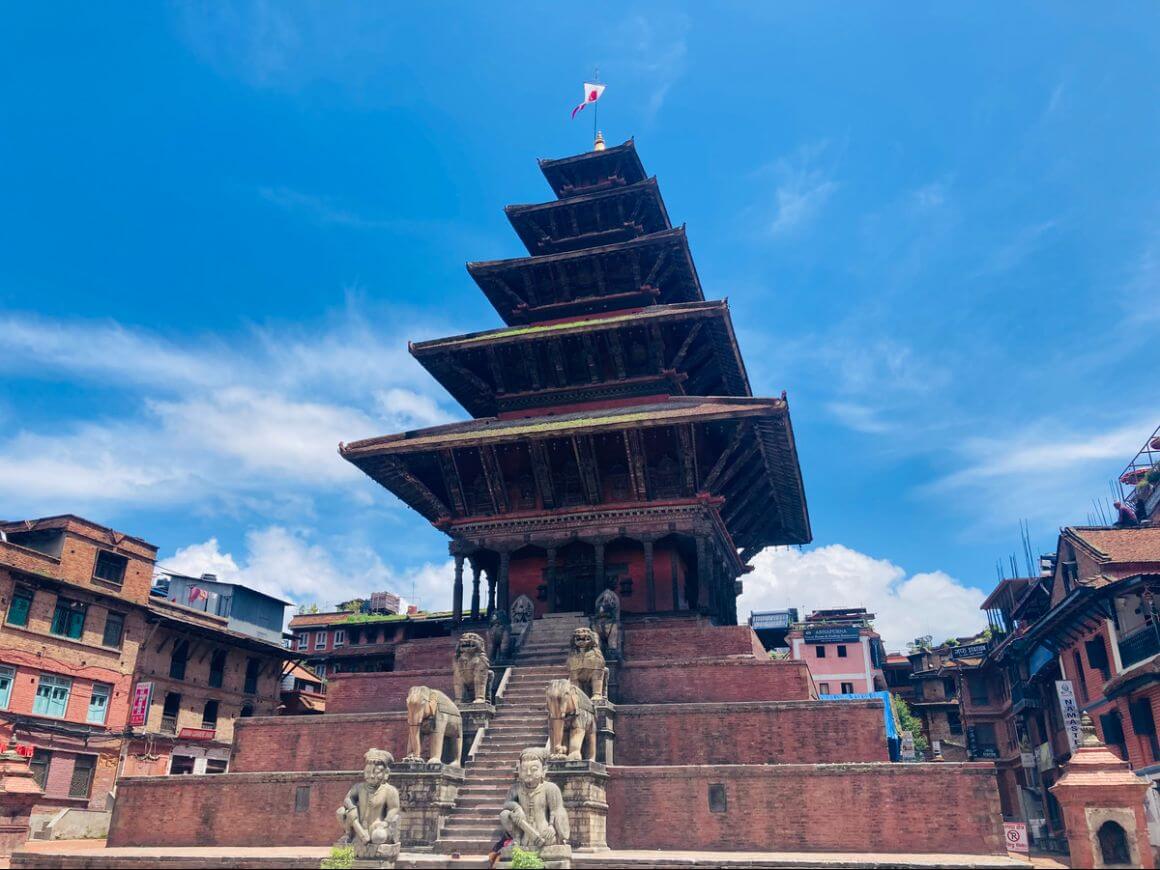
One of the must-see temples in Bhaktapur is the Nayatapola Temple. It is the tallest temple in Nepal, around 33 m (108 ft) high. It is pretty nice!
The Pottery Square in Bhaktapur is famous for local craftsmen making pottery. On sunny days, they put the pots outside the square to dry in the sun. You can also take a pottery class and take home the pots you make as souvenirs. I once took a 1-hour pottery class, and while it was fun, I can’t say my skills were good enough to walk away with any mugs or pots I could use in the future.
For food, try Amako Bara Pasal for local, budget-friendly dishes. For international dishes, my favourite is Mayur Restaurant. I recommend it is best to have lunch and snacks in Bhaktapur and then have dinner once you are back in Kathmandu.
Bhaktapur is one hour from Kathmandu, and you can get there by taking a local bus or taxi. The local bus is a good option if you are on a budget. The buses go from the Bhaktapur Bus Park in Kathmandu.
Other Things to Do in Kathmandu
There are many things to do in Kathmandu, so in case you have more time, or want to customize the above itinerary, here are my top tips, some additional things to do both in and near the city.
Day Trips
There are also many smaller towns and villages near Kathmandu that are great places to visit if you want to get away from the chaos of Kathmandu.
Chandragiri and Kirtipur are great for day trips. There is a cable car in Chandragiri, and when you get to the top, you get great views of the Himalayas (if the weather is clear). Kirtipur is more about culture and food, and make sure to try Newari food at the Newa Lahana restaurant.
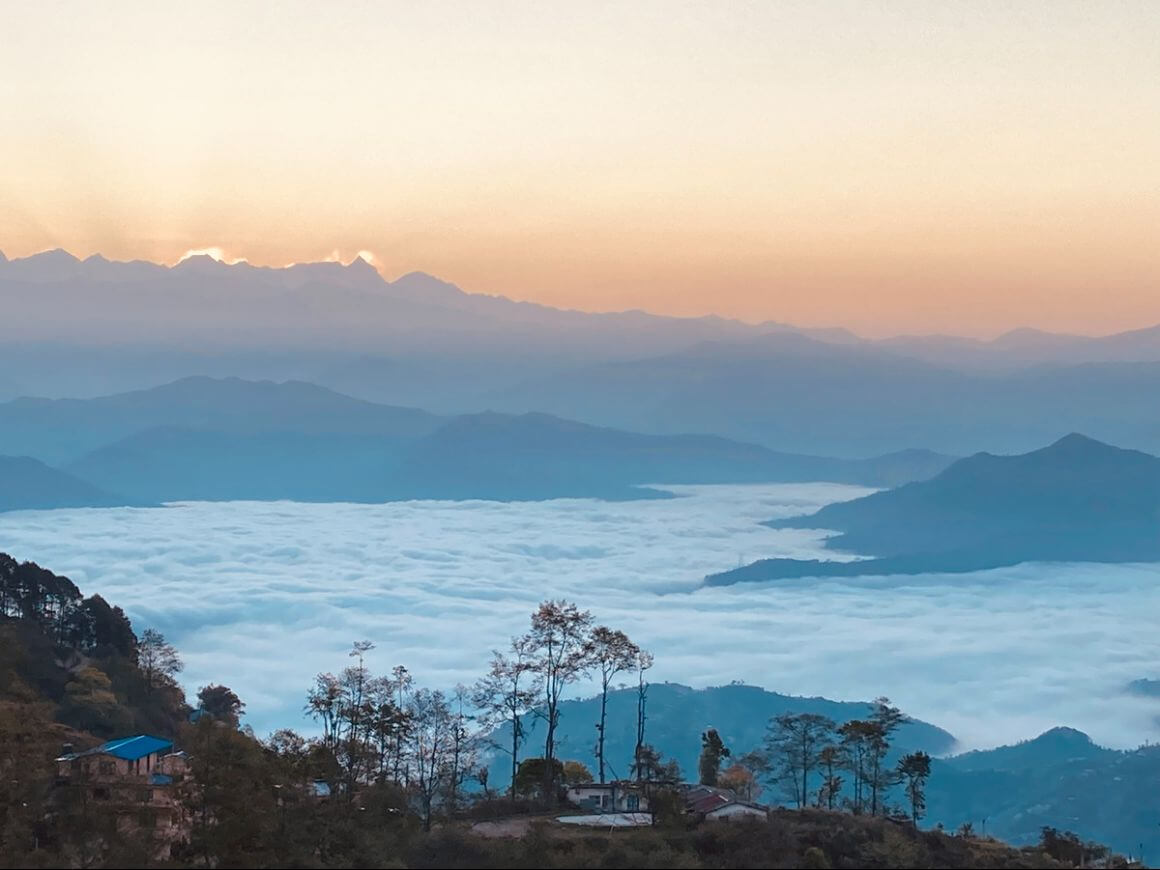
Photo: Travelling Mandala
If you have an extra 2-3 days, then Dhulikhel and Nagarkot are great options to visit from Kathmandu. Nagarkot is the go-to place for both locals and foreigners, so it is more touristy, while Dhulikhel has fewer visitors. You can also visit them in one day, but it is better to make it at least a 1 night/2 day stay.
Both Nagarkot and Dhulikhel used to have great views of the Himalayas, but I have found it’s been a hit-or-miss in the last few years. Basically, whenever I went there on a trip, it was cloudy – even in the Spring or Autumn when the views are supposed to be clear.
They are still great to visit to escape Kathmandu, but it is better to spend time in nature rather than go for the mountain views.
Hiking
There are many hiking routes near Kathmandu, so even if you don’t feel like trekking to Everest Base Camp, you can go for a short, 1-day hike near the city. The short hiking routes are also great for a warm-up before going on a proper trek.
The Jamacho Gumba, Phulchowki Hill, and Sundarijal-Chisapani Trail are perfect for short hikes from Kathmandu. If the weather is clear, you get nice views of the Himalayas!
Adventure Sports
Nepal is not only about hiking and trekking. There are options for other adventure activities, such as white-water rafting, bungee jumping, and ziplining.
White-water rafting, bungee jumping, and ziplining are organized as day tours from Kathmandu, including hotel pick-up and drop-off. You can book them online or in person at one of the travel agencies in Thamel.
How to Get Around Kathmandu
The best way to get around Kathmandu is by taxi. The taxis are affordable, but make sure to book them through Nepali taxi apps like Pathao or InDrive. They are like the local “Uber”, and the price is fixed. In case you hail a regular taxi, then the prices tend to be more expensive. For hailing regular taxis, bring your best bargaining game.
I remember when I first visited Kathmandu over 10 years ago, taxi apps didn’t exist yet, only the regular taxis. The regular taxis refused to go on the meter, and unless you could bargain well, you had to pay more than the actual cost.
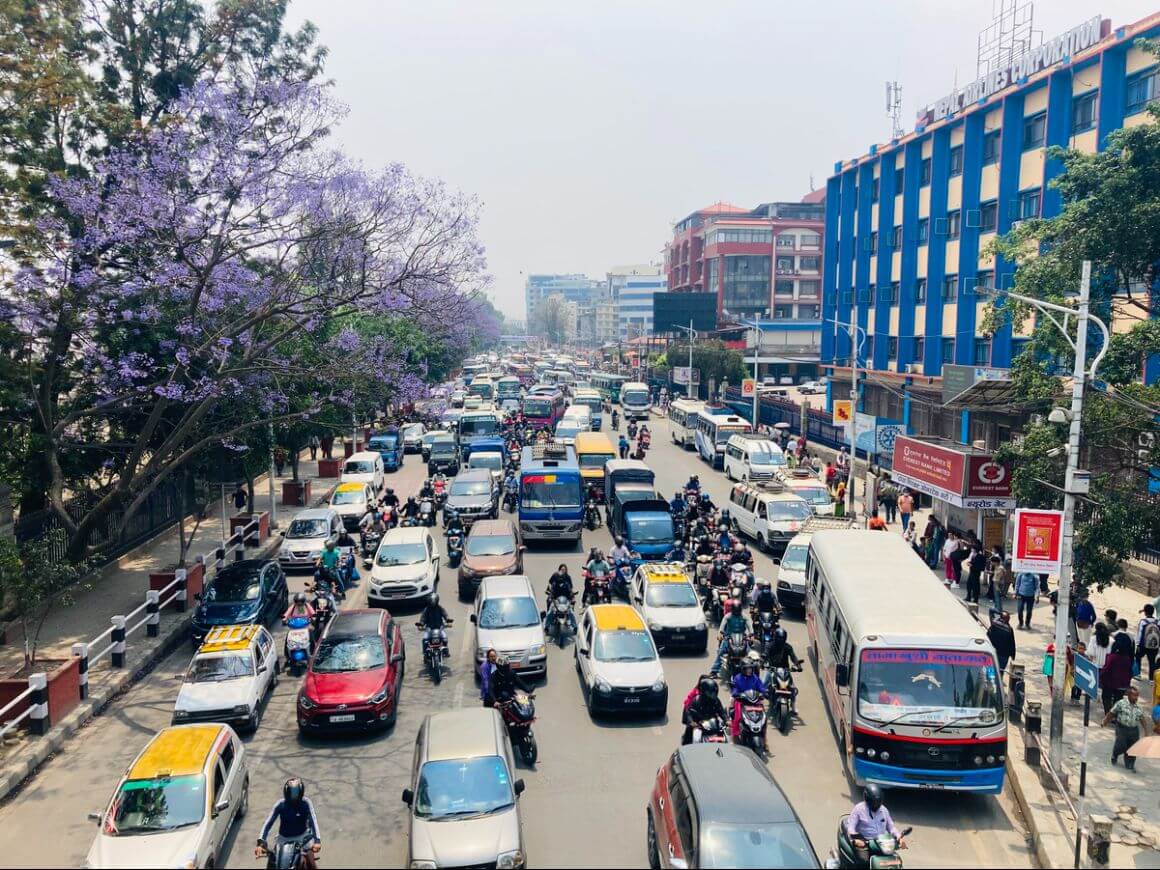
With the taxi apps, it has become so much easier to take taxis in Kathmandu. You need a local eSIM to install the apps, and then they work just like Uber. The fun part is that you can also order motorbike taxis. The motorbike taxis are the best price but can be dangerous as the roads are chaotic.
Another way to get around Kathmandu is by public transport. If you are staying in Kathmandu only for a few days, then it’s more comfortable to take the taxis instead. The public buses get crowded, and most of the bus stops are not marked, so it can be challenging to understand the public bus system.
Where to Stay in Kathmandu
Thamel is the best place to stay for first-time visitors in Kathmandu and those looking for backpacker hostels. It is centrally located, and has lots of hotels, restaurants, bars, and trekking and souvenir shops. Thamel is where most travelers stay, so it is the best place to meet fellow travelers.
Patan is another great option, but it is more like the expat area of Kathmandu. There are lots of nice shops, bars and restaurants, but you won’t find the nightlife here that Thamel offers. For this reason, Patan is better for those who plan to stay in Kathmandu long-term or have visited Nepal before.
My Top Recommendations for Where to Stay in Kathmandu
- Hostel: Rest Up Hostel (affordable backpacker hostel and a great place to meet fellow travelers)
- Mid-Range Hotel: Kailash Boutique Hotel (Cosy hotel in a quiet street in Thamel)
- High-End Hotel: Aloft (modern, high-end hotel in the center of Thamel. I love the swimming pool here)
Restaurants in Kathmandu
If you are staying for three days in Kathmandu, I recommend staying in Thamel. One of the advantages of staying in Thamel is that it has lots of restaurants serving local and international dishes. There are lots of cheap, local eateries, as well as high-end restaurants.
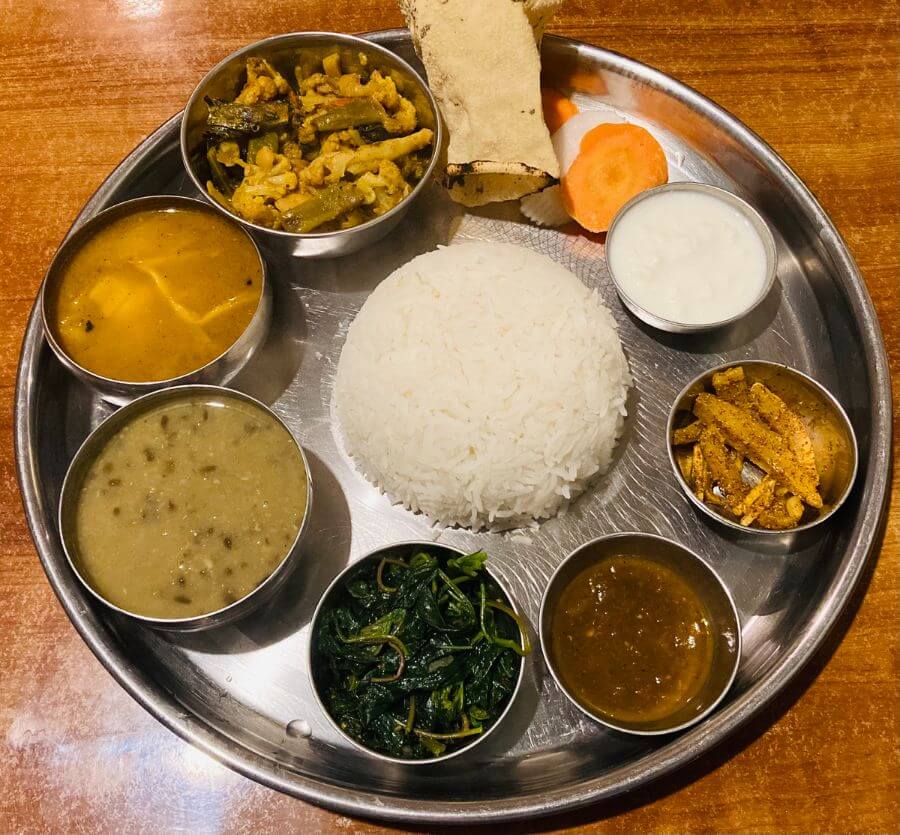
Photo: Travelling Mandala
For affordable prices, some of my favourite restaurants in Thamel are Newa Momo (Nepali and Newari food), Yangling Tibetan Restaurant (Nepali and Tibetan food), and Western Tandoori (Indian food).
If you want to treat yourself to some nice food and ambience, I recommend going to Himalayan Java (best for breakfast and coffee), Roadhouse (pizza), Fire & Ice (pizza), OR2K (Middle Eastern food, vegan options), and Forest & Plate (Nepali and international dishes).
Safety Tips
Kathmandu and Nepal are generally safe, but you should remain cautious, as you would in any other city. Locals are friendly to tourists, but there is petty crime in the city.
Some of my safety tips are to watch out for your belongings in crowded places, don’t fall for petty scams, and if you take a taxi late at night, go with friends/other travelers.
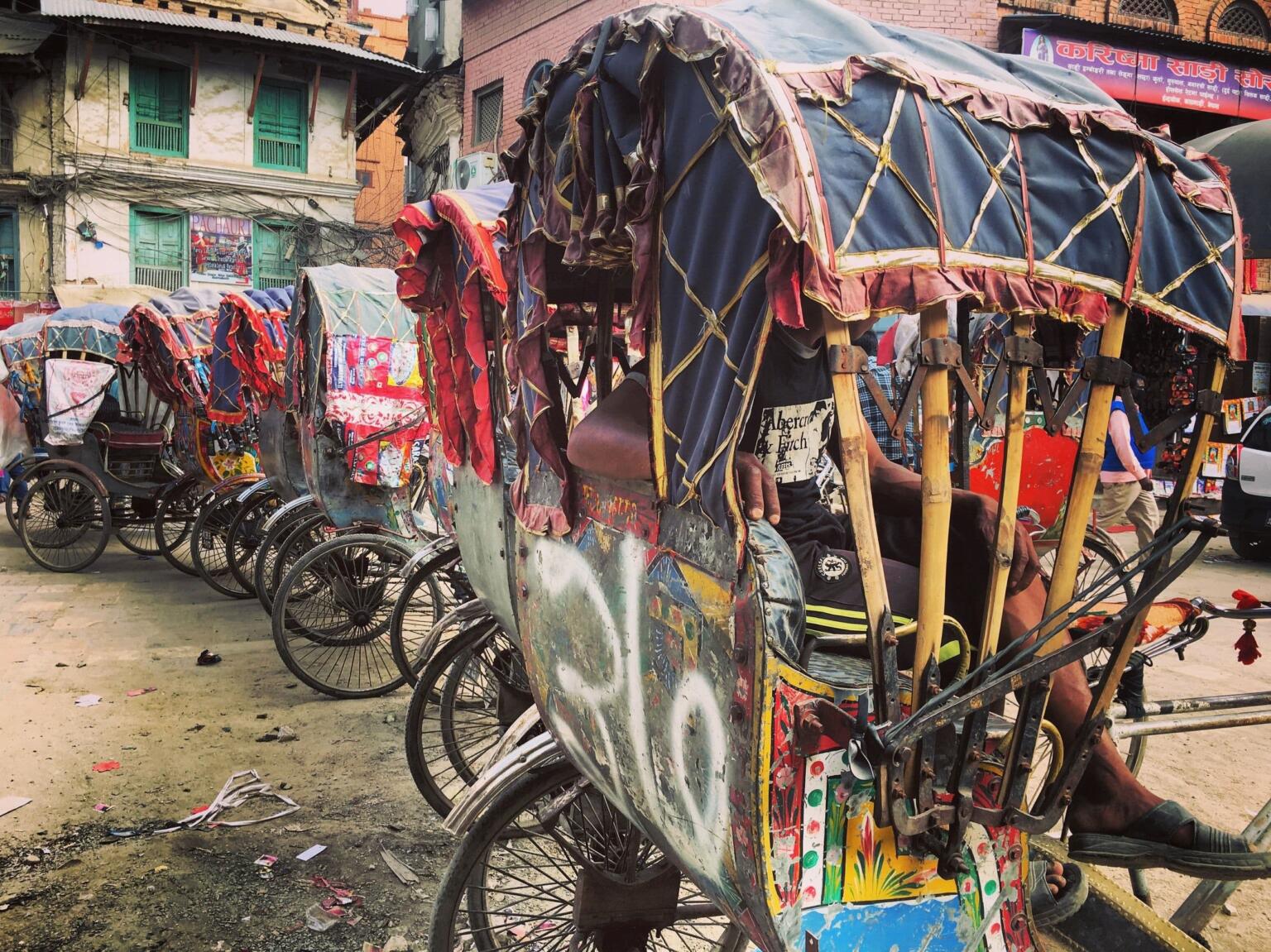
Photo: Chris Lininger
Ultimately, even the best plans can go wrong, so I always recommend getting travel insurance for international trips. SafetyWing has been my go-to insurance for more than five years. It is affordable and has plans for both short and long-term travelers.
For a short trip to Nepal, the best is to get SafetyWing’s Essential Plan. It covers lost luggage, stolen items, and emergency medical care. I have used it for emergency dental care in Kathmandu and got reimbursed in about two weeks – just make sure to keep all your receipts and doctor’s notes.
ALWAYS sort out your backpacker insurance before your trip. There’s plenty to choose from in that department, but a good place to start is Safety Wing.
They offer month-to-month payments, no lock-in contracts, and require absolutely no itineraries: that’s the exact kind of insurance long-term travellers and digital nomads need.

SafetyWing is cheap, easy, and admin-free: just sign up lickety-split so you can get back to it!
Click the button below to learn more about SafetyWing’s setup or read our insider review for the full tasty scoop.
Questions People Always Ask Me
Ready for Kathmandu?
Once you get to Kathmandu, it’s best to have a few places in mind that you definitely want to visit, but also to just enjoy the moment and go with the flow.
Kathmandu is a great place. You’ll meet lots of new people, both locals and travelers, and the best thing to do is simply enjoy your time rather than stress about strictly following an itinerary.
In my opinion, the World Heritage Sites are a must, but feel free to cut it short and visit only the ones you really want to see. If I had to choose one out of the three durbar squares, I would choose the one in Bhaktapur. That way, you can save some time if you want to skip any of the other durbar squares.
If you also go trekking in Nepal, you may have one or two rest days in Kathmandu after your trek. In that case, my best recommendation is to take it easy, go for a massage, and relax and chill in Thamel.