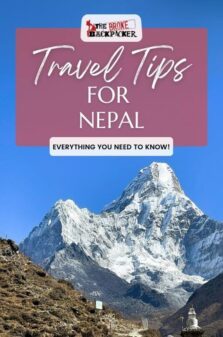
Nepal is on many bucket lists, and for good reason: it’s home to the highest mountain on the planet, a unique blend of cultures, and a ton of epic historical sites.
I always knew I wanted to visit this Himalayan nation, but I didn’t think it would happen anytime soon. Until the stars seemingly aligned in December 2024, where I found myself spending Christmas on the trail to Everest Basecamp.
Nepal hit me hard, and I can easily say it’s one of my favorite countries I’ve ever been to. The people, vibes, and of course, the mountains, were enough to have me booking it to the visa extension office. You’ll find a very well-trodden tourist trail, but with a million ways to get off the beaten path if you’d like. But don’t expect simplicity: this definitely isn’t the easiest destination to explore.
So allow me to help – after an incredible, independent backpacking trip, here’s all my top Nepal travel tips to make planning just a little bit easier:
- 1. The best time to trek in Nepal isn’t what you think
- 2. You can get everything in Kathmandu
- 3. Get mentally ready for the roads!
- 4. Support hyperlocal businesses
- 5. There are so many offbeat adventure options
- 6. You don’t need a guide for EBC or Annapurna
- 7. Try to see the Kumari Festival
- 8. Many ATMs work with foreign cards
- 9. NTC and NCell work better than eSims
- 10. Learn a bit of the local language
- 11. Fall in love with momos and other local food
- 12. Don’t play around with altitude while hiking
- 13. Bring toilet paper on treks!
- 14. Trust me – you need a power bank
- 15. Download these essential apps
- 16. Don’t be afraid to haggle
- 17. Get good travel insurance
- 18. Be prepared to pay for your visa on arrival
- 19. Don’t be surprised if you want to extend your visa – here’s how:
- Final Thoughts on Nepal Travel Tips
1. The best time to trek in Nepal isn’t what you think
Nearly every source on the matter will tell you that March-April or October-November are the best times to go backpacking in Nepal, but I truly beg to differ.
I recently visited for the first time (and trekked to EBC) in mid-December, and THIS is truly the best time to be in Nepal!

Photo: Ana Pereira
The Broke Backpacker is supported by you. Clicking through our links may earn us a small affiliate commission, and that's what allows us to keep producing free content 🙂 Learn more.
Kathmandu is cool and comfortable, the skies are clear nearly every day, and even one of the most popular treks on the planet is *not* overcrowded.
What’s more is that December is a pretty low-key month for snowfall, and high passes are still clear – ironically, they have more snow on and around them in March!
I genuinely couldn’t imagine how busy everything must be in peak season, as there were still *way* more trekkers and travelers than the empty trails were used to in Gilgit Baltistan. But still, if you’re willing to put up with slightly colder temps that really weren’t all that bad, you’ll be legitimately rewarded by way of peace.
2. You can get everything in Kathmandu
Seriously, this city is a hiker’s paradise.
Nowhere else on the planet have I EVER seen so many trekking stores in one place. And they have absolutely everything – from brand-name 70L backpacks to incredible sweatshirts and fleeces you won’t be able to tell aren’t real.
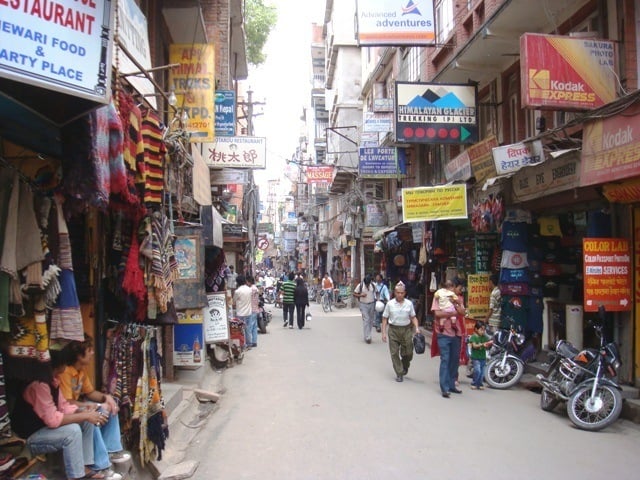
I’ve heard from numerous travelers that they wish they knew how stocked KTM was beforehand, so let this be your warning. There’s just about nothing you can’t find!
3. Get mentally ready for the roads!
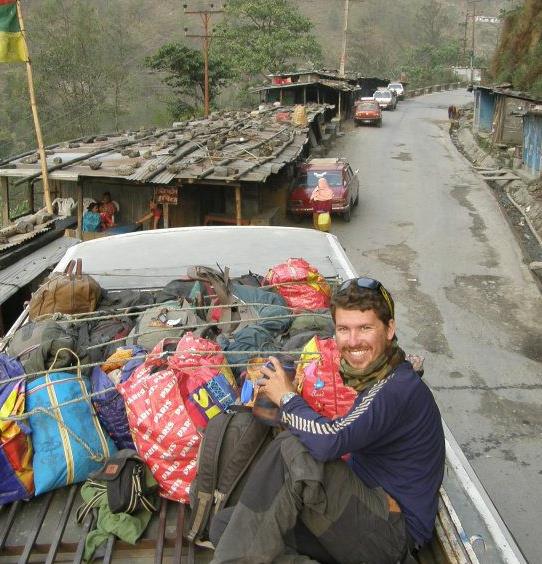
I’ve explored by road in the Karakoram Mountains of Gilgit Baltistan, Afghanistan, India and Myanmar so far, but hands down, Nepal’s may be the worst.
Which truly sad for the locals – many roads are truly best suited for tractors. Even in areas without extreme cliffs, you’ll be literally sloshing around like a washing machine as the 4x4s barely navigate the terrain.
Well, that was our experience getting to the Khumbu region at least…
While some roads are paved, still be prepared for a lot of windy, mountain action. You are in the Himalayas after all!
4. Support hyperlocal businesses
And by hyperlocal, I don’t just mean “from Nepal” but from the actual region you’re trekking or staying in! For example, if you want a guide for Everest Base Camp, choose a Sherpa-owned company from the Khumbu region.
Nepal is very ethnically diverse, and I strongly believe we should support minorities on their lands whenever possible – they’ll also give you the best experience since they know their homes best!
5. There are so many offbeat adventure options
Whether it be coming in the off-season or getting truly off the beaten path in places that most travelers don’t go, it is so easy to have authentic experiences in Nepal.

Because let’s face it – the vast and overwhelming majority of tourists come in spring or fall for Kathmandu, EBC, Pokhara, and the Annapurna region. Some head south to Chitwan National Park, but other than that, you’re pretty off the beaten track.
The only downside is that a lot of these require permits if you plan to visit or trek, like the majestic-looking Dolpa and Mustang Valleys. But there are plenty of “free zones” too, like rural Western Nepal, where you can really get immersed in local village life.
6. You don’t need a guide for EBC or Annapurna
In 2024, Nepal introduced a bill that would make it compulsory for all foreign trekkers to have guides, much to the disdain of budget backpackers. The vast majority of beautiful places in Nepal already require guides, so this rule would have killed independent hiking.

Photo: Chris Lininger
Luckily, this is NOT being enforced on any treks in the Khumbu/Everest region or on the Annapurna Circuit. Other shorter treks can also still be done freely, like Langtang and Poon Hill.
7. Try to see the Kumari Festival
One of the things that shocked me about Nepal is that they have a highly revered, living goddess right in the heart of Kathmandu. Known as Kumari, a prepubescent girl is chosen from the Shakya clan of the Newari Buddhist community, who locals believe the goddess possesses.
The Kumari Jatra is the ritual procession where you can get a chance to see her, as she’s usually out of the public eye otherwise. The Indra Jatra Festival, as it’s known, is absolute madness, but also one of the most unique things you can see in the country and definitely one of the best festivals in the world. It usually takes place in August or September, but the date changes depending on the calendar.
8. Many ATMs work with foreign cards
I actually found Nepal to be a pretty easy place to use my debit card – there are a ton of ATMs in Kathmandu, and quite a few worked. NIC Asia and Siddhartha were my go-tos.
Just make sure you stock up before heading out to remote areas – especially out on treks! On the way to EBC, there was one working at Namche Bazaar, but nowhere beyond that. Expect zero on less popular trekking routes.
9. NTC and NCell work better than eSims
I still think you should get an e-SIM for your arrival in Nepal. Once you get settled, it’s such a good idea to grab a local SIM. NTC and NCell are the two major companies. NTC is government-owned and said to have better connections on the Everest Basecamp trail and other remote mountain areas.
Both are hella cheap for decent amounts of data, which you can then top up. Just make sure you head to a franchise, and as per usual, don’t buy one from the airport, they’re overpriced af.
10. Learn a bit of the local language
Learning a new language (Urdu/Hindi) literally changed my life while traveling and living in the region, and I even found it helpful in Nepal.

Photo: Chris Lininger
BUT it’s super important to note that while similar, Nepali is a unique language, and isn’t mutually intelligible with Urdu/Hindi. With so many different ethnicities, you’ll encounter other tongues as you make your way around the country.
But Nepali is what unites them all, and it will come in handy to memorize a few of these:
- Hello – Namaste
- My Name Is… – Mero Naam … Ho
- Goodnight – Subha ratri
- Cheers! (Used when drinking) – Subhakamana!
- How much is this? – Yo kati ho?
- Thank You – Dhanyabad
- Stop! (good when on a bus!) – Rokinuhos
- I’m Lost – Ma haraye
- Take me there – Kri-payaa, ma-lie tya-haa
- Where is the toilet? – Shauchalaya kata cha?
11. Fall in love with momos and other local food
Nepali food is divine. I already knew from months spent backpacking in India (where many Nepalis work) that these were culinary legends, and that was confirmed when I finally visited.
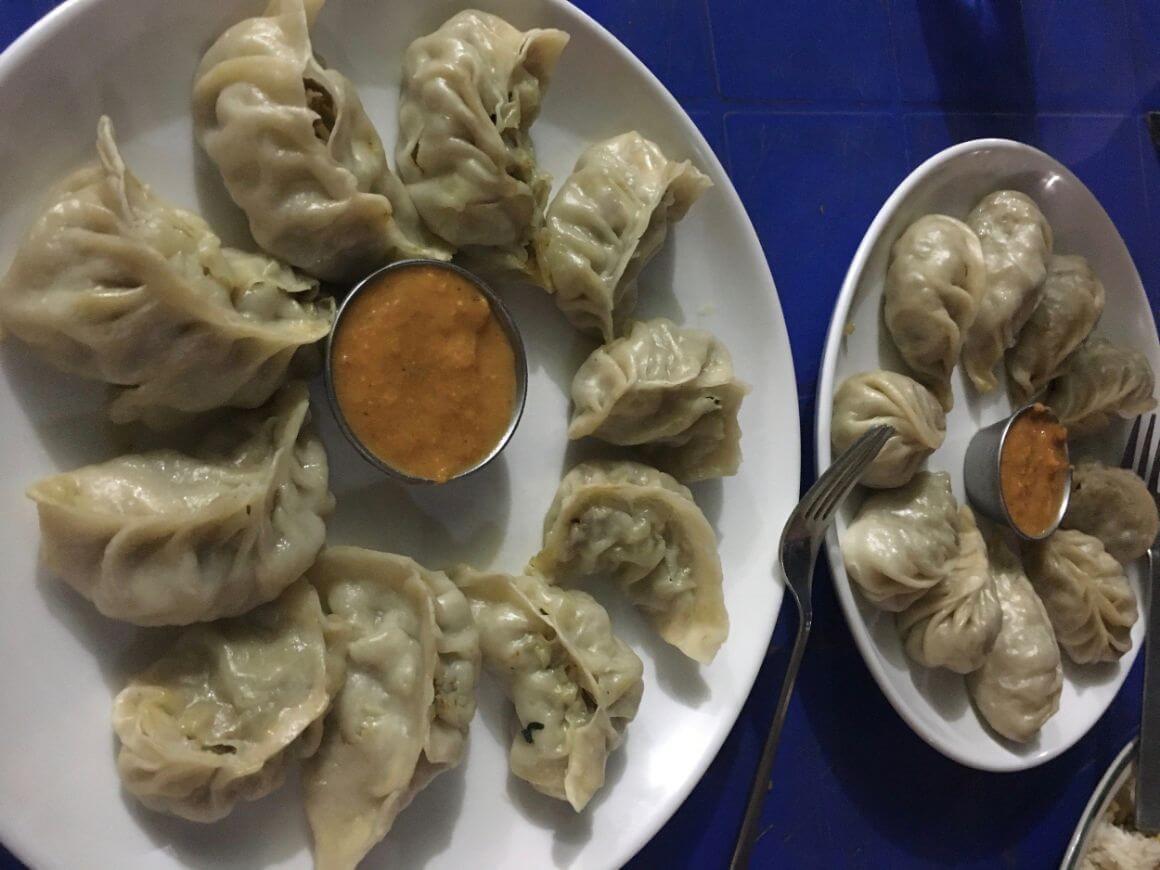
Photo: Chris Lininger
Dal bhat (a thali of rice, lentils, and veggies) and momos (dumplings) are the most famous, and for good reason. I honestly didn’t think I would like dal bhat, but it was sooo different from the dal I’m used to in Pakistan! So light and tasty. Plus those veggies and a crispy papad chip on top?
A total vibe.
Momos are no doubt the best you’ll find in South Asia – they even make them fried, which I so missed! Other than these two heavy hitters that are on every menu from the highest village to the lowlands of Pokhara, you’ll want to check out regional cuisines like Newari and Tibetan for sure!
12. Don’t play around with altitude while hiking
You’ve probably heard this before, but I can’t write this without talking about this. Nepal’s treks are HIGH – like we’re talking higher than anywhere in the contiguous USA high. So even if you’re super fit and prepared, there’s a chance you may be affected by some bit of altitude sickness. It can really happen to anyone – even Sherpas!
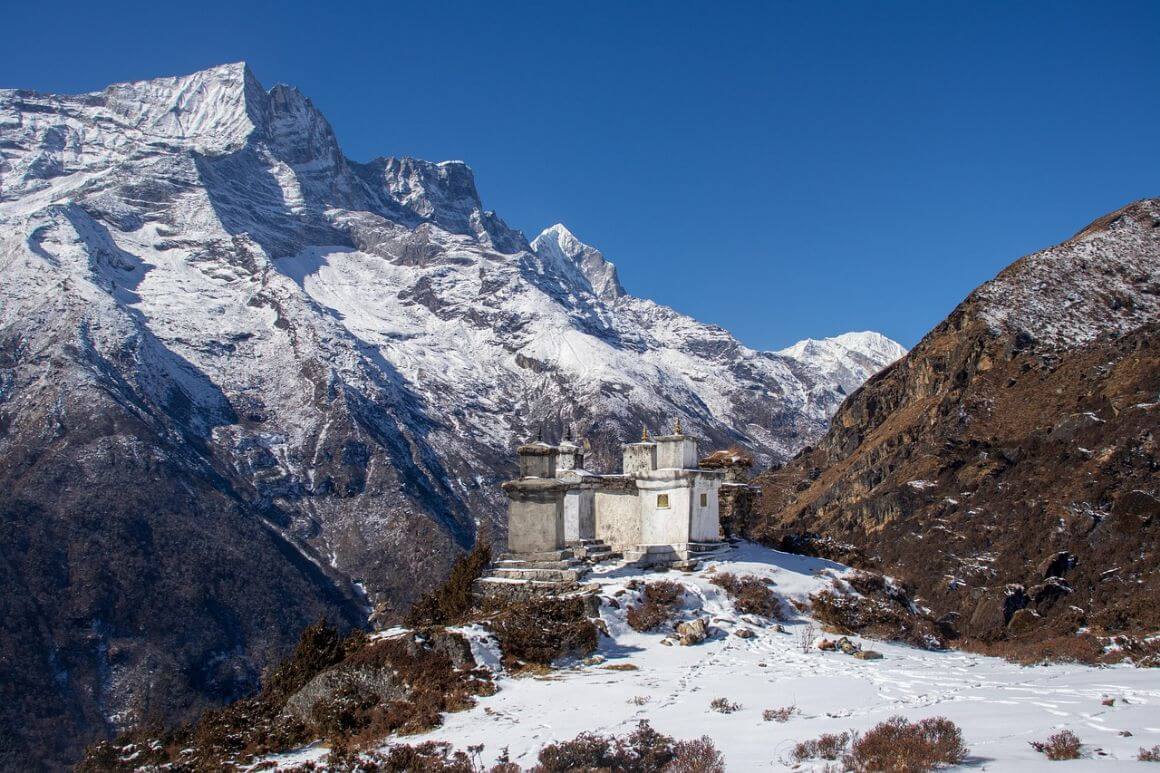
Aside from drinking a TON of water, I recommend being prepared with Acetazolamide (Diamox) either from your doctor or over the counter from a pharmacy in KTM. It can help with symptoms and even be life-saving in some cases.
While altitude sickness can happen at any time, going slow is a good way to stay ahead of it. Stick to typical route itineraries, and don’t blow off rest days; they really help you acclimatize.
13. Bring toilet paper on treks!
Nepal is a bum gun country, so deff don’t expect toilet paper to be around. On all treks, TP (and other supplies) gets way more expensive the higher you go, so it’s well worth it to stock up a bit in a city before ascending.
14. Trust me – you need a power bank
While many parts of the country have good solar and generator systems in place, electricity issues are definitely common, and as we’ve previously discussed, the roads can be long and crazy.
So without a doubt, you should be exploring with a power bank. And don’t skimp out on a cheap one either – I have a big one that can charge other devices too, so it was super worth the ~$100 USD.
15. Download these essential apps
Nepal has a few country-specific apps I highly recommend downloading before your trip:
- InDrive: Taxi sharing app similar to Uber
- Foodmandu: Local food delivery app that works in Kathmandu, Pokhara, Chitwan and a few other cities
- Pathao: Another local food delivery app
- Google Translate: One of the easiest ways to overcome language barriers!
16. Don’t be afraid to haggle
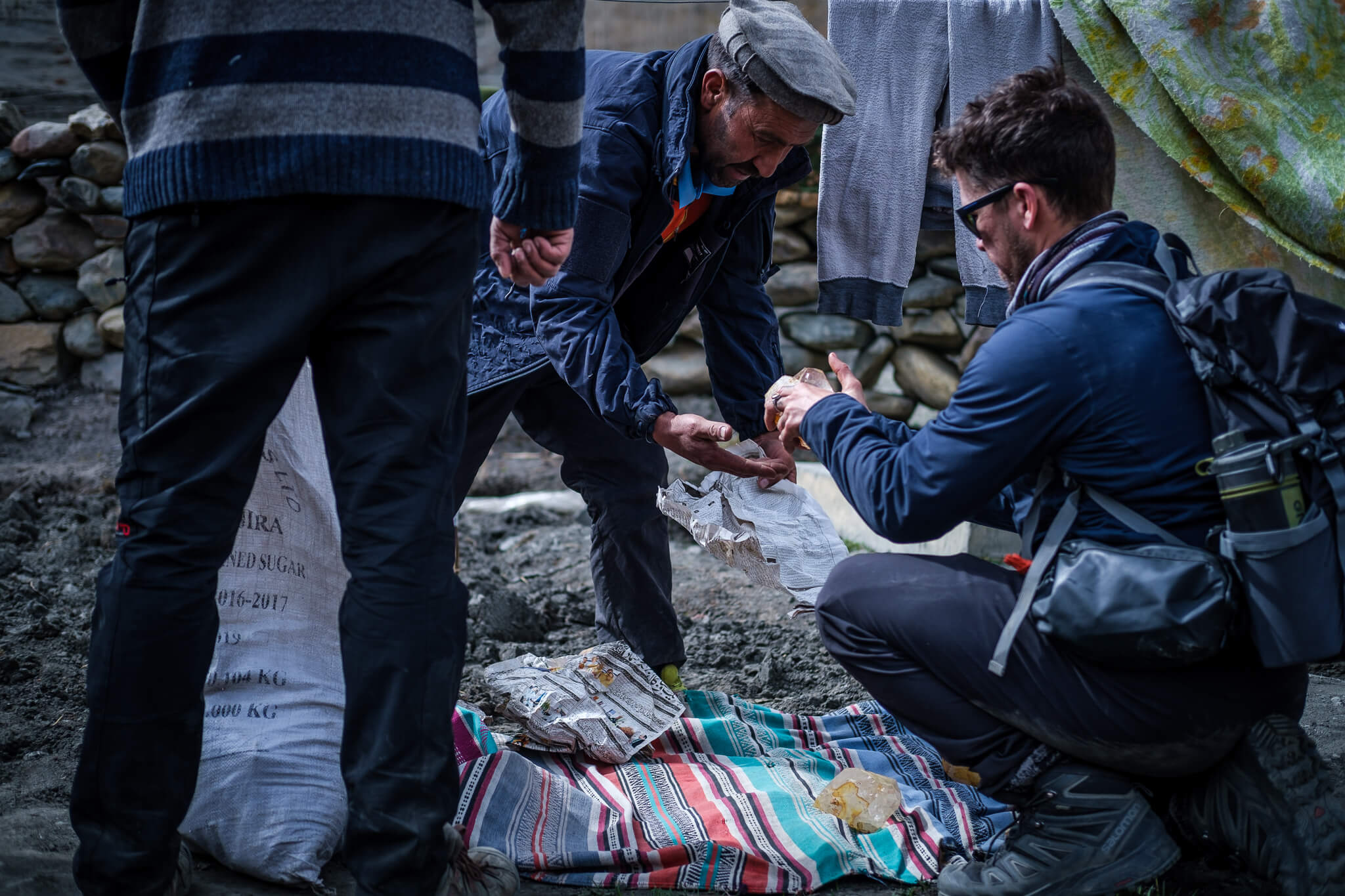
Like the rest of South Asia, haggling in shops is a part of Nepali culture, so don’t be afraid to practice your skills. Prices will be higher in super touristy areas compared to local spots. Of course, this applies to independent stalls and stores, not brand names or restaurants with fixed prices.
17. Get good travel insurance
Windy, half-made roads, the highest mountains on the planet, and a whole lotta’ altitude mean you definitely want to get travel insurance before heading to Nepal. Foreign-quality healthcare is NOT cheap.
Sort out your insurance before you go. There are several good options, but our overall pick is SafetyWing. Most of the Broke Backpacker team has used it at one point or another, and we’ve filed claims for rabies jabs in Bali, a hospital stay in Mexico, and a clinic visit for a stomach bug that wouldn’t quit. All paid out.
It’s month-to-month, no lock-in, no itinerary required, and you can buy it after you’ve already left. A little over $2 a day if you’re under 40.
New SafetyWing customers: use code BROKEBACKPACKER for 8 free weeks of electronics theft coverage. You have to scroll down and click the pink camera on their landing page to enter it, and you have to do it before creating your account.
18. Be prepared to pay for your visa on arrival
With the exception of SAARC member countries (Bangladesh, Bhutan, India, Maldives, Nepal, Pakistan, and Sri Lanka), all other nationalities have to pay for their visa on arrival.
The current rates are:
- 15 days =$30 USD
- 30 days = $50 USD
- 90 days = $125 USD
You’ll need to have USD with you to pay at the counter, which will then give you a receipt to go get your visa stamp.
19. Don’t be surprised if you want to extend your visa – here’s how:
We quickly realized we needed more than 30 days – if you plan to stay more than 60, you should absolutely go for the 90-day visa on arrival to save a bit of money. Nepal is very extension-friendly, and foreigners can stay in the country for up to 150 days in a single year.
You just need to go to the immigration office (you can pay in Nepali Rupees) with your passport, and you’ll be instructed to fill out a form on your phone before getting your stamp. Extensions cost $3/day with a mandatory minimum of 15 days, so $50 for an additional month. Obviously, it’s worth getting that month!
Final Thoughts on Nepal Travel Tips
Ahh, writing this really had me thinking about how much I NEED to return to Nepal. I guess that could be another tip – expect to want to come back before you even leave! It really has that effect, and there’s truly so much to explore beyond the basics.
The heavy trekking hitters – Everest Basecamp and Annapurna – are popular for a reason, but there are so many other options for hiking lovers. With roads like these, it really takes a while to explore, meaning you need patience (and time). But even if you’re not one for the trails, you can easily still fall in love with the many UNESCO sites in the Kathmandu Valley or the infinite remote villages that are harder to see for foreigners.
If you just want to chill and laze about in cute lakeside cafes – Pokhara’s got everything you need and more. …Never mind the infinite off-the-beaten-path options in the far west and eastern portions of the country!
I hope these Nepal travel tips have helped you out just a little. Now go and enjoy your trip, and don’t be surprised if you feel changed by the journey. This mountain kingdom does have the tendency to do that 😉

Photo: Ana Pereira