Australia is one of the most expensive countries you can pick for a long trip. You arrive on a working holiday visa with what feels like a decent bit of savings, then watch it vanish.
A dorm bed, a flat white, a couple of pints and a meal, and the day has cost a small fortune. There is a particular kind of stress in watching your balance quickly drop on the far side of the world, with no safety net and no quick way to top it up.
Most backpackers in Australia hit that wall and face the same choice: fly home, or find work.
I went with work. Seven jobs in twelve months.
It took me from coastal hostels to a pub 1,000km from the nearest city, from a removals crew in Perth to a cotton farm where I pulled hundred-hour weeks. Some of it was brutal. Most of it was unforgettable, the people especially.
This is how you can do the same.
Landing in Melbourne after six months of travelling around Southeast Asia, I was in for a rude awakening. Suddenly, after forgetting that budgets and cooking for yourself were a thing, I was slapped in the face with the reality of the cost of living down under. It was time to find a job, and quick!
How to Find Work in Australia
Almost none of my seven jobs came from a traditional job board. Here is what actually worked.
Facebook groups
There are national groups like Australia Backpackers *Current Year* (they update the year in their name, but it’s the same group), where people sell gear, ask questions and look for travel buddies, and crucially, backpackers post looking for work, and businesses post looking for workers.
Put up your own post: say who you are and sell yourself, and add a photo so it feels personal and stands out. The single best thing you can mention is a car. It lets you reach remote places that are desperate for staff and otherwise a nightmare to get to. Comment on other people’s posts too.
I commented on a farm job near Coffin Bay that already had loads of applications, mentioned the car, and had the owner on the phone by morning. If you don’t have one, ask around your hostel, or message someone who has a car about teaming up.
There are also regional groups like Perth, Australia Backpackers and Backpackers in Western Australia, if you want to get city or state specific. Be specific about what you bring: a car, a forklift ticket, an RSA, and the date you can start.
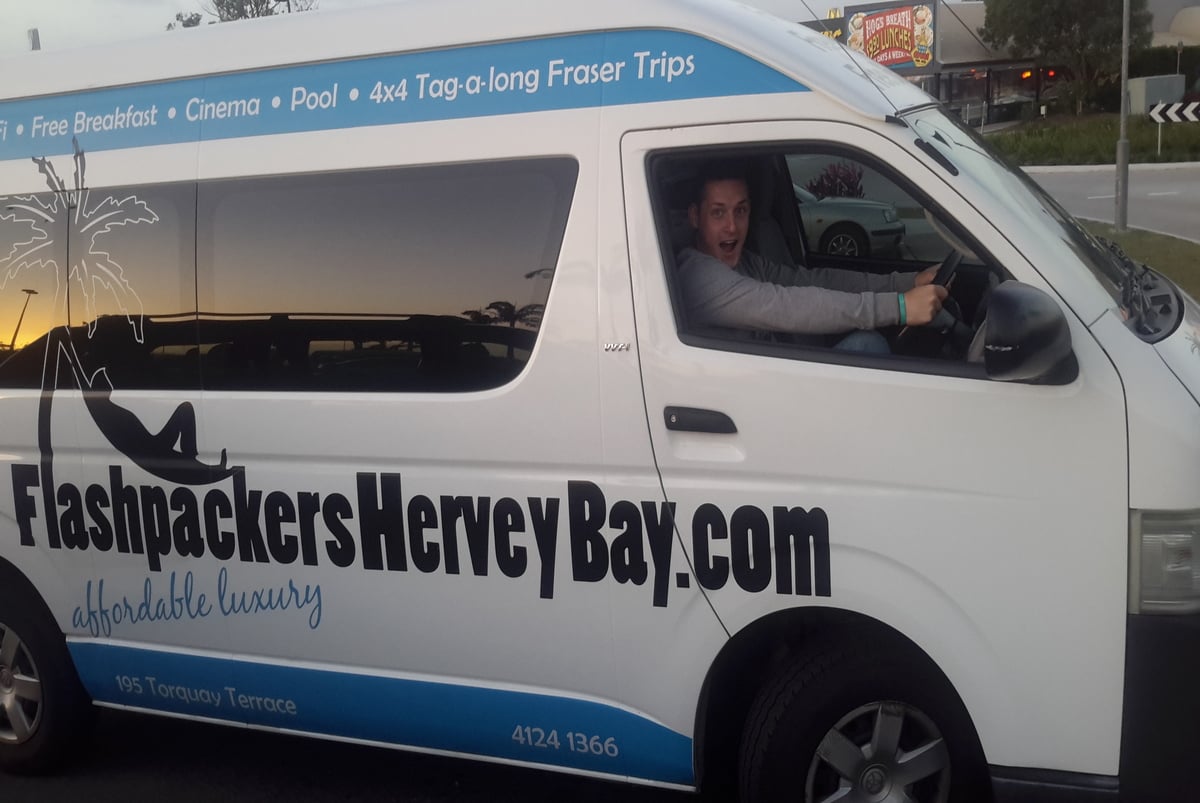
Photo: Tom Masters
The Broke Backpacker is supported by you. Clicking through our links may earn us a small affiliate commission, and that's what allows us to keep producing free content 🙂 Learn more.
Hostel networks
Some hostels in Australia are basically informal job exchanges, worth seeking out on purpose. Two of my jobs came through them. If a place is full of long-term workers rather than two-night tourists, you’re in the right spot. A lot of hostels also offer work for a room, a few hours a day in exchange for your bed, which is worth it if you want to stay somewhere a bit longer. You can always call ahead and ask.
Work exchange platforms
Different game from the paid work above. You work a few hours a day for a host, a hostel, farm, family or small business, in return for a free bed and usually meals. No wage, but your costs drop to almost nothing, so it suits you when you’re stretching your money rather than topping it up.
Each site charges a small yearly fee to message hosts.
- HelpX is the cheapest at around €20 for two years, and it’s strongest in Australia and New Zealand.
- Worldpackers (about US$49 a year) leans towards hostels and community projects and holds your hand the most, so it’s a good first go if you’re new to it.
- Workaway (around US$49 to US$59) is the biggest, with the widest spread of hosts and the most choice.
- WWOOF is for farms only and runs country by country, so WWOOF Australia (about AU$60 for the year) only gets you Australian farms. Good if Australia’s your main focus.
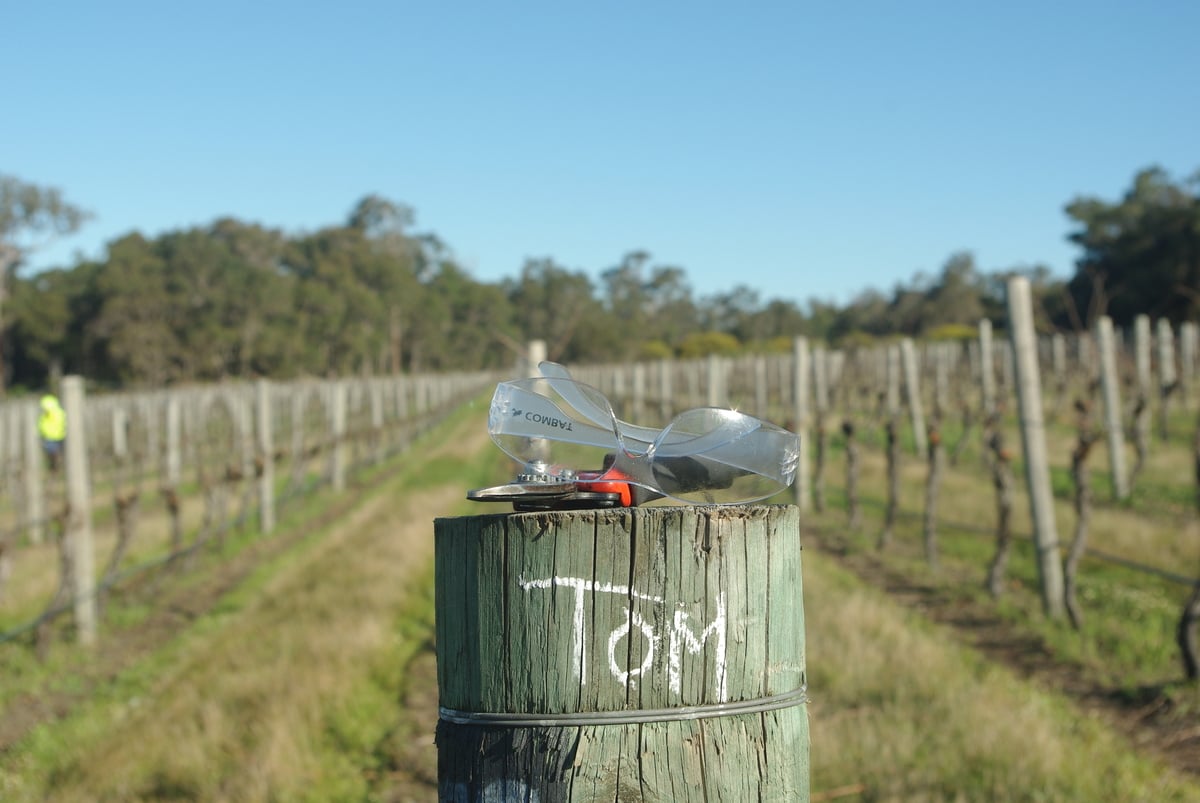
Photo: Tom Masters
Labour agencies
For actual paid work, you can register with a local labour agency, as I did in Margaret River. You sign up with them, and they send you off to various places to do various things. These jobs rarely pay well and can involve some backbreaking work, but they’re an option in areas where other work is hard to find.
Speak to people
Every one of my best jobs came from a conversation, not a click. The gas delivery came from a chat with a South African bloke in a bar. The Hervey Bay job came from a pizza night. The Perth job came from a night of goon and card games. Use the groups and the platforms, but the real opportunities show up when you put yourself in the room. The thing about solo travel in Australia is that you never really need to be alone if you put yourself out there.
Why having a car changes everything
And if you can afford it, buy a car. It won’t help in the cities, and it comes with costs you won’t expect. But for remote Australia, it changes everything. It let me sleep anywhere. It turned the stretches between work into the wildest of adventures.
I used the removals money to buy a cheap white Honda CRV off a backpacker who’d driven it across from Queensland. It had 150k on the clock and cost just short of $4k, some of which I’d get back when I sold it. I borrowed a bit from home to afford it. It came with a tent box on the roof, which meant I could sleep anywhere.
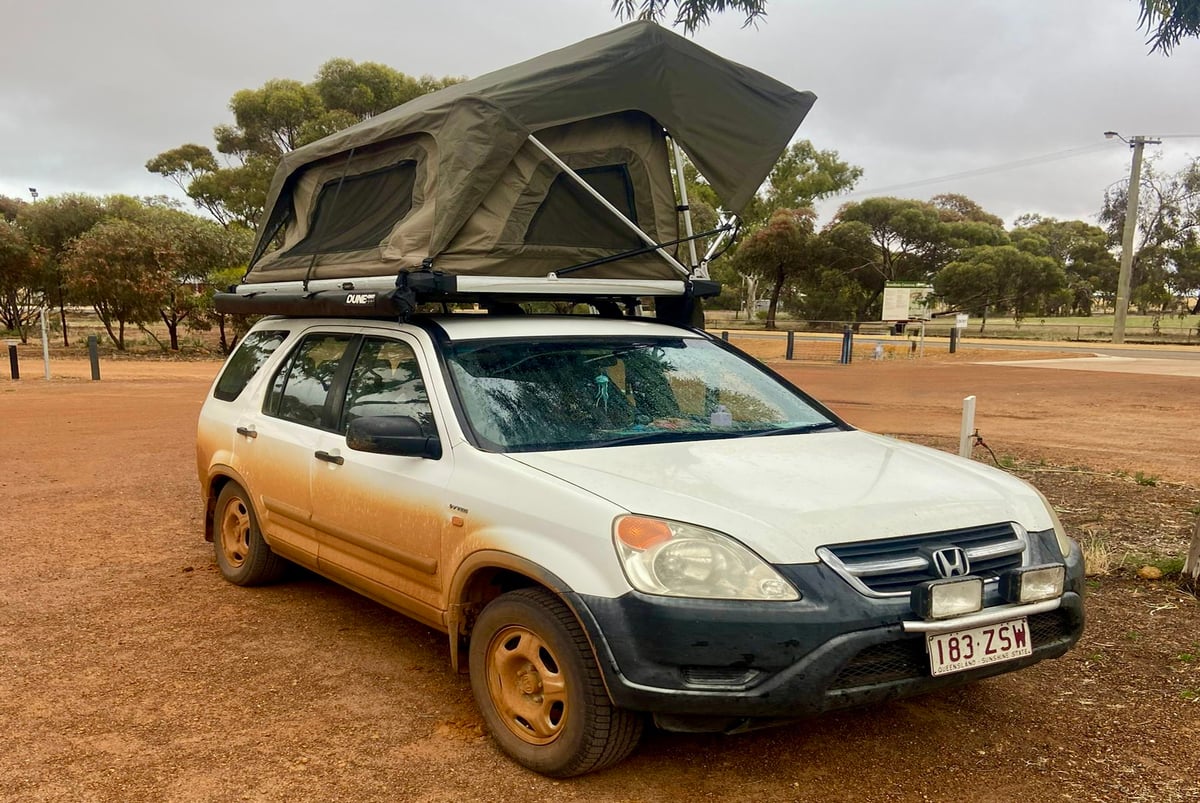
Photo: Tom Masters
How I Ended Up Working Seven Jobs in Australia
I landed in Melbourne after six months in Southeast Asia, where £200 a week covered everything without thinking about it. Anyone who’s done this trip knows what happens next. A $50 dorm bed. A $6 flat white. An $11 pint.
I based myself in a great hostel in Melbourne, a short walk from Southern Cross Station. I absolutely loved the city, but it ate through my savings at a pace that was genuinely alarming. After three weeks, I had a choice: fly home or start earning.
So I headed north.
Job 1: The Hostel Gig in Hervey Bay
I slumped off the Greyhound bus in Hervey Bay, the gateway to Fraser Island (now K’gari), and checked into Flashpackers hostel with very little left in the account.
The hostel here in Hervey Bay was putting on a pizza night, and not being in a position to turn down free food, I made my way to the common area. With a full belly, I got to socialising and ended up talking to a girl who worked there. She mentioned that she was leaving in a week, so I hopped straight into her grave and asked if she would put me forward for the role. The next morning, the job was mine.
The deal was simple. I covered the quiet hours while the full-time staff were away, and in return I got room, board and a small wage on top. It wasn’t much, but with no rent or food to cover, every penny I earned went straight into the travel fund.
This became my first lesson of finding work in Australia: not all jobs come from job boards.
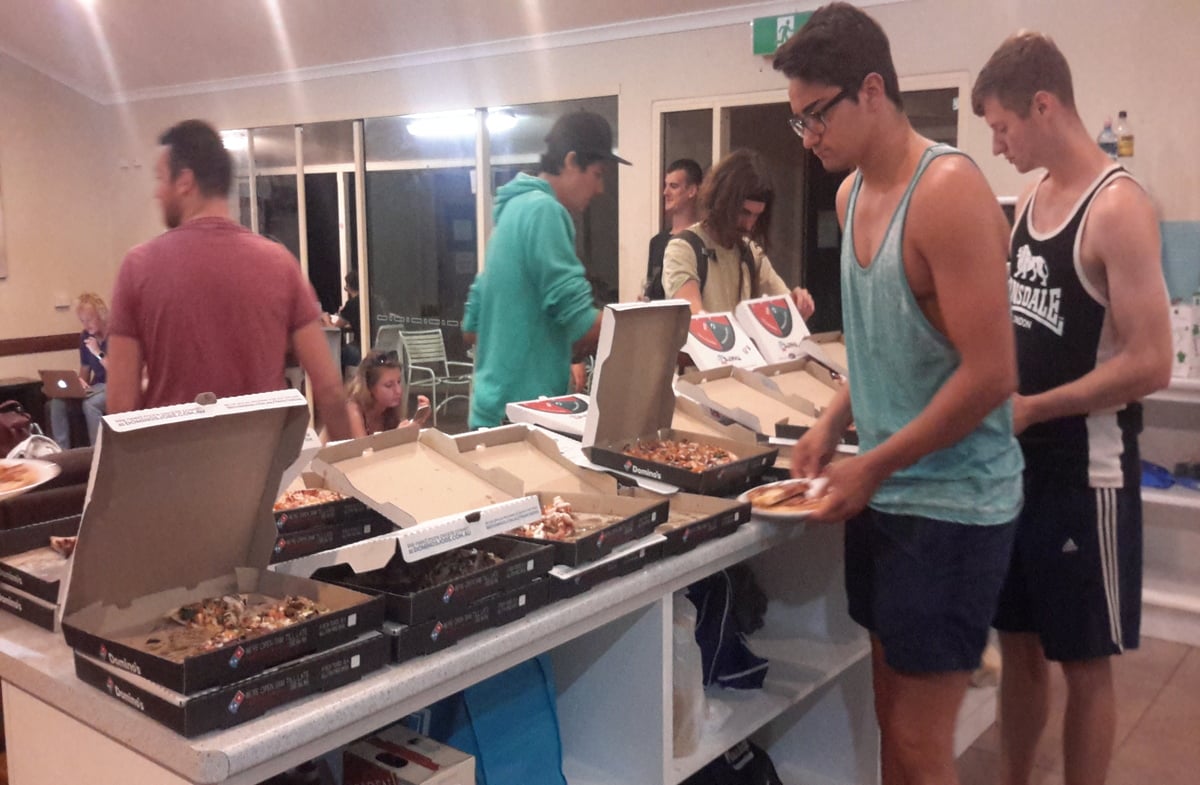
Photo: Tom Masters
Job 2: Wrapping Grapevines in Bundaberg
Selling tours at the hostel had its perks. The guides sorted out a free trip to Fraser Island on the way out. From there, I headed up the coast, stopping in Bundaberg for a few weeks, wrapping grapevines. I’d been drinking Bundaberg ginger beer my whole life, so I was overexcited to be there, but the work was brutal, and the pay was poor. I didn’t stay long.
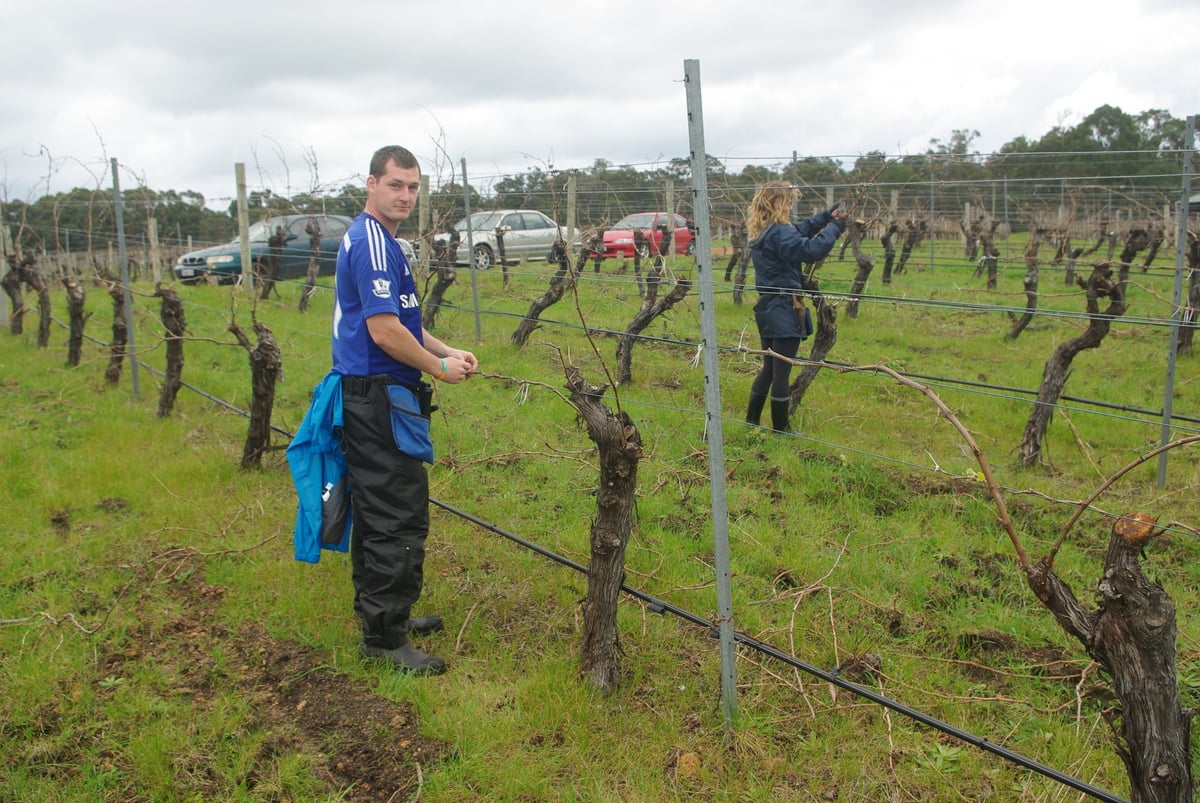
Photo: Tom Masters
Job 3: A Pub 1,000km From Cairns
By the time I reached Cairns, I needed money for a flight to Perth and a cushion for when I got there. I was staying at Gilligans hostel when one of the lads in my room and I put a post on the Australia Backpackers Facebook group: two backpackers, one car, looking for work.
By the next morning, we were on the phone with the owner of a pub and hotel about 1,000km inland. Two days later, after a mega 11-hour road trip and a night camping under the stars, we arrived.
We worked as all-rounders for about six weeks. Coffee hatch at 6 am, pulling schooners until midnight, filling in as chefs, and cleaning. The clientele was mainly locals with the particular character that comes from living somewhere that remote. Miners on fly-in-fly-out rosters passed through. The odd tourist who had ventured into the vast nothingness of non-coastal Australia.
It was one of the strangest six weeks of my life.
Afterwards, we drove back to Cairns and went our separate ways. That’s backpacker life. You can spend every day with someone for weeks, then suddenly never see them again.
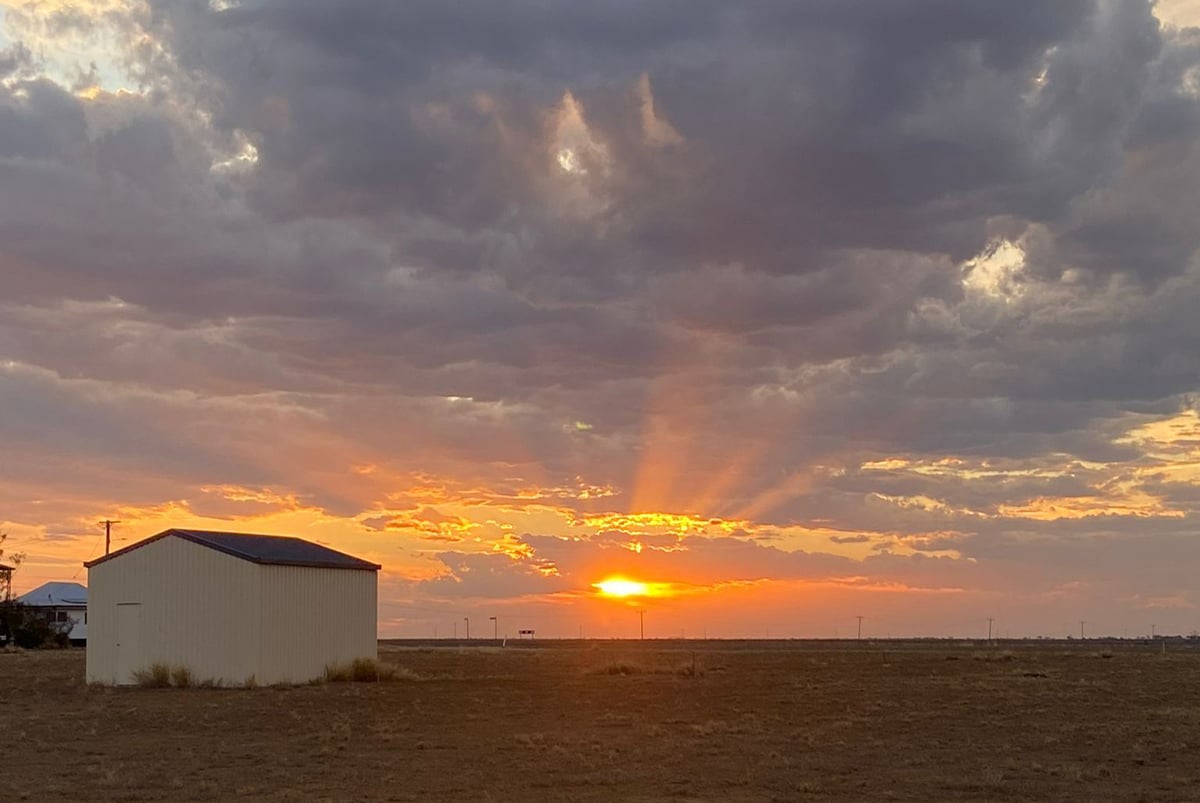
Photo: Tom Masters
Job 4: Furniture Removals in Perth
I flew to Perth to meet a mate from home who was already out there. He was staying at Beatty Lodge, a long-stay hostel where most of the backpackers had jobs around the city. The common room doubled as an informal jobs network; it was one of the best hostels in Perth for job finding.
Two German lads in our dorm were working for a removals company, and after a night of goon and card games, they agreed to see if they could get us in. We started the following Monday.
The work was physical, but it paid properly. We hauled sofas up apartment blocks with no lifts, wrestled fridges that weighed more than I did, and the odd piano that nobody wanted anything to do with. We broke a lot of things during our time in Perth!
We’d sold ourselves as experienced movers with the right licences for the trucks, which was generous, but somehow nobody seemed too concerned.
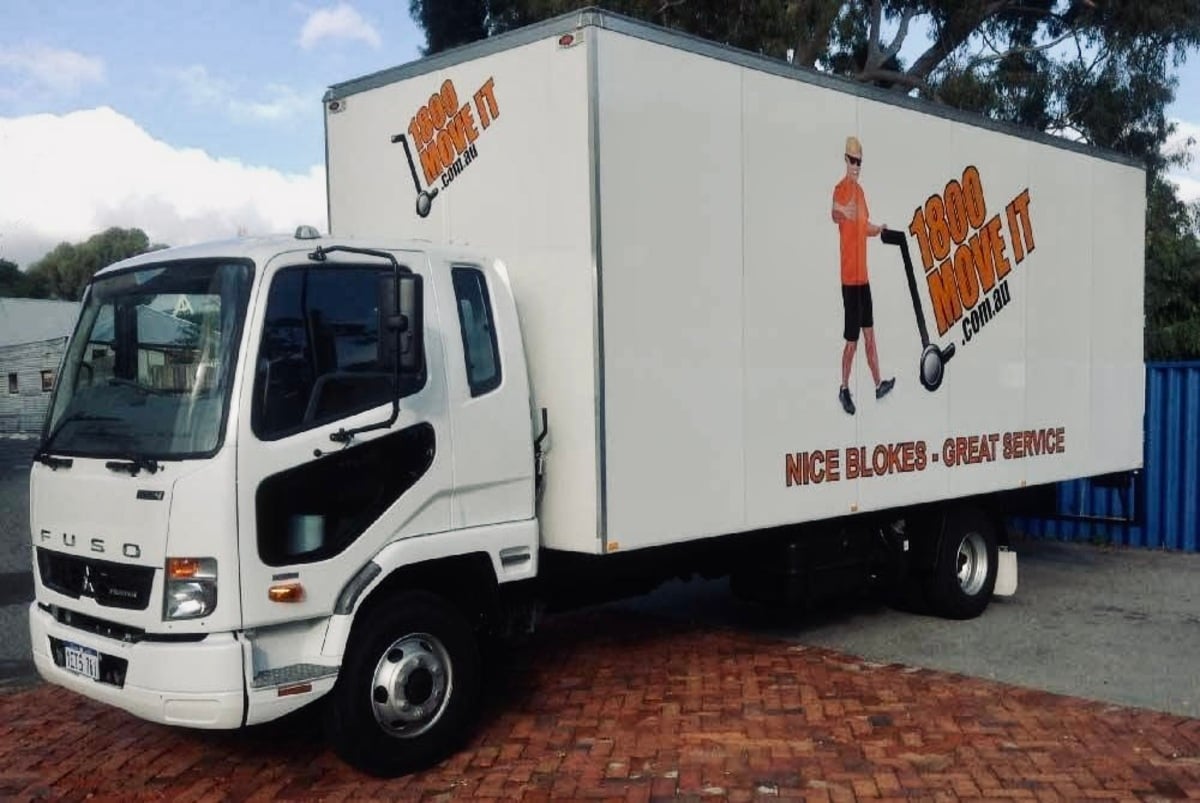
Photo: Tom Masters
Job 5: Farm Work in Margaret River
My mate and I drove south to Margaret River and picked up farm work through a local labour agency. Long hours, not much money. What’s new? But we were living in a tiny static caravan at the Margaret River Tourist Park on the edge of town, and honestly, that caravan is one of my favourite memories of the whole trip.
But the real find came through a night out.
We got talking to a South African guy at Settlers Tavern in town. He ran a small business supplying gas canisters to houses scattered across the outback. We left him our numbers, and a few days later, he texted asking if we wanted some part-time delivery work. We snapped his hand off…
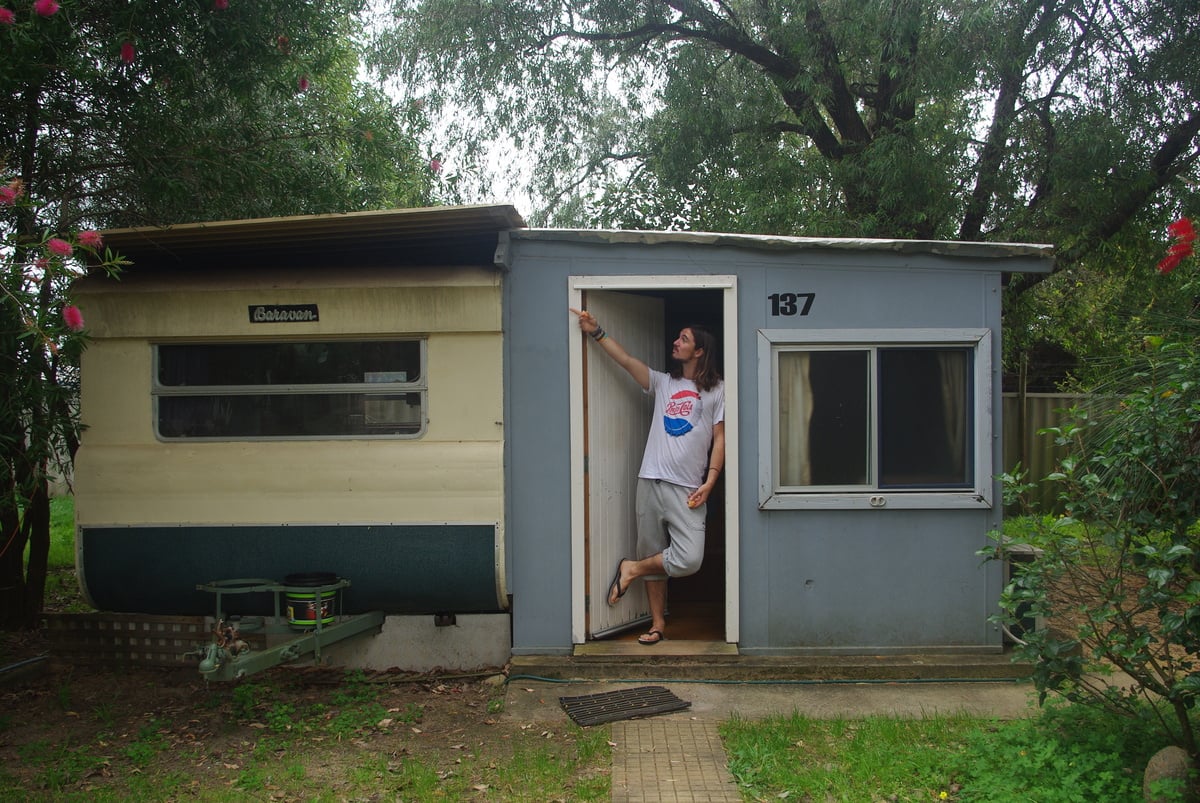
Photo: Tom Masters
Job 6: Delivering Gas Canisters in the Outback
Somewhere east of Margaret River, a long way from the last sealed road, my mate and I were delivering gas canisters to houses in places that most maps don’t bother with. We drove an old ute, once white but now stained the colour of every dirt road it had travelled.
At each stop, we’d swap empty canisters for full ones before heading off to the next property, leaving a cloud of dust hanging motionless in the desert air behind us.
We would drive to the yard, pick up a ute, load up with full canisters, then head out for hours into the middle of nowhere, swapping full ones for empties. The pay was per drop-off. Some days you’d get loads of drops in one place and make great money; others you’d drive two hours down a dirt track for a single stop!
But sitting with your best mate in a truck all day, windows down, no phone signal, music on, nothing but dry scrub and red dirt and not another car on the road for hours. That was one of the best jobs I’ve ever had.
After Margs, my mate headed up to the Northern Territory, and I carried on south alone.
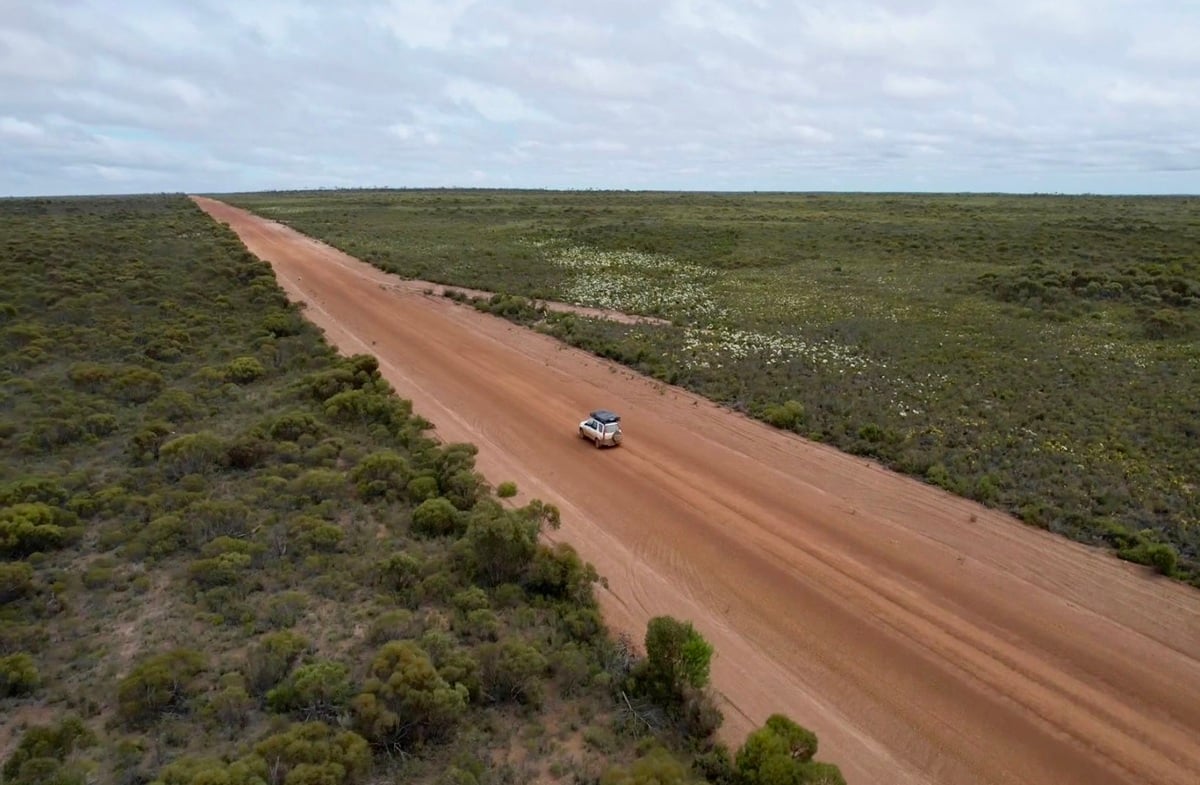
Photo: Tom Masters
Job 7: The Farm at the End of the Road in Trangie
I drove the south coast with the tent box and not much of a plan, getting as far as Coffin Bay before the money started running low again. Back on the Australia Backpackers Facebook group, I spotted a farm job nearly 1,500km away that already had plenty of applicants. I almost didn’t bother applying, but I mentioned I had a car. By the next morning, the owner was on the phone. They needed someone urgently, and I set off straight away.
The drive to Trangie, inland New South Wales, took 16 exhausting hours. The aircon gave out somewhere along the way. I arrived cooked!
The farm was the size of a small English city. I’m not exaggerating. I was driving huge vehicles, mowing fields, planting, ploughing, cutting down trees, fixing machinery, and building outhouses.
Every day was different, and every day was long. Some days, I was working close to 18 hours. Hundred-hour weeks were normal. It was exhausting, and on my own out there, it got lonely.
But the job was insane.
One day, I was out burning. Sitting on the back of a tractor-trailer with a blowtorch, setting fire to old crops to prep the ground for the next season. As flames rolled across the paddocks, two crop-dusting planes roared overhead so low I could feel the noise in my chest. Fire on one side, planes on the other. It felt like something out of an action film.
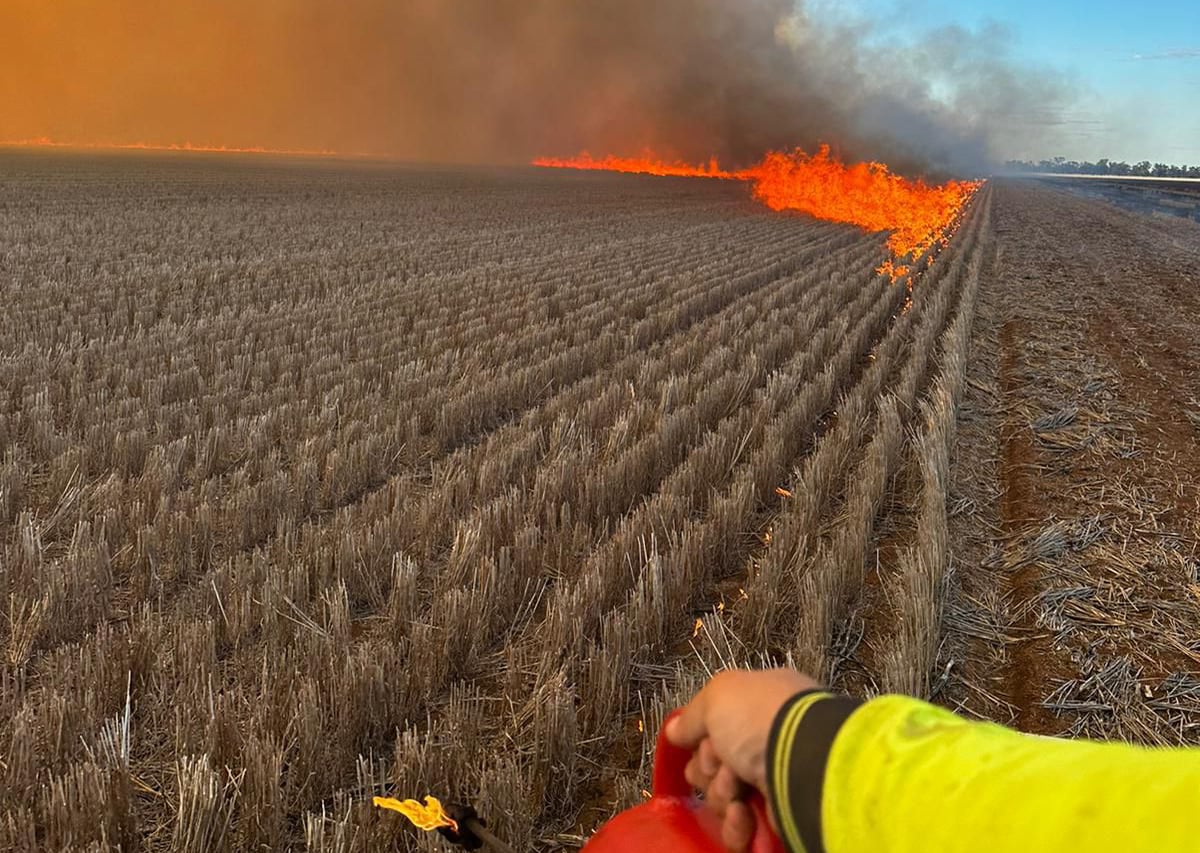
Photo: Tom Masters
The Work is the Trip
After Trangie, I headed back to the East Coast, sold the car, spent the last of the money, and flew home. Twelve months. Seven jobs. Thousands of kilometres. But the experience of a lifetime.
If I could go back and give myself one piece of advice on that first day in Melbourne, staring at an $11 schooner, it would be this: the work is the trip. Not something you do between the good bits. The good bits happen because of the work, not in spite of it.
What I’d been doing wrong when I first arrived, I think, was trying to do Southeast Asia in a country that wasn’t Southeast Asia. Australia doesn’t work like that, and it punishes you for trying. But slow it down, and something else opens up.
I hated most of the work while I was doing it. The hours were long, and it was physical in a way I wasn’t used to, and there were days when I genuinely couldn’t explain why I was there!
But that’s not the version that stayed with me. What stayed was the people on the same farm doing the same thing, and the particular quality of a beer when you’ve actually earned it, and the feeling of checking your balance on a Saturday morning and knowing you can keep going.
What I’d needed, and what nobody warns you about on the flight over, was about two weeks of genuine discomfort before my brain recalibrated. The reset hurts. The first week, in particular, is a specific kind of demoralisation.
But it passes. And what’s on the other side of it is a completely different kind of travelling that is, in its own way, just as good.
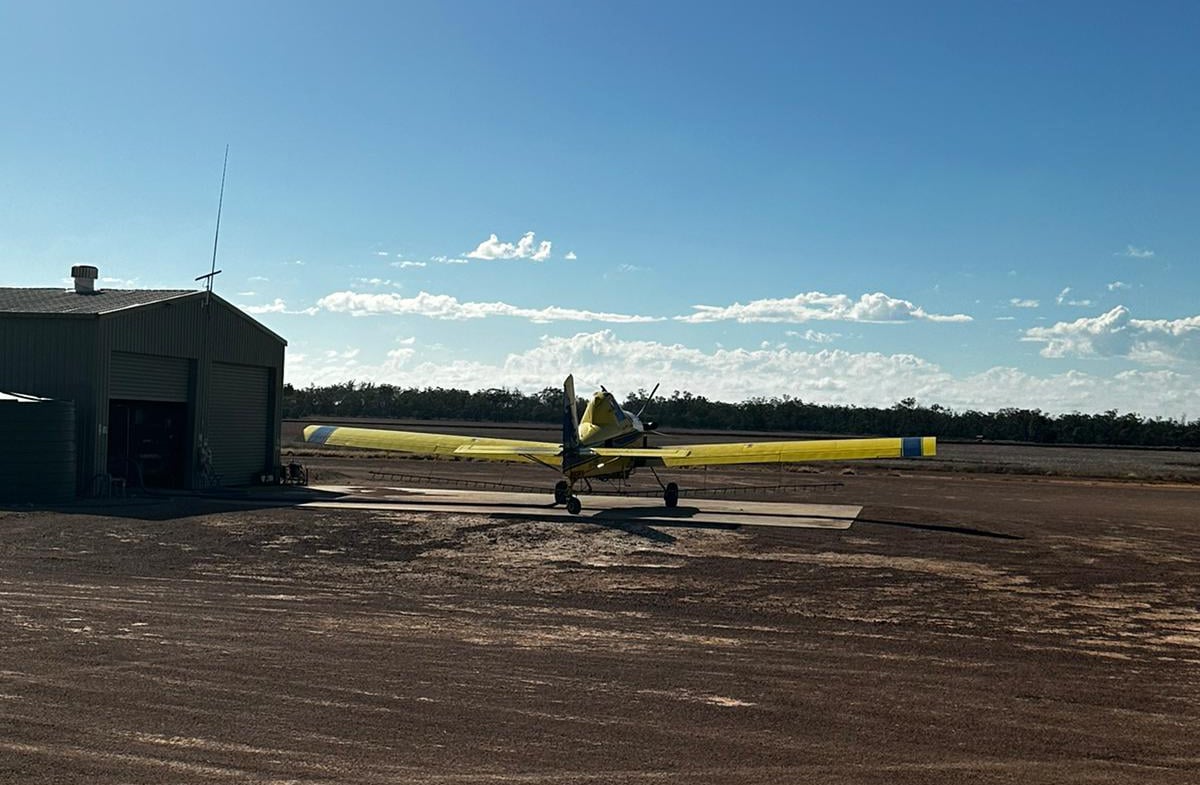
Photo: Tom Masters





Loved this! I went in 2019 and ended up doing farm work for a while. At the end of the season we went around on quads burning all the old cotton plants. It felt so wrong but honestly it was an absolute blast. And I’m totally with you on renting a car. My trip would not have been the same without one. It’s the difference between seeing the same Australia as everyone else and having a completely different experience.