Sri Lanka is a sheet of bubble wrap.
This past month, I’ve been wracking my brain for the perfect analogy for the backpacking Sri Lanka experience. Just now, it came to me (conveniently, as I was staring at a super-dope mountain).
Dotted around this small, beautiful island are the tourist bubbles: the well-worn stops on the backpacking trail. And everything in between? That’s the real Sri Lanka.
Both are worth your time. The bubbles have earned their place on the itinerary, and this guide covers them honestly. But it also covers what most travellers skip: the spaces between the obvious stops, where the island gets interesting. Places the fruit-shirt clad backpacker-men dare not tread.
For a compact island, Sri Lanka packs in an almost unfair amount: surf towns and empty beaches, misty hill country, crumbling ancient cities, leopards, elephants, train rides through tea plantations, and some of the best cheap food in Asia. It’s affordable enough to stretch a budget, easy enough to move around, and social enough that you’ll rarely feel like you’re travelling alone.
This guide covers the full picture: routes, costs, transport, where to stay, safety, and how to get beyond the obvious stops. Honest takes only. If you’re after a listicle of Instagrammable viewpoints, this isn’t it.
Let’s pop right into it.
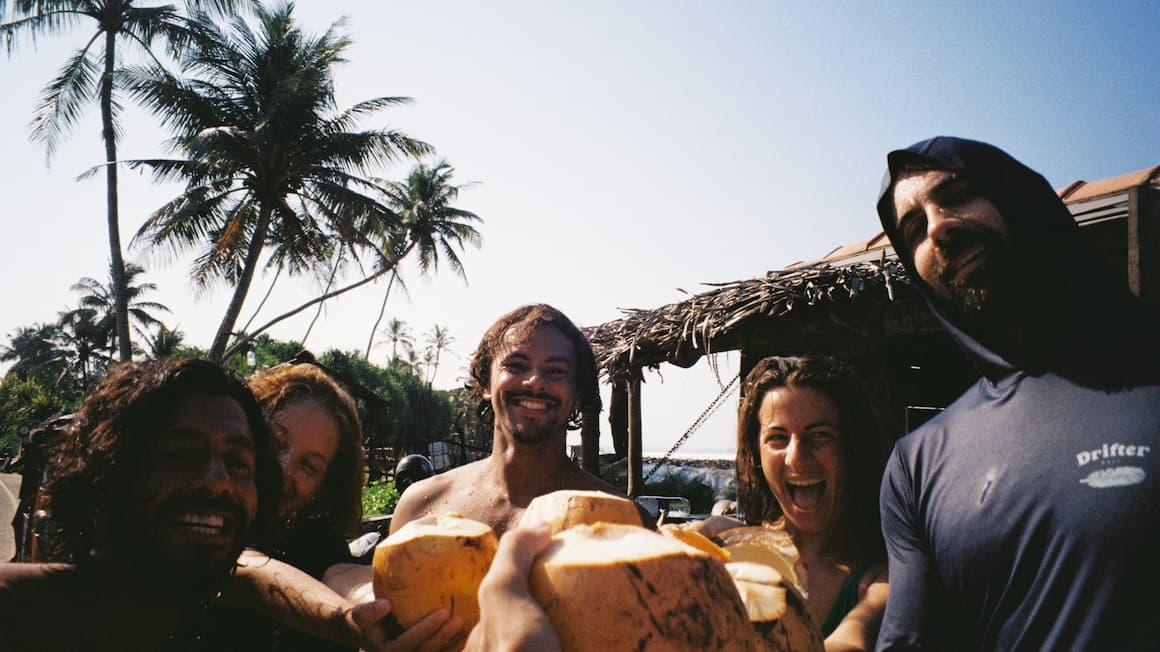
Photo: @rizwaandharsey
The Broke Backpacker is supported by you. Clicking through our links may earn us a small affiliate commission, and that's what allows us to keep producing free content 🙂 Learn more.
Why Go Backpacking in Sri Lanka?
Let’s keep to this Sri Lanka is bubble wrap analogy. What’s something pretty much universally agreed on about bubble wrap?
That it’s fucking awesome!
How many hours have you spent red-eye blazed and playing with bubble wrap? (I could have written a baroque opera about smoking joints during that time.)
There are no shortages of truly beautiful places in Sri Lanka – and there are more than enough things to do (provided you like the beach). A long, vibrant, (and violent) history exists in Sri Lanka and backpacking through it very much retains the small island, ‘everyone knows everyone’ feeling (despite having a population of 20+ million).
It’s a South Asia-lite experience. It carries the cultural intensity, the history, the food, the warmth, and the occasional boundary-crossing chaos that makes the region so compelling, but at a slightly lower volume than, say, India. Still overwhelming at times, still capable of throwing you completely off script, but rarely in ways that aren’t, in retrospect, a blast.
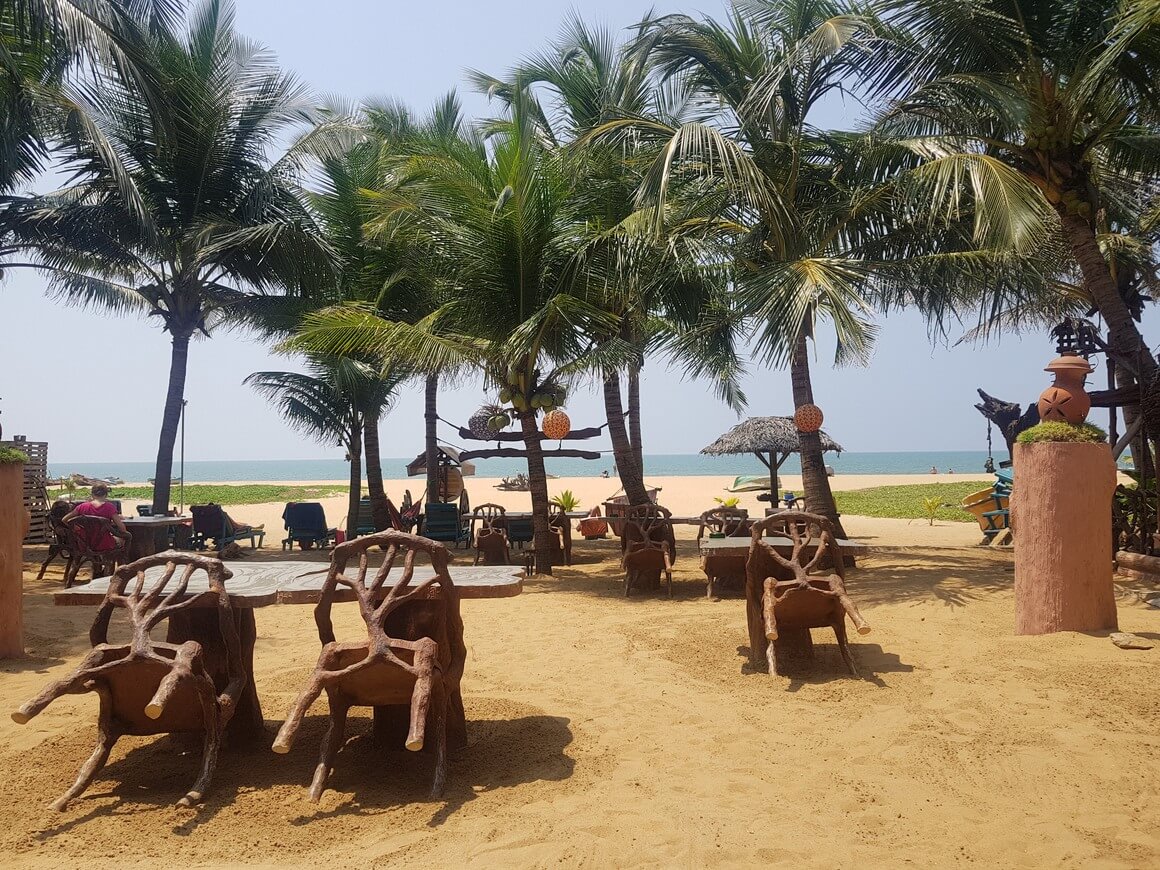
Photo: @Lauramcblonde
Sri Lanka’s tourism sector is fairly set and the stops on the typical tour of the island are pretty well-tread: they’re well-developed and already come with expectations of what a tourist wants. The end result is that visiting Sri Lanka’s typical travel guide locales feels, well, like being in a bubble.
A shelter from the big, scary South Asia outside.
But that Sri Lankan-brand South Asian yumminess between the bubbles? It’s just as delicious as it’s always been! Once you step outside the bubble, you’ll find a country chock full of everything backpacking is supposed to be about: good food, good people, good vibes, and good views.
All in all, it’s still South Asia! Many people I meet backpacking in Sri Lanka – particularly those who are fresher to the game – can still find it overwhelming. Expect uncomfortable stares, moments of utter confusion, and personal boundaries occasionally being crossed.
There will be misadventures and mishaps. But my God, it’s gonna be fun.
- Best Travel Itineraries for Backpacking Sri Lanka
- Best Places to Visit in Sri Lanka
- Top Things to Do in Sri Lanka
- Backpacker Accommodation in Sri Lanka
- Sri Lanka Backpacking Costs
- Best Time to Travel Sri Lanka
- Staying Safe in Sri Lanka
- How to Get into Sri Lanka
- How to Get Around Sri Lanka
- What’s New for Backpacking Sri Lanka in 2026?
- Working in Sri Lanka
- Sri Lankan Culture
- What to Eat in Sri Lanka
- A Brief History of Sri Lanka
- Before You Backpack Sri Lanka: Final Tips
Best Travel Itineraries for Backpacking Sri Lanka
Before you start plotting routes, one thing shapes every Sri Lanka itinerary more than anything else: the monsoon. Get this wrong and you’ll spend your beach days in horizontal rain.
As a rough guide: the south coast is at its best from November to March, the east coast comes into its golden season from April to September, and October through early November is unpredictable island-wide. Neither coast is off-limits out of season, but it’s worth knowing which way the weather is running before you commit to a route.
With that sorted, here’s how most people structure a trip.
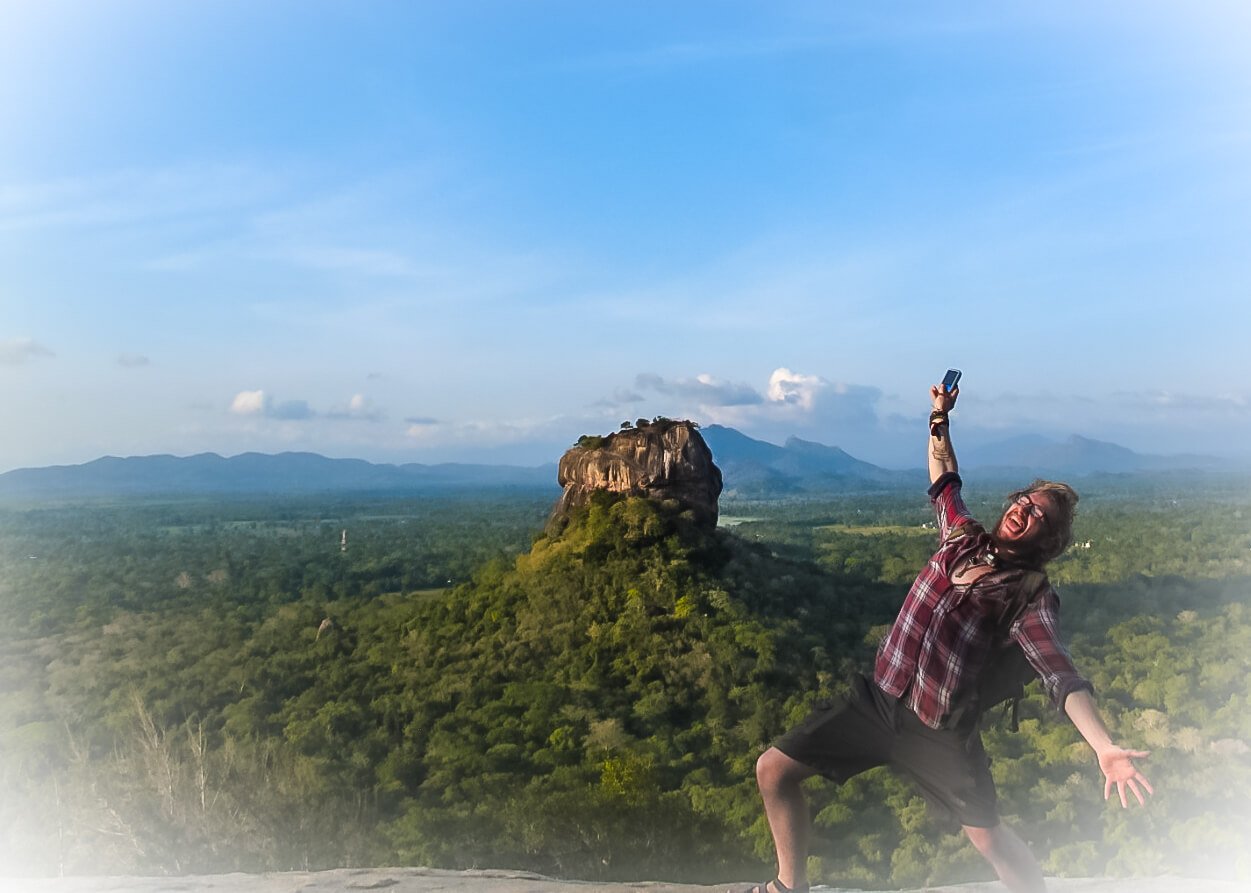
Photo: @furysuri
2-3 Week Travel Itinerary for Sri Lanka: The Maha Monsoon and the South Coast
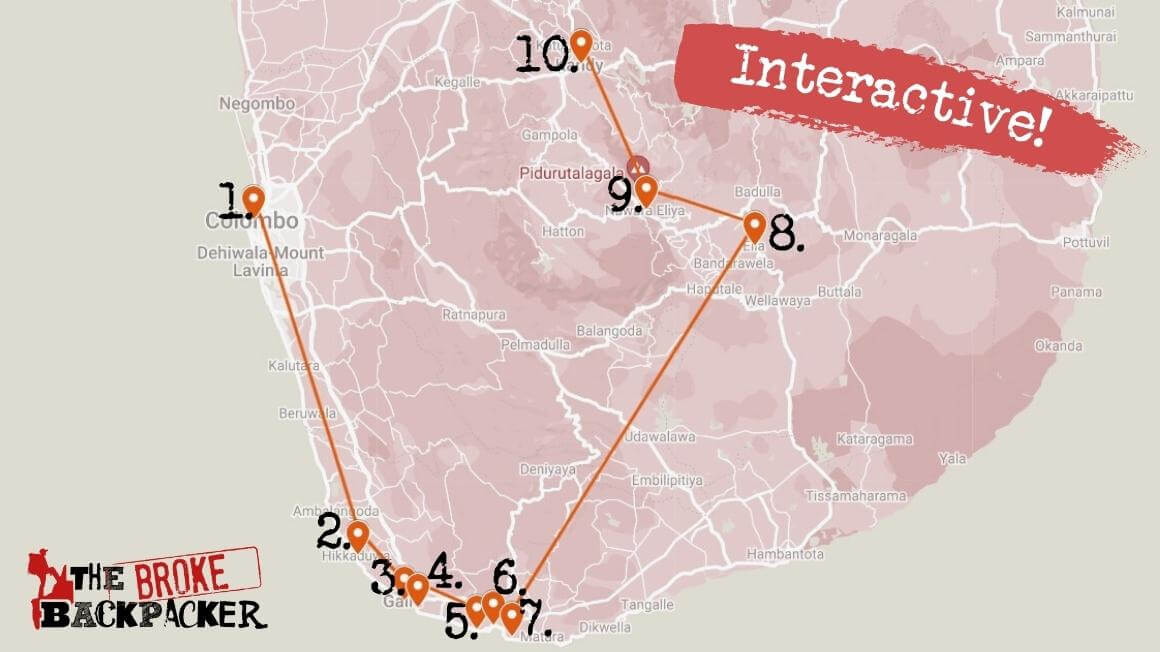
- Best for: First-timers, beach lovers, surfers, social hostel scene
- Suggested route: Negombo – Hikkaduwa – Galle – Unawatuna – Midigama/Weligama – Mirissa – Ella – Nuwara Eliya – Kandy
- Total time: 2-3 weeks
- Transit intensity: Low to moderate
- Best season: November to March
- Budget level: Budget to mid-range
- Vibe: Beach days, surf towns, hill country send-off
This is the classic first-timer route, and for good reason. It’s a ridiculously easy route to follow – courtesy of Sri Lanka’s grungy yet more-than-capable public transport. The south coast is well set up for backpackers and it strings together beaches, surf, colonial architecture, and hill country without asking too much of your logistics brain.
You can check the ‘Best Time to Visit Sri Lanka’ section for more deetz, but there are two distinct monsoon seasons in Sri Lanka that create two distinct tour itineraries. When Maha Monsoon is in, head south.
Starting out: Colombo and Negombo
Flying into Bandaranaike International Airport, you’ve got two options. Colombo is worth a day if you want to ease in gently, but it’s not essential. If you’re arriving late or just want to get moving, stay in Mt Lavinia, a beach suburb just south of the city, or skip straight to Negombo, which sits close to the airport and makes a relaxed first night before heading south.
The south coast
Hikkaduwa is the traditional first stop: a proper beach town, reasonable surf, and a reef worth snorkelling. From there, the coast opens up into a string of towns each with a slightly different character. Rather than rushing all of them, pick two or three that match what you’re after. The great thing about the south coast is that you can choose one or two bases and explore the rest via tuktuk or your own two wheels. Not a lot of moving is required here!
A unique point of interest in Sri Lanka is Galle. The Dutch fort, colonial architecture, and cafe-lined streets make it a short cultural breather from the beach circuit. A day or two is enough.
Further along: Unawatuna is social and accessible, Midigama is quieter and better for intermediate surfers, and Weligama is the go-to for beginners. Mirissa is the south’s backpacker core, with tons of beaches, whale watching in season, and a strong yoga retreat scene if that’s your thing.
Wait, what’s that? We’re leaving the beach now? Yep, we’re going to the mountains.
Into the hills
The next big stop (and one of my personal highlights of Sri Lanka) is Ella and the hill country. I saved here for last because, if you’re anything like me, mountains help you decompress. It’s a good send-off to Sri Lanka too. Ella is the centrepiece: small, walkable, and genuinely beautiful, with enough cafes, hikes, and viewpoints to justify slowing down for a few days. Nearby hill country villages are worth the detour if you want to step outside the backpacker bubble.
From Ella, catch the famous Kandy to Ella train (making a stopover in Nuwara Eliya to break up the ride if there’s time). Maybe you won’t love Kandy but it’s better than Colombo. Use Kandy primarily as a transport and cultural stop: the Temple of the Tooth, a day spent wandering, and then onward.
2-3 Week Travel Itinerary for Sri Lanka: The Yala Monsoon, the East Coast, and the Middle
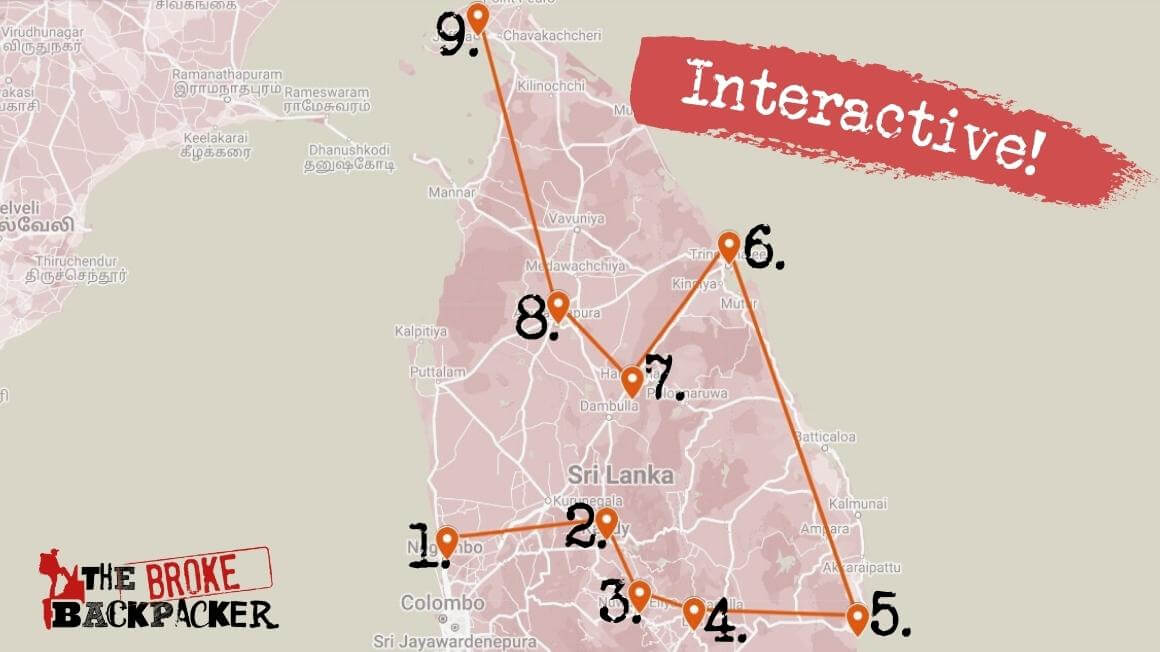
- Best for: Travellers visiting during the south-west monsoon, or anyone after a less obvious route
- Suggested route: Negombo – Kandy – Nuwara Eliya – Ella – Arugam Bay – Trincomalee – Sigiriya – Anuradhapura – Jaffna
- Total time: 2-3 weeks
- Transit intensity: Moderate to high
- Best season: April to September
- Budget level: Budget to mid-range
- Vibe: Surf, history, quiet beaches, and a genuinely different side of the island
When the south-west monsoon rolls in and makes a mess of the south coast, head east and north instead. This route is less trodden than the south coast circuit, which is either a selling point or a warning depending on your tolerance for slower transport and fewer backpacker amenities.
Starting out: Negombo and Kandy
Same entry point as the south coast route: Negombo makes a relaxed first night near the airport before you get moving. From there, head straight to Kandy. Kandy isn’t mindblowing but the route from Kandy is. You’ve probably already guessed what comes next: the train to Ella! Again, Nuwara Eliya makes a good stop on the way.
Ella and the hill country
Ella is one of the coolest places to stay in Sri Lanka. Well, not in Ella – the surrounding area – but we’ll get to that…
The east coast
If you came to Sri Lanka for the beaches, parties, and surfing, go to Arugam Bay. Give yourself enough time to get stuck for a bit – just in case.
The coast north of Arugam Bay is sparse until Trincomalee, which offers a quieter, more low-key experience with good snorkelling and diving but no surf, and prices that run slightly higher than the south.
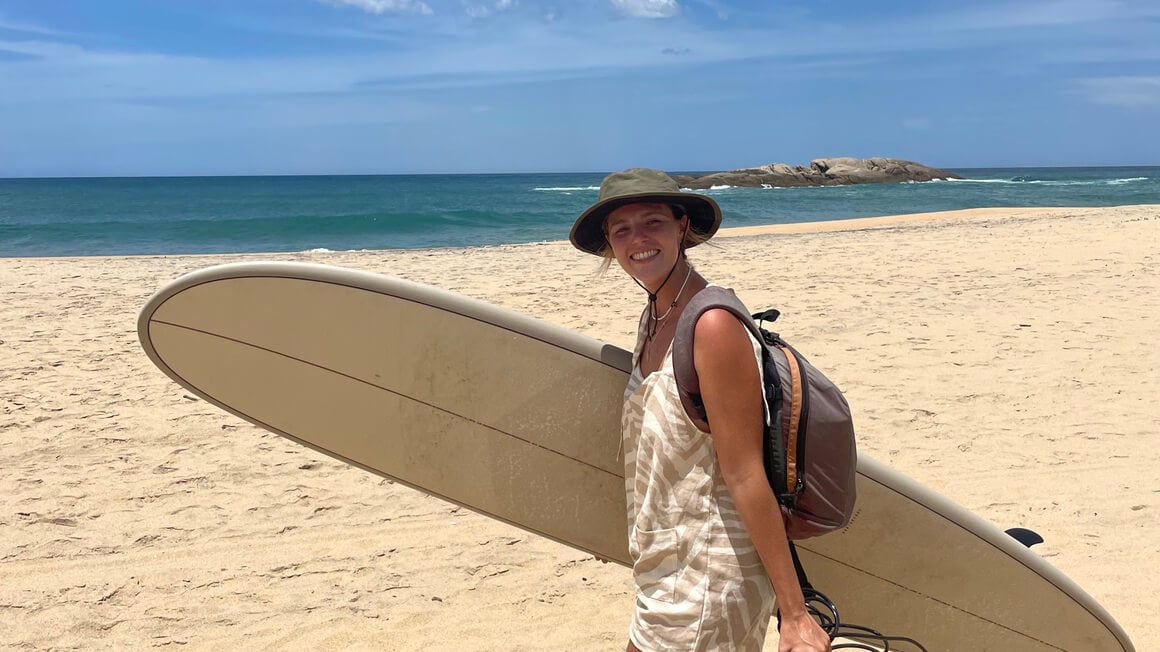
Photo: @danielle_wyatt
Worth knowing: transport on the east coast requires more patience than the south. Connections are less frequent, journey times can be longer than the map suggests, and things run on their own schedule. Build in buffer time and it’s fine. Try to rush it and it isn’t.
The Cultural Triangle and the north
From Trincomalee, head inland to Sigiriya, where the Lion’s Rock fortress is one of Sri Lanka’s genuinely unmissable sights. Then north to Anuradhapura, an ancient city built around the sacred Bo tree said to be where the Buddha received enlightenment. It’s a significant site by any measure, and worth more than a passing visit.
Jaffna is the final stop and the most distinct. The Tamil-influenced culture, food, and atmosphere make it feel meaningfully different from the rest of the island. Up here you’ll find a different side of Sri Lanka and a deeper insight into Sri Lanka’s history. When it’s time to call it quits, the train runs all the way back to (near) the airport.
1-Month+ Travel Itinerary for Sri Lanka: I Eat Monsoons for Breakfast
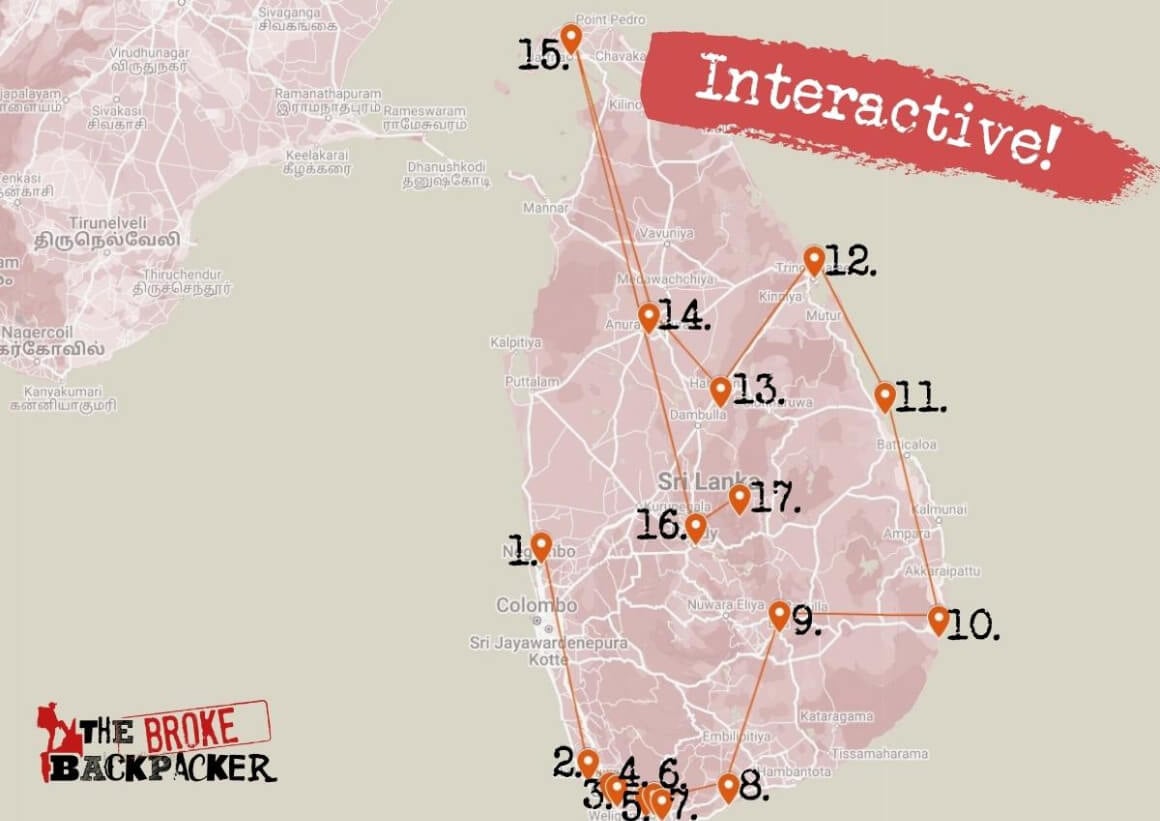
- Best for: Slower travellers who want the full picture: beaches, mountains, culture, and the north
- Suggested route: Negombo – South Coast – Tangalle – Ella – Arugam Bay – Pasikuda – Trincomalee – Sigiriya – Anuradhapura – Jaffna – Kandy – Knuckles Range/Meemure – Ella or Colombo exit
- Total time: 1 month+
- Transit intensity: Moderate, with long gaps if you slow down properly
- Best season: Whenever, but be prepared to be flexible with the route if the rain is killing your vibe
- Budget level: Budget to mid-range
- Vibe: Full circuit, slow travel, off-the-beaten-track detours, no rushing
Got a month and zero fucks to give about the rain? You’re my kind of traveller.
Here’s one last itinerary for Sri Lanka – something a bit jackfruit-ier to sink your teeth into. All this itinerary really does is combine the two previous routes into a full circuit. The trick isn’t doing everything, it’s knowing what to skip. Rush the south coast and you’ll hit beach fatigue before you’ve even made it east. Pick two or three towns that suit you and move on with a clear conscience.
The south coast
Start in Negombo and stay a few days if you like before you head south, following the south coast route but slow it real down. Tangalle is a nice bonus stop, with quieter beaches and a more relaxed pace than Mirissa or Unawatuna. It’s a good place to decompress before the hill country.
Ella and the east
Next, Ella. Hang around if you like or move on because you can always come back. Then east: Arugam Bay, Pasikuda, Trincomalee, and the Cultural Triangle. The east coast rewards patience and punishes anyone trying to rush connections, so build in buffer time and treat any delays as unplanned rest days.
The north and back
Jaffna, then the train to Kandy. This is where the circuit gets interesting. Close to Kandy is the Knuckles Mountain Range, and, oh boy, it’s a goodun. If you’re after hiking in Sri Lanka, it’s the place to go. If hiking isn’t your thing, there’s a place you should go to in the Knuckles Range to really burst the bubble: Meemure village.
When Meemure is all said and done, catch the train: Kandy to Ella. Back to sweet, sticky, and sublime Ella. Go and watch the mountains until it’s time to leave. Yes, there is a direct bus to Colombo from right outside.
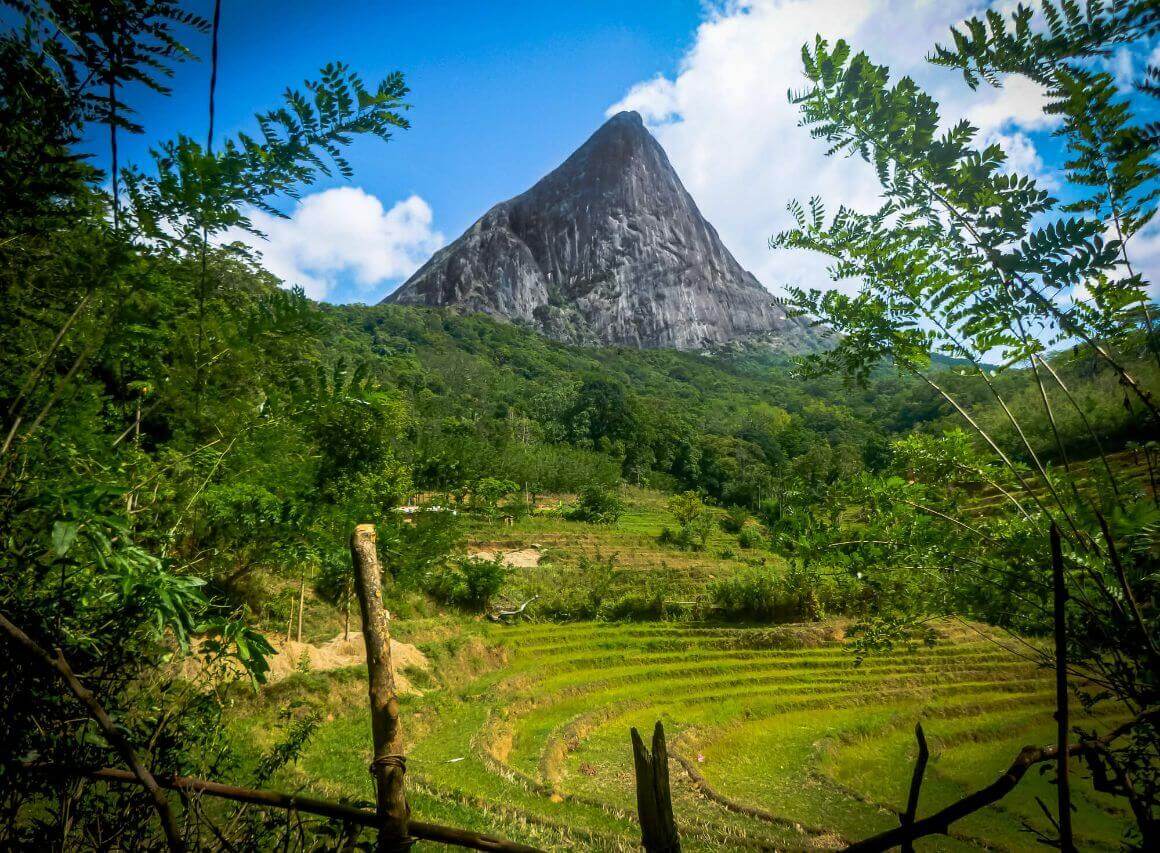
Photo: @themanwiththetinyguitar
Best Places to Visit in Sri Lanka
The destinations below mix the well-worn backpacker bases with places that give a broader view of the island. Some you’ll find on every Sri Lanka itinerary. Others take a bit more intention to reach, and are better for it.
These beautiful places in Sri Lanka are split neatly into four areas:
- The south coast has the most developed tourist infrastructure, year-round swell, and the highest concentration of backpacker hostels and beach towns.
- The east coast offers a similar beach and surf scene but fewer destinations, quieter stretches, and a less polished setup overall.
- The Cultural Triangle is for the cultural goodies: ruins, temples, monuments… Asia stuff! They’re sacred places for the locals; like a smoothie bowl and yoga beach shacks for tourists.
- The hill country is pure yum. Mountains, tea plantations, train rides, and a deep exhale wrapped up into one region.
- The north is a different feeling altogether: Tamil-influenced, historically complex, and well off the standard backpacker trail.
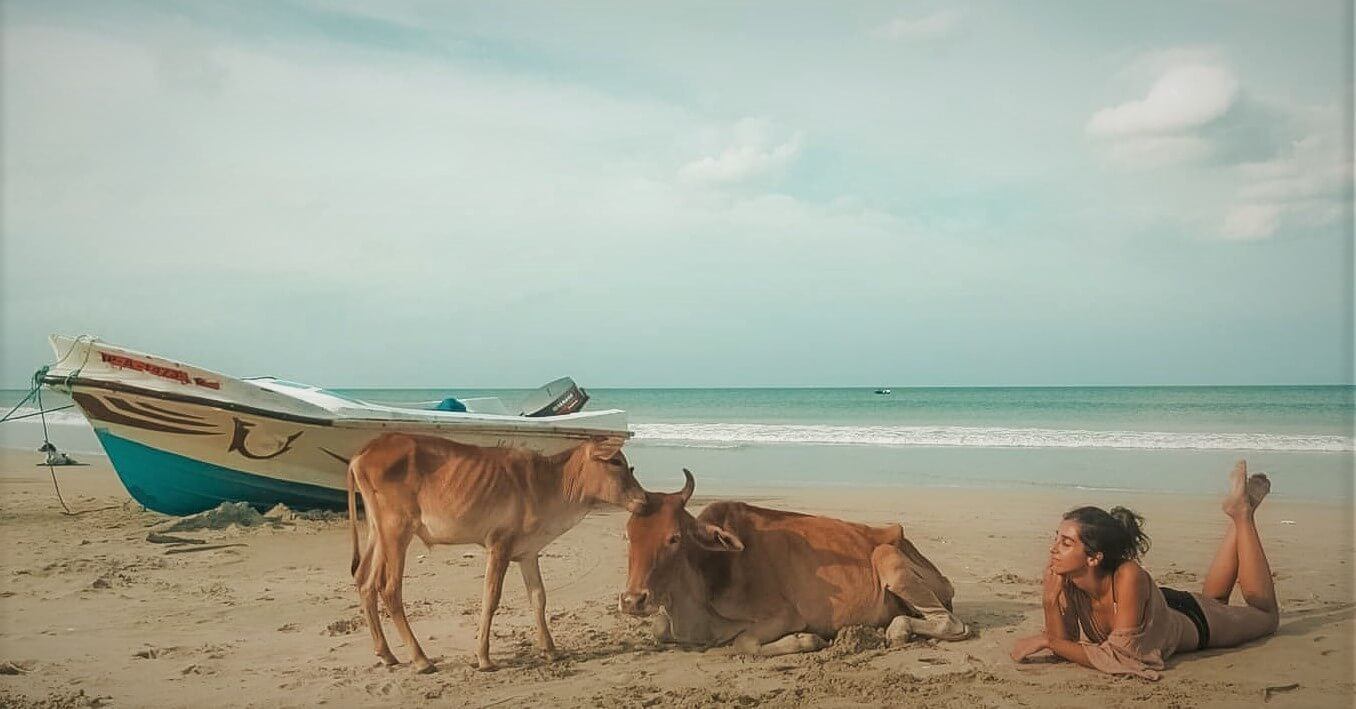
Photo: @furysuri
Colombo
- Best for: Transit and airport proximity
- Known for: Being Sri Lanka’s chaotic, sprawling capital
- How long to stay: One night maximum, if you must
- Don’t miss: The exit
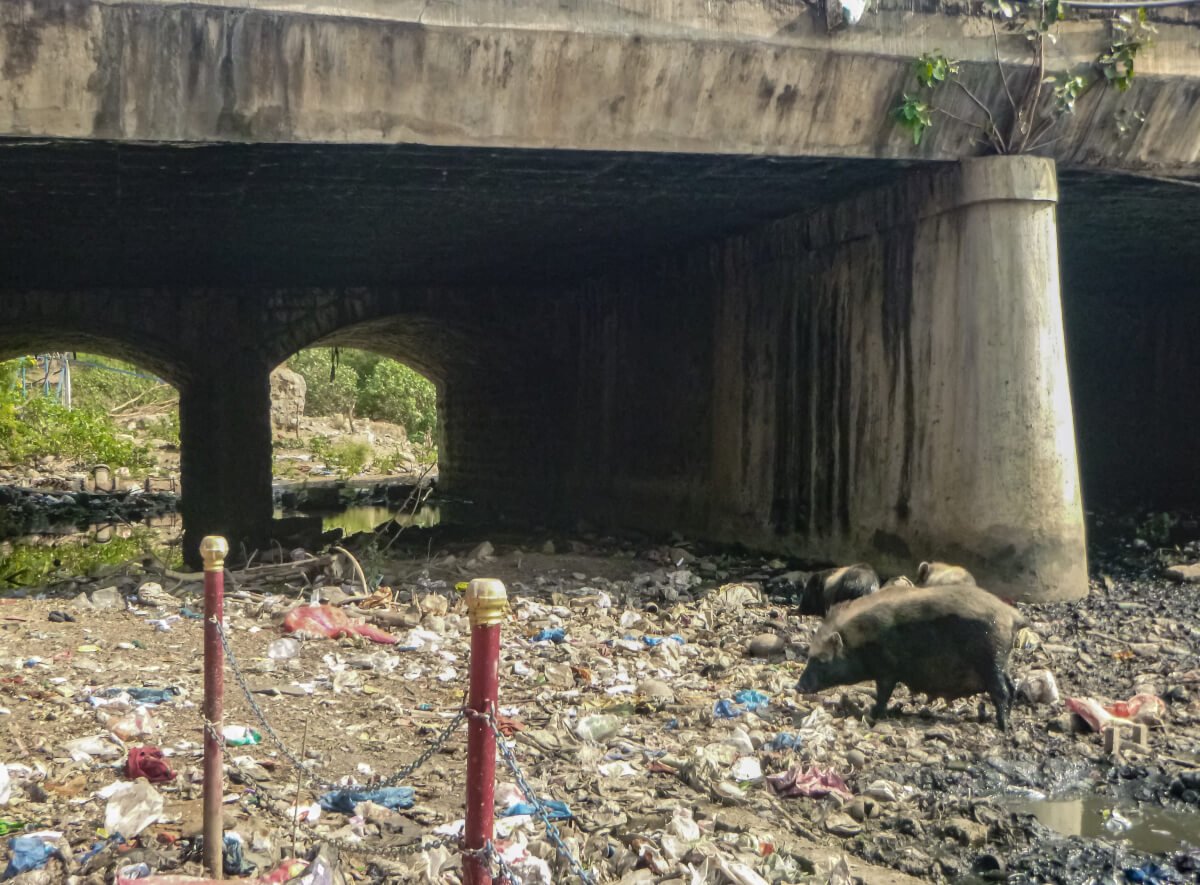
Photo: @themanwiththetinyguitar
Jokes! Colombo is a long, sustained fart in city form. Don’t even bother staying in the capital. It’s a large, noisy, congested city with little to reward backpackers for their time, and most travellers who linger here do so by accident rather than design.
If you’re flying in and need somewhere to sleep before heading south, Mt Lavinia is a quieter beach suburb just outside the city centre and a better option than staying central. Better still, head straight to Negombo, which sits close to the airport, has decent beaches, and makes a far more pleasant first night.
Kandy
- Best for: Culture and the starting point for your scenic train routes
- Known for: The Kandy to Ella train, Temple of the Tooth, Bahirawakanda Buddha statue
- How long to stay: 1-2 days
- Don’t miss: The bats crossing the sky at twilight over Kandy Lake
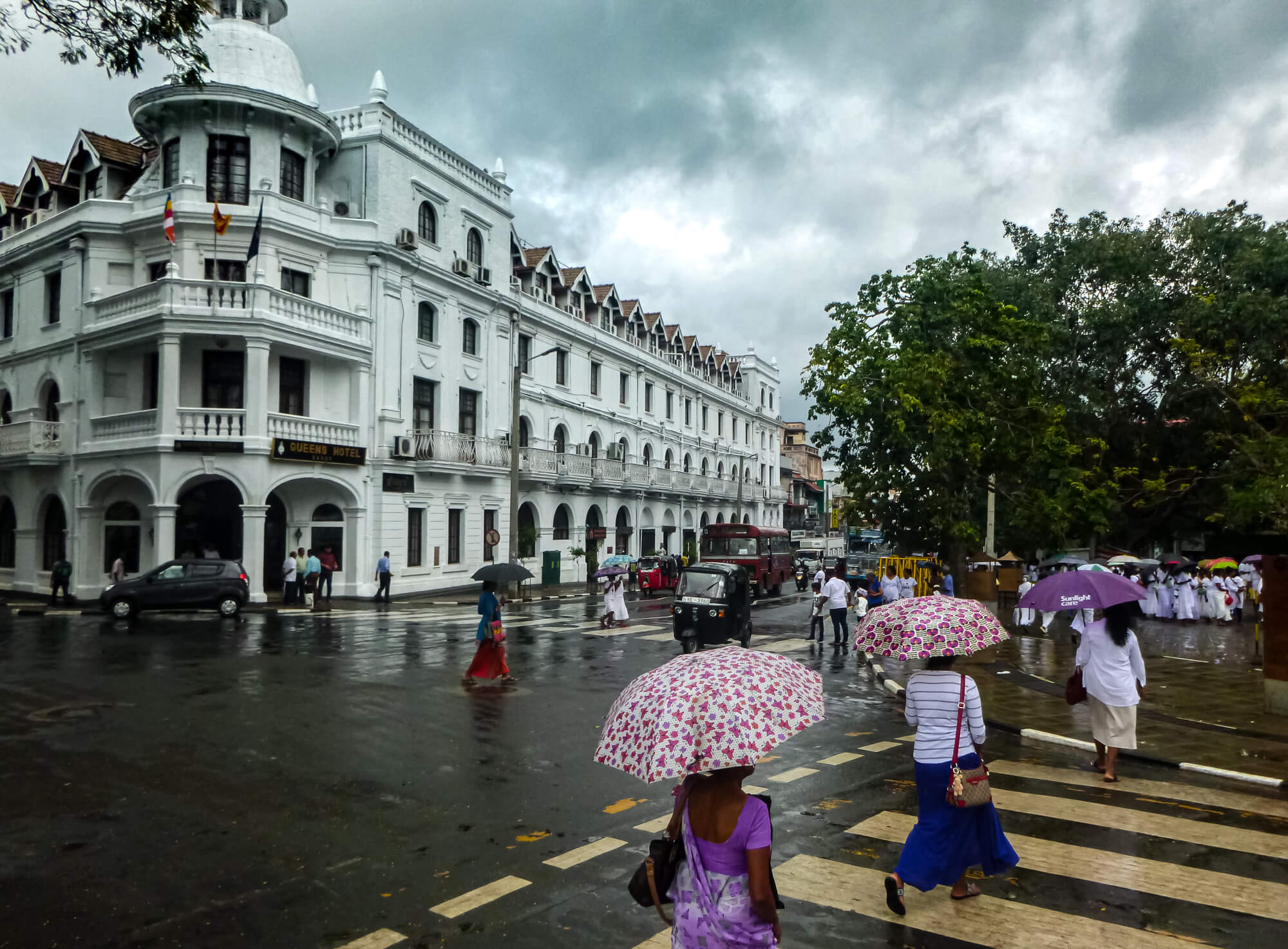
Photo: @themanwiththetinyguitar
Kandy divides opinion. Most backpackers find it pleasant enough without being particularly compelling, and I can see their reasoning. There’s no nightlife to speak of, the main sights are low-key, and the Temple of the Tooth moves visitors through at a pace that doesn’t leave much room for reflection. But it has a liveable, unhurried quality that’s hard to dislike: the city slopes down to the lake at its centre, and at twilight, thousands of bats cross the sky in a chequered blanket.
If the travel Gods are in your favour and timings work out, I definitely recommend booking a hostel in Kandy and heading here straight from the airport if it’s the first stop on your itinerary.
Anyhow, you’re probably going to visit Kandy. It’s the starting point of the ultra-famous and mega-pretty Kandy to Ella train ride – considered one of Sri Lanka’s wonders – and most people’s main reason for travelling to Kandy. The train from Kandy runs through some of the most beautiful places in Sri Lanka with majestic sweeps of the hill country.
There’s cool stuff to see in Kandy, especially some of the Sri Lankan festivals. The highlight however has to be the Bahirawakanda Vihara Buddha statue, towering over the city. You can hike up here, see monks in orange robes doing Buddhist things, and just enjoy the great vibes.
Ella and the Hill Country
- Best for: Nature, hiking, slowing down, escaping the beach circuit
- Known for: The Kandy to Ella train, tea plantations, Nine Arch Bridge, Little Adam’s Peak
- How long to stay: 3-5 days, more if you find the right place to stay
- Don’t miss: Staying outside Ella town itself
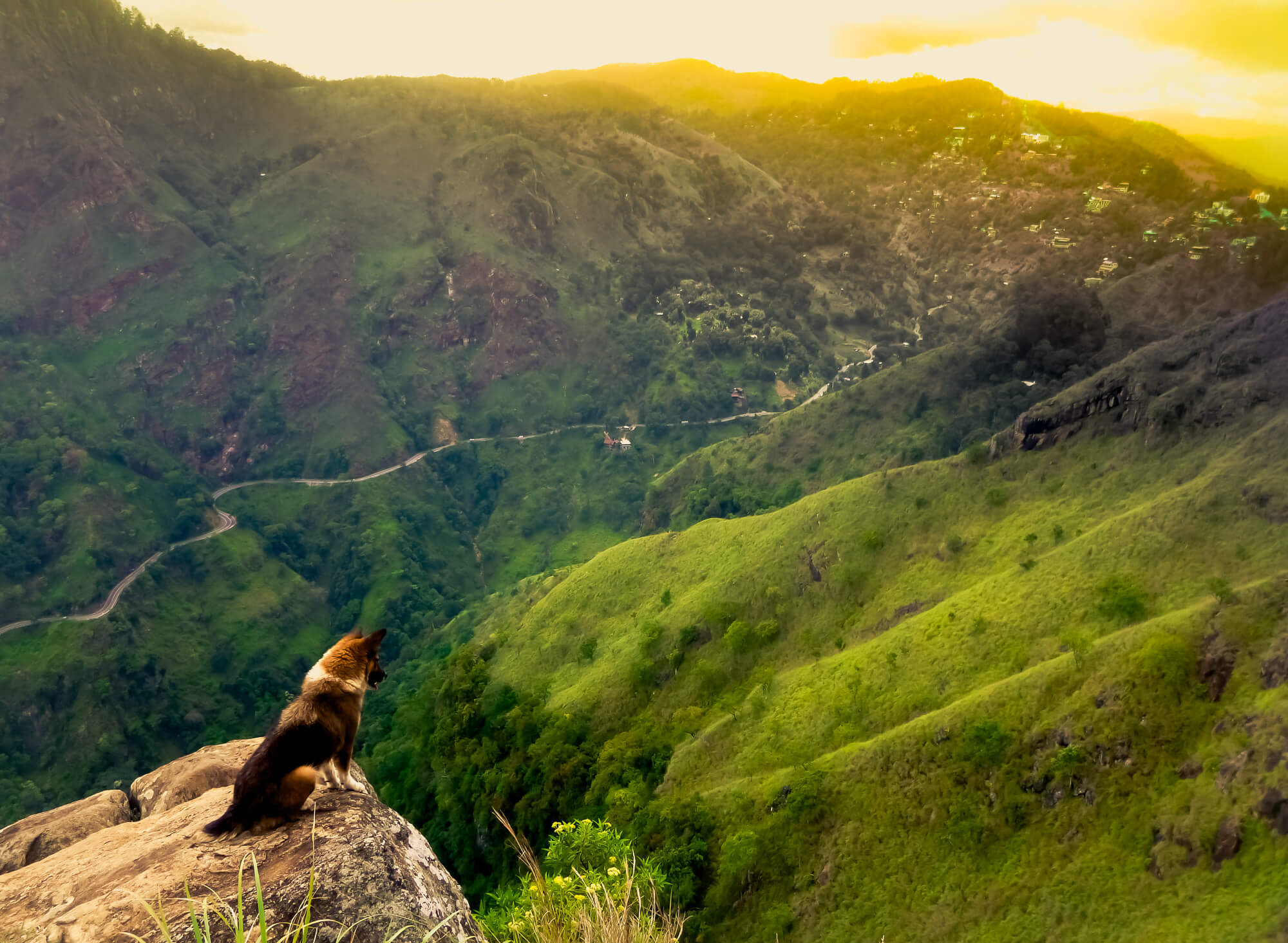
Photo: @themanwiththetinyguitar
The other end of the Kandy to Ella train is…guessed it, Ella. Sri Lanka’s hill country is a special place. There’s a sleepy little magic there that I adore. Ella itself is a bit crap though.
It’s a one-street town, purely touristic, and noisy from the traffic. That’s ok though because there are plenty of places to stay just outside Ella. In fact, I found the coolest place to stay in Sri Lanka here – where I met special people.
Most things to do here are outdoors and unhurried: hiking to Little Adam’s Peak, walking to the Nine Arch Bridge, wandering through tea plantations, finding a waterfall. Neither the bridge nor the peak costs anything to visit, and both are easy to reach on foot. If you’ve been moving fast through the south coast or the east, the hill country is where you slow down. To me, it’s Sri Lanka’s most beautiful place and shows a truly unique side of the island that you won’t find along the beaches.
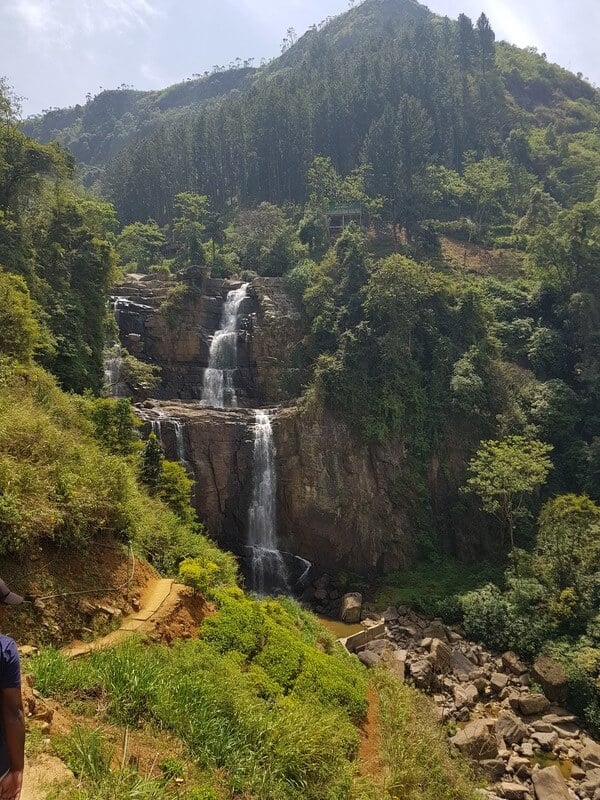
Photo: @Lauramcblonde
Places to Visit in Sri Lanka’s Hill Country
So, other than Ella, what other places are there to go in Sri Lanka’s hill country?
- Nuwara Eliya – A Sri Lankan highland city in colonial English form. The architecture of the place makes it one of the more unique places in Sri Lanka to visit.
Nuwara Eliya is also a gate to hill country. It’s home to some really interesting sightseeing plus some gorgeous nature to boot. Just a heads up, it is one of the coldest and highest places in Sri Lanka (though, that’s not saying much). - Adam’s Peak/Sri Pada – Plus a whole host of other names. Adam’s Peak is well-known for the sri pada (sacred footprint) rock formation at the top and, depending on who you ask, it’s either the footprint of Buddha, Hanuman, Shiva, Adam, or St. Thomas (God, I love Sri Lanka). The Adam’s Peak climbing season is December to May and it’s easily accessed from the town of Hatton (also on the train line).
- Haputale – Another gorgeous town in Sri Lanka’s mountains. There are some really beautiful vistas in this area. Lipton’s Seat (yes, as in that Lipton) overlooks the plantations. On clear days, you can see all the way to Sri Lanka’s south coast from Haputale.
Arugam Bay
- Best for: Surfers, people who want to stop moving for a while
- Known for: Some of the best surf in Asia, beach town social scene
- How long to stay: 5 days to several weeks, it has a habit of keeping people
- Don’t miss: The surf at Main Point, cheap local food
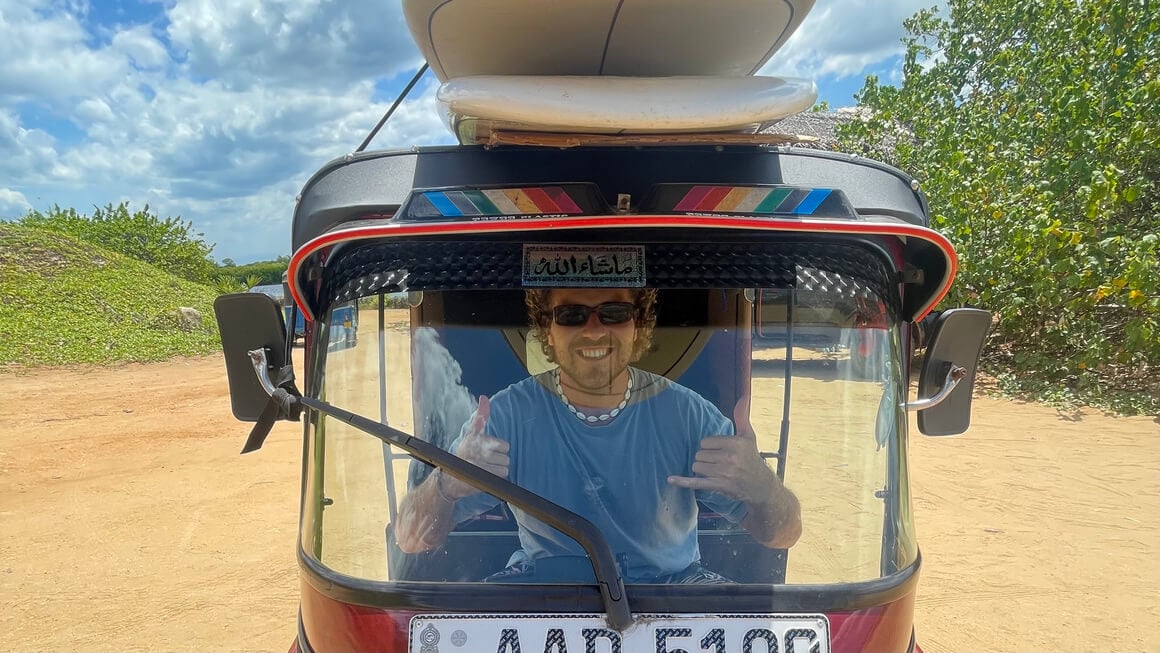
Photo: @danielle_wyatt
Ahh, Arugam Bay: the number one destination on everyone’s east coast Sri Lanka itinerary. Some people take a holiday in Sri Lanka just to spend an entire surf season in Arugam Bay.
It’s the east coast’s main backpacker draw, and for a certain kind of traveller it’s the whole reason to come to Sri Lanka. The days have a well-worn rhythm: surf, eat, nap, repeat. Arugam Bay’s Main Point is the headline surf break, best for intermediate to advanced surfers. Beginners will find gentler waves further along the coast.
The food is good and cheap, pretty much any drug you want is available, and the parties feel less like events and more like a natural consequence of a town full of people with nowhere to be.
If you don’t surf, it’s a harder sell. There’s not much else structured to do here, which is either a problem or the entire appeal depending on what you’re after. Most people who love it aren’t looking for things to do. They’re looking for somewhere to stop. Am I complaining? Hell no! This is paradise for most people. When you visit Arugam Bay, plan to do a whole lotta nothing!
Well, you already know what to do in Arugam Bay, so instead, I’m going to tell you about my real favourite part… the munchies! Because that’s what I did do a lot of in Arugam: spliffs and food comas.
- Thatha’s Tea Shop – It’s cheap, it’s yummy, and it’s near the beach. Moderate servings that are good for a light breakfast, or at least light for someone that likes to eat two breakfasts.
- The Blue Van/Truck – There’s actually like three of these in a row on the south side of town and they’re all cracking. It’s the closest thing you’ll get to street food in Arugam Bay.
The first one specialises in hoppers, the next blue truck has my favourite kottu in town, and then the blue cargo container after has the best ready-made roti and pancakes. Catch them hot! - Mama’s Restaurant – Two buffets a day keeps the doctor away! I can’t recommend Mama’s enough. For 400 rups (lunch and dinner) you get all-you-can-eat rice and curry (6 types of curry) with the best eggplant curry I had in Sri Lanka. Remember: it’s a dishonour to the buffet gods to not get a second plate.
- Hello Burger – Ok, one recommendation for Western food. Hello Burger does hella good burgers but they’re hella expensive.
Trincomalee
- Best for: Quiet beaches, snorkelling, diving, travellers who want east coast without the Arugam Bay scene
- Known for: Long sandy beaches, diving, Uppuveli and Nilaveli
- How long to stay: 2-4 days
- Don’t miss: Nilaveli if you want to get outside the tourist bubble
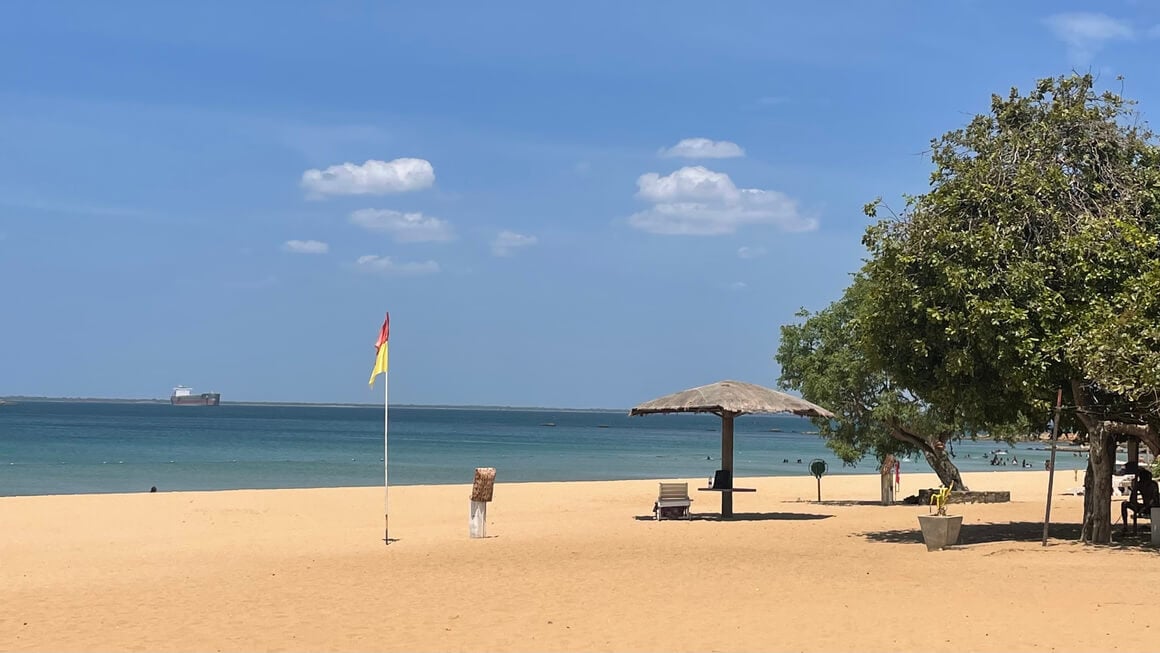
Photo: @danielle_wyatt
Trincomalee is the east coast’s quieter alternative. No surf, but good snorkelling, decent diving, long beaches, and a pace that makes Arugam Bay feel hectic by comparison. It runs slightly pricier than the south coast, but the tradeoff is space and calm.
There are two distinct bases here. Uppuveli is the tourist hub: hostels, restaurants, beach bars, the usual setup. Nilaveli is further north and considerably more local in feel, resorts and beach rooms giving way pretty quickly to the rest of Sri Lanka. Which you choose depends on how far outside the bubble you want to be.
Snorkelling, diving, beach-beers, and local goodness outside the bubble. Pack for a beach day because that about sums up Trinco in a nutshell. All you need to fill your days here is a good stretch of sand and a volleyball net. I didn’t even realise I liked volleyball until visiting Trincomalee!
Jaffna
- Best for: Culture, history, travellers who want a genuinely different side of Sri Lanka
- Known for: Tamil-Hindu temples, colonial architecture, northern cuisine, civil war history
- How long to stay: 2-3 days, plus time for the northern islands if you can
- Don’t miss: The temples, the food, and the northern islands
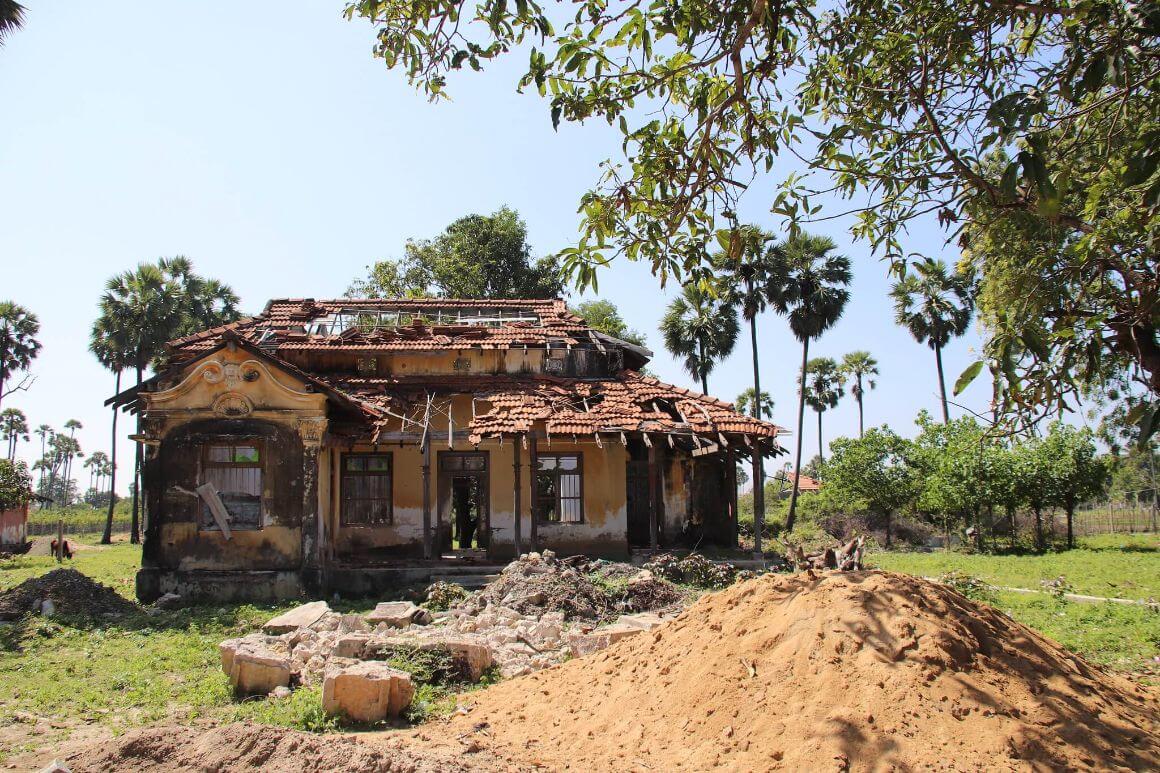
Photo: rhythmicdiaspora (Flickr)
Ok, so now you’re leaving Sri Lanka’s backpacking route. Nowhere is too far off the beaten track in Sri Lanka but Jaffna is off the typical itinerary. The city is predominantly Tamil, Hindu in character, and closer in feel to South India than to the beach towns of the south. The temples are Hindu rather than Buddhist, the food runs toward South Indian flavours and cooking styles, and the architecture carries a different colonial and cultural history than Galle or Kandy. The northern islands are worth a rekky if you’re not precious on time.
Up in the north, you’re in the area most affected by Sri Lanka’s civil war (see the ‘Sri Lanka in Modern Times’ section). The city of Jaffna is primarily inhabited by Tamils and you’re going to find a different perspective up there. The aftermath of the war still shows.
So, is Jaffna worth visiting? That depends on what you’re after.
Travelling to Jaffna isn’t for backpacking: it’s for culture and history. It’s different people, a different feeling, and a place to travel to in Sri Lanka if the feeling of the beaten path is wearing thin.
The Cultural Triangle
- Best for: History, archaeology, travellers who want more than beaches and hill country
- Known for: Ancient cities, rock fortresses, cave temples, elephant country
- How long to stay: 3-5 days depending on how many sites you visit
- Don’t miss: Sigiriya Rock Fortress, Jathika Namal Uyan (Rose Quartz Mountain)
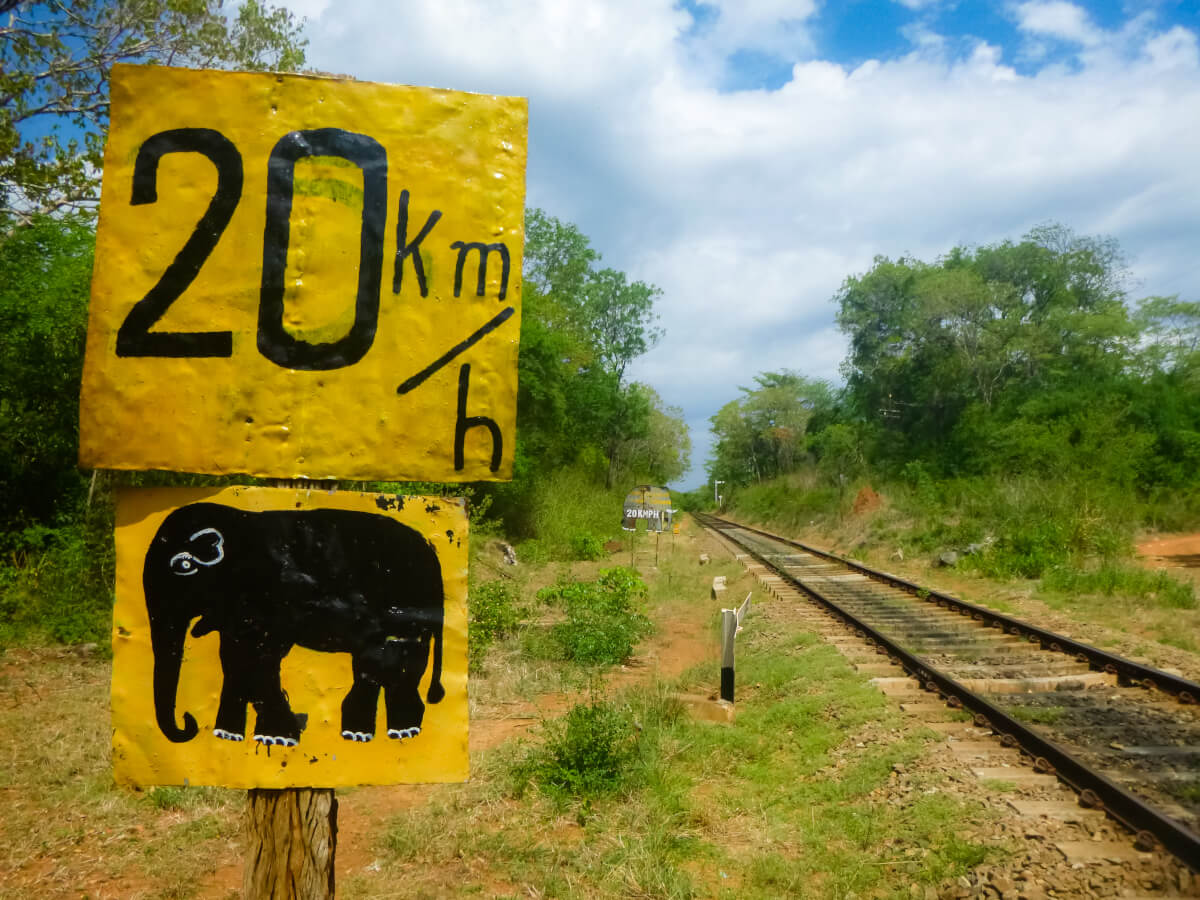
Photo: @themanwiththetinyguitar
The Cultural Triangle covers central Sri Lanka’s historical heartland: a rough triangle between Kandy, Anuradhapura, and Polonnaruwa, with Dambulla and Sigiriya sitting in the middle. It’s the part of the island where the ruins are, and there are a lot of them.
It’s located in the central plains of Sri Lanka (”Rajarata” or King’s Land), meaning it’s hot, humid, and the mosquitoes are serious. it’s also the dry zone. It fits naturally into both the south coast and east coast itineraries as an inland detour, and most travellers pass through at least one or two of the main sites regardless of which route they’re doing (depending on how you handle mosquitoes while travelling).
The headline stop is Sigiriya: a fifth-century rock fortress rising dramatically out of the surrounding plains, with frescoes, landscaped gardens, and epic views. Anuradhapura is older and more sprawling, one of the ancient world’s great cities and still a functioning pilgrimage site. Dambulla’s cave temples are quieter and often overlooked. All three are worth lingering around to explore rather than a rushed half-day visit.
Places to Visit in Sri Lanka’s Cultural Triangle of Sri Lanka
Now don’t have me break this thang down for nothin’:
- Anuradhapura – The ancient capital of Buddhism within Sri Lanka and arguably its most sacred city. A lot of ruins, a lot of monuments, and, at the centre, you’ll find Sri Maha Bodhi, home of the sacred Bo tree: the tree where Buddha received enlightenment (and the oldest human-planted tree in the world).
- Polonnaruwa – One of the old capitals of Sri Lanka, Polonnaruwa is an extensive area of ancient temples, rock fortresses, and all manners cheeky Buddha grins. The area is pretty big so hiring a tuk-tuk driver, a bicycle, or a scooter for the day is the go-to.
- Dambulla – More temples… Look, there are only so many flourishing words I can use to describe temples, ok? This one is in a cave… woo.
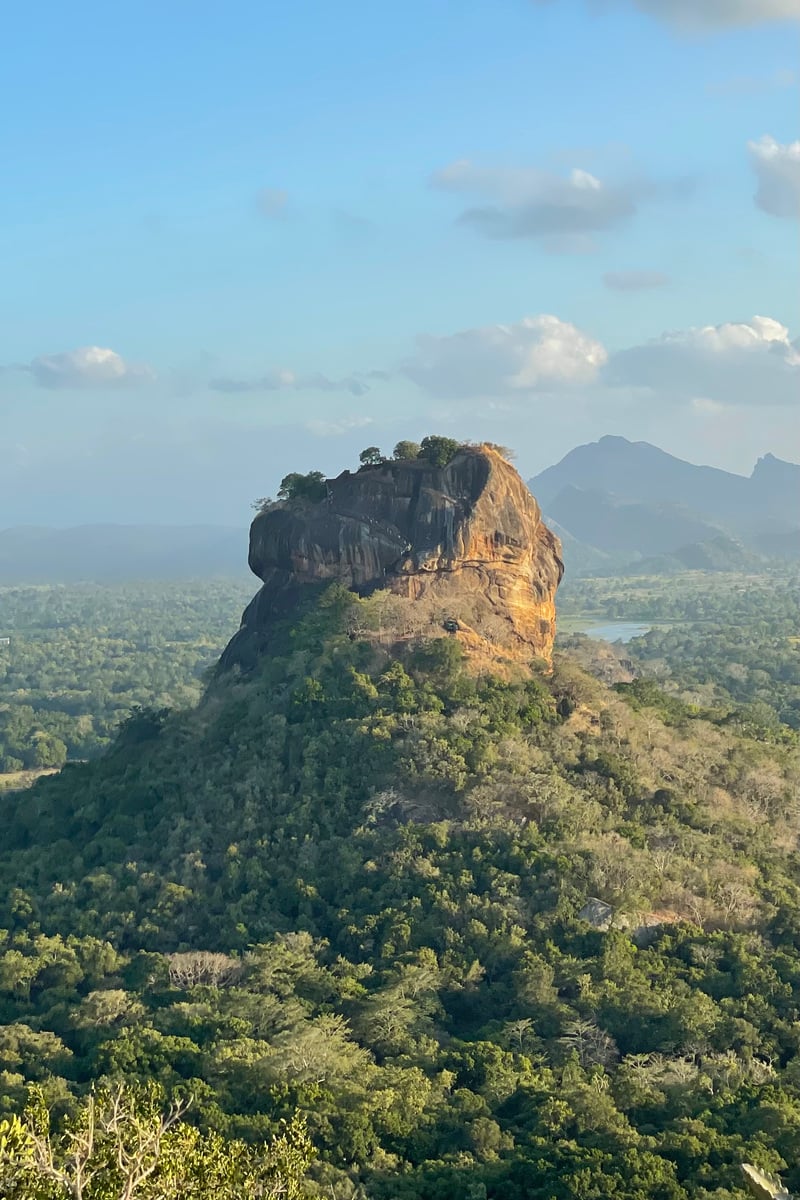
- Sigiriya – Ahhhh, Sigiriya; I like Sigiriya. It’s still a fairly unique place to visit in Sri Lanka despite being in the top 5 on most backpacking itineraries. It also has the highest density of slacklines by area that I found in Sri Lanka. The main attraction (and what a goddamn attraction it is) is Lion’s Rock with Sigiriya Fortress perched atop. Now, you can pay 9500 rupees ($30 – eek) to walk up the stairs to the busy rock… Orr, you could pay 1,000 rupees to climb the adjacent Pidurangala Rock and see the sunset catch Lion’s Rock. The choice is yours (although I kinda loaded the question).
Shenadi Restaurant in Sigiriya town does dope local food and Rastarant has bangin’ juices and a slackline!
Given the fact that the whole region represents thousands and thousands of years of a near-impenetrable cultural history, booking a tour is totally worth the consideration! You can get in, get a bunch of learning into your brain, and be back in Sigiriya for fruit juice by nightfall!
Galle
- Best for: Architecture, history, a short break from the beach circuit
- Known for: Galle Fort, Dutch and Portuguese colonial history, upmarket cafes
- How long to stay: 1 night, 2 at most
- Don’t miss: A walk through the Fort at golden hour
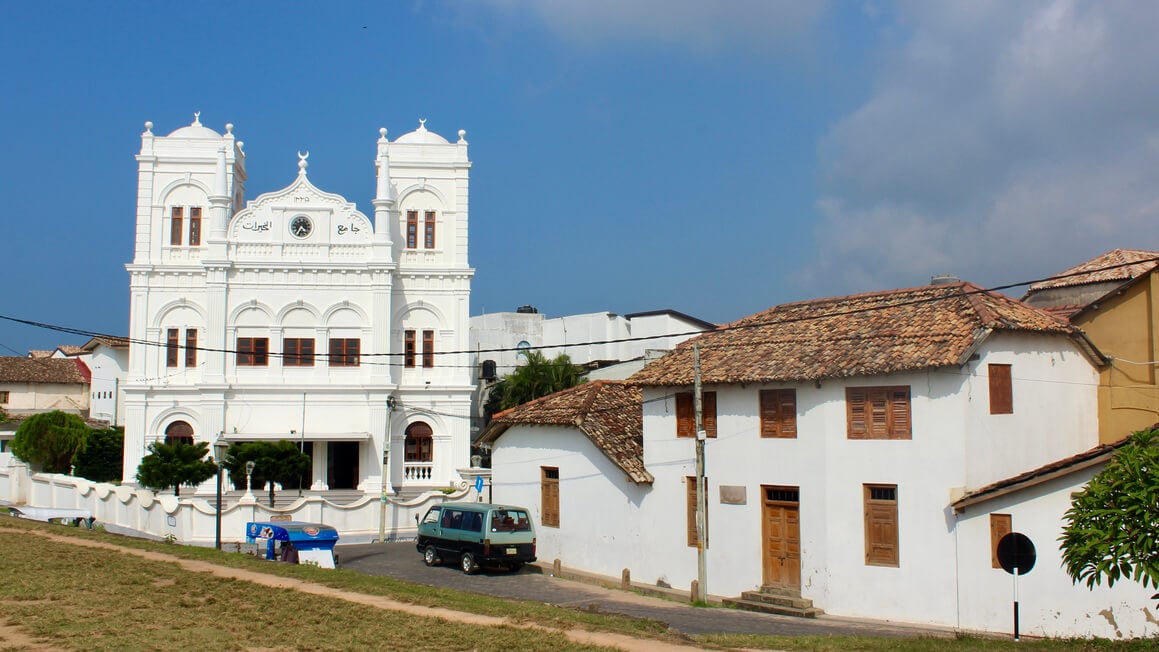
Photo: @danielle_wyatt
Moving south now but before we start talking about the beaches, let’s cover Galle.
Galle is a small city and it’s a cool city. It’s also a hub for backpackers before they move on to the other coastal areas, and as such, has some pretty cool social hostels! Much like Nuwara Eliya, it’s an example of the fusion flavours of Sri Lanka only this time it’s Portuguese and Dutch! You’ve got Galle Fort (the old town) which is a prime example of Sri Lankan old-money at its finest and then outside the Fort you have… well… Galle.
Galle (Fort) is interesting to me; not interesting enough to keep me there for more than a night but interesting all the same. The architecture is beautiful (it really feels like a European village that’s been invaded by the tuk-tuk mafia) and it’s not just touristy but also wealthy – like, really wealthy.
Sri Lankans go jogging in the morning in full track gear, finding a local feed is a mission in-of-itself, and it’s the only time in Asia I’ve ever been refused buying a single cigarette (I’m still feeling salty about that one).
Galle’s old city is delightful to stroll through for what it is and another of Sri Lanka’s very beautiful places. I’d say it’s still worth visiting Galle (Fort) but move on quick unless you came to Sri Lanka to sit in Western cafes drinking European coffee and eating chocolate cheesecake. I personally based myself in a nearby beach town and felt a day trip to get my Western foodie fixes was sufficient enough.
Sri Lanka’s South Coast
- Best for: Beaches, surf, social hostels, first-time visitors to Sri Lanka
- Known for: Year-round surf breaks, beach towns, nightlife
- How long to stay: 1-3 nights per town, pick 2-3 stops rather than rushing all of them
- Don’t miss: Finding your town – they all have a different flavour
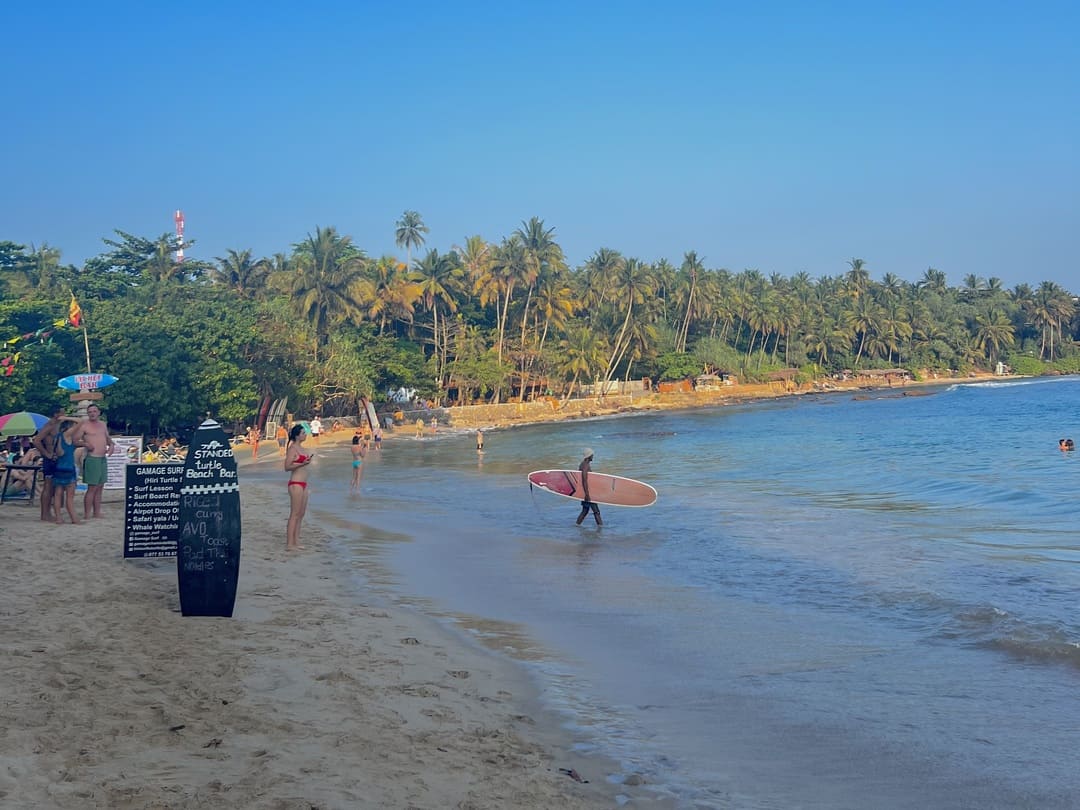
Photo: @taya.travels
The south coast is the most developed stretch of Sri Lanka for backpackers and it shows. The infrastructure is solid, the hostel scene is strong, and the beach towns come one after another along a coastline with year-round swell. Weligama and Ahangama are ideal starter towns on a Sri Lanka guide to surfing, but honestly rent a board and drive up the coast and you’re sure to find a break that you can get involved with.
It’s also where the tourist bubble prices bite hardest, tuk-tuk touts are more aggressive than elsewhere on the island, and things can feel purpose-built around traveller expectations if you’re not careful about where you eat and stay.
That said, the surf is good, the beaches are beautiful, and the social scene is easy to fall into. The trick is picking your towns rather than trying to hit all of them. Each has a different character and a different crowd, and rushing through the lot means you get a surface-level read on all of them instead of actually settling into one.
What are the best and most beautiful beaches on Sri Lanka’s south coast? Here’s a sexy table to match that sexy core you’ve been toning in preparation:
| Beach | What’s it for? | Deetz |
|---|---|---|
| Hikkaduwa | -Surfing -Snorkelling and diving -Nightlife | Used to be one of the few hippie places in Sri Lanka. Now it’s mega-developed and Russian territory. |
| Unawatuna | -Surfing -Snorkelling and diving -Turtles! | You could make Unawatuna a day trip from Galle (or vice-versa). Expensive beach-front restaurants, a lotta families, older holidayers, and Russians. |
| Midigama | -Surfing -Bit more local | The surf is more geared more towards intermediates and it’s a bit quieter on the tourist side of things. |
| Weligama | -Surfing -The famous Sri Lankan stilt fishermen! | All-year-round surf good for beginners and intermediates. Check out Fisherman’s Bay to see some fancy stilt fishermen moves! |
| Mirissa | -Sufing -Yoga -Backpacker vibes | Biggest backpacker draw on the south coast: surfing, yoga, parties… you know what’s up. |
| Hiriketiya | -More surfing! -Yoga -Smoothie bowls | Cheaper board rentals (since Hiriketiya is a bit out of the way). Used to be sleepy but now it’s more… umm… wanky. |
| Tangalle | -Big beaches -Sunsets -Chills | Tangalle starts the transition to the southeastern beaches: wider, longer, and quiter. |
Yala National Park
- Best for: Wildlife sightings, those wanting to see leopards and elephants
- Known for: Jeep safaris, leopard density, the biggest safari in the country
- How long to stay: One night is enough – just make sure to book with an ethical provider
- Don’t miss: Wilpattu National Park as an alternative, if you’re set on a safari
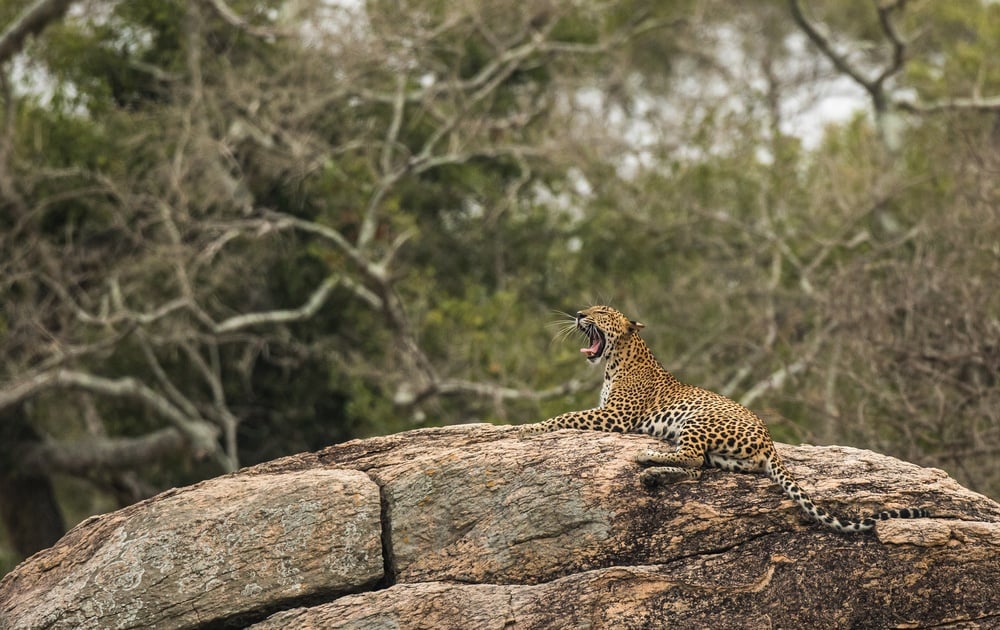
First, a word on Sri Lanka’s national parks: they’re a bit shit. Not the parks themselves – they’re crazy beautiful – but the rules and regulations around them are a drag.
After I arrived in Sri Lanka, I was hearing story after story from travellers who had visited Yala National Park about animal abuse Even without a trip down the ethical tourism rabbit hole, the safaris in Sri Lanka already have a fairly bad reputation. I personally didn’t do enough research and felt morally sketchy on my safari in Yala. It’s not to say all safaris in Sri Lanka are as bad, but with Yala being the biggest one in the country, it’s safe to say it’s the busiest. Being stuck in keep traffic queuing an hour in hopes of catching a leopard sighting? Yeah, it’s not exactly the wild safari experience I had in mind.
Not all pieces of animal tourism in Sri Lanka are so highly questionable; however, the evidence is there to suggest it’s better to simply not engage. Though not as popular, Wilpattu National Park (on the northwestern side) is the largest national park in Sri Lanka with equal wildlife spotting opportunities.
The choice is yours, however, as always, please consider your impact and travel responsibly. Travel is a gift and a privilege.
Getting Off the Beaten Path in Sri Lanka
Sri Lanka is small and well-travelled. Getting off the beaten path here doesn’t mean disappearing into untouched wilderness; it means stepping away from the main hostel towns and the well-worn circuit connecting them. The bubbles are easy to find. Everything between them takes a little more intention.
Here’s where to start looking.
Jaffna and the northern islands
The north and Jaffna is a good start. People still visit Jaffna for sure, but it’s not like other points of interest in Sri Lanka. It’s a historical city with a handful of travellers at any given time, a Tamil-Hindu character that bears no resemblance to the beach towns, and a set of offshore islands that are about as quiet as Sri Lanka gets. It’s the easiest entry point into offbeat Sri Lanka because the train gets you there without any logistical heroics.
Mannar Island and Adam’s Bridge
Heading down the west coast, Mannar Island grabs my interest (though I missed out on visiting it). It’s the location of Adam’s Bridge or Rama Setu (depending on who you ask) which is either a chain of shoals or the remains of a bridge built across the Indian Ocean by an ancient Hindu god (depending on who you ask). Either way, it’s remote, strange, and almost nobody goes there.
Knuckles Mountain Range and Meemur
Knuckles Mountain Range and Meemure are the only place I travelled to in Sri Lanka that really gave me those sweet-sweet-tingly stomach butterflies. There are still areas of this gorgeous spot that remain untouched, and it’s easily the best hiking place in Sri Lanka.
However, the Knuckles Mountains are perfectly capable of slapping you upside the face. They’re not to be trifled with.
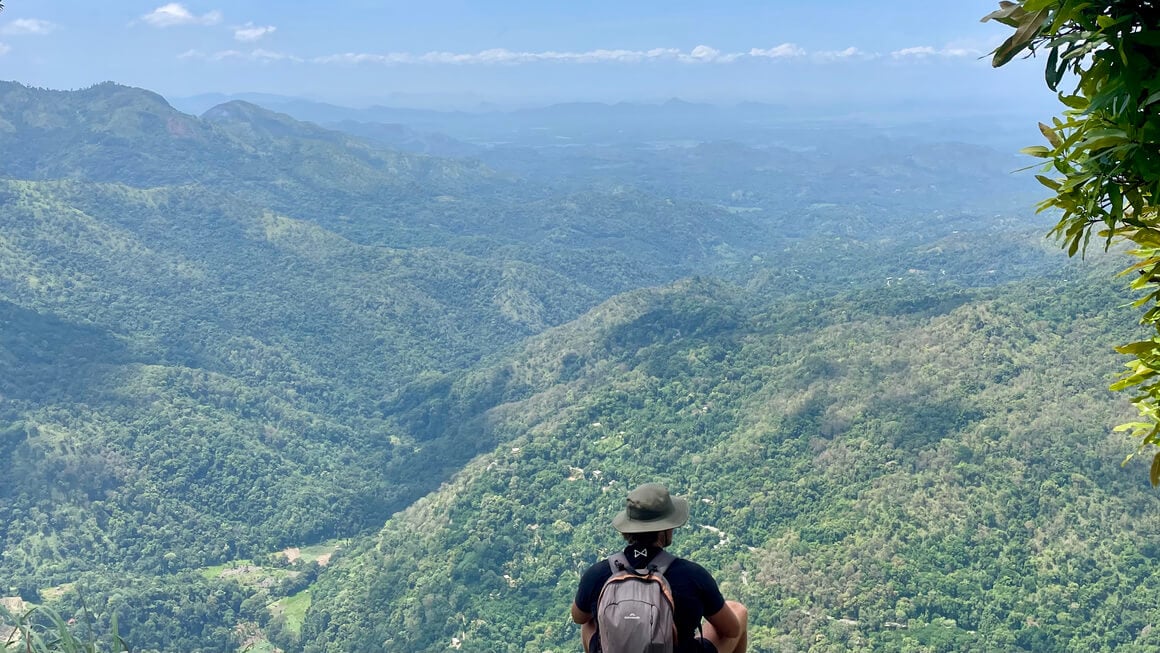
Photo: @danielle_wyatt
The southeast coast
The stretch between Tangalle and Yala is where the south coast crowds thin out. Wide beaches, little infrastructure, and a quieter pace than anywhere between Hikkaduwa and Mirissa. Worth the effort if you want sand without the circus.
Smaller hill-country towns and inland villages
Beyond Ella and Nuwara Eliya, the hill country has smaller towns and villages that see a fraction of the foot traffic. No specific itinerary required: slow down, pick a direction, and see what’s there.
Naturally, if you want to get off the beaten path, transport becomes a bit stickier. If you don’t drive, you’ll find it hard and/or expensive to reach these lesser-explored corners. Here is where independent transport shines; for those renting a tuktuk to explore the whole country, you can knock yourself out and go searching for some proper undiscovered spots.
Top Things to Do in Sri Lanka
Because travelling to a far and distant land simply isn’t enough, we need some goddamn things to do!
1. Epic Waves and Lotsa Kooks: Go Surfing in Sri Lanka
C’mon, as if this was going to be anywhere but number 1 on the list of things to do in Sri Lanka! Sri Lanka’s beautiful beaches draw in surfers of beginner, intermediate, and veteran status.
Sri Lanka has two coastlines and two surf seasons, which means if you time it right there’s always a rideable wave somewhere on the island. The south and west coasts run from November to April; the east coast, centred on Arugam Bay, picks up from May to October. Between them, surfing is pretty much a year-round option.
It suits beginners and intermediates particularly well. Weligama on the south coast is the go-to learner spot, with mellow beach breaks and plenty of board hire and lesson options. Midigama is better for intermediate surfers after something with more shape. Arugam Bay’s Main Point is the headline break for more experienced surfers, and the surrounding coast has quieter options if the main spot gets crowded.
Plenty of people come to Sri Lanka for two weeks and end up spending an entire season parked near their favourite break. That probably tells you everything you need to know.
2. Ride the Kandy to Ella Train, South Asian Express
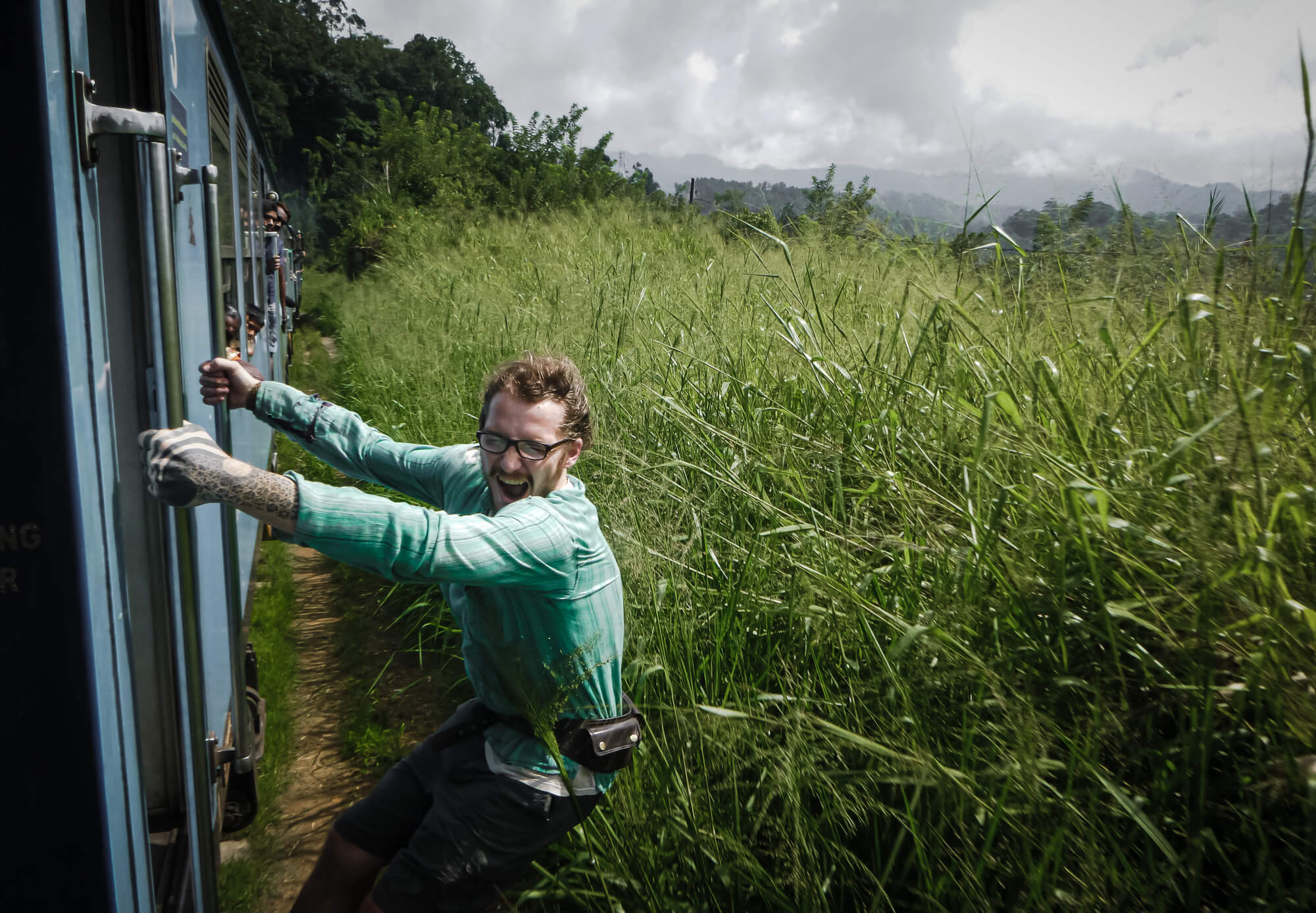
Photo: @themanwiththetinyguitar
Yep, it’s mega-famous and mega-pretty and you’re almost definitely gonna catch it because the trains in Sri Lanka are excellent Asia-brand fun. Luckily for you, the complete Kandy to Ella Train Travel Guide is right here!
Realistic expectations: it’s slow, it gets crowded, and if you’re travelling unreserved you may spend a chunk of the journey standing in a doorway with the wind in your face. That said, the doorway situation is half the appeal. The unreserved carriages are where the local goodness is: families, vendors, and the chaotic experience that you should very much gear up to expect.
If you want a guaranteed seat, you can book reserved carriages in advance through 12Go. Worth knowing: the A/C carriages have locked windows, which keeps out the heat and also the views. You won’t be able to give your mum a heart attack with the photo-ops, but where’s the fun in that?! The open carriages are the better call.
3. Rent a Tuk Tuk in Sri Lanka Because Why Bloody Not?
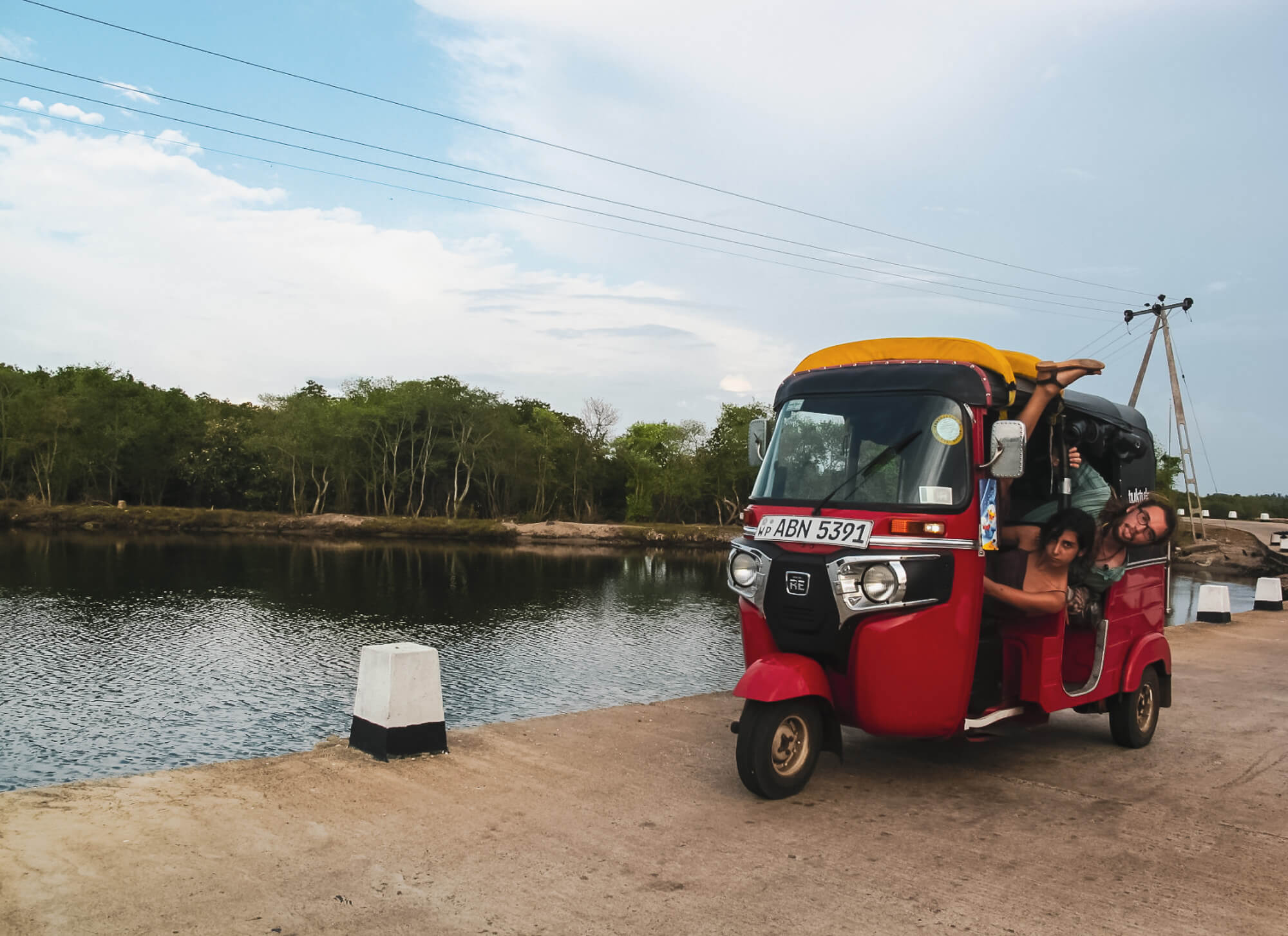
Photo: @furysuri
So, this was totally accidental but I lucked into being a German couple’s (love you guys) 3rd-wheel in their 3-wheel rental. We travelled Sri Lanka together by tuk-tuk for a solid 3 weeks and I can say, without a doubt, that I now know way too much about their sex life… Also, that it’s fun as hell!
A tuk-tuk gives you the freedom to stop when something looks interesting, take a wrong turn on purpose, and travel at a pace that actually lets you see the country between destinations. It works best with two or more people splitting the cost, and it’s considerably more fun than any bus.
Check out the section on renting a tuk-tuk in Sri Lanka for pricing, permit requirements, and everything else you need to know before you get behind the wheel.
4. Learn authentic Sri Lankan cooking
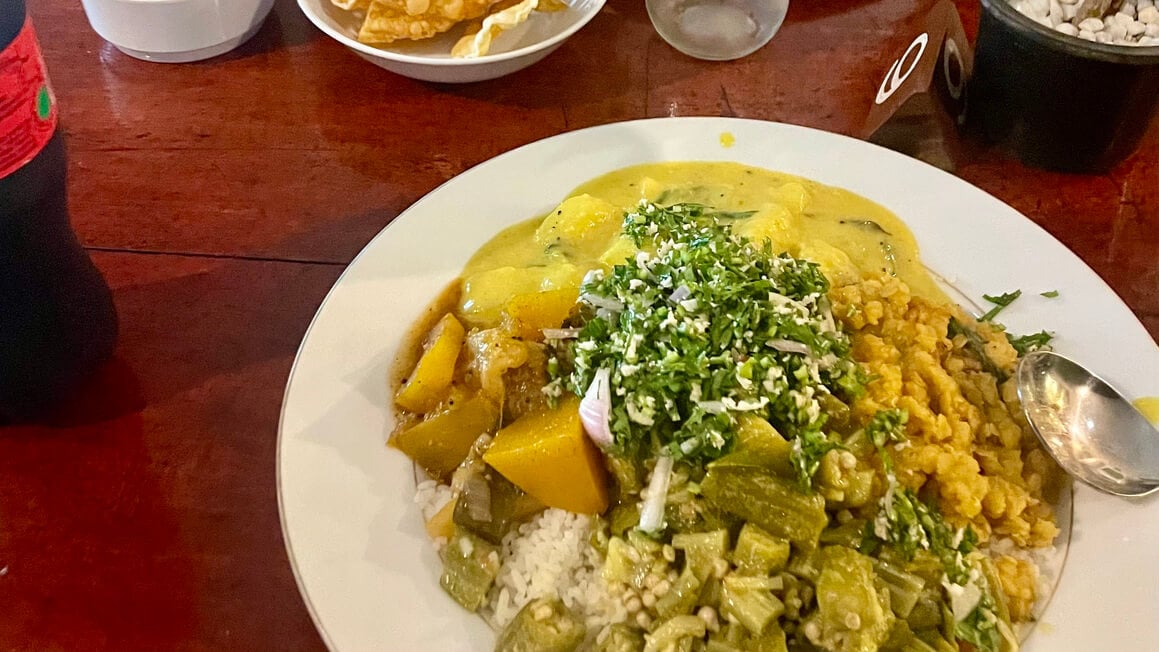
Photo: @danielle_wyatt
Sri Lanka’s food is one of the best things about the island: rice and curry, hoppers, sambol, and kottu, which is a greasy, fried, glorious mess of chopped roti and vegetables. Basically the fish and chips of Sri Lanka, and absolutely the best thing you’ll eat here.
A cooking class is a decent way to take that home with you. Most include a market visit to source ingredients, which will feel like real local experience. You’ll come away knowing how to make at least a passable curry and…if you’re lucky…a kottu that hits the same way.
5. Hunt Down Some of Sri Lanka’s Waterfalls
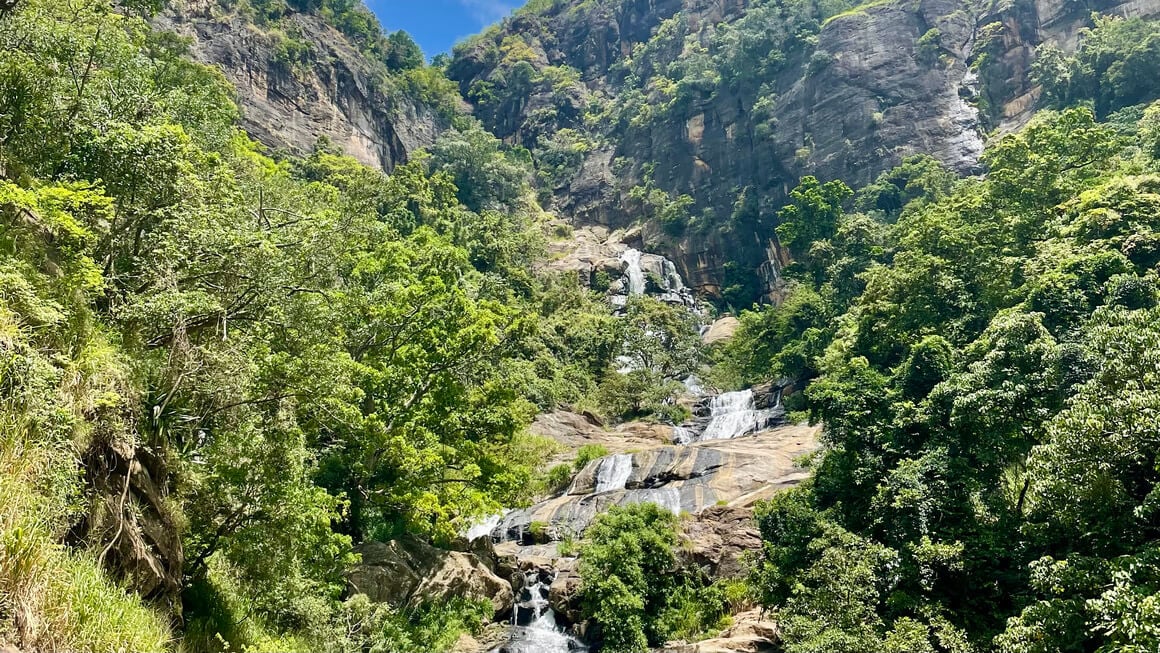
Photo: @danielle_wyatt
Fun fact: Sri Lanka has the highest density of waterfalls by area of all the countries of the world. Now, I dunno if that’s actually true but a Sri Lankan dude told me that and he seemed pretty stoked about it!
What’s not up for debate is that there are a lot of them, and they’re worth chasing. The hill country and Ella area have the highest concentration: Ravana Falls is the easiest to reach, Diyaluma is the most dramatic, and there are plenty of smaller ones that require a bit of a walk to find. That’s usually the better option anyway.
One practical note: waterfall hiking after heavy rain is a different proposition. Paths get slippery, water levels rise fast, and what looks like a gentle scramble can turn quickly. Check conditions before heading out, especially during monsoon season. I always have a trusty pair of waterproof shoes like my Tevas for an extra bit of grip for these side quests.
6. Experience Sri Lanka’s Beach Nightlife
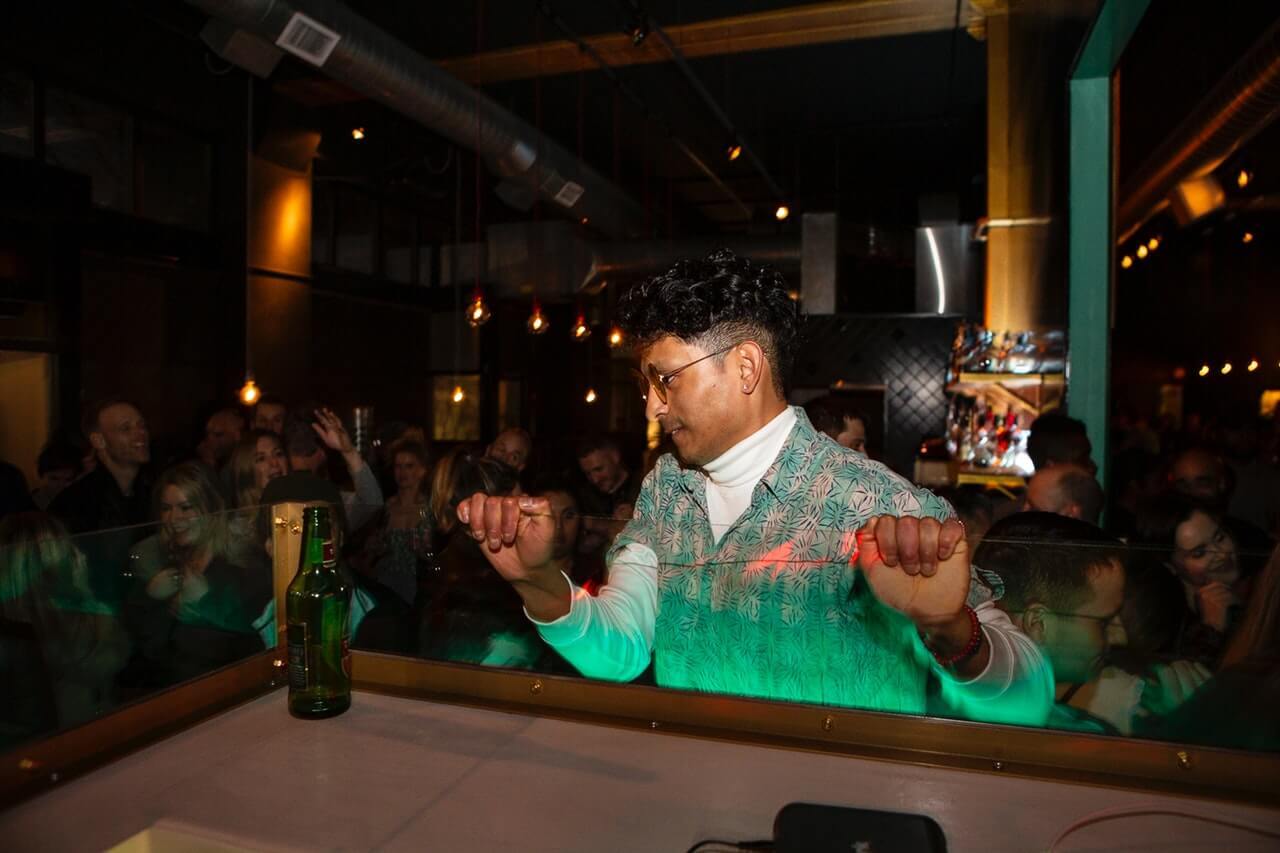
Sri Lanka knows how to have a good time, and certain beach towns have made it something of a speciality. Arugam Bay, Mirissa, and Hikkaduwa are the main spots: hostel parties, beach bars, and other shin digs where drugs are plentiful if you go looking for them. There are resident parties every night, but the most fun nights are the impromptu ones you heard about through a local friend or on social media a couple hours before.
Check out the appropriate section to examine my well-collected “research” (wink-wink-wink-wink). Don’t be one of those backpackers that makes their trip to Sri Lanka all about partying, but rather a scrumptious side activity to complement an otherwise chilled-out couple of weeks on the south coast.
7. Go Hiking
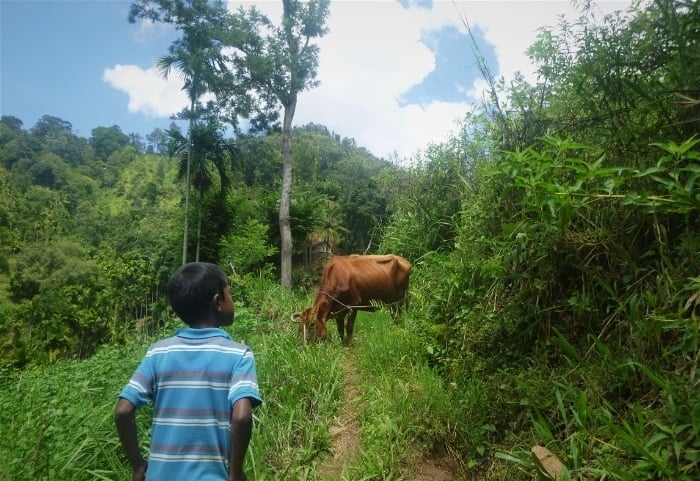
Photo: @themanwiththetinyguitar
Many of the natural attractions in Sri Lanka require something of a small hike to reach. The hikes are rarely brutal, just one to two hours of walking suited for a beginner hiker – and it usually results in a pretty badass view or waterfall. Little Adam’s Peak and Ella Rock are the most popular in the hill country, both accessible for most fitness levels and both delivering the kind of views that justify the effort. Adam’s Peak is a longer, steeper pilgrimage hike best tackled before dawn.
For more serious hiking places in Sri Lanka, you’re going to want to check out that sexy, sexy Knuckles Mountain Range. There are plenty of multi-day trekking opportunities there, and the feeling of being lost isn’t hard to find. It’s no Nepal, but the mountains in Sri Lanka still carry their own special kind of magic.
Village walks and slower wandering through the hill country are worth factoring in too. Not everything needs a destination.
8. Try Meditation or a Retreat
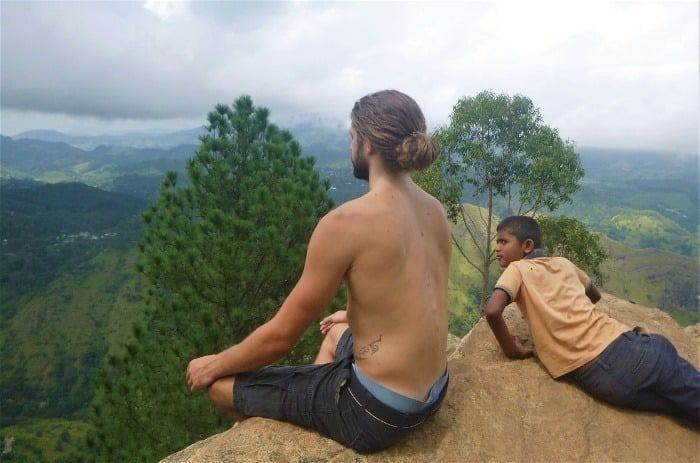
Photo: @themanwiththetinyguitar
Sri Lanka is a predominantly Buddhist country, and if there’s anywhere to dip into meditation without it feeling like a wellness brand cash grab, this is it. Options range from commercial yoga and meditation retreats (you’ll pay for the comfort) to monasteries tucked into the hills that will take in wandering travellers for next to nothing.
For the serious end of the spectrum, there are also vipassana retreats in Sri Lanka for when you’re ready to get really hardcore about your suffering and impermanence. Ten days of silence, no phone, no talking, and a fairly uncompromising look at your own mind.
Worth doing a bit of research before you commit. The gap between a retreat that’s grounded in genuine Buddhist practice and one that’s selling you a spa weekend with incense is often wider than you think.
9. Learn to Play Carrom
Carrom is finger-pool on a wooden board, and it’s everywhere in South Asia. If you haven’t come across it before, you will in Sri Lanka: most hostels have a board sitting around waiting to be used.
To sum it up in a nutshell, it’s basically finger-pool. If you’re a complete newbie, befriend someone willing to teach you, roll up, and git gud!
10. See Elephants Responsibly
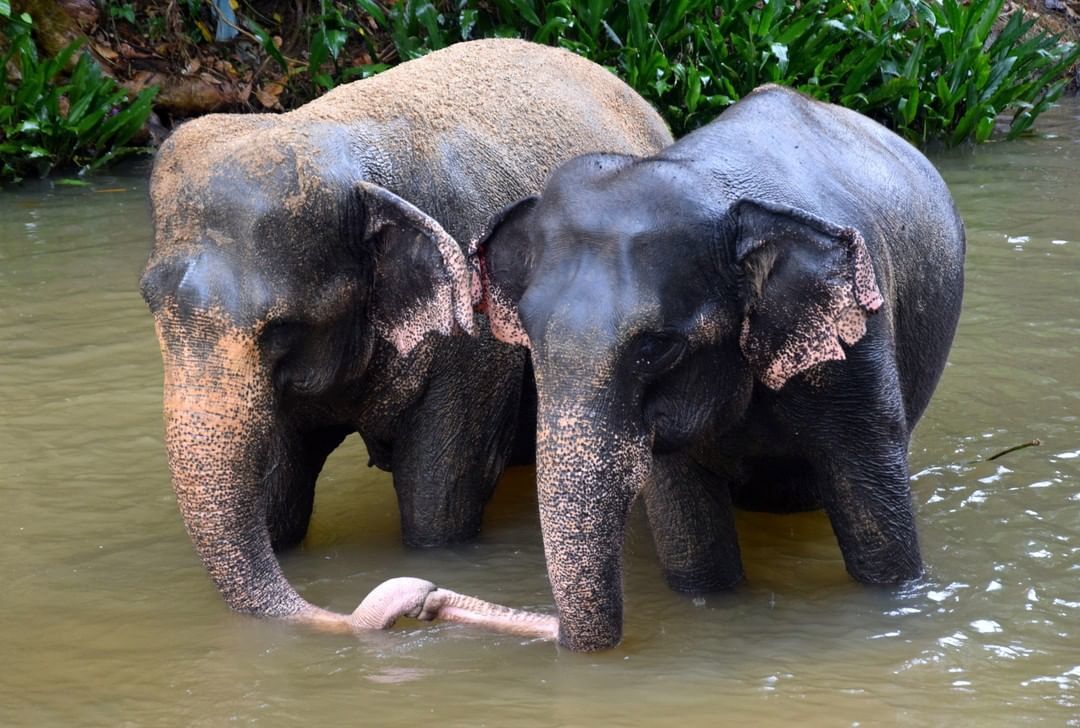
Photo: @millennium.elephant.foundation
Right, so The Broke Backpacker doesn’t condone animal tourism nor do I peddle the wares of Sri Lanka’s hyperactive Safari culture.
That said, there is one experience we do get behind: ethical elephant sanctuaries that prioritise welfare over tourist interaction. The best ones have ditched riding programmes entirely. It’s less of a tourist attraction and more about time being spent observing elephants living as close to normally as a sanctuary allows. Good ones also offer with volunteer programmes that involve actual real life work like farming, veterinary care, and general upkeep rather than manufactured tourist moments.
When researching any elephant experience in Sri Lanka, look for places where elephants roam freely, are not used for rides or performances, and where tourist interaction is limited and on the elephant’s terms. There are organisations like the Millennium Elephant Foundation that are built around keeping elephants healthy rather than keeping tourists happy.
Honestly, there’s zero reason not to drop the cash you were going to spend on booking a safari on this instead. It’s 1000 times more of an authentic experience, 1000 times less morally reprehensible, and 100,000 times better than sitting in a jeep staring slackjawed at wild animals that really just wish you’d piss off…
Backpacker Accommodation in Sri Lanka
Sri Lanka isn’t the cheapest country in Asia, and prices have crept up over the past few years as tourism has grown. But it’s still very manageable on a backpacker budget, and the accommodation scene has enough range to suit everyone from the genuinely skint to the mild flashpackers.
There are a few choice picks of Sri Lanka’s coolest hostels in particular which come with a little bit of a grungier vibe… The good type of grungy!
Depending on what kind of accommodation in Sri Lanka you’re after, the prices and amenities do vary:
- Hostels and guest houses in Sri Lanka are pretty much anywhere that the backpackers go and usually range from the $5-15 price range. In high season in popular spots like Ahangama and Hiriketiya, expect to pay even more than that, especially for the swankier spots.
- For travelling duos (or trios, you saucy minx) there are plenty of cheap rooms in Sri Lanka too. A decent room costing $20-30 split two ways (or three-ways, wink-wink) will usually net you something better than a dorm room for roughly the same price.
- Hotels are a thing in Sri Lanka too and they come in many flavours. Sri Lanka’s cheap hotels offer some light luxury at a good price ($30+) while the best hotels… Well, let’s just say Sri Lanka’s best hotels go wayyy outside my budget and area of expertise.
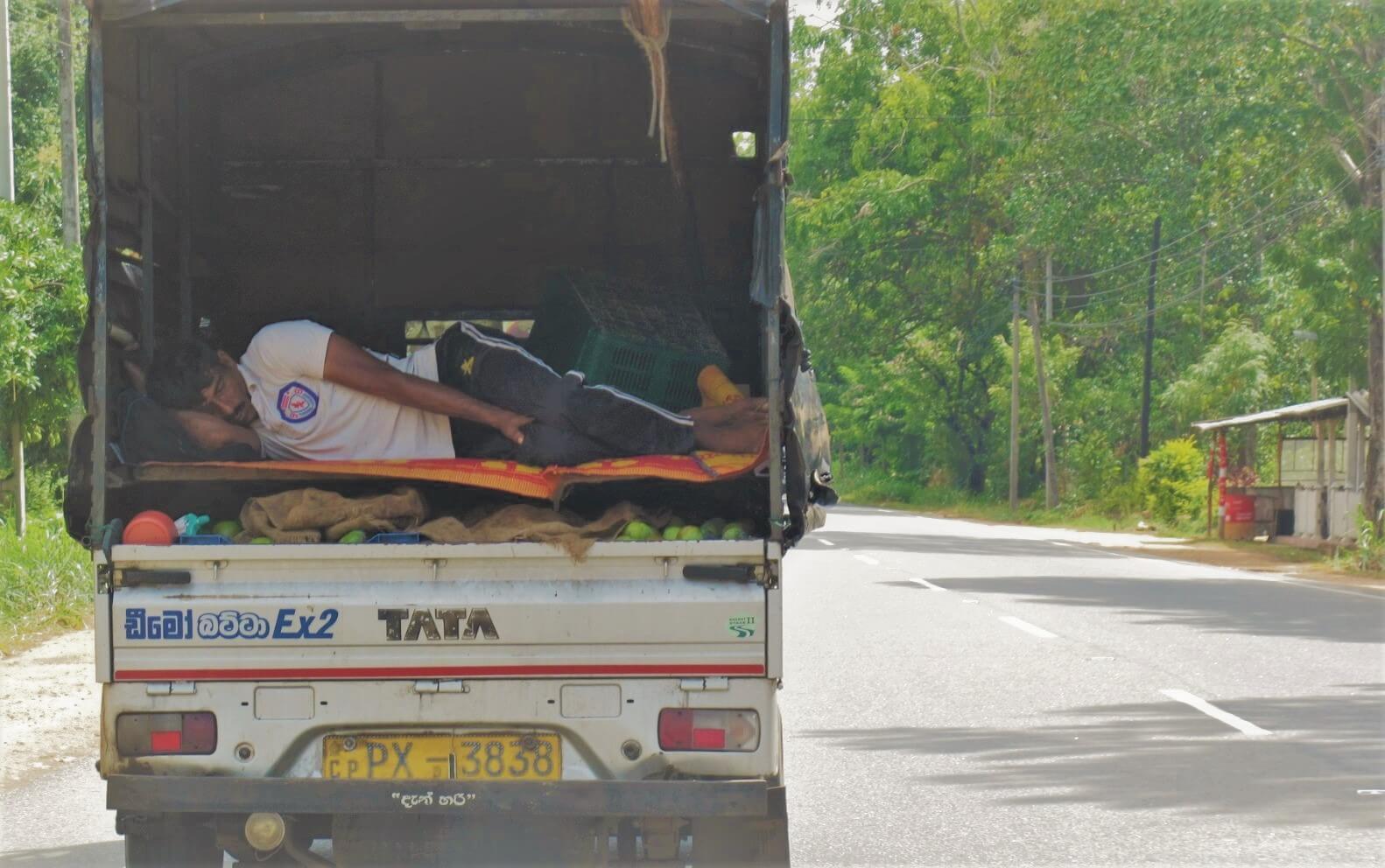
Photo: @furysuri
Travelling by Couchsurfing is also definitely a thing here, and it’s an excellent way to both get a local’s perspective of the country and save some rups in the process! Also, considering the size and connectivity of Sri Lanka, Couchsurfing at one local’s house starts the chain of being hooked up across the island.
Finally, Airbnb in Sri Lanka is another sweet option and there are some sweet pads around: treehouses, bungalows, and rooms-with-a-view. Prices vary depending on the level of dope-ness, but there are some super cheap choices too.
The Airbnbs in Sri Lanka offer a nice respite if the constant flow of people is growing a bit tiresome; however, it’s never quite as fun as sitting around the common area in the hostel beating yet another English lad at pool.
Sri Lanka Backpacking Costs
Sri Lanka is affordable, but don’t expect India or Nepal prices. Public transport and local food are dirt cheap, think trains for pennies and rice and curry for a couple of quid, but the moment you start adding in the extras, the daily spend creeps up fast.
Attractions are where the budget takes a hit. Safaris in Yala or Udawalawe, surf lessons in Weligama or Arugam Bay, tuk-tuk rental for exploring at your own pace, and eating at tourist-facing restaurants all add up quickly. None of it’s outrageous by Western standards, but it’s a different game to hopping on a local bus and eating from a roadside stall.
Beach towns and the big-name attractions are where costs climb the most. Mirissa, Ella, and Sigiriya see more tourist pricing than quieter spots inland, and popular sites often charge foreigners several times the local rate for entry.
How much you actually spend comes down to season and travel style. If you’re hopping from backpacker spot to backpacker spot in the highest of seasons in the swankiest of hostels, of course your total is gonna rack up more than the backpacker travelling in the depth of rainy season in the no-frills hostels. Dorms, local food, and public transport will keep your average spend down, daily tours and private drivers will tally it up fast.
If you’re going full frugal mode, dorm beds, local food, no activities, $ 20-ish a day is doable. Realistically though, most backpackers land somewhere higher once safaris, surf lessons, and the odd tuk-tuk ride get factored in. I sat at around a $30-40 a day daily total with activities and the western meal factored in and was living fairly comfortably.
Take this table with a pinch of salt, the figures may seem high but it accounts for nightlife and activities every single day, which you probably won’t be doing unless you’re a madman with the energy of seven redbulls. Needed chill days will bring this down considerably.
A Daily Budget in Sri Lanka
| Expense | Broke-Ass Backpacker | Frugal Traveller | Creature of Comfort |
|---|---|---|---|
| Accommodation | $5-$9 | $10-$15 | $20+ |
| Transport | $3-$6 | $7-$12 | $15+ |
| Food | $5-$9 | $10-$15 | $16+ |
| Nightlife Delights | $5-$12 | $13-$20 | $21+ |
| Activities | $0-$15 | $16-$35 | $40+ |
| Total per day: | $18-$51 | $56-$97 | $112+ |
Money in Sri Lanka
The currency of Sri Lanka is the Sri Lankan rupee (LKR) and they have pretty birds and pictures on them. No closeups of some old dude looking unsettlingly at you. Find out how much your money is worth today by using the up-to-date converter below.
ATMs in Sri Lanka are frequent and aplenty and most (pretty much all) are going to charge you a fee. I haven’t encountered any issues using them though I do remember one local woman having her card eaten.
Most accommodation and hostels in Sri Lanka take card as do restaurants in the touristy places (or just if they’re fancy). Outside of that, I’d stick to cash, especially for local areas.
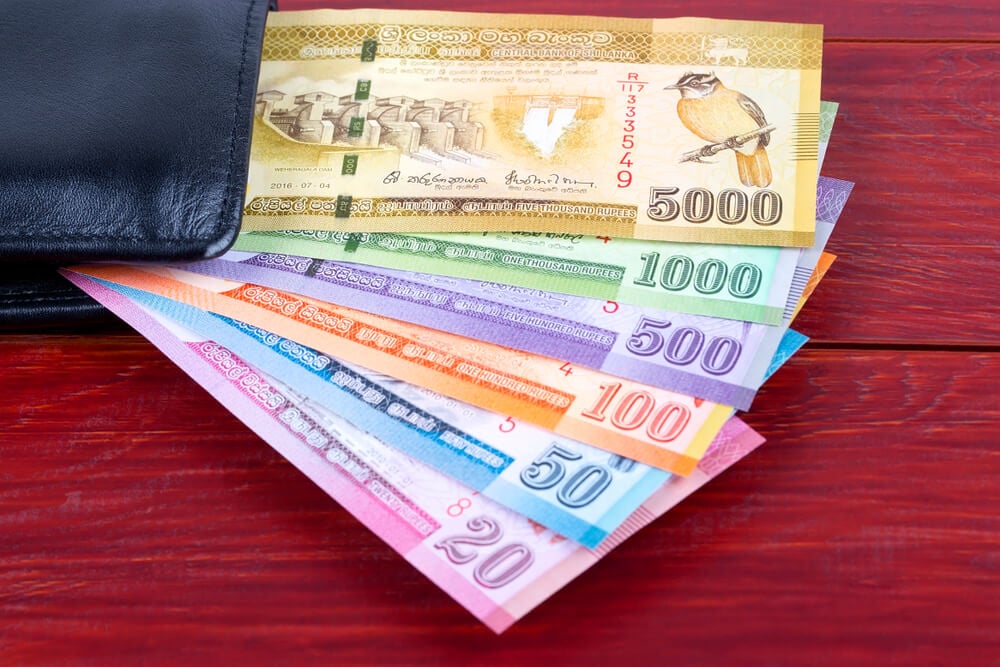
Sri Lanka is also haggling country, so brush up on your bartering skills. I never tried at a hostel but tuk-tuks, private rooms, souvenir shopping… test your might!
Travel Tips – Sri Lanka on a Budget
Sri Lanka ain’t dirt cheap, but it doesn’t need to gut your bank account either. After a few weeks on the road here, I settled into a routine of less than $10 a day, covering a bed, an all-you-can-eat breakfast, and an all-you-can-eat dinner. Rice and curry buffets, I owe you my life.
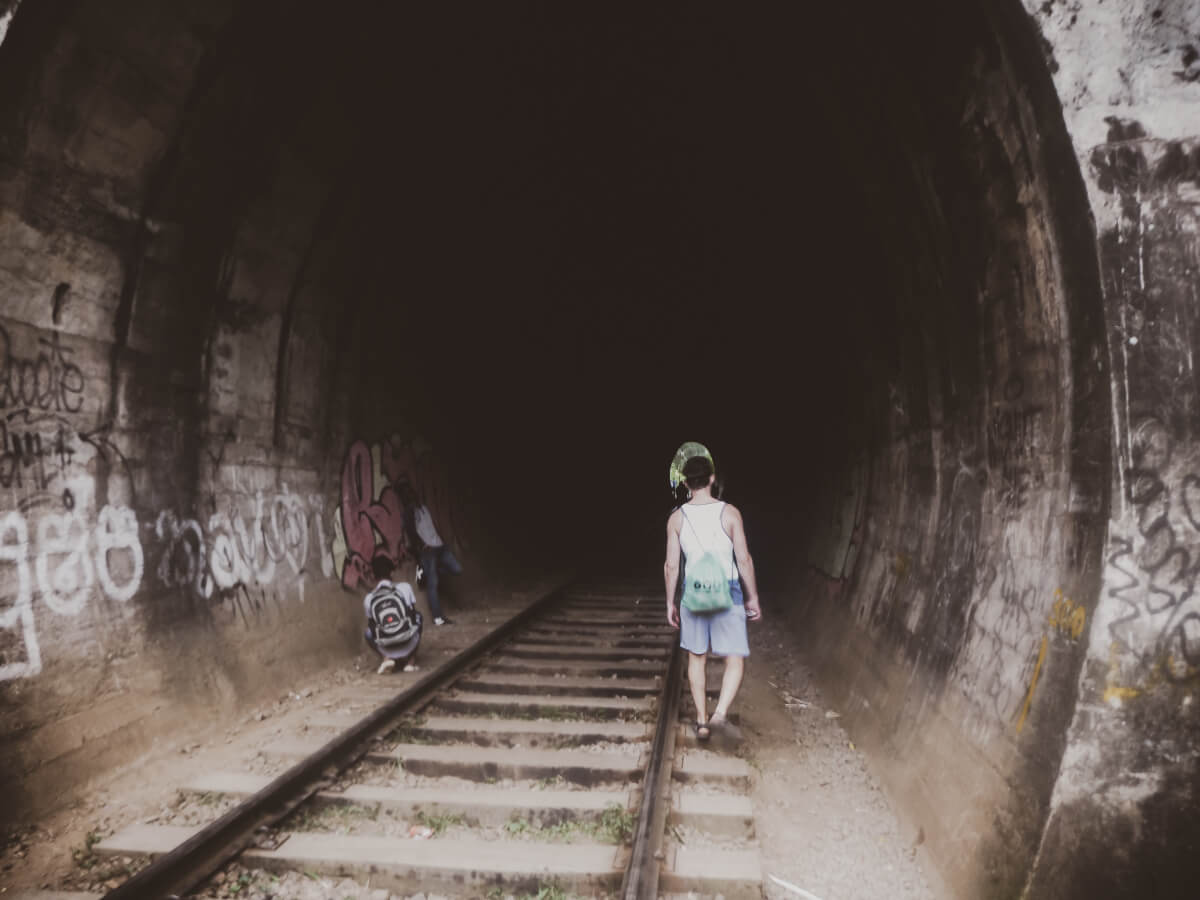
Photo: @themanwiththetinyguitar
But as I mentioned, I haven’t taken my travels here quite as rough as I have in the past. This was a couple years ago, so that golden of $10 is less feasable, but there are certainly things you can do to truly keep it within the broke backpacker realm. If you want to keep your budget for backpacking Sri Lanka at the real cheap-ass level, there’s a few standard budget backpacking tips and Sri Lanka-specific tricks you can utilise:
- Hit the rice and curry buffets: They’re everywhere, they’re cheap, and they’ll fill you up for the day on a couple of dollars. Overeat to space those meals wisely!
- Take buses and trains over tuk-tuks: Local buses cost next to nothing and trains aren’t far behind, especially in unreserved third class. Save the tuk-tuks for when you actually need door-to-door convenience.
- Sleep a street back from the main strip: The guesthouse two minutes off the main tourist strip is almost always cheaper than the one slap in the middle of it, and you’ll still be close enough to walk in for food or a beer.
- Bargain, but don’t be a dick about it: Haggling is normal here, expected even, but there’s a difference between negotiating a fair local-ish price and fighting a tuk-tuk driver over 50 cents. Know when to just pay it.
- Travel outside peak season: December to March pulls in the crowds and the price hikes that come with them. Shoulder season means cheaper beds, quieter beaches, and a bit more breathing room in that budget of yours.
- Be picky about what you actually pay to see: Not every temple, viewpoint, or ‘cultural experience’ is worth the entry fee. I’ve had a whole vent about what is and isn’t worth it in Sri Lanka. Save your money for the big ones and skip the rest guilt-free.
- Split a tuk-tuk rental with other travellers: Renting solo adds up fast. Find a couple of people heading the same direction and split the daily rate, it’s a much smarter way to get around than everyone booking their own.
- Leave the tourist bubble: Once you take a stroll out of the dedicated one-or-two tourist streets, you’ll start finding things closer to the local prices. Also, generally, the shopkeepers are pretty stoked to see you.
- MRRP: Maximum retail rupee price: it’s nearly always printed on supermarket goods in Sri Lanka’s shops. Keep an eye on it and calculate your bill because it’s not uncommon (especially in the tourist areas) for the shopkeepers to charge a little extra tea money. Count your change too.
Best Time to Travel Sri Lanka
Right, strap yourself in because I’m about to tell you about the weather in Sri Lanka! Is it complicated? Na – only a bit – but it’s complicated enough to warrant saying “strap yourself in”.
As I mentioned, there are two distinct monsoon seasons in Sri Lanka. That leaves the question of when to go to Sri Lanka a bit more open-ended… like a choose-your-own-adventure book!
The northeast monsoon (which shuts down Arugam and Trinco and soaks the hills as well) hangs about from November to March. This means that the peak season for Sri Lanka’s south coast is in the winter and it gets busy.
The southwest monsoon – with the heaviest rainfall of Sri Lanka’s weather – hits the south coast from April to September. This makes summer and the surrounding months the time to visit Sri Lanka’s east coast and the hill country. During this time… oh, dude, it’s so hot. A humid inescapable heat; wherever you are, you want to be near water.
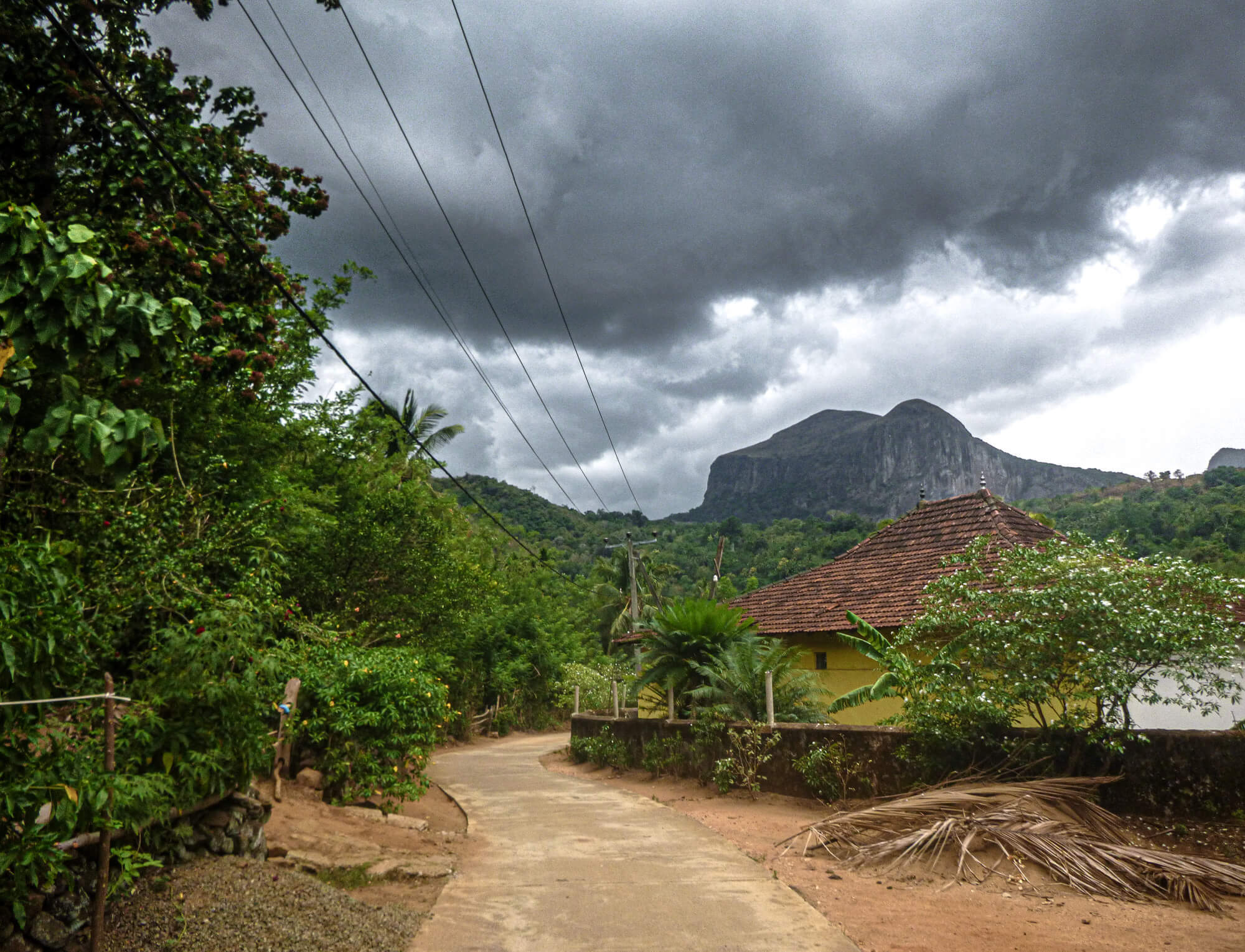
Photo: @themanwiththetinyguitar
October and November are the slowest months for Sri Lanka. Pretty much everywhere gets hit by rainfall regularly and thunderstorms scatter across the island.
The rain is the main thing you’re going to tussle with during your travels within Sri Lanka. Past that, temperatures are consistent. At higher elevations it gets colder but, otherwise, Sri Lanka is humid and it’s hot and there are no other real surprises.
What to Pack for Sri Lanka
Packing for Sri Lanka is pretty straightforward; take whatever your usual backpacking setup is. However, a few extra items I’d pack are:
- A good-quality rain jacket: Even if you’re doing your best to avoid the monsoon, chances are that you’ll get rained on at some point during your visit to Sri Lanka.
- Layers for the hill country: You might be sweating yo’ ass off at the beaches, but the hill country can get nippy at night.
- Oh, and the mosquitoes are assholes. Take mosquito repellent or just buy some Odomos when you arrive. It’s cheap, and the best damn mosquito repellent I’ve ever used!
- Modest clothing: an essential for temples. A good sarong doubles up as your cover AND towel at the beach. We love a multifunctional item.
- Flip flops or sandals you aren’t precious about: you’ll be taking your shoes off constantly at temples, guesthouses, and beach bars.
- Cash is king here: You’ll need to hit up an ATM once you touch down.
- A universal adapter: Sri Lanka uses a mix of plug types depending on the building’s age, so don’t assume one adapter style covers you everywhere.
- Your International Driving Permit: if you’re planning to rent a tuk-tuk yourself.
- And patience. Take some patience with ya – the transport can frustrate even the strongest backpackers.
Staying Safe in Sri Lanka
Is Sri Lanka safe to travel? Absolutely. For the most part, I felt safe backpacking through the country, though you always have to keep the possibility of scams, transport risks, petty theft, natural hazards, and cultural expectations in the back of your mind.
The country has a complicated recent history, including the 2019 Easter bombings, and the wounds from decades of internal conflict haven’t fully healed. But there’s no active unrest here, and it stays well away from anywhere tourists actually go. Most Sri Lankans are focused on moving forward, not backwards into old divisions, and backpackers are extremely unlikely to encounter anything resembling danger from that history. Worth keeping an eye on local news if you’re travelling during an election period though, as protests can flare up around Colombo and are best avoided rather than photographed.
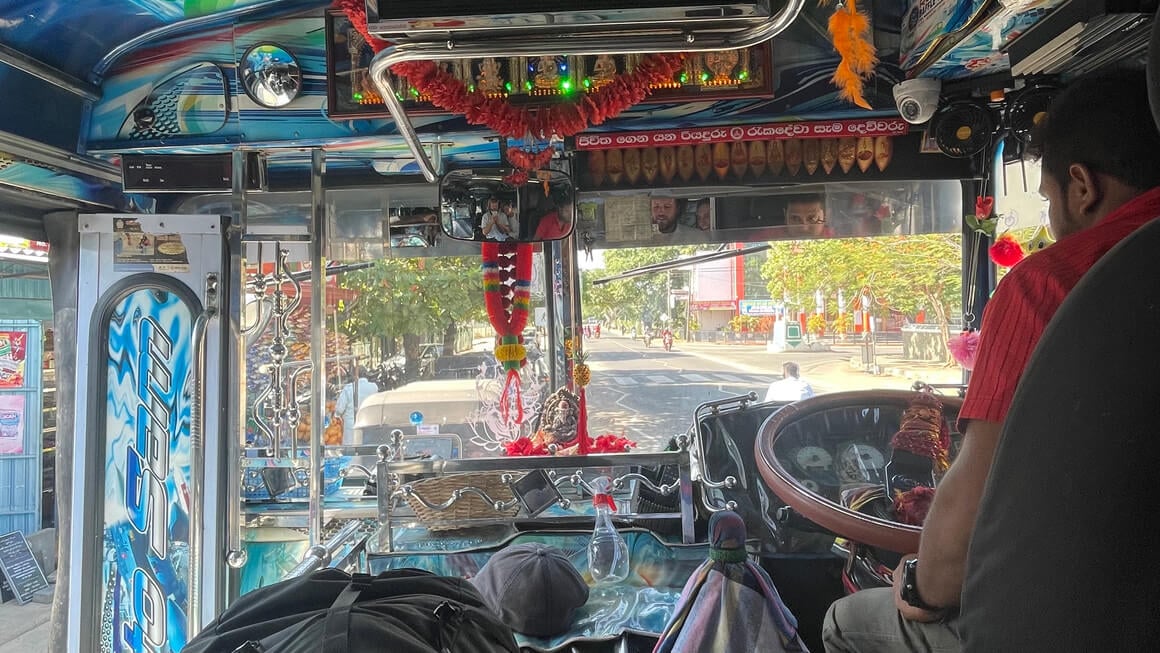
Photo: @danielle_wyatt
So what do you need to look out for:
- Sort your tuk-tuk before you get in, not after. Dodging overcharging is the national sport for tourists, so agree a price upfront or insist on the meter, and keep half an eye on the route to make sure you’re not being taken the scenic way round. In Colombo, PickMe (Sri Lanka’s own ride-hailing app) or Uber will save you the hassle entirely, and both work well in other major towns too.
- Respect the roads, because plenty of drivers don’t. Buses in particular move fast and loose, overtaking on blind corners like it’s a personal grudge match. Look both ways obsessively before crossing, and don’t assume a driver has seen you just because you’ve seen them.
- Watch for the classic tourist attraction hustles. Stilt fishermen and tea pickers posing for photos will often demand cash the second your camera comes out, sapphire “deals” are rarely as good as they sound, and unofficial guides at major sites will try to attach themselves to you uninvited. Sort guides in advance if you want one, and feel free to just say no to the rest.
- Keep an eye on your gear. Watch your pockets in touristy areas and your stuff at the beaches. Pack a secure travel money belt to protect your valuables!
- Stick to filtered water (or, better yet, bring a filtered water bottle). I never got sick while backpacking in Sri Lanka, however, my constitution seems to have toughened up ever since that sunrise dip in the Ganga.
- Give wildlife the distance it deserves. If you see a wild elephant or leopard, lucky you but keep your distance, yeah?
- Don’t ride the elephants, chained or otherwise. It’s sad that I have to mention this. Please, don’t be part of the problem.
Overall, this is run-of-the-mill ‘how to travel safely‘ stuff. Jerks are everywhere. Most locals I’ve met aren’t out to screw you over; just to rip you off a bit.
An interlude from Laura – Is Sri Lanka good for solo female travel?

Sex, Drugs, and Nightlife in Sri Lanka
Alright, now we get to talk about the good stuff! Staying and safe and getting fucked up are not always congruent, but they certainly can be if you have your head screwed on!
Sri Lanka’s beach towns have proper party scenes, and if you’re after nights out and new company, you’ll find both without much effort. The country’s nightlife doesn’t always seem as obvious as the glaring backpacker bars and bucket deals of Thailand and Vietna, but once you know where to look, oh boy, is it sweet.
Sri Lanka’s Party Scene
They aren’t really ‘party towns’ as such. Sure, you’ve got Mirissa as the main backpacker hub where young and drunk travellers go in search of the opportunity of getting fucked up, but really, parties are scattered all over the south coast. There are resident nights like Doctors House in Matara and Trax in Ahangama, but people from all over the south coast flock to them.
The reality is people don’t base themselves in a specific party town at all, if you’re really in it for the love of the boogying game, you’ll get a tuktuk or bus to whatever beats are calling you that night. God knows I did my fair share of shameful tuktuks home with the commuters at 7am.
As for the party scene in Sri Lanka? Think Thailand party vibes with more head wobbles: house and techno, dudes in fruit-print shirts, and hostel hookups navigating shared dorm spaces. (The dude I saw in Arugam that got out of bed and waited outside while his mate got a root is an absolute legend of time and space.)
Hookups and Tinder
How’s the meaningless sex scene in Sri Lanka? Alive and kicking, same as anywhere! The beachside party spots in Sri Lanka are as rife with drunken one-night-stands as anywhere and – outside of poor decisions made under impaired cognitive functions – Tinder appears to be the gold standard with travellers these days (I feel so old).
I experimented with swiping (briefly) and I can tell you that I matched with way more locals than white chicks mostly centred in Colombo. I can also tell you that if it was a choice between getting laid in Colombo or not being in Colombo, I would choose the latter every time.
Whatever you’re into, just extend the same basic courtesy you’d want yourself: be upfront, be respectful of shared dorm spaces, and remember your roommates didn’t sign up to be an audience. And remember lads – please wrap it up!!!
Summary of findings: Tinder still eats farts for breakfast.
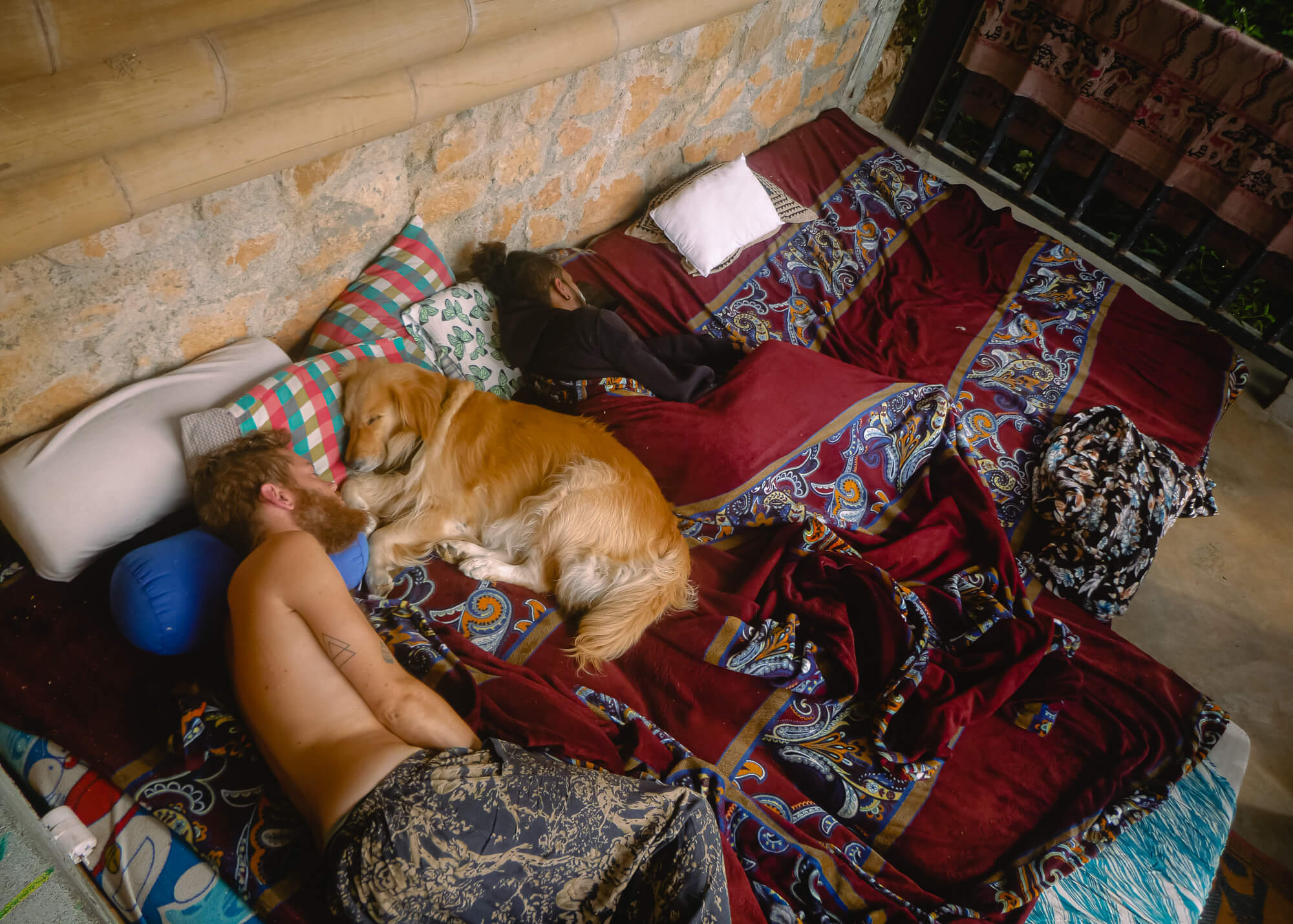
Photo: @themanwiththetinyguitar
Alcohol
Right, now for the good stuff: the things you’re putting inside your body! (There was a spectacularly inappropriate segue there too but my editor said it had to go…)
Starting at the bottom, booze is easily available and fairly cheap though, as always, the real killer for anyone backpacking Sri Lanka on a budget.
Lion is your go-to beer and the Lion Strongs are gonna give you the most bang for your buck (if getting royally shitfaced is the goal). Arrack is the local distilled option and the cheap swill tastes fairly close to rum.
How much is a beer in Sri Lanka? Usually around the $1.50-$2 mark, a bit more at your hostel, and pricey at the tourist traps. Outside of beer and arrack, booze is expensive.
It also bears mentioning that cigarettes are expensive (which is very weird for Asia). A pack of cigarettes will set you back similarly around $12 for the shitty local kind and even more for your international brands. Rolling tobacco is damn hard to find (though possible).
Drugs
What about the real goodies? Teehee.
Drugs first because some would say that’s my area of expertise (sorry, Mum).
I can confirm that you can get pretty much anything your heart desires (mushrooms being a notable absence). The prices are a lot higher than India or Nepal (honestly, some stuff can approach Australian price-levels) and the quality isn’t as high (pharmaceuticals notwithstanding) but they definitely do the job.
Now, on the topic of smoke, you have weed and you have hash. Ganja is cheaper, but it gets messed with – chemicals and the like. The locals call it KG (Kerala Gold but my hairy ass it’s Kerala Gold) and most local stoners won’t touch it except on the odd occasion.
Hash is yummy but pricey. You can get crap hash and you can get good hash; that depends on you. Also, expensive or not, this is still South Asia so get used to rolling big spliffs and sharing them around. Forget the puff-puff-pass BS; sharing is caring.
To put my wisely parental hat on – of course, you shouldn’t be buying, nor taking, drugs from strangers. Sri Lanka’s drug laws are strict and unsympathetic to tourists claiming ignorance, and enforcement isn’t always predictable. Don’t ask around loudly, don’t assume a friendly local approach at a beach bar is harmless, and understand that a bad situation here can escalate fast and stay with you long after the trip ends. If you choose to make decisions in this area, do it with people you trust, in a space you’re comfortable in, never alone, and never assume quality or safety just because someone’s selling with confidence.
I’ve given you the mandatory safety talk, do with the info what you will…
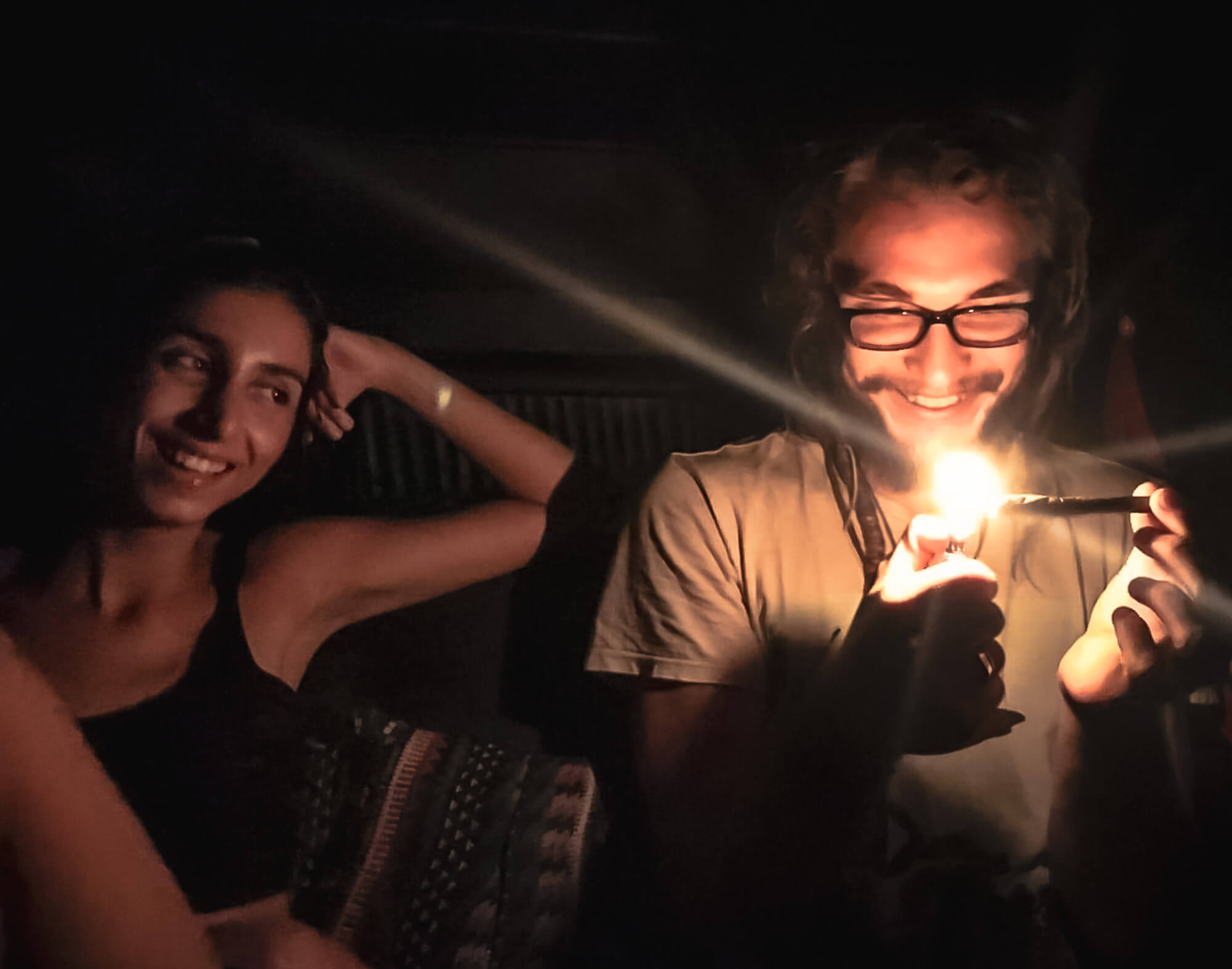
Photo: @themanwiththetinyguitar
Getting Insured BEFORE Visiting Sri Lanka
Leopards, elephants, severe indigestion from rice and curry buffet overloads – a lot can happen in Sri Lanka! That’s why it’s always better to have full travel insurance when you’re moving.
Because shit happens.
Sort out your insurance before you go. There are several good options, but our overall pick is SafetyWing. Most of the Broke Backpacker team has used it at one point or another, and we’ve filed claims for rabies jabs in Bali, a hospital stay in Mexico, and a clinic visit for a stomach bug that wouldn’t quit. All paid out.
It’s month-to-month, no lock-in, no itinerary required, and you can buy it after you’ve already left. A little over $2 a day if you’re under 40.
New SafetyWing customers: use code BROKEBACKPACKER for 8 free weeks of electronics theft coverage. You have to scroll down and click the pink camera on their landing page to enter it, and you have to do it before creating your account.
How to Get into Sri Lanka
Well, it wouldn’t be much of a travel guide for Sri Lanka if I didn’t tell you how to travel it! How you’re getting in, how you’re getting around Sri Lanka, and, then, how you’re getting out again.
Some might say that’s incredibly crucial information. At the very least, I’d be shit at my job if I didn’t tell you.
Chances are you’ll be flying into Sri Lanka from Colombo Airport. Negombo, not Colombo, is the closest town to the airport, roughly a 20-minute drive compared to nearly an hour into Colombo depending on traffic. To avoid a less-than-stellar introduction to Sri Lanka, I urge you to stay in Negombo over Colombo for your first night if you need it.
From the airport, here’s how onward travel breaks down:
- To Colombo: Taxis and PickMe (Sri Lanka’s ride-hailing app) are the easiest options, taking 45 minutes to over an hour depending on traffic. There’s also an airport bus service, slower but considerably cheaper.
- To Negombo: A short taxi or tuk-tuk ride, usually under 20 minutes. Most guesthouses will arrange pickup if you message ahead.
- To Kandy: Direct transfers and private drivers are available from the airport, taking around 3 to 4 hours. The backpacker version is to head into Colombo first and catch a train from there. Longer, but cheaper and trains are the preferred mode of transport over buses IMO.
- To the south coast (Mirissa, Weligama, Galle): Private transfers run directly from the airport, around 2.5 to 3 hours depending on traffic and your exact destination. Again, if you want to get there by public transport, you’ll have to swing by Colombo first to get a train or a bus.
Entry Requirements for Sri Lanka
Sri Lanka runs on an ETA system, and the good news is that almost everyone qualifies, tourist ETAs included.
The standard tourist ETA gives you 30 days in the country with double entry, so if you fancy a side trip to backpack the Maldives partway through, you can pop back into Sri Lanka without applying again. Fees and free-ETA eligibility change more often than you’d think here, sometimes more than once a year, so treat any number you read (including this one) as a starting point rather than gospel.
Wanna stay beyond 30 days? You can apply for an extension online. I recommend applying before you arrive as the site takes around 30 days to load. Okay, this is sarcasm (kinda), but the site is slow and sucks, so give yourself good time. Because of this, they actually seem to be pretty lax about extensions. I’ve heard of plenty of people who have been waiting back for their extension way after their visa expired, but because they applied for it before their visa ended, they were all good.
Are you Maldivian, Singaporean, or Seychellois? You lucky bastards get to skip the ETA process altogether: no application, no fee, just show up. A separate group of nationalities still needs to apply for an ETA but currently pays nothing for it, that list has expanded a fair bit recently and is worth checking directly rather than relying on last year’s version.
A few things worth locking down before you fly:
- Passport validity: You’ll need at least six months left on your passport from your date of arrival, plus a couple of blank pages free for stamps.
- Onward travel: Immigration officers sometimes ask for proof you’re leaving again, a booked flight out (even a flexible one) covers this. For the record, I had no onward ticket but that’s obviously very case-by-case. I haven’t needed one in my travels yet; it must be that winning smile!
- Full visas: A small number of nationalities aren’t eligible for the ETA at all and need to apply for a full visa instead. If you’re unsure where you stand, the official portal will tell you.
How to Get Around Sri Lanka
Sri Lanka is easy to travel because distances are manageable and public transport is cheap, but journeys are often slow, loud, crowded, and unpredictable. You just gotta lean into the chaos. If Google is telling you a journey will take a couple hours, double it, and then some. We’re running on purely island time here, baby.
Travelling by Train
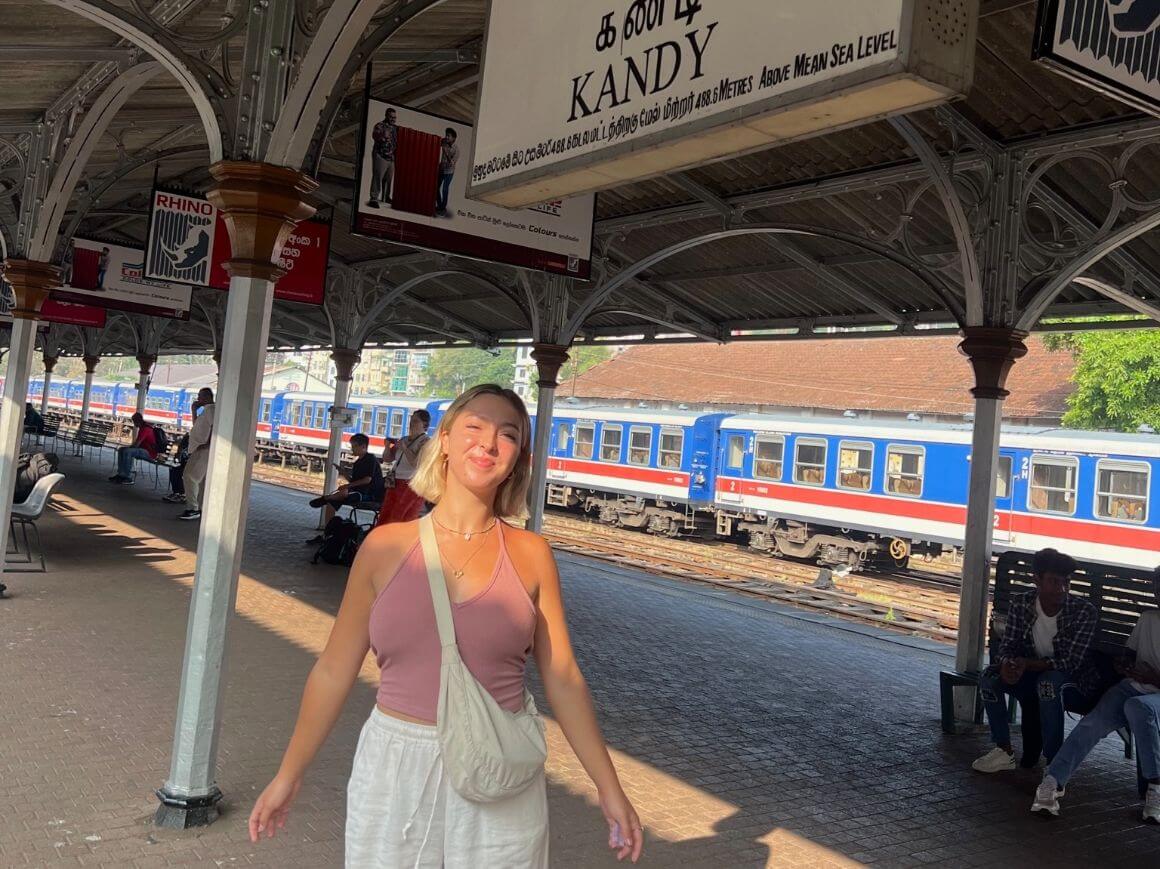
The trains in Sri Lanka are tight! They run to a number of major points across the island and Sri Lanka Railway’s ticket prices are cheap. The rides are bumpy, slow, and teeming with local goodness. If you’re after scenery rather than speed, this is how you see the country properly.
The big one everyone’s chasing is the Kandy to Ella route, hours of tea plantations and misty hills, and the iconic Nine Arches Bridge. It’s slow, rarely on time, and one of those routes where the journey is far more important than actually getting from A to B.
Seating comes down to reserved vs unreserved. Unreserved gets you on for next to nothing but no guaranteed seat, so you might be standing for a stretch, or squeezed onto a bench with three new besties. Reserved seats cost more but are basically like gold dust to acquire unless you’re VERY organised. Something I am not. On popular routes like Kandy to Ella, book ahead if you can; seats sell out well in advance during peak season, and turning up on the day hoping for the best is a good way to end up standing for six hours.
@taya.travels
Travelling by Bus
The buses in Sri Lanka are also ridiculously cheap! Will you get a seat? I dunno, guess you’ll just have to show up to find out!
Routes run frequently across the island, so you’re rarely waiting long, but local buses get properly crowded and drivers move fast, overtaking with more confidence than the road conditions probably warrant. It feels too close to GTA at times, so bring a strong stomach, a bit of courage and your trusty pair of headphones to block out the inevitable cacophony of noise.
Photo: @danielle_wyatt
Bus ticket prices in Sri Lanka are based on the grade/type of the bus and that topic is a hot mess. Let’s just summarise it as cheap, local, unreserved buses vs. expensive, AC, reserved ones. In terms of local buses, it’s a matter of showing up and saying the name of your destination (perhaps with that dazzling grin again). That’s for the el cheapo unreserved seating. The fancier classes require more pre-thought.
In terms of booking the fancy-pants classes, go to the station, talk to your appointed legal guardian at your hostel, or, option three, book online. Check out 12Go.asia for booking trains and buses in Sri Lanka because Sri Lanka is in Asia. Couldn’t be simpler! The AC buses are worth the extra rupees if you want the option to book in advance, a proper seat and a break from the heat.
Either way, keep your bag on your lap or between your feet rather than stashed somewhere you can’t see it, local buses aren’t the place to relax about your stuff.
Tourist Shuttles, Taxis and Tuk-Tuks
If you’re happy to pay more, the going gets a lot easier. Tuk-tuks, share taxis, private vans – there’s no shortage of tourist transport options here. Sri Lanka has magic tuk-tuks; they just always seem to appear.
This is your best bet for awkward routes that trains and buses don’t cover well, somewhere off the main road, a late-night transfer, or anywhere you just want door-to-door without the wait. It costs more, but you’re trading rupees for comfort and control over your own schedule.
Negotiate the price before you get in, always. Haggling a fair rate directly with a driver in town usually beats asking your accommodation to sort it for you, though that’s the easier option if your bargaining skills aren’t up to scratch yet. In Colombo and other larger towns, PickMe or Uber pretty much always work out cheaper than flagging someone down on the street. In the taxi mafia areas (pretty much the whole of the south coast) you can still check these apps for a vague price that you can use to reason with tuktuk drivers.
Watch for inflated prices, especially around tourist hubs, popular attractions, and anywhere a driver clocks you as fresh off a flight. A bit of healthy distrust and a firm price agreed upfront goes a long way here.
Tuk Tuk Rental in Sri Lanka
A tuk-tuk is by FAR the best way to get around Sri Lanka.
Ok, so I promised I’d spill the deetz on what a tuk-tuk rental in Sri Lanka is like. First things first, it’s more expensive than public transport, no doubt. Between fuel costs and rental prices (from 20 bucks a day), it’s not even a competition. So why is it the second-best way to travel Sri Lanka?
You’re paying a premium to drive a goddamn tuk-tuk in Sri Lanka! Think about it: this (wonderful) couple rolls into the most – potentially only – hippie place in Sri Lanka – and recruited yours truly… They basically paid to travel with me!
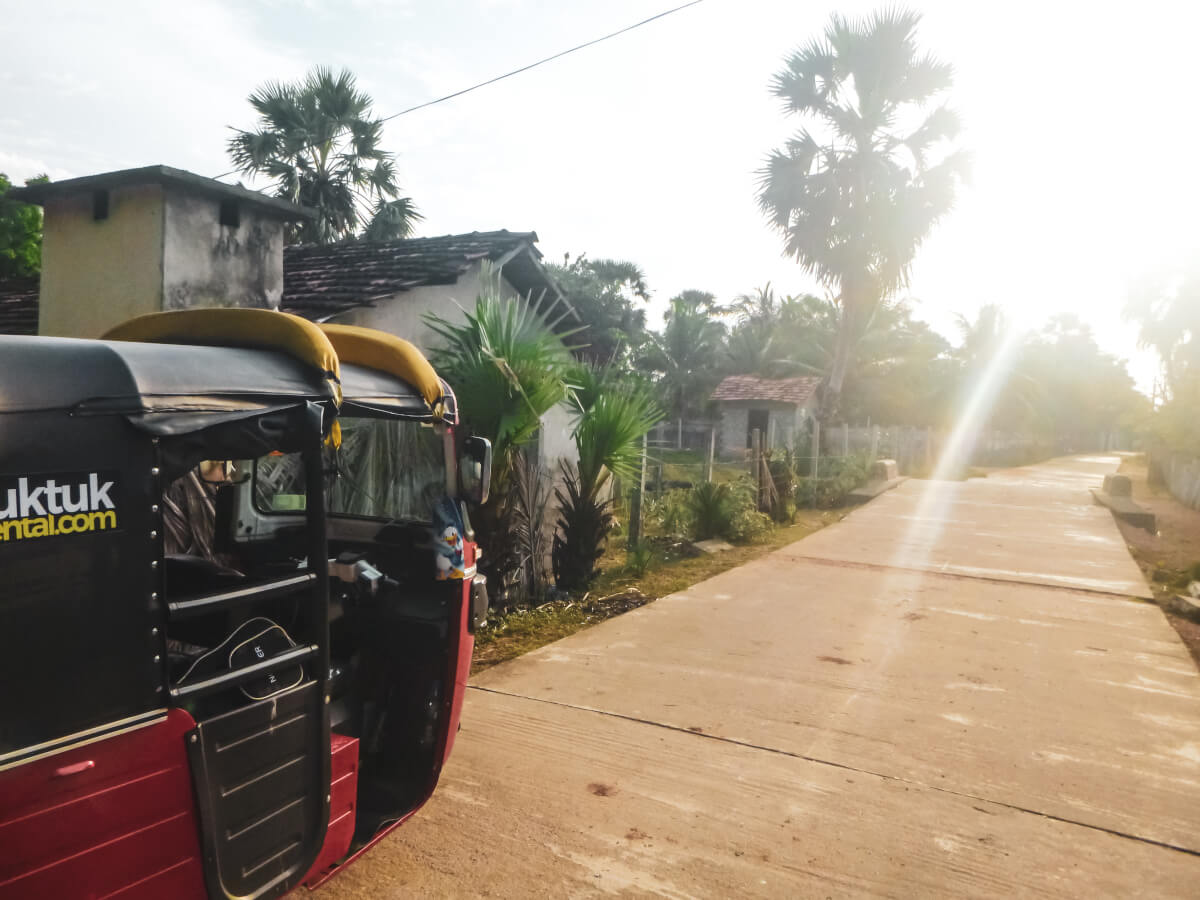
Photo: @themanwiththetinyguitar
And what an adventure! There were joints and middle-of-nowhere rotis. There were wrong turns and elephants. There was actually driving to the dealer’s house – instead of waiting for him to come back – and smoking up with him beneath the watchful benevolence of a giant Buddha statue! It was dope (heh).
Most rental companies will figure out your Sri Lankan driver’s licence (it’s a lot easier than you may have heard), sort out your insurance, and give you a jam-packed instruction booklet on… well… everything! That thing is stacked – discounts and all!
And remember:
Drive Shanti; we’re running on Sri Lanka time.
Plus… those buses will smoke ya.
Hitchhiking in Sri Lanka
Well, this is definitely the cheapest way to get around Sri Lanka provided you don’t accidentally hail an unmarked taxi. Locals will tell you it’s “not possible” but it is. The best part is you’ll definitely end up in some of Sri Lanka’s more uncommon places to visit!
There’s no ‘Hitching Sri Lanka Guidebook’ (although we do have this sweet Hitchhiking 101 Guide), but here are a few tips specific on grabbing a ride in this part of the world:
- Wave your hand, signal the direction you’re going, wobble your head (seriously, try it): a thumb may still work but it’s not a universal symbol here.
- Get someone to write you a sign in Sinhalese and Tamil if possible. It’ll grab attention at the very least.
- If the communication levels are there, remember to explain you only need to go in the direction of ‘X’.
- In smaller towns and areas (Ella comes to mind), you can grab local hitches pretty easily. Truck drivers are super chill about you just sitting in the trailer.
With public transport already this cheap, hitchhiking won’t save you much. It’s really about the adventure and the challenge, and it comes with all the usual unpredictability of hitching in this part of the world, best suited to experienced travellers who know what they’re signing up for.
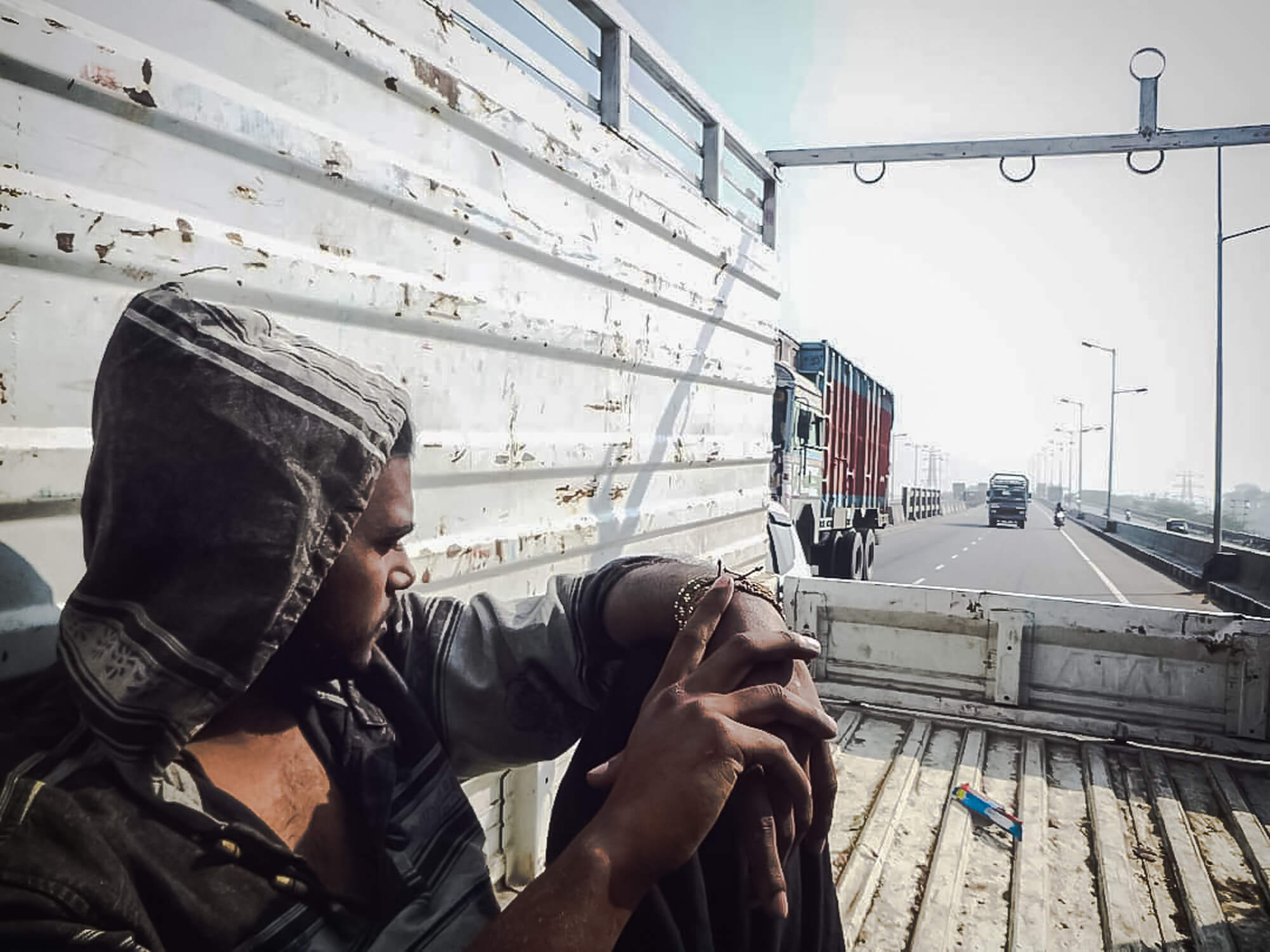
Photo: @themanwiththetinyguitar
It’s just, like… exhausting, man. Tuk-tuk drivers stop and linger thirstily, locals constantly question you and argue the feasibility of what you’re doing, and deciphering potential rides from unmarked taxis takes a developed hitcher’s second-sight. If you do get a ride, more times than not you’ll be asked for money at the end (giving a tip is alright but there’s a line).
For the challenge and adventure, yeah it’s definitely worth it! Otherwise, considering the stupidly cheap transport, it’s not. I’ll just tell you what I always tell people about my long-distance hitch across India.
“I’m so goddamn glad I did it, and I’d never do it again.”
What’s New for Backpacking Sri Lanka in 2026?
Goodbye evisas, hello ETAs. Pretty much everyone reading this will be eligible for an ETA. It costs $50 for most nationalities (less for SAARC countries, free for around 40 nationalities as of May 2026) and allows 30 days in Sri Lanka with double entry, plus the possibility to extend online. Eligibility and fees have shifted more than once this year, so check the official portal before you book anything.
Sri Lanka is also pricier than it used to be. Hostels are still cheap as chips, likewise a good curry or an egg hopper, but attractions and activities cost noticeably more than a couple of years back. Sigiriya now runs $30 to $36 to enter depending on where you check, and fuel costs have risen too, which feeds through into tuk-tuk rental, private drivers, and anything running on wheels.
Some good news? Rideshare apps are now mainstream. Uber and PickMe are the two apps of choice here. Both arrived in Sri Lanka way back in 2015, but have only really become widespread in the last few years. During my first Sri Lanka trip in 2019, I was scammed by some dickhead tuktuk driver who pulled the racist “white person tax” on me. Uber and PickMe have fortunately made these shady tricks a rarity.
The Sri Lanka digital nomad visa is also here. It launched in February 2026, costs $500, and grants a year in the country, renewable annually. You’ll need to prove foreign income of at least $2,000 a month, plus an extra $500 a month for each dependent beyond the first two.
Overall, Sri Lanka’s tourism numbers have properly recovered post-Covid and post-crisis, and the country is actively courting backpackers, digital nomads, and everyone in between. Just don’t take last year’s prices, visa rules, or exchange rate as gospel. Recheck everything official before you fly.
Working in Sri Lanka
Don’t want the trip to end? Working in Sri Lanka is a good way to escape ‘normal’ life for a hot second! It’s not as established as Thailand or Vietnam, but there’s definitely enough opportunities to actually live and work in Sri Lanka if you go looking for them.
Not strictly working ‘per say’ (at least that’s what I’ll tell immigration officers) but volunteering is the easiest way to kick the can that is your Sri Lanka exit down the road. I volunteered at a hostel for over a month getting fucked up, mingling with backpackers and forcing a bit of organised fun on them. It sure did drain the social battery but it was a sick way to stay in Sri Lanka longer for pennies!
Sri Lanka is also a solid choice of country for teaching English abroad. Between a colonial history and an increased reliance on English in both administrative positions and the tourism industry, people (and their kids) are definitely seeking English teachers!
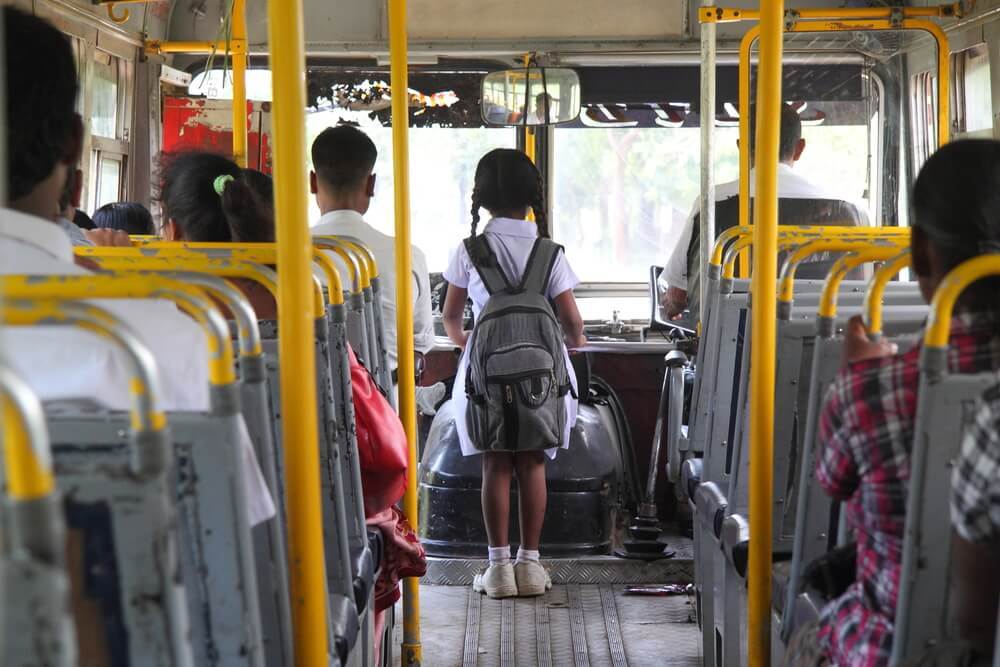
Overall, Sri Lanka isn’t the obvious pick for funding your travels the way Thailand or Vietnam might be, but between improving infrastructure, cheap data, and a proper visa route now in place for digital nomads, it’s a lot more workable than it was even a couple of years back.
Digital Nomad Life in Sri Lanka
Sri Lanka isn’t as established for digital nomads as Bali, there’s no sprawling coworking scene or decade of infrastructure behind it, but it’s becoming a viable base if you’re willing to work around a few quirks.
WiFi is the main one. It ranges from perfectly acceptable to absolute wank depending on where you’re staying. It can be frustrating to say the least. Mobile data fills the gap well – but you gotta pick the right provider as I had to aptly learn by making my way through three different SIM cards. It’s not India-cheap, but it’s still solid value.
Get a local SIM once you’re in town rather than the tourist SIM cards sold at Bandaranaike Airport, head to an official Dialog store or even any tech store that offers SIM cards, bring your passport, specify data only, and top up without the extra fees airport vendors tack on. I recollect Dialog being the best of the bunch I tried, they caused me the least amount of grief with decent signal and load speeds.
Good bases worth considering: Ella for a slower pace with decent connectivity, the south coast towns (Weligama, Mirissa, Galle) for the strongest concentration of cafes and coworking-friendly spots, Arugam Bay if you’re there in season and don’t mind combining work with a surf habit, and Kandy as a quieter alternative if the coast isn’t your scene.
As I already mentioned, the digital nomad visa is now live, launched in February 2026. Worth checking the current rules directly before applying, this is the kind of scheme that gets tweaked as it beds in.
People have now definitely caught a whiff of the viability of working remotely in Sri Lanka. Places like Weligama are now teaming with co-working spaces and cafes littered with people on their laptops trying to get a slice of working and island life. Bar moments of severe jungle WiFi-induced frustration.
Teaching English in Sri Lanka
This isn’t Thailand or Vietnam. Turn up there with a TEFL cert in hand and you’re basically guaranteed work through one of the big structured hiring markets. Sri Lanka doesn’t have that machine. What paid teaching exists is mostly locked up in Colombo’s private international schools, and those jobs go to experienced, qualified teachers, not backpackers after a few months of beer money.
What you’ll actually find plenty of is volunteer teaching, especially in government schools and rural areas. Funding’s thin, so foreign teachers get placed through volunteer organisations rather than hired and paid. It’s a solid way to spend time in the country and get properly stuck into local life, just don’t expect it to bankroll your travels for the rest of the year.
Chasing a paid gig anyway? A TEFL cert helps, a degree helps more, and most decent schools want at least one. Pay is nowhere near what you’d earn doing the same job in Vietnam or Thailand, so don’t come expecting Southeast Asia money.
None of this excuses skipping the legal stuff. Teaching on a tourist ETA isn’t authorised work, full stop, and getting caught doing paid teaching without the right visa can mean fines or getting slung out of the country. If you’re serious about this on doing this on a longer base, sort your visa first. Anything shorter, you can try ang wangle, just be aware of the risks.
Volunteering in Sri Lanka
Or, if you’re looking for a way to extend your travels (or just be a ten-outta-ten human), volunteering is definitely a thing there too! It comes with the necessary disclaimers about volunteering in developing countries – both concerning doing your research and not letting your guard down too much – but using a reputable platform for volunteering abroad is a great way to connect with local communities AND travel for longer.
Hostel exchanges
There’s a decent chance you might sniff out a cool gig just backpacking around Sri Lanka. Some hostels are keen for a helper in exchange for a bed and daily curry and rice buffet! If you got the gift of the gab (or know like five yoga poses), you can probably hustle something up.
Community projects
Beyond hostel gigs, there’s a decent spread of community-focused placements too, teaching support, construction, and local development work, often based well outside the main tourist towns. These tend to give you the most direct contact with everyday Sri Lankan life, though quality varies wildly, so vet the organisation properly before committing your time.
Environmental work
Sri Lanka’s got a fair few environmental projects going, reforestation, coastal cleanups, and conservation efforts tied to its national parks. Good options if you want your time here to leave the place better than you found it rather than just passing through.
Animal welfare
Animal welfare placements exist too, but tread carefully here. Sri Lanka has its share of animal tourism dressed up as conservation, elephant ‘sanctuaries’ that still allow riding or bathing on demand, turtle hatcheries that prioritise tourist selfies over the animals. Do proper research before signing up, a legit placement should prioritise the animals’ welfare over opportunity for a good Insta story.
Choosing a platform
Opportunities can always crop up through the backpacker grape vine, but if they don’t, choosing a reputable platform will save you potential future ads. As always, if you do see an opportunity online that looks too good to be true, it likely is.
Look for transparency about what your money goes towards, clear vetting of the placement itself, and reviews from actual past volunteers, not just glowing quotes on the organisation’s own site. Be especially cautious with anything child-facing, orphanage volunteering in particular has a well-documented history of exploitation in the developing world, including in Sri Lanka, and even well-meaning short-term placements can do more harm than good to kids who need stability, not a rotating cast of strangers.
Worldpackers connects the well-intentioned dirtbag sorts to rewarding volunteering opportunities. They run a bit lower on the number of gigs available, but that’s quality over quantity. Every placement is personally vetted by their team, and you get a whole host of community features thrown in. As a Broke Backpacker reader, you also get a discount, $10 off your signup fee with the code BROKEBACKPACKER at checkout, or just click the button below.
Sri Lankan Culture
This is the part where I attempt to respectfully generalise a group of 20+ million people… fun!
Sri Lanka gets compared to South India a lot, and there’s overlap you’ll notice fast, similar food influences, some shared religious threads, plenty of familiar gestures. But it’s worth resisting the urge to flatten the two together. Sri Lanka’s got its own identity, its own history, and its own complicated relationship with the countries it gets lumped in with. Lean into what makes it distinct rather than treating it as India’s quieter cousin.
What you’ll actually notice as a traveller:
- Warmth and curiosity. People here are properly inquisitive, and it comes from a good place, most locals are genuinely interested in where you’re from and what brought you here, not just sizing you up for a sale. Smiles come easy and often first, and the friendliness has a way of disarming you even on a rough travel day.
- Family and community first. Life here runs on tight family and community bonds. Once you’ve got a crew, get used to sharing. Everything is passed around from cups of tea to cigarettes and the feeling of brotherhood runs very strong between friends here.
- Religious diversity. Buddhism is the majority faith and shapes a lot of daily life and etiquette, but Hinduism, Islam, and Christianity all have a real presence here too. Temples, kovils, mosques, and churches often sit within a short walk of each other, particularly in the bigger towns.
- Sinhala and Tamil identities. Sri Lanka isn’t one homogenous culture, the Sinhalese and Tamil communities have distinct languages, traditions, and histories, and treating the country as culturally uniform misses a lot of what’s actually going on here.
- Temple etiquette. Cover your shoulders and knees, take your shoes and any head coverings off before entering, and keep your voice down. This applies at Buddhist and Hindu sites alike, and locals notice (and appreciate) travellers who bother to get this right.
- Hospitality. Sri Lankans will go out of their way for a traveller in a tight spot, directions, a spare seat on a packed bus, help hauling a bag up a hill. It’s one of the most consistently lovely things about travelling here.
- Head wobbles and body language. The head wobble is alive and well here, somewhere between a nod and a shake, and it can mean yes, maybe, or I’m listening depending on context. The flow feels notably slower than in India.
- Conservative norms. Away from the beach towns, dress and behaviour expectations get noticeably more conservative. Cover up more than you would in Mirissa or Hikkaduwa, and take your cues from what locals around you are doing rather than what felt fine on the coast the day before.
- The lingering impact of the civil war. The decades-long conflict ended in 2009, and its effects are still felt, particularly in the north and east. It’s not something that dominates daily interactions in tourist areas, but it’s part of the country’s story and worth approaching with sensitivity.
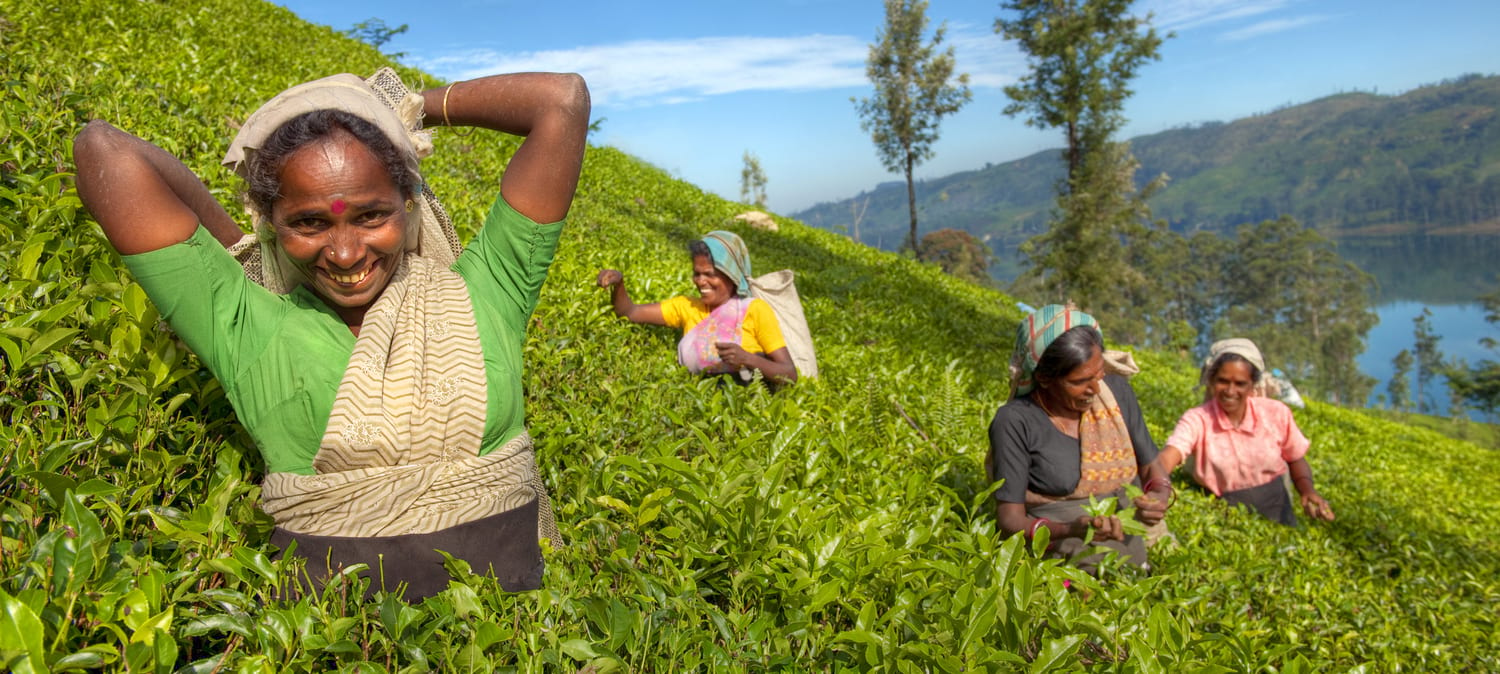
On a final note, I’ve heard traveller-reports that Sri Lankans aren’t nearly as concerned with squeezing your cash from you as in Indians. I can’t say I agree. White person tax is still in full effect here, and I’ve met no shortage of people who almost have Scrooge McDuck dollar signs explode in their eyes when they see a foreigner approach. As always, that stuff depends on the person; not on their race.
The Language in Sri Lanka
So, I’ll admit I haven’t put as much effort into the language here as previous places I’ve visited. I still, however, have picked up some phrases and a minimal understanding of the grammar of Sinhala (Sinhalese). Not a lot, mind you, but enough to make a Sri Lankan grin appropriately.
Attempting to master the Sinhala language means you’ll need to wrap your head around the first thing necessary when learning a new language for travel: the grammar. Sinhalese’s grammar is typically similar to that of many Asian countries: sentences end with verbs and unnecessary exposition is often omitted contingent on context. Friends are generally casual with each other and even strangers prefer a subtle movement of the head than the word for ‘thank you’.
It’s worth noting that there are two major languages here: Sinhala is the most widely spread (spoken by the Sinhalese people) with Tamil spoken by the Tamils. Minimal-to-competent English is also common in the cities and most of the top travel places in Sri Lanka but the further out in the sticks you head, the less you’ll find.
Gestures carry as much weight as words. The head wobble, somewhere between a nod and a shake, is used constantly and can mean yes, maybe, or simply I hear you, depending on the moment. Politeness matters too, a bit of patience, a smile, and not raising your voice when something goes wrong will get you further with locals than fluency ever could.
Useful Travel Phrases for Sri Lanka
If speaking conversational Sinhala is the goal, I wish you luck. They talk hard and they talk fast.
After hanging out smoking with Sri Lankan dudes, I can tell you they like to talk a lot of shit and all at the same time. It reminds me of the boys back home. Cultural differences aside, people really ain’t so different.
I’ve got a few practical phrases I’ve picked up that may net you a lower price if you use them right. Otherwise, just a few words to use when you make some mates:
- Hello – Hallo (is most common)
- Thank You – Isthutee (ee-stoo-tee) / Nandri (in Tamil)
- Bye – Bye (is most common)
- Yes/No – Ou/Nehe (oh/neh)
- Excuse me/Sorry – Samavenna (sah-mah-vehn-nah)
- How are you? – Kohoma-dha
- Good – Hondai
- Ok ok, no problem. – Hari hari, owoo lak nehe
- Enough, enough – Heti heti
- Brother – Machan/Bhang
- How much? – Keeya-dha
- It’s too expensive. – Ga nang vedi
- I want ___ – Mata ___ one (o-neh)
- Water – Vathura (Vah-too-rah)
- I’m hungry. – Mata badagini (bah-dah-gee-nee)
- I want to go to (the) ___ – Mata ___ yanna one
- Smoke one joint. – Joint ekkak gahomuu
- Respect phrase when passed the joint – Boom bhole/Boom Shiva (bhom bo-lay)
- Awesome – Vassi
- Let’s go! – Yamu!
Pronunciation is tough and has those airy voiced-sounds of Sanskrit/Brahmi-based languages (that’s only for the language nerds; if you don’t know/care what I mean, don’t worry).
‘Nehe’ is good for saying something does not exist (eg., Vathura nehe – No water) and also for seeking agreement (eg., Hondai, nehe? – Good, no?).
What to Eat in Sri Lanka
I’d say you’re going to go one of two ways with the food in Sri Lanka:
- Either you love curry and every new curry is a whole new world; therefore, the food in Sri Lanka is so varied!
- All curries are the bloody same; therefore, the food in Sri Lanka is boring.
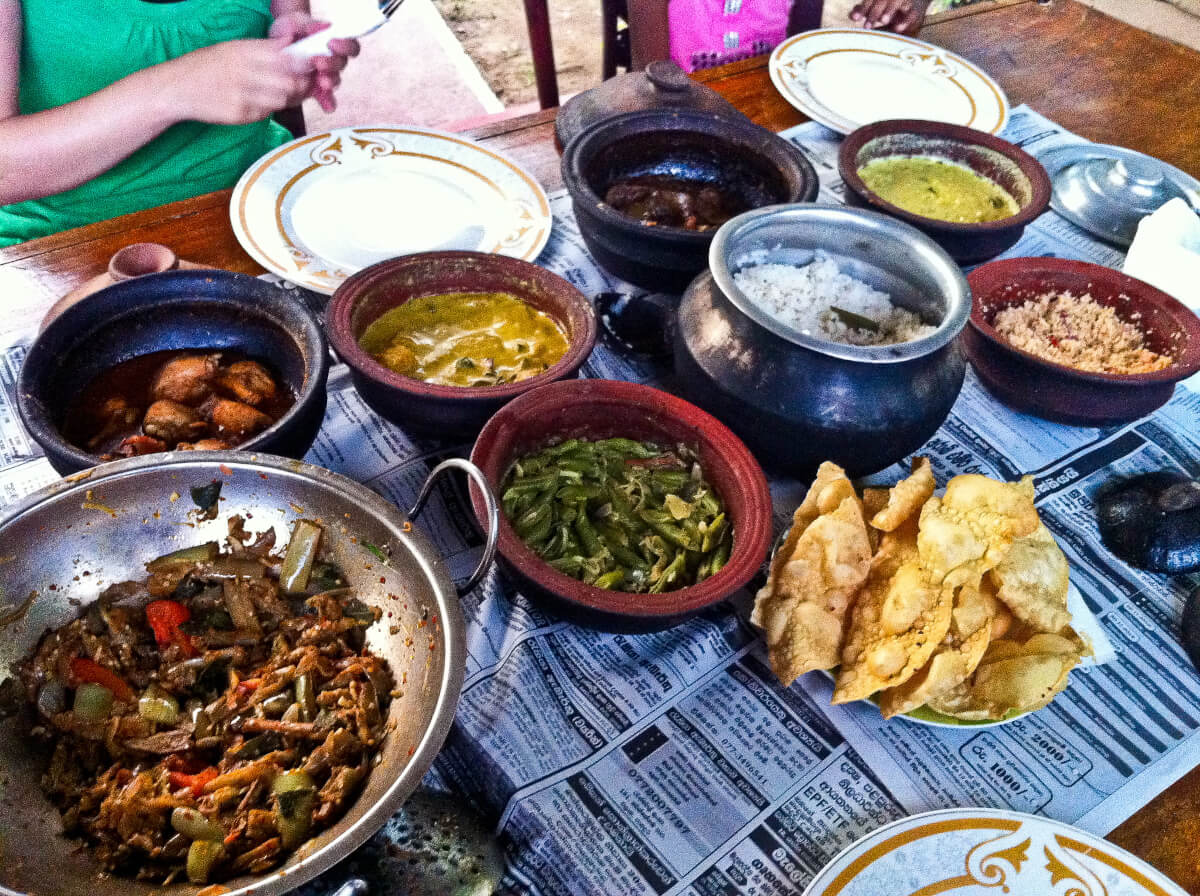
Photo: Patty Ho (Flickr)
Truthfully, you’re not going to find the massive spread in Sri Lanka that many other Asian destinations (like Thailand, for example) offer. Sri Lankan cuisine is very similar to Indian – including a number of shared dishes – with the differences only being noticeable for those with more nuanced spice palettes.
Expect plenty of dahl, fried snacks, heaps of coconut, and to consume more rice daily than you ever have in your entire life. Oh, and chilli! Things are gonna get spicy.
If you can’t handle chilli, remember to always tell the chef “no chilli” and to still expect your food to be kinda spicy when it arrives regardless. If you love your heat, remember to specify in the tourist bubbles that you like your food “Sri Lankan spicy” or you’ll be eating bland dahl for din-dins!
Must-Try Dishes in Sri Lankan
Kottu!
…
Oh, you want more. Fine… Here’s the best-of-the-best Sri Lankan food! (Minus kottu because I think you’ve got the idea already.)
- Rice and Curry – Naturally… what else were you expecting? Rice and curry is a breakfast, lunch, and dinner food. It’s also a way of life!
Curries come in a variety of types: eggplant, dahl (obviously), beans, jackfruit (the most surreal meat substitute after facon)… Sometimes, you get six curries; sometimes you get three. Probably, you’ll get papadams, and maybe it’s a buffet too (do not underestimate the sway a buffet has over me).
The point is, get used to rice and curry. Definitely get used to rice. - Kottu – Kottu is the dish every backpacker ends up obsessed with, chopped roti fried up with egg, veg, and whatever meat’s on hand, all hammered together on a hot griddle with two metal blades in a rhythm you’ll hear from the street before you see the stall.
- Coconuts – I’m not sure how many coconuts I’ve seen in my life but I think after Sri Lanka it may have broken seven digits. Roadside coconuts are everywhere for drinking, they’re in the curries, and they’re used for both sweet and savoury Sri Lankan dishes.
- Roti and short eats (Sri Lanka’s answer to grab-and-go snacks, think savoury pastries, patties, and fried bites sold from glass cabinets in local bakeries) are worth hunting down for cheap, quick eating between bus rides.
- Sri Lankan Tea – As described by a Dutch ex-pat as “Not a lot of tea with a lot of milk and sugar!” He’s spot on and I wouldn’t have it any other way.
- Hoppers – Specifically, egg hoppers. A hopper is a bowl-shaped pancake served with sambol on the side. An egg hopper has a freshly-steamed egg sitting in the middle so it’s a direct upgrade.
- Sambol – deserves its own mention. Pol sambol especially, a mix of grated coconut, chilli, and lime, is the condiment that makes an otherwise simple plate of rice and curry come alive, and it’s on virtually every table across the country.
Books to Read About Sri Lanka
“Today I’m going to stay in the hostel and read.” Six hours and three joints later, two pages were read. All the same, here are some books about Sri Lanka to read when you find the time…
- Trainspotting – This is in no way a book about Sri Lanka whatsoever, but it’s the book I was reading while backpacking around the island and it’s damn good! Junkies in Scotland glassing each other and injecting skag into their Willy Wonkas. What’s not to love?
- Elephant Complex: Travels in Sri Lanka – A travelogue written by a traveller – like you! Elephant Complex documents John Gimlettes journey and all the people he met along the way. This dude didn’t backpack through Sri Lanka; he travelled it.
- Chinaman: The Legend of Pradeep Mathew – Yeah, it’s backdropped against cricket but don’t tune out yet! Chinaman follows one alcoholic sports-journalist attempts to uncover the truth of Sri Lanka’s lost legend of the field and in doing so presents a humourous yet a sobering journey through the turmoil of Sri Lanka’s politics. You had me at alcoholic sports-journalist.
- This Divided Island: Stories from the Sri Lankan War – Something concerning the topic of Sri Lanka’s violent and troubled history. The Divided Island is not a straight historical recount of the war but rather a collected oral history through the eyes and experiences of many Sri Lankans from many walks of life. A very good read on the civil war.
A Brief History of Sri Lanka
You don’t need a history degree to backpack Sri Lanka, but I always find knowing a lil bit of a country’s context enriches my experience of it tenfold. Maybe it’s just the geek in me.
Ancient and Cultural Roots
The division between the Sinhala and Tamil people only becomes more apparent once you start examing the ancient history of Sri Lanka. Every sacred site, village, and piece of history carries a different story and name attached to it.
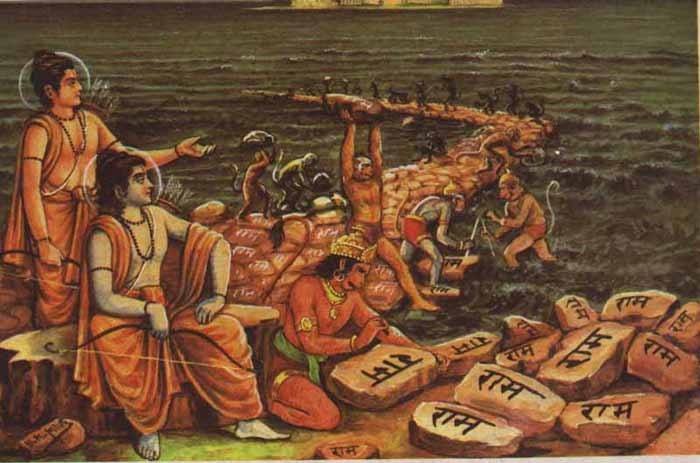
Photo: Bazar Art (WikiCommons)
Even the great epic of Ramayana carries two versions. The fable tells of the Hindu god Rama building a bridge of rocks (Adam’s Bridge) across the Indian Ocean from Deep South India to Sri Lanka to rescue his beloved Sita from the clutches of Ravana. Ask the Sinhala people and they’ll tell you that Ravana was a real upstanding dude; ask the Tamils and they’ll tell you he was a total dick.
In truth, the Tamils and Sinhalese may not be so different after all. Centuries of immigration from South India, Southeast Asia, East Asia, and the Middle East shaped the island, and over time, people intermarried and blended together.
Still, two distinct kingdoms took shape. Sinhala and Buddhist power concentrated in the south, while Tamil kingdoms centred around Jaffna in the north. A natural jungle buffer through the island’s centre kept the two largely isolated from each other for generations, a divide that would matter a great deal later on.
Buddhism has shaped Sri Lankan life and identity for well over two thousand years, and it remains the majority faith today. The island’s ancient kingdoms, Anuradhapura first, then Polonnaruwa, grew as major centres of Buddhist civilisation, and their ruins (still very much visitable today) count among Sri Lanka’s most impressive historical sites.
Colonial Sri Lanka
We’re fast-tracking through the colonialism stuff. Suffice to say, first, the Portuguese did their thing followed by the Dutch and ending with the British. Under British rule, the country was known as Ceylon, and the colonial economy reshaped the land around tea, rubber, and coconut plantations, infrastructure still visible today in the hill country’s tea estates and the rail lines built to move the harvest.
Colonial rule also hardened the island’s ethnic divide rather than easing it. The British brought in Tamil labourers from South India to work the plantations, shifted political and administrative power in ways that favoured certain groups over others, and generally left the Sinhala-Tamil relationship more fractured than they found it. By the time Ceylon gained independence in 1948, Jaffna’s traditional influence had diminished and Tamil communities had spread across the island, setting up the tensions that followed.
Civil War and Modern Sri Lanka
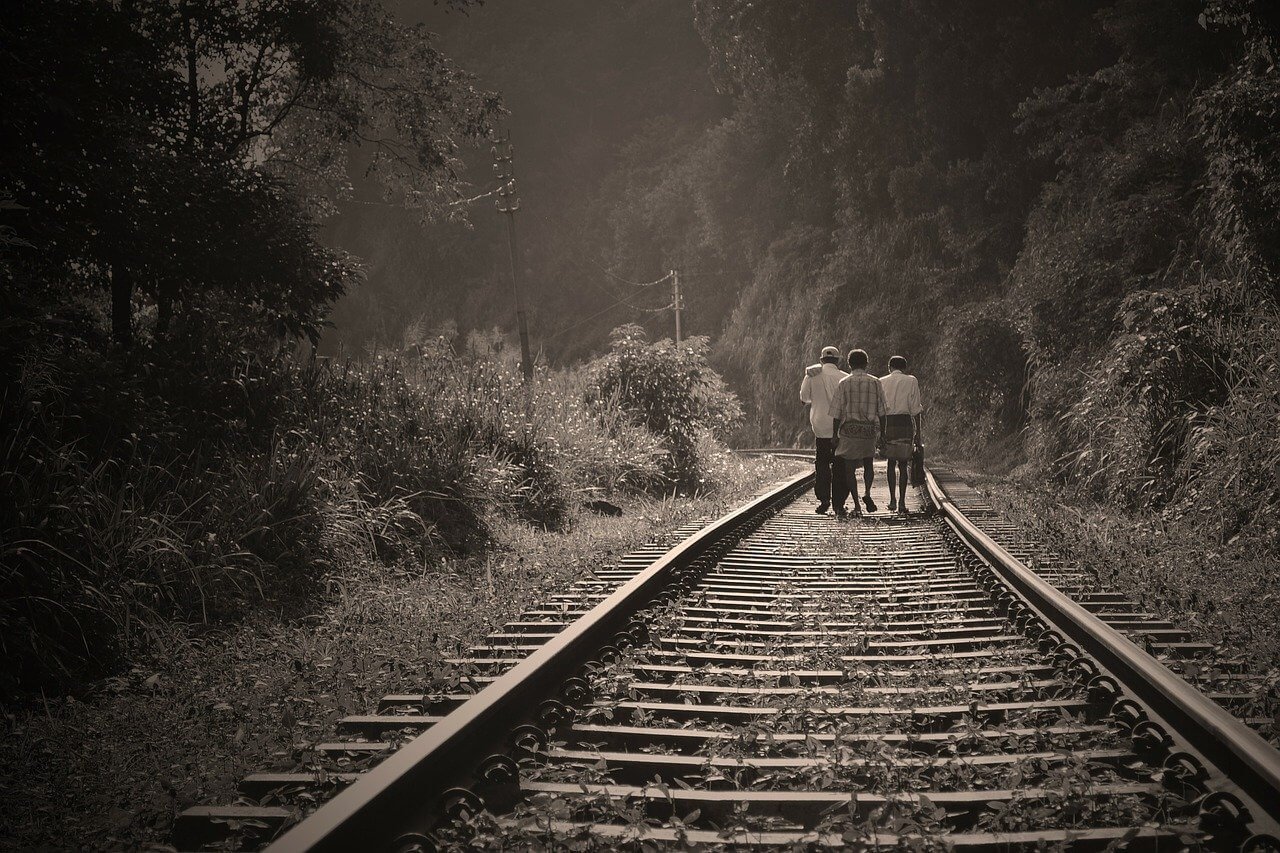
Independence didn’t heal the divide, it deepened it. Post-independence policies favoured the Sinhala majority, including making Sinhala the sole official language, and Tamil communities found themselves increasingly shut out of political and economic life. That marginalisation eventually fed armed resistance.
The Liberation Tigers of Tamil Eelam (LTTE), or Tamil Tigers, emerged in the 1970s demanding a separate Tamil state. Conflict broke out in 1983 and lasted 26 years, displacing huge numbers of Tamil civilians. The war ended in 2009, at an immense civilian cost, particularly in the north and east.
The scars haven’t fully faded, and how the war is remembered still varies by region, so it’s a subject worth approaching with sensitivity.
What I do feel comfortable saying is that the world failed Sri Lanka. Throughout the war, countless Sinhala and Tamil people needlessly died while the world watched apathetically.
Despite the 2019 bomb attacks, Sri Lanka is now a peaceful and welcoming country. The government still sucks (big surprise) and assholes still exist (even bigger surprise), but that is not representative of the people. The people just want peace. The country still faces real economic and political challenges. None of that affects the average backpacker’s day-to-day, but it’s worth knowing the postcard version and the lived reality aren’t quite the same thing.
Before You Backpack Sri Lanka: Final Tips
A few last things to keep you operating smoothly on the island.
Sri Lanka is compact, beautiful, and easier to travel than most of South Asia, which is exactly why the classic route (Kandy, Ella, the south coast) is so popular. There’s nothing wrong with following it, but the best moments usually happen when you slow down somewhere the itinerary doesn’t tell you to.
A handful of practical notes:
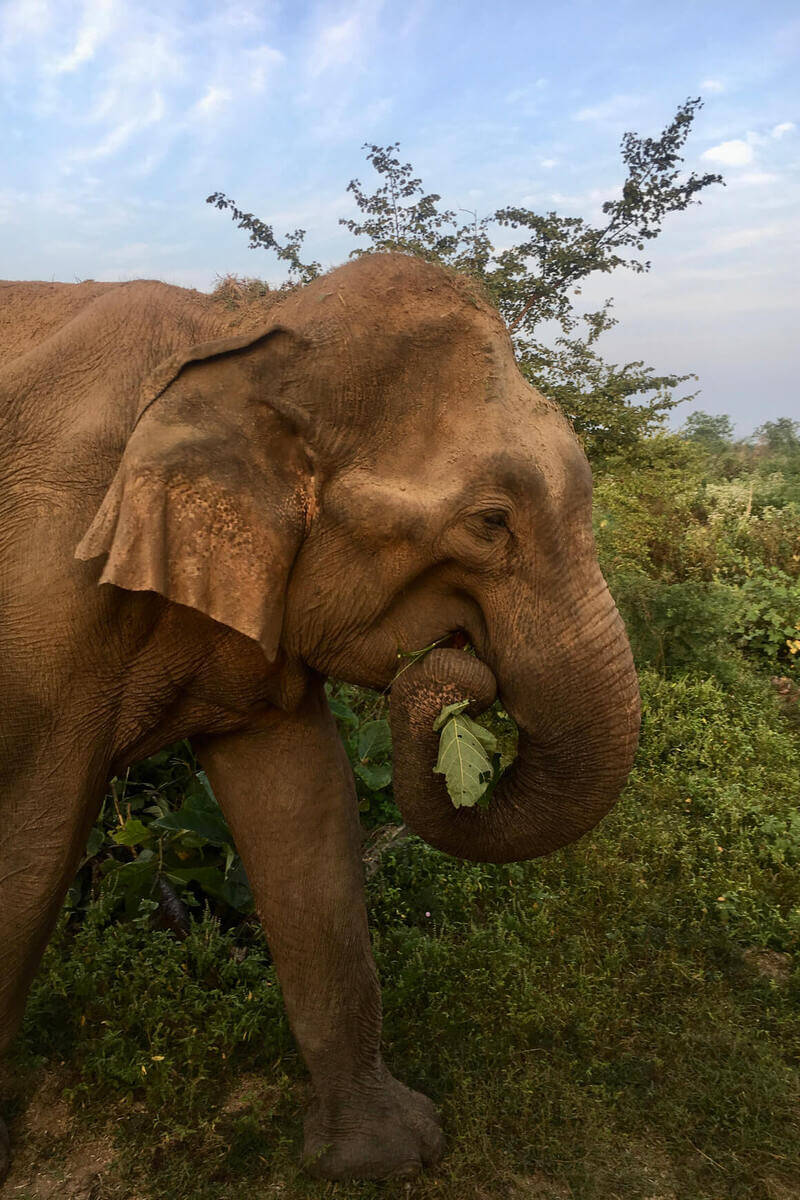
Photo: @danielle_wyatt
- For Shiva’s sake, please do not ride the elephants. If you do, I’ll come find you, put chains on your feet, and ride you through town while someone stabs you repeatedly in the ankles with a bullhook. Guys, let’s be better, please.
- Similarly, animal abuse is a sad cultural truth in this part of the world. You’re gonna see a lot of unloved and diseased pooches and you’re probably going to see them struck. I really, truly do hate saying this but you gotta keep your cool: you’re not the Batman for Asian canines.
- Pick your coast by season if you can, the south and west suit December to March, the east (Arugam Bay included) comes alive from May to September. Get it backwards and you’ll spend your trip dodging rain.
- Although demonisation of LGBTQ locals is common, reports from LGBTQ travellers is quite positive. The foreigner card trumps your sexuality here.
- Don’t even bother with hailing tuk-tuks in Colombo: stick to Uber. UberEats is also a thing in the capital and it kicks ass!
- It’s customary (and respectful) to exchange money (or anything for that matter) with the right hand only. Nobody wants your left hand; we all know what you’ve been doing with it.
- Respect for Buddha is taken seriously in Sri Lanka; people have been deported for displaying tattoos of Buddha. Don’t turn your back to Buddha and no.. no selfies.
- Try to keep your knees and shoulders covered – especially at temples. There are some more touristy spots where you can get away with more skin showing. Just try to be respectful.
- Take the trains and buses over private transport where you can, they’re cheap, slow in the best way, and part of the whole experience.
Have fun on your backpacking trip to Sri Lanka. Drink the Lions, smoke the fineries, gorge on Sri Lanka’s street food, and let loose! Just don’t lose yourself.
I’m not gonna lie: sometimes travelling over this way is fucking infuriating. Try being stranded in a leech-infested jungle in a storm, tripping dicks, shoe-less, and still being asked for money by a local to be guided out. Take a breath and remember one shitbag isn’t representative of the whole, same as you don’t represent every tourist. That wall exists no matter what you do. You just represent yourself.
Be a traveller. Be a visitor. Be respectful and be good. It’s not a hard country to travel and that suits a lot of people just fine. It’s also considered a step above the ‘easy’ Asian countries in the backpacker hierarchy. Consider it your warm-up to where things get really crazy.
Sri Lanka can be a soft landing into South Asia, a surf-and-train adventure, a cultural deep dive, or a slow island journey. The more time you give it, the more it opens up.
So, should you travel to Sri Lanka? I dunno, I just wrote a mammoth backpacking Sri Lanka travel guide; read it and make up your own damn mind! I’ll tell you it’s an exquisite country though and I’ll tell you that I miss it.
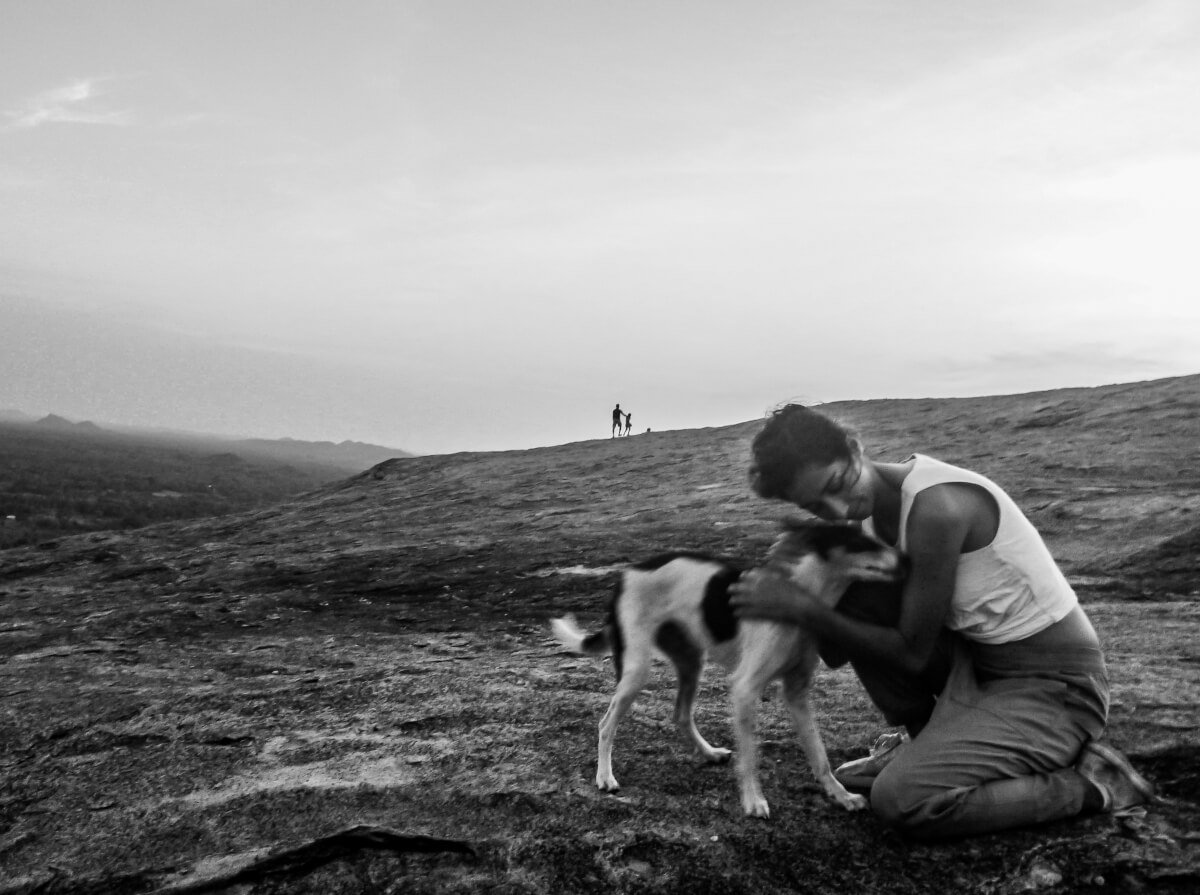
Photo: @themanwiththetinyguitar