From making it up the 740 sweaty steps to the top of Guatape’s rock, to almost getting robbed by a motorcyclist at the bottom in Colombia. Walking 136,193 steps across 83.1km in 5 days to be greeted by the beauty of Machu Picchu, to being slumped over in a restaurant with an oxygen mask on and severe sunburn after a brutal trek through Ausangate in Peru. These countries packed many highs, a few lows, but most of all, some of my best travel memories so far.
If I’m going to either place for the first time with the knowledge I have now, I’d be off to Peru for a safer starting point, and Colombia with more experience under my belt. But would choose Colombia for a 2-week trip, and Peru for something longer, as I’d otherwise waste precious travel days adjusting to the altitude.
Colombia and Peru are my respective 5th and 2nd (behind Argentina) favourite countries visited, from over 100 to date. I’ve spent around 6 weeks in each, first visiting Colombia in 2022, then Peru 1.5 weeks later. I loved both countries so much, that I came back years later for more adventures!
My first Colombia trip started in Bogota, and looped up via Medellin and the northern coast, along to Tayrona and Palomino, before coming back down to Bogota. My second focused more on the Coffee Region around Salento, the Cocora Valley and more.
I first stepped foot in Peru after a brutal 32-hour bus journey from Ecuador to Lima (not recommended), before visiting Paracas, Huacachina, Arequipa, and many mountains and Incan ruins around Cusco. My second trip repeated Cusco, the Sacred Valley and Machu Picchu, whilst adding Lake Titicaca and Ausangate to the mix.
Here I’ll be comparing these two South American gems and explaining the type of experience you’ll find in each country, realistic 2-week routes, my spending in each country (I always track my expenses so have some good data on this), what each place does better, safety, travel difficulty, and which to book first.
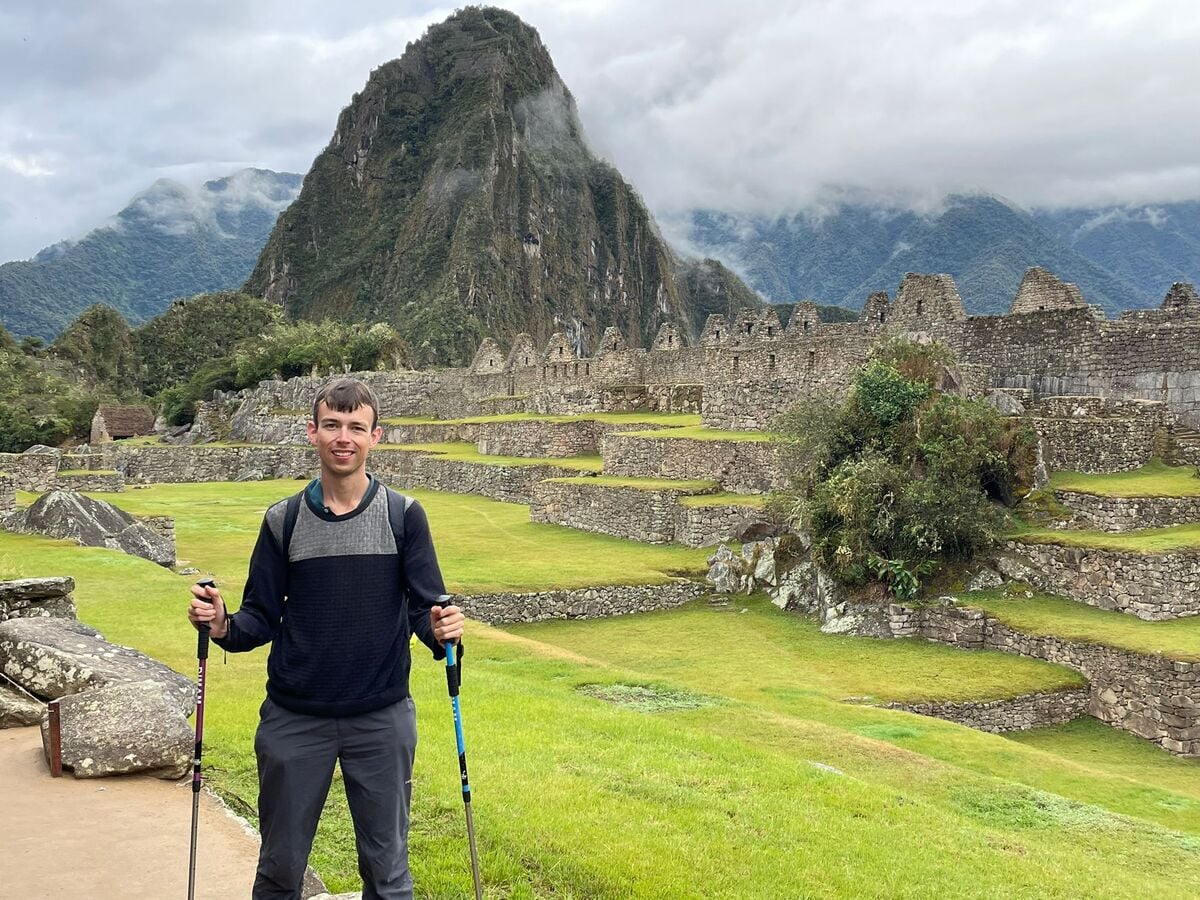
Photo: @alexjbrownn24
The Broke Backpacker is supported by you. Clicking through our links may earn us a small affiliate commission, and that's what allows us to keep producing free content 🙂 Learn more.
Peru vs Colombia in 60 Seconds
Before we get stuck in, here’s a quick little overview based on my personal opinions.
| If you care most about… | I’d pick | Why |
|---|---|---|
| First South America trip | Peru | I found it to be a much easier country due to having fewer safety concerns, especially on the tourist circuit. |
| Two-week trip | Colombia | You need time to acclimatise to altitude in Peru, which wastes precious travel time. In Colombia you can get stuck in. |
| Backpacking solo | Peru | Tight one as I’d say Colombia is better for meeting new friends, but Peru edges it with safety being the deciding factor. |
| Tight budget | Peru | Colombia is cheap, but Peru is the second-cheapest country in South America behind Bolivia. |
| Hiking and mountains | Peru | Salkantay Trail, Rainbow Mountain, Sacred Valley, Ausangate… Peru is the GOAT travel destination for hikers. |
| Beaches | Colombia | On the mainland, neither country has great beaches. Colombia however has San Andres in the Caribbean. |
| Nightlife | Colombia | Probably the easiest country I’ve been to for making friends. Medellin has a top party scene, and many hostels are social. |
| History and archaeology | Peru | Machu Picchu, ’nuff said. But throw in the Sacred Valley, Nazca Lines, and other Incan sites… clear Peru win. |
| Travelling without much planning | Draw | Both require some planning. Colombia for finding safe areas to stay. Peru because Machu Picchu sells out fast. |
Best first trip: Peru – safer, easier, and with a more refined tourist trail.
Country I’d personally go back to tomorrow: Colombia – it has more depth overall.
The Biggest Difference Between Backpacking Peru and Colombia
I absolutely love both countries, but they certainly had a different feel to them. I’d say Peru felt more about the journey than the destination at times. Colombia, on the other hand, was more about the vibe, from awesome hostels (Los Patios in Medellin was one of the most memorable I’ve stayed in) to wild parties, to chilling outside a remote finca in the Coffee Region without a care in the world (not so fun at night when the giant spiders come out).
To be honest, I didn’t love Machu Picchu in its own right. But the 5-day Salkantay Trek through challenging snowy mountains and humid, sweaty jungles made it feel special when I finally reached the famous Incan citadel with jelly-like legs, after walking up from Aguas Calientes before sunrise. Then there were rewarding treks through Ausangate, up Rainbow Mountain, around the Sacred Valley, and a journey across Lake Titicaca’s culture-rich islands.
I would say Peru had more “wow” moments. The “budget Galapagos” Ballestas Islands, Huacachina’s desert oasis, the 5-day trek to Machu Picchu, Ausangate’s breathtaking mountains, seeing indigenous culture at Lake Titicaca, Rainbow Mountain’s unique features- the list goes on.
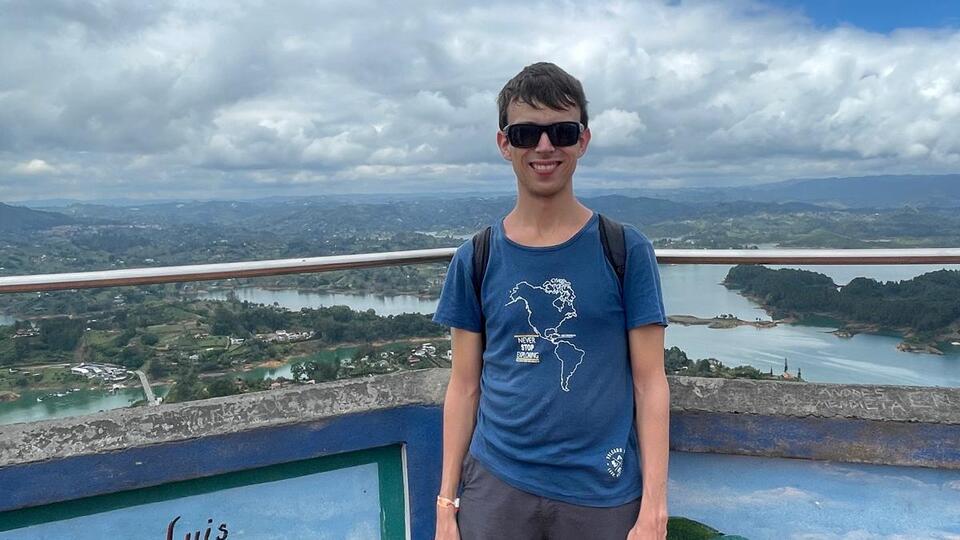
Photo: @alexjbrownn24
Colombia had Guatape’s awesome rock, the misty Cocora Valley, and wildlife-rich Tayrona National Park, where I also encountered members of the Kogi Tribe, but I would say this country is more about the overall good vibes than actual destinations. The whimsical small towns (Barichara/Guane, etc.), the chilled feel of the Coffee Region, parties in Medellin and Santa Marta, sweaty treks to Minca’s waterfalls… Colombia carried more of an overall feel-good factor compared to Peru’s standout places.
Peru is definitely more tiring with many trekking activities, and the altitude definitely takes it out of you around Cusco. High altitude is a factor in pretty much all of Eastern Peru (where the majority of sites are). Only the Western Coast (Lima, Huacachina, Paracas, etc.) is spared from it. Colombia is only really tiring if you burn yourself out with endless parties.
Both countries have a lot I haven’t covered yet. I’d love to do the Lost City trek in Colombia, but when you split the cost across 5 days, the Lost City isn’t very Broke Backpacker-friendly. I’d also love to compare Peru’s Salkantay Trek to the famous Inca Trail, but this sells out months in advance. Colombia allows more flexibility for winging it, which is my style of travel. I had to wait over a week in Cusco to do Salkantay as I didn’t book in advance…
What Two Weeks Actually Looks Like in Peru vs Colombia
If I’m honest, you’ll miss a lot with only 2 weeks in either country. Both countries are almost half the size of Europe, so distances are long and will eat into your precious adventure time. I highly recommend night buses for longer journeys such as Bogota to Medellin and Arequipa to Cusco.
What I’d Do With Two Weeks in Peru
With just two weeks, I’d base myself in Cusco; there’s a ton of cool stuff to see in and around there. Your main problem, though, will be adjusting to altitude. During my first Cusco trip, I spent around 2 weeks up here without issues, having come from the coast. During my second, I spent just under 2 weeks and really suffered after certain activities (Rainbow Mountain, Ausangate). Based on my experiences, I suggest an itinerary like this:
- Day 1: Arrive in Cusco, have a quiet day acclimatising to the high altitude.
- Day 2: Take a free walking tour in Cusco, and otherwise take it easy whilst still acclimatising. Book the Salkantay Trek if you haven’t already. I went with Wild Peru Travel, who are very budget-friendly, and the owner, Casio, is a top guy!
- Day 3: Do a day tour to the Sacred Valley. This is much better than a time-consuming DIY Sacred Valley trip (I did both).
- Day 4: Spend another day acclimatising in Cusco. Explore the markets and ruins.
- Day 5: Take a day trip to Rainbow Mountain.
- Day 6: Spend a quiet day in Cusco resting ahead of the next adventure.
- Day 7: Do an Ausangate day trip, and make sure you prepare for intense sun and high altitude.
- Day 8: Take it easy in Cusco ahead of the big one tomorrow.
- Day 9: Day 1 of the Salkantay Trek. You also have the option to visit Humantay Lake (I’d defo recommend it). Camp at night.
- Day 10: Day 2 of the Salkantay Trek up through snowy mountains. This is the hardest day, with the longest walks. Camp at night.
- Day 11: Day 3 of the Salkantay Trek down through humid jungles. Camp at night.
- Day 12: Day 4 of the Salkantay Trek through the jungles to the town of Aguas Calientes. Stay there at night.
- Day 13: Wake in the early hours to head up to Machu Picchu and experience this World Wonder. Long trip back to Cusco.
- Day 14: Go home 🙁 Or to your next destination.
We do have some detailed Peru itinerary ideas, but the above is my suggested 2-week route based on my own trips here, and what allows you to acclimatise to altitude appropriately, pack in a ton of awesome activities, and not waste too much time in transit.
What I’d Do With Two Weeks in Colombia
Most Colombia backpackers would do the classic Bogota > Medellin > Cartagena route in this time, but I disagree. Colombia is best outside of the cities (Medellin rocks though). And I will say that Cartagena kinda sucks (unless you love being pestered by scammers; it’s the best city in the world for that).
Again, based on my experiences, wasting minimal time on transport, and seeing lots of cool stuff, I’d recommend a couple of days in Bogota, a few in Medellin/Guatape, and a week checking out the Coffee Region.
- Day 1: Arrival in Bogota, stay there for the night.
- Day 2: Explore Bogota, hike up Monserrate, and do a walking tour of La Candelaria. Take a night bus to Medellin.
- Day 3: Do a walking tour of Comuna 13 where you can learn about the former most dangerous neighbourhood in the world, from locals who lived through the dark times. Party in Provenza by night, and stay in El Poblado.
- Day 4: Take a day trip to Guatape, walk up the 740 steps for stunning views from on top of the rock. Then take a tuk-tuk to Guatape town before returning to Medellín.
- Day 5: Check out the small town of Pueblito Paisa (catch the Trovadores playing if you can), and spend time in Plaza Botero.
- Day 6: Head to Pereira in the Coffee Region and base yourself there for a few days.
- Day 7: Take a day trip to Valle de Cocora, with a brief stop in Salento first. Stay in Pereira.
- Day 8: Enjoy a relaxing day at the hot springs of Termales Santa Rosa de Cabal.
- Day 9: Head to a remote finca (coffee plantation), learn about the coffee-making process, and stay overnight.
- Day 10: Spend a second night at the finca, switching off and enjoying a chilled, nature-rich environment.
- Day 11: Check out the nearby small town of Filandia, then go back to explore Salento properly and spend a night there.
- Day 12: Head back to Bogota/Medellin. You may need to take a night bus from somewhere like Armenia.
- Day 13: Fly out of the country.
- Day X: Pick any place where you fancy spending more time, and book an extra night there, or take a day trip to somewhere else in the Coffee Region. I’ve heard Manizales is good for 1-3 days, but I didn’t go there myself, so I can’t verify personally.
You can take buses between each of these places, with the exception of the Cocora Valley, which requires a Jeep Willy from Salento. That’s basically a funny name for a tuk-tuk. I’d slow down and take it easy on the finca where it’s lovely to just watch the world go by. Unfortunately, I cannot recommend the finca we stayed at since it has closed down, but there are many near Filandia.
I’d drop Termales Santa Rosa de Cabal if your itinerary gets rushed. A nice side quest, but I wouldn’t say it’s the best bit. Medellin, Guatape, Valle de Cocora, and staying on a finca are the real highlights here. This is almost exactly the itinerary we followed, albeit with fewer days in Bogota and Medellin (we were here for over 2 weeks). We did an extra night in Pereira, but that’s not necessary as Pereira itself is gritty and boring – use it only as a base.
Which Country Gives You The Better Two-Week Trip Rather Than Simply The Better List of Destinations?
| Peru | Colombia | |
|---|---|---|
| Route I’d do | Cusco and surrounding areas. | Bogota, Medellin (+ Guatape), and the Coffee Region. |
| Stops in 14 days | Cusco, Sacred Valley, Rainbow Mountain, Ausangate, Salkantay Trail to Machu Picchu. | Bogota, Medellin, Guatape, Pereira, Salento, Valle de Cocora, Termales Santa Rosa de Cabal, a finca, Filandia. |
| Biggest travel days | Getting from Cusco to the Salkantay Trail, and back from Machu Picchu. | The night bus from Bogota to Medellin. |
| Advance booking needed | The Salkantay Trail and Machu Picchu itself are most important. Rainbow Mountain and Ausangate can be booked just before, but advance notice is better. | Nothing really. Find a nice finca before they all sell out, but Colombia is much easier for just winging it. |
| Flexibility | It’s harder to be flexible here, as you need to plan your trip around Machu Picchu. I wasted a week in Cusco because I didn’t book in advance. | Very easy to be flexible and change plans on a whim with no notice. |
| Places I’d give extra nights | If you DIY the Sacred Valley, I spent 2 nights in Urubamba the first time I went, and only saw half the places as some spots are hard to reach. Either do 4+ nights, or a day tour which ironically is best for seeing more as transport is covered. | You can’t go wrong with extra time in Medellin, it never gets dull there. |
| Things I’d cut first | Ohh, tough one! I hate to say it because this place is stunning, but Ausangate. The other places are unique, whereas Ausangate is “just mountains” (albeit the most beautiful I’ve ever seen). | Termales Santa Rosa de Cabal. Fun side quest, but skippable. Also Salento and Filandia are pretty similar, so you can trim time in Filandia if you want. Bogota has some fun things, but is primarily for transport, so if you don’t fly to/from there, it’s droppable. |
What Peru vs Colombia Actually Cost Me
The good news is that I track all my travel spending. The bad news is that I let a guy I met in Peru borrow my phone to add a note, and he somehow managed to wipe my entire budget sheet, ahhhhh. On the plus side, that was during my first trip in 2022, so I do still have notes from my recent trip, which I’ll use to tell you how much I spent.
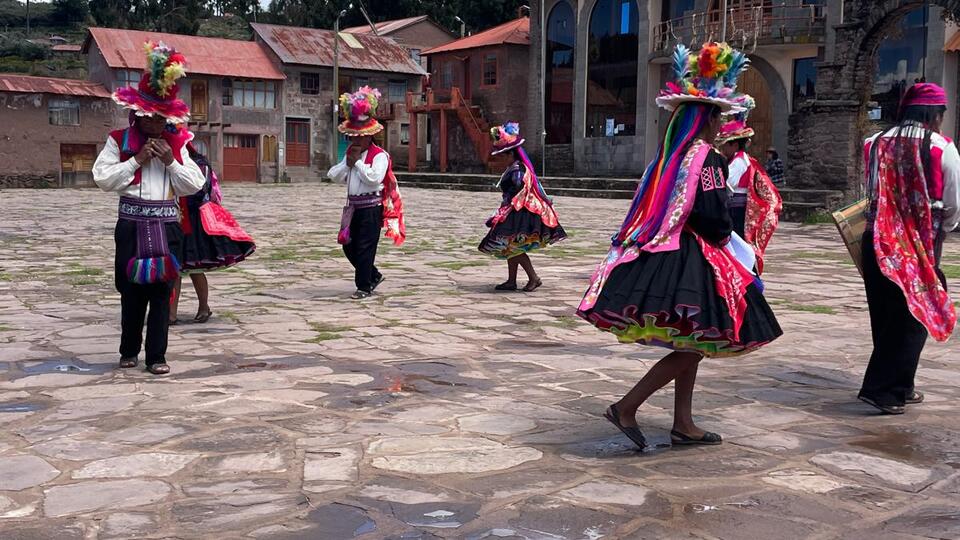
Photo: @alexjbrownn24
My first trip to both countries was solo, which meant 95% hostel life; my second was with my girlfriend, which meant 95% cheap private rooms, but tbh the cost per person for a hotel in both countries is similar to a hostel cost anyway, so the difference is minimal.
Food, drink, activities, buses and miscellaneous costs (laundry, SIM cards, etc.) are unaffected by sharing, and taxi costs are minimal anyway, so Uber for 1 vs 2 people doesn’t change much. Here’s what I spent in Colombia and Peru:
Where My Money Went in Peru
So, here are my real costs from my most recent trip to Peru. Because I booked all tours with Wild Peru Travel, they offered a few discounts. By doing Titicaca with them, our night bus from Cusco to Puno (the base for Titicaca) was included, as was accommodation on the island we stayed on. Even without discounts, their rates are reasonable.
Honesty moment: they use external guides, and the ones I’ve had have ranged between amazing and dreadful, so it is a bit of a gamble. But hey, I’m a broke backpacker and so are you, and from a budget perspective, I think they’re great.
The Salkantay Trek isn’t covered here because I only did that on my first visit, which was a few years ago now. The cost of that will be £200-300 per person for 5 days and 4 nights, and it is often cheaper if you book in Cusco. I did it with Wild Peru as they’re budget-friendly. I used GBP as my currency here because I’m British so this is my exact spending from my notes. But multiply everything by 1.35, and you’ll get the rough values in USD.
| Visited | Slept In | Accommodation | Food/Drink | Transport | Activities | Other | Total |
|---|---|---|---|---|---|---|---|
| Cusco | Cusco | £3.81 | £8.15 | £3.93 | £0 | £0 | £15.89 |
| Cusco | Cusco | £5.55 | £14.35 | £0 | £2.12 | £0 | £22.02 |
| Cusco | Cusco | £5.55 | £11.23 | £0 | £4.24 | £0 | £21.02 |
| Cusco | Cusco | £5.55 | £12.10 | £0 | £0 | £1.27 | £18.92 |
| Rainbow Mountain | Cusco | £5.55 | £5.30 | £0 | £13.76 | £0.49 | £25.10 |
| Cusco | Cusco | £8.68 | £7.97 | £0.78 | £0 | £1.27 | £18.70 |
| Cusco | Cusco | £9.21 | £8.86 | £0 | £0 | £5.47 | £23.54 |
| Sacred Valley | Cusco | £9.21 | £6.36 | £0 | £33.89 | £1.28 | £50.74 |
| Cusco | Cusco | £9.21 | £8.22 | £0 | £0 | £1.29 | £18.72 |
| Ausangate | Cusco | £9.21 | £7.73 | £0 | £21.19 | £1.29 | £39.42 |
| Cusco | Cusco | £9.21 | £11.64 | £0 | £0 | £6.70 | £27.55 |
| Hidroelectrica | Aguas Calientes | £0 | £8.38 | £0 | £38.78 | £0 | £47.16 |
| Machu Picchu | Aguas Calientes | £12.34 | £8.06 | £0 | £38.78 | £0 | £60.46 |
| Aguas Calientes | Aguas Calientes | £12.34 | £11.81 | £0 | £2.75 | £1.28 | £28.18 |
| Hidroelectrica | Cusco | £10.69 | £5.51 | £0 | £0 | £1.28 | £17.48 |
| Cusco | Night bus | £0 | £11.19 | £0.79 | £0 | £1.28 | £13.26 |
| Lake Titicaca | Lake Titicaca | £0 | £4.24 | £0 | £42.38 | £0 | £46.62 |
| Lake Titicaca | Puno | £6.08 | £7.82 | £0 | £0 | £0.64 | £14.54 |
| Total costs | – | £122.19 | £158.92 | £5.50 | £197.89 | £24.82 | £509.32 |
| Daily costs | – | £6.79 | £8.43 | £0.31 | £10.99 | £1.38 | £28.30 |
Accommodation costs are mostly my 50% share of private rooms, although hostels for solo backpackers are pretty much the same price anyway. I splashed out on food, but you can easily get by with 50-75% of my food spending. Transport spending is super cheap because most tours covered it, so I only paid for Ubers within Cusco – you’ll spend more if you take buses to other parts of Peru. Activities are the main spend here. “Other” was mostly ATM fees; bring extra USD to avoid them…
Here are the costs I paid for major activities I did. All included transport unless stated otherwise.
- Rainbow Mountain day trip: £13.76
- Sacred Valley day trip: £14.82 tour + £14.83 transport + £4.24 Maras Mines entry = £33.89 total
- Ausangate day trip: £16.95
- Machu Picchu 2-day trip: £77.56 (included one night in a hotel, but we chose to spend 2 extra days in Aguas Calientes at our own expense)
- Lake Titicaca overnight trip with night bus from Cusco included: £42.38
I didn’t really do much nightlife; I’m in my 30s now! The good news is, going out is cheap in Peru. And I should mention that Cusco is “touristy” and therefore expensive compared to elsewhere in Peru, so the costs I paid are above average for this country.
My most expensive days were the ones where I did activities. They’re very cheap by global standards, but they’re where most of your spending happens here. The Inca or Salkantay Trek will whack a much bigger chunk out of your budget than anything else. I didn’t go to the Nazca Lines, but they’re known for being pricey too. Peru is all about the big ticket items.
Where My Money Went in Colombia
And here are my costs from my most recent Colombia trip. I spent marginally less here than in Peru, but I would say that Peru is cheaper overall – look at the daily food and accommodation expenses. The main reason why my Colombia expenses are cheaper is that I didn’t really do bucket list activities, whereas Peru is all about chasing those “wow” moments.
Again, accommodation costs are mostly 50% of private room expenditure. Ironically, the pricier accommodation in Medellin was the one-person cost of a hostel bed at the excellent Los Patios – one of my favourite hostels in the world. Why so expensive? Because it’s a proper backpacking hostel with several activities (many free) and amenities. You’ll find similar prices for other major boutique chain hostels (Viajero, Masaya, etc.), but can easily find cheap basic dorms too.
| Visited | Slept In | Accommodation | Food/Drink | Transport | Activities | Other | Total |
|---|---|---|---|---|---|---|---|
| Medellin | Medellin | £9.32 | £9.65 | £10.41 | £0 | £6.82 | £36.20 |
| Medellin | Medellin | £9.32 | £3.80 | £0.92 | £9.38 | £6.22 | £29.64 |
| Medellin | Medellin | £18.61 | £2.91 | £0 | £1.93 | £0 | £23.45 |
| Medellin | Medellin | £14.07 | £12.98 | £2.17 | £0 | £0 | £29.22 |
| Guatape | Medellin | £13.79 | £15.92 | £12.11 | £8.02 | £0 | £49.84 |
| Medellin | Medellin | £8.10 | £9.23 | £1.43 | £4.36 | £0 | £23.12 |
| Medellin | Medellin | £13.88 | £8.80 | £4.89 | £10.66 | £0 | £38.23 |
| Pereira | Pereira | £7.59 | £9.96 | £15.40 | £0 | £0 | £32.95 |
| Valle de Cocora | Pereira | £7.59 | £3.49 | £7.96 | £2.03 | £0 | £21.07 |
| Pereira | Pereira | £7.59 | £13.29 | £4.88 | £6.41 | £0 | £32.17 |
| Termales Santa Rosa | Pereira | £7.59 | £9.93 | £2.95 | £2.33 | £2.85 | £25.65 |
| Finca | Finca | £9.84 | £8.41 | £3.54 | £0 | £0 | £21.79 |
| Filandia | Finca | £10.59 | £1.37 | £1.10 | £0 | £0 | £13.06 |
| Salento | Salento | £6.81 | £11.06 | £2.41 | £0 | £0 | £20.28 |
| Armenia | Night bus | £0 | £9.19 | £15.45 | £0 | £0 | £24.64 |
| Bogota | Bogota | £13.22 | £6.24 | £3.26 | £0 | £2.50 | £25.22 |
| Bogota | Bogota | £13 | £15.25 | £0 | £0 | £3.84 | £32.09 |
| Bogota | Bogota | £13 | £11.68 | £0 | £0 | £0 | £24.68 |
| Total costs | – | £183.91 | £163.16 | £88.88 | £45.12 | £22.23 | £503.30 |
| Daily costs | – | £10.22 | £9.06 | £4.94 | £2.51 | £1.24 | £27.96 |
Again, you can easily cut food expenses in half compared to me. Transport is pretty much exactly what you’ll spend by following a similar route, with buses used for trips between cities, and Uber in big cities, plus local buses or tuk-tuks in smaller areas. Activity spending varies per person, but the Lost City trek is the big one that will smash your budget (I didn’t do this).
Going to San Andres, a Colombian island in the Caribbean, will significantly increase your costs. I didn’t go on this occasion, so that isn’t included in my costs here, but if you wanna go there, it will cost much more. Likewise, the popular San Blas Islands tour, which takes you between Colombia and Panama, and any diving you do there.
My cheapest day came when we stayed in the coffee finca, a remote plantation and home to Alejandro, our charismatic host. During our second day, we got buses into Filandia, but otherwise spent the day in nature. My most expensive day came when taking a day trip to Guatape from Medellin.
Estimated Costs For my 2-Week Peru Trip Vs my Recommended 2-Week Colombia Trip
I’ve told you my figures; now I’ll sum up how much YOU can expect to spend. I’ll put these costs in USD since that’s the global currency and what you’ll most likely be exchanging for soles if you want to avoid the irritating ATM fees.
As you can see, activities will HEAVILY skew your budget, so a true Broke Backpacker would have to be a bit more selective. I wouldn’t drop the Salkantay Trek though, despite it being the biggest budget buster, as it is truly special.
| Two-Week Trip | Peru | Colombia |
|---|---|---|
| Accommodation | $129 | $193 |
| Food/Drink | $125 | $128 |
| Inter-City Transport | $105 | $117 |
| Main activities | $481 | $40 |
| Local Transport | $9 | $50 |
| Going Out/Extra Costs | $67 | $94 |
| Total Costs | $916 | $622 |
| Daily Costs | $65 | $44 |
Which Is Better for Backpackers?
Both are great, but it depends on what you’re really looking for. Colombia is far easier to meet people in hostels. Major cities (Bogotá, Medellín, Cartagena, Santa Marta, etc.) have big hostels which cater specifically to backpackers with a ton of activities and great parties! Los Patios in Medellin is my favourite, with Viajero (Santa Marta) close behind.
Colombia is definitely on top for parties overall, although I had a mad night at Wild Rover in Huacachina (Peru), and have heard Wild Rover in Cusco goes crazy – the La Paz branch, which I stayed at, certainly did, so that’s 2/2 I’ve been to which are great.
In both countries you’ll occasionally bump into the same people due to the fairly linear backpacking routes. Many people do some variation of Lima > Paracas > Huacachina > Arequipa > Cusco > Titicaca in Peru and Bogota > Medellin > Cartagena > Santa Marta in Colombia.
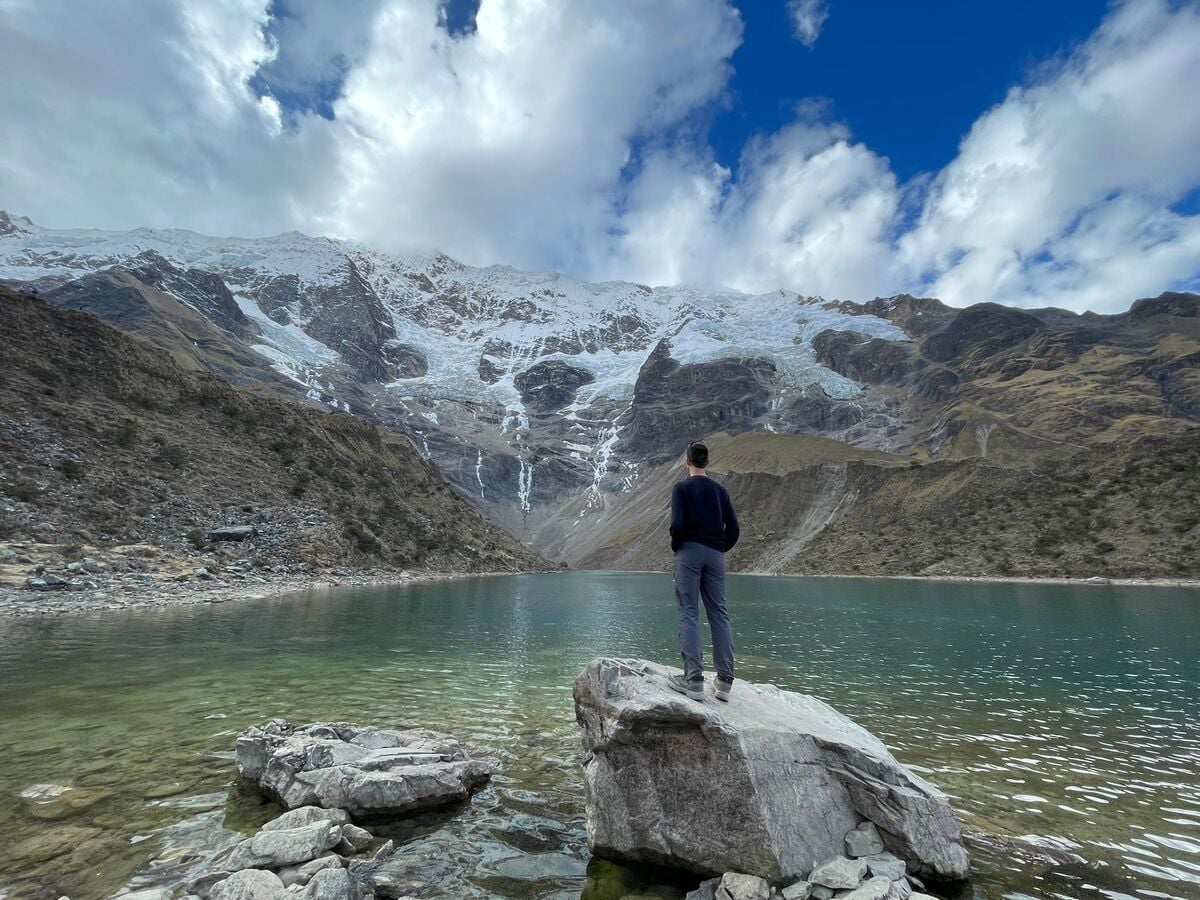
Photo: @alexjbrownn24
I’d say without knowing Spanish, Peru is slightly easier as it has a very well-established tourist trail. Peru felt more like a tourist bubble, whereas in Colombia, even popular cities like Medellin have a very local feel once you step away from the foreigner-friendly neighbourhoods. Just don’t go TOO local, as it can be dangerous.
I highly recommend learning the language for both nations. Duolingo made me proficient in basic Spanish, and I was able to get by for 8 months, and even make friends with a local in Peru who spoke little English.
If I were landing in South America solo tomorrow without knowing anybody, I’d start in Colombia if making friends was my priority, but Peru is best for less experienced travellers looking to prioritise safety.
Where Peru Wins, and Where Colombia Wins
Both countries are amazing, but they also have different strengths and weaknesses. I’m gonna dive into some of the key differences here.
Hiking & Adventure
In Peru, the Inca and Salkantay treks to Machu Picchu are once-in-a-lifetime bucket list experiences. Ausangate and Rainbow Mountain are stunningly beautiful, the Sacred Valley is super cool, and Colca Canyon is an enjoyable trip. Every single one of these, if plonked into the average country, would be the standout highlight in that country. I jumped from one world-class activity to another here. Yet to hit up Huarez, but I hear that’s class too.
Colombia offers the multi-day Lost City (Ciudad Perdida) trek for those with deeper pockets. But beyond that, it cannot compete with its rival on the hiking front. Tayrona was fun for a jungle adventure, though. I also walked up Monserrate, but I only recommend this in the morning when police are on the trail; otherwise the muggers come out. Oh Colombia…
I’d call Ausangate the best one-day hike due to quite possibly the most beautiful scenery I’ve ever seen, whilst the Salkantay Trek is a magical multi-day option. With no guide, Rainbow Mountain (Vinicunca) is easiest with its linear trail, but getting there and back could be a pain in the backside.
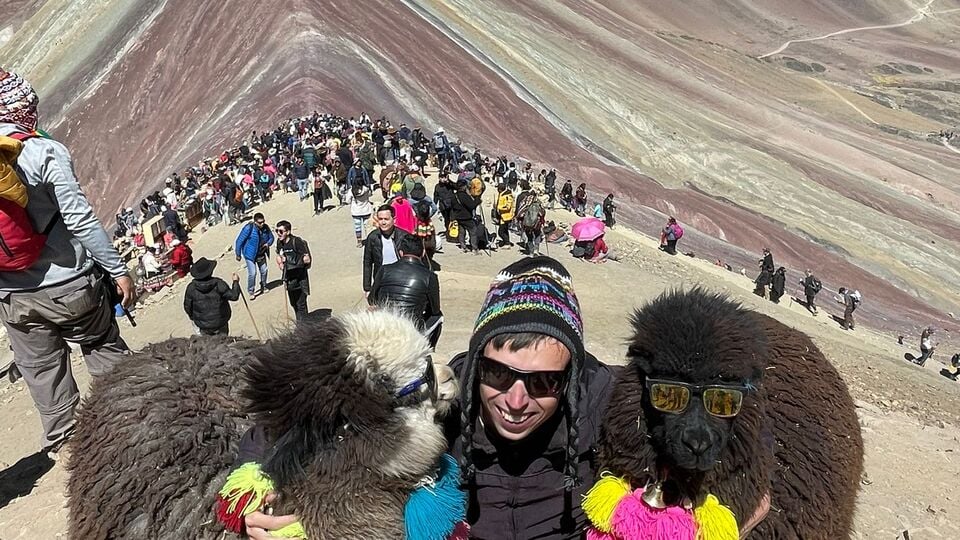
Photo: @alexjbrownn24
Salkantay was the biggest physical challenge for me. Day 1 isn’t too bad; day 2 involves 8 hours of hiking up and down the snowy mountains, and by day 3 onwards, my legs were like jelly. Could barely walk by the time I was back in Cusco.
I’ve done Machu Picchu and Rainbow Mountain twice. I wouldn’t say either has a ton of repeat value unless the pesky Peruvian fog ruined your views the first time around. One thing I would like to redo is Ausangate. Partly for the next-level views, and partly so I can enjoy it without getting wrecked by savage sunburn and altitude sickness.
I also found Peru’s hikes to be much safer than Colombia’s. Let’s just say, armed muggers on the trail wasn’t something I ever had to worry about in Peru. Most trails are well-trodden by tourists and have professional guides taking groups through, unlike Colombia, where mountains aren’t the main attraction, and the general vibe matters more.
Verdict: A clear Peru win.
History & Big-Ticket Sights
Peru is famous for its Incan ruins. Machu Picchu is the star attraction, but there are numerous smaller sights in and around Cusco. I think the 5-day journey to Machu Picchu is more special than the Incan citadel itself, though.
The Sacred Valley, one of Cusco’s highlights (well, as a day trip), is also great, offering the likes of agricultural circles at Moray, the salt mines of Maras, Incan ruins at Ollantaytambo, and Pisac, which has all of the above. I recommend doing the Sacred Valley as a day trip from Cusco, as I saw far more this way than I did by spending 2 days in Urubamba and trying to visit the sites myself. Transport was more of a ballache than I’d anticipated, but day tours cover this.
Paracas, Huacachina, the Nazca Lines, Rainbow Mountain, Ausangate and Lake Titicaca are Peru’s other major attractions. Colombia meanwhile offers Medellin, the Coffee Region, Guatape, Tayrona’s jungles, the Lost City trek, Valle de Cocora, San Andres (a Caribbean island), La Guajira, and you can stay in Cali to experience its salsa culture. Both countries have Amazon Rainforest adventures too.
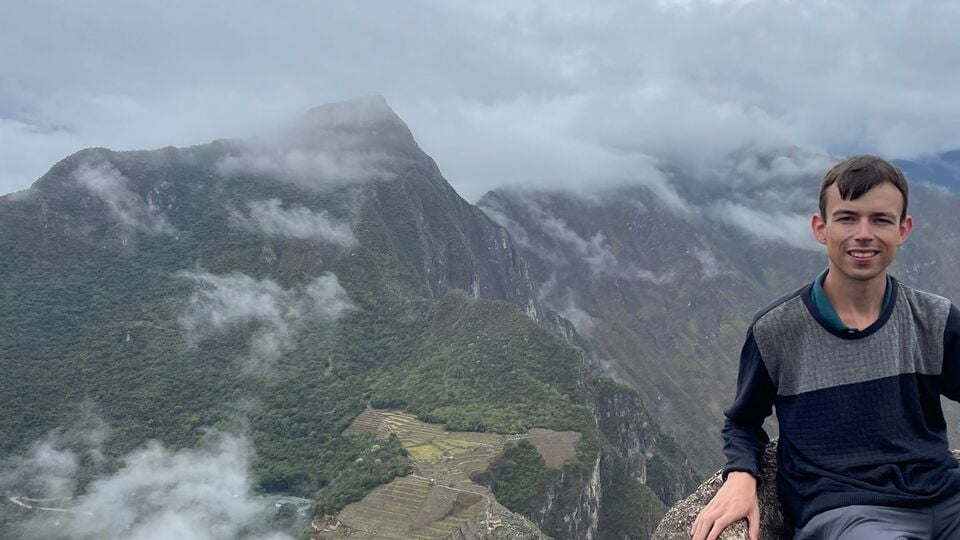
Photo: @alexjbrownn24
Seeing Machu Picchu after 5 days of struggle through every type of climate imaginable was my biggest “wow” moment in either country, and possibly ever. I would say Colombia has more depth beyond the star attractions, though. Colombia away from tourist areas offers incredible colourful towns and super-friendly locals. Peru meanwhile is pretty unimpressive outside of Gringo hotspots.
My 3 favourite historical or big-ticket activities across the two countries were the Salkantay Trek to Machu Picchu (Peru), learning about indigenous lifestyles at Lake Titicaca (Peru), and hiking through the mountains such as Vinicunca and Ausangate (Peru). You’re probably beginning to notice a theme at this point…
Verdict: Got to be a clear Peru win here.
Beaches & Tropical Travel
I won’t lie, the beaches suck for the most part. I went out of my way to visit Palomino in Colombia, but left the next day, unimpressed with how bland and boring it was. And Cartagena isn’t great, as beaches are packed full of pests and scammers who won’t leave you alone.
Both countries have their plus points, though. I wasn’t a fan of the gloomy Peruvian capital Lima; it’s the only place I didn’t like there. But I went in July, and the summer months (December-April) are when the beaches spark into life, in one of South America’s most famous surf spots.
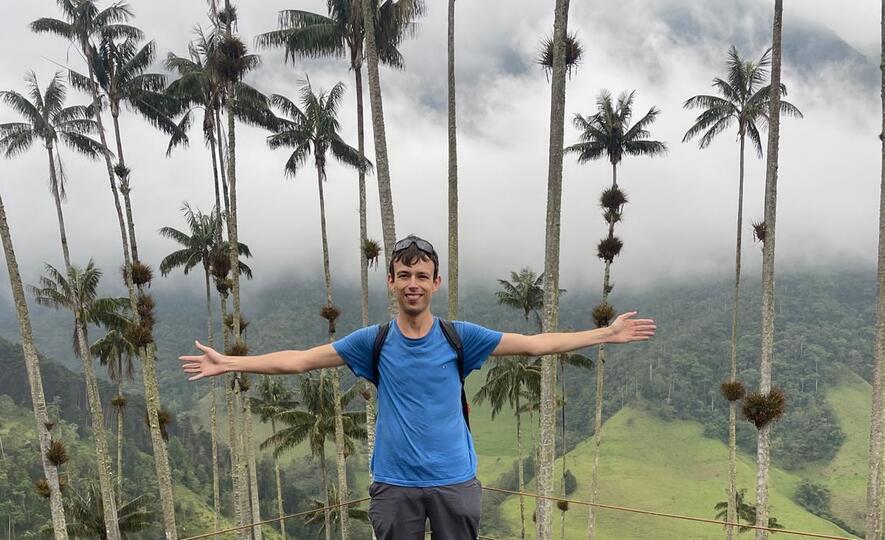
Photo: @alexjbrownn24
Colombia, meanwhile, is home to an island in the Caribbean called San Andrés, which is one of Colombia’s coolest places. Geographically, it’s closest to Nicaragua. San Andrés has clear turquoise waters, which differentiate it from less aesthetic spots on mainland Colombia’s coast. Divers love this spot due to its incredible reefs, but it does cost much more on this island. I did at least feel more of a tropical vibe around the northern coast, in the likes of Cartagena, Minca and Tayrona.
If I’m honest, neither country is world-class for beaches or a tropical feel. Brazil, Venezuela and Central America are all superior options from where I’ve been. But between Peru and Colombia there is still a clear winner, and that is…
Verdict: Colombia, with San Andrés being the clear differentiator.
Food
Won’t lie, the food didn’t do it for me in either country. The common consensus amongst other backpackers is that Peru has better food. Lima is indeed known as a big foodie city. But for me, especially having tasted incredible steak in Argentina, Paraguay and Brazil, both countries were a letdown.
Colombia offers more meaty cuisine, with bandeja paisa a hearty local favourite. They also love corn-based arepas, just as they do in Venezuela. Peru, meanwhile, is best known for the raw seafood dish ceviche, whilst East Asian immigration has brought a lot of Chinese and Japanese influence across. I was surprised at the lack of international food I found in Medellin, given the city’s size and large expat population.
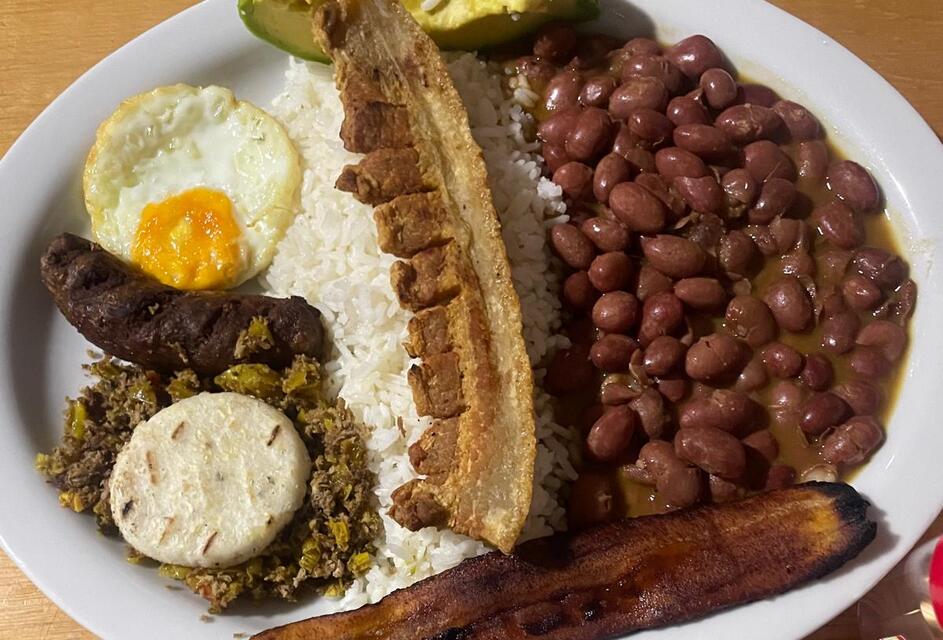
Photo: @alexjbrownn24
Both countries are super cheap for meals, with street food easy to find. I found local markets almost everywhere in Peru. Cusco has a big one (Mercado Central de San Pedro), whilst the Sacred Valley had one in Urubamba full of gruesome sights (severed pig’s head, anyone?). In Colombia, Bogota has fun markets where you can sample the popular corn-based chicha drink. I much preferred Peru’s chicha morada though…
You can tuck into some unusual foods if you’re feeling brave. I ate capybara in Bogota, although it was pretty meh, so I wouldn’t have it again. Plus, my girlfriend, whom I met 2 months later, is pretty unhappy when I bring up this story… Peru, on the other hand, has cuy (guinea pig) as a delicacy. I was keen on trying it, but the £25 Cusco tourist trap prices put me off. Search for this in more offbeat locations away from the tourist trail.
One of my favourite things in both countries is the menu del dia – a cheap 3-course meal consisting of a starter, main course and dessert. Don’t expect a giant feast, but it’s filling enough and great value.
Verdict: I’m gonna go against the grain here… Colombia. Just.
Nightlife & the Days With Nothing Planned
When I stayed at Los Patios in Medellin, they held nightly events at the bar. I met a bunch of lads up there, and after a few beers we headed to Provenza (the local nightlife district) where we went to an event called Gringo Tuesdays.
This is a language exchange where you sit at tables with a language specified (Spanish, French, Italian, etc.) and attempt to learn it with newbies and fluent speakers. By around 10 p.m., the tables are pushed to the side, the DJ pumps the music up, and the event becomes a giant party. We just turned up for the party; it was a great way to meet Colombians who wanted to practice their English.
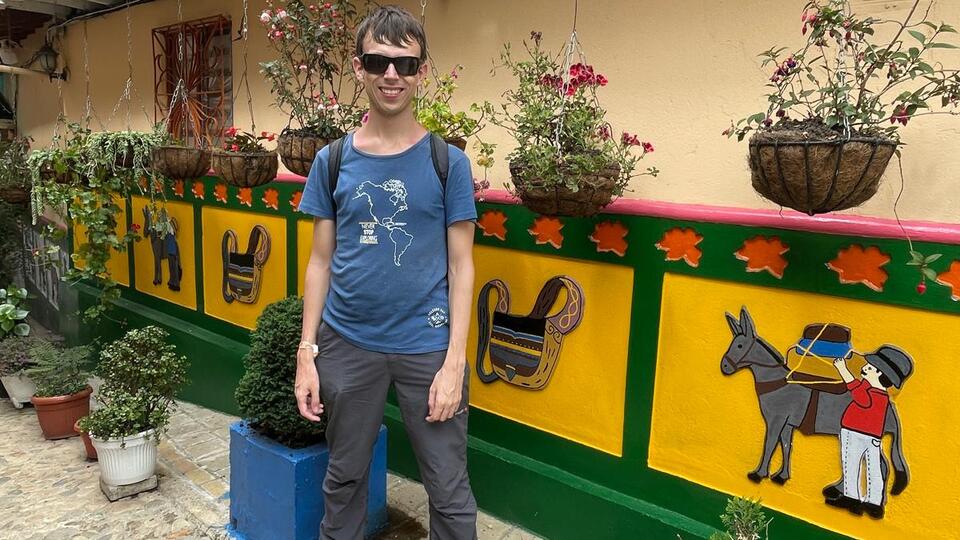
Photo: @alexjbrownn24
In Peru, I enjoyed a good party at Wild Rover in Huacachina (great hostel chain for parties), and there’s a handful of okay bars in Cusco with Western bands playing live music. I will say, though, that nightlife is not what Peru does best.
Both countries are cheap for nightlife, but Peru is even more budget-friendly than Colombia. I spent around £10 drinking at Los Patios and then in Provenza. Barely spent £8 in Cusco, where you want to head to the Plaza de Armas, and take a left turn whilst facing KFC and McDonald’s to find the majority of bars here.
On the quiet days, Peru is easier to walk around aimlessly without worrying about which neighbourhoods are unsafe (I wouldn’t do this in Lima though). In Colombia, you’re rarely far from a colourful small town, and they’re always fun to visit. Colombian coffee is overrated though. I’ll let you in on a secret: the good stuff gets exported abroad.
Verdict: Overall, a fairly comfortable Colombia win.
Which Is Easier to Travel? Planning, Transport & Safety
South America requires a little more planning than most countries. Therefore, I’ll give you a little overview of what to take into account.
Planning Ahead
After overplanning everything for Venezuela, we returned to Bogota for a day ahead of my second visit to Peru. I didn’t bother planning, because Peru had been an easy country before. Whoopsie. We were stranded at Cusco airport for a while with no internet, no money, and no clue how to get to the centre. Figured it out eventually, but lesson learned: don’t get complacent.
In Peru, Machu Picchu is the big thing to plan ahead. Tickets generally sell out, sometimes months in advance, especially in peak season (May-September). The Salkantay Trek sells out, often weeks in advance, and the Inca Trek has just 200 daily spaces for tourists, so you must book 5-10 months in advance for a spot.
I booked the Salkantay Trek in Cusco, and had to wait over a week for a spot to become available. I was super lucky as it can take months, but it meant a lot of downtime as I didn’t need to rush to see all the sights.
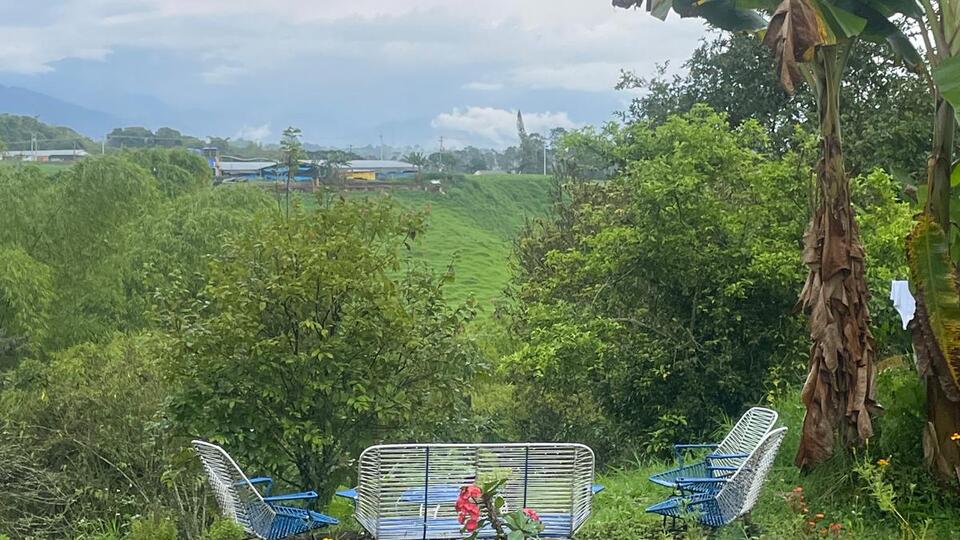
Photo: @alexjbrownn24
You also need to acclimatise in Peru, so the altitude doesn’t ruin your trip. This is true in Cusco, all surrounding areas, and Lake Titicaca. The Sacred Valley isn’t so bad. The coastal areas aren’t a problem at all. Spend 2-3 days acclimatising before anything strenuous.
Colombia is much easier for winging it. The only time I got caught short was when I first arrived in Medellin and the legendary Los Patios hostel sold out, so I spent one night elsewhere before moving over.
Since the Lost City Trek is Colombia’s premium offering, I’d recommend booking it 2-4 weeks before you plan to go. With Colombia being more about the vibes and less about the marquee attractions, though, it’s far easier to just turn up and go with the flow.
Getting Around
I did a ton of long-distance travel in both countries. In both, buses are luxury compared to Africa, but shoddy compared to Western Europe. I had a brutal 32-hour journey from Guayaquil (Ecuador) to Lima via Tumbes. Not recommended; just fly…
Buses generally don’t have charging sockets. With your bags, don’t put any valuables in the hold. I shut my bag with a padlock and use a cable lock to attach it to my leg for long overnight journeys on night buses, which are the best way to do 8+ hour trips so you don’t lose precious travel time.
Whilst Colombia just uses standard buses, Peru has something called Peru Hop (there’s also a Bolivia Hop if you cross the border there). It has safe buses with seatbelts and more luxury that do door-to-door transport.
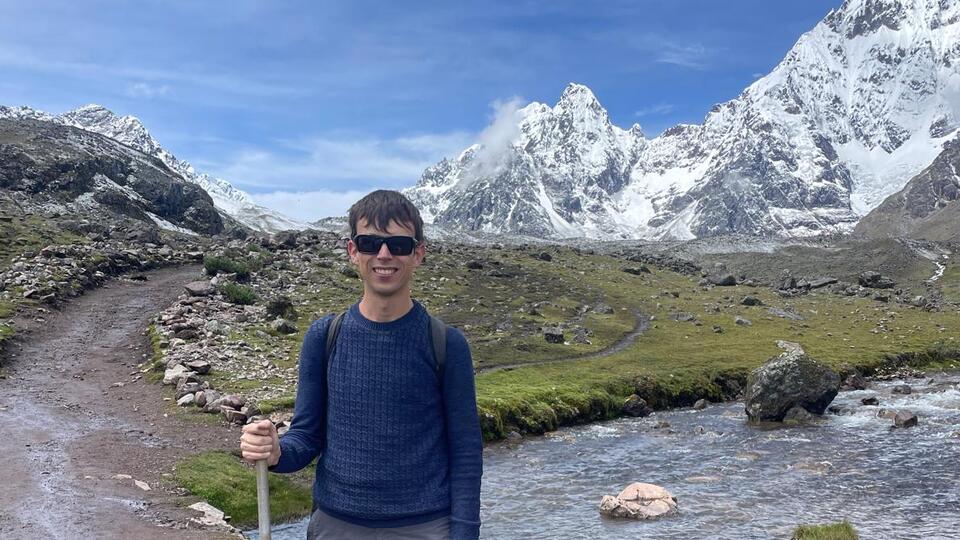
Photo: @alexjbrownn24
I never had safety issues on buses, but being held up by gunmen who rob all the passengers is a thing in Latam. It happened to my girlfriend’s mother and sister whilst heading from Brazil to Paraguay. Different countries, but it can happen in Colombia, and there are similar stories in Peru.
Rare occurrences? Yes, I took several buses with no such issues. But you need to be aware that the chances of gunpoint robberies aren’t zero. PeruHop and internal flights are your safest ways to get around.
Within cities, just use Uber. It works in both countries. Just be aware that in Colombia it used to be a grey area, and some drivers believe Uber is illegal, so they make you sit in the front seat to look like a friend. This is nothing to worry about, and some are quite chatty, so you can pick up local knowledge.
Safety
Peru is safer than Colombia, but still requires some caution. Having spent roughly 6 weeks in each country, I had zero incidents in Peru, and heard zero bad stories from other travellers. I had one near miss in Colombia, and heard countless stories from other travellers. Oh, and Los Patios staff told us not to walk round the corner to the main road 30 seconds away at night because knife-point muggings happen there. Reassuring… In fact, on the very day I wrote this, I spoke to someone on TikTok whose boyfriend was mugged there.
My incident happened whilst with my girlfriend in Guatape. We attempted walking from the rock to the town an hour away. Stupid idea. There were no paths, but I thought I walked this route on my first visit (although I didn’t recognise it, so maybe I was wrong).
Suddenly, a motorcyclist pulls up right in front of us, in the middle of nowhere with no shops or anything around, just road and bushes. He starts reaching for something, but we got super lucky at this point. A tuk-tuk came along, so we flagged him down instantly and fled before we could see what was in the man’s bag…
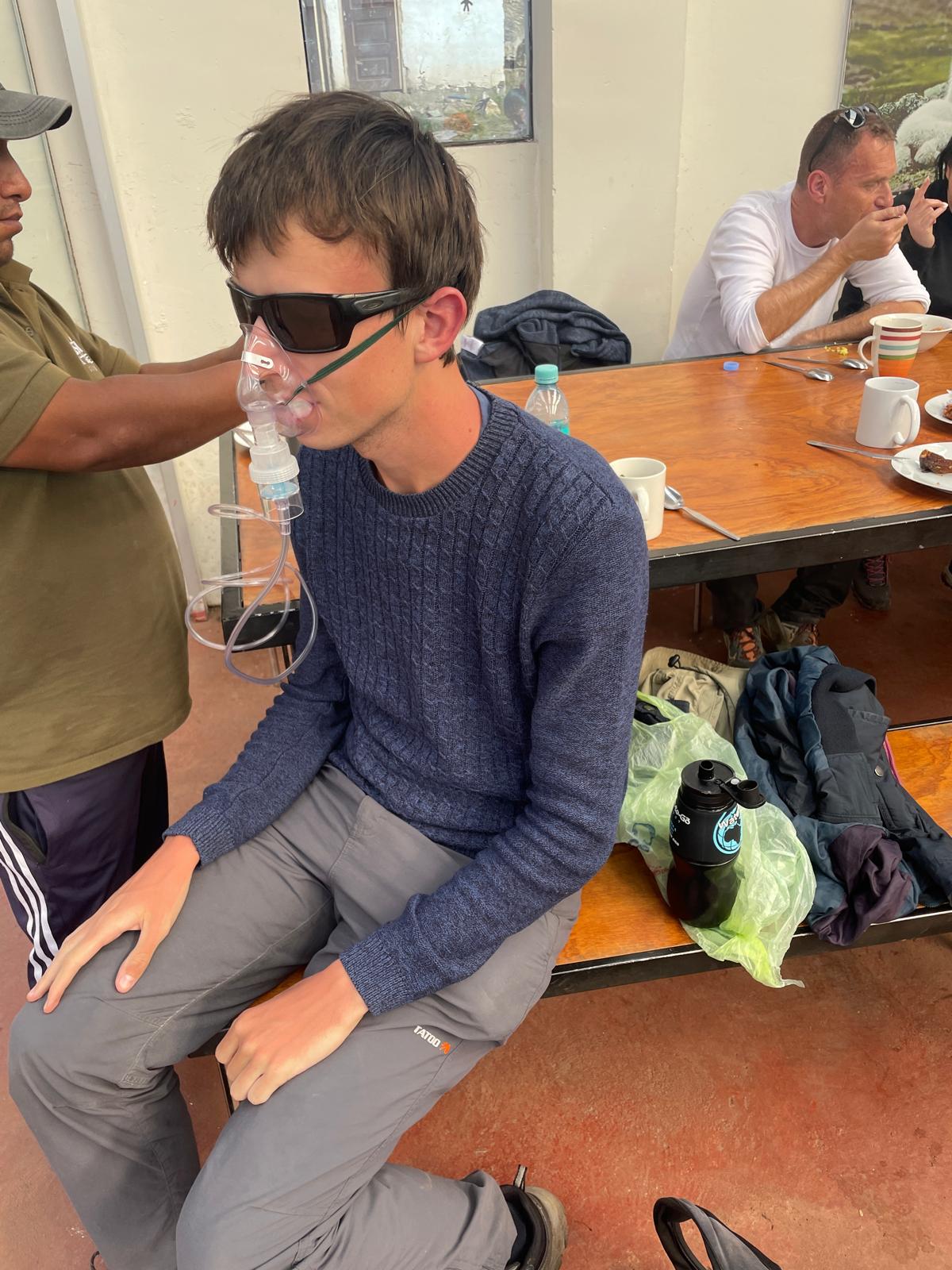
Photo: @alexjbrownn24
In both countries, I told you in the last section how I always lock bags to myself on night buses. I also only check my phone in shops/cafes/restaurants, etc., rather than on the street, having nearly been mugged by 3 guys in Quito who I somehow fought off and snatched my phone back from…
There are two places I intentionally avoided due to safety concerns – both in Colombia. On my first trip, I flew to Quito to avoid the notorious Colombia/Ecuador borders. On my second, my girlfriend and I decided against going to salsa capital Cali due to its dangerous reputation. In Peru, it’s only the VRAEM I’d avoid, but this drug-ridden region isn’t touristy at all anyway, so no one puts it on their Peru itinerary.
In both countries, I would only use Uber to get around at night, and never walked. The exception was central Cusco. I will say that crime is the secondary safety concern in Peru, though. Altitude is the big one; it’s a real danger, and you MUST acclimatise before hiking. I never once got altitude sickness on my first trip, but it hit like a truck on my second. Brutal stuff. Crime is the biggest danger in Colombia; altitude in Peru.
Make Sure You Have Good Insurance in Both Countries
Both Peru and Colombia have hazards that can cause problems for you. Whether it’s altitude or crime, you should have good insurance to cover you against a hefty bill if something goes wrong. Having it saved me from a £300+ bill when the flu, bronchitis and a mystery infection struck me down in Colombia for a week.
Sort out your insurance before you go. There are several good options, but our overall pick is SafetyWing. Most of the Broke Backpacker team has used it at one point or another, and we’ve filed claims for rabies jabs in Bali, a hospital stay in Mexico, and a clinic visit for a stomach bug that wouldn’t quit. All paid out.
It’s month-to-month, no lock-in, no itinerary required, and you can buy it after you’ve already left. A little over $2 a day if you’re under 40.
New SafetyWing customers: use code BROKEBACKPACKER for 8 free weeks of electronics theft coverage. You have to scroll down and click the pink camera on their landing page to enter it, and you have to do it before creating your account.
Click here to find the ideal policy for you.
When I’d Choose Peru, and When I’d Choose Colombia
The time of year you travel, and your specific interests are important to factor into which country you ultimately choose. Here are my suggestions:
- Travelling in May-September + serious trekking → I’d choose Peru.
- Travelling in December-March + beach priority → Colombia.
- Fixed school-holiday dates → Peru in and around August, Colombia over Christmas.
- Hate rain → Peru (especially May-September), with regional caveats.
- Hate cold nights/altitude → Colombia.
- Want fewer bookings/crowds → Colombia.
| When You’re Travelling | I’d Lean Towards | Why |
|---|---|---|
| January-March | Colombia | Been to both countries around this time and Peru was very foggy, we barely saw Machu Picchu, and the Salkantay Trek wasn’t possible due to landslides. |
| April-May | Peru | We’re entering Peru’s hiking season just as Colombia experiences more rain. |
| June-August | Peru | Peak Peru hiking season with dry weather and good conditions. |
| September-October | Peru | Tail end of the hiking season with fewer crowds. |
| November-December | Colombia | Dry season starts in Colombia, whilst the Peruvian Andes are hit by wet weather. |
My first Colombia trip was in June/July, and my first Peru trip was in July/August. Then I returned to Colombia in March and Peru in March/April.
I wouldn’t say Peru is great to visit in March/April as the weather is still transitioning into the good months. I planned to do Salkantay for the second time, but for a week we were told it wasn’t possible as landslides had blocked the trail, and they were unsure when it would reopen. We instead took the van to Hidroelectrica and walked through the jungle to Aguas Calientes from there.
Coastal Peru is best visited from December-March when it’s sunny. But to be honest, Paracas and Huacachina were great in June anyway, and I don’t think Lima is really worth visiting. Surfers and foodies may disagree with me though – they’re the two groups who Lima really appeals to, and I fit into neither.
Peru or Colombia First? My Verdict by Traveller Type
Well, there you have it. This is my comparison between Peru and Colombia, two of my favourite countries in the world. I’ll briefly wrap up with a “quick glance” summary for you.
- Your first South America trip: Peru because it’s much safer.
- Only 10 days: Colombia, as you’d waste several days acclimatising to the altitude in Peru.
- Two weeks: Colombia for the same reasons as above.
- A month: Peru, as this is a good amount of time to see almost everything worth seeing.
- First solo backpacking trip: Peru, with safety being the main differentiating factor.
- Shoestring backpacker: Peru; both countries are cheap, but Peru even more so.
- Hiking-first trip: Peru; this is one of the best hiking countries in the world, and has fewer safety concerns.
- Food-first trip: Peru is one of the most famous foodie countries in South America.
- Beach/nightlife trip: Colombia. It has stunning beaches on San Andrés, and incredible nightlife in Medellín. Peru lacks in both areas.
- You hate planning ahead: Colombia. In Peru you must plan ahead for Machu Picchu, and acclimatise to altitude first.
- You like trips built around major bucket-list experiences: Peru. Machu Picchu, Lake Titicaca and other historical sites give it the edge.
- You’ve already travelled a lot of Latin America: Colombia. It’s more of a challenge (mainly due to safety), but I had no issues spending a month there on my first trip, having just come from 3 months in Central America.
I did Colombia first because I was coming down from Central America and it was a logical next step geographically. Getting 3 months of Latin America experience under my belt from Mexico to Panama prepared me for Colombia, but with no history in that part of the world, I’d definitely say Peru is better for dipping your toes in. Whatever you choose, I guarantee you’ll have a memorable time!