Of all of the countries in South America, Colombia is the closest one to paradise. The jungled Andes meet the Caribbean and the country hums with a culture full of music, color, and flavour.
Chilled surfing beaches, mountain peaks, bustling cities, crazed parties and lost cities make this a country for every kind of traveller.
Of course Colombia was once a dangerous place, but how it is today and how it once was is night and day. The comeback story, particularly in cities like Medellin, is inspiring, which receives tourism and welcomes travelers with open arms, a big smile, and for me, the best coffee in the world.
The first feeling when I got there was a bit chaotic. However, I felt comfortable quickly. Locals, in general, are extremely friendly, and when I needed help there was always someone willing.
Backpacking in Colombia is studded with some of the best experiences possible; looking down at Medellin from a rooftop bar with a wad of pesos, watching a sunset over the Caribbean with a beer in hand or being in a flow state salsa dancing with locals.
You will remember your trip for the rest of your life.
This freshly updated Colombia travel guide will teach you the ropes for an amazing backpacking trip the cheapest way possible. You’ll find:
- How to dance, trek and ride your way through one of South America’s top adventure destinations.
- A ton of logistical info on safety, transport, eSIMs, and everything else needed to navigate Colombia.
- How much you can expect to spend on an average day here.
- The best places to stay and so much more important info you’ll need to be fully prepared.
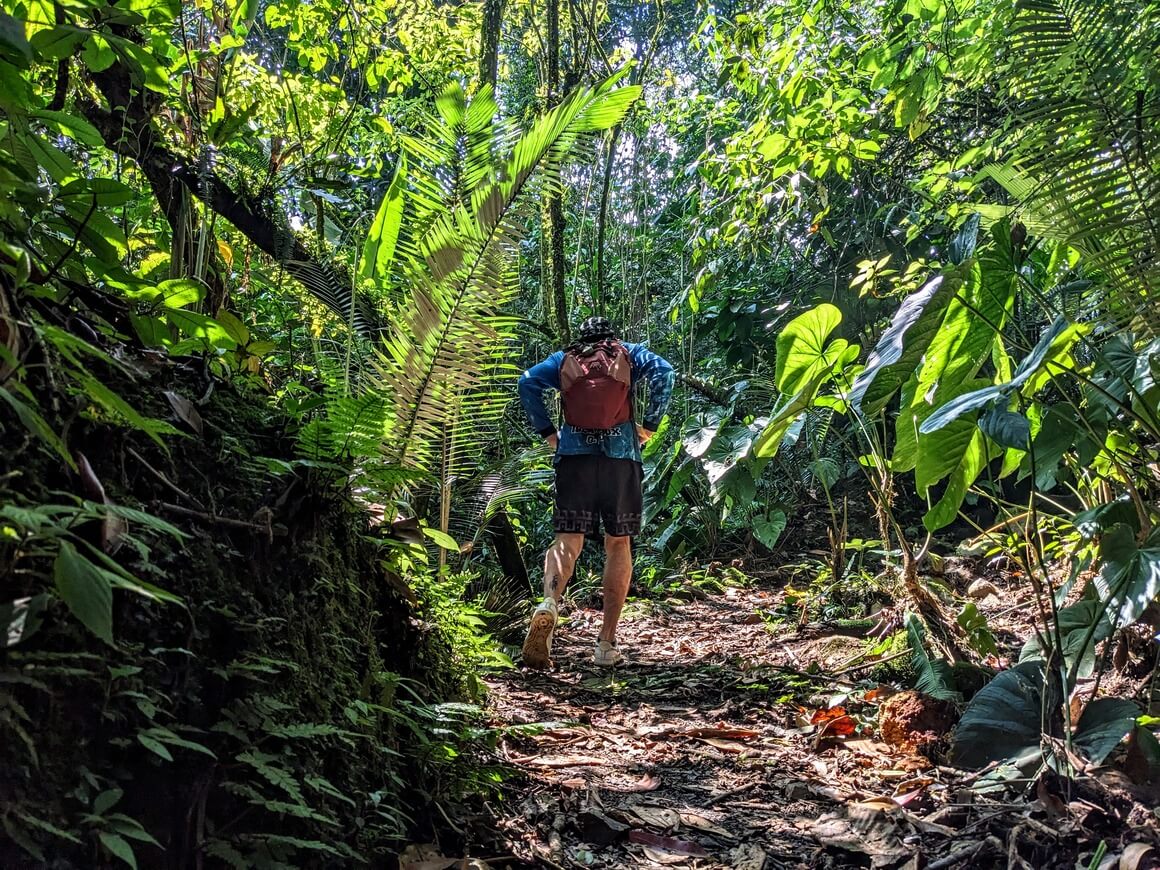
Photo: @sebagvivas
The Broke Backpacker is supported by you. Clicking through our links may earn us a small affiliate commission, and that's what allows us to keep producing free content 🙂 Learn more.
Why Go Backpacking in Colombia
It often feels like the whole world is contained within Colombia.
It is pretty crazy that glaciated mountains share the same country as paradisical Caribbean beaches, or that the big city of Medellin existing alongside towns that time forgot like Jardin.
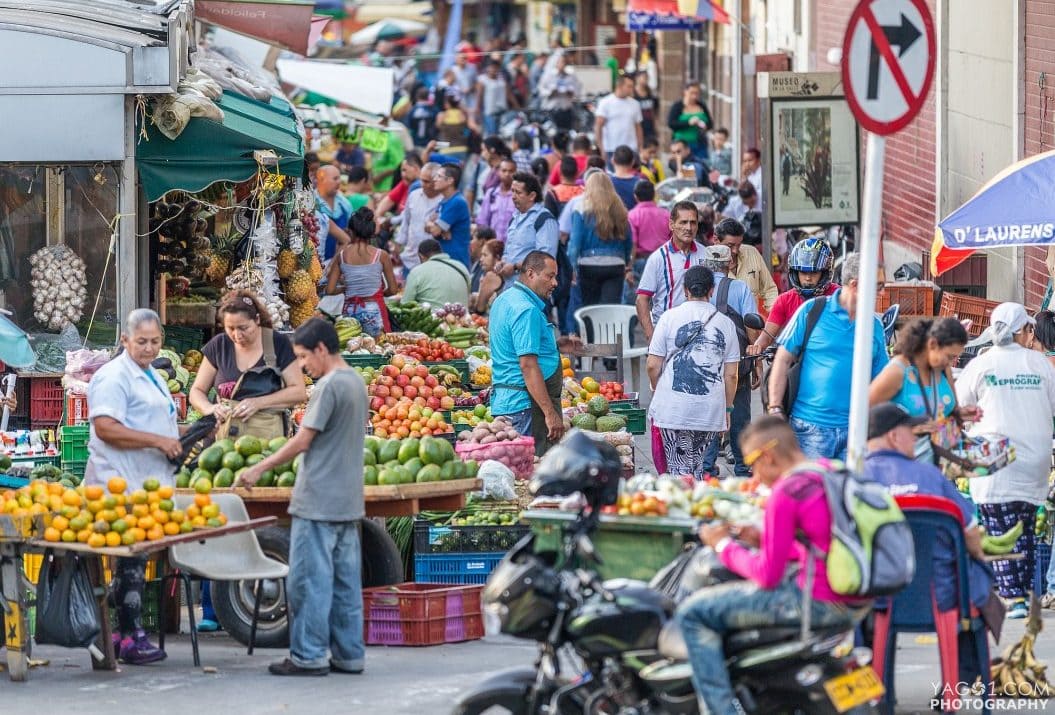
You will never get bored of the experiences that Colombia throws up. After just days of being in Colombia you will not recognise this as the place that once made so many headlines.
Colombia is ideal for backpacking as you get a lot of bang for your buck. The country is well connected, there is a great travelling community and its adventure activities like surfing or hiking to lost cities in the jungle suits energetic backpackers with a love of life.
- Best Travel Itineraries for Backpacking Colombia
- The ULTIMATE Colombia Tour
- Best Places to Visit in Colombia
- 10 Top Things to Do in Colombia
- Backpacker Accommodation in Colombia
- Some Unique Experiences in Colombia
- Colombia Backpacking Costs
- To Stay Connected… Get an eSIM For Colombia
- Best Time To Travel To Colombia
- Staying Safe in Colombia
- How To Get Into Colombia
- How To Get Around Colombia
- What’s New for Backpacking in Colombia?
- Colombian Culture
- Working in Colombia
- What to Know Before You Go
Get information on Colombia travel itineraries and backpacking routes, maps, travel tips, safety, things to do, and much more. Most of all you will walk away with all the inspiration you need to make the most of your trip whilst traveling in Colombia on a budget.
Backpacking Colombia 2 Week Itinerary #1: The Caribbean Side of Colombia
- Best for: Beach bums
- Suggested route: Cartagena, Santa Marta, Minca, Tayrona / Palomino, Cabo de la Vela, Punta Gallinas, Cartagena.
- Total days: 14 days
- Transit intensity: Low
- Difficulty: Medium
- Best season: December-March
- Budget: Broke Backpacker
- Vibe: Sun, sea and you know the rest!
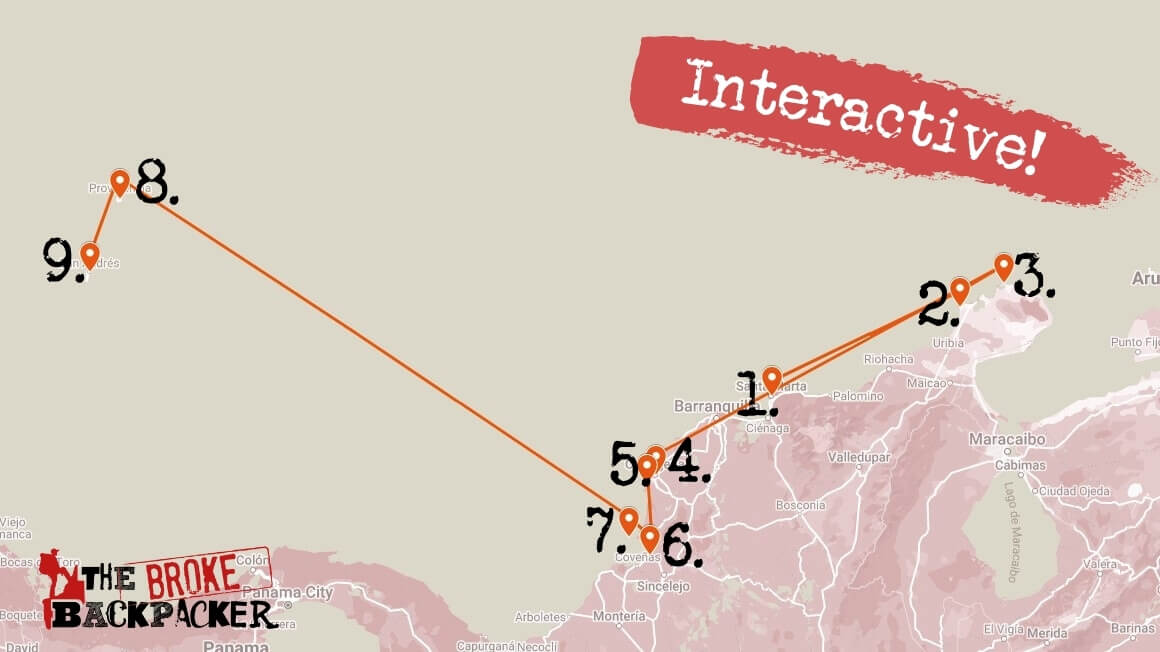
If you’ve only got two weeks, there’s no point rushing. Pick a region and see it properly. I’d suggest the Caribbean side of Colombia, for obvious reasons.
Begin your trip in Cartagena, a destination for international flights or the ferry from Panama. After a few days, head to Santa Marta, the jump-off point for Minca – my favourite Colombian mountain town – the stunning Tayrona National Park and Palomino, a vibey bohemian beach town.
Get a bit off the beaten path, and head east to Cabo de la Vela (where the desert meets the sea) and Punta Galinas, where you can feast on fresh seafood amongst the Caribbean and sand dunes.
Doubling back to Cartagena, head to nearby Playa Blanca and Tolú (mangrove) before heading to Islas de San Bernardo (white-sanded islands) if you have time.
Have an extra week? You can catch a flight to the Caribbean Islands of Providencia and San Andrés. Have two extra weeks? Well, check out the 4-week itinerary below…
Hiring a car in Colombia is a very cool way to explore this magical country. Having your own wheels to get around on gives you the ultimate freedom to explore where you want and when. If you can convince a few mates to join you, it’s actually a pretty affordable way to get around.
Backpacking Colombia 4 Week Itinerary #2: Colombia’s Highlights
- Best for: Those looking to see the whole range of Colombia
- Suggested route: Bogota, Barichara, San Gil, Santa Marta, Minca, Palomino, Tayrona, Cartagena, Medellin, Jardin, Salento, Cali, Bogota.
- Total days: 28 days
- Transit intensity: Medium
- Difficulty: Medium
- Best season: December to March.
- Budget: Broke Backpacker
- Vibe: Swaying to salsa
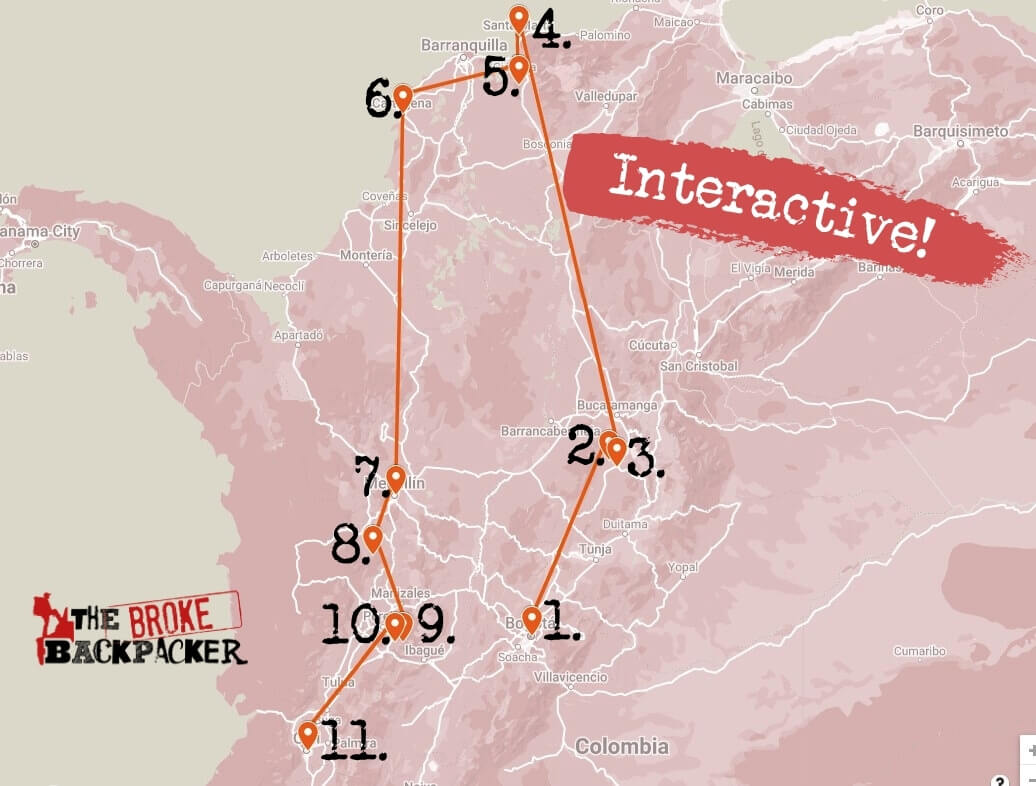
Fly into Bogota, Colombia’s capital and enjoy the amazing food and nightlife. Stay a night or two, you may as well. Then, head over to the picturesque town of Barichara.
After that, you should take the long bus to San Gil, an adventurer’s paradise and one of my favourite places in Colombia. Here you can kayak, paraglide, and bungee jump!
Next, get the bus to Santa Marta. It’s not my fav place in the world, but you should stay the night and use it as your base for cooler places like Minca, Tayrona National Park and other amazing Caribbean destinations. Oh, and make sure to arrange a multi-day trek to Ciudad Perdida.
Afterwards, pitch up at postcard-perfect Cartagena for a while before heading south to Medellín; called the city of eternal spring for its urban jungle vibe and one of the coolest cities on the continent.
Make sure to spend a good few days in Medellín. I’d say a minimum of three days is needed here… especially if you’re gonna party…
Next, head to Jardin for just a day or two before visiting Valle de Cocora, just outside Salento. Go to a coffee finca (farm) and stock up on some coffee.
Last but not least, continue south to Cali, world famous for their salsa joints. Make sure to take a class! It’s one of the best memories of my Colombian adventure. You can easily get back to Bogota from Cali, which ends the perfect round trip.
The ULTIMATE Colombia Tour
If you want the logistics to be sorted for you, the best option is to book a tour. I went on this Colombia Express, Bogotá to Cartagena last year and it was without a doubt one of the highlights of my travels. Whether you’re new to travel or just want a trip with all the fun and none of the admin… this one is epic!!
- Number of days: 9 Days
- Group Size: Max 16, avg 12
- Fitness required: Light
- Accommodation type: Comfortable tourist-class
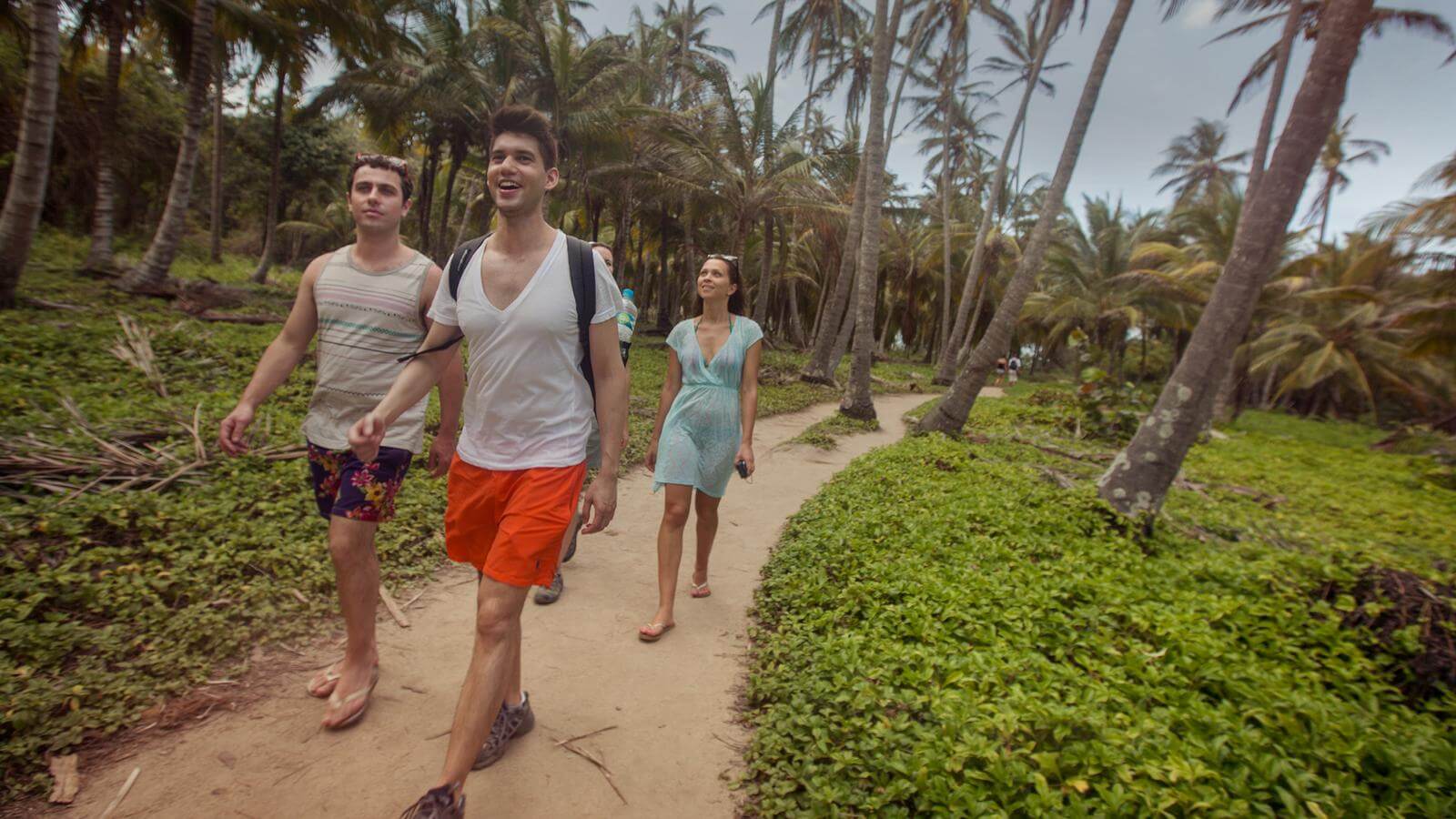
This is a brilliant selection of the most popular backpacker hotspots in Colombia mixed with a selection of hidden gems to allow you to plan the perfect itinerary.
Whichever route you choose to take, these fantastic destinations will be the bones of your trip.
Backpacking Bogota
At a Glance
- Best for: Museums
- Known for: Capital city of Colombia
- How long to stay: 2-3 days
- Don’t miss: Ciclovia (car free Sundays when the whole city goes for a bike ride)
Major cities have a special vibe that makes them unique, and Bogota is definitely one of those. There is a huge amount to do here; I highly recommend going on the graffiti tour and doing a day trip to explore the truly spectacular Salt Cathedral in Zipaquira.
If you love museums, like I do, then the Gold Museum (Museo del Oro) and Museo Nacional (National Museum) is a must. After that, Zona Rosa or La Candelaria are great places to go for drinks in the evening.
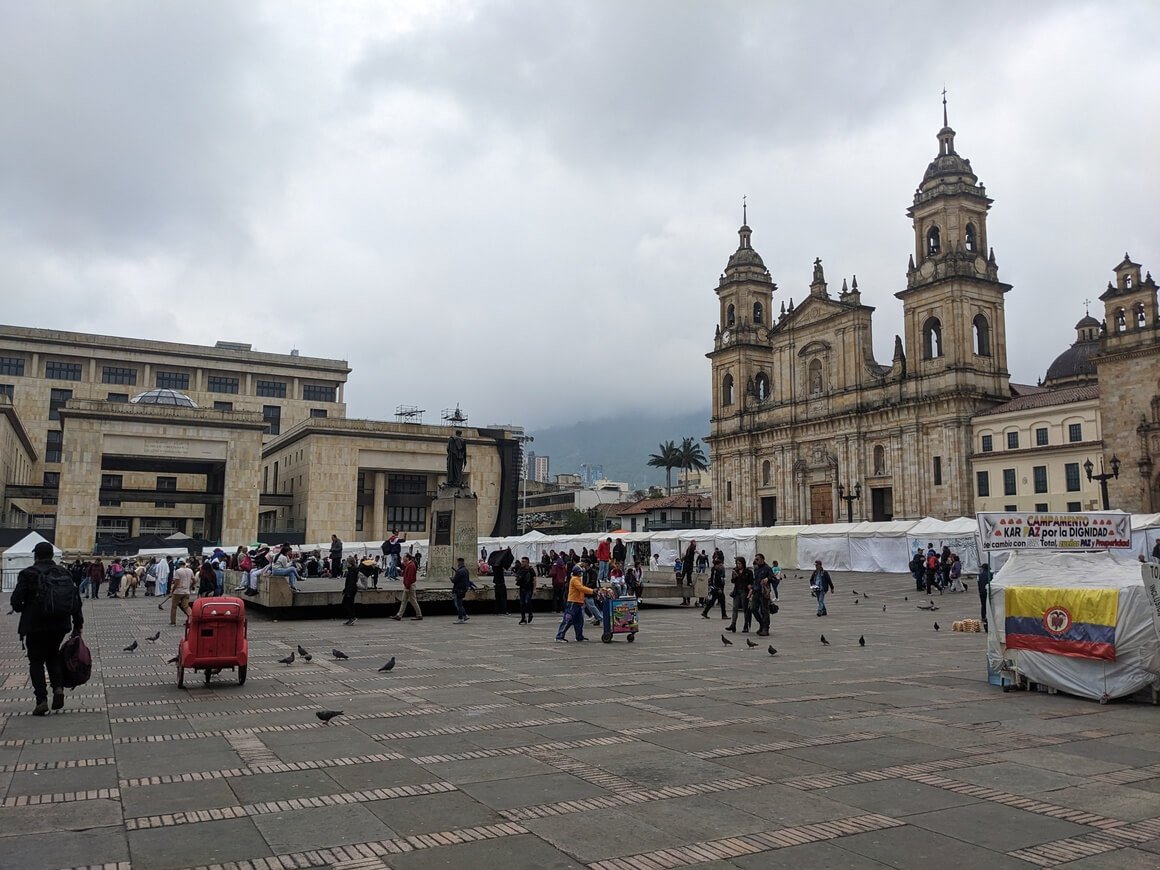
Photo: @Lauramcblonde
Bogota sometimes gets a bad rap amongst Colombian backpackers on account of its rainy climate and gritty atmosphere.
However, I love it and highly recommend exploring winding streets, doing some of the free walking tours (grab an umbrella just in case), and checking some of the bars of La Candelaria. There, I promise you, you are going to have so much fun and dance all night.
Backpacking Medellín
At a Glance
- Best for: Partying
- Known for: Nightlife
- How long to stay: 4-5 days minimum
- Don’t miss: Communa 13
My favourite place in all of Colombia, and for sure on my top 5 cities in Latin America, backpacking Medellín packs a lot of punch and is one of the best places to live if you’re a digital nomad in need of a break.
The very touristy El Poblado area is where most backpackers base themselves, but I far preferred the quieter Envigado. Be sure to go on the Real City walking tour, officially the best walking tour I have ever been on.
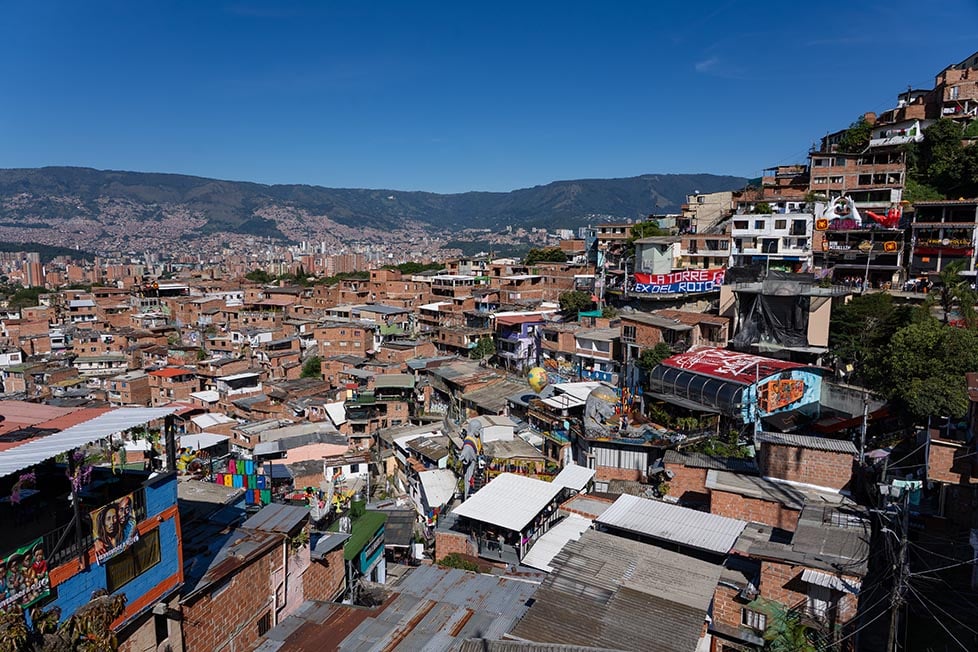
Guatapé is a popular day trip from the city but the real highlights of Medellin are simply wandering around, enjoying a cerveza in a pool hall, a soul-releasing, free salsa lesson, or chilling out in one of the parks.
If you are a foodie, this city has some Colombian street food. Arepas, empanadas, and salchipapa are impeccible.
Medellin has a tarnished reputation on account of Pablo Escobar. Think carefully about whether you want to go on a tour to find out more about the history of the cartel.
You have to check out Comuna 13 and the unique transformation that art has made into this previously devastated neighbourhood. They’ve successfully turned around from violent narcotraffic times, with a grand flare.
Lots of graffiti, music, art, dance groups improvising and showing their movements, and small cafes with amazing views of the neighbourhood. You witness the power of art in changing the environment of an entire community: a great example of resilience in the country and Latin America.
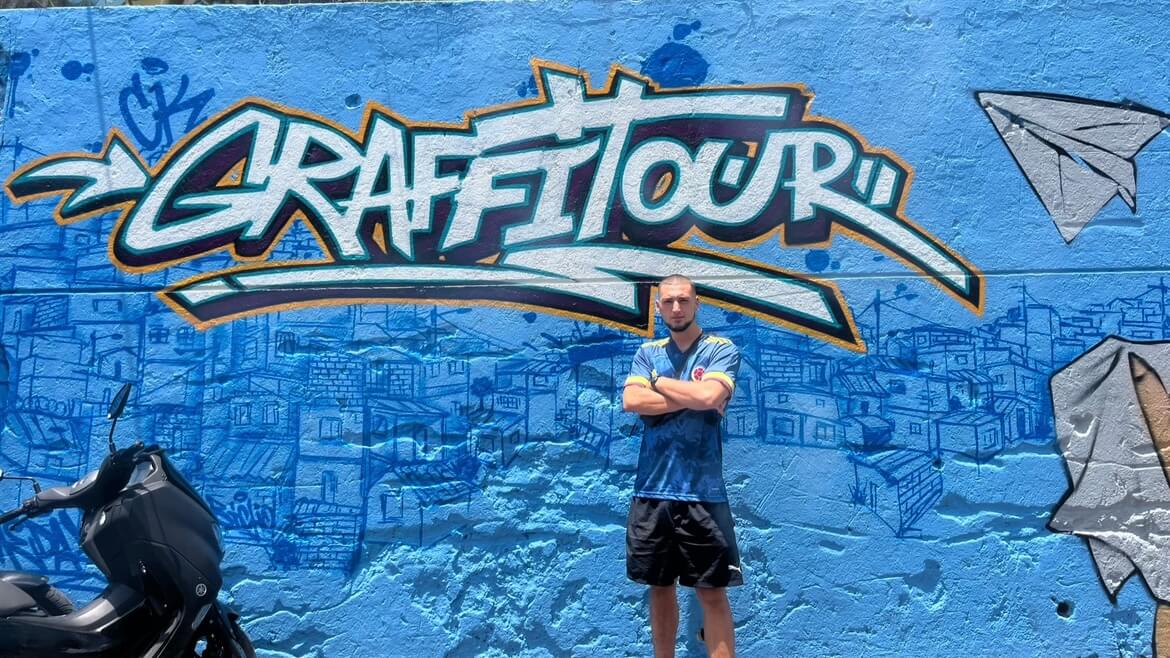
Photo: @joemiddlehurst
Backpacking Cartagena
At a Glance
- Best for: A cultural journey
- Known for: Beautiful city centre
- How long to stay: 3-4 days
- Don’t miss: Castillo San Felipe de Barajas
This is one of the oldest cities of the Americas, and very important as a place where Spanish treasure ships once sailed laden with gold. This wealth crystalised into the picturecard perfect Old Town.
There are also some great beaches nearby like (the very popular) Playa Blanca. This town has no shortage of tourists, hustlers, and prostitutes, all of which are unfortunate aspects of traveling here.
Venturing beyond the Old Town and main touristy areas will offer a rewarding glimpse of real Cartagena. Backpackers more accustomed to off the beaten path destinations are going to hate Cartagena.
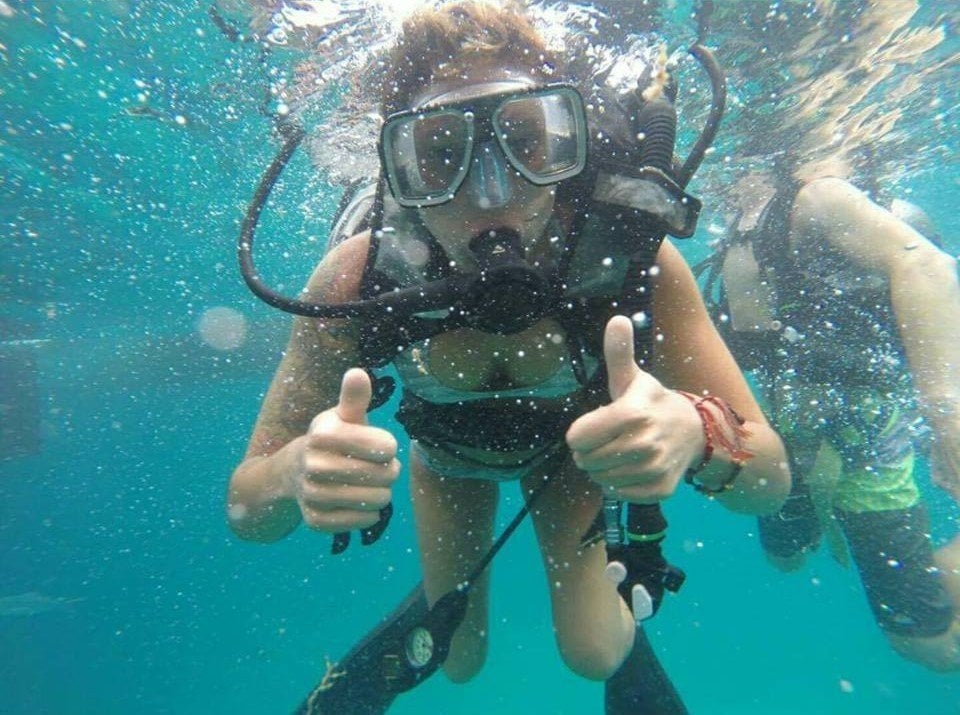
Photo: Alexandria Zboyovski
Cartagena’s safety might be a bit questionable, so be careful. I heard countless stories of backpackers being forced to buy cocaine at extreme prices after they were given a “free” sample.
Like literally they were marched to the ATM and forced to pull out millions of pesos, otherwise, the five angry young men who were pretending to be their friend just minutes before would beat them to a pulp.
For scuba diving, hit up the Rosario Islands. I was able to go scuba diving with a fantastic dive shop called Diving Planet. Their bi-lingual guides are professional and the day or overnight dive trips they offer include van transport and boat transfer, lunch, and all the scuba equipment.
The Rosario Islands are one of the best places in Colombia for scuba diving and have many affordable accommodations, so don’t miss out!
If you are tired of the standard rice, beans, and plantains and want to try the best falafel in Colombia, go to Novo Kebab.
Backpacking Santa Marta
At a Glance
- Best for: Exploring the Caribbean Coast
- Known for: Gateway to Tayrona National Park
- How long to stay: 1-2 days
- Don’t miss: Paseo el Camellón
Santa Marta lacks the masses of attractions found in Cartagena, but it is also laden with history as the second oldest Spanish city in South America, and the death place of Simon Bolivar, the great independence leader.
Santa Marta’s hostels are the best option for a few nights. For a place to stay in town with a fun party scene (and a pool), I recommend staying at Viajero Hostel.
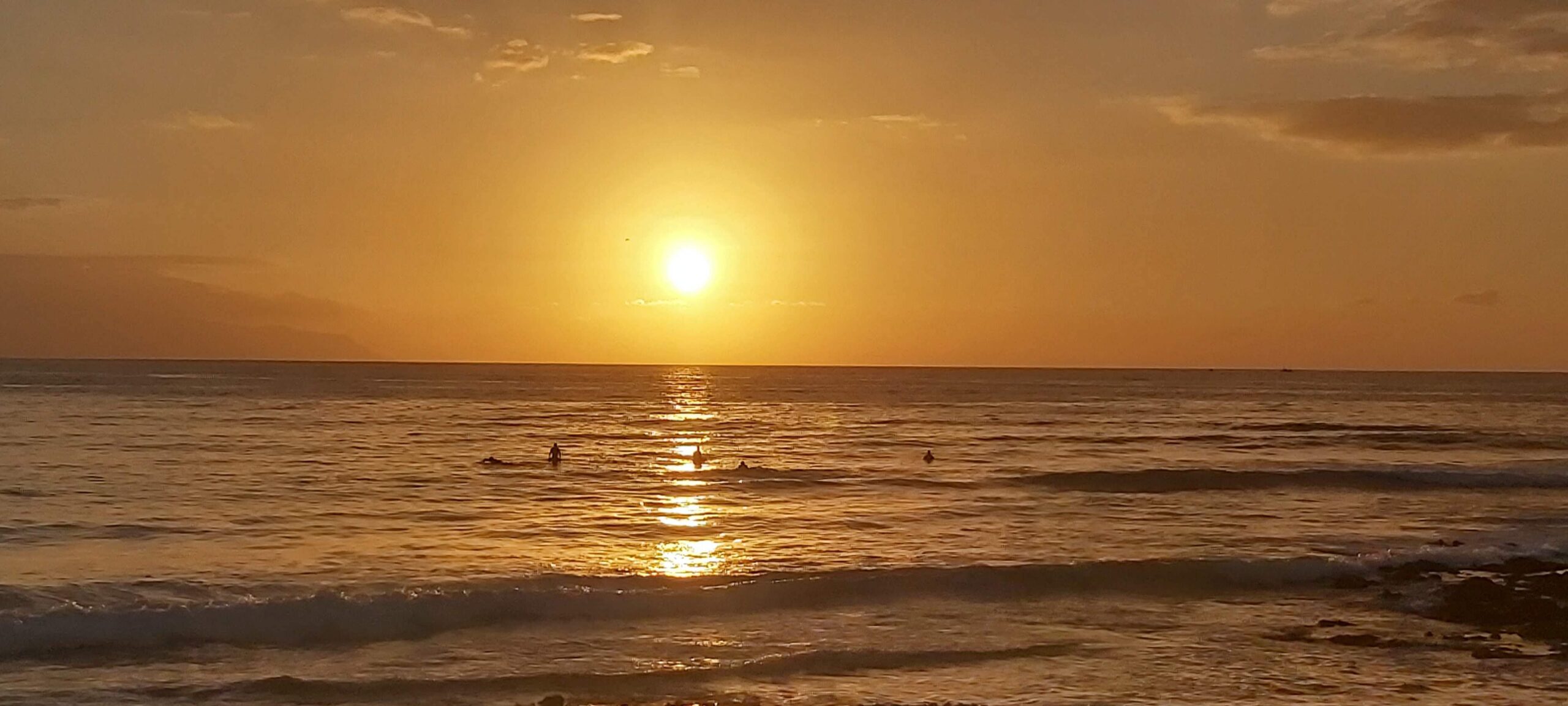
Photo: @Lauramcblonde
There are some great museums like La Quinta de San Pedro Alejandrino that explore this story. It also has a brilliant town beach and promenade, Paseo el Camellón. After the chaos of Cartagena, it is a tranquil place for some RnR.
Most importantly, it is the gateway for tours and excursions to the Tayrona National Park, some pretty epic beaches, the famous archaeological site Ciudad Perdida (Teyuna) and Minca in the cloud forest.
If you want to go for a kick-ass motorcycle adventure into the mountains or around the coast, hit up my friends at Adrenaline Addicts.
Backpacking Taganga
At a Glance
- Best for: Peace
- Known for: Scuba diving
- How long to stay: 1-3 days
- Don’t miss: Beach parties
This is a brilliant alternative to Santa Marta, if you would like a more rural vibe. By day, a quiet fishing village, it transforms into a raucous party destination famous for its drug scene by night. It has something for everyone.
I thought that it had a distinct Mediterranean feel, something about the ochre hillsides just above the deep blue water and the fishing communities.
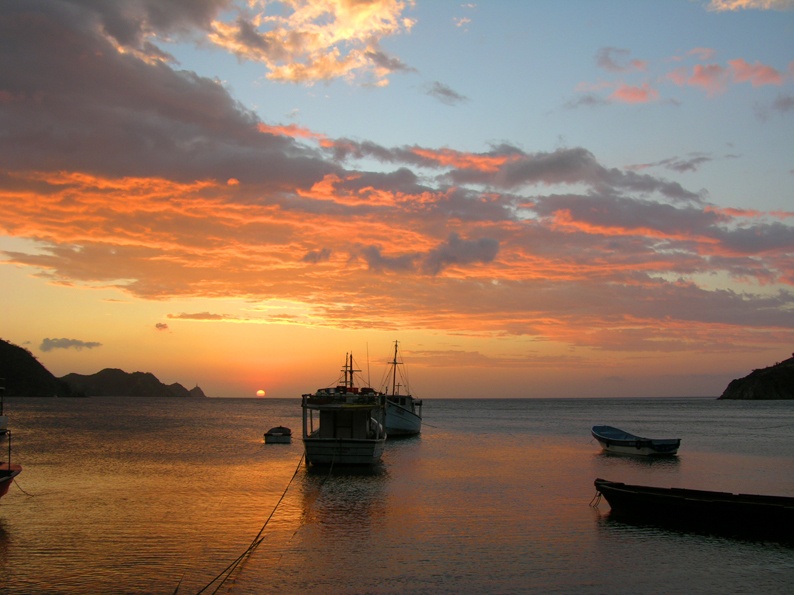
Photo: Donrallon (WikiCommons)
Beyond the party scene, it is one of the cheapest places in the world to learn to scuba dive so if that’s your bag, you’ve come to the right place. There are many PADI courses here if you want to get cutting about beneath the waves. Also, be sure to grab a bite to eat in the incredible Babaganoush Restaurant.
Like Santa Marta, Tagana sits on the fringes of the Tayrona National Park, and close to Ciudad Perdida, making it a good base for excursions to either. I think it is so wild because so many choose to celebrate completing their hike to Ciudad Perdida here.
Backpacking Tayrona National Park
At a Glance
- Best for: Beach vibes
- Known for: Jungle meets Caribbean beaches
- How long to stay: 2-3 days / day trip
- Don’t miss: Cabo San Juan de la Guia
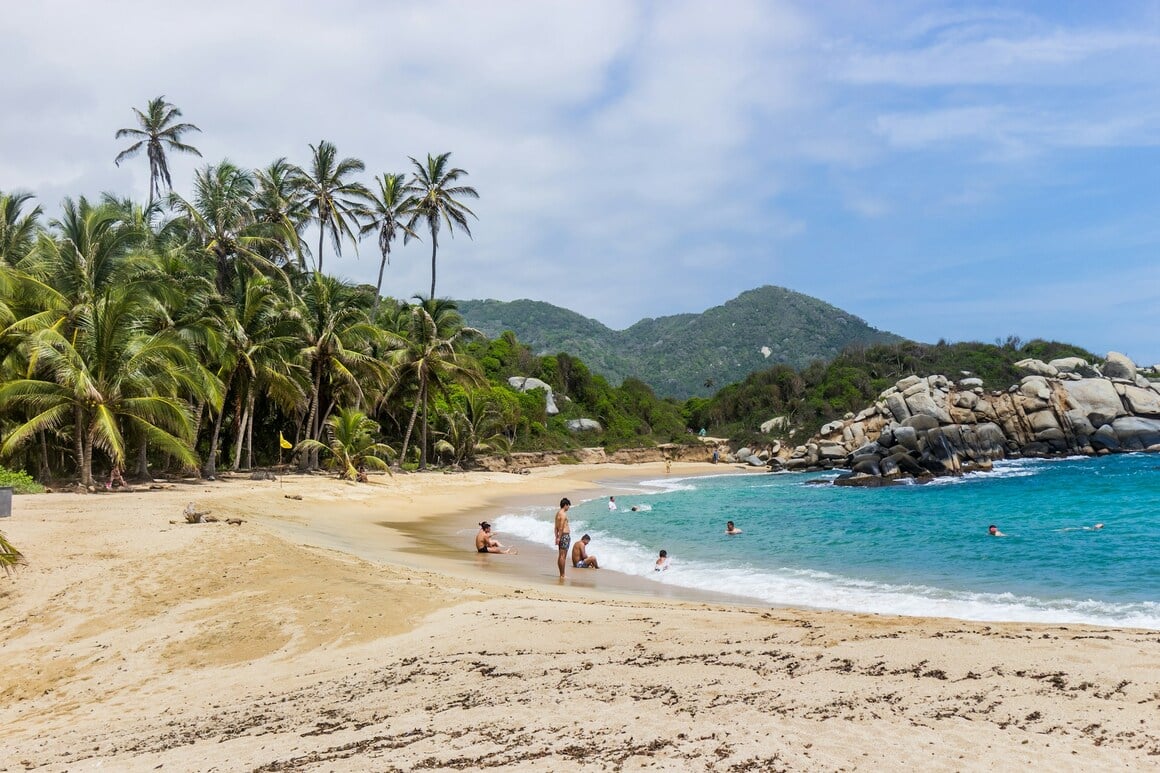
An easy hop from Taganga or Santa Marta, Tayrona National Park is a stunning oasis of pristine beaches fringed by untamed jungle. With granite boulders strewn across golden sand, it is a unique spectacle and one of the most beautiful beaches on the whole continent in my opinion.
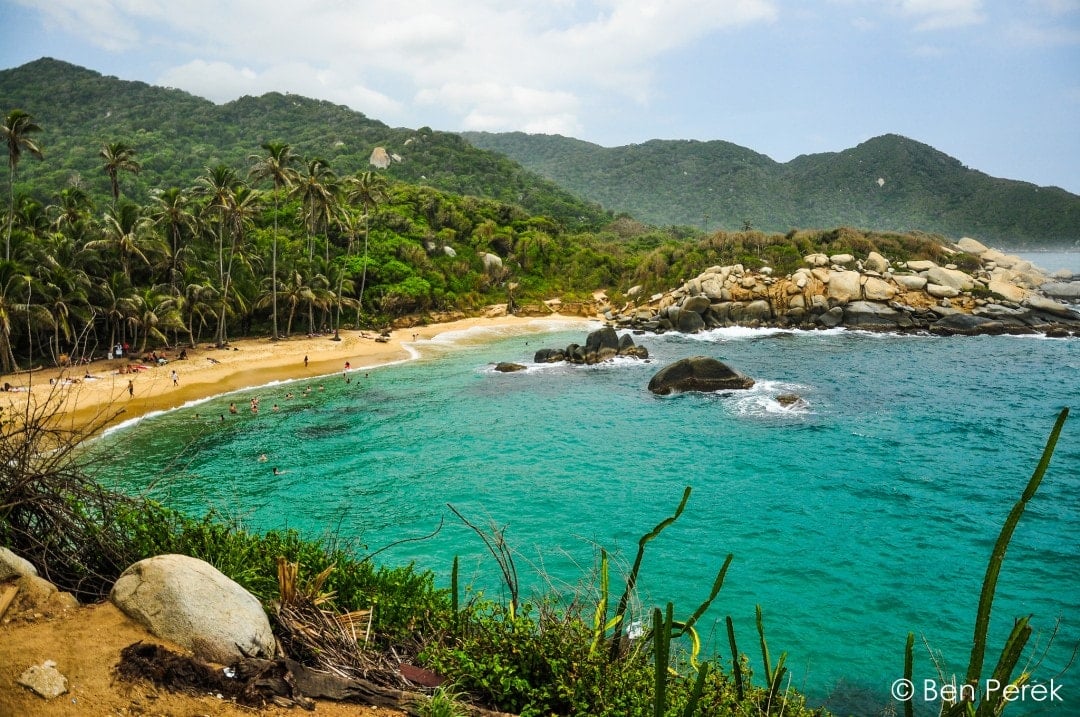
In a day you can hike through the tropical forest, see some of the local flora and fauna, and swim in waters full of life. You can sleep in the national park, but you must reserve in advance, or you can do a day tour.
Yes, you’ll find mosquitos, high temperatures during midday, and probably hard walking paths at some point, if it rained the day before. But believe me, this is one of those places that is worth visiting in Colombia.
Backpacking La Ciudad Perdida
At a Glance
- Best for: Off-piste adventures
- Known for: Colombia’s very own Machu Picchu
- How long to stay: 5 days
- Don’t miss: La Ciudad Perdida
Its name literally means ‘The Lost City’ in English, and true to its name, it is a massive indigenous city only recently uncovered from the jungle. Built by the Tairona Culture about 1200 years ago, and only rediscovered in 1972, this is a special place and a glimpse into a vanished world.
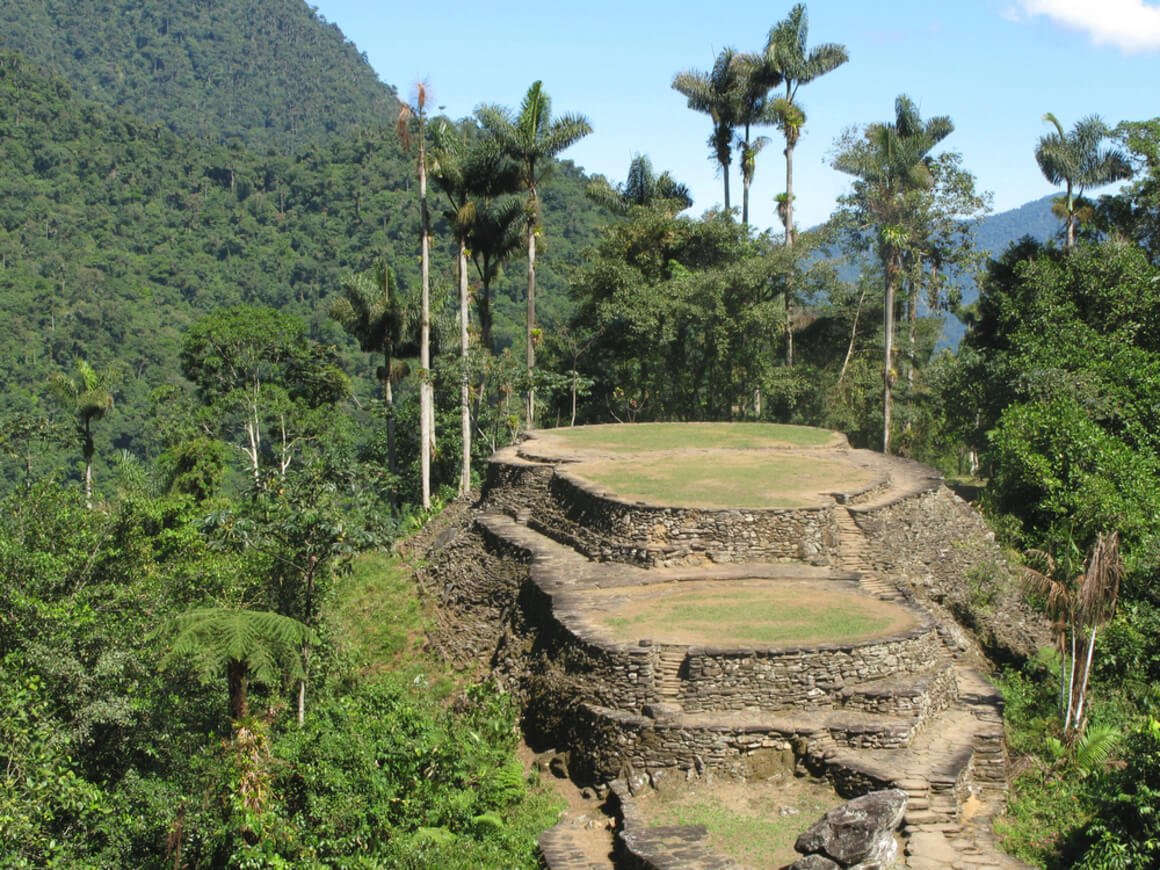
Photo: Will Hatton
The trek to the Lost City takes 5 days and it’s an amazing experience. You will cross raging rivers, slide down muddy banks, and bathe in crystal-clear pools on your way to the city above the clouds. The city itself is amazing and receives very few visitors; go now before the word gets out.
It can be a demanding experience. I found it more challenging than the Inca Trail in Peru purely due to the sweltering heat. It was lost for centuries for a reason.
Consider your physical and mental state when deciding when and how to do this tour. And my personal advice would be to get some good hiking boots and enough insect repellent.
Backpacking Minca
At a Glance
- Best for: Birdwatching
- Known for: Wildlife and cloud forest setting
- How long to stay: At least 2 days
- Don’t miss: A night walk in the cloud forest
Just a couple of hours away from Taganga, the cool hills of Minca are perfect for backpackers wanting a bit of respite or to go hiking in the jungle. You can get some cheap local transportation and in 30 minutes you can get to this small town nestled in nature.
Top things to do in Minca include yoga, motorbike adventures, hiking, and of course a visit to the legendary waterfalls in the area. Avoid Pozo Azul, as it is always too busy and commercialized to be enjoyable. I personally enjoyed Marinka Falls, even though it was quite crowded.
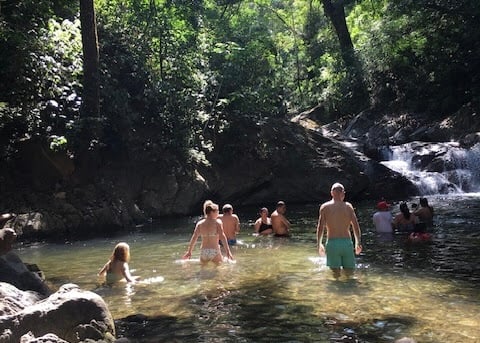
Photo: @Lauramcblonde
It also has one of the highest diversities of birds in the world, making it the perfect place to go for a guided birdwatching tour.
Minca is one of the biggest backpacking traps in Colombia, such a large percentage of backpackers ended up staying here for longer than planned, or decided to volunteer to prolong their stays. Living here is simple and easy, and it is impossible to be anything other than happy and relaxed in its perfect climate.
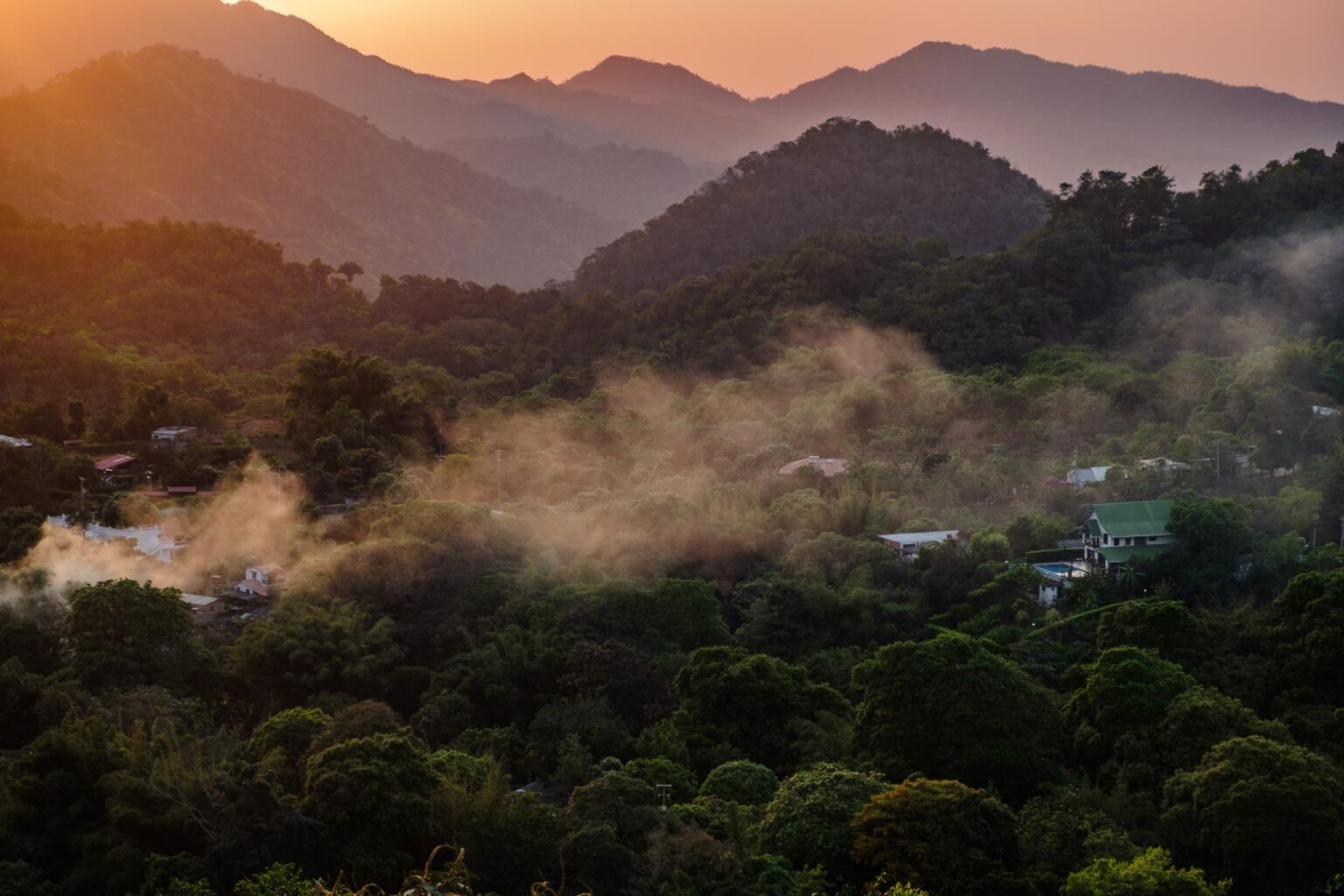
Photo: Chris Lininger
If you are looking for an affordable place to crash, I highly recommend staying at Rio Elemento, book in advance. Bring insect repellent as I got destroyed by sandflies in Minca! If Rio Elemento isn’t your thing, there are many other awesome hostels in Minca that offer a super comfy bed and a place to rest your head.
Backpacking San Gil
At a Glance
- Best for: Rafting
- Known for: Adventure sports
- How long to stay: 2-3 days
- Don’t miss: White water rafting on Rio Suarez
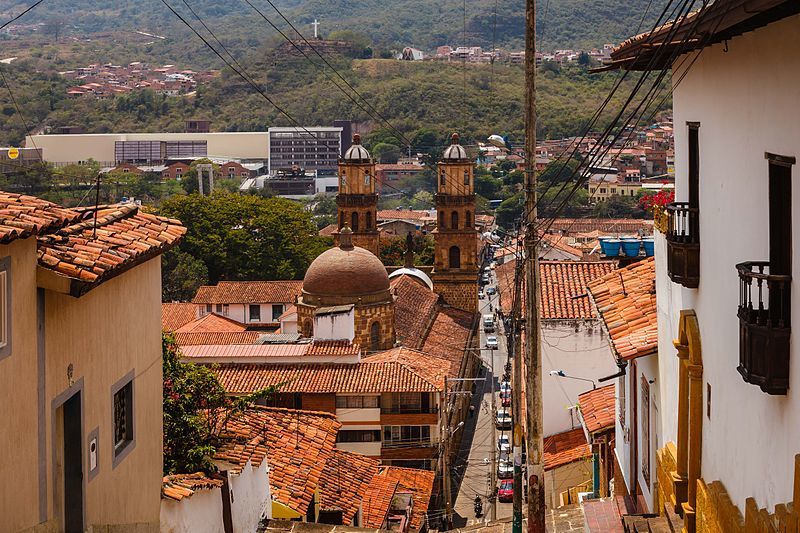
Photo: Mano Chandra Dhas (WikiCommons)
San Gil is the adventure capital of Colombia; if you’re after rafting, caving, or trekking this is the place to go. Be sure to grab a brownie from Gringo Mikes – they are amazing.
San Gil is not the prettiest town, but it has no shortage of high adrenaline activities. It offers Class II rapids suitable for beginners all the way up to Class V torrents for the crazy among you. You can underground into an extensive cave network or explore the otherworldly Parque El Gallineral.
It is famous for the grand Chicamocha Canyon, which even boasts chances to paraglide over. If this is not your thing, brave the cable car down into the valley floor, it is truly incredible.
Backpacking Barichara
At a Glance
- Best for: Peace
- Known for: Colonial architecture
- How long to stay: 2-3 days
- Don’t miss: Catedral de la Inmaculada Concepción
Barichara is like stepping back in time. Stepping off your bus is like finding yourself in a time warp to a different era, so much so that many period dramas are shot here. Its cobbled streets and terracotta roofs are saturated with atmosphere, and it is hard to tire of the emerald green mountain backdrops.
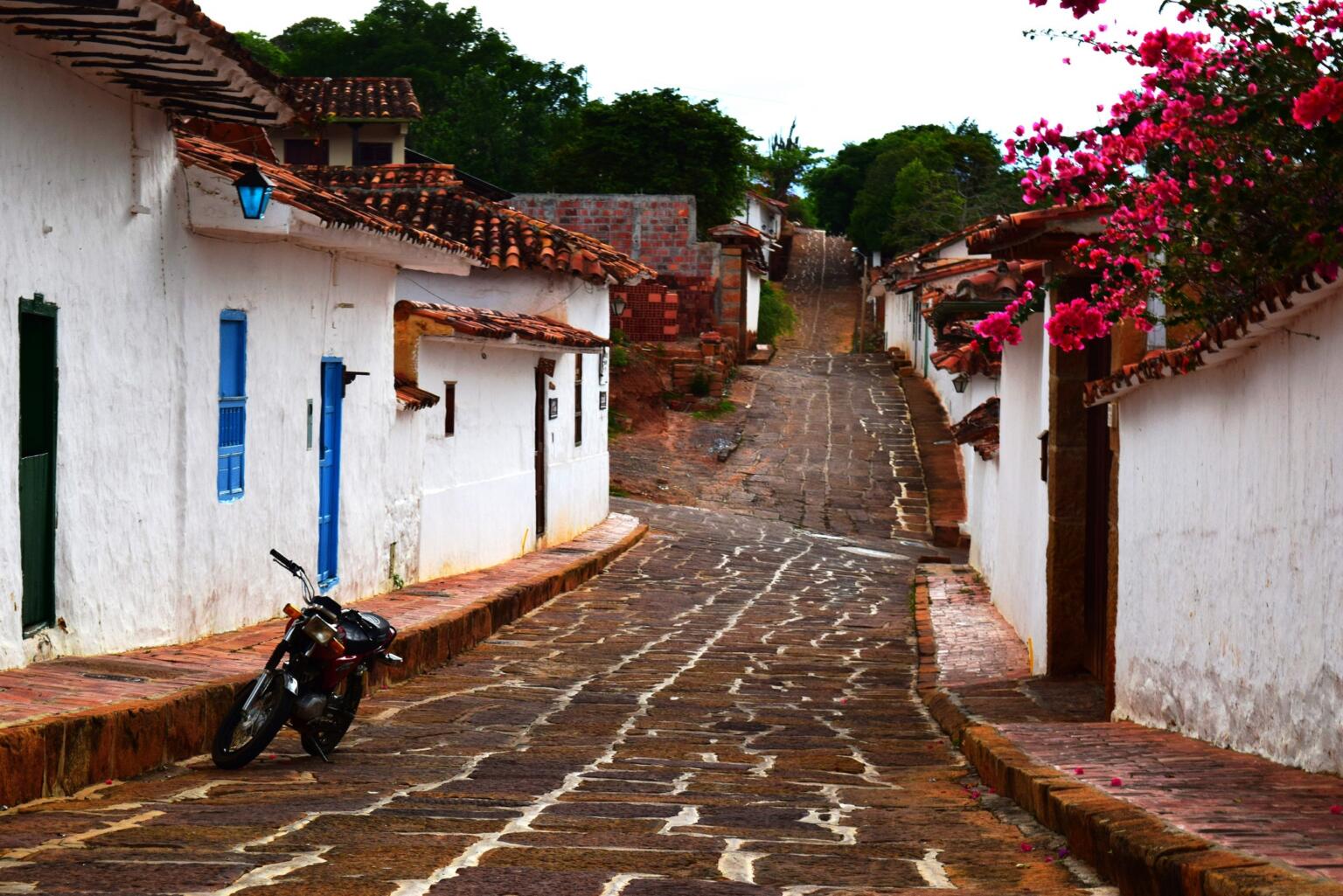
Life in the town is as laid back as you expect, with a distinct bohemian atmosphere. There is a real sense of community here, I got to test my Spanish out with hippies and academics just hanging out at Mirador de Guane.
The hiking here is also definitely underrated, you can walk restored indigenous roads (El Camino Real) through similarly old-world towns and villages. It is a brilliant place to unwind after the heat of the Caribbean Coast or the buzz of a big city.
Backpacking Salento and the Coffee Region
At a Glance
- Best for: Rural escapes
- Known for: Coffee plantations
- How long to stay: 2-3 days
- Don’t miss: Valle Cocora
A firm favourite with backpackers for a reason, Salento is a great place to spend a few days unwinding, trekking, sipping coffee, and resting your head in comfy and cute Salento hostels.
I highly recommend exploring the Cocora Valley on a day-hike. It has the tallest palm trees in the world, some are up to 60m tall. La Serrana is a great place to base yourself; check out their awesome safari tents!
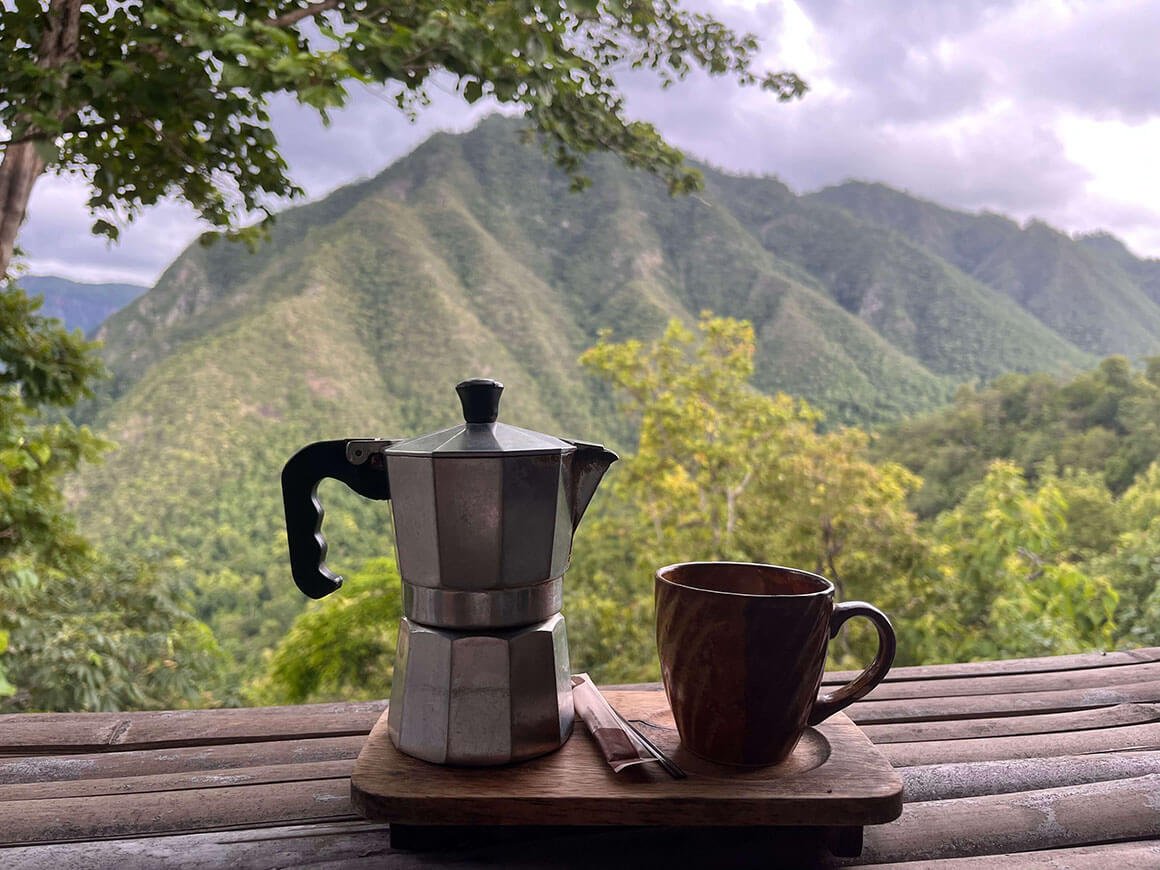
Photo: @monteiro.online
Filandia is another town you should check out. There are not many local attractions, but you should visit El Mirador, a 35-metre tower with 360° views of the area.
And after that head to the main square to have a nice local coffee and chill while watching and hearing the bustling streets full of the birds singing at dusk, children playing after school and adults talking and laughing while having their deserved beer after a long day at the coffee plantations.
Depending on where you are, I would suggest checking some direct flights if you are up in the north or a local bus if you are somewhere in the area, but you should get here 100%.
Getting Off the Beaten Path in Colombia
Colombia is a country packed with off the beaten path gems. Some of the places on Colombia’s Pacific coast, mountains, and jungles are difficult to reach. Anytime a place has difficult access, it is a sign that adventure awaits!
Far fewer people make the effort to get out and really explore. Depending on what you like to do, you should have no problem leaving the Gringo Trail behind in search of some truly rewarding experiences. I found that the Pacific Coast was particularly overlooked. El Valle is a brilliant place to go whale watching and experience Afro-Colombian culture.
Leticia is another little visited diamond deep in the jungle. It sits on a border with both Peru and Brazil, allowing for the intrepid to embark on a four-day boat ride up the Amazon to Iquitos, an unforgettable and cheap way to see the rainforest.
Though Colombia is normally associated with beaches and jungled landscapes, Los Nevados National Park offers a chance to explore the Andean wilds and gaze up at icy mountains, and is only a relatively short distance from the coffee region.
There is so much awesomeness to get into whilst backpacking Colombia, that your adventure is up to you and your motivation to put yourself out there. Read on for helpful information regarding trekking, diving, and surfing in Colombia later in this article.
If you feel confident driving, you can unlock so much by hiring your own wheels. If you can convince a few mates to join you, it’s actually a super affordable way of travelling… and bloody good time! You’ll get the freedom to decide where you want to go and when. If not, the bus networks can also get you around.
10 Top Things to Do in Colombia
If you’ve been on a backpacking trip through Colombia before, you’ll know there are ALWAYS more awesome things to do. It’s a big country, with a lot of variety on offer. But here are some things I’ll recommend, especially for you. 😉
1. Take a graffiti tour
Get to know the Colombians through some of the country’s best street art. Their insane street art reflects the sorrows, joys, passions, and concerns of these people – strongly connected to nature and its effervescent way of being.
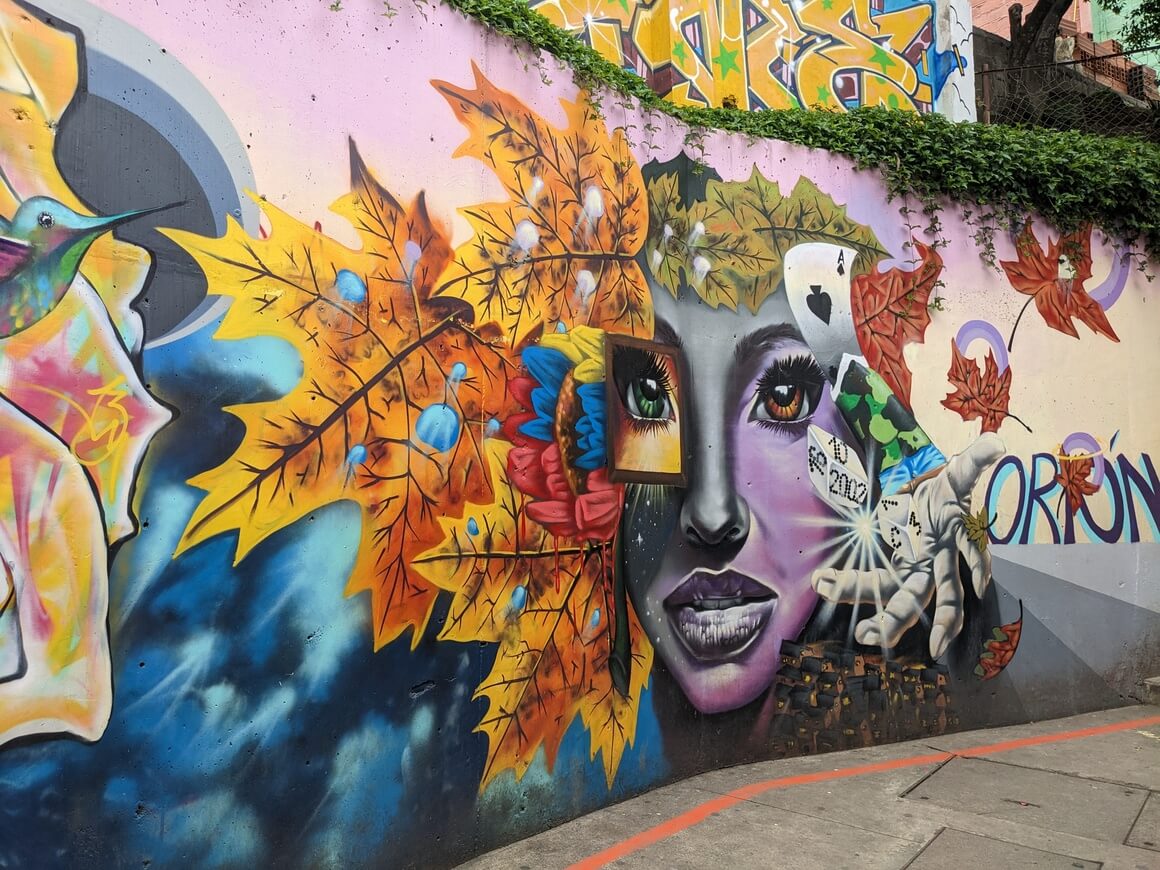
Photo: @Lauramcblonde
One of my favorite places is Comuna 13 in Medellin. Once, the most dangerous neighborhood in the world, is today, a reflection of how art can change – not only the image of a neighborhood but also the lives of those who live there.
I recommend taking a guided tour through Comuna 13 since you’ll be able to have some unique insights. Always good to remember, respect the locals and collaborate with art whenever you can!
2. Visit the Tayrona National Natural Park
This is the perfect spot for beach bums and up there with some of the best beaches in South America. The national park is bejeweled with palm-fringed coves, coastal lagoons, tropical forests, and rich biodiversity. It’s perfect for a day trip or organize yourself to go camping and spend a few nights in this incredible natural paradise.
It is not all relaxation for party people, the infamous El Rio hostel is found here for sleepless nights of revelry. It is one of the craziest places I have ever visited!
If you like adventure and getting into nature, you can find ruins of an archaeological complex built by the Tayrona civilization,Pueblito Chairama, that is accessed through forest roads. Be prepared for this type of visit by bringing a good water supply, insect repellent, hat, and solid hiking boots.
3. Trek to the Lost City
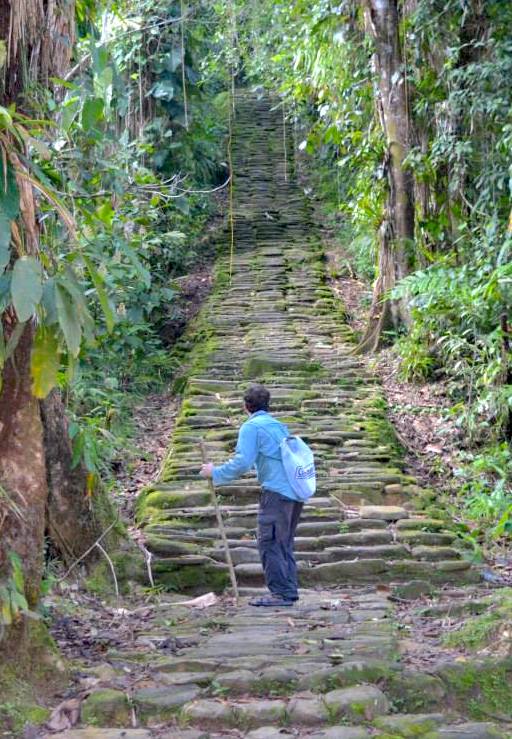
Photo: Will Hatton
South America is famous as a place of mystery with cities lost in the jungles, but not all the action is at Machu Picchu. Ciudad Perdida is Colombia’s very own lost city which was only rediscovered in the 1970s.
The amazing 5-day trek to Ciudad Perdida takes you to some of the most beautiful, sweaty, and far reaches of Colombia. You’ll explore a national cultural treasure from another time.
Along the way, you’ll get to walk through sacred ground of the native people and observe birds, animals, plants, flowers, and trees, unique ONLY to this corner of the world. You will also pass some indigenous villages, which will give you a glimpse of a completely different way of life.
And to be honest, this hike was one of the most difficult of my life. I was so happy to visit the Lost City with the support of a guided tour where experienced people know what’s coming ahead. It’s hard to prepare yourself for this combination of heat, humidity, and altitude in this national park.
Though that doesn’t mean to say you won’t be able to do it! If you’re in a pretty good physical condition, the rest is mostly mind over matter.
4. Drink coffee in Salento
If you like a cup of java, Colombia is the country for you. Not only will you have some of the best coffees of your life, you get to explore how exactly it gets from berries into your mug. The region is large but well distributed enough to visit in a week, hopping from town to town.
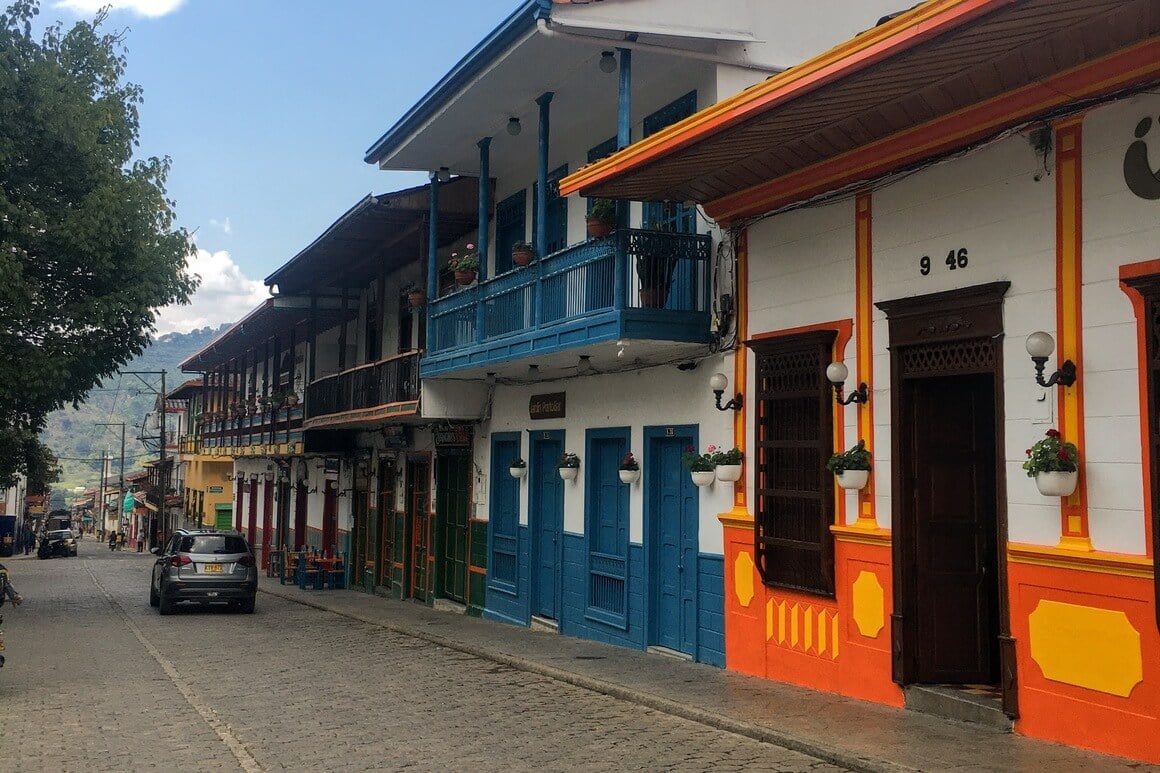
Photo: @Lauramcblonde
Salento has chill people, a village vibe, incredible landscapes, and some of the best coffees I’ve ever tried in my life. When I was there I had the opportunity to try an organic coffee from a local farm worked by local women. And I can tell you that the difference is impressive. Flavors, smells, body, and acidity are so evident that it makes you wonder if what you have been drinking before is really coffee.
Visiting a traditional coffee farm (finca) is the best way to learn about the process of producing it, the people who carry it out, and even taste the house’s coffee. It’s one of those unique experiences that remains etched in my memory.
5. Go head-to-head in the bars
As Ernest Hemingway once said, “If you want to know about a culture, spend a night in its bars.” Pool halls and bars are a big part of Colombian culture.
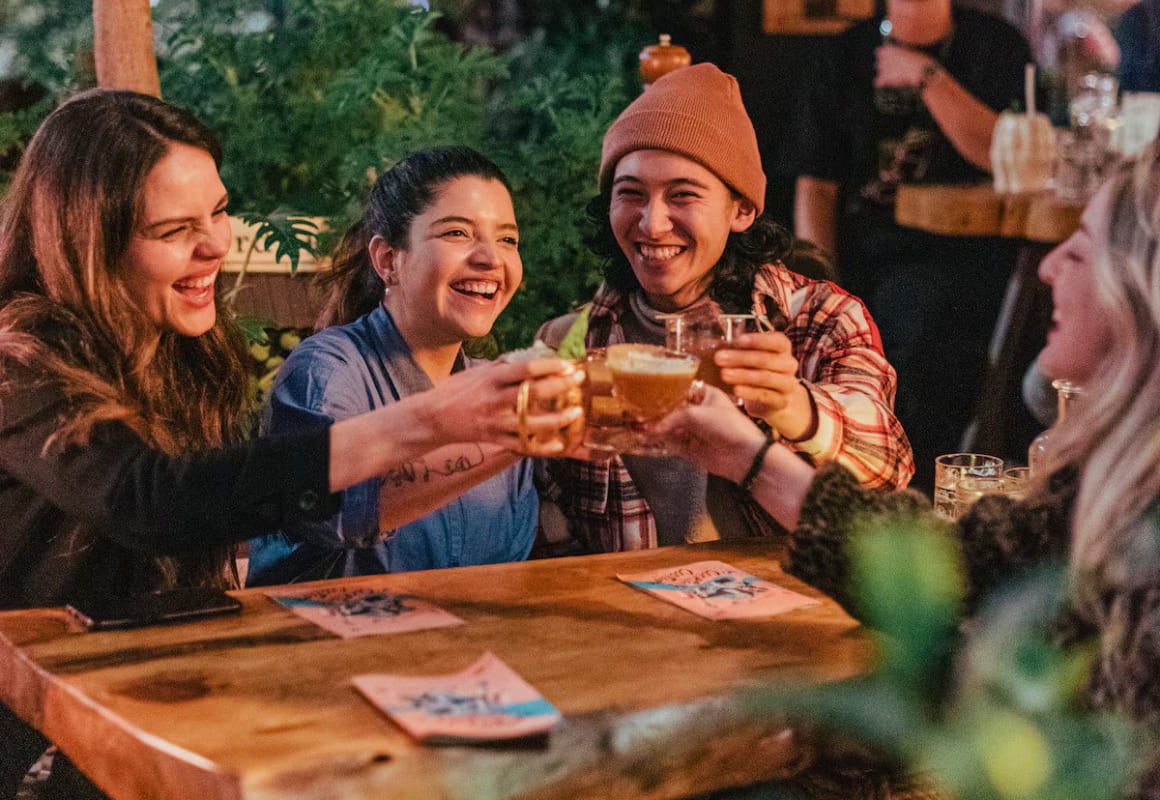
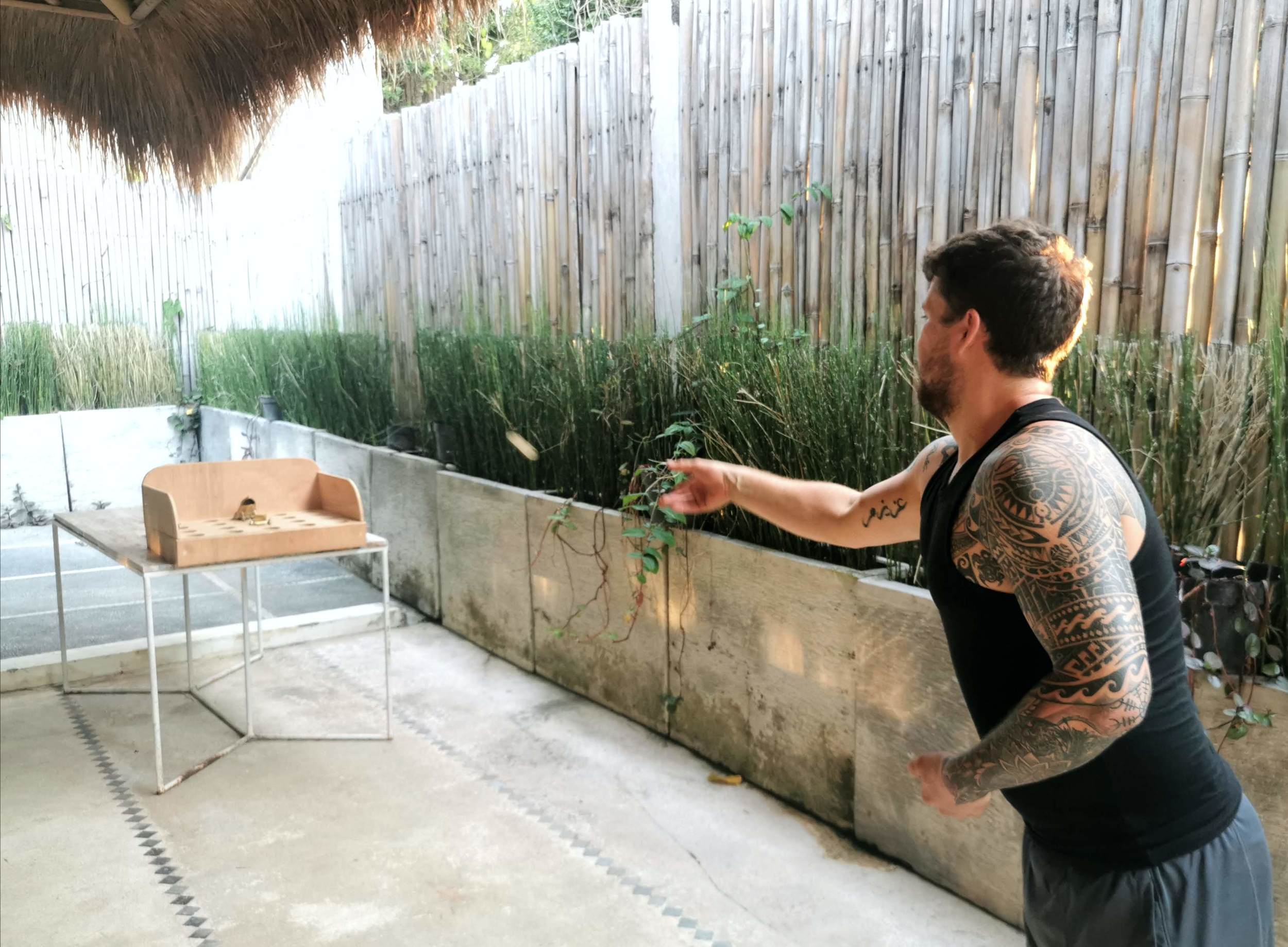
I had so much fun playing Tejo in Los Amigos, Salento. Tejo is kind of like cornhole but much more… explosive!
Hostels also have some brilliant bars and loose nights. Remember that you are representing your country in each drinking challenge!
6. Get your dancing shoes on
Colombia seems to sway to salsa rhythms. It is full on and playful just like the dance. Taking some salsa classes and going out to a salsa club is a brilliant way to get under the skin of the country and make local friends.
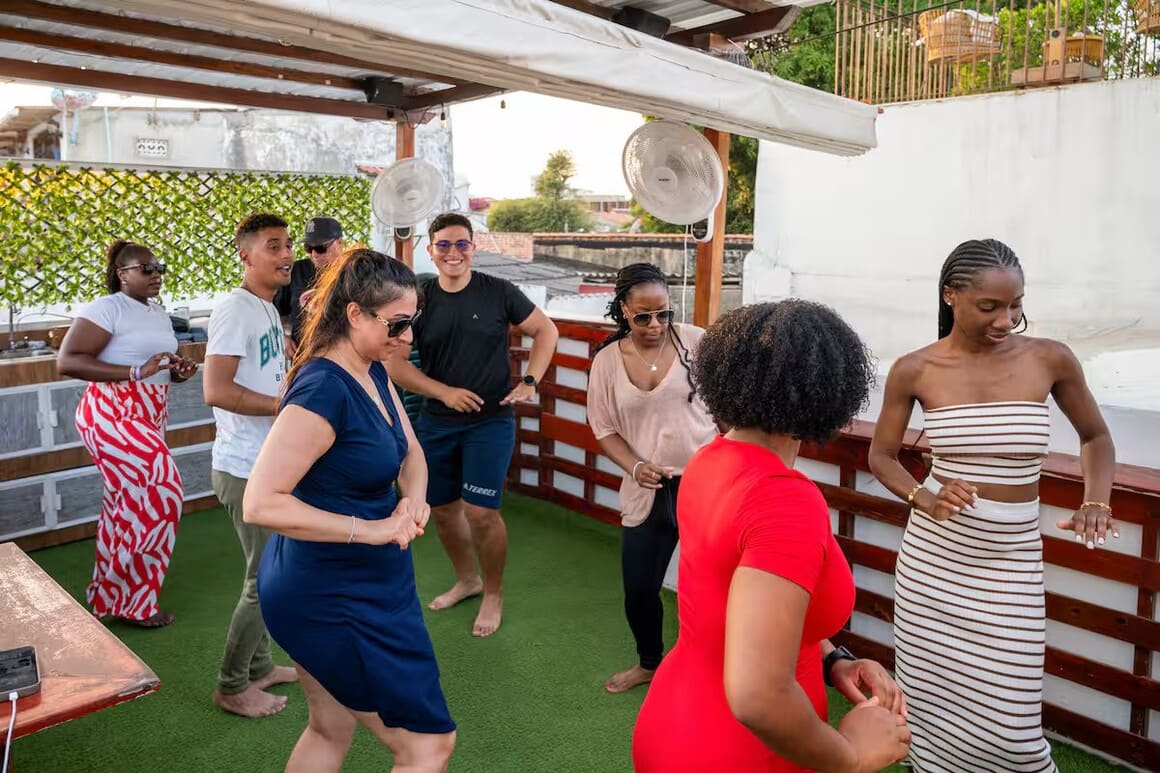
You will also dazzle your friends back home! The average Colombian’s moves put Western clubbers to shame.
Cali is famous as the birthplace of Salsa, but it is found more or less across the country, alongside Cumbia, another soulful, beautiful music.
7. Go Horseback Riding in Cocora Valley
The Cocora Valley is home to some of the best natural scenery in the country and the tallest palm trees in the world. Exploring it to the music of clip-clopping hooves is such a special experience, and allows you to focus on the view rather than the effort of hiking.
The valley is easily accessed from Salento and from this town, you can take a day tour to explore Cocora Valley and also visit a specialized coffee farm.
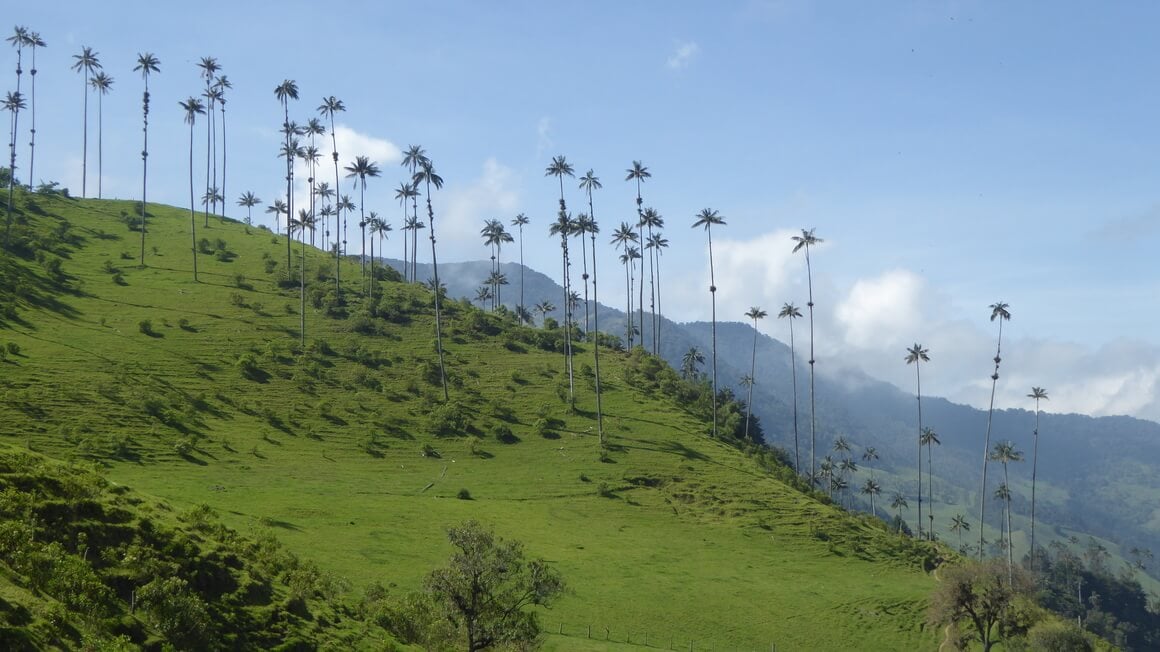
Photo: Will Hatton
This gigantic valley is full of vegetation, an incredible forest, thousands of national trees, the wax palms of Quindío, as well as a great diversity of flora and fauna.
I warn you, mosquitoes are not very forgiving. Be prepared and bring insect repellent, comfortable shoes, and plenty of water.
8. Visit an indigenous community
South America was wholly isolated from the wider world for much of time. Cultures, languages and religions here are unique in the world, and intimately connected to the Edenesque landscape.
Native Colombian peoples like the Tairona built engineering marvels and had a sensitive understanding of the stars and medicinal plants. Of course they were devastated by colonialism, but pockets of their descendants still live in Colombia.
Interacting with these unique living cultures and hearing utterly different languages is a window into a completely variable way of existing on this planet. Buying their jewelry or handicrafts is also a great way of supporting people who have suffered so much.
Many love to talk about their lives in the rainforest or the Andes, but always be respectful and ask for permission before taking photos.
9. Hire a motorbike and discover hidden nature beauties
The Motorcycle Diaries, a film about Che Guevara’s travels across South America on a motorbike before he became a revolutionary should be mandatory viewing before visiting, but actually following his example is a great way to explore some of Colombia’s gorgeous countryside.
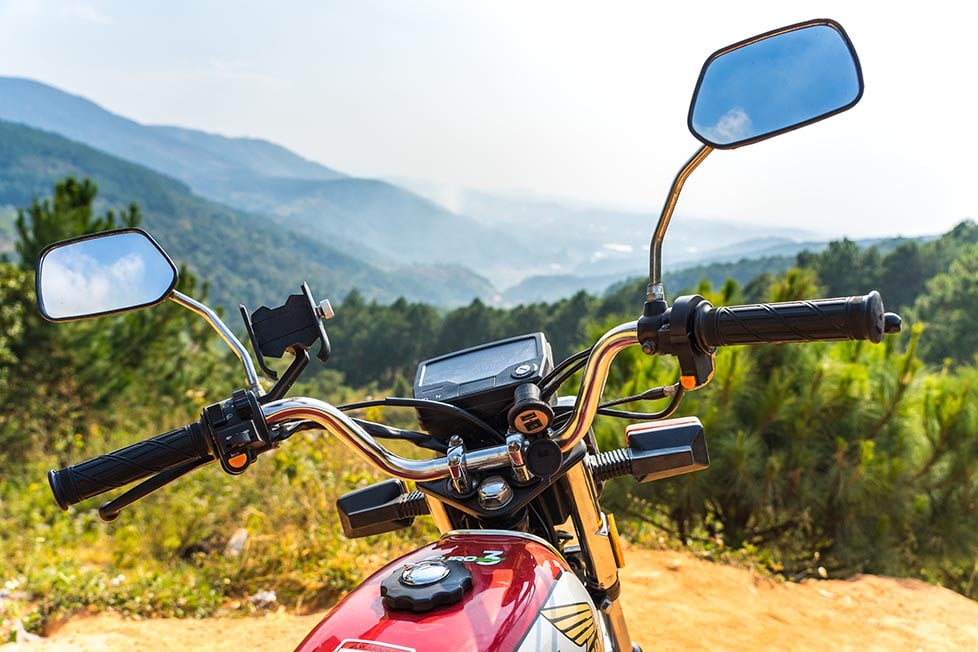
Image: Nic Hilditch-Short
The routes in Colombia are in *fairly* good condition to explore by motorbike (if you’re a confident rider!). This gives you more than one option to get to a place, you can take alternate routes if you like adventure experiences, and you can stop in places that public transportation could never.
Some of my best memories are meeting and connecting with local people, and let me tell you that the motorbike was the way to get to those places and people.
10. Go scuba diving
If you love to dive, Colombia’s north coast has some world-class dive sites. It is also possible to obtain your PADI open water diving certificate if you don’t have one. You can obtain your certification with Diving Planet based in Cartagena.
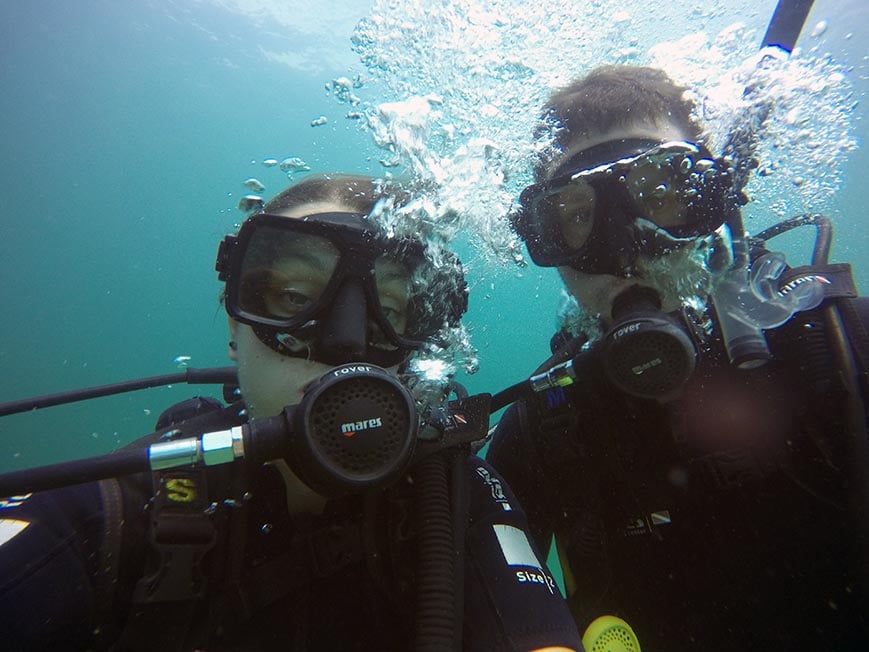
Image: Nic Hilditch-Short.
The Pacific Coast in regions like Bahia Solano has pristine seas, as does Las Islas del Rosario just outside of Cartagena.
Colombia has accommodation options for each kind of traveller – cute guesthouses and Air BnBs to rocking party hostels. Accommodation costs vary across the country with Medellin and Cali being some of the most expensive places to stay.
In general, the good places fill up fast so you will want to try and book in advance. It’s possible to get a dorm bed in Colombia for around $4 but a double room will often cost just $10 so if there’s two of you, you can have a private room most of the time for no additional cost.
More popular cities such as Medellin, Cartagena or Bogota generally cost from $10 for a dorm, or $20 for a private room.
Colombia’s eco-tourism scene is growing rapidly, so you’ll also find plenty of sustainable accommodation options throughout the country.
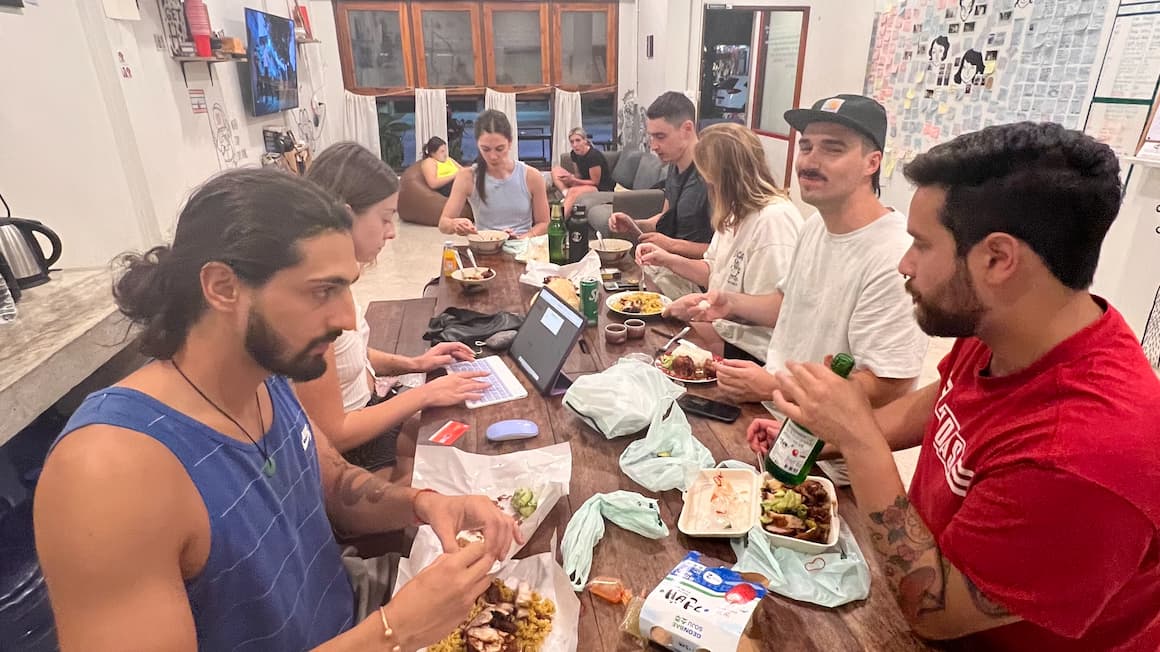
Photo: @amandaadraper
If you want to save money on accommodation, make sure you pack your camping hammock, especially if you’ll be trekking or hiking through the jungle.
And as a quick insider tip: If you want to see all – and we mean ALL – hostel options in Colombia, be sure to check out BOOKING.COM. You can even filter your personal travel needs to find the perfect place for you.
The Best Places To Stay in Colombia
| Destination | Why Visit! | Best Hostel | Best Private Stay |
|---|---|---|---|
| Cartagena | Lively and colourful colonial port city to vibe to the sound of Colombian rhythms. | The Clock Hostel & Suites | Oz Hotel Cartagena |
| Medellin | The eternal spring city (and ex-drug capital of the world). Stunning gastronomy and vibrant nightlife. | Viajero Medellin Hostel | Landmark Hotel |
| Bogota | The capital of the country – muticultural, modern and ancient. You’re gonna love the night (if you’re careful). | Spotty Bogotá Centro | GHL Hotel Capital |
| Santa Marta | Walk, eat, beach, sleep, and repeat. Take an umbrella, it’s sunny but not funny. | Viajero Santa Marta Hostel | Casa Verano Beach Hotel |
| Coffee Region | The chillest and welcoming area in the country. So prepare to sip and chill. | Tukawa Hotel | Cabaña guaduales de corocoro |
| Minca | Waterfalls and humidity. Be ready to meet cool backpackers and try to stay hydrated. | Masaya Casas Viejas | Costeño River Minca |
| San Gil | Do you love extreme sports? Then this small town has what you need. | Traveler Hostel | San Gil Apartment Plaza |
| Barichara | Declared as cultural heritage, “the most beautiful town in Colombia.” Breathe, walk, and relax. | NOMAD Hostal – Barichara | Hotel Buenosaires Barichara |
Some Unique Experiences in Colombia
From surfing and trekking to paragliding and caving, Colombia is an adventure playground. It is a lot more than sightseeing and ticking off landmarks. It is a place that vibrates through you.
You can do some activities really cheap but it’s worth haggling; you can often get 10% off what appears to be a fixed price. Colombia is also home to some of the best diving in the world… well, OK, some of the cheapest places to learn to dive in the world.
Trekking in Colombia
The Andes run from Patagonia to the Caribbean, and Colombia has its share of adrenaline-pumping mountain peaks. From multi-day hikes to the Lost City to exploring river valleys and stunning misty mountains, there are many options at your fingertips.
While Peru or Chile get more recognition as a trekking destination, Colombia is definitely up there with the best. If you love getting out in nature as much as I do, Colombia will not disappoint. There are numerous national parks and reserves to choose from. For longer treks, it is easy to find a guide. Here are a few of the best treks in Colombia to get you stoked on some hiking!
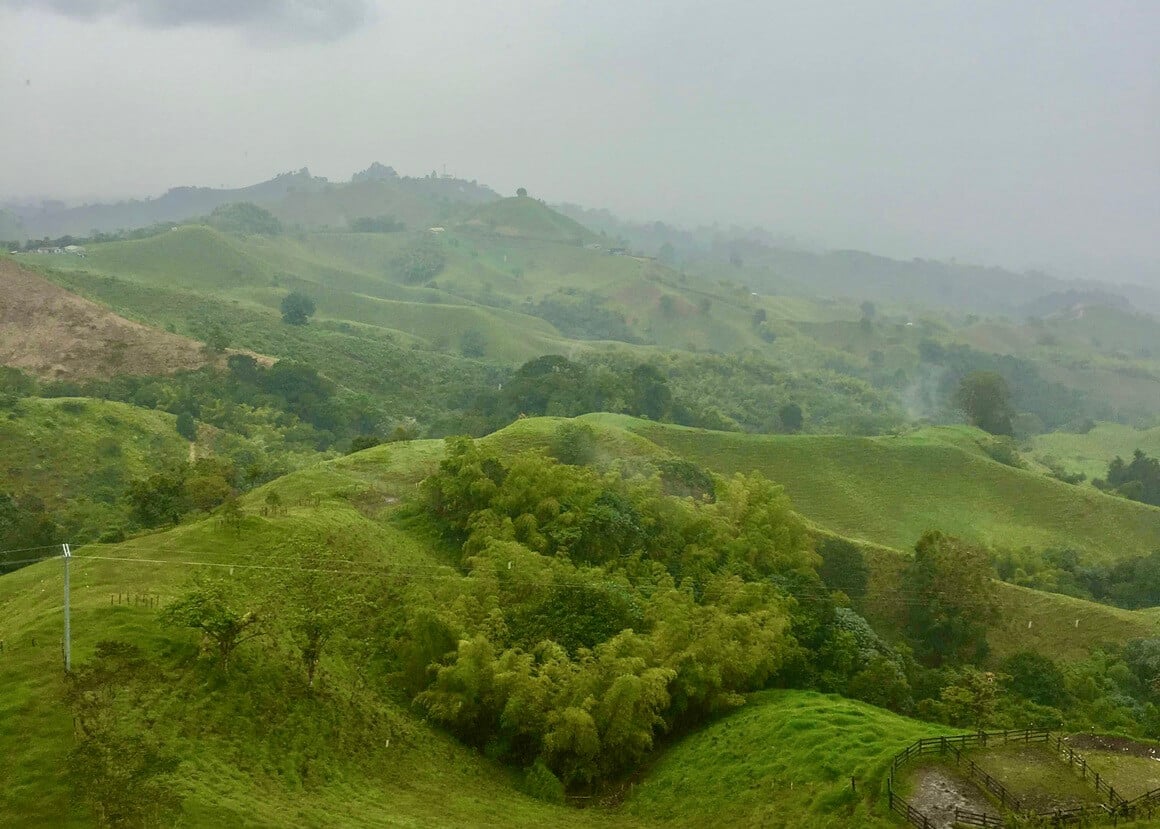
Photo: @Lauramcblonde
For fairytale-like peaks, Sierra Nevada de Cocuy is a good bet. Snow in Colombia? Here you can find peaks as high as 5,330 metres above sea level. If you have your own gear and a good sleeping bag, you can probably do the hike without a guide. Los Nevados National Park is another brilliant option. It is just outside the coffee region, and marries snowy peaks with alien-looking plants.
For a more relaxed and temperate mountain romp, Chingaza National Park North of Bogota has some fantastic treks to do in the mountains. The Cocora Valley outside of Salento is famous for a reason, it allows for dayhikes in the shadow of towering palm trees.
La Ciudad perdida deserves a category of its own. It is Colombia’s own version of the Inca Trail, in fact just walking through the pristine jungle alone would be worthwhile, but seeing a lost city at the end? Just out of this world.
You can even trek in a desert in Colombia. Go see the Tatacoa Desert for yourself! Hike, bike, and explore this unique part of the normally quite tropical Colombia. Check out this great article for more information about what to do in Tatacoa.
Scuba Diving in Colombia
Love Scuba diving? Me too. Colombia has tons of places to take on some epic dives.
Normally Colombia is known for what it has above sea-level; mountains, jungles, popping cities etc, but it turns out that its undersea world is equally as interesting. Providencia and Santa Catalina, a smaller island to the north, is home to the third largest coral reef barrier on earth, and includes over 40 dive sites.
In general, Caribbean dive sites like Islas Rosario and Tagana are better for beginners, as they are easier to access and have more PADI courses, while remote Pacific sites suit those more at home under the waves.
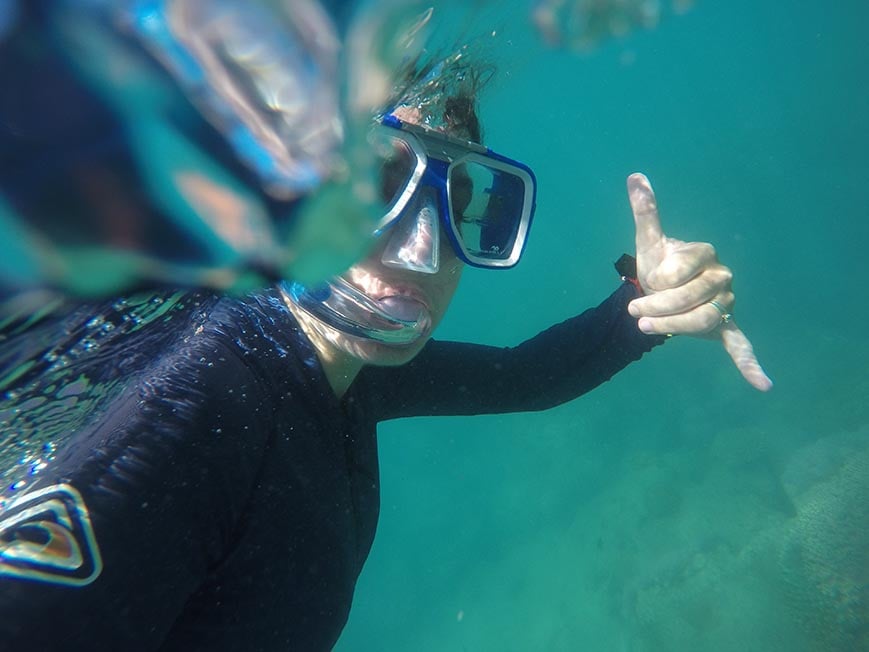
Image: Nic Hilditch-Short
If Providencia is the accessible best of Colombian diving, Malpelo is the harder to reach version: a jagged rock in the Colombian Pacific, it can only be reached by boat, and divers can only visit here as part of an organized trip on a dive boat.
It’s worth the time and money for sure; Malpelo is one of the best places in the world to dive with sharks, including hammerheads, whales, and the rare sun ray shark. People have reported schools of up to 500 sharks around Malpelo. That’s right. 500.
Another Pacific diving spot, Gorgona, is a rugged island, formerly used as a prison, which now serves as a nature reserve and a prime breeding area for humpback whales.
As mentioned, the Rosario Islands offer good diving that is relatively accessible compared to some of the other destinations on this list. It helps that they are a short hop away from Cartagena, making them easy to slip into your Colombia itinerary.
Surfing in Colombia
Another favorite past time for backpackers and locals a like in Colombia is surfing. Colombia has some amazing surfing beaches on both its Northern Caribbean Coast and its Western Pacific Coast.
Surfing in Columbia is gaining popularity as this beautiful country opens it’s doors to the rest of the word. Palomino is a great spot, so check out the best hostels in Palomino before you go!
The surfing beaches on the Caribbean coast are much easier to access, more backpacker oriented, and tend to be a bit calmer.
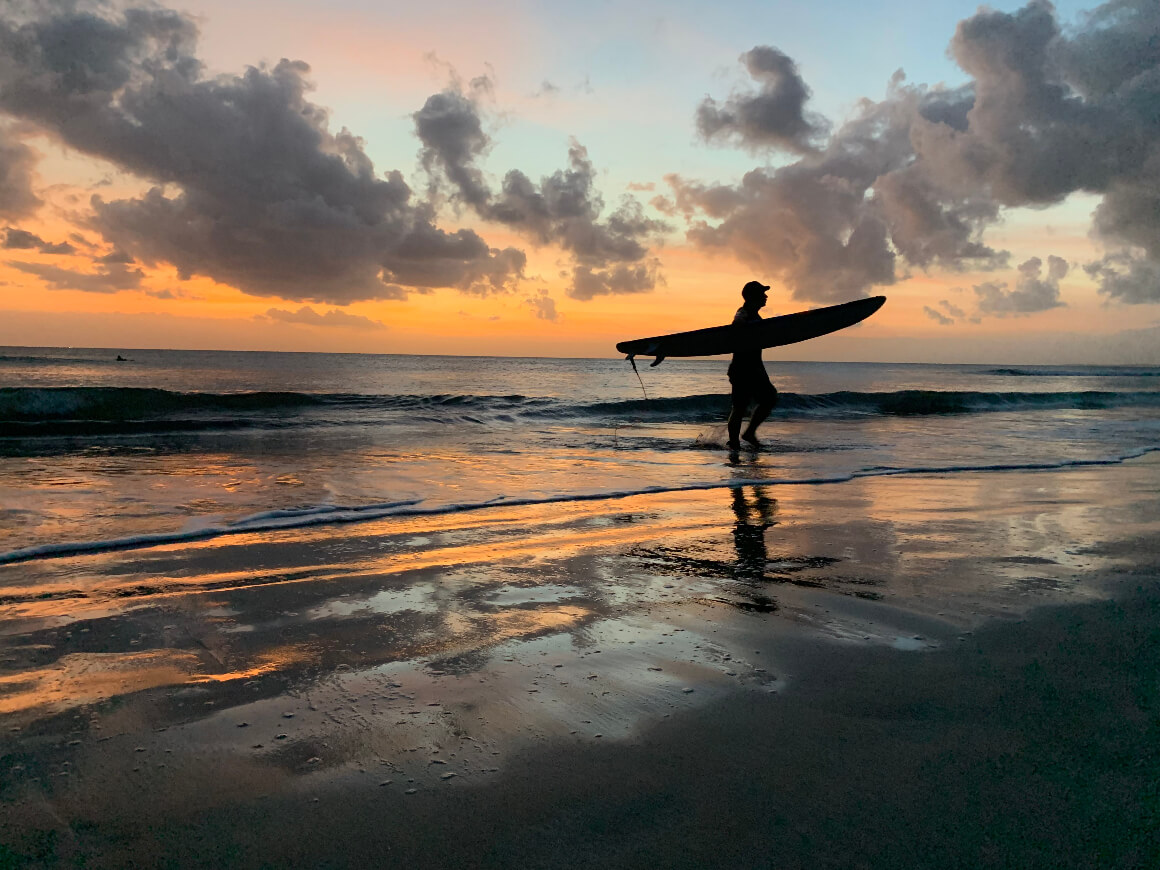
The warm water is also a big plus – wetsuits are optional. The Caribbean beaches are the best if you are a beginner learning how to surf, or you just want to get out and catch a few waves.
The Pacific Coast, while much harder to get to, has some of the best surfing in South America. The beaches around Nuqui are the best in Colombia and are an adventure lover’s dream.
Playa El Amargal on the Pacific is a mission to reach, but this little rustic jungle retreat has a special castaway vibe and incredible surf.
Joining an Organized Tour in Colombia
For most countries, Colombia included, solo travel is the name of the game. That said, if you are short on time, energy, or just want to be part of an awesome group of travelers you can opt to join an organized tour.
This is great for backpackers who are new to travelling. Joining a tour is a great way to see a majority of the country quickly and without the effort that goes into planning a backpacking trip. However, not all tour operators are created equal, that is for sure.
G Adventures is a solid down-to-earth tour company catering to backpackers just like you, and their prices and itineraries reflect the interests of the backpacker crowd.
You can score some pretty sweet deals on epic trips in Colombia for a fraction of the price of what other tour operators charge.
Check out some of their awesome itineraries for Colombia here…
Colombia Backpacking Costs
Colombia is up there with the cheapest countries in South America on average. I’d say Bolivia and possibly Peru are the only cheaper countries, with Paraguay not far behind.
General costs have been rising as Colombia becomes more popular, especially in big cities. In districts like El Poblado in Medellin, with big expat communities and gentrification, you will be paying a lot more than in rawer places on the Pacific Coast for instance.
Backpacking costs also vary depending on how you travel. If you’re a budget backpacker, sleeping in a dorm bed, hitchhiking, eating street food, and catching local public transport will bring your travel costs per day down considerably.
Flashpackers, staying in high-end hostels or hotels, eating out for most meals and cramming as many activities into each day will pay more.
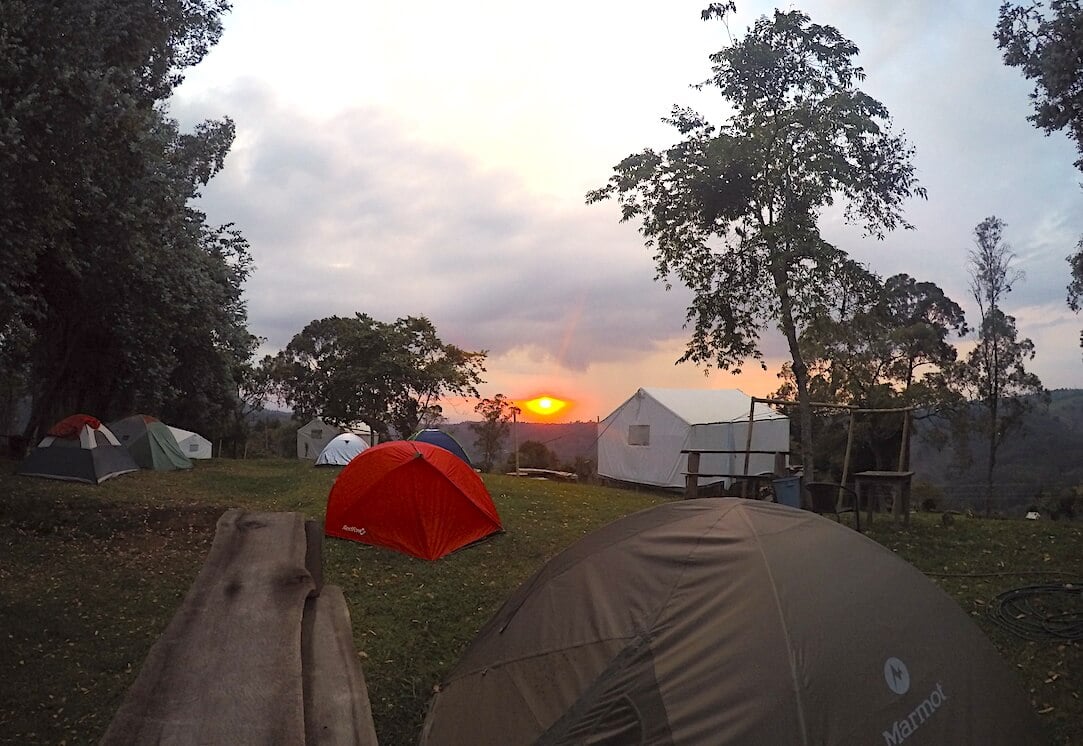
Photo: Will Hatton
Prices vary depending on the time of year. In the high season, you can expect to pay a little more than in the low, rainy season. The difference is minimal, but you will have to deal with shortages of accommodations.
In touristy areas like Cartagena and places near the Caribbean coast, you will be paying 3 times more than in places with less international tourism. The big cities will give you a greater range to play with.
Couchsurfing and camping are the best ways to make it on a budget. For a single tent, you can expect to pay between $5 and $7 dollars.
For tight-budget travellers, cheap food is everywhere. You can find the plato del dia for $3 – $4 dollars, and believe me, that’s enough food for all day. The beans and rice staple will quell your hunger.
Buses are cheap. But if you are thinking of crossing the country, consider domestic flights with budget airlines. You will be able to find them at reasonable prices, saving you time and other expenses of traveling by land. You occasionally find a circumstance when flying is cheaper, quicker and more comfortable than the bus.
The biggest differentiator in backpacking costs is how many tours you do. If you do a tour a day, your costs creep up. If you spread them out, like doing a coffee tour one day, but instead of moving straight onto another place, perhaps spend a few days doing self guided hikes, you will bring your costs per day down.
If you are modest and conscious, backpacking Colombia on a budget can be done for $20 USD per day or less. But if you like tours and unique experiences you can easily hit $50 USD per day.
So budget travel in Colombia is more possible than ever! Your money will go far here and you can help out a lot of people with your tourism. Of course everyone travels differently, so we have created a range of daily budgets.
A Daily Budget For Colombia
Although Colombia is cheaper than other Latin American countries, it’s so easy to blow your budget. So keep track of your spending!
This is a realistic range of how much you will spend in Colombia, from the frugal traveller scrapping for each peso to the spendthrift flashpacker.
Yet, you can of course break the estimates by buying daily helicopter tours or living in a tent and foraging for food, but most backpackers in Colombia will fall within these ranges.
| Expense | Broke Backpacker | Frugal Traveler | Creature of Comfort |
|---|---|---|---|
| Accommodation | $4-9 | $12-20 | $30-40+ |
| Food | $3-5 | $7-12 | $15-20+ |
| Transport | $2-4 | $5-9 | $10-15+ |
| Nightlife | $0-4 | $5-10 | $15-25+ |
| Activities | $0-5 | $5-10 | $20-30+ |
| Totals per day | $9-27 | $35-61 | $90-130+ |
Money in Colombia
The local currency in Colombia is the peso known as COP. Find out how much your money is worth today by using the up-to-date converter below.
The Colombian peso is a pretty volatile currency, prices often look like phone numbers and change weekly, which seems crazy, but it is something you get used to after a while in Colombia.
This change is why it is not a good idea to bring a huge amount of local currency to Colombia. You will get a poor exchange rate and its value will drop with inflation.
Exchange money with your local bank to get enough money for the first few days. The rates offered by airports are the least favourable. If you didn’t get pesos before coming, then change the minimum amount possible on landing to cover your transport into the city.
US dollars are widely accepted in Colombia, and it is a good idea to take a backup stash of greenbacks to help in a pinch.
Locals will often be happy to look up the exchange rate and give you the value of the dollars in pesos, as dollars are a brilliant way for them to save money as they hold value better than local currency. It is a win-win trade if you need pesos!
In-country, it’s easy to find currency exchange houses. To exchange large amounts of money, the best option is the local bank Bancolombia (physical branch). Be prepared to go early and wait in line.
I recommend bringing a fee-free debit card or credit card. You can use them in big cities but not that much in small towns, so it’s good to plan ahead. Bancolombia’s ATM allows you to withdraw a maximum of $2,700,000 pesos per transaction and charges you an extra commission of $26,990 pesos, which is one of the best rates.
For all matters of finance and accounting on the road, The Broke Backpacker strongly recommends Wise – formerly Known as Transferwise! Our favourite online platform for holding funds, transferring money, and even paying for goods, Wise is a 100% FREE platform with considerably lower fees than Paypal or traditional banks.
But the real question is… is it better than Western Union?
Yes, it most certainly is.
Travel Tips for Broke Backpackers
To keep your spending to an absolute minimum whilst during your Colombia travels, I recommend sticking to these basic rules of budget adventuring….
- Camp: With plenty of gorgeous natural places to camp, Colombia is an excellent place to take a good quality tent. Make sure to bring some insect spray, as you don’t want to get eaten alive.
- Cook your own food: Many hostels will have their own kitchens, allowing you to rustle up meals for pennies. I would often buy a bag of rice or pasta, a few ingredients from the market and batch cook, storing my dinners for the next few days in tupperware. It leaves more money for cold Aguilas!
I took a small backpacking gas cooker with me to Colombia and cooked a lot of my own meals whilst hitching and camping. You will save so much money per day by preparing food yourself. - Hitchhike: In Colombia, it can be easy to thumb a ride and it is an ace way to keep your transport costs down and instead spend it on smashing experiences. So hitchhike as much as you can when backpacking Colombia. Of course be wary about who you are hitching a lift with, let others know your plans and ideally hitch with a companion.
To Stay Connected… Get an eSIM For Colombia
These days, wherever you go in the world an eSIM is by far the best way to stay connected from the minute you land. You can download an eSim before you leave home and then activate it when you are still sitting on the plane waiting to disembark.
You skip all the hassle of trying to figure out different providers and navigating airport prices to make sure you’re not getting scammed.

You skip all the hassle of trying to figure out different providers and navigating airport prices to make sure you’re not getting scammed.
Of all the many eSim providers out there, we suggest Jetpac. Jetpac works just like an app: you download it, pick your plan, and BOOM! You’re connected before the pilot says you can stand up.
JetPac eSim Packages For Colombia
1GB – 4 Days – $1
5GB – 30 Days $29
10GB – 30 Days – $38
Best Time To Travel To Colombia
Because of its close proximity to the equator, Colombia doesn’t get classic seasons and the day/night balance doesn’t really change much either. However, the country does get a few rainy seasons which are worth bearing in mind particularly if you are headed up to the North when tropical typhoons can be considerable.
The biggest shift in climate is which region you visit. The Andes have a cooler, drier climate, while it is far hotter and more humid in the Caribbean region. The Pacific has plenty of rainfall and is extremely hot.
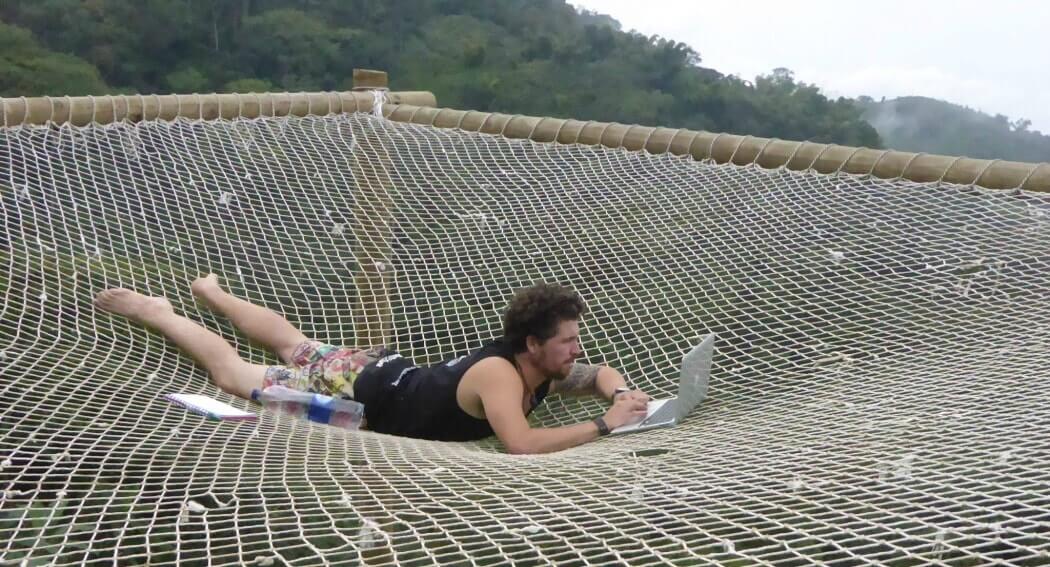
It is generally agreed that the best time to go to Colombia is in December – March when the Andes are drier. These are the months when most of the festivals are happening and if by any chance you happen to be there in February, you should go to one of the most epic festivals in South America…el Carnaval de Barranquilla!
I stayed in some awesome hostels in Barranquilla where I met some backpackers who I went to the festival with.
September to October are the wettest months although I experienced floods in November too. The rainforest can be wet all year round, and the coast is seriously hot.
What To Pack For Colombia
When you pack for Colombia, you are packing for essentially four seasons.
A warm jacket is needed for the high Andes and chilly nights in Bogota, but equally, swimwear and beach fits are needed for the sweltering Caribbean coast. Luckily I’ve have you covered with some essential items for your trip to Colombia.
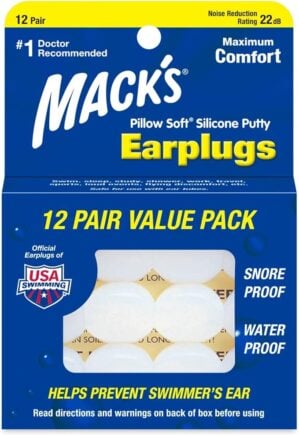
Ear Plugs
Snoring dorm-mates can ruin your nights rest and seriously damage the hostel experience. This is why I always travel with a pack of decent ear plugs.
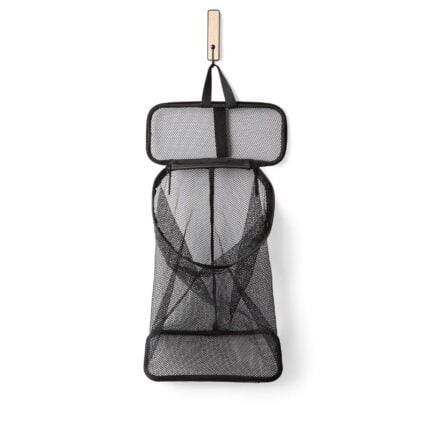
Hanging Laundry Bag
Trust us, this is an absolute game changer. Super compact, a hanging mesh laundry bag stops your dirty clothes from stinking, you don’t know how much you need one of these… so just get it, thank us later.
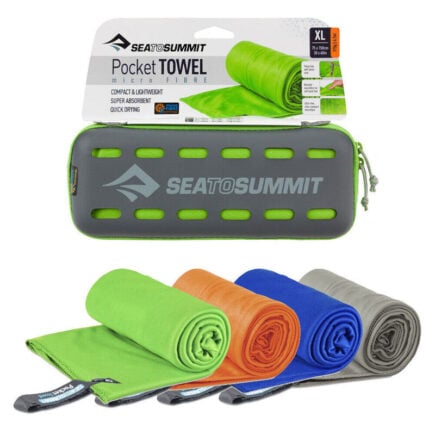
Sea To Summit Micro Towel
Hostel towels are scummy and take forever to dry. Microfibre towels dry quickly, are compact, lightweight, and can be used as a blanket or yoga mat if need be.
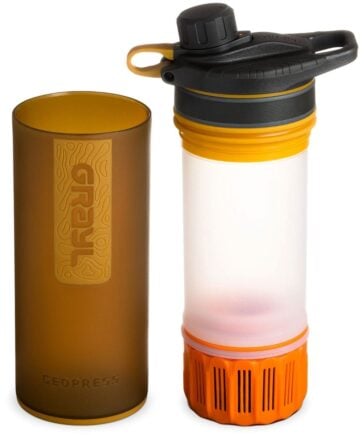
Grayl Geopress Water Bottle
Always travel with a water bottle! They save you money and reduce your plastic footprint on our planet. The Grayl Geopress acts as a purifier AND temperature regulator. Boom!
Staying Safe in Colombia
Yes, people have plenty to say about Colombia: security, drug traffickers, and other news intended to generate fear. It is also a picture that has not been updated to the new realities of Colombia. Safety and security in Colombia is something to take into account – but not to panic about.
A while ago the situation was complicated to visit this beautiful country as a tourist. Let me tell you that today things are very different. In recent years they’ve seen a big increase in the level of security and falling crime rates.
When you are actually in Colombia, it feels no different in terms of security to countries like Peru or Bolivia which get none of the same scrutiny, purely because of a troubled past.
Literally millions of people visit Colombia each year without any problems – but there are cases of people still getting scammed or robbed. Today the population takes care of tourism because they understand that it is beneficial for everyone.
In most cases, the usual travel safety practices are enough. For my daily life (phone, money, and keys) I use a backpacker security belt; it’s better than carrying it in your pockets. Pickpockets, in big cities, are professional.
Don’t show off things of value, don’t carry a lot of money with you, and avoid going in tourist mode with your cell phone taking photos unless you want to see your phone disappear before your very eyes. When checking your phone on the streets, look around and do it briefly… ya know, the standard safety tips for Latin America.
The biggest trick to being safe in Colombia is simply not walking around alone at night, especially if you are drunk, this is how 90% of travel horror stories start.
It is so avoidable with ride hailing apps like Uber cheap and available. Always ask hostel staff or other travellers what the security situation is, they normally have good insights into scams or pickpocket hotspots.
At night, stay away from non-tourist areas and be wary of overly friendly people. If someone’s getting a bit too close, that’s your sign to back away.
It should also be noted that drugging with sedatives does happen in Colombia – and it’s as common to happen to men as it is to women. Although rare, it’s something to be aware of. ALWAYS keep an eye on your food and drinks and never accept cigarettes from strangers.
This beautiful country has changed for the better. Today beautiful smiles greet you and a predisposition to good attention is what stands out. You can have a perfectly safe trip in Colombia. But – like anywhere – it pays to keep your wits about you.
Sex, Drugs, and Rock ‘n Roll in Colombia
Colombia has a pretty saucy reputation when it comes to drugs & sex, especially in Pablo Escobar’s hometown Medellin. It is in a similar category of party destination as Thailand, which deserves a legendary reputation for good time travellers.
So many substances are on offer here, and the nightlife is pumping, but of course you need to maintain a degree of caution – robberies and drink spikings do happen, and nightlife is a big part of it. Always go out with people you trust, who won’t ditch you in a vulnerable state and try to stay at least sober enough to be aware of your surroundings.
Colombia is of course known for growing & selling cocaine, you can even snag a gram for as little as $7. No wonder it’s so popular among many travellers in South America.
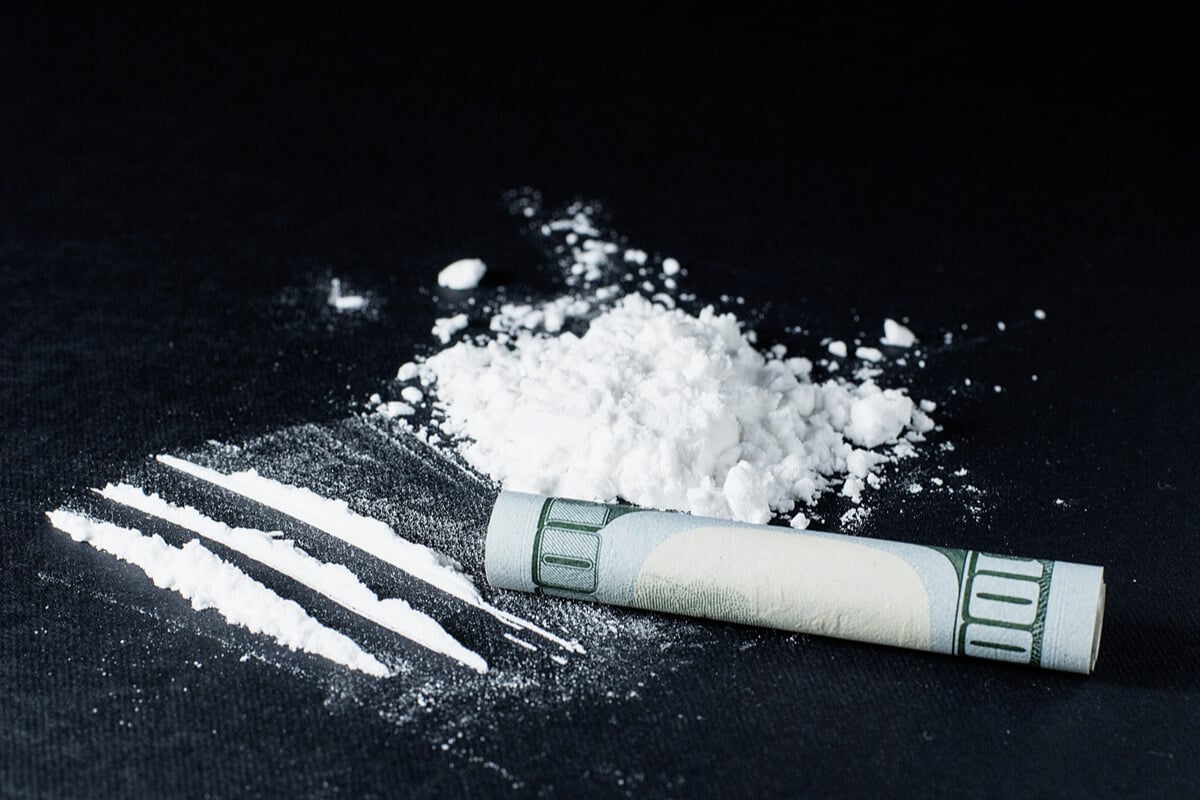
Cocaine tourism is on the rise in Columbia. Tours spread by word of mouth, and anecdotally I have not heard of bad experiences, but you are putting yourself in the hands of pretty dangerous people, so it is your call! I guess it’s not every day that you have the chance to take a “special tour” to make and snort your own cocaine.
A point to note regarding drugs is that buses are occasionally boarded and searched by police, including with drug dogs, so it is not a good idea to travel between places with stash. Just buy it when you are there, since it is unlikely that you will do well in a Colombian prison.
As you probably know, Colombian women are beautiful. Their sensuous salsa moves and vibe is easy to fall for. Many are open to dating foreigners, but having a Western passport is not a cheat code, as many passport bros on TikTok will have you believe. Just be respectful and treat the women here like you would back home and you’ll have no problem.
There are occasional robberies that use dating apps to lure unsuspecting tourists to a dodgy part of town, so if you are swiping through Colombia, make sure that your senorita is who she says she is with a daytime first date.
Getting Insured BEFORE Visiting Colombia
Colombia is a land of ladrones, and getting robbed isn’t unheard of. Besides, it’s an adventure country where you can easily have an accident or fall ill. Stay covered so it doesn’t cost you a fortune if things don’t quite go to plan.
Sort out your insurance before you go. There are several good options, but our overall pick is SafetyWing. Most of the Broke Backpacker team has used it at one point or another, and we’ve filed claims for rabies jabs in Bali, a hospital stay in Mexico, and a clinic visit for a stomach bug that wouldn’t quit. All paid out.
It’s month-to-month, no lock-in, no itinerary required, and you can buy it after you’ve already left. A little over $2 a day if you’re under 40.
New SafetyWing customers: use code BROKEBACKPACKER for 8 free weeks of electronics theft coverage. You have to scroll down and click the pink camera on their landing page to enter it, and you have to do it before creating your account.
How To Get Into Colombia
The best way to get to Colombia if you’re overseas is by plane.
Bogota International Airport is typically the cheapest place to fly in and out of; however, there are other international airports around the country that you can also fly into, with Medellin and Santa Marta also being international hubs. Colombia is a great place to start a South American backpacking trip for this reason.
The easiest land crossing border is from Ecuador as they have road access. Most backpackers use the Carretera Panamericana border crossing from Tulcan in Ecuador to Ipiales in Colombia. I took a bus from Quito to Cali and had no problems.
You can enter Colombia by boat from Panama, many choose to go via the paradisical San Blas Islands. This is a brilliant way to take a Central American trip South. It is not possible to cross by land, because of the infamous Darian gap between Panama & Colombia.
It consists mainly of undeveloped swampland & forests run by a left-wing terror group called the Revolutionary Armed Forces of Colombia (FARC), who have a long track record of assassinations, kidnappings & violations of human rights.
In Venezuela the main crossing is on the Caracas-Bogota Road from San Antonio in Venezuela to Cúcuta in Colombia. However, several foreigners have been falsely detained by authorities in Venezuela whilst entering the country overland.
There are currently no reports of this happening in the post-Maduro era, but it’s still recommended to fly between the two countries rather than attempt a road trip.
The only land crossing from Peru & Brazil into Colombia is located in the far southeastern corner of the Colombian Amazon. You can reach the Leticia crossing from either Peru or Brazil via riverboat. This is a very cheap way of seeing a bit of the Amazon, but conditions are pretty basic.
Entry requirements for Colombia
Most nations around the world don’t require a visa to backpack Columbia, which is awesome! The exceptions mostly come from African and Asian countries. People from other South American countries (excluding Guyana, Suriname, and the territory of French Guiana) can enter with just an ID card.
Most nationalities get 60-90 days free to travel Colombia, just check what rules & regulations may apply for your country. Make sure that your passport is valid for six months from when you enter Colombia.
You may be asked to show you have proof of onward travel when coming here. I certainly was, so be prepared to have that lined up. If your itinerary is open ended, a $10 bus ticket booked to another country like Ecuador sometime in the future will do for this.
Complete the Check-Mig form within 72 hours before you arrive to ensure smooth access into the country. Don’t forget to do this, otherwise there’s no guarantee you’ll get in.
How To Get Around Colombia
Colombia is an absolutely massive country. It is bigger than France, Germany and the Netherlands combined, so never underestimate the distances involved in travelling around. Places are often further apart than they look on a map due to mountain ranges, so be prepared for some long trips.
The main modes of transport between places are either buses or planes. Long distance buses are the cheapest way of getting from A to B, and are surprisingly comfortable. If you buy a cama ticket, you get an armchair-like seat that can recline horizontally and often a privacy curtain. If you travel at night, you can frequently sleep off the whole journey.
Domestic flights are another option that suit those taking a small trip looking to maximise their time in Colombia. Occasionally flying is cheaper than a long distance bus, but generally flying is more expensive but far more convenient, as 20 hour plus journeys can be completed as an hour long flight. At the end of the day, it boils down to whether time or money is more valuable to you!
Traveling in Colombia by Public Transport
There are many modes of public transport to navigate your way around the cities in Colombia when backpacking. Bogota, Cali & Medellin have massive transport systems similar to those in Europe & the United States.
City buses have a flat fare no matter how far you’re going in the city. They range from pimped out old American school buses blasting Latino music, to modern air-conditioned buses. The price ranges between 600-1650 COP depending on the type of bus.
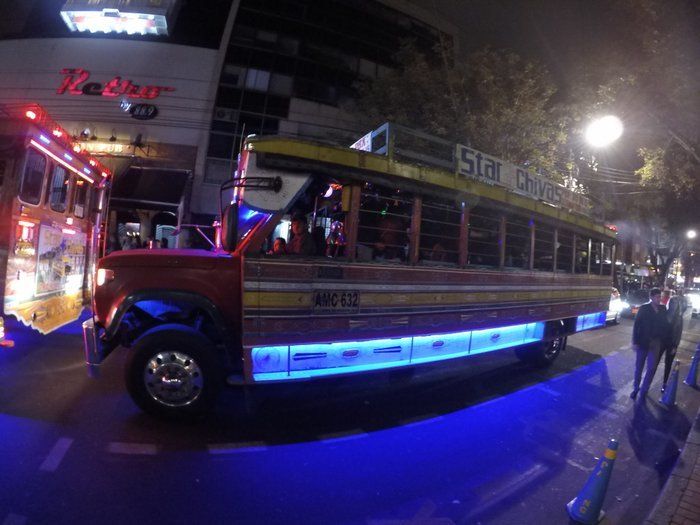
Photo: Sasha Savinov
Tuk-tuks & moto taxis are common around tourist areas, just make sure you agree on a price before you get in. Taxi’s are super cheap & easy to use when travelling short distances. Make sure you get in a metered taxi!
There are so many fake taxis around just be careful, make sure the taxi has a meter & there are no other passengers in the taxi as this is a common robbery tactic. Ride hailing apps like Uber are available in large cities.
Hitchhiking in Colombia
Hitchhiking in Colombia isn’t that common, mainly due to paranoia about the security situation in the country. Not everyone here is a drug lord that wants to kidnap you for ransom money.
You can hitchhike throughout Colombia; it’s such an awesome experience! Have faith there are good people out there, and keep your wits about you.
If you choose to do this, it is best if you can speak Spanish to keep aware of what is going on, and ideally go with a companion for extra safety. Always tell others of your plans and whereabouts too.
Car Rental in Colombia
Renting a car in Colombia is a fab and flexible way to explore the country’s incredible landscapes! Whether you’re keen to navigate coastal towns or remote coffee farms, having your own wheels allows for a lot of freedom.
This is not necessary for most travellers, as buses or planes are cheaper and Colombian roads are pretty stressful places between poorly maintained surfaces and crazy drivers. But it does suit a confident group of friends or those looking to go properly off the beaten trail.
The roads in Colombia vary. The highways are good, but rural routes may require a 4×4, especially during rainy seasons. Manual cars are more common and cheaper than automatics, I’d recommend opting for the best insurance options for peace of mind.
What’s New for Backpacking in Colombia?
Since I first went to Colombia 4 years ago, there have been a few changes which were noticeable on my return to the country.
One is that it’s now mandatory to fill in the Check-Mig form online before entering the country. They’re a lot stricter on enforcing this than they were before.
They’re also more likely to ensure you have proof of onward travel before coming in.
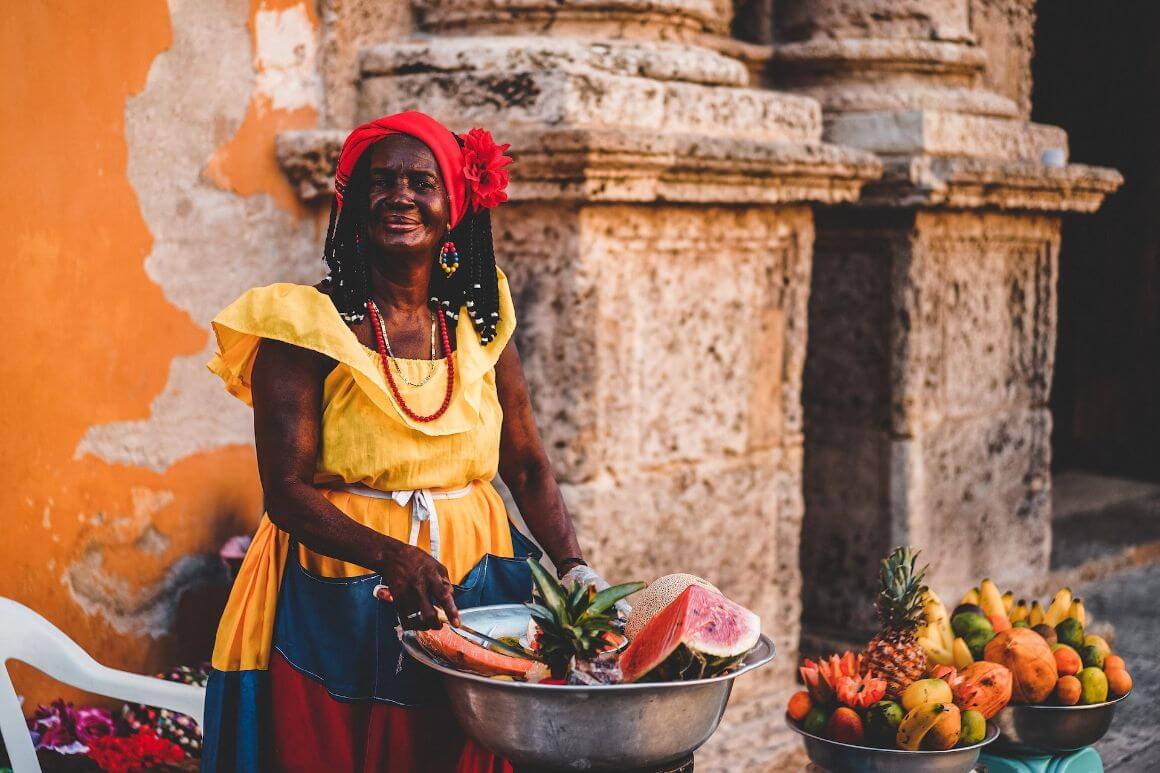
One bit of good news is that rideshare apps are more widespread, even outside of many of the big cities now. Legally they’ve been seen as a grey area, with local rideshare drivers and traditional taxi drivers often clashing. But now they’re pretty commonly used, and legal.
On the downside, crime has increased in parts of Colombia, particularly Cali. This means a bigger emphasis on being very careful going out after dark, not flashing valuables, and watching out for scams and drink spiking here.
The toppling of Maduro has also created a fluid situation in Venezuela, which can easily spill over into Colombia along their pretty porous border. It is not recommended to travel into Colombia’s Far-Eastern border regions.
Colombian Culture
The people of Colombia definitely are what makes it such a special country to go backpacking in. It feels like many different countries in one, as people live different lives according to the environment that they live in.
Colombians often say that people from the Andean parts are more reserved or grumpy, while the Caribbean Colombians are more outgoing and expressive. There are so many different cultures in this country.
Colombian culture centres so much on music, life here is marinated in salsa beats, and the people will take any opportunity to dance and make merry. This is how they have shaken off the trauma of the 20th century, with a shrug, smile and some salsa steps. Locals are truly some of the funnest people to be around.
Dating in Colombia
Gringos and Gringas can be very popular with Los Colombianos, but remember that they have seen foreigners before, so your fancy passport is not a magical object! Always behave with respect to your new friends.
Many videos online will have you believe that you will have a roster of supermodels the second that you land, but like basically any other nationality, Colombians are pretty grossed out by this sort of arrogance no matter what colour your passport is. Have some rizz and salsa steps in your locker if you want to connect with someone.
While Colombia has an image as a loose, party capital, many parts are quite conservative, meaning that dating often involves stages of courtship rather than no-strings attached fun. It is a Catholic country after all! Which means that contraception is not often widely used.
Useful Travel Phrases For Colombia
Navigating Colombia is gonna be pretty damn tough if you don’t learn some Spanish. Besides, it is such a useful language to know; you can speak it in over 20 countries!
Here are a few helpful travel phrases with English translations for your backpacking Colombia adventure:
Hello – Hola
How are you? – Cómo estás?
What is your name? – Cómo te llamas?
At what time? – A que hora?
Very good – Muy bueno/a
Beautiful – Hermoso/a
Can you give me a discount? – Me puede dar un descuento?
How much does this cost? – Cuánto cuesta?
Do you have a lighter? – Tienes un encendedor?
What? – Cómo?
Where? – Dónde ?
No plastic bag – Sin bolsa de plástico
No straw please – Sin pitillo por favor
No plastic cutlery please – Sin cubiertos de plástico por favor
Shit – Mierda! (a very light weight insult)
Shit eater – Come Mierda (for better effect!)
Two beers please – Dos cervezas por favor
Down that beer! – Acaba la cerveza!
Can you give me a ride – Me puedes dar un aventón?
Cheers – Salud
What To Eat in Colombia
Colombian food does not get much attention in the West, but after getting home you will find yourself missing the arepas and fresh fruit.
The food is cheap, tasty and plentiful. There is plenty of street food around with arepas, empanadas and meat on a stick being some of the staples. If you’re eating out, expect to pay between five to ten dollars for a decent meal.
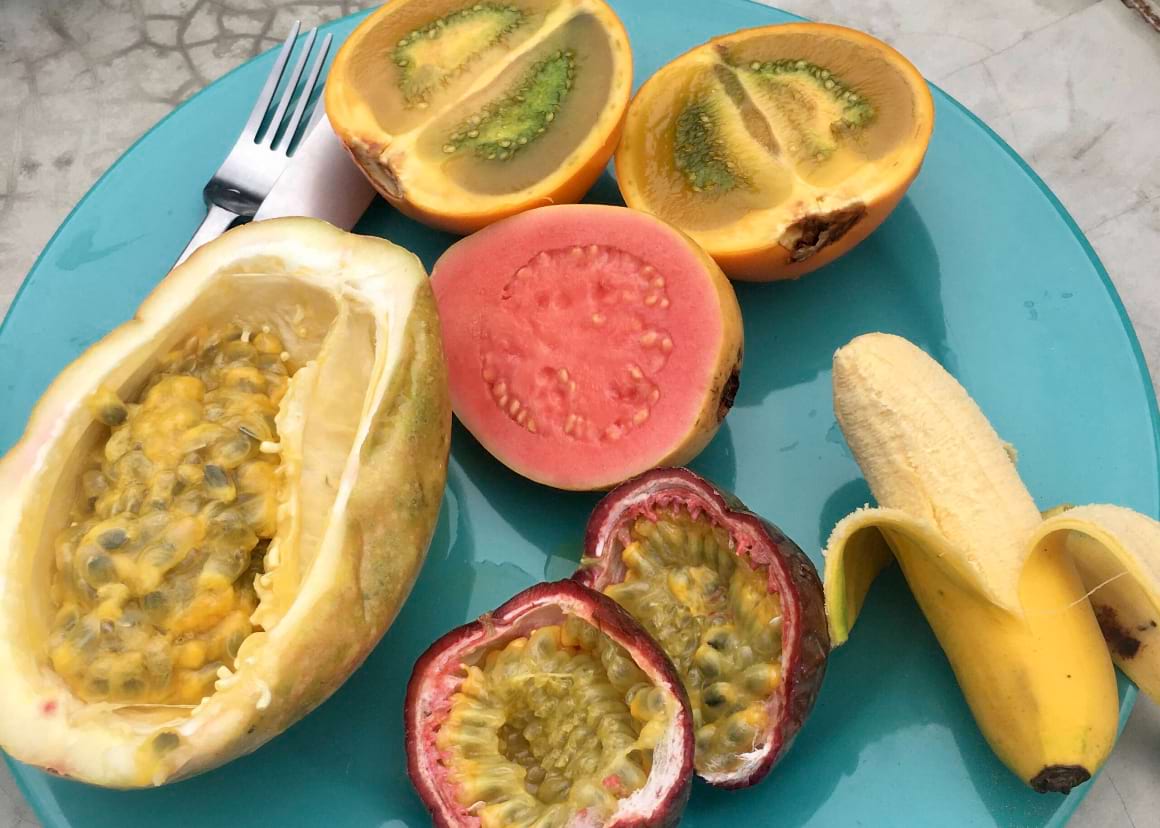
Photo: @Lauramcblonde
El Plato del Dia is a lunchtime deal that will give you soup and a main course for about $3, which is a great way to save money and experience local life. Options include Bandeja Paisa.
It consists of rice, plantains, avocado, minced meat, chorizo, black sausage, fried pork rind & a fried egg chucked on top. My favourite dish was by far empanadas, they’re a great snack & are filled with a variety of toppings.
A Brief History of Colombia
Colombia has a long and incredibly rich history. Long before Europeans arrived, cultures like the Tairona and Muisaca created architectural marvels like La Ciudad Perdidia and crafted intricate golden artefacts, like those found in Bogota’s Museo de Oro.
The famous legend of El Dorado, an indigenous king of a golden city who would bathe in gold dust, obsessed many greedy conquistadores. This was probably based on the Muisca people who lived on the site of modern Bogota, hence the airport name, El Dorado!
After Sebastián de Belalcázar arrived in 1539, Colombia became part of the Spanish Empire, and treasure ships carrying the gold of the Americas left from Cartagena for centuries.
Much of the battles for independence from Spain occurred in Colombia, with Simon Bolivar, the continent’s great independence leader forming the first post-colonial governments in Colombia and dying outside of Santa Marta. Colombia was even once part of a country called Gran-Colombia that included Ecuador and Venezuela.
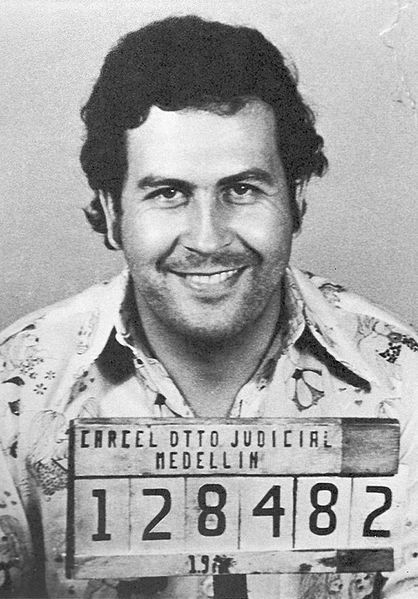
Of course one name comes to mind when thinking about Colombia’s recent history: Pablo Escobar. The guy is famous the world over for being probably the most dangerous gangster ever. Instead of just fighting with the government, he targeted ordinary Colombians with car bombs and terror attacks to bend the state to his will.
In league with Escobar, in 1985, the M-19 guerrilla group stormed the Colombian Palace of Justice and held the Supreme Court magistrates hostage, intending to put President Betancur on trial. In the ensuing crossfire that followed the military’s reaction, scores of judges died, painting Colombia as a lawless country.
Pablo Escobar was killed in December 1993, and struggles against other cartels like the Cali Cartel have succeeded in reducing the threat of Narco-terror. Subsequent governments have also put much effort towards ending conflicts with guerilla groups like M-19 and the FARC.
In Rio Claro, my white water rafting was led by former FARC operators who traded their rifles for paddles, a good sign of healing
Modern Day Colombia
Colombia has enjoyed a long period of relative stability, foreign investment has turned parts of it like Boca Grande in Cartagena into Miami-like places. The cocaine trade still happens, and parts of the country like the Darien Gap are still roamed by guerillas, but there are no longer cartoonish super villains like Escobar setting off car bombs daily.
Colombia has historically swung wildly between liberal and conservative governments. Their current president is Pedro Sanchez, a left-wing president aiming to tackle inequality. The average Colombian feels optimistic about the country’s future, and so they should, it has everything!
Working in Colombia
Because of its general awesomeness, Colombia is very popular for expats. Medellin is the most popular spot although Bogota offers the most varied and lucrative opportunities. In regions like El Poblado, it feels like every other person is a remote worker trying to get the most out of their dollars with Colombia’s fun and low cost of living.
Colombia offers a two-year digital nomad visa to facilitate this. You will need to earn at least $900 a month to be eligible.
If you are looking for work as an English teacher then you can quite probably find something pretty much anywhere in Colombia.
Visas For Colombia
To work in Colombia you will need a work visa. These are pretty easy to obtain for most western passport holders once you line up a job and it is common to enter on a tourist visa and then upgrade it whilst in the country. The fee for the M5 Visa is $282.
As mentioned earlier, there is also a digital nomad visa for up to two-years.
Volunteer in Colombia
Volunteering overseas is a great way to experience a culture whilst doing some good in the world. Volunteering continues to be very popular all over the world.
Colombia is a developing country so there are lots of opportunities for volunteers willing to donate some time and skills. Volunteer English teachers are in pretty much endless demand across Colombia and I enjoyed a very joyful spell teaching in Cartagena. More unique opportunities include working in the rainforests, nursing Jaguars and maybe helping out a coffee farmer.
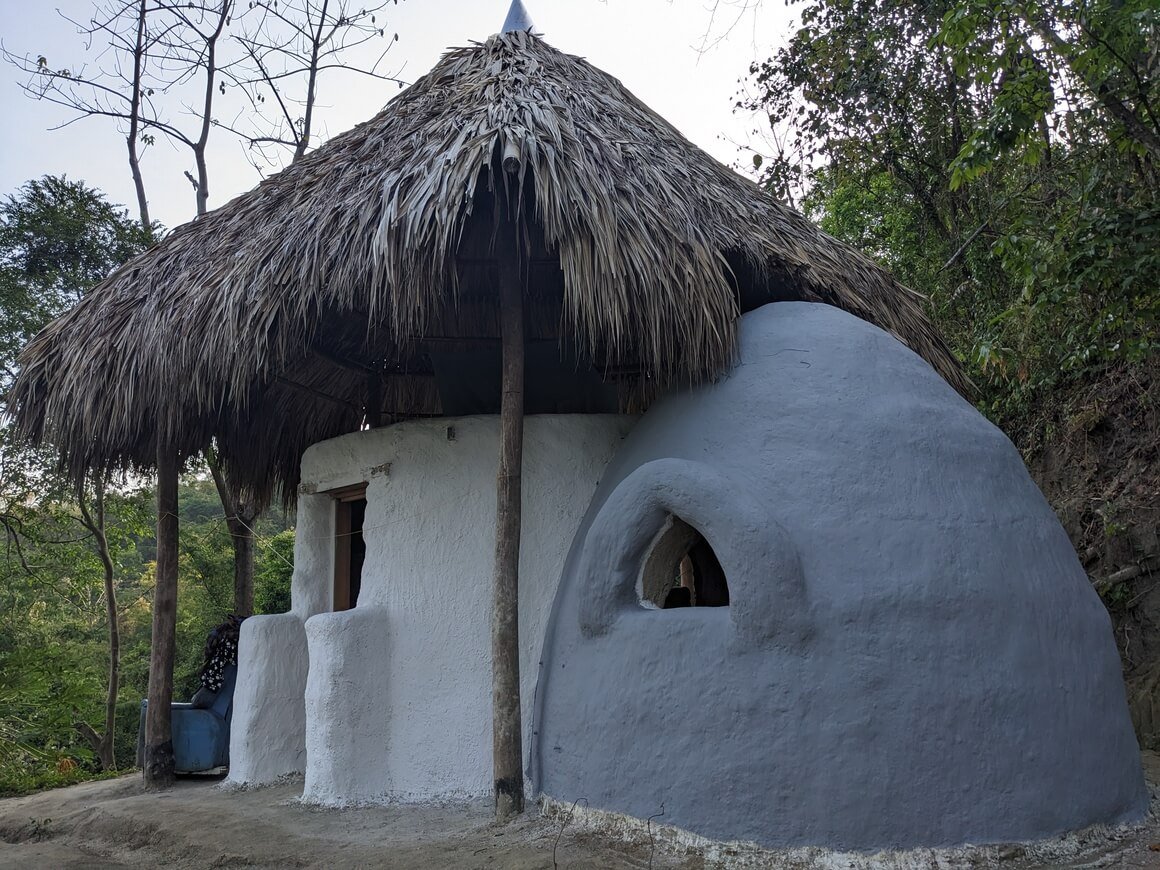
Photo: @Lauramcblonde
Many hostels also offer free meals and accommodations for a few reception shifts a week. This is a great way for long-term travellers to stretch out their trip and really get to know an area of Colombia.
Always make sure that your placement is for real and has reviews on places like Worldpackers or WorkAway.
Want to find some more volunteering opportunities in Colombia? Signup for Worldpackers, a platform that connects local hosts with travelers. As a Broke Backpacker reader, you’ll also get a special discount of $10. Just use the discount code BROKEBACKPACKER and your membership is discounted from $59 a year to only $49.
Teaching English in Colombia
Teaching English is a very popular way for for expats to make their way in Colombia. Pay varies widely. A fully qualified teacher at a top university (degree + TEFL or CELTA) could earn $1800 per month which goes pretty far in Colombia but an unqualified backpacker teacher at regular school may have to make do with $900.
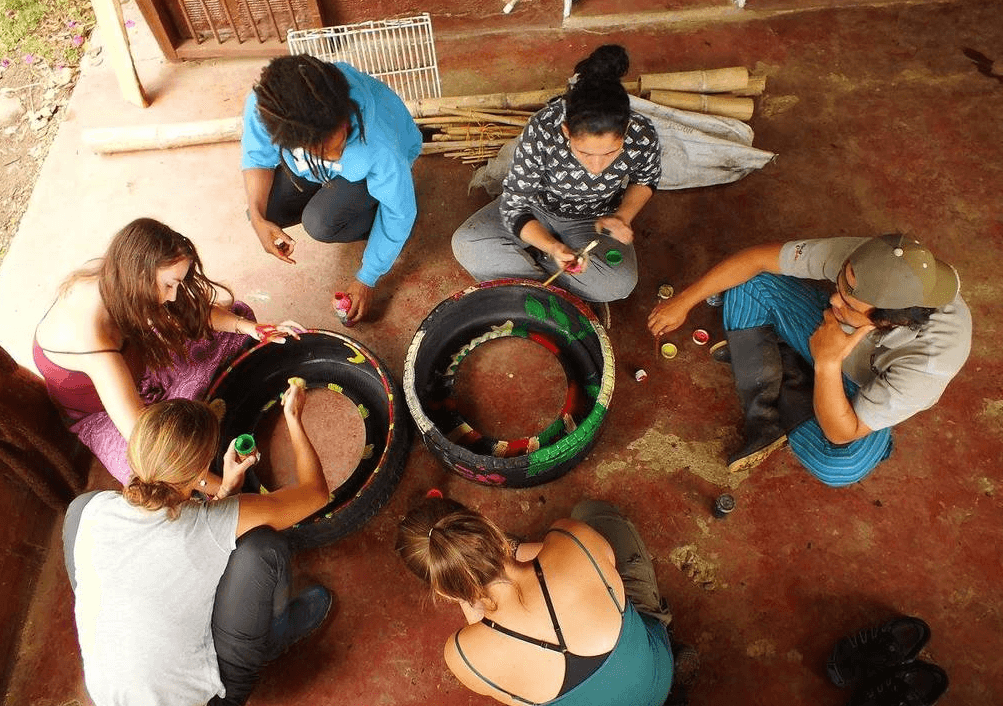
Photo: World Packers
If you want to teach English from your own home, then you can try teaching English online. Depending on your qualifications (or your motivation to obtain qualifications like a TEFL certificate) you can teach English remotely from your laptop, save some cash for your next adventure, and make a positive impact on the world by improving another person’s language skills. It’s a win-win!
In addition to giving you the qualifications to teach English , TEFL courses open up a huge range of opportunities and you can find teaching work all over the world.
What to Know Before You Go
Colombia doesn’t fit neatly into a single trip, and that’s exactly the point.
Whether you’re chasing jungle trails, Caribbean coastline, colonial architecture or the best cup of coffee you’ve ever had, the country has a way of delivering more than you planned for.
It suits backpackers who want to push hard and travellers who want to slow down – sometimes on the same journey.
Come with curiosity, a degree of street savvy, and a willingness to let the journey bend, and Colombia will do the rest.
There are few places in the world that feel this alive.




This is a brilliant page! Covers everything.. thank you 🙂
Hello Will! We’re heading to Colombia—Cartagena and Medellin in March. Great info here. Any updates?
Hey! I’m going to the Taryona region Jan 21 to 27 starting by arriving by plane in Santa Marta. I want to combine maybe taganga, Minca Casa Elemento, and then Costeno Beach Surf Hostel and then go back to Santa Marta to catch my flight to Bogota on the 27. Is that the order I want to go in? How does transport work? Do you have any links about busses etc? Thanks for the help if you can! I have all the details on backpacking Uruguay beaches if you want to trade 😉 South America’s best kept secret!
Wifey and I LOVE Colombia and always stay in Envigado (been 3 times now) and have made some real nice local friends. The lifestyle there is wonderful, great foods, weather, nightlife, street atmosphere it has the lot. And all at a very affordable price. Your list has certainly given us more ideas and reasons to go back which actually we can’t wait. Thanks for making us miss it even more (if that’s really possible).
Hi Will, I am planning to visit colombai this year, reading your page helped me how to be prepared for backpacking, very useful page, thank you
Hey Guys If you’re going to San Gil I highly recommend Karla, is a girl in who helped us a lot in our stay there. She speak a good English, she was our guide and drove us where we need, and helped us in all that we needed like a accommodation, San Gil was much better that we thought thank to Karla. Her number is 3183928463
Hola Will
Se que has estado en Venezuela, por ello quiero que me ayudes con ciertas recomendaciones respecto a lugares para visitar en especial sus playas, resorts o sea si son lugares en el mar caribe venezolano, mejor.
Soy de Ecuador, espero nos vistes.
Slds
Vanessa
Any thoughts on Cali? Is it worth stopping there for a couple of days? I have heard it’s pretty dodgy safety wise.
I probably wouldn’t bother with Cali, the cities re all similar and Bogota and Medellin are definitely the best… Cali should only be on the list if your a die-hard Salsa fan… Safety wise, it really is fine – 3 months and no problems. Currently in Venezuela, significantly more dodgy and yet, still fine. Don’t trust the media or sensationalist news-reports, unless your a total god-damn idiot and attempt to buy coke off a cop, you will be fine.
When I was in Ecuador I thought of visiting Columbia. Did you go dancing while you were there, and if so what type of dancing did they introduce you to? Great pics and I love that you can haggle for a reduced price.
I had a crack at some salsa, it wasn’t the salsa I am used to from Europe though, apparently my foot-work was all wrong; I had the twirls down to a T though! 🙂
This looks like a rundown of my itinerary. There are so many amazing things to see and do in Colombia! Salento and Tayrona were my favourites. I also loved the adventure sports in San Gil and the trekking to the Lost City!
Thanks for the post! Heading to Colombia in July (yes, far far away). Staying in Cartagena/Santa Marta for 11 days for surfing, diving and snorkelling. Will look into Taganga a bit further.
Hope you make it to Ecuador, as it is such a great place and got back from there a few weeks ago. Happy travels!
Thanks Renee! Definitely head to Minke and Taganga, you’ll have an ace time! 🙂
Will!! Still travelling strong I see 🙂 hope you are having an awesome time. Loving the website, it’s giving me the serious travel bug! Still loving Exeter though, so will be here for a little while.
Hope you are well x
Sam!! I WAS THINKING ABOUT YOU LIKE LITERALLY YESTERDAY! How’s it going? I’ll be popping into exeter at some point, we should grab a coffee! And yes, still travelling – what else am I going to do, learn to cook? I don’t think so… :p
Super useful post! Thanks for sharing this. Next year I’m hoping to settle down for a while in South America and I’ve been hearing more and more great things about Colombia. Really looking forward to checking it out.
Thanks Charlie! Medellin is definitely a great place to settle, I’ve been here six weeks; loving it! 🙂
Colombia has been on my list for a while. Ciudad Perdida sounds amazing. Googling it now.
It’s an incredible trek! Don’t miss out, go NOW before it becomes crazy popular!! 🙂
Nice post, got three weeks in Colombia this summer so this is useful. You fancy doing one for Ecuador too? 😉
I notice there is supposed to a high malaria risk across much of Colombia, including most of the Pacific Coast – did you bother with antimalarials?
I never bother with anti-malarials and I’ve been to some pretty malaria-esque destinations, you should be fine matey! I’m not headed to Ecuador I’m afraid – onwards to Venezuela tomorrow!! 🙂
Hi Will, nice blog, but where did you stay? those hostels sound super expensive! We traveled around Colombia for a month or so and paid $5-$10 for a dorm bed and around $17 for a private room, I agree awesome and cheap place for adventure activities, super friendly people, awesome country. We are new to the blogging game, what we spent each per day can be seen below, if any of your followers are interested, what we did, where we stayed and how much we paid can be seen at http://stingynomads.com/colombia/
Signing up for your blog!
Safe travels
Avg of what we spent
Transport: 284 700 COP ($97.93) total, $3.15 avg per day
Food (shopping): 400 100 COP ($138) $4.45 avg per day
Accomodation: 510 500 COP ($175) $5.70 avg per day
Activities: 231 000 COP ($79.50) $2.56 avg per day