Venezuela travel note:
Recent U.S. activity in Venezuela has sharply escalated instability, and conditions (including transport and safety) can change with little warning. TBB cannot recommend travel to Venezuela right now. If you still plan to go, check your own government’s travel advice and your insurer before booking.
Venezuela is a truly incredible country. With towering mountains, steaming forests, endless beaches and just enough danger to keep you on your toes; this is a country which should be on every budding adventurer’s list. Backpacking Venezuela has a truly terrible reputation, perhaps unjustly so.
Before I went backpacking in Venezuela, I was assailed from all sides by rumours of robberies, murders, kidnaps and corrupt police. Almost everybody I met warned me not to go but, crucially, most of them had not actually been to Venezuela.
The international media, backpacker rumours and Venezuelan expats have all banded together to present an image of Venezuela which is not necessarily accurate.
Don’t get me wrong, backpacking Venezuela can be dangerous. This is a country where you need to keep both eyes on your gear, watch who you’re with and be on the lookout for iffy situations before they get the chance to rear their ugly head. If you are careful, and lucky, you should be able to travel in Venezuela without much risk. Saying that it really helps to have friends on the ground who can help you change money….
In this freshly updated Venezuela backpacking guide, you will discover:
- Magical lands where few tourists go, from the plains of Los Llanos, to breathtaking Angel Falls.
- Where to stay, how to get around (not always easy here), and how to stay safe in this rugged country.
- How much you can expect to spend in an average day during your Venezuela adventures.
It’s time to discover a country on the rebound after many years of socialist turmoil. Vamos!
Why Go Backpacking in Venezuela?
Venezuela represents the Wild West of South American backpacking. Whilst the rest of the continent is now widely traversed by travellers, very few visitors have the gumption or brass to visit Venezuela. This is a proper shame, the nation boasts an unmatched bio-diversity and where you can find snow capped mountains, desert’s, steaming jungles and grassy savannah.
Backpacking in Venezuela is, in my opinion, one of the last great adventures out there…
The Broke Backpacker is supported by you. Clicking through our links may earn us a small affiliate commission, and that's what allows us to keep producing free content 🙂 Learn more.
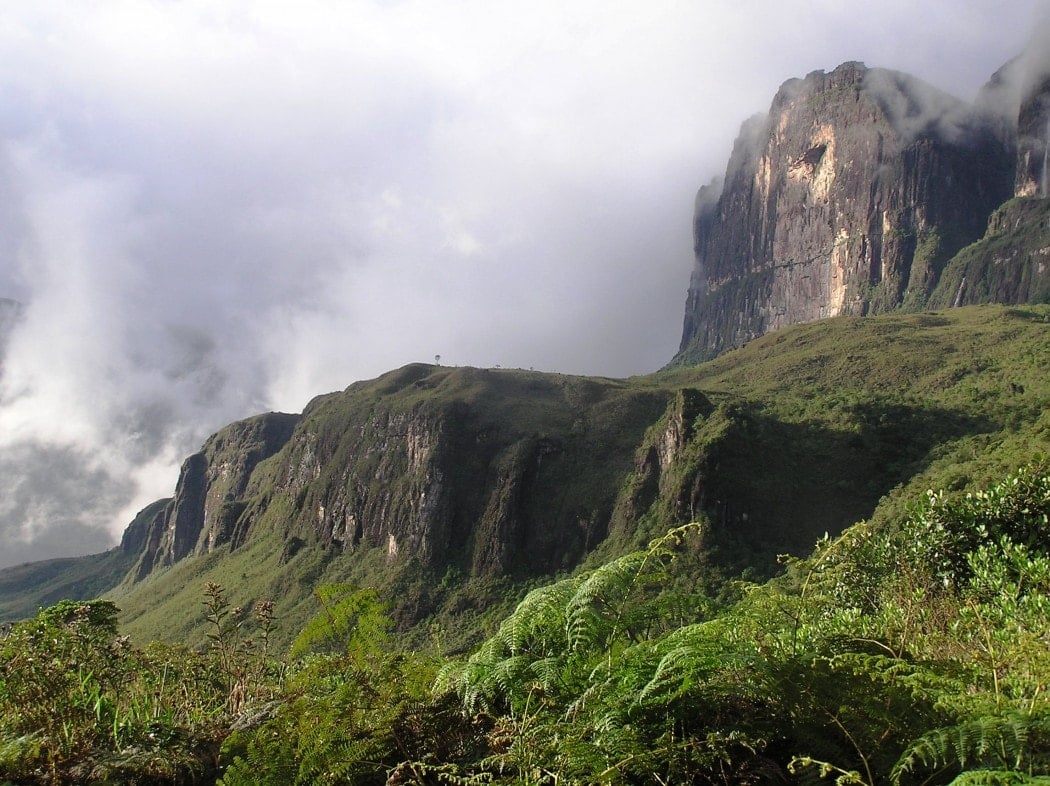
- Where to go Backpacking in Venezuela
- Top Things To Do in Venezuela
- Backpacker Accommodation in Venezuela
- Venezuela Backpacking Costs
- Best Time To Travel To Venezuela
- Staying Safe Whilst Backpacking Venezuela
- How To Get Into Venezuela
- How To Get Around Venezuela
- What’s New for a Venezuela Backpacking Trip?
- Working in Venezuela
- What To Eat in Venezuela
- Venezuelan Culture
- Some Unique Experiences in Venezuela
- Final Advice Before Visiting Venezuela
Where to go Backpacking in Venezuela
Backpacking San Cristobal
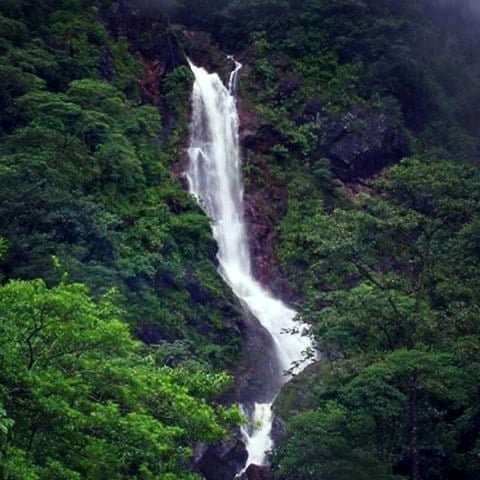
If you’re coming from Colombia, chances are you will cross into Venezuela from Cucuta and end up in San Cristobal. The city is a bit of a tinderbox, I was caught up in a few road-blocks in whilst there but there are some really interesting sites to see. The cathedral is particularly impressive. Escape the city and drive 30 minutes to “Chorro del Indio“, a remote mountain waterfall. Chill with a couple of beers in the cool water while watching the blue butterflies.
Whilst it’s the first town you will come across after leaving Venezuela I suggest pushing on from San Cristobal to Merida. Travel by local bus, it’s a relatively short six hour journey trust me…. it’s worth it.
Backpacking Merida
The student capital of Venezuela and a real party town, Merida is a great place to spend a few weeks if you have the time. You can hire an apartment with a pool and security guard or stay in a local hostel. I recommend staying in Posada Guamanchi, it’s where most backpackers in Venezuela wash up, and prices start from $25 per night.
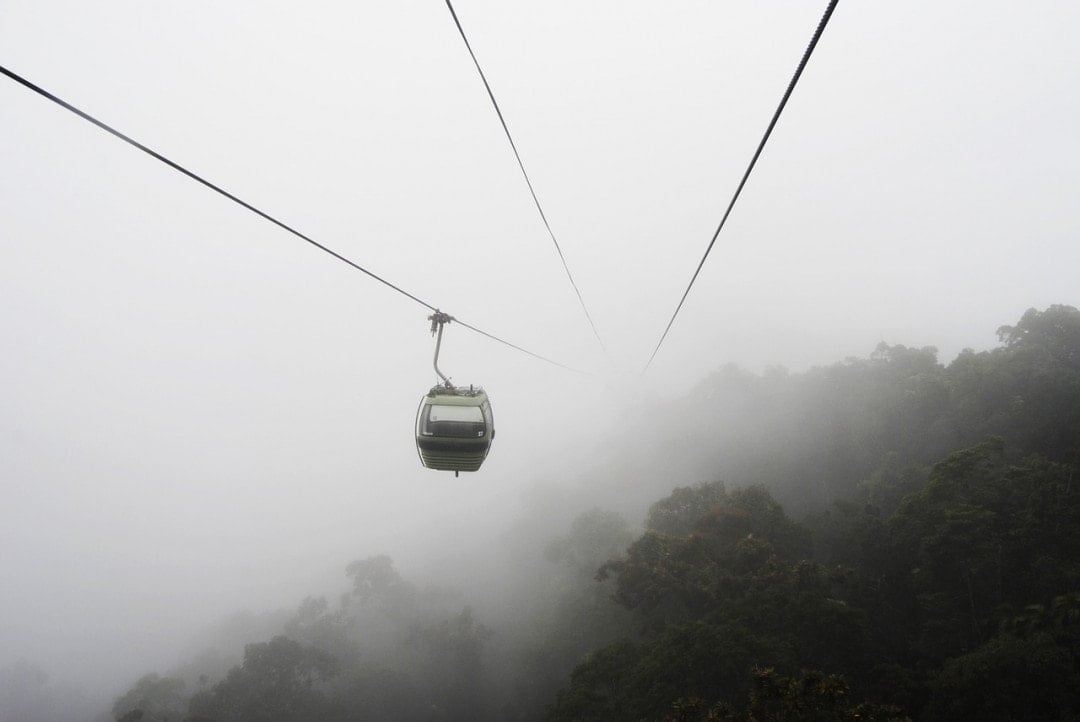
In Merida it’s well worth checking out the Cable Car: I hope you’re not scared of spending a long time in a small box up high… This is the longest and highest cable car in the world! And let me tell you, it is EPIC! A must do when backpacking Venezuela and a great way to explore some of the countryside.
The cable car is 12km long and makes stops along the way, hop off for a hike! The best time of the year to do the cable car is December to February, there is no to little fog at this time of year. Don’t forget your take your camera!
However, nowadays the prices for this once-cheap activity have skyrocketed up to a crazy $50 for foreign tourists.
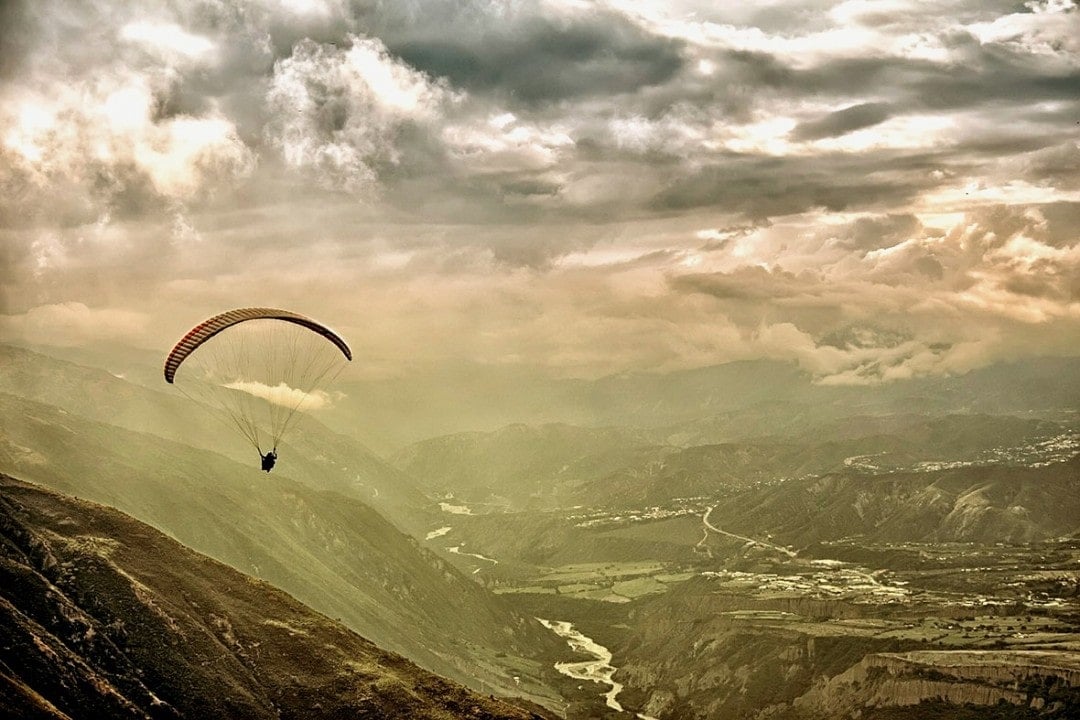
Merida is a great place to organise treks, white water rafting and paragliding excursions. I recommend strolling around and playing the money-changers off each other; be careful with your cash.
Backpacking Los Llanos
No backpacking trip to Venezuela is complete without a trip to Los Llanos. Known as the Serengeti of South America; any wildlife lover will be in their element here. It takes pretty much fa whole day to get to Los Llanos and most folks stay for two days.
Straddling the border of Venezuela and Colombia it’s the last known home for the Orinoco Crocodile and is also home to anacondas, capybaras, anteaters, jaguars and caimans. So get down here and start exploring, Los Llanos is a must do when backpacking Venezuela! It only costs $100 a night per person with accommodation, three meals and at least two activities per day included.
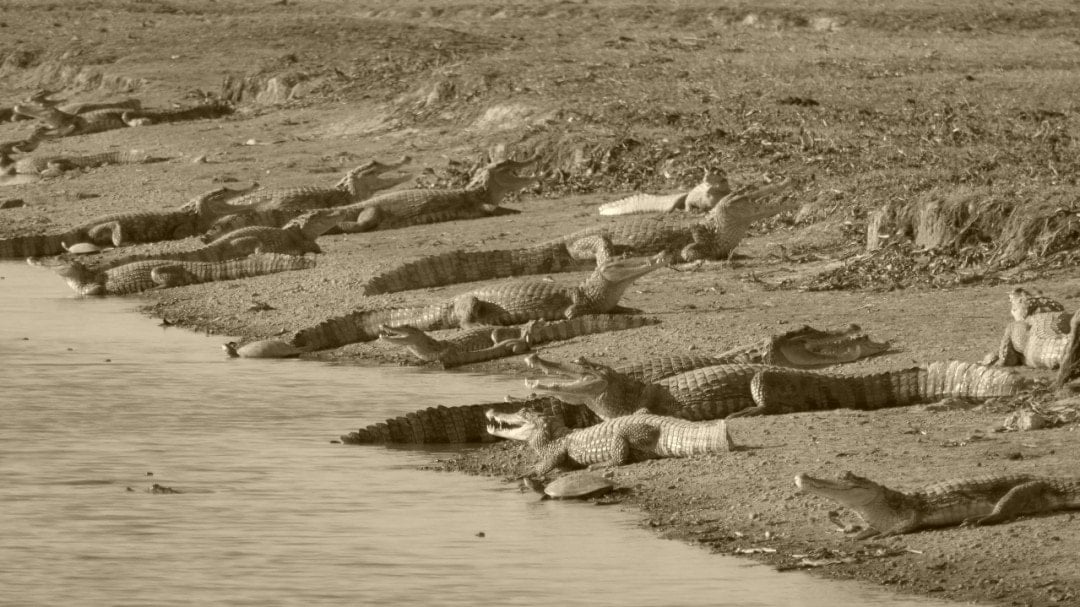
You can try to navigate rides here yourself, or if you can’t be arsed with the hassle, opt for a tour. Four-day excursions can be arranged from Posada Guamanchi – I highly recommend it! You will get to explore the area by jeep and horseback, fish for piranha, see heaps of wildlife, catch an anaconda and take to the river by dug-out canoe. Food and accommodation are included and is surprisingly good; I highly recommend this trip!
Catatumbo Lightning
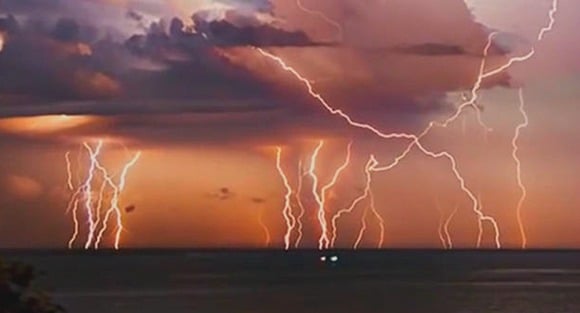
One of the most incredible moments whilst backpacking Venezuela was getting to witness the Catatumbo lightning, also called the “Lighthouse of Maracaibo”. In the delta of Catatumbo River, for 140 – 160 days/nights a year, or up to 300 in some cases, there is a continuous powerful lightning storm but eerily no sound of thunder. I love lightning, and wow, this was just spectacular!
Want to visit the incredible lightning storms? Well, head to Lake Maracaibo, a couple of hours drive from Los Llanos. There are plenty of tour companies who will offer to take you up here for an overnight trip if you can haggle the price down it’s well worth it. Otherwise, make your own way there and hop on a speedboat with the locals in the evening for the best view…
Backpacking Choroni
Choroni is a sleepy beach town which kicks into over-drive come the weekend. This small town on the Caribbean coast looks incredibly similar to the European city of Venice. Wander around the colonial streets you’ll almost feel as if you’re in Europe if it wasn’t for the Monkeys!
Choroni is a good place to come and relax for a couple of days but it’s good to get out of the old beach town and explore. A day-trip to either Chuao or Cepe. Chuao has a lovely beach and is famed for its cocoa. A thirty minute walk from the beach is the main town where you can chill out in a local eatery, sample Cocoa ice-cream and soak in some ambience.
Most backpackers travel to Choroni via Caracas. Check out the surrounding cloud forests of the lowlands and try and spot the locals; monkeys, snakes and birds!
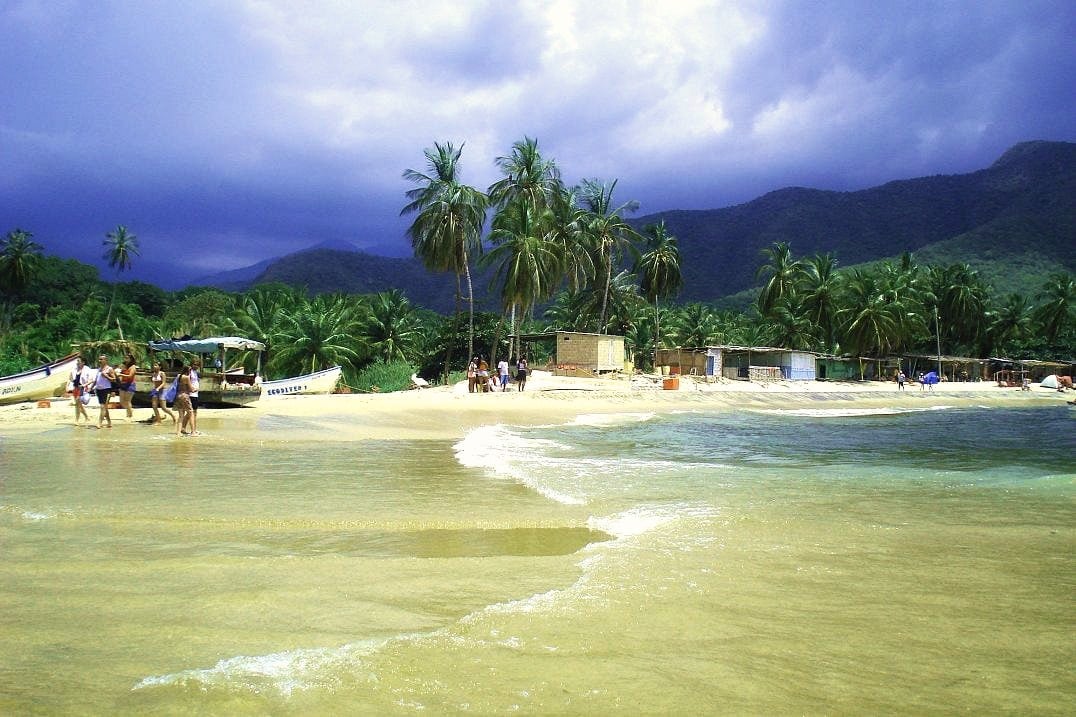
The nearby Henri Pittier National Park is a great place to go trekking and explore a cloud-forest first hand – bring mosquito repellent! You’ll find a handful of quaint restaurants littered around with sporadic opening times, just to keep you guessing!
If you’re feel adventurous pack your camping hammock & sleep in the national park!
I’d veer away from the beaches of The Playa Grande. It’s a truly lovely beach but littered with quite a lot of broken glass and dog crap. So not necessarily the ideal place to spend a day.
Backpacking Caracas
Caracas is located in a valley, below the beautiful Mount Avila, a mountain that separates the city from the Caribbean Sea. The city itself is often overlooked by those backpacking Venezuela. Thanks to scary crime stories and media interest, most backpackers will leave to explore the natural landmarks.
To be honest, I can’t blame them, I bypassed Caracas on my trip too. If you do spend a night here definitely get some friends on the ground via Couchsurfing. Couchsurfing is a great way to meet locals and have an awesome time in an otherwise, kind of uninviting city. If you do come here, make sure you know how to travel safely. It’s a “take extra precautions” place for sure.
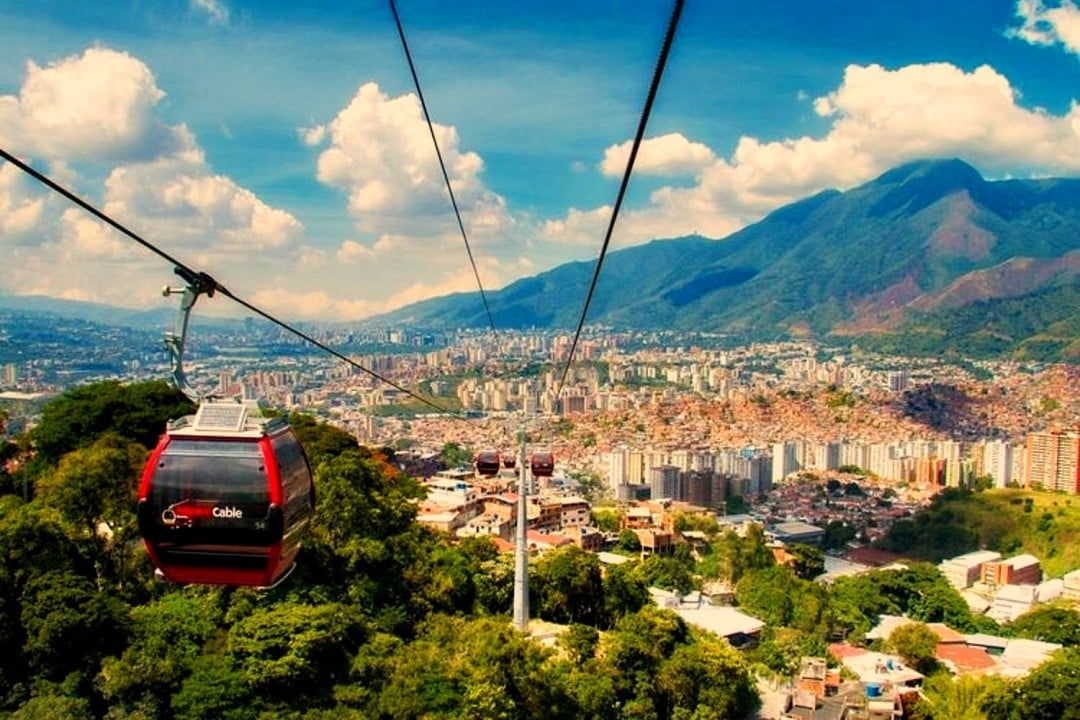
If you do have time to kill in Caracas check out La Casa Natal de Simon Bolivar. Bolivar’s birthplace and one of the few well-preserved colonial buildings with some beautiful art and museums. Want some fresh air out the city then hop on the cable car up the Avila Mountain. You’ll get some awesome views of Caracas, peace and quiet and some well deserved fresh air!
Fortunately, Caracas is a lot safer than in the early 2020s. You can now walk around on your own during the day in much of the city, especially around Chacao which is where the embassies are based, and you can even use the metro safely.
If you’re feeling really adventurous, the notorious “world’s most dangerous slum” Petare can be visited, although not being the certain death trap it was a few years back doesn’t make it 100% safe. I recommend going with a local guide who knows it well. Oh, and definitely don’t try your luck after dark.
Backpacking Morrocoy National Park
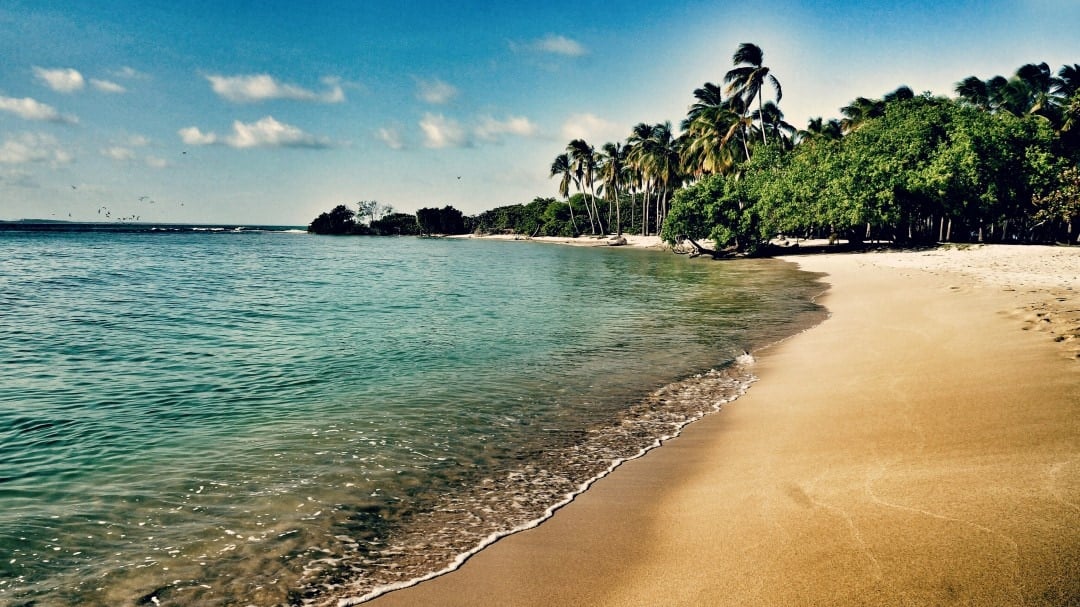
Hop on the Central Regional Highway, drive a few hours from Caracas and you’ll arrive at the Northeastern Coast of Venezuela. Morrocoy National Park is a beautiful (almost) caribbean paradise. Mangroves, white sand beaches, crystal clear waters teaming with fish and coral reefs. Snorkelling here is a must! Or if snorkelling isn’t your thing, relax with some chilled tunes and a few beers….
Backpacking Isla Margarita
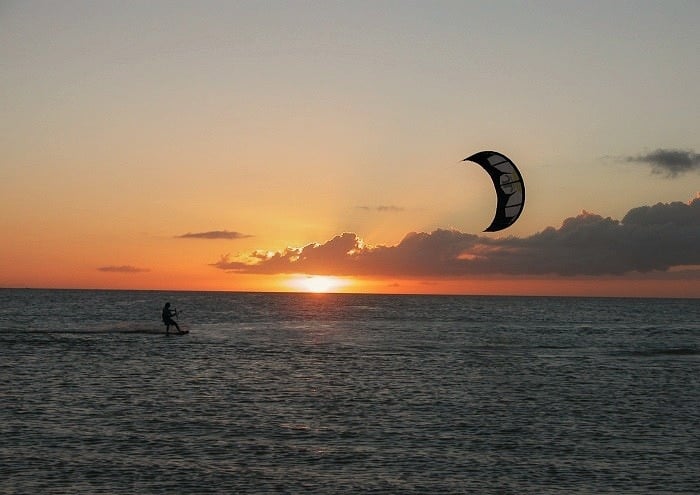
Isla Margarita is another beautiful beach destination not far from Caracas! Margherita Island is an incredibly popular holiday spot with Venezuelans and is an awesome spot to do absolutely nothing, basically. Relax on the beach, drink a few cocktails and chat with the locals. If you get restless, I highly recommend flying through the surf for the afternoon. Kite surfing is a popular sport and pretty much every beach offers first timer lessons.
Backpacking Los Roques
Los Roques is a beautiful National Park is high on most people’s bucket list when they begin backpacking Venezuela. A large mainland national park also includes over 40 islands and more than 250 coral reefs, perfect for ocean lovers!
Los Roques Archipelago National Park was created by the Venezuelan government to protect the marine ecosystem. The coral reefs are pretty much untouched offering some incredible diving and snorkelling.
You can get out on a boat for a day trip, with a few beers and a swim in the crystal clear water it’s the perfect way to spend the day! For the love of god wear sun protection here, especially if you burn easy, like me! The sun is hot and there is little shade during the day, perfect for those who tan, not so good for people who lobster…
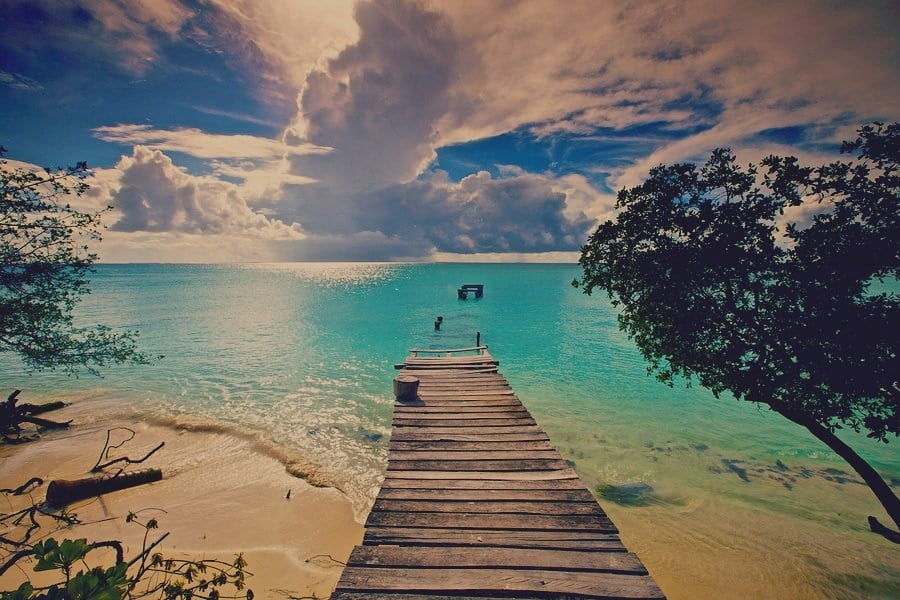
Hop on an internal flight from Caracas for 40 minutes to arrive in paradise, you won’t regret it! The main island is slightly more pricey to stay on as the main accommodation is little villas, but it is worth treating yourself.
Backpacking Ciudad Guayana
Ciudad Guyana commonly known as Puerto Ordaz, this is the closest you can get to Canaima National Park by air before you have to take a bus. There’s not much to do in Puerto Ordaz but since you can only book a bus to Santa Elena the morning that you want to travel (the buses don’t leave until the evening) most people end up spending a night here. The absolutely amazing Hosteria Waipa is a great place to spend the night & is located close to the airport.
From Ciudad Guayana take a bus to Santa Elena. There are various times but most buses will leave late afternoon or in the evening. There’s no way of booking in advance, you have to do it the old fashioned way. Rock up at the ticket desk in the terminal early! Queue for a ticket and basically hope you get one.
Buses are such a popular method of transport here the demand massively outweighs the supply. Three bus companies offer services to Santa Elena with Express De Occidente being the bus company to go for, just bear in mind it sells out quickly.
Backpacking Santa Elena
Santa Elena is probably the most horrible town in all of Venezuela but nonetheless an important destination; this is the place to book treks to Roraima or the Gran Sabana or to cross into Brazil. Most backpackers stay in Michelle’s Guesthouse, it’s basic but a good place to meet people which is pretty crucial as you need a group of at least four to make climbing Roraima financially viable.
Backpacking Mount Roramia
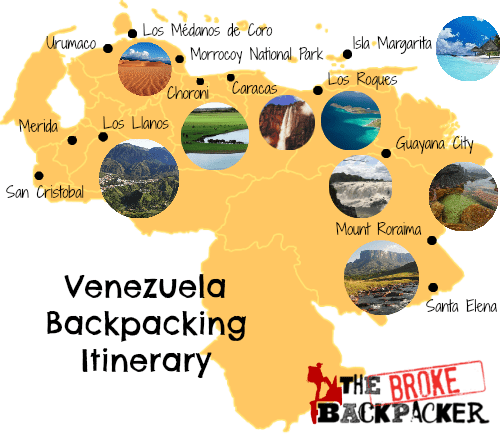
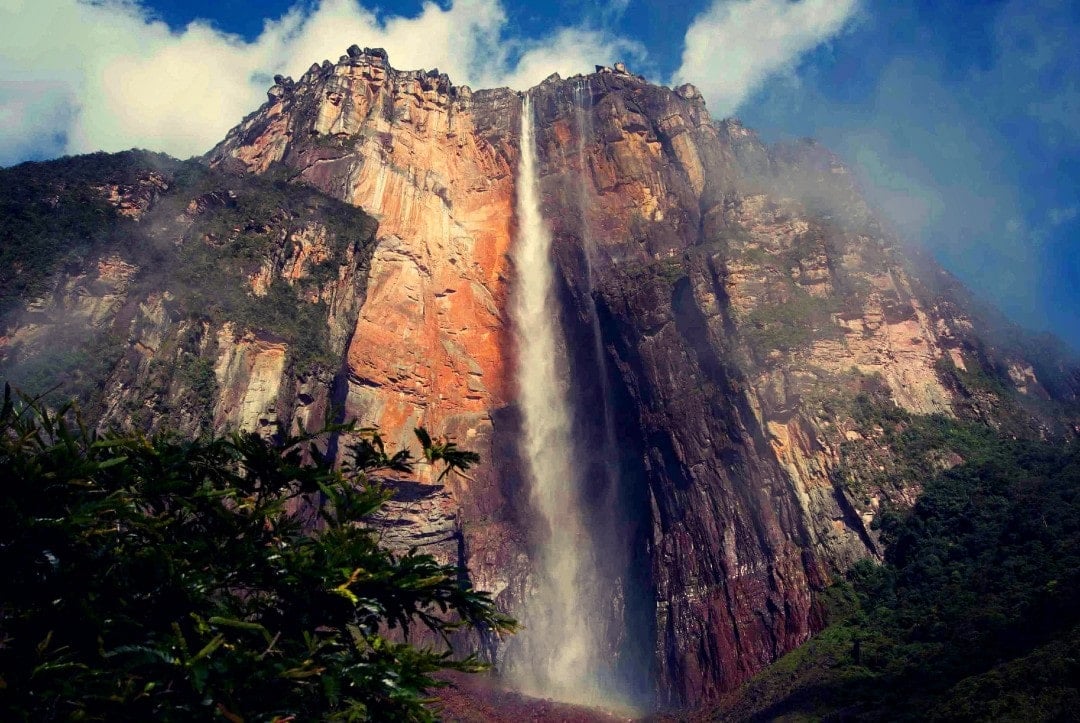
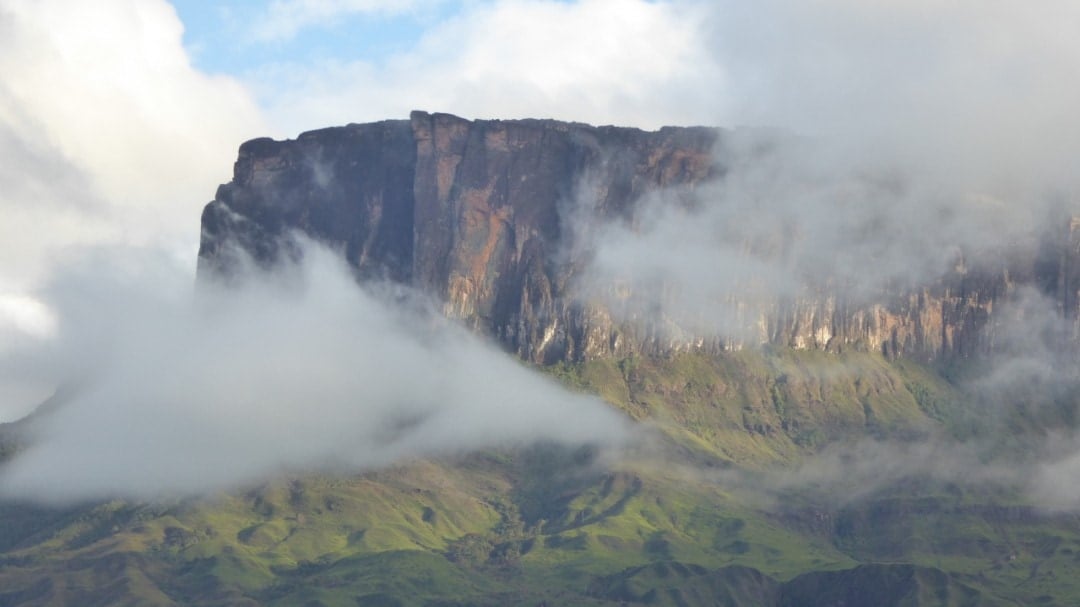
Hike Mount Roraima & stand at the top on Mount Roraima I can see where Sir Arthur Conan Doyle got his inspiration for The Lost World. At 2,810 meters, climbing Mount Roraima (the highest table top mountain in the world) is an epic hike. Mount Roraima stands on the border of Venezuela, Guyana and Brazil but to climb this table top, you have to be on the Venezuelan side.
Once at the top wander around and explore a little bit, it’s so large that you can trek on top for several days and even abseil down Angel Falls to get back down… or so I am told! The geological formations date back two billion years!
Thinking of hiking? Check out my section on Mount Roraima Hike below for more info!
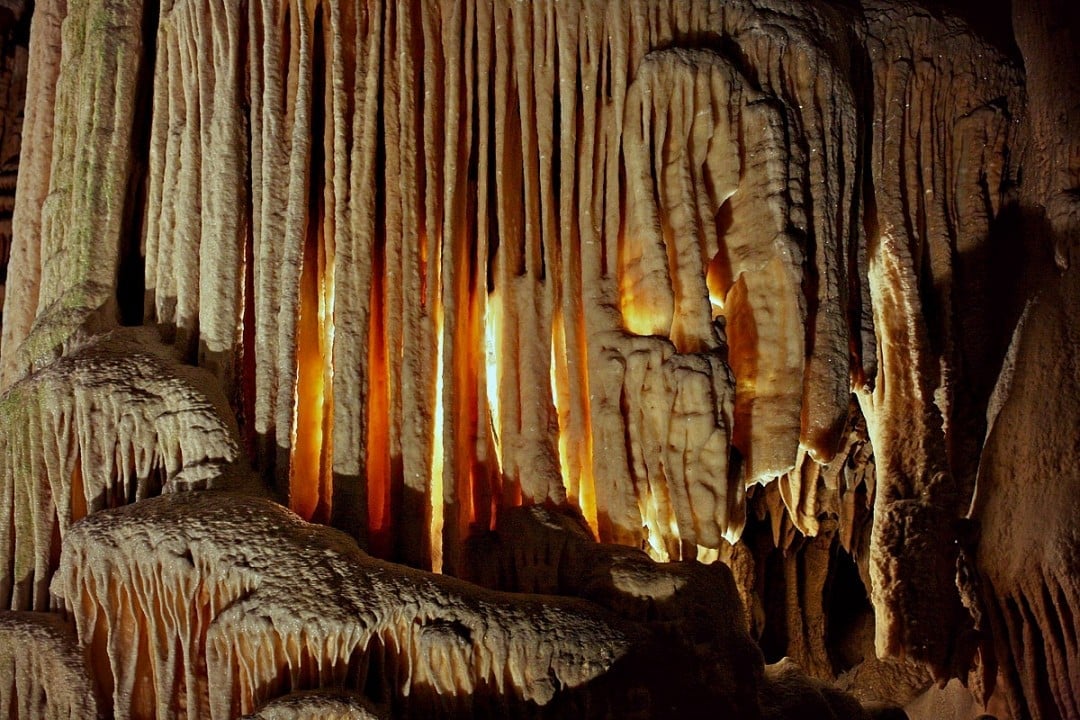
The longest known quartzite cave in the world is Sistema Roraima Sur or Crystal Eyes Cave. Seriously this is gorgeous and although I just peeked in, it has been explored up to its length of 16,400 meters or roughly, eleven kilometres!! This cave is relatively new to the exploring world, it only finished being mapped in 2003! This is possibly the most incredible cave I’ve been in, seriously guys take the detour when climbing Mount Roraima, you’ll thank me later!
Backpacking Mochima National Park
To visit Mochima National Park splurge on a short flight or endure the six hour bus ride from Caracas to Puerto La Cruz. Hop on a speedboat for 40 minutes and you’ll arrive at Venezuela’s second marine park, a divers paradise! Expect Dolphins, Turtles and Ship Wrecks or if that’s not your thing, enjoy chilled and cheap boat trips around the offshore islands.
Created in 1973, it takes in the shoreline from Puerto la Cruz to Cumana, as well as 32 offshore islands. It protects both the marine life, mountains and surrounding forests and is truly an incredible place to chill out and explore!
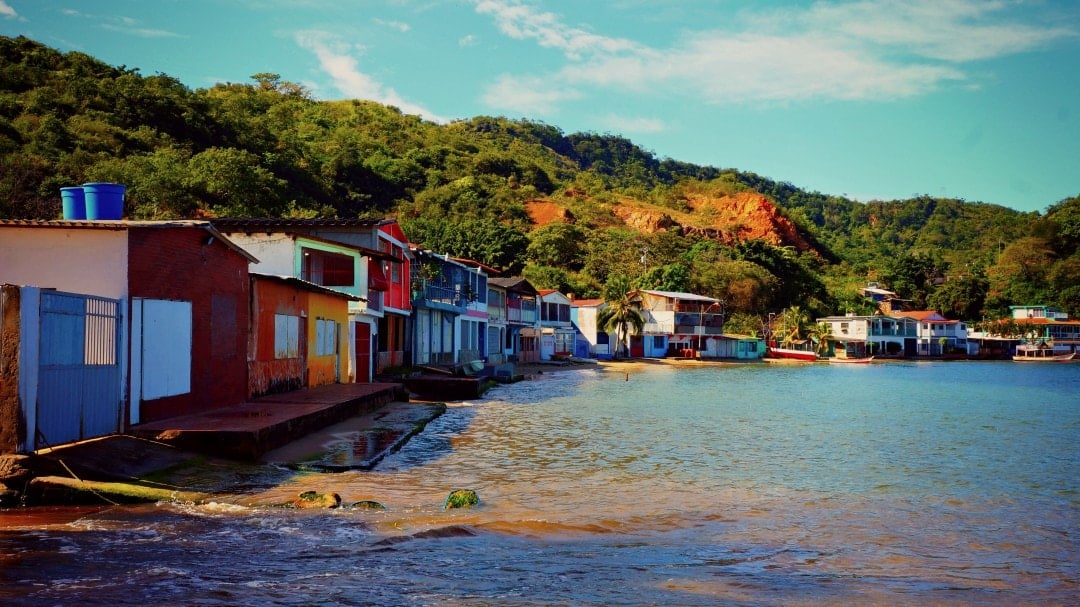
Backpacking Los Médanos de Coro
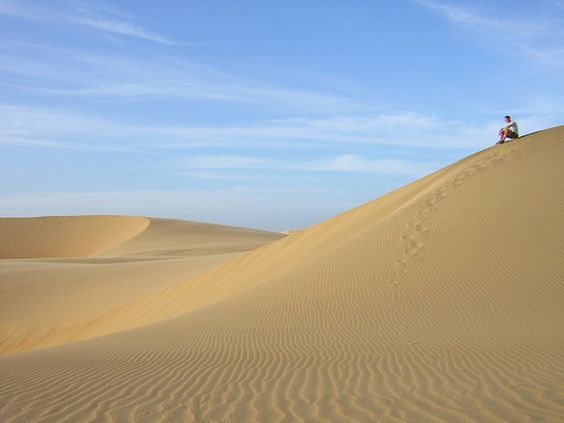
Get lost in the Deserts of Venezuela! Yep, seriously, there is a desert in Venezuela! Head to Los Médanos de Coro, a relatively small area filled with massive sandunes up to 40 metres high. Easily reached by bus or taxi from Coro, definitely get here for sunset, you won’t be sorry!
Hop on a camel, ride a board down the sand dunes or simply stand on top of one of the 120 feet high dunes. Take in the breathtaking vastness of this desert, in a tropical climate… a bit mind blowing! Easily reached from Coro by bus or taxi this place is awesome for a day of adrenaline fun!
Backpacking Urumaco
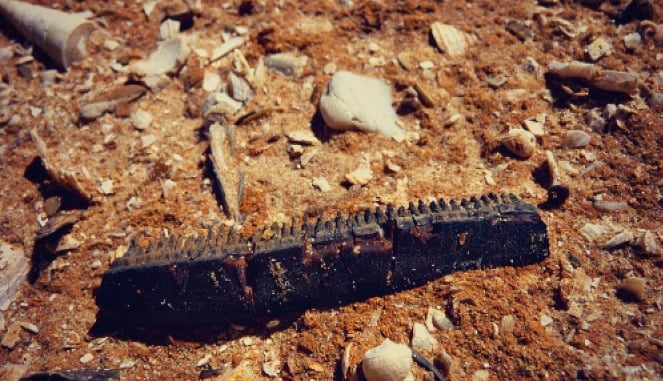
Check out some Ancient Fossils: Urumaco is scattered with thousands, if not millions of fossils! It is the most fossil-rich area in the northern part of South America. Great for history geeks, like me! You’ll find perfect remains of the world’s largest known freshwater turtle, a three metre long rodent, a twelve metre long crocodile and 15,000 year old human remains. So freaking interesting! Hop on a bus at Coro for a short ride to this fascinating small town.
Getting Off The Beaten Path in Venezuela
Considering that barely anybody visits the wonderland of Venezuela, getting off the beaten path is simply a case of entering the country. Venezuela is one of the top offbeat destinations in the world!
Whether you go, you will feel like you have the whole place to yourself.
Top Things To Do in Venezuela
Venezuela is a mysterious country, attracting adventurers looking for raw adventure into its lands. It’s a country yet to be polluted by heavy tourism, incredible landscapes of mountains, forest, lakes and caves; attracting adventurers and extreme sports lovers alike.
If you are looking to really, get into the wild and feel like the old explorers, then backpacking Venezuela will not disappoint you. Below are some of my favourite adventures I went on whilst backpacking Venezuela..
1. Angel Falls:
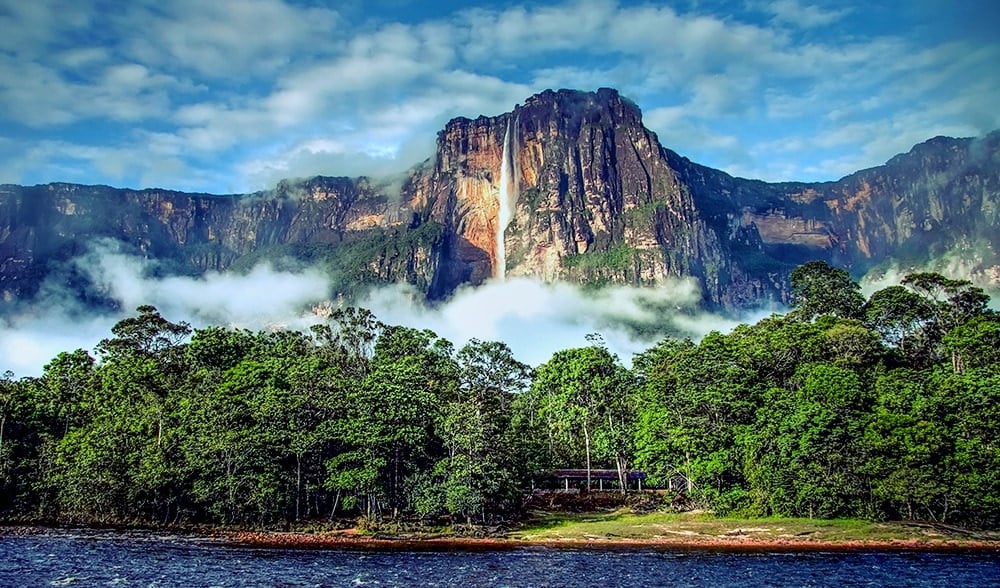
Standing at 979 meters, this is one of the most beautiful waterfalls in the world–as well as the highest. Put back on the map by the Disney Movie Up, this is an explorers wonder. Standing at the base of the waterfall you can’t help but let your mind run wild with wonder. For anyone backpacking Venezuela visiting Angel Falls is best coinciding with the rainy season (June – December). When the falls are fully pumping with water! Otherwise, you may be disappointed.
Angel Falls Tours leave from Ciudad Bolivar which is a small flight from Puerto Ordaz or Ciudad Bolívar. It is difficult, if not near impossible to reach the falls solo. So sit back, relax and enjoy the jungle trip to some incredible falls.
2. Tepuis:
Tepui means “house of the gods” in the native tongue of the Pemon, the indigenous people who inhabit the Gran Sabana. Referring to the high table-mountains in the South of Venezuela.
There are numerous Tepuis dotted all over Venezuela, the most known of these is Mount Roraima at 2.8km high. Almost all the Tepuis have unique bio diversity covering them, found nowhere else in Venezuela and old rock formations dating back thousands of years. You won’t miss the enormous Auyantepui, the source of the awesome Angel Falls, I mean, surely this is one of the reasons you came to Venezuela?
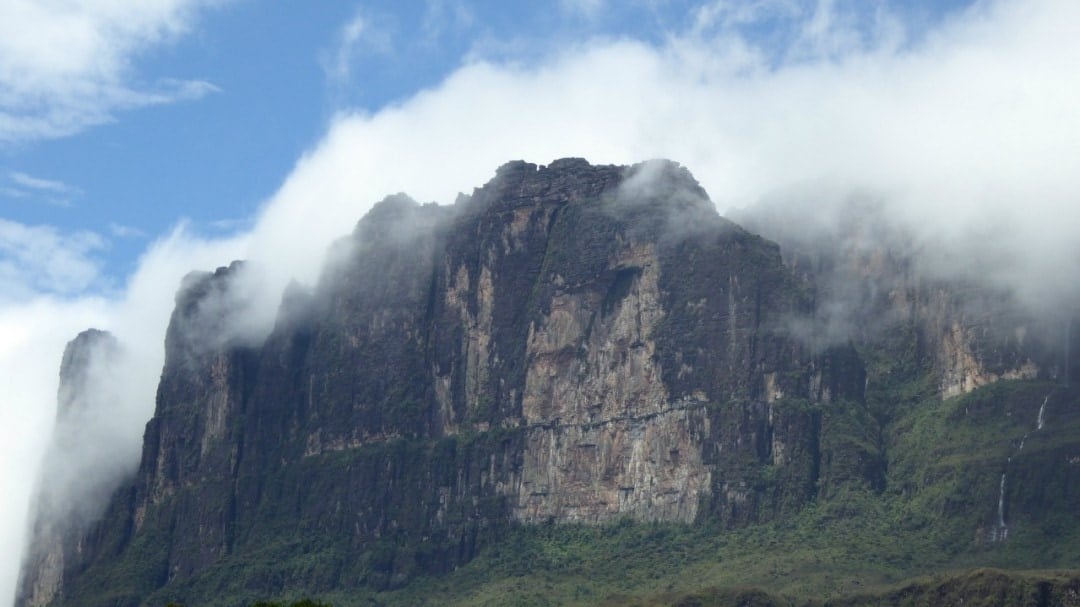
Definitely, check out Sarisariñama Tepui. Why? Not only does it tower up and offer spectacular views but this unique Tepui has perfectly circular sinkholes filled with blue water and gorgeous waterfalls. If it wasn’t for the fact you can’t (easily) get out once in one of these sink holes, it would be the perfect place for a mountain dip!
Autana (Amazonas) is another spectacular tepui. The walls of this Tepui go up to 1400 metres high, perfect attraction for climbers and explorers. But not only that Autana has a cave running from one side to the another. Seriously cool to explore, I felt like Indiana Jones!
3. Cuquenan Falls:
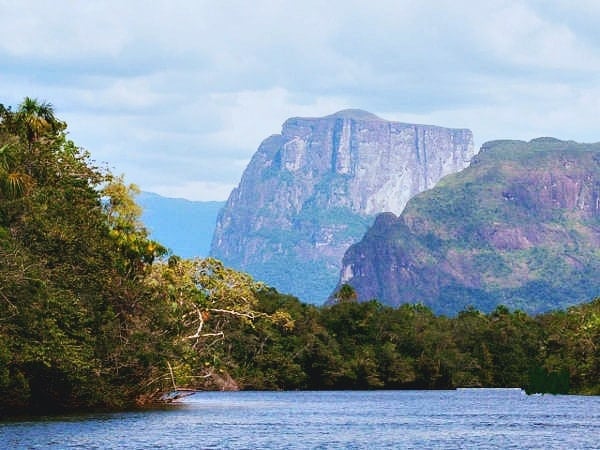
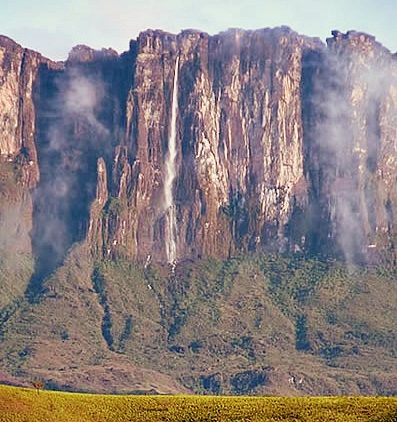
The second highest waterfall in Venezuela (or 11th in the world!) after the majestic Angel Falls. You’ll spot Cuquenan Falls on your way up (or down) Mount Roraima and falls from Kukenan Tepui, and drops incredibly in a single leap from a height of around 2200 feet (670 m) until trickles down towards the base of the mountain. If you can’t get yourself to Angel Falls (or don’t want to pay for a tour) then check out Cuquenan Falls, it is stunning and still one of the coolest things to do in Venezuela!
4. Cave Exploring:
For adventurers and explorers caves are pretty much the most fun thing to explore. In the dark, with just your headlight, exploring beautiful rock formations above and under water. Well, Venezuela has some awesome caves for you to check out! Here are some of my favourite Venezuela Landmark caves;
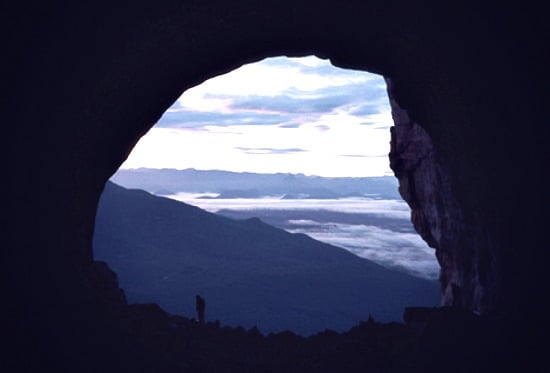
Autana cave (Amazonas), a 395 metre long cave, explored in 1971. It was the first discovered quartzite cave and is made even more unusual by the fact that it runs from one side of the tepui to another and is up to 40 metres high. The cave here is popular with climbers and the Tepui it runs through, is often visited by base jumpers!
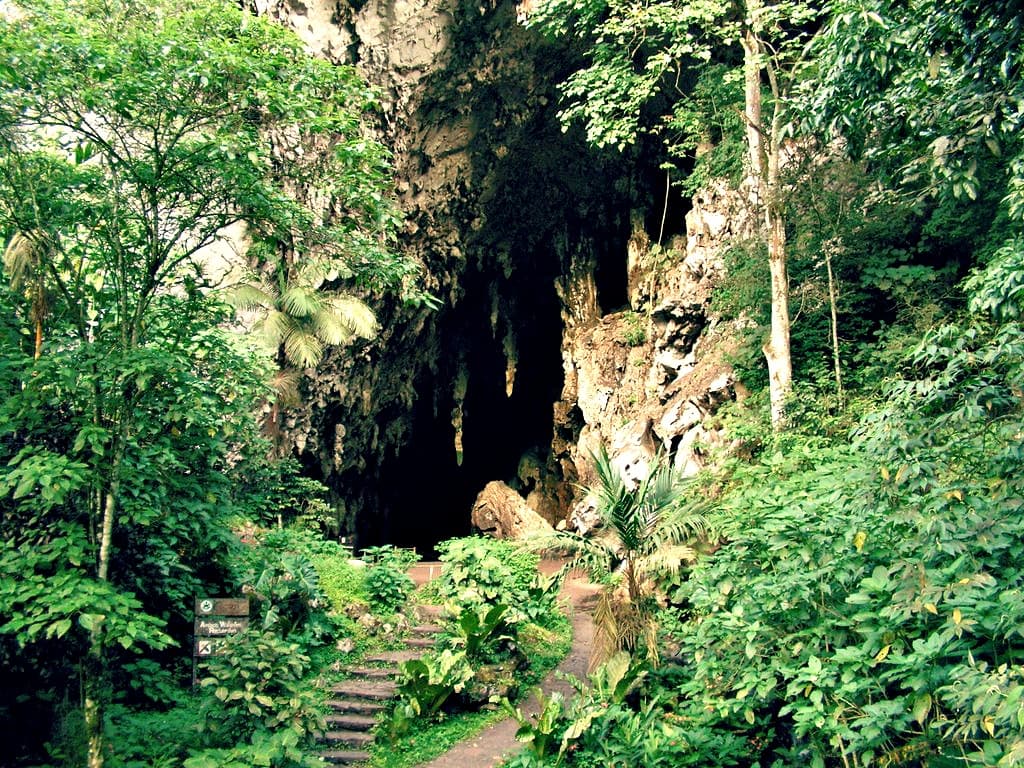
The Guácharo Cave (Monagas), is 12 km from the town of Caripe in a national park and has one of the largest known colony of guácharos. This limestone cave has not only birds but loads of hidden chambers to explore. You won’t be alone in this cave, there are roughly 15,000 large birds that will fly your head and will only just miss you with the help of echo-location. Watch your head!
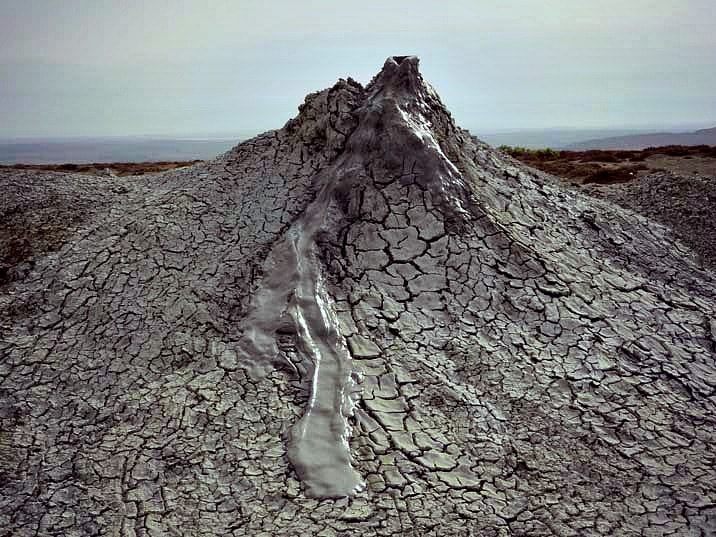
5. Mud Volcanoes in Venezuela:
are possibly the weirdest things I’ve stumbled across whilst backpacking Venezuela. They are found in the Orinoco delta and stand around 10 – 20 metres tall. They don’t spurt out lava, in fact, they push out hot mud and gas, which when cools turns to a kind of clay. You still wouldn’t want to dip a toe in.. some of the mud volcanoes can be as hot as 100 degrees!
Backpacker Accommodation in Venezuela
There are numerous options of places to stay while backpacking Venezuela. For backpackers on a budget, check out Couchsurfing. An awesome way to meet the locals and immerse yourself in Venezuelan culture. I personally had an incredible experience with couchsurfing in Venezuela.
You could also consider volunteering in exchange for accommodation. I strongly recommend Workaway – you pay just $59 for the year and then have access to literally thousands of projects all around the world where you can help out in exchange for food and board.
There are however some truly awesome accommodation options as listed below…
Hostels in Venezuela: You can get a bed in a dorm for as little as $11. Although hostels are much harder to find now that years of turmoil have knocked Venezuela off the mainstream backpacking trail. In general you’re more likely to find them for $20 and above.
Homestays: Staying at a Posada (a local inn usually run by a family) can cost anywhere from $20-$50 for your own room.
Basic Hotel: Low to mid-range hotels cost anywhere from $25 to $50.
Splurge Hotel: For $60 (or more) you can stay somewhere truly special.
Unfortunately, Venezuela is no longer full of cheap accommodation. You can contact places (if they have a phone number or email address available) to try and negotiate better rates. It works best if they have an online presence on a platform like Hostelworld or Airbnb. That way you can try to cut out the middleman.
The Best Places To Stay in Venezuela
| Location | Accommodation | Why Stay Here?! |
|---|---|---|
| Margarita Island | Departamento Tipo Estudio Dynasty | You can’t go wrong with sea views, a private beach and a swimming pool |
| Caracas | El Sofá Caracas | Friendly staff, ideal location and great vibes |
| Ciudad Guayana | Hotel Jafer | Attentive staff, airport transfers available for a fee, and they even gave us free coffee. Great place! |
| Ciudad Bolivar | Aloja-T en Apartamento Familiar | Awesome little guesthouse with a kitchen at your disposal. Great chill out area! |
Venezuela Backpacking Costs
Venezuela is pretty expensive for backpackers now. Unfortunately, it’s completely different to the time I managed to travel the entire country for a month for less than three hundred dollars!
You can backpack Venezuela, but it will hit you in the pockets now! Don’t believe me? Well check out the average costs for backpacking Venezuela below…
| Expense | Broke Backpacker | Frugal Traveller | Creature of Comfort |
|---|---|---|---|
| Accommodation | $20-$30 | $31-$60 | $80+ |
| Transport | $10-$15 | $16-$40 | $70+ |
| Food | $5-$10 | $11-$20 | $25+ |
| Nightlife Delights | $4-$8 | $9-$15 | $16+ |
| Activities | $0-$30 | $31-$100 | $101+ |
| Total per day: | $39-$93 | $98-$235 | $292+ |
Money in Venezuela
Venezuela was officially the cheapest country I have ever been to. When I first wrote this, it was possible to get around 230 Bs per USD on the black market. But I have bad news for you guys….
The country now uses the US dollar as its main currency, meaning it’s pretty expensive at the moment.
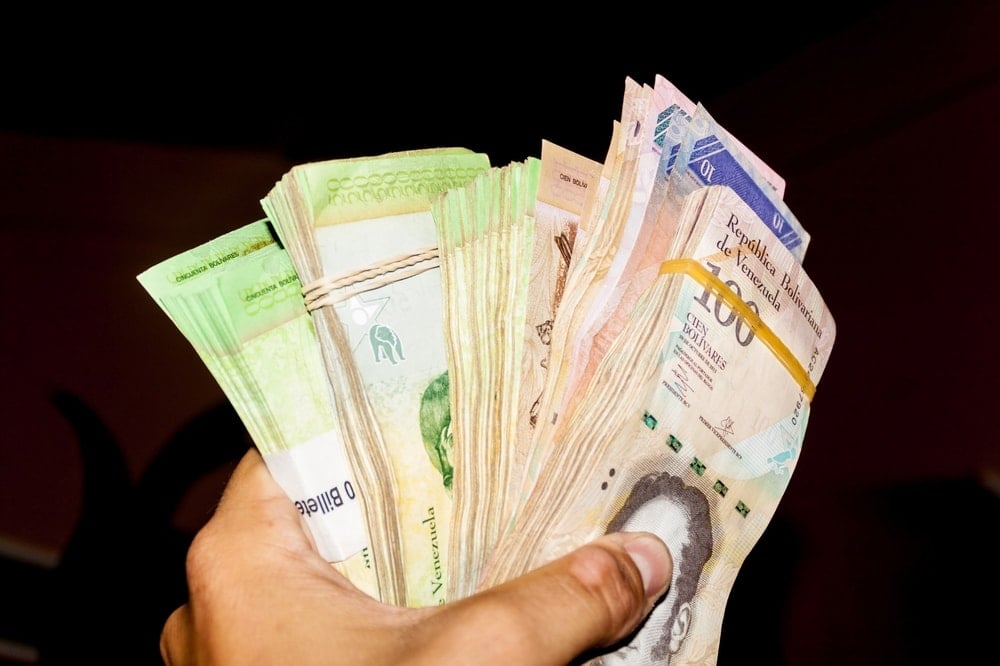
Bolivars still exist, and will mostly be given as small change. However, many places have a shortage of change, which means you should bring a lot of $1 and $5 notes with you for small purchases. But as I said, it’s gotten much pricier in Venezuela, so you’ll need to stock up on those dollars!
Foreign cards rarely work in Venezuela, which means you will need to bring a lot of cash with you. Not always a wise idea from a safety perspective…
The one digital transaction method that is semi-common in the country is Zelle. If you use this, you’ll have an alternative option to just cash.
Best Time To Travel To Venezuela
Situated just shy of the equator, Venezuela doesn’t get seasons as such. However, you still do need to be mindful of the best times to visit. For example, the country does have a rainy season from May to December which can see very heavy daily rainfall. The best time to visit Angel Falls is during the wet months August and September, during the dry season it can be very underwhelming.
Festivals in Venezuela
The public holidays in Venezuela are much like the holidays you’ll find in most western, Christian countries. With a few fun exceptions! If you are planning to backpack Venezuela, put these dates on your calendar…
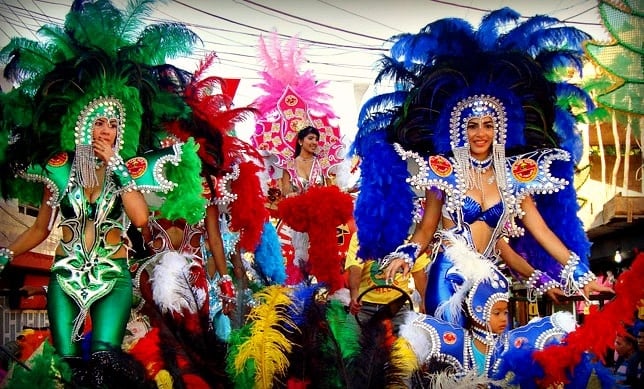
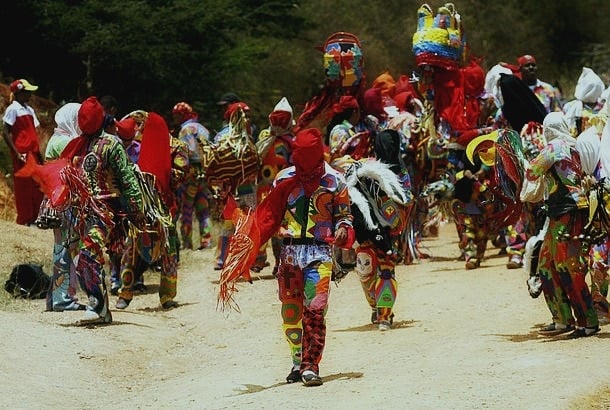
Carnival! Get ready to dance, drink and get lost in the wonderful chaos that is Carnival! Held on the Monday and Tuesday before Ash Wednesday, the carnival can typically last 2 – 4 days and from what I’ve heard, the best parties are in the town of El Callao. Dress in your best feathers, colours and get out on the street! Dance, drink and eat some of the best food for the next two days. Trust me amigos, you will LOVE this holiday!
Independence Day: Just one day after America’s, this holiday in Venezuela falls on the 5th July each year. Expect patriotic parades, colourful face paint (of course) and fireworks. Much like the US, this is a deeply important day for Venezuelans and they love it, as do I!
San Benito El Moro: Found around the beautiful Lake Maracaibo to celebrate the patron saint, San Benito. Dressing in the traditional dress of the area watch some awesome parades and pageants for a week! This typically runs from Christmas Eve to New Years Day…
Velorio de la Cruz de Mayo: Celebrated annually on the 3rd May each year, this is a holy time. A time where people will decorate their crucifixes with beautiful garlands. Singing, praying and delicious traditional food are the main ways of celebrating. It may sound creepy… but honestly, it’s anything but that.
What to Pack for Venezuela
I always pack these essentials when I head to this underrated gem of a country. For plenty more inspiration on what to pack, check out my full backpacking packing list.
Travel Security Belt
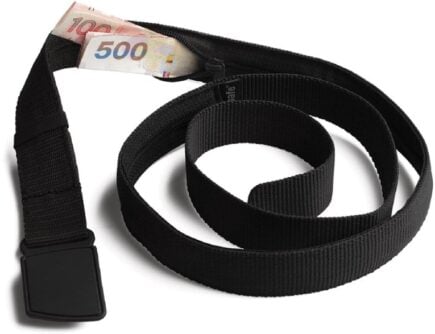
This is a regular looking belt with a concealed pocket on the inside – you can hide up to twenty notes inside and wear it through airport scanners without it setting them off.
Microfiber Towel
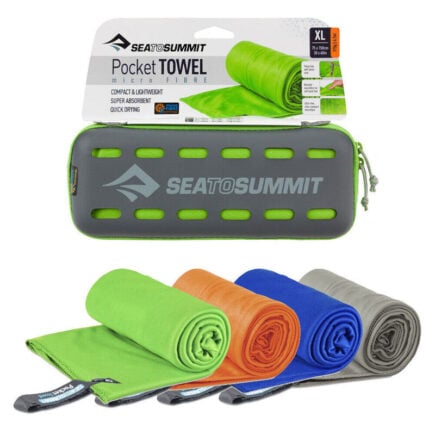
Hostel towels are scummy and take forever to dry. Microfibre towels dry quickly, are compact, lightweight, and can be used as a blanket or yoga mat if need be.
Petzl Actik Core Headlamp
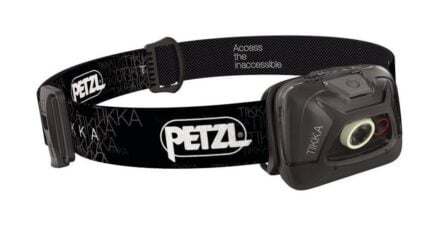
A decent head torch could save your life. If you want to explore caves, unlit temples, or simply find your way to the bathroom during a blackout, a headtorch is a must.

‘Monopoly Deal’
Forget about Poker! Monopoly Deal is the single best travel card game that we have ever played. Works with 2-5 players and guarantees happy days.
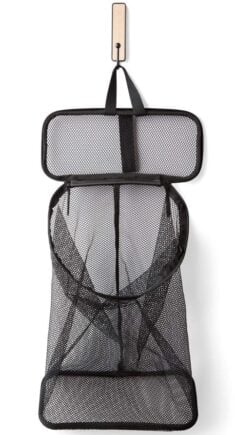
Hanging Laundry Bag
Trust us, this is an absolute game changer. Super compact, a hanging mesh laundry bag stops your dirty clothes from stinking, you don’t know how much you need one of these… so just get it, thank us later.
Staying Safe Whilst Backpacking Venezuela
Google Venezuela and you will get stories of high crime rates, corruption and poverty. Unfortunately, crime rates are high here and thieves do target tourists. Heed the warnings and don’t flash cash, walk around once it’s dark, or wind up down an alleyway. Venezuela is a truly amazing country, just watch yourself. It’s always important to hide your money when travelling, but even more so in Venezuela.
Hiding your money properly is a smart move, I originally hid USD in between laminated photos in my ‘photo album’ – I could cut this open to get to money when I had to. These days, I travel with one of these security belts to hide my cash.
If tackling Mount Roraima, or even Canaima, I strongly recommend travelling with a headlamp whilst in Venezuela (or anywhere really – every backpacker should have a good headtorch!) – check out my post for a breakdown of the best value headlamps to take backpacking.
And stay away from border areas. They’re where most drug gangs operate, and where Venezuela’s dodgiest officials work too. I strongly recommend flying to and from Caracas. This is by far the safest port of entry. Just line up a good driver in advance to avoid dodgy taxi drivers who could rip you off or worse…
You should also be aware that the local buses are dodgy. Good ol’ socialism has meant most of the infrastructure has fallen into a state of disrepair. Around 90% of metro trains are no longer functioning thanks to Chavez and Maduro with their crackpot ideas.
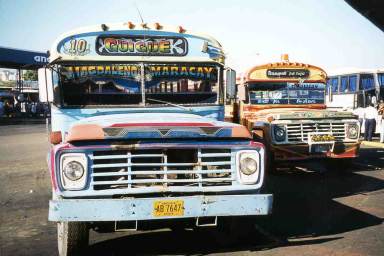
But the buses that do still run are falling apart. I went on one with metal lining peeling off into a convenient dagger shape, which probably would’ve been nasty had I not switched to a modern bus. Modern (expensive – well, like $30) buses are the only safe ones. Also, the cheaper local ones often attract ladrones who may try and rob you.
You should also be aware that Venezuela is NOT a country with free speech. Criticise Chavez, Maduro or the socialist government and you could end up in jail.
Prior to Maduro’s toppling, some tourists were detained and jailed under false claims of being “spies” – being American or having a police/military background put you at greater risk. This happened often following Maduro’s “victory” in the disputed 2024 election.
Post-Maduro, this has thankfully died down, but just remember the guys in charge are still Maduro’s homies and Venezuela shouldn’t yet be treated as a fully free destination. Whilst things have certainly cooled down since then, you should know that arbitrary detention is still a possibility,
Sex, Drugs and Rock n Roll in Venezuela
Despite being one of the most difficult countries to travel to, Venezuela has a liberal policy toward weed. Legally you can possess up to twenty grams, but be warned, anything more can get you thrown in prison for a long time! Somewhere you definitely don’t want to be. Saying this, don’t flaunt your drug of choice, unwanted attention is best avoided whilst backpacking Venezuela in general. Cocaine is easily available.
Venezuelans, especially in Merida, are real party animals and are also some of the most beautiful people on the planet… With beers costing just a dollar it’s possible to have some truly crazy nights out in Merida, just watch yourself.
Travel Insurance for Venezuela
You wanna have your butt covered just in case something goes wrong, as healthcare, like pretty much everything in the socialist state, is absolute ass. SafetyWing are one of the few insurance providers that do cover Venezuela, and we find them to do a great job.
ALWAYS sort out your backpacker insurance before your trip. There’s plenty to choose from in that department, but a good place to start is Safety Wing.
They offer month-to-month payments, no lock-in contracts, and require absolutely no itineraries: that’s the exact kind of insurance long-term travellers and digital nomads need.

SafetyWing is cheap, easy, and admin-free: just sign up lickety-split so you can get back to it!
Click the button below to learn more about SafetyWing’s setup or read our insider review for the full tasty scoop.
How To Get Into Venezuela
These days, there are not many international flights headed to Caracas and they can be pricey. If you are coming from Europe, Madrid seems to be operating the most flights. From the US, Miami is a popular destination on account of the large number of Venezuelan ex-pats living there, with flights resuming in April 2026. Bogota in neighbouring Colombia is another common route in.
Venezuela shares land borders with Colombia, Brazil. The most commonly used border is the Colombian one; Cucuta – San Antonio de Tachira. In recent years the border crossing has become somewhat more dangerous owing to large numbers of economic refugees fleeing Venezuela and because of gangs operating. Be wary entering overland however, as corrupt officials and drug gangs both pose threats.
Entry Requirements for Backpacking Venezuela
For those backpacking Venezuela, prepared to be amazed! Many countries can enter Venezuela without a visa or pick one up on arrival! If like me, you are from the UK you don’t even need a visa to get in.
Americans and Canadians require a visa, however, it’s not as hard as it used to be thanks to the Venezuela e-visa system.
If you’re flying in and out of Venezuela, UK, EU, Australia and New Zealand citizens can enter visa-free for 90 days on arrival.
Overstaying your visa is a situation you don’t want to get into. The Venezuelan Government take it very seriously and you may be arrested and shaken down. Have you read the cocaine diaries? I don’t fancy being in a Venezuelan jail… To extend your stay in Venezuela just head down to any SAIME office in the country to extend your visa for 90 days.
How To Get Around Venezuela
When it comes to getting around Venezuela, your best bet is to fly. Especially if you have a real schedule and want to avoid the often headache-inducing bus system.
Due to the fact that no replacement parts are produced inside the country (which must be bought in foreign currency), buses can be a pain compared to catching a flight, although they aren’t as bad as they once were now the US dollar has been introduced and prices are less volatile.
Traveling in Venezuela by Plane
Cheap internal flights start at around $70. The cheapest airline to fly domestically is the government airline Conviasa.
Checking online is always smart, but if you’re buying flights online be prepared to pay the official exchange rate which will make it slightly expensive. Find a travel agent or have a friend on the ground who is willing to book flights for you and you’ll be able to get flights for the best prices. Book all your flights at once; flights in Venezuela tend to sell out quickly.
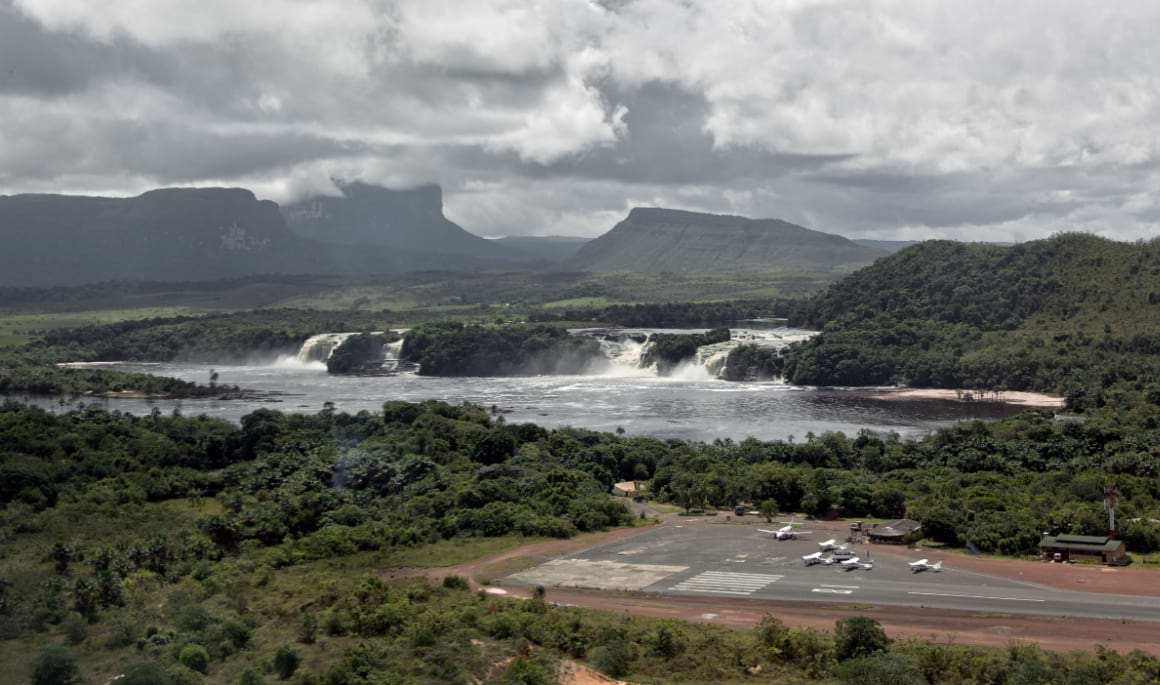
Traveling in Venezuela by Bus
Long-distance bus journeys start at $10 which is super backpacker friendly! The only downside, depending on where you’re travelling to, they can be an absolute bitch to book! Turn up to the terminal early and get the company’s WhatsApp details. They will inform you of prices, schedules and most importantly, whether the bus will actually run or not.
It’s often necessary to be at the terminal by 7am to buy a ticket for that night! Buses are relatively regular in the bigger built up areas like Caracas. But be aware that bus shortages are common in the smaller cities and towns off the main travel routes… I once got stuck for three days trying to catch a bus towards Roraima from Ciudad Guyana.
If I’m honest though, I’d splash out nearer $30 for the “luxury” buses, and hey, some even have functioning Wi-Fi! The reason for this is safety. They’re not falling apart, aren’t constantly stopped for police checks, and don’t attract the shady characters you’ll find on the cheap buses.
Traveling in Venezuela by Taxi
Taxis are another option. Just like in Asia, the taxi’s here often don’t have metres so get your haggling game on and agree on a price before getting in. Or even better, get an idea of the correct fare from a local.
You will see official taxis in Venezuela but also beat up cars with neon stickers. These are non legal taxis or piratas and are normally fine to ride during the day, I would avoid them in the evening. If you need a taxi in the evening, get your accommodation to call a trusted car ora línea for you.
There’s no Uber in Venezulea. You should download the local equivalents Yummy and Ridery before you go.
An airport transfer will set you back around the $35 mark. Try and arrange transport with a trusted local if possible, as you don’t want to gamble with the taxi mafia.
 Visiting Venezuela soon? Don’t risk having to sit on the floor or change your itinerary because you missed the last ticket at the station! Find the best transport, best time and the best fare with 12Go. And why not use what you’ve saved to treat yourself to a cerveza helada on arrival? It only takes 2 minutes! Book your transport on 12Go now and guarantee your seat easily.
What’s New for a Venezuela Backpacking Trip?
Let’s start with some absolutely fantastic news: Maduro is GONE! In January 2026, the socialist tyrant was snatched from his bedroom by the US military, who took him to a New York prison cell where he’ll be spending a loooong time reflecting on the country he destroyed and the people he oppressed.
What does this mean for a tourist? Well, a handful of our fellow backpackers were unfairly detained, arrested and tortured under Maduro’s rule. That seems to have cooled down for now as his successor tries to stay on Trump’s good side, before she too gets an unwanted 2am wakeup by Uncle Sam. Although precautions are still needed. This is still Venezuela, and arbitrary detentions cannot be ruled out.
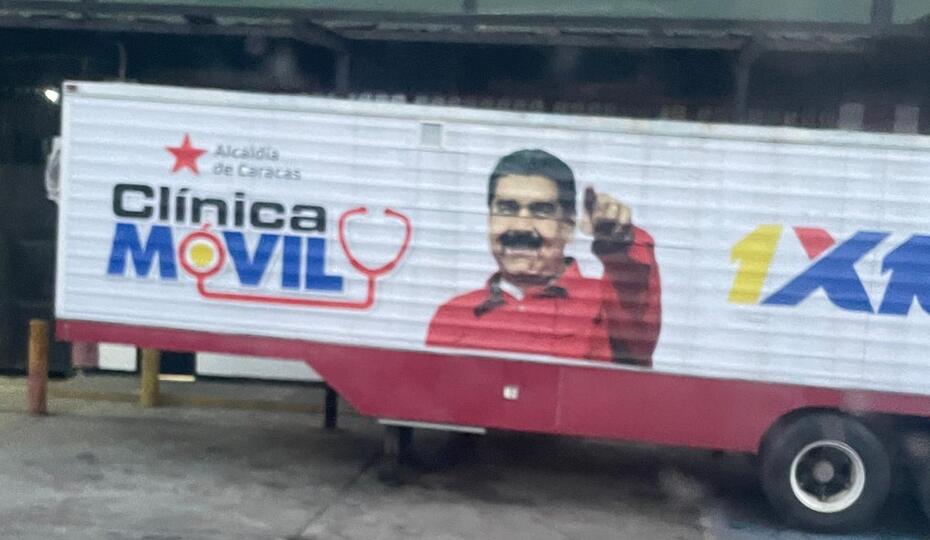
Photo: @alexjbrownn24
On the downside, Venezuela’s currency became worthless under Maduro, and was unofficially replaced by the US dollar. This made the country go from the world’s cheapest, to a pretty expensive one to travel in. Bucket list activities especially (Angel Falls, Roraima), will probably set you back a minimum of $1,000.
Now Venezuela is slowly entering the digital age. Foreign card payments are still unlikely to work, but more likely than they were even a year ago, especially in Caracas. You can also find eSIMs that work here, so it is slowly catching up with the rest of the world, but don’t expect it to blow up as a digital nomad spot soon.
Working in Venezuela
Considering that Venezuela is currently experiencing severe economic doldrums, it isn’t exactly an obvious place for ex-pats or travellers looking for work. However, if you are able to make money online and get paid in USD, you will be able to see a lot in this brilliant country.
I still wouldn’t call it a great digital nomad spot though, because the internet kinda sucks here.
Teaching English in Venezuela
If you do want to work in Venezuela, then teaching English is a good option. Pretty much every native speaker I met in Venezuela got offered work (without even looking for it!) with no questions asked to experience and qualifications! I cannot advise what pay and conditions will be like though, but bear in mind that wages in Venezuela are NOT keeping up with inflation.
Volunteer in Venezuela
Volunteering overseas is a great way to experience a culture whilst doing some good in the world. Historically, there were different volunteer projects in Venezuela ranging from teaching, to animal care, to agriculture but this information is quite a bit out of date.
Considering the absolute hole the country is, there are plenty of worthy causes to help with but just bear in mind that the Government appears to be becoming evermore paranoid and authoritarian – Western do-gooders may be viewed with suspicion.
Our go-to platform for finding volunteering gigs is Worldpackers who connect travellers with host projects. Have a look at the Worldpackers site and see if they have any exciting opportunities here before signing up. Make sure you join using the code BROKEBACKPACKER for $10 off!
Alternatively, Workaway is another excellent common platform used by travellers searching for volunteering opportunities. You can read our review of Workaway for more info on using this terrific platform.
Volunteer programs run through reputable work exchange programs like Worldpackers and platforms like Workaway are usually very well-managed and reputable. However, whenever you are volunteering do stay vigilant, especially when working with animals or children.
What To Eat in Venezuela
Venezuela is currently in a food crisis of sorts with production and imports at an all time low (in part due to the falling price of oil). This makes it difficult for average working families to obtain the basic staples they need to cook (rice, flour, milk, sugar etc.). It is common to see long lineups outside supermarkets waiting for these staples to arrive. But don’t let this discourage you!
The street food is dirt cheap, tasty and in some areas it’s plentiful! Expect fresh fruit, vegetables and meat. Thrown together in some delicious concoction, ensuring you come back for seconds (or thirds)! Wanting a break from street food? Well amigos, restaurants have incredible food at unbeatable prices, good for all of us backpacking Venezuela!
Here are some of my favourites I tried whilst backpacking Venezuela….
Arepa with Carne Mechada: A true Venezuelan classic! Arepa is a kind of bread which is stuffed with shredded beef, vegetables and a sweet plantain for the top. YUM!
Empanadas: A popular dish found in Spain and Latin America and comes in sweet and savoury form! Basically, dough wrapped around a delicious stuffing. Super cheap street snack!
Pabellon Criollo: Considered by many as the Venezuelan national dish it’s a must try! Rice, shredded beef in stew and stewed black beans, spiced to perfection and found in pretty much every street food stand. Don’t leave the country without trying this!
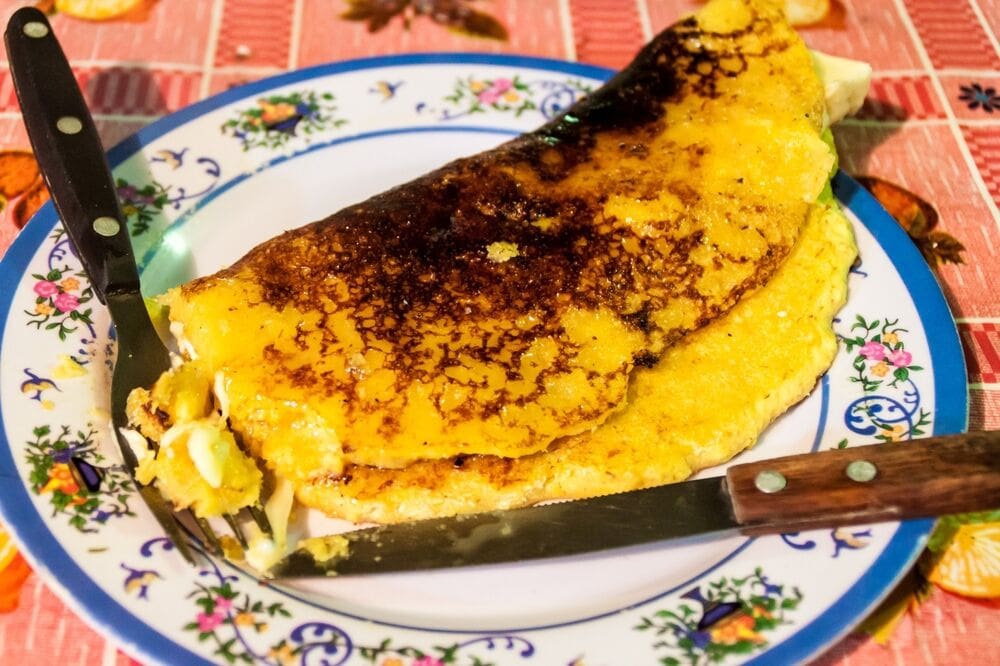
Cachapas: THE best hangover cure. Basically sweet corn pancakes, folded over chunks of white cheese and ham. Simple, but delicious.
Venezuelan Culture
Venezuela has a heavy influenced Caribbean feel, especially when you look at the heritage, art and even in architecture, landscape and monuments! There is always a party to be found, once off the beaten track island time is in full swing and despite the horror stories; people are actually incredibly welcoming! As well as Caribbean there is a strong influence of Indigenous, Spanish and African. This is clear when you look at some of the oldest art pieces from the country, hieroglyphs.
Venezuelans have a strong sense of community and place a high emphasis on respect. If you are welcomed in by one person or have a friend on the ground, you’re more likely to be fully accepted into the community. Which is awesome, you’ll be plied with food and drink; just remember to use your Spanish!
Useful Travel Phrases For Backpacking Venezuela
Hello – Hola
How are you? – Cómo estás?
Very good – Muy bueno
Beautiful – Hermosa
Please – Por favor
Cheers – Salud
Shit – Mierda
Do you have a lighter? – Tienes un encendedor?
Can you give me a discount? – Me puede dar un descuento?
Two beers please – Dos cervezas por favor
Down that beer! – Hasta que la cerveza!
No plastic bag – Sin bolsa de plastico
No straw please – No paja por favor
No plastic cutlery please – No hay cubiertos de plástico por favor
Can you give me a ride – Me puedes dar una vuelta?
What is your name? – Cómo te llamas?
How much does this cost? – Cuánto cuesta?
Some Books To Read About Venezuela
The Cocaine Diaries: You never think it’s going to be you… until you’re caught. An incredible true story by Paul Keany documenting the lead up and his experience of being caught trying to smuggle a lot of Cocaine back to Ireland. Definitely, will make you think twice about breaking the rules in Venezuela….
In Trouble Again: A Journey Between the Orinoco and the Amazon: Follow Redmond O’Hanlon’s journey around South America. While not directly focused on Venezuela, follow his struggles and accomplishments as he journey’s through some of the most rural areas of South America. A fantastic read of true grit adventure, you will love this.
Hugo Chavez and the Bolivarian Revolution: A first hand account of contemporary Venezuela as it is now. Indulge yourself in the culture, the future plans for Venezuela and the political situation as it currently stands. This is an interesting read for anyone wanting to know a little more on why Venezuela went down the shitter.
Crude Nation: How Oil Riches Ruined Venezuela: Venezuela is rich in resources especially Oil, but the people of Venezuela are still living in relative poverty. Why? Well, this book explains it. If you are interested in the life of the locals and levels of corruption in Venezuela this is an extremely interesting read!
Some Unique Experiences in Venezuela
Trekking Mount Roraima Venezuela
Mount Roraima’s highest point sits at 2,810 m (9,220 ft), an epic hike through steaming jungle or any avid climber. Not only just to conquer and stand on the summit, but it has one of the oldest rock formations in the world. Once at the top, you will enjoy incredible views over three countries; Guyana, Brazil and of course, Venezuela. For keen hikers, explorers and fit people this is too tempting a mountain not to climb. But be warned, the climb is hard, even for keen hikers like me.
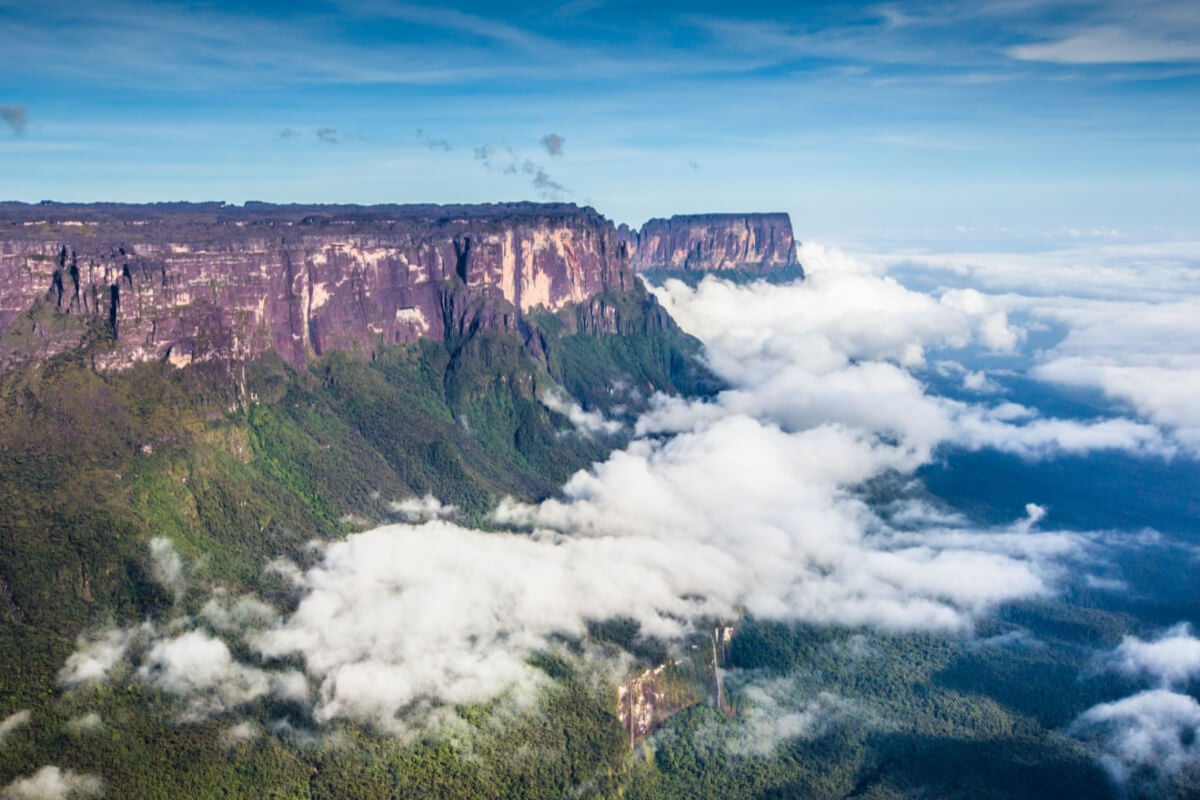
Here’s plenty of tips and tricks on how to trek Mount Roraima…
Duration: The Trek takes around five to eight days depending on how much of the mountain you want to see once you’re on top. Be warned that this trek is relatively challenging; especially if it rains. I wouldn’t recommend it for people who aren’t physically fit, it can be done, but you want to enjoy it right?
When to go? For the best views tackle this trek in dry season from December to March. The only thing you will miss is a number of waterfalls. If you go out with this, you can expect a variation of weather including rain. Just be warned, rain makes the trek a little more difficult and some of the river crossings a little more sketchy.
The Trek: You’ll start in the Pemón village of Paraitepui reachable from the small town of Santa Elena, which is actually in Brazil, right on the border. From here, you can easily hop on buses and shuttles taking you to the small town of Paraitepui to begin the hike. The buses can be a little unreliable at times; be prepared to spend a night in Santa Elena if no buses are running for whatever reason…
If you go with an agency, you will most likely get to Paraitepui by Jeep, no hassle which is fantastic!
The trail from Paraitepui to Mount Roraima was well marked. If a guide wasn’t required, you could easily make your way to the top on your own. The problem is that the top of Roraima is a real maze. And I suck at mazes so I’m glad I had Alvan to guide me. Especially as it can cloud over pretty fast up there, even if it started out the clearest of days.
The hardest part of the trek was definitely the hike from 1,900 meters of our base camp to the top, at 2,800 meters. The ascent is basically a steep natural ramp formed on the mountain side, climbing from right to left, painfully. The path itself is relatively well trodden and ranges from huge stoney passages, muddy and slippery bogs too easy to navigate trail. Wear good shoes, your feet will thank you later!
Finally, we reached the Roraima plateau and set up camp for the night. Once we were settled, head out and enjoy the sunset at the nearby Kukenán viewpoint. Seriously, this is probably the most incredible place I’ve ever got to watch a sunset!
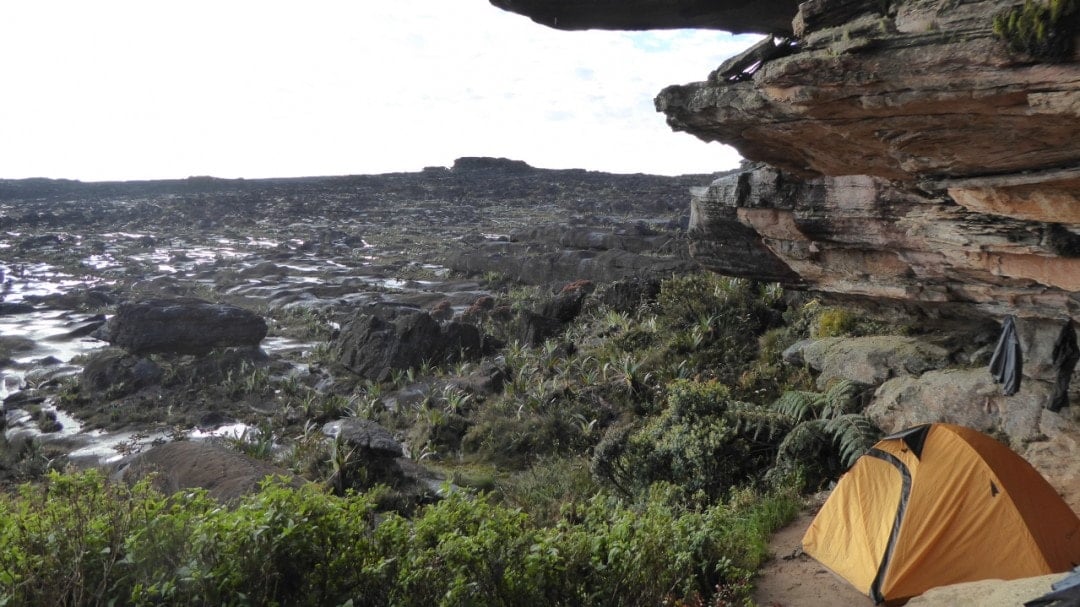
The summit of Roraima is massive, you could wander around the top for days. There’s so many places on the top to explore; head to the Maverick, the highest point of Roraima. Why? Well way up here you will have views over three different countries.
Walk past the stoned milestone and you are literally standing on a triple border line, seriously, take that cheesy picture. How many times in your life will you stand in three countries at once? From here, definitely, make a stop and check out the window, a viewpoint on the face of Roraima opposite the Kukenán tepuy.
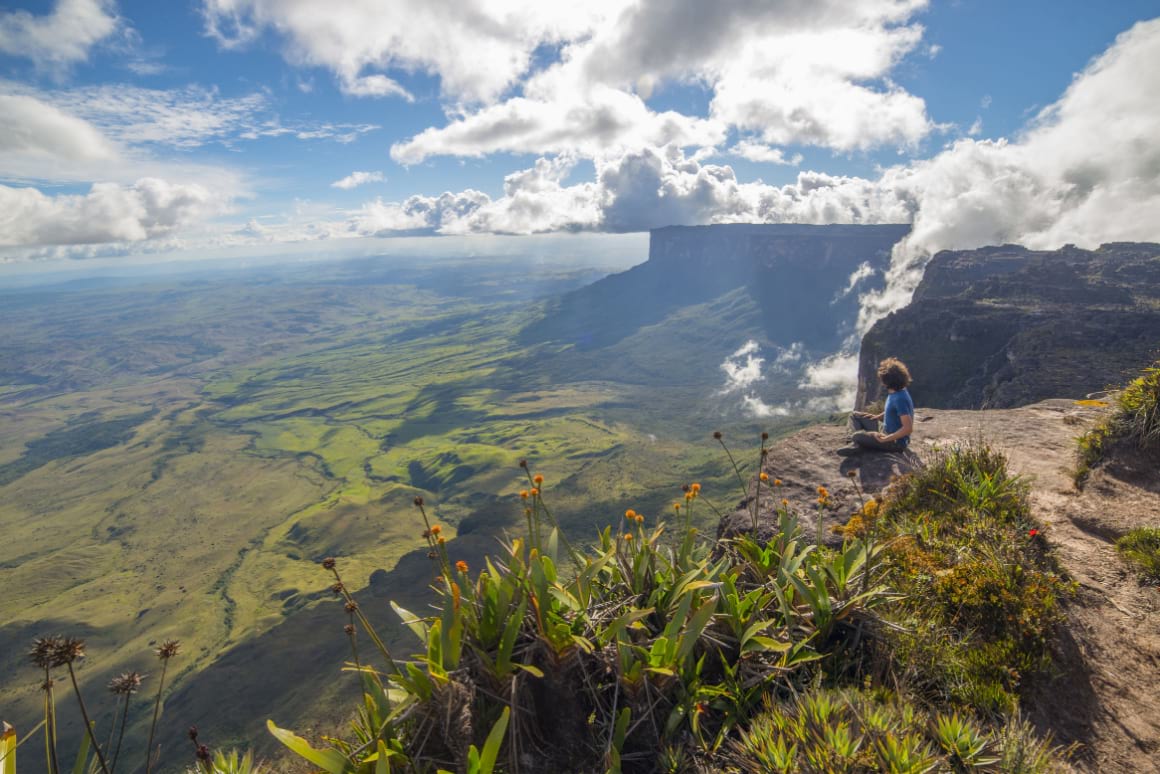
Seriously, this was possibly one of the most incredible hikes I’ve ever done. Sitting on the edge of a cliff on the summit, legs dangling, taking in the breathtaking views was just. There are almost no words, it was beautiful… once you get over vertigo.
The Cost: The cost will vary depending on whether you go with an agency or hire an independent guide. For Solo travellers, agencies are the best option. They will put you together with a group and get you fully prepared for the trek. Most agencies charge around $850+ for six days on Roraima Venezuela.
Watch out for scams when booking trips; there are a lot of unscrupulous agents around using hard-sell techniques to sell tours; avoid them. Check out Kamadac Tours; a joint German-Venezuelan company. Ask for Niklas and tell him that The Broke Backpacker sent you, he will be sure to give you a warm welcome.
If possible, I strongly recommend getting a group together and then contacting a guide yourself. The guide is able to arrange everything that an agency arranges and will do so at a cheaper price! Perfect for us broke backpackers! But crucially, choose your guide well they are the person you will be relying on once you’re actually on the mountain.
I highly recommend that you contact Alvan Reuban at aareubeno@gmail.com or 02894160146. Alvan has been leading tours up Roraima for over twenty five years and has summited the mountain over 500 times, he speaks fluent English! Seriously, this guy is a legend!
What to Bring: Don’t be that person hiking a mountain in cotton t-shirts, jeans and trainers. You will seriously suffer. Come with some good strong (and broken in) hiking boots and breathable clothing. Bring mosquito repellent, Sunscreen and a dry-bag for your camera and of course food. You will definitely eat more than usual and for any experienced hiker you know to always bring enough food to last you longer than your planned hike.
Supermarkets and shops are found in Santa Elena, but keep in mind that there is virtually nothing in San Francisco and Paraitepui. And of course remember roll mats, sleeping bags, tent and any cooking gear. Try to weigh your pack before you head off, each individual has a 15kilo limit, why, I’m not entirely sure… Thankfully your porters will take on any excess weight you have stuffed in there.
Top Tip! For the love of god do not take crystals off the mountain; you will be searched when you get down…
Final Advice Before Visiting Venezuela
Stay safe, and have a blast. Venezuela is the safest it has been this century right now. Although in all fairness, that means “it can be done safely but extra precautions are still required” rather than “it’s safe like Singapore” due to the absolute mess that Chavez and Maduro created in over 2.5 decades of socialist rule.
Don’t treat this as a country where nothing will go wrong. Do be very strict on staying in reputable places, hiding money, avoiding photos of sensitive areas (the airport/anything police, government or military related), and know that Venezuela carries higher risks that other South American countries. I felt safer than in Brazil or Colombia, but I’m one person and everyone’s experiences are unique.
Also be aware that English is not widely spoken, and most of the public transport is in a state of disrepair. This is a rugged destination to travel in and not a beginner-friendly one.
Now Venezuela IS possible to travel in as a broke backpacker. It’s not cheap at all, but you can get by on a budget if you’re willing to sacrifice a bit of comfort in accommodation, take the metro in Caracas (fairly safe), use local buses (not safe), eat street food, and be picky about activities.
I went out after dark in Caracas and saw people dancing and playing in the streets. Obviously don’t take a solo night voyage to the slums of Petare, but don’t come here thinking this is the place that scary Reddit threads from 10 years ago will tell you it is.
Anyway, this turned out to be one of my favourite ever travel destinations, and I’ll definitely be back soon!