Whilst I never felt unsafe in Costa Rica, I did have to sign a waiver before doing a night walk in Monteverde to say the tour operator wasn’t responsible if I got injured or died. Yikes. The reason for this is that deadly snakes and other creatures do live in the jungles here.
With common sense and a good guide, chances are nothing goes wrong, but this is the main danger in Costa Rica: the wildlife.
Yeah, you might have come across some scary stories about violent crime and high murder rates, and it can be hard to hear such tales. It’s like there’s a whole other side to Costa Rica that’s not so picture-perfect, and it can be a bit of a hard truth, right?
So, you’re probably wondering,
” Is Costa Rica SAFE to Visit? “
Fear not, my broke backpacker friend, for I’ve got your back! It’s a safe place to visit if you go there with a bit of common sense. Don’t wander around San Jose at night, definitely don’t touch drugs, watch out for rip currents, and be cautious around the wildlife.
I’ve put together a comprehensive guide packed with invaluable tips and tricks to ensure your trip is as safe as can be.
Let’s dive in!
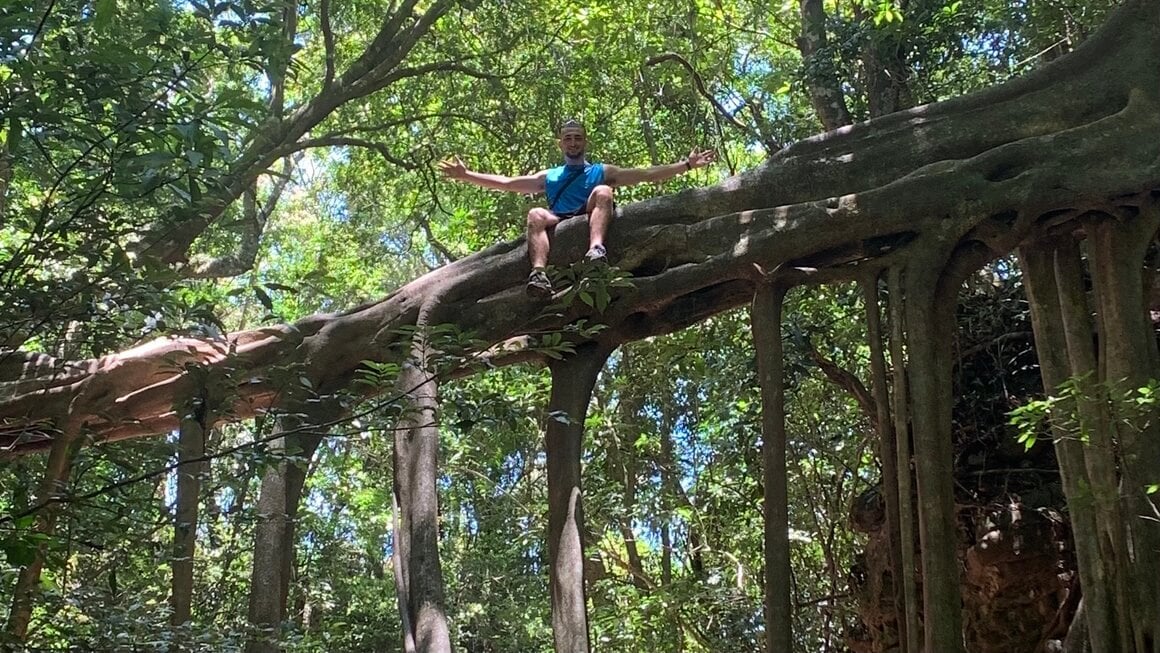
Photo: @joemiddlehurst
The Broke Backpacker is supported by you. Clicking through our links may earn us a small affiliate commission, and that's what allows us to keep producing free content 🙂 Learn more.
- Is Costa Rica Safe Right Now?
- How Has The Costa Rica Safety Situation Changed?
- Costa Rica Travel Insurance
- Safest Places to Visit in Costa Rica
- My Top Safety Tips for Travelling to Costa Rica
- Is Costa Rica Safe to Travel Alone?
- Is Costa Rica Safe for Solo Female Travellers?
- Is Costa Rica Safe to Travel for Families?
- Where to Start Your Travels in Costa Rica
- Getting Around Costa Rica Safely
- Crime in Costa Rica
- What to Pack For Your Costa Rica Trip
- So, Is Costa Rica Safe Right Now?
Is Costa Rica Safe Right Now?
While the country is home to certain issues, yes, travelling to Costa Rica is generally safe. It has seen an uptick in murders in the last few years since 2023, with the homicide rate per 100,000 people rising from 12.1 or less up to 2022, to 16.8 or more every year since.
Whilst these statistics look alarming, most are related to drug gangs fighting for control of the narcotics trade between South America and the USA. So if you’re American and you like to sniff white powder, you’re directly responsible for this.
The majority of travellers have no reported issues during their visits – myself included. These issues very rarely affect tourists, and in reality, it’s the wildlife and the waves you should worry about.
Oh, and theft, that definitely happens a moderate amount. Crimewise, that’s your main concern. Theft isn’t uncommon, muggings happen occasionally, but murder is fortunately very rare for tourists (but not zero).
You may be surprised to know that Costa Rica is actually one of the most stable Latin American countries. Murder rates are lower than most of its neighbours, despite the country having no army.

With tourism contributing majorly to the country’s GDP, tourist dollars go some way to eliminate poverty (albeit slowly). The government is focused on making the country accessible and comfortable for tourists.
On the whole, visiting Costa Rica can be trouble-free, and most tourists have a great (if not awesome) time. Costa Rica is an exceptional destination and one of the safest countries in Central America.
Like a variety of tropical island nations, Costa Rica is subject to its fair share of natural disasters, including hurricanes. Knowing what to do in these situations could be essential for making sure your visit is safe. There are also several active volcanoes.
Check out our detailed where to stay guide for Costa Rica so you can start your trip right!
How Has The Costa Rica Safety Situation Changed?
The increase in murder rates is the big change in recent years. Homicides have surged as Costa Rica became a key cocaine hub along Central America’s murky drug trafficking routes.
It has seen the recent emergence of its first transnational crime gang, the South Caribbean Cartel. They’ve been smuggling drugs through remote beach locations, such as Golfito, Osa and Puerto Jimenez, peddling them through Puntarenas before shifting them across the country.

They’re a key factor in the rise of homicides, which stood at 11-12.1 murders per 100,000 people from 2015-2022, to 16.8-17.7 murders per 100,000 people ever since.
Tourists are unlikely to be caught up in this, but remain aware, and I wouldn’t advise going too far off the beaten path without thorough research.
Costa Rica Travel Insurance
True tale – While embarking on my epic solo adventure in Costa Rica, fate had a surprise in store for me. Picture this: me, cruising on my trusty moped, when suddenly disaster struck, and I found myself tangled up in a crash. I was whisked away to a foreign hospital. But here’s the twist: thanks to the genius decision of securing travel insurance, I was spared the agonising headache of medical bills in a land far from home. Talk about a lifesaver!
Sort out your insurance before you go. There are several good options, but our overall pick is SafetyWing. Most of the Broke Backpacker team has used it at one point or another, and we’ve filed claims for rabies jabs in Bali, a hospital stay in Mexico, and a clinic visit for a stomach bug that wouldn’t quit. All paid out.
It’s month-to-month, no lock-in, no itinerary required, and you can buy it after you’ve already left. A little over $2 a day if you’re under 40.
New SafetyWing customers: use code BROKEBACKPACKER for 8 free weeks of electronics theft coverage. You have to scroll down and click the pink camera on their landing page to enter it, and you have to do it before creating your account.
Safest Places to Visit in Costa Rica
Costa Rica is a massive tourist destination and overall pretty safe. However, there are some areas that are sketchier than others. We’ve listed Costa Rica’s best places to stay below.
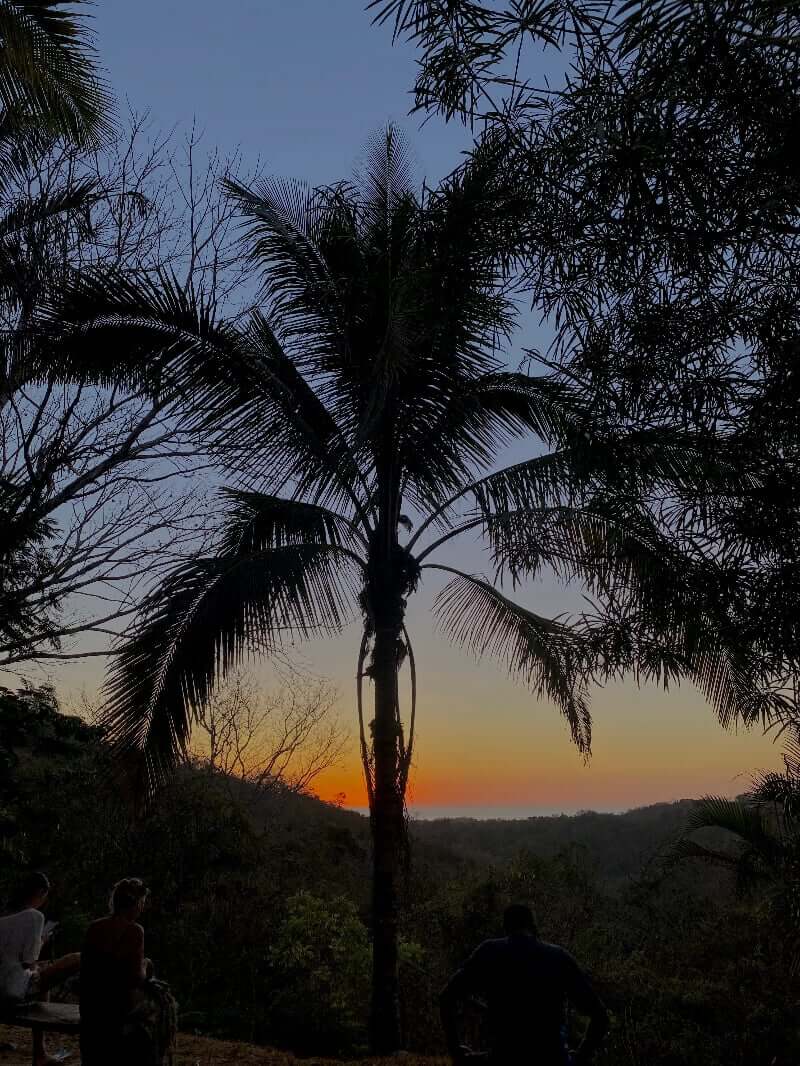
Photo: Amanda Draper
- Tortuguero: My favourite part of the country is also very safe! It’s more remote than other spots. You need to drive towards the jungle, then take a boat to reach this small settlement, where you can easily book tours from.
- Drake Bay: Drake Bay, also called Bahía Drake, sits on the coast in the southwest of Costa Rica. This city is a top choice for families! It is a remote village, not a crazy tourist hub, and is, therefore, one of the safest areas in Costa Rica. That means that you and your family won’t be fighting for a place to put your beach towel down! The main beach of Drake Bay is called Playa Colorada, which has a handful of restaurants and warm, peaceful water!
- Puerto Viejo: Puerto Viejo de Talamanca sits in the southeast of Costa Rica. It’s right on the gorgeous Caribbean coast and is renowned for the black sand beach and epic surf break! With awesome mangroves and close proximity to some of Costa Rica’s most epic national parks, this is a hard place to beat.
Places to Take Extra Care in Costa Rica
As we’ve mentioned before, not everywhere in Costa Rica is a paradise. While it’s always smart to keep your eyes open and stay aware of your surroundings, the following areas are better explored with caution:
- Tamarindo: Tamarindo is an incredible Pacific coast beach town that is packed with everything you wanted from Costa Rica! It has beautiful beaches, a wild nightlife, and is actually a huge hub for surfers. Troubles here generally arise from dabbling in drugs, or going to the beach alone at night. Don’t do these.
- Jaco: This popular surf town is a little dodgier than most tourist spots. By day, petty theft is the biggest threat, followed by scams. After sunset it gets a little more murky. This is where you’ll find a seedy party culture with drugs doing the rounds. Always say no to any of this stuff. Thieves also target beaches at night, so stay away until the sun rises again.
- Areas in San José: While San José is Costa Rica’s most popular tourist city, there are areas that you should avoid. Stay away from Los Guido, Desamparados, Pavas, La Carpio, Leon XIII, Hatillos, the El Carmen neighbourhood in Cartago, and the “El Infiernillo,” (little hell) sector of Alajuela. Pickpocketing, phone snatching and car break-ins are common. The Red Zone (Zona Roja) should be dodged at all costs due to prostitution, muggings and even violent attacks with knives or guns.
Completely avoid these places, which have almost nothing interesting for tourists, and lots of crime:
- Limon City: This port city is generally kept away from tourists and expats. With one of the highest rates of organised crime and drug trafficking in the country, it’s better to give this city a miss. Especially La Cieneguita.
- Santa Rosa de Pocosol, San Carlos: Boasting a high concentration of Nicaraguan refugees, even humanitarian workers have been threatened at knife point. Try and avoid this area.
Quick tip: Plan everything in advance!
Best Costa Rica Tours: Check out the coolest tours in Costa Rica Best Places to Stay in Costa Rica: Check out top rated hotels and hostels in Costa Rica Best Transport in Costa Rica: Book the best transport in Costa RicaKeeping your Money Safe in Costa Rica
As a Latin American country, getting robbed isn’t unheard of. I suggest you get a money belt to hide the majority of your cash and a spare card. Carry a small amount of cash on you, and don’t get it out until you really need to.
I often wear hiking trousers with 4 zip pockets on the front. I’ll distribute small wads of cash between them, so I’m only taking tiny amounts out in public.
I also never use ATMs on the streets. If I need to take money out, I’ll find a bank to do it. Street ATMs can have card cloning devices installed, or shady people watching. If you can’t find a bank, shopping malls are a good alternative, but realistically you will struggle to find one outside of San Jose.

Whilst Costa Rica is generally safe, there is always more you can do to make sure nothing goes wrong. Here are a few top tips for ensuring nothing goes wrong in this wildlife-rich nation.
Petty Crime and Scams
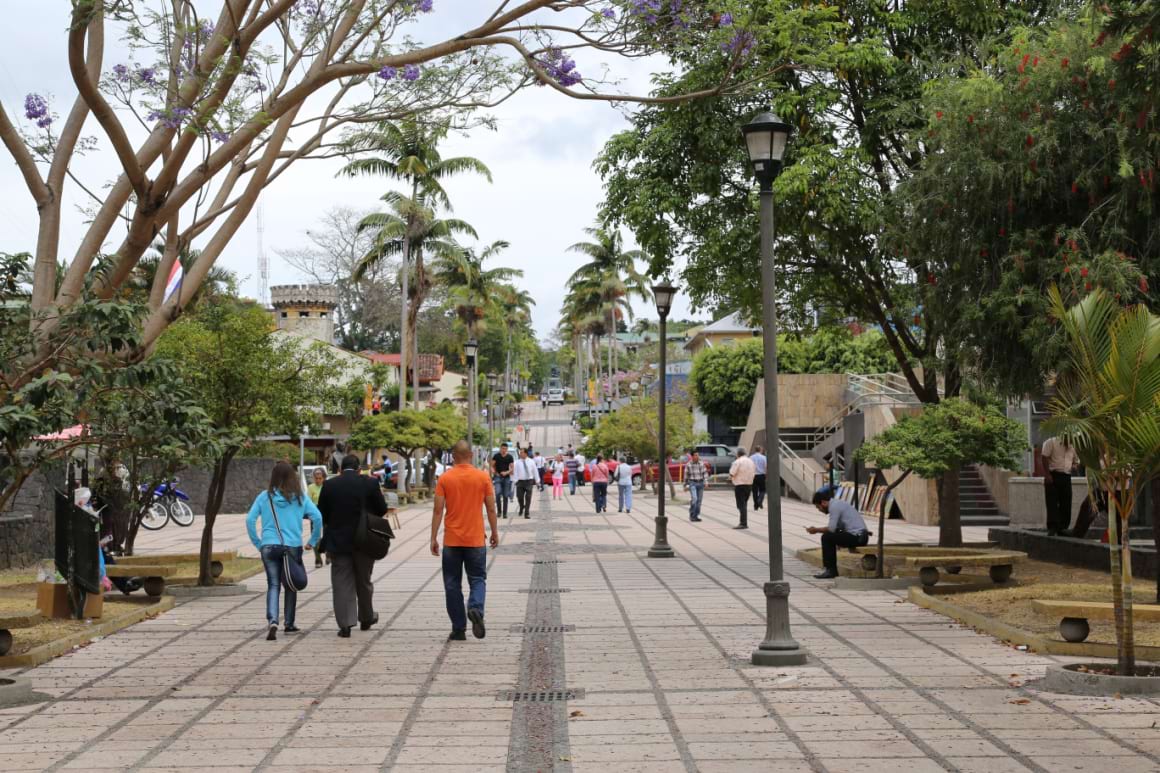
Cities are prime hotspots for crime, but beaches are also targets. You won’t spend much time exploring cities here, but you will (unfortunately) have to pass through San Jose on multiple occasions. I hate this ugly grey city, not just because it’s insanely boring, but because it’s pretty dodgy too.
You should never go out at night. There’s no need and it’s not safe, this is when the villains rule the streets. Even in the day, don’t get your phone out in the street, and keep cash in your pockets hidden away until the moment you need it. You should also avoid wearing jewellery, I’ve heard of people having necklaces ripped off their necks in the likes of San Jose.
And a lesson I learned the hard way during a mugging attempt in Ecuador, ALWAYS dip into a shop/restaurant/cafe/etc. to check your phone for directions or other information. Don’t do it on the streets.
Fake tour operators exist, so do your research and read reviews before booking anything. And be especially aware of beach theft. Leave anything lying around as you swim, and Jose or Juan will snatch it in an instant. Beaches should be avoided at all costs after dark, as this is when they become prime targets for criminals.
Wildlife Safety
This is “the big one” when it comes to the dangers of Costa Rica. The country has many dangerous creatures. You probably won’t need to worry about ultra-elusive jaguars, but venomous snakes are a real threat.
Costa Rica is home to the fer-de-lance viper, one of the deadliest serpents on earth due to a combination of lethal venom, and the fact that it’s aggressive and prone to attacking humans, unlike most snakes which avoid conflict unless provoked and backed into a corner.

I recommend doing guided tours every time you enter the jungle. I quickly realised, they are so much more enjoyable with a professional who can spot cool animals with a trained eye.
But this section’s on safety, so my main point here is that a guide can make you aware of surrounding dangers. Don’t walk through long grass at all. One of my guides used a UV light to reveal many scorpions in the jungle, and the snakes are nearer than you think. Then you have crocodiles along the Pacific coast, bullet ants, sharks and more here. Take care.
Transport Safety
Costa Rica isn’t as bad as other Central American countries for bus safety, but it’s not exactly FlixBus either. Most buses are privately owned, so you won’t find government-funded scrap-on-wheels chuntering along, like the infamous chicken buses further north.
Still, you should take precautions. Night buses aren’t really a thing for domestic travel, but if you wanna kip in the day, I always use two types of lock. A combination padlock to keep my bag shut, and a cable lock to attach my bag to my leg. Sure, a knifeman can still rob me if he’s crafty, but most thieves are opportunists, and they like the easy targets.
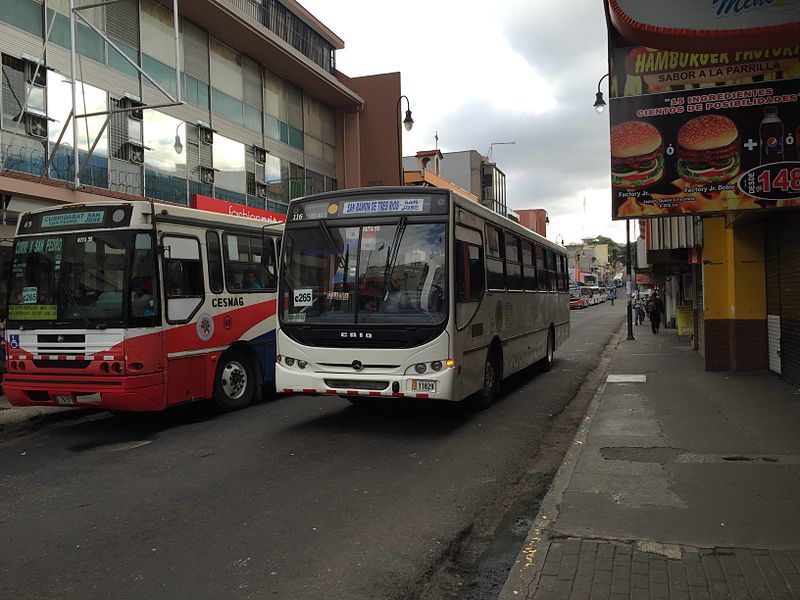
Don’t let anyone “watch” your bags, no matter how friendly they seem. This scam is pretty well known, and they’re gonna rob you. Also be aware that theft from rental cars happens. Lock belongings away, and never leave anything on display.
And always use Uber where possible (especially in San Jose), as taxi drivers love to scam people (or worse). I hate traditional taxis with a passion. They’ll jack the price up, rig meters, and play all sorts of tricks to mug you off. Only take buses for longer trips, never within cities.
Hostel Safety
My combination padlock/cable lock duo come in clutch once again here. The combination lock can be used to lock a locker. Almost every hostel with lockers will expect you to bring your own lock. The cable lock comes in handy if there are no lockers. You can use it to attach bags to your bed or any other solid object.
Ladies, look out for female-only dorms, they’re a good way to avoid dodgy dudes with bad intentions. Most men are good of course, but not all sadly, especially in Latin America.
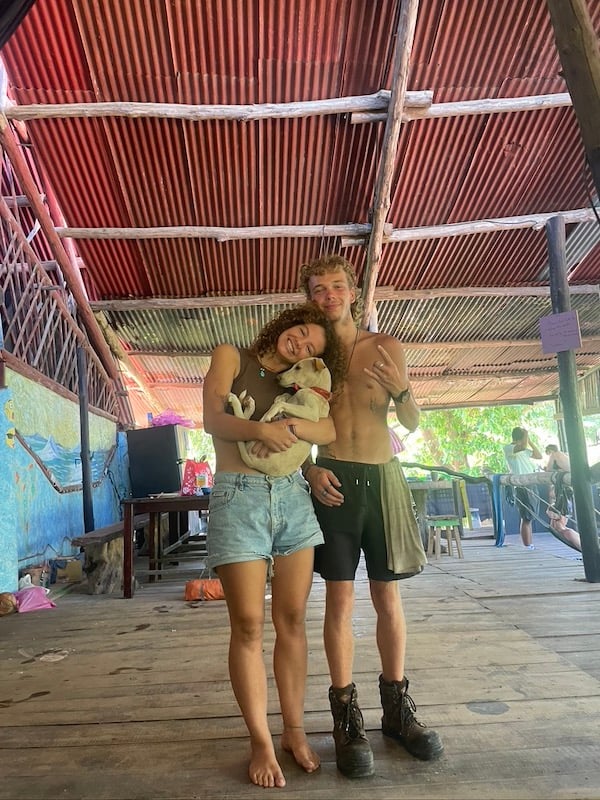
Don’t tell any strangers where you’re staying. Once more, San Jose is the dodgiest place in the country. You should be more on-guard there than in more chilled spots such as Tortuguero (not that you should let your guard down completely).
Try and make some new friends whilst you’re here, if you do go out, not only will you have more fun with other people, but safety in numbers is a thing!
Safety in The Water
Going for a dip can be fun, but it can also be deadly if you make the wrong moves. For starters, you can find crocodiles at many beaches along the Pacific coast, all the way from Playa Esterillos up to Playa Azul.
Then you have the rip currents. The UK government warns that they’re very common at all beaches, and that 50-60 people drown per year, a third being tourists. Most beaches don’t have lifeguards, so look out for those that do. Playa Tamarindo is one that I know has a lifeguard presence, and I’m sure other popular beaches do too.
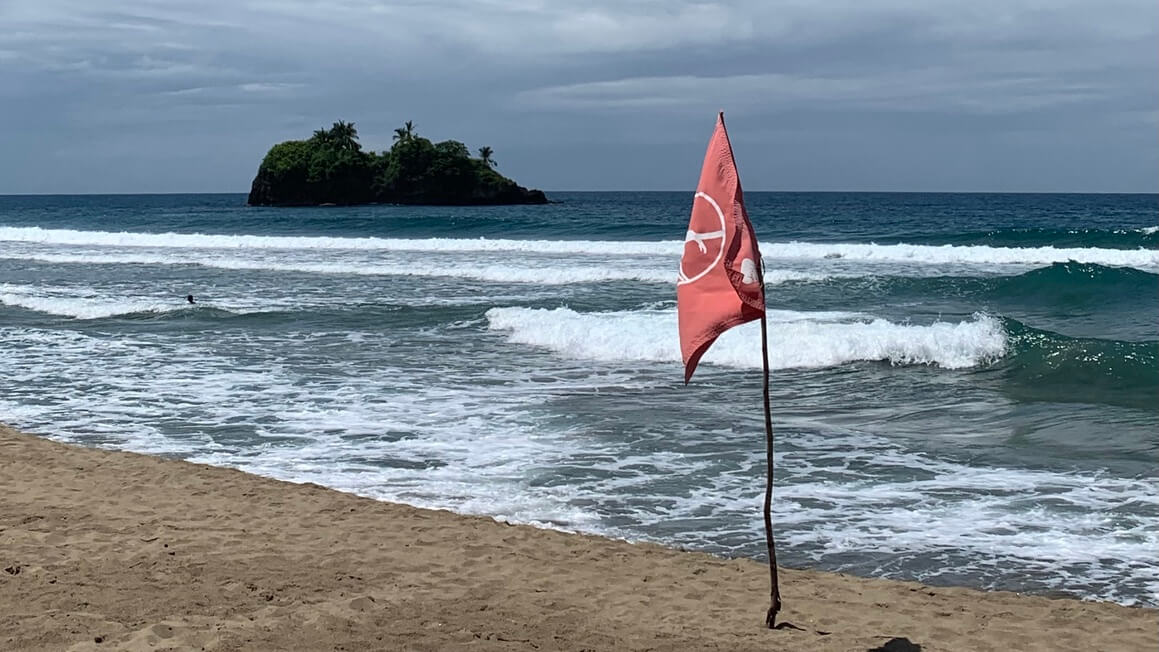
When taking tours that involve snorkelling or diving, research the tour operator first. Make sure they’re reputable, and have good reviews. Not doing this due diligence in the Philippines left me stranded in the middle of the Philippine Sea on a broken-down boat with hail stones lashing against my back. That could’ve been dangerous had we not been rescued.
And lastly, this should be obvious, but don’t swim when you’ve had a few beers. Many backpackers across the world have been lost to this behaviour. Don’t become the next statistic.
Natural Disasters and Weather
When people think of safety in a country, they often think of crime. Costa Rica has another element to add to the mix: the environment.
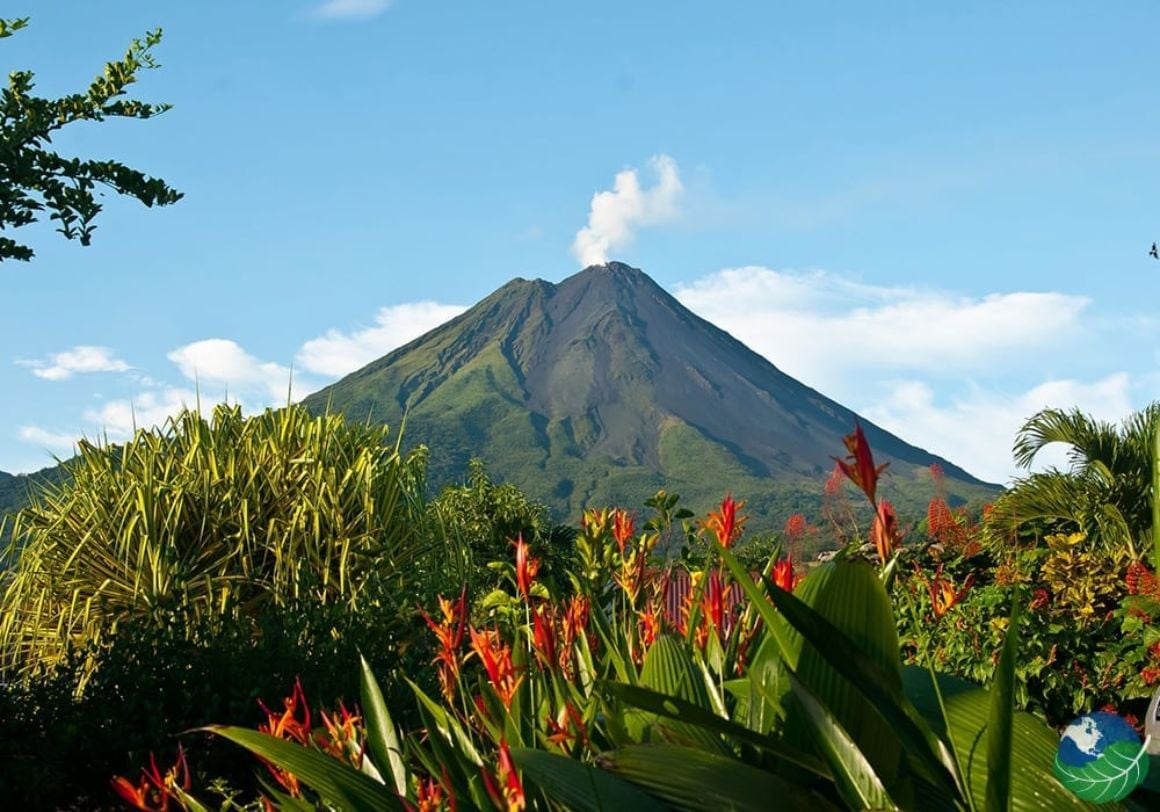
There are at least 6 active volcanoes, including Arenal which is a popular one near La Fortuna. Arenal was responsible for the last 4 deadly eruptions, most recently killing 2 people in 2000. The last major eruption killed 80 in 1968. So a volcanic disaster is unlikely, but it cannot be ruled out. Ask locals for the latest advice. Poas especially has showed recent signs of activity.
Earthquakes are a threat too. The last deadly one occurred near Jaco in 2017 killing 3 people. Magnitude 6 quakes are not unheard of here. Costa Rica isn’t quite on the level of Indonesia when it comes to tectonic threat, but deadly tremors are a risk. Just make sure you follow local advice, download the earthquake warning app, and evacuate buildings ASAP in the event of an incident.
Lastly, rain, flooding and hurricanes are the most common environmental problems you may face. I’d advise against visiting in the rainy season (June-November). It’s much less fun when it’s wet regardless of safety. Hurricanes are at least rare, especially compared to other Central American/Caribbean countries, but they aren’t unheard of.
Mosquitoes
Ahh, the worst creature to ever exist. This beacon of deadly diseases is a problem in many tropical countries, including here.
Zika, chikungunya, dengue and to a lesser extent, malaria are all health issues in Costa Rica. Yellow fever isn’t present here, but you’ll need proof of vaccination if you’ve recently been to a yellow fever country (only an issue if coming here from South America or Africa).
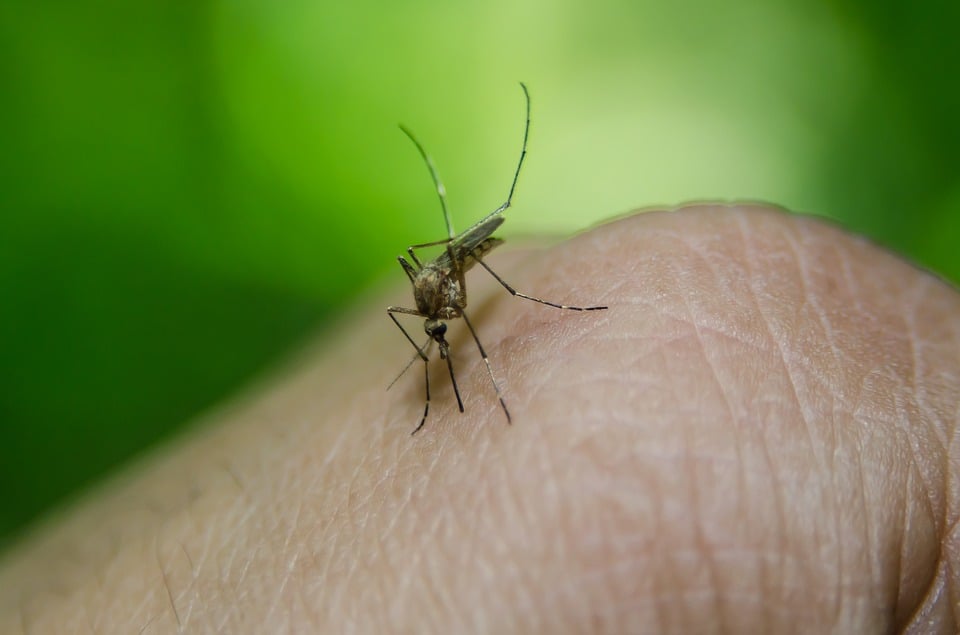
Wear long sleeves and trousers to prevent bites, and sleep under a mosquito net when needed. Many places in risk areas have their own nets, but from my own experiences, a lot of these have holes in them.
I also recommend using DEET spray to deter these pests when you do have exposed skin in risk areas. San Jose isn’t so bad, but the jungle areas can be pretty mosquito-heavy.
Alcohol and Drugs
We all love a drink or ten every so often, but methanol poisoning is a real risk, and has killed people in Costa Rica before. It generally occurs when people cut corners whilst brewing alcohol to make it cheaper.
Bootleg alcohol is generally sold in smaller “local” bars and shops. It is generally okay in more mainstream and upmarket places. Guaro and Aguardiente are popular local tipples, but they’re the main risk here, alongside vodka. Avoiding spirits is the best way to avoid a potentially fatal incident. Beers are generally no problem.

As for drugs, drugs are for mugs anyway. That white powder you think it’s cool to stick up your nose is directly responsible for countless deaths in Latin America. Criminals fight criminals for possession of the lucrative drug channels crossing through here on their way from South America to the USA, and innocent people are often caught in the crossfire.
But if you really don’t care about the locals and want your fix anyway, drugs here are sometimes filled with cheap substances to maximise profits for cartels. and building relationships with dealers can put you in a whole world of trouble. Marijuana is also illegal here, so don’t act like you’re in Amsterdam or Uruguay.
Some of Our Favourite Travel Safety Products
Travelling smart is always the key to making sure your trips run smoothly, and there is no excuse for not doing the same in Costa Rica. That said, there is no point in ruining your trip by constantly worrying.
Keeping a balance between staying safe and having fun is the key to any top adventure!

Combination Padlocks
It doesn’t get more essential than this! Not only do they allow you to lock up your backpack wherever and whenever, but they’ll also come in handy if you show up to a room without a lock. The combination style means you don’t have to worry about losing a small key either!

Apple Airtags
This really might be one of the best products Apple has ever made – the peace of mind it will give you when you inevitably have to check a bag is worth the price tag. I’ve found them to be super helpful and reliable, and you can put them in so many different things

Samsung Galaxy Smart Tags
The same epic concept, except for Androids

Garmin inReach Mini 2
This little satellite communication device is a must if you plan to get off the beaten path. It allows you to stay in touch with family and friends even if there’s no cell service, AND it has a SOS feature that can be activated anywhere. It even gives weather updates, a literal lifesaver when off grid.
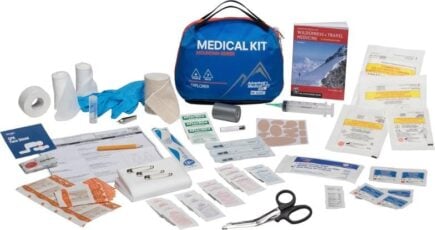
First Aid Kit
A good first aid kit should always be on your packing list, even if you’re just headed to a resort. It’s good to fill it with essential medicines as well as equipment, you never know when you’ll be caught out!

Travelling in Costa Rica by yourself is totally doable and is one of the best ways to experience the amazing country! I was alone during my entire trip here, and it was one of the easier countries in the region to do solo. Safer than neighbours, and better infrastructure, especially the buses.
Sure, it may be easy but that doesn’t mean it’s a breeze. Here are a few things you can bear in mind to make sure you optimise the safety-fun trade-off.
- Learn some Spanish. You’re in a Spanish-speaking country after all, and it makes traversing the bus network much easier. Bus drivers aren’t famed for their English either. You can actually enroll in Spanish classes for a couple of days too.
- Be careful if you go out at night. Simple Latam logic really. But if you do head out, make sure it’s in a lively part of a popular area. I went for drinks in Cahuita and Tortuguero, no problem, but in San Jose, I wouldn’t even think about stepping out after sunset.
- Stay at one of Costa Rica’s hostels. It’s probably one of the best ways to get to know like-minded travellers and exchange stories and travel tips. If you do activities with new friends, you have safety in numbers.
- Don’t trek alone. Okay, I’ll admit to doing the odd solo jungle trek, but you can easily get lost and mobile signal is pretty shoddy in remote jungle environments. Dangerous animals do lurk in the greenery (snakes especially), so you’re best off with a trained guide who can look for issues.
- Stick to the path. If you’re a bit of a rebel who will go through the jungle alone anyway, at least stay on the paths. As I say, deadly snakes are present, and many of them love to lurk in long grass. If you stray from the path and can’t find it again, then you’re in real trouble if you don’t have anyone to look out for you.
- Bring a head torch. This mostly applies to night treks of course. But if you get lost, you’re in deep trouble. You should only do night walks with a guide regardless, but that torch can be a lifesaver. Oh, and be aware as more deadly creatures come out after dark.
Is Costa Rica Safe for Solo Female Travellers?
Is it safe to vacation in Costa Rica for women? Unfortunately travelling solo as a female can often mean you have to be extra careful. Here are some crucial things that ladies tell me you have to keep in mind when you’re out in Costa Rica!
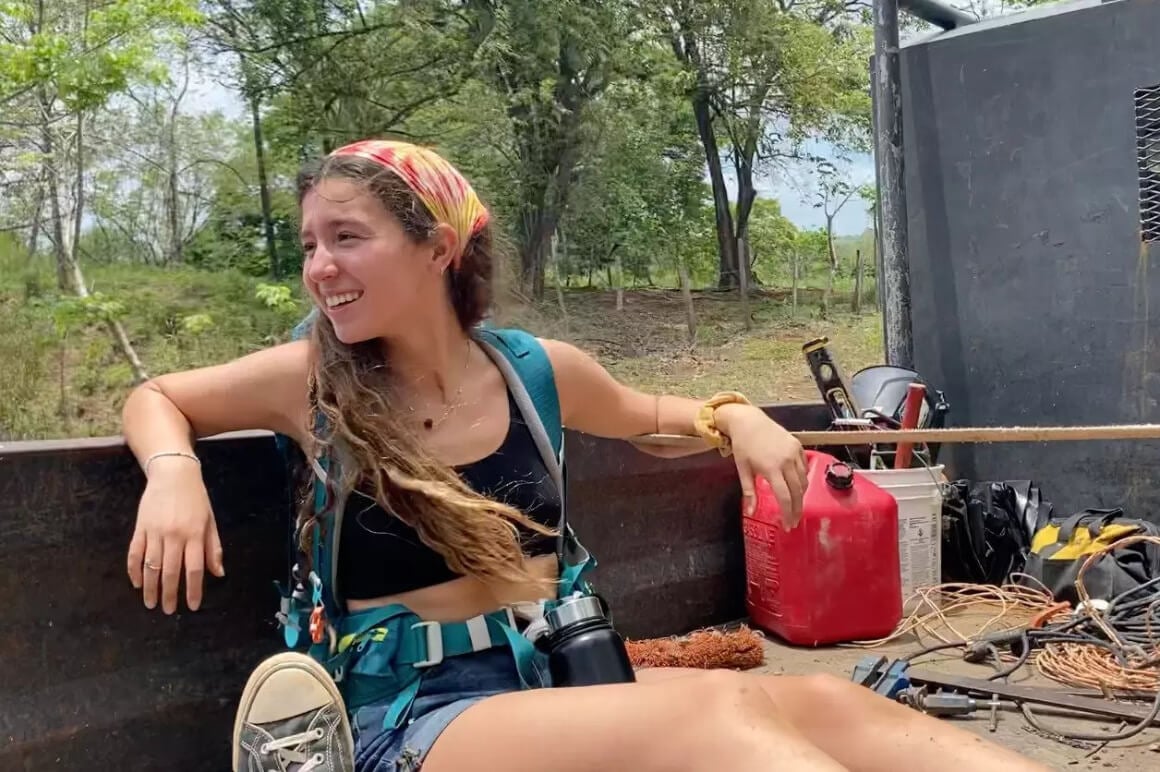
Photo: Amanda Draper
- Be confident, even if you don’t feel it. Looking confused and lost is a good way to attract unwanted attention – anywhere in the world. If you’re really lost, walk confidently (even if you have no clue where you are) to somewhere that looks safe – a shop, a library, etc. – and find a member of staff to ask for help.
- Don’t be afraid to be direct and ask for help or directions. This will most likely be better than accepting help from someone who initiates the conservation with you. Sometimes overly-friendly people are the ones with the worst intentions.
- Avoid walking alone at night. Get a licensed taxi home or walk with a big group of friends from your hostel, but don’t walk home alone, even if the distance is short.
- Once you arrive in Costa Rica, make friends – women are often targeted by criminals, more often than men are, and having a good crew with you helps to scare away attackers.
- Look at what the local women your age are doing – what they’re dressed like, how they’re behaving. Dress as the locals dress, and don’t bring unwanted attention to yourself.
- Cat calls do happen. If you don’t want that kind of attention, ignore them and move on.
- Know the emergency numbers! Seems simple but it’s easily neglected. Keep them on your phone at the top of the list.
- Let someone know where you’re going – Even if it’s just the staff at the hostel or a friend at home – it’s necessary.
You can do it!!! Many women travel through here safely. Despite the recent uptick in homicides, Costa Rica remains one of the safest Central American countries. Solo travelling is empowering and teaches you so much about the world around you.
Is Costa Rica Safe to Travel for Families?
Costa Rica is a fun-packed place and a total playground for any adventure-loving family out there.
National parks and family-friendly beaches are great fun for you and your kids. Ask locals about where is safest to swim: riptides can be deadly. Go with a guide on hikes. They’ll spot dangerous wildlife way before you do.
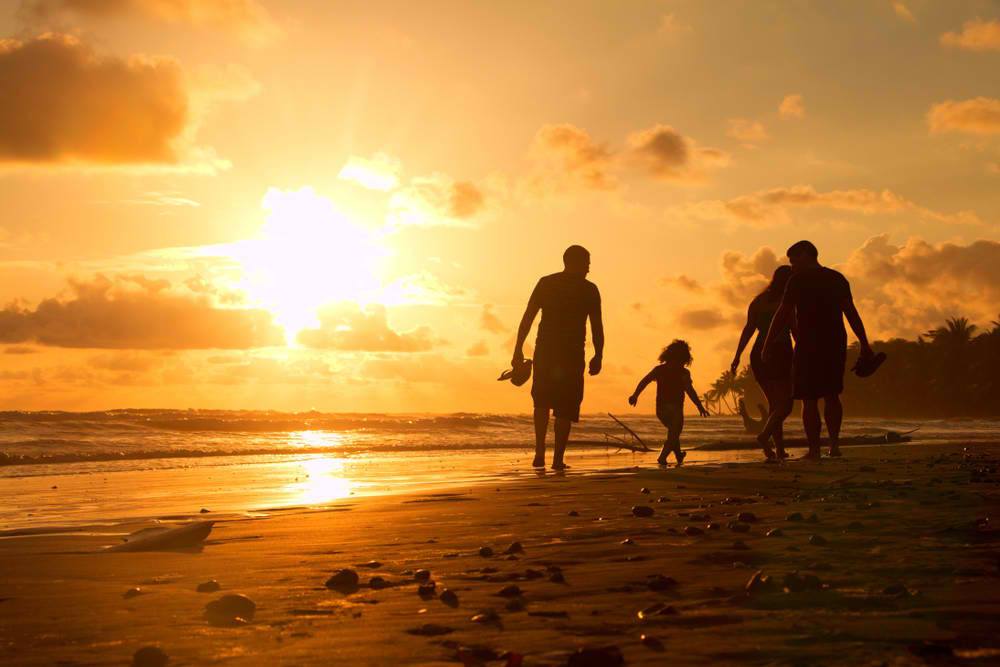
Like anywhere, travelling with kids necessarily demands more of a safety-conscious approach. You can’t galavant around as you can as a solo adult. Remember that it is wayyy less stressful to book in advance, and to plan your trip carefully.
With your attention on the kids, you are more likely to be a target for petty crime, and as a family on holiday, your perceived financial status is usually quite high. Take care of your stuff!

The #1 thing you can do to stay safe upon arrival to a foreign land is to get yourself an eSim before you leave home. That way you can get connected the minute you land. No more dodgy cabs. No more hanging round phone stores.
Get an eSIM with GigSkyWhere to Start Your Travels in Costa Rica
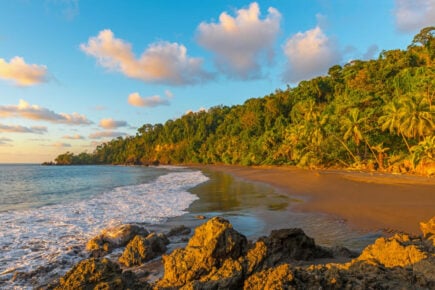
Tamarindo
Tamarindo is known for its stunning beaches and crazy nightlife. It’s also a paradise for surfers.
Getting Around Costa Rica Safely
Costa Rica has a strong bus system, where the destinations are posted in the front window. Hiring cars is possible too, and quite a strong idea considering some roads and destinations can be relatively remote. And to be honest, those are your best options for transport.
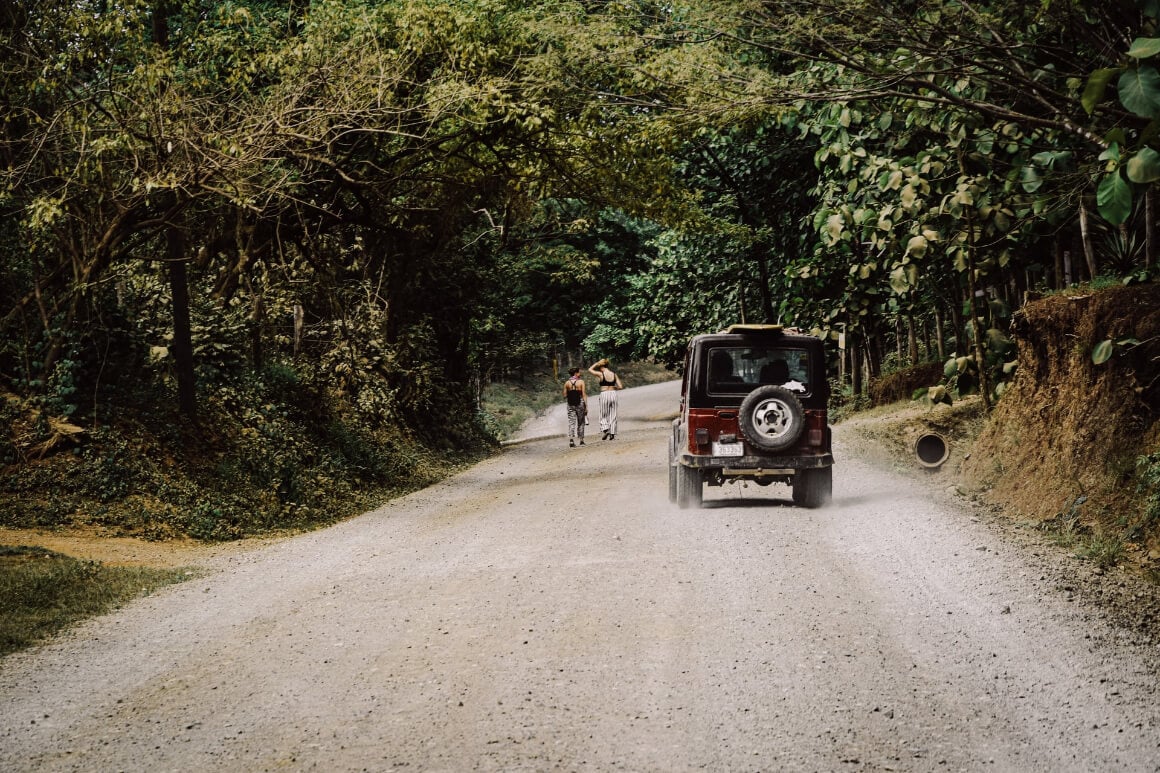
Buses
If you’re going to catch a bus from San José to anywhere else during holiday time you’re going to have to book ahead of time at a bus station. Again, basic Spanish would be helpful. Buses themselves are mostly safe, aside from potential theft.
Theft from overhead racks on buses is actually a little rampant, so if you are travelling by public transport, either keep your stuff within reach or use the under-bus storage. I always keep my main bag between my legs, and my clothes bag in the hold.
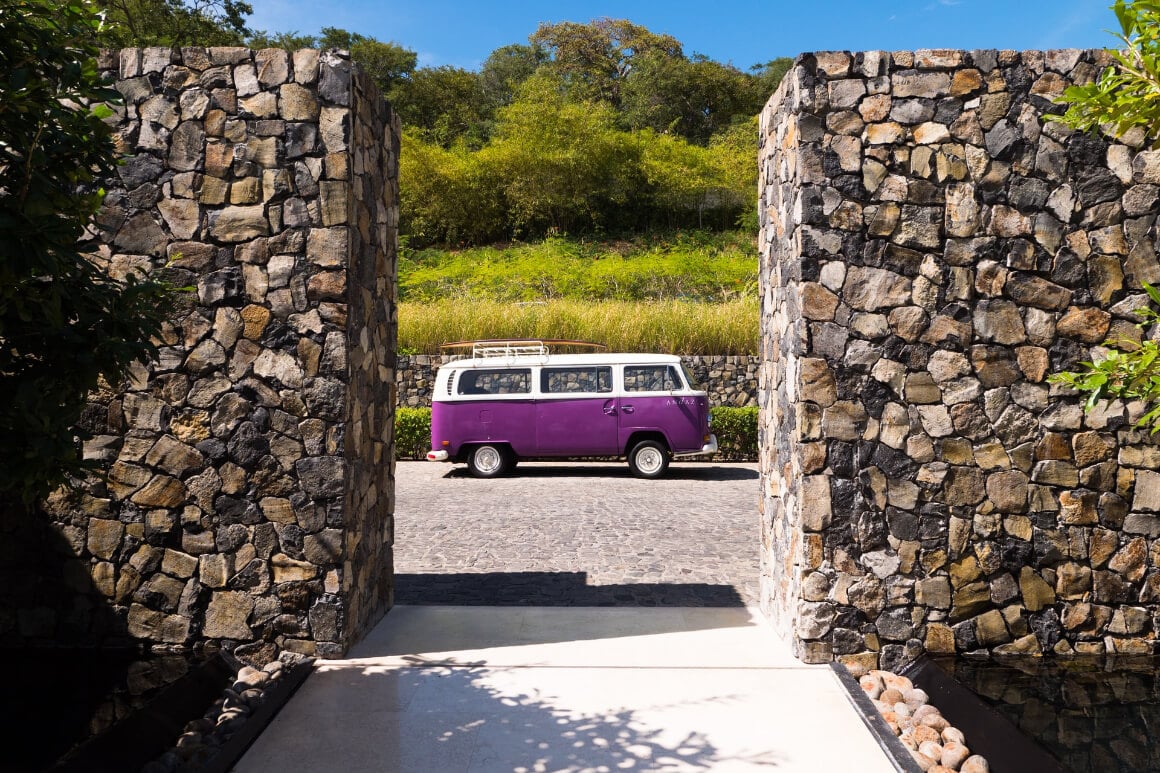
Driving standards aren’t too crazy here, making a nice change from “chicken bus Central America” to the north, where drivers swigging rum before zooming along like a maniac is pretty much the norm.
Just plan carefully to avoid turning up to a new city in the dark. Bus stations are shady places, and criminals love to lurk around them. I also found that taxi pests are relentless at stations. Get off the bus and you’ll be surrounded by a mob screaming “TAXI, TAXI, TAXI” at you until you make a quick exit.
Car Rental
Buses are fine here, but for the ultimate freedom, you can always consider renting a car. Roads aren’t too shabby here, so it’s not like driving in rural Kyrgyzstan, or Bolivia’s mountains, where only prime Michael Schumacher would be able to navigate smoothly.
Make sure you do your research and only rent from a reputable company with good reviews. I hear Adobe is a good one with good reviews across the board, but do your own research. Personally I didn’t drive here, so I can’t give first-hand tips on this occasion, but I have heard it’s easy to drive around, with one exception…
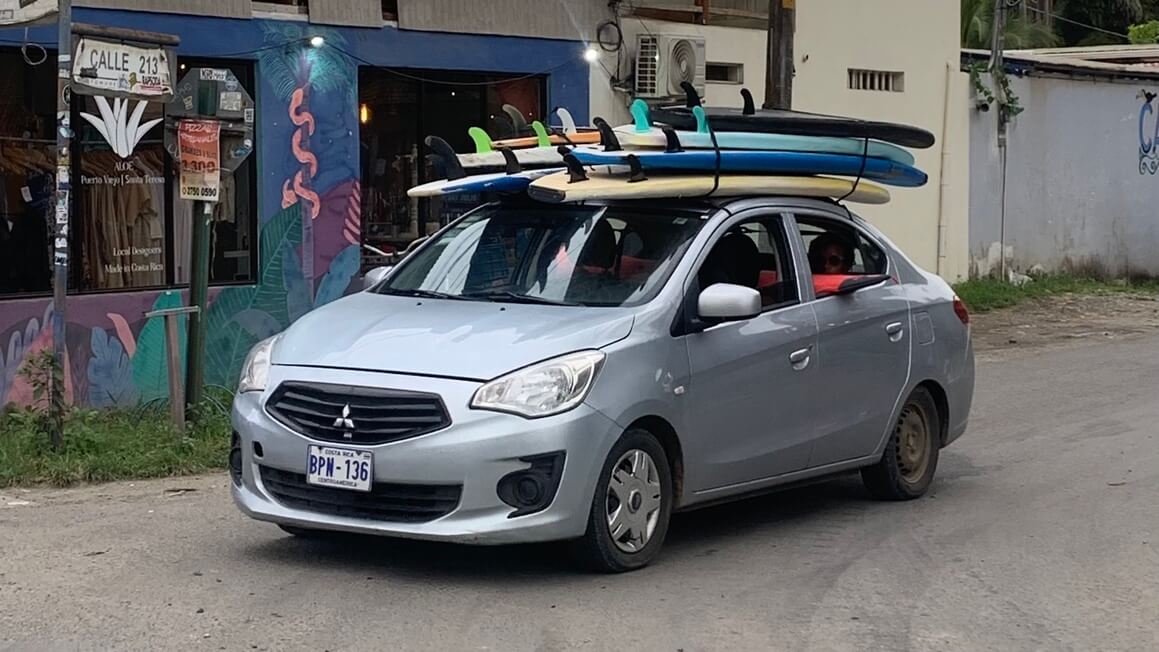
Capital San Jose, the epicentre of all not-so-pleasant things in Costa Rica, is known for busy roads, impatient (and reckless) drivers, and heavy traffic, especially in the evenings.
I would avoid driving at night though. It’s not well lit in many areas, and animals don’t seem to have brushed up on their Green Cross Code so they may charge into the road…
Taxis and Uber
Are taxis safe in Costa Rica? My take is that you should be careful with them. You can pick up taxis pretty easily from major cities, and there is usually a taxi stand to be found.
Taxis are a mix of regulated taxis, and piratas (pirate taxis). Despite the ominous name, these can be relatively safe, although you may be asked to pretend to know the driver if pulled over.
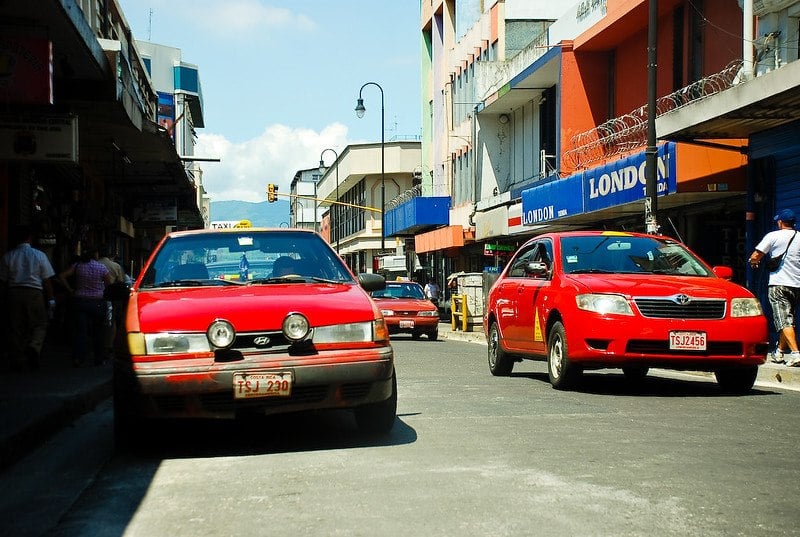
Still, I’m cautious, I’ve heard way too many stories of tourists being scammed, rigged meters, and even kidnappings. In my eyes, street taxis are the devil of the travel world.
Step forward Uber. My favourite rideshare app operates in some parts of the country such as San Jose and La Fortuna. It’s safe, easy to use, and cheaper than legacy taxis. Get yourself a good SIM card so you can order one.
Crime in Costa Rica
Costa Rica is currently a level 2 rated country, according to the U.S. travel authorities. Robberies are a particularly common and nasty form of violent crime that is prevalent in the country. Crimewise, assuming you aren’t dabbling in drugs which will open up a whole new world of pain for you, theft is your big problem to watch for here.
Petty crime is worth watching out for as a tourist. Easy opportunities to steal possessions are taken, so just be smart about where you leave certain high-value items. There have been numerous break-ins to tourist vehicles, so be sure valuables are hidden if leaving them inside a vehicle.
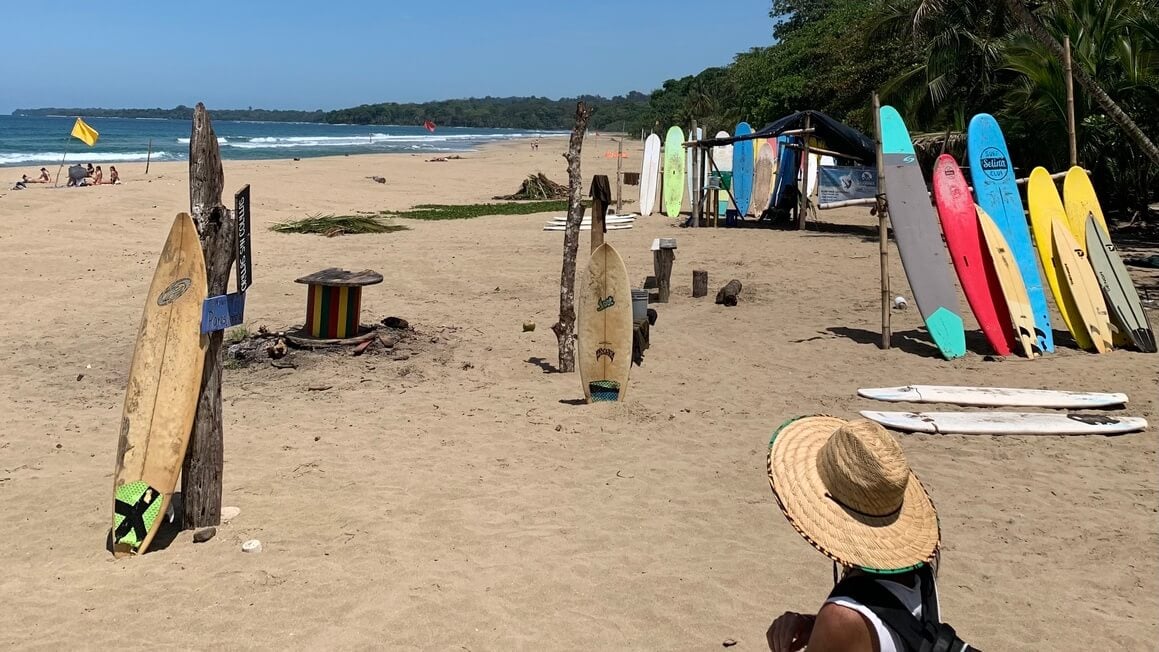
Using your common sense will help you avoid a large quantity of trouble in Costa Rica, especially when going out, and walking at night.
Don’t worry too much about the murder rate. If you come here to set up a cocaine trafficking route, then yeah, you have stuff to worry about. But if you’re here to backpack on a budget, chill on the beach and see cool wildlife, then you’ll be fine as long as you stick to popular areas and daytime travel.
Laws in Costa Rica
Costa Rican laws are generally pretty standard, but you should avoid removing architectural objects, and local fauna. If you are discovered on exit you could be subject to some serious payback.
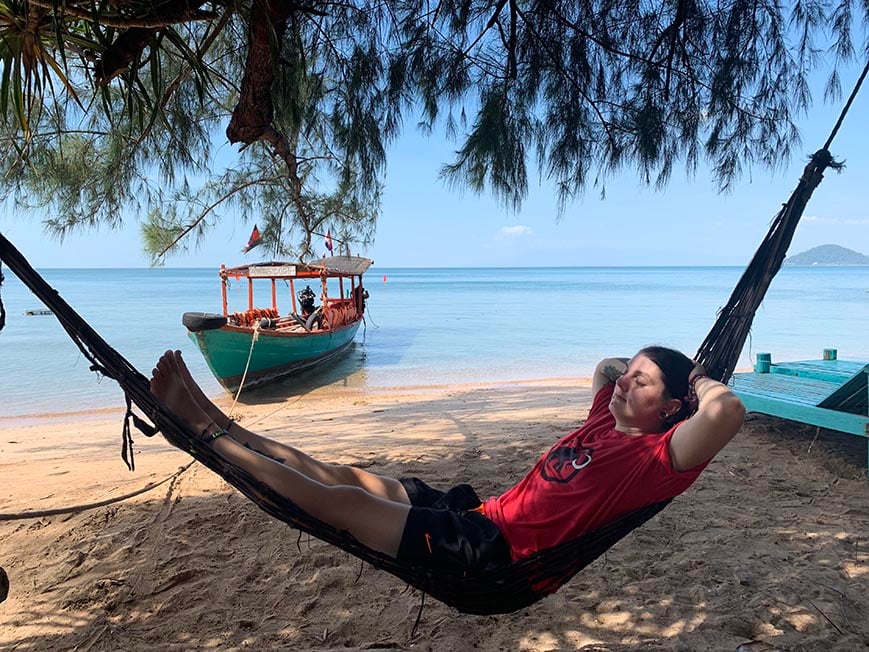
Image: Nic Hilditch-Short
And they’re very tough on drugs. At best you may escape with a fine and deportation, at worst you could be accused of trafficking which means up to 15+ years in prison. And Central American prisons are notoriously godforsaken hellscapes, worse than anything you can possibly imagine. They’re even worse than Liverpool!
What to Pack For Your Costa Rica Trip
Everyone’s packing list is going to look a little different, but here are a few things I would never want to travel to Costa Rica without… Put the locks to good use in hostels, and perhaps on buses too.
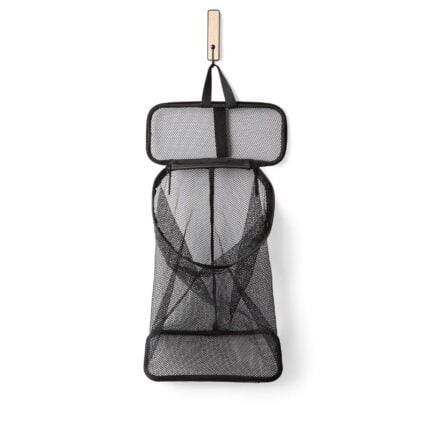
Hanging Laundry Bag
Trust us, this is an absolute game changer. Super compact, a hanging mesh laundry bag stops your dirty clothes from stinking, you don’t know how much you need one of these… so just get it, thank us later.

Head Torch
A decent head torch could save your life. If you want to explore caves, unlit temples, or simply find your way to the bathroom during a blackout, a headtorch is a must.

SIM card
Jetpac stands as a premier eSIM service provider, catering specifically to the mobile internet needs of travellers.

Monopoly Deal
Forget about Poker! Monopoly Deal is the single best travel card game that we have ever played. Works with 2-5 players and guarantees happy days.

Money Belt
This is a regular looking belt with a concealed pocket on the inside – you can hide up to twenty notes inside and wear it through airport scanners without it setting them off.
So, Is Costa Rica Safe Right Now?
Yes, travelling to Costa Rica is safe. Very safe if you’re using your common sense. A wealth of history, crazy good food, and literally amazing nature make it perfect for many different people. And that’s not even mentioning its stunning beaches, which are as popular for sunbathers as they are for surfers.
There are things to bear in mind, of course – taxis can be fraudulent, female travellers should exercise caution, and pickpockets are common. Wildlife is the biggest threat here, but again, it shouldn’t be an issue if you use common sense, and go with a guide.
Going out at night is where you could have problems, and getting involved in drugs is a really dumb idea. But generally, the risks are pretty low by Latin American standards, and scary murder stories very rarely have any impact on tourists.
Hopefully, this guide will have given you some great tips for staying safe in Costa Rica, so go on, enjoy it! I loved trekking amongst snakes slithering in the bushes, and sloths crawling through the trees, and I’m sure you will too!
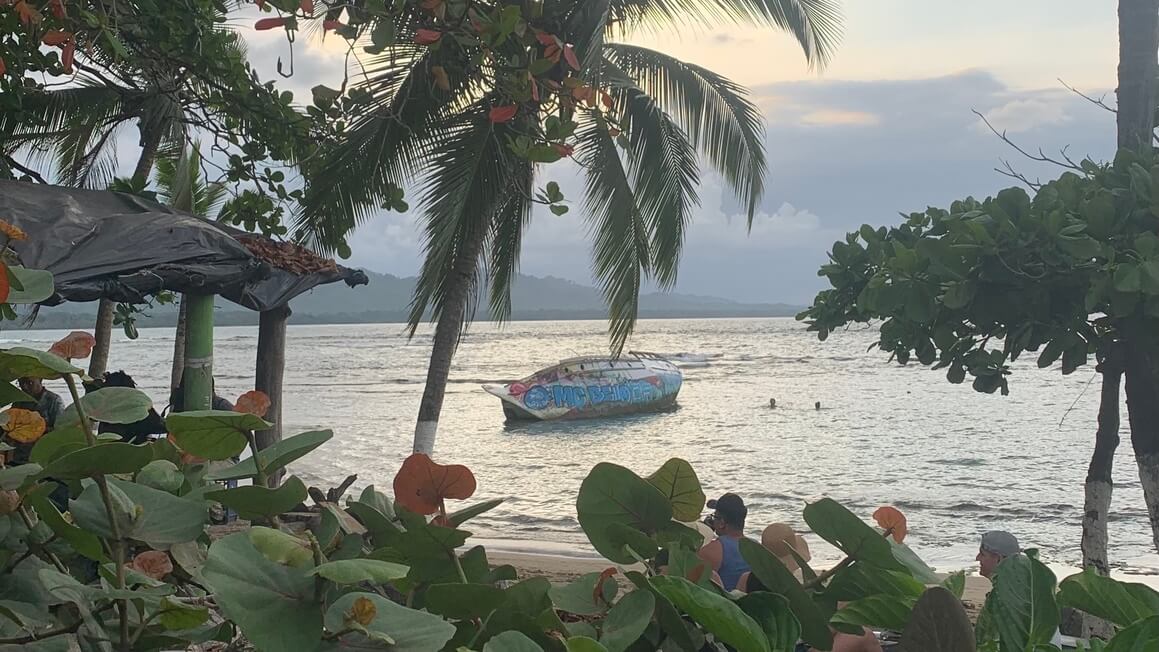
Photo: @joemiddlehurst
Looking for more info on travelling to Costa Rica?
- Let me help you choose where to stay in Costa Rica
- Explore with the ultimate peace of mind with comprehensive travel cover.
- Don’t forget to add an epic national park to your itinerary
- Check out my favourite Airbnbs in the centre of all the action
- Plan the rest of your trip with our fantastic backpacking Costa Rica travel guide!
Disclaimer: Safety conditions change all over the world on a daily basis. We do our best to advise but this info may already be out of date. Do your own research. Enjoy your travels!





It is not safe. My boyfriend and I went to Quepos/ (near Manuel Antonio) for Christmas- new years this past year. We went out one day to hike and zipline and we were robbed day after christmas. The guy had a gun and he took 10k worth of stuff. Do not go to costa rica right now. IT IS NOT SAFE!! Pay attention, there are barbed wire fences everywhere you look. they don’t even park on the street the crime is so bad there. Everything is barred up everywhere you go. It’s not worth the risk!!
Great article, paints a pretty picture. I know all places have their issues. If I go anywhere I want to feel safe. I am looking to relocate from the US. I want to hear of everyone’s experience. I want to make an informed decision. Not one based on my fantasy or one person’s opinion. Based on some comments here and speaking with actual people that have been, I’m skeptical of CR
Looking to move to CR in the near future. Purchase some property and lay back. I have a friend doing that now he’s pretty happy
Male senior traveling solo. Being safe and limited money but would like to see the city by a trust worthy travel tour group of person. Mid Oct for about a week.
I have planned my trip to Costa Rica, staying at Marriott-Los Suenos. I reached out to a close friend who I knew had been going there for years. He stopped going 3 years ago (2019), as he was got badly mugged for his iphone and some cash on hand. He told me he would never go back, as it has deteriorated over the years and is not safe. Well, I’m a single female – he told me females are especially targeted and advised me not to go. I am heartbroken to hear all this. I visited back in 1999 with an eco tour group and had a fabulous time. Apparently, times have changed Costa Rica.
I’ve been researching on living in CR. From what I’ve read, it’s not to bad of a country. I have been all over Mexico and lived there for a bit. Loved all of it. The Caribbean and Europe plus Mexico, All have crime. Even here in the states. Where I am located, near Corpus Christi, there’s drugs, homelessness and places I do not want to be night or day.
I suggest living there for a year without buying a house. Renting instead will give you an idea on everything.
Michael
A girlfriend and I are planning a trip to one of Costa Rica’s all inclusive resorts. The Azura Resort. Is the resort itself safe? Is traveling from the airport to the resort safe? What airport do you recommend? Is there dangerous spots between the airport and the resort?
Hi there, my family and I have had a trip planned to Costa for some time now. I keep sticking it out, but every once in a while I start to worry about the advisories. If you were me, would you take your family to Costa Rica now? We are a family of 5, older kids 18, 17 and 16, traveling in July 2021. I want to have a great time, but overall safety is number one. Your feedback is greatly appreciated. Thank you in advance.
Funny how I listened to all the advice on the Internet and chose Costa Rica for my solo vacation based on those glorious reviews. Sounds like a lot of this Pura Vida stuff is sponsored by Costa Rican ministry of tourism. I did not feel safe in this country, neither I saw any happiness these promotional articles talk about. Costa Ricans are very poor, not just in material things – I haven’t seen a lot of playgrounds for kids, most people walk alongside the roads that don’t even have shoulders, forget about sidewalks, there is no music or dancing, no art scene, and in my two weeks traveling across the country I haven’t seen a single bookstore, or something like a yoga studio. I did feel tension and resentment towards me from the locals when I was simply purchasing things like water at gas stations or asking national parks clerks about their trails. About their healthcare system that’s better that the US – only someone delusional could suggest such an idea – I saw only one major medical center and it didn’t look very big or modern, and a few clinics housed in something the size of a garage. God forbid you have a medical emergency there- I didn’t feel based on what I saw that the help would be coming quickly or that it would be anything like the level of US healthcare with its helicopters and quick response. Police stations are located off unpaved roads and some of them don’t even have computers. I dealt with police there, their response time can be 4 hours (no wonder, it would take them 40 minutes just to drive to your location). Also police presence is very small, even in major tourist areas. Outside of a 3 star hotel in La Fortuna, which had a 24/7 guard and a gate (it annoyed me at the time) and plenty of staff, I didn’t feel safe anywhere. Other than my cell phone being stolen in broad daylight from a peaceful almost empty beach (they call it petty theft – not so petty if you have all your credit card apps, email, personal photos and memories, not to mention this being your only means of contacting help such as 911 and in my case figuring out where I was using maps) and being conned by a guy who sold me a pre-paid phone plan, — the desolate roads where I found myself driving alone for long stretches of time, the unpaved roads leading to world famous destinations and hotels that somehow got 9 points on Booking.com, where it was easy to damage your vehicle, and no services or gas stations for miles, the way locals stared at me getting out of my car, at my wallet when I stood in line at stores, when I walked alone in national parks, the near absence of developed areas, locals who sit around their shacks and shack like stores and watch you, people, both locals and tourists, refusing help when you are running around distressed without a phone asking somebody to let you use their phone to make a phone call- all of these things gave me a an unsafe uneasy vibe that ruined my vacation. When you have to constantly watch your back and your bag, you don’t enjoy nature so much. I don’t recommend Costa Rica for solo female travelers. I felt safer in Mexico and Peru. Read about all the crimes committed in Costa Rica, including armed robberies. P.S I’m posting this on other similar websites, as I feel I should warn solo female travelers.
You’re clearly an idiot, based purely on this – “there is no music or dancing, no art scene, and in my two weeks traveling across the country I haven’t seen a single bookstore, or something like a yoga studio” – How can you claim there is no music, no dancing, no art scene? You were obviously well out of your comfort zone and whilst I feel bad for you on that front it’s really immature to let your discomfort warp your impression of a country to such a degree.
This city is very dangerous- my daughter was threatened with her life – don’t go don’t go …..ps
She thankfully had insurance….
Hi Andrew, which city do you mean? Was she robbed there?
Sadly the idea of Pura Vida is at odds with the petty theft and dishonesty that I witnessed. Doors and windows all have grills over them and are landlocked shut from the early evening because no one can be trusted. Taxi drivers scam regularly telling you your hostel is overbooked and taking you elsewhere at great cost.
After reading this article I am very motivated to have a focus on the area… My wife and I don’t mind about the weariness and would love to open a little shop welcoming people that can enjoy seafood. Lionfish tacos are what we would specialise with a local beer.
Go live your dream! Let me know when we can swing around for a beer! 🙂
Thank you so much for providing relevant and meaningful facts about traveling to CR. My son is interested in learning Spanish, helping out in the community and also likes the opportunity to live with a family and get to know the culture. There are so many language schools. He’s a highschool graduate and wants to be there Sept thru Dec. only if possible, would you be able to recommend two or three best Spanish schools with home-stay options. Thank you
Hi! I did a Spanish school with homestays in Peru that has a branch in Costa Rica as well. You can check out Máximo Nivel. They have volunteer programs too, but I recommend doing the courses and organizing a volunteer experience on his own once he’s on the ground. Viva las aventuras!
Costa Rica has gotten way too big for its britches. Super expensive and there is some sort of road closing strike every week. It’s not what you think it is. It’s not the brochure or flashy add you’re looking at. It’s not Pura Vida. It’s not even “Green” as they use more Round Up then anywhere I’ve ever been. 26 countries. I guess if you are filthy rich, arrive in your own jet and can afford $600+ a night you’re OK. But for the average guy it’s way past over cooked.
This is the most comprehensive information about who, what, and where. I specifically appreciate the breakdown for solo travelers, women, and families. Thank you.
FINALLY A WELL WRITTEN ARTICLE. COVERING MOST POINTS OF VIEW.
Are the mosquitoes particularly bad? In all areas?
Mosquitoes will abound. Arm yourself!