Thru-hiking the Appalachian Trail (AT) is a life-altering experience. The trail is 2,200 miles long and takes most people 4-7 months to hike its entire length.
Spending that amount of time traveling on foot is so far outside of our societal norms that it forces you to gain a different perspective on life. For me, this shift in perspective was overwhelmingly positive, but it certainly came with a lot of challenges and hardships.
Lots of people aspire to thru-hike this iconic trail, and I had been dreaming about completing a thru-hike for almost 20 years before I began my trip in 2022. And I wasn’t dreaming alone. My mom and I spent years planning our thru-hike attempt together.
While there are certainly people who dive into their AT thru-hike on a whim, a certain amount of planning and strategizing can dramatically improve one’s chances of completing the hike.
But there is such a thing as too much planning. There are lots of intangibles on the AT, and it’s also important to remain flexible and ready to adapt to the ever-changing conditions.
My mom and I found a sweet spot between planning and flexibility, and this balance point was crucial for optimizing our enjoyment of the experience.
The beginning of any long thru-hike can set the tone for the journey, and in this article, I’m going to lay out some details from the first few weeks my mom and I spent on the AT.
We were able to find that ideal balance point between planning and flexibility right from the start, and because of this, we were finding fun and interesting moments on the trail throughout those first weeks.
Below, I’ll share details about how we ensured that we got started on the right foot.
The Broke Backpacker is supported by you. Clicking through our links may earn us a small affiliate commission, and that's what allows us to keep producing free content 🙂 Learn more.
Preparing for the Appalachian Trail: The Days Before Springer Mountain
Everything you need to know to get hiking…
Choosing Our Gear for the AT
The day before my mom and I began our thru-hike of the Appalachian Trail (AT), we laid out all of our gear and took one final inventory of everything that we were bringing with us.
We’d been thinking about this thru-hike attempt for years, and had spent months planning our trip. Each piece of gear had been carefully selected for optimal utility and minimal weight.
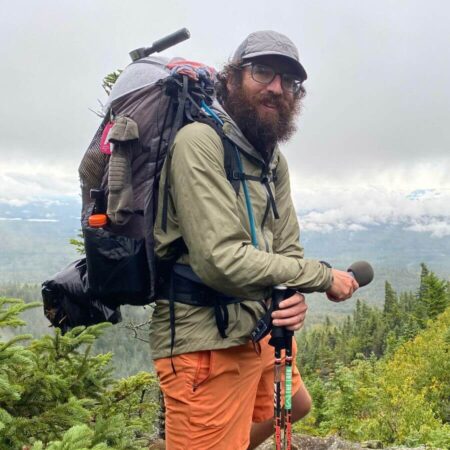
In addition to all of my backpacking gear, I was also bringing audio recording gear for a podcast series about the trail.
So, in addition to my pack (Zpacks Arc Haul), ultralight tent (Tarptent Contrail), down quilt (Enlightened Equipment) and air mattress (Therm-a-Rest NeoAir), I was also bringing a small audio field recorder with an array of microphones (including a mini parabolic microphone designed for recording bird song).
Was I forgetting anything? I couldn’t shake the feeling that I was missing something important.
Planning Our First Four Days
I’d spent the previous week staying at my mom’s house in central Maine. We went on practice hikes, debated which gear items to leave behind (should the backpacking umbrella stay or go?), and we planned out our first 4-day stretch on the Appalachian Trail in Georgia.
An AT thru-hike is really just a seemingly endless series of 3-5 day backpacking trips. Once you’ve eaten all of your food, you’ve got to head back into a town to resupply and plan out the next 3-5 day stretch.
Our plan was to take our thru-hike one trip at a time, so we chose a mileage goal for each of our first 4 days and decided on a shelter where we’d stay each night. Then we planned out our meals for our first 40-mile stretch of the trail, and did a grocery run.
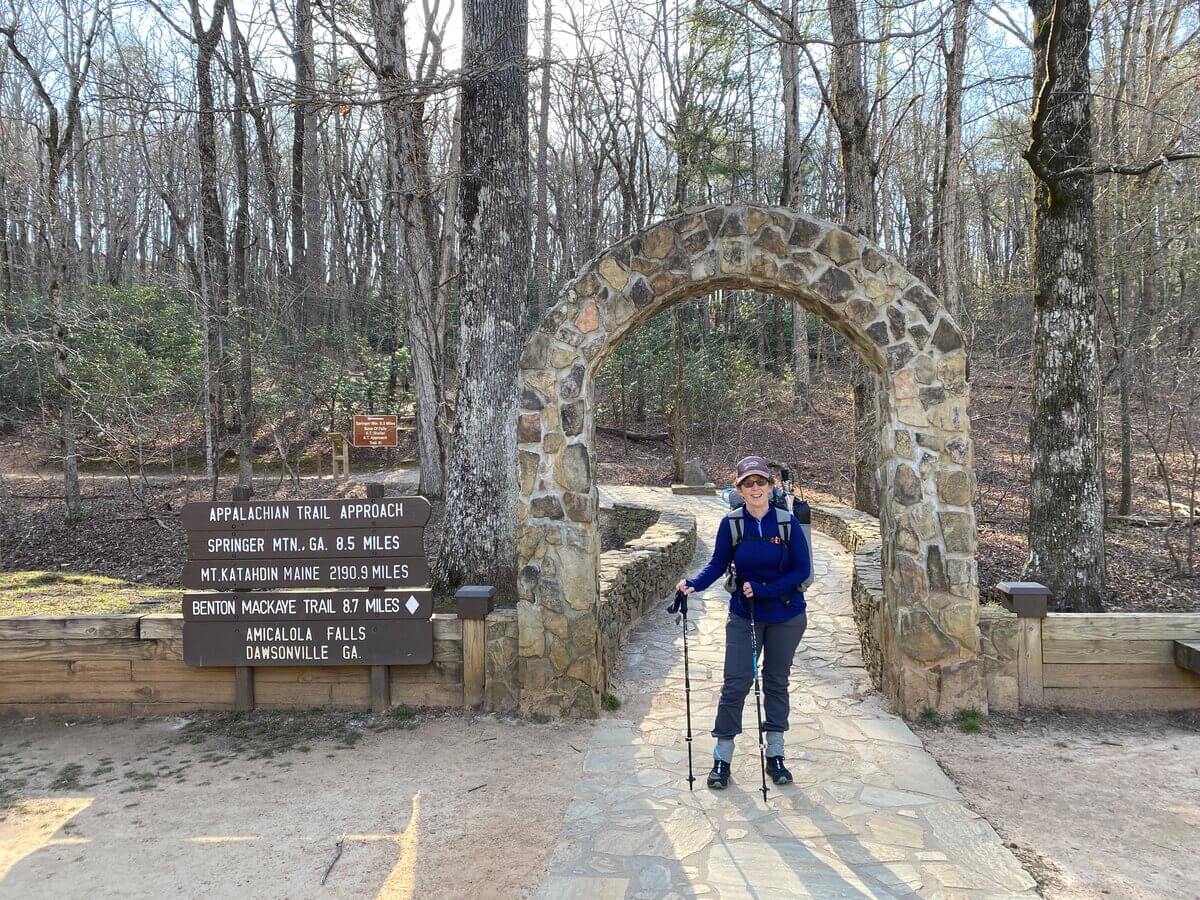
Image: Matthew Podolsky
Meal planning on the AT looks a bit different for each hiker. It can also vary quite a bit depending on where you’re resupplying. This first 4-day stretch on the AT, we could take our time and plan out each meal.
We bought minute rice (an AT staple for me) and portioned it out for each of our three dinners. We also bought spice packets for each dinner (the Knorr pesto sauce mix was my go-to option on the trail), and we added dehydrated meat and veggies.
Most AT thru-hikers don’t have the luxury of using home-dehydrated vegetables in their on-trail cooking, but my mom had spent months preparing a wide variety of dried meat and veggies for us to use on the hike.
Baggies of these home-prepared treats would be mailed to us by my wife and sister at strategic spots along the trail, but for our very first trip, we could take all that we wanted.
We also packed a variety of high-protein granola/energy bars for snacks, powdered breakfast drink (Carnation instant breakfast), apples (enough for each of us to have one per day), supplies to make PB&Js, a bag of Cheez-Its, and a bunch of Snickers bars.
Getting to Georgia and the Amicalola Approach Trail
Near the end of March 2022 (I don’t recommend starting in the summer), my mom and I took a two-day road trip from her home in Maine to Atlanta, GA. In Atlanta, we stayed with a cousin, who eagerly agreed to drive us to the trailhead at Amicalola Falls State Park the next day.
Not all northbound thru-hikers start at Amicalola. You can drive nearly to the summit of Springer Mountain, so many begin their journey right at the trail’s southern terminus, which is located at Springer’s top.
Although I knew that it was possible to bypass the 8-mile approach trail that takes hikers from Amicalola Falls up to Springer’s summit, I didn’t realize how common this was until I got on the trail.
The First Days on the Georgia Section
And so our hike began…
Our First Night at Springer Mountain
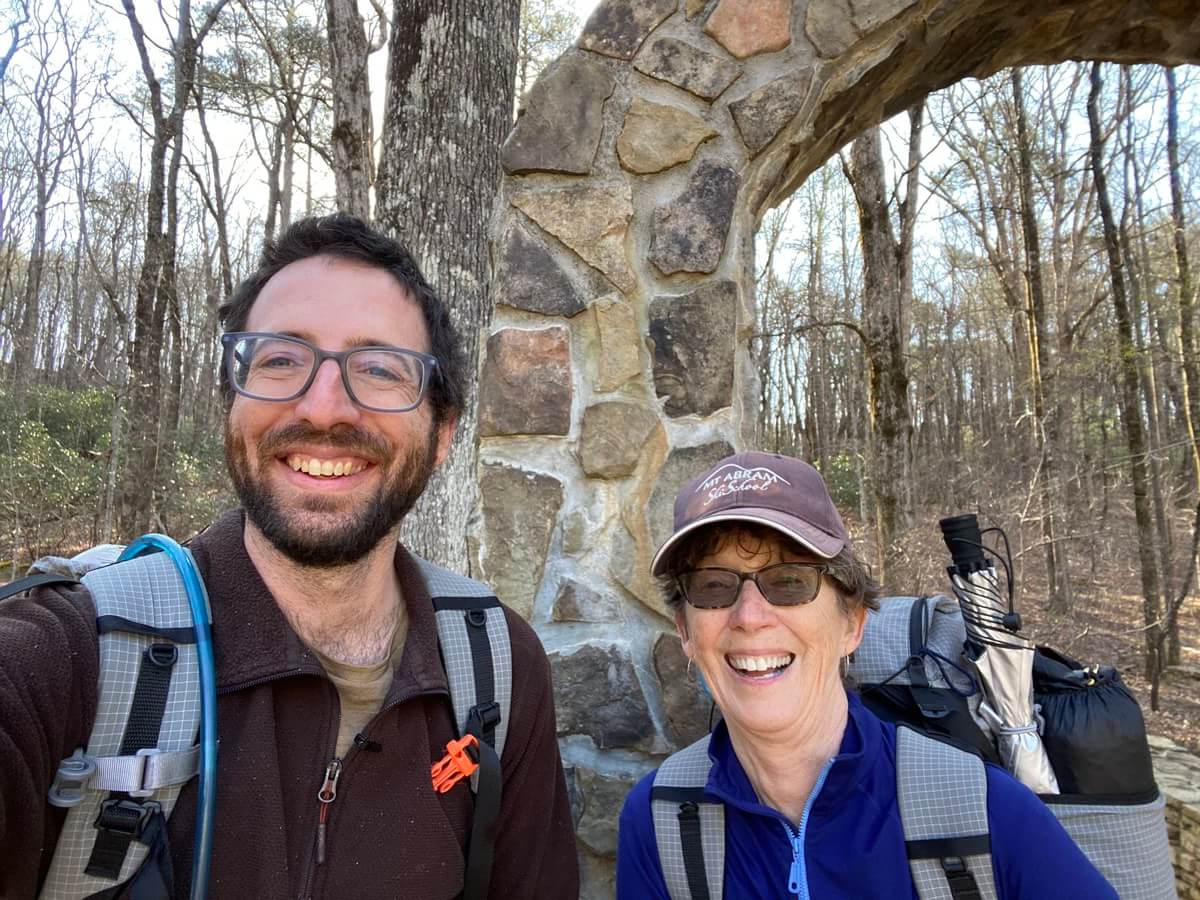
My mom and I wanted to follow all the traditions – we wanted to register our hike with the Appalachian Mountain Club to receive our special thru-hiker tag, and we wanted our picture taken at the famous archway in Amicalola.
So the first day of our long hike wasn’t technically spent on the Appalachian Trail, but on the approach trail.
As we took our first steps of the hike, our nervous energy was palpable (you can hear some of this in the first episode of Common Land, my podcast about the AT). We joked about what trail names we might adopt, and we chatted with a few day hikers that were out on the trail.
The first few miles of the approach trail were more developed than I anticipated: we walked on pavement for a bit before reaching the long wooden stairs that take hikers to the top of Amicalola’s famous waterfalls.
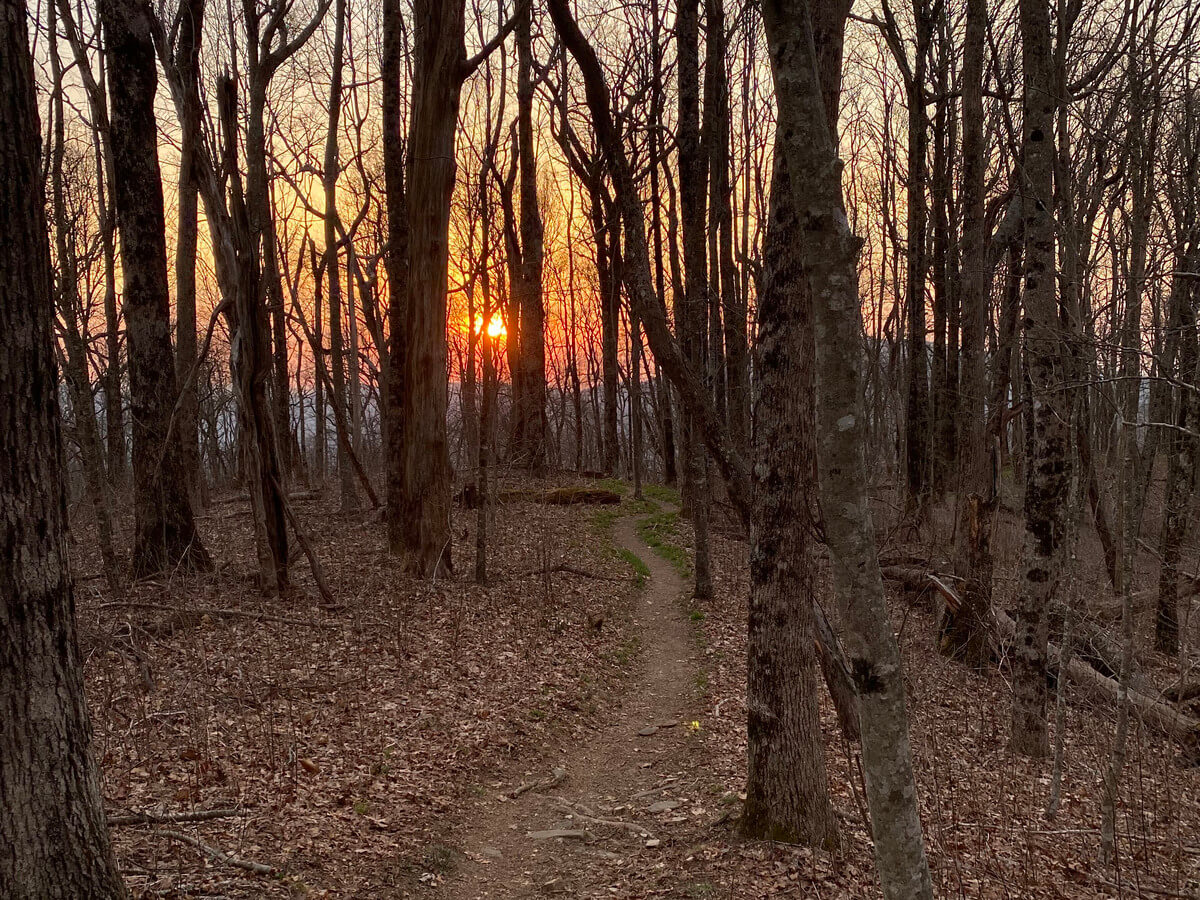
Image: Matthew Podolsky
The stairs seemed to go on forever, causing us to question our decision to hike an extra 8 miles that didn’t “count”, but the view from the top provided a nice reward.
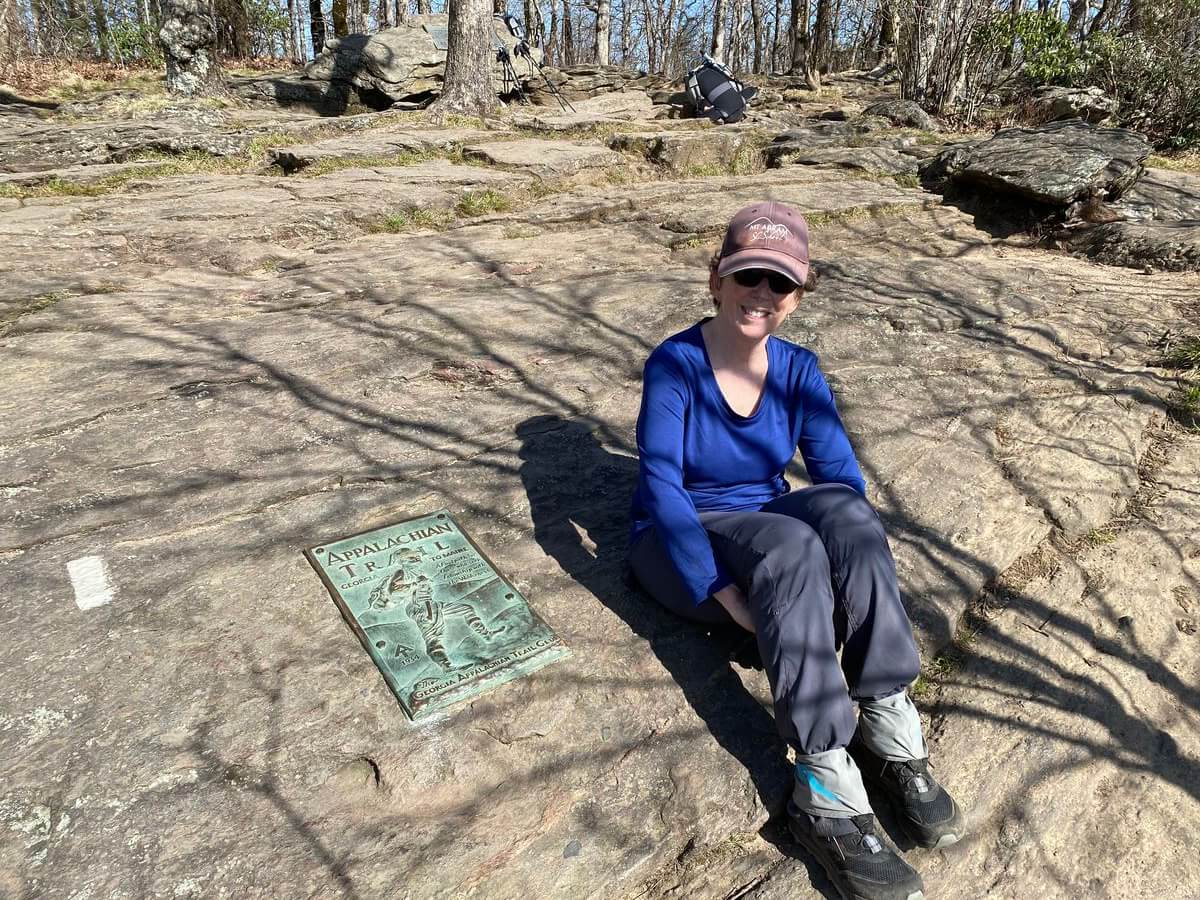
By the end of the day, we’d reached Springer Mountain’s summit and settled into our first camp at Springer Mountain Shelter, just 0.2 miles past the summit. The shelter itself was packed with thru-hikers when we arrived, but there were ample tent sites nearby. My mom and I found a nice private campsite just out of view of the shelter.
So despite the crowds, we found some solitude that first night on the trail. I thought about walking over to the shelter to introduce myself to the other hikers and hang out for a bit, but we were exhausted.
There’s an interesting social vibe at the outset of an AT thru-hike. Everyone is feeling that nervous energy, and it’s expressed in different ways by each hiker. My mom and I are both pretty introverted, so our social batteries were drained, and we welcomed the unexpected solitude on our first night out.
The “First Day of School” Feeling
Over the next few days, we got acclimated to life on the trail of one of the best hikes in the US. Each morning we woke with the sun, packed up all our gear, ate a bar or two, and started walking. We walked until early in the afternoon, then stopped at a shelter or campsite.
We had carefully planned out our mileage for this first stage of the trip because my mom was recovering from a knee injury. To reduce the risk of aggravating it, we capped our daily mileage at 8. This gave us ample time in the afternoons to set up camp, hang out, and get to know our fellow thru-hikers.
The terrain of the trail during this first stretch didn’t present too many surprises. We had completed an end-to-end hike of Vermont’s Long Trail a number of years ago, so we had a pretty good sense of what we were in for.
But we did encounter some surprises…
The biggest was the social vibe on the trail. One fellow thru-hiker described it to me as a “first day of school” feeling, and I think that’s pretty accurate. Most folks that I met were hiking solo, but trail families (or tramalies) would soon begin to take shape.
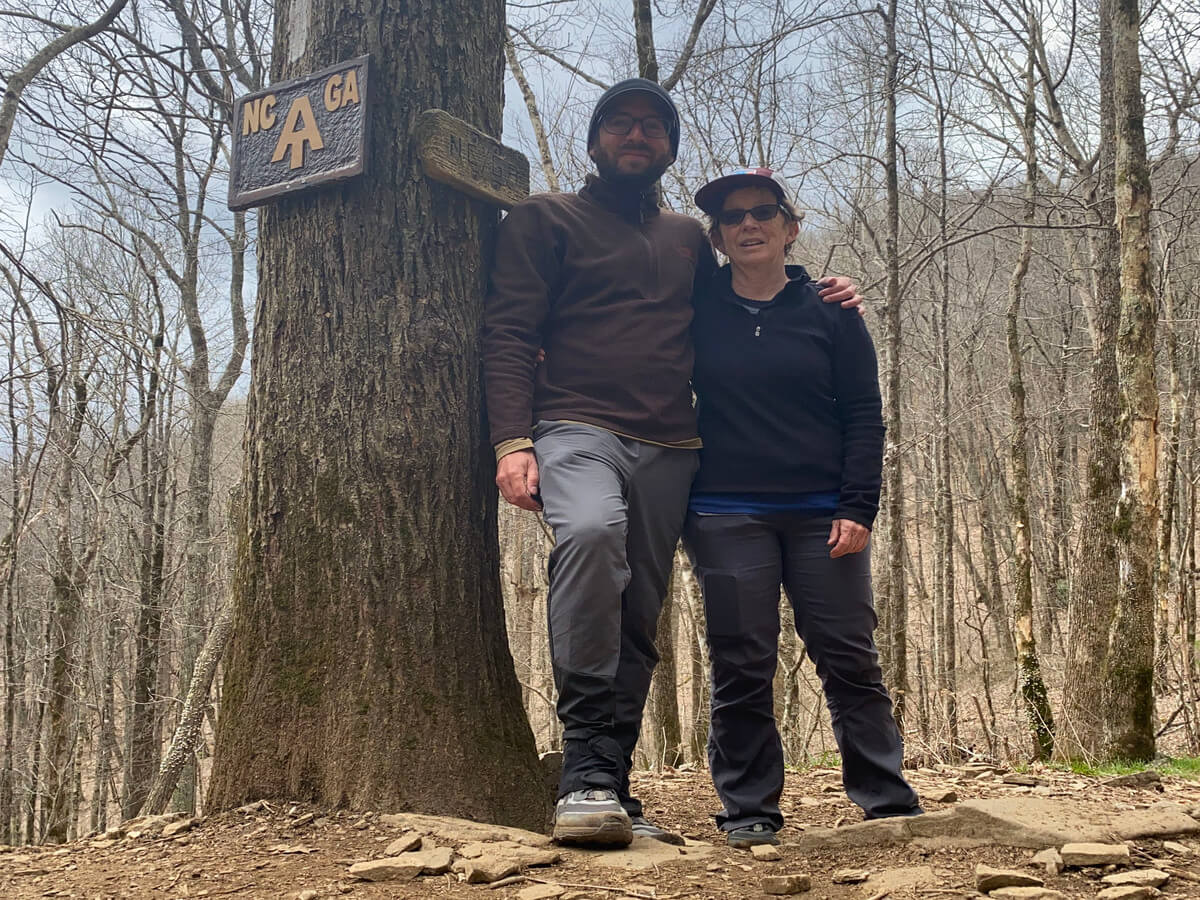
Image: Matthew Podolsky
By the end of our first four-day excursion on the trail, there were already groups of people starting to hike together, and there was lots of talk about sharing cabins in Neel’s Gap, the first resupply opportunity for northbound thru-hikers.
My mom and I met lots of hikers in those first four days, and we did end up sharing a cabin with a few folks at Neel’s Gap. But we were reluctant to join a tramaly right away. We wanted to find our own pace and get comfortable with our routine first.
We also were starting to understand that there’s a wide spectrum of tramalies on the AT. Some plan out each section of their hike and make sure ahead of time that everyone knows the itinerary, while others take a more laissez-faire approach. Some tramalies form organically when a group of hikers are all walking at the same pace.
Tramaly groups often splinter and re-form continuously over the course of a thru-hike. My mom and I didn’t know it then, but some of the hikers that we met in those first 4 days would become friends and tramaly members months later.
An Unexpected Encounter with Army Rangers
Another surprise was the military presence along this first stretch of the Appalachian Trail. There’s an Army Ranger training school in Northern Georgia that runs training missions in areas adjacent to the AT, which sometimes leads to interesting interactions.
My mom and I had heard about the presence of the Army Ranger school, but didn’t realize how close to the trail their training exercises sometimes take place.
We had a somewhat nerve-racking encounter with a group of approximately 25 Army Ranger students on our 3rd day of hiking.
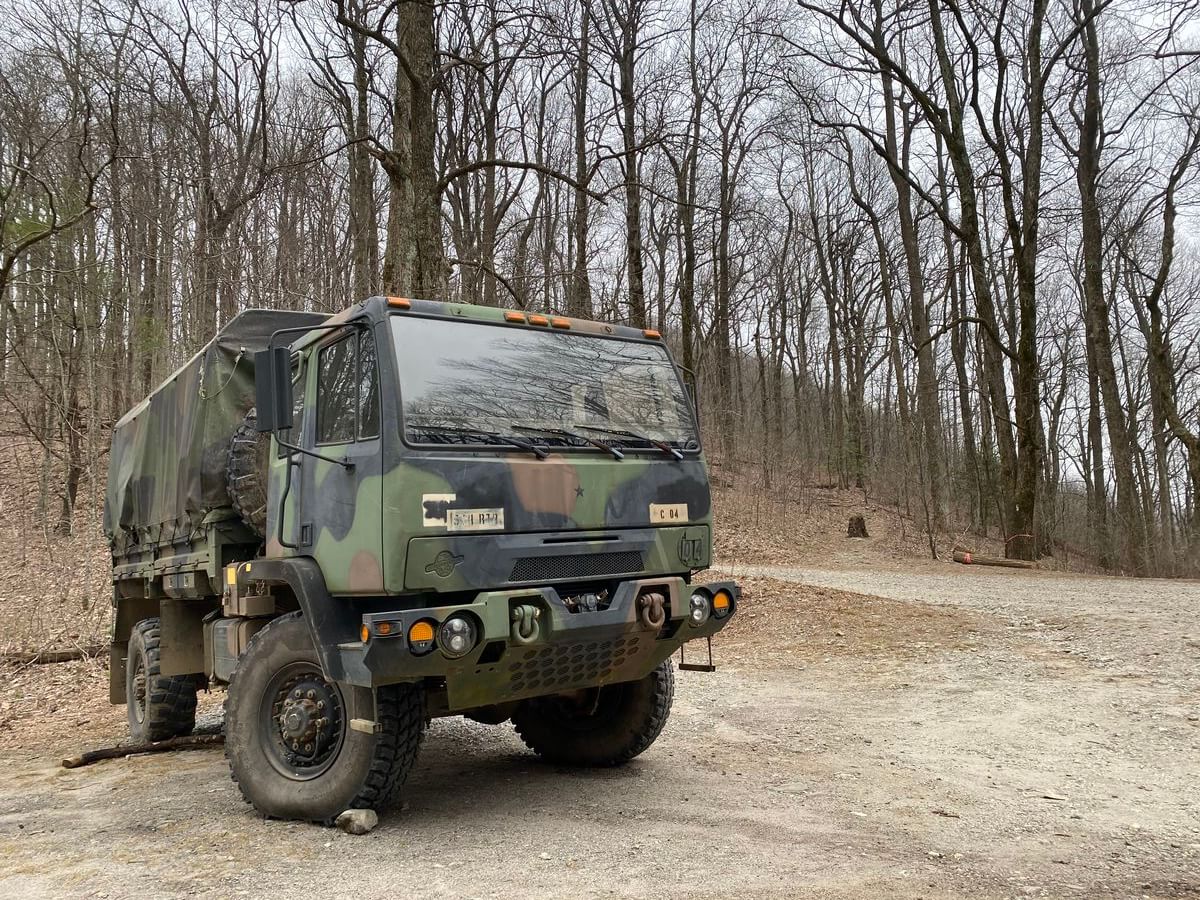
Image: Matthew Podolsky
Others who might be venturing out for a hike in this section of Northern Georgia should be aware not just that these training missions are taking place, but that they sometimes occur immediately adjacent to the trail.
Folks should also be aware that Army Ranger trainees are instructed to ignore hikers, so you shouldn’t be alarmed when these folks pretend that you don’t exist as you walk past. The Army Ranger company that we walked past had several assault rifles aimed toward the AT, which made us particularly uncomfortable.
But since the trainees didn’t acknowledge our presence, we just walked right past them, through the line of sight of their rifles. When I shared this detail in a blog that I posted just a few weeks after the incident, one commenter with a military background suggested that I should not have walked through the “fire line”.
This individual advised hikers to stand their ground and insist that Army Ranger trainees “clear the lane” before walking past. This seemed like good advice that should be passed along to fellow thru-hikers!
Finding Our Pace on the Appalachian Trail
Eventually, things started to come together:
Starting With Just Eight Miles a Day
As we moved past Neel’s Gap, my mom and I continued to increase our daily mileage very slowly. We stuck with our 8-mile-a-day limit for the first 2 weeks, then increased to 10 miles a day.
By the time we reached Virginia, we were regularly hiking 20 miles a day, but this wouldn’t have been possible without the slow buildup.
Building Up to Our First 20-Mile Day
Our first 20-mile day was particularly memorable, and it came on the day that we entered the state of Virginia. The northbound approach into the town of Damascus, VA, is known to be a particularly easy stretch of the AT, and because of this, many thru-hikers choose to attempt their first 20+ mile day during this section.
We were unsure if we’d be able to make it to the 20-mile mark, but we decided that we’d give it a try and see how we were feeling.
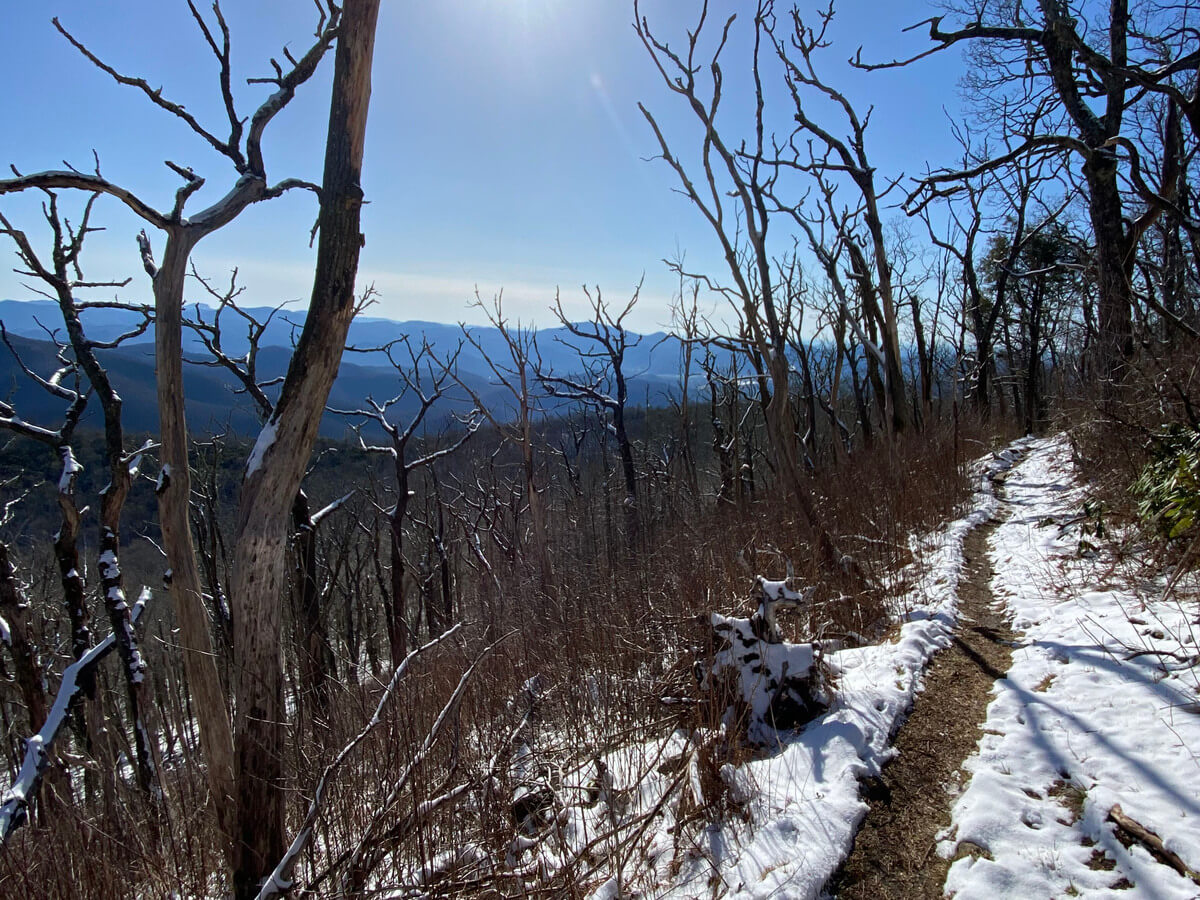
Image: Matthew Podolsky
That day we kept leapfrogging another group of hikers, who were also pursuing the first 20-mile day. They passed us while we were eating lunch, then we jumped back ahead of them a few hours later.
As the day progressed, we crossed paths with this group a few more times and started encouraging each other to keep going and reach the 20-mile mark. The encouragement provided just the right amount of peer pressure to push us a few extra miles and meet our goal.
We all camped together that night, awash in the joy that comes with achieving a goal and setting a new personal distance record for the trip. (You can hear some audio from our first 20-mile day in episode 3 of the Common Land podcast)
Trail Families and Finding Community
Because some of the best memories of the trail are from the people you meet on it.
What Is a Tramaly?
We started to meet more and more thru-hikers as we continued along the trail. My mom and I hiked with a loose tramaly for several weeks in North Carolina and Tennessee, but we split apart as we started to increase our daily mileage.
We joined another tramaly in New Hampshire and were reunited with a few of the hikers from our first one as we neared the end of the hike in Maine.
Finding Our First Trail Family
Although we made a great group of friends when we joined our first tramaly early in the hike, it was the second tramaly group that formed along the Vermont/New Hampshire border that really created some lasting bonds.
This second community was really months in the making: we all knew each other from earlier sections of the hike, and we were all motivated by similar goals.
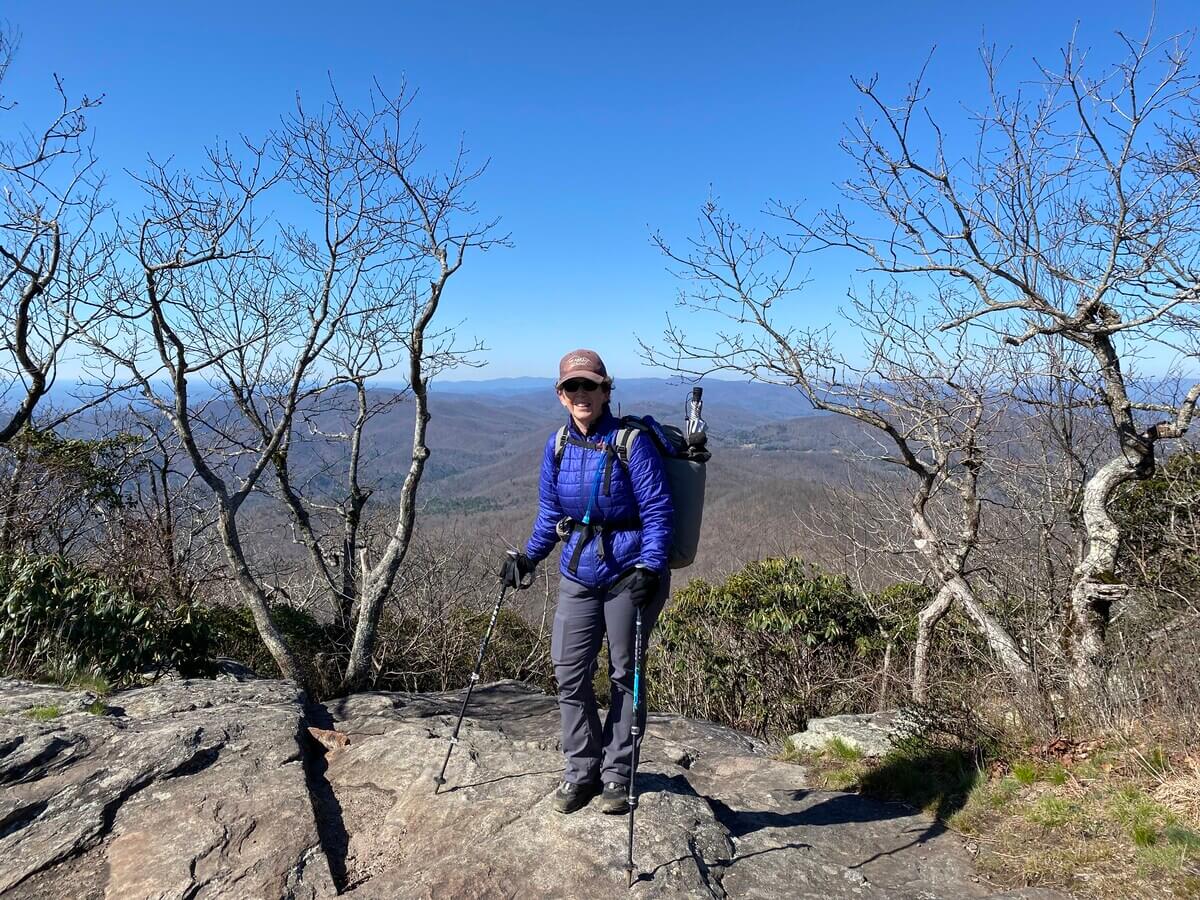
Image: Matthew Podolsky
As we neared the end of our thru-hike, everyone in this group prioritized fun and flexibility over rigid planning. At earlier stages, all of us had pushed ourselves to our physical limits, but by the time we neared the end, we wanted to slow down and savor every remaining moment.
How Our Trail Family Changed Over the Hike
Some tramalies feel very formal, with daily meetup spots planned ahead of time and concrete daily mileage goals. Ours was the opposite. It worked because we were all naturally hiking at about the same pace, and we all prioritized flexibility.
We were actually a bit nervous to use the word “tramaly” to describe our hiking group – it felt like it might dissipate if we chose to attach this label to ourselves. But after a few weeks of consistently staying together, we accepted the label and started to reluctantly make plans together, as a proper tramaly group.
Friendships That Lasted Beyond the Appalachian Trail
Now, more than 3 years later, I’m still in touch with all the members of my tramaly. We’ve organized one in-person meetup since completing the AT, and a few Zoom calls.
Not everyone connects with such an awesome group of like-minded people on the trail, but when it happens, those bonds can last a lifetime.
Rethinking Our Gear at Neel’s Gap
By the time we made it to Neel’s Gap, we were ready for some rest! We took a day off (zero day) to give my mom’s knee a break, and had our packs assessed by the experts at Mountain Crossings.
Getting a Pack Shakedown at Mountain Crossings
This outdoor gear shop is one of the best-known along the entire AT, mainly due to its reputation for “shakedowns”.
During a shakedown, an experienced long-distance backpacker from the gear shop goes through your entire pack and tells you what gear items to leave behind and which items can be replaced with lighter-weight alternatives.
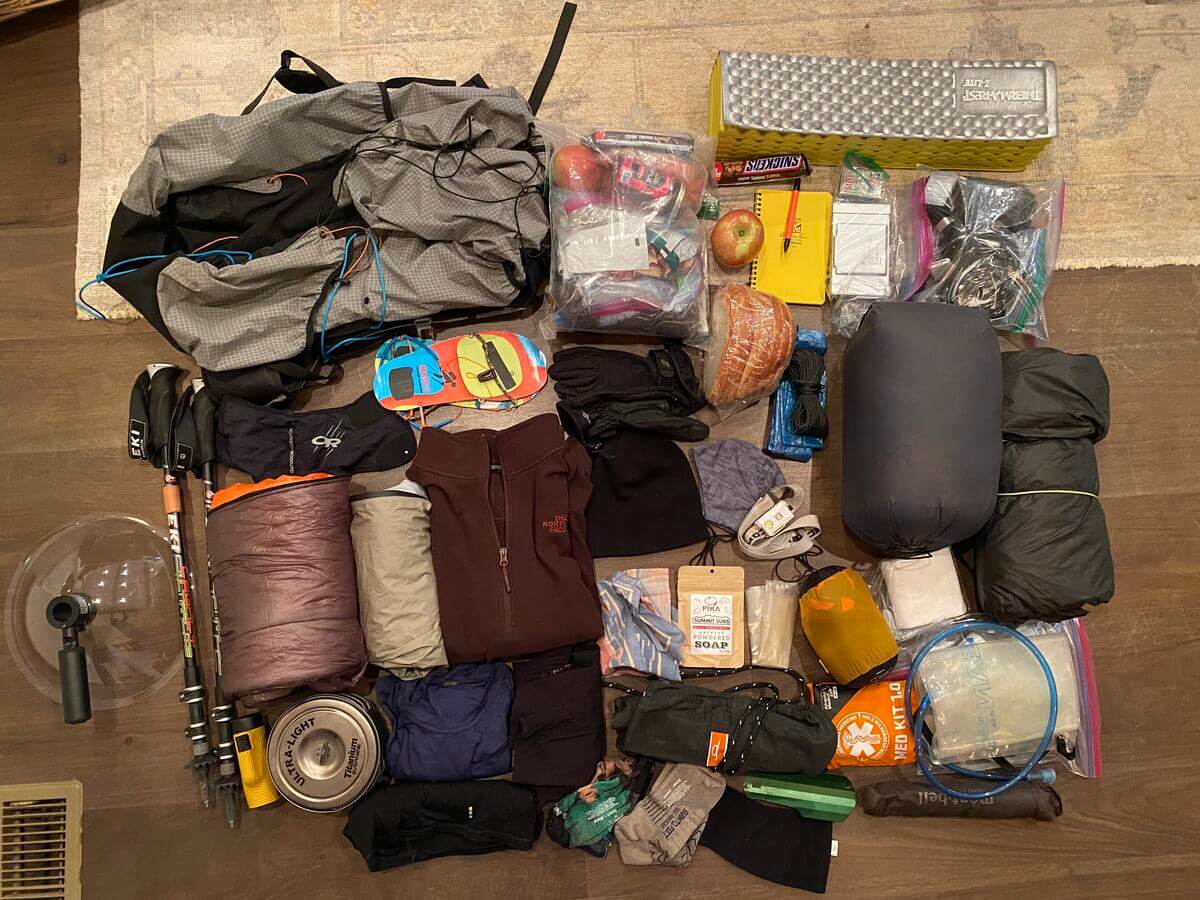
As I’ve explained, my mom and I weren’t new to long-distance backpacking, so our gear was dialled in. Both our packs had a base weight under 15 lbs from the start, so the experts at Mountain Crossings didn’t have much in the way of gear advice for us.
What I Carried on the Appalachian Trail
In addition to the core four pack items that I mentioned earlier (pack, tent, bag and air mattress), I also had with me:
- Altra Lone Peak trail runners (or hiking boots if you want ankle support)
- A merino wool base layer
- An inexpensive fleece jacket
- Synthetic down jacket from Enlightened Equipment
- Enlightened Equipment lightweight rain shell
- My ultralight umbrella (yes, I decided to bring it, and was happy I did!)
- Several pairs of hiking socks and boxers
- REI brand running pants
- Lightweight gloves and a beanie
- Waterproof pack liner
- Toaks brand titanium cookpot and alcohol stove
- Ursack bear-proof food storage bag
- Trekking poles
- Nitecore ultralight headlamp
- Platypus GravityWorks water filter
- First aid kit adapted from the NOLS wilderness medicine kit
- Tiny toothbrush, toothpaste, and powdered soap
- Ultralight titanium poo shovel
I didn’t send anything back home from Mountain Crossings, and the only thing that we needed to purchase was alcohol fuel for our cookstove.
We’d been forced to build a campfire to cook our dinner each of our first few nights on the trail, so we were excited for the convenience of the camp stove.
The Gear That Didn’t Make It to Maine
Almost everything on this gear list lasted the entire trip, with the exceptions being my pack and my sleeping pad. I actually started the hike with a Gossamer Gear Mariposa that had several hundred miles of use already.
This pack started to fall apart by the time I was partway through Virginia, so I ordered the Zpacks Arc Haul and had it delivered to the next Post Office I crossed paths with. I cycled through several pads – my Therm-a-Rest was repaired, then replaced by a Sea-to-Summit pad somewhere in Pennsylvania.
The Trade-Off Between Weight and Durability
There is a balancing act that thru-hikers play with ultralight gear. The lighter the gear item, the easier it is to carry, and the lower its expected lifespan. Ultralight gear is essential for maintaining comfort during such a long hike, but ultralight gear sacrifices durability.
Ultralight air mattresses are notorious in this regard, but the comfort that they provide makes it worth dealing with a replacement. Ultralight down jackets and rain jackets are also sensitive to tears, but in my opinion, worth the risk for weight reduction.
Looking Beyond the First Miles
Thinking back on those first few days on the trail, I think the “first day of school” analogy is particularly apt. Thru-hiking the Appalachian Trail is kind of like getting a graduate degree in backpacking. If you thru-hiked in 2022, as I did, you’re known within the trail community as a member of “the class of 2022”.
There’s even an official AT yearbook that a team of former thru-hikers publishes each year – almost everyone I met on the trail submitted their photo and bio to be included in the yearbook.
Of course, you don’t have to apply to thru-hike the AT, and there are no prerequisites. You just need the physical stamina and mental toughness to keep walking every day for 4-6 months, until you’ve traversed the entire spine of one of the planet’s most ancient mountain ranges.
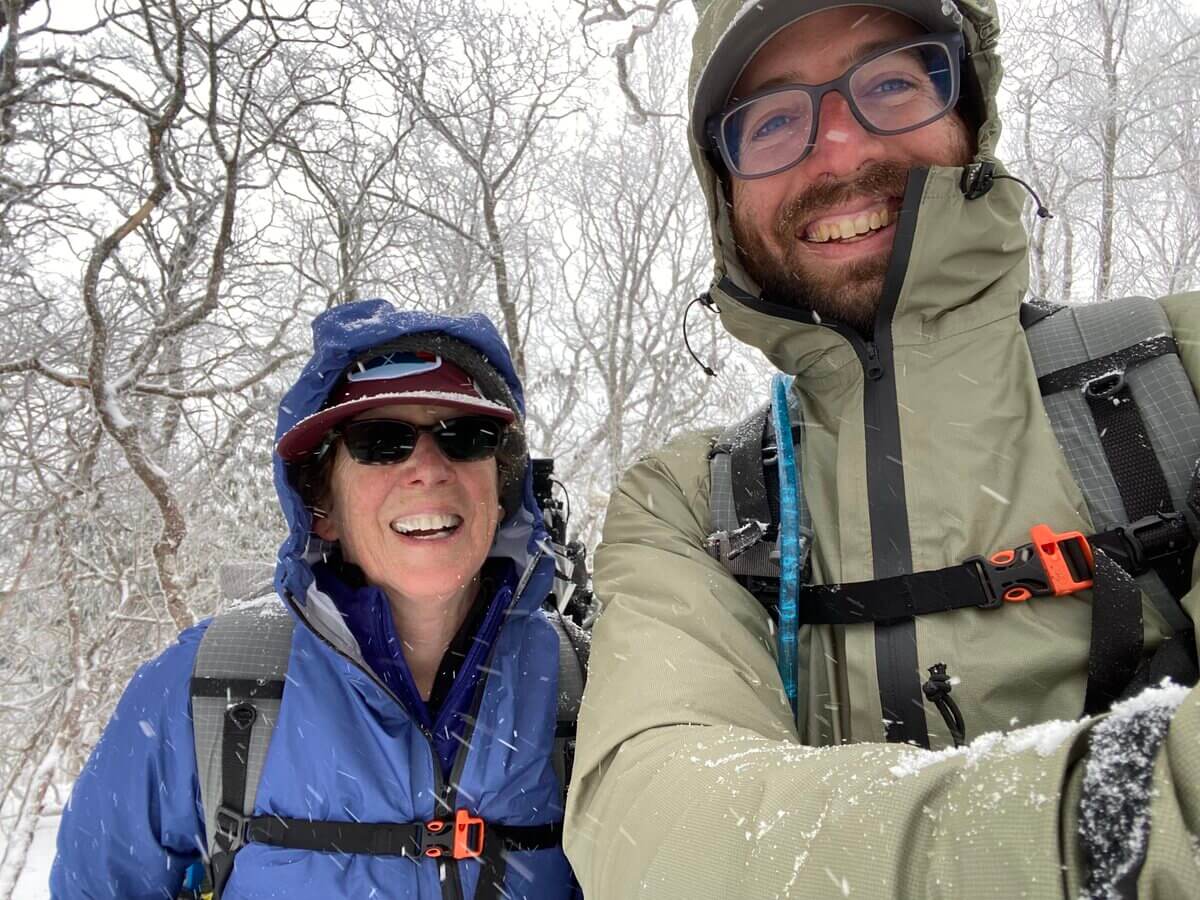
Image: Matthew Podolsky