Uruguay does not have a Machu Picchu or an Iguazú falls, but it has something more profound than what can be measured in landmarks. It is something that has to be experienced; Uruguay is the sun on your skin as you surf, campfire chats, sharing mate with locals, intangibles that suck you in and keep you in the country far longer than you bargained for as it did me.
Uruguay is among the most developed countries in Latin America, with a very high quality of life. Minor details like being able to drink the tap water or buses that actually run on time feel like a much bigger deal after travelling elsewhere in South America,
Much of Uruguay’s population tapers along the coast. It is a country of seaside towns, rolling dunes and South Atlantic sunsets. Every major city will have a town beach and sea air. But go inland and you will see the other Uruguay. It is rural and traditional, a land of rambling farms roamed by gauchos herding cows in their ancestral costumes and singing as they work.
So much of what I remember and treasure about Uruguay is through the prism of people. Almost everything seems geared towards sharing; a mate in the park, spontaneous invites to an asado, a game of beach volleyball together or a joint around a campfire. Uruguayans are some of the nicest people I have met anywhere when travelling!
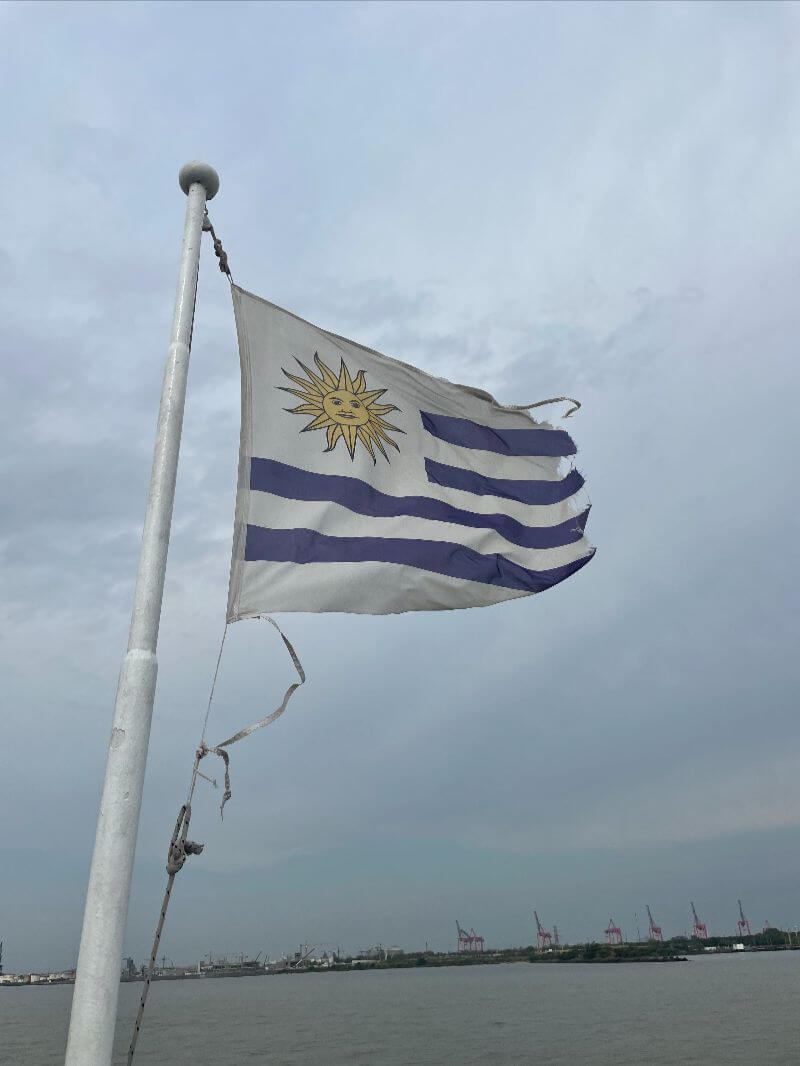
Photo: Tom Hennessy
The Broke Backpacker is supported by you. Clicking through our links may earn us a small affiliate commission, and that's what allows us to keep producing free content 🙂 Learn more.
Why Go Backpacking in Uruguay?
Backpacking Uruguay felt very different to the rest of South America, even Argentina, its bigger but closely related cousin. There was no stress about different currency rates, whether or not a bus will turn up or hordes of street sellers gunning for your Pesos. Uruguay is beyond relaxed. Just go about your business as you would back home.
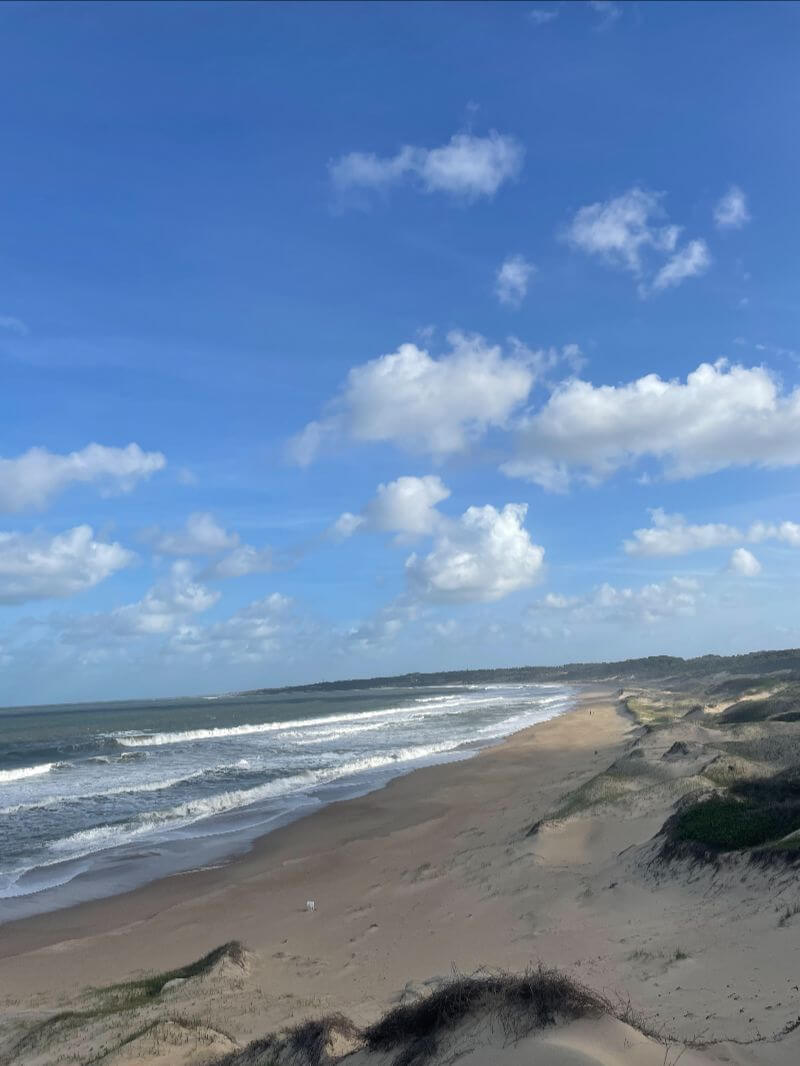
Photo: Tom Hennessy
There is also brilliant hostel infrastructure here. Hostels offer arranged activities, comfortable pod beds and a vibey social scene. Though, I found that the less modern hostels were some of the best I’ve stayed in. Crumbling beach huts in Cabo Polonio may not even have hot water, but they do have the music of the waves and a sense of Robin Crusoe in the air. Something that you think about years into the future.
I found that the backpacking scene had a higher proportion of long-term travellers than elsewhere in South America. The sheer livability of the place makes it a perfect place to teach English, volunteer or work from your laptop.
The result was that I found classic backpacking drinking sessions spilled over into the surrounding community – I went to local people’s birthday parties or got invites to pop up raves on the beach.
Authenticity is way over used in backpacking lingo, but I found it easiest to interact with locals in Uruguay of any country in South America, creating many authentic experiences! Get learning some Spanish! It will go a long way out here.
- Best Travel Itineraries for Backpacking Uruguay
- Best Places to Visit in Uruguay
- Top Things to Do in Uruguay
- Best Places to Stay in Uruguay
- Uruguay Backpacking Costs
- Best Time to Travel in Uruguay
- Staying Safe in Uruguay
- Getting to Uruguay
- How to Get Around Uruguay
- Working in Uruguay
- Culture in Uruguay
- What to Eat in Uruguay
- FAQs About Backpacking Uruguay
- Final Advice Before Visiting Uruguay
Best Travel Itineraries for Backpacking Uruguay
Below, I have compiled the best Uruguay tour itineraries. Though the beauty of Uruguay is how compact it is, so the itineraries are based more on how much time you have rather than the geographical accessibility of places. So feel free to vary the stops according to taste.
Most people visit Uruguay as an add-on to their trip to Argentina. Buenos Aires is just an hour across the River Plate by ferry from Colonia del Sacramento. So I have used Colonia as the starting point of this itinerary, but travellers can also enter Uruguay by international flight or overland from Brazil. In diminutive Uruguay, it doesn’t really matter where you arrive!
14 Days: Costa to Campo
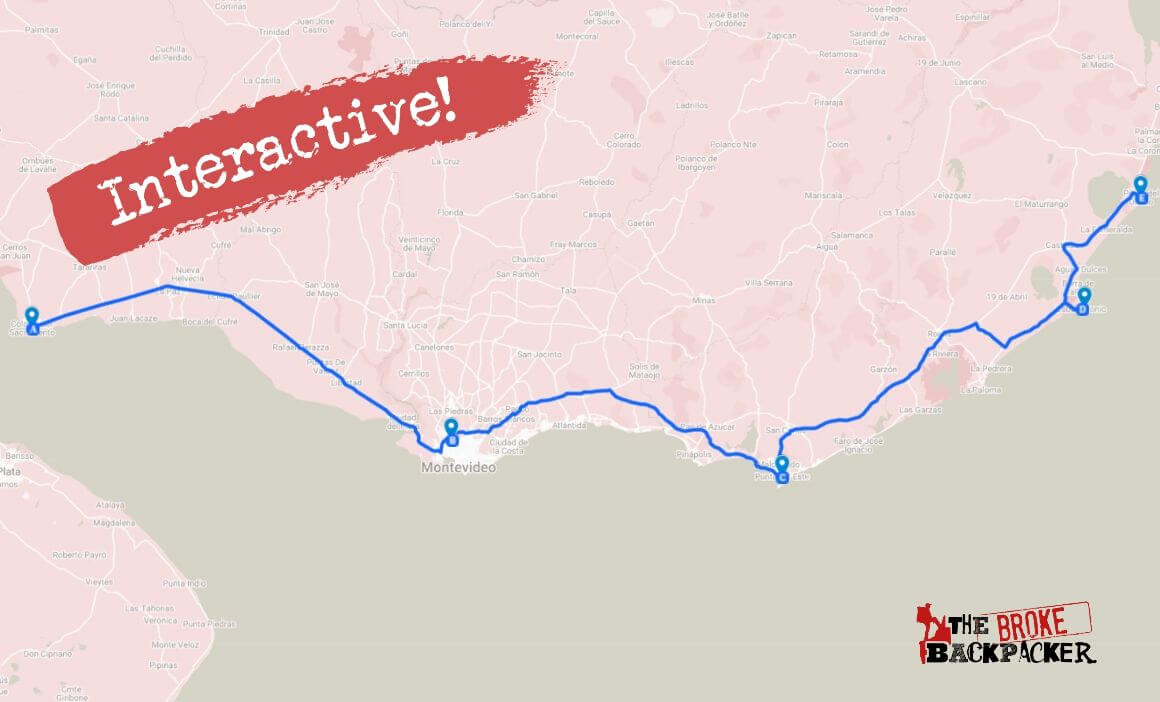
Colonia del Sacramento – Montevideo – Punta del Este – Cabo Polonio – Punta del Diablo – Stay on a hacienda.
Without deciding to settle long-term to surf or teach English, I think that 14 days will enable you to see the very best of Uruguay and, most importantly, have the time to truly feel it. This itinerary traverses Uruguay by bus from West to East.
You will probably begin by stepping off a ferry in Colonia del Sacramento. Built by the Portuguese on the latte-coloured waters of the River Plate, you would be forgiven for thinking that you have arrived in the 19th century. Be sure to check out the views of Buenos Aires from the lighthouse.
After a day in Colonia, board a 2.5/3 hour bus to Montevideo, Uruguay’s elegant beachside capital. Spend 2 days pottering about museums, street food stalls and playing volleyball on the beaches.
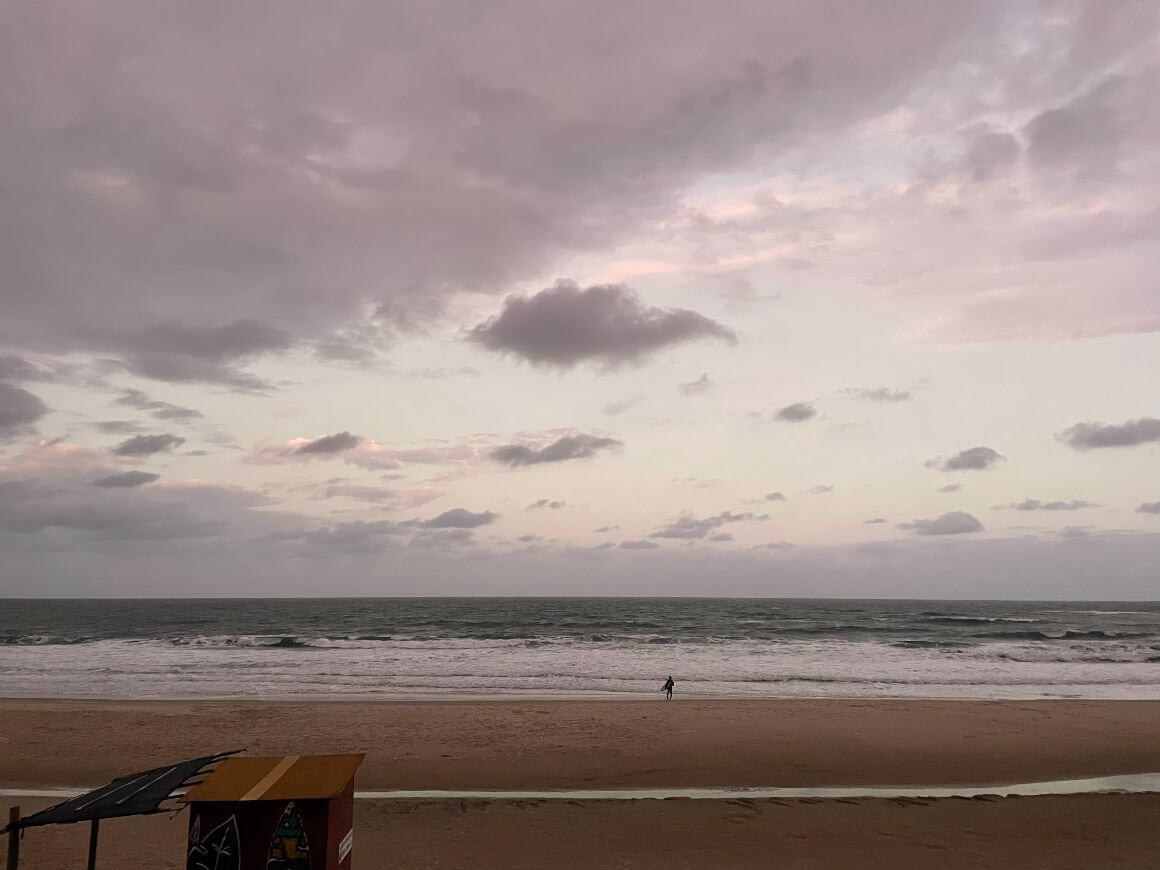
Photo: Tom Hennessy
Montevideo is just 2 hours 15 minutes from the next destination – Punta del Este. Cut loose and party with the cool set that gives this resort town the title of South America’s St Tropez. Check out the famous hand sculpture, art galleries and cycle along the beach when not going large in the beach clubs. It’s a great base for backpackers as there are some pretty sick hostels here.
After 2 days in Del Este, get a much-needed detox by going off-grid at Cabo Polonio. Surf, frolick with seals and bask on the beach in this hippy hideout. Give yourself 3 days to soak it all up. No one has ever rushed in Polonio!
Head back to civilisation at Punta del Diablo where you can shred Uruguay’s best waves, go whale watching and stroll through the streets of driftwood shacks.
Having tasted the best of Uruguay’s coast, head inland to see its other side by staying on an estancia. Round up cows and drink red wine with probably the coolest people in South America, the gauchos.
This itinerary presents the very best of Uruguay and allows for the chilling that makes authentic experiences blossom.
The two alternative itineraries balance the urge to rush through Uruguay and slowing down to experience it.
7 Days: Best of Beaches
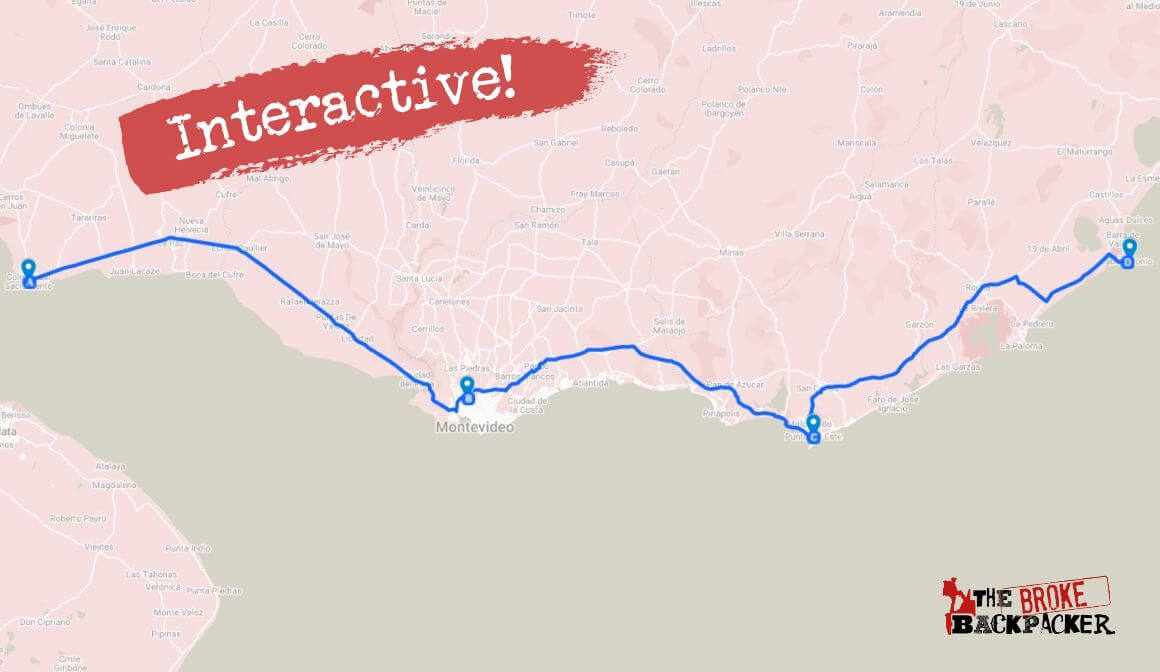
Colonia del Sacramento – Montevideo – Punta del Este – Cabo Polonio
Likewise, begin in Colonia del Sacramento before heading to Montevideo. Having obtained your culture fix from Colonia and Montevideo, lean into being a full-time beach bum in Punta del Este for 2 days and then spend 3 days in Uruguay’s ultimate beach paradise, Cabo Polonio.
5 Days: Quick Hop
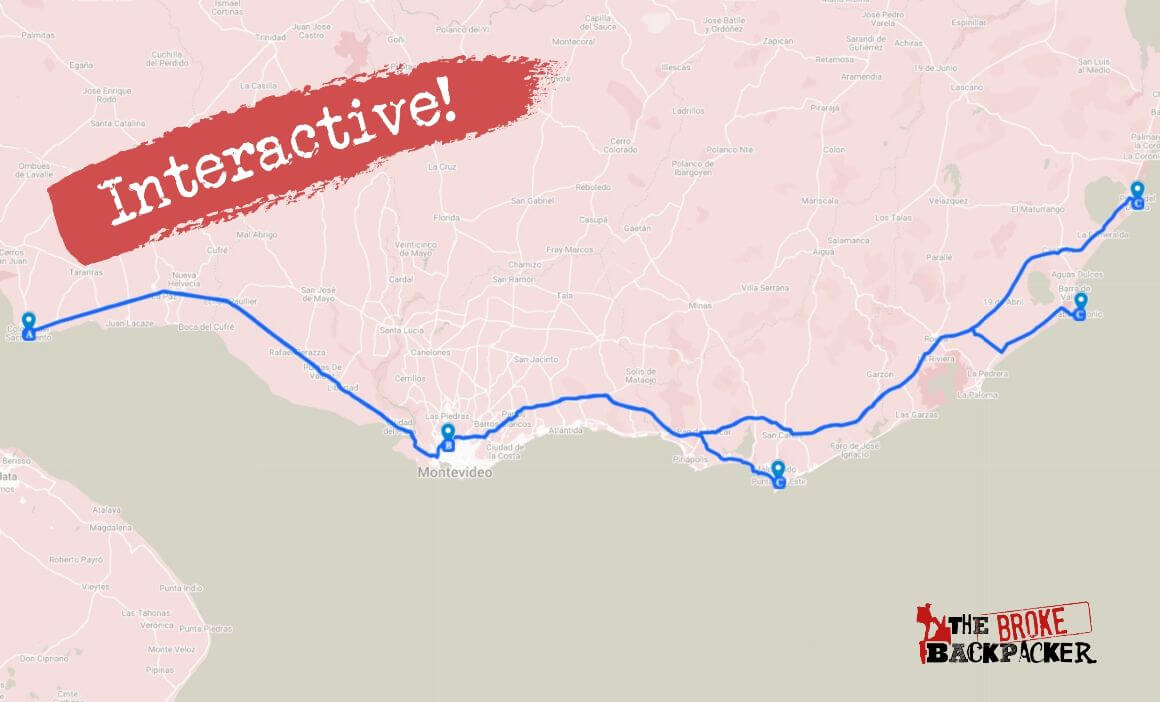
Colonia del Sacramento – Montevideo – Punta del Este/ Punta del Diablo / Cabo Polonio.
Only have 5 days to get a taste of Uruguay? No bother! Take advantage of its accessibility by seeing into the past at Colonia del Sacramento, sample the cultural capital of Montevideo and kick back on a beach of your choice for 2 days. Punta del Este, Punta del Diablo and Cabo Polonio are all accessible within 2 to 3 hours from the capital. A half-day tour in Montevideo will knock out those heavy hitters on your itinerary fairly easily if you’re tight on time.
Best Places to Visit in Uruguay
One of my top South America travel tips is to dive deep into Uruguay well beyond Montevideo. Here’s where I’m talking about:
Colonia del Sacramento
Founded by the Portuguese in 1680 to smuggle goods into Buenos Aires, this little cobbled masterpiece preserves all of its original colonial charm. There is simply so much history compressed into the avenues of Barrio Histórico that you can wander aimlessly and still hit all of the big attractions without trying. It is a UNESCO World Heritage Site for a reason.
The Barrio Histórico starts at Puerta de Campo, a gate in the fortified wall encircling the city. Pass through the gate as if it’s a portal to the 17th century. Inside are museums, palaces, quaint cobblestone streets and an ambience of the old times. The town is endlessly photogenic, prepare to snap at every blossoming tree or rambling avenue.
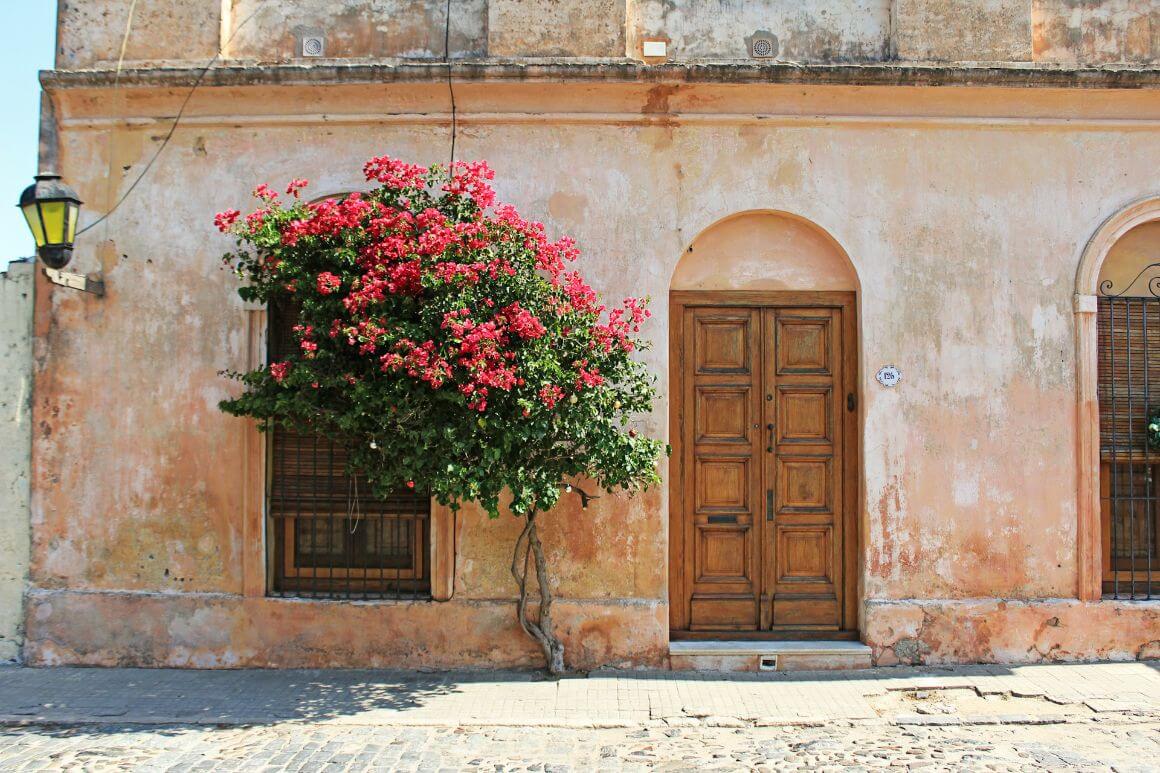
In terms of attractions, I particularly enjoyed the Centro Cultural Bastion del Carmen. Just how many times have you visited a beguiling art gallery set within the bounds of a ruined fortress? The views from atop the city lighthouse are also astounding. You get a bird’s eye view of the town and gaze out over the River Plate and the ships charting their course across to Buenos Aires.
If museums are your thing, you are in luck, as Colonia has heritage in spades. Museo Portugués walks you through the town’s genesis as a Portuguese smuggling base, including some fantasy novel-esque seafaring maps. Casa de Lavalleja preserves the old governor’s palace, giving a priceless vista into how the great and good lived back in the day.
Probably my favourite activity here was to eat and drink my way through the town. Weave your way from cafe to cafe, people watching and soaking up the tranquillity and a sense of time folding back on itself here. Eating empanadas on the shores of Puerto Viejo and gazing out at the Rio de la Plata while sipping yerba mate made me feel so at peace!
Montevideo
Uruguay’s capital has been consistently voted among South America’s most liveable cities for the last 20 years. With its winding historic streets, beachside location and absence of the traffic jams that blight other capitals like Lima, you will be charmed.
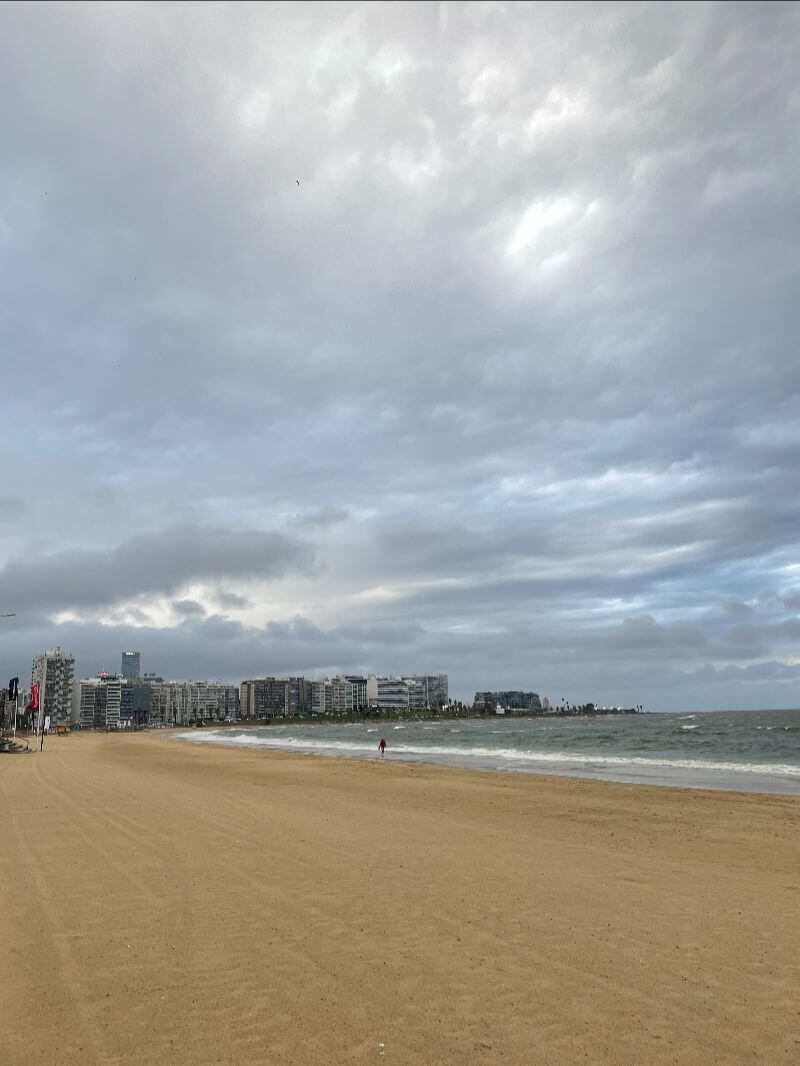
Photo: Tom Hennessy
Montevideo has often been used as a stand-in for Havana in films, and there is certainly an air of the Cuban capital here. The scores of classic cars and the shabby-chic buildings of Ciudad Vieja make it feel as if you are in Cuba or San Telmo in Buenos Aires. Though, this is Montevideo and special in its own way. The standout building to oogle is Palacio Salvo, the city’s art-deco icon that was once South America’s tallest building.
Take advantage of staying in Montevideo by hitting up La Rambla, a 25km long path along the city’s sea front. Rent a bike and see the whole sweep of the coast, or else cycle or walk to the pick of the town beaches – I would recommend Los Pocitos – and post up there for the day. Pocitos is a wonderful place for a dip and features many public volleyball nets. Cut into a game and meet some locals, this is how my friend met his girlfriend!
Further along the coast at Playa Malvin is the palm-adorned Isla de las Gavitos, 700m off the shore. Swim out to it for an adrenaline-fuelled challenge and earn your sunbathing.
The shopping here is simply unreal. On Sundays, the famous Feria de Tristán Narvaja flea market takes over several blocks from Av 18 de Julio. Everything imaginable is on sale, from military memorabilia to jewellery to antiques. It is also a fantastic people-watching spot. Mercado del Puerto is a great spot to try Chivito, Uruguay’s national dish. Sample this loaded steak sandwich auténtico in this hip covered market.
The cultural scene is also astounding. Catch a tango show or even get lessons yourself. Uruguayans will vigorously insist that they invented the dance, and Carlos Gardel, the greatest tango singer, certainly was a Uruguayan. The pick of museums is also notable – take your pick from Museo Andes 1972, honouring the Flight 571 disaster that is the subject of Alive, Museo Gaucho on this iconic herding culture or Casa Rivera about the now-extinct indigenous cultures of Uruguay.
Punta del Este
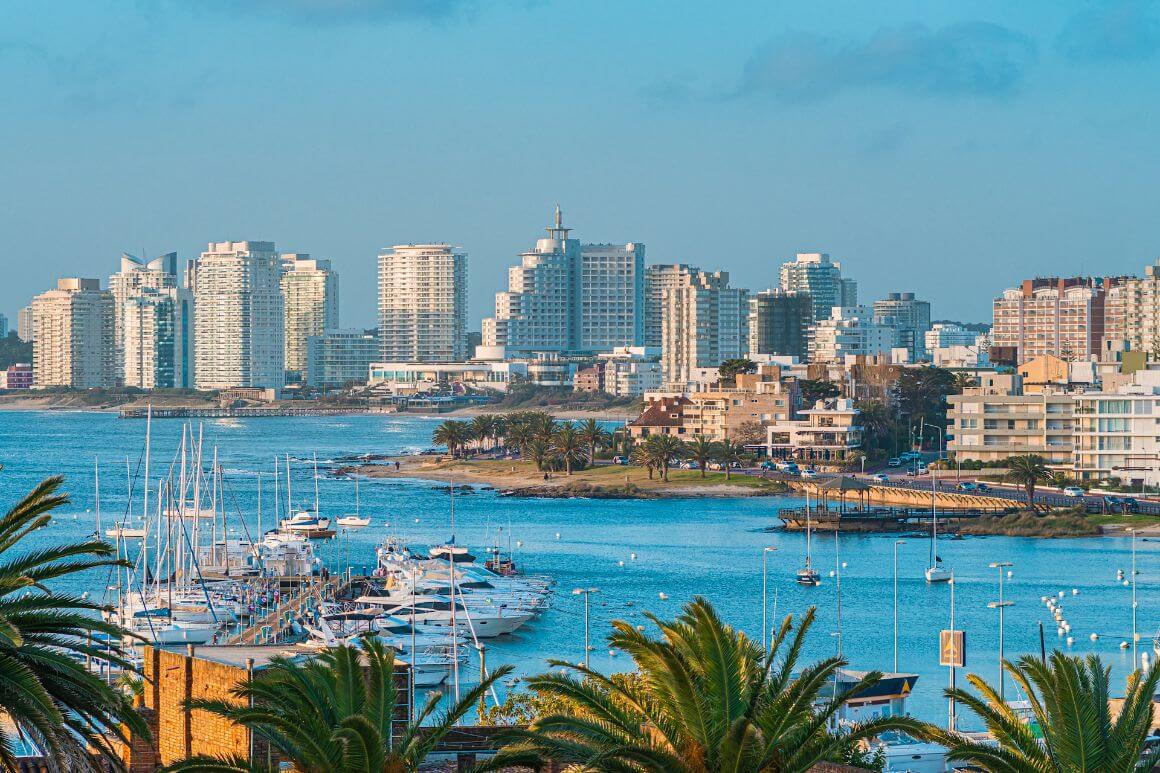
As featured in the brilliant book and now blockbuster The Penguin Lessons, Del Este is Uruguay’s glamorous nightlife capital. During summer, its parties and rambling sands even draw celebrities from Brazil and Argentina.
Spend the day beachcombing Del Este – Playa Olla has decent surf breaks, while Playa Mansa boasts jet ski rentals. However, for sunbathing and soaking up the glitzy Del Este vibe, Playa Bikini cannot be beaten.
Probably the most iconic image of Punta del Este is La Mano en la Arena, the hand in the sand. This is a monumental sculpture of grasping fingers emerging from the beach, like a giant buried hand is grabbing you! It is well worth visiting and taking advantage of the photo op.
The town truly comes alive at night. The port area is the most lively section of town, with drinking institutions like Soho and Moby Dick pumping out tunes long into the night. Outside of peak season, Ocean Club will be guaranteed to be open for a groove.
Punta del Diablo
This is where I spent the bulk of my time in Uruguay. Life here revolves around the tides and surfing world-class waves. Unwind from a day shredding the breakers by stargazing outside a good tent beside a campfire. Inland, the National Park features capybaras and untouched landscapes.
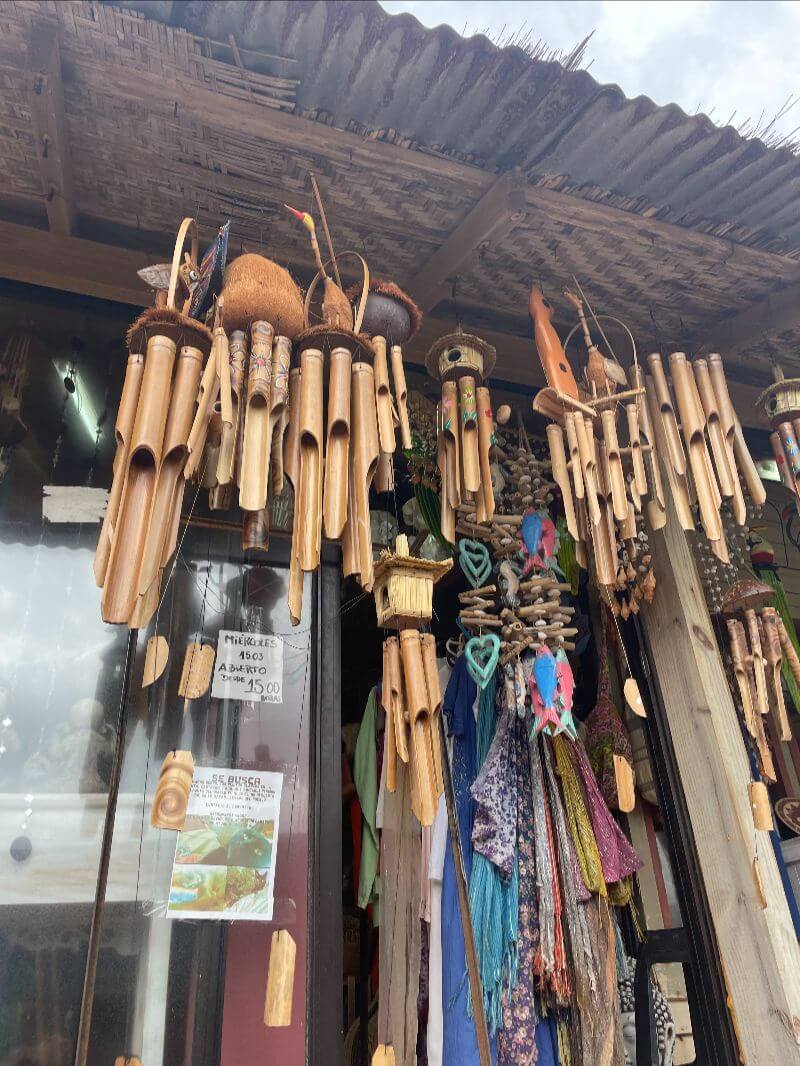
Photo: Tom Hennessy
The first thing that strikes the visitor here is the lack of paved roads. The town is a series of ambient wooden shacks tapering down to the crashing Atlantic. Each building is different, and nearly all feature driftwood to add to the castaway atmosphere.
Punta del Diablo offers surf breaks for any ability. The town beach is Playa del Riviero, a crescent of golden sand offering well-shaped waves that can reach 3m in high swells. Be warned, the break is fairly far out to sea, so prepare for lots of paddling.
Surfboard rental is available along this beach. The water is chilly so make sure to wear a wetsuit for prolonged sessions. My pick for beginners is Playa Grande, a 20-minute walk from the town offering smaller waves and is suitable for swimming and bodyboarding.
The beach walks here are a different gravy. Simply head west along the town beach. There is scarcely anything between there and Brazil. You will be alone between the heaving Atlantic and rolling walls of sand dunes. The waters here are alive with sea creatures – in a two-hour walk, I spied penguins and sea lions. It is also possible to see whales! Right Whales migrate past these shores from mid-June to Mid-July and Mid-October to Mid-November.
Visit Reserva Santa Teresa – The entrance to this national park is some 8.5km from the town, so take a taxi or cycle. If it is your bag, horses can also be rented from the town’s plaza. The main sights include Laguna Negra: a massive expanse of freshwater home to flamingos and capybaras. The main impression one gets from this national park is the emptiness of the interior, it brings you back to an older age of the earth. You can also rent kayaks on the lakeshore.
Next up is the Santa Teresa fortress: a castle built in 1782 by the Portuguese to defend their territory against the Spanish. The layout is spectacularly geometrical, and the stonework is perfectly preserved. Peering through arrow slits at empty land around and with the blue ribbon of the Atlantic visible in the distance, the frontier feel is palpable and unique.
And finally, head to the Botanical Garden. Get up close and personal with South America’s mind-boggling wealth of plant life in this delicately curated garden. The greenhouse built in 1939, housing tropical plants and an aquarium is a real joy to visit. This is located right at the entrance of the national park and just minutes from the fortress.
Cabo Polonio
This is one of the most unique places that I visited in South America as a whole! It is literally off the beaten path – the town is inaccessible by road and is not connected to Uruguay’s electricity or water grids. The result is an immersion in the surrounding pristine nature as I’ve never experienced before.
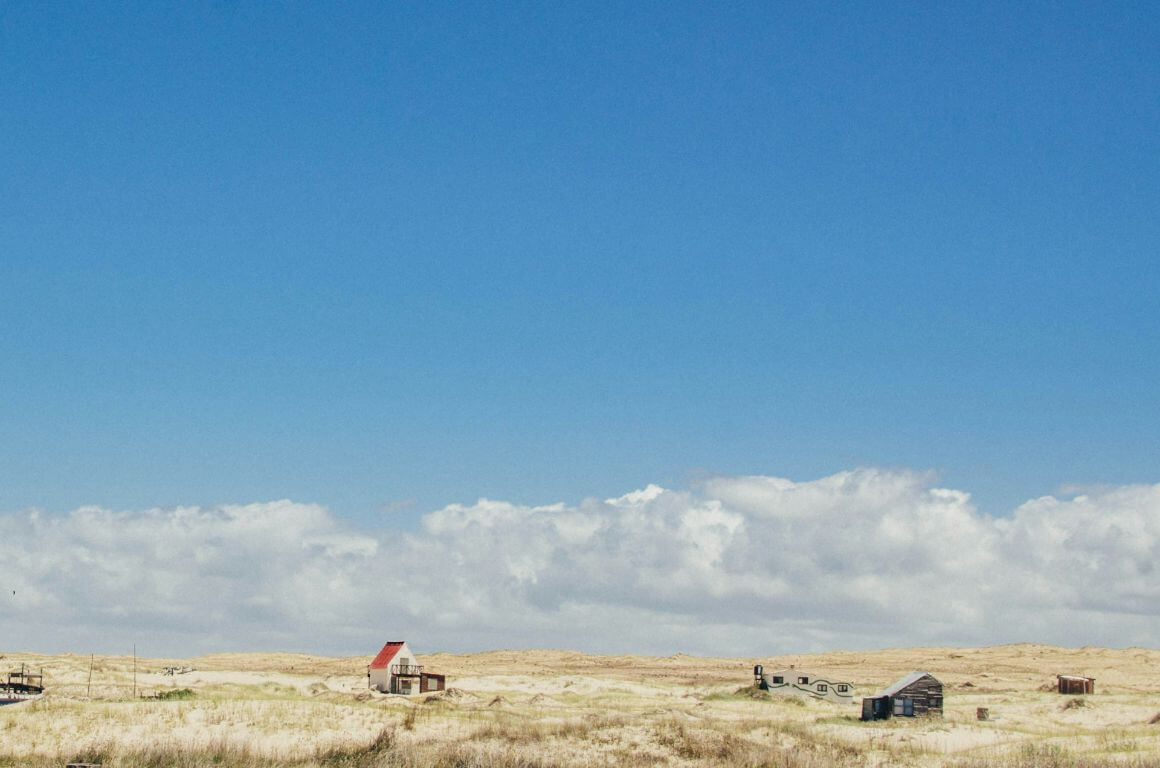
The village consists of driftwood shacks, washed-up boats and dirt roads. It is simply marvellous. Navigating the darkened streets by torchlight to the one shop in town for a 1.5L bottle of wine to share with new friends around a campfire is simply why I travel! After a few drinks or legal joints, head to the seashore to gaze at the bioluminescent plankton that emit the only light source on the beach.
During the day, rent equipment to surf on Playas Norte or Sur. The strong winds also lend themselves to kite surfing. Walk along to the lighthouse to observe Uruguay’s second-largest sea lion colony. These sea puppies will adorably spar or doze in the sun.
Traditional Interior
Few make it inland in Uruguay, but those who do are rewarded with vast empty spaces and examples of the famous gaucho culture.
The land is divided into massive ranches known as estancias. Thousands of cows and sheep roam these vast pastures, guarded by mate-sipping, singing horsemen called gauchos. Many estancias offer guests the chance to stay on a ranch and try their hand at the gaucho life.
Top Things to Do in Uruguay
1. Surf
Uruguay’s waves are among the best on the continent, and the country even hosts international surf competitions. Take your pick of La Paloma, Punta del Diablo, La Pedrera, Cabo Polonio and Punta del Este for top breaks and a taste of surf culture. Doing a residential surf camp here is a great chance to make serious progress and learn a life-enhancing skill for less than at home!
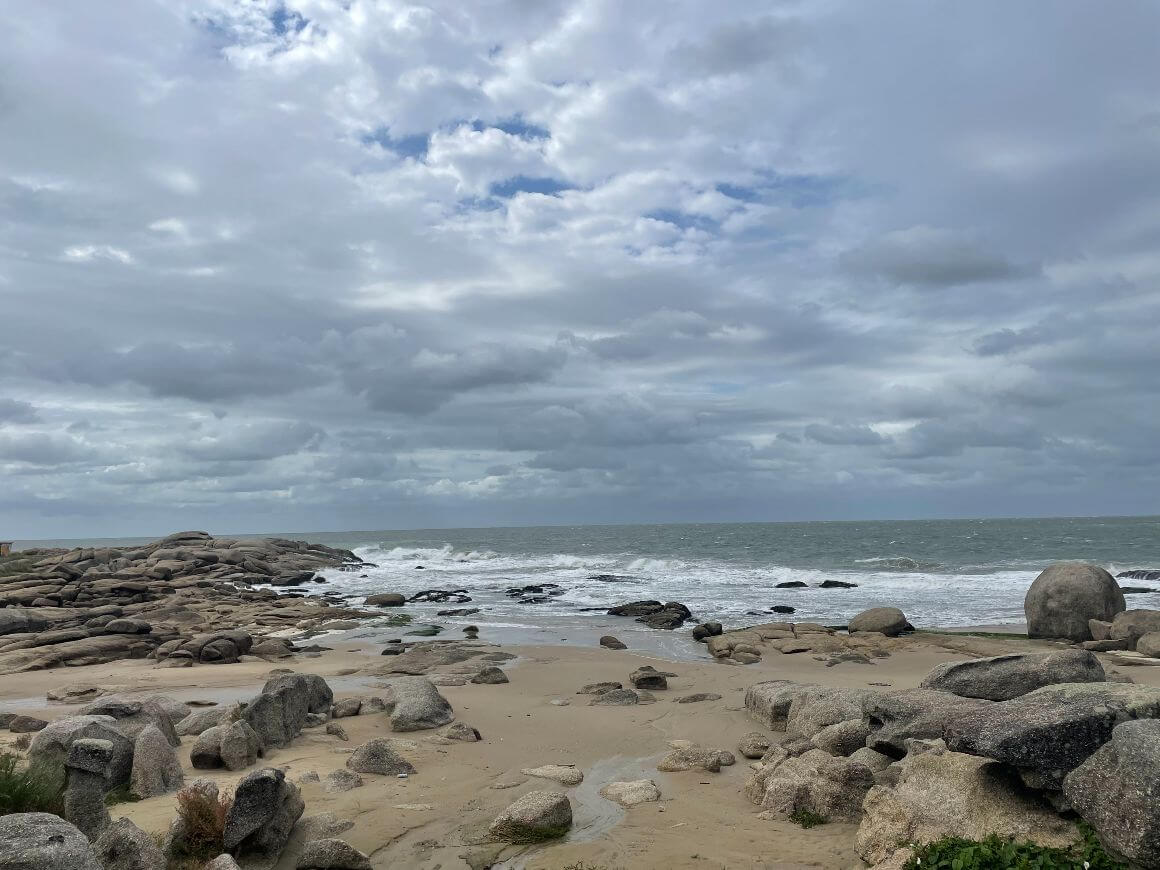
Photo: Tom Hennessy
2. Visit the Flight 571 Museum (Alive plane crash)
The incredible survival story of a Uruguayan rugby team whose plane crashed in the high Andes has captivated audiences with the resilience of the human spirit and the grisly reliance on cannibalism to survive. Explore the stories of the deceased and survivors and see relics of the crash at this brilliant museum.
3. Live like a gaucho on a traditional farm
The gaucho is an immortal symbol of the rugged, self-dependent rural life in South America’s Pampas. Their songs, horsemanship, iconic outfits, fierce independence and role in winning independence make them some of the coolest people on the continent. Uruguay offers myriad opportunities to get up close and personal with these folk heroes on working ranches.
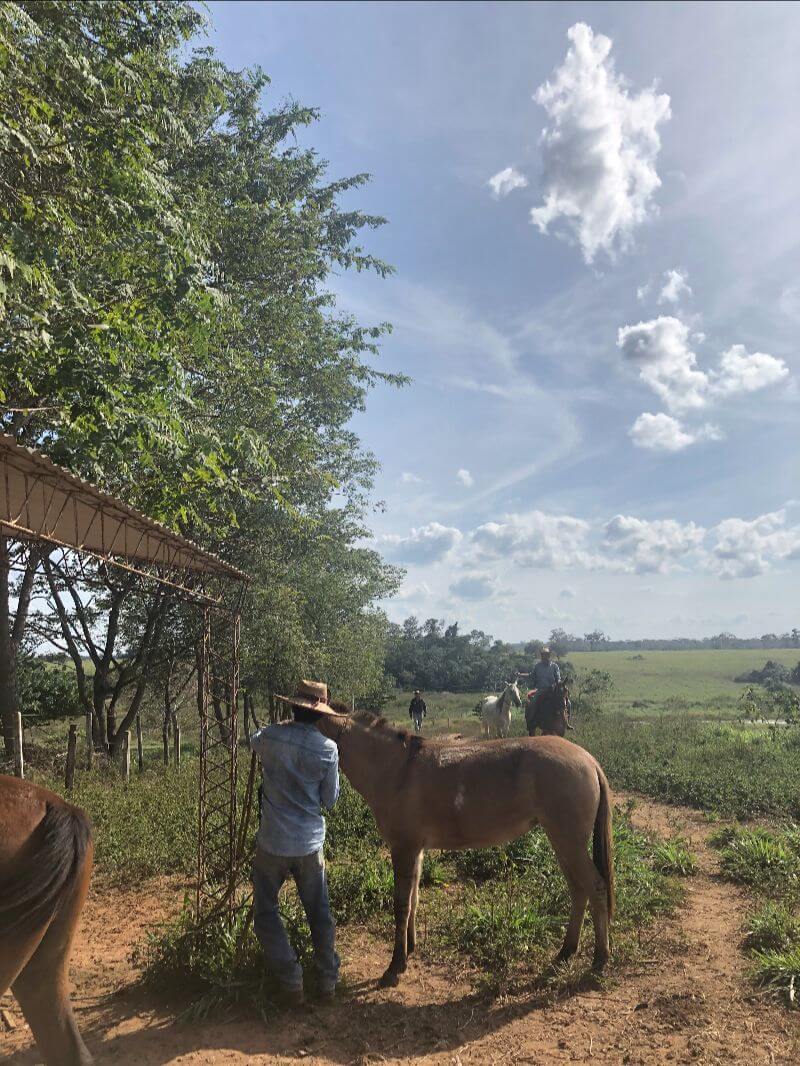
Photo: Tom Hennessy
4. Play beach volleyball with the locals in Montevideo
The people of Uruguay are open-hearted and approachable, which makes it easy to work your way into a game on Montevideo’s beaches. Sip mate with new friends between sets and bask in the sun.
5. Eat steak
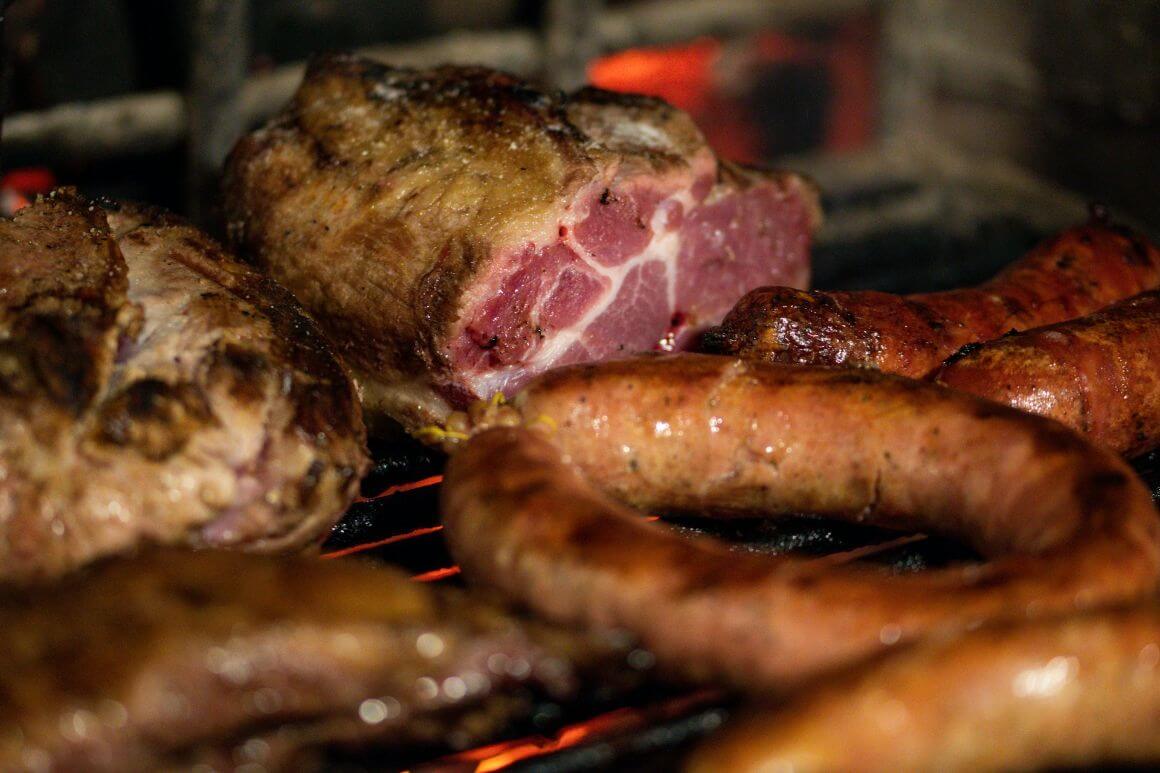
The asado is Uruguay’s national religion. Every Sunday, Uruguayans gather to drink red wine and put away kilos of delicious steak. Exporting beef once made Uruguay rich. Today, grilling it to perfection makes the country spiritually wealthy. Order parilla at a restaurant or else sample a Chivitos, a steak sandwich and the national dish.
6. Drink mate
As with the tango, Uruguay is locked into a dispute with Argentina over who invented it. Whatever its origin, Uruguayans are as obsessed with the Yerba tea drink as their Argentine neighbours. Locals will often offer to share their beverage with you, or buy into the fun by purchasing a mate set from Mercado del Puerto in Montevideo.
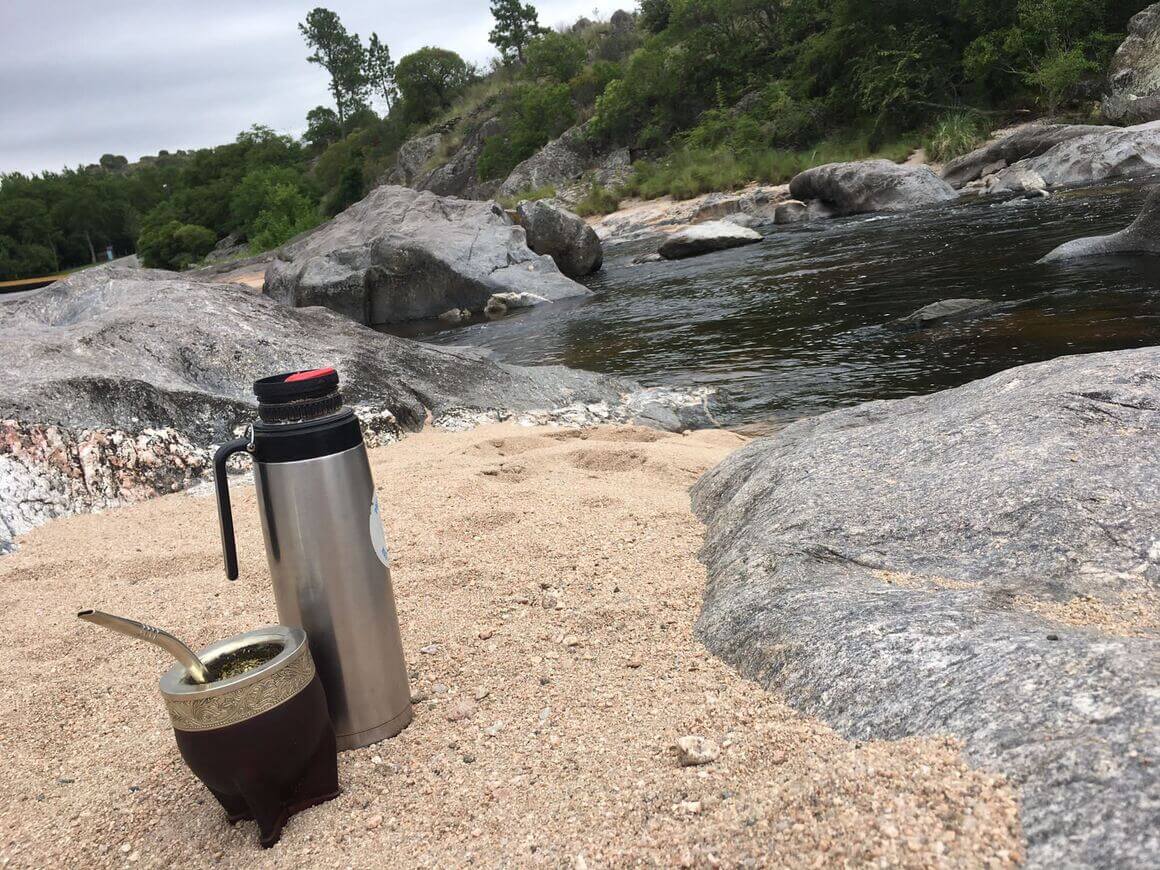
Photo: @Lauramcblonde
Best Places to Stay in Uruguay
Uruguay is one of the more expensive South American destinations, but its accommodation costs are more or less the same as other countries without the spenny reputation. Dorm beds go for between $13 to $20, while a private will set you back between $31 to $44.
What you get is a brilliantly diverse array of accommodations. You will encounter modern party hostels, those geared towards digital nomads or beautifully grungy beach huts on the seashore.
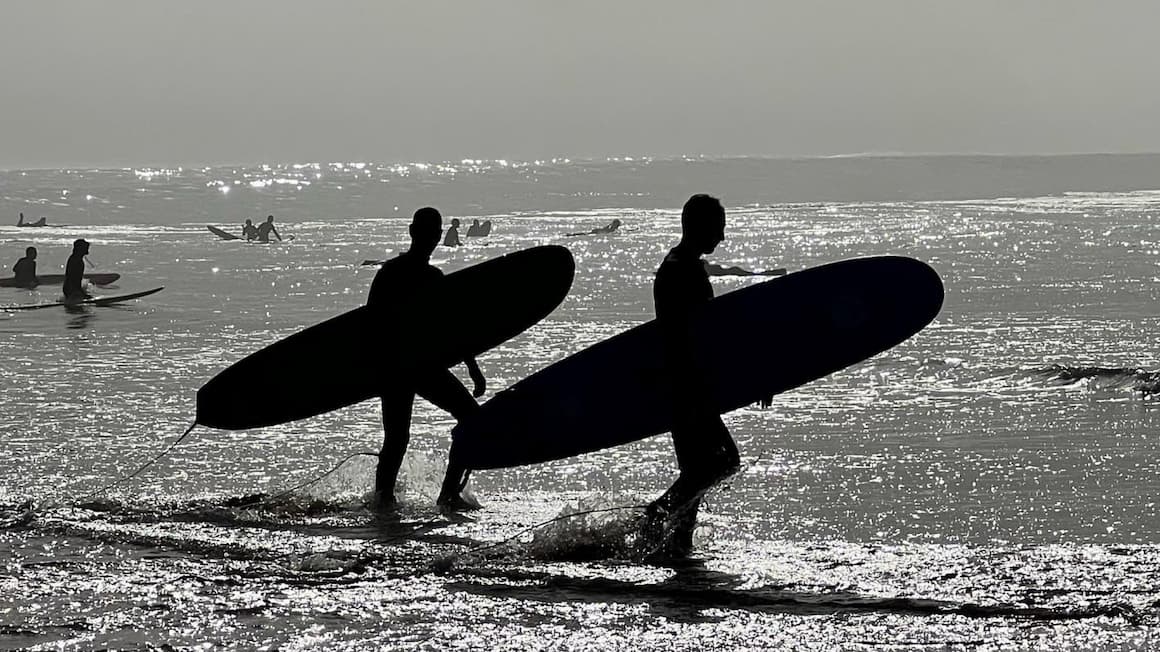
You are guaranteed to encounter some characters in the Uruguay hostel scene. I found a disproportionate amount of long-term travellers here, and many come to surf. Cue: fascinating campfire chats.
If hostels aren’t your thing, Airbnbs are plentiful in Uruguay. You can secure an entire apartment for about $40 a night. It is always nice to give yourself a night off from the hostel life every now and then.
Best Places to Stay in Uruguay
Colonia del Sacramento
Colonia is a beautiful cobbled time warp back into the days of smugglers and governors. Endlessly photogenic and relaxed, it is quite simply one of the nicest places to visit in South America.
- Best hostel: Viajero Colonia
- Best private stay: Viajero Posada
Montevideo
The bustling beachside capital of Uruguay has it all; museums in spades, sandy beaches and a brilliant food scene.
- Best hostel: Destino26
- Best private stay: Youki Haus
Punta del Este
Known as St Tropez of South America for a reason, rub shoulders with celebrities, party at glitzy clubs and roam the sandy beaches between sessions.
- Best hostel: F&F Hostel
- Best private stay: Tas d Viaje Suites
Cabo Polonio
Go off-grid and get the castaway experience in this unique beachside hideout. Disconnect from the world and luxuriate in the settings of this pristine natural reserve.
Best hostel: Viejo Lobo
Punta del Diablo
Shred the waves at Uruguay’s surf capital and decompress around a campfire by night in this hippy paradise. Or search for capybaras in the nearby Reserva Santa Teresa. You may even get lucky and see whales from shore!
- Best hostel: Mar del Fondo
- Best private stay: Posada de La Viuda
Uruguay Backpacking Costs
It is no secret that Uruguay is on the pricier side compared to other South American countries, but that is not to say that it is prohibitively expensive, nor that the cost is not worth paying for what you will experience here. You can easily get by on about $30 and still enjoy yourself by staying in dorms, self-catering and slow travelling.
Uruguayan food is delicious, and is worth exploring, if not for the taste but for the protein content – it is meat heavy! Expect to spend $5-7 for street food delights and about $10 for a sit down meal in a normal restaurant.
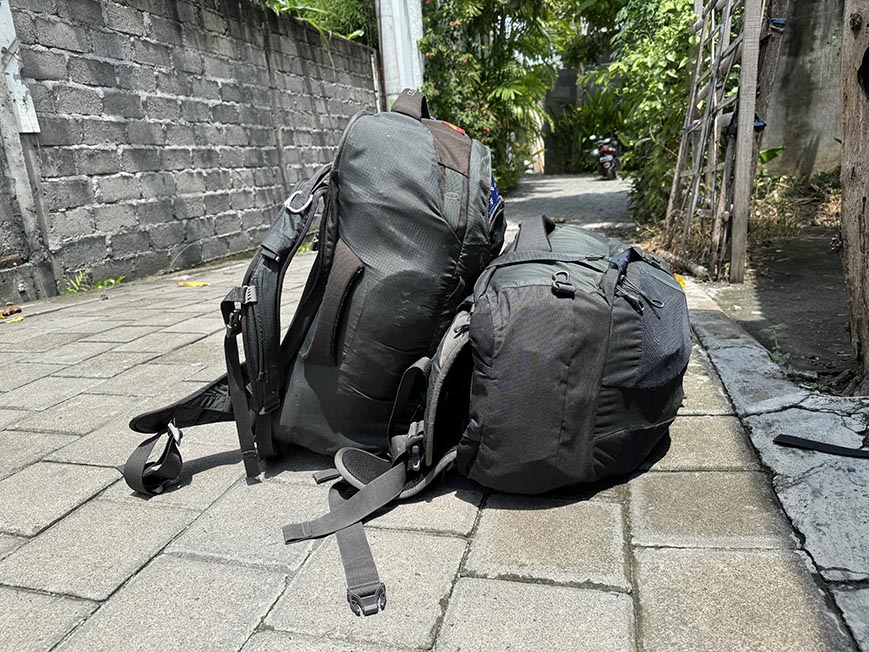
Image: Nic Hilditch-Short
A local beer costs about $3 in a bar, though an imported beverage will cost more. You can comfortably get nicely inebriated and have a boogie for $15!
Transport within cities is very cheap, only about $1.50 for a ride on a public bus. Uber is also an affordable option in larger towns. To travel between cities on an air conditioned bus will cost around $20.
A Daily Budget in Uruguay
| Expense | Broke Backpacker | Frugal Traveller | Creature of Comfort |
|---|---|---|---|
| Accommodation | $10-12 | $9-12 | $12+ |
| Food | $5-7 | $10-15 | $15+ |
| Transport | $1.50-3 | $10 | $20+ |
| Nightlife | $3-12 | $12-20 | $20+ |
| Activities | $0-15 | $20-25 | $25+ |
| Total | $20-49 | $61-92 | $92+ |
Money in Uruguay
The money in Uruguay, as is typical for Latin America, is called the Peso. While it is possible to buy it before your arrival in Uruguay, the risk of getting a poor exchange rate is not worth it because cash points and the use of international credit cards are ubiquitous here. It is also advisable to take a stash of US dollars to use in a pinch as these are readily accepted here.
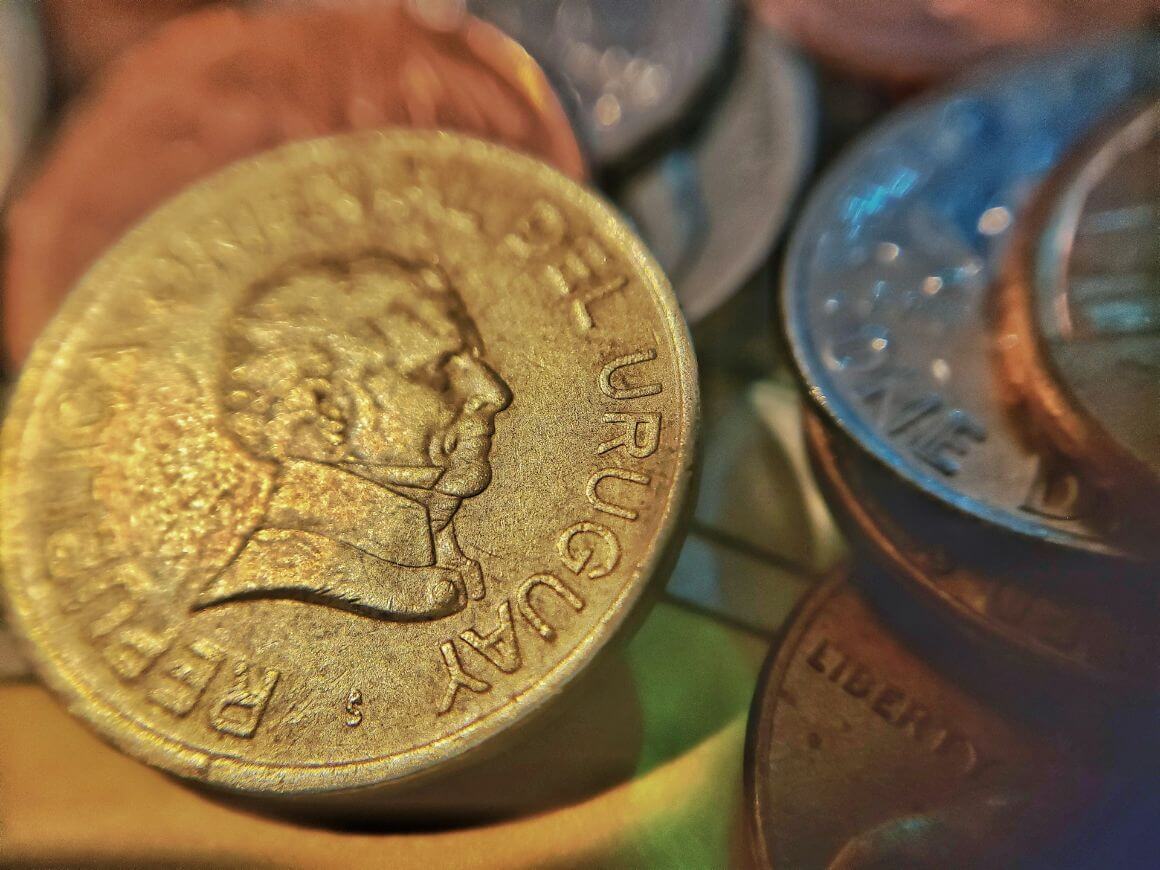
The inflation in Uruguay is not as crazy as in fellow South American states like Argentina or Colombia, where 100 peso notes are treated like Monopoly money. Though, a wad of Uruguayan pesos in your pocket will make you feel rich as 1 USD buys you around 40 Uruguayan Pesos.
Travel Tips – Uruguay on a Budget
While Uruguay is on the pricier side for South America, you can definitely minimise the damage to your wallet by being clever with your money. Standard backpacking tips aside, here are my top tips for backpacking Uruguay on a budget.
- Cook your own food: Most hostels in Uruguay have kitchens, and food from a local market is far cheaper than in a restaurant. Chef up some classic hostel pasta to save some pesos.
- Bring essentials like cooking oil from Argentina/ Brazil: I was struck by how much the costs in Uruguay varied – fruit and veg are very reasonable, but cooking oil prices skyrocketed when crossing from Argentina. I would definitely recommend bringing some from a cheaper country.
- Couchsurf: Uruguayans are some of the most welcoming people in South America, and many will open their home to you. You will get a free place to stay and a local guide to boot if you use Couchsurfing.
- Hitchhike: Hitchhiking is alive and well in Uruguay, and works very well as most cities are on the same coastal road.
- Volunteer: Uruguayan hostels eagerly accept volunteers, and there are also many opportunities to volunteer on farms or even on conservation projects.
- Go local: drink the local beer, just turn up to a local tour operator rather than booking online with an international option and indulge in local cuisine rather than paying gringo tax for international fare.
- Understand the Money: If, like me, you don’t have a great mathematical brain, use a currency app to help you understand how much you are spending. Knowing the value of the currency will help you avoid being ripped off or spending too much without realising.
- Budget-friendly Tours: If you do happen to go on any guided tours, at least make it a tour where you can pay it off in instalments. Global Work and Travel have the broke backpacker in mind with this one. You can even choose the amount per instalment! There are loads of Vietnam tour options to tickle your fancy.
Best Time to Travel in Uruguay
Uruguay has a subtropical climate, and consequently, there is not really a bad time to visit. However, for the optimal conditions for beach-based activities, aim to visit during high summer (December-March) where the weather is typically sunny with 80F heat.
Furthermore, Uruguay’s 40-day-long Carnaval is held from late January into February. Its street parties in cities like Montevideo give Rio a run for its money. Other summer festivals include the White Night festival in Floresta and Los Llamadas in Montevideo.
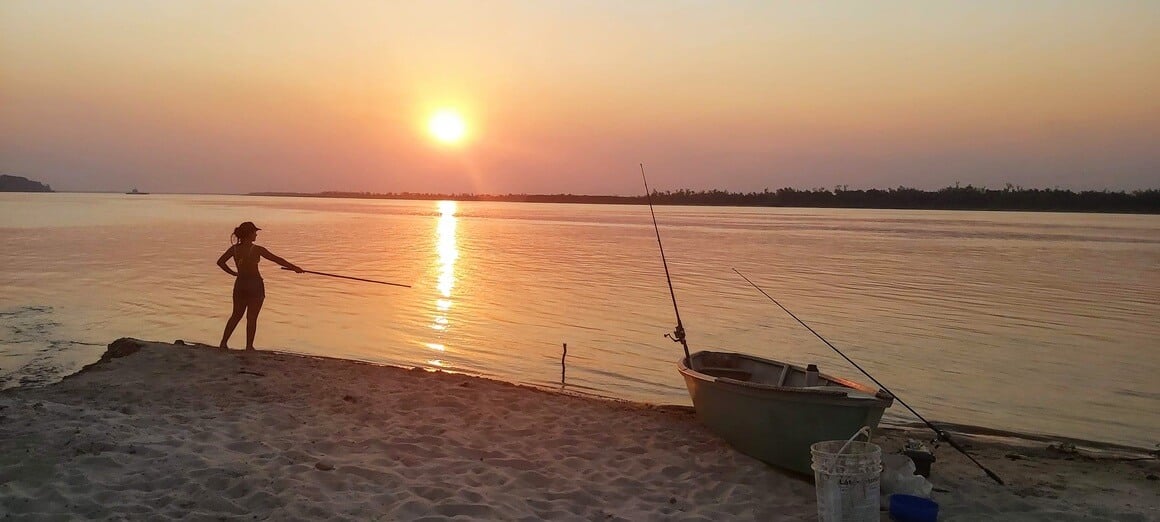
Photo: @Lauramcblonde
I visited Uruguay in the shoulder season (March-May and September-October), and I didn’t find the lack of high summer a dampener on enjoying the country. The beaches were quiet, but the weather of 60-70F was sufficient to sunbathe in and get into the water. Though there was the odd shower, the lower prices cancelled out this minor issue.
Uruguayan winter is also clement and does not rule out a trip to the country. While many aspects of beach towns like surfboard rentals or beach bars will be shuttered, the climate at 50-60F is by no means awful, and is perfect for enjoying the cities and setting off on beach walks.
As Uruguay is so small, there are no crazy regional variations in climate like in Peru or Brazil.
What to Pack for Uruguay
Make sure you get your packing for Uruguay right! On every adventure, there are 6 things I never go travelling without:
With these essentials, I still make sure to do a rundown of my full backpacking South America packing list.
Staying Safe in Uruguay
Uruguay is very safe to travel. It is commonly called the Switzerland of South America for its security and prosperity. While it has lower crime rates than other countries in Latin America, normal advice for safe travel applies.
Petty crime such as pickpocketing is the biggest risk that a traveller in Uruguay will face. Simply securing your valuables in a hostel locker and watching your surroundings when out and about will go a long way to safeguarding your belongings.
Sex, Drugs, and Rock ‘n’ Roll in Uruguay
As you probably know, weed is legal in Uruguay. But sadly for you dope fiends, it is only legal for citizens or permanent residents, and the dispensaries will ask for ID. However, the upside is that Uruguayans are allowed to cultivate up to 6 plants, and they are generous people. In each beach town I visited in Uruguay, campfire sessions were scented by plentiful weed and one hostel even had its own plantation.
While the culture around cannabis is relaxed, possession as a foreigner is criminalised, so I would advise against travelling between cities with any drugs. Just ask around when you get there.

Harder drugs are criminalised and carry heavy penalties for possession. However, underground scenes do exist, especially at party-oriented Punta del Este. Honestly though, the culture in Uruguay suits kicking back with a joint after an afternoon in the water more than slamming lines.
The dating scene in Uruguay is not radically different to that in Western countries; people are receptive to dates, but don’t expect for the whole country to swoon over you for being a foreigner! There is a bit more courtship involved owing to the lingering Catholic culture, but many people I met out there made successful inroads into Uruguay’s dating arena.
Getting Insured Before Travelling to Uruguay
Right, now let me be the first to admit that my travels sometimes involve some sketchy activities!
ALWAYS sort out your backpacker insurance before your trip. There’s plenty to choose from in that department, but a good place to start is Safety Wing.
Sort out your insurance before you go. There are several good options, but our overall pick is SafetyWing. Most of the Broke Backpacker team has used it at one point or another, and we’ve filed claims for rabies jabs in Bali, a hospital stay in Mexico, and a clinic visit for a stomach bug that wouldn’t quit. All paid out.
It’s month-to-month, no lock-in, no itinerary required, and you can buy it after you’ve already left. A little over $2 a day if you’re under 40.
New SafetyWing customers: use code BROKEBACKPACKER for 8 free weeks of electronics theft coverage. You have to scroll down and click the pink camera on their landing page to enter it, and you have to do it before creating your account.
Getting to Uruguay
Most visits to South America begin in the clutch of international cities like São Paulo, Bogotá or Buenos Aires where intercontinental flights are both cheap and direct. As a result, your South America journey is unlikely to start in Uruguay, though it is possible to fly into Montevideo from other destinations.
Photo: @Lauramcblonde
Most travellers visiting Uruguay do so from Buenos Aires, conveniently situated just an hour from Colonia del Sacramento across the Rio de la Plata by ferry, expect to pay $38 to reach Colonia or $41 for Montevideo.
Another common route into Uruguay is heading South from Florianópolis in Brazil. Simply get a bus to the border town of Chuy, which sits astride the frontier. Get your passport stamped and travel onwards into Uruguay, it is just 40 minutes away from Punta del Diablo.
Entry Requirements for Uruguay
For most nationalities, it is very straightforward to enter Uruguay. Visas in advance are not necessary for citizens of the USA, UK, Germany, Netherlands, France or Canada. Simply rock up to the border, receive a stamp and you will have 90 days to explore the country. You will need to ensure that your passport has at least 6 months of validity.

Get 20% OFF when you book through our link — and support the site you love so dearly 😉
Booking.com is quickly becoming our go-to for accommodation. From cheap hostels to stylish homestays and nice hotels, they’ve got it all!
View on Booking.comHow to Get Around Uruguay
The matter of getting around Uruguay is extremely simple – by bus. Furthermore, its small size means that it is free of the 20-hour-long slogs common in Peru or Argentina. You will not even need to take the night buses that are infamous on the continent.
The bus network in Uruguay conveniently links cities, and they even run on time! Enjoy watching the countryside whizz by from air-conditioned comfort.
The country’s rail network is neglected and expensive. There is no practical reason to choose it over a bus. The country is also too small to reasonably need to take an internal flight, so the bus is the answer to pretty much all transport questions.
Onwards Travel From Uruguay
Situated at the juncture of Brazil and Argentina, Uruguay offers wonderful chances to explore these iconic South American countries. The border formalities are streamlined, and the distances involved to cross each country from the nearest Uruguayan tourist spot are small.
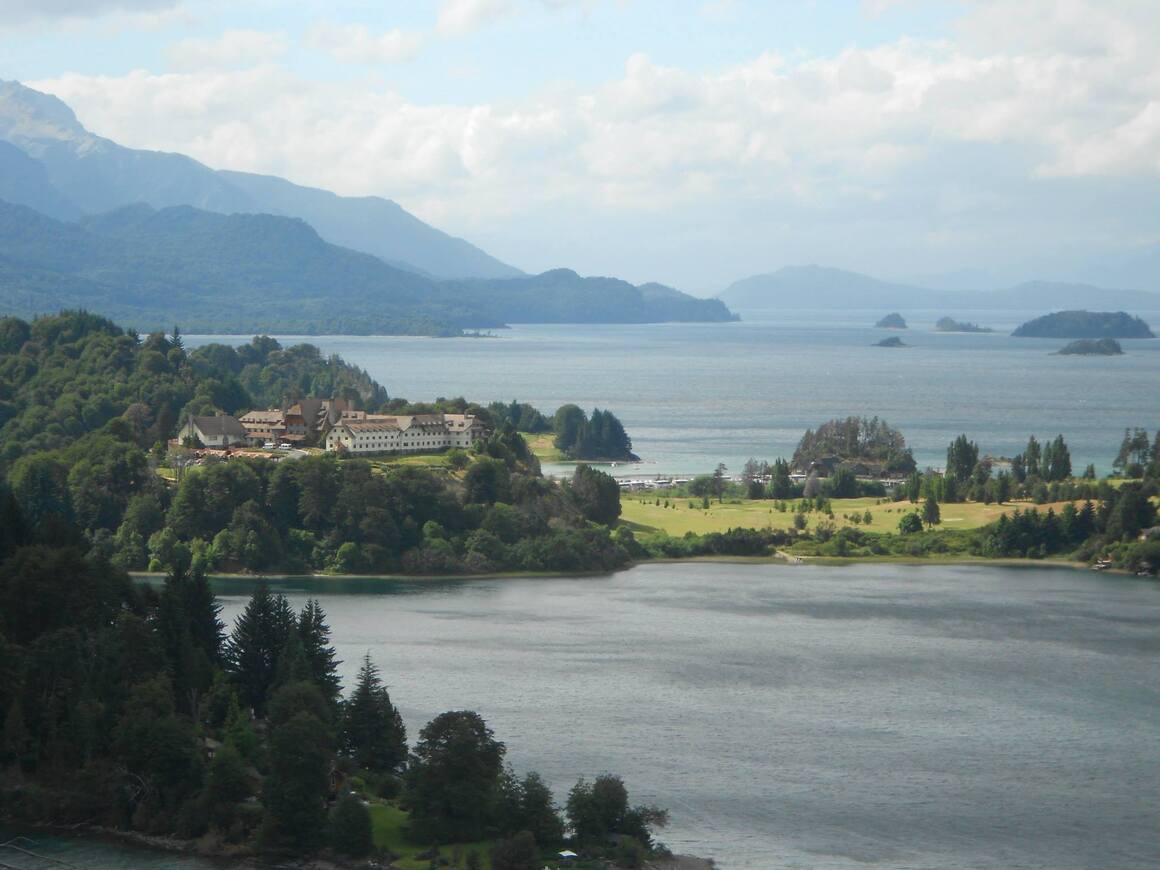
Photo: @Lauramcblonde
Buenos Aires is just an hour-long hop away by ferry, while Florianópolis is a lengthy but direct 14-hour bus away from Chuy. Another popular destination from Uruguay is Iguazú Falls, which straddles Argentina and Brazil. From here you can strike into the undervisited Paraguay.
Working in Uruguay
As I said earlier, Uruguay attracts many long-term travellers. Partly from its liveability, and partly because of the opportunities that exist to enable backpackers to remain here. For remote workers, SIM cards are easy to get, and Wifi is plentiful.
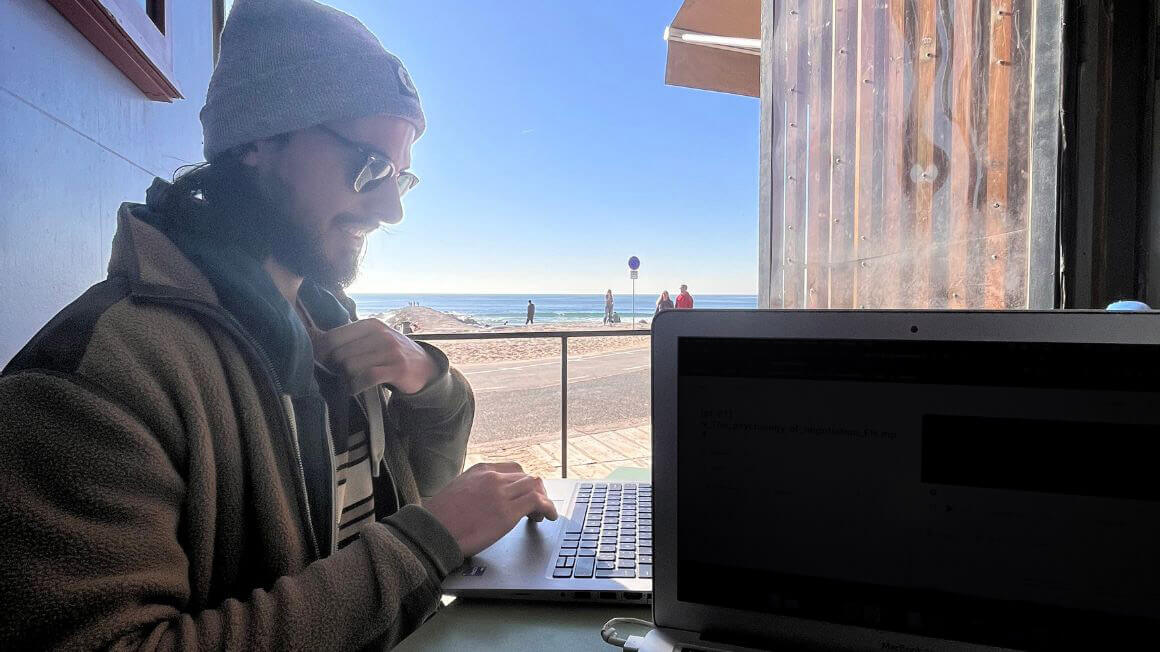
Photo: @monteiro.online
Just a quick skim through Worldpackers or WorkAway will demonstrate the range of volunteer opportunities in Uruguay to extend your stay in Uruguay at little cost to your bank balance. Many hostels also accept volunteers. Ask on arrival for the chance of free bed and board in return for answering the phone and doing the washing up.
Uruguay is also a popular destination for Teaching English as a Foreign Language (TEFL). It is essential to hold a TEFL certificate, and those with a bachelor degree have the best chance of securing a role. If successful, this is a wonderful chance to connect with Uruguayans and develop a life skill.
Culture in Uruguay
The culture in Uruguay derives to a large extent from its European ancestry (87% hail from Europe), so expect predominantly Western dress and Christianity.
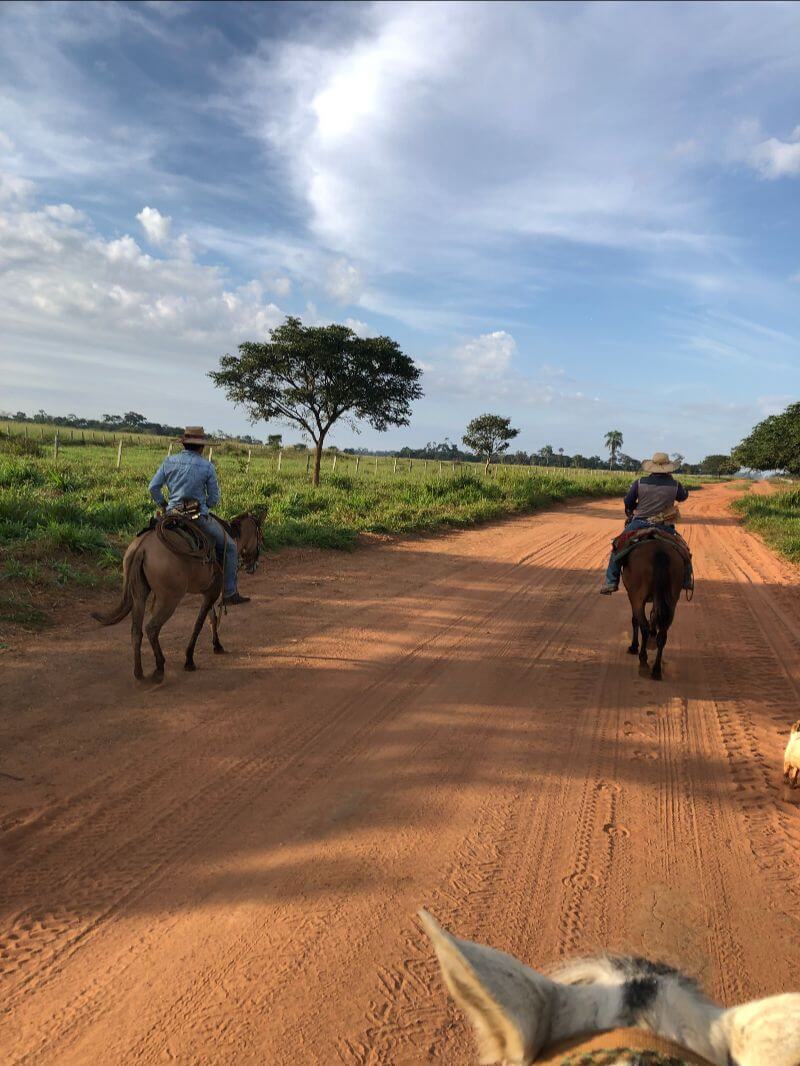
Photo: Tom Hennessy
This is Latin America, so football is the national religion. Uruguay’s two World Cup wins in the 1950s are recounted with gushing pride as if it were yesterday. Overall, the culture feels less individualistic than back in the West.
Shared rituals of drinking Yerba Mate together, keeping Sundays free for an asado with friends or passing around a bucket of Fernet and Cola are cornerstones of Uruguayan life. It might seem subtle, but being immersed in a culture that thinks this way makes you feel a part of a community bigger than yourself in a way you rarely do in the more atomised West.
Uruguay is often called the little cousin of Argentina, and on the surface, they seem very similar. But differences definitely do emerge the longer you stay there.
Uruguayans are certainly quieter and more reserved than the flamboyant Argentines. The social attitudes in Uruguay are also very progressive, with widespread acceptance of LGBT people and the legalisation of cannabis.
Useful Travel Phrases for Uruguay
Below, I have listed some useful travel phrases for Uruguay. It always pays to learn a new language for travel to be able to communicate with the locals. Spanish certainly packs some of the most bang for your language learning buck, as it unlocks much of Latin America and Spain!
It also helps that the Uruguayan people are very patient with stammering foreigners speaking terrible Spanish, as they appreciate the effort.
- Hello – hola
- How are you? – como estas
- I would like… – me gustaría
- How much? – cuanta cuesta
- Thank you – gracias
- What is your name? – como te llamas
- I don’t understand – no lo entiendo
- I am sorry – me lo siento
- Excuse me – permiso / discúlpame
What to Eat in Uruguay
The food in Uruguay was a real highlight, though for vegetarians, it will be a bit difficult to experience Uruguayan cuisine to the full. It is meat-heavy and traditionally served with lashings of red wine.
Popular Uruguayan Dishes
- Asado – a meal and a way of life. On Sundays, Uruguayans will come together to barbecue a vast slab of meat with their friends. Houses literally often have the BBQ built into their walls! Standard fare is usually beef, but pork is also popular.
- Chicken milanesa – a dish harking back to Uruguay’s important Italian heritage. This is a thin breaded chicken breast, pan-fried with chips and salad with either tomato sauce or chimichurri.
- Chivito – the national dish and maybe the king of sandwiches. It is a sandwich of sliced beefsteak, mozzarella, ham, tomatoes, mayonnaise and olives.
- Empanadas – as in basically every South American country, empeñadas are everywhere and Uruguayans will swear that theirs are the best. Essentially, they are a fried pastry usually containing beef, chicken or just cheese.
Brief History of Uruguay
Uruguay has been inhabited for 13,000 years, though little remains of, or is known about the indigenous peoples who lived there before European arrival. The Portuguese were the first to reach Uruguay in 1512, but four years later, the Spanish claimed it for themselves.
In the centuries that followed, there was a tug of war between these Iberian powers over what would become Uruguay, with rival colonial towns periodically founded. When the Spanish side of the region became Argentina and the Portuguese part became Brazil, the scraps continued, even resulting in war between the two newly independent countries. However, in 1828, partly thanks to some British diplomacy, Uruguay was formally born as a buffer between the two South American giants.
Waves of emigration from Spain, Italy and France followed throughout the 19th century, beefing up the population and laying the groundwork for a successful export economy based on selling agricultural products. This prosperity was dented by the Great Depression, and decades of political instability followed, leading to the establishment of a military dictatorship by 1973. Scores of citizens were disappeared or tortured by the state, a period lamented by Uruguayans.
However, since 1984 and the return of democracy, things have looked up, with surging economic growth, stable politics and lots of social reforms. By all metrics, Uruguay is now one of the richest and happiest countries in the region!
FAQs About Backpacking Uruguay
Final Advice Before Visiting Uruguay
Uruguay is a vibrant and varied country, and your experience backpacking it will be no different. Just keep a few things in mind, and you’re pretty much guaranteed to have a blast…
Respect the locals. The worst sort of tourist in South America is those who assume each country is just a gradation of Mexico. No, fajitas are not typical here, and there is no Cinco de Mayo parade. This is a country with its own distinct history and culture, not Beach Mexico. Be open-minded and prepare to learn about what Uruguay has to offer instead of assuming it is the same as other Latin American countries.
Uruguayans are a polite and reserved people. Getting blind drunk, being loud and making a fool of yourself is the easiest way to offend their sensibilities. Have fun by all means, but just don’t be a dick.
Download maps. There is nothing worse than stepping off a bus with no phone signal and no idea where your hostel is. Fortunately, this can be easily avoided by downloading the entire map of Uruguay with MapsMe.
Uber is cheap and widely available in bigger cities. In larger cities like Montevideo, Uber is a cheap and readily available means of getting from A to B.
Uruguayans are very punctual people. “Latin American Time” is not really a thing here. Instead of expecting people to be at least half an hour late, Uruguayans will arrive on time, and being late is rude. The same goes for buses too.
Most things close on Sunday. Sundays are taken seriously here, so it is best to do your grocery shopping before the day of rest to avoid disappointment.
Take my travel wisdom, from one backpacker to another, you’ll seriously love Uruguay. Small but mighty, it’ll pull at your heartstrings whether you’re here for the food, culture, or football. Grab your mate, and I’ll see you on the beach, amigos!
Photo: @joemiddlehurst