Nusa Penida has quite the reputation. In Balinese Hinduism it’s considered a sacred island and is sometimes known as the “Island of Black Magic” because of its important role in local spiritual beliefs. It’s a fascinating part of the island’s history, but these days most travellers come for a slightly different reason: the ridiculously dramatic cliffs, turquoise bays and some of the best viewpoints in Indonesia.
If you’re expecting another version of Bali though, think again. Nusa Penida is wilder, drier and a bit rough around the edges. The roads can be bumpy, getting around takes a little more planning, and it’s definitely not somewhere I’d recommend turning up without doing a bit of homework first.
I’ve visited Nusa Penida as both a day trip and an overnight stay, and I’d happily tell anyone that spending a night here is the better way to experience it. In this guide I’ll walk you through everything you need to know, from getting there and getting around, to where to stay, the best beaches, diving, food, costs and whether Nusa Penida is actually worth your time.
The Broke Backpacker is supported by you. Clicking through our links may earn us a small affiliate commission, and that's what allows us to keep producing free content 🙂 Learn more.
Why Visit Nusa Penida?
I’ll be honest… Nusa Penida isn’t for everyone.
If your idea of the perfect Bali holiday is sipping iced coffees in Canggu, wandering rice terraces in Ubud and spending afternoons by the pool, this island might come as a bit of a shock. The roads are rough, the heat can be relentless, and Google Maps is wildly optimistic about how long it takes.
But that’s also exactly why I love it.
Nusa Penida feels like Bali’s wilder, slightly chaotic younger sibling. You’ll spend half your day bouncing around on a scooter, wondering if you’ve accidentally taken the scenic route, only to arrive somewhere that makes you completely forget the journey.
Of course, there are plenty of reasons people make the trip. The island is famous for its dramatic cliffs, hidden beaches and some of the best manta ray diving and snorkelling in Indonesia. Throw in a few spectacular sunrise and sunset spots, fascinating temples and a local culture that still feels a world away from Bali’s busier resorts, and it’s not hard to see why people fall for the place.
That said, Nusa Penida isn’t the hidden secret it once was. Thousands of day trippers arrive every morning, race between the Instagram hotspots and disappear again by late afternoon. If you only follow the same route as everyone else, you’ll probably wonder what all the fuss is about.
Stay a night or two though, and it’s a completely different island. Once the last ferries head back to Bali, the crowds melt away, the roads quieten down, and you finally get to experience the place at its best.
Come expecting an adventure rather than a relaxing beach holiday, plan your days sensibly, and I reckon you’ll leave wondering why you didn’t stay longer.
Where to Stay in Nusa Penida
There are plenty of places to stay on Nusa Penida, particularly around the north of the island. Here, you’ll find all the usual forms of accommodation, like guesthouses, hostels, homestays, and several resorts. The area around Toyapakeh actually looks very similar to some places on the mainland of Bali at times, which is a sign of its ongoing development.
That being said, the majority of the island is very underdeveloped. Outside of Nusa Penida’s top attractions, there really isn’t a lot in the way of lodging. There are some lone guesthouses here and there, but they can be far and few in between.
Finding the right base on Nusa Penida is imperative to exploring the island. You will need to stay somewhere well-connected, convenient, and near a warung or two if you plan on acing this trip. I suggest you stay mobile and sleep in multiple locations.
For more epic hostel options, be sure to check out our in-depth review of Nusa Penida’s best backpacker accommodation.
Nuansa Penida Hostel – Best Hostel
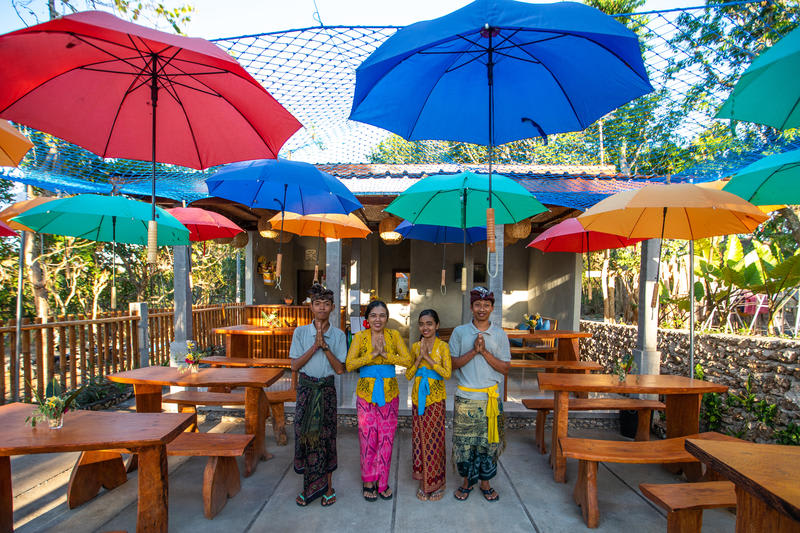
Definitely the best hostel on Nusa Penida at the moment. Nuansa Hostel features several dormitories, a pool area, and free breakfast every morning. Being located on Nusa Penida, Nuansa is quite laid back, and the hostel itself claims that life here is “like Bali 30 years ago.”
Kubu Indah Guesthouse – Best Homestay
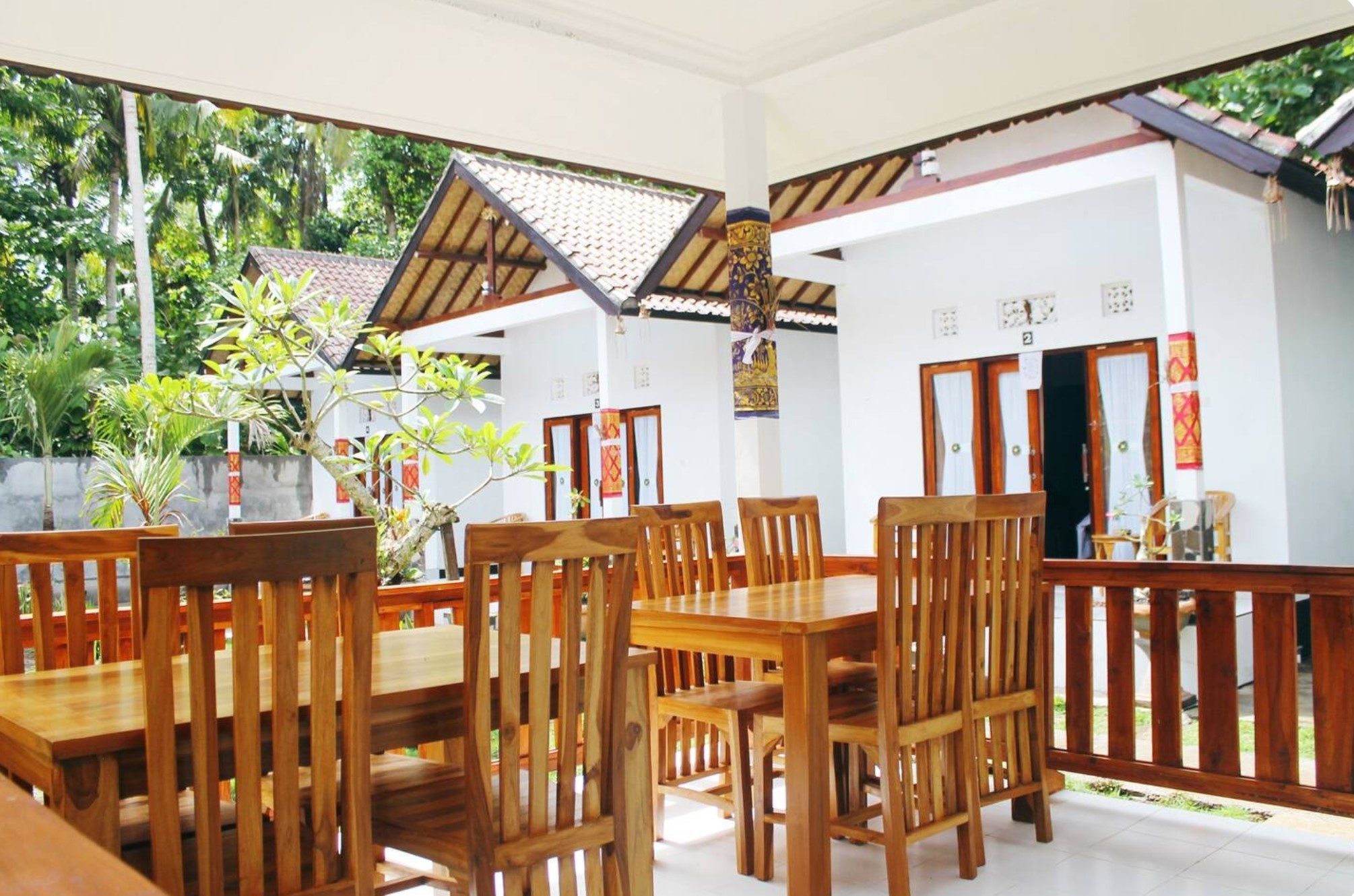
I found this place randomly while exploring, and it turned out to be one of my favourite places to stay on Nusa Penida. The amenities are somewhat standard, but the hosts are really nice, and the grounds are really clean. The best part was the location though: Kelingking Beach, Banah Cliffs, and Tembeling are all 20 minutes away.
Gading Tree House – Best Budget Lodge
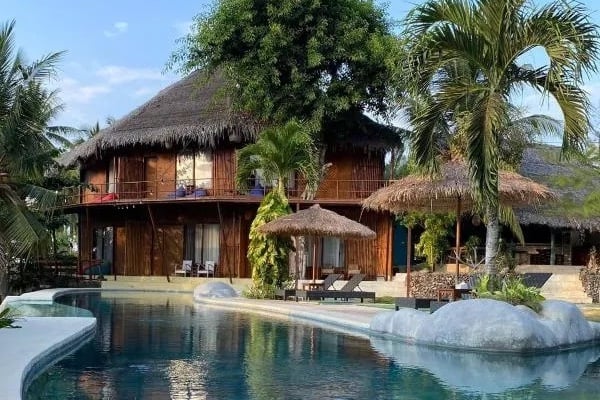
Really nice place in the middle of nature with a beautiful and exotic landscape. Spacious rooms, big pool, peaceful and quiet surroundings away from the tourist areas at an affordable price. Ideal for chilling and enjoying nature.
The Best Places to Stay in Nusa Penida
Are you wondering which is the best part of Nusa Penida to stay in? Well, let me give you a few suggestions.
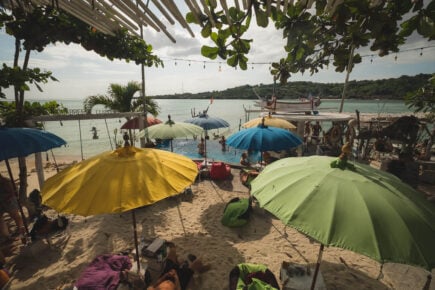
Harbour Area
With the most developed infrastructure and a wide range of dining options, late-night bars or early-morning cafes this is a convenient location when arriving from Bali. Perfect for families and solo travellers.
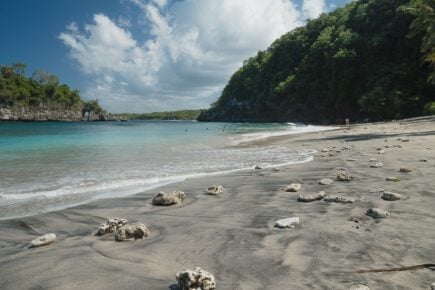
Crystal Bay
A golden sand beach that’s perfect for sunbathing, relaxing, and swimming, and one of the most well-known places to go snorkelling on Nusa Penida. Laid-back vibes and an amazing sunset.
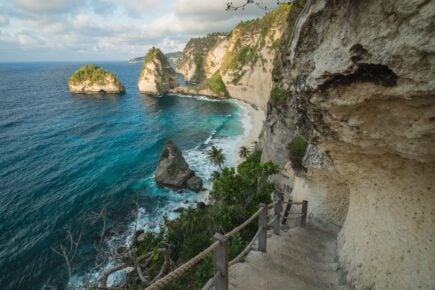
Diamond Beach Area
Perfect sand, gorgeous sapphire water, and dramatic cliffs framing it all. A bit more remote but a quieter location near some famous attractions. One of the most beautiful, unspoiled, natural locations in Nusa Penida.
How to Get to Nusa Penida
Getting to Nusa Penida is actually pretty straightforward. Unless you’re already staying on Nusa Lembongan, there’s a good chance you’ll be catching a fast boat from Sanur, just south of Denpasar. It’s the quickest, easiest, and by far the most popular way to reach the island.
The crossing usually takes around 30–45 minutes, depending on the weather and your boat operator. Most services arrive on the north coast around Toyapakeh or Banjar Nyuh Harbour, putting you within easy reach of the island’s main accommodation areas.
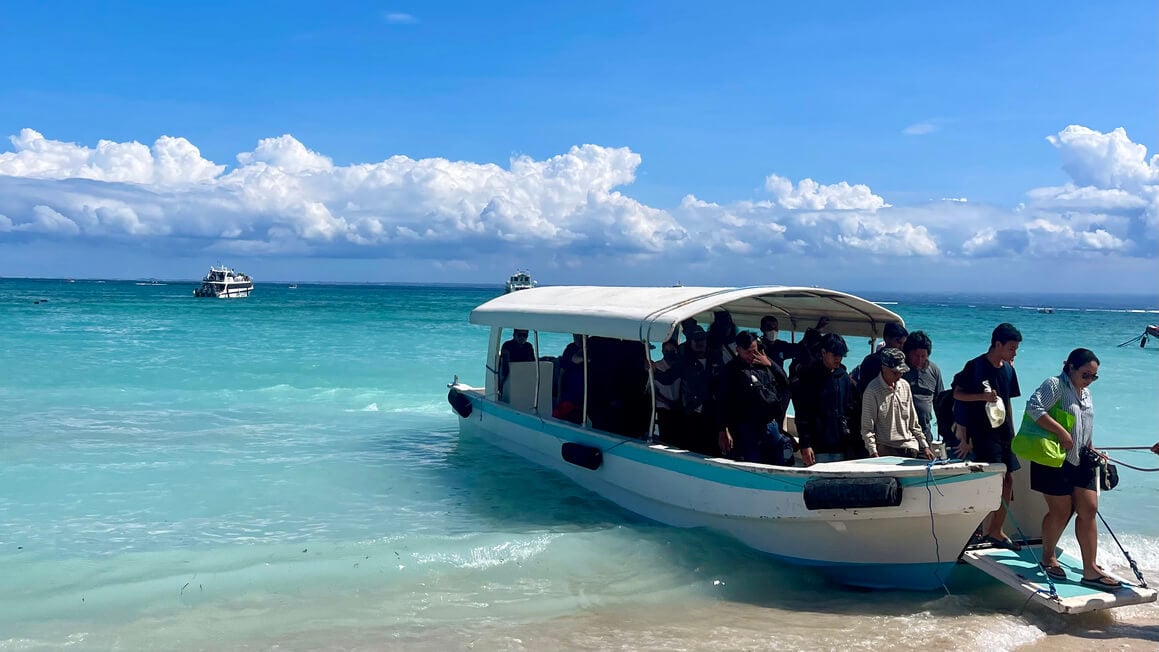
Already exploring Nusa Lembongan? You’re in luck. Small local boats run regularly from the Yellow Bridge area, and the crossing takes just 10–15 minutes. Boats usually leave once they’re full, making it an easy (and cheap) hop between the islands.
You can also travel from Padang Bai, but unless you’re already nearby, I wouldn’t bother. There are fewer departures, the journey takes longer, and it doesn’t really offer any advantages over travelling from Sanur.
One thing to keep in mind is that the sea doesn’t always play nicely. Boat departures can be delayed by rough conditions or low tides, so try not to leave yourself with a super-tight schedule. If you’re travelling during the busy season or you’ve got flights or hotels to coordinate, it’s worth booking your tickets in advance.
As soon as you step off the boat, you’ll know you’ve arrived. Expect a chorus of “Scooter? Taxi? Driver?” before you’ve even collected your bag. If you’ve already arranged transport, just smile, say “No thanks,” and keep walking. If you haven’t, this is where you can organise a scooter or driver for your stay. It’s also worth carrying some cash, as not every small business on the island accepts cards.
If you want to get your ferry sorted before you travel, it’s worth comparing operators and departure times in advance through platforms like Direct Ferries. It takes one thing off your to-do list and can save a bit of stress during the busier months.
Getting Around Nusa Penida
One thing you’ll learn pretty quickly is that Google Maps lies here.
Nusa Penida doesn’t look that big on paper, but the hills, winding roads, traffic around the busiest attractions and the occasional stretch of road that resembles the surface of the moon mean journeys almost always take longer than you expect. Whatever transport you choose, build a bit of breathing room into your day.
By Tour
If you’re only visiting for the day, booking a tour is easily the simplest option. Someone else worries about the ferry, transport and route while you sit back and enjoy the scenery.
The downside? Most tours follow almost the same itinerary, so you’ll be arriving at the busiest viewpoints at the same time as everyone else. They’re convenient and great if you’re short on time, but they don’t really show you the quieter side of Nusa Penida.
By Scooter
Hiring a scooter is the cheapest and most flexible way to explore the island, and it’s definitely my favourite option if you’re staying for a couple of nights. It gives you the freedom to beat the crowds at sunrise, stay out for sunset and explore places that organised tours rarely visit.
That said, this isn’t somewhere I’d recommend learning to ride. Some roads are steep, narrow, badly surfaced or all three at once. If you’re already a confident rider, you’ll be fine as long as you take it easy. If you’re not, this probably isn’t the island to test beginner’s luck.
By Private Driver
For most first-time visitors, hiring a private driver is probably the sweet spot. It’s more expensive than renting a scooter, but it’s also far less stressful. You can relax, enjoy the views and let someone who knows the roads deal with the driving.
It’s a particularly good option for couples, families, groups or anyone visiting as a day trip. Before setting off, agree on the price, the route, how long the driver will wait at each stop and whether any additional costs are included.
However you decide to get around, don’t try to cram too much into one day. Nusa Penida rewards people who slow down a little, and you’ll enjoy it far more if you’re not constantly racing the clock.
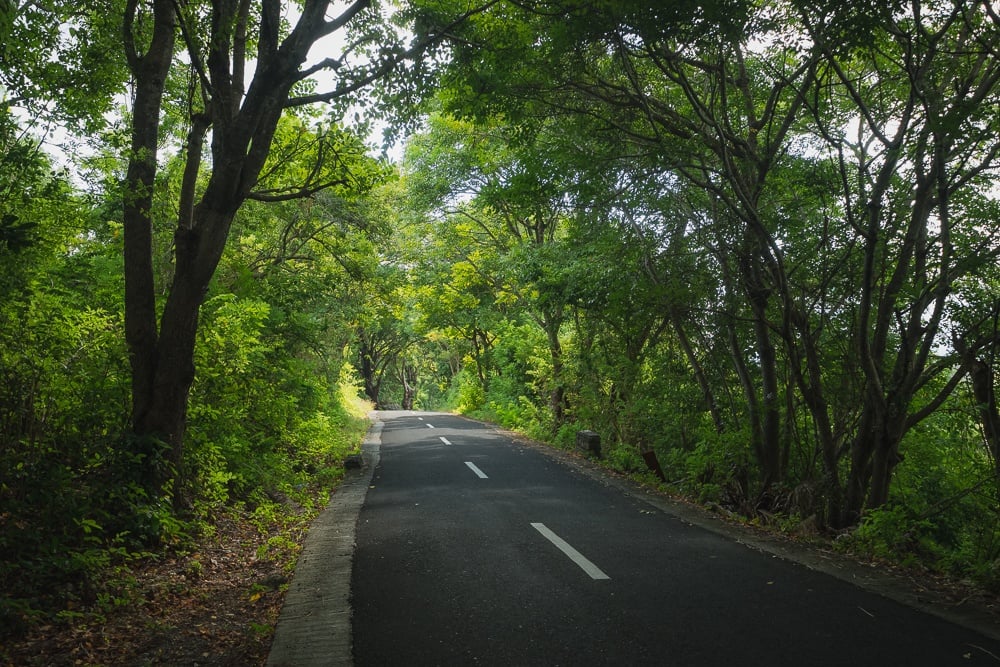
Photo: Roaming Ralph
Renting a Scooter on Nusa Penida
If you’re confident on a scooter, hiring one is easily the best way to explore Nusa Penida. It’s the cheapest option, gives you complete flexibility and lets you visit places that many organised tours simply don’t have time for.
Expect to pay around 100,000-150,000 IDR per day, with discounts often available if you’re renting for several days.
Before you set off, spend a couple of minutes checking the scooter properly. Test the brakes, make sure the tyres have decent tread, check the lights, mirrors and horn all work, and take a few photos of any existing damage. It’ll save any awkward conversations when you return it.
As I’ve said, Nusa Penida isn’t the place to learn how to ride. Some roads are still steep, narrow and badly broken, and even the better roads can have loose gravel, potholes or unexpected corners.
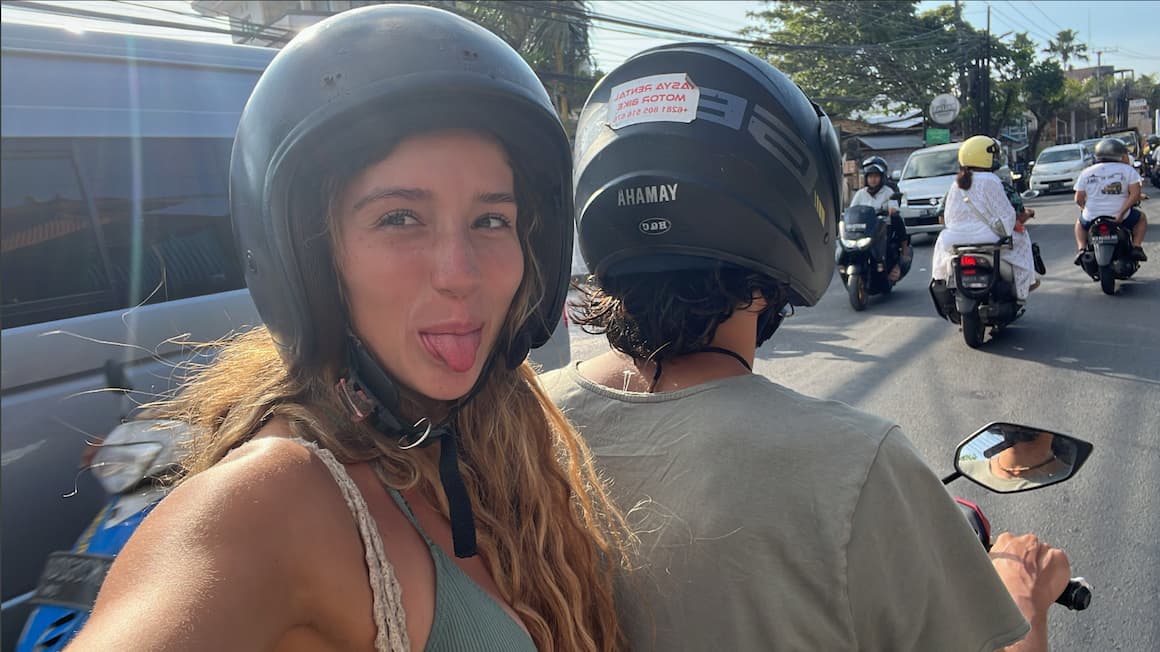
Photo: @amandaadraper
A few tips that will make your life much easier:
- Wear a proper helmet every time you ride. No compromise.
- Avoid riding after dark if you can.
- Don’t ride in flip-flops.
- Slow right down on gravel, broken roads and steep descents.
- Use your horn before blind corners to let oncoming traffic know you’re there.
- If a road looks beyond your comfort level, get off and walk the scooter or simply turn around. There’s no shame in deciding a route isn’t worth the risk.
One final thing that’s easy to overlook is your insurance. While renting a scooter is straightforward, many travel insurance policies only cover scooter accidents if you’re legally allowed to ride one. That often means holding the correct motorbike licence or permit for your home country, so check your policy before you travel.
A scooter is an amazing way to experience Nusa Penida, but only if you’re comfortable riding one. If you’re not, hiring a private driver is money well spent, and you’ll probably enjoy the island a lot more.
For an island that looks fairly small on the map, Nusa Penida packs in a surprising amount. Most people come for the famous viewpoints and beaches, but there’s plenty more to discover if you spend a couple of days exploring.
I’ve included the attractions I think are genuinely worth your time, along with a few that are often overlooked by day trippers. You’ll find dramatic cliff viewpoints, hidden beaches, natural pools, temples and some incredible snorkelling and diving spots.
Many of the island’s most popular attractions charge a small entrance fee (usually between 5,000 and 25,000 IDR), so it’s always worth carrying some cash with you.
Crystal Bay
At a Glance
- Best for: Swimming, snorkelling, sunset and an easy beach stop
- Known for: Calm water, golden sand, snorkelling and boat trips
- How long to stay: 1-3 hours
- Don’t miss: Watching the sunset if you’re staying nearby.
If you’re exploring Nusa Penida in an anticlockwise direction, there’s a good chance Crystal Bay will be your first stop.
After bouncing around on the island’s roads for a while, it’s a pretty welcome sight. The bay is sheltered, the water is usually calm enough for a swim, and it’s one of the easiest beaches on the island to simply relax for a couple of hours.
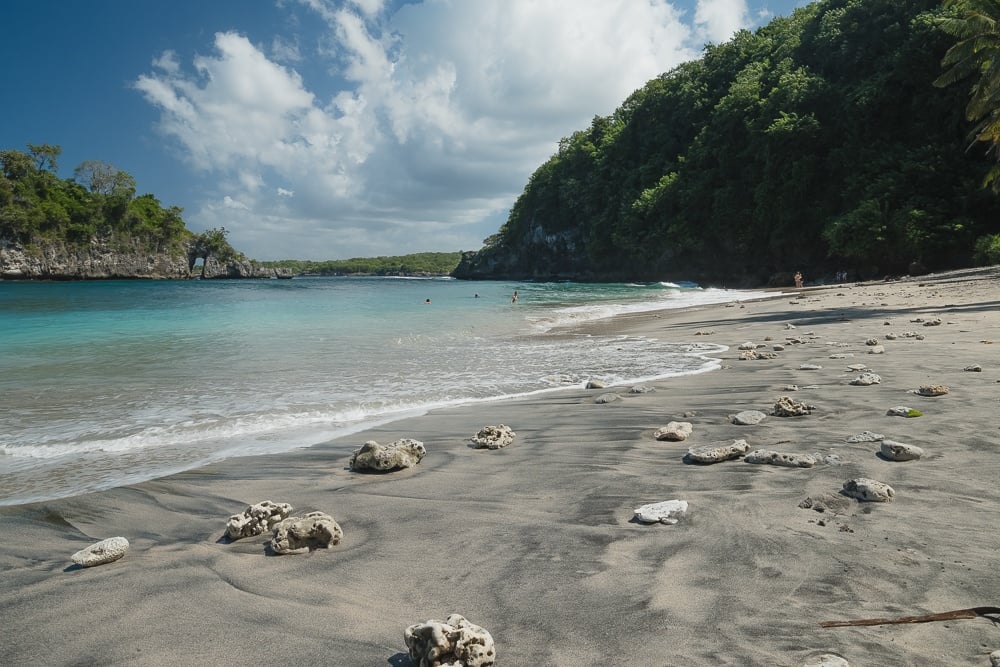
Photo: Roaming Ralph
It’s also one of Nusa Penida’s better snorkelling spots if you’re not heading out on a boat trip, and as Crystal Bay is one of the more developed beaches on Nusa Penida, you’ll find snorkel gear for hire as well as beachfront cafés, warungs and plenty of places to grab a cold drink or something to eat. It’s a nice place to relax for a while before heading off to your next stop.
If you’re spending a night on this side of the island, I’d also recommend coming back for sunset. It’s one of the better places on Nusa Penida to end the day without needing another long drive.
Angel’s Billabong and Broken Beach
At a Glance
- Best for: Unique coastal scenery and natural rock formations
- Known for: Broken Beach’s natural sea arch and Angel’s Billabong’s natural infinity pool
- How long to stay: 1-2 hours
- Don’t miss: Walking around Broken Beach to see the arch from different viewpoints.
I’ll be honest… these were probably the two places I was most excited to visit before arriving on Nusa Penida, and they ended up being the ones I was least excited about afterwards.
That’s not because they’re bad. Broken Beach is a really impressive natural rock arch, and Angel’s Billabong can look incredible when the sea is calm and the conditions are right.
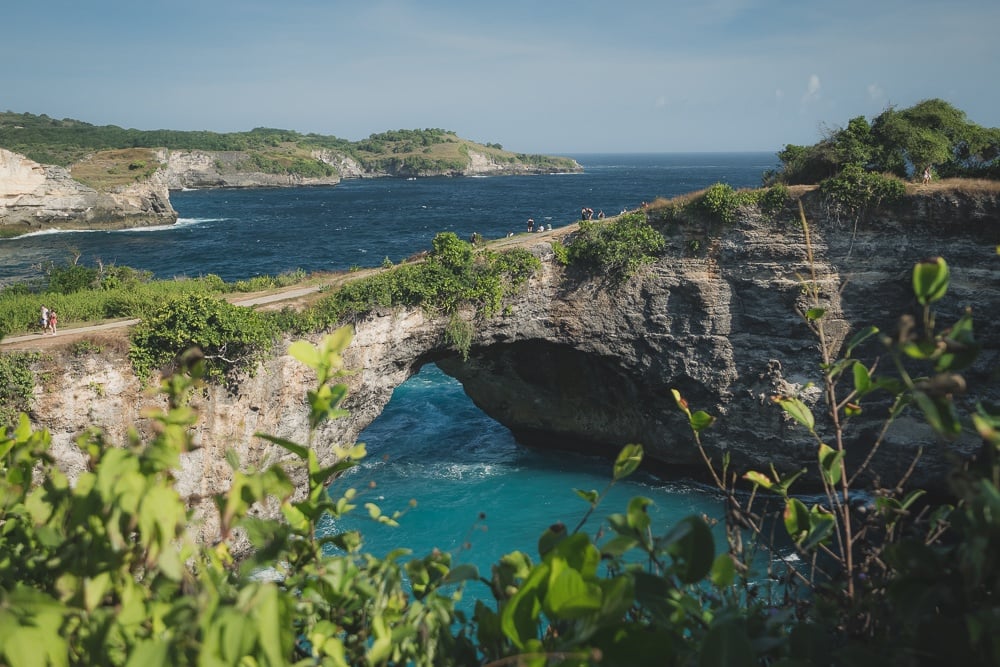
Photo: Roaming Ralph
For me, it was the journey that took the shine off things. The roads have improved over the years, but this was still one of the roughest rides I had on the island. After twenty minutes of bouncing up and down on my already weathered bike, weaving around tour vans and wondering if Google Maps had developed a sense of humour, I was more than ready to get off.
One thing that’s changed over the years is that swimming at Angel’s Billabong is now prohibited. It might look like the perfect natural infinity pool, but appearances can be deceiving. Powerful waves have swept people off the rocks here in the past, so it’s best enjoyed from the viewpoint instead. If there are barriers up or locals ask you to keep back, take the hint, this isn’t the place to push your luck.
If you’re spending a couple of days exploring Nusa Penida, I’d still include both as part of a west-side route. If you’ve only got one day though, I’d personally put Kelingking Beach and Diamond Beach higher up the list.
Kelingking Beach
At a Glance
- Best for: Iconic views, photography and adventurous hikers
- Known for: The famous T-Rex-shaped cliff and one of Nusa Penida’s most photographed viewpoints
- How long to stay: 2-4 hours (longer if you’re hiking to the beach)
- Don’t miss: The viewpoint at sunrise or sunset if you’re staying overnight.
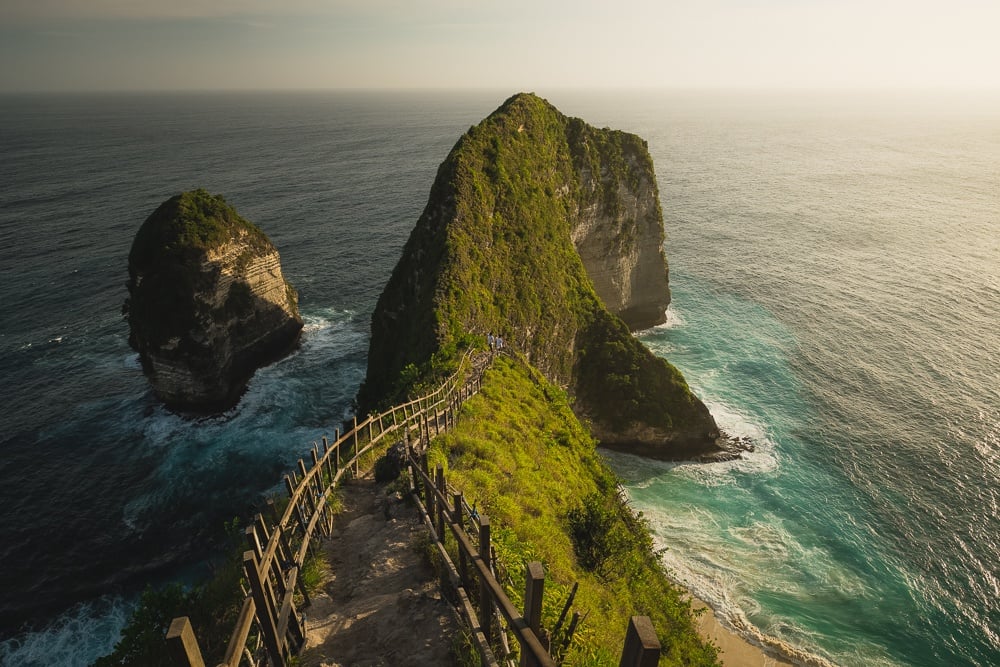
If you’ve seen photos of Nusa Penida, you’ve almost certainly seen Kelingking Beach. The famous T-Rex-shaped headland has become the island’s unofficial mascot, and seeing it in person is every bit as impressive as you’d hope.
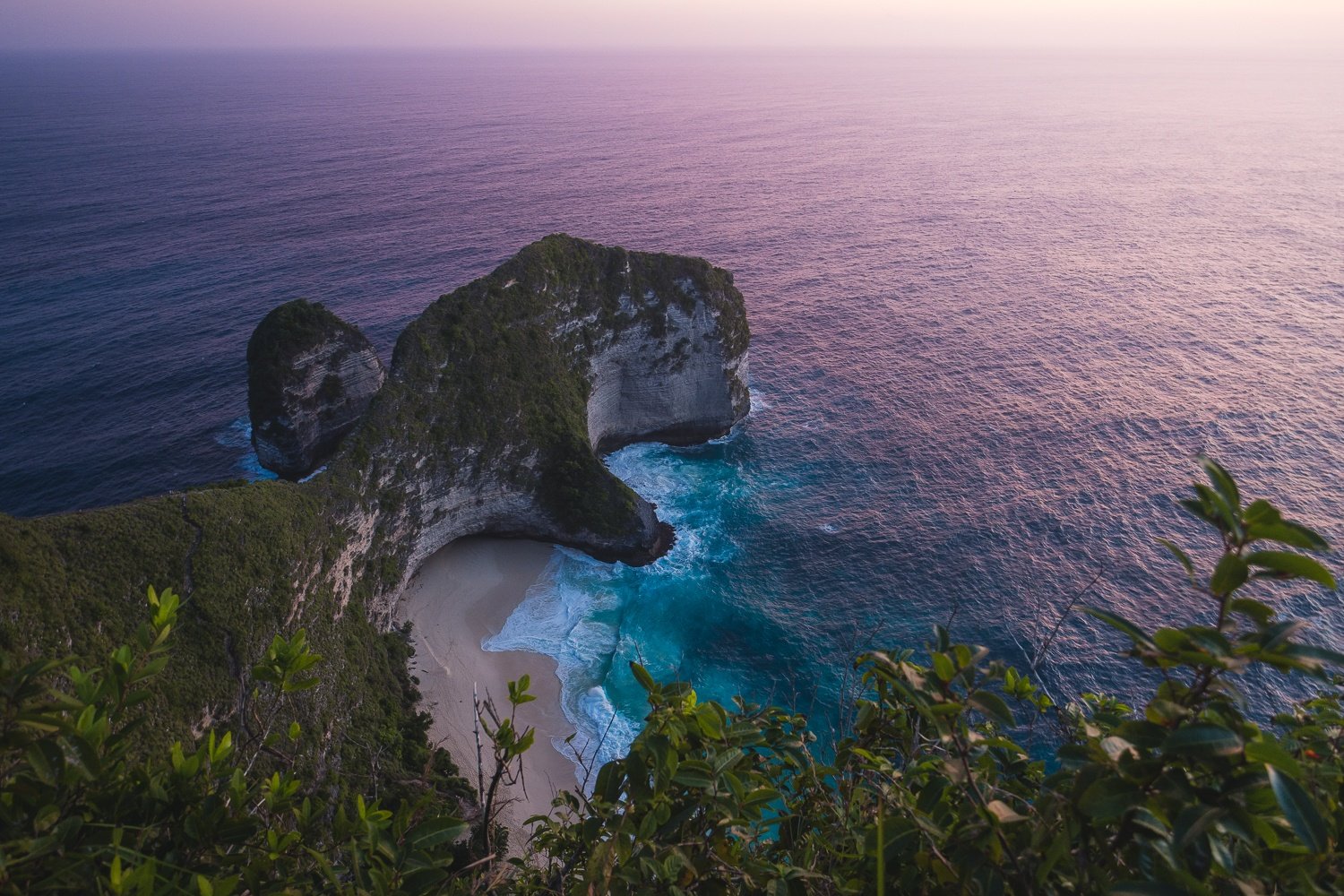
Photo: Roaming Ralph
Now for the honest bit…
Between about 10 am and 3 pm, this place can be absolute chaos. Boatloads of day trippers arrive, everyone queues for the same photo, and you’ll probably spend as much time accidentally appearing in other people’s Instagram posts as you do admiring the view.
If you’re staying on Nusa Penida, do yourself a favour and come back at sunrise or late in the afternoon. The crowds are smaller, the light is far better, and you’ll actually have a chance to appreciate where you are instead of wondering why you’ve joined an orderly queue for a cliff.
The walk down to the beach is no joke either. It’s steep, exposed in places and definitely more of a hike than a casual stroll. Wear proper shoes, take plenty of water and don’t underestimate the climb back up in the midday heat. Even if you decide not to tackle the descent, the viewpoint alone is worth the trip.
Swimming at Kelingking Beach is now prohibited because of the dangerous surf and powerful currents. Even if you’ve made the descent, it’s far better to enjoy the beach from the shore than risk entering the water.
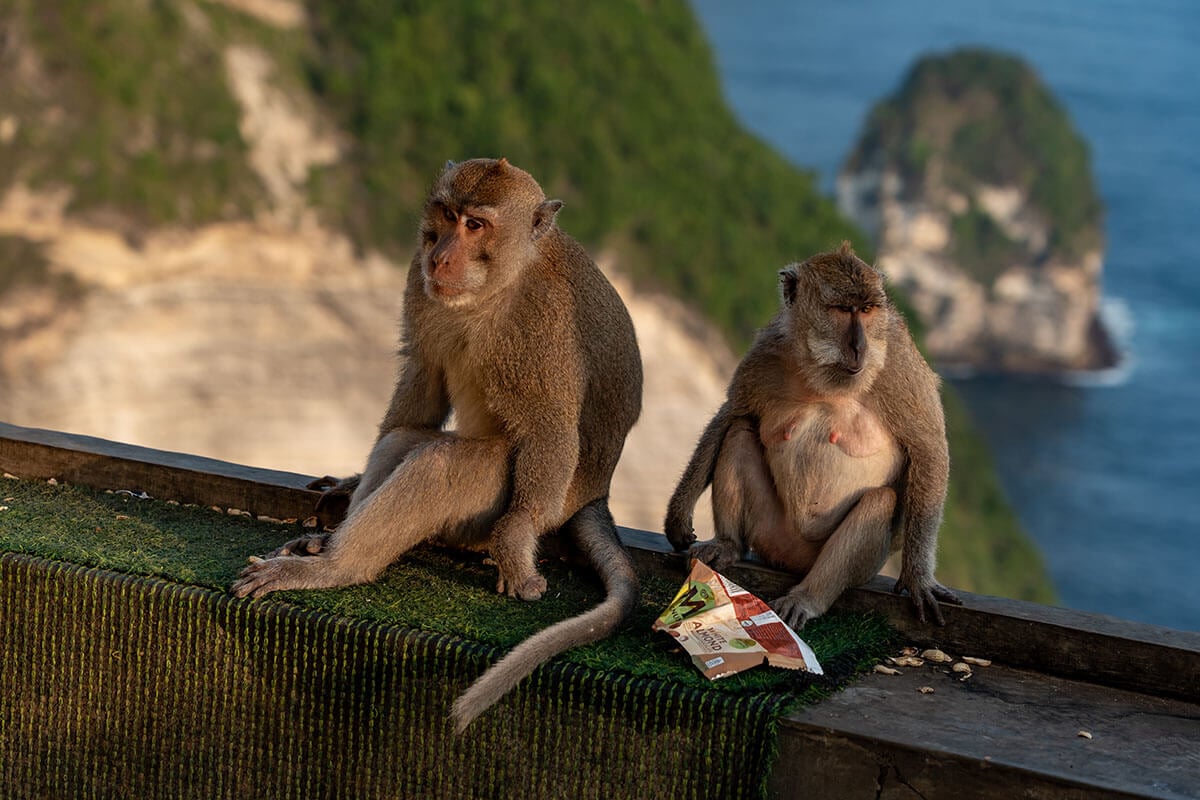
One final warning… the monkeys here have absolutely no respect for personal space. They’ll happily help themselves to food, drinks, sunglasses or anything else they think looks interesting. They might look cute from a distance, but I’d keep your belongings close and resist the temptation to feed them.
Touristy? Very.
Overhyped? I don’t think so.
Still one of the best viewpoints in Indonesia? Absolutely.
Banah Cliffs and Seganing Waterfall
At a Glance
- Best for: Sunset, dramatic coastal views and adventurous hikers
- Known for: Banah Cliffs’ sea stacks and Seganing’s steep cliffside trail
- How long to stay: 2-3 hours
- Don’t miss: Sunset from Banah Cliffs if you’re on this side of the island.
Banah Cliffs doesn’t seem to get anywhere near as much attention as Kelingking, which is a shame because I actually preferred it. There were no crowds, no waiting around for photos and no feeling like I was part of a conveyor belt of day trippers. Just cliffs, sea, sunset and a chance to actually stop for five minutes and take it all in.
Take a cold drink with you, grab a spot overlooking the ocean and stay until the sun disappears. There are a few makeshift benches around the cliffs too, although I’d recommend giving them a quick wobble before committing to sitting on one!
If you wander around a little, you’ll also find a narrow path leading further along the cliffs. It opens up some brilliant views of the sea stacks below and a handful of photo spots without the crowds you’ll find elsewhere on the island.
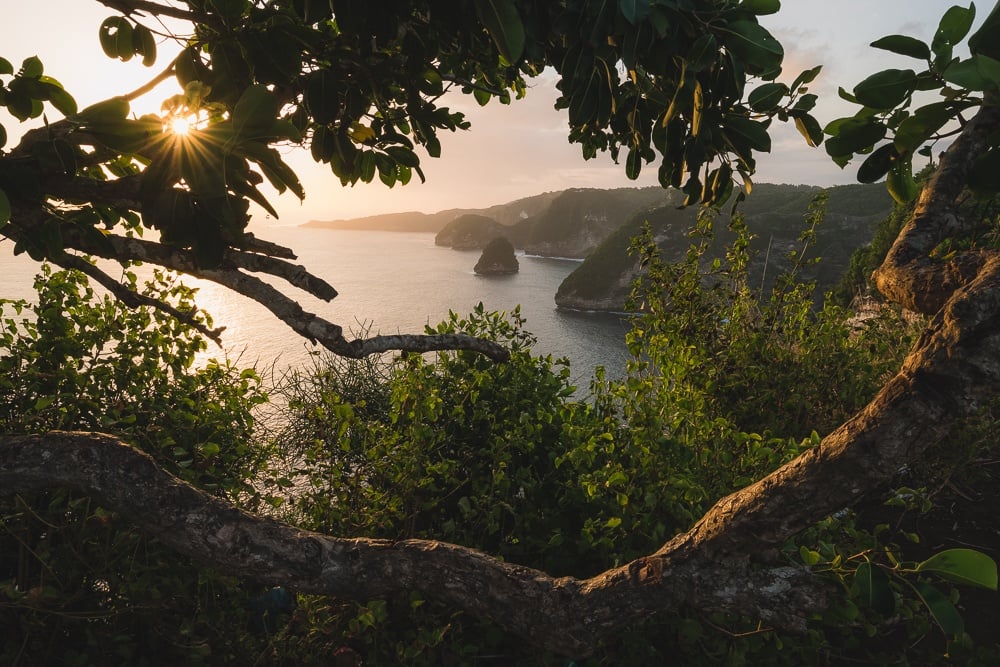
Photo: Roaming Ralph
I never actually made it to Seganing Waterfall after being wiped out by a sudden illness, so I can’t pretend otherwise. From everything I’ve heard though, it’s a proper adventure rather than a quick waterfall stop. The trail is steep, exposed and physically demanding, so it’s worth checking current trail and road conditions before setting off. Wear proper shoes, carry plenty of water and don’t underestimate how tough the climb back up can be.
If you’re already exploring the west side of Nusa Penida and fancy somewhere a little quieter than the headline attractions, I’d happily recommend Banah Cliffs. Seganing Waterfall is best saved for confident hikers who don’t mind putting in a bit more effort.
Tembeling Forest
At a Glance
- Best for: Natural pools, quieter scenery and getting off the main tourist trail
- Known for: Forest pools, a secluded beach, sea cave and natural rock formations
- How long to stay: 2-3 hours
- Don’t miss: The cave and rock garden tucked away near the beach.
If you’re looking for somewhere that feels a little less touristy than Nusa Penida’s headline attractions, Tembeling Forest is well worth the detour. Hidden away in the forest, you’ll find a series of natural pools, a secluded beach and one of the most peaceful corners of the island.
The funny thing is, I think I preferred the cave and rock garden to the pools themselves. I wasn’t expecting much, but it’s well worth taking a few extra minutes to have a look around.
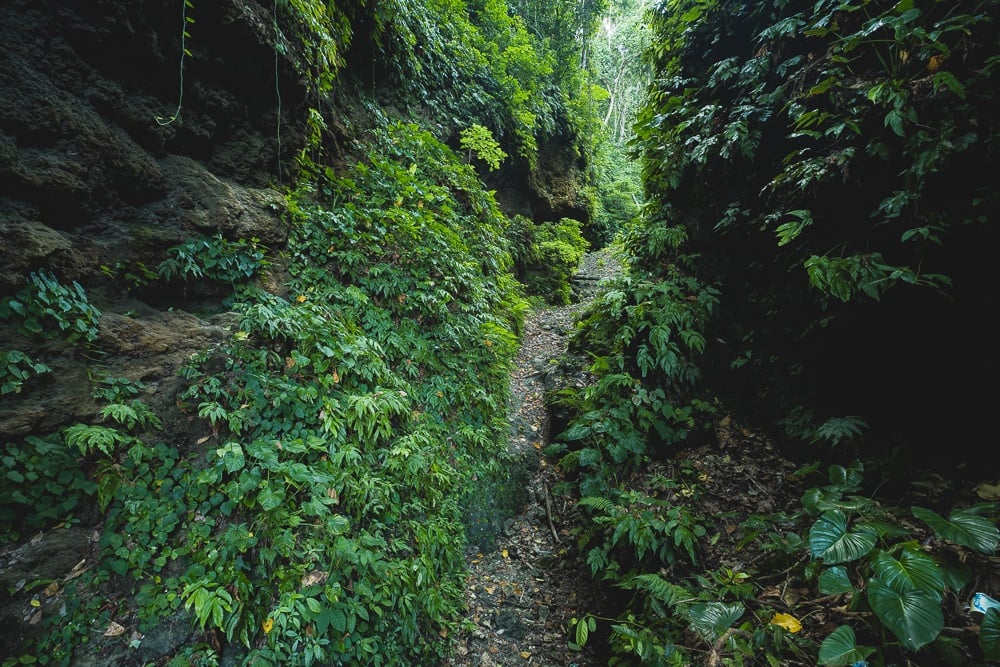
Photo: Roaming Ralph
Getting there is half the adventure. The access road has built up quite a reputation over the years and, to be fair, it is seriously steep. Road conditions can also change depending on the weather and any recent repairs. Plenty of people choose to park at the top and walk down, while others pay a local rider to take them instead.
Personally, I didn’t think the road was quite as terrifying as I’d been led to believe. Yes, it’s steep, but when I visited it was sealed and in reasonable condition. If you’re an experienced rider, take it slowly and make sure your brakes are in good working order before setting off. If you’re even slightly unsure, leave the bike at the top. There’s absolutely no shame in walking.
Tembeling is also considered a sacred water temple by local people, so you’ll usually be asked for a small donation at the entrance. Dress and behave respectfully, and remember that this is more than just another swimming spot.
Saren Cliffs
At a Glance
- Best for: Sunrise, sunset and peaceful cliff views
- Known for: Quiet viewpoints and dramatic coastal scenery
- How long to stay: 30-60 minutes
- Don’t miss: Sunrise if you’re staying nearby.
Saren Cliffs sit just down the road from Tembeling Forest and, in my opinion, don’t get anywhere near the attention they deserve. They’re a bit like Banah Cliffs, only even quieter.
I came here for sunrise and had the place completely to myself. Just the sound of the wind, the waves crashing below and… well… some shrubbery. After some of the busier stops on the island, it was exactly what I needed.
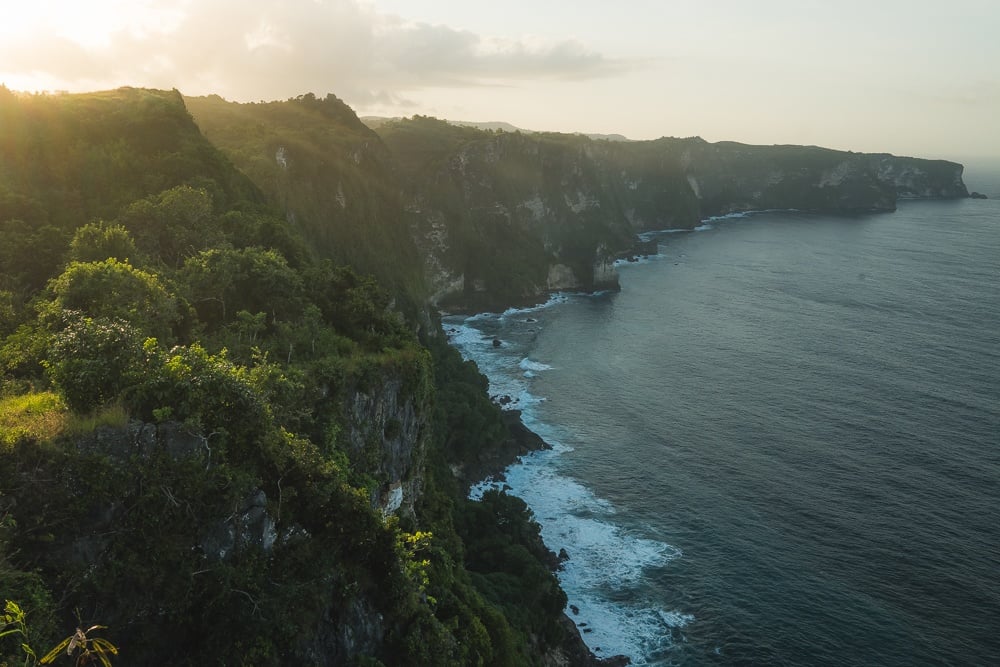
Photo: Roaming Ralph
There’s not much here in the way of facilities, which is probably one of the reasons it’s stayed so quiet. Bring any water or snacks you might want, and be sensible around the cliff edges. They’re spectacular, but it’s a long way down.
If you’ve only got a day on Nusa Penida, I’d probably stick to the headline attractions. But if you’re staying overnight and fancy escaping the crowds for a while, I reckon you’ll really like it.
Peguyangan Waterfall
At a Glance
- Best for: Incredible sea views, temples and something completely different
- Known for: The famous blue staircase, sacred temple and holy spring pools
- How long to stay: 2-3 hours
- Don’t miss: Looking back up at the staircase before you begin the climb back. It’s equal parts impressive and mildly terrifying.
Let’s clear something up straight away… Peguyangan Waterfall isn’t really a waterfall.
I know. It’s a bit like turning up to a cat café and finding nothing but dogs.
Instead, what you’ll find is a ridiculously steep blue staircase bolted to the side of a cliff, leading down to a sacred temple, holy spring pools and some of the best sea views on the island. It’s weird, it’s brilliant, and it’s unlike anywhere else I’ve visited on Nusa Penida.
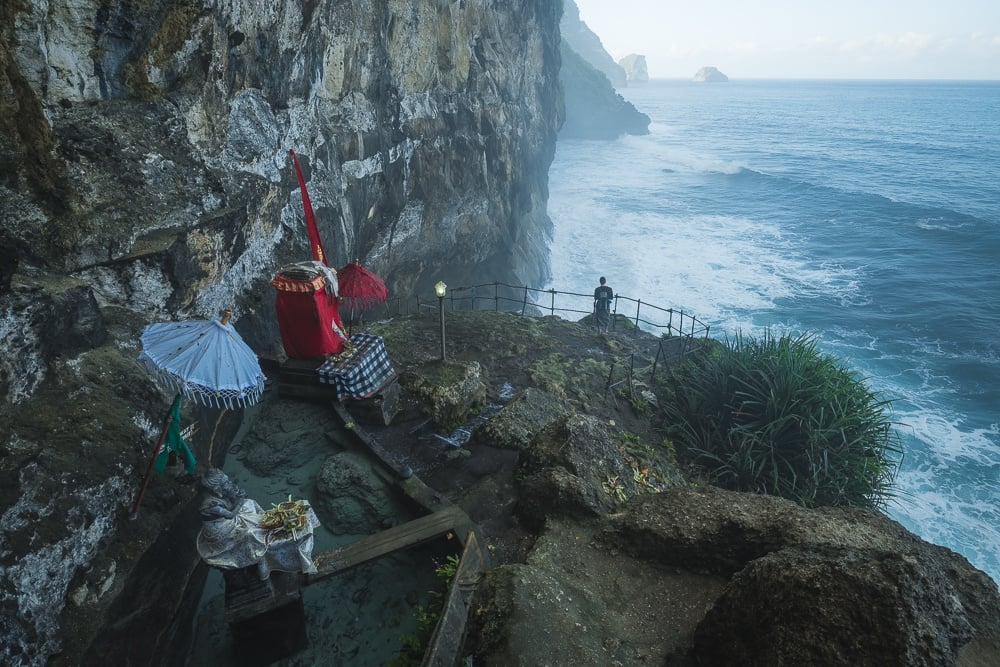
Photo: Roaming Ralph
The first challenge is getting down there. More than 700 steps doesn’t sound too bad… until you’re halfway back up in tropical humidity, wondering whose bright idea this was.
You’ll need to wear a sarong to enter the temple area (you can usually rent one if you don’t have your own), and it’s worth remembering that this is an active place of worship rather than just another tourist attraction. Take your time, be respectful and enjoy the atmosphere.
One last thing… wear proper shoes. The steps can be slippery, especially if they’ve been sprayed by the sea, and flip-flops really aren’t your friend here.
Come expecting a waterfall, and you’ll probably leave scratching your head. Come expecting one of the quirkiest and most memorable spots on Nusa Penida, and I reckon you’ll leave with a grin on your face… even if your legs don’t agree.
Manta Point
At a Glance
- Best for: Cliff views and (hopefully) spotting manta rays
- Known for: Looking down on manta rays from the cliffs
- How long to stay: 20-30 minutes
- Don’t miss: Keeping your eyes on the water for a few minutes before giving up!
If you’re already making the trek down to Peguyangan, you should DEFINITELY stop here too.
Now, I can’t promise you’ll see manta rays because, quite rightly, they haven’t checked your itinerary. But if the sea’s calm and the visibility is good, you’ve got a decent chance of spotting them cruising around below.
If you’re desperate to see them, don’t pin all your hopes on this viewpoint. The best way is still to get out on a snorkelling or diving trip, which I’ll cover later in the guide.
Even if the mantas decide they’ve got better things to do that day, you’ve still got some pretty decent views across to Nusa Lembongan, so it isn’t exactly a wasted stop.
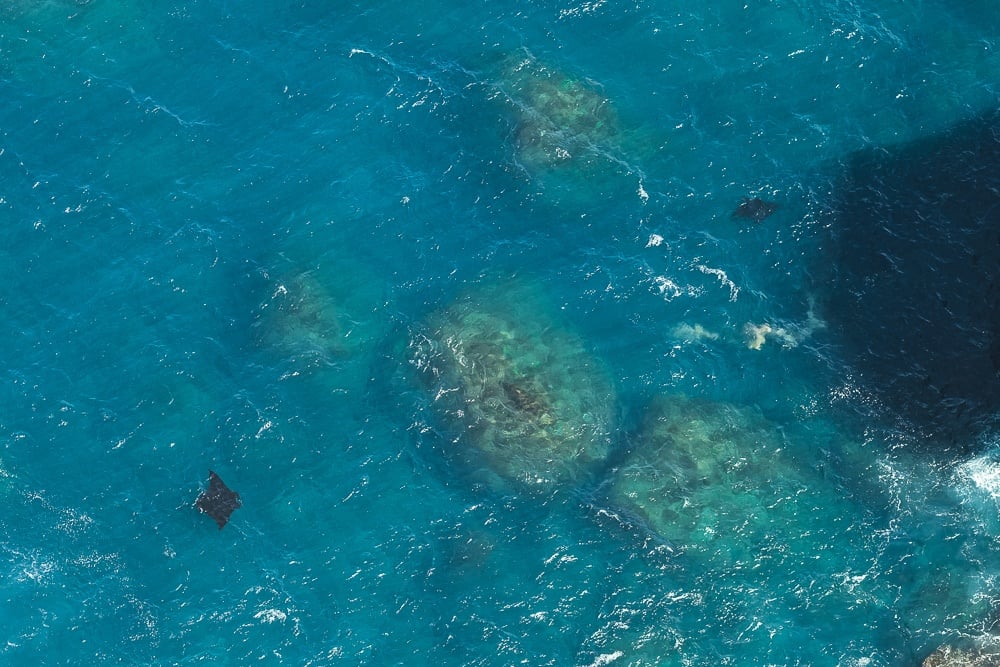
Photo: Roaming Ralph
Bukit Teletubbies
At a Glance
- Best for: Rolling countryside views and a break from the coast
- Known for: Green hills that (apparently) resemble the Teletubbies’ home
- How long to stay: 30-60 minutes
- Don’t miss: Pulling over at a few different viewpoints rather than relying on one pin on Google Maps.
Yes, you read that right. And yes, it really is named after the children’s TV programme.
After a few days of cliffs, beaches and crashing waves, Bukit Teletubbies is a bit of a change of scenery. Instead of dramatic coastlines, you’re surrounded by rolling green hills that show off a completely different side of Nusa Penida.
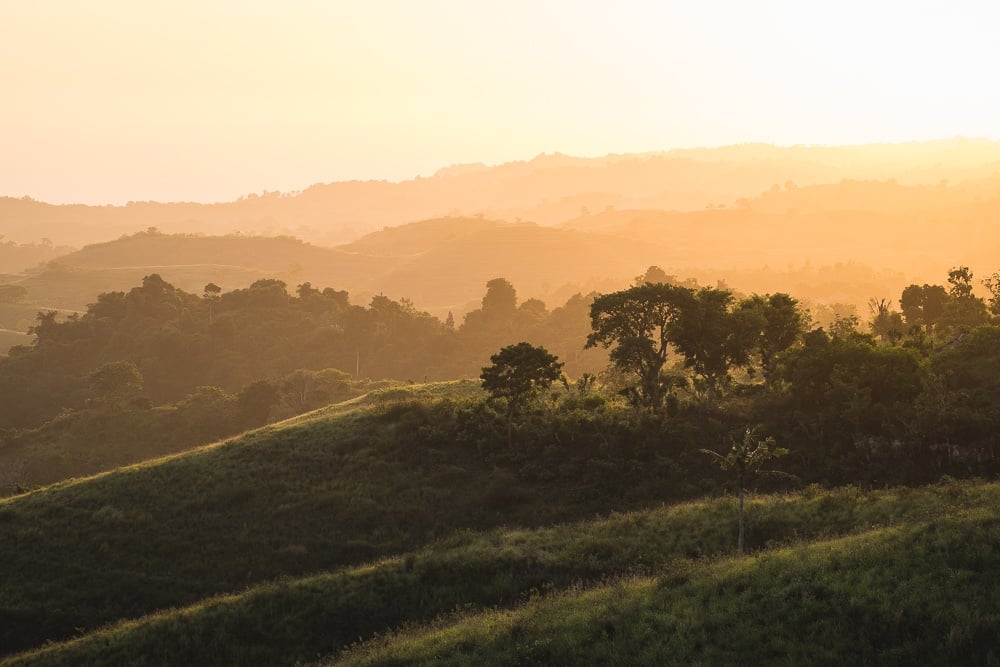
Photo: Roaming Ralph
I’ll admit, I was a bit confused when I arrived. Google Maps points to one specific viewpoint, but I got the impression that “Bukit Teletubbies” is really the whole area rather than one exact spot. So don’t just pull up, take one photo and leave. Have a wander, stop where the views look good and enjoy the drive through the hills.
As for why it’s called Bukit Teletubbies… your guess is as good as mine. I can sort of see it, but I suspect the person who came up with the name had a much bigger imagination than I do.
If you’re only visiting Nusa Penida for the day, I wouldn’t put this at the top of the list. But if you’re already crossing the island or spending a couple of nights here, it’s a nice reminder that there’s more to Nusa Penida than famous cliffs and Instagram viewpoints.
Suwehan Beach
At a Glance
- Best for: Escaping the crowds and spending a few lazy hours by the sea
- Known for: Soft white sand, a huge sea stack and a surprising lack of people
- How long to stay: 2-3 hours
- Don’t miss: Looking back at the beach from the steps on your way back up.
This was my favourite beach on Nusa Penida. There, I said it.
Not because it’s the easiest to get to. Not because it’s got the best facilities (it really hasn’t). And definitely not because it’s the busiest… quite the opposite.
When I arrived, I genuinely couldn’t believe how empty it was. Here’s this gorgeous stretch of sand with a huge sea stack sitting just offshore and… absolutely nobody else around. After spending time at places where everyone seems to be queuing for the same photo, I suddenly felt a little bit smug.
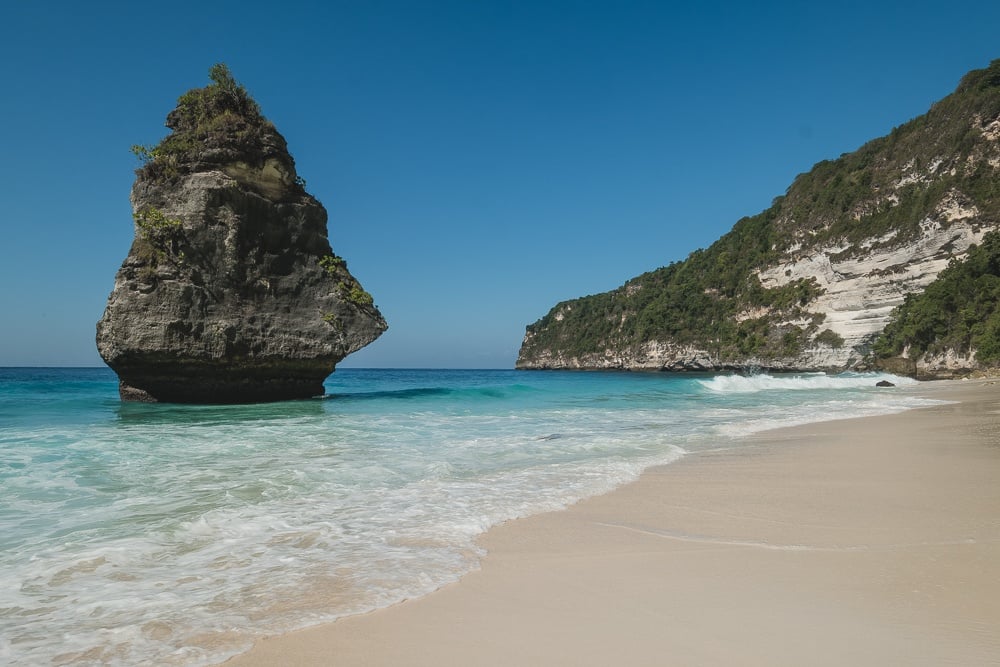
Photo: Roaming Ralph
Of course, Nusa Penida doesn’t give anything away for free. The road gets a bit rough towards the end, and you’ll still have a fair few steps to tackle before you reach the beach. By this point in the trip, you’ll probably be on first-name terms with staircases anyway, but decent shoes will definitely make life easier.
Once you’re down there, you’re pretty much left to your own devices. There isn’t much shade, facilities are limited, and you’re unlikely to find someone wandering past selling cold coconuts every five minutes. Bring plenty of water, slap on the sunscreen and enjoy the fact that, for once, there’s very little going on.
As always, have a look at the sea before deciding whether to swim. Conditions can change quickly, so use your judgement rather than assuming it’s safe because it looks inviting.
If you’ve only got one day on Nusa Penida, I’d probably give this a miss. But if you’re staying a couple of nights and fancy discovering your own favourite beach instead of everyone else’s, I’d put Suwehan pretty high on the list.
“The Tree House of Nusa Penida” and Thousand Islands Viewpoint
At a Glance
- Best for: Sunrise, iconic viewpoints and photographers
- Known for: The famous tree house overlooking Diamond Beach and the Thousand Islands Viewpoint
- How long to stay: 1-2 hours
- Don’t miss: Visiting at sunrise if you’re staying on the island.
These two attractions sit right next to each other, so it makes sense to visit them together. Better yet, pair them with Diamond Beach and Atuh Beach, and you’ve got a pretty decent morning sorted.
The Thousand Islands Viewpoint is one of my favourite viewpoints on Nusa Penida. Despite the name, there definitely aren’t a thousand islands, but there are enough dramatic cliffs and sea stacks to keep your camera busy for a while. If you can drag yourself out of bed early enough, sunrise here is well worth the effort.
Then there’s Rumah Pohon, better known as the famous tree house. If you’ve spent more than five minutes looking at Nusa Penida on Instagram, you’ve almost certainly seen it.
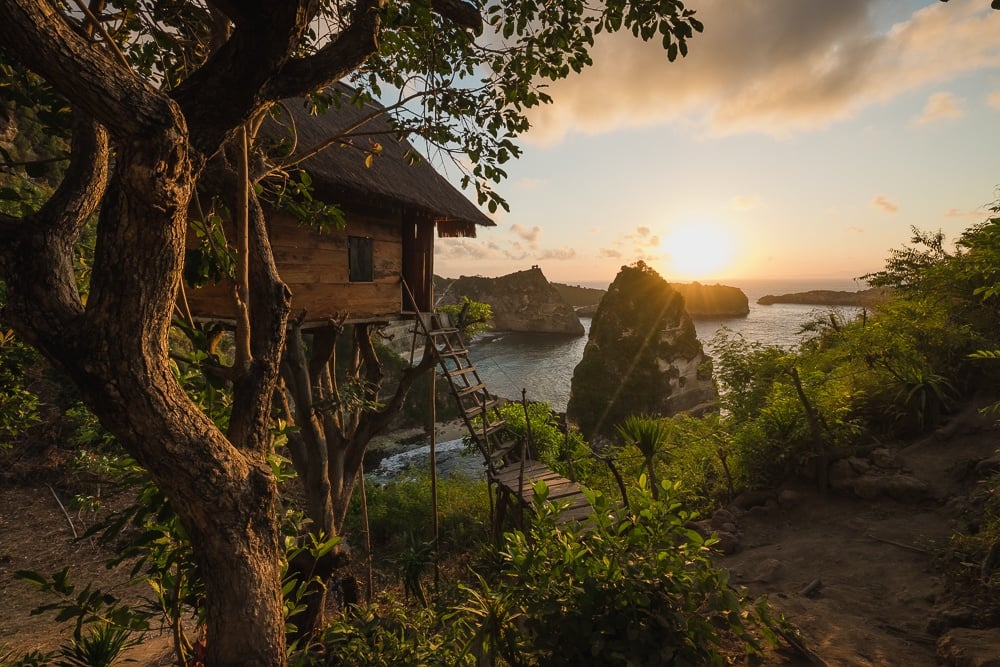
Photo: Roaming Ralph
Now, a little reality check…
The tree houses are famous because of the view, not because they’re some luxury jungle retreat. They were incredibly basic, and these days they’re no longer available to book for overnight stays. But honestly, I don’t think that makes the stop any less worthwhile.
The real attraction has always been the location. Perched on the cliffs next to Thousand Islands Viewpoint, the tree houses have one of the best views on Nusa Penida and are still one of the island’s most photographed landmarks. Just expect to share them with plenty of other visitors, especially in the middle of the day. If you want the place at its best, get there for sunrise before the crowds roll in.
Is it still worth visiting? I’d say yes. Just go knowing what to expect. Get there early if you can, enjoy the viewpoint, have a wander around and then carry on exploring before the crowds really build.
Diamond Beach
At a Glance
- Best for: One of the island’s most spectacular beaches
- Known for: The famous cliffside staircase, turquoise water and dramatic scenery
- How long to stay: 2-3 hours
- Don’t miss: Looking back up the staircase once you reach the beach.
A lot of people will tell you Diamond Beach is their favourite beach on Nusa Penida.
I’m inclined to agree.
The beach is beautiful, but if I’m honest, I think the walk down stole the show. Those famous white steps carved into the cliff are an attraction in their own right. I reckon I spent more time wandering up and down them, taking photos, than I did actually lying on the beach.
If you’re staying overnight on Nusa Penida, I’d try to get here in the morning. The light’s better, it’s usually quieter, and you’ll beat most of the day-trip crowds.
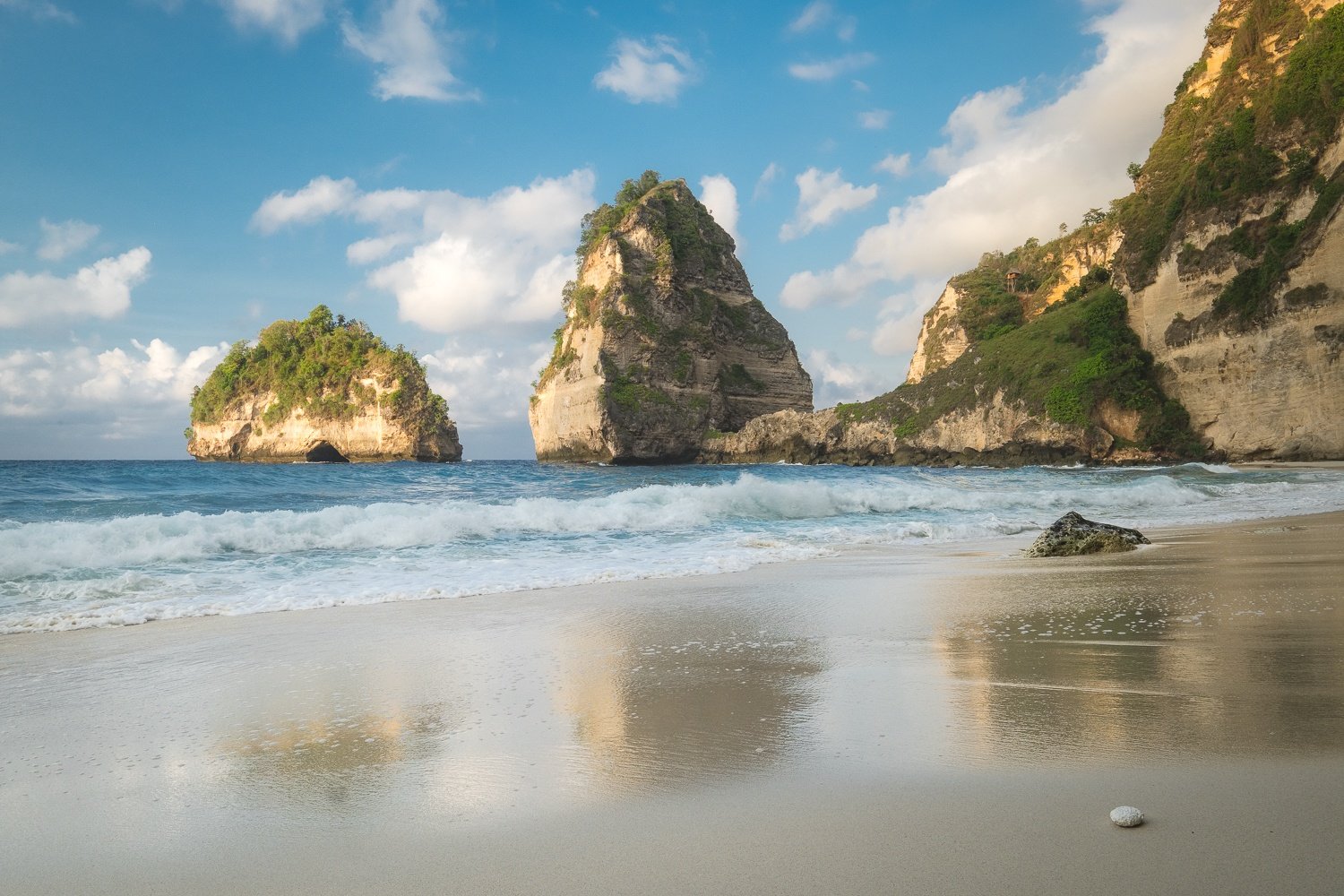
The beach itself isn’t huge, but that’s part of its charm. There’s usually a little warung selling drinks and snacks, but don’t expect loads of facilities.
One thing that’s changed over the years is that swimming at Diamond Beach is now off the cards. Those turquoise waters might look ridiculously inviting, but the currents here are no joke, and several serious accidents have occurred. Stick to enjoying the beach from the shore and pay attention to any warning signs or advice from locals.
Fun fact: those famous steps were only completed at the end of 2018. Before then, reaching Diamond Beach was a lot more of an adventure.
Atuh Beach
At a Glance
- Best for: A relaxed beach stop after a morning of sightseeing
- Known for: The huge offshore rock formation, soft sand and beach cafés
- How long to stay: 2-3 hours
- Don’t miss: Visiting after Diamond Beach and the Thousand Islands Viewpoint.
Atuh Beach is one of those places that just makes sense to visit after Diamond Beach. They’re so close together that it’d almost be rude not to.
The first thing you’ll notice is the enormous rock sitting just offshore. Depending on who you ask, it looks like the head of some mythical creature. I’ll let you decide.
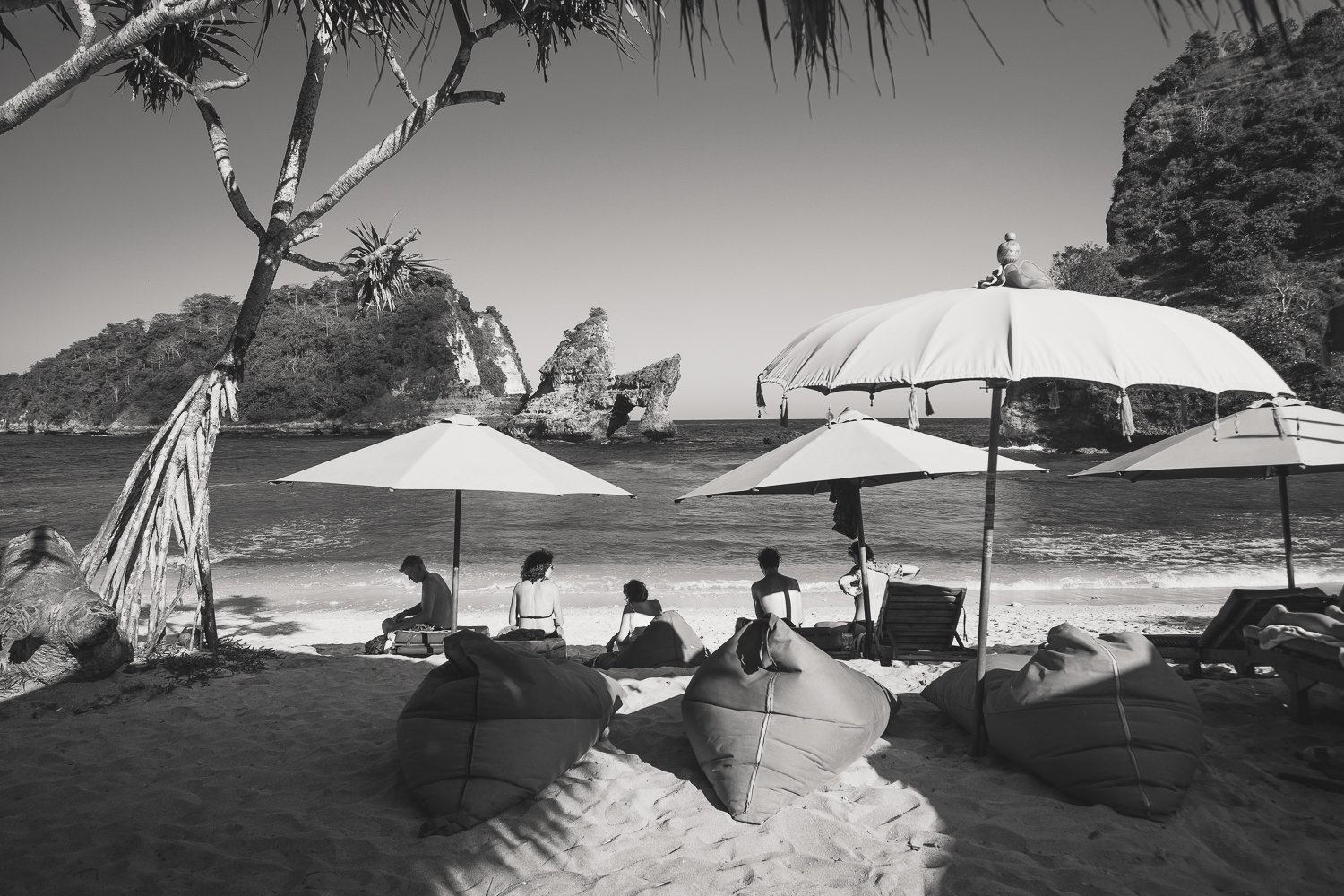
Photo: Roaming Ralph
Compared to somewhere like Suwehan, Atuh feels a lot more set up for visitors. There are a few warungs, sun loungers and places to grab a drink, so it’s somewhere you can happily spend a couple of hours without feeling like you need to rush off to the next stop.
You’ll probably spot a few people swimming out towards the rocks or even cliff jumping. It definitely looks tempting, but I’d only even think about it if the conditions are calm and you know exactly what you’re doing. The sea around Nusa Penida isn’t somewhere to take chances.
If you’re after a quiet, untouched beach, this probably isn’t it. But if you fancy a swim, something cold to drink and a bit of time to sit back after a busy morning exploring, Atuh Beach is a pretty good place to do exactly that.
Goa Giri Putri Temple
At a Glance
- Best for: Culture, temples and something completely different
- Known for: The cave entrance and underground temple
- How long to stay: 1-2 hours
- Don’t miss: The tiny cave entrance that leads into the vast temple beyond.
This is one I genuinely wish I’d managed to visit.
Unfortunately, it was my last day on Nusa Penida, and I had a bike owner repeatedly reminding me that he quite fancied having his bike back. Something had to give, and sadly, Goa Giri Putri lost out.
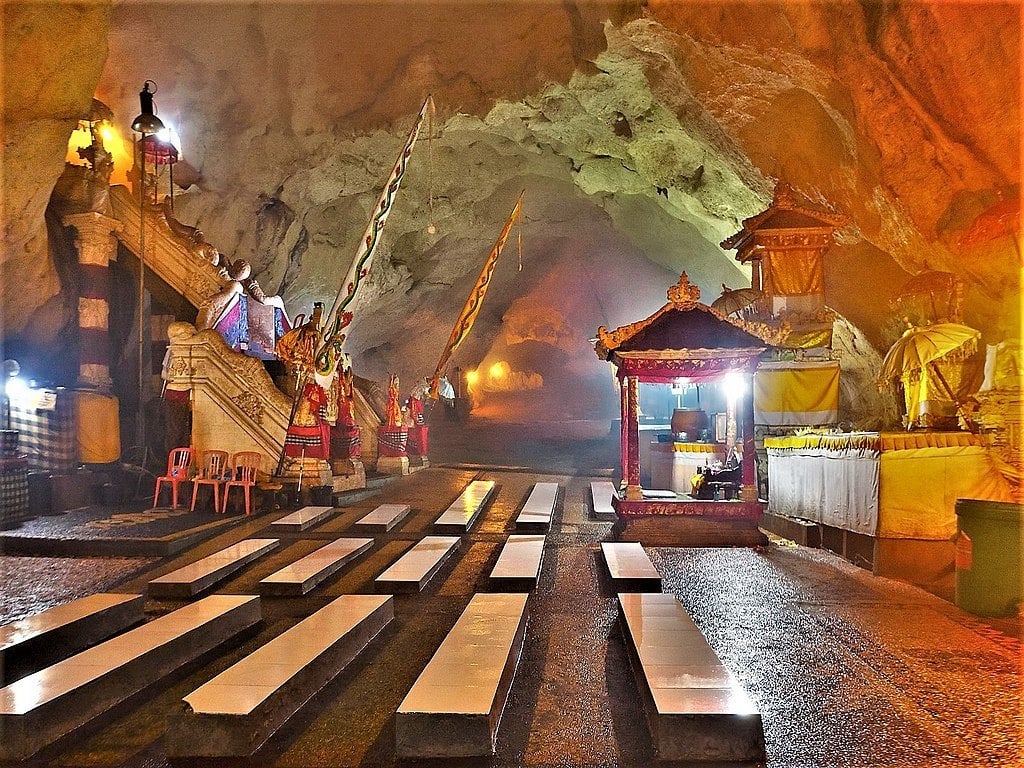
From everyone I’ve spoken to since, it’s one of the most unique places on the island. Travellers often describe the cave temple as one of the highlights of their trip, and from the photos, it’s easy to see why. You squeeze through a surprisingly small entrance before it opens up into a huge cave that’s home to an active Hindu temple.
If you decide to visit, remember it’s a place of worship first and a tourist attraction second. Dress respectfully, wear a sarong (you can usually rent one if needed) and take your time looking around.
It’s definitely at the top of my list for my next visit to Nusa Penida, and based on everything I’ve heard, I won’t be making the same mistake twice.
Pura Dalem Ped
At a Glance
- Best for: Balinese culture, history and spirituality
- Known for: One of Nusa Penida’s most important Hindu temples
- How long to stay: 1 hour
- Don’t miss: Taking a few minutes to learn about the temple’s fascinating history before you visit.
Remember how I mentioned that Nusa Penida has long been an important pilgrimage destination for Balinese Hindus? Well, this is the island’s most significant temple.
Pura Dalem Ped plays an important role in Balinese Hindu beliefs and mythology. According to local tradition, it’s closely linked to the powerful spiritual figure Ratu Gede Macaling. If you’re trying to get your head around the mythology, Ratu Gede Macaling is one of its most powerful and feared figures. Comparing him to Voldemort isn’t technically accurate… but it’s probably close enough to give you the general idea.
If you’ve visited plenty of Balinese temples before, you might not think Pura Dalem Ped is the most visually impressive. But I’d still recommend stopping here because that’s not really why people come. It’s the stories, beliefs and cultural importance that make this place so fascinating.
As with any temple in Bali or Nusa Penida, dress respectfully, wear a sarong (these are usually available to borrow or rent if needed) and be mindful that people may be there to worship rather than sightsee. Keep noise to a minimum and avoid interrupting ceremonies or taking intrusive photos.
I came away feeling like I understood Nusa Penida a little better after visiting here. If you’re interested in more than just beaches and viewpoints, I’d definitely make time for it.

A new country, a new contract, a new piece of plastic – booooring. Instead, buy an eSIM!
GigSky eSIMs work just like an app: you download it, pick your plan, and BOOM! You’re connected the minute you land. It’s that easy.
Read about how eSIMs work or click below to see one of the top eSIM providers on the market and ditch the plastic.
Grab an eSIM!Definitely don’t miss out on these activities while visiting Nusa Penida!
Make the descent down to Kelingking Beach
Every Nusa Penida itinerary seems to include Kelingking Beach, and for once, the hype is justified. The views are incredible, the beach is spectacular, and, if you’re up for it, the climb down is an experience you’ll remember for a long time.
The full descent definitely isn’t for everyone though. The path is steep, exposed and can be tough going in the heat. Wear proper shoes, take plenty of water and don’t feel like you have to make it all the way to the bottom just because everyone else seems to be. Even walking part of the way down rewards you with some fantastic views.
After tackling that climb, jumping into the ocean might sound like the perfect reward… but don’t. Swimming at Kelingking Beach is now prohibited because the waves and currents here can turn dangerous in a matter of seconds. Take a well-earned rest on the sand instead before mentally preparing yourself for the walk back up.
If you’re staying overnight on Nusa Penida, I’d aim for early morning or later in the afternoon. You’ll enjoy cooler temperatures, softer light and far fewer people than during the middle of the day.
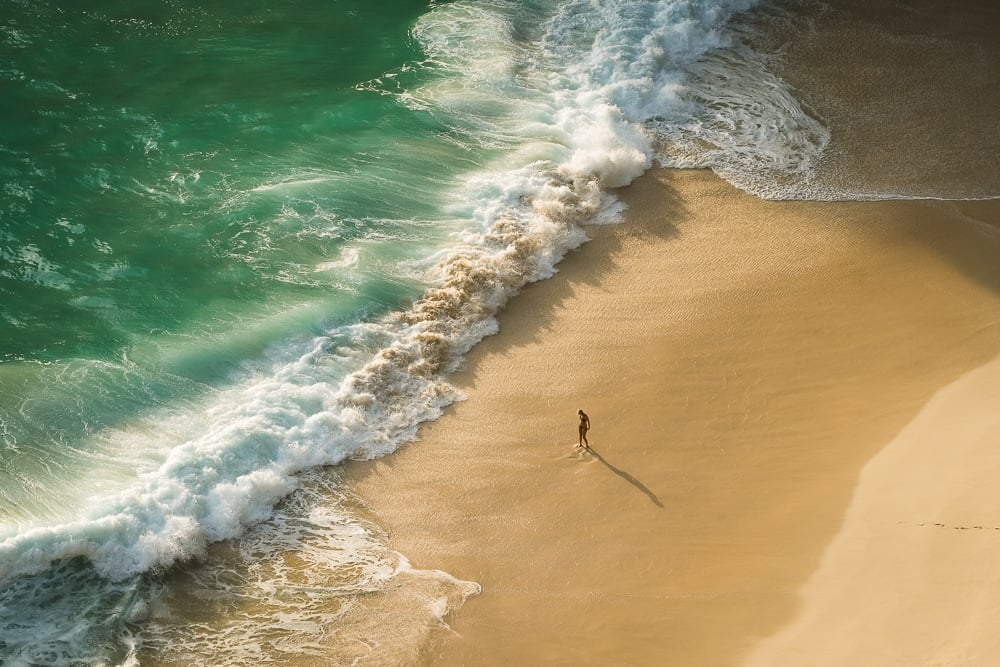
Photo: Roaming Ralph
Go diving with manta rays
If you’ve never swum with manta rays before, I’d absolutely recommend adding this to your itinerary.
Whether you choose to snorkel or dive, seeing these gentle giants glide through the water is one of those experiences that sticks with you long after you’ve left Nusa Penida. They look absolutely enormous, but despite their size, they’re harmless filter feeders and are surprisingly graceful to watch.
Of course, they’re wild animals, so sightings are never guaranteed. The best way to maximise your chances is by joining a reputable snorkelling or diving tour that knows the local conditions and the best places to look.
Even if the mantas decide they’re busy elsewhere that day, you’ll usually get the chance to snorkel over colourful reefs and see plenty of other marine life too. I’d say it’s one of those experiences that’s well worth making time for while you’re on the island.
Find the Quieter Beaches of Nusa Penida
Some of my favourite spots on Nusa Penida weren’t the famous ones.
If you’ve got more than a day on the island, leave a bit of room in your itinerary to explore. Some of the quieter beaches take a little more effort to reach, whether that’s rougher roads, longer walks or plenty of steps, but you’ll often be rewarded with fewer people and a much more peaceful experience.
Just don’t expect beach clubs and every convenience. The quieter the beach, the more likely you’ll need to bring your own water, snacks and sunscreen… and that’s ok.
Catch the sunrise at the Thousand Islands Viewpoint
The Thousand Islands Viewpoint is impressive at any time of day, but at sunrise it really is something else.
Watching the first light hit the cliffs and sea stacks is one of those moments that reminds you why getting out of bed before dawn is sometimes worth it. Better still, you’ll beat most of the day-trippers and get to enjoy the views without quite so many people around.
If you’re staying overnight on Nusa Penida, I’d put this right at the top of your sunrise list.
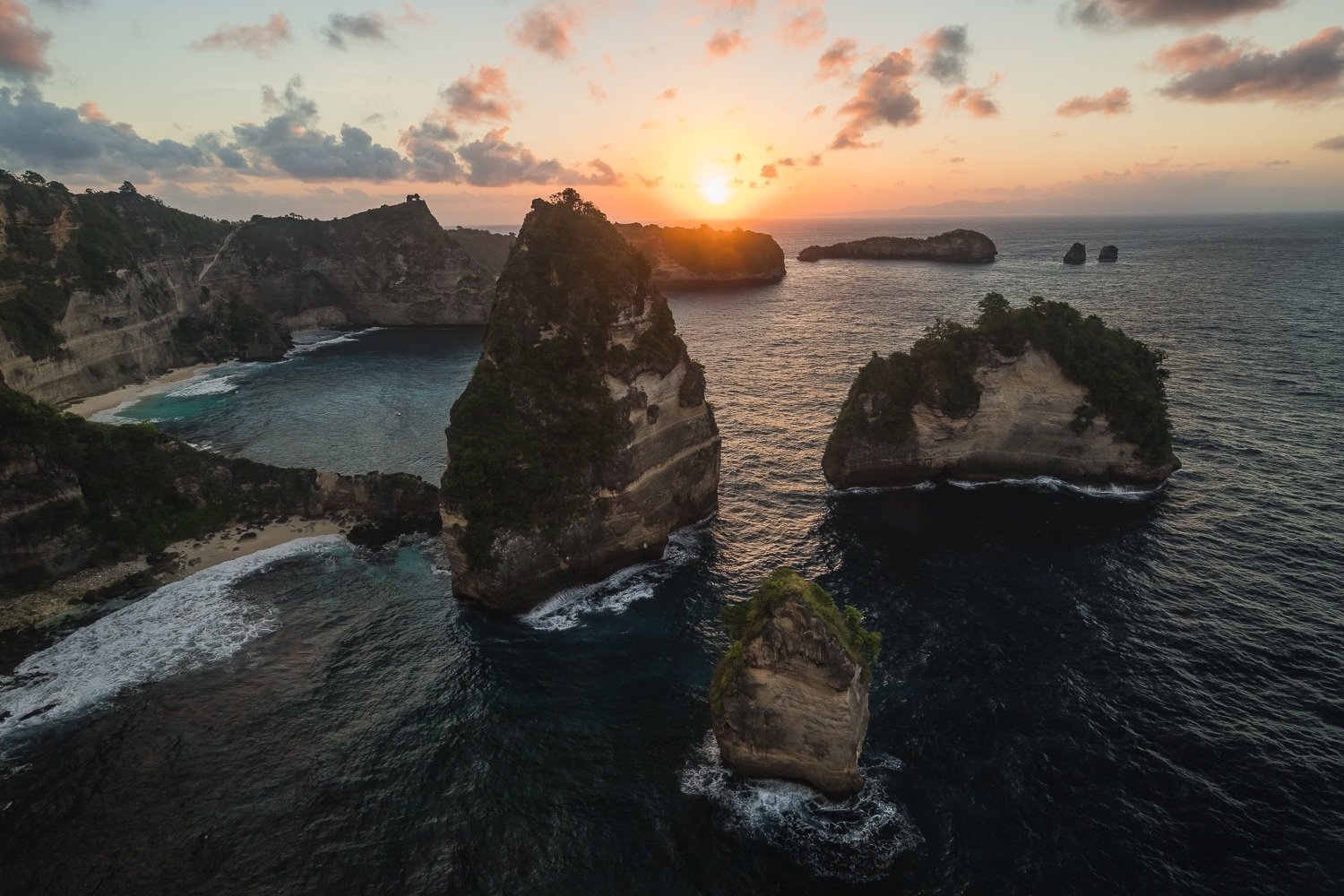
Photo: Roaming Ralph
Chill out at Atuh Beach
Sometimes the best thing to do on Nusa Penida is… absolutely nothing.
Grab a cold drink, find a lounger and enjoy a couple of lazy hours at Atuh Beach.
Check out the (not so rough) Diamond Beach
Diamond Beach is one of the best places to visit in Bali, and it earns that reputation.
Between the dramatic cliff setting, the famous staircase and the beach waiting at the bottom, this is one stop that’s every bit as good as everyone says it is.
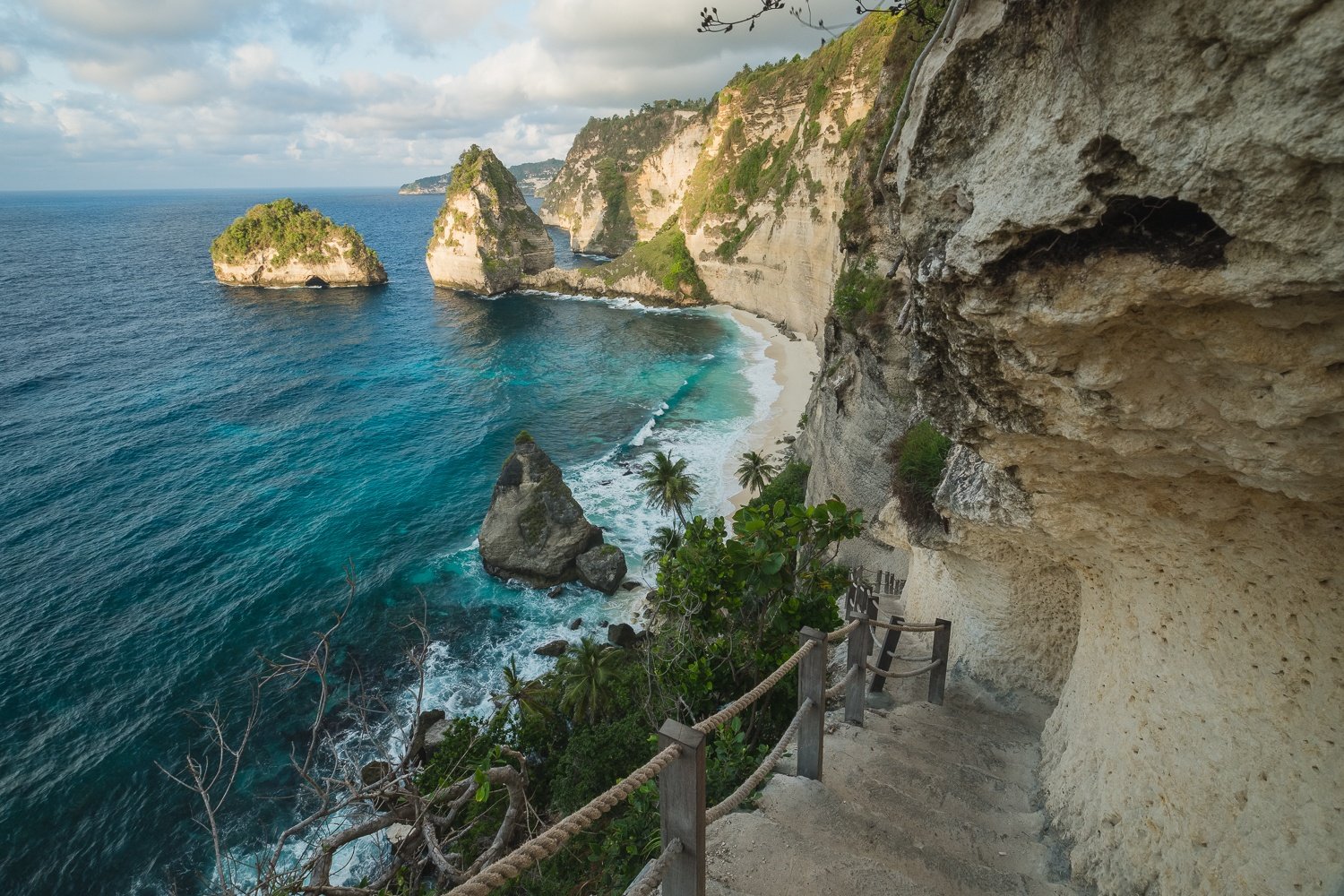
Photo: Roaming Ralph
Bathe in the Holy Waters of Peguyangan or Tembeling
If you visit Peguyangan or Tembeling, take a moment to appreciate that these aren’t just beautiful places; they’re also important spiritual sites for many Balinese Hindus.
If you choose to bathe in the holy waters, do so respectfully. Wear a sarong, follow any local guidance, leave the requested donation and remember that you’re visiting an active place of worship, not just another tourist attraction.
See all the cliffs
Nusa Penida really doesn’t do subtle coastlines.
Everyone heads to Kelingking, and rightly so, but don’t stop there. Banah Cliffs, Saren Cliffs and Manta Point all offer a different perspective of the island, and some of them come with a fraction of the crowds.
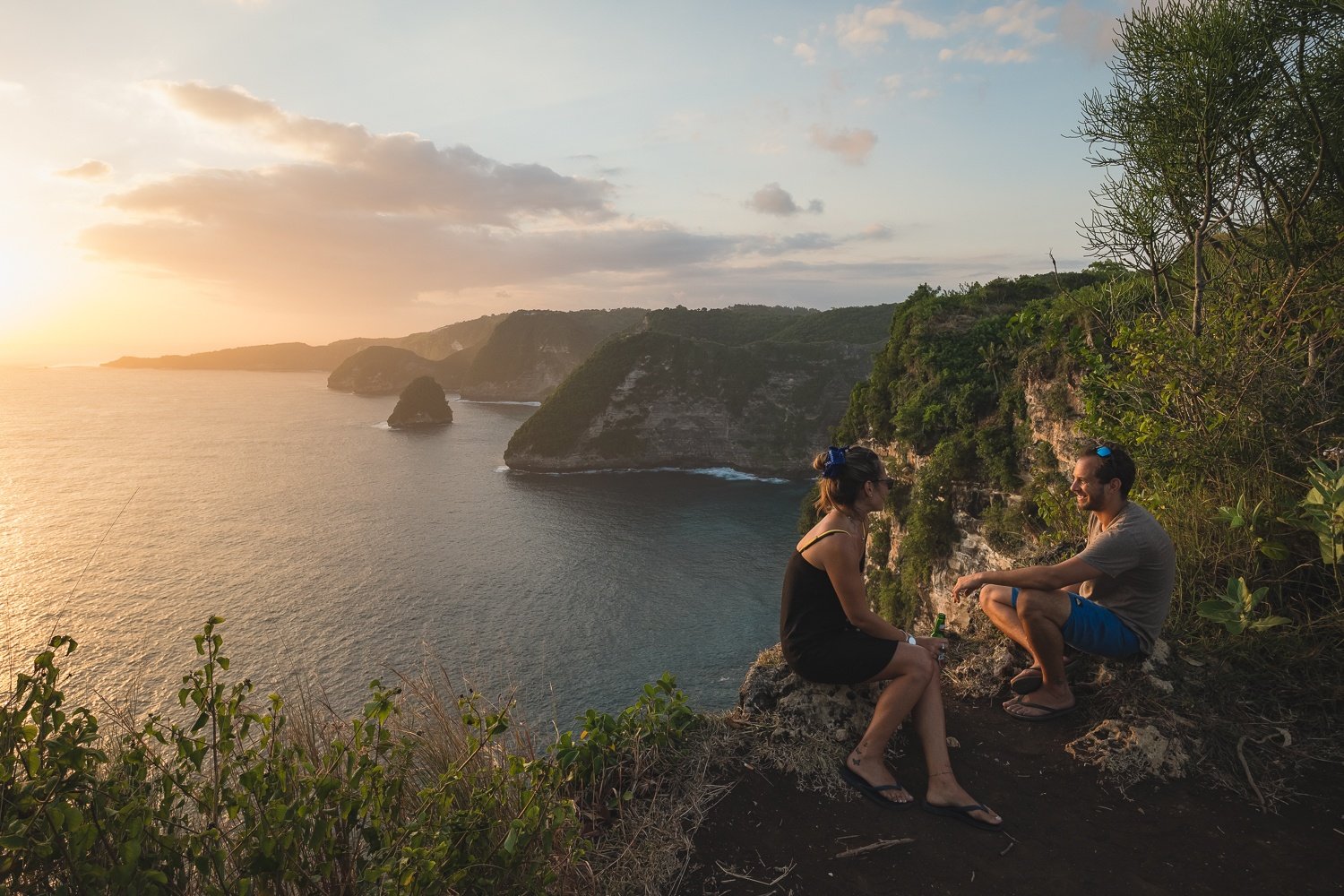
Photo: Roaming Ralph
Admire the natural bridge of Broken Beach
Broken Beach probably wouldn’t make my top three stops on Nusa Penida, but it’s still worth a look if you’re exploring the island’s west side.
The natural sea arch is genuinely impressive, and it’s worth taking a stroll around the rim to see it from a few different angles. Just don’t forget that getting there can be half the adventure, or so people say!
When to Travel to Nusa Penida
If you can choose when to visit, I’d aim for the dry season (roughly April to October). The roads are generally in better condition, the viewpoints are clearer, the beaches are at their best and ferry crossings are usually a little smoother too.
That doesn’t mean you should rule out the wet season completely. You can still have a great trip, but be prepared for rougher boat crossings, muddier roads and the occasional attraction becoming harder to reach after heavy rain.
One thing that’s worth remembering is that Nusa Penida is a little drier than much of mainland Bali. Fresh water is a limited resource on the island, and tourism puts extra pressure on supplies, so try not to waste it where you can. It’s only a small thing, but it means you’re being a responsible traveller.
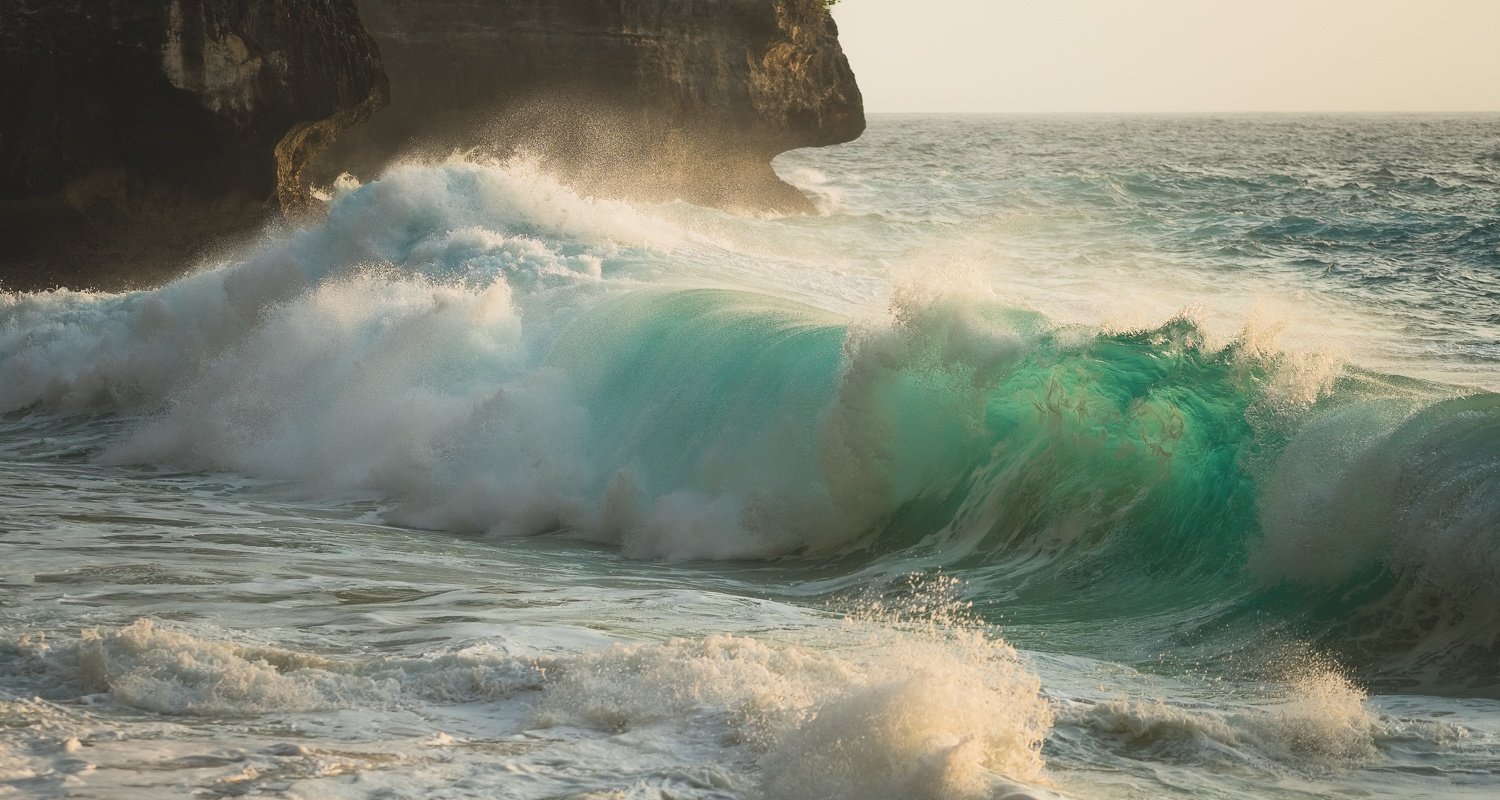
Photo: Roaming Ralph
Whenever you visit, expect the biggest crowds at places like Kelingking Beach, Diamond Beach and Broken Beach during the middle of the day. If you’re staying overnight, getting up early or visiting later in the afternoon makes a huge difference. The light’s better, it’s cooler, and you’ll spend less time queuing for viewpoints.
If you’re hoping to snorkel or scuba dive with manta rays or see the famous mola mola (ocean sunfish), it’s worth checking seasonal conditions before you book. Manta rays can be seen throughout much of the year, while mola mola sightings are generally best during the cooler months, usually between July and October. They’re wild animals though, so sightings are never guaranteed.
Nusa Penida Essentials
Nusa Penida is a little more rugged than mainland Bali, so it’s worth packing a few extra bits to make life easier. I’d make sure you’ve got the following:
- Cash. Card payments are becoming more common, but plenty of warungs, small entrance fees and local businesses still prefer cash.
- Reusable water bottle. Nusa Penida is drier than much of Bali, and fresh water is a valuable resource. Stay hydrated and help reduce plastic waste where you can.
- High-factor sunscreen. The tropical sun is no joke, especially if you’re spending all day on beaches, boats and viewpoints.
- Hat and sunglasses. Shade can be hard to come by at many of the island’s attractions.
- Swimwear. For beaches, snorkelling trips and natural pools.
- Dry bag or waterproof phone case. Ideal for boat crossings, snorkelling tours and protecting your valuables from sea spray and sand.
- Proper shoes. You’ll be tackling steep staircases, rough tracks and uneven ground far more often than you might expect. Leave the flip-flops for the beach.
- Sarong. Essential if you’re planning to visit temples. If you don’t bring one, you can usually rent one at the entrance.
- Power bank. Navigation, photos and videos drain your battery surprisingly quickly on full days exploring the island.
- Travel adapter. Indonesia uses Type C and Type F plugs, so don’t get caught out.
- Imodium or stomach medication. Hopefully, you won’t need it, but you’ll be very glad you packed it if Bali Belly strikes.
- Basic first aid kit. Handy for blisters, cuts and the occasional scrape after a day of adventuring.
- Motion sickness tablets. Well worth packing if you’re prone to seasickness, especially during rougher ferry crossings.
- Offline maps. Download Google Maps before you arrive so you can still navigate if your signal drops.
For more packing ideas, have a look at our complete Bali packing list before you go.
Why You Should Travel to Nusa Penida with a Water Bottle
Nusa Penida is an incredible place, but like much of Bali, it’s feeling the effects of tourism. Plastic waste is still a visible issue, and the island’s fresh water and waste systems are under increasing pressure.
One of the easiest things you can do is carry a reusable water bottle instead of buying a new plastic one every time you get thirsty. If you’re travelling with a filtered bottle, just make sure it’s suitable for treating local water, or refill it from trusted filtered water stations rather than drinking straight from the tap.
It’s a tiny change that takes very little effort, saves you a bit of money and helps keep this beautiful island looking the way you came to see it.
Diving in Nusa Penida
If there’s one thing I’d tell you to splash out on while you’re here, it’s getting out on the water. Nusa Penida is one of the best places in Bali to see big marine life, and for a lot of people, it’s the reason they come.
The headline act is, of course, the manta rays. Seeing one glide past you underwater is something you’ll be talking about long after you’ve left Indonesia. Mola mola (ocean sunfish) also visit the waters around Nusa Penida, usually between July and October, but they’re much less predictable, so treat any sighting as a bonus rather than an expectation.
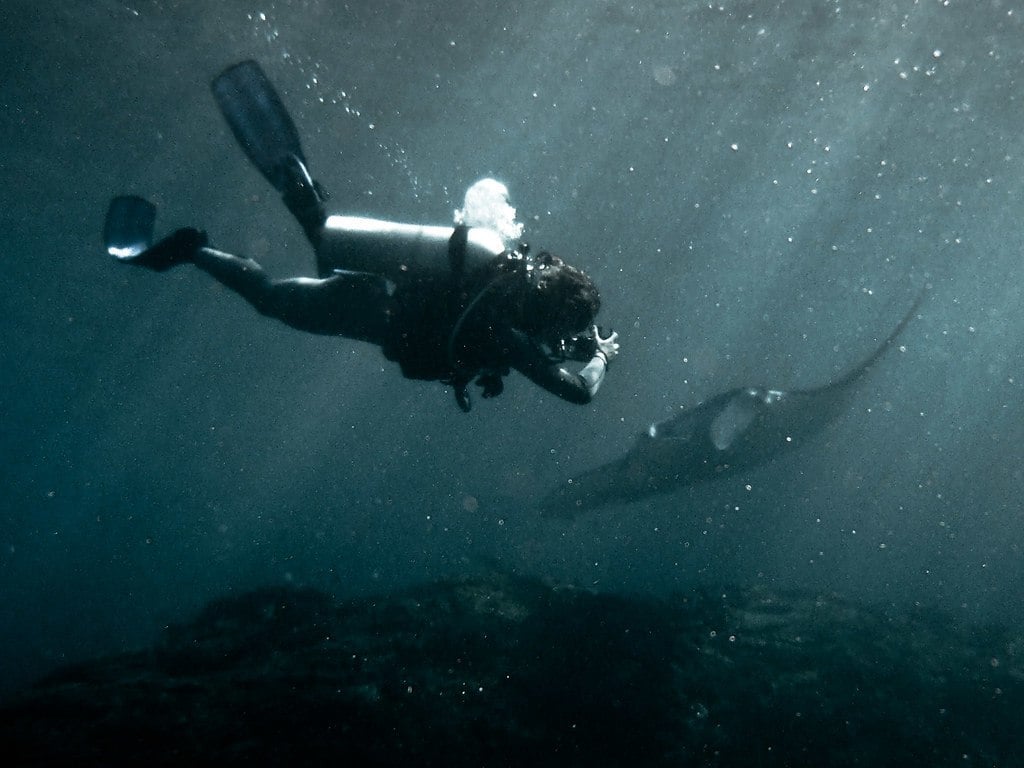
If you’re just looking for a great day on the water, I’d recommend booking a snorkelling trip. It’s the best option for most visitors and gives you a good chance of seeing manta rays without needing a dive qualification. If you’re a certified diver, you’ll have access to some incredible dive sites, but be honest about your experience level. The currents around Nusa Penida can be surprisingly strong, and conditions can change quickly.
The best-known sites include Manta Bay / Manta Point, where most people hope to encounter manta rays, Crystal Bay, which is famous for its clear water and seasonal mola mola sightings, and Gamat Bay, known for colourful reefs and excellent marine life.
There are also opportunities to go spearfishing with local operators if that’s more your thing.
Whatever you choose, don’t just book the cheapest operator to save a few quid. Around Nusa Penida, experienced guides, good equipment and strong safety standards are worth paying for.
Secret Beaches of Nusa Penida
Nusa Penida’s best-known beaches deserve the attention they get, but they’re far from the only places worth visiting. If you’re staying on the island for more than a day, it’s worth venturing beyond the headline attractions and seeking out some of the quieter corners instead.
Just remember that these places are quieter for a reason. They often involve rougher roads, steeper walks and fewer facilities. Bring plenty of water, wear proper shoes, check the latest road conditions where possible and don’t expect lifeguards, beach bars or easy transport if something goes wrong.
Here are a few of my favourite quieter spots to explore:
| Beach / Spot | Location | Best For | Access | Facilities & Safety |
|---|---|---|---|---|
| Suwehan Beach | South-east coast | Peace, photography and escaping the crowds | Steep staircase and rougher road | Very limited facilities. Little shade. Swimming depends on conditions. |
| Banah Cliffs | West coast | Sunset and dramatic coastal views | Moderate drive and short walk | No facilities. Stay well back from cliff edges. |
| Saren Cliffs | Near Tembeling | Sunrise and quiet viewpoints | Best reached by scooter or driver | No facilities. Take care near unfenced cliffs. |
| Tembeling Forest & Beach | South-west | Natural pools and forest scenery | Steep access road or local bike taxi | Small donation requested. Respect the temple area. |
| Seganing | South-west | Adventure and dramatic scenery | Challenging access. Check current trail conditions | Limited facilities. Only suitable if you’re comfortable with the terrain. |
Let’s get one thing straight… You don’t come to Nusa Penida for the nightlife.
If you’re looking for beach clubs, rooftop cocktails and DJs until 3 am, head back to Canggu, Seminyak, or Gili T. Nusa Penida is the sort of place where you’re more likely to finish the day with a cold Bintang while watching the sun disappear than dancing on tables. Personally, it’s where I’m at.

Photo: @amandaadraper
Most of the island’s restaurants, cafés and bars are dotted around the north coast near the harbour towns. If you’re the sort of person who likes having plenty of food options within walking distance, this is where I’d base myself.
Once you head away from the main towns, things become a lot more… Indonesian. Expect little roadside warungs, family-run cafés and hotel restaurants serving all the classics: nasi goreng, mie goreng, gado-gado, satay and, if you’re lucky, some seriously good fresh seafood.
Talking of seafood… if you see today’s catch on the menu, stop overthinking it and order it. It’s usually excellent and a welcome break from eating nasi goreng for the fifth meal in a row.
One final tip: throw a few snacks in your bag before heading out for the day. You can drive for a while between decent food stops, especially if you’re exploring the quieter corners of the island. Future you will be very grateful.
ATMs on Nusa Penida
Whilst there are several ATMs on Nusa Penida’s northern shore, I’d still advise bringing your own cash with you. The ATMs frequently break and run out of cash, and the banks seem less than enthusiastic about getting them refilled. If you run out of money on the island, it would put a big hitch in your plans. (Remember: you need to pay cash to see Nusa Penida’s biggest attractions.)
I always suggest you bring an emergency stash of money with you when you travel. US dollars, pounds, and euros are always useful to have as there’s always a money changer nearby.
Nusa Penida Day Trip or Overnight Stay?
Can you visit Nusa Penida as a day trip? Absolutely.
Would I recommend staying overnight instead? Also absolutely.
A day trip gives you enough time to tick off the island’s biggest attractions, but you’ll spend a fair chunk of the day on boats and in the car. If you really want to experience what makes Nusa Penida special, staying for at least one night is the way to go.
Choose a Day Trip If…
- You’ve only got one spare day in your Bali itinerary.
- You want the easiest option with someone else organising the logistics.
- You’re happy with a busy schedule and don’t mind moving quickly.
- You only want to see the island’s biggest highlights.
- You’d rather not worry about hiring a scooter, arranging a driver or booking accommodation.
Stay Overnight If…
- You don’t want to spend half your day rushing between attractions.
- You want to experience Kelingking or Thousand Islands Viewpoint at sunrise or sunset.
- You’d rather avoid the biggest crowds.
- You want enough time to properly explore both the east and west sides of the island.
- Snorkelling or diving is high on your bucket list.
- You fancy discovering quieter beaches and viewpoints.
For me, this one’s an easy decision.
If all you’ve got is a day, go for it. You’ll still have an amazing time.
But if you can spare a night or two… don’t even think twice.
Nusa Lembongan or Nusa Penida?
I don’t think this is a case of one island being better than the other. It really comes down to what you’re looking for.
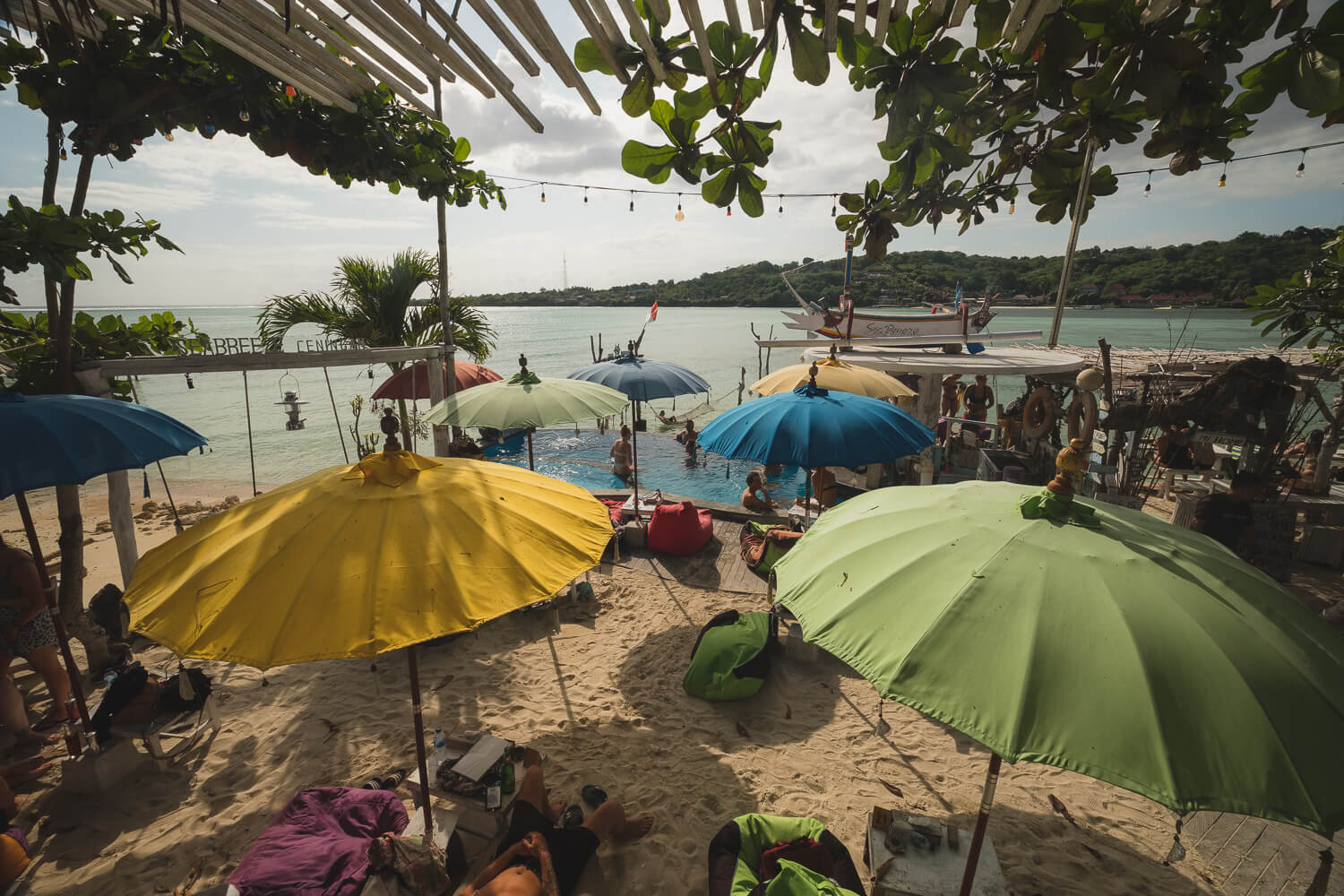
Photo: Roaming Ralph
Choose Nusa Lembongan if…
- You’d rather have cafés, restaurants and beach bars close by.
- You want easier roads and less time bouncing around in the back of a car.
- You’re travelling with family.
- You prefer a more relaxed island with a few more home comforts.
- You want an easy-going beach holiday.
Choose Nusa Penida If…
- You’re here for the cliffs, viewpoints and scenery.
- You don’t mind rougher roads if they lead somewhere special.
- Swimming or diving with manta rays is high on your list.
- You’d rather spend your days exploring than sitting in a beach bar.
- You’re happy to trade a few comforts for a bit more adventure.
If you’ve got enough time though, I’d stop thinking of it as an either/or decision.
Stay on Nusa Lembongan if you want the easier base, then spend a day or two exploring Nusa Penida. That’s probably the best way to experience both islands without feeling like you’ve missed out.
How to be a Respectful Backpacker in Nusa Penida
Nusa Penida is an incredible place, but it’s also home to communities, traditions and sacred sites that deserve a bit of respect. Most of it’s common sense, but judging by some of the things I’ve seen over the years… It’s worth saying anyway.
- Dress appropriately when visiting temples. Bring a sarong with you or rent one at the entrance if needed.
- Remember that temples are places of worship. Avoid interrupting ceremonies and don’t photograph worshippers without asking first.
- Think before launching your drone. Many temples, ceremonies and busy viewpoints either discourage them or don’t allow them at all.
- Take your rubbish with you. Plastic waste is already a problem across Bali and the surrounding islands.
- Use a reusable water bottle where you can and avoid wasting fresh water. Nusa Penida’s water resources are under increasing pressure from tourism.
- Support local businesses. Eat at family-run warungs, stay in locally owned guesthouses and use local guides or drivers where you can.
- Give wildlife some space. If you’re lucky enough to snorkel or dive with manta rays, admire them from a respectful distance. Don’t chase them or try to touch them.
- Take it easy on the roads. Drive slowly through villages, watch out for locals and remember you’re the visitor.
- And finally… Nusa Penida is much more than a collection of Instagram viewpoints. Slow down, chat to people, eat at the little warungs and appreciate the island for what it is, not just what it looks like in a photo.
It’s a pretty easy place to love. The least we can do is leave it as we found it.
Get Insured Before Travelling to Nusa Penida
The first thing that most Balinese people say to you is “hello;” the last thing that they say is usually “be careful.”
Bali is a safe destination, but accidents do happen all the time. Whether it’s a scooter accident, complications from diving, or a case of Bali belly, there are lots of ways that your trip can be derailed.
Travelling without insurance would be risky, so do consider getting good backpacker insurance sorted before you head off on an adventure.
Sort out your insurance before you go. There are several good options, but our overall pick is SafetyWing. Most of the Broke Backpacker team has used it at one point or another, and we’ve filed claims for rabies jabs in Bali, a hospital stay in Mexico, and a clinic visit for a stomach bug that wouldn’t quit. All paid out.
It’s month-to-month, no lock-in, no itinerary required, and you can buy it after you’ve already left. A little over $2 a day if you’re under 40.
New SafetyWing customers: use code BROKEBACKPACKER for 8 free weeks of electronics theft coverage. You have to scroll down and click the pink camera on their landing page to enter it, and you have to do it before creating your account.
A Quick Note on Alcohol Safety
Like elsewhere in Indonesia, there have been cases of dangerous counterfeit alcohol being sold to tourists. It’s not something to panic about, but it is something to be aware of.
Stick to buying alcohol from reputable bars, restaurants and shops, be wary of suspiciously cheap or unlabelled spirits, and think twice before accepting mixed drinks from questionable beach stalls or open drinks from strangers.
If you’re ever unsure, a sealed bottle of Bintang is usually the safest bet.
Give Nusa Penida the Time It Deserves
If you’ve made it this far, you’ll probably have realised one thing: Nusa Penida isn’t the sort of place you should try and rush.
Can you see the highlights in a day? Absolutely. But if you can spare a night or two, I honestly think you’ll have a much better experience. You’ll beat the crowds to sunrise, enjoy the viewpoints after the day-trippers have left and have enough time to discover parts of the island that many people never get to see.
Don’t try to cram too much into each day either. The roads are slower than they look on a map, the weather doesn’t always stick to the forecast and boat crossings can occasionally have a mind of their own. That’s all part of travelling here.
If you’re not confident riding a scooter, don’t be afraid to hire a local driver instead. You’ll have a much more relaxing day, and you’ll be supporting the local economy at the same time.
Before you set off each morning, make sure you’ve got some cash, plenty of water, sunscreen, proper shoes and a sarong if you’re planning to visit any temples. A little preparation goes a long way on Nusa Penida.
Above all, remember that this is more than just an island of famous viewpoints. It’s a place with deep spiritual significance, welcoming local communities and some of the most incredible scenery you’ll find anywhere in Indonesia. Treat it with a bit of patience, a bit of respect and a sense of adventure, and I reckon it’ll end up being one of the highlights of your trip.






The beauty of nature and its unique traditions still make Bali one of the tourism icons in the world. The Covid-19 pandemic has made things worse for Bali, whose people’s lives depend on tourism. Let’s help the people of Bali to make things better. If you want local service assistance for a vacation in Bali, you can contact balitourvoyage.com.
I want to read more.