Ah, Poland – this great cutout of Central Europe (and, yes, it is considered Central Europe) was one of my intros to proper backpacking. I began the first of my umpteen Interrail trips through the continent here and it’s always stuck with me as one of the most immersive, enthralling, culturally-rich, and downright fun places to be.
Covering 120,000 square miles between the Baltic Sea and the Slovak border, it’s a diverse land made up of rolling farm fields, hilly countryside, jagged mountains capped with snow, salt-washed beaches, and even deserts.
Backpackers tend to stick to the towns and cities, which is just fine, since they are generally AWESOME…
Gdansk in the north has the air of an old medieval port town, but also post-Soviet dock areas that are being rejuvenated and rejigged for the 21st century. Warsaw, the capital, is laced with opulent parks, and is spearheading one of Europe’s fastest-growing economies. Then there’s my personal love of Krakow in the far south, where UNESCO sites converge on underground jazz bars and techno clubs.
This guide is the product of years and years of traveling Poland, from the ski resorts of the Tatras to the beaches of Sopot. Consider it a 101 on everything you need to know about putting together shoestring trips in the land of pierogi dumplings and polka dancing.
Why Go Backpacking in Poland?
Simply put? Because it’s fun.
I won’t pretend that it was the high culture and the rich princely history of Poland that first caught my eye. It wasn’t. It was the fabled nightlife of Krakow, where they used to say there are more bars and clubs per square meter than in any other city on the globe.
Yep, I admit I was lured in by the prospect of cheap beer and party nights until sunup. And I was not disappointed. Beer halls, brew bars, underground electronica clubs, pub crawls – Krakow had it all. I later discovered that so did Warsaw, so did Gdansk, so did Wroclaw. Basically, Poland knows how to have a good time, and it’s a perfect place to wallow away nights in your 20s and early 30s.
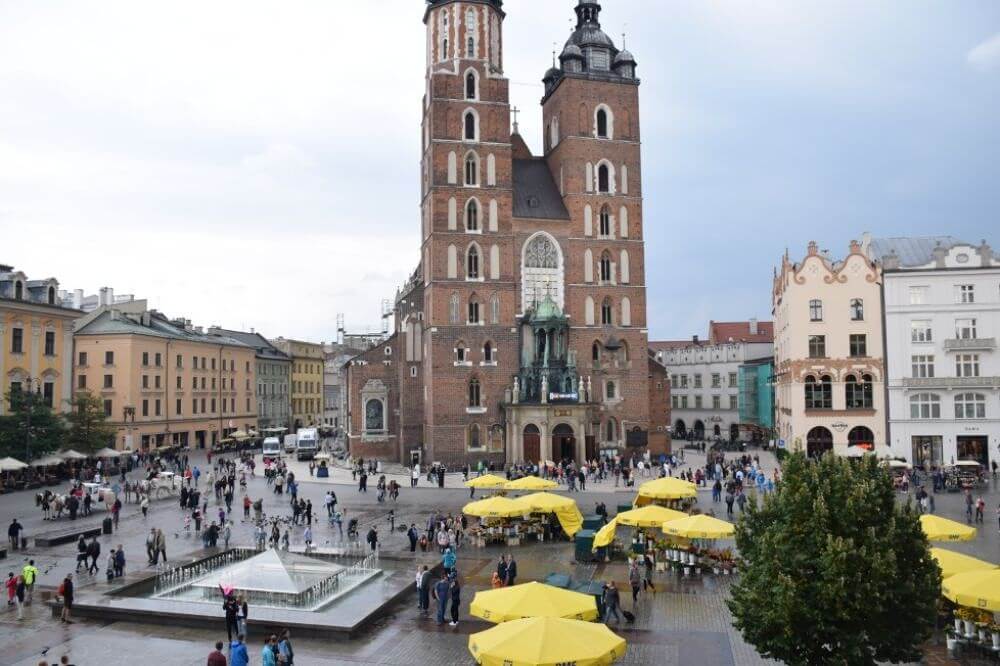
Photo: Joseph “Rich” Francis
The Broke Backpacker is supported by you. Clicking through our links may earn us a small affiliate commission, and that's what allows us to keep producing free content 🙂 Learn more.
But the more time I stayed in Poland, the more I realized that travel here could offer so much more. Enthralling history that manifested in castles tucked in the mountains, salt mines that seemed to go on forever, and old cities that had been totally reconstructed after the Second World War.
Then I found the mountains, which rise like spears on the southern border. They diversified things even more, giving epic hiking weekends and ski breaks come the winter months, not to mention stints in particularly cool spa hotels.
Poland has many faces, many sides. Backpack it to party, yes, but don’t ignore the millennia of history and the utterly stunning backcountry.
- Best Travel Itineraries for Backpacking Poland
- The Best Places to Visit in Poland
- Top Things to Do in Poland
- Backpacker Accommodation in Poland
- Poland Backpacking Costs
- Best Time to Travel To Poland
- Staying Safe in Poland
- How to Get Into Poland
- How to Get Around Poland
- Polish Culture
- What to Eat in Poland
- FAQs About Backpacking in Poland
- Final Advice Before Visiting Poland
Best Travel Itineraries for Backpacking Poland
A few options for your Poland trip based on more than a decade of experience…
1-week Travel Itinerary for Poland: The Main Cities
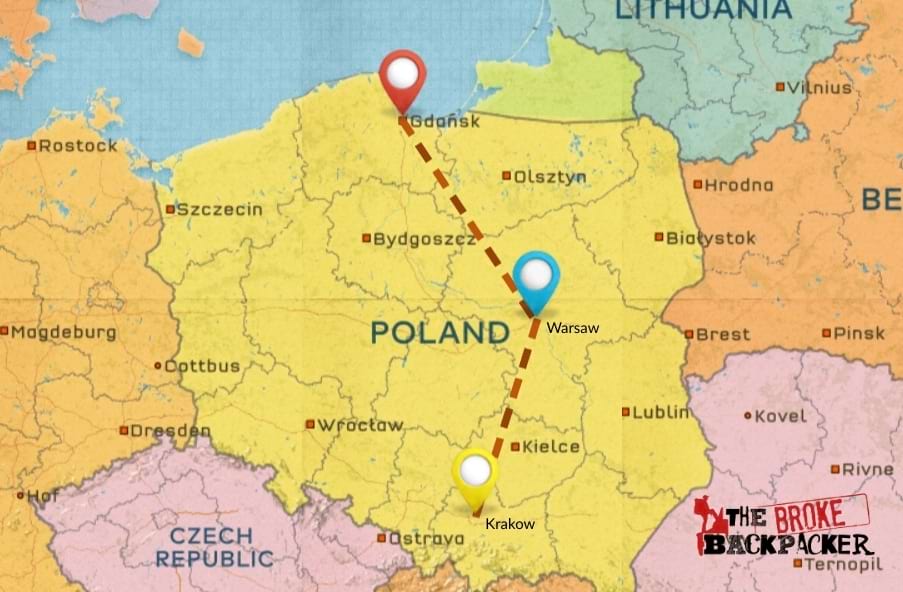
A week is just enough to string together a jaunt through Poland’s three major cities. Begin in the north, where Gdansk sits on the edge of the Baltic Sea. They call this the Tri-City region because there are actually three cities wedged together, one of which is Sopot, where you can laze on some of the best-loved beaches in Poland (yep – Poland has beaches!).
A new high-speed rail route means you can trade the coast for the capital in just a few hours. Step out in Warsaw and make for the Old Town, which showcases one of the most ambitious post-war reconstruction projects in Europe (the whole thing had to be totally rebuilt). Come evening, seek out some of the country’s most acclaimed dining and dip your toe into Polish cuisine.
Another train connection goes south to Krakow. This is the piece de resistance of Poland’s cities and for good reason. The whole Old Town is a UNESCO site, there’s a 1,000-year-old castle on the hill, and, below it, whole districts with the coolest dang coffee joints and drinking holes in Europe, at least by my reckoning.
3-week itinerary for Poland: Cities, smaller towns, and mountains
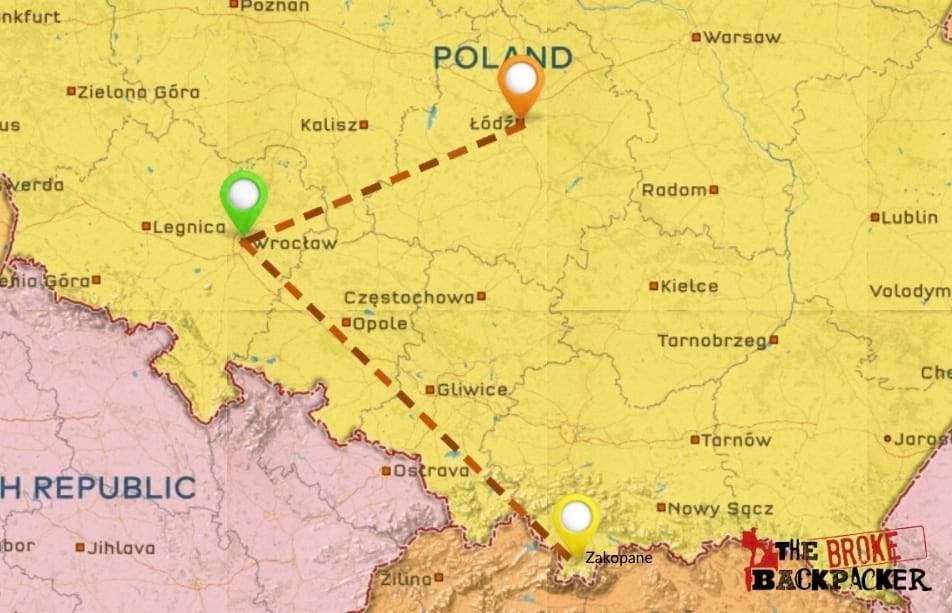
This itinerary follows the same route as above, stringing through the three main cities, but makes quick detours off to see smaller towns along the way. From Warsaw, you can branch out to the old industrial hub of Lódz (pronounced Wood-ch). They’ve dropped edgy shopping malls in the old 19th-century factories there, and there’s a buzzy live-music scene to boot.
When in traveling in Kraków, take some time to head across to Wroclaw (pronounced Vrot-slav). It’s one of the best-kept secrets of Poland – think an uber-lively student town set across a river archipelago, with great cathedrals, amazing artworks, and even more in the way of underground dive bars.
The great finale of a three-week trip should be a whole seven days dedicated to the mountains of southern Poland. If you’re relying on public transport, then make Zakopane – a charming highland town of timber-carved buildings – your base and branch out to hike the Tatras from there. If you have access to a car, even better. You can whiz through the Tatras, the Beskid Mountains, and the Owl Mountains alike.
The Best Places to Visit in Poland
These also happen to be some of the best places in all of Eastern Europe if you ask me.
Krakow
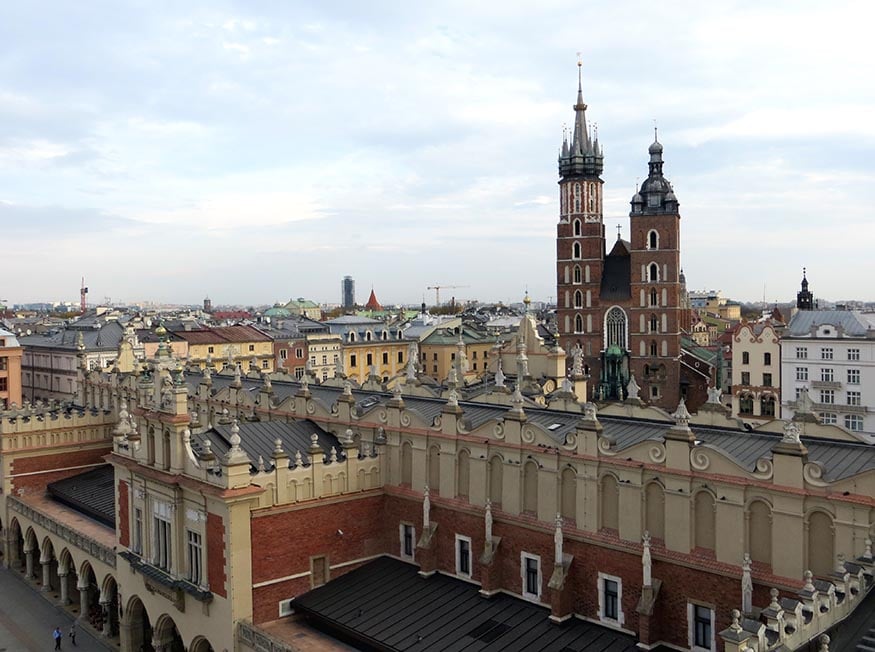
I always put Krakow at the top of any Poland bucket list. Why? Countless reasons. This city oozes history. The Old Town area, which is the core of it all, is centered on the largest medieval square in Europe, and topped by St Mary’s Church, a two-spire cathedral that’s laced with legends and myths.
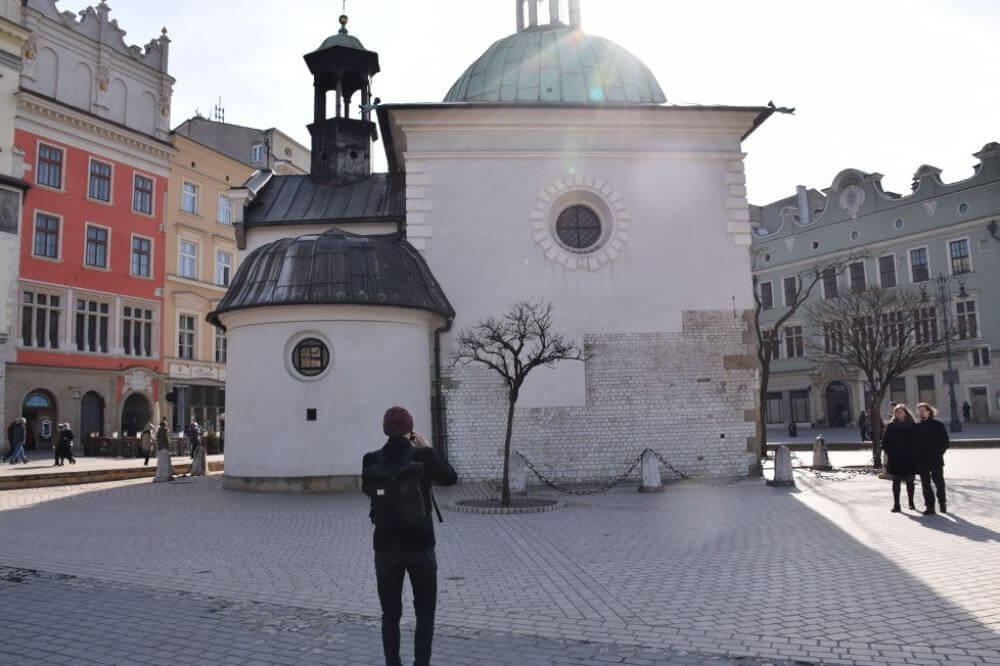
Photo: Joseph “Rich” Francis
You can visit the underground museum to see archaeological digs that date back 1,000 years or more, or head up to the castle to see crypts where Polish luminaries – including former kings and presidents – are buried.
The wonderful thing about staying in Krakow, however, is that it’s certainly not a museum piece. This city throbs with life. Even that aforementioned Old Town – a UNESCO heritage site, no less – is a beating hub of nightlife, with karaoke bars, shot bars, and hostels all in attendance. I would say do not miss the dual areas of Kazimierz and Podgorze, either, which each have loads of hipster eateries and coffee joints, not to mention haunting histories of their own.
Warsaw
No list of the top places to visit in Poland could possibly be complete without a nod to Warsaw. This is the capital of the country, after all, and it accordingly hosts the most totemic museums around, from the Warsaw Uprising Museum, which tells the brave tale of a revolt against Nazi rule in the Second World War, to the POLIN Museum, which chronicles the history of Polish Jews through the centuries.
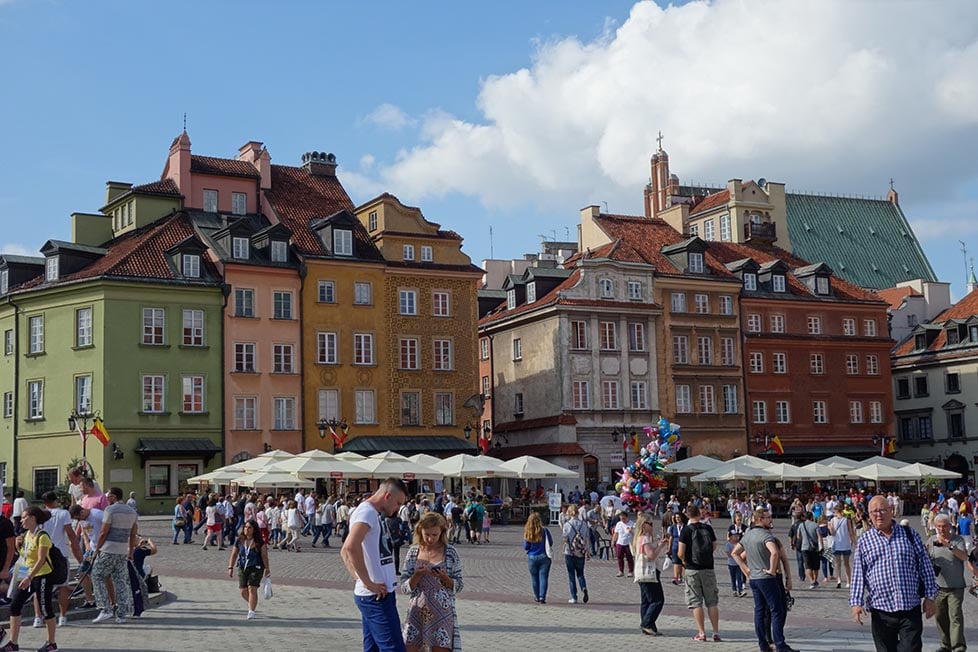
Like Krakow before it, Warsaw is also a living, breathing metropolis. It’s home to by far the largest shopping malls in Poland, and brims with eating options, which range from Michelin-starred fine-dining kitchens to classic Communist-era milk bars that serve hearty plates of pierogi.
Finally, the things to see in Warsaw even include parks. Lazienki Park is especially famous, coming with oriental gardens and grand statues, but there are other, quieter, more local green spaces to squirrel away to for a read or chill session.
Zakopane
I mention Zakopane among the major must-see destinations in Poland because this small mountain town has risen and risen in popularity in the last decade or so to become one of the most famous alternative ski resorts to the Alps there is.
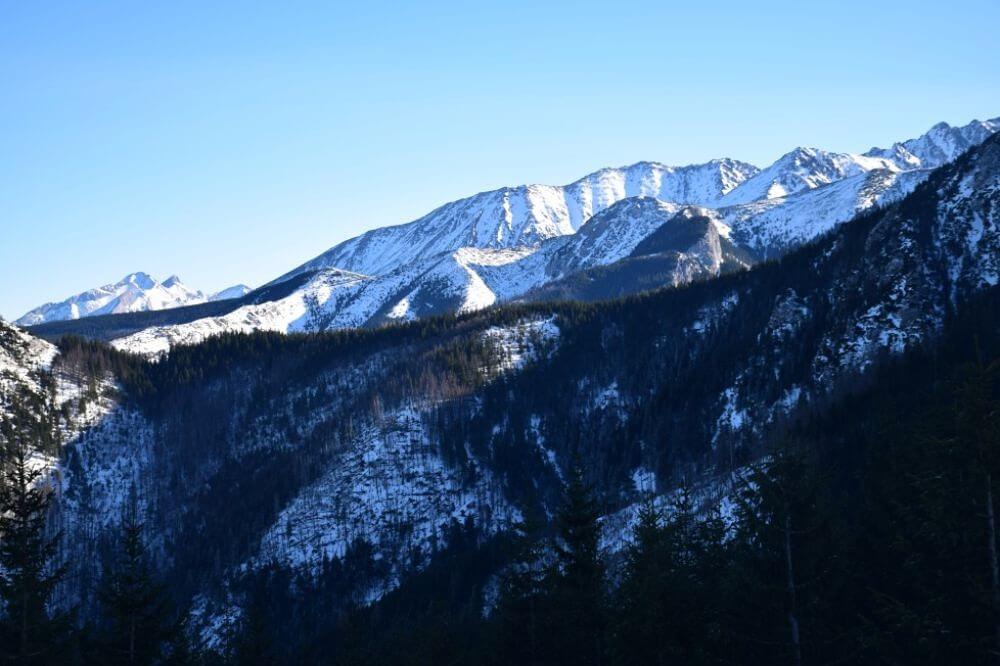
Photo: Joseph “Rich” Francis
Its big pull is the winter season, which opens up small-scale ski fields in the Tatra Mountains and their foothills. However, the summer sees another boom as crowds descend to go hiking in the Tatra National Park.
And it’s not just a gateway to snow and summer trails. It’s also a really lovely town, with a unique highland style and culture known as gorale. Stick around to see the wood-faced cabins and the traditional taverns, where vodka and music run late into the night.
Gdansk
The third major destination in Poland is the old industrial port city of Gdansk. Its history as a big player in the Hanseatic League means that it’s not quite as Polish as other cities; the German influence and Nordic influences run strong.
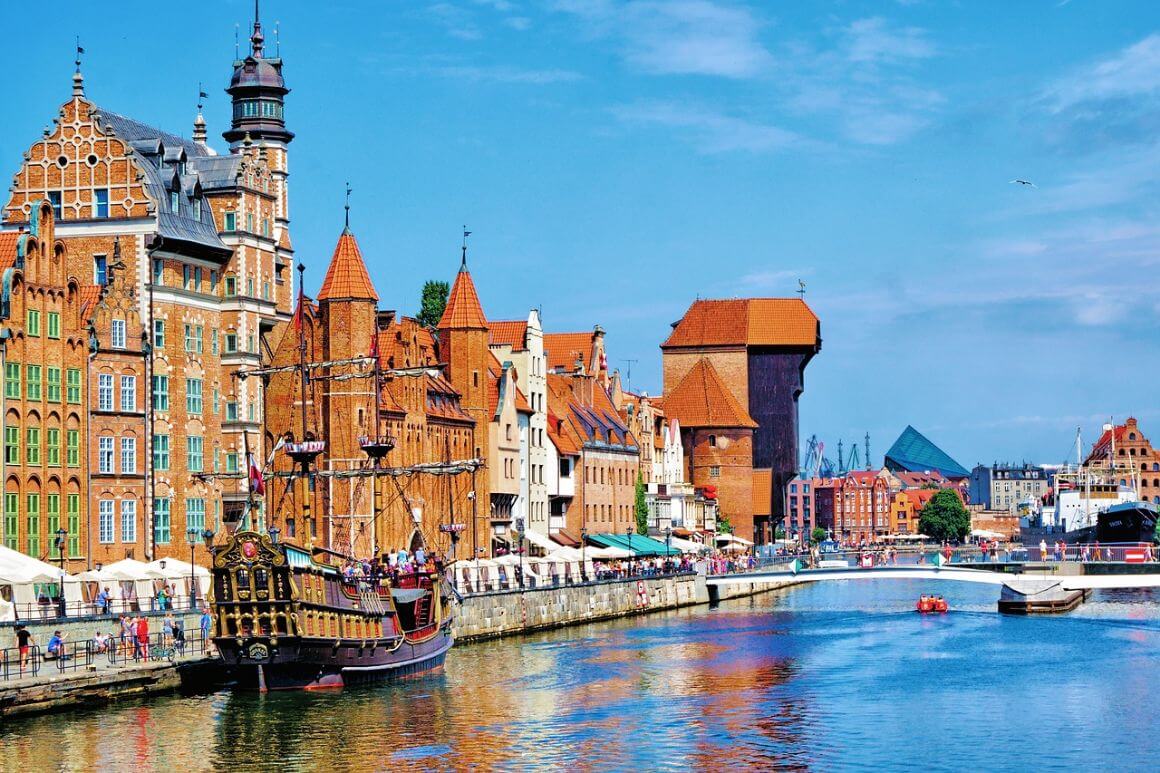
You’ll notice that in the architecture, which hits a zenith in the grid-like Old Town, a land of cobbled alleys and little squares that’s simply lovely to explore on foot.
There’s an ace up the sleeve in Gdansk, too: Beaches. You can catch an urban train to get to the town of Sopot and laze on the soft sands of the Baltic in just 15 minutes.
Getting Off the Beaten Path in Poland
Because the trio of Gdansk, Warsaw, and Krakow gets the lion’s share of international visitors here, there is actually plenty of scope to go off the beaten path in Poland. The key is to look for flights that’ll take you to smaller regional airports and then resist the temptation to simply hop on a transfer to the nearest major city.
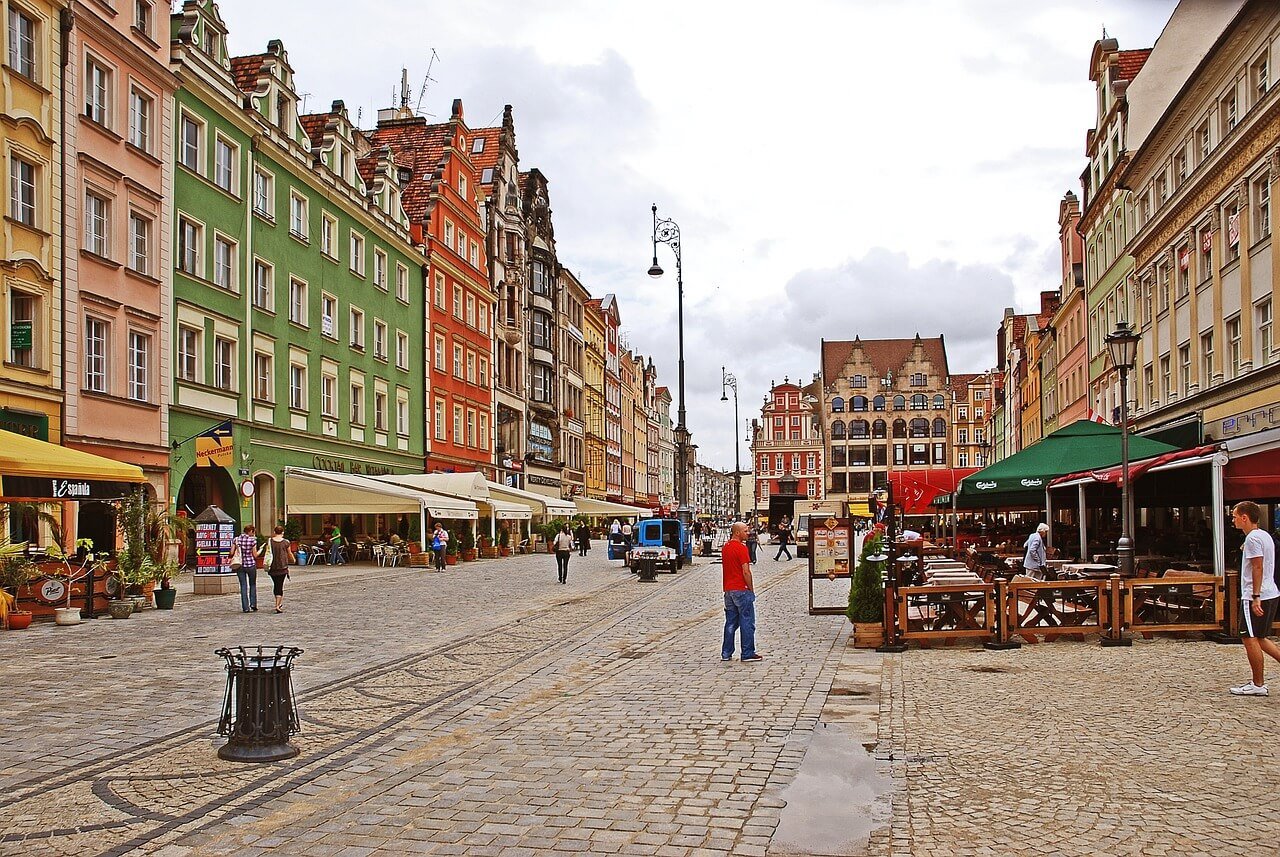
Wroclaw is a prime candidate for just that. It has its own airport, but most people fly in and go straight across to Krakow. If you linger, you’ll find a city of little islets connected by bridges and topped with medieval churches, all fueled by a resident crowd of students. Poznan, the fifth-largest city in Poland, and Lódz, an upcoming city near Warsaw, are similar prospects.
You can also look to nature. Parts of the eastern Tatra Mountains are amazing for getting on less-busy hiking trails, like the path up Volovec through the Chocholowska Valley. Meanwhile, you can see castles worthy of Game of Thrones along the so-called Trail of the Eagle’s Nest ring of fortifications north of Krakow.
Top Things to Do in Poland
1. A free walking tour in Krakow
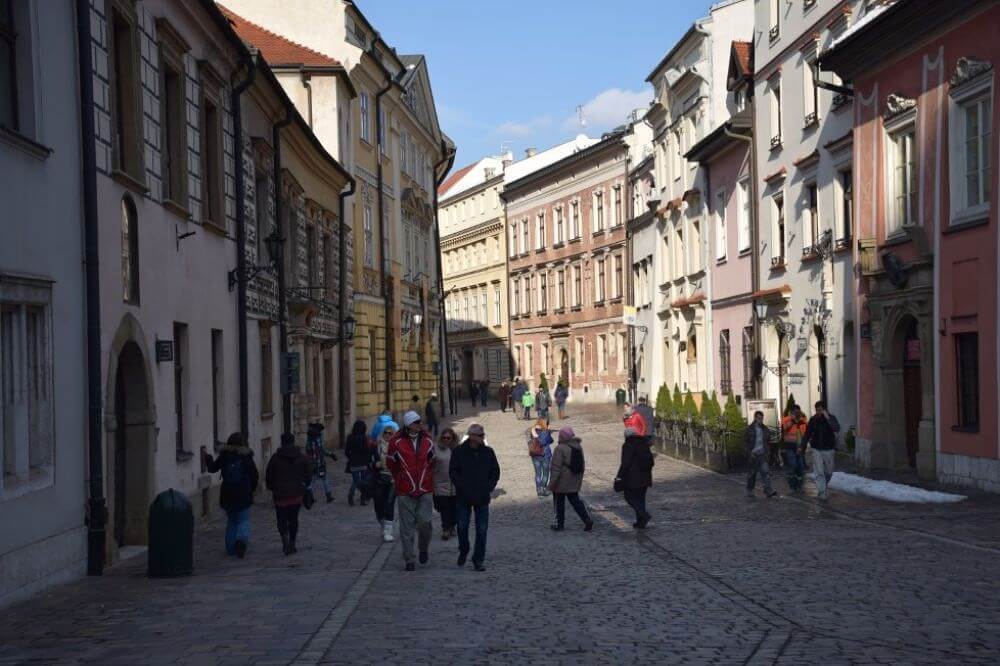
Photo: Joseph “Rich” Francis
I’ll admit I’m probably a little biased here, since Krakow was the place that first stole my heart in Poland, and subsequently my home for several years, but no guidebook worth its salt wouldn’t place this immersive medieval city close to the top of a Poland bucket list.
The best way to take it all in is on one of the many free walking tours, ideal for exploring Krakow. They begin on the Main Square (which is one of the largest squares in Europe) and knit together old churches, the great Wawel Castle, and the old Jewish Quarter of Kazimierz. Later on, do the fabled Krawl Through Krakow pub crawl, or join Taste Vodka to learn all about Poland’s famous national drink.
2. Eat pierogi
Poland isn’t often championed as a foodie destination, but prepare to be pleasantly surprised. If you like hearty, carb-heavy food with heaps of tradition, then you’ll love the national kitchen in this corner of Central Europe. Pierogi is dish number one.
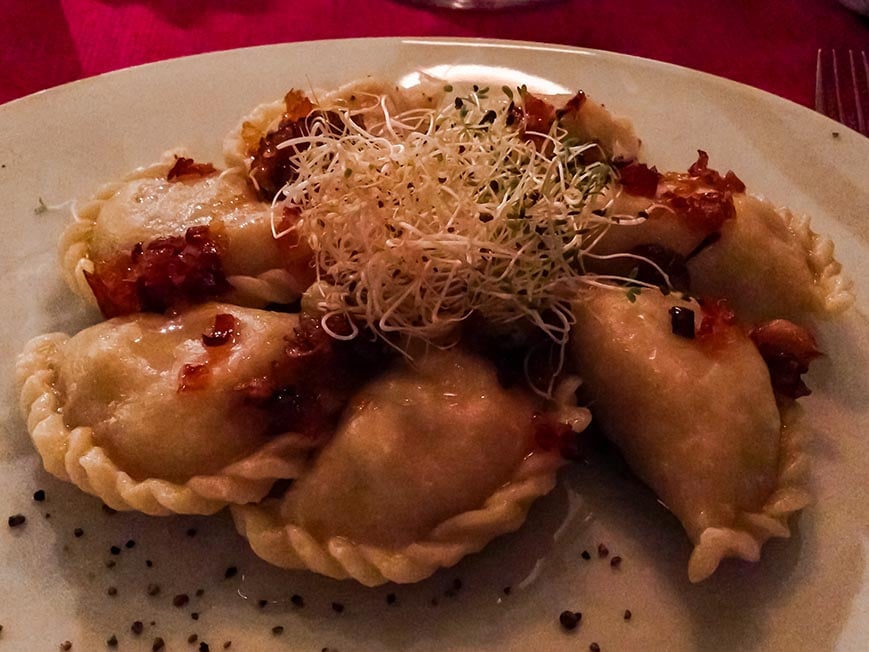
Photo: Nic Hilditch-Short
It’s basically a type of dumpling that’s packed with either meat or cheese and served with a topping of fried onions. Head into a classic Polish milk bar, which are old-school Communist eating halls, to try them for next to nothing.
3. Ski in the Tatra Mountains
Good news for backpackers on a budget: Poland’s Tatra Mountains are now hailed as one of the cheapest alternatives to the Alps for winter skiing. The season typically starts in mid-December and lasts until April.
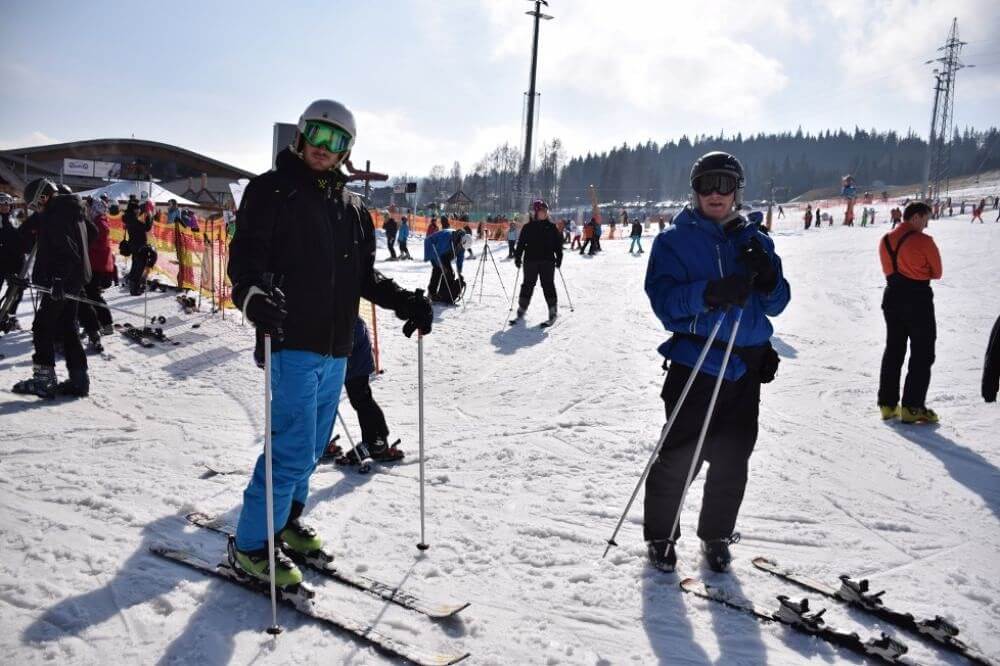
Photo: Joseph “Rich” Francis
It’s not quite as reliable as Austria et al, but it’s affordable and accessible, with ski passes costing as little as $15 for a few hours, and many ski resorts sitting just a few hours by bus from Krakow.
4. Hike in the Tatra Mountains
When the summer comes around, the Tatras offer another sort of adventure. Pull on the hiking boots and hit the miles of trails that weave around the Tatra National Park, a mountainous reserve that erupts along the Poland-Slovakia border south of Zakopane.
There are easy routes, like the meadow walk through the crocus-filled valley of Chocholowska. And there are challenging routes, like the semi-scramble to the top of Rysy, the highest peak in Poland. The most famous hike, however, is probably the hike to Morskie Oko, a lost lake high in the eastern Tatras.
5. Beaches and history in the Tri-City
The Tri-City is a region on the Baltic coast of Poland that is made up (just as the name implies) of three separate towns: Gdansk, Gdynia, and Sopot. If you have time, explore them all. Gdansk has the historic old town, with great medieval churches, guild houses, and cobbled streets.
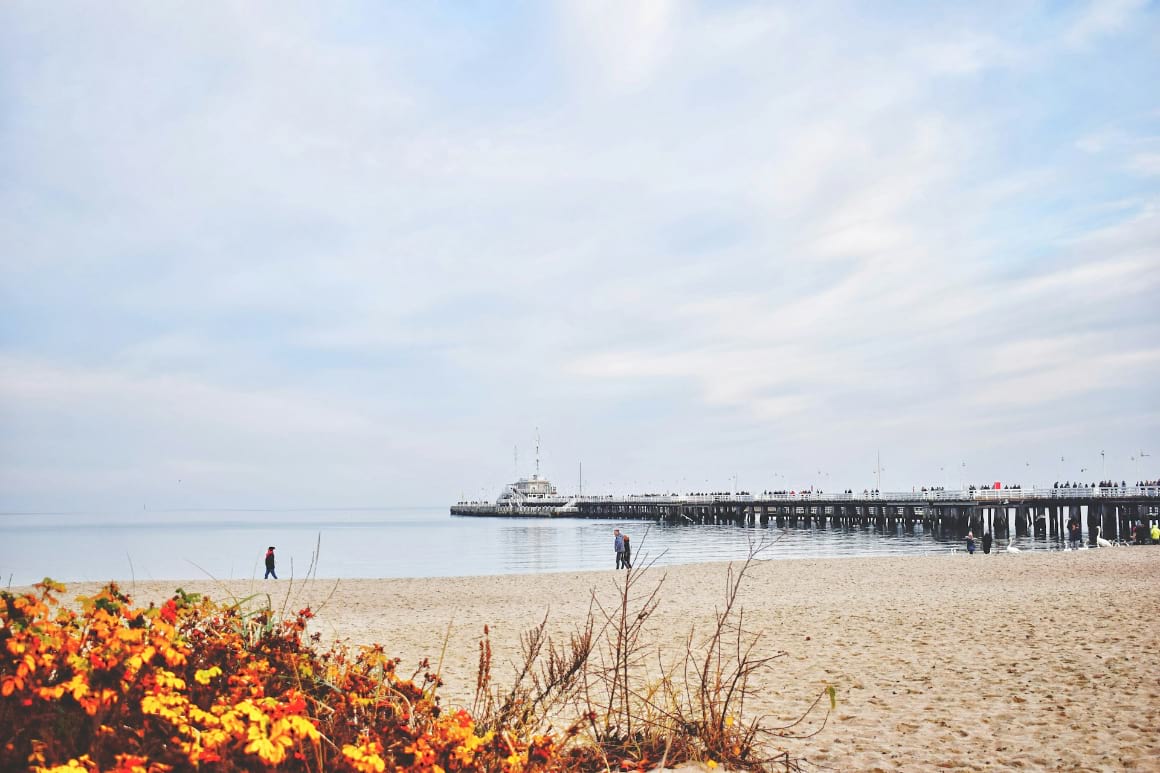
Gdynia is a post-industrial port where you can visit the shipyards where strikes kick-started the fall of Communism in the 20th century. Sopot is more for good-time living on the beach – it has bars, piers, and fun family attractions. All are a short urban metro ride away from each other.
6. Visit Auschwitz
Under two hours west of Krakow, the remains of the Auschwitz Concentration Camp offer a sobering lesson in the darkest period of Polish history. Everyone who visits needs to get a tour guide, and groups leave to see the two different sides of the Nazi death camp at set times throughout the day. It’s very striking stuff, with relics of the Holocaust in plain sight, and memorials to all victims of Nazi atrocities.
7. Delve into the Wieliczka Salt Mine
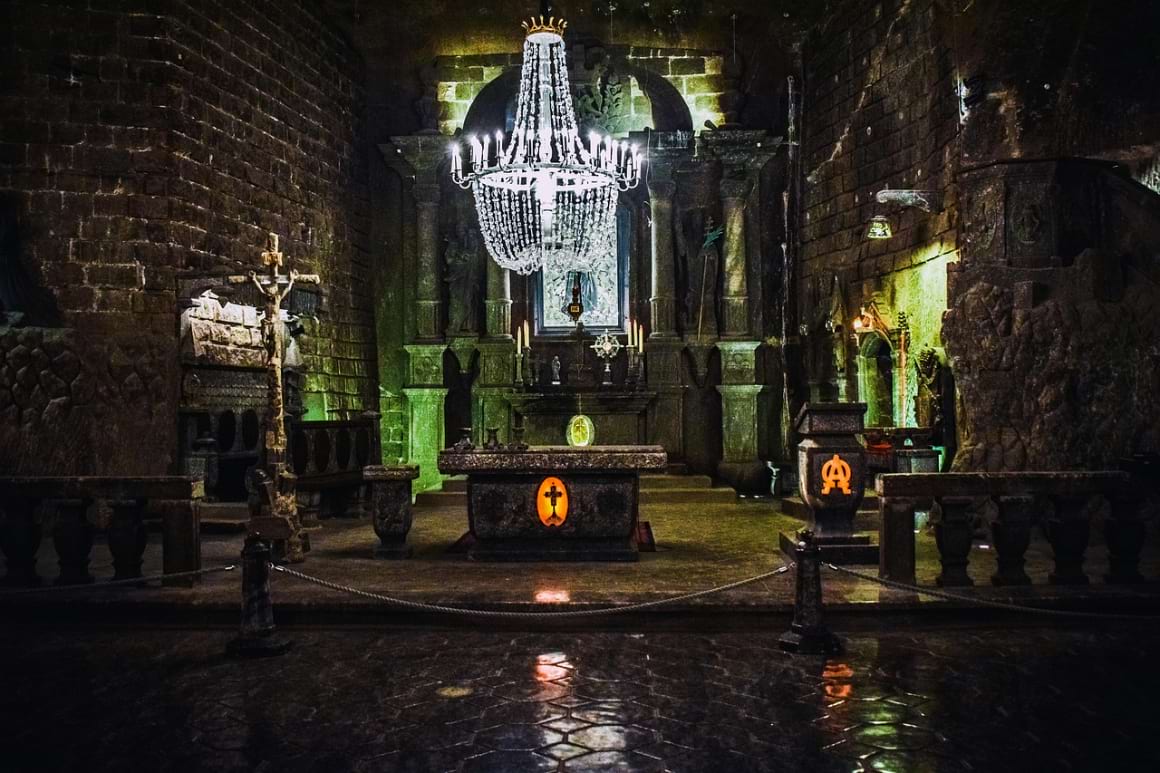
The Wieliczka Salt Mine is yet another of the many UNESCO sites that cluster around Krakow. The tunnels here run hundreds of kilometers through the ground, but visitors are invited into a small portion of the complex that has some astounding features – I’m talking a complete underground cathedral carved from salt rock, and thousands of amazing, fantastical figurines made by miners hundreds of years ago.
8. A spa hotel in Zakopane
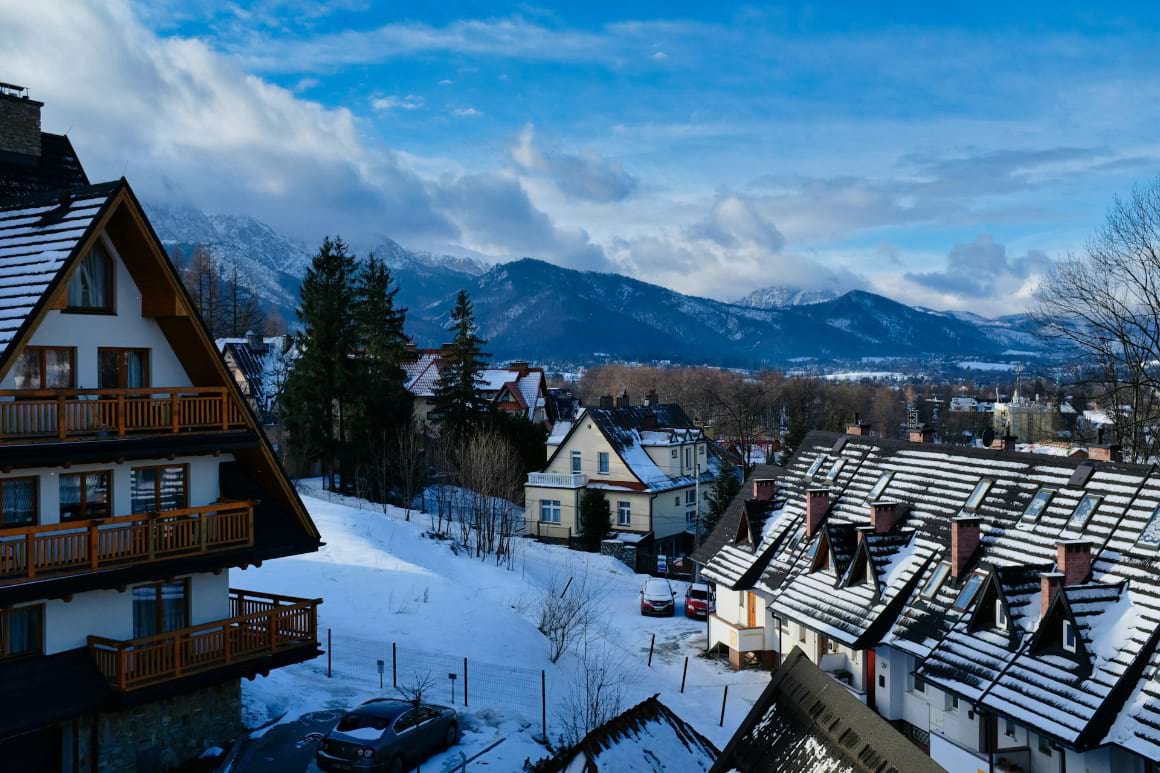
Zakopane is the fabled winter capital of Poland. It gets really busy for the ski season and New Year, but is a real charmer no matter the season, at least in my opinion. Come here to feel cozy up in the mountains, to hike, and eat highlander food. Also come for some of the most affordable spa hotels in Europe – budget backpackers can even get a taste of hot tubs and saunas if they’re willing to push the boat out a bit.
Backpacker Accommodation in Poland
The Best Places to Stay in Poland
Back when I first visited Poland around 2010, it was very much the budget hub of Europe. Things have changed considerably since then, and the cost of accommodation has slowly but surely risen through the roof.
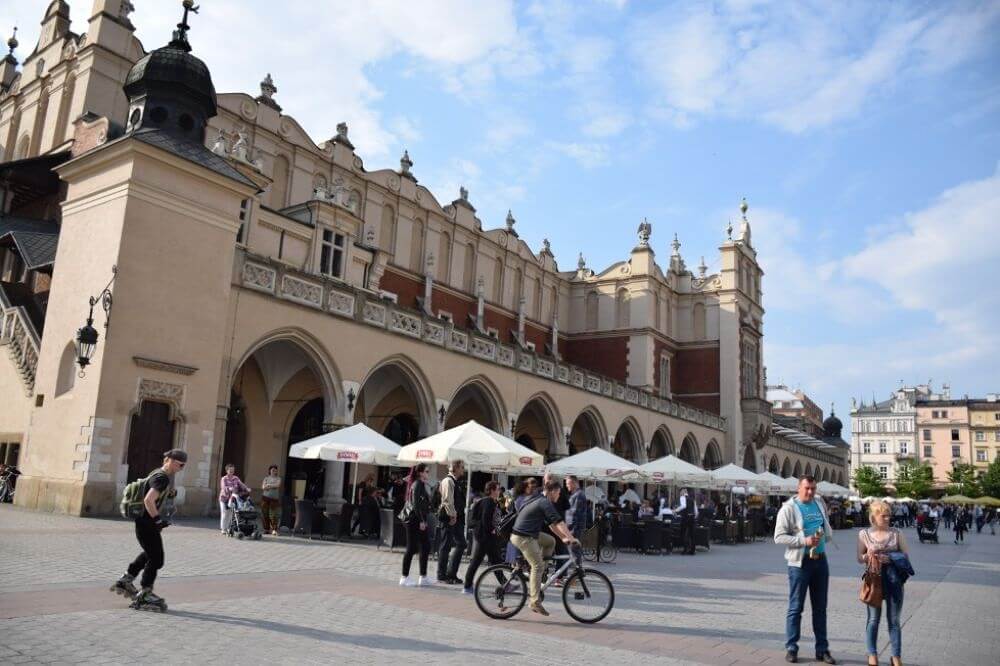
Photo: Joseph “Rich” Francis
The good news is that so has the quality. Hostels here are no longer just rickety metal bunks tucked into some old tenement. They are actually really cool spots, with bars, evening entertainment schedules, and private double rooms if that’s your sort of thing. They’re also still nice and cheap compared to accommodation in Western Europe – think $10 a night compared to over $50 a night in Paris or Rome.
Most major cities and towns in Poland now have at least one hostel. Alternatively, there are cheap hotels (known as pensions), and, especially in the ski resorts, some very affordable self-catering options.
Warsaw: Oki Doki Old Town Hostel Warsaw
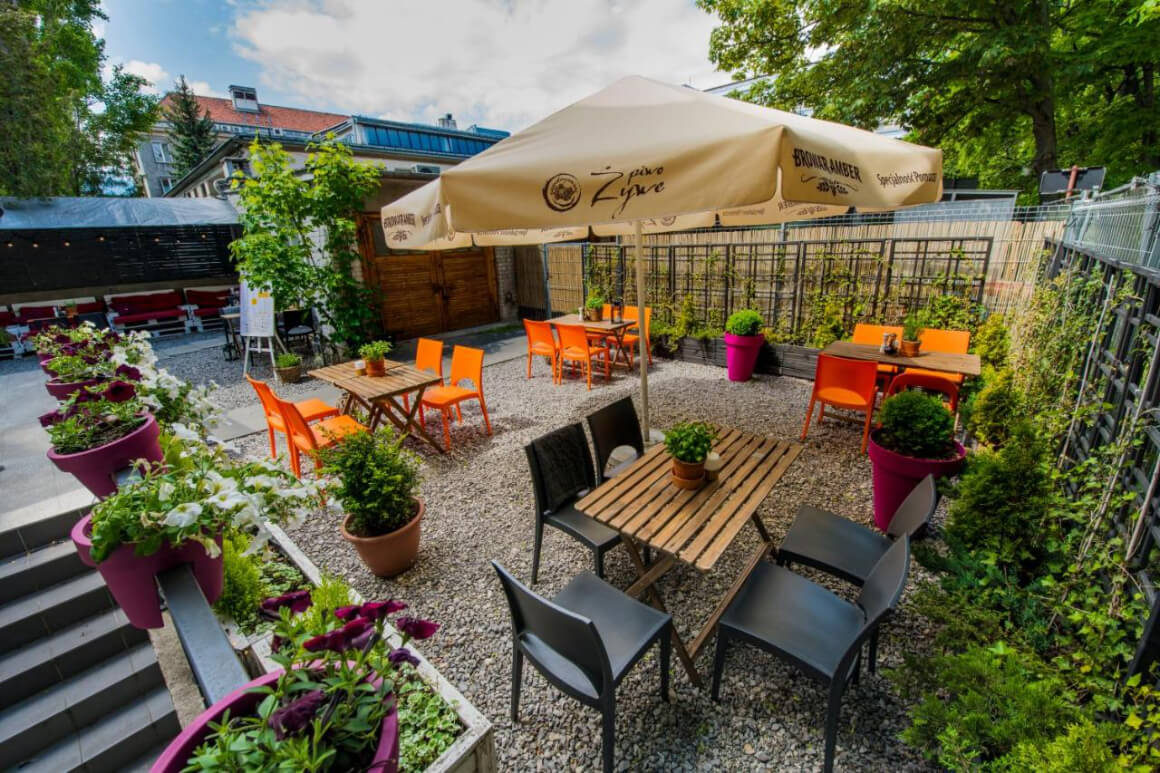
A highly rated backpacker stay smack dab in the middle of the famous Warsaw Old Town, complete with a gravel garden and private rooms.
Krakow: MEININGER Krakow Centrum
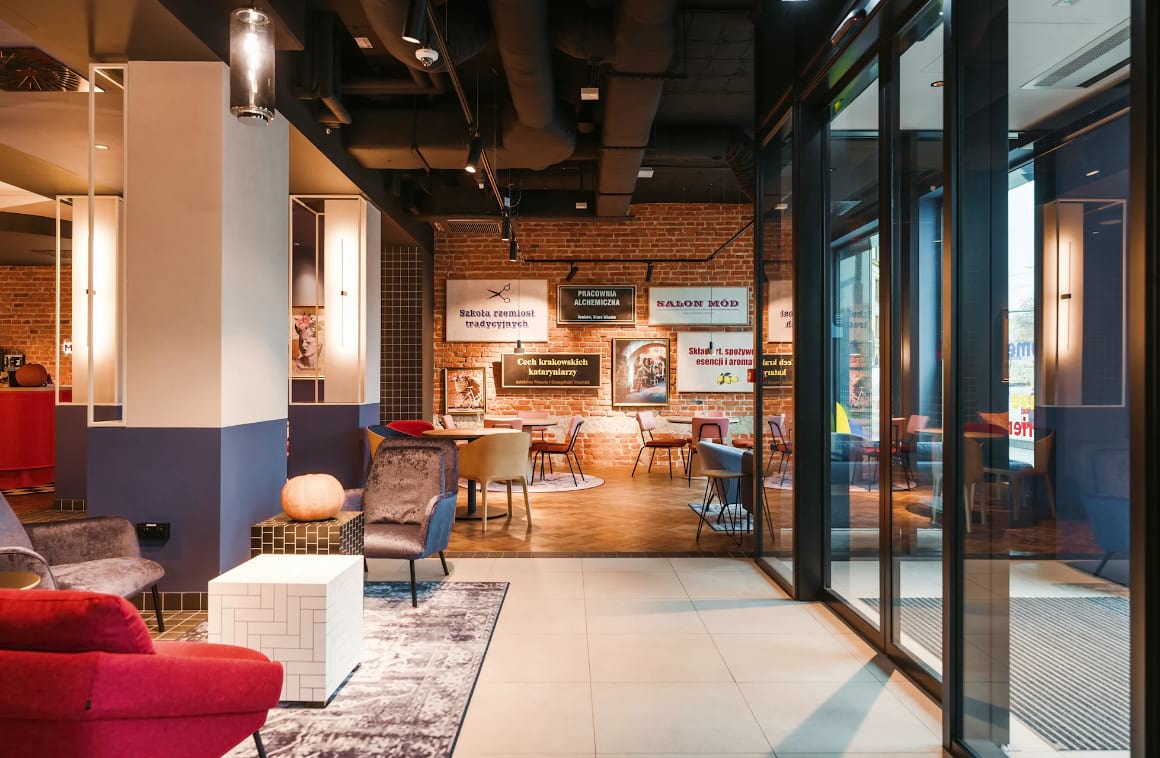
There are PLENTY of party hostels in Krakow if you’re looking for something hedonistic, but the MEININGER is a bit more of an every person’s stay. Choose between doubles and twins and dorms, and enjoy a fine location that’s just on the eastern edge of the historic areas.
Zakopane: Good Bye Lenin Hostel
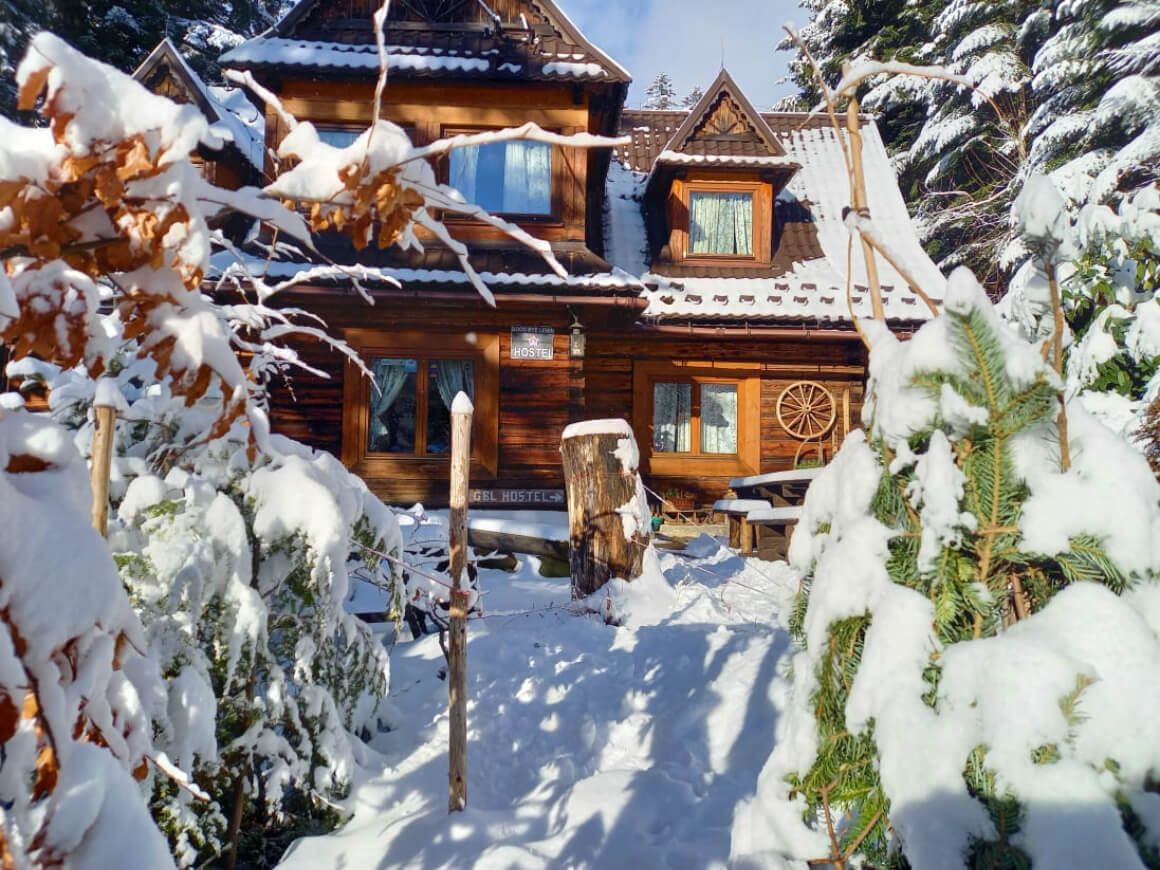
A rustic cabin tucked right under the Tatra Mountains that’s been converted into a multi-bed hostel with super-cheap dorms. I’ve stayed here many a time, sharing many a beer with many a hiker until late into the night. It’s out of town but perfect for exploring the national park.
Gdansk: Dzien Dobry Hostel
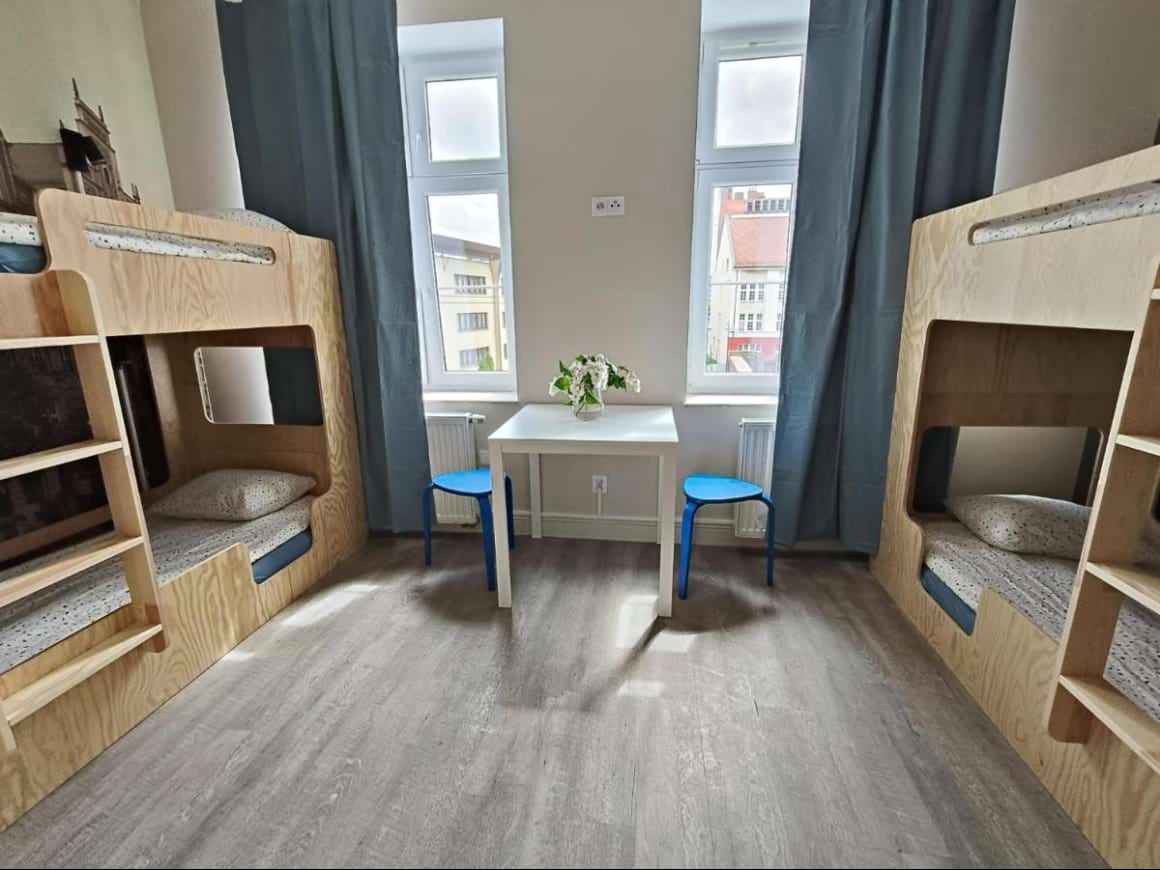
This Gdansk hostel one nails the location, with a spot in the dead center of old town Gdansk. Timber bunks with added privacy and a shared kitchen add to the draws.
Poland Backpacking Costs
Poland might have shed its rep as the single cheapest destination in Europe, but there’s still plenty to be said for budget travel in these parts.
Shaming the likes the Barcelona and Paris, you can still get by here on something like $40 a day, provided you don’t mind bedding down in hostels, traveling on slower trains or buses, and doing minimal activities (though don’t worry, since much of the joy of Poland is in simply looking at the gorgeous architecture, and that’s totally free!).
Food can also be cheap, with the ubiquitous mix of kielbasa (kebab) stalls backed up by a fine array of what’s known as Milk Bars – old Communist kitchens that do plates of Polish food for $2-4 a pop.
A Daily Budget in Poland
| Expense | Broke Backpacker | Frugal Traveler | Creature of Comfort |
|---|---|---|---|
| Accommodation | $10-20 | $20-70 | $70-200 |
| Food | $10 | $15-30 | $40-50 |
| Transport | $5 | $10 | $25 |
| Nightlife | $15 | $25 | $50+ |
| Activities | $0-10 | $30 | $80 |
| Estimated daily budget: | $50 | $132.50 | $335 |
Money in Poland
Poland is not yet a part of the Eurozone. The currency here is still the Polish zloty (PLN), which is kinda’ easy to get to grips with since it’s usually something like $1 = 4 PLN, but you should totally check that’s accurate before you travel to avoid any miscalculations at the FX counter!
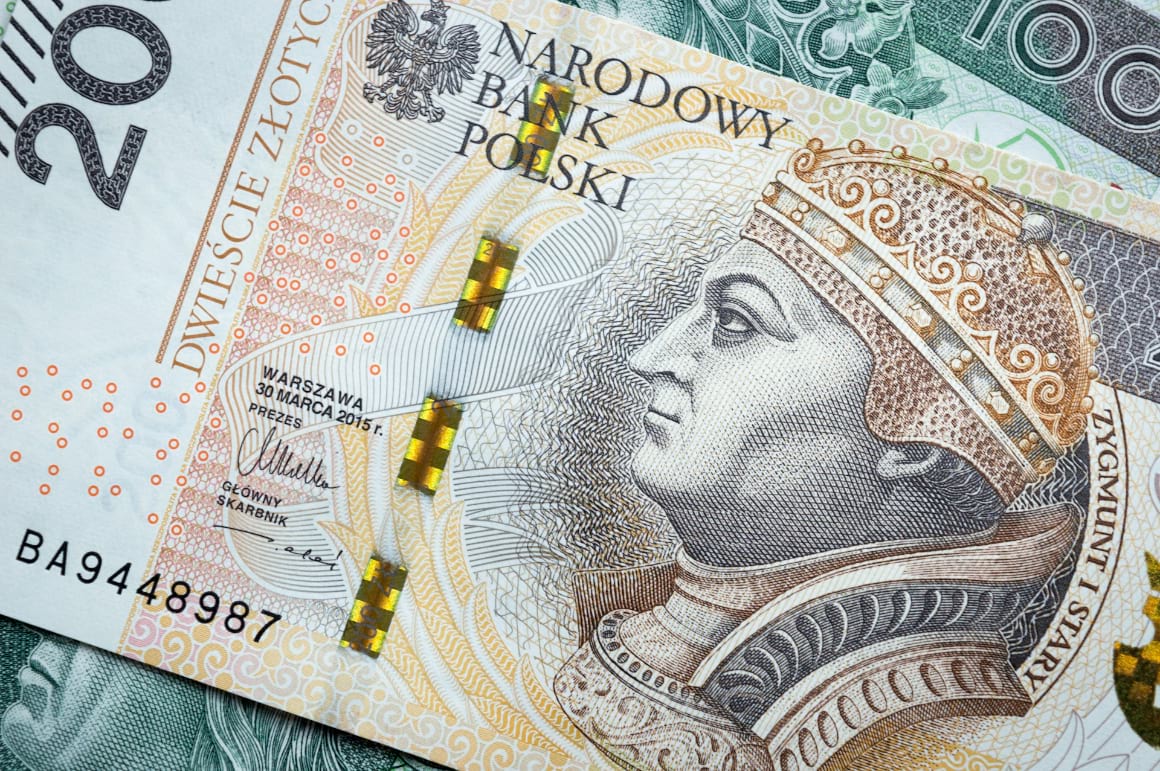
Cash is still widely used in Poland, but things are changing, and you can definitely get by in most major cities with just a contactless card. Anyone traveling out to more rural regions, such as the lakes of Masuria or the Beskid mountains, would do well to take cash with them.
ATMs are available in most towns, cities, and even smaller villages. Just beware of the ones that charge, such as Euronet. Local Polish banks will often have the cheapest, or even free, withdrawal options.
Travel Tips for Poland on a Budget
Poland’s pretty dang cheap as Euro destinations go, but there are ways to make it even cheaper. Here’s how…
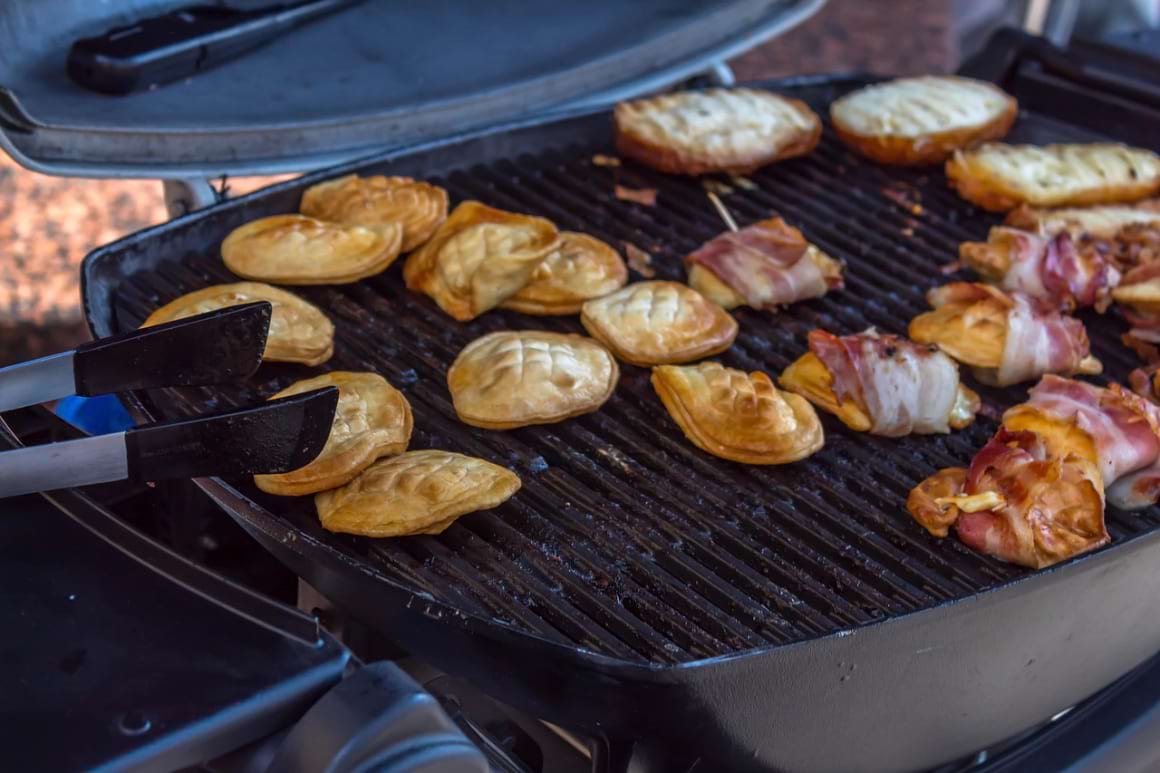
- Eat atbary mleczne – These are milk bars, Poland’s old-school Communist-style diners where you can get plates of food – really filling plates of dumplings, soups, and whatnot – for like $2 each.
- Hostels are your friend – Every major city and most big towns in Poland have hostels, and they’re still among the most affordable on the continent. You’re looking at around $10 a night in most but you can get bargains for like $5 a night. Search around and don’t be afraid to compromise on location – public transport tends to be great, and hostels in the most sought-after locations (like in Warsaw and Krakow) tend to cost more.
- Travel in shoulder seasons – Poland has two major peak seasons. Winter is one, when people flock to Christmas markets, NYE parties, and go skiing. The summer is another. Personally, I think early autumn is the best time to travel, because there are way fewer people about, hotels are cheaper, and the weather tends to be lovely (not too hot, not too cold). September is golden!
- Do free (or nearly-free) stuff – You don’t actually have to spend a dime to have a good time in Poland. Simply wandering around an old town area is joy in itself meanwhile bucket-list draws like hiking in the Tatras will cost you only the admission price to the national park, which is like $1.
- Free walking tours – These are available in most major Polish cities. They do exactly what they say on the tin: a full, informative tour that’s 100% free. You will be asked for a donation at the end, but that’s entirely up to you.
Best Time to Travel To Poland
Being a bit of a Poland nut, I’d say there’s never really a bad time to come here. Different seasons simply showcase a different side of the country. But be warned: They can be VERY different indeed.
The vast majority of travelers come in the summer. It’s a good option because Poland sees constant days when temperatures sit steady at 20 or 30+ degrees, with little rain, and plenty of sunshine.
I actually remember being shocked when I first came here. It was mid-July, and it was BALMY – I’m talking like sweat-inducing humidity sort of balmy. Poland is like that. It has a continental climate, which means planning a Krakow itinerary should also take the summer heat and occasional midday thunderstorm into account.
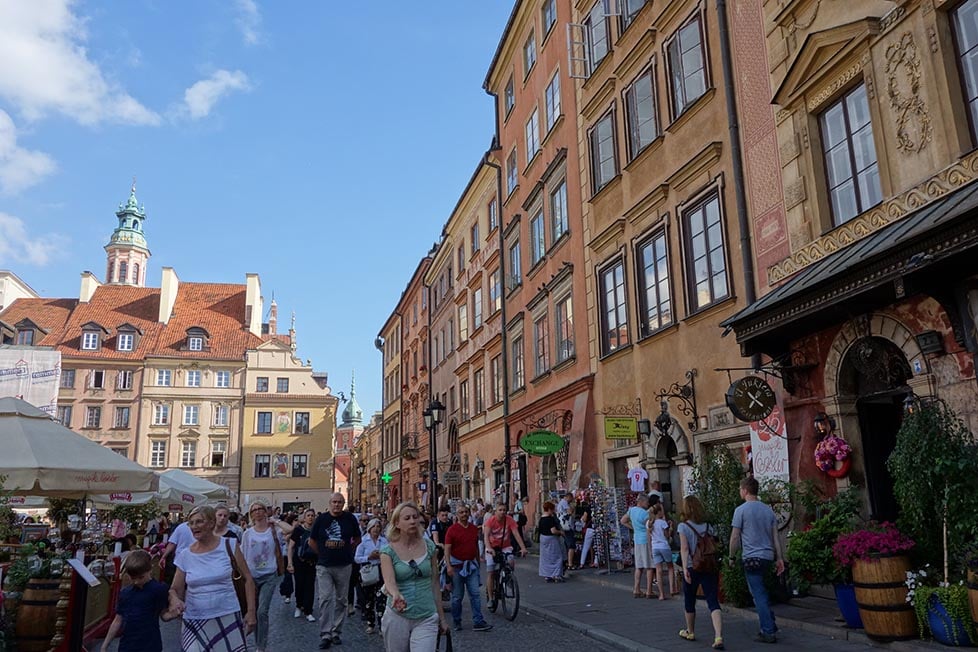
Photo: Nic Hilditch-Short
Polish winters are notoriously cold. It can get to 30 under, and heavy snows are common, though there have been fewer white winters as of late. This is actually peak time to hit the mountains of the south, and the town of Zakopane will see huge crowds of skiers from around December onwards.
Other highlights of the winter include the Christmas markets of Krakow and the huge parties that come by for New Year’s Eve. Just be ready for bitterly cold conditions, and pack accordingly.
I’d personally say the overall best time to visit Poland is mid-autumn. It’s known as the Golden Autumn here because the fall colors are simply divine across the country. Late September has the best balance of warm days, lots of light, and low rainfall, combined with dropping prices and dropping tourist crowds.
What to Pack for Poland
What you pack for Poland depends entirely on what you’re planning on doing. For the purpose of this guide, I’ll assume you’re just like me: A budget-seeking backpacker looking to hit the main cities.
Comfy shoes are a must. Polish towns, Old Town areas, and historic sites here demand quite a bit of walking, often on uneven cobbled surfaces that can be hundreds of years old. I like a good trail running shoe or trainer; something I’m happy to be in for hours on end, walking, dodging other tourists, and snapping photos.
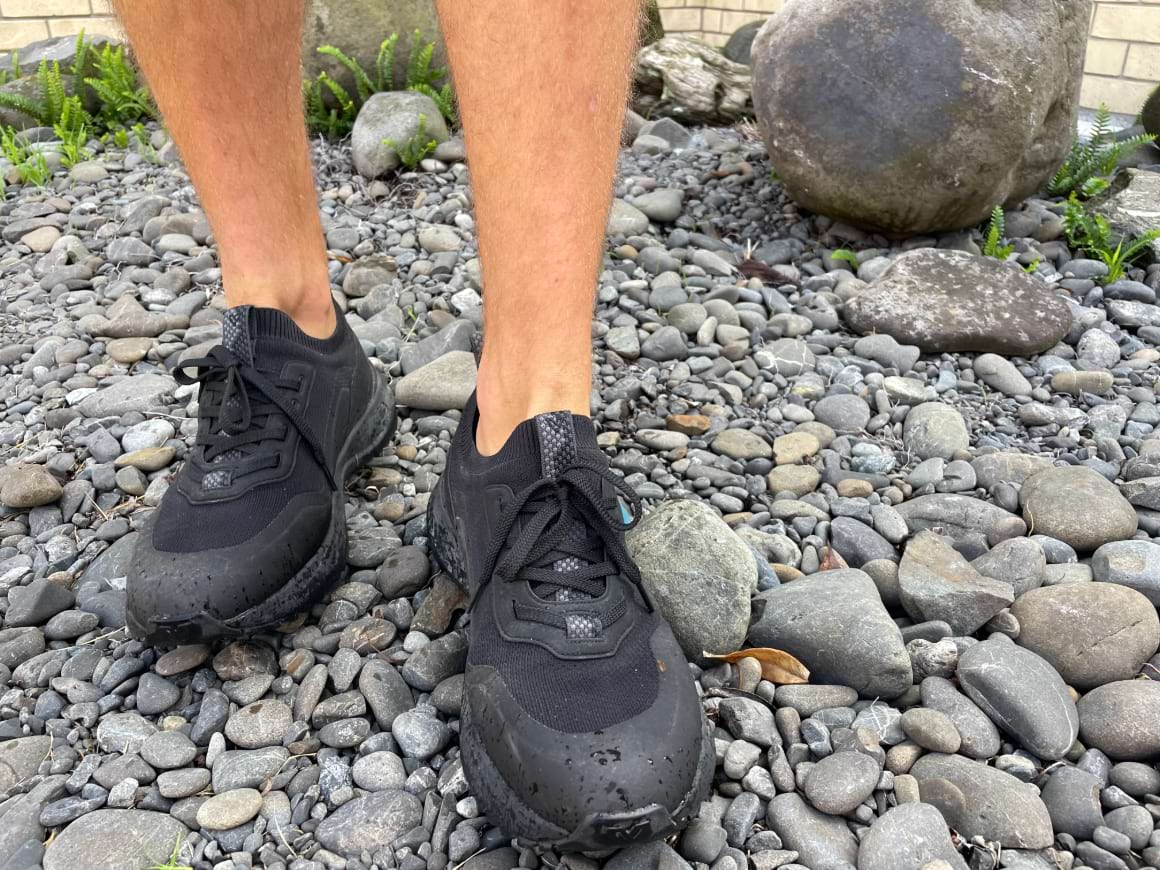
Shorts and T-shirts tend to be my go-to for months between May and September, but the winter demands something altogether more hardcore. Trips in the deep, dark season between December and March will require boots that can handle snow and ice, thermal underlayers, and plenty of layering up top, not to mention gloves and a hat.
One final note: Always bring a raincoat. Poland isn’t the Costa del Sol. It can rain without warning in the peak of summer, as well as for days on end throughout the winter.
Staying Safe in Poland
Poland is one of those quietly safe European destinations that’s rarely in the news for bad stuff. Of course, “bad stuff” does happen here, but if you let the stats speak, then you realize it’s a fairly good situation on the security front. Yep, the numbers show that Poland has fewer incidences of assault and murder than, as an example, France. There are also currently zero official foreign office warnings in place for travel to Poland. Nice.
That said, Poland isn’t a bubble-wrapped utopia. While big cities like Krakow tend to be safe, Pickpocketing happens, especially around busy train stations, tourist-heavy old towns, and on public transport. Thing is, if you’ve survived Barcelona or Rome with your phone and valuables intact, you’re likely to find this pales in comparison. Just don’t leave your stuff unattended, flash expensive stuff, or be obnoxious. It’s common sense stuff, really.
These days, a lot of people worry about Poland’s proximity to Ukraine. Totally understandable – but daily life in Poland continues completely as normal, tourism included. Borders are secure, infrastructure is solid, and there’s no reason for travelers to feel on edge, though you might want to have some extra caution if you’re traveling to eastern regions near the border.
Sex, Drugs, and Rock ‘n’ Roll in Poland
Don’t even think about it! Poland has some of the strictest drug laws in Europe. That’s not to say things aren’t available, and that you won’t get offered. You probably will if you choose to partake in the nocturnal activities of nightlife hubs like Krakow and Warsaw. It’s more to say, these sorts of things are best avoided to ensure the smooth running of a trip.
The same goes for sex. Strip clubs and the like are notorious over here, mainly because they are ground zero for tourism scams. I’d say something like 9/10 of all the times I’ve heard of a traveler being scammed, it’s down to the fact that they went to a dodgy strip joint.
When it comes to rock and roll? Eat your heart out. Poland is a party mecca.
How to Get Into Poland
Poland has stacks of large and growing regional airports, most of which are linked to a major city. The three largest are in Warsaw (Warsaw Chopin), Krakow (John Paul II Airport), and Gdansk (Gdansk Lech Walesa Airport).
They’re served by a decent array of long-haul connections, especially to Warsaw, which has plenty of links to the USA, and a plethora of budget short-haul links – easyJet and Ryanair have oodles of connections from Poland to other countries in the EU and airports in the UK.
To put it simply: Finding cheap flights in is not hard.
There’s more good news, too, because long-distance train and bus connections from Warsaw and Krakow to big European capitals like Berlin and Prague now abound. There are even overnight train connections that can get you here from Vienna or Budapest.
Entry Requirements for Poland
EU citizens have free movement within the Schengen Zone and require only their passport or ID for travel.
Citizens of visa-exempt countries (including the UK, US, Canada, Australia and others) will need to obtain online travel authorisation, ETIAS (European Travel Information and Authorisation System), before visiting European countries in the Schengen Area. A small fee will apply. It’s similar to the US ESTA.
The EES (Entry/Exit System) is the digital border system for non-EU visitors to the Schengen Area. The system records passport details, fingerprints and facial image, replacing traditional passport stamps. Travellers do not need to apply for anything in advance. Registration happens at the border. First-time registration can add time to border crossings, so it’s worth being aware of potential delays.
Other nationalities may require a visa.
Remember, visa-exempt travellers can only stay in Schengen Zone countries for 90 days out of every 180. You’ll need to get creative if you want to travel long-term in Europe.
How to Get Around Poland
You shouldn’t need more than the trains and the buses in Poland. Sometimes, there’s a reason to rent a car here – for getting to the trailheads in the Tatras or other mountain ranges, for example. But, for the most part, the varied and reliable public network will have you covered. It’s cheap, too.
Traveling by Train in Poland
Polish trains have come on leaps and bounds in the last 20 years. When I first came here, they were rubbish – expensive, unclean, and slow.
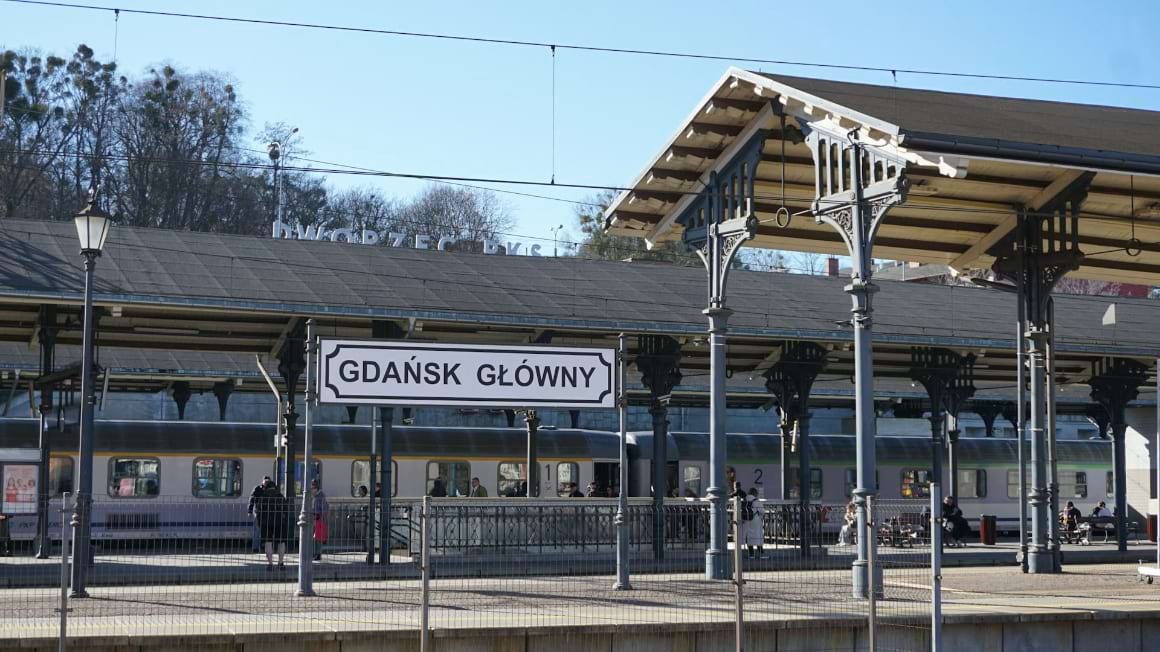
Now, Poland has a super-good high-speed network that runs Pendolino trains, meaning you can go from finishing your Krakow itinerary right to Gdansk (that’s all the way south to all the way north) in as little as 5 hours (it used to be 9+). There are also slower inter-city trains that connect to towns to the east and west of the central high-speed belt.
Traveling by Bus in Poland
FlixBus and other regional coach carriers offer some of the most comprehensive inter-city connections around Poland.
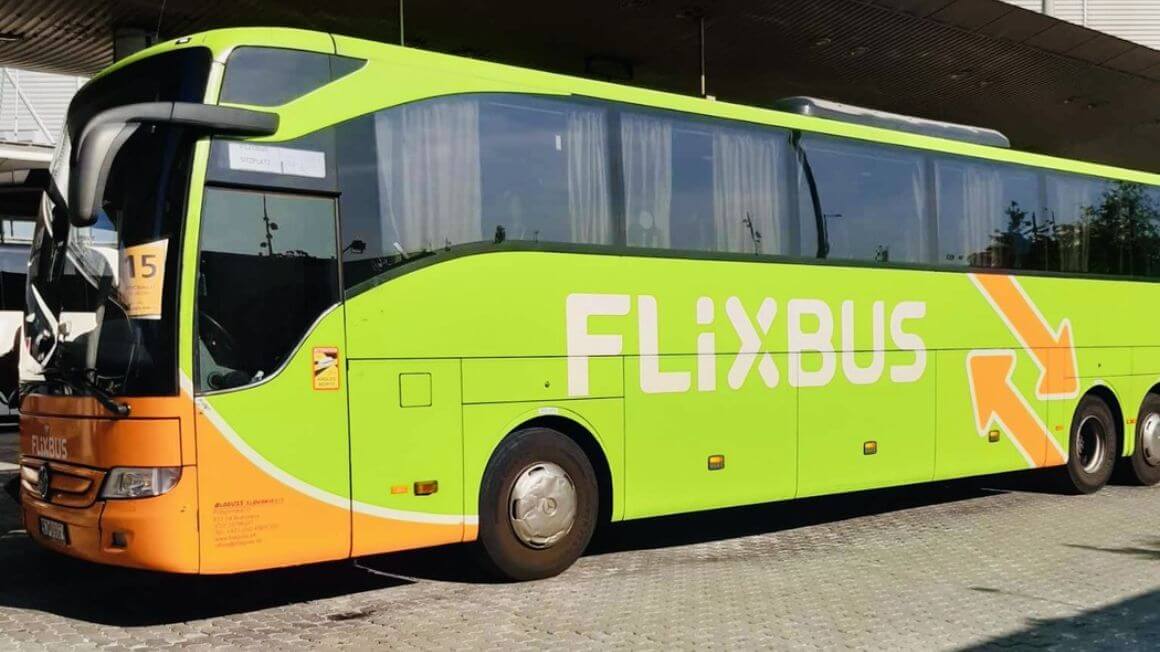
Photo: @travelling.mandala
These are what I’d look to if I were a) trying to save dollar bills or b) wanting to get to a provincial city or town not served by the national rail network. Buses can also sometimes be quicker than the trains, as is the case on the popular route from Krakow to Zakopane.
Onwards Travel from Poland
Poland is now my go-to starting point for trips throughout the Balkans, Baltics or Central Europe. Night train links to Vienna, Budapest, and Prague mean it’s a great place to have a few days before branching out to another capital.
There are also stacks of long-distance bus connections on offer, not to mention an ever-growing array of short-haul European flight links to destinations as diverse as Dubai and Portugal.
Polish Culture
I’ve been traveling Poland for over 15 years now, and even lived here for a spell, but Polish culture still remains highly elusive to me.
I won’t even attempt to sum it up here, but I will offer just two observations.
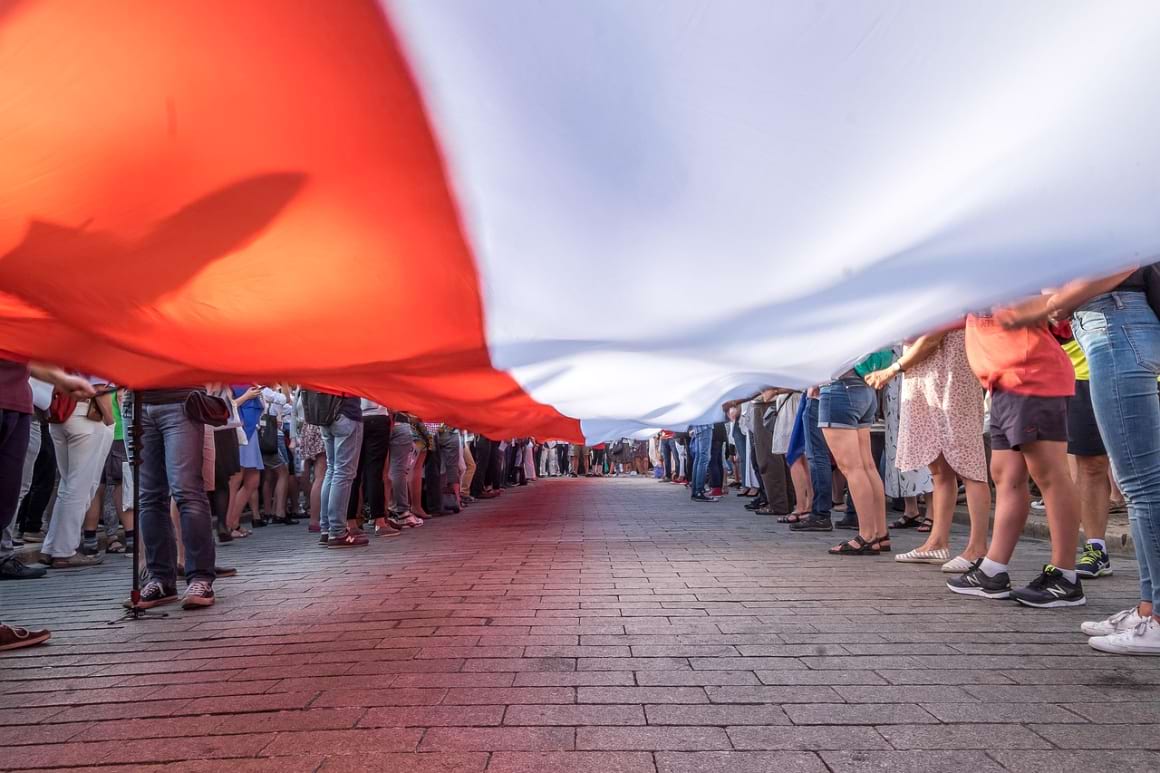
Firstly, Polish people are intensely proud of who they are, their country’s values, and where they come from. Their history is very much a tale of struggle, so self-depreciation is not a strong point, but there’s an intense connection to place and people that other parts of Europe might lack.
Secondly, the Polish sense of humor is deceptively dry. People might not smile when you joke, but that doesn’t mean they didn’t enjoy it!
Oh, and here’s a bonus one: The Polish language is hard. Like super hard.
Useful Travel Phrases for Poland
- Dzien dobry – Hello/Good day
- Czesc – Hi/Bye (informal, works both ways)
- Prosze – Please/Here you go
- Dzilkuje– Thank you
- Przepraszam – Sorry / Excuse me
- Nie mówie po polsku – I don’t speak Polish
- Czy mówisz po angielsku? – Do you speak English?
- Ile to kosztuje? – How much is it?
- Gdzie jest toaleta? – Where is the toilet?
- Jedno piwo prosze – One beer, please
- Rachunek, prosze – The bill, please
- Na zdrowie! – Cheers!
What to Eat in Poland
Poland isn’t a food heaven like, say, Italy. But there is something about the national kitchen here that will get under your skin and tingle the taste buds.
I don’t crave Polish food like I crave Indian curries or pizza, but I do sometimes find myself pining for a plate of pierogi and, and when I do, there’s nothing that can hit the spot quite like it.
Must-try Dishes in Poland
A Brief History of Poland
Poland was occupied by a whole range of tribes throughout antiquity, from the Celts to the Scythians. But one group managed to establish itself as the most permanent inhabitants of the land: The Slavs. These guys would go on to be one of the most defining peoples of Central-Eastern Europe, and the founding peoples of the modern Poland we know (and I adore) today.
The nation really came into being in the Middle Ages, which is when Poland emerged as a bit of a superpower. It hit a zenith with the establishment of the Polish–Lithuanian Commonwealth in the 16th century, a period which brought huge wealth, land gains, and grand monuments to the country, including that incredible castle in Krakow.
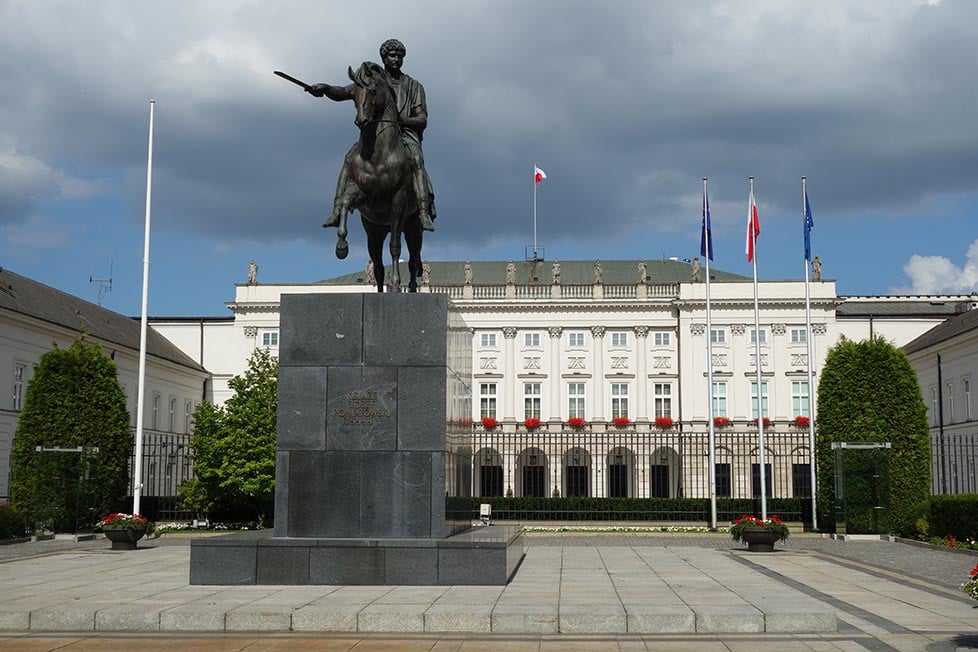
By the end of the 18th century, Poland was being threatened by invasion on all sides, and what followed was a period of incursions and partitions that led to a complete collapse of the Polish state. That persisted throughout most of the 1900s, when Poland was rocked to the core by a Nazi invasion that decimated its Jewish communities and independence.
What a lot of people don’t know is that Poland was where the great labor movements that led to the fall of the Berlin Wall actually began. Spearheaded by one Lech Walesa, it all started with strikes in the shipyards of Gdansk in the north of the country, and eventually led to the establishment of the Third Polish Republic.
Today, Poland is regarded as one of Europe’s great economic success stories, is an EU member state, and a top-draw travel destination to boot.
FAQs About Backpacking in Poland
Final Advice Before Visiting Poland
Poland is a joy for backpackers, but I’ll leave you with one bit of advice: Time your visit correctly. The seasons here are very important. It’s balmy and busy in peak summer, and ultra-cold in the winter.
The variation – between snowplumes and thunderstorms – is likely to have a big impact on the sort of trip you have, so make it a central concern. I’ll also say this: Don’t miss Krakow. It’s a beauty. A rare, fun-filled, UNESCO-attested beauty.





Hi,
This article guides with all the detail. I just wanna say thank you for this great article.
Thank you