Germany didn’t exactly seduce me at first….
I arrived expecting order. Efficiency, clean pavements and quiet trains.
It felt like a country you admire more than fall for – I mean I’d absorbed the stereotypes — efficient, serious, rule-bound, and thats not even taking into account all of those War Films that us Brits are raised on…
But boy was I wrong.
What I found instead was mist curling through the Black Forest at sunrise, pastel old towns that feel almost unreal, glassy Alpine lakes, and cities where raw history and cutting-edge culture sit side by side without apology.
When I started planning my Germany trip, I kept running into the same problem: every guide was just a numbered list. Berlin. Munich. Neuschwanstein. Repeat.
But that’s not how I or any of us here at TBB Central search for places Nope, sometimes I want dramatic nature. Sometimes storybook towns. Sometimes somewhere quietly off the tourist circuit that feels like my own discovery. I wanted something structured by experience — and couldn’t find it.
So I built the guide I wish I’d had.
Instead of a basic top-10 list, this is Germany organised by what you’re actually looking for – wild landscapes, layered history, fairytale architecture, and those off-the-beaten-path moments that make a trip stick with you.
By the end of this guide, you’ll know exactly where to go — and why it fits the kind of traveller you are.
Gute Reise!!

The Broke Backpacker is supported by you. Clicking through our links may earn us a small affiliate commission, and that's what allows us to keep producing free content 🙂 Learn more.
Germany’s Fairytale Landscapes
As far as I’m concerned, Germany does fairytale shit FAR better than anywhere else but not because it tries to.
Where France feels romantic and Italy feels theatric, German fairytale towns and cities feel structural and functional. These towns weren’t built to charm tourists or indulge decadent Kings, they were built to last. Thick walls. Defensive towers. Market squares that have seen plagues, wars, reunifications — and still host Saturday vegetable stalls.
If you’re coming to Germany for that storybook energy, then these are the places that deliver it.
1. Neuschwanstein Castle
- Where: Neuschwanstein Castle, Bavaria (near Füssen, close to the Austrian border).
- Known for: The original fairytale castle — and yes, the Disney one.
- Ideal time: Late May–June or September (summer is manic; winter is magical but access can be limited).
- Best for: First-time Germany trips, dramatic Alpine backdrops, unapologetic romantics
- How long you need: Half-day (stay 1–2 nights in Füssen if you want lakes and mountains without the rush).
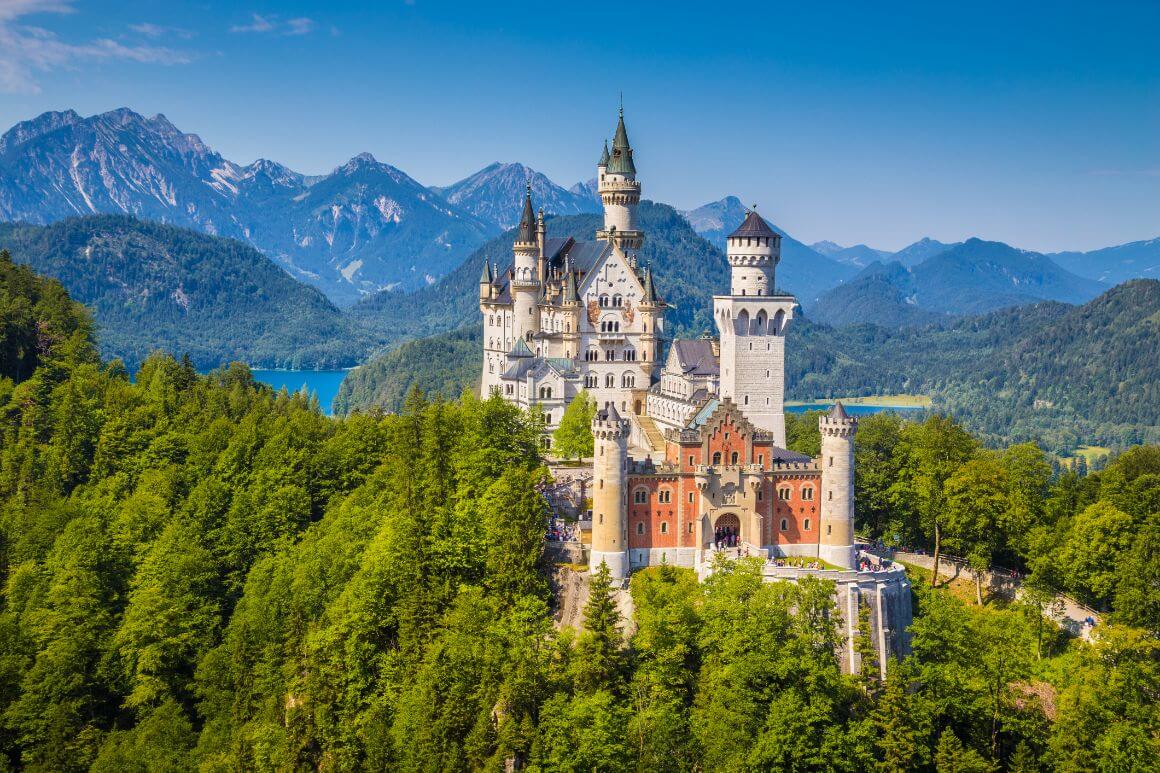
I almost didn’t want to like Neuschwanstein. It’s too famous, too photographed and above all way too Disney. And yet — standing beneath it, watching those pale towers rise out of the Bavarian hills, it’s impossible not to feel something.
Built in 1886 by King Ludwig II of Bavaria — the so-called “Mad King” — Neuschwanstein was less a defensive fortress and more a personal fantasy.
Yes, it inspired the Disney castle. Yes, around 1.4 million people visit each year. But the scale, the setting, and the theatrical ambition still land. Especially if you arrive early, before the car parks fill and the pathways turn into queues.
Inside, the opulence is unapologetic. There are over two hundred rooms — vaulted ceilings, murals, chandeliers — each designed with a level of intensity that feels almost obsessive. TYhen there’s the grotto, hidden beneath the foundations: artificial stalactites, a man-made -man-cave built purely for atmosphere.
Neuschwanstein also sits along Germany’s Romantic Road — a stretch of countryside stitched together by castles, medieval towns, and gentle Bavarian landscapes. This means you can frame it as part of something larger, rather than just a single stop.
Where To Stay Near Neuschwanstein Castle
If I were visiting Neuschwanstein, I wouldn’t treat it like a quick bus stop. I’d stay nearby, go early, and let the day-trippers do their thing after I’m already done. Füssen is the closest proper town and the easiest base. Pretty old centre, Alpine backdrop, plenty of accommodation. Stay here and you can be at the castle before the main rush.
Or then there is Schwangau – quieter, and closer to the action.
Right below the castles. More rural, more peaceful. If you want to wake up, have breakfast with mountain views, and walk or cycle toward the lakes before the buses roll in, this is the move.
2. Lichtenstein Castle
- Where: Lichtenstein Castle, Baden-Württemberg (Swabian Alps, near Reutlingen).
- Known for: A cliff-edge fairytale castle that looks almost too dramatic to be real.
- Ideal time: May–October (clear days matter — the valley views are half the point).
- Best for: Photographers, romantic detours, travellers who want Neuschwanstein vibes without Neuschwanstein crowds.
- How long you need: Half-day (easy add-on from Stuttgart or Tübingen).
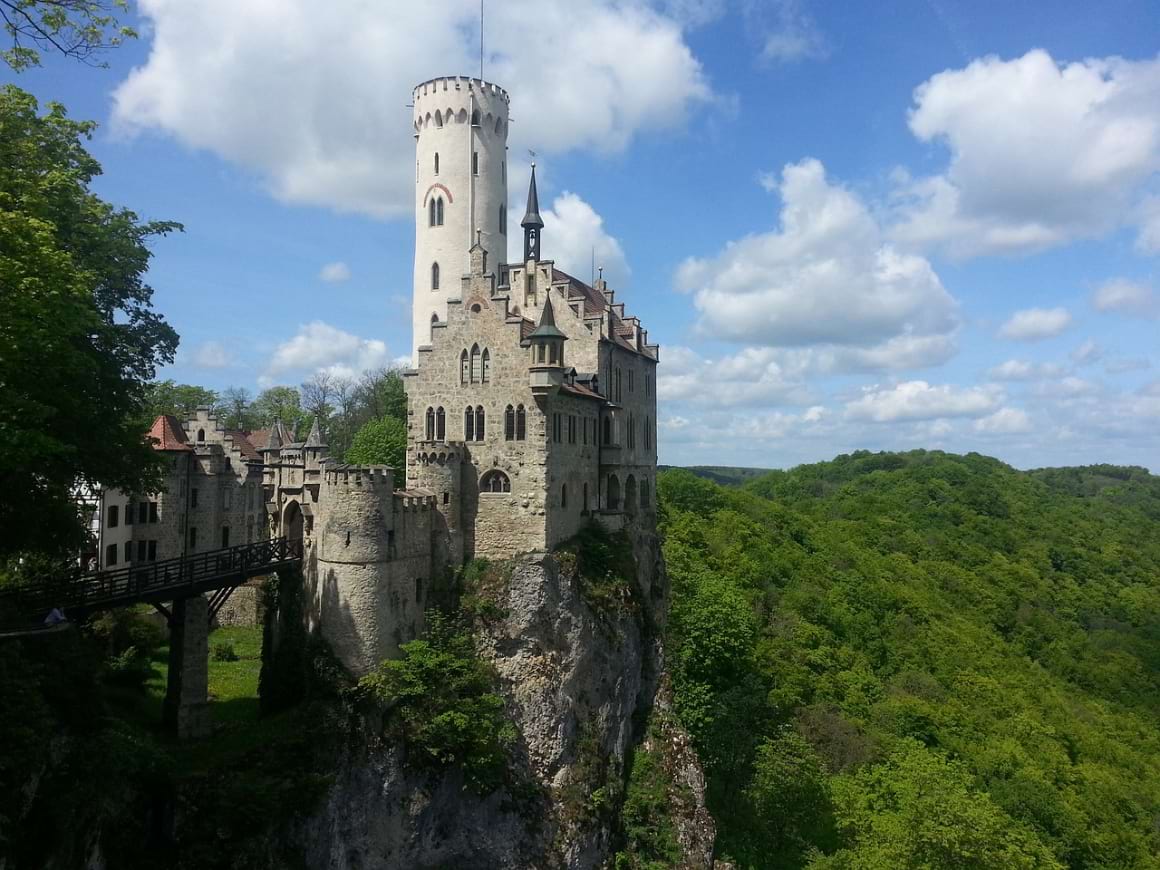
Lichtenstein doesn’t loom like Neuschwanstein, rather It perches almost precariously our steep stone cliffs.
Built in 1842 in Gothic Revival style, the castle sits 800 meters above the Echaz Valley, balanced dramatically on a rocky outcrop. It looks medieval — but it isn’t. This was rather a romantic reconstruction, inspired by Wilhelm Hauff’s novel Lichtenstein, a 19th-century love letter to Württemberg’s past (nostalgia was a thing even in the olden days…).
What stands here today replaced earlier medieval fortifications that once guarded the same ridge. Why it needed guarding remains a mystery to be even after doing the full tour. The current structure, privately owned and restored in 2002 (so the castle is almost 25 years old WOW!), feels both historic and strangely pristine — like a fairytale retold with better engineering.
The approach is half the experience though. Thick forest surrounds the hilltop, and in spring and summer the trees glow green against pale stone. If you come here in autumn, the hills shift to red and gold, and the castle looks even more theatrical against the changing canopy.
Where To Stay Near Lichtenstein Castle
If I were visiting Lichtenstein Castle, I wouldn’t stay right next to it. It’s a half-day spot — cinematic, yes — but better folded into a wider Swabian Alps trip. There are plenty of lovely Swabian Alps Guesthouses or you can stay in Stuttgart City and do a day trip.
3. Hohenzollern Castle
- Where: Hohenzollern Castle, Baden-Württemberg (Swabian Alps, south of Stuttgart).
- Known for: A mountaintop fortress engineered for maximum drama.
- Ideal time: May–October for clear panoramic views; winter if you’re lucky enough to catch it rising through fog.
- Best for: Big-sky viewpoints, Prussian history fans, castle collectors who like their landmarks bold
- How long you need: Half-day (easy detour from Stuttgart or Tübingen).
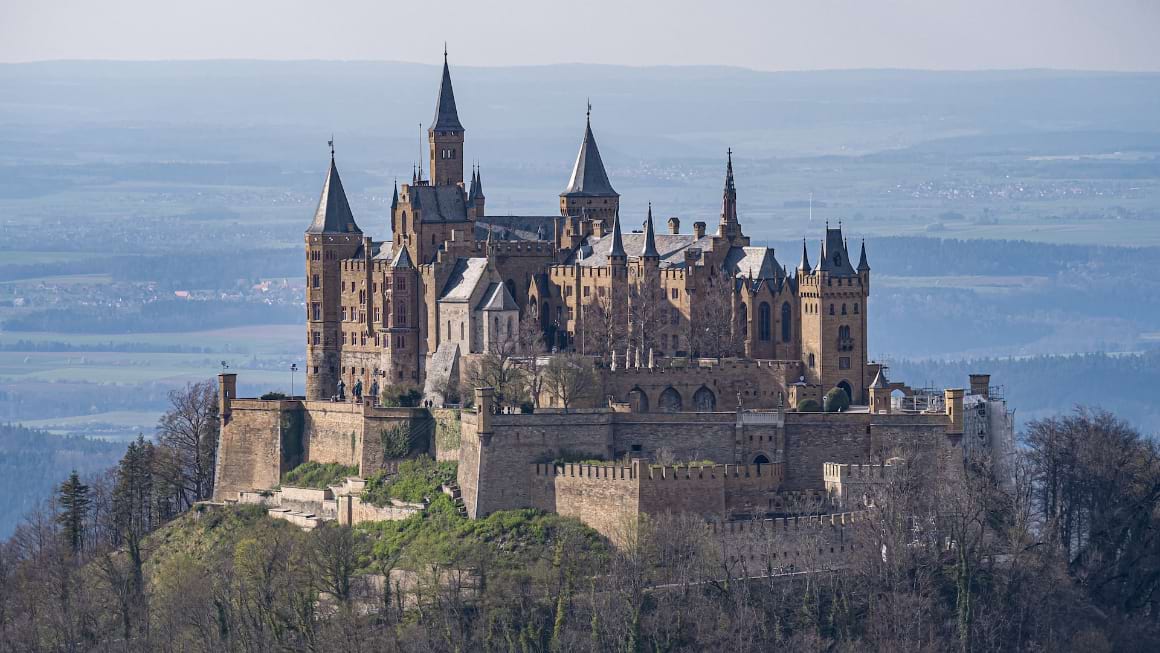
Hohenzollern doesn’t whisper – rather it declares and the World listens!
You see this one long before you reach it — rising alone from its cone-shaped hill, walls and turrets cutting cleanly through the sky like a statement of intent. This isn’t a fairytale castle, it’s a dynastic triumph wraith from stone.
Once the seat of the Brandenburg-Prussian rulers — the line that produced kings and Kaisers — Hohenzollern was built to project authority. The structure you see today is the third reconstruction, a 19th-century revival of earlier fortresses that once occupied the same strategic peak. And it doesn’t hold back.
All 140 rooms lean into grandeur. Vaulted halls, ornate chambers, royal artefacts — this was not subtle architecture. It was theatre with a political agenda.
But what makes Hohenzollern land isn’t just its interior. It’s the setting. Dense forest wraps around the hill, and on clear days the Swabian Alps roll out in every direction. On misty mornings, the castle appears to float above the clouds — which feels entirely appropriate for something built to sit above everyone else.
It’s less romantic fantasy. More architectural power move.
Where To Stay Near Hohenzollern Castle
Hohenzollern is all about the approach. You see it from miles away, sitting alone on its hill like it’s daring you to come closer. But once you’ve climbed it, explored it, and taken the panoramic photos, you’ll want somewhere with actual life in the evening. If I had to choose one base, it’s Tübingen. Cobblestone lanes, colourful riverside houses, students drifting between cafés. It balances the castle’s grandeur with something warm and human.
4. Rothenburg Ob Der Tauber
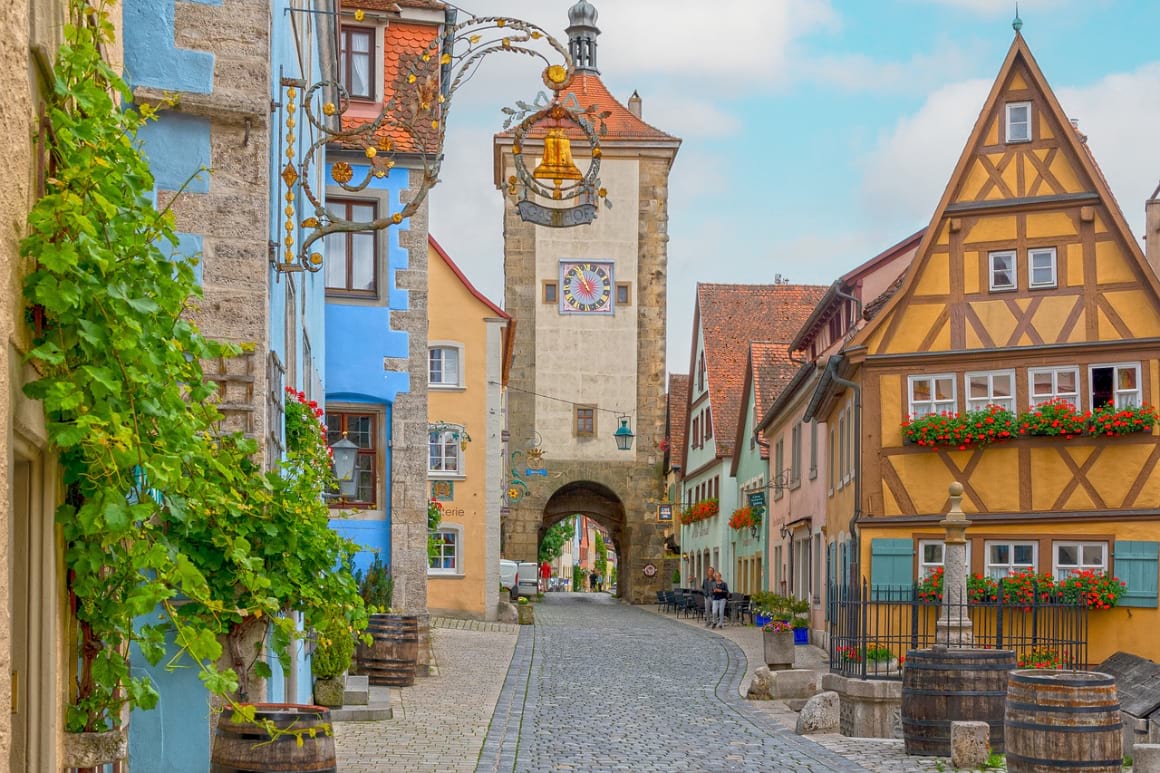
- Where: Rothenburg ob der Tauber, Bavaria (Franconia region, along the Romantic Road).
- Known for: Impossibly preserved medieval old town.
- Ideal time: May–June or September (December for full Christmas-market atmosphere).
- Best for: Storybook streets, photographers, slow wanders, Romantic Road road-trippers.
- How long you need: Half a day to 1 night.
Plucky little Rothenburg feels almost too perfect. Timber-framed houses, crooked lanes, fortified walls — it looks like someone curated medieval Europe and left only the best angles. Think a fantasy town straight out of Balders Gate or Skyrim or even Zelda.
Once a wealthy imperial city in the Middle Ages, Rothenburg thrived until war and economic decline pushed it into poverty. Ironically, though that very hardship is part of what preserved it. With little money for modern development, the town remained largely intact. Even after damage during World War II, careful restoration kept its medieval character remarkably whole.
Today, it stands as one of Germany’s best-preserved walled towns. It’s not frozen in time, but it is carefully maintained. Walk the ramparts and you’ll see the red rooftops spill out beneath you, church towers punctuating the skyline just as they have for centuries.
Yes, it’s popular. Yes, it’s polished. But if you can arrive early morning or stay after sunset and something shifts.
Where To Stay in Rothenburg ob der Tauber
Stay in the Old Town for a the night. Just note that Rothenburg gets busier than it looks. By late morning, tour groups are circling the main square and the magic starts to feel slightly staged. When the day-trippers leave and the street lamps glow against half-timbered houses, the place shifts. It becomes quieter.
5. Gorlitz
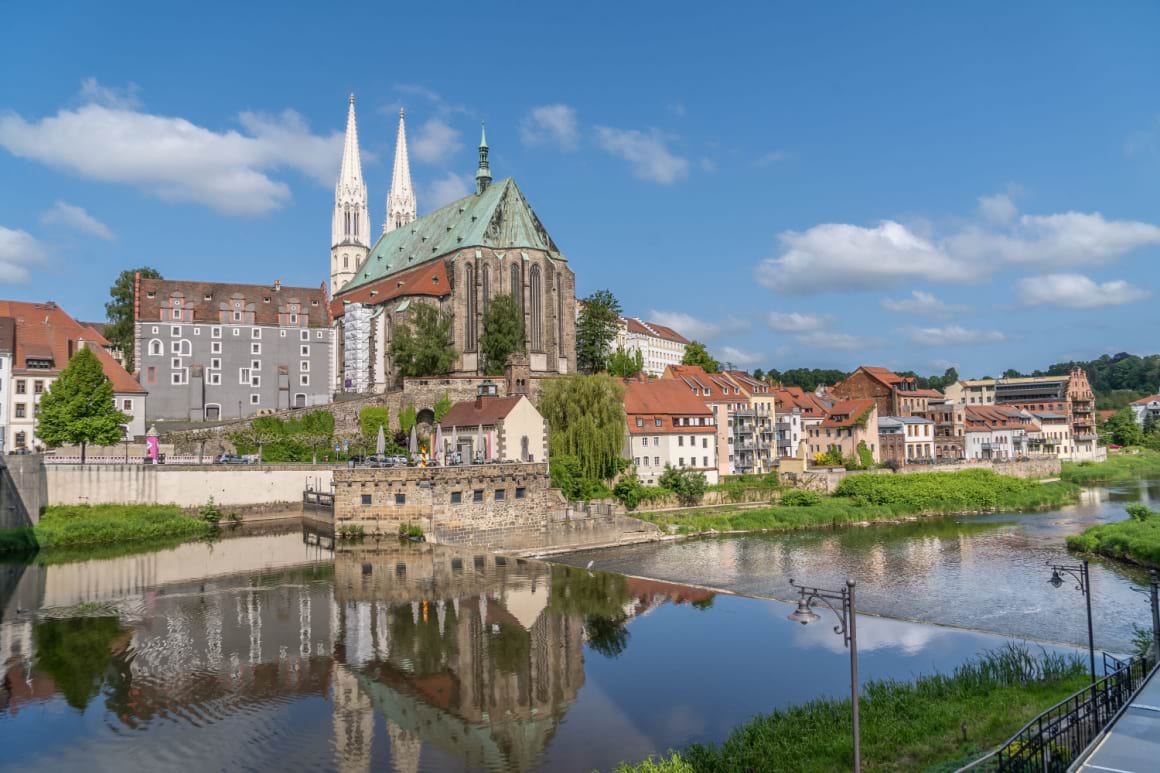
- Where: Görlitz, Saxony (on the Polish border).
- Known for: Europe’s best-preserved architectural time capsule.
- Ideal time: May–September for long golden evenings; December for low-key, old-world Christmas markets.
- Best for: Architecture nerds, film buffs (“Grand Budapest Hotel” vibes), travellers who prefer atmosphere over attractions.
- How long you need: 1 night (2 if you want to slow down and wander properly).
With roots stretching back to 1071, the town began as a Slavic settlement and evolved into a trading hub that quietly accumulated wealth — and sublime architecture. Today, more than 4,000 heritage-listed buildings line its streets, spanning Gothic, Renaissance, Baroque, and beyond. Walking here feels less like sightseeing and more like stepping into a preserved layer of olde Europe.
The cobbled streets of Gorlitz are nicely lined with cafe’s and if you wander across the pedestrian bridge over the Neisse River, you’ll find yourself in Zgorzelec, Poland. Two countries in one afternoon is always a bonus!
Oh and film directors have noticed Gorlitz’s gorgeousness. The Grand Budapest Hotel, The Reader, Inglourious Basterds, and others all used Görlitz as a stand-in for somewhere else.
What makes it special, though, isn’t just the architecture it’s the absence of crowds. Görlitz sits far from Germany’s major tourist routes, which means you can walk entire streets without interruption.
Where To Stay in Görlitz
If I were coming here, I’d stay central probably the Aldstadt (Old Town). After all, this is a town you experience on foot — early mornings, late evenings, crossing the bridge into Poland without thinking twice. Or you could rent a faceless hotel in Dresden which is the nearest major city.
Rivers, Valleys & Wine Country
What I love about Germany country is that the country isn’t exactly loud about its beauty.
It doesn’t shove coastline at you or sell itself on Mediterranean ease. Instead, it gives you river bends, terraced vineyards, and towns that seem to lean ever so gently toward the water like a Straussian Waltz.
If you’re looking for scenery that feels earned and landscapes shaped by time rather than via sheet spectacle then this is where to focus. And of course they are all best enjoyed with a glass of Riesling!
6. The Rhine Valley
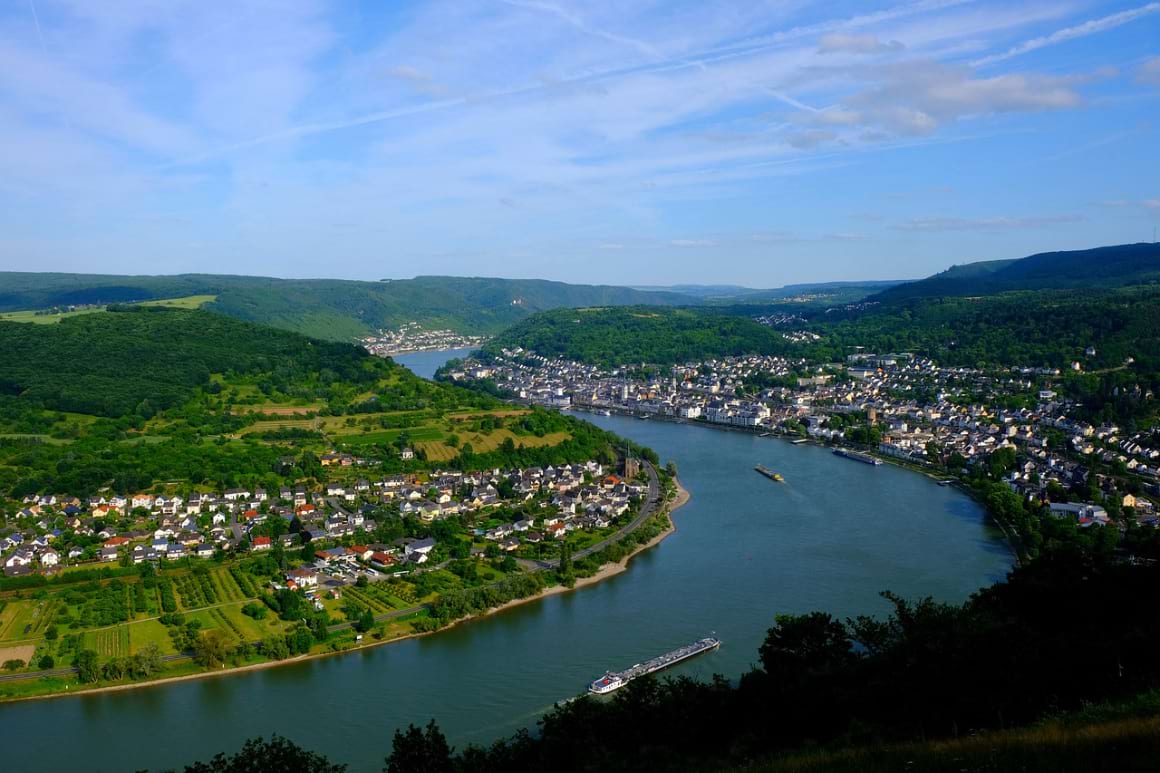
- Where: Rhineland-Palatinate (Rheinland-Pfalz), western Germany.
- Known for: Fairytale castles stacked along a dramatic river gorge.
- Ideal time: May–September (September is perfect — fewer crowds, harvest season, softer light).
- Best for: Castle chasers, scenic train journeys, slow river cruising, wine!!
- How long you need: 1–2 nights (or a long, well-planned day trip between Koblenz and Rüdesheim).
The Rhine feels like the very spine of Germany. It doesn’t just run through the country — it absolutely shapes it.
You’ll probably even recognise it even if you’ve never been: river bends guarded by castles, vineyards clinging to steep slopes, villages tucked into narrow stretches of valley. It’s one of the most iconic landscapes you can visit in Germany.
The river flows from south to north, threading through industrial cities and quiet countryside alike. But the stretch that really lands — at least for me and many visitors — is the Middle Rhine Valley between Koblenz and Mannheim. Here, the valley tightens and the drama increases. Castles multiply. Cliffs steepen. The river curves just enough to feel cinematic.
For centuries, artists and writers have settled here, drawn to the layered scenery and shifting light. And once you’re standing on a hillside trail looking down at a fortress rising above a vineyard above a slow-moving barge, it makes sense.
Where To Stay in the Rhine Valley
If I were doing the Rhine properly, I wouldn’t base myself in a big city and commute in. I’d stay in the valley. Somewhere like Bacharach – Small, atmospheric, perfectly positioned or Boppard – slightly bigger, easy transport links. There are also Vineyard Stays available.
7. Mosel Valley
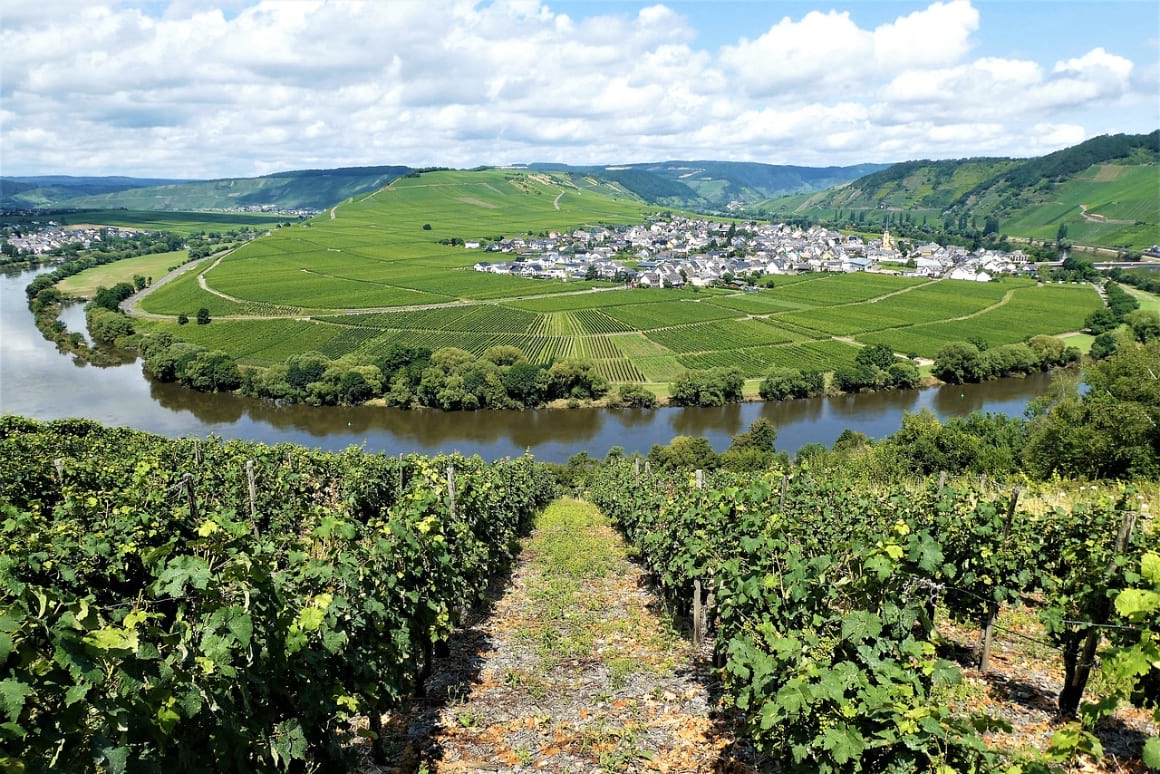
- Where: Mosel Valley, Rhineland-Palatinate (southwest Germany, near Luxembourg).
- Known for: Steep vineyard terraces and crisp Riesling.
- Ideal time: May–June for green rolling hills; September–October for harvest season and wine festivals.
- Best for: Slow travel, cycling along the river, wine lovers, quieter Rhine alternative.
- How long you need: 2 nights (3 if you’re biking between villages like Bernkastel-Kues and Cochem).
The Mosel Valley is a winding river carving through steep hills, vineyards stacked at impossible angles, with medieval villages clustered along the banks like they’ve always belonged there. It feels quieter than the Rhine and names a softer more intimate alternative.
Stretching roughly 121 miles between the Eifel and Hunsrück mountains, the Mosel River — a tributary of the Rhine — flows through Germany before brushing Luxembourg and France.
The terraces are the real spectacle here. Vines cling to slopes so steep they look impractical, and yet this is one of the country’s top wine-producing spots. In fact, wine has actually been produced here since Roman times. The region is especially famous for its white varieties – crisp, mineral-rich, and deeply tied to this soil. If you want to experience more incredible wine regions, check out some of the best wine tours in the world.
After a glass (or a bottle), towns like Cochem make even mire sense.
And then there are the hiking trails – lovely hiking routes weaving through vineyards and over ridgelines, linking villages and ruins in a way that feels organic rather than curated.
Where To Stay in the Mosel Valley
The Mosel is softer than the Rhine. Steeper vineyards. Smaller towns. Less performance. Bernkastel-Kues is the classic Mosel base, think Half-timbered RPG houses, central location, and proper wine-town atmosphere.
Then with its hilltop castle and postcard skyline, Cochem is more dramatic but slightly busier.
8. Heidelberg
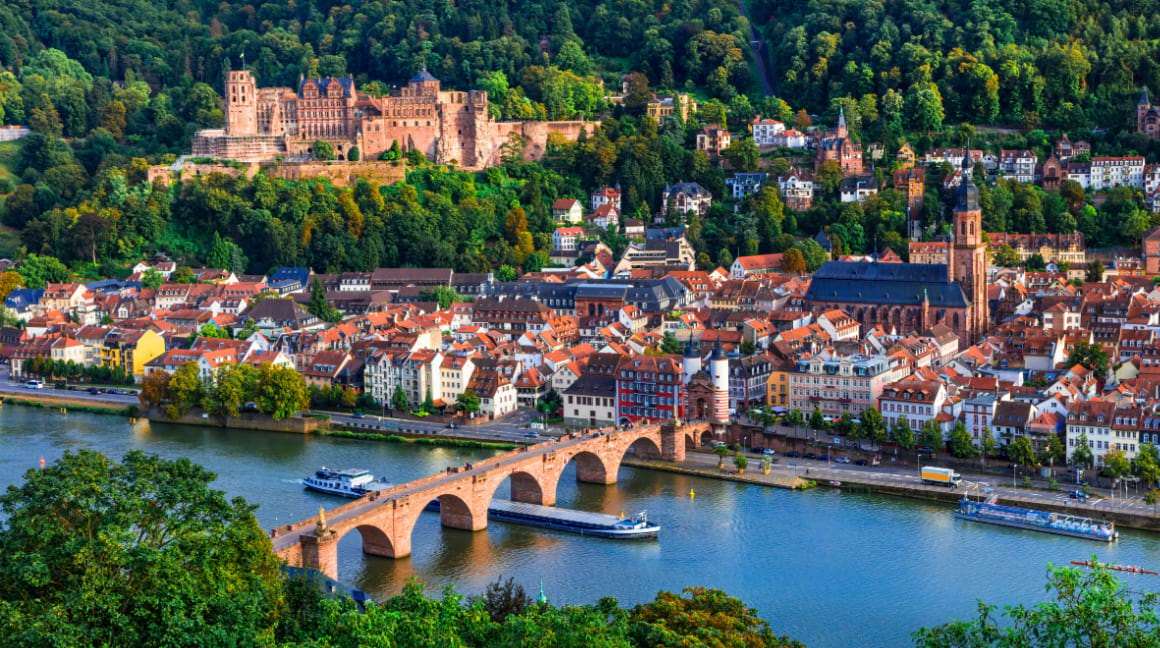
- Where: Heidelberg, Baden-Württemberg (Neckar River valley, southwest Germany).
- Known for: Romantic riverside setting with a half-ruined hilltop castle.
- Ideal time: May–June or September for warm evenings without peak crowds; autumn for golden hills.
- Best for: Slow wanders, sunset viewpoints, classic “romantic Germany” energy without going full fairytale.
- How long you need: 1 night (comfortable as a day trip, better if you stay).
Handsome Heidelberg really need doesn’t try too hard to entice and seduce travellers but seems to do so effortlessly.
Set along the River Neckar (with a ruined castle brooding above red rooftops and wooded hills!) it’s one of those rare perfect places that feels composed rather than constructed.
The city is best known for its university, one of the oldest and still one of the most prestigious in Germany. That student presence shapes the mood in city and keeps the place alive. Cafés spill into cobbled streets, conversations drift between lecture halls and wine bars, and the cultural scene feels intellectual without being stiff (or too German…).
Walk through the Altstadt and the façades glow in warm tones against the river. Then cross the Old Bridge and climb the Philosophenweg on the opposite bank for one of the best panoramic views in the country.
This is one of personal top picks from this list.
Where To Stay in Heidelberg
Heidelberg leans romantic — but in a low-key, intellectual way. It’s not loud about it. The castle broods above the Neckar, students drift between cafés, and the old bridge glows properly at dusk.
The city boasts lavish baroque and rococo architecture, made particularly famous by the opulent and ornate 18th-century Residenz Palace. The Aldstadt is class, Weststadt is erm, west and the river view are best enjoyed near the Neckar River but are priced accordingly.
9. Wurzburg
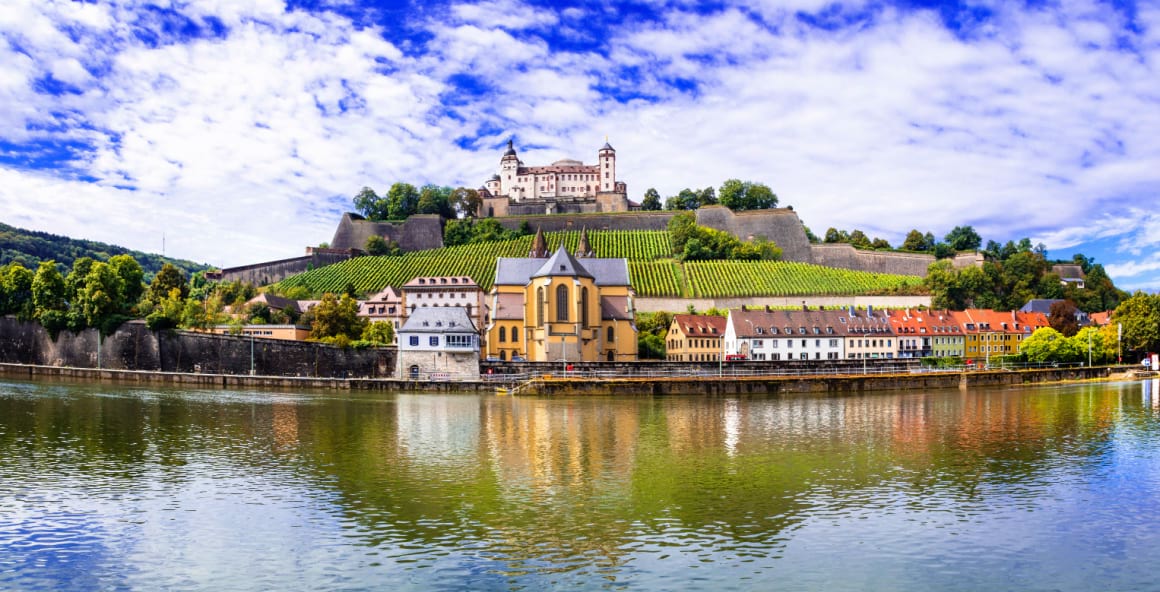
- Where: Marienberg Fortress, Würzburg, Bavaria (Franconia region).
- Known for: Epic hilltop fortress overlooking Franconian wine country.
- Ideal time: May–September for vineyard views; October is wine season.
- Best for: Viewpoint hunters, casual history lovers, hitting Würzburg’s old town and wine bars.
- How long you need: Half-day.
From University town to another here! Indeed, while Wurzburg is mostly known for the tasty wine produced in the region, it is also one of Germany’s most charming university towns and great place for foreign students in Germany to study.
The city was heavily damaged during World War II but much of its historic core has been carefully restored (way to go Marshall Plan…). The result is a place that feels layered rather than frozen in time. Students fill the squares while the timeless Marienberg Fortress watches from above.
Then there’s the Würzburg Residenz reminding you that this was once a seat of serious power prior to Germany unification.
Where To Stay in Würzburg
Würzburg doesn’t shout for attention. It sits on the Main River, backed by vineyards and guarded by a fortress, quietly doing its thing.
If I were staying, I’d base myself somewhere that lets me move between river, wine bars, and viewpoints without needing transport. The Aldstadt (that still means Old Town) is central or if you are day-tripping the nearest cities are Frankfurt and Nuremberg (yes that Nuremberg).
10. Bamberg
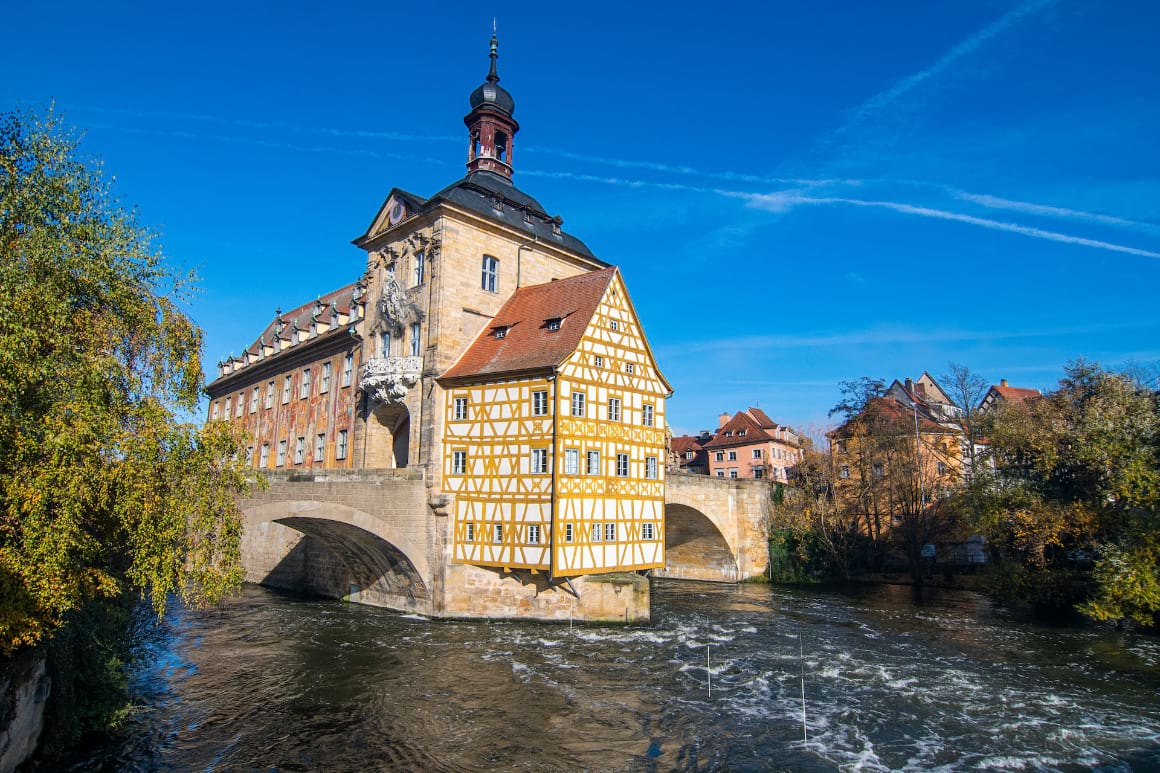
- Where: Bamberg, Bavaria (Franconia, northern Bavaria).
- Known for: UNESCO-listed old town and smoked beer.
- Ideal time: May–September for riverside evenings; December for atmospheric Christmas markets.
- Best for: Medieval street wanderers, beer purists, travellers who want Rothenburg vibes with fewer tour groups.
- How long you need: 1 night.
Ok so hear us out, while Bamberg smells faintly of smoke that is most definitely part of its charm.
The town is famous for its breweries, particularly the historic Schlenkerla, pouring its distinctive smoked beer since 1405. It’s not subtle, the first sip surprises you and by the second, you understand why it’s lasted centuries.
While I am a fan of a good brewery tour, Bamberg isn’t just about beer. It’s actually one of the best-preserved medieval towns in Bavaria, spread across seven hills — a layout that once earned it comparisons to Rome.
Unlike some polished medieval towns, Bamberg still feels lived-in. It gets busy during the day with workers and by night students from the university add fresh energy.
Where To Stay in Bamberg
There are great pubs and beer houses near Sandstraße. Or you can stay in Nuremberg and get the bus to Bamberg for the afternoon.
Wild Germany – Forests, Lakes & National Parks
Before I went properly looking for it, I didn’t think actually of Germany as being all that wild. Efficient? Jahr! Cultured? Obviously…
But wild? Nah. And yet in truth Germany boasts some of the largest and oldest forests in all of Europe. Step into them and you can almost hear the Barbarians whispering in the foliage prepping to jump you.
It’s fair to say Germany doesn’t advertise this side of itself loudly and this is undoubtedly a glorious glorious thing as you get to enjoy its rugged and rustic side peacefully….if you know where to go.
11. The Black Forest National Park
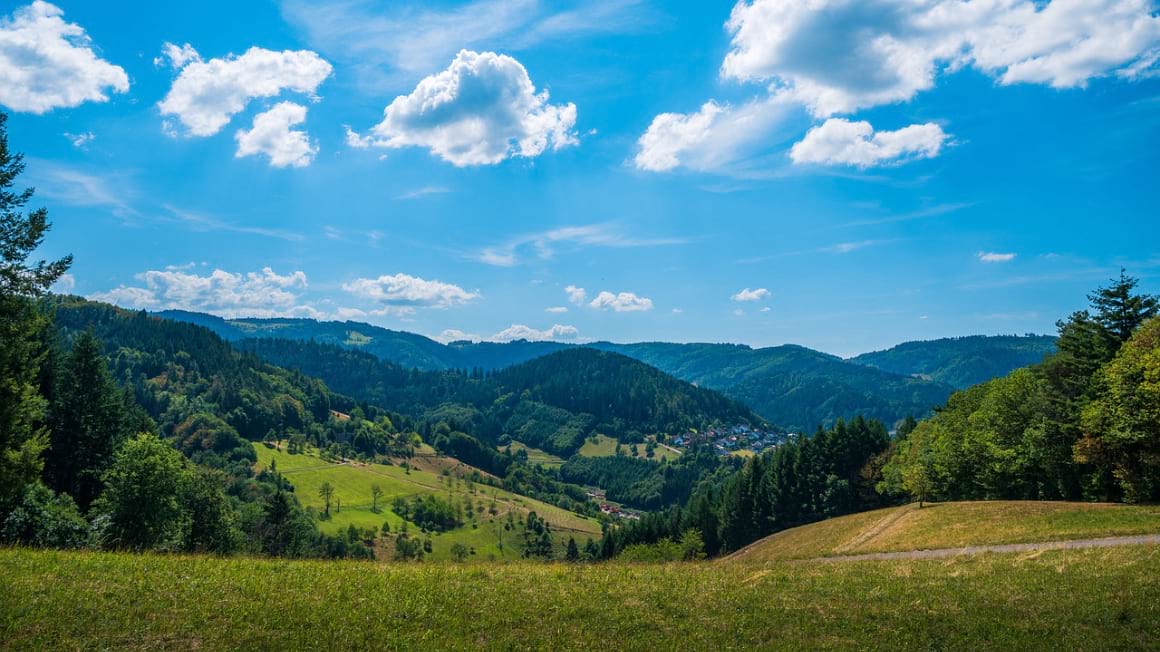
- Where: Black Forest National Park, Baden-Württemberg (southwest Germany, near the French border).
- Known for: Dense, myth-heavy forest and moody hiking trails.
- Ideal time: May–October for hiking; late autumn if you want full Grimm atmosphere.
- Best for: Forest hikes, waterfall chasers, cabin energy, escaping city noise.
- How long you need: 1–2 nights (longer if you’re properly hiking or road-tripping through).
Rumor has it that Hansel and Gretel once stumbled upon a tasty (but sinister) gingerbread house in this very forest – yep this here is the very landscape that inspired the Brothers Grimm. Beyond the folklore, the forest is even darker, deeper, and quieter than the storybooks suggest.
Stretching from Baden-Baden down toward Offenburg, the Black Forest spans a huge swathe of southwest Germany. It’s dense — thick evergreen canopy, rolling hills, and valleys that seem to absorb sound. Step onto a trail and the world narrows to tree trunks, filtered light, and the crunch of gravel underfoot.
The Black Forest is easily one of the most well-known national parks in Germany. The forest spans a massive area, reaching from Baden-Baden to Offenburg.
It’s an incredibly dense evergreen forest, boasting everything from gorgeous lakes to picturesque villages and lush valleys. The land of cooing birds and cuckoo clocks, the magical forest also includes its very own spa-town, called Baden Baden, the busy university city of Freiburg, and the capital of Germany’s wine region, Offenburg. There’s a lot going on here and with a load of hostels in the Black Forest, it’s easy to visit on a budget too.
Don’t skip a visit to the mist-covered Titisee, one of the most scenic lakes in the country. My favorite way to experience the area is to catch the Zapfle-Bahnle train, which follows an extraordinary route around the lake. Trust me on this one!
There are plenty of outdoor activities to fuel your adventure trip here. I’d say you should visit the forest just for its rejuvenating spa villages and scenic beauty, but this wouldn’t do it justice. Take my advice and book a few guided hikes or kayak tours, or even go chasing waterfalls for a bit more of an adventure.
Where To Stay Near Black Forest National Park
The Black Forest isn’t one neat lil’ destination. It’s a sprawl of deep woodland, high plateaus, and small towns that feel slightly removed from everything. You need time to be amongst it, to explore and to feel it. If I were going properly, I wouldn’t stay in a city and commute in. I’d stay on the edge of the trees — somewhere quiet enough to hear the forest at night.
Baiersbronn offers Deep forest energy. Right in the thick of it. Surrounded by trails, lakes, and dense woodland. Then, Reudenstadt is practical but scenic.
12. Bavarian Forest National Park
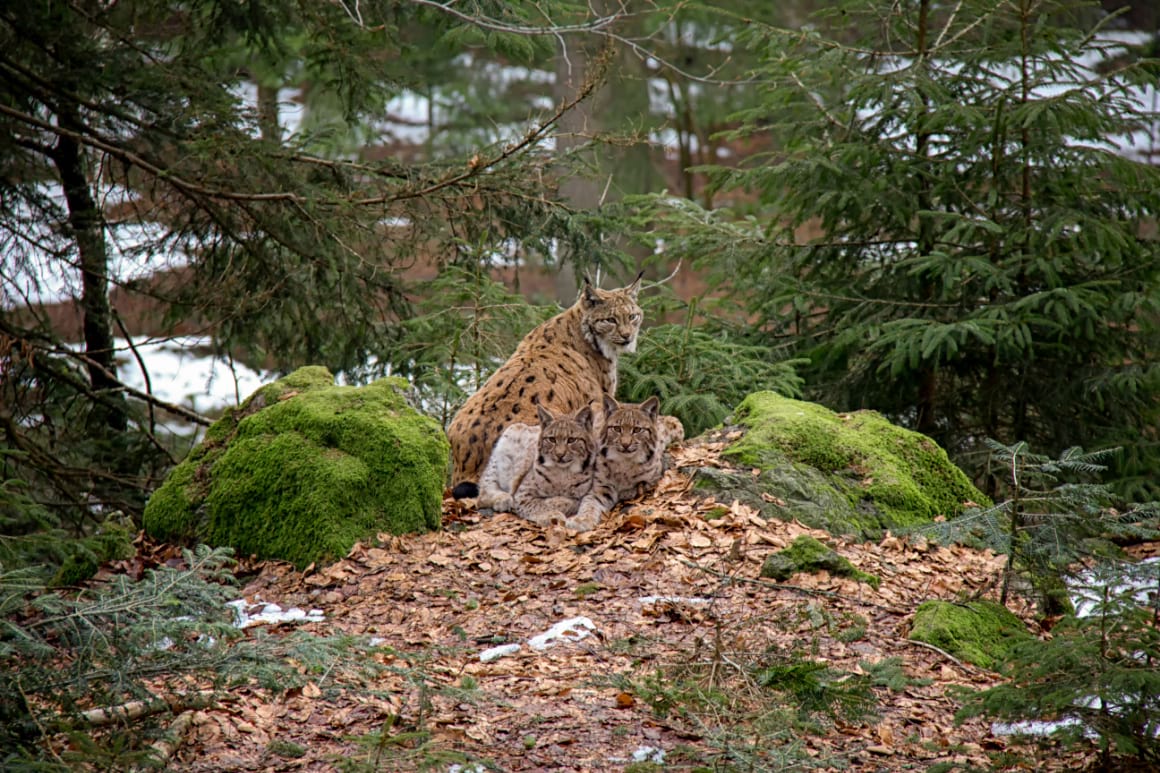
- Where: Bavarian Forest National Park, Bavaria (along the Czech border, east of Regensburg/Passau).
- Known for: Untamed woodland and Germany’s oldest national park.
- Ideal time: June–October for hiking; January–February for snow-covered silence.
- Best for: Proper forest immersion, long-distance hiking, wildlife spotting, escaping Bavaria.
- How long you need: 2–3 nights.
If you’re looking for the version of Germany that feels least curated, this is it. The Bavarian Forest National Park doesn’t perform. It doesn’t try to be picturesque in a postcard way. It’s rawer, quieter — and noticeably wilder than most people expect.
Often confused with the Black Forest (they’re nowhere near each other…), the Bavarian Forest sits along the Czech border and was Germany’s first national park. Its philosophy is simple- let nature recover on its own terms. Fallen trees aren’t cleared, forest regeneration is left to happen naturally and the result is a landscape that feels alive rather than maintained.
Wildlife adds to that sense of depth. Lynx, wolves, European bison, bear, and beaver all inhabit this region — not always visible, but present enough to change the atmosphere.
Where To Stay Near Bavarian Forest National Park
The park is expansive. Choose a base near the core to minimise driving between trailheads. I recommend staying somewhere that feels embedded in it — not on the edge of a town.
Neuschönau is situated Right by the park core and is One of the best-positioned bases for accessing the treetop walk and central hiking routes. Its excellent for first-time visitors and short hiking trips. If you want to be nearer to trh Czech border then look for digs at Bayerisch Eisenstein.
13. Eifel National Park
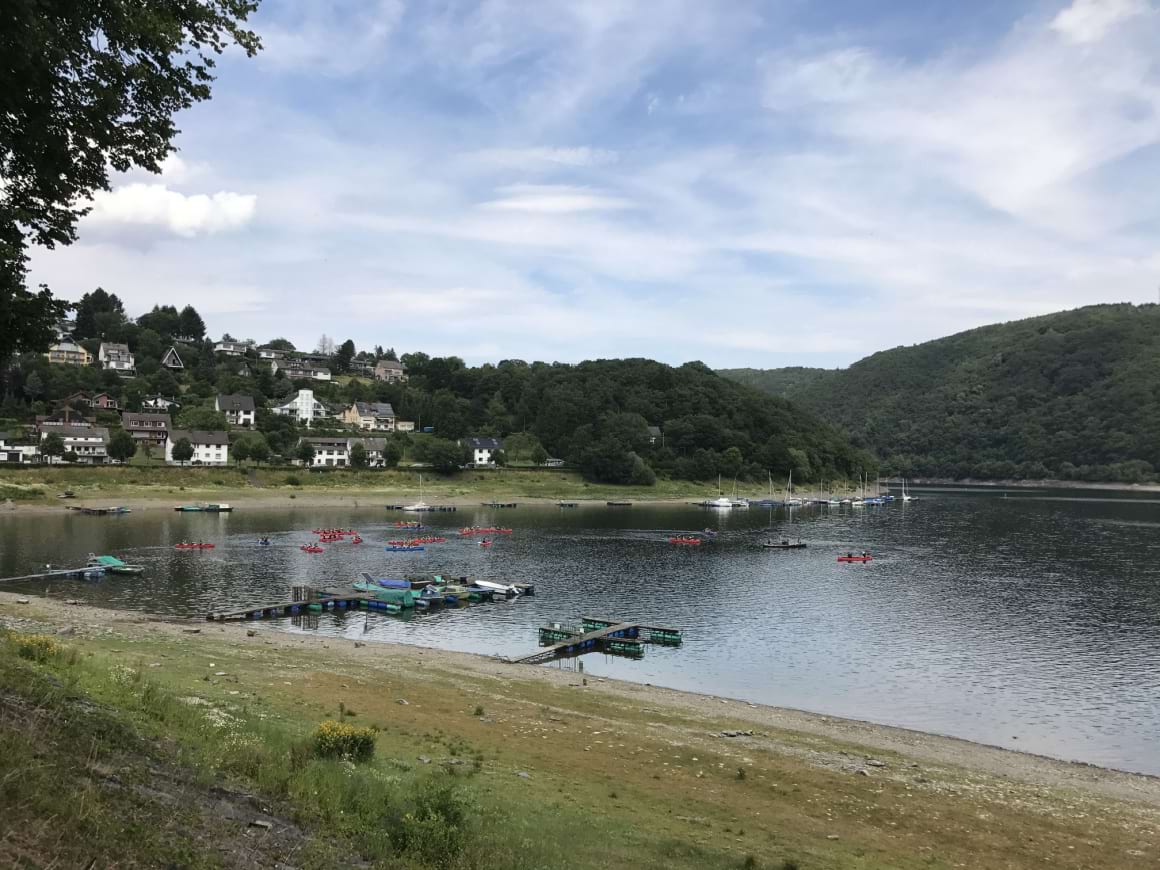
- Where: Eifel (west Germany, near the Belgian and Luxembourg borders).
- Known for: Volcanic crater lakes (maars) hidden in rolling countryside.
- Ideal time: May–September for hiking and swimming; early autumn for misty, empty trails.
- Best for: Low-key hiking, wild swimming, road trips, escaping the Rhine crowds.
- How long you need: 1–2 nights (perfect as a slow detour from Cologne or the Mosel).
Established in 2004 in North Rhine-Westphalia, Eifel National Park spans over 42 square miles of protected land built around a simple principle: let nature be nature. That means rewilding. Minimal interference. Forests allowed to regenerate on their own terms.
Wildlife thrives because of it. Black storks nest here. Eurasian eagle owls patrol the night. Wildcats roam the plains. Even beavers have returned, building dams in quiet streams. And then there are the orchids — including the moorland spotted orchid
Much of the park is made up of lakes, rivers, and trickling streams. Surprisingly, this northern park is home to several orchid species, including the moorland spotted orchid. I know, I know – I also thought orchids only grew wild in the tropics!
Explore the beech forests on a well-planned hiking trip, watch as wildcats hunt for mice in the plains, and experience beavers building their dams up close and personal.
The park is also protected from light pollution and is a well-known Dark Sky Park. This means that on the darkest nights, Eifel National Park is a beautiful place to stargaze. Visit during a crescent moon for the most magnificent night-sky views. There is a lot to do here, you can hike through the old beech forests on marked long-distance trails, watch for wildlife at dawn or dusk when activity peaks. Or you can just visit the lakes for reflective views and quieter paths
Where To Stay Near Eifel National Park
If you are headed to the Park then you want the quiet. This isn’t somewhere you commute into, it’s somewhere you sink into for a couple of days. Monschau strikes the balance of character plus access. Its technically just outside the park, but is one of the prettiest bases in the region.
Alternatively Schleiden – Practical and central – is Right near the park boundary, with straightforward access to trails and visitor centres. Itis ess charming than Monschau, but very functional.
14. Eibsee
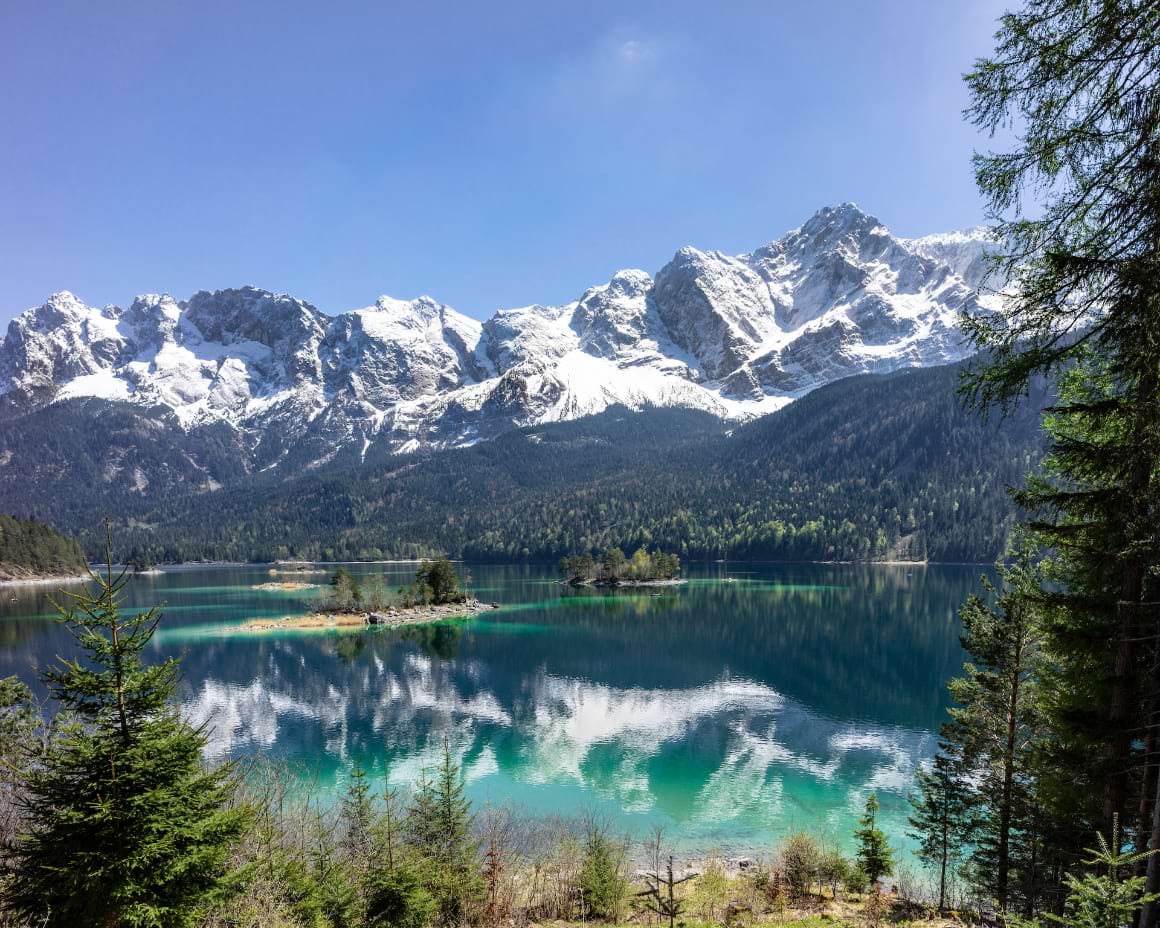
- Where: Eibsee, Bavaria (at the base of the Zugspitze, near Garmisch-Partenkirchen).
- Known for: Unreal turquoise water with full Alpine drama.
- Ideal time: June–September for swimming and paddleboarding; October for quieter, moody reflections.
- Best for: Lake swims, easy scenic hikes, sunrise chasers, anyone craving clean mountain air
- How long you need: Half-day (full day if you’re swimming, circling the lake, or pairing it with the Zugspitze cable car).
If there’s one thing you should know about Germany, it’s that there is no shortage of lakes in the country. Fed by alpine tributaries and rivers running from the North Sea, the country is teeming with lakes, or, as they say, ‘sees’ in German.
So no, Eibsee is not at all a sea. Instead, it is a beautiful lake in Bavaria that will quickly make its way among the most beautiful places in Germany. Aside from its gorgeous mountains and towering pine forests, one of the most appealing things about this lake is its crystal clear water.
On a windless day, the reflection of the Alps in the flat water is enough to make anyone want to upgrade their cameras to capture the iconic shot.
Sorry to break it to you, but no photo can truly capture the essence of this place, and that’s precisely why you should visit Germany.
But the lake isn’t just a beautiful place in Germany for scenery lovers. Activity devotees can kayak, fish, and even swim in the brisk, clear waters. Far away from the hustle and bustle of modern Germany, Eibsee is a natural paradise designed for recharging.
Where To Stay Near Eibsee
We suggest you stay nearby and visit early early, before the tour buses .Grainau is probably the smart move, its the closest village to the lake, quieter than Garmisch, and perfectly positioned for early access.
Alternatively there Garmisch-Partenkirchen with a Bigger base and more options
It has more restaurants, more accommodation variety, and easy access to Partnach Gorge and the Zugspitze.
15. Lake Konigssee
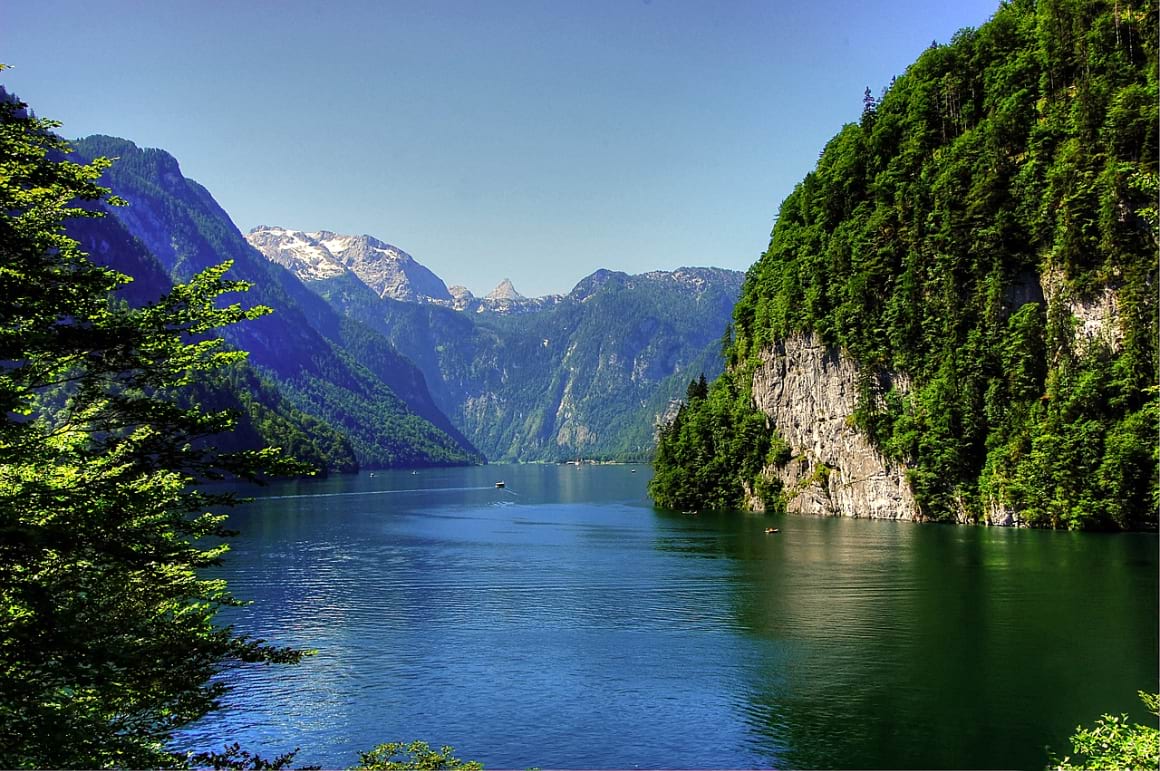
- Where: Königssee, Bavaria (Berchtesgaden National Park, near the Austrian border).
- Known for: Fjord-like Alpine lake with near-silent electric boats.
- Ideal time: June–September for clear water and full boat access; late May or October for fewer crowds.
- Best for: Dramatic scenery without hardcore hiking.
- How long you need: Half-day (full day if hiking beyond St. Bartholomä).
You know, Königssee feels almost unreal the first time you see it. The water is too green, the cliffs too sheer, the silence too complete and perfect.
Formed by glaciers during the last Ice Age, it’s now the third-deepest lake in Germany, cutting cleanly through Königsseein Berchtesgaden National Park. The surrounding rock walls rise sharply from the shoreline, giving the lake a fjord-like feel that feels more Norwegian than Bavarian.
Most people arrive for the scenery but stay for the atmosphere. Electric boats glide across the surface in near silence, occasionally pausing so the guide can play a trumpet note that echoes back from the cliffs!
Other things to do include a hike into the surrounding mountains where the perspective shifts dramatically.
Where To Stay Near Königssee
Königssee feels bigger than it is so no matter where you stay you can get around it.
My top tip is to stay at Schönau am Königssee. Its Right at the lake’s edge and you can walk to the boat dock before the queues build.
That said Berchtesgaden is perhaps the better all-round base –
a small Alpine town with more atmosphere and accommodation choice. You can pair Königssee with Eagle’s Nest (yes that one…), mountain hikes, and quieter corners of the national park.
16. Partnach Gorge
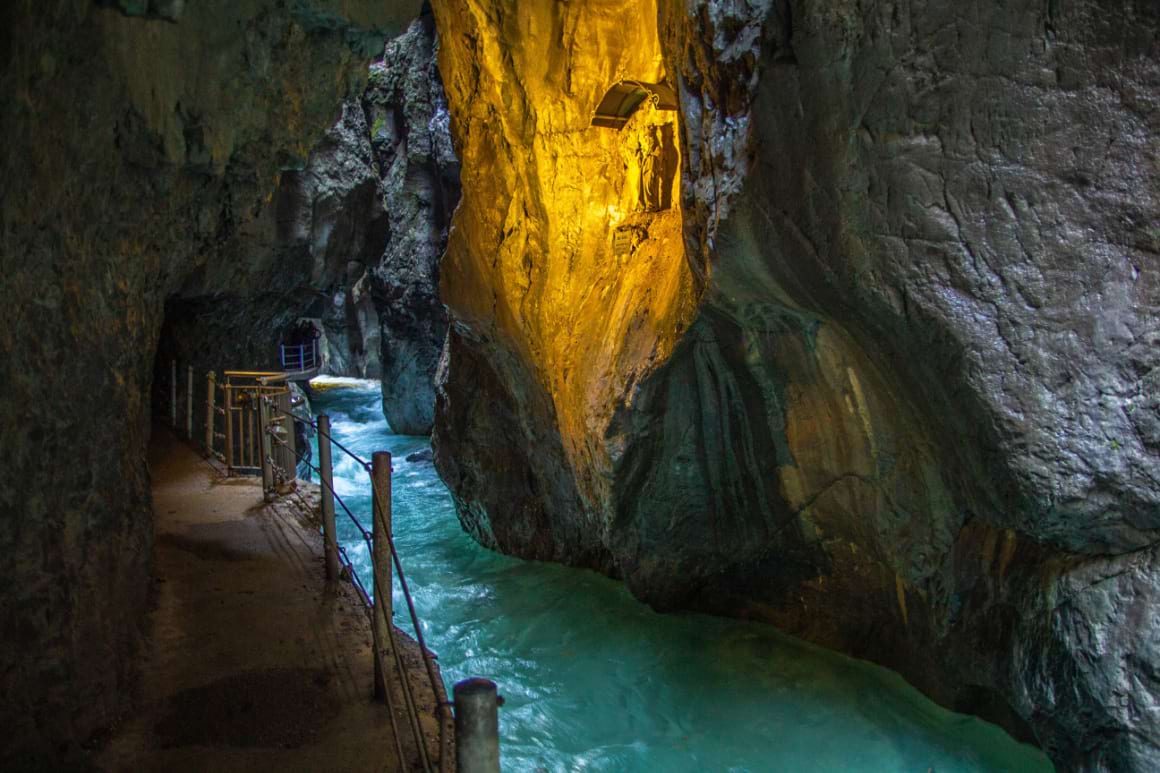
- Where: Partnach Gorge, Bavaria (near Garmisch-Partenkirchen, at the foot of the Zugspitze).
- Known for: A narrow Alpine gorge with roaring glacial water.
- Ideal time: May–October for full access; winter if you want frozen waterfalls and icy drama.
- Best for: Easy but dramatic walks, nature without serious hiking effort, pairing with Eibsee or Zugspitze.
- How long you need: Half-day (2–3 hours including the walk in and out).
Considered one of the most beautiful places in Germany, Partnach Gorge is a deep gorge carved into the landscape, surrounded by natural beauty.
Step inside and the world narrows to rock walls, rushing water, and the steady echo of glacial force carving its way through stone. Formed over thousands of years, the gorge slices deep into the landscape near Garmisch-Parteneirchen. Turquoise-blue water surges between moss-covered cliffs, sometimes close enough that you can feel the spray against your face.
It’s a sharp contrast to Bavaria’s open lakes and postcard peaks. Here, the beauty feels enclosed — intense rather than expansive. It makes for a real change of scenery from the rest of the country, boasting turquoise-blue water flowing through moss-covered cliffs.
Where To Stay Near Partnach Gorge
Partnach Gorge isn’t a full-destination kind of place and you don’t need to sleep right at the entrance. The obvious (and best) base is Garmisch-Partenkirche where you will find plenty of accommodation, easy access to the gorge, and walking distance to cafés once you’re done. It also lets you pair Partnach with Eibsee or the Zugspitze without relocating.
Or then there is Partenkirchen – The older half of Garmisch-Partenkirchen has more character and a calmer feel. Wooden balconies, mountain views, less traffic energy. Its for travellers who want charm over convenience.
Coastal & Island Escapes
Nobody books a flight or boards a train to Germany thinking, “I can’t wait for the beach.” Heck once upon a time I didn’t even know that Germany had any coastline at all and wondered where they kept all those U-boats!
But Germany’s under-stated, misappreciated coast is weirdly good. Not Mediterranean good, more like… bracing, windswept, long-walk-then-hot-soup good.
The North and Baltic Seas don’t care about your tan. The water is cold, the skies are dramatic and that’s exactly why it works. If you’re into clean lines, dune grass, long horizons, and beaches that feel a bit then Scandi, this is your zone.
17. Sylt
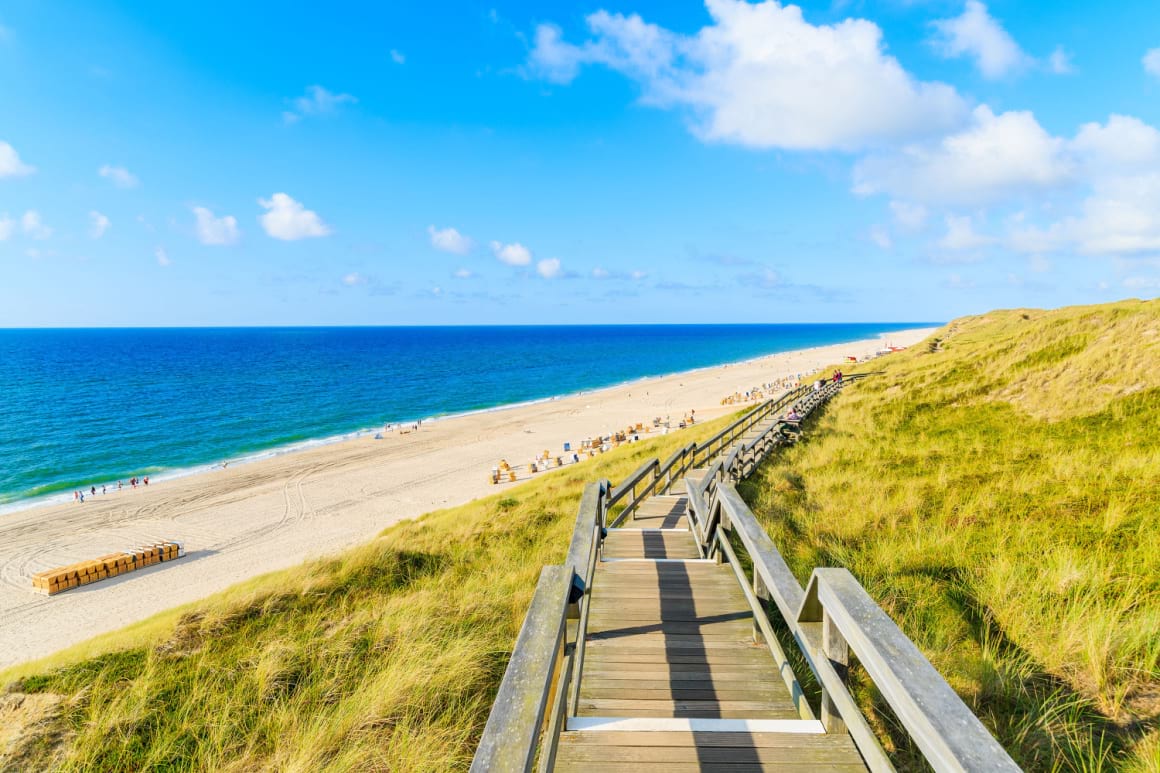
- Where: Sylt, Schleswig-Holstein (North Sea island near the Danish border).
- Known for: Windswept dunes and low-key German luxury.
- Ideal time: June–August for beach days; September for fewer crowds and moodier skies.
- Best for: Long coastal walks, seafood, cycling through dunes, quiet wealth spotting.
- How long you need: 2–3 nights.
Before I visited Germany, I had no idea the Central European country had a string of islands along its North Sea coastline.
Sylt doesn’t get the attention it deserves, partially because it isn’t on the country’s mainland. But, oh boy, does it impress those prepared to venture far enough north?
In fact, it’s the open fields and sparsely populated villages that make this island so charming. Pretty much untarnished by tourism, the Frisian Islands are more popular with local visitors who visit during summer – definitely the best time to visit Germany.
It’s pretty much Germany’s equivalent to Long Island and the Hamptons, popular with local holiday-seekers and, in particular, the country’s rich and famous.
Conveniently, this specific island in the Frisian Islands is connected to the mainland by a causeway, making it easy to visit as a day trip. The island is as tranquil as they get, with windswept dunes, white sand beaches, and quaint Frisian-style homes and lighthouses lining the coastline.
To put a German spin on your beach vacation, indulge in a sauna on the beach and visit the Wadden Spa while on the island.
Where To Stay on Sylt
Ok so where you stay here depends on how you want to experience the island. Are you seeking polished, low-key, or quietly remote? Westerland is the main hub whereas Kampen is the refined pick Think thatched roofs, upscale boutiques, serious dune views.
18. Rugen Island
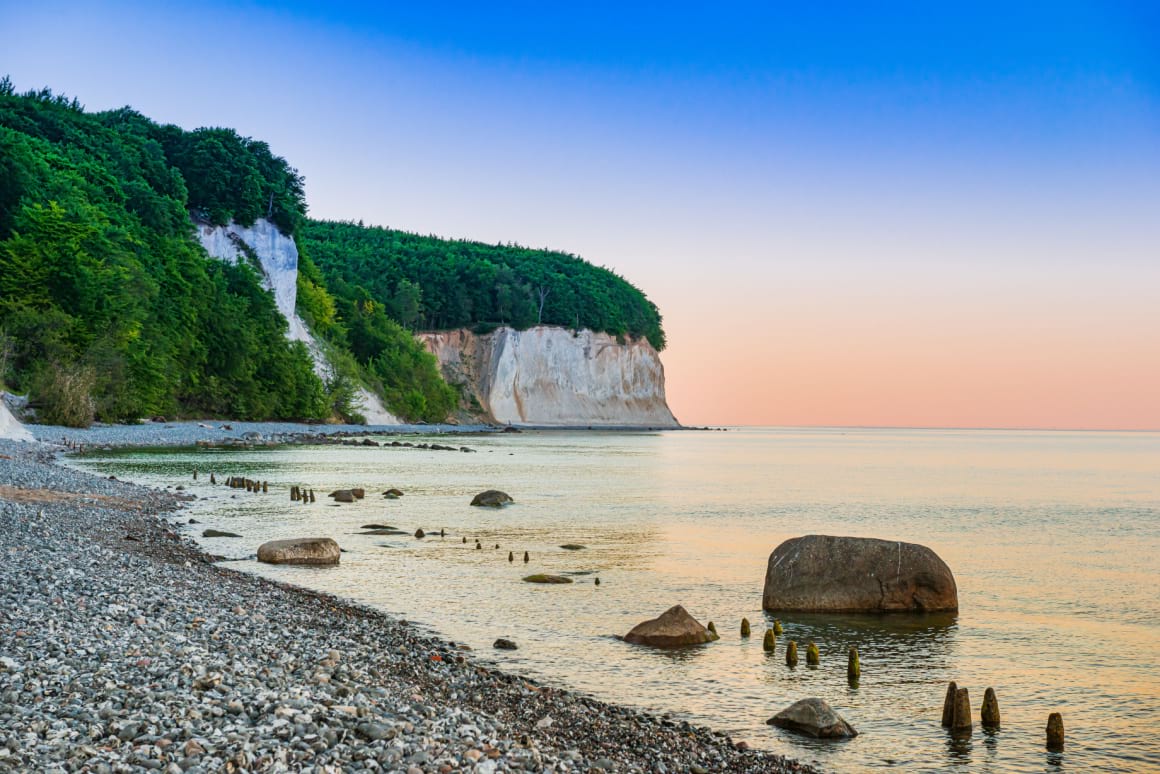
- Where: Rügen, Mecklenburg-Vorpommern (Baltic Sea coast, northeast Germany).
- Known for: Stark white chalk cliffs above the Baltic.
- Ideal time: June–September for beach days and cycling; May and early October for quieter trails.
- Best for: Coastal hikes, wind-whipped beaches, cycling, low-key summer escapes.
- How long you need: A few nights to really appreciate it.
Rügen feels like Germany leaning northwards.
Often compared to England’s White Cliffs of Dover, this Baltic island trades Alpine drama for chalk-white cliffs and wide horizons. It’s a different kind of beauty — less vertical spectacle, more open sky and sea.
The island is large, stretching into the Baltic with long sandy beaches, calm water, and historic seaside resorts that feel distinctly northern European. The chalk cliffs of Jasmund National Park are the headline act — bright white against dark forest and deep blue water. From certain angles, they look almost painted.
But Rügen isn’t just cliffs. It’s spa architecture in towns like Binz., wooden piers extending into the sea and long coastal walks all waiting for you to come and enjoy them.
If you happen to catch it on a clear day, when the Baltic is still and the cliffs glow in full light, it genuinely feels like a small northern paradise.
Where To Stay on Rügen Island
Choose carefully because where you stay shapes the rhythm of your trip. Pick the wrong base and it feels sleepy. Pick the right one and it feels expansive…
Binz is the classic Baltic resort town with white spa-style villas and a long sandy beach. It’s lively in summer, but still feels elegant rather than chaotic. Sassnitz is closer to the chalk cliffs and good for nature-centric trips.
One of the best ways to travel off-the-beaten-path is to hire your own wheels. If you can convince a few mates to join you, it can actually be pretty affordable… and bloody good time!
Check Rental Car PricesArchitectural & Cultural Icons
OK so we already covered some of the absolute epic statement pieces of German architecture and cultural capital in the Fairy tale section but bear with us for there is more!
19. Berlin Museum Island
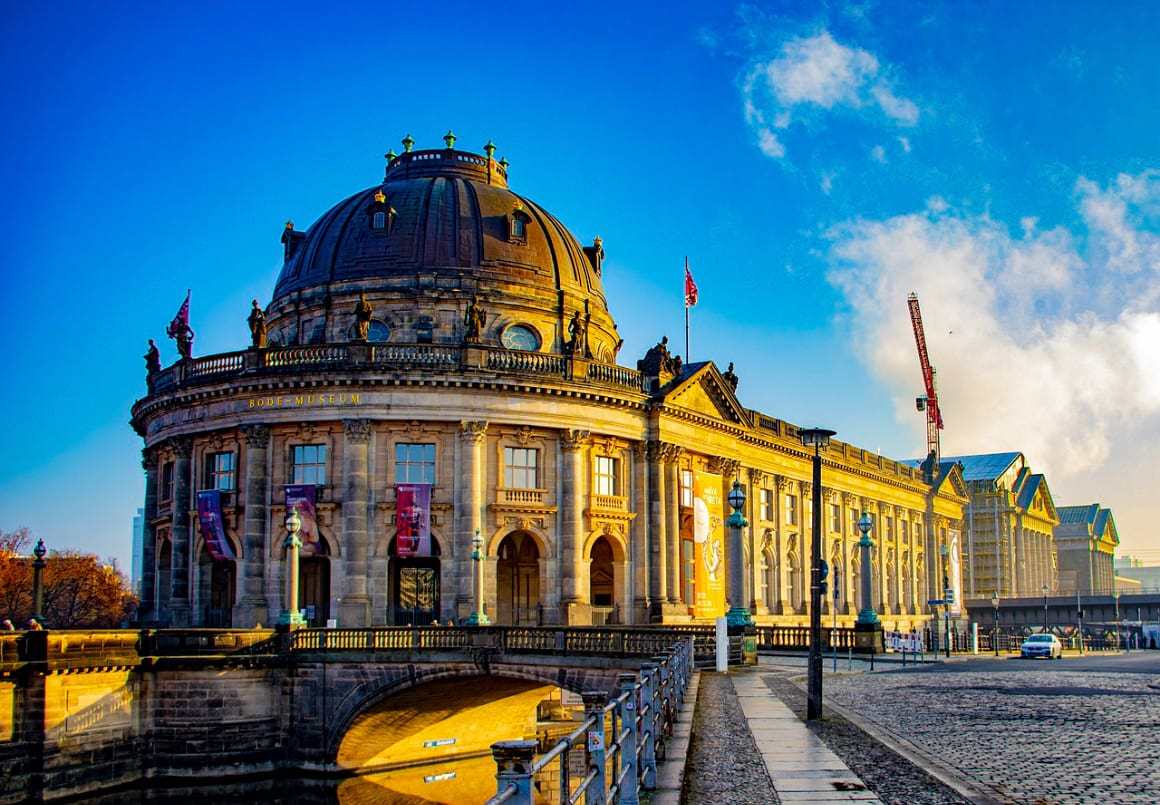
- Where: Berlin, Berlin State (central Berlin, on the Spree River).
- Known for: Five world-class museums on one small island — oh and 5,000 years of civilisation in walking distance!.
- Ideal time: April–June or September–October (summer is great, winter is cold).
- Best for: History obsessives, art lovers, rainy-day Berlin. Anyone trying to understand Europe properly.
- How long you need: Half-day minimum (a full day if you’re doing 2–3 museums properly).
Germany certainly has an interesting (albeit dark) past, but it is also one of Western Europe’s powerhouses, with a culture and art scene like no other.
With artists like Albrecht Durer, Paul Klee, and Max Ernst born in the country, Germany packs a real punch when it comes to art, poetry, and music. For all those visiting Berlin, this stunning museum is a sight not to be missed.
Set in the heart of Berlin, Museum Island is a man-made island built on a small piece of land on the Spree River that houses some of the country’s most impressive museums. Built between 1824 and 1930, the island is a beautiful place to visit in Germany, whether for the museums or just for the views.
It was awarded UNESCO World Heritage Site status in 1999 and features gorgeous gardens, courtyards, and bridges connecting it to the busy city.
There are five museums here – yes, super convenient for those wanting to tick all the museums off while exploring Berlin– The Pergamon Museum, the Altes Museum (Old Museum), the Neues Museum (New Museum), the Bode Museum, and the Alte National Gallery. Each museum showcases art, architecture, and world history, including exhibits of Ancient Egypt, Rome, and Babylon. If anywhere will bring out the academic in you, it’s Museum Island.
Where To Stay Near Museum Island (Berlin)
So for this one you obviously need to stay in Berlin (no shize!). However it is a big city so choosing where to stay is not straightforward. Mitte (middle) is probably the smart solid choice but can feel a bit flat. Friedrichshain has an Edgier energy and that’s where I would go.
20. Rakotzbrucke, Saxony
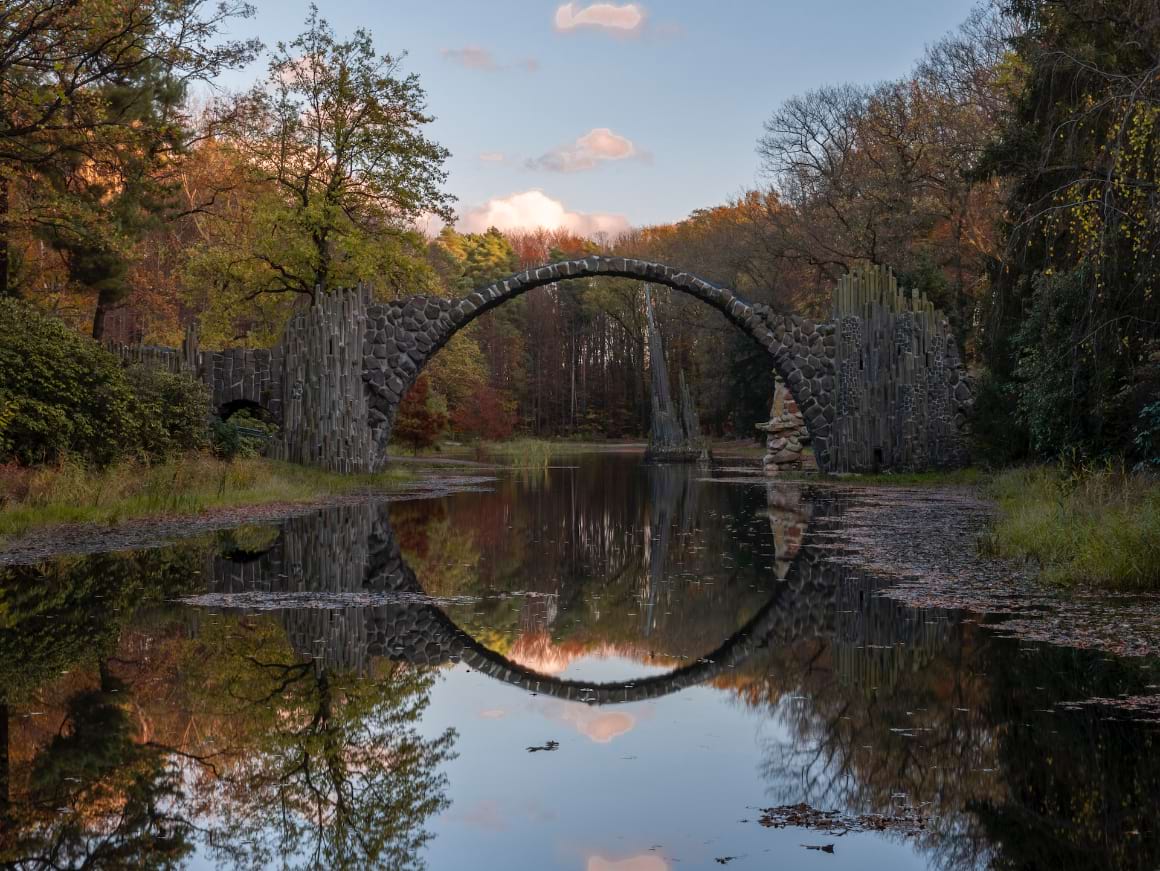
- Where: Rakotzbrücke, Saxony (Azalea and Rhododendron Park Kromlau, near the Polish border).
- Known for: The perfectly arched “Devil’s Bridge” reflection.
- Ideal time: Late spring (May) when the azaleas bloom; early autumn for soft light and fewer visitors.
- Best for: Photographers, fairytale hunters, quick scenic detours from Görlitz or Dresden.
- How long you need: Half-day (realistically 1–2 hours unless you’re deep into photography).
As far as bridges go, this one has to be one of the most beautiful places in Germany. It feels to have engineered for sheer disbelief.
With a steep angle rising over a lake in Kromalu Park, the bridge creates a perfect circle reflection on a windless day. Not only is it physically gorgeous, but it’s also a historic monument that was built by hand in 1860.
Surrounding it, the park feels almost too curated — rhododendrons and azaleas blooming in season, soft forest framing the scene. But the bridge remains the focal point. Delicate, sharp, and slightly surreal.
It’s smaller than the photos suggest. This makes it far more intimate. Get here early to avoid crowds during high season.
Where To Stay Near Rakotzbrücke (Devil’s Bridge)
Rakotzbrücke is not a full-destination stop and you don’t stay for the bridge alone — you build it into a Saxony loop. Görlitz is the smartest base about 30 minutes away. Its also easily the most atmospheric option.
The nearest city is Dresden and there are plenty of good hostels in Dresden for you.
21. Bastei Bridge
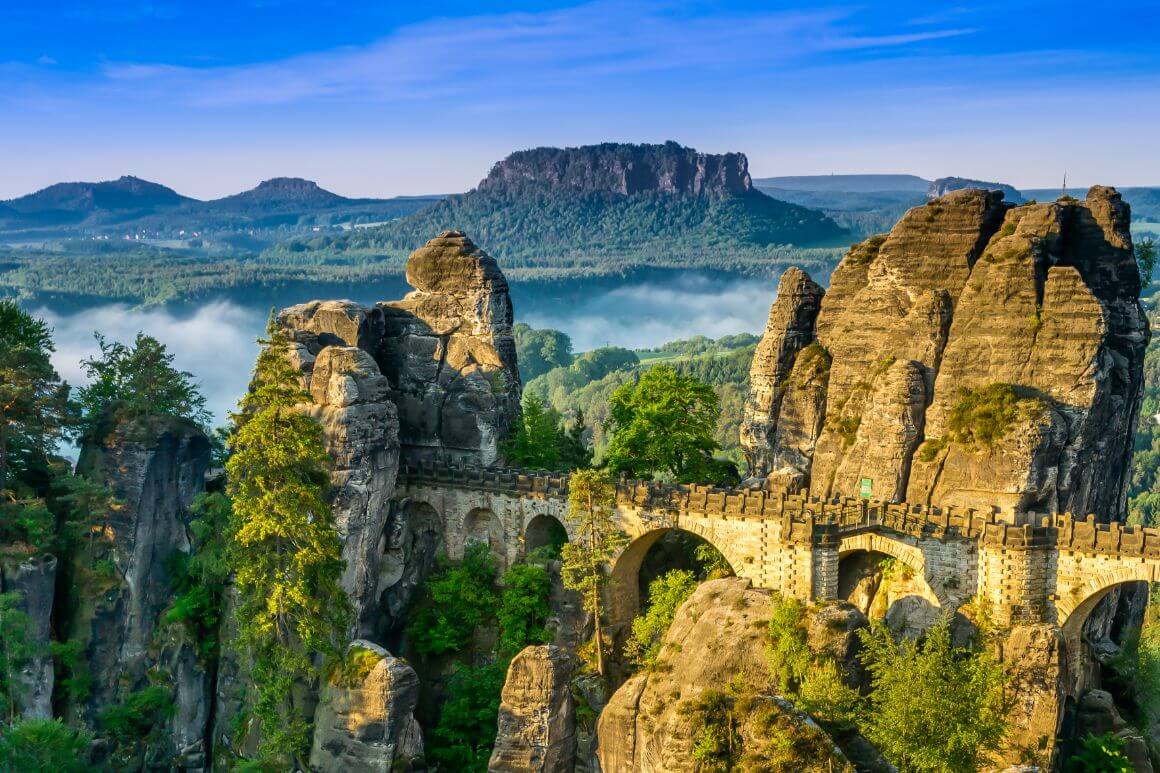
- Where: Bastei Bridge, Saxony (Saxon Switzerland National Park, near Dresden).
- Known for: Sandstone rock towers linked by a dramatic stone bridge.
- Ideal time: May–October for clear views; sunrise year-round if you want it without the bus tours.
- Best for: Easy wow-factor hikes, photographers, pairing with a Dresden base.
- How long you need: Half-day.
Beautiful Bastei feels exaggerated, like someone turned the drama up a little too high. For its joint winner as the mist cinematic old bridge in Europe (sharing the accolade with Rhonda in Spain of course).
What we have is stone towers – carved by erosion over millions of years- rising sharply upwards from the Elbe Valley. Threaded between them is the Bastei Bridge, an architectural addition that absolutely enhances rather than interrupts the landscape perching more than 1,000 feet above the river.
Despite the scale visiting is very accessible. There is no extreme hiking required, just a short walk from the car park — which is both its strength and its weakness.
Arrive early, and it feels cinematic. Arrive midday in peak season though, and it feels like a viewing platform…
Where To Stay Near Bastei Bridge
Rathen is closest and the most atmospheric town near the Bridge and is located right at the foot of the rock formations. It’s mall, scenic, and perfect for early access – you can get up and walk straight into the landscape before the car parks fill.
And then (yet again) you can stay in Dresden. I am now bored of saying the word “Dresden”.
22. Residenz Munchen
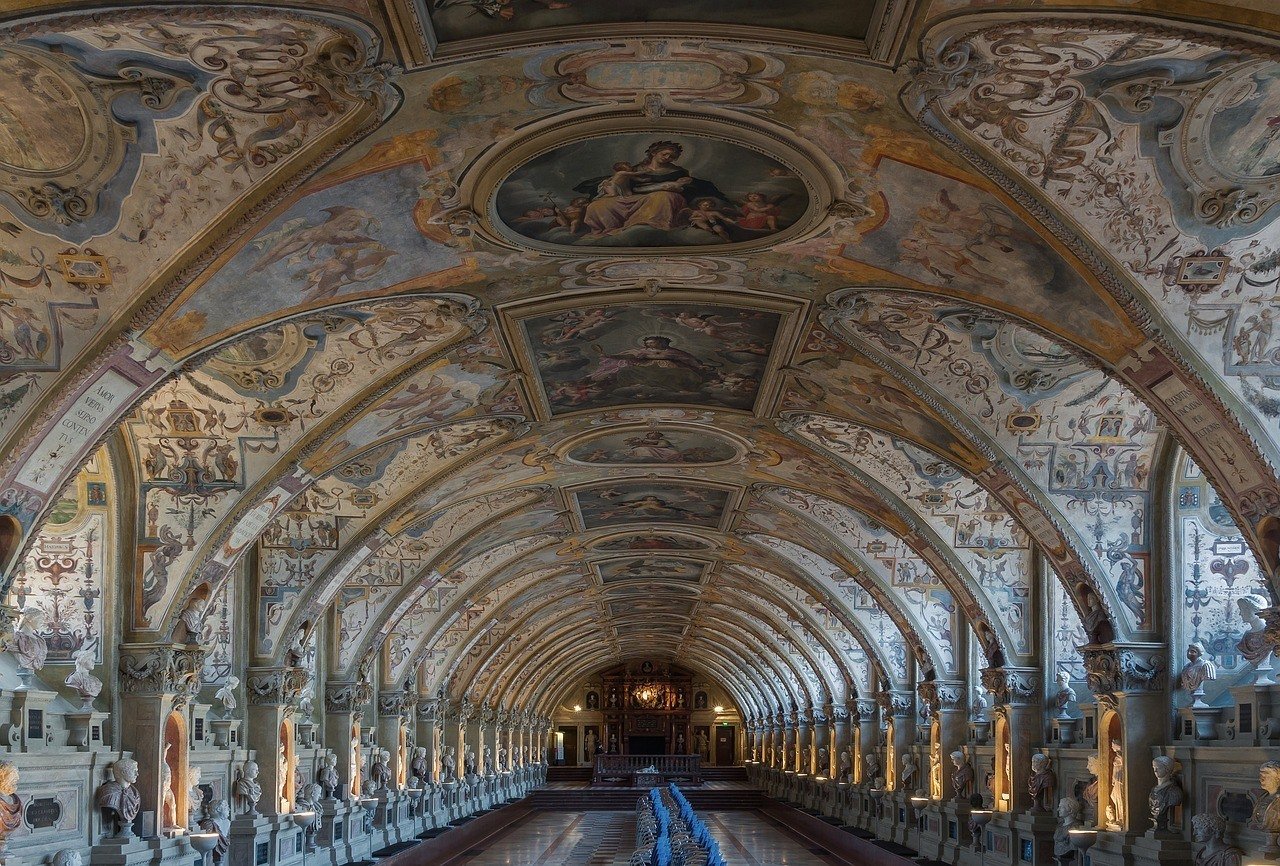
- Where: Munich Residenz, Munich (Bavaria, city centre).
- Known for: Over-the-top royal interiors that quietly flex centuries of power.
- Ideal time: Year-round (ideal on a rainy day or shoulder season when Munich slows down).
- Best for: History lovers, architecture nerds, anyone curious how Bavarian royalty actually lived.
- How long you need: Half-day (longer if you’re reading every placard and lingering in the Treasury).
For centuries, the Munich Residence was the seat of Bavarian power. Dukes, electors, and kings ruled from here, shaping regional politics from behind carved doors and painted walls. What began in the 14th century grew over time into one of Germany’s most extravagant palatial complexes.
Calling it Germany’s version of the Vatican may be overblown, but the scale and symbolism aren’t actually that far off. The Residenz wasn’t just a home, it was a statement and projection of intent – a visible assertion of authority in stone, marble, and gold.
What makes it most compelling though isn’t just the opulence, but the contrast. Step outside and you’re back in modern Munich — trams rattling past, beer halls filling up, life continuing as normal.
Where To Stay Near the Munich Residenz
The Munich Residenz isn’t tucked away somewhere quiet — it’s embedded in the city’s core. Royal excess wrapped in clean Bavarian order, surrounded by grand streets and beer halls that feel equally historic.
If I were visiting, I’d stay central. This is a walk-everywhere part of Munich – check out our Where To Stay in Munich guide for the full download.
23. Berghain
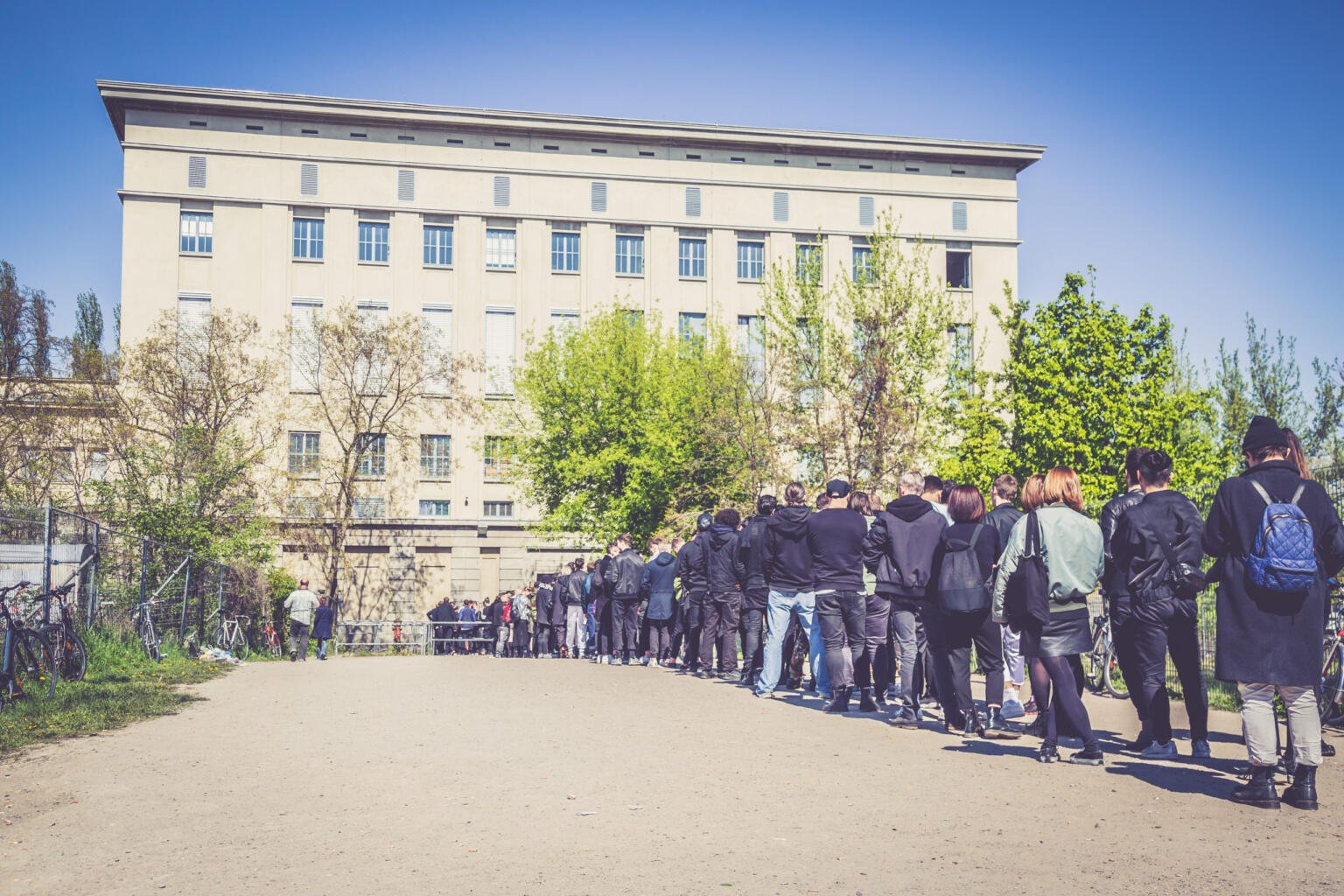
- Where: Berghain, Berlin (Friedrichshain district, near Ostbahnhof).
- Known for: The world’s most infamous techno club and brutalist dance temple.
- Ideal time: Year-round (Saturday night into Sunday afternoon is the classic window).
- Best for: Serious electronic music fans, night-into-day stamina athletes, people who don’t need their night out documented.
- How long you need: One long night (or 6–12 hours if you’re doing it “properly”).
And finally, we finish by bringing things bang up to date and also by well and truly testing what our definition of beauty is here.
Berghain is a former art-deco Soviet era power plant turned techno cathedral — and arguably the most mythologised nightclub in the world. Yet isn’t just a club, it’s a global cultural Mecca as well as a gatekeeping ritual. A concrete temple to sound, endurance, and Berlin’s post-wall identity. The door policy is infamous. The interior is cavernous. The music is relentless.
It’s not for everyone — it’s probably not for you. They probably won’t let you in. And that is the point.
If Cologne Cathedral represents Germany’s medieval faith, Berghain represents its modern one ritual – basslines, repetition, freedom, and a very serious commitment to losing track of time (Ketamine will do that).
You don’t go for the photo (cameras are banned). You go for the experience.
And if you DO get in? Pace yourself and do try not to shit yourself.
Where To Stay Near The Berghain
You really don’t need to stay near the Berghain. Anywhere in Berlin will do. We have written where to stay in Berlin guides as well as Berlin hostel round ups which you will find helpful. Or, you can simply stay awake all weekend and stay inside the Berghain!
A Word on Connectivity in Germany…
One thing worth sorting before your Germany trip is connectivity. If you’re heading beyond the cities, into the Black Forest, along the Rhine, or up into Bavaria, you’ll want reliable data for navigation and transport apps.
Rather than paying your home network’s roaming rates, an eSIM from Holafly is one of the easiest solutions: install it before you fly, activate it when you land, and you’ve got unlimited data for your whole trip. No SIM swapping, no airport queues, no nasty bills when you get home.

A new country, a new contract, a new piece of plastic – booooring. Instead, buy an eSIM!
GigSky eSIMs work just like an app: you download it, pick your plan, and BOOM! You’re connected the minute you land. It’s that easy.
Read about how eSIMs work or click below to see one of the top eSIM providers on the market and ditch the plastic.
Grab an eSIM!How to See Beautiful Places in Germany
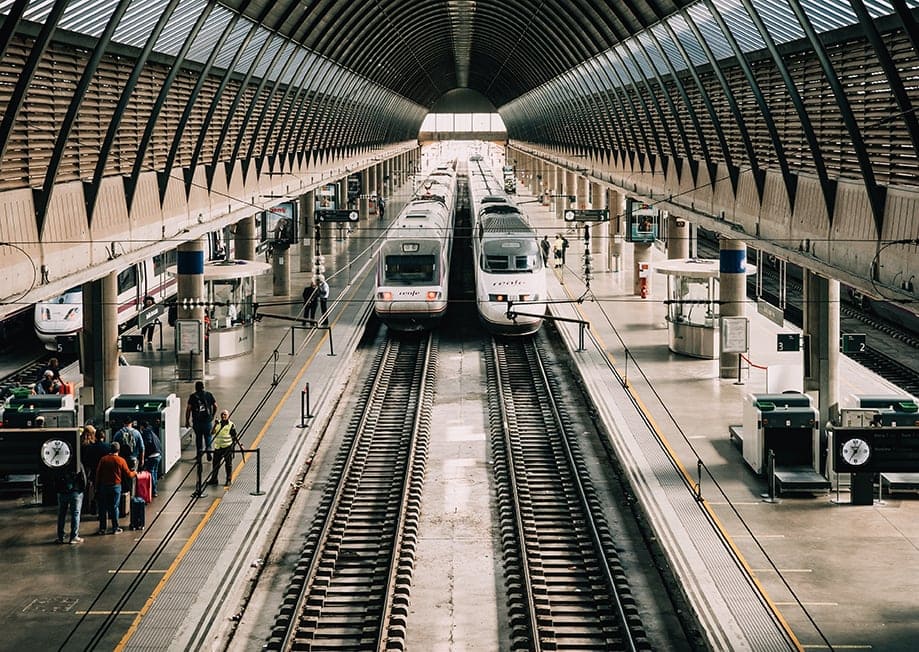
Image: Nic Hilditch-Short
Alright, so we know Germany is absolutely rammo’d with beautiful places to visit, but how the heck do we get to see them all?
- By Public Transport
Short answer: TRAINS. Germany has an incredible railway network, connecting just about all major cities and towns with high-speed trains.Named the Deutsche Bahn, trains are typically cheaper than budget airlines and are much more environmentally friendly.
A train from Berlin to Munich takes around four to five hours and costs between €18 and €50. A flight would cost at least €100 for a round trip. Check out where I’d stay in Munich. Cities are well connected with affordable and efficient transport, with over-grounds, undergrounds, buses, and even the odd historic tram.
- By Car
If you want to explore the country by car and have a go on the iconic Autobahn (I don’t blame you), a car rental costs between €40 and €130 per day, depending on the type of car and the time of year. If you’re a solo traveller, this might be an extraordinarily large cost; however, if you manage to find a few mates to join you, this is actually a semi-affordable way to explore.
I’d say it’s actually my favourite way to explore the country. Why? Because you get SO much freedom to get off the beaten path. So, grab yourself a rental car in Germany and you’ll be on your merry way to see some damn beautiful places, on your own schedule!
- By Joining Group Tours
One of the best ways to see these beautiful places in Germany is by joining a group tour. G Adventures has you covered with EPIC adventures offering the opportunity of a lifetime to get off the beaten path with like-minded people. Check out the best tours in Germany.
Stay Insured While Exploring Germany
Do you need travel insurance? ABSOLUTELY! Before you head off on the trip of a lifetime, make sure one mistake can’t ruin it all. Get that travel insurance and enjoy the trip.
What Are My Favourite Places in Germany
SO what Are My fave Places in Germany? This is always the hard part.
Germany surprised me in ways I didn’t expect. I arrived cautious, half-not-expecting-much save efficiency, structure, and a polite cultural handshake. What I found instead was range. Real range.
If I had to choose?
The Saxon Switzerland region, especially the Bastei Bridge, stuck with me. It’s almost unfair how dramatic it is for such little effort. Mist in the Elbe Valley at sunrise feels kino-matic without trying too hard.
Now where would I advise YOU to go my dear reader? Well by now, you probably know which version of Germany you’re leaning toward….Be it Castles or crater lakes. Brutalist clubs or baroque palaces. Alpine swims or North Sea windburn. Medieval lanes or modern grit.
And that’s the whole point of this guide — not just to show you where to go, but to help you figure out why you’re going.
Germany isn’t loud about what it offers. But if you are ready meet it halfway, it well and delivers. Auf Wiedersehn for now my dear Volk.
Image: Nic Hilditch-Short
- Check out the best hostels in Berlin to kickstart your German adventure.
- Be prepared for anything with our guide to staying safe in Germany.
- Time your trip perfectly with our guide on the best time to visit Germany