Backpacking China is unlike travelling almost anywhere else. This is a country on an almost unimaginable scale, where you can spend the morning wandering through thousand-year-old temples, catch a high-speed train across half the country after lunch, and finish the day tucked into a tiny restaurant serving some of the best food you’ve ever eaten. Whether you’re chasing misty mountain villages, futuristic skylines, epic hiking trails or the legendary street food, China rewards curious travellers in a way few destinations can.
It also asks a little more of you. The language barrier is real, the internet works differently thanks to the Great Firewall, digital payments dominate everyday life, and planning your visa and transport takes a bit more thought than simply hopping on a plane. None of these are reasons to skip China, but they’re exactly the kind of things you want to understand before you arrive.
Having lived in China and travelled extensively around the country for six years, I’ve experienced both the magic and the occasional frustration of travelling here. This guide isn’t about ticking off the biggest attractions. It’s designed to help you navigate modern China with confidence, avoid the common pitfalls, and make the most of one of the most rewarding backpacking destinations on Earth.
The Broke Backpacker is supported by you. Clicking through our links may earn us a small affiliate commission, and that's what allows us to keep producing free content 🙂 Learn more.
- What I Wish I’d Known Before Visiting China For The First Time
- Best Travel Itineraries for Backpacking China
- Places to Visit in China
- Top Things to Do in China
- Backpacker Accommodation in China
- China Backpacking Costs
- To Stay Connected… Get an eSIM For China
- Best Time to Travel to China
- Staying Safe in China
- How To Get Into China
- How To Get Around China
- What’s New for Backpacking China?
- Working in China
- What To Eat in China
- Chinese Culture
- Final Advice Before Visiting China
What I Wish I’d Known Before Visiting China For The First Time
Before we get into the guide proper, I just want to address these 10 crucial points that I wish I had known before I got to China.
Download the Apps Before You Land
China is probably the most app-dependent country I’ve ever travelled in. You’ll use apps for paying, ordering food, translating menus, hailing taxis, booking train tickets, renting power banks, and in some cases even viewing restaurant menus. A surprising number of everyday tasks that would be handled with cash or a conversation elsewhere happen through your phone in China. I will talk about these apps later but if you are in a rush, get Alipay, WeChat, Didi and A-Maps.
The catch is that some services require a Chinese phone number to register. At the same time, using a Chinese SIM card can create its own complications as internet restrictions apply differently than they do on most international eSIMs. In practice, many travellers find that carrying both an eSIM and a Chinese number offers the best balance of connectivity and convenience. You’ll also want to understand how to switch between them before you arrive rather than trying to figure it out on a crowded train platform.
Many travel eSIMs now include VPN functionality or routing that allows access to services that would otherwise be blocked. Holafly are one example here. Whatever setup you choose, don’t wait until you’re standing in Beijing Airport trying to download apps over public WiFi. Get everything installed and configured before you leave home.
Your Phone Is Your Lifeline
Because so much of daily life runs through apps, your phone becomes one of the most important pieces of travel gear you’ll carry in China. Navigation, payments, tickets, translations, train bookings, ride-hailing and communication all depend on it.
Bring a decent power bank (check you can fly with it in your hand luggage…) and make sure your phone battery is still holding a healthy charge before your trip. While power bank rental stations are everywhere, they aren’t always straightforward to use. We managed to lose a deposit when a return machine refused to accept the battery back, and customer support wasn’t exactly easy to access. Carrying your own power bank is one of those small decisions that saves a lot of hassle.
Cash Isn’t Dead
One of the biggest misconceptions about China is that cash has disappeared entirely. This is bullshit. While digital payments dominate everyday life, cash remains legal tender and is still accepted.
In fact, carrying some cash can be surprisingly useful. Markets, smaller vendors, and street sellers will often happily accept it, and we found it easier to negotiate prices when paying in cash. Don’t arrive with a wallet full of yuan expecting to use it everywhere, but equally don’t believe the guidebooks that suggest physical money is obsolete – this is Government propaganda designed to combat tax evasion.
Big Brother is Watching
One thing first-time visitors often notice is just how integrated identity verification is into everyday life in China. Your passport is linked to train tickets, hotel stays, attraction bookings, domestic flights, and many of the apps you’ll use while travelling. In many ways, your passport effectively becomes your key to the country – you can’t even access a train station without it and without having a valid train ticket linked to it.
You’ll also notice cameras everywhere. Railway stations, metro systems, airports, shopping districts and major tourist attractions are covered by extensive surveillance networks. Facial recognition technology is widely used and uncannily efficient, and security checks are generally more common than most Western travellers are accustomed to.
That said, it’s important not to exaggerate what this means for the average visitor. For most tourists, the experience is largely invisible beyond the occasional passport scan, security checkpoint or identity verification process. We never felt harassed, followed or inconvenienced by it, and after a few days it simply becomes part of the background.
The reality is that China has built a highly digital and highly monitored society, but as a traveller, this mostly manifests itself through convenience and bureaucracy rather than anything particularly dramatic. As long as you carry your passport, follow local laws and understand that anonymity is not really part of the system, you’ll likely find the experience far less intimidating than many headlines suggest.
Don’t Tip
China does not have a tipping culture in the way that North America or parts of Europe do. In restaurants, taxis, and most everyday situations, tipping is neither expected nor encouraged.
In some cases, attempts to leave tips can even create awkward confusion. Simply pay the stated price and move on.
A Word on Toilets
China’s public toilet situation is far better than many travellers expect. Facilities are abundant, even in smaller cities, and cleanliness standards were generally much higher than we anticipated.
That said, many public toilets still use squat toilets rather than Western-style seats, and some offer zero-privacy between stalls!!! It’s also wise to carry tissues and hand sanitiser at all times. Toilet paper isn’t always provided and some facilities lack soap, hand dryers, or even sinks altogether.
Also note that a lot of private establishments DON’T have a toilet and will direct you to the nearest public one. This can be annoying when you are enjoying a bar or restaurant and have to traipse two blocks to take a leak! When in China find toilets near you, check out this site here.
Taxis Are Cheap, But Not Always Easy
Getting around Chinese cities is remarkably affordable. Taxi fares are low by Western standards, and ride-hailing services such as Didi make moving around large cities incredibly convenient.
The challenge isn’t usually finding a ride; it’s finding the pickup point. Large railway stations, shopping centres and tourist attractions often have designated collection areas that can take time to locate. Build a little extra time into your plans because what looks like a quick five-minute pickup can easily turn into a twenty-minute treasure hunt.
Plan Ahead for Major Attractions
China rewards organisation more than spontaneity. Many of the country’s most famous attractions operate with timed entry systems, visitor quotas or advance booking requirements.
If there’s somewhere you absolutely want to visit, whether that’s the Great Wall, the Forbidden City, the Terracotta Warriors or a major national park, book several days in advance whenever possible. Turning up on the day and hoping for the best often doesn’t work. The same is true for high speed rail during peak times.
High-Speed Rail Is Amazing (But It Adds Up)
For most backpackers, transport will probably be the biggest expense of travelling around China. The high-speed rail network is one of the best in the world and makes covering huge distances remarkably easy, but frequent train journeys can add up surprisingly quickly.
Slower trains remain available and can save significant amounts of money if you’re travelling on a tighter budget, although you’ll sacrifice comfort and of course speed. Wherever possible, it’s worth booking directly through China’s railway system once you’re in the country. The apps can be a little intimidating at first, but they offer lower prices and much more flexibility than many third-party booking platforms.
If you book through intermediaries such as Trip.com or 12Go, you may be told that tickets are non-refundable or cannot be changed. In reality, station ticket offices can often modify bookings for a small fee. Just remember that your passport effectively becomes your ticket. Enter your details carefully when booking because even small mistakes can prevent you from boarding.
Eating Well Doesn’t Cost Much
One of the best things about travelling in China is how affordable the food can be. Local restaurants, food courts, metro station eateries and neighbourhood noodle shops often serve excellent meals for a fraction of what you’d pay in Europe or North America.
Food delivery platforms such as Meituan have also become an integral part of daily life, although navigating them can take some patience if you don’t read Chinese.
One thing that catches many travellers out is portion size. Many dishes are designed to be shared among a group rather than eaten individually. If you’re dining alone, ordering several dishes because they look small on the menu can quickly result in enough food to feed a family.
Pack For Seasons, Pack Light and Leave Room
China is a fantastic place to shop. Whether you’re buying tea, clothing, electronics, artwork, snacks or random things you never knew you needed, chances are you’ll come home with more than you arrived with.
Leave some spare space in your backpack from the start. You’ll thank yourself later.
And while there’s no need to overthink your wardrobe, you’ll generally attract less attention if you avoid dressing like a stereotypical backpacker. China is a modern, style-conscious country and blending in is often as simple as wearing normal everyday clothes rather than looking like you’re about to summit Everest. Just remember that weather changes between regions so pack for hot days, wet days and cool nights alike.

Image: Nic Hilditch-Short
Below I have highlighted the best travel itineraries for traveling around China. It’s no secret how massive China is, so don’t even try to see most of the country in one trip. Instead, check out my 5 itineraries below for some inspiration!
Backpacking China 7 Day Itinerary #1: Beijing to Chengdu
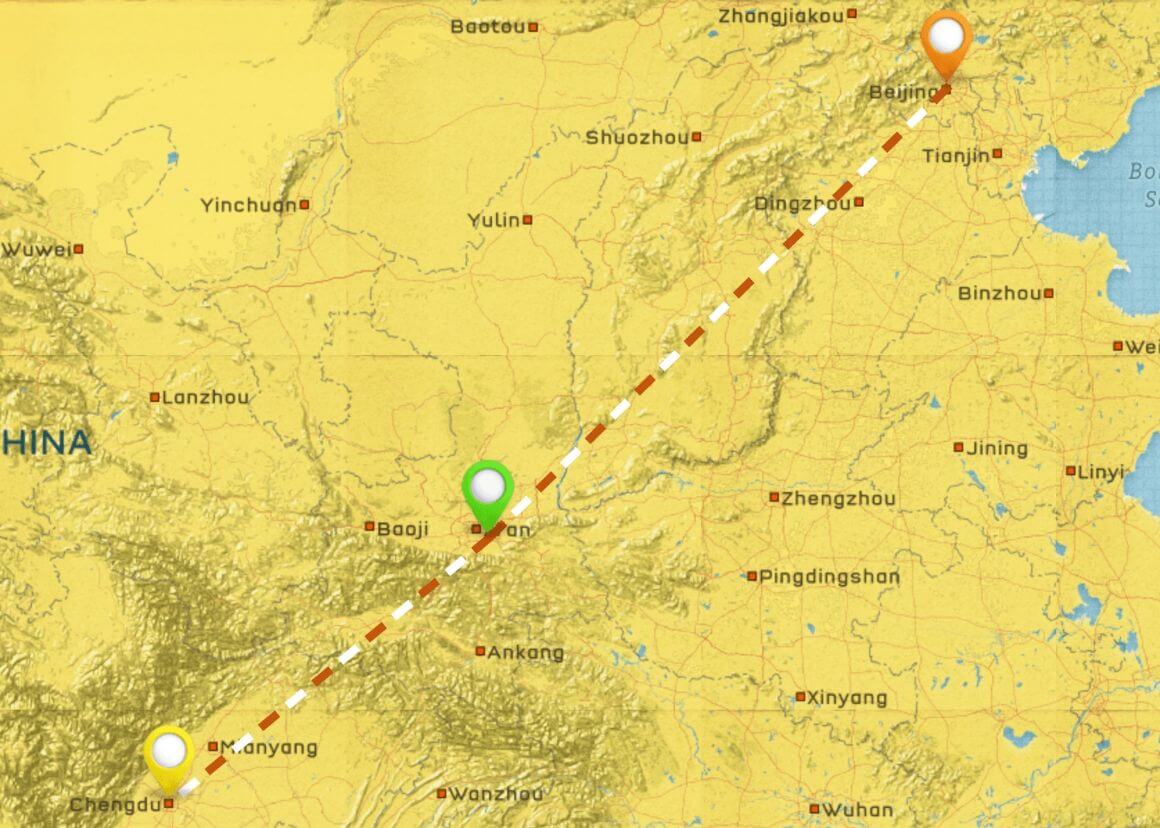
Let’s start by acknowledging that one week in China definitely is not enough time to explore this country. That being said, you can still hit some of the highlights of the country with just seven days.
You’ll want to fly into Beijing and spend a few days taking in the famous sights such as the Great Wall and Forbidden City. Hop on an overnight train to save time and head to the historical city of Xi’an to see the Terracotta Warriors.
From there, make a beeline for Chengdu to visit the giant panda reserve and eat the mouth-numbingly spicy hot pot. You can catch a flight out of the country from Chengdu, most likely to Southeast Asia.
Backpacking China 10 Day Itinerary #2: Beijing to Huanglong
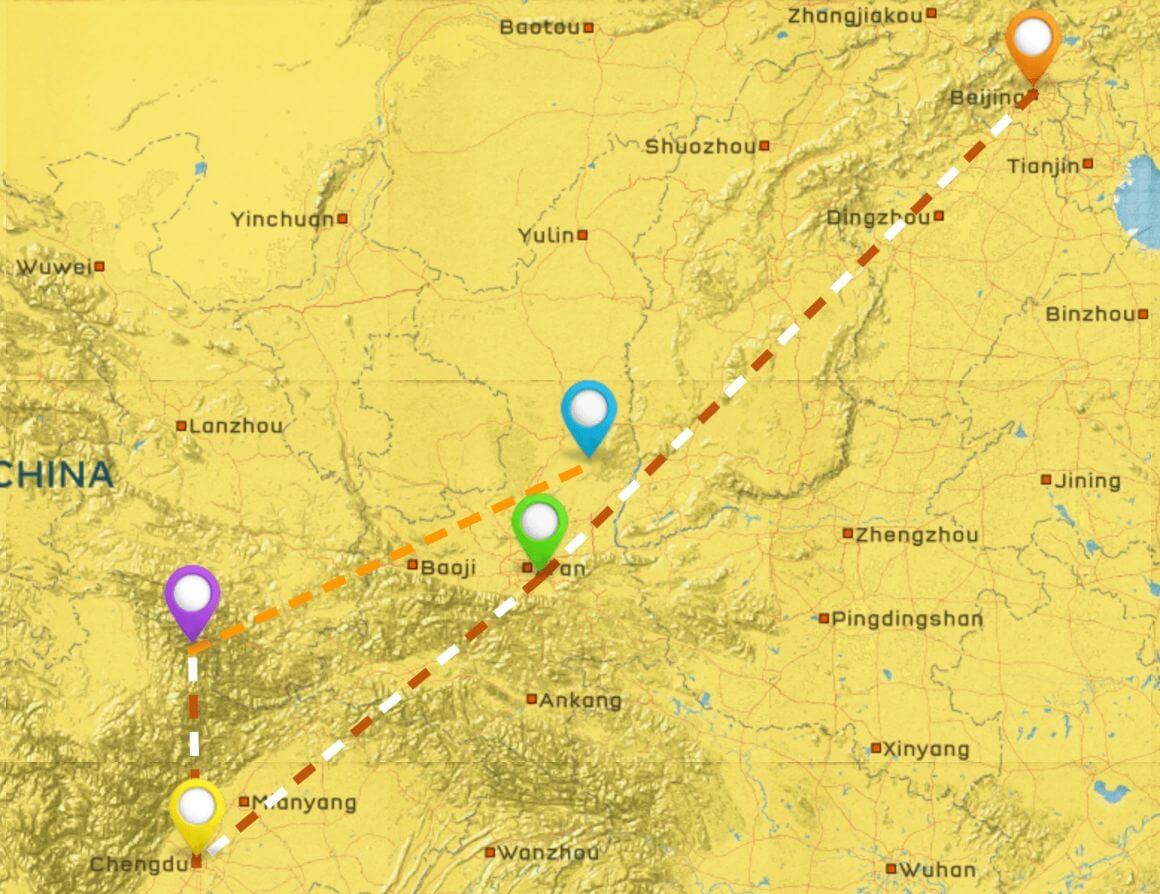
With ten days, you can follow the above itinerary (Beijing, Xi’an, and Chengdu) but add a visit to some of Sichuan’s magnificent national parks. A short flight from Chengdu will get you to the dreamlike Jiuzhaigou, where you can spend a day exploring the stunning landscapes and taking in the Tibetan culture.
Pay a visit to Huanglong (Yellow Dragon) the next day to see the incredible terraces that are said to resemble a dragon coming down the mountain.
Backpacking China 2 Week Itinerary #3: Yunnan and Guangxi
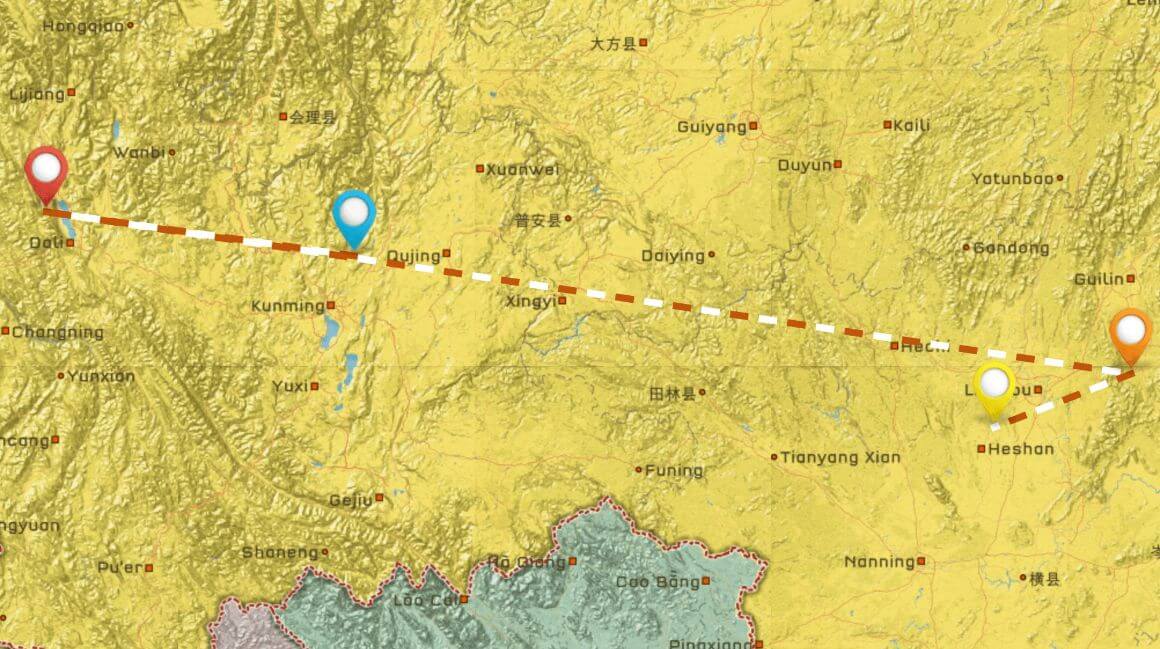
If you have two weeks to spare in China, I highly recommend you spend a majority of your time in the southwest part of the country. Yunnan province alone offers enough to fill two weeks. Start in the provincial capital of Kunming, which is known as the Spring City for its pleasant weather.
The city is great, but you’ll want to venture out quickly to dedicate more time to places like Dali, Lijiang, and Shangri-la. Spend your days cycling around massive lakes or trekking around snow-capped mountains.
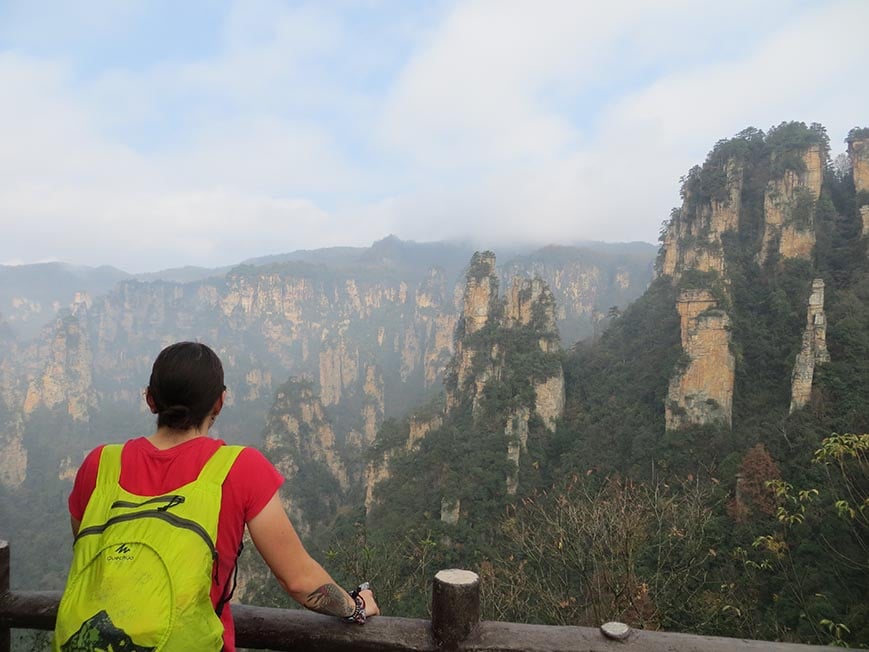
Image: Nic Hilditch-Short
From Yunnan, you can catch a flight or overnight train to Guilin, the capital of Guangxi. A short bus ride will take you to the backpacker haven of Yanghsuo, where you can cruise on a bamboo raft down the Li River past majestic karst mountain peaks. There’s also cycling, hiking, and rock climbing on tap here, in addition to some seriously wild nightlife.
Backpacking China 1 Month Itinerary #4: The Full Loop
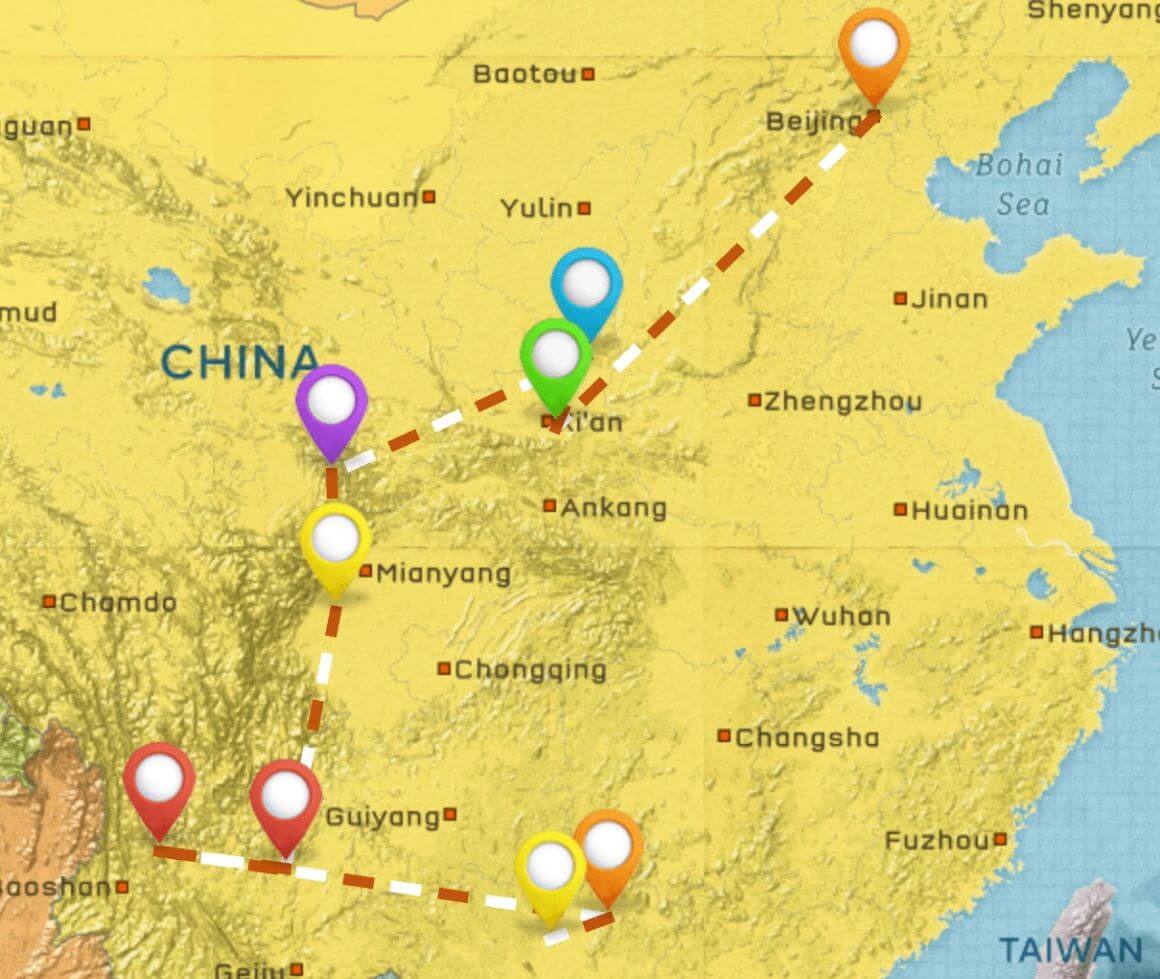
So you have a whole month in China, do you? That’s great news, as you’ll be able to cover some serious ground thanks to the country’s extensive rail network. Based on my experiences traveling all over the country, I’d combine the above-mentioned itineraries and add a bit more.
In addition to Beijing, Xi’an, Sichuan, Yunnan, and Guangxi, you can tack on a backpacking trip to Hong Kong, which is technically part of China but feels worlds apart. From here, you’ve got unlimited options for onward travel.
You could also travel to Macau as well. That’s super close to Hong Kong and a whole other adventure.
 Check out our awesome Hong Kong neighbourhood guide.
 Be sure to visit these Hong Kong hot spots.
 Look for a bed in our Where to Stay in Macau Guide.
 Find out what are the best places to visit in Macau.
Backpacking China 1 Month Itinerary #5: Beijing to Hong Kong
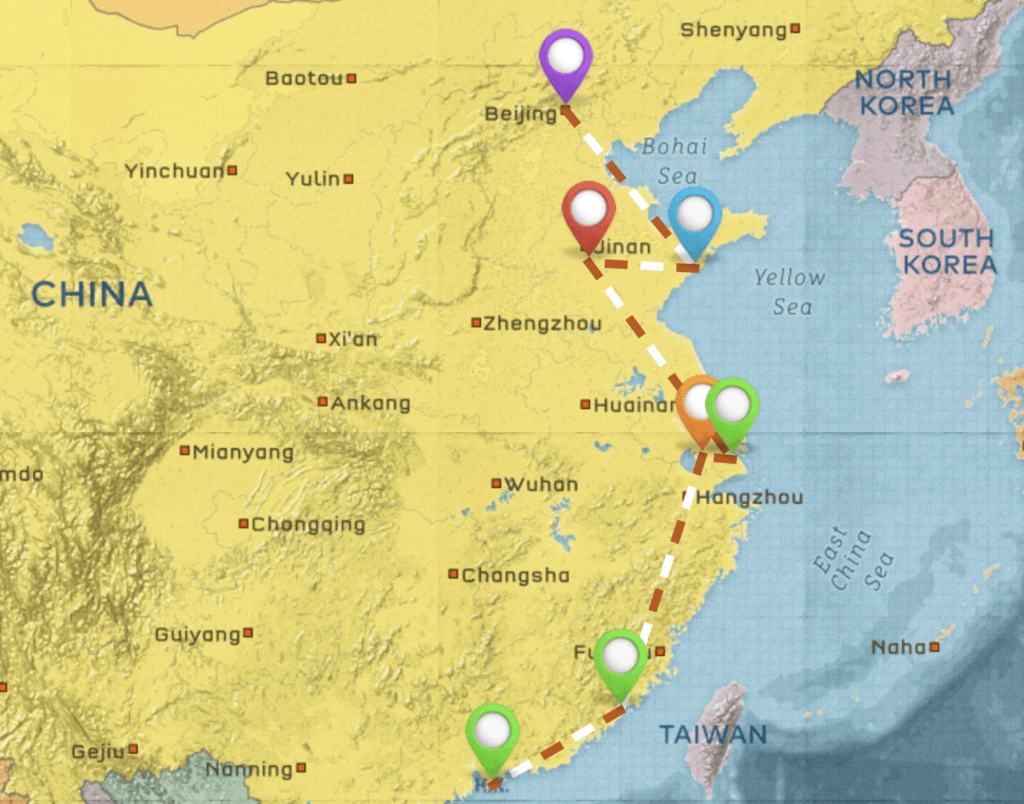
Backpacking Beijing
Beijing
At a Glance
- Best for: First-time visitors, history, food and nightlife
- Known for: The Forbidden City, the Great Wall, hutongs and imperial history
- How long to stay: 3–4 days
- Don’t miss: Exploring the quieter sections of the Great Wall away from the crowds.
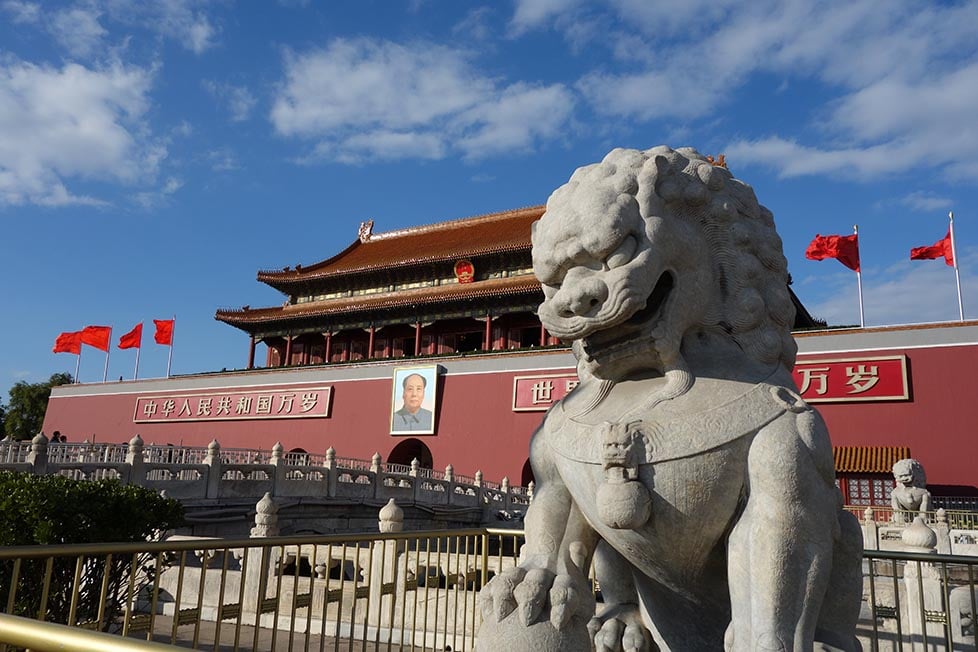
Image: Nic Hilditch-Short
Beijing is where most backpacking trips to China begin, and for good reason. As the country’s capital, it combines some of China’s most iconic landmarks with an energy that’s entirely its own. It’s also the main entry hub. You can spend the morning wandering through the vast courtyards of the Forbidden City (one of the best epic places to visit in Beijing) lose yourself in centuries-old hutongs by afternoon, then finish the evening eating incredible street food before heading out for drinks in Sanlitun or Wudaokou.
Despite its size, Beijing rewards travellers who venture beyond the headline attractions. Some of my favourite days here involved escaping the urban sprawl altogether, hiking quieter stretches of the Great Wall, visiting mountain temples, or heading out to Shidu for rafting and bungee jumping. It’s a reminder that nature is never as far away as the skyline suggests.
The food alone is worth the trip. From perfectly roasted Peking duck to tiny family-run noodle shops and late-night dumpling joints, Beijing is one of China’s best cities to eat your way around. And when the sun goes down, the city keeps going. Whether you’re after student bars, craft beer, rooftop cocktails or all-night clubs, Beijing has enough nightlife to keep even the most committed backpacker occupied for days.
All of the above said, pretty much everybody who visits China agrees that the trip only gets better and better AFTER you leave Beijing so don’t spend too much time here if you are short on it.
Why backpackers love Beijing:
- Tick off some of China’s most famous sights without feeling like you’re trapped on a tourist trail.
- Wander the hutongs to experience a slower, more traditional side of the capital.
- Take easy day trips to quieter sections of the Great Wall and mountain temples.
- Eat exceptionally well on almost any budget.
- Enjoy one of China’s best nightlife scenes, from laid-back bars to late-night clubs.
Find out what are Beijing’s Best Hotels.
We made a handy guide to Beijing’s Top Attractions.
Plan an awesome Itinerary for Beijing.
Find all of the best places to stay in Beijing.
Backpacking Yunnan
At a Glance
- Best for: Hiking, nature, road trips and ethnic minority culture
- Known for: Dali, Lijiang, Tiger Leaping Gorge, Shangri-La and spectacular mountain scenery
- How long to stay: 2–3 weeks
- Don’t miss: Hiking Tiger Leaping Gorge rather than simply stopping for the viewpoints.

Photo: Sasha Savinov
If you’re looking for China’s adventurous side, Yunnan (one of the beautiful areas of China) is hard to beat. Known as the “Land South of the Clouds”, this southwestern province is home to snow-capped mountains, deep river gorges, ancient towns and an incredible mix of ethnic minority cultures. It feels like a different world from the country’s eastern megacities and is one of the easiest places in China to slow down and travel at your own pace.
Most journeys begin in Kunming, the provincial capital. Spend a day or two exploring Green Lake Park, the Bird & Flower Market and Yunnan’s excellent food scene before following the classic backpacker route through Dali, Lijiang, Tiger Leaping Gorge and Shangri-La. It’s one of the most rewarding overland journeys in China, with every stop offering a different landscape and atmosphere.
While places like Dali and Lijiang can feel busy during peak season, it’s surprisingly easy to escape the crowds. I found that simply renting a bike, wandering beyond the old towns or choosing to hike instead of taking the cable car often left me with trails and viewpoints almost to myself. The tour groups rarely venture very far, which means independent travellers are rewarded for making even a small effort.
Why backpackers love Yunnan:
- China’s classic backpacking route is packed into one spectacular province.
- World-class trekking, including the unforgettable Tiger Leaping Gorge.
- Ancient towns, mountain villages and diverse local cultures.
- Cooler mountain air and slower-paced travel than much of eastern China.
- Endless opportunities to get off the tourist trail with minimal effort.
Backpacking Sichuan
At a Glance
- Best for: Food, giant pandas, hiking and mountain scenery
- Known for: Chengdu, spicy cuisine, Jiuzhaigou and Tibetan culture
- How long to stay: 1–2 weeks
- Don’t miss: An early morning visit to the Chengdu Panda Base, followed by an evening hot pot feast.
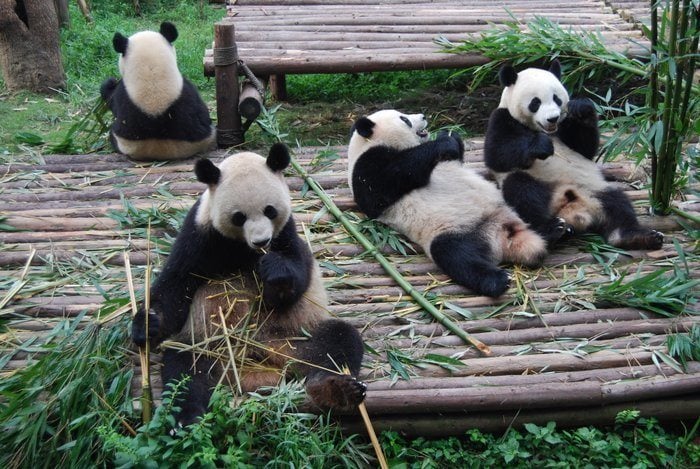
Photo: Sasha Savinov
If Yunnan is China’s backpacking paradise, Sichuan isn’t far behind. This province is famous for its fiery cuisine, but there’s far more to it than mouth-numbing hot pot. Between the relaxed streets of Chengdu, snow-capped mountains, Tibetan-influenced communities and some of China’s most spectacular national parks, Sichuan rewards travellers who stick around for more than a few days.
Most Sichuan trips begin in Chengdu, one of my favourite cities in China. It’s laid-back by Chinese standards, packed with excellent hostels, and has a thriving café, bar and food scene that makes it easy to settle in. Spend your mornings wandering People’s Park or visiting the outstanding Panda Base, then your evenings working your way through Sichuan’s legendary dishes just be prepared for the málà (numbing and spicy) flavour that gives the region’s food its reputation.
Beyond Chengdu lies some of China’s finest scenery. Jiuzhaigou National Park is deservedly famous for its turquoise lakes and waterfalls, but one of my personal highlights was completing a three-day eco-trek through nearby Zharu Valley. Climbing to a sacred Tibetan mountain at over 4,200 metres remains one of the most challenging (and rewarding) experiences I’ve had anywhere in China. You can also find Mt Emeishan, Chinese Buddhism’s holiest mountain here.
Sichuan is also home to some of China’s most famous national parks and Jiuzhaigou is one of most picturesque places in the country, with massive waterfalls.
Why backpackers love Sichuan:
- Arguably the best food province in China.
- Chengdu is one of the country’s easiest and most enjoyable cities to spend time in.
- Incredible hiking and national parks beyond the main tourist route.
- A fascinating blend of Han Chinese and Tibetan cultures.
- Easy to combine with trips into Yunnan or western China.
Backpacking Chongqing
At a glance
- Best for: Urban exploration, food, cyberpunk vibes
- Known for: Mountains of skyscrapers, hot pot, the Yangtze River, insane transport system
- How long: 2–4 days
- Don’t miss: Riding the metro straight through a residential tower at Liziba Station.
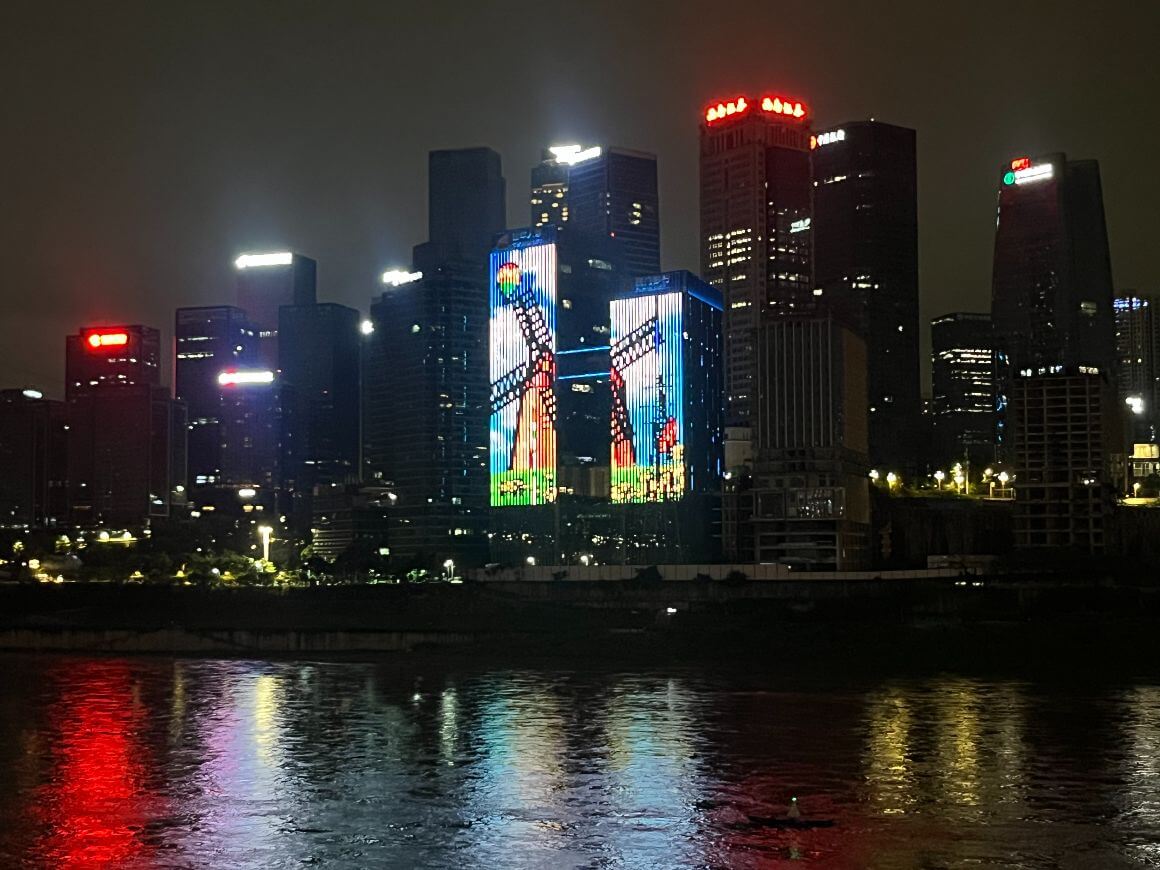
Once a part of Sichuan province, Chongquing has grown so much in stature and importance that it is now considered a metropolitan area in its right. A with damned good reason, the mea city feels like somebody built Hong Kong, São Paulo and Blade Runner on top of each other.
If Beijing is China’s historic heart and Shanghai its polished face, Chongqing is its wild side. Built across steep hills at the meeting point of the Yangtze and Jialing rivers, this sprawling megacity feels like it belongs in a science fiction film. Multi-level roads weave between skyscrapers, metro lines disappear through apartment buildings, and every stroll seems to involve another flight of stairs or an unexpected viewpoint.
Despite its futuristic appearance, Chongqing has plenty of character. Wander through the old neighbourhoods hidden beneath the skyscrapers, hop on the Yangtze cableway for a different perspective of the city, or simply spend an afternoon getting gloriously lost in the maze of alleyways. It’s one of those places where the journey between attractions is often as memorable as the attractions themselves.
Food is another huge draw. Chongqing shares Sichuan’s love of málà (numbing and spicy) flavours, but the city’s legendary hot pot has a personality all of its own. If you can handle the heat, few meals in China are as satisfying. Throw in a lively nightlife scene and some of the friendliest hostel atmospheres in the country, and it’s easy to see why more backpackers are adding Chongqing to their itineraries.
Why backpackers love Chongqing:
- One of the most visually striking cities in China.
- Incredible hot pot and bold regional cuisine.
- Fantastic nightlife and a growing backpacker scene.
- Easy rail connections to Chengdu, Xi’an, Zhangjiajie and the Yangtze region.
- A city that’s best explored without a plan—getting lost is part of the experience
Backpacking Guangxi
At a Glance
- Best for: Karst landscapes, cycling and slow travel
- Known for: Yangshuo, the Li River and the Longji Rice Terraces
- How long to stay: 5–7 days
- Don’t miss: Cycling through the countryside around Yangshuo at sunrise or sunset.

Photo: Sasha Savinov
If you’ve ever seen photos of China’s dramatic limestone peaks rising above winding rivers, there’s a good chance they were taken in Guangxi. This province is home to some of the country’s most iconic scenery and remains one of the best places to experience a slower, more outdoorsy side of backpacking China.
Yangshuo is the province’s backpacking heart. What was once a quiet rural town has grown into one of China’s best-established backpacker destinations, with plenty of hostels, cafés and bars catering to independent travellers. Although West Street can feel busy with organised tour groups during the day, the crowds disappear remarkably quickly once you hire a bicycle or scooter and head into the surrounding countryside. Before long, you’ll have those famous karst peaks almost entirely to yourself.
Another highlight is the Longji Rice Terraces, or the Dragon’s Backbone. These centuries-old terraces rank among China’s most impressive agricultural landscapes and are best explored on foot. While many visitors stick to the main viewpoints, spending a couple of days hiking between the hill villages offers a much quieter and more rewarding experience.
Why backpackers love Guangxi:
- Some of the most spectacular landscapes anywhere in China.
- Yangshuo remains one of the country’s classic backpacker hubs.
- Fantastic cycling, hiking and river-based adventures.
- Traditional villages and rice terraces that reward slower travel.
- Easy connections to Guilin and onward into neighbouring provinces.
Backpacking Shaanxi
At a Glance
- Best for: Chinese history, street food and unforgettable day trips
- Known for: Xi’an, the Terracotta Warriors and Mount Huashan
- How long to stay: 3–5 days
- Don’t miss: An evening eating your way through Xi’an’s Muslim Quarter.
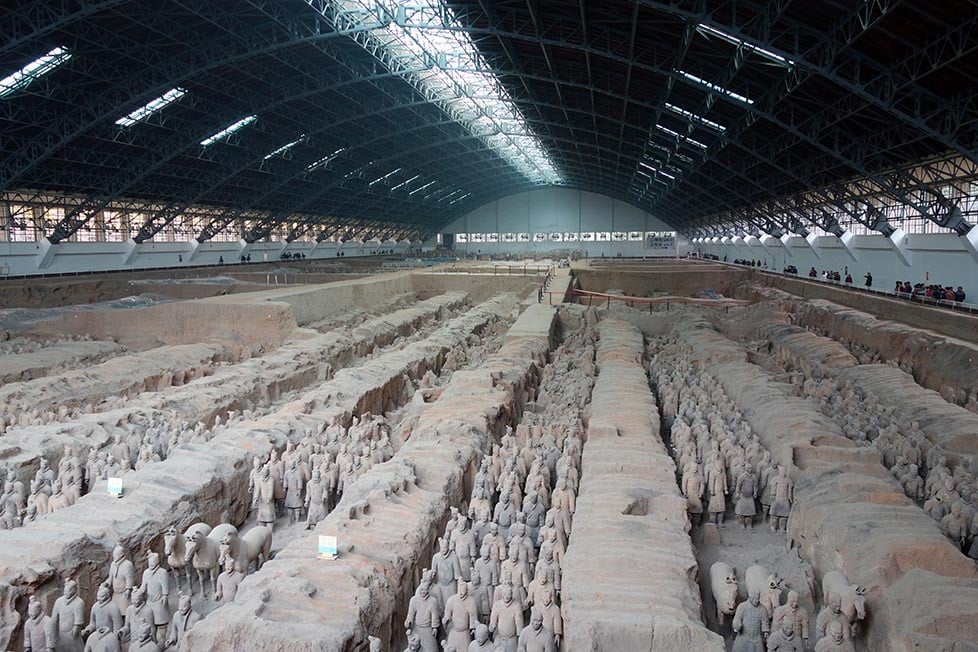
Image: Nic Hilditch-Short
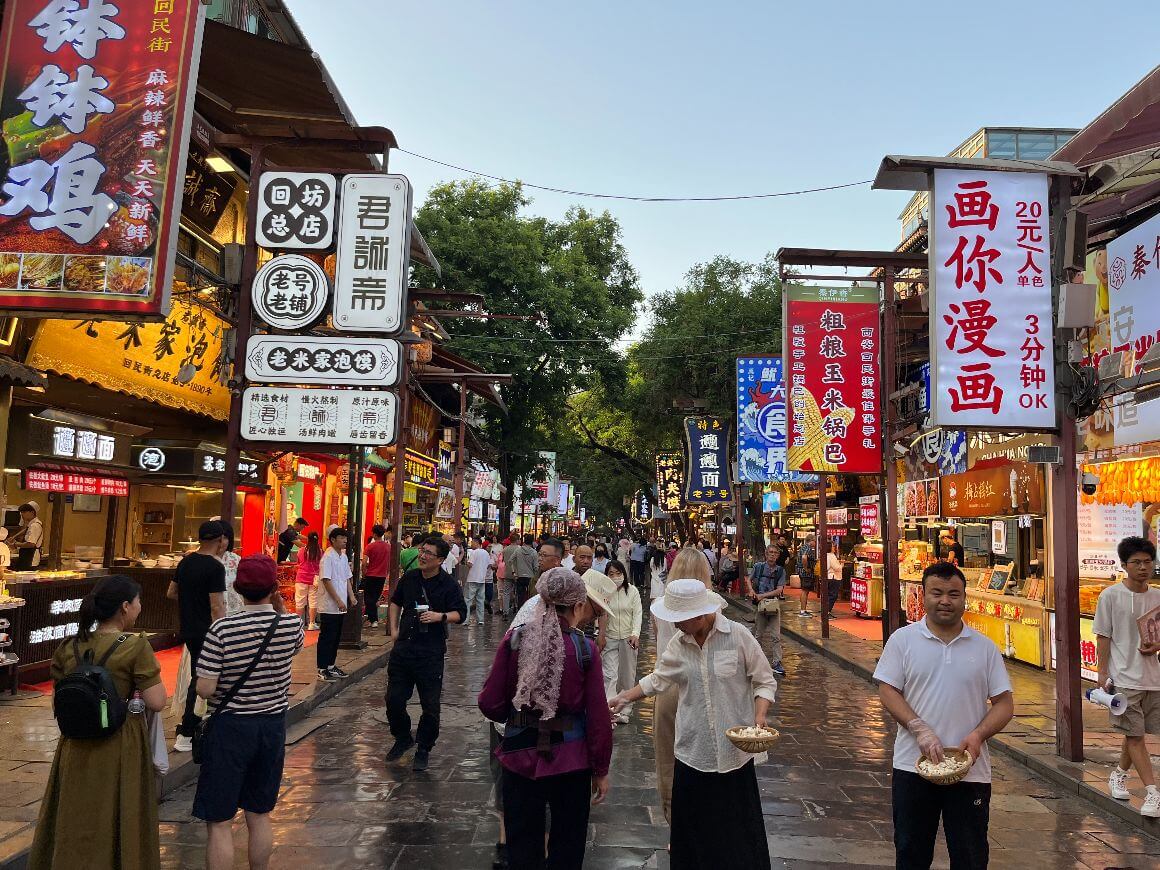
For anyone interested in China’s history, Shaanxi is an essential stop. The provincial capital of Xi’an served as the starting point of the Silk Road and was once the capital of several Chinese dynasties. Today, it’s one of the country’s most rewarding cities to explore, combining remarkable historical sites with one of China’s best food scenes.
The headline attraction is, of course, the Terracotta Warriors. Discovered by local farmers in 1974, this vast army of life-sized clay soldiers was built to guard the tomb of China’s first emperor and remains one of the world’s greatest archaeological discoveries. It’s well worth setting aside a full day for the site before returning to Xi’an to cycle along the beautifully preserved City Wall or spend the evening sampling the incredible street food in the bustling Muslim Quarter. Don’t leave without trying roujiamo or a hearty bowl of yangrou paomo.
If you’re looking for, add an extra day for Mount Huashan or a day trip to Luoyang where you can find enormous carved stone Buddhist grottoes. Famous for its dramatic granite peaks and vertigo-inducing cliffside walkways, it’s often described as one of China’s most thrilling hikes. The infamous plank walk isn’t for everyone, but even the standard trails reward you with spectacular views from one of China’s Five Great Mountains.
Why backpackers love Shaanxi:
- Home to one of the world’s greatest archaeological sites.
- Xi’an is compact, walkable and packed with excellent food.
- Cycling the ancient City Wall is a unique way to experience the city.
- Mount Huashan makes an unforgettable hiking adventure.
- A natural stop when travelling between Beijing and western China.
Backpacking Shanghai
At a Glance
- Best for: Big-city culture, architecture, nightlife and food
- Known for: The Bund, Pudong skyline, French Concession and world-class dining
- How long to stay: 3–4 days
- Don’t miss: Walking along the Bund at sunset before exploring the bars and cafés of the former French Concession.
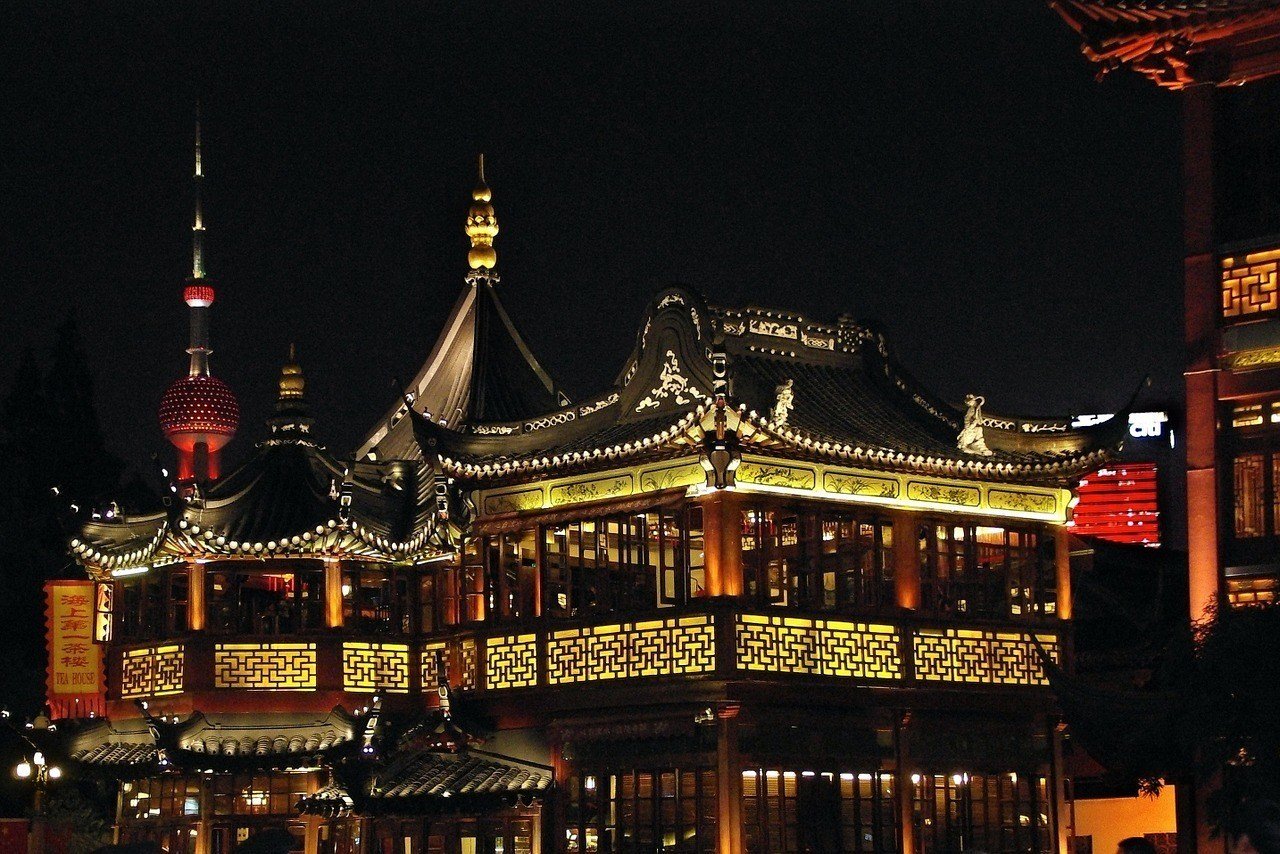
Shanghai is China’s most cosmopolitan city and often the easiest place for first-time visitors to get their bearings. It’s modern, efficient and effortlessly stylish, with gleaming skyscrapers sitting across the river from grand colonial architecture. While it doesn’t have Beijing’s imperial history or Chongqing’s organised chaos, it offers a fascinating glimpse into China’s role as a global economic powerhouse.
One of my favourite things about Shanghai is simply wandering. Spend the morning exploring the leafy streets of the French Concession, browse independent boutiques and coffee shops, then head to the Bund as the skyline begins to glow after dark. It’s one of the world’s great city walks and a reminder of just how quickly China has transformed over the last few decades.
Shanghai isn’t the cheapest stop on a backpacking itinerary, but it’s still possible to travel here on a budget thanks to an excellent metro system, affordable hostels and countless local eateries. If you’re into museums, live music, craft beer or nightlife, you’ll find more than enough to keep you occupied for several days.
Why backpackers love Shanghai:
- One of the world’s most impressive skylines.
- Fantastic nightlife, cafés and international food scene.
- Easy to explore using an excellent public transport system.
- A great introduction to modern urban China.
- An ideal base for side trips to nearby water towns such as Zhujiajiao.
Backpacking The Tibetan Plateau
At a Glance
- Best for: High-altitude adventure, trekking and Tibetan culture
- Known for: Lhasa, Himalayan landscapes, Buddhist monasteries and remote overland journeys
- How long to stay: 1–3 weeks
- Don’t miss: Watching pilgrims complete the kora around the Jokhang Temple in Lhasa.
The Tibetan Plateau offers a side of China unlike anywhere else in the country. Stretching across western China and encompassing the Tibet Autonomous Region as well as large parts of Qinghai, western Sichuan and northern Yunnan, it’s a land of snow-capped peaks, vast grasslands, sacred lakes and some of the highest roads on Earth. Travelling here feels less like visiting another province and more like entering a completely different cultural world.
For many travellers, the journey begins in Lhasa, where centuries-old monasteries, prayer wheels and bustling pilgrim routes reveal the deep importance of Tibetan Buddhism in everyday life. Beyond the capital, the landscapes become increasingly dramatic, with turquoise alpine lakes, isolated monasteries and Himalayan viewpoints that seem to stretch forever.
Travelling on the Tibetan Plateau requires more planning than anywhere else in China. Visiting the Tibet Autonomous Region requires additional permits and organised arrangements for most foreign travellers, while the high altitude means taking time to acclimatise is essential. If your itinerary or budget doesn’t allow for Tibet itself, you’ll still find unforgettable Tibetan culture and mountain scenery in western Sichuan, Qinghai and northern Yunnan without the same permit requirements.
Getting Off the Beaten Path in China
Those looking to skip out on matching hat-wearing, flag-following, selfie-snapping hordes of Chinese tourists will want to head straight for northwest China. Perhaps no place in China is more off the beaten path than the autonomous region of Xinjiang.
The area is home to numerous ethnic groups, including Uygurs, Kazakhs, and Mongols. It’s been the sight of some serious unrest in recent years, meaning most tourists stay far away.
While many in China will try to convince you that Xinjiang is far too dangerous, you just need to exercise some caution and patience and you can have a perfectly fine trip here. In addition to some of the most mesmerizing landscapes in the country, Xinjiang also has some of the most delicious food in all of China. It’s pretty hard to beat some spicy grilled lamb with a nice piece of naan. Despite their bad reputation across China, the Uyghur people are known to be incredibly hospitable and welcoming to visitors (unless you’re Han Chinese, that is).

Image: Nic Hilditch-Short
While we’re talking about lesser-visited parts of China, we can’t leave out Inner Mongolia. If you can’t make it to actual Mongolia, this is a pretty decent backup. You can still sleep in a yurt in the desert and then go horseback riding in the seemingly endless grasslands. All of this can easily be arranged from one of the hostels in the capital of Hohot.
Another great spot for some off the beaten path adventures is Qinghai Province. This is one of the most sparsely populated regions of China, meaning you won’t have to share the stunning landscapes with a bunch of tourists. Here you can soak up the Tibetan culture without the added hassle of traveling to Tibet making it a great alternative for those interested in Tibet travel. You can also visit the largest lake in all of China.
It should be noted that by just being in China, you’re already sort of off the beaten path. Sure, the country gets a whole bunch of international visitors every year, but you’re still very much a novelty here.
Even in the big cities of Beijing and Shanghai, don’t be surprised to hear people shout “Laowai! (Foreigner!)” and point at you. They might even try to take a picture with you. Such is life when you’re traveling in China. Even though the country has been open for several decades, foreigners are still surprising to most locals.
Top Things to Do in China
China is a country that’s so rich in experiences that it’s really tough to whittle them down to a Top 10 list. The country is full of historic sites, amazing nature, bustling cities, and some of the most delicious food in the world.
I personally love Top 10 lists, though, so I’m going to do my best! Here’s my top 10 things to to while backpacking in China!
1. Hike on the Great Wall
No trip to China feels complete without standing on the Great Wall. Snaking over mountain ridges for thousands of kilometres, it’s one of those rare landmarks that genuinely lives up to the hype. The views are spectacular, the history is impossible to ignore, and hiking along its weathered stone paths is an experience you’ll remember long after you’ve left China.
Not all sections offer the same experience, though. If you can, skip the heavily restored and often crowded Badaling section. Instead, head for wilder stretches like Jinshanling or Jiankou, where the Wall feels more rugged, atmospheric and rewarding. You’ll do a lot more hiking, but that’s exactly the point.
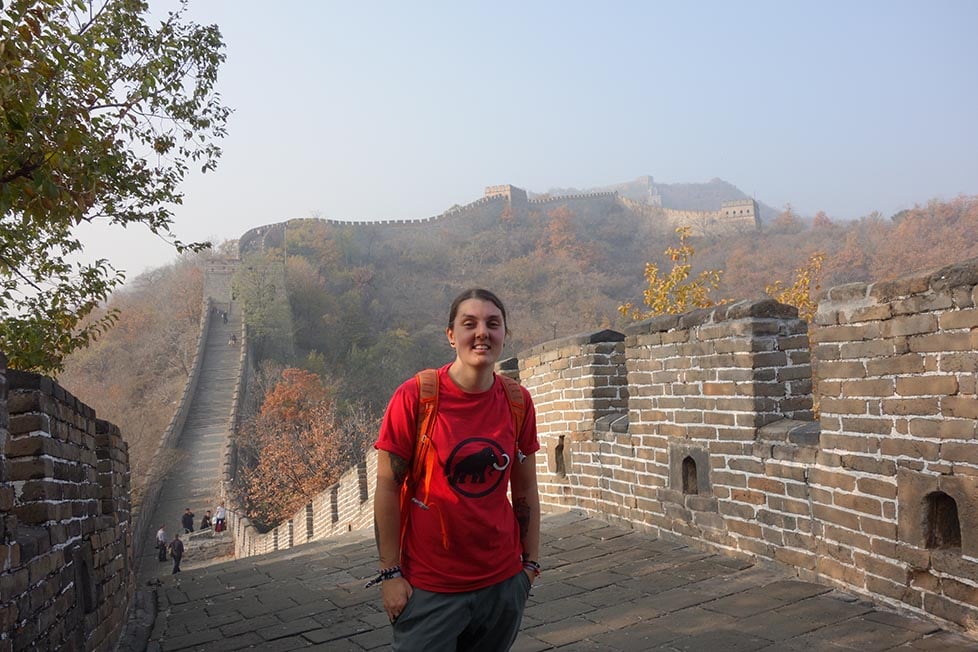
Image: Nic Hilditch-Short
For an experience you’ll never forget, consider spending a night camping on or near one of the quieter sections (where permitted). Waking up to watch the sunrise over the mountains with the Great Wall stretching into the distance remains one of the standout moments from my six years of living and travelling around China. It transforms one of the world’s most famous landmarks into something that feels deeply personal.
2. Visit Jiuzhaigou National Park
If I had to pick the most beautiful place I visited during six years of living and travelling in China, Jiuzhaigou would be right at the top of the list. This UNESCO-listed national park is a landscape of impossibly turquoise lakes, cascading waterfalls and forested valleys framed by snow-capped peaks. It feels a world away from the megacities that most people associate with China.
Jiuzhaigou is deservedly popular, but don’t let the crowds put you off. Most visitors stick to the main boardwalks and shuttle bus stops, so even a short walk along one of the quieter trails can make all the difference. It’s the kind of place that reminds you just how wild and spectacular China’s landscapes can be—and why venturing beyond the cities is always worth the effort.
3. Harbin Ice and Snow Festival
If you’re backpacking China in winter, make every effort to reach Harbin. Every year, this northeastern city transforms into a frozen wonderland for the world’s largest ice and snow festival, where entire streets, castles and sculptures are carved from blocks of ice harvested from the nearby Songhua River.

Photo: Sasha Savinov
By day, it’s an incredible display of craftsmanship. After dark, the sculptures come alive as they’re illuminated with thousands of colourful lights, creating one of the most surreal sights you’ll find anywhere in China. Yes, it’s absolutely freezing—but wandering through a glowing city built almost entirely from ice is an experience that’s worth every extra layer you have to wear.
4. Visit the Fujian Tulou
Hidden among the mountains of Fujian Province, the tulou are unlike anything else you’ll see in China. These enormous circular earthen buildings were designed to house entire clans, with communal halls on the ground floor and family homes stacked above. Walking through one feels less like visiting a building and more like stepping into a living village.
Many tulou are still inhabited today, while others have become protected UNESCO World Heritage Sites. The best way to experience them is by slowing down—rent a bicycle or scooter and spend a couple of days exploring the quiet countryside between the different compounds. It’s a refreshing change of pace from China’s megacities and a fascinating glimpse into a traditional way of life that has largely disappeared elsewhere.
5. Hike Tiger Leaping Gorge
If you’re backpacking China, there’s a good chance you’ll find yourself on the trail through Tiger Leaping Gorge. Carved high above the roaring Yangtze River in Yunnan Province, it’s widely regarded as one of the country’s finest hikes. Depending on your pace, the trek takes two to three days and delivers jaw-dropping mountain scenery from start to finish.
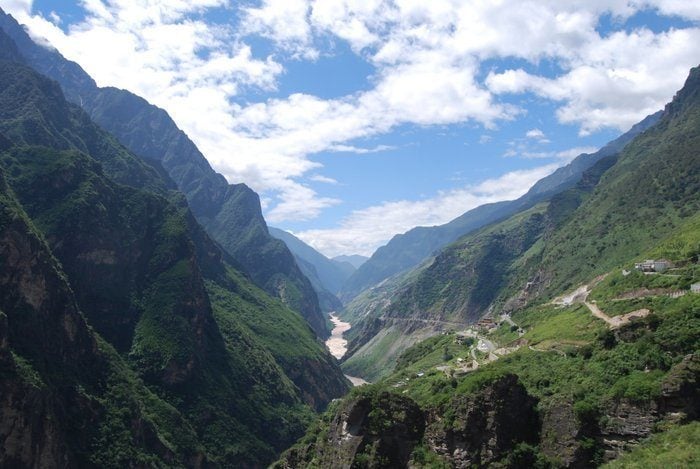
Photo: Sasha Savinov
Part of the charm is the journey itself. Friendly guesthouses are dotted along the trail, including the legendary Halfway House, whose famously scenic toilet has become something of a rite of passage for backpackers. You’ll also pass local grannies selling fruit, snacks and, if you know what you’re looking for, bags of the wild cannabis that grows naturally in the surrounding hills. Whether you’re there for the hiking or just the stories you’ll collect along the way, Tiger Leaping Gorge is one of those experiences that perfectly captures the spirit of backpacking China.
6. Take a High-Speed Train
One of the best parts of backpacking China is simply getting around. The country’s high-speed rail network is one of the largest and most advanced in the world, making it incredibly easy to travel between major cities without the hassle of airports.
Watching the train quietly accelerate to over 300 km/h while you sip a coffee and admire the scenery never really gets old. Routes like Beijing to Shanghai, Chengdu to Xi’an or Shanghai to Hangzhou turn journeys that would take hours by road into smooth, comfortable rides. In most cases, the train is faster door-to-door than flying, dropping you right into the heart of the next city.
If you’re planning an extended trip around China, make the railway your default mode of transport. It’s affordable, reliable and, in its own way, one of the country’s most impressive attractions.
Booking tickets is much easier than it used to be. The official railway app can be tricky for international visitors, so I generally recommend using platforms like Trip.com, which has an English-language interface and makes booking high-speed rail tickets straightforward. During major Chinese holidays and weekends, trains can sell out quickly, so it’s worth booking a few days—or even weeks—ahead if you’re travelling on popular routes.
7. Check Out Ancient Buddhist Grottoes
China is home to three different Buddhist grottoes – Longmen, Yungang, and Mogao. Visit one of these sites to see the impressive Buddhist carvings in the caves. These are considered to be some of the finest examples of Chinese Buddhist art, and they really are an incredible sight to behold.
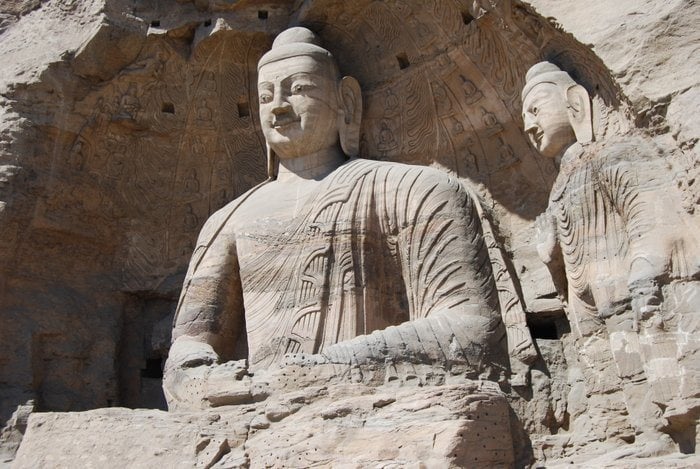
Photo: Sasha Savinov
By visiting the Yungang Grottoes in Datong, you can also check out the awe-inspiring Hanging Monastery to make for an awesome short trip. A trip to the Longmen Grottoes in Luoyang is easily combined with a visit to X’ian, so you can cross two items off the list.
8. See the Pandas in Chengdu
The giant panda is known as China’s national treasure, and there’s no better place to get up close to these adorable bears than in Chengdu. The city is home to a massive giant panda research base, where you’ll see dozens of them snacking on bamboo and wrestling with each other. Just don’t expect any of them to start doing kung fu.

It’s super easy to arrange a tour here from your hostel and a visit only takes half a day. There’s all kinds of panda swag available in Chengdu as well if you’re looking for that perfect souvenir.
9. See the Terracotta Warriors
Some attractions earn their reputation, and the Terracotta Warriors may be one of them. Standing in front of thousands of life-sized soldiers, each with unique facial features and expressions, is one of those rare travel moments where the scale simply doesn’t register until you’re there.
Located just outside Xi’an, the UNESCO World Heritage Site was built to guard the tomb of China’s first emperor over 2,000 years ago. It may be one of China’s busiest attractions, but don’t let that put you off. Few archaeological discoveries have changed our understanding of history quite like this one, and it’s an essential stop on any backpacking itinerary through central China.
Personally, I skipped this in 2026 to go visit Luoyang instead.
10. Outdoor Adventures in Yangshuo
Backpacking is all about adventure. If there’s one place that captures the spirit of backpacking China, it’s Yangshuo. Surrounded by dramatic karst mountains and winding rivers, this laid-back town is the perfect base for anyone who prefers hiking boots, climbing shoes or a bicycle to a packed sightseeing bus.

Image: Nic Hilditch-Short
Spend your days cycling through quiet villages, kayaking the Li or Yulong River, tackling one of the area’s world-class rock climbs or simply hopping on a scooter and getting gloriously lost among the limestone peaks. Yes, the centre of town can get busy with tour groups, but it only takes a few minutes to leave them behind and find the landscapes that have made Yangshuo a backpacker favourite for decades.
When the sun goes down, head back into town and swap trail stories over a few beers on West Street. Yangshuo has long been one of China’s classic backpacker hangouts, and places like Monkey Jane’s remain legendary for bringing travellers together after a day of adventure.
Finding somewhere to stay in China is generally much easier than many first-time visitors expect. The country has a well-established hostel scene, particularly along the classic backpacker route through Beijing, Xi’an, Chengdu, Yunnan, Yangshuo and Shanghai. In larger cities you’ll also find everything from budget guesthouses to boutique hotels and international chains, so there’s no shortage of choice.
One thing that often catches travellers out is China’s accommodation registration system. By law, all foreign visitors must be registered with the local Public Security Bureau. If you’re staying in a hotel or licensed hostel, the staff will almost always handle this automatically when you check in. However, some smaller guesthouses, homestays and short-term rentals either aren’t licensed to accept foreign guests or may not know how to complete the registration. It’s worth confirming this before you book to avoid unnecessary hassle.
Hostels remain the best option for most backpackers. Not only are they affordable, but they’re also the easiest place to meet other travellers, book tours and get up-to-date local advice. Expect clean dormitories, private rooms, Wi-Fi (remember you’ll still need a VPN or alternative solution for blocked services), communal lounges and staff who are usually accustomed to helping international visitors.
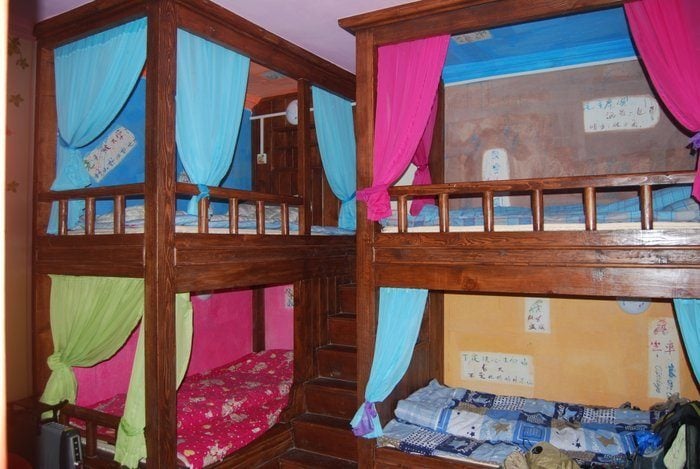
Photo: Sasha Savinov
If you prefer more privacy, Airbnb is available in China but isn’t nearly as widespread or consistent as it once was. Listings can be limited outside the biggest cities, and hosts don’t always have experience accommodating foreign guests or handling the required registration process. Chinese booking platforms tend to have a much larger selection, although they can be harder to navigate if you don’t speak Mandarin.
Couchsurfing is still an option, but it’s much quieter than during its heyday. In major cities you may still find active hosts and meet-ups, but availability is far less predictable than it was a decade ago. If you’re hoping to rely on it, send requests well in advance and always have a backup plan.
As a rough guide, backpackers can expect to pay around £8–20 (US$10–25) for a dorm bed, £20–50 (US$25–65) for a private room in a hostel or budget hotel, and £50+ (US$65+) for comfortable mid-range accommodation in most cities. Prices rise during Chinese public holidays, especially Chinese New Year and Golden Week, so booking ahead is highly recommended.
The Best Places to Stay in China
| Destination | Why Visit! | Best Hostel | Best Private Stay |
|---|---|---|---|
| Beijing | Beijing beckons with its rich history showcased in the Great Wall, Forbidden City, and Temple of Heaven, | Peking International Hostel | Zhong An Hotel Beijing |
| Xi’an | Explore the Terracotta Army, visit the ancient City Wall, discover the Big Wild Goose Pagoda, and sample delicious local cuisine in Xi’an. | Sifang Space Hostel Xi’an | Sifang Space Hostel Xi’an |
| Chengdu | Visit the Giant Panda Breeding Research Base, experience Jinli Ancient Street, and enjoy Sichuan Opera in Chengdu. | Chengdu Flipflop Hostel Poshpacker | Holly’s Hostel |
| Kunming | Explore the Stone Forest, visit Yuantong Temple, enjoy Green Lake Park, and savor local Yunnan cuisine in Kunming. | Kunming Cloudland International Youth Hostel | Moon and Chalicie Boutique Hotel |
| Dali | Discover Erhai Lake, explore the ancient Dali Old Town, visit Three Pagodas, and experience Xizhou Ancient Town in Dali. | DaLi LOFT Travelling With Hostel | MYJ Boutique Inn |
| Lijiang | Experience the ancient architecture of Dayan Old Town, enjoy a performance at Lijiang Impression Show and visit the Black Dragon Pool Park. | Mama Naxi Guesthouse | Xilu Xiaoxie Inn |
| Yangshuo | Enjoy a Li River cruise, watch the Liu Sanjie Impression Light Show, try bamboo rafting, and experience local countryside life in Yangshuo. | Yangshuo Sudder Street Guesthouse | Yangshuo Village Inn |
| Hong Kong | Experience Hong Kong’s vibrant nightlife, savor dim sum delicacies, ride the Peak Tram, and enjoy the Symphony of Lights show. | Check Inn HK | Room in Lantau Island |
| Hohhot | Experience Mongolian culture, visit the Zhaojun Tomb, explore the Inner Mongolia Museum, and witness the beauty of the Gegentala Grassland. | Shangri-La Huhhot | Atour Hotel |
| Shanghai | Shanghai combines modernity and tradition seamlessly, check out the Bund’s skyline and explore historical sites like Yu Garden. | Dayin International Youth Hostel | Meego Yes Hotel |
| Hangzhou | Hangzhou captivates with its tranquil beauty and cultural heritage. Explore West Lake, savor Longjing tea, and discover ancient temples. | Desti Youth Park Hangzhou | Hangzhou Van Wind Inn |
| Qingdao | Qingdao boasts stunning coastal scenery, historic architecture, and delicious seafood. Enjoy beaches, visit the Beer Museum, and explore the iconic Zhanqiao Pier. | Qingdao Kaiyue International Hostel | MG Hotel |
China Backpacking Costs
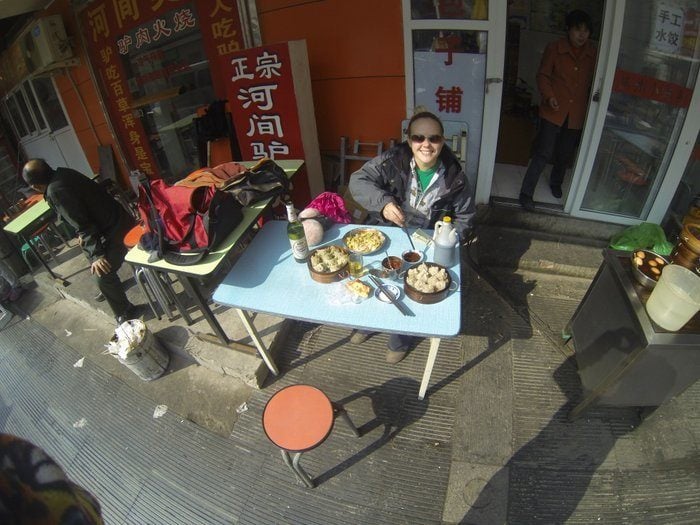
Photo: Sasha Savinov
China isn’t quite the ultra-cheap backpacking destination it once was, but it still offers excellent value for money. Your daily budget will depend largely on how quickly you move around the country. Covering huge distances on high-speed trains and visiting lots of major attractions will naturally push your costs up, while slowing down and spending longer in each destination keeps China surprisingly affordable.
The good news is that it’s still possible to travel comfortably on a backpacker budget. Public transport is excellent and inexpensive, hostel dorms are widely available on the main backpacking route, and local food remains one of the best bargains in Asia.
One of the easiest ways to save money is to eat like the locals. Street food is everywhere, and it’s often both the cheapest and the tastiest option. I’m still a sucker for a freshly made jian bing—a savoury Chinese crêpe stuffed with egg, spring onion, chilli sauce and a crispy wonton cracker—which now typically costs around ¥8–15 (£0.80–1.60 / US$1–2)depending on where you are. Filling bowls of hand-pulled noodles, dumplings or simple rice dishes can usually be found for ¥20–40 (£2–4 / US$3–6), making it easy to eat well without spending much.
Your biggest expenses will usually be transport and entrance fees. Popular attractions aren’t always cheap, with tickets for the Forbidden City costing around ¥60 in peak season, the Terracotta Warriors around ¥120, and Jiuzhaigou National Park ¥190–280, depending on the season and whether shuttle buses are included. If you’re planning to visit several headline attractions, it’s worth factoring these costs into your budget before you arrive.
One thing that has changed dramatically in recent years is how people pay. WeChat Pay and Alipay are now accepted almost everywhere, from metro stations and restaurants to convenience stores and market stalls – note that bank cards may NOT be accepted and even cash may be discouraged at times. Foreign visitors can now link many international Visa and Mastercard cards to both apps, making everyday spending far easier than it used to be. That said, I still recommend carrying a little cash, particularly if you’re travelling through rural areas or shopping at smaller local markets.
Not everything worth doing comes with an entrance fee, though. Some of my favourite memories from China cost next to nothing, examples include wandering through Beijing’s parks at sunrise, watching locals dance and practise tai chi, exploring Green Lake Park in Kunming, or simply getting lost in an old neighbourhood with a few street food stops along the way. Those everyday moments are often just as memorable as the country’s biggest attractions.
A Daily Budget in China
| Expense | Broke Backpacker | Frugal Traveller | Creature of Comfort |
|---|---|---|---|
| Accommodation | $10-$15 | $16-$25 | $30+ |
| Food | $7-$12 | $13-$20 | $25+ |
| Transport | $5-$15 | $16-$30 | $35+ |
| Nightlife Delights | $1-$5 | $6-$10 | $15+ |
| Activities | $0-$10 | $11-$25 | $30+ |
| Total per day: | $28-$57 | $62-$110 | $135+ |
Image: Nic Hilditch-Short
Money in China
China’s currency is the Renminbi (RMB) commonly known as Yuan (Yen). When talking prices with people, they’ll rarely say renminbi. The preferred terms are yuan or the slang kuai. Find out how much your money is worth today by using the up-to-date converter below.
One of the most unusual and surprising things about China is that the primary, preferred method of payment is apps like Alipay and WeChat – it is highly recommended that you download, sign up for and activate both of these before you reach China so you are ready to go the moment you land. To pay using Alipay or WeChat, the merchant will show you a QR code and you can scan it inside the app. Even street beggars have Ali/WeChat QR codes! Note that these apps do levy fees but they usually work out cheaper or equal to using your bank card overseas.
It can be hard to find ATMs in China and you will probably need to go inside a bank to access one. This is because payment is primarily done on apps such as WeChat and Alipay (bank cards are not encouraged and may not always work). That said, cash is still accepted and if you going to markets for souvenirs, you will find you can haggle that bit harder if you are offering cold, hard cash.
As ever with ATM withdrawals you may be charged a fee by both the local bank and your bank. If you’re American, you can sign up for a Charles Schwab checking account and have ATM fees reimbursed at the end of the month. As a Brit, I use Monzo which allows £200 fee free ATM withdrawals per month.
Photo: Sasha Savinov
To Stay Connected… Get an eSIM For China
Staying connected in China is a little different from most destinations. Not only will you want reliable mobile data for maps, translation apps and booking trains, but you’ll also need to think about internet restrictions. Many of the websites and apps you use every day—including Google, Gmail, WhatsApp, Instagram and Facebook—are blocked in mainland China unless you have a way around the Great Firewall.

For most backpackers, an eSIM is by far the easiest option. You can buy and install it before you leave home, then activate it as soon as you land without hunting down a local SIM card shop or comparing airport prices. Better still, many international eSIM providers route your connection so you can continue using the services you rely on while travelling.
For China, we recommend Jetpac. Setup takes just a few minutes through the app, plans are competitively priced, and it’s an easy way to get online the moment you arrive. If you’re relying on Google Maps, Gmail or WhatsApp during your trip, choosing the right eSIM can save you a lot of hassle.
Popular Jetpac China eSIM Plans
- 1 GB — 4 days — From US$7
- 5 GB — 30 days — From US$10
- 10 GB — 30 days — From US$15
If you’re planning a longer trip, compare your expected data usage before you buy. Navigation, translation and messaging use very little data, but streaming videos, uploading photos or working remotely will quickly eat into smaller plans.
Best Time to Travel to China
Choosing the best time to visit China depends entirely on where you’re going. This is a country of huge geographical extremes, from the frozen winters of the northeast to the subtropical south. That said, spring (April–May) and autumn (September–October) are generally the most comfortable seasons for backpacking, especially if you’re following the classic route through Beijing, Xi’an, Chengdu, Yunnan and Shanghai.
Northern cities such as Beijing and Xi’an can be bitterly cold in winter and uncomfortably hot in midsummer, while southern destinations like Guangxi and Fujian stay much milder year-round. Yunnan enjoys one of China’s most pleasant climates, earning Kunming its nickname of “The Spring City”, although the summer months do bring more rain. If you’re heading to Sichuan or Guizhou, pack a waterproof—summer showers are common.
Winter is only really the best time to visit one part of China: Harbin. Between January and February, the city hosts the spectacular Ice and Snow Festival, when enormous illuminated sculptures transform the city into one of the world’s most unique winter destinations.

Image: Nic Hilditch-Short
The biggest thing to plan around isn’t actually the weather—it’s the holidays. Chinese New Year (Spring Festival), which falls in January or February depending on the lunar calendar, sees hundreds of millions of people travelling across the country. Trains, flights and accommodation book out well in advance, and popular destinations become incredibly busy. National Day Golden Week, which begins on 1 October, creates a similar surge in domestic tourism and is one of the busiest travel periods of the year.
Labour Day (around 1 May) is another busy period, although it’s generally more manageable than Chinese New Year or Golden Week. If you do need to travel during any public holiday, book your transport and accommodation as early as possible.
Personally, I think late September—just before Golden Week—or mid to late October offers the sweet spot for most backpacking trips. The weather is pleasant across much of the country, hiking conditions are excellent, and you’ll avoid the enormous crowds that descend during the National Day holiday – one of China’s many festivals.
Festivals in China
When it comes to Chinese holidays, nothing comes close to the Spring Festival. Also commonly called Chinese New Year, this festival lasts for 15 days in celebration of the Lunar New Year. It’s a fascinating and chaotic time in China, as everyone tries to get home to spend the holiday with loved ones. If your trip to China coincides with Spring Festival, be aware that transportation will be hard to come by, and that most businesses will be closed for a day or two.
China has many other traditional festivals throughout the year. One of the most interesting for visitors is the Dragon Boat Festival, which takes place sometime in June. There are several places where you can watch the amazing dragon boat races.

Photo: Sasha Savinov
China loves drinking beer, so it should come as no surprise that there are several beer festivals. The biggest and most famous is the Qingdao Beer Festival in August. It’s a raucous affair with tons of food, carnival rides, live music, and of course a shit ton of beer. Those more into quality over quantity can find craft beer festivals in the big cities of Beijing, Shanghai, and Shenzhen.
Music festivals are catching on in a big way in China, with more and more being added every year. There are jazz festivals, rock festivals, and even psytrance festivals such as Spirit Tribe in Yunnan. Some festivals are in a city park while others are out in the countryside and include camping. Having been to several music festivals in China, I can say that it’s usually a good time.
What to Pack for China
What you pack for China travel really depends on where you’re going and what time of year it is. It’s a huge country that straddles Central Asia to South-east Asia, and its bio-diversity ranges dessert, to mountains, to jungle and of course cosmopolitan future esque cities. This means you need to pack for seasons and variations. Pants, shorts, trainers, a rain jacket, layers for the cold etc.
Be sure to bring a comfy pair of trainers/boots and breathable, comfortable clothing. That said, you do not need to dress like a tourist.
For day to day I like to carry a small backpack or a 6L sling pouch to keep things like my water bottle, raincoat/umbrella, phone charger, and camera bag. I also recommend bringing a portable charging battery for your phone as the constant app usage plus photos will drain your battery within half a day.
If you’re going to be spending time in the big cities and plan on going out, do bring some decent clothes as well. Don’t worry if you forget something, as shopping for clothes is super cheap and quite fun in China. In fact, try to leave plenty of room in your backpack/suitcase to pick up new clobber.
My friend Claire also put together this great female packing list for China post – check it out!

Ear Plugs
Snoring dorm-mates can ruin your nights rest and seriously damage the hostel experience. This is why I always travel with a pack of decent ear plugs.
Hanging Laundry Bag
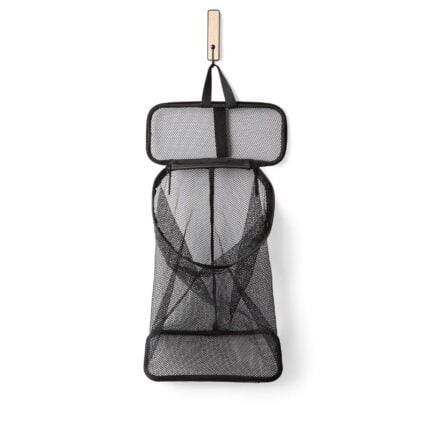
Trust us, this is an absolute game changer. Super compact, a hanging mesh laundry bag stops your dirty clothes from stinking, you don’t know how much you need one of these… so just get it, thank us later.
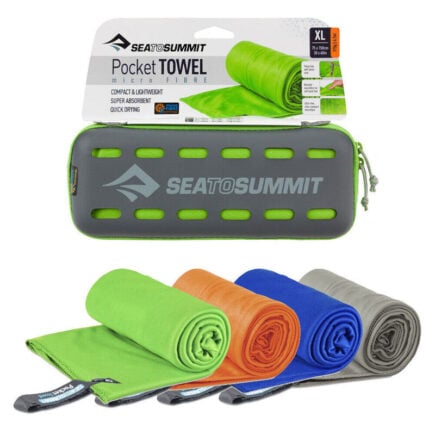
Sea To Summit Micro Towel
Hostel towels are scummy and take forever to dry. Microfibre towels dry quickly, are compact, lightweight, and can be used as a blanket or yoga mat if need be.

Grayl Geopress Water Bottle
Always travel with a water bottle! They save you money and reduce your plastic footprint on our planet. The Grayl Geopress acts as a purifier AND temperature regulator. Boom!
Staying Safe in China
Generally speaking, China is a very safe country to travel in. My wife always likes to comment to people that she felt safer stumbling down the streets of Beijing alone and drunk at 3AM than she does going downtown in my hometown of Detroit for a concert. Fair point, Rachel.
Of course, you have to exercise a bit of common sense when backpacking China just like any country.
Despite what my wife says, bad shit definitely can and will happen in the middle of the night, especially in bar districts. One of the biggest safety concerns in China is drunk locals trying to pick a fight. For some reason, Chinese men love to try and show off their drinking prowess (which they most certainly don’t have) in front of foreigners. Sadly, this sometimes leads to confrontations.
If you find yourself in such a situation, it’s best to just walk away. It’s never a one-on-one fight here, as the mob mentality always takes over. Plus, as a foreigner, you will immediately receive the blame and be the one who spends the night in a cold, miserable jail cell.
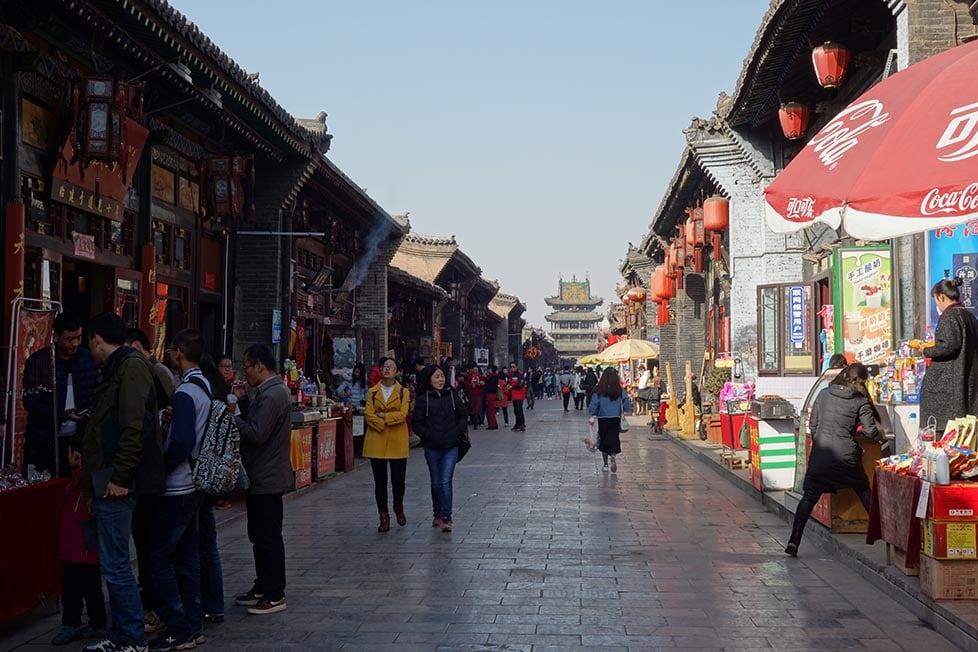
Image: Nic Hilditch-Short
Just like many places around the world, pickpocketing is a huge concern when backpacking China. Be mindful of your things on public transportation and at crowded tourist sights. I once had a guy pick my wallet, grab the cash, and drop it on the ground in the blink of an eye when stepping off a bamboo raft in Yangshuo. These people are pros, so you have to be vigilant at all times.
For many travelers to China, the air pollution is a major concern. While you won’t have to worry about this when you’re out trekking in the mountains, it’s definitely a problem in the big cities.
It’s not a bad idea to invest in a good facemask with a filtration system if you’re going to spend a lot of time in the cities. Take it from me – I moved out of Beijing after 5 years because I couldn’t take the pollution anymore.
Sex, Drugs & Rock ‘N Roll in China
China has a lively nightlife scene, but it’s quite different from what you might find in much of Europe or Southeast Asia. Every major city has its own personality: Beijing is known for its live music and underground clubs, Shanghai leans towards cocktail bars and rooftop venues, Chengdu has a famously laid-back bar scene, and Chongqing’s hot pot restaurants often stay busy long into the night.
Chinese mass produced beers is everywhere (ranging from 2 – 5%) and craft beer bars exist in trendy areas. If you’re drinking, you’ll quickly become acquainted with baijiu, China’s infamous sorghum spirit. It’s a powerful acquired taste, to say the least, and sharing rounds of baijiu is an important part of socialising for many locals. Beer is cheap and widely available, although the mainstream lagers tend to be fairly light. If you’re after something with more character, China’s craft beer scene has grown rapidly in cities like Beijing, Shanghai and Chengdu, albeit at prices similar to those in the West.
One thing worth knowing is that drinking culture can be quite different from what many backpackers are used to. Group toasts and enthusiastic rounds are common, particularly at restaurants and celebrations, but there’s never any obligation to keep up. If you’ve had enough, it’s perfectly acceptable to politely decline another drink.

Photo: Sasha Savinov
When it comes to drugs, the rules are very straightforward: don’t. China has some of the world’s strictest drug laws, and the consequences for possession, use or trafficking can be severe, including detention, heavy penalties, deportation and, for serious offences, lengthy prison sentences. Authorities also carry out drug testing in some circumstances, and traces of drugs consumed outside China may still cause problems after you enter the country. It’s simply not worth the risk.
Prostitution is also illegal in China, even though you’ll occasionally encounter venues that appear to operate in a legal grey area. Enforcement can be unpredictable, and foreign visitors are not exempt from the law. The safest approach is to avoid any situation that could leave you on the wrong side of local regulations.
The good news is that you don’t need any of that to have a memorable night out. China’s cities offer everything from late-night street food markets and live music venues to underground clubs, jazz bars and rooftop lounges. Some of my favourite evenings in China involved little more than great food, a few cold beers and watching the city come alive after dark.
Travel Insurance for China
Traveling without insurance would be risky so do consider getting good backpacker insurance sorted before you head off on an adventure.
Sort out your insurance before you go. There are several good options, but our overall pick is SafetyWing. Most of the Broke Backpacker team has used it at one point or another, and we’ve filed claims for rabies jabs in Bali, a hospital stay in Mexico, and a clinic visit for a stomach bug that wouldn’t quit. All paid out.
It’s month-to-month, no lock-in, no itinerary required, and you can buy it after you’ve already left. A little over $2 a day if you’re under 40.
New SafetyWing customers: use code BROKEBACKPACKER for 8 free weeks of electronics theft coverage. You have to scroll down and click the pink camera on their landing page to enter it, and you have to do it before creating your account.
Click here to find the ideal policy for you.
How To Get Into China
China has tons of international airports, meaning you have plenty of choices to start your trip. Your best bets for flying into China are definitely the bigger cities like Beijing, Shanghai, Guangzhou, or Shenzhen. There are direct flights from these cities to Europe, and North America.
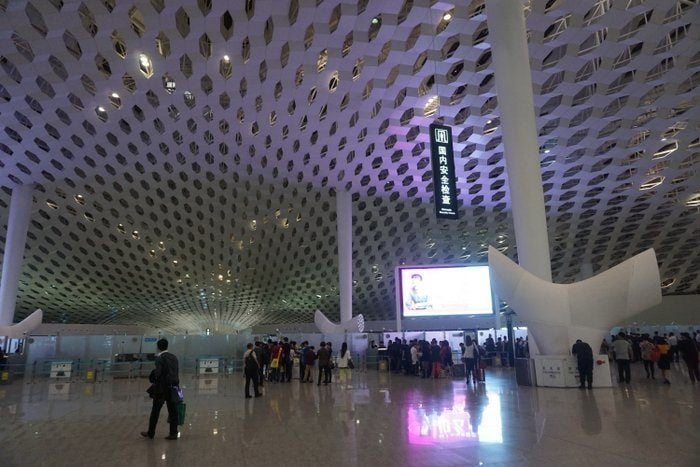
Photo: Sasha Savinov
In this section, we’ll take a look at entry requirements for China and how to travel around the country.
Entry Requirements for China
The visa policy of China is becoming much more user friendly seemingly with each passing month. As of June 2-26, citizens of 50 countries can get a visa on arrival of up to 30 days. This includes the UK, Australia, New Zealand, Canada, Japan, and most EU nations. Note that US citizens still need a visa.
However, here are also several cities you can now visit visa-free as part of the ‘in transit’ scheme. Big cities like Beijing and Shanghai (plus 50 others) now offer 240-hour visa-free visits. This isn’t enough time to see much of China, and you will be constrained on where you can go (you will not be able to buy a train or bus ticket fro example) but it does allow you to check out the highlights of a city before catching a connecting flight. Do note that a lot of airlines and even some Chinese border agents are not fully aware of this and witnessed travellers struggling to get into the country under this scheme!
Ultimately be aware that China’s entry policies are constantly changing. Your best bet is to study the Wikipedia page carefully to see if you need a visa and what kind you should apply for. If you do need a Visa, then you will want to arrange your visa beforehand (if needed) at a Chinese consulate or embassy. Be sure to have all the necessary paperwork, and a fully mapped out itinerary as they tend to be very picky and look for any reason to send you out the door to a print or copy shop.
Entry Requirements for Hong Kong and Macau
The two special administrative regions have their own entry policies which differ from the Chinese mainland. They’re a lot less complex and more generous when it comes to access without a visa.
Hong Kong allows visa-free entry to almost every nationality outside of Africa, Central Asia and the Middle East. Most western nationalities get 90 days visa-free, whilst Brits get 180 days.
Macau also offers visa-free access to many. Brits get 180 days without a visa, the EU gets 90, and the USA and Canada get 30.
How To Get Around China
Start with a short paragraph: China is actually one of the easiest large countries to get around, once you understand the system.
Then break into short subsections;
High-Speed Trains
The backbone of backpacking China. Book via the official 12306 app or site (now more foreigner-friendly than it used to be) or via third-party booking sites like Trip.com. Advance booking is essential during peak periods.
Overnight Trains
Still a great budget option. Hard sleeper is the sweet spot, more social than soft sleeper, more comfortable than hard seat. Good for longer hauls like Beijing–Kunming.

Image: Nic Hilditch-Short
Domestic Flights
When trains don’t reach (western regions, some national parks), flights are surprisingly affordable. Worth comparing on Trip.com or Skyscanner.
Metro and City Transport
China’s major cities have excellent metro systems. Cheap, clean, and easy to navigate with a translation app. Didi (China’s Uber equivalent) works well and now has an English-language version.
Long-Distance Buses
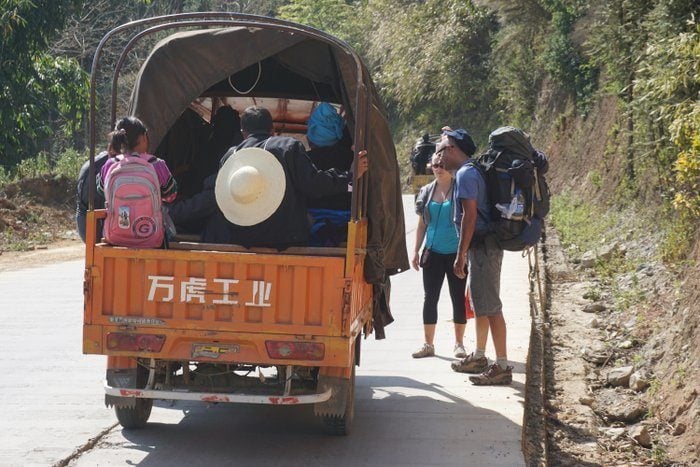
Photo: Sasha Savinov
Still useful for reaching places trains don’t go, particularly in Yunnan and Guangxi. Slower but often scenic.
Bicycle and E-bike
Shared bike apps (Meituan, Hello Bike) are everywhere in cities. They are cheap and fun for urban exploring.
Hitchhiking
Possible but uncommon for foreigners. Language barrier makes it harder than in other countries. Worth mentioning briefly. For more hitchhiking tips, check out our Hitchhiking 101 Post.
What’s New for Backpacking China?
China’s visa policies change all the time, and one bit of good news is that Brits now have visa-free access (yaaaaay), but only until the end of 2026 (booooo), unless it’s extended. The same rule applies to EU citizens.
Good news for everyone who doesn’t have visa-free access is that the 144-hour transit visa has been extended to 240 hours allowing you to enjoy China for up to 10 days without going through the hassle of a full visa application.
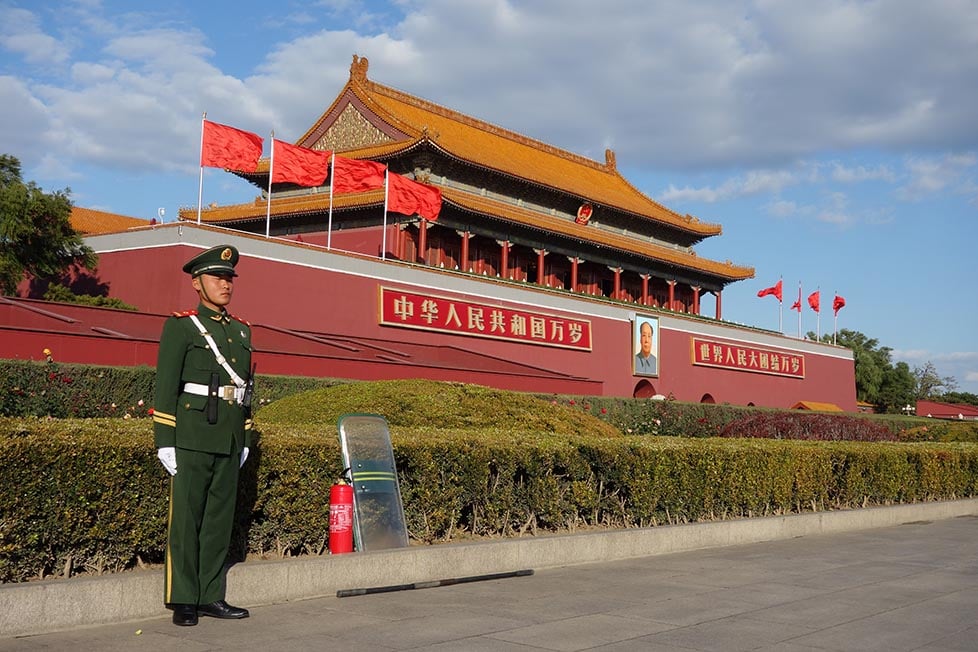
Image: Nic Hilditch-Short
Another positive is that China is fast integrating Mastercard and Visa into AliPay and WeChat. This is great as attempting to pay with foreign cards can be a struggle, and cash is no longer the preferred payment method.
Otherwise, China is rapidly developing, and hoping to expand the number of cities you can access on the 240-hour visa-free transit policy. It’s still pretty cheap, so get in and experience China’s mystical allure before it becomes mainstream on the backpacking trails of Asia!
Working in China
If you’re thinking about extending your backpacking trip, China can be an excellent place to spend a few months, or even a few years. Teaching English remains the most common route for foreign travellers, while a growing number of people also base themselves in Chinese cities for remote work. Just remember that China takes immigration and employment laws seriously, so it’s important to understand the rules before accepting any kind of paid work.
Teaching English
Teaching English is still the most accessible way for many Western travellers to fund a longer stay in China. Salaries are generally competitive, especially outside the biggest international schools, and many employers include benefits such as accommodation, flight reimbursement or health insurance.
That said, the requirements are stricter than they used to be. Reputable schools will usually expect you to have a university degree, a recognised TEFL qualification and the correct work visa before you start teaching. If you’re considering this route, it’s well worth arranging a position before arriving in China rather than trying to find work on the ground.
TEFL courses open up a huge range of opportunities and you can find teaching work all over the world. Broke Backpacker readers get a 50% discount on TEFL courses with MyTEFL (simply enter the code PACK50).
To find out more about TEFL courses and how you can teach English around the world, read our in-depth report on teaching English abroad.
Au Pairing in China
If you have a way with children and don’t fancy teaching, being an Au Pair is a viable option. Global Work and Travel offer an au pair program, where you’ll be given a trip coordinator to support you throughout your stay. They even assist with VISA processing and an online au pair course should you need it.

Volunteer in China
Volunteering overseas is a great way to experience a culture whilst doing some good in the world. There are lots of different volunteer projects in China which you can join ranging from teaching, to animal care, to agriculture to pretty much anything!
China may be an economic powerhouse, but there are still areas where backpackers can donate some time and skills and make a big difference to smaller communities. English teaching is in high demand all over the country, as is help in hospitality and online marketing. You’ll need to apply for an F-visa to volunteer in China, which lets you stay for up to 90 days.
Want to find some awesome volunteering opportunities in China? Then signup for Worldpackers, a platform that connects local hosts with volunteer travelers. As a Broke Backpacker reader, you’ll also get a special discount of $10. Just use the discount code BROKEBACKPACKER and your membership is discounted from $59 a year to only $49.
Programs run through reputable work exchange programs, like Worldpackers, are generally very well-managed and highly reputable. However, whenever you are volunteering do stay vigilant especially when working with animals or children.
What To Eat in China
If there’s one thing backpacking China taught me, it’s that “Chinese food” doesn’t really exist. What most of us grew up eating in the West is usually a heavily adapted version of a handful of dishes. Travelling across China is like travelling across several different culinary worlds, each with its own ingredients, cooking techniques and flavours. You could spend months eating your way around the country and barely scratch the surface.
One of the first things you’ll notice is that meals are almost always shared. Rather than everyone ordering their own main course, locals typically fill the table with several dishes for everyone to pick from. A meal might include vegetables, tofu, meat, noodles and rice, all arriving at different times for the group to enjoy together. It makes eating out a far more social experience, and it’s one of the quickest ways to try a wide variety of dishes.
The food also changes dramatically from one region to the next. Sichuan is famous for its fiery málà flavours, where chillies and Sichuan peppercorns leave your lips tingling. Xi’an serves incredible hand-pulled noodles, cumin-spiced lamb and hearty Silk Road-inspired dishes. Guangdong is all about delicate Cantonese cooking and dim sum, while Yunnan’s cuisine draws on fresh mountain ingredients and the traditions of its many ethnic minority communities. Even breakfast varies wildly depending on where you are.
One of my favourite things about eating in China was the sheer range of options. Tiny corner restaurants often serve some of the best meals you’ll have for just a few pounds, with handwritten menus, plastic stools and queues of local regulars usually being a good sign. At the other end of the scale, China’s major cities are home to some of the finest restaurants in Asia, where centuries-old recipes are elevated into unforgettable dining experiences. Whether you’re grabbing a ¥12 bowl of noodles from a neighbourhood eatery or treating yourself to an elaborate Peking duck feast in Beijing, food is one of the highlights of travelling through China.
My advice? Be adventurous. Point at things you can’t pronounce, order dishes you’ve never heard of, and don’t be afraid to share a table full of food with new friends. Some of the best meals you’ll have in China will be the ones you never planned to eat.
Note that many establishments have a QR code on the table that will take you to an order app with will also (usually) translate the menu into English. Google Translate is also pretty good at translation Chinese menu’s these days.
- Lanzhou Pulled Beef Noodles – As McDonald’s is to the US, Lanzhou Pulled Beef Noodles are to China. Apparently, there are over 20,000 shops selling it. It really seems like there’s one on every corner. A bowl of these delicious noodles will fill you up and only cost $1-2
- Hot Pot – This is one of the most fun dining experiences you can have. You order up a pot of spiced broth and it boils right there on your table. Then you can choose from a variety of meat, fish, and veggies to toss in the pot. Hot pot restaurants can be found all over China, but the best are in Sichuan and Chongqing.
- Dumplings – On the Chinese New Year’s Eve, families all around China make hundreds of dumplings to eat together. They’re filled with all sorts of things – pork and cabbage, eggs and leeks, lamb and carrot – the list goes on and on. A big plate of dumplings never disappoints!
- Kung Pao Chicken – This is one of the only items on Western Chinese restaurants that’s actually in China. Of course, it’s way better in the country where it’s from! A plate of kung pao chicken with some rice is always a good choice for lunch.
- Beijing Roast Duck – If you’re travelling in the capital, you just can’t miss out on a dinner of roast duck. The best places to eat it are Da Dong or Quan Ju De. This is a culinary experience you’ll never forget! That crispy duck will be one of the best things you eat on your trip for sure.
- Dim Sum – This is technically a Hong Kong dish, but then again Hong Kong is technically China. You can find dim sum restaurants in most Chinese cities, but nothing beats having it in Guangdong or Hong Kong. Come hungry so you can try everything.
- Street Food – There is so much delicious street food in China. From the awesome breakfast crepes known as jian bing, to the sticks of grilled lamb called chuan, it’s not hard to eat well in the street. Pull up a plastic stool and join the locals!
- Bai Jiu – If you’re in China, chances are someone will eventually offer you some bai jiu. I like to call it Chinese rocket fuel, because that’s exactly what it tastes like. This liquor distilled from sorghum is China’s favorite booze and can be found everywhere. It doesn’t taste very good, but when in Rome…
For Chinese cooking classes, check out this site for awesome deals.
Chinese Culture
One of the biggest misconceptions about China is that it’s culturally uniform. In reality, it’s an incredibly diverse country. While around 90% of the population is Han Chinese, China officially recognises 56 ethnic groups, each with their own traditions, languages and cuisines. Travelling through provinces such as Yunnan, Guangxi, Qinghai or Xinjiang feels noticeably different from exploring Beijing or Shanghai, and that’s one of the joys of backpacking here.
The best place to experience everyday life isn’t usually a famous attraction, it’s the local park. Wherever you are in China, you’ll find people practising tai chi, dancing, playing cards or chess, flying kites, exercising or simply gathering to drink tea and chat. Even if you don’t speak much Mandarin, don’t be afraid to smile and say “Nǐ hǎo”. In my experience, people often seem reserved at first, but genuine curiosity and friendliness usually win out.
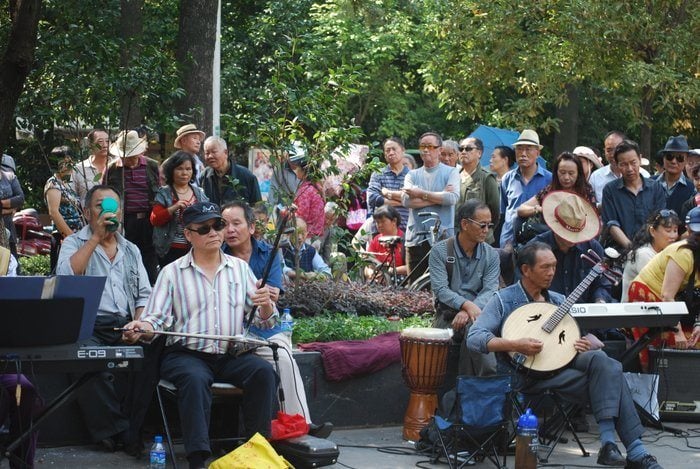
Photo: Sasha Savinov
You’ll also notice the influence of Confucian values in everyday life. Respect for elders, maintaining harmony and avoiding public embarrassment—known as mianzi, or “saving face”, still shape many social interactions. You don’t need to understand the philosophy to travel well here; simply being polite, patient and respectful will go a long way.
Religion remains an important part of life too. Buddhist temples, Taoist shrines, mosques and traditional places of worship are found throughout the country and are often active religious sites rather than just tourist attractions. Dress respectfully, keep noise to a minimum and always check before taking photographs inside.
Perhaps the most fascinating thing about China is how quickly it changes. New metro lines appear, neighbourhoods transform, and technology reshapes daily life at an astonishing pace. At the same time, centuries-old traditions continue in parks, temples and family-run restaurants. Experiencing both sides of modern China is one of the most rewarding parts of travelling here.
A Brief History of China
China is one of the world’s oldest continuous civilisations, with thousands of years of recorded history. Successive dynasties, including the Qin, Han, Tang, Song, Ming and Qing all helped shape the country’s language, philosophy, architecture and culture, leaving behind many of the landmarks that backpackers come to see today. From the Great Wall and the Terracotta Warriors to the Forbidden City and countless temples, China’s imperial past remains woven into everyday life.

Photo: Sasha Savinov
Modern China emerged after the fall of the Qing Dynasty in 1912, followed by decades of political instability, civil war and the Japanese invasion during the Second World War. In 1949, Mao Zedong proclaimed the founding of the People’s Republic of China after the Communist Party emerged victorious in the Chinese Civil War.
The decades that followed saw sweeping political campaigns, including the Great Leap Forward and the Cultural Revolution, both of which had profound and often devastating consequences for Chinese society. In 1989, pro-democracy demonstrations centred on Tiananmen Square were suppressed by the government, resulting in significant loss of life, still a highly sensitive chapter in China’s modern history.
The direction of the country changed dramatically under Deng Xiaoping, whose policy of Reform and Opening ushered in an era of rapid economic growth and greater engagement with the outside world. Deng famously remarked, “It doesn’t matter whether a cat is black or white, as long as it catches mice,” reflecting his pragmatic approach to economic reform. Over the following decades, China transformed into one of the world’s largest economies, modernising at an extraordinary pace while lifting hundreds of millions of people out of poverty. Today’s China is a global economic powerhouse where ancient traditions, cutting-edge technology and a complex political landscape coexist in fascinating ways
Useful Travel Phrases for China
With its four tones and thousands upon thousands of characters, Chinese is definitely an intimidating language to learn. You’ll definitely need a bit of the language when backpacking China though, as English is not exactly prevalent there.
Here are some useful Chinese travel phrases to get you started:
Hello = Ni hao
How are you? = Ni hao ma?
I’m fine = Wo hen hao
Please = Qing
Thank you = Xiè xiè
You’re welcome = Bù kè qì
Goodbye = Zài jiàn
I’m sorry = Duì bù qi
No plastic bag – Wú sùliào dài
No straw please – Bùyòng x?gu?n
No plastic cutlery please – Q?ng bùyào sh?yòng sùliào c?njù
Where is the bathroom? = Xi shou jian zài na l??
What’s this? = Zhè shì shén me?
I want a beer = Wo yào yi ge pí jiu?
How much is it? = Duo shao qián?
If you’re interested in learning Chinese, you should follow the Chinese Language Blog. There are tons of articles on vocabulary and grammar as well as Chinese culture.
Books to Read about China
- Lonely Planet China Travel Guide: The OG of guidebooks, Lonely Planet’s China guide is packed full of useful information to get you through your trip backpacking China.
- River Town: Peter Hessler’s memoir about his time as a Peace Corps volunteer in rural Sichuan is one of the best books on China I’ve ever read. If you dig his style, he’s got a few other books set in China you can pick up as well.
- Factory Girls: If you’re going to read Hessler’s books, you might as well read his wife’s as well. Leslie Chang’s story of the lives of girls toiling away in China’s boomtown factories is an eye-opening read that will make you think twice every time you see that “Made in China” tag.
- Lost on Planet China: When I first moved to China in 2008, my mom bought me this book as a going away present. J. Maarten Troost’s hilarious tale of his misadventures in China perfectly sums up what it’s like traveling in this unpredictable country.
Final Advice Before Visiting China
The biggest piece of advice I can give is to arrive with an open mind.
China can feel overwhelming at first. The cities are enormous, the language barrier is real, the crowds can be intense, and everyday life often works differently from what you’re used to. Rather than fighting those differences, embrace them. Some of the most memorable moments of your trip will come from the unexpected, sharing a meal with strangers, getting lost down an alleyway, or discovering a tiny restaurant that serves the best noodles you’ve ever tasted.
Respect goes a long way here. Be mindful when visiting temples, historical sites and memorials, follow local rules and photography restrictions, and remember that places like the Forbidden City and Tiananmen Square are important cultural and historical landmarks as well as tourist attractions.
Having said that, if you’re looking to continue your travels after China, we highly recommend you go backpacking through Taiwan (Just don’t speak too much about it when you’re in China!)
It’s also worth being aware that certain political topics (including Tiananmen Square, Tibet and Taiwan) are highly sensitive in mainland China. People’s views can differ significantly, and discussions can quickly become uncomfortable or confrontational. Unless you know someone well and understand the context, it’s generally best to avoid raising these subjects yourself.
Finally, don’t worry if everything doesn’t go perfectly. You’ll probably miss a train, mistranslate a menu, or spend ten minutes trying to work out how to order a coffee. That’s all part of travelling here. China rewards curiosity, patience and a willingness to adapt. If you arrive expecting everything to work like home, you’ll probably be frustrated. If you embrace the differences, you’ll leave with stories (and memories) that few other destinations can match.





Hi there, there’s a brand new train line connecting Kunming, China to Vientiane, Laos!
Yeah, when traveling to China I would choose new VPN providers as their servers are not blocked yet there. I used Surfshark during my last trip to China. It worked alright, speed was good enough and stable. Plus, with one account I could use it for a couple of devices I could use social media channel wherever I go. If someone is interested here is the code that I used: (Surf24) it still should work I guess.