Towering mountains and mythological beasts, shiny robots and shinier samurai; Japan is a landscape of extremes. Over seventy percent of Japan is covered by towering volcanic peaks and snow-capped summits, and these mountains, which still hold important religious and cultural significance, provide nothing short of a paradise for budding adventure junkies.
After returning from my latest trip scouring through the country last year, I feel pretty equipped to give you all of my insider nuggets of wisdom. That aforementioned wisdom being how NOT to burn through your budget. As endlessly fascinating as Japan is, it sure has a knack of bleeding you dry.
That’s not to say you can’t do Japan on a budget – it’s just knowing where to scrimp and save so you can dedicate your precious pennies to splurge on experiences that count! If you want to actually see the sights (and eat more than just plain white rice), you need a modern plan.
This guide is my updated system for mastering the archipelago without draining your bank account:
- The Routes: Proven paths through the 70% of Japan covered in mountains, perfect for adventure junkies.
- The Numbers: Transparent and up to date cost breakdowns for food, beds, and transport.
- The Mistakes: Hard-learned lessons from my trip last year on avoiding unnecessary ‘tourist tax’ prices that you might stumble on!
- The Hacks: My ride or die tips and tricks to travel Japan on as little as possible without feeling like you’re missing out.
By the end of this guide, you’ll be armed with more tools than a ninja assassin and ready to take on Japan on your own terms.
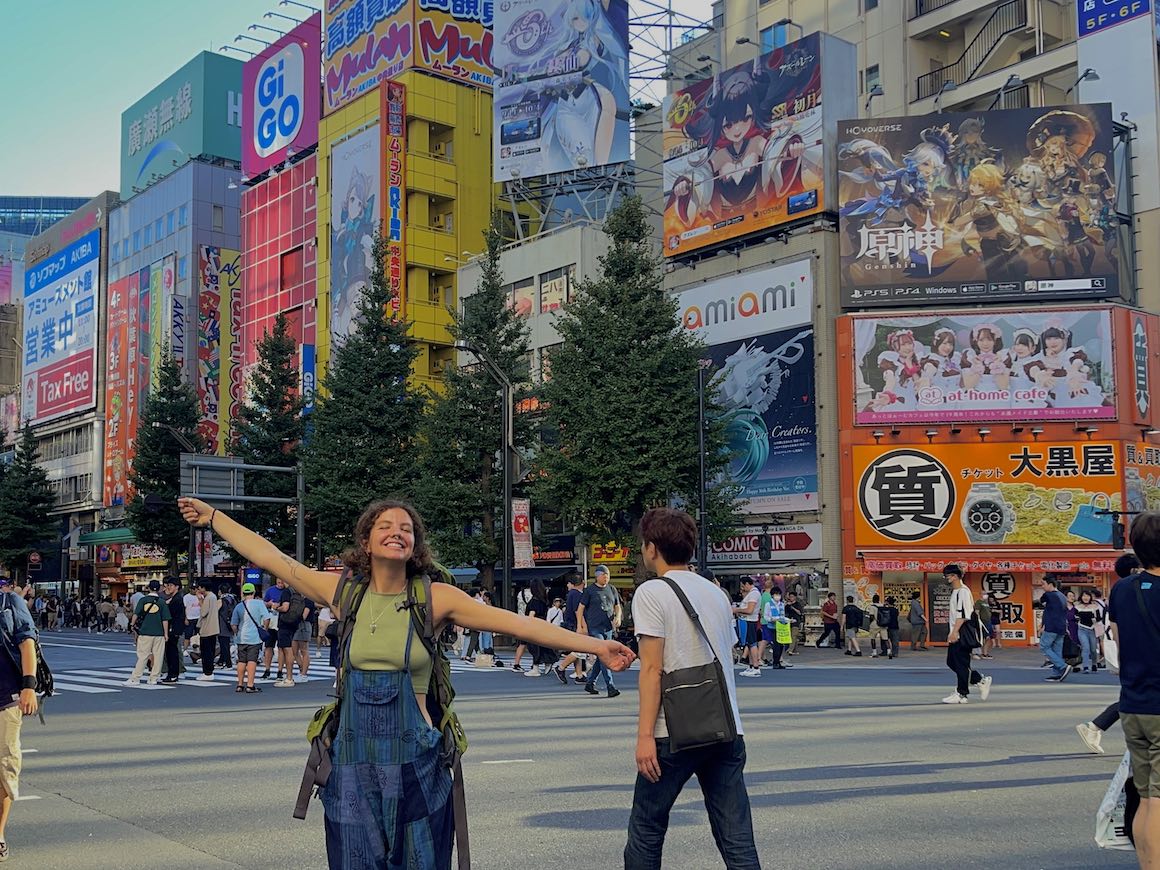
Photo: @audyscala
The Broke Backpacker is supported by you. Clicking through our links may earn us a small affiliate commission, and that's what allows us to keep producing free content 🙂 Learn more.
- Japan in 60 Seconds
- My Copy-Paste Itineraries
- Japan Backpacking Costs: What I Spent and What You Can Expect
- Where to Go in Japan
- Getting off the Beaten Path in Japan
- Things to Do and Eat in Japan
- Where to Stay in Japan
- Best Time to Travel to Japan
- Staying Safe in Japan
- How to Get Into Japan
- Getting Around Japan
- What to Pack for Japan
- Work, and Longer Trips
- Useful Travel Phrases for Japan
- What’s New for a Japan Backpacking Trip
- Culture In Japan
- What I’d Do Differently Next Time
Japan in 60 Seconds
- Best place to start: Tokyo. Throw yourself in the deep end.
- 2-week route: Tokyo, Mount Fuji, Kyoto, Osaka
- 1-month route: Tokyo, Hakone, Kyoto, Kanazawa, Osaka, Hiroshima
- Daily budget reality: $80 as a solo traveller, less so if travelling in a group.
- Biggest first-timer mistakes: Booking excursions and transport last minute. Japan is not forgiving to the spontaneous.
- Book ahead if you care about: Popular activities like Studio Ghibli museum, teamLabs ect. and observatory decks in Tokyo
- Budget killer #1: Eating all three meals a day at restaurants/cafes. Konbinis are your friends!
- Budget killer #2: Booking hostels last minute.
- Budget killer #3: Buying the JR pass without research.
- If you only do 3 things: See the Shibuya scramble at night, temple hop in Kyoto, eat your way through Osaka’s street food scene
Why Go Backpacking in Japan?
For me, Japan has always been the land of the Samurai. I have long admired the staunch bravery of the Samurai and the sheer tenacity of the Imperial Army during World War II. The wonderful thing about Japan is the painless mix of traditional feudal scenes with that of a buzzing, technological beast of a country.
Every area you travel to in Japan is wildly unique yet still, distinctly (oh, so distinctly) Japanese. The cities in Japan are unlike any other; they crackle and pop with energy. Tokyo is a futuristic wonderland of gliding transport, soaring buildings, and bright lights.
Just a short way from Tokyo lies the ancient city of Kyoto and the first Japanese capital of Nara. In Kyoto, Geishas still patrol the streets in traditional dress, temples lie hidden in tranquil bamboo forests and it feels as though you may encounter a band of marauding Samurai at any moment.
In the North, you’ll find Sapporo and many other ski resort towns, and to the South of the main island is Okinawa, a tropical paradise with white sand beaches.
Throughout Japan, you’ll find dense jungles, craggy mountains, and sparkling lakes, thanks to Japan’s many National Parks. As well to the culture, many people visit Japan to see its sparse variety of landscapes and biodiversities.
My Copy-Paste Itineraries
Honestly, there is so much to do and see in Japan. You can easily spend weeks in Japan, or even months, exploring the massive Tokyo and barely scratch the surface.
If you have the time (and money), I suggest spending extra time staying in Tokyo and Kyoto. If you don’t have the time, then check out these two awesome itineraries, which will give you some solid exposure to beautiful Japan. Trust me, it’s the ideal backpacking destination for your next trip.
2-Week Travel Itinerary: The Heavy Hitters
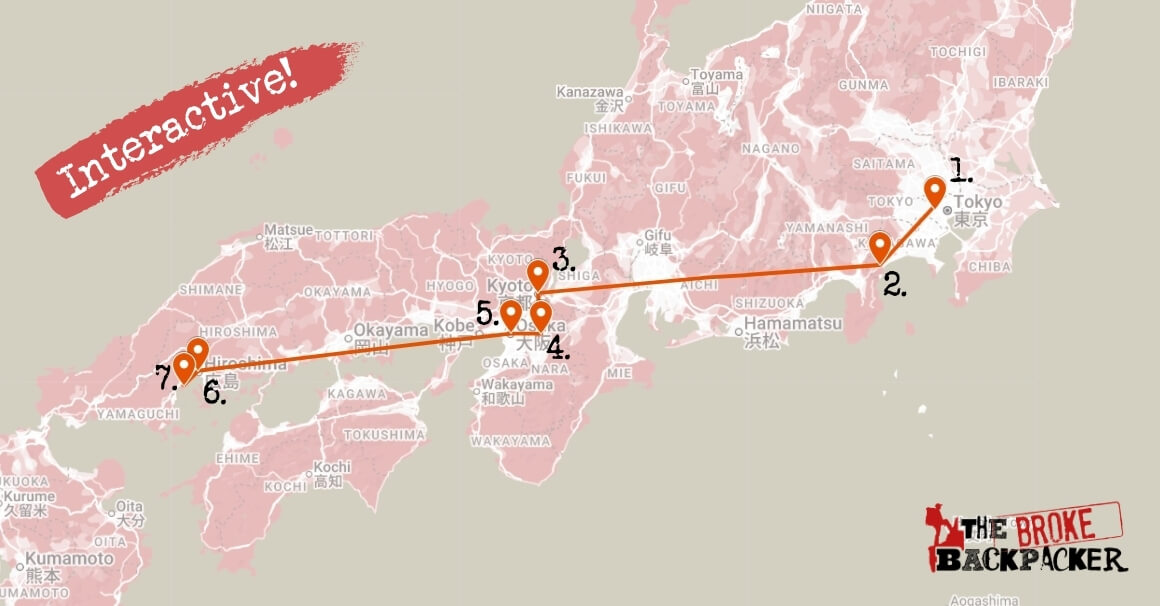
This is the route with ALL the heavy hitters. It hits the neon chaos and the ancient temples in one shot. It is the ideal first-timer’s dash across the main island.
- Stop 1 – Tokyo: Settle into the chaos. Tokyo is HECTIC, so explore by neighbourhood rather than a checklist. Eat constantly, walk even more, and accept that you’ll only see a fraction of this beast.
- Stop 2 – Hakone: A complete shift in pace from Tokyo. Famous for hot springs, mountain scenery, and (if the weather gods are on your side) iconic views of Mt. Fuji across Lake Ashi.
- Stop 3 – Kyoto: History-heavy and walking-intensive. Early starts are mandatory – the magic of the temples is better before the tour buses arrive.
- Stop 4 – Nara: A perfect day trip from Kyoto. The bowing deer are the main attraction, and they are equal parts cute and chaotic. Don’t miss the Great Buddha at Todai-ji.
- Stop 5 – Osaka: In Osaka, food comes first, and everything else second. It’s louder and grittier than Kyoto. Hit the Dotonbori at night for the best neon-soaked street food.
- Stop 7 – Miyajima Island: Coastal scenery just off Hiroshima. Stay overnight once the day-trippers leave to have the ‘floating’ shrine and wild deer to yourself.
- Stop 6 – Hiroshima: A somber but necessary stop. The Peace Memorial Park and Museum are essential for understanding modern Japan.
Pro Tip: Don’t over-plan! Spending your entire trip on the subway is a miserable way to see the city. One major ‘neighborhood’ per day is plenty.
3-Week Travel Itinerary – Focus on Mountains
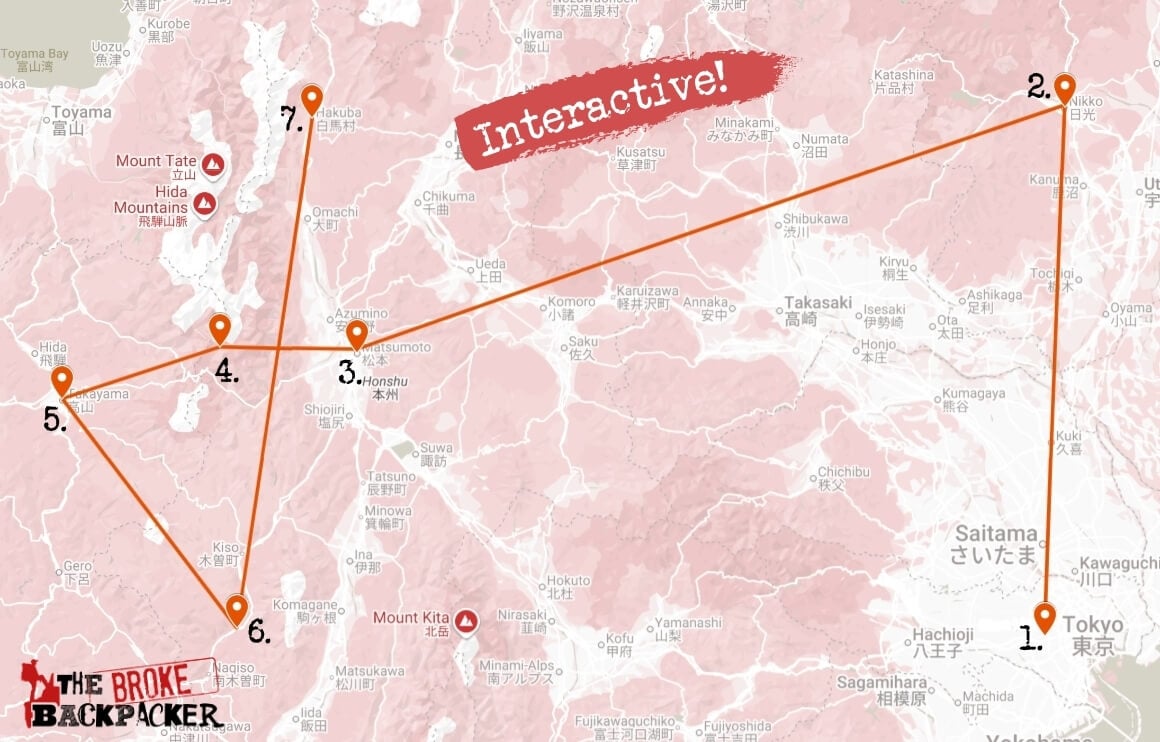
This route is for the hikers swapping subways for trails. Use Tokyo as a warm-up, not the main event. This itinerary is all about scale and altitude.
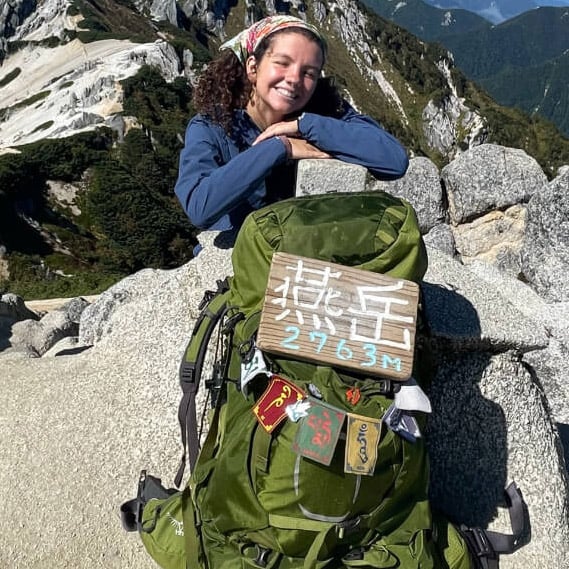
Photo: @audyscala
- Stop 1 – Tokyo: Get used to the transport system and the scale of the city before heading inland. Pick one area per day and stay there rather than hopping across the city. If you want to be at the heart of the action, stay in a hostel around Shibuya.
- Stop 2 – Nikko: Forested mountains and waterfalls. This is an easy escape from the city and serves as a great introduction to Japan’s alpine side. Plus, there are some amazing places to stay here for peace and tranquillity.
- Stop 3 – Matsumoto: This is where you let the mountains start to do the talking. The city is manageable and serves as the landing pad for adventures into the Japanese Alps.
- Stop 4 – Kamikochi: My FAVOURITE stop in Japan <3 High-altitude valleys and alpine lakes framed by epic mountains. Head further into the park to find the trails all to yourself.
- Stop 5 – Takayama: Traditional streets and local food (Hida beef!) with the scenery as a backdrop. It’s a great spot to recover after the harder mountain days.
- Stop 6 – Kiso Valley: Step back in time. Old post towns (Magome and Tsumago) are linked by forested trails that follow historic trade routes.
- Stop 7 – Hakuba: Big scenery with flexible effort levels. High ridgelines and wide-open views give this stop a distinctly alpine feel.
Pro Tip: Book your Kamikochi or Takayama accommodation as far in advance as you can muster. These spots are tiny and fill up fast, especially over weekends.
1 Month Travel Itinerary – Trail Adventure
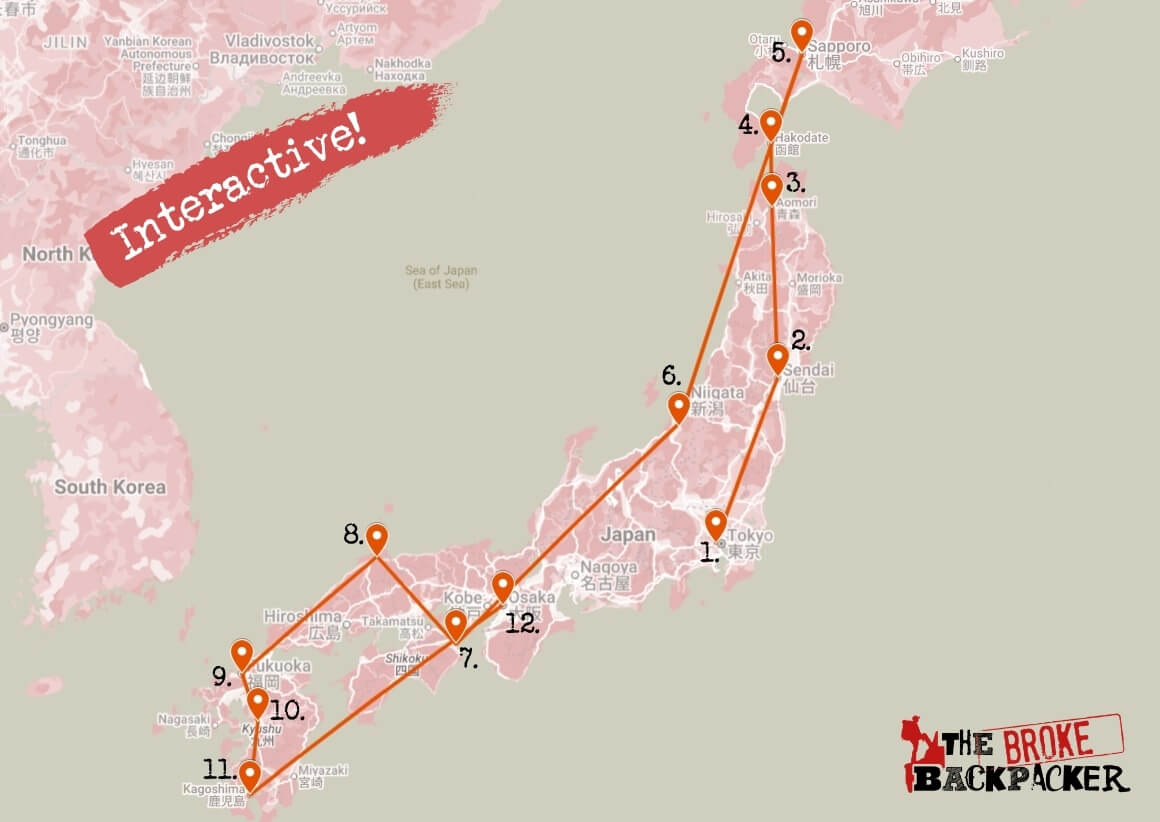
This route is for the traveller who values the train journey just as highly as the destination itself. We’re swapping hiking boots for window seats, utilising Japan’s most iconic scenic lines and high-speed Shinkansen to loop through the heart of the country.
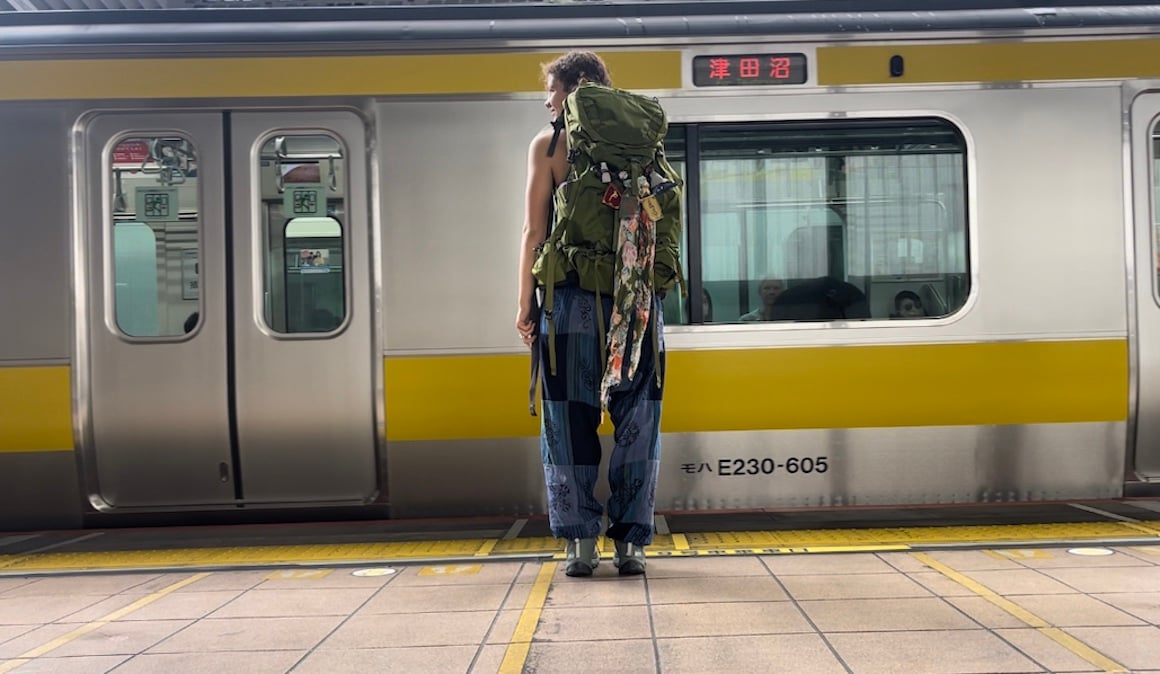
Photo: @audyscala
- Stop 1 – Tokyo: Your chaotic base of operations. Spend these days figuring out which regional passes actually make sense for your wallet before the Shinkansen starts eating your budget.
- Stop 2 – Sendai: Take the Tohoku Shinkansen north. Use Sendai as a base for the Senseki Line which hugs the coast of Matsushima Bay, one of Japan’s three most scenic views.
- Stop 3 – Aomori: Board the Resort Shirakami. It’s a train built for people who prefer scenery and local sake over actual speed.
- Stop 4 – Hakodate: You’re heading through a massive tunnel under the ocean to reach Hokkaido. The journey speeds along the Volcanic Bay for epic ocean vistas, but the prices in the north will start to bite, so watch your food spend.
- Stop 5 – Sapporo: The local rail lines here are the only way to see the massive scale of the wilderness unless you feel like walking through a blizzard.
- Stop 6 – Niigata: Board the Koshikura ShuKura. It is a designated sake train. Yes, Japan actually has a train dedicated to drinking regional booze while you stare at the sea.
- Stop 7 – Kanazawa: The Hokuriku Shinkansen will drop you here in record time. It’s the perfect place to wander through samurai districts at 2am and marvel at the wooden architecture that paints the town.
- Stop 8 – Matsue: This is “Slow Japan” at its best. The train tracks are often just feet away from the waves, offering some of the most meditative rail travel in the country.
- Stop 9 – Fukuoka: Cross into Kyushu via the Shinkansen. Fukuoka is the terminal for the most unique “designer” trains in the world.
- Stop 10 – Kumamoto: Ride the Aso Boy! – a train designed specifically for views (and kids, with a wooden ball pit) that winds into the massive volcanic caldera of Mt. Aso.
- Stop 11 – Kagoshima: The end of the line. e. Take the black and white coastal train to the southernmost tip of the mainland.
- Stop 12 – Osaka: Use the Sanyo Shinkansen for the long trek back. If you have yen to burn through, you can pay a small supplement to use the ‘Nozomi’ trains with your pass, cutting down the four hour journey significantly.
Japan Backpacking Costs: What I Spent and What You Can Expect
Unless you’ve been living under a rock, you’ll know that the yen is pretty weak at the minute. No wonder every man and his dog has been flocking to get a sweet, sweet taste of Japan for a fraction of the cost.
With expectations of affordable far flung lands promised to me, I headed to Japan and, although not eye watering, I was fairly surprised with how much my daily costs racked up compared to my usual stomping ground of South East Asia. If people say this is the cheapest Japan has been in ten years, I’d hate to see how rinsed I’d have felt then…
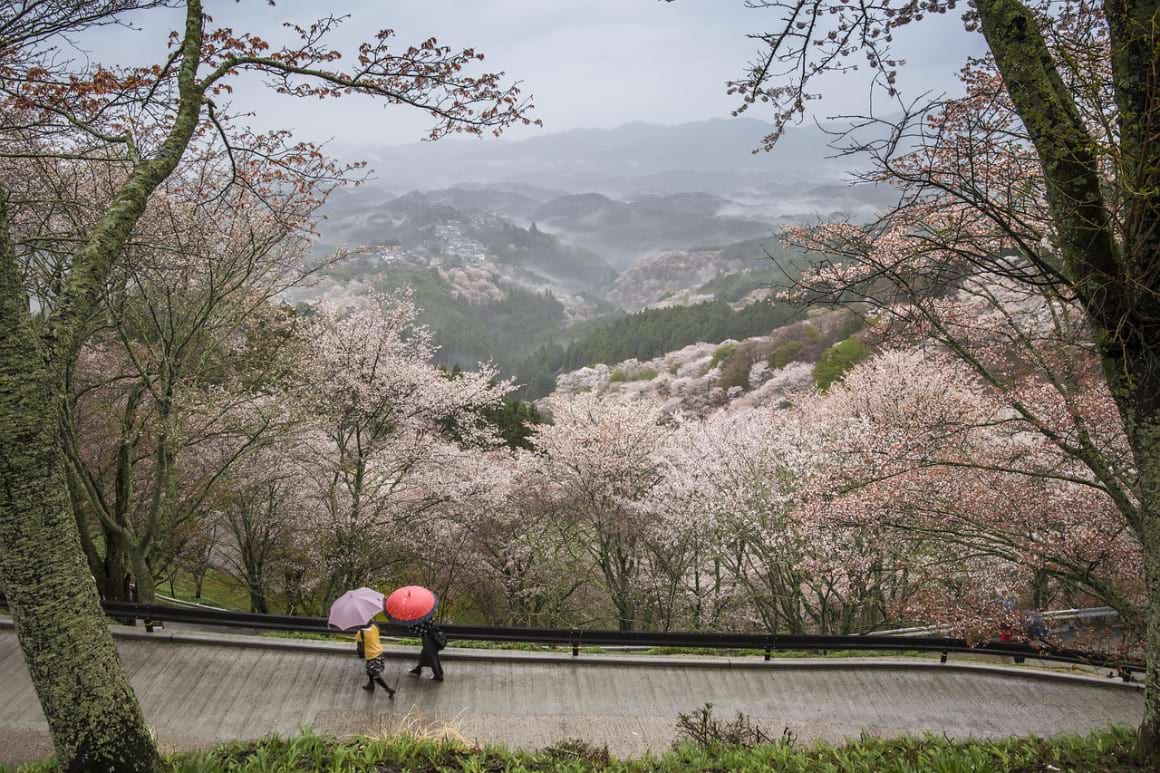
If there’s one place the budget takes a hit, it’s accommodation. And if you’re travelling solo, you feel that solo tax hard. Splitting hotels works out to be massively cheaper than dorms, but this is a necessary evil unless you plan on camping, couch surfing and slumming it in stations till the first train (a rite of passage for one night, but not a realistic long term plan).
So yes, a weak yen does equal more bang for your buck. But pair that with record tourist numbers, rising visitor taxes, and inflation creeping into everyday prices, and the savings aren’t quite as dramatic as the headlines suggest. If you’re tempted to add Japan as a stop on a wider Asia trip, take whatever you’ve been spending and triple it.
So can you still do Japan on a budget? Of course. You won’t be living like a king like you would in SEA, but with a bit of thriftiness, it certainly isn’t out of the realm of possibility. Book accommodation in advance, travel slow and become best friends with the mighty but humble konbini and you too can experience the joys of sushi conveyor belts and robot cafes.
Accommodation
- Hostels. There are some good options set up for backpackers. A bed in a ten-bed dorm often costs around $30. (Hey cheaper than Western Europe!) If you’re booking hostels, K’s House is a solid go-to and their direct booking loyalty benefit can save you money across multiple cities.
- The “Kyoto Tax” is here. As of March 1, 2026, Kyoto introduced a tiered accommodation tax. Even if you’re in a dirt-cheap hostel (under ¥6,000), you’re still coughing up ¥200 per night. If you’re staying in a fancy Ryokan, it can hit ¥10,000. Stick to the dorms, kid.
- Camping. I know a couple of girls who just hitchhiked and wild camped around Japan, so it’s definitely possible to camp. Just be wary of the wild boars! You’ll have to tie your food up in a tree, but the upside is that you’ll be able to sleep for free!
- Couchsurfing. Travelling by Couchsurfing in Japan is a fantastic option if you’re travelling solo. There are plenty of gracious hosts ready to flex their hospitality cred.
- Hotels and Airbnb. These only really make sense if you’re travelling with others. Split costs often work out cheaper per person than dorm beds.
Pro tip: Hostels book out fast here, especially over the weekends and holidays. Don’t get stung like me thinking you can be spontaneous, only to be left with dregs or spots way out of my budget.
Food
Like other people, food was one of my main things drawing me to Japan. And it sure did NOT disappoint. Emblematic of everything Japan does, food here is of mindblowing quality.
And one things for sure – it’ll ruin 7/11 for you for life. You could eat all three meals here alone (which I did many a time when budget was tight). Quality does not equal blowing your budget though, as you’ll find plenty of spots that’ll keep you well fed for under $10.
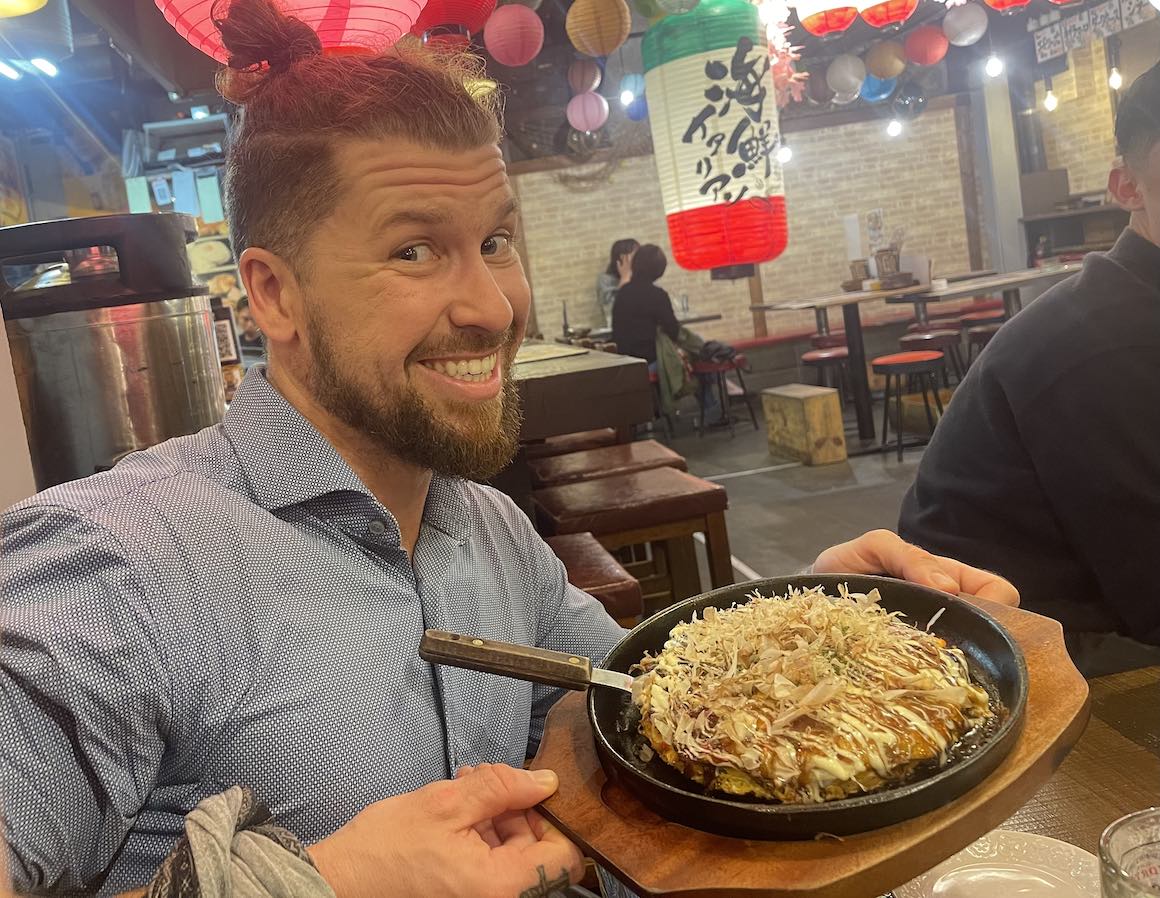
Photo: @audyscala
- Cheap sushi. Conveyor-belt and no-frills sushi spots are a solid budget meal. Filling enough, easy to find, and cheap enough to eat regularly without thinking twice.
- Konbini food. An absolute backpacker staple. Rice bowls, noodles, sandwiches, snacks. Easy to spend a few quid and walk away full. My favourite is the egg sando from 7/11.
- Late Night Supermarket Hauls. This is the ultimate pro tip: hit the supermarkets (like Life or Seiyu) after 8:00 PM. Those bento boxes and sushi platters get slapped with 50% off stickers. You can eat like a king for as little as ¥600.
- Ramen, udon, and curry shops. Fast, hot, and everywhere. These sit comfortably in the cheap-meal bracket and will keep you well fed after a day of exploring.
- Restaurants. This is where I urge you to splurge every once in a while – you’re in Japan after all. Casual restaurants cost far less than expected in Japan, but spend a bit more and you’re pretty much guaranteed to be served a meal you’ll remember long after the trip.
- Splurge Meals. Wagyu steak, premium sushi and traditional Japanese spots with a queue to follow are worth at least one venture, even on a backpacking budget.
- Alcohol. Alcohol is surprisingly affordable in Japan. If you keep out of the boujey rooftop bars, you’ll find konbinis and izakayas will keep you suitably buzzed throughout your trip. Just beware of cover charges as you’ll find bar hopping quickly tally up.
Transport
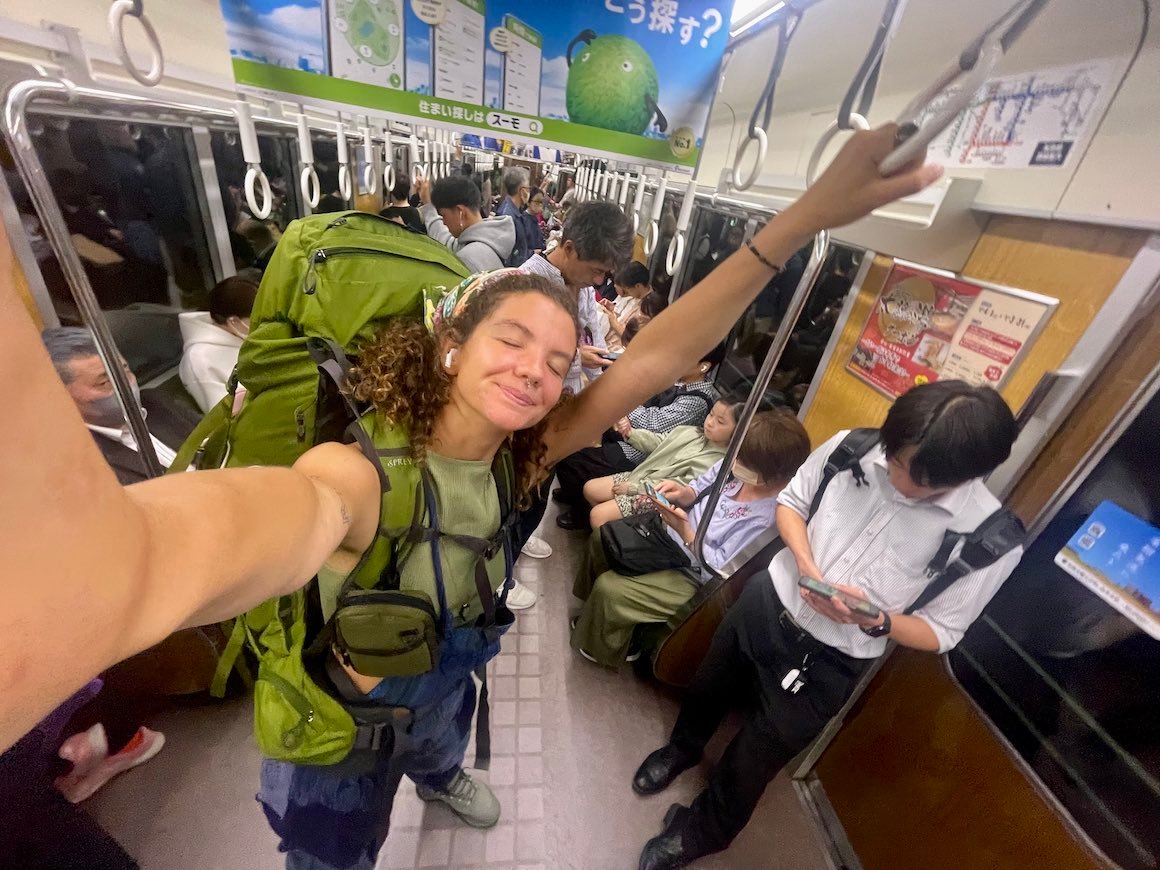
Photo: @audyscala
- Metro & local trains: The bread and butter of Japan’s public transport system. Dubbed the best transit system in the world, Japan’s trains are frequent, affordable and ridiculously easy to navigate.
- Japan Rail Pass: It’s no longer the budget hero it once was. Price hikes mean it rarely makes sense for backpackers unless you’re doing multiple long-distance Shinkansen trips back-to-back. Most people are better off buying individual tickets as they go.
- Regional & multi-day rail passes: These still have value. Area-specific passes can save money if you’re staying within one region rather than zigzagging across the country.
- Domestic flights: Sometimes, domestic flights work out to be cheaper than the Shinkansen – especially if you’ve only got carry-on. JAL and ANA both offer discounted domestic fares for foreign visitors, often just over 10,000 yen per flight. These need to be booked before arriving in Japan.
- Night buses: The cheapest way to cover big distances. Slower than trains but far easier on the wallet. Booking an overnight bus means 8 hours of pain but at least you save a night in accommodation!! Not glamorous in the slightest, but when is backpacking, really?
- Bus companies: Willer is one of the cheapest and runs extensive night services. Booking ahead is almost always cheaper.
- Hitchhiking: Yes, it’s still a thing. Works best if you’re flexible and not running on a tight schedule.
Saying farewell to Japan Departure Tax. Just a heads up – if you’re flying out after July 1st, 2026, the international tourist tax is tripling to ¥3,000. It’s usually hidden in your ticket price, but it’s one more reason to stay as long as possible to lower your “cost per day.”
Japan Daily Budget Ranges
| Expense (Per Day) | The Broke Backpacker | The Frugal Traveler | Creature of Comfort |
|---|---|---|---|
| Accommodation | $25–$40 (Hostel dorms/capsules) | $45–$70 (Nice capsules/Guesthouses) | $85+ (Business hotels/Ryokans) |
| Food | $15–$25 (Konbini & Ramen) | $30–$50 (Lunch sets & Izakayas) | $70+ (Sushi & Wagyu splurges) |
| Transport | $5–$15 (Walking & Local IC) | $20–$40 (Highway buses/Night bus) | $60+ (Shinkansen/Regional Passes) |
Where I Actually Saved the Most Money
Transport Strategy (The Big Kahuna)
- What I Did: I actually never took a Shinkansen at all! I know it’s a bucket-list experience for some, and I’m sure I’ll finally take one on my next return to Japan, but I genuinely didn’t need to take one for my trip this time round. Instead, I lived and breathed local trains and overnight buses. The Willer Express Night Bus is basically a hotel on wheels that gets you from Tokyo to Osaka for a fraction of the Shinkansen price. Plus, I racked up a dangerous step count everyday by walking wherever I could.
- What I’d Avoid: Don’t even think about a taxi. They’re basically mobile money-vacuums. And don’t buy a JR Pass unless you’re planning to visit every single prefecture in a week (which sounds like a nightmare, honestly).
- Estimated Savings: $200+ per week (depending on how much you travel).
Accommodation Hacks
- What I Did: Hostel life is non-negotiable here. Book far in advance to get the best bang for your buck. I also looked for Guesthouses in slightly less touristy areas. Sometimes a 15-minute train ride can save you a bundle.
- What I’d Avoid: Forget those fancy Ryokans with their private onsens and $300-a-night price tags. You can find public onsens (Sento) for a few bucks and still feel like royalty.
- Estimated Savings: $30–$50 per night.
Food Strategy
- What I Did: I got reaaaaaal cosy with the holy trinity of konbinis: 7-Eleven, Lawson, and FamilyMart. Their onigiri and sandwiches are surprisingly good and incredibly cheap. I splurged on bucketlist meals when the opportunity arose, but didn’t make it a daily habit.
- What I’d Avoid: Skip the touristy restaurants with English menus prominently displayed outside. They’re usually overpriced and lack that authentic charm.
- Estimated Savings: $15–$25 per day.
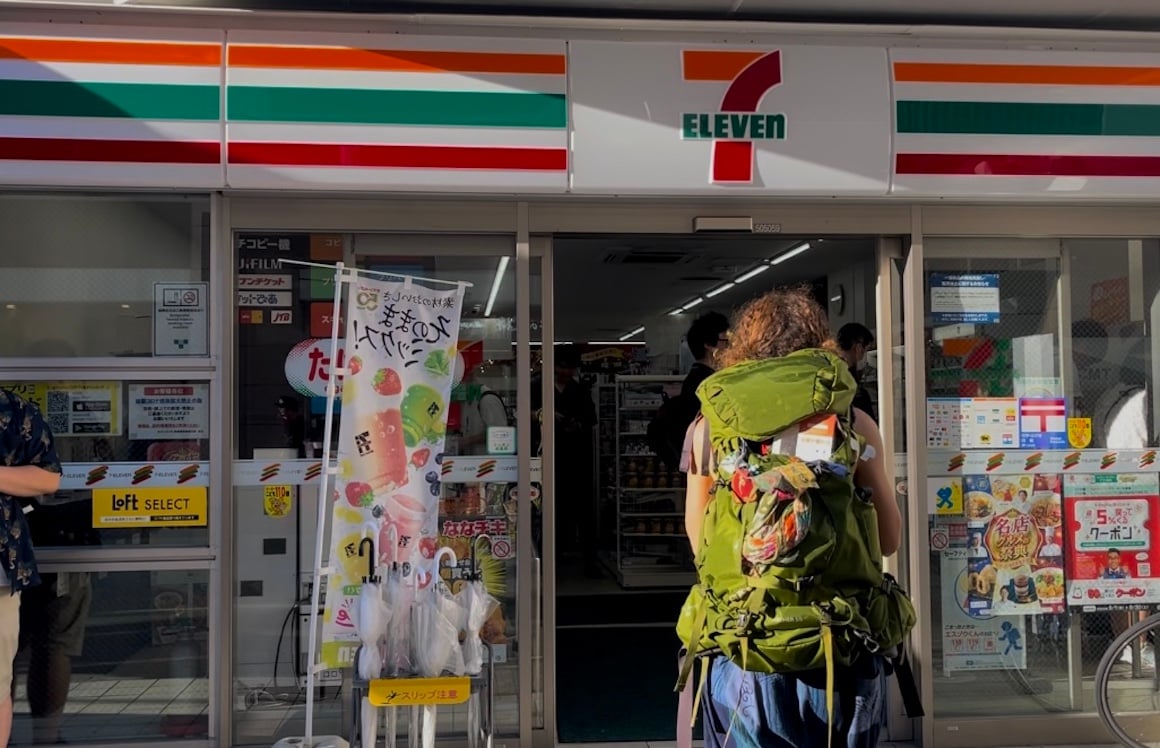
Photo: @audyscala
Activities (The Free + Paid Balance)
- What I Did: I prioritised free temples and parks. Kyoto has plenty of them, and they’re just as beautiful as the ones that charge an entrance fee. I also spent a lot of time just wandering through different neighbourhoods – people-watching is the best free entertainment there is.
- What I’d Avoid: Don’t feel like you have to pay for every single ‘must-see’ attraction. Choose a few that really interest you and skip the rest. Sometimes the best experiences are the ones you didn’t plan for.
- Estimated Savings: $10–$20 per day.
Connectivity (eSIM vs Wi-Fi)
- What I Did: I went with an eSIM. I was connected as soon as I touched down in Tokyo and didn’t have to worry about running out of data as I could easily keep it topped up.
- What I’d Avoid: Avoid those expensive international roaming plans from your home carrier. Physical sims are okay if your mobile doesn’t have eSim capabilities, but avoid inflated prices at the airport.
- Estimated Savings: $10–$20 for the whole trip.
Where to Go in Japan
You really can’t go wrong no matter where you go in Japan. Even a simple stroll down the road is guaranteed to contain something pretty and a tasty snack from the konbini.
Still, here are my top places in Japan to explore!
Backpacking Tokyo
- Best for: Urban explorers, foodies, and people who don’t mind a little sensory overload.
- How long I’d stay: 4–7 days (minimum). Anything less is just a blur of neon and exhaustion.
- Don’t miss: Tsukiji Fish Market at the crack of dawn, a sunset view from the Tokyo SkyTree, and a weirdly hypnotic afternoon in Harajuku.
- Budget tip: Skip the expensive Tokyo temples. They’re fine, but if you’re heading to Kyoto, save your yen for the real heavy hitters there and stick to the free shrines here.
- Where to base: Shinjuku. It’s the ultimate transport hub for day trips and has the highest concentration of legitimately mindblowing nightlife.
- Typical daily spend here: $70–$110. (It’s Japan – your wallet will feel it, but it’s manageable if you get real comfy with konbini meals).
- Book ahead if: You want to see the Studio Ghibli Museum. Seriously, don’t just show up; these tickets are like gold dust.

Backpacking Tokyo is an awesome experience. There is a lot to do here but it definitely helps to have a Japanese friend to show you around. When I first arrived in Tokyo, I crashed with a CouchSurfing host for the first couple of days which really helped my budget and also helped me get the most out of the city.
Explore the food culture. Food in Japan is really a level up, delicate, balanced, and decorative… Each dish is a small work of art. If you’re into sushi, do your research on dining etiquette before you sit down so you don’t look like a total amateur.
For a break from the neon, the Kodokan is the largest Dojo in the world and free to enter – though it’s really only worth the trip if there’s a session happening when you arrive. If you happen to be here during winter, the Marunouchi Illumination turns the cobblestone streets of Nakadori into something actually worth the cold.
Tokyo is a beast, but it’s a super safe city to get loose in. The nightlife is typically insane in that endearing Japanese fashion, and wandering the streets at night is half the fun. For a change of pace, hit up the city’s parks or head over to Harajuku to catch a glimpse of the ‘Harajuku girls’ in their natural habitat.
When it comes to crashing for the night, you’ve got some of the weirdest and best options on the planet. You can go traditional with a ryokan (guesthouse) to sleep on tatami mats, or lean into the futurism with a capsule hotel. Since Japan is the birthplace of the capsule hotel, you might as well tick it off the bucket list.
There are absolutely LOADS of awesome day trips that you can do from Tokyo. I would recommend staying in the Shinjuku area because it’s close to Shinjuku Station which goes to tons of cool places for day trips. You can even get a cool capsule hotel in Shinjuku too.
Backpacking Mount Fuji
- Best for: Bucket-list tickers, hikers, and anyone who doesn’t mind a 3 a.m. wake-up call.
- How long I’d stay: 2–3 days. One to prep, one to climb/recover, and maybe one to actually see the mountain from afar.
- Don’t miss: A sunrise from the summit and a cycle around Lake Kawaguchiko for those postcard-perfect views of the peak.
- Budget tip: Head to the Hakone township. It’s part of the Fuji-Hakone-Izu National Park and is generally the cheapest base for conquering the summit.
- Where to base: Kawaguchiko or Hakone. Both have solid hostels where you can find a crew to climb with.
- Typical daily spend here: $50–$90 (More if you’re buying gear or paying for mountain huts).
- Book ahead if: You’re climbing in the official season (July–August). Mountain huts and decent hostels fill up fast when the weather is clear.
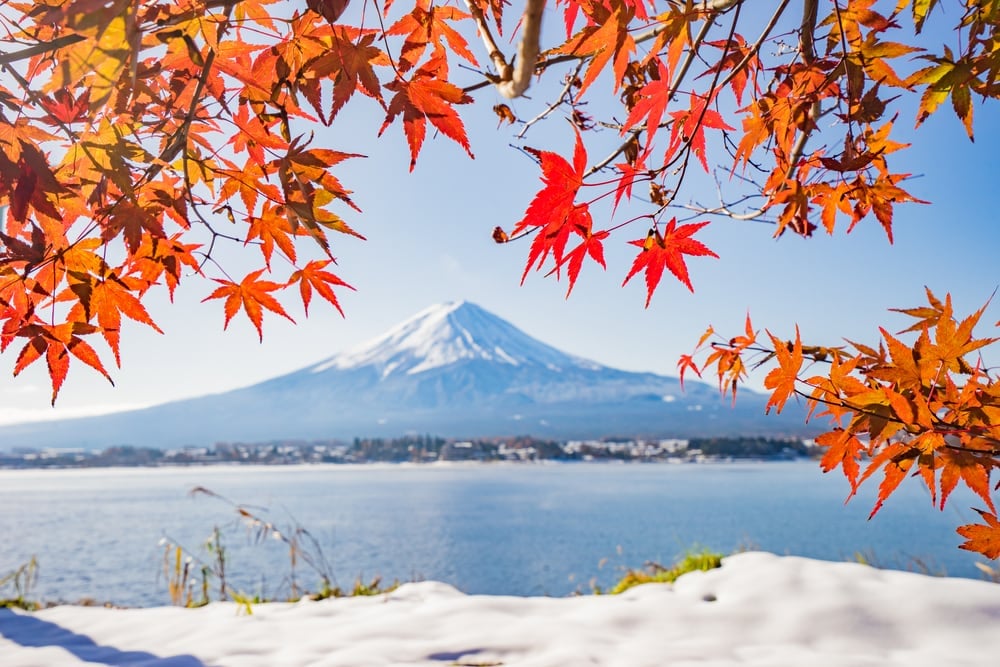
Mount Fuji is Japan’s ultimate icon, and watching the sunrise from the top is a staple for any backpacker’s bucket list. While the climb itself isn’t technically difficult, don’t underestimate it. It makes sense to do a bit of training beforehand, and for the love of god, make sure you’re loaded with plenty of water, warm clothes, and decent hiking shoes. It is undoubtedly one of the most beautiful places in Japan.
Just fair warning: if you’re looking for a quiet, “alone with nature” moment, you’ve picked the wrong mountain. Fuji is a bit of a circus during peak season, but it’s still a rite of passage. As the Japanese saying goes: “One who never climbs Mount Fuji is a fool; one who climbs it twice is twice the fool.”
The Hakone township itself lies within the Fuji-Hake-Lzu National Park area & boasts stunning views of the iconic volcano Mount Fuji! The scenery here is incredible, and it’s also the cheapest place to conquer the summit of Mt Fuji.
Beyond the hike, the scenery in the surrounding National Park is incredible. Lake Kawaguchiko provides an ideal standpoint for epic views, with some enchanting old towns nearby that are worth a wander. Finding a dope hostel in the area is key. It’s a great way to meet other people who are equally nervous or excited tackling the climb. It’s a collective struggle, and the reward at the top makes the lack of sleep totally worth it.
Of course, climbing Mount Fuji is totally optional. Renting a bike and cycling around one of the lakes with Fuji looming in the background is an equally epic way to experience the mountain. It’s only actually visible for 1/3 of the year, so keep an eye of visibility sites online and pray that the odds are in your favour before you arrive.
Backpacking Matsumoto
- Best for: History buffs, castle lovers, and anyone needing a pit stop before the mountains.
- How long I’d stay: 2 days. You can see the highlights without rushing, and then you’re ready to move on.
- Don’t miss: Matsumoto Castle and a stroll through the old merchant houses on Nakamachi Street.
- Budget tip: Grab some food and head to the river at night. It’s a solid spot for a cheap dinner with a much better atmosphere than a cramped convenience store booth.
- Where to base: Near the main station or Nakamachi Street. Everything is walkable, so as long as you’re central, you’re golden.
- Typical daily spend here: $50 to $80.
- Book ahead if: You’re planning to tackle the Tateyama Kurobe Alpine Route during the peak autumn leaf season. Remember that the Alpine Route is only open from April to November. If you turn up in December expecting a mountain crossing, you’re going to be disappointed.
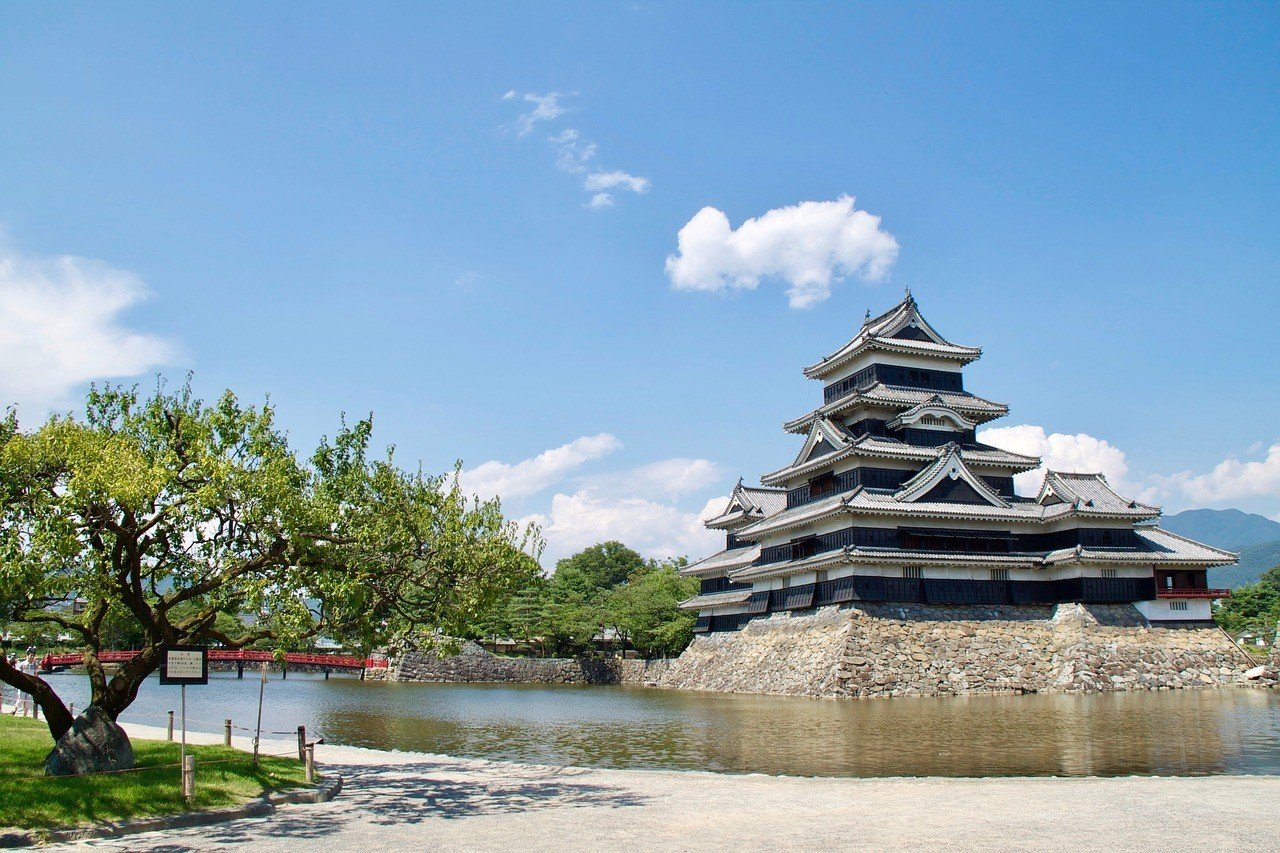
The city itself has a great vibe, especially around the old merchant houses that make you feel like you’ve actually stepped back in time for once. It’s one of the few places in Japan where you can see an original 16th-century fortress, and it’s well worth the look.
The river is a top spot once the sun goes down, especially if you’re trying to keep the budget in check. You really only need a couple of days here to tick everything off the list before moving on to the next adventure.
To head out, catch a morning train to Shinano-omachi. From there, you can take a legendary journey through the mountains over to Kanazawa. It’s a pretty incredible route, just make sure you time it right with the seasonal openings so you don’t end up staring at a closed gate.
You only need 2 days here to see everything. To leave, in the morning get a train from Matsumoto to Shinano-omachi. Then take the incredible Alpine Route to Kanazawa. Just FYI, the Alpine Route is only open from April to November.
Backpacking Kyoto
- Best for: Culture junkies, temple-hoppers, and anyone obsessed with that old-world Japan aesthetic.
- How long I’d stay: 4 to 6 days. You could spend a lifetime here and still not see every shrine, so don’t even try.
- Don’t miss: The Golden Pavilion (Kinkaku-ji) and the bamboo forests of Arashiyama for those legendary, atmospheric walks.
- Budget tip: Stick to places like Kiyomizu-dera. It’s free to visit and honestly more impressive than some of the shrines that’ll charge you a small fortune just to walk through the gates.
- Where to base: Gion. It’s the Geisha district and easily the most colourful part of the city.
- Typical daily spend here: $65 to $100.
- Book ahead if: You’re aiming for a high-end Kaiseki dining experience or a popular ryokan in the heart of Gion.
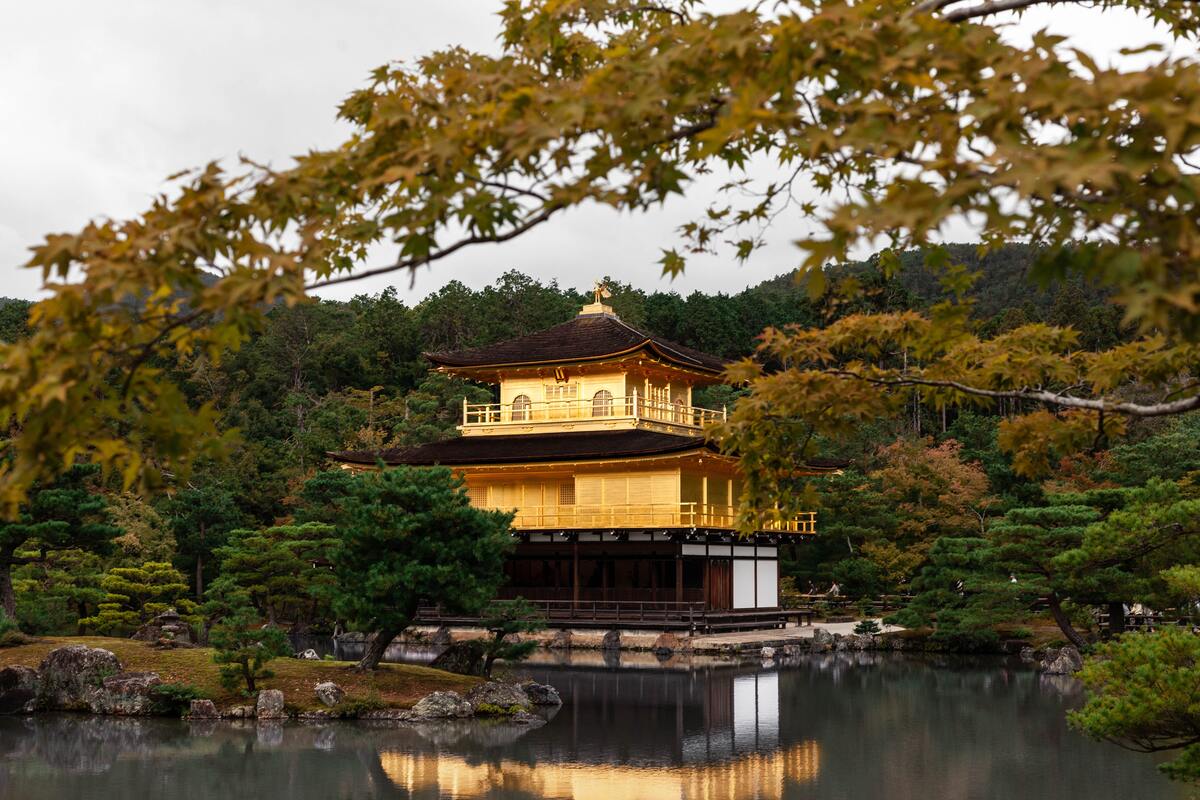
Kyoto is pretty damn special. Crammed with temples, shrines, and legends, it all feels so authentically…Japanese. Among the ancient sites, you can also find a hip, alternative side to the city. There’s a sweet underground scene here, and while it might not hit the same levels of insanity as Osaka, it’s still worth sniffing out.
If you are planning a trip to Kyoto for the first time, you should try to stay in Gion, the Geisha district; it is crazy colourful. A Japanese friend gave me some tips on the correct etiquette when interacting with Geishas. Don’t be that tourist. If you see a Geisha, leave them alone. No photos, no stopping them for a chat. It’s considered incredibly rude, so just keep walking.
Nijo-jo is an impressive castle from the outside, but don’t expect much once you get through the doors as it’s fairly empty. If you’re looking for a personal recommendation, Dairoku-Ji was my favourite temple complex in the whole city. For something a bit more active, Arashiyama is an easy day trip and perfect for a stroll. It’s also worth chatting with your guesthouse or Airbnb host in Kyoto to find the best spots tucked away near where you’re staying.
Backpacking Nara
- Best for: Animal lovers, history buffs, and fans of massive wooden architecture.
- How long I’d stay: 1 day. It is a perfect day trip by train from nearby hubs like Kyoto or Osaka.
- Don’t miss: The bowing deer in the parks and Todai-ji, which holds the title for the largest wooden building on the planet.
- Budget tip: Stick to the park and the exterior of the shrines. Most temples charge around $10 for entry, which adds up fast if you are hitting every single one.
- Where to base: Near Nara Park. It keeps you within walking distance of the main sights and the chilled-out green spaces.
- Typical daily spend here: $40 to $70.
- Book ahead if: You are looking for a specific boutique guesthouse, though most people just visit for the day.
If you have a free day, you can make an easy day trip (by train) to Nara, Japan’s historical capital. Nara is full of historic neighborhoods, chilled-out parks, and more temples including Todai-Ji, the largest wooden building in the world.
While there are plenty of temples scattered around, Todai-ji was the only one I thought was actually worth the entry fee. The rest are less impressive but still charge a premium, so be selective about where you drop your cash.
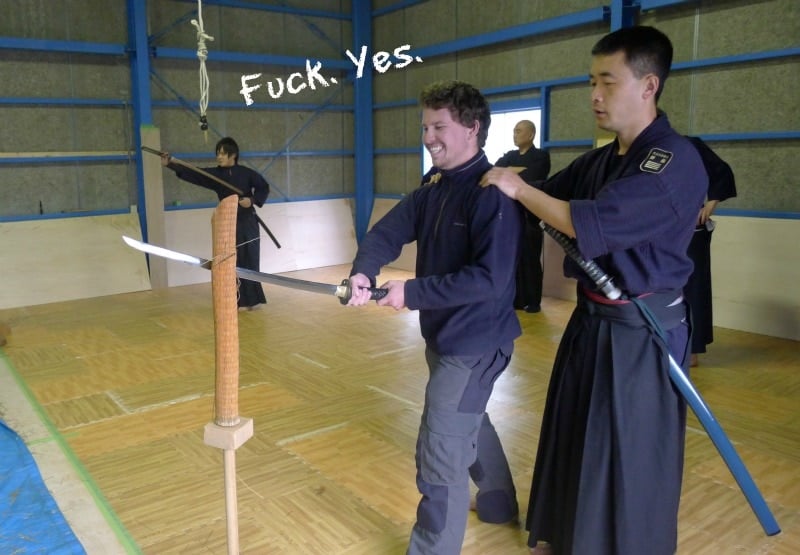
In Japan, it is all about having unique experiences and discovering cool places you wouldn’t normally hear about. My secret weapon for this is always traveling via Couchsurfing. I once got introduced to a Samurai through a host and ended up practicing with a katana, which is exactly the kind of “only in Japan” moment you want to aim for.
Backpacking Hiroshima
- Best for: History buffs and nature hikers.
- How long I’d stay: 2 to 3 days. Give yourself a full day for the city and another for the nearby islands.
- Don’t miss: The skeletal Atomic Bomb Dome and the gorgeous wooded hills of Miyajima island.
- Budget tip: Use the museum lockers for free bag storage and take advantage of the free films in the museum’s small cinema to save on tour costs.
- Where to base: Near the Peace Memorial Park. It’s central, well-connected, and puts the main historical sites at your doorstep.
- Typical daily spend here: $55 to $85.
- Book ahead if: You want a highly-rated hostel during the August 6th memorial services, as the city fills up with visitors from around the world.
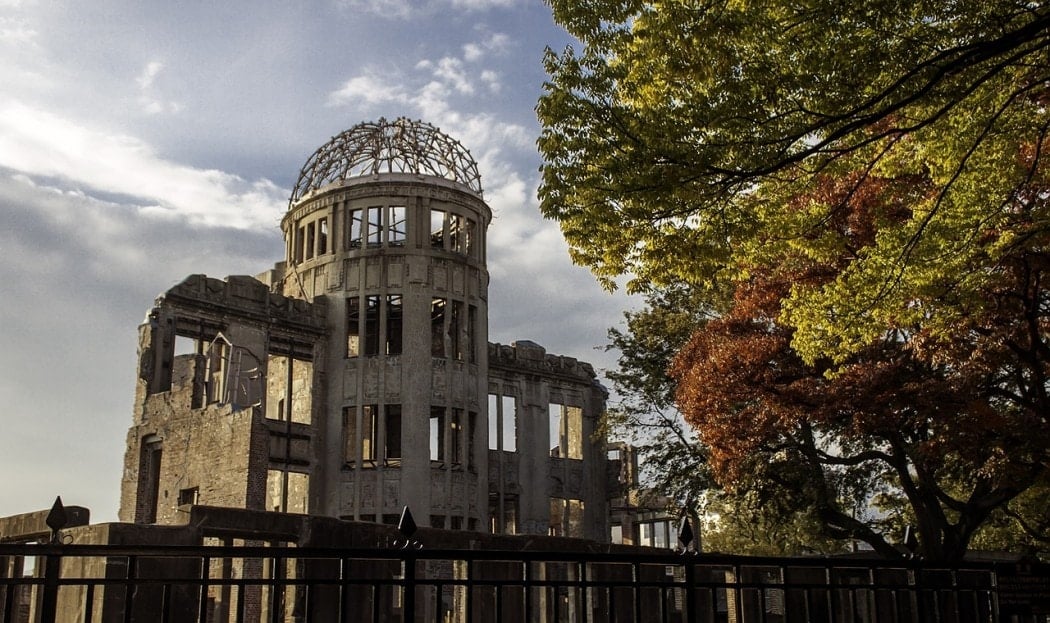
The Peace Memorial Park is a poignant and heartbreaking space that tells the story of how this previously untouched city was destroyed by American forces toward the end of WWII. I personally found visiting Hiroshima to be a really worthwhile but somewhat distressing experience. It is a good idea to do some research beforehand so you have a basic idea of the history before you arrive.
The park itself is free to enter, and the museum costs less than a dollar to visit. It is a practical place to spend time if you are stuck for a bit, as there is free WiFi and even a library where you can use a computer for an hour. Most hostels in Hiroshima offer similar facilities, so you are never really disconnected.
Backpacking Osaka
- Best for: Social butterflies, nightlife addicts, and street food lovers.
- How long I’d stay: 3 to 5 days. It is the perfect base for day trips, but the city itself deserves plenty of your nights.
- Don’t miss: The neon madness of Dotonbori and catching a local comedy show to see a different side of Japanese culture.
- Budget tip: Osaka is arguably the most backpacker-friendly major city in Japan. Look for the massive cluster of hostels that compete on price, often offering better value than Tokyo or Kyoto.
- Where to base: Namba or Shinsaibashi. You want to be within walking distance of the food and the bars so you don’t have to worry about the last train.
- Typical daily spend here: $60 to $90.
- Book ahead if: You are visiting during a major festival or a holiday weekend, as the popular social hostels fill up with both travellers and locals.
Photo: @audyscala
Osaka is number three of Japan’s major tourist destination cities. Not quite as culturally encroached as Kyoto yet not quite as… insane as Tokyo, Osaka is the brash, rash, and oh so lovable youngest sibling of the three. The locals here pride themselves on being a touch less tightly wound than their peers in other parts of the country. They have their own eccentric slang and are generally more direct, making it much easier to strike up a conversation.
There is no shortage of cool places to stay in Osaka, and the city is perfectly suited to hosting backpackers. With tonnes of hostels and plenty of esoteric nightlife, it is a great part of Japan to visit if you are starting to feel a bit lonely on the road. Whether you are hanging out with other foreigners or chatting with the Japanese locals, you are bound to make some friends here.
The Dotonbori area is the absolute heart of the action when the sun goes down. It is packed with street food and bars, and it is where you will truly see the city come to life. If you want a break from the standard tourist trail, lean into the local scene and explore the side streets where the smaller, weirder bars are hidden.
Backpacking Sapporo and Hokkaido
- Best for: Nature addicts, winter sports fans, and those looking to escape the tourist trail.
- How long I’d stay: 5 to 7 days. It takes time to travel between spots on the island, so don’t rush it.
- Don’t miss: The powder snow in winter, the wildflower fields in summer, and the legendary food scene in Sapporo.
- Budget tip: Consider hitchhiking. It is one of the best ways to get around the island, and you will meet the quirkiest locals while saving a fortune on transport.
- Where to base: Sapporo for the city vibe and food, or look into Airbnbs if you want a longer, more local stay in the mountains.
- Typical daily spend here: $55 to $90.
- Book ahead if: You are visiting during the Sapporo Snow Festival in February. Prices skyrocket and beds vanish months in advance.
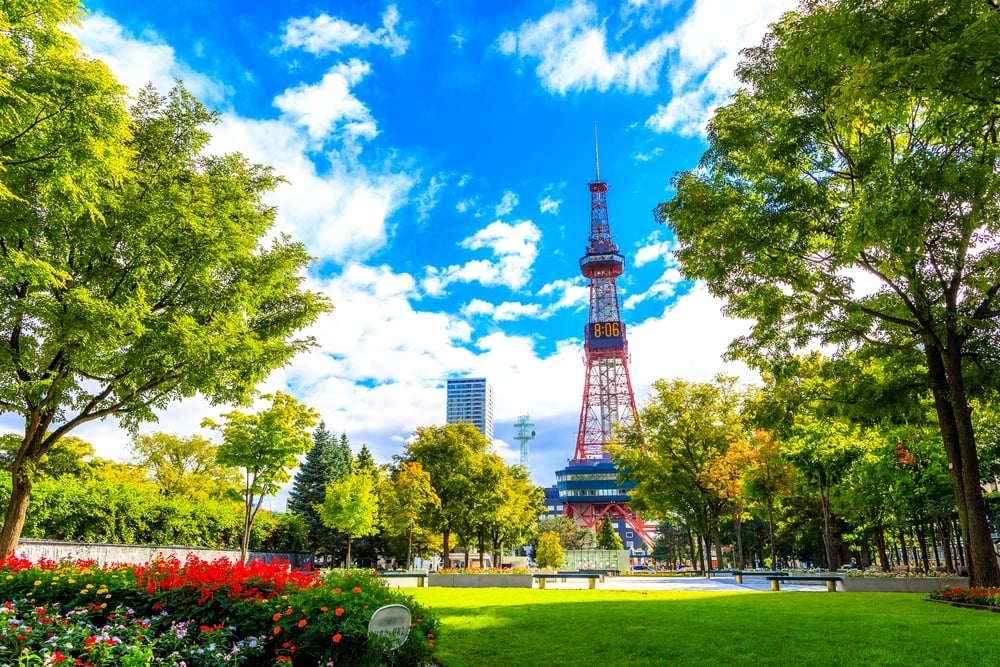
Most travellers don’t plan a trip to Sapporo and Hokkaido. In fact, Hokkaido gets way too little love in the backpacking scene in Japan, so I’m here to fix that! In summer, Hokkaido is a vibrant lush green wonderland of mountains, wildflowers, and fruits to pick. Come winter, however… holy shit is it cold! But it’s a dreamy Narnia-like snowscape with some of the most majestic fields of powder and frozen lakes that you’ll ever lay eyes on.
The northernmost of Japan’s four main islands, Hokkaido is to Japan what South Island is to New Zealand: a sparser population in a harsher landscape where only the most chill and off-beat of Japanese choose to live. If you’re looking for the off-kilter black sheep Japanese (particularly the ones that like a little greenery in their ciggies), you’ll find them in Hokkaido.
Sapporo is the capital of Hokkaido island, and, honestly, it’s a pretty cool city. It doesn’t have quite the smashing of tourist attractions that a lot of other Japanese cities do, but there are still plenty of cool hostels in Sapporo, quirky things to do, and infinite amounts of unrelenting food comas to swelter through.
Overall, Hokkaido is about as off the beaten path in Japan as you can get. Travelling it by hitchhiking is going to mean you meet the quirkiest and best of Japanese folks. And if you happen to travel it by motorbike, well, that’s just a rite of passage for many young Japanese seeking their first adventure.
Backpacking Okinawa
- Best for: Beach bums, divers, and travellers looking for a completely different side of Japanese history.
- How long I’d stay: 5 to 10 days. You will want time to hop between the different islands to find the best spots.
- Don’t miss: The world-class diving and surfing, plus the unique local music scene that feels more Polynesian than Japanese.
- Budget tip: Look for local “minshuku” (family-run guesthouses). They are often cheaper than hotels and give you a much more authentic taste of Okinawan life.
- Where to base: Naha for the initial buzz and history, but head to the Kerama Islands or Ishigaki if you want those postcard-perfect beaches.
- Typical daily spend here: $70 to $110. Flights and ferry costs can bump this up quickly.
- Book ahead if: You are visiting during “Golden Week” in early May. Every flight and bed on the islands will be snapped up by holidaying locals.
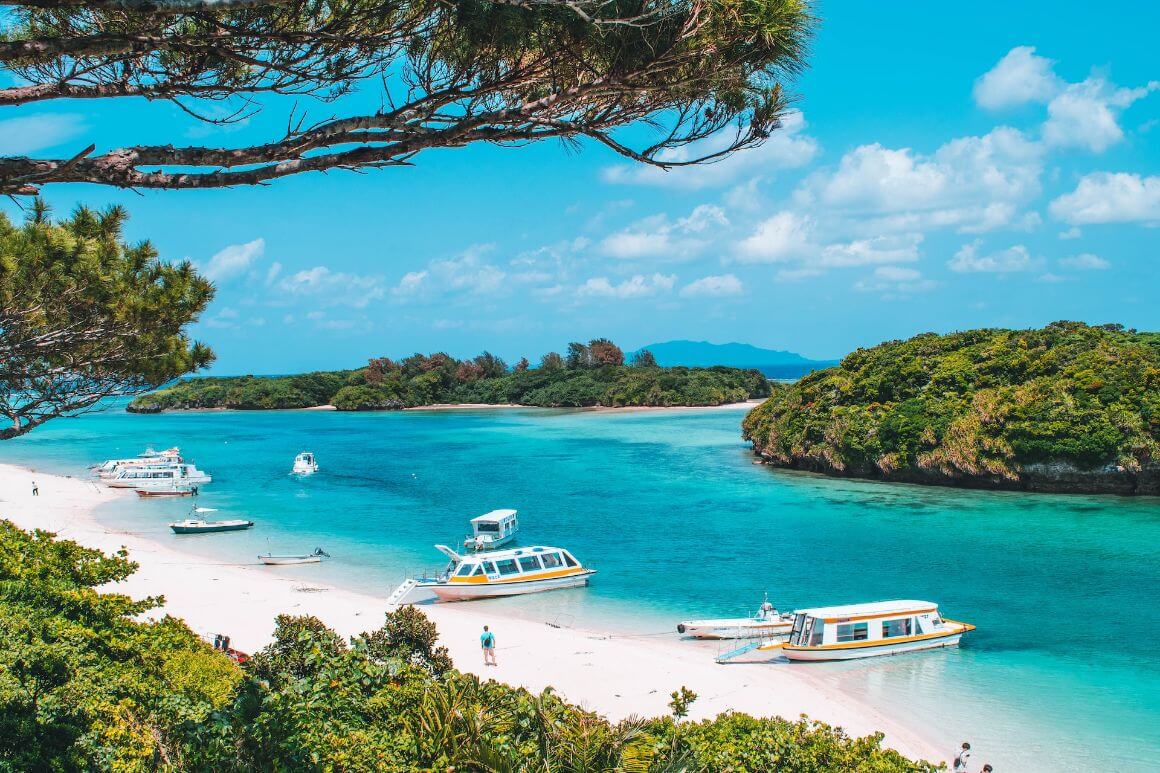
Okinawa is not Japan – not really. Long before its annexation and the subsequent arrival of American military bases, it was its own vibrant land with a unique people, language, and culture. Travelling here is a chance to see a different side of the country and to peek at the complexities beneath the usual mask of perfection. It is a bit like the Ainu people in Hokkaido; there is a deep, distinct history here that most tourists completely overlook.
Artifacts of history aside, there are plenty of fun things to do in Okinawa and its surrounding islands. Most of them involve beautiful beaches, but let’s be honest, backpackers love beaches. I’m talking about beautiful, blissful, sunny stretches of sand that comfortably blow the mainland’s rather weak offerings out of the water.
Whether you are diving, surfing, or just lounging about getting tanned all day, what is not to love? It is a subtropical paradise that feels worlds away from the neon lights of Tokyo. If you want to see the “summery south” and experience a culture that feels entirely its own, this is where you need to be.
Getting off the Beaten Path in Japan
It is more important than ever to look beyond the “Golden Route” because overtourism is currently hitting Japan’s major hubs at an all-time high. The iconic streets of Kyoto and the neon crossings of Tokyo are often buckled under the weight of massive crowds, leading to entry restrictions and a vibe that can feel more like a theme park than a living city.
By choosing to head into the lesser-known prefectures, you’re easing the load off of cities suffering from overtourism and helping other local communities that actually appreciate the business. Plus, it’s fucking COOL to be the only person on a side quest rather than rubbing shoulder to shoulder with hundreds of other tourists.
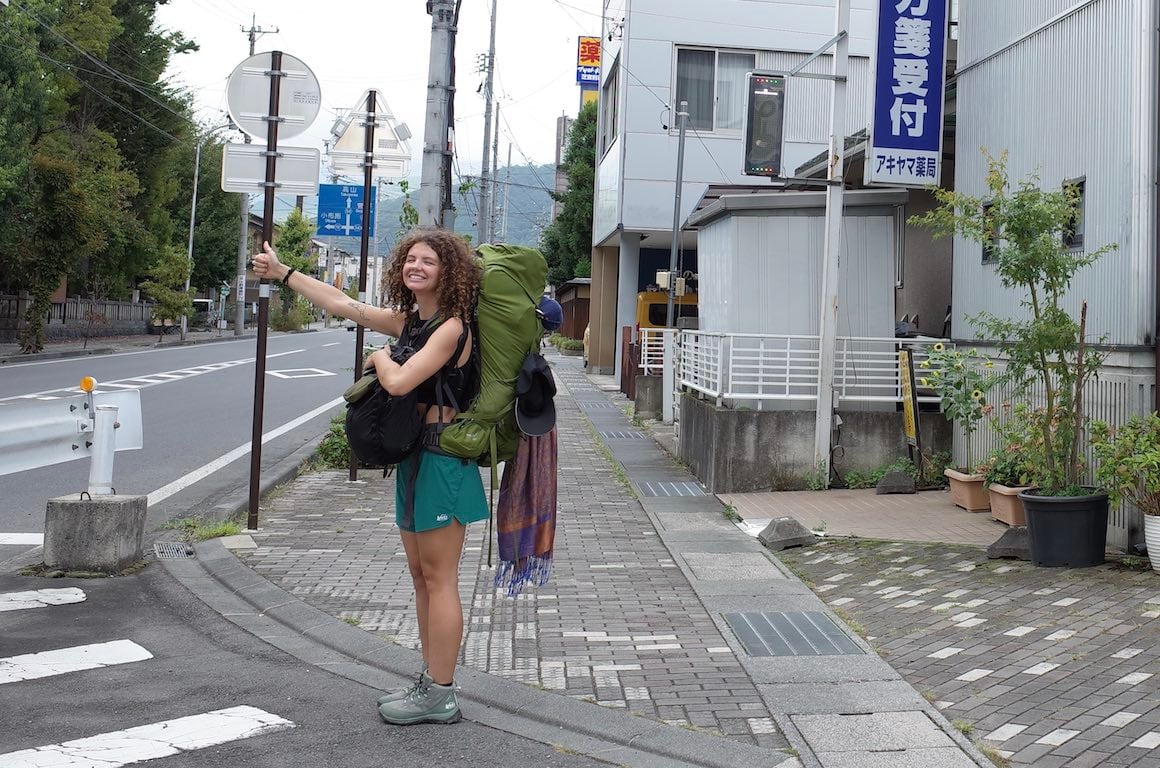
Photo: @audyscala
Although Tokyo and Kyoto often steal the limelight, Japan’s less-visited spots can offer a richer, more intimate experience for backpackers willing to travel off the usual route. I’m talkin’ shrines covered in moss tucked away in the LUSH forests of Togakushi, the Edo-era charm of Narai-juku, or the insane volcanic landscapes of Kyushu’s Aso region. These places aren’t just peaceful, but they’re also deeply rooted in tradition and untouched beauty.
These regions are where you get to see Japan in a rawer, more authentic light. Whether you’re venturing into the prehistoric forests of Yakushima or trekking the Kumano Kodo trail for forest shrines and hidden onsens, getting off the beaten path is the best way to find those unique moments that most visitors miss. If you want to see the “real” Japan, you have to be willing to put in the extra miles to reach the islands and mountains not (yet) plastered all over social media.
Things to Do and Eat in Japan
Backpacking Japan is all about having unique and crazy experiences that you cannot have anywhere else in the world. Japan is all about kooky, weird, and wonderful! And the nature. Mmm, the nature.
Let’s get into its best bits.
Witness the magic of Mount Fuji
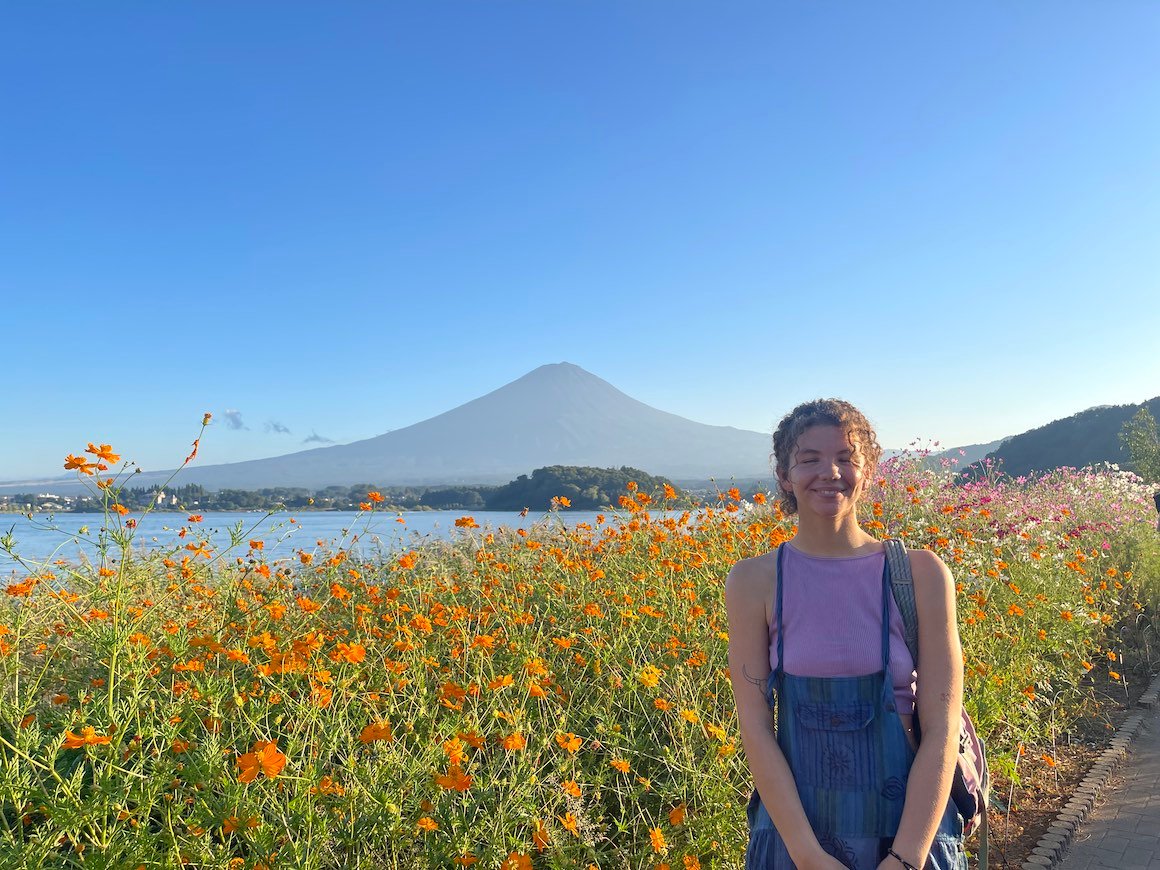
Photo: @audyscala
Whether you’re staring at it from a distance or standing at its base, witnessing the magic of Mount Fuji is the definitive Japanese ‘bucket list’ moment. Rent a bike and cycle along one of Fuji’s lakes, stopping by shrines, old villages, and learning about traditional crafts. If you’re backpacking Japan, this one’s a no-brainer; get it on your list.
- The Best Viewpoints: Head to Lake Kawaguchiko for those classic reflection shots, or hit Arakurayama Sengen Park to get the famous pagoda in your frame.
- The Climbing Season: If you actually want to summit, you’ve only got a narrow window from early July to early September. Otherwise, stick to the Fuji Five Lakes for the best panoramic views.
- Visibility Hack: Your best chance of seeing the peak is in the early morning or during the colder winter months. In the summer, she’s notoriously shy and likes to hide behind a hazy “hat” of clouds.
Bathe in an Onsen
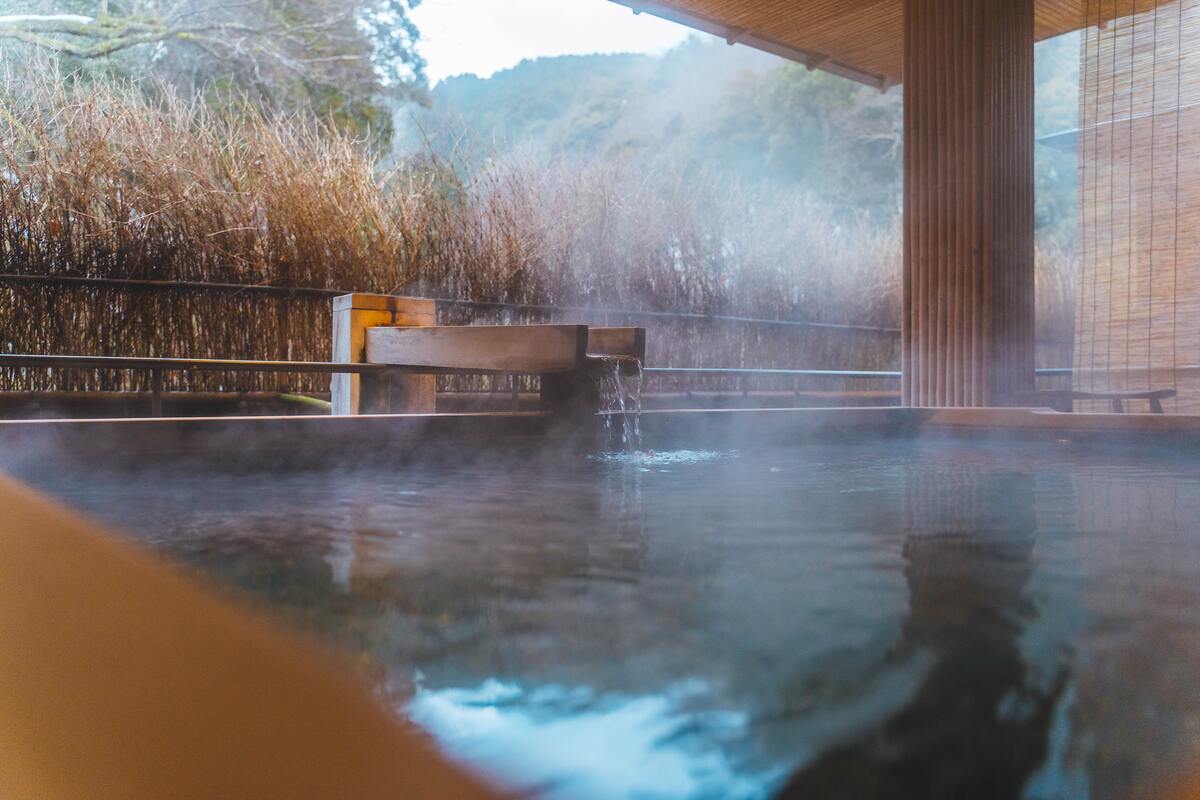
Hot spring thermal pools are unique to Japan and usually tucked away in zen gardens with soothing music. It is peak relaxation…until a naked granny sits down next to you. If you aren’t comfortable being naked around strangers, you can book a private onsen, which is basically just a fancy bathtub.
- The Naked Truth: Bathing suits are strictly banned; you have to be completely naked to get in.
- Split Up at the Door: Men and women are separated, so you’ll be flying solo until you meet your partner at the exit.
- The Tattoo Rule: If you have ink, you’ll likely be barred from public pools.
- The Workaround: Book a private onsen if you have tattoos or aren’t comfortable being naked around strangers.
Watch a Sumo Wrestling Match
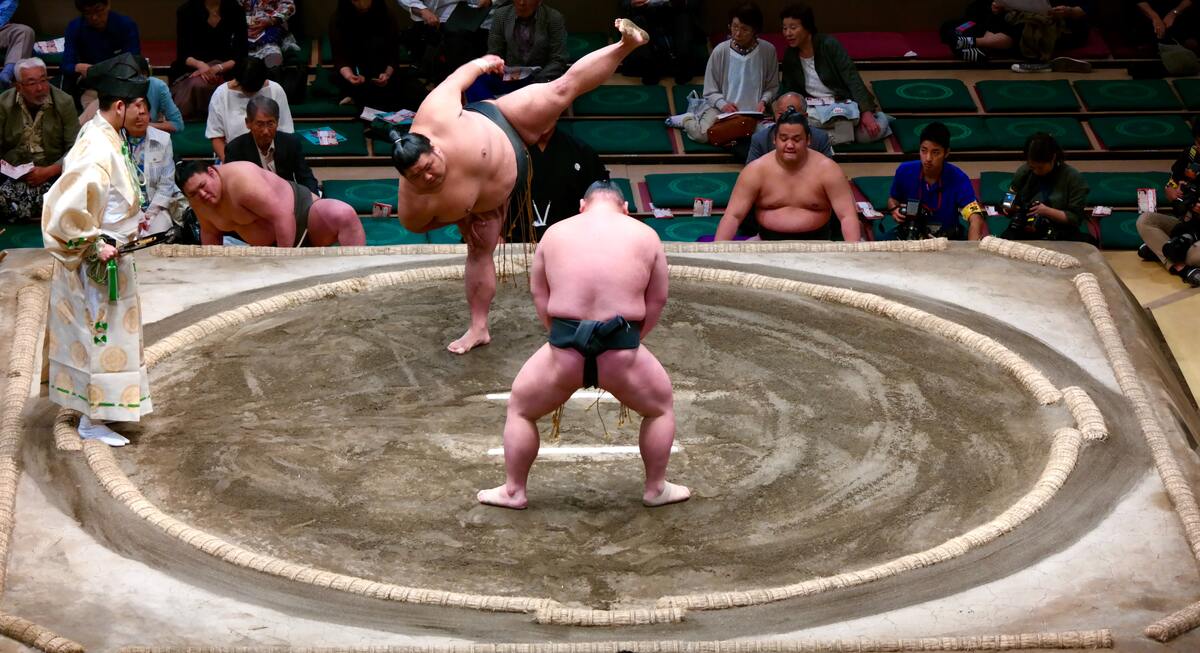
Large men pretty much rocking thongs and battling it out. Where else in the world do you get to see something so delightfully odd? Whether you’re a superfan or just curious about the spectacle, watching a sumo match is one of the most uniquely Japanese experiences you can find.
- Authentically Japanese: It’s a blend of ancient Shinto ritual and high-intensity wrestling that hasn’t changed much in centuries.
- The Vibe: Large men in mawashi (traditional loincloths) battling it out in a dirt ring. It’s delightfully odd, incredibly loud, and surprisingly fast-paced.
- Booking Tips: Major tournaments only happen six times a year, so if you miss those, a morning practice session is your best bet for seeing the action up close.
Try a Wagyu Tasting Experience
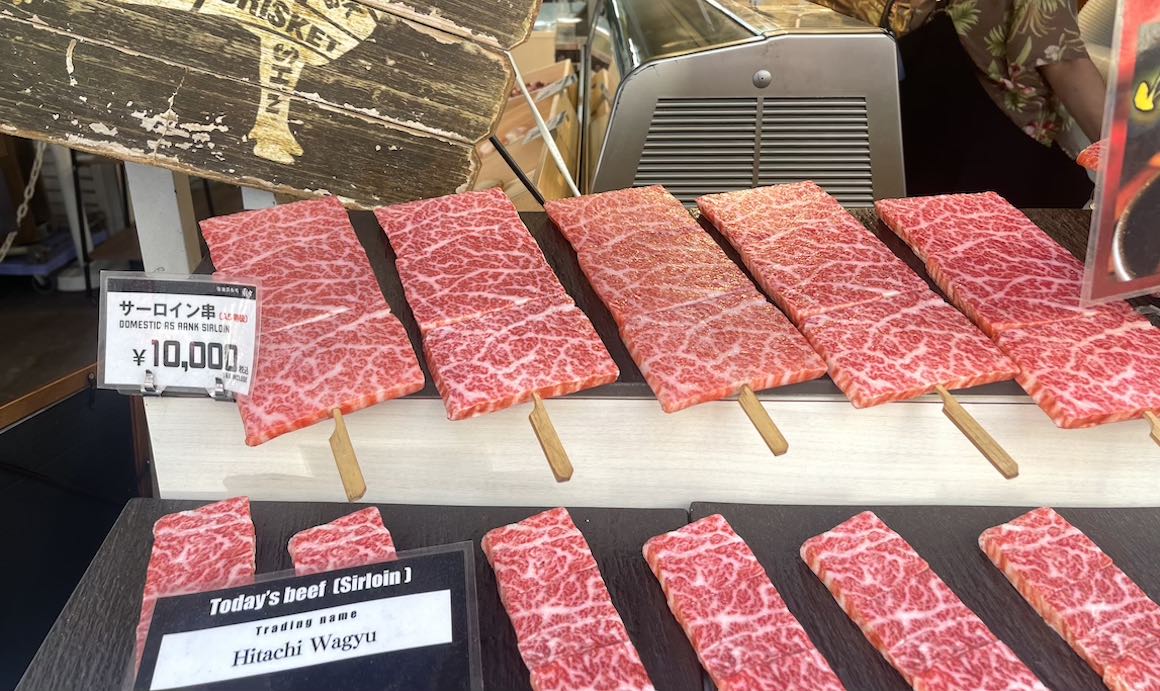
Photo: @audyscala
It’s time for the ultimate melt-in-your-mouth experience. Whether you’re a total foodie or just looking to see what the hype is about, trying a Wagyu tasting is one of the most iconic culinary adventures in Japan. It’s a blend of premium quality, centuries of breeding, and a taste that’s practically incomparable to anything else.
- The Grades: It’s not just any beef; pay attention to the A5 rating – the highest grade of Wagyu. If you’re going to splurge, make sure it’s on this bad boy.
- The Vibe: High-end marbling, buttery texture, and rich, umami flavours that literally melt on your tongue. It’s decadent, incredibly savoury, and unlike any other steak you’ve had.
- Tasting Options: For a truly immersive experience, look for a dedicated Wagyu tasting menu at a top-tier teppanyaki or yakiniku restaurant. You’ll get to sample different cuts and grades with a chef who can explain the nuances of the beef to really nerd out on your steak-induced high.
Experience Random Robot-ness
It’s time for the neon-soaked, sensory overload that defined Shinjuku for a decade. While the original ‘Robot Restaurant’ has officially closed its doors, its successor, Samurai Restaurant Time, has taken over the same space with the same high-octane energy. It’s loud, it’s garish, and it’s the kind of “only in Japan” fever dream you have to see to believe.

- The Vibe: Imagine a chaotic mix of traditional folklore and sci-fi: neon-lit samurai, taiko drummers on moving floats, and giant robotic creatures battling it out under strobe lights.
- Booking & Age Rules: The new show is generally restricted to ages 18+ (due to the venue’s nighttime identity as a cabaret club). It’s popular, so book your tickets online in advance to save a few bucks.
- The New Schedule: Unlike the original night-owl hours, the new show mostly runs during the day and late afternoon (with the last show typically starting around 4:30 PM).
Become a Samurai Warrior
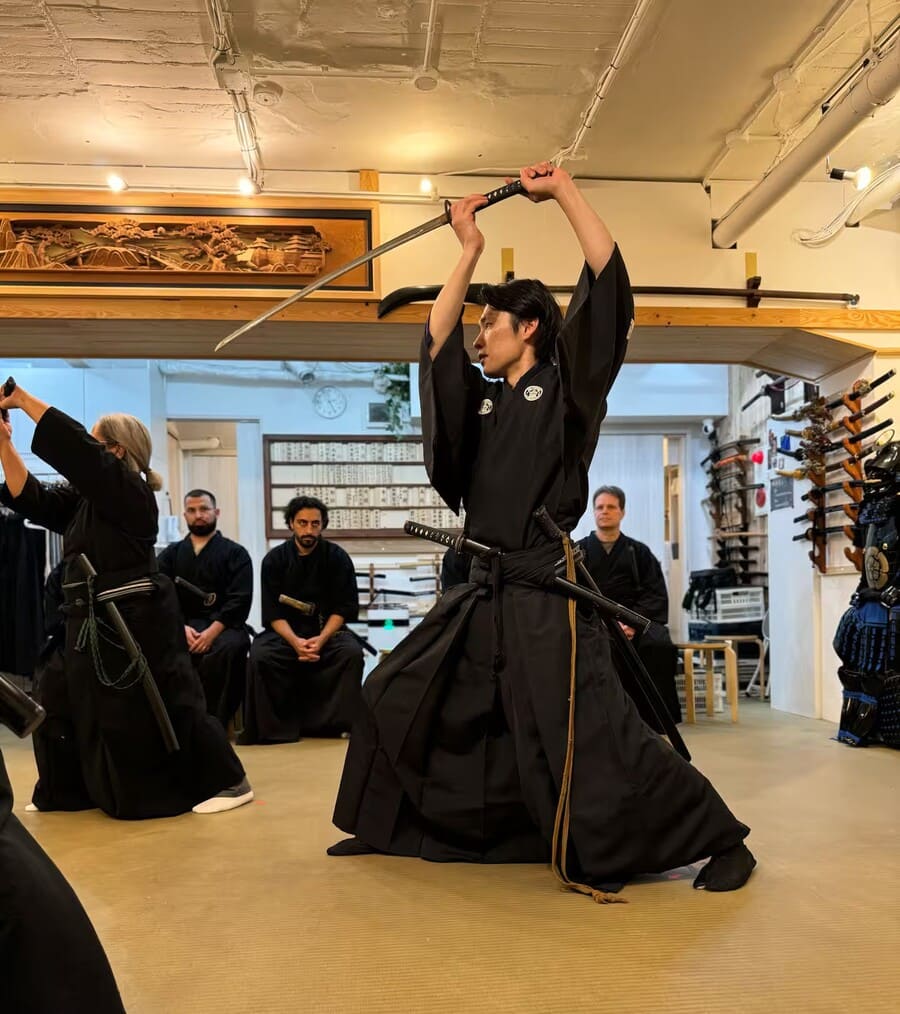
Have you ever been awed by martial arts and wanted to see samurai warriors in action? Well, now’s your chance to be trained by a modern-day Musashi and become a true Samurai warrior.
This isn’t your typical tourist experience; you’ll be stepping into a real dojo, training alongside actual students, and getting a proper glimpse into the life of a Samurai warrior. It’s hands-on, cultural, and absolutely epic.
- The Vibe: Sharp steel, heavy traditional armour, and a sudden realisation that swinging a ‘katana’ is way harder than it looks in the movies.
- The Experience: Most ‘samurai’ workshops in cities like Kyoto or Tokyo will teach you the basics of ‘kenjutsu’ (sword techniques). You’ll learn how to draw, strike, and shear through a rolled tatami mat like a pro.
- The Gear: You’ll usually get suited up in a full ‘hakama’ or even replica armour. It’s the ultimate photo op, but the weight of the gear gives you a real respect for the warriors who wore it daily.
Hiroshima Peace Memorial Museum
This isn’t your typical tourist stop; it’s a powerful, somber experience that sits at the very heart of Hiroshima. After the Second World War ended, the Hiroshima Peace Memorial Museum and Hall was constructed in 1955 to remember those who lost their lives in this tragic event. Those who truly want to learn about Japan and all its history will need to include this on their visit to Japan.
- The Vibe: Quiet, reflective, and deeply emotional. It’s a space that prioritises human stories over dry history.
- The A-Bomb Dome: See the skeletal remains of the only building left standing near the hypocenter; it’s a ‘stark’ icon of the blast.
- Timing: Budget at least 2-3 hours; you’ll need the extra time to decompress in the surrounding Peace Memorial Park afterwards.
Get Involved in a Tea Ceremony
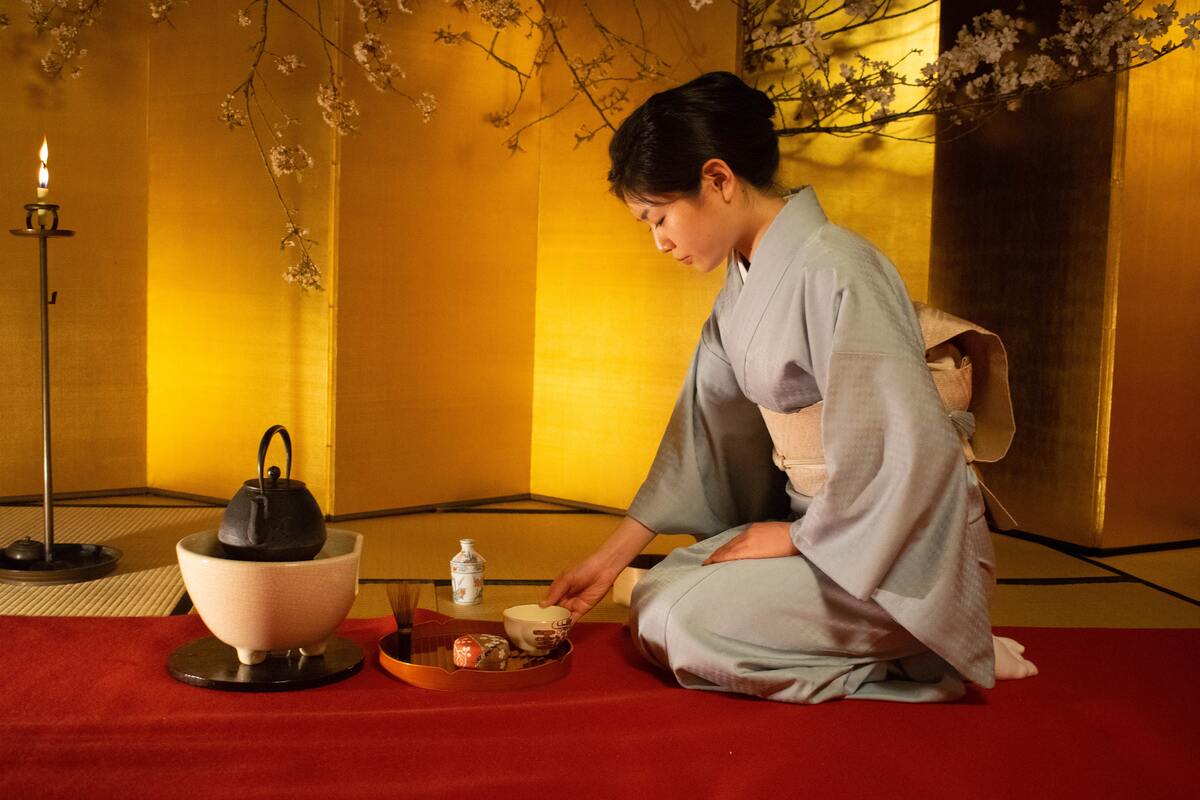
Drinking tea in Japan is not like boiling the kettle and throwing a bag of PG Tips in a mug. Tea ceremonies are known as chanoyu, or sado, in Japanese, and it represents harmony, respect, purity and tranquillity. It’s a choreographed ritual that turns a simple cup of matcha into a meditative performance.
- The Vibe: Silent, precise, and incredibly calm. Most people double up this experience with wearing a traditional kimono to really get into the zen zone.
- The Ritual: Watch the ‘teishu’ (host) prepare the tea with graceful, intentional movements that have been perfected over centuries.
- The Taste: Expect a bowl of thick, frothy ‘matcha’ paired with a ‘wagashi’ (traditional sweet) to balance out the bitter, earthy flavor.
- The Etiquette: You’ll likely be sitting on ‘tatami’ mats; don’t worry about the rules – your host will gently guide you through when to bow and how to hold the bowl.
Ski in the Japanese Alps
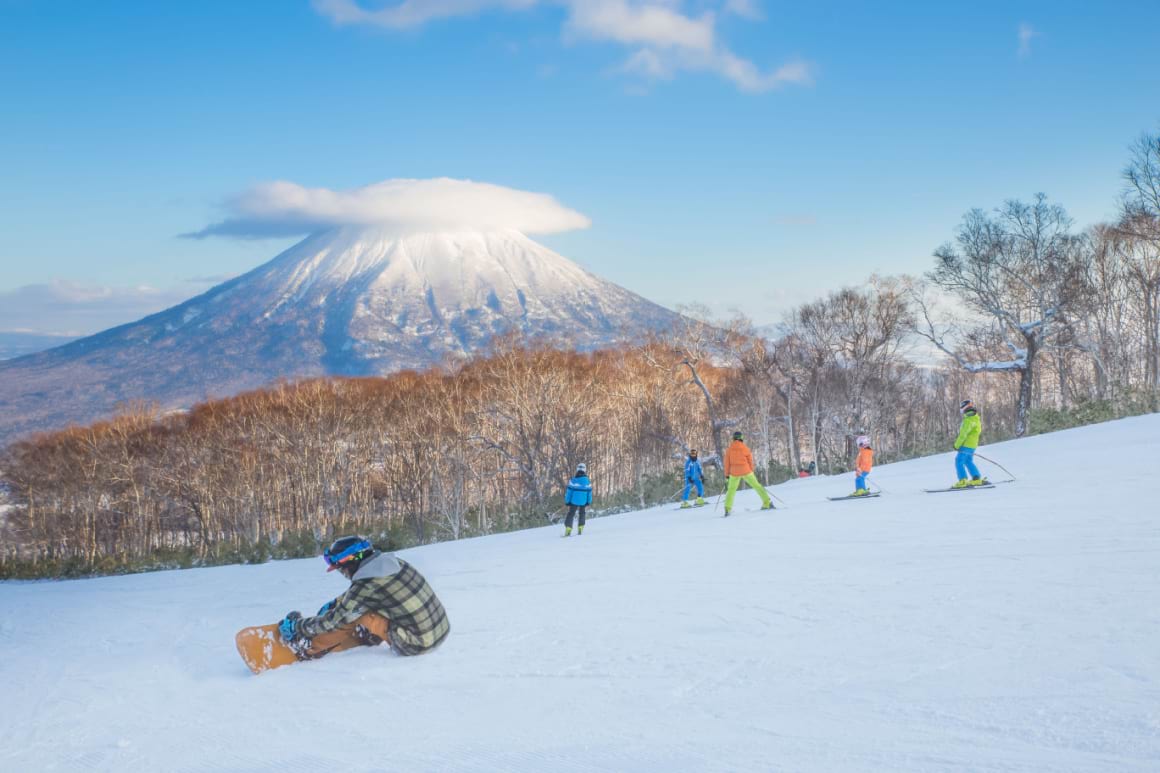
Okay, it’s time to hit the slopes. Whether you’re a pro or a total beginner, skiing in the Japanese Alps is a world-class experience. It’s a mix of legendary ‘Japow’ (Japan powder), stunning mountain peaks, and the best post-ski recovery on the planet.
- The Vibe: Deep, fluffy snow, crisp alpine air, and a landscape that looks like a literal winter wonderland.
- The Snow: Japan is famous for its ‘powder,’ some of the lightest, driest snow in the world, making for an incredibly smooth ride.
- The Après-Ski: Forget the loud bars; here, the ultimate way to end the day is a long soak in a natural ‘onsen’ (hot spring) overlooking the mountains.
- The Locations: Head to Hakuba for Olympic-sized runs and a lively village feel, or try Shiga Kogen if you want to explore Japan’s largest interconnected ski area.
Stay in a Ryokan
Forget the standard hotel experience. It is time for a deep dive into Japanese tradition. Staying in a Japanese Ryokan is a full-sensory immersion into ‘omotenashi’ or traditional Japanese hospitality. You’ll sleep on a soft mattress on the floor, surrounded by authentic wooden sliding doors and paper walls. It’s an experience that you won’t forget.
- The Vibe: Minimalist, serene, and timeless. Expect ‘tatami’ mat floors, sliding paper doors, and a peaceful atmosphere that feels worlds away from the city.
- The Sleep: You will be sleeping on a ‘futon’ spread out on the floor. It is surprisingly comfortable and prepared for you by the staff while you are at dinner.
- The Dress Code: Swap your clothes for a ‘yukata’ (cotton robe) provided by the inn. You are encouraged to wear it everywhere, from the dining room to the hot springs.
Eat Your Way Through Japan
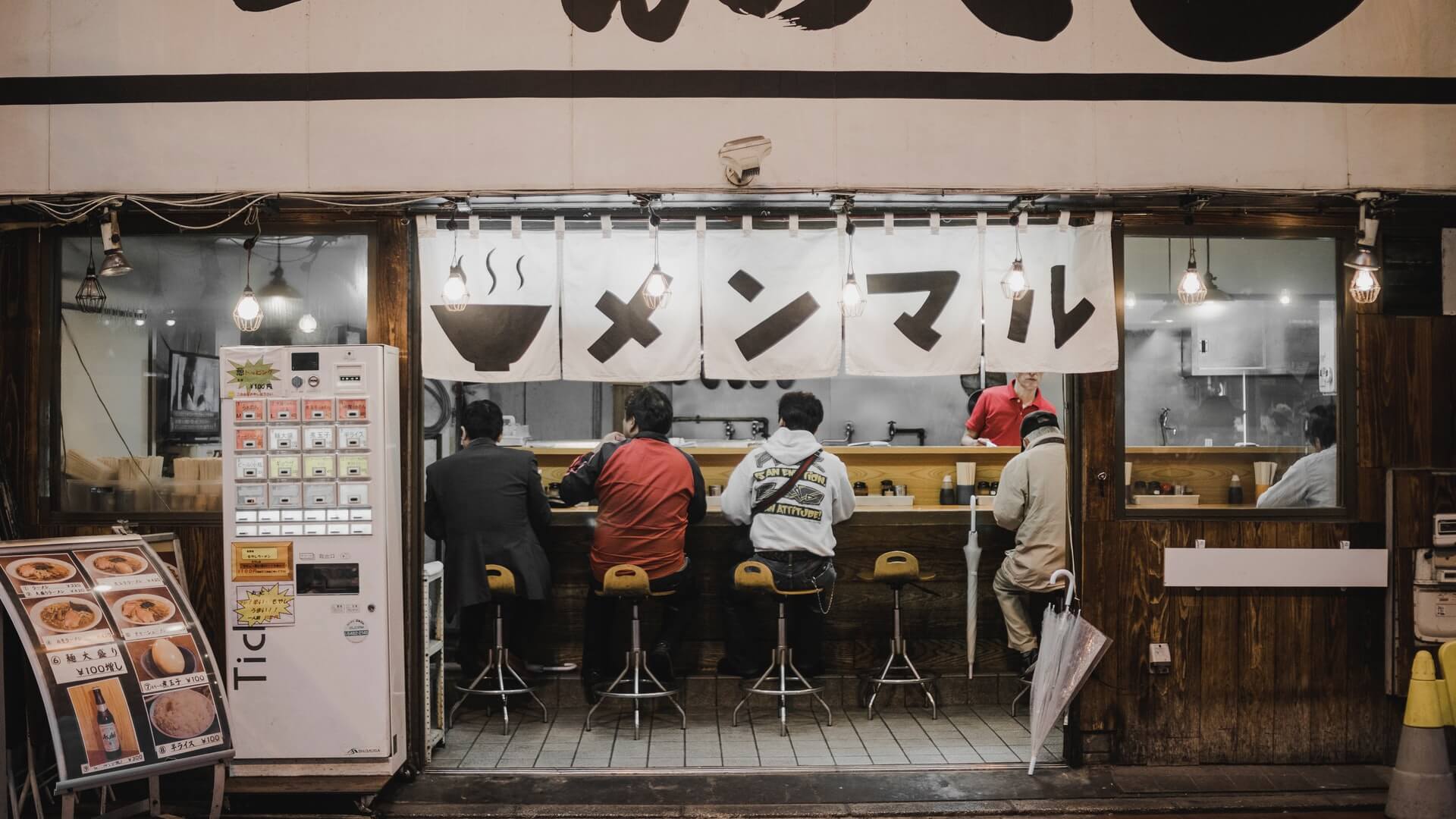
The food in Japan is both unbelievably diverse and un-fucking-believably tasty! Cheap instant ramen from the convenience store will be the greatest you’ve ever had. Find an actual steaming hole-in-the-wall ramen bar and its food coma country.
Japanese food is never too anything; flavours are balanced in a delicate fashion, and Japanese people take their cuisine very seriously. Do not stop at sushi. Try ‘takoyaki’ (octopus balls) in Osaka, ‘okonomiyaki’ (savory pancakes) in Hiroshima, and ‘yakitori’ (grilled skewers) in a smoky Tokyo alley.
Even the ‘konbini’ (convenience store) food is elite. Grab a high-quality ‘onigiri’ or an egg salad sandwich for a gourmet snack on the go. I basically lived off of these every morning (I miss you egg sando </3).
Must Try Dishes
- Sushi: The real deal. Skip the rolls and go for ‘nigiri’ or ‘sashimi’ to truly taste the quality.
- Ramen: Soul-warming noodle soup. Every region has its own style, from the creamy ‘tonkotsu’ of Kyushu to the savory ‘miso’ of Hokkaido.
- Takoyaki: Osaka’s legendary street food. These are crispy, golden batter balls filled with octopus and topped with savory sauce.
- Unagi: Fresh river eel grilled over charcoal and with some sweet barbecue sauce. It is said to be the ideal antidote to the heat and humidity of Japan’s exhausting summers.
- Okonomiyaki: A thick, savory ‘as-you-like-it’ pancake packed with cabbage and seafood. It’s often grilled right at your table.
- Tempura: The gold standard of frying. Expect light, airy, and incredibly crispy battered seafood and vegetables.
- Yakiniku: The ultimate social dining experience. Grab some high-quality beef and vegetables and grill them yourself over an open flame.
- Miso: Where would Japanese cuisine be without miso? This salty fermented bean paste forms the base of so many soups, sauces and marinades. Every region in Japan has its own special recipe.
Where to Stay in Japan
Finding a place to crash in Japan is easy if you have money, but it is a tactical minefield if you are on a budget. The days of rocking up to a city and finding a cheap bed on the day are dead. If you don’t plan ahead, you will end up paying premium prices for a, shall we say, pretty grim hostel.
The Price Reality: Big Cities vs. Everywhere Else
- Tokyo and Kyoto Hostels: Expect to pay $30 to $50 for a decent dorm bed. Since March 2026, Kyoto has hiked its accommodation tax again, so factor in an extra ¥200 to ¥1,000 per night depending on the room rate.
- The Rest of Japan: This is where you save your budget. In cities like Hiroshima or Fukuoka, you can snag solid hostel dorms for $15 to $25. These are often cleaner and more spacious than anything you will find in central Tokyo.
- The “Osaka Hack”: If Kyoto is sold out or too expensive, stay in an Osaka hostel. It’s only 30 minutes away by train, significantly cheaper, and has a much better nightlife scene anyway.
The Booking Strategy
- The 4-to-6 Month Sweet Spot: This is when most Japanese hostels release their room inventory. If you want the absolute cheapest, high-rated beds for peak season, this is when you strike. This doesn’t matter as much if you’re travelling out of peak season, but Japan doesn’t favour the spontaneous when it comes to accommodation.
- Peak Season Reality: Cherry blossom season (late March) is a nightmare for last-minute planners because the window is so short. Autumn colours (November) are more flexible. You can often find last-minute hostel beds in November due to late cancellations, but expect to spend more time hunting and potentially paying a “procrastination tax.”
- The Weekend Spike: Prices for dorm beds often double on Friday and Saturday nights. If you are moving between cities, try to time your “expensive” locations for mid-week.
Which Type of Stay is Best for You?
- Hostels: The absolute cheapest way to survive. Japan’s hostels are insanely clean and organised. If you want to meet people, check out reviews for how social people find it, as standard Japanese hostels have a reputation for being fairly solitary.
- Capsule Hotels: Great for the novelty, but they are essentially plastic coffins. They are good for a one-night experience or if you miss the last train. Most are gender-segregated and won’t let you stay in the same pod for multiple nights without “checking out” every morning, which gets annoying real quick if you’re staying for more than a couple nights.
- Business Hotels: The unsung heroes for when you need a break from people. Chains like APA or Toyoko Inn offer tiny, private rooms with your own bathroom. They are consistent, boring, and perfect for a “reset” night when you’re over the dorm life.
- Ryokans: Traditional inns with tatami mats and futons. They are expensive and usually include a massive dinner and breakfast. Do it once for the culture, but it is not a sustainable budget option for a backpacker.
Japan-Specific Survival Tips
- Mixed Dorm Etiquette: Japanese hostels are quiet. Really quiet. No phone calls in the room, no rustling plastic bags at 3:00 AM, and keep your gear tidy. If you are a loud person, you will get some very polite but very intense stares from the staff and other guests.
- The Luggage Question: Don’t lug your bag around while you’re sightseeing between check-outs. Every major train station has coin lockers ranging from ¥300 to ¥800 depending on the size. If the station lockers are full, use the Ecbo Cloak app to find local shops and cafes that will stash your bag for a few bucks. It beats dragging a 40L pack through a crowded temple.
- Check-in and Curfews: Many cheaper guesthouses have strict check-in windows, usually closing at 9:00 PM. If you arrive late, you are locked out. Some even have ‘lockout’ periods during the day where you aren’t allowed to stay in the building.
- Tattoo Rules: If you have ink, you might be barred from the onsens inside your hostel or hotel. Always check the ‘tattoo-friendly’ status before booking if a soak is part of your plan.
When I paid extra and why
When deciding inbetween hostels, sometimes I did pay a little extra if it meant it was social. There’s no point in saving some bucks for precious beers if you don’t have a couple of dorm mates to drink them with.
I also splurged on overnight accommodation in the Japanese Alps as it meant I could stay in the national park overnight rather than as a day trip. It was spenny for what it was, but that multi day hike in Kamikochi was the highlight of my trip – something that couldn’t have happened travelling back and forth everyday from Matsumoto!
My Recommended Places to Stay in Japan
It is time to lock in your base of operations. Japan is a playground for travellers, but accommodation can drain that budget FAST. From high-tech capsules to earning your keep for a bed, here is how to find a place to crash without draining your bank account.
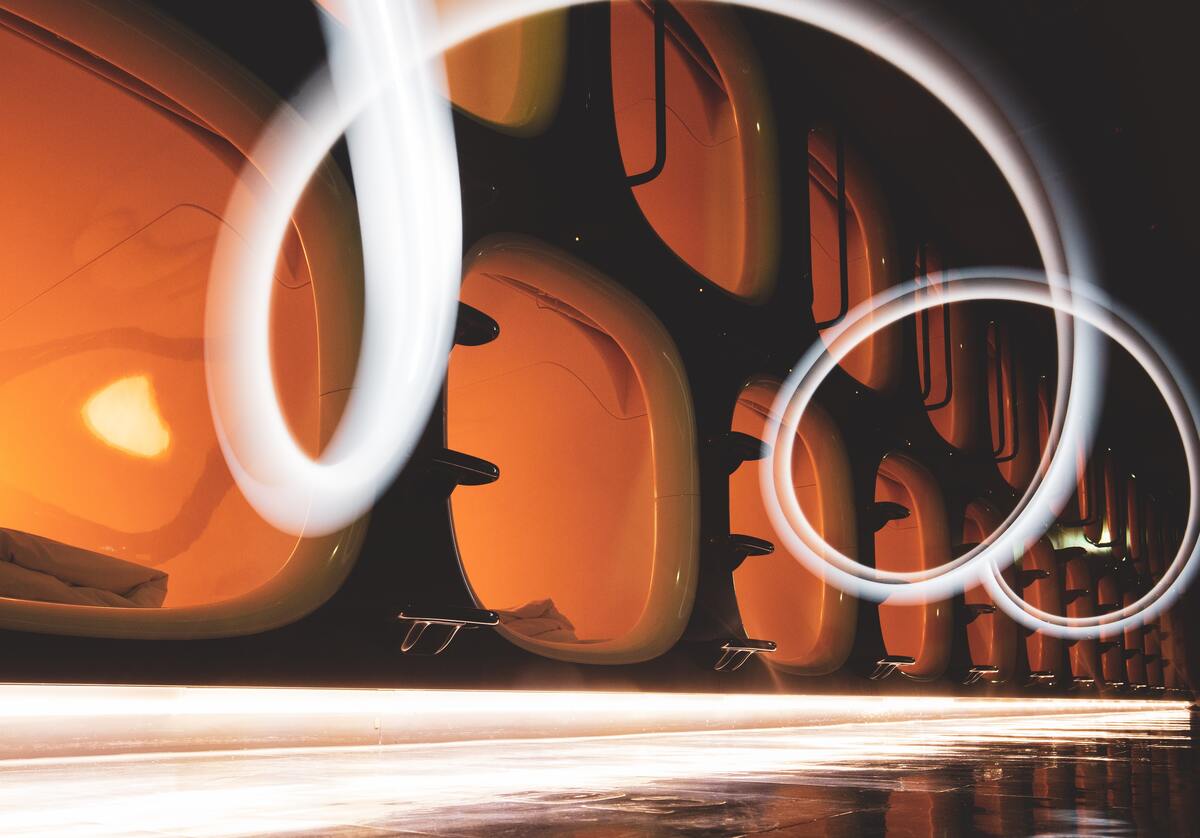
- The Hostel Scene: Still the gold standard for quality and cleanliness. Expect to pay around $30 to $40 per night for a dorm bed in major cities like Tokyo or Osaka.
- Capsule Stays: These are the ultimate space-saving win. Most modern hostels use this ‘pod’ layout to give you a private cocoon with your own light, power, and high-speed Wi-Fi. Beware that these will set you back more than your traditional hostel and many require you to check out every morning for cleaning.
- Community Platforms: ‘Worldpackers’ and ‘Workaway’ have largely overtaken older couchsurfing apps. They are the best way to trade a few hours of help for a free bed and a genuine local connection.
- Homestays: Homestays in Japan remain the ultimate hack for affordability. You get a front-row seat to Japanese life and a host who knows exactly where the best hidden ‘izakayas’ are.
- Airbnb Realities: Strict ‘Minpaku’ laws mean every listing is now fully regulated. This has pushed prices up, so expect to pay at least $100 to $130 for a private apartment in a central area.
- Traditional Guesthouses: If you want the ‘ryokan’ vibe on a budget, look for ‘Minshuku.’ These are family-run inns that offer ‘tatami’ mats and ‘yukata’ robes at a fraction of the cost of a luxury resort.
For backpackers on a budget, Couchsurfing and volunteering for accommodation is your best bet whilst backpacking in Tokyo. Outside of that, Japan’s hostels and backpacker accommodation are cheap-ish (depending on where you are) but also undeniably excellent in that typical Japanese fashion.
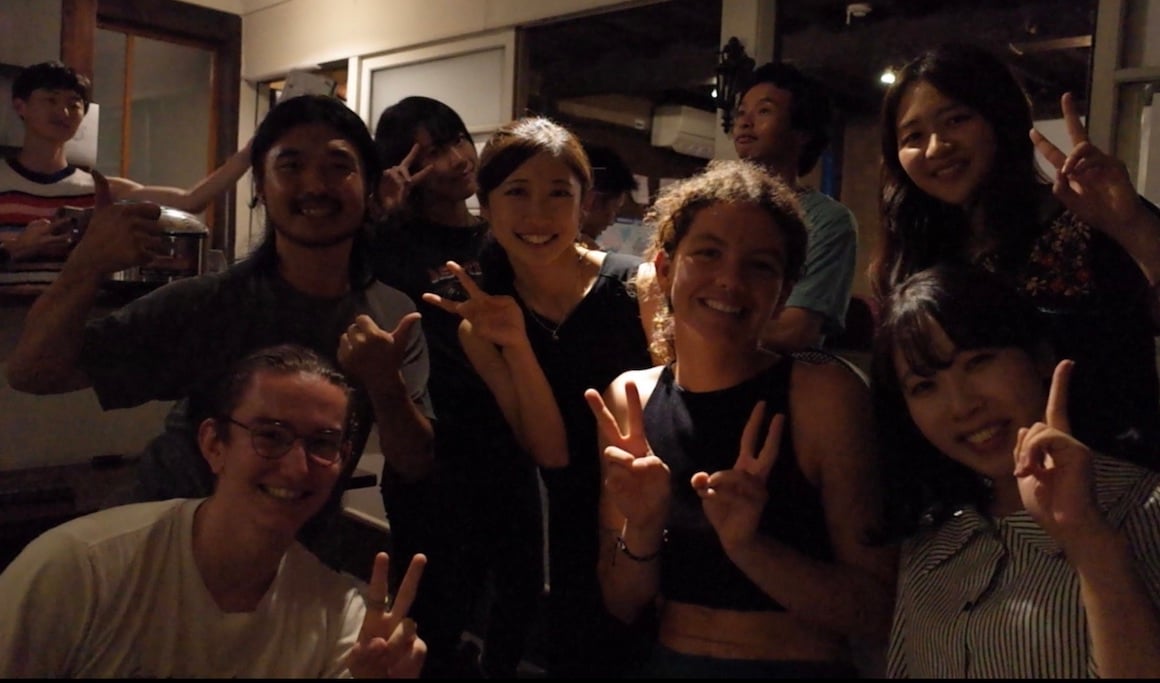
Photo: @audyscala
You can expect to meet some interesting characters while staying in a Japanese hostel. This is where you can trade travel stories and pick up tips about where to go next. It’s quite common for hostels to be capsule-style in Japan. This means the beds will be facing inwards instead of along the wall (it’s a great space-saving idea – take note Ikea!).
The Best Places to Stay in Japan
Check out these awesome places to stay in Japan…
| Destination | Why Visit! | Best Hostel | Best Private Stay |
|---|---|---|---|
| Tokyo | Tokyo is the capital of Japan and is full of quirky and excentric neighborhoods, delicious food and incredible nightlife. | CITAN Hostel | Guest House Wagokoro |
| Hiroshima | This World Cultural Heritage site is known for its destruction by the atomic bomb, it’s also a great place to go hiking and dive into Japan’s delicacies. | WeBase Hiroshima | KIRO Hiroshima by THE SHARE HOTELS |
| Nagasaki | Nagasaki is where you go if you want to have total relaxation. It’s surrounded by volcanoes, which means only one thing – onsens! | Hostel Casa Noda | Dormy Inn Premium Nagasaki Ekimae |
| Mount Fuji | Obviously, a famous “mount”… but if you love nature, you’ll love staying in the peaceful Mount Fuji National Park | K’s House Fuji View | Togawaso |
| Kyoto | This is the ancient capital of Japan and home to the best temples, historic architecture, and authentic, traditional culture. | UKNOWN KYOTO | Imu Hotel Kyoto |
| Ishigakijima Island | Also known as Okinawa, is the place to be if you love beaches and relaxing in a tropical setting. Bliss! | Taketomijima Guesthouse | Hotel Patina Ishigakijima |
| Japanese Alps | This is where you want to head to if you fancy winter sports. It costs a bob but it’s an unreal experience. | Arashima Hostel | Residence Hotel Takayama Station |
| Nara | Most people come here to feed the deer, but it also has a lot of great temples and ramen restaurants. | Kojika | Onyado Nono Nara Natural Hot Spring |
Best Time to Travel to Japan
It’s time to decide when you are actually going to touch down. Planning for backpacking in Japan means considering the weather, crowds, and catching those ‘one-in-a-million’ views.
There really is no wrong time to visit Japan per say, it’s solely down to what you want to prioritise for your trip, whether that be cherry blossom season, Japanese powder or timing it right so you pay the absolute minimum…
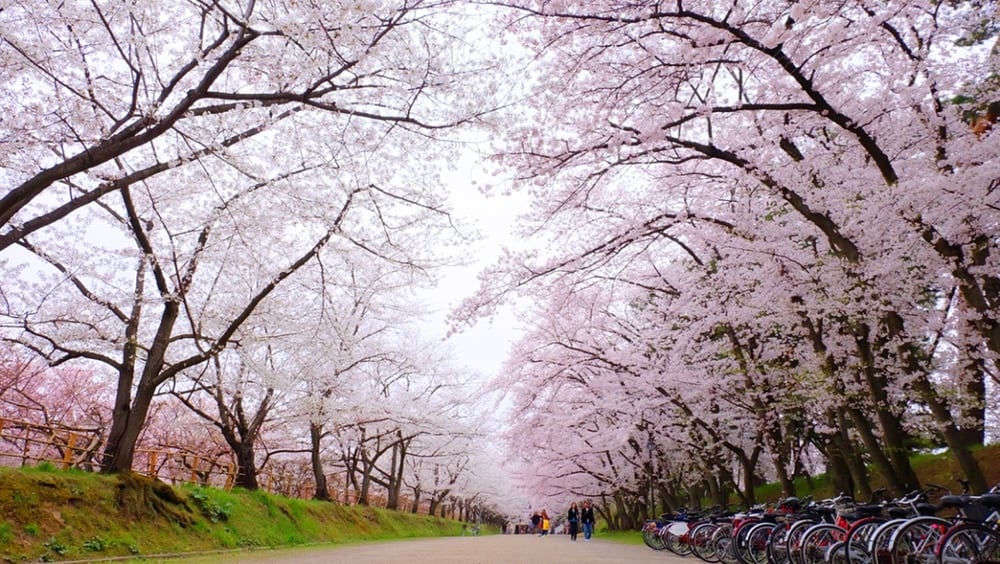
- Spring (March to May): The classic ‘Sakura’ (cherry blossom) season is typically the peak. Expect blooming to happen in late March to early April in major cities like Tokyo and Kyoto. Be prepared for the highest prices and the biggest crowds.
- Summer (June to August): This is the season for festivals and fireworks. It is hot and humid, so prepare for plenty of sweat. It’s worth keeping an eye on the weather if you travel in August to September, as this period is defined by typhoon season. While most storms are manageable, they can cause flight delays or train cancellations, especially in southern Japan.
- Autumn (September to November): This is many people’s favorite time. The weather is crisp and dry, and the ‘Koyo’ (autumn leaves) are just as stunning as the cherry blossoms but last much longer. The peak for foliage is usually late November.
- Winter (December to February): This is the ultimate time for skiing and hot springs. The Japanese Alps are covered in world-class ‘Japow,’ and the cities are often clear and cold. It is also the best time for budget travelers, as prices are generally lower outside of the holidays.
- Golden Week: Avoid the first week of May if you can. This is a cluster of national holidays where the whole country travels at once, meaning trains and hotels are booked out months in advance.
Staying Safe in Japan
Japan is safe to visit – one of the safest countries in the world to visit in fact. Honestly, there isn’t much crime here, and people don’t really steal. You can leave your purse unattended in a metro station, and chances are, you’ll get it back.
Nightlife Districts
Be cautious in areas like Kabukicho in Tokyo. While it is iconic for its neon lights, it is also a red-light district where aggressive street touts can be a hassle. Drink spiking is rare but has been reported in these high-traffic nightlife hubs, so never leave your glass unattended.
Strict Drug Laws
Japan has zero tolerance for drugs. Laws specifically criminalize the use and possession of cannabis. The “guilty until proven innocent” reputation is real here, and the police are notoriously thorough. Avoid anything that could compromise your trip.
Staying Safe as a Woman
While violent crime is rare, harassment in crowded spaces is a documented issue. During morning and evening rush hours, look for the pink ‘Women Only’ signs on the platform and train doors. These carriages are designed to prevent ‘chikan’ (groping) on overcrowded trains, which can be an issue in major cities like Tokyo and Osaka.
Get Insured BEFORE Visiting Japan
Even in a safe country, the unexpected happens. Medical costs can skyrocket if you are uninsured, and the local system can be tricky to navigate on your own. I always recommend sorting out solid travel insurance before you fly.
SafetyWing is a solid choice because they specialize in the flexible, monthly rolling contracts that long-term travelers actually need. You can sign up even if you are already on the road, giving you a safety net for everything from sudden illness to emergency evacuations.
Sort out your insurance before you go. There are several good options, but our overall pick is SafetyWing. Most of the Broke Backpacker team has used it at one point or another, and we’ve filed claims for rabies jabs in Bali, a hospital stay in Mexico, and a clinic visit for a stomach bug that wouldn’t quit. All paid out.
It’s month-to-month, no lock-in, no itinerary required, and you can buy it after you’ve already left. A little over $2 a day if you’re under 40.
New SafetyWing customers: use code BROKEBACKPACKER for 8 free weeks of electronics theft coverage. You have to scroll down and click the pink camera on their landing page to enter it, and you have to do it before creating your account.
How to Get Into Japan
Most travellers touch down at Narita Airport (NRT) or Haneda Airport (HND). While Narita is the classic choice, Haneda is much closer to central Tokyo, saving you a long train ride. If you are heading straight to the heart of the city, Haneda is your best bet.
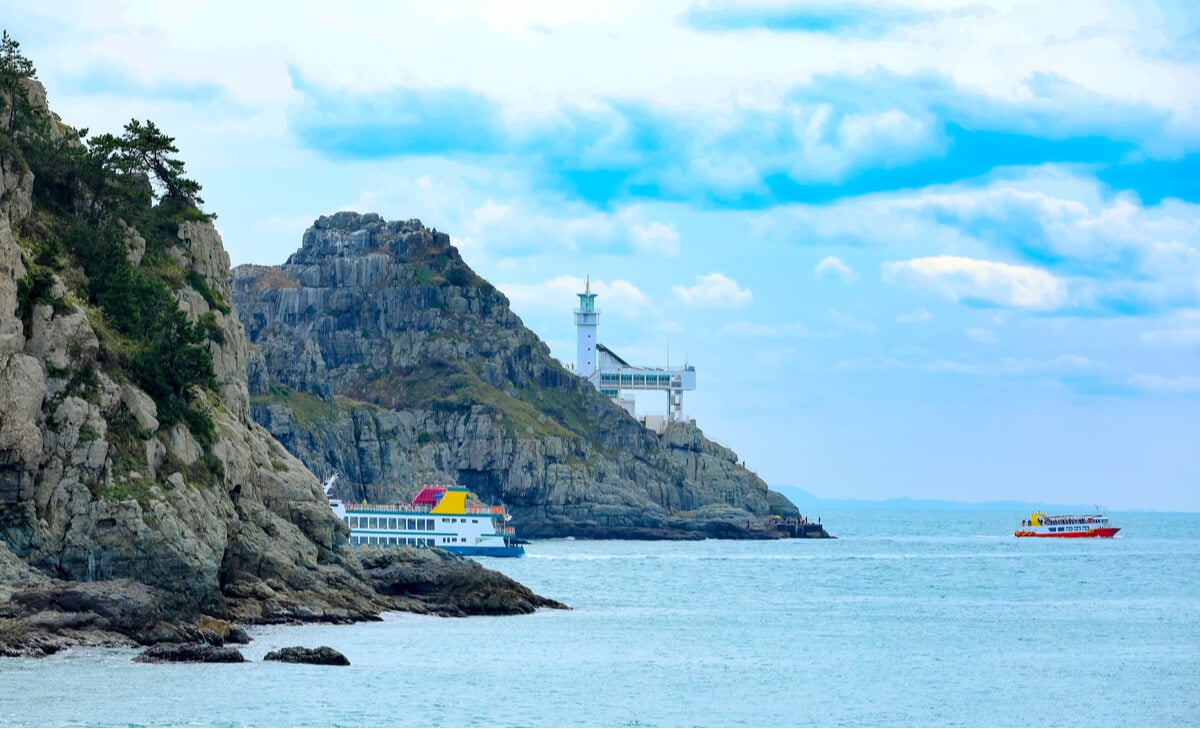
If you are looking for a scenic entry, international ferries are still a viable, though niche, option. There are a ton of international routes to Japan, from Korea, Taiwan, China, and Russia, but for backpackers, Busan (Korea) is likely to be the only practical destination from which to take a boat to Japan.
While boats can be a unique experience, they are often more expensive than budget flights once you factor in terminal fees and food. But doing it for the plot? VERY much worth it. There are tons of cool places to stay in Fukuoka too if you’re doing the journey in reverse to South Korea that you definitely check out.
Entry Requirements for Japan
The good news is that for citizens of over 70 countries, you’ll receive a 90-day temporary visitor stamp on arrival without needing to apply for anything in advance.
- Digital Entry: While paper forms still exist, you should use the Visit Japan Web service before you fly. It allows you to pre-fill your immigration and customs declarations online, giving you a QR code that speeds up your exit from the airport.
- Visa Required Nationalities: If your country is not on the visa-waiver list, you will need to apply for a ‘Temporary Visitor’ visa at your nearest Japanese embassy. The process is generally straightforward but requires a detailed itinerary and proof of funds.
- Working Holiday & Digital Nomads: Japan has recently introduced a specific Digital Nomad Visa for those earning a high income remotely, as well as maintaining a couple of different Working Holiday visas for qualifying backpackers to sink their teeth into.
Getting Around Japan
It is time to master the art of the Japanese commute. Navigating this country is a high-speed dream, and will fully ruin your home country’s public transport system for you on your return.
Although Japan is a fairly expensive country, the regional public transport is the most budget-friendly way of getting around by far. Trains are frequent, punctual, and you can get pretty much from any A to B with them. As soon as you start talking about long distances, well…
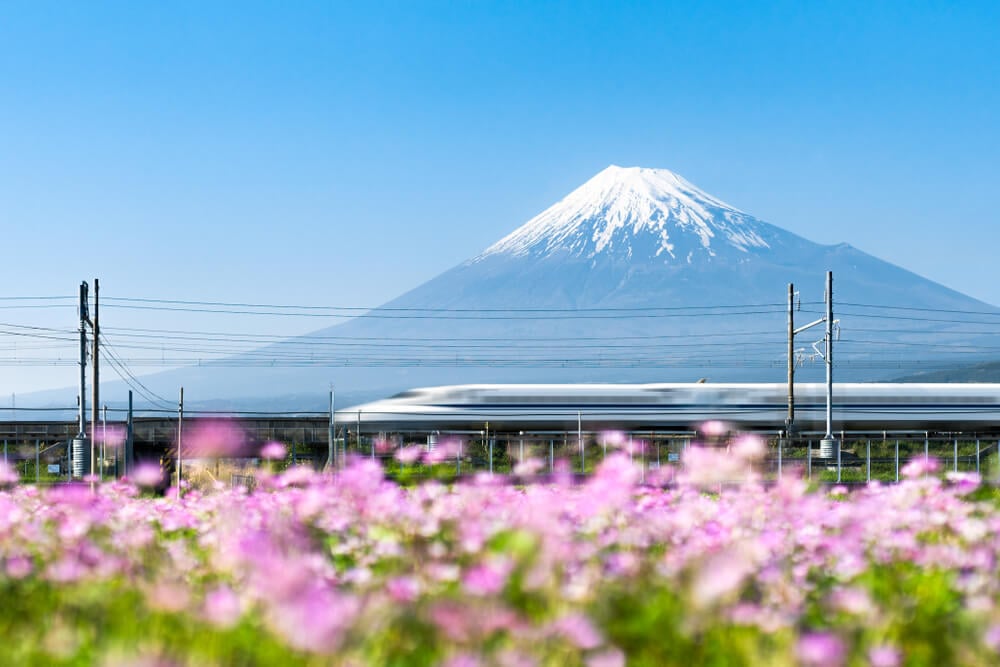
Of course, taking a shinkasen is a bucket list moment for a lot of travellers speeding (literally) through Japan, but it can drain your budget FAST. Alas, it remains the gold standard of travel. It is punctual, spacious, and allows you to watch the countryside blur at 300 km/h while you crush an ‘ekiben’ (station bento box).
My broke backpacker advice? Look at other ways other than the shinkansen for your long-distance travel. If you reaaaaaally want to take the bullet train just to tick it off your bucket list, you can take the, albeit short, journey from Kyoto to Osaka rather than flying across the country and paying a pretty penny for it.
Instead, I prioritised my budget elsewhere and took overnight buses and slower cross-country trains for my long-distance travel. Was it cooler? No. Was it as comfortable? Hell no. But I sure did save a GOOD chunk for other splurgeable meals and activities.
- To JR Pass or Not To JR Pass?: The legendary Japan Rail (JR) Pass is no longer the automatic ‘buy’ it used to be. Massive price hikes mean the national pass only pays off if you are basically living on the train. For most travellers, travelling with regional passes or even single tickets will grant you more bang for your buck.
- Regional Rail Passes: Look into the new integrated JR East Pass if you are heading north or the Hokuriku Arch Pass for a scenic route between Tokyo and Osaka. They offer much better value for targeted trips.
- Individual Tickets: If you are only doing one or two big Shinkansen jumps, just buy individual tickets. You can now book these easily online or at the new automated machines that scan your passport.
Hitchhiking in Japan
Hitchhiking in Japan is the key to true budget travel and the way to escape the country’s ruinously expensive transport costs, but it can be fairly tricky. Though it is close to impossible to hitch a ride in Tokyo and other Japanese cities, it gets easier as you move away from most major cities.
Make sure to always hitch at an interchange or at a gas station and not on the expressways as it is prohibited to go there on foot and the police will rock up.
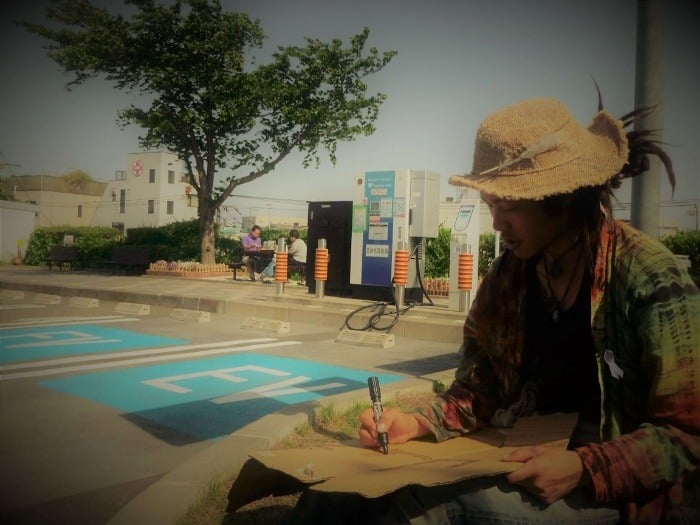
Photo: @themanwiththetinyguitar
Hitchhiking in Japan is still pretty uncommon so it is likely that you might be the first hitchhiker that your driver has ever even seen, much less picked up. The key to hitchhiking is to look as friendly as possible.
That said, this is one of the safest countries you can ever travel by hitchhiking.
Broke Backpacker Tip: Put up a sign in Kanji (Japanese script) that says Nihongo dekimasu which translates to ‘Japanese can’. Put smileys in between your kanji characters to earn extra brownie points and more rides!
What to Pack for Japan
There is SO much conflicting info when it comes to packing for Japan. Should you come with an empty suitcase? Make sure you’re prepared for every single weather scenario? Truth be told, it all depends on the season you roll into Japan, and for how willing you are to part with your money if the weather does pull a fast one on you.
Either way, there are some basics I would definitely lock in. Here is my ride or die essentials for Japan.
Essentials
- The Right Cards: Bring a credit card with no foreign transaction fees. Tap-to-pay is now widespread in cities, but carry a backup physical card for older terminals.
- Cash (Yen): While the country is becoming more digital, you still need physical yen for small temples, rural buses, and traditional shops and markets.
- Physical ID: If you plan on hitting up bars or clubs in Roppongi or Shinjuku, a driver’s license or passport copy is often required.
Tech
- eSIM: An eSIM is the easiest way to be connected from the moment you touch down. Flick through my faves for Japan here.
- Power Bank: A non-negotiable – you’ll be using Google Maps and translation apps all day. I always use my trusty magsafe one so there’s no faff with wires.
- Plug Adapter: Japan uses Type A and B plugs (two flat pins). If you travel a lot like me, I’d definitely invest in a worldwide one so you’ll never be stung by packing the wrong one again.
- Noise-Cancelling Headphones: Essential for the Shinkansen and long flights.
Clothes (Japan Reality)
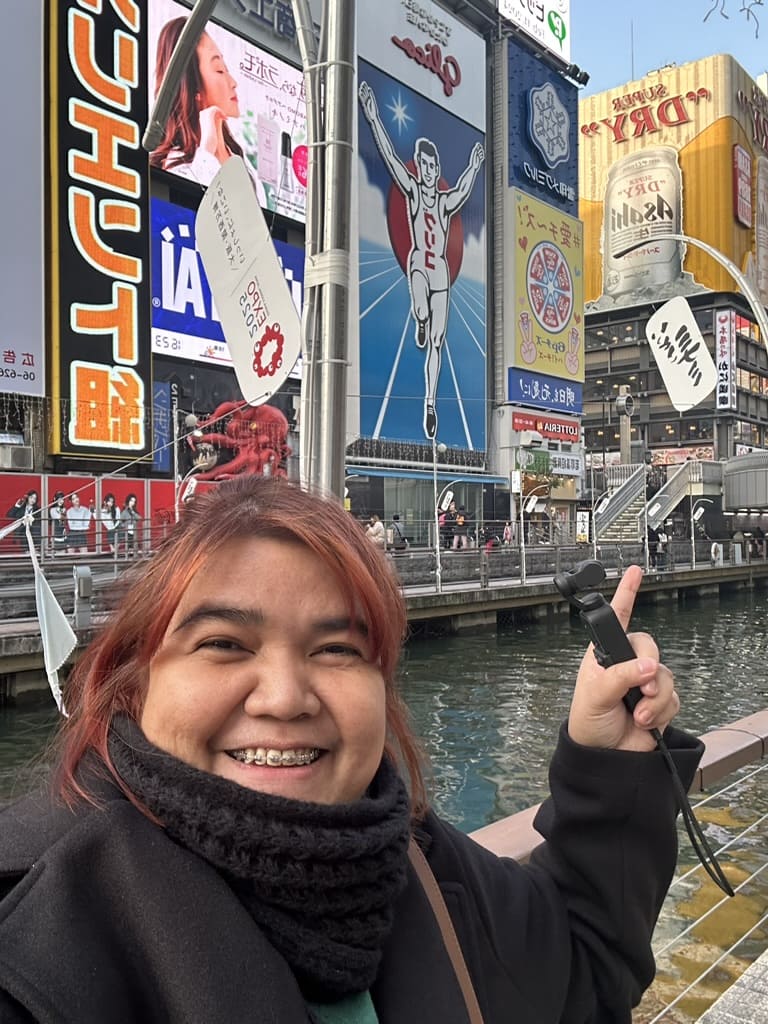
Photo: Rhenzy Caguioa
- Slip-on Shoes: You will be taking your shoes off constantly at temples, restaurants, and traditional inns. Avoid anything that’s complicated to take on and off.
- Layers: Even in summer, the air conditioning in trains and malls can be aggressive. A light, packable jacket or other layers are always smart.
- Pack for the season: There isn’t a one-size-fits-all here like in South East Asia. Research your season and pack accordingly.
Walking + Comfort
- Serious Sneakers: You’ll be racking up a FAT step count per day in Japan, so prepare your poor feet. Bring broken-in, high-quality walking shoes and your comfiest trainers. This is not the trip to try out new boots.
- Daypack: A small, lightweight backpack is better than a tote bag for distributing weight during long days on your feet. I like a packable one for on the go (and for when I’ve done a bit too much impromptu shopping).
Toiletries
- Deodorant: Japanese deodorants are notoriously weak. If you have a preferred brand from home, bring enough to last the whole trip.
- Hand Sanitiser and Wipes: Always useful when navigating public transport all day.
- Sunscreen: Japanese sunscreens are world-class, but if you have sensitive skin or specific allergies, stick to what you know works.
Nice-to-Have Japan Extras
- Coin Purse: Japan still uses a lot of high-value coins. A small dedicated pouch will keep them accessible.
- Portable Trash Bag: Public trash cans are incredibly rare in Japanese cities. It’s expected of you to carry your trash until you get back to your hotel, so a portable trash bag is a good idea.
- Mini Umbrella: A god send to have to hand for when the heavens opens up at a moments notice.
- Stamps Book: Many train stations and temples have beautiful ink stamps you can collect for free. A small blank notebook is a great cheap souvenir.
Seasonal Mini-Lists
- Spring and Autumn: Bring a mid-weight jacket and a compact umbrella. The weather can flip from sunny to crisp and rainy in an hour.
- Summer (June to August): Pack moisture-wicking fabrics and “cooling” undershirts. A small portable neck fan or a traditional folding fan is a total game-changer in the humidity.
- Winter (December to February): Do not overpack bulky sweaters. Buy “Heattech” base layers at a local Uniqlo once you arrive. They are cheap, effective, and take up zero space in your luggage.
Work, and Longer Trips
While it’s a much more common country for backpackers to visit as tourists, plenty of travellers do choose to work in Japan. From conventional work visas, classic work holiday visa life to
Alternatively, there is always the call of the life and times of a digital nomad! With ample WiFi, crackin’ services, and all the cheap ramen in the world, walking the life of a cyber traveller in Japan is an excellent idea! (Minus the hustle with accommodation prices.)
Work Basics
Japan’s work culture is famously intense, so do not expect a vacation if you are on a formal contract. Getting a standard work visa involves serious hoop-jumping. You will need a specific visa for your job type, a Certificate of Eligibility (COE), and a sponsor, which is usually your employer. Most of these visas last one to three years. It is a bureaucratic headache, so check official sources for the latest fine print before you commit to the grind.
Working Holiday Visas
If you are between 18 and 30 and hold a passport from one of the 31 partner countries, this is the easiest way to work in Japan. Unlike the standard work visa, the working holiday visa is designed for travellers. It gives you a year to live and work almost any job to fund your trip.
You usually need proof of funds (around ¥250,000) and a return ticket to get approved. Once you are in, you can jump between seasonal jobs like ski resort work in Niseko or hospitality in Tokyo without the usual red tape.
The Digital Nomad Scene
Japan finally launched its official Digital Nomad visa in 2024, but it is not built for the average backpacker. To qualify, you need to prove an annual income of at least 10 million JPY: roughly $66,000 USD. If you hit those numbers, you get a six-month stay to work remotely.
If you don’t meet that threshold, most nomads still work on standard tourist entries, though it remains a legal grey area. Fukuoka is the current hotspot for nomads due to its startup energy, while Osaka remains the best pick for a social scene and better food.
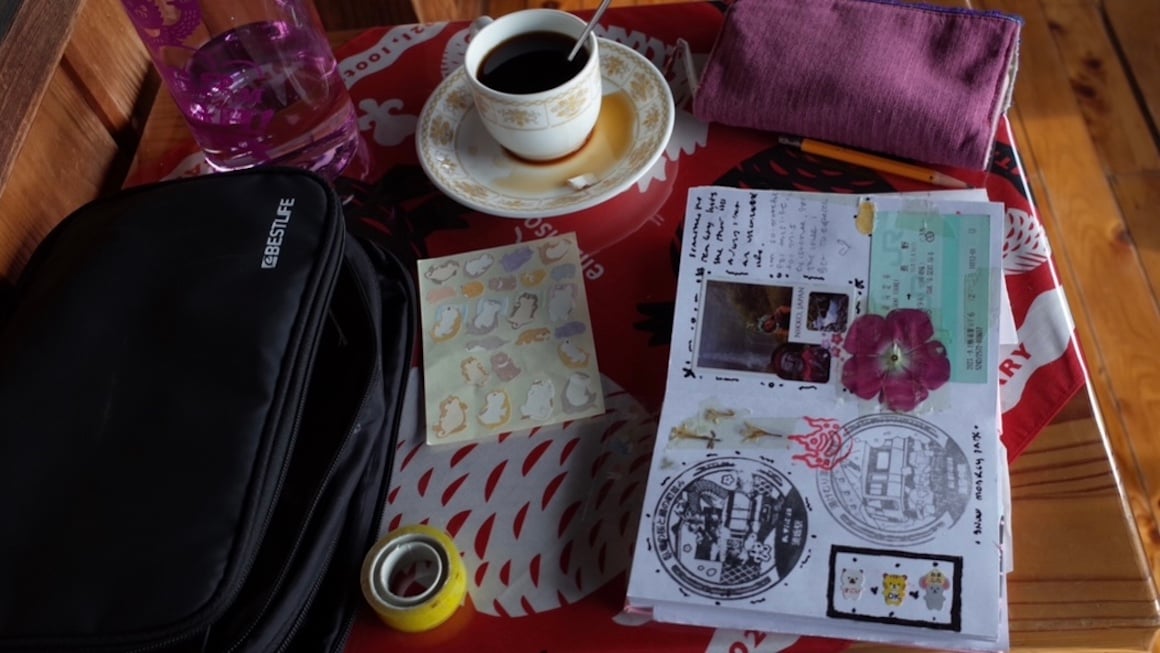
Photo: @audyscala
As a digital nomad, I found working in Japan harder than in other spots in Asia. The cafe culture here is insane, but high customer turnover often means they don’t look too kindly towards you taking up a seat for a couple of hours.
Big cities also means finding small pockets of community and other digital nomads a lot harder. I stayed in Tokyo for three weeks alone and never met another digital nomad – you can imagine this gets lonely pretty quickly. If, like me, you like kicking it back and having a base for a while, you might struggle in Japanese cities compared to other digital nomad hubs in the region, like Bali or Da Nang.
Teaching English in Japan
Teaching English in Japan is still the most popular way to fund a long-term stay. If you have a degree and a TEFL certificate, you can earn a solid wage that actually allows you to save. Most contracts even provide an apartment, which bypasses the nightmare of Japanese rental deposits.
The wage is good, enough to put some extra away in spite of Japan’s high cost of living. You’ll likely be given a place to stay on a contract job too – that helps! It’s also a tough working environment – don’t expect to work in Japan and have hours left in the day to have fun. Teaching in Japan is hard work.
That being said, a lot of people teach in Japan to save up some more of that travel dollar – so it’s still a good idea to do it for a while and save some money to blow on epic adventures. Of course, teaching English abroad is an experience in itself. There’s no better way to experience a culture than working in it.
TEFL courses open up a huge range of opportunities and you can find teaching work all over the world with one! Broke Backpacker readers get a 50% discount on TEFL courses through MyTEFL (using the code PACK50).

Volunteering in Japan
Outside of legal work or illegal work (some might say the BEST kind of work!), volunteering in Japan is another kickass opportunity that I also did. Guess what? It was sick!
If you want to avoid the corporate grind, volunteering is a massive win. It is the best way to see behind the mask of “perfection” and experience how locals actually live.
Photo: @themanwiththetinyguitar
Workaway or any of its alternatives like Worldpackers are full of opportunities, from agriculture and hospitality to tourism and volunteering with kiddos (which basically amounted to me going swimming and playing Mario Kart with kids for six hours a day).
Plus, if you join the Worldpackers community as a Broke Backpacker reader (use the code BROKEBACKPACKER) at the checkout, you get a fat chunk off the signup cost – 20% OFF your annual fee!
Useful Travel Phrases for Japan
Japanese is not an easy language, however, learning a few travel phrases long way! Many Japanese people do not speak English well, or feel embarrassed too, so knowing these travel phrases will help you connect with the locals!
Learning Japanese though, that’s where it’s really at. Global Work and Travel offer the opportunity to learn Japanese in either Tokyo City, Kyota or Fukuoka.
You can stay anywhere from 2 to 12 weeks in Japan with small class sizes so you get MORE attention (you’ll need it, Japanese ain’t easy). Plus, what better way to learn than to fully immerse yourself!
- Hello – Konnichiwa
- Thank you – Arigatoo gozaimasu
- Please – onegai shimasu
- Yes – hai
- No – iie
- Excuse me – Sumimasen
- I don’t understand – Wakarimasen
- I don’t speak Japanese – Nihongo ga wakarimasen
- How are you? – Ogenki desu ka?
- Do you speak English? – Eigo o hanashimasu ka?
- No plastic bag – bin?ru-bukuro nashi
- How much does that cost? – Kore wa ikura desu ka?
- Can you help me? – Tetsudatte itadakemasu ka?
- Where is the bathroom? – Ofuro wa doko desu ka?
- Cheers/ Bottoms up – Kanpai
- Fool/ Idiot/ Moron – aho, baka, bakayaro
- Eat shit – Kuso Kurae
- Pervert – Hentai
What’s New for a Japan Backpacking Trip
Whilst the yen has tanked in recent years, inflation has shot up – making several long-standing travel hacks for Japan suddenly not as relevent anymore. Here’s the low down of anything new you might need to know for your upcoming trip.
- Touching Down in Japan: Paper immigration and customs forms have been largely phased out in favor of the Visit Japan Web portal. Registering gives you a QR code, allowing you to breeze through the gates while others are still fumbling with pens on the plane.
- JR Pass Price Hike: The days of the Japan Rail Pass being a “no-brainer” are over. Unless you are living on the Shinkansen, individual tickets or regional passes are often cheaper.
- New Tax-Free System: The 10% tax saving is shifting to a refund-based model. Instead of getting the discount at the register, you may now have to pay the full price upfront and claim your refund at the airport before you fly home.
- Mt. Fuji Entry Fees: If you plan on summiting the iconic peak, the “wild west” days are over. There is now a mandatory ¥4,000 entry fee for the popular trails and a daily cap on hikers. You must book your climbing slot in advance via the Official Mt. Fuji Climbing website.
- Accommodation Taxes: Cities like Kyoto and Osaka have introduced or increased tiered lodging taxes. Expect to pay an extra ¥200 to ¥1,000 per night, which is typically collected in cash at the front desk when you check in.
- Prices & Inflation: While the Yen has reached historic lows against the dollar, making your daily coffee surprisingly cheap, inflation in Japan is at its highest in decades. Expect to pay more for local meals and transport than you might have in the past
Culture In Japan
Japan is a fascinating and unique country built on deep traditions and complex social rules. To navigate it respectfully, focus on these core elements:
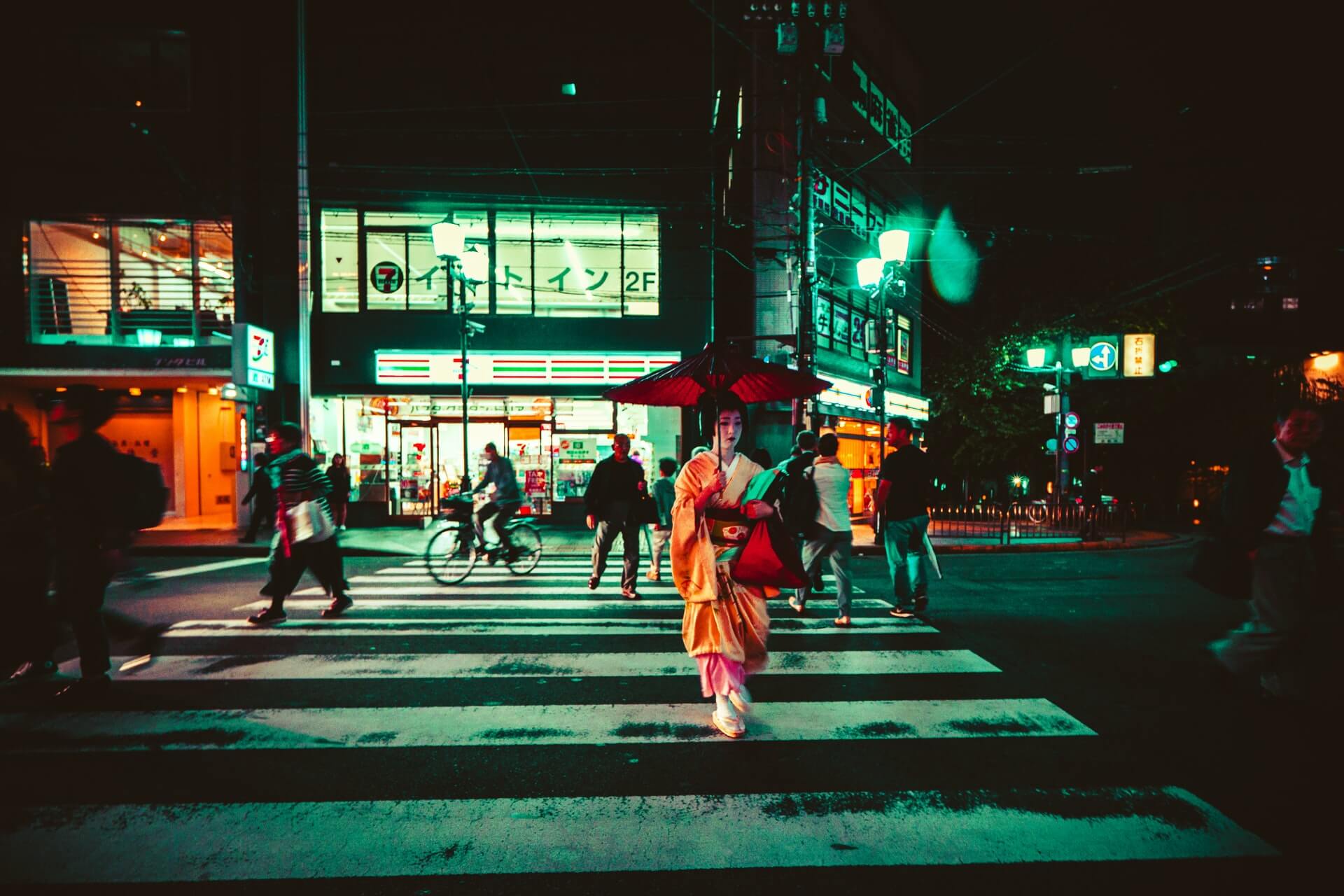
- Social Hierarchy: Age and status are central to social organization. Always use formal language with elders and show honor to those in senior positions.
- Subtle Communication: Tone and facial expressions are vital. Spoken words can have several meanings, so pay attention to the context and delivery.
- Extreme Punctuality: Time management is essential. Public transport and social gatherings are strictly on time, and arriving early is considered a common courtesy.
- Collective Harmony: Society is structured around the community rather than the individual. Your actions reflect on your family, peers, and peers.
- Gift-Giving Rituals: Giving gifts is a highly ritualistic and meaningful custom used to mark many different social and business occasions.
Bits of Etiquette to Keep in Mind
- Noise Control: Trains are ‘quiet zones.’ Keep your phone on silent and avoid taking voice calls or talking loudly.
- The Shoe Rule: If you spot a raised floor or a rack of slippers, it is time to de-shoe. This applies to temples, homes, and even some traditional restaurants.
- The ‘Stay and Eat’ Rule: Munching while moving is a no-go. Most street food spots expect you to finish your snack right there to avoid messes and crowds. Eat, trash your wrapper at the stall, then move on.
- Zero Tipping: Keep your extra yen. Tipping is not expected and is often seen as confusing or insulting. Excellent service is just part of the deal.
- Trash Management: Public bins are nearly non-existent. Carry a small ‘trash bag’ in your pack to stash your wrappers until you get back to your room.
- Women-Only Cars: During rush hour madness, keep an eye out for pink signs on the platform. These carriages provide a dedicated space for women to ensure a more comfortable and secure ride.
What I’d Do Differently Next Time
Let’s get this straight – I LOVED Japan. A deeply fascinating country, there is no limit to the amount of trips one could do without the country losing its magic. But, despite all research out there on the interwebs, it was also a hard country to plan for (probably because there is too much damn information out there…)
It’s safe to say that I didn’t get everything right first time round. Turns out I’m not the travel god I make myself out to be. If I could share my success and failures for other first timers, this is the golden nugs of knowledge I’d share.
- Get off the beaten path!!! I’m glad that I did the usual Tokyo-Kyoto-Osaka route first time round, but I certainly won’t be doing it again. Overtourism is real here – and the magic in Japan lies in going a lil off course.
- Temple Burnout is Real. By my fifth shrine in Kyoto, they all started looking the same. Next time, I’d pick three ‘must-sees’ and spend the rest of the day getting lost in a side-street cafe or a local gallery instead of checking boxes. You really don’t have to see it all.
- If you’re going solo, get out of your comfort zone. Japanese hostels are not inherently social by design. If you want to make friends, you’ll have to graft a little harder for them.
- Don’t rely on card alone. I assumed because Japan is futuristic, they’d take Apple Pay everywhere. Wrong. Many of the best ramen shops and rural guesthouses are still cash-only. I’d always keep at least ¥10,000 on me for emergencies.
- Learn some Japanese phrases in preparation. It’ll help you SO much with daily interactions and you’ll earn some brownie points with the locals.