There is some kind of magic in Thailand that keeps us backpackers coming back time and time again. You feel it as soon as you arrive; the warm, welcoming smiles and the delicious smells of street food hit you right in the soul. There’s nothing quite like it.
Slinging a backpack over your shoulder and heading to the Kingdom of Thailand to “find yourself” is a rite of passage for so many of us. Over the years, the beaten path here has become… well, pretty well beaten. But that doesn’t mean the adventure is gone.
I’ve spent nearly two years of my life in the magical Kingdom of Thailand. In my my most recent visit, I’ve was a able to experience it with fresh eyes, new routes, and the same old love for the place.
And now, I’ve updated this guide to help all my fellow farangs get the most out of this beautiful country. You can find:
- The best snorkel spots, parties, jungles and more.
- Safety tips so your gap yah doesn’t end in disaster.
- How much dolla you’ll be spending on a daily basis here.
- Other important tips necessary to make your Thai travels the best ones yet.
Without further ado, let’s jump in and get inspired to rediscover why backpacking Thailand is freaking amazing!
The Broke Backpacker is supported by you. Clicking through our links may earn us a small affiliate commission, and that's what allows us to keep producing free content 🙂 Learn more.
- Thailand in 60 Seconds
- Backpacking Thailand: Routes & Itineraries
- Best Places to Visit in Thailand
- Top Things to Do in Thailand
- Accommodation in Thailand
- Backpacking Costs in Thailand
- When to Travel to Thailand
- Staying Safe in Thailand
- How to Get Into Thailand
- How to Get Around Thailand
- Working in Thailand
- Thai Culture
- FAQs About Backpacking Thailand
- What’s New for Backpacking in Thailand
- What I’d Do Differently Next Time
Thailand in 60 Seconds
- Best island to start with: Koh Lanta
- Best island 3-week route: Andaman Islands (Krabi – Koh Lanta – Koh Phi Phi) – Gulf Islands (Koh Samui – Koh Tao – Koh Phangan).
- Best inland 3-week route: Bangkok – Khao Sok – Northern Loop (Chiang Mai, Pai, Chiang Rai).
- Best 1-month route: Bangkok – Khao Sok – Andaman Coast – Gulf Coast – Northern loop.
- Daily budget reality: $20-$30/day for true backpacking.
- Biggest first-timer mistake: Rushing to try to fit the entire country into 2 weeks. Travelling around takes time, it’s tiring, and it is expensive. Give yourself time.
- When to book ahead: Ferries & accommodation over Christmas/NY + Full Moon weeks.
- Best time to visit: Thailand has a few different seasons, depending on where you visit. But November to March are usually the best months.
- Biggest safety risk: Traffic & motorbikes.
- Budget killer #1: Western food, cocktails & coffee.
- Budget killer #2: Beer! It’s cheap but also the same price as a meal, so it can add up.
- Budget killer #3: 7/11. My absolute cryptonyte. Money seems to burn here.
- Must–have app: Grab. For transport and food delivery – it’s a game-changer.
Is Thailand Worth Backpacking still?
Thailand is probably the most popular destination for backpacking in Southeast Asia, and that naturally raises the question: is it still worth it?
I’m still a firm believer that it absolutely is. The heart of Thailand hasn’t changed. The warmth of the people, the misty northern mountains, the endless beaches, the chaos of Bangkok, the ease of travel and the GOD-DAMN DELICIOUS food.
Honestly, you could visit just to eat your weight in Thai food. A bowl of noodles on the street or a plate of pad kra pao will put you back less than $3, and can be the highlight of your day. Just be prepared that if you ask for anything spicy, you’ll be in trouble the next day (if you know what I mean)….
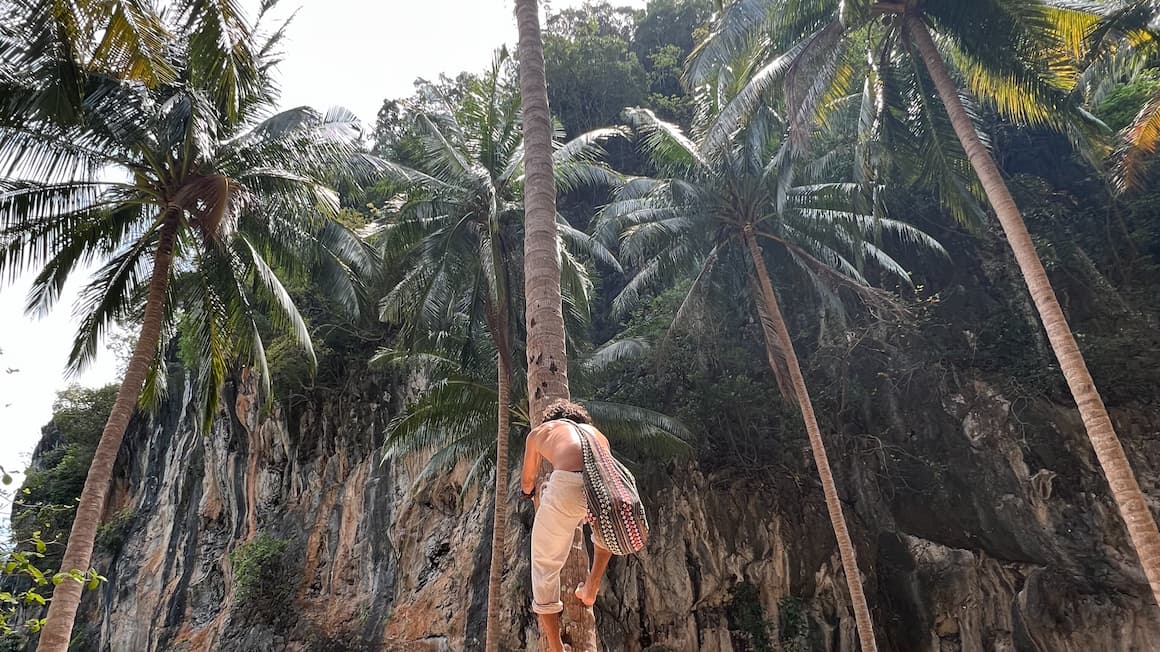
Photo: @amandaadraper
BUT(yes, there is a but) it’s also true that Thailand isn’t the untouched, uuuuber-cheap paradise it once was. It has evolved, grown up, and in some places, it’s been impacted heavily by tourism. It is a different place than it was 10-20 years ago. I don’t want to dwell on the negatives, but these are a few of my frustrations that I took away from my recent visit:
- Island prices have nearly doubled since my last visit.
- Certain places feel more for Instagram than for travellers.
- Traffic can be chaotic (but I guess there’s nothing new there!).
- The hordes of tourist shops in places like Pai and Phi Phi have really changed the vibe of these places. You won’t be short of places to buy yourself some elephant pants.
- There are far too many Western tourists driving motorbikes for the first time here… and learning the hard way. It might feel fun and free, but it’s dangerous. Wear a helmet, drive slowly and be safe.
If you’re after untouched, super-cheap, or crowd-free… Thailand might not hit the mark anymore. If you’re expecting “authenticity”, you might find the tourism machine here a bit much, especially in some of the big-name places. I’m not saying everywhere is like this… if you travel a little off the beaten path, you shall be rewarded 🙂
Backpacking Thailand: Routes & Itineraries
Generally, backpacking trips to Thailand are split into the southern legs and the northern legs. Some backpackers only have two or three weeks in the country. In this case, I’d recommend sticking to one half of the country. It’s always better to travel slowly – for your budget and your sanity!
Neither half of the country is better than the other; they are just extremely different. And to truly get to know Thailand, you need to see the country from all angles, so if you have the time, I’d highly recommend exploring both.
Either way, I’ve got you covered with the best itineraries. Whether you’re up for 3 weeks in the islands, 3 weeks up north or, a month to explore both… let’s get into them:
Backpacking Thailand Islands – 3 Week Itinerary
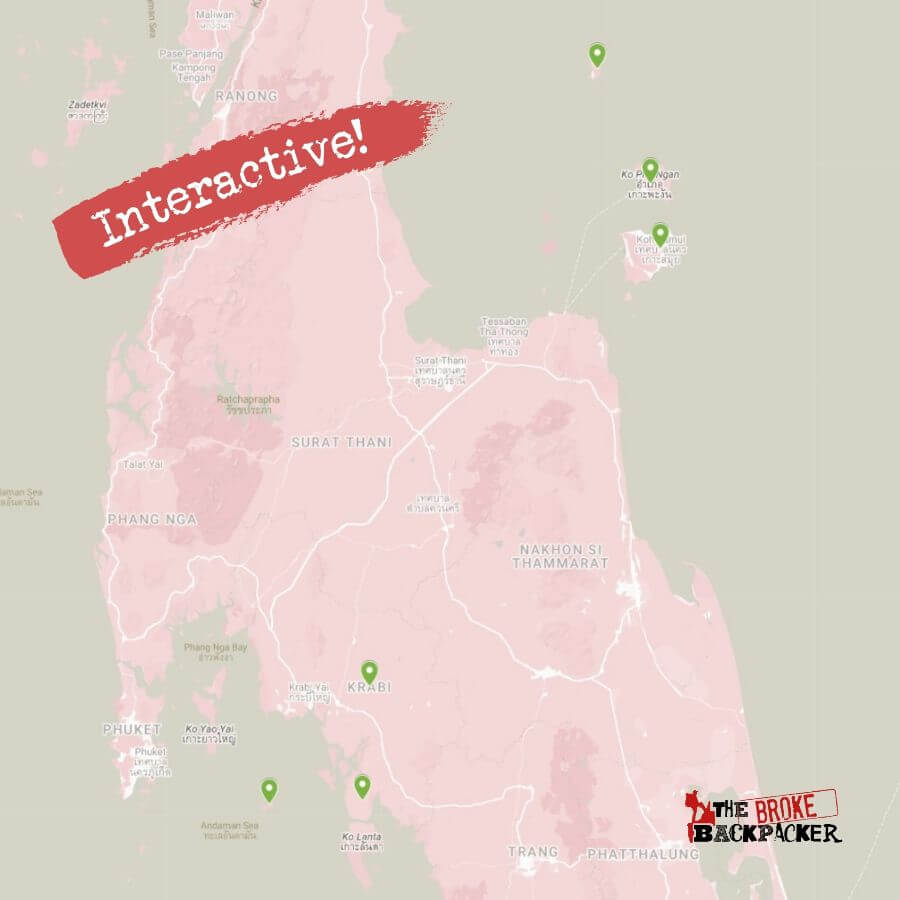
This gives you the best and most popular routes through both coasts (the Andaman and the Gulf Islands).
Andaman Coast (Krabi – Koh Lanta – Koh Phi Phi): Starting on the west coast, you’ll find the scenery is rugged, the food is wildly delicious, and the travel logistics are fairly simple. This part of your trip gives you a mix of chilled beaches, adventure, and a dash of nightlife before you move on to the other side.
- Krabi (2-3 nights): Railay viewpoints, Ao Nang beaches, jungle hikes.
- Koh Lanta (4 nights): Chilled beaches, sunset bars, a beautiful national park and a slower pace.
- Koh Phi Phi (2-3 nights): Gorgeous (but busy) bays, viewpoints, a hit of nightlife and wild party hostels.
Gulf Islands (Koh Samui – Koh Phangan – Koh Tao): Pop across to the East Coast for a totally different vibe. These islands each have their own spice – modern, boho, and centred around diving. The ferry links make it effortless to get between them.
- Koh Samui (3 nights): Waterfalls, night markets, a more polished island feel.
- Koh Phangan (3 nights): Quiet coves, yoga & snorkelling, Full Moon if you want it, but not essential.
- Koh Tao (3 nights): Diving hub, viewpoints, chilled cafes and beaches.
If you want to venture off the beaten path a little more, or add another island into the mix, you could also throw in a stay on Koh Lipe, Koh Mook, Koh Ngai or Koh Kradan. These islands get a lot less foot traffic than the others and are definitely worth a peak if you have the time.
Backpacking Thailand Inlands – 3 Week Itinerary
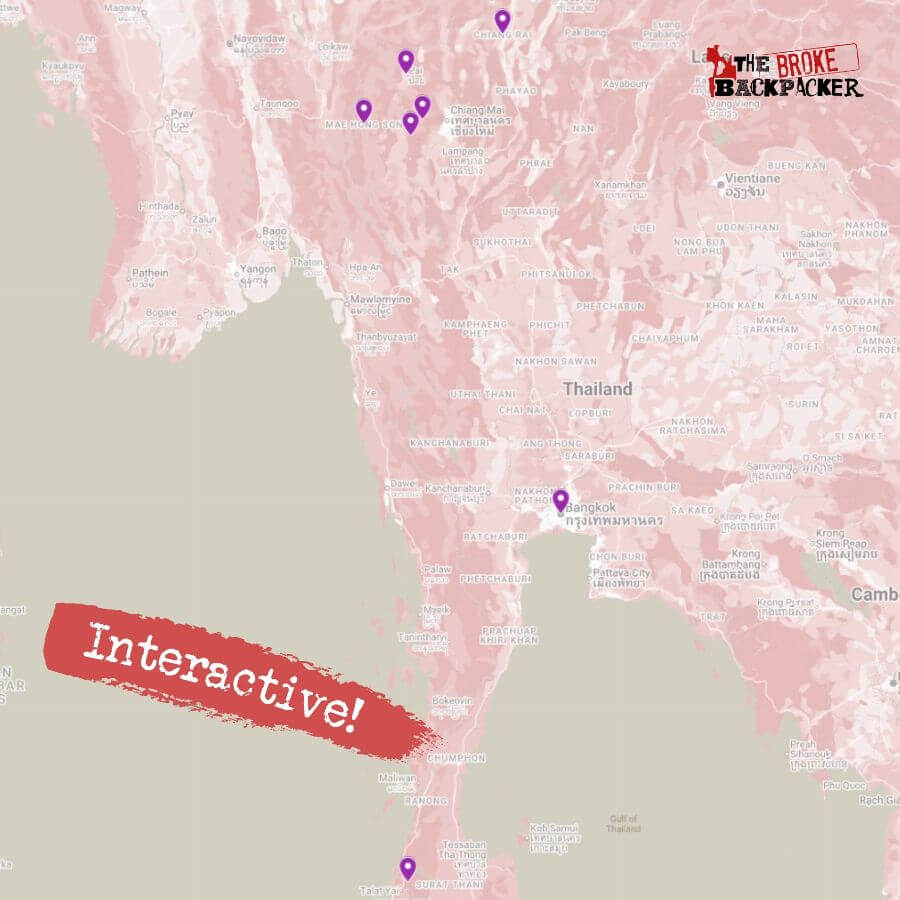
This inland itinerary blends Thai culture with jungle, mountains, waterfalls, and villages. You get the best of the north and one of the country’s most iconic national parks.
Central (Bangkok – Khao Sok): Start with Bangkok’s BIG city energy, then drop into the jungle for a few days before flying north to Chiang Mai.
- Bangkok (2-3 nights): Street food, temples (Wat Pho, Wat Arun), canal tours.
- Khao Sok (2-3 nights): Cheow Lan Lake, floating bungalows, wildlife + jungle trekking.
- Fly from Surat Thani to Chiang Mai
North (Chiang Mai – Doi Inthanon – Pai – Mae Hong Son – Chiang Rai): These northern destinations are all about mountains, waterfalls and viewpoints.
- Chiang Mai (3-4 nights): Night markets, cooking classes, Old City temples, chill-city energy.
- Doi Inthanon (1-2 nights or day trip): Thailand’s highest peak, waterfalls, nature trails, hill tribe villages.
- Pai (3 nights): Pai Canyon, waterfalls, big backpacker vibes, nightlife, tipsy tubing.
- Mae Hong Son (2-3 nights): Local experience, mountain views, local markets, temples. When I visited Mae Hong Son, I did the famous 4-5 day motorbike loop and would highly recommend!
- Chiang Rai (2-3 nights): White Temple, Blue Temple, night markets.
1 Month Thailand Backpacking Itinerary
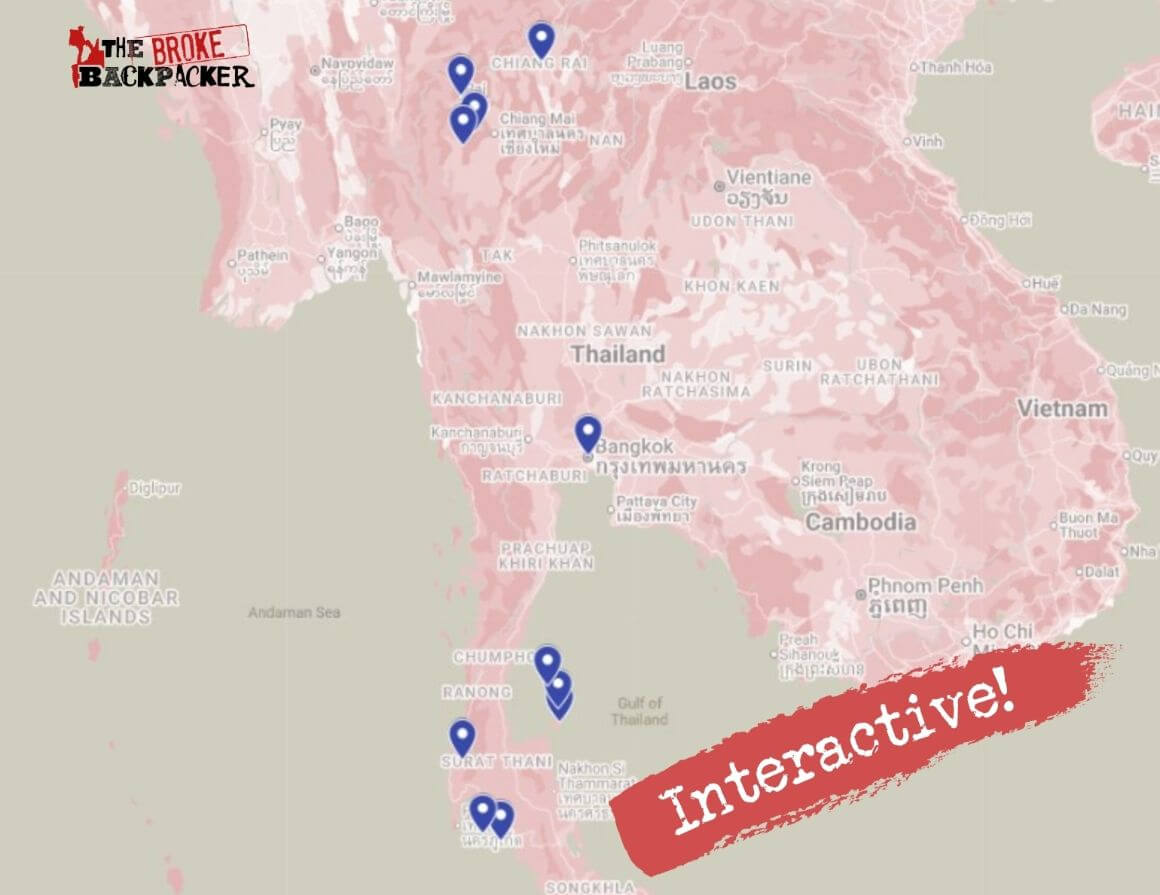
If you are heading to Thailand for a month, I envy you. Big time. You can do A LOT in four weeks. If I had four weeks up my sleeve and I was heading to Thailand for the first time, this would be my itinerary:
Week 1: Bangkok – Khao Sok: This week mixes Thailand’s big-city energy with jungle vibes. You’ll start hard and fast in Bangkok, then slow down in Khao Sok’s rainforest and lakeside accommodation.
- Bangkok (3-4 nights): Street food, temples, canal tours, chaos.
- Khao Sok (3 nights): Cheow Lan Lake, floating bungalows, jungle trails.
Week 2: Andaman Coast: This week is all about beaches, sunsets, and that famous limestone cliff scenery. Koh Lanta gives you space and serenity, while Phi Phi brings chaos and nightlife.
- Koh Lanta (4 nights): Long beaches, sunset bars, great food.
- Koh Phi Phi (2-3 nights): Viewpoints, snorkelling trips, backpacker vibes, nightlife.
Week 3: Gulf Islands: The Gulf has a totally different feel. It’s softer, greener and easier to hop between. You get a mix of modern comfort, hippy vibes, nightlife, and incredddible diving.
- Koh Samui (2-3 nights): Waterfalls, night markets, beaches.
- Koh Phangan (2-3 nights): Yoga classes, snorkelling spots, hidden beaches.
- Koh Tao (2-3 nights): Diving, viewpoints, cafe culture.
Week 4: Northern Inland Loop: The final week slows the pace and shifts into culture, mountains, and cooler air as we head into the north of Thailand.
- Chiang Mai (2-3 nights): Night markets, cooking classes, Old City temples, bigger city vibe.
- Pai (2-3 nights): Pai Canyon, hot springs, waterfalls.
- Chiang Rai (2-3 nights): White Temple, Blue Temple, night bazaar.
Best Places to Visit in Thailand
It’s no secret that Thailand is one of the best places in the world for backpackers. Whether you’re here for the beaches, jungle, culture or just the freedom it offers, these are my favourite places to visit in Thailand.
Backpacking Bangkok
- Best for: Foodies, culture, first-timers, city-lovers, nightlife.
- Budget vibe: Cheap. Street food, hostels, and public transport keep costs low.
- Time needed: 3-4 nights.
- Getting there: Easiest international hub in Thailand; tons of flights.
- Don’t miss: Street food, river ferries, Wat Pho.
- Skip if: You hate heat, noise, or big-city chaos.
- Overrated: Khao San Road (fun once, but deffo not the “real” Bangkok).
- Where to base: Chinatown, Sukhumvit, or the Old City.
- Tip: Use boats and the MRT to dodge traffic; it’ll save your sanity!
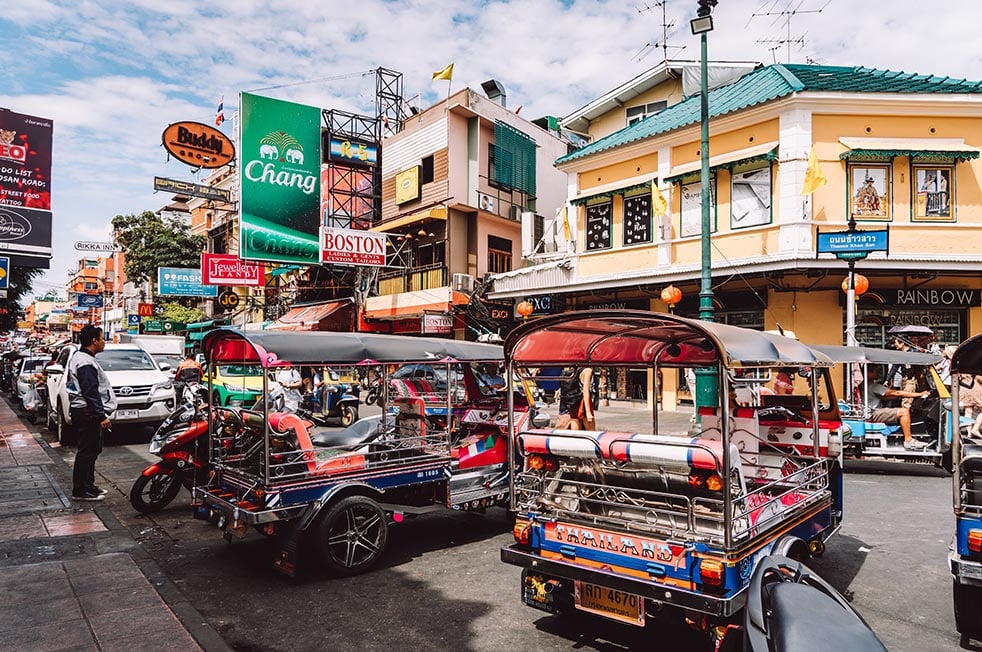
Image: Nic Hilditch-Short
This is the hectic heart of the backpacker scene in Southeast Asia. At first, backpacking in Bangkok can be a hard sell. Parts of the city are sweaty, claustrophobic, and full of people with ill intentions. Plus, the aesthetic of the city can feel like you’ve washed up in some dystopian tech future full of skyscrapers and slums, but no flying cars.
But once you lean into the city, it rewards you a hundredfold. Lumpini Park is Bangkok’s answer to New York’s Central Park. It’s a great place to have your morning coffee while watching local life happen. You can soak up some nature while at the heart of the metropolis.
When I travel to big cities, I often enjoy what is considered “mundane”. Taking Bangkok’s sky train throughout the city and people watching was something I found genuinely fascinating. You have no idea just how diverse this city is and all of its little hidden gems until you ride through each of its districts.
All I’d say is: keep your wits about you in this city of saints and sinners!
Backpacking Chiang Mai
- Best for: Culture, foodies, slow-travel, digital nomads, and backpackers.
- Budget vibe: Cheap. Hostels, markets, and scooters keep costs low.
- Time needed: 3-4 nights.
- Getting there: Flights from Bangkok + most islands; buses/trains from central Thailand.
- Don’t miss: Night markets, Old City temples, and cooking classes.
- Skip if: You want beaches or a high-energy party scene.
- Overrated: Tiger Kingdom. Unethical and not worth the hype
- Where to base: Old City or Nimmanhaemin (Nimman).
- Tip: Rent a scooter for day trips, the countryside is the real highlight.
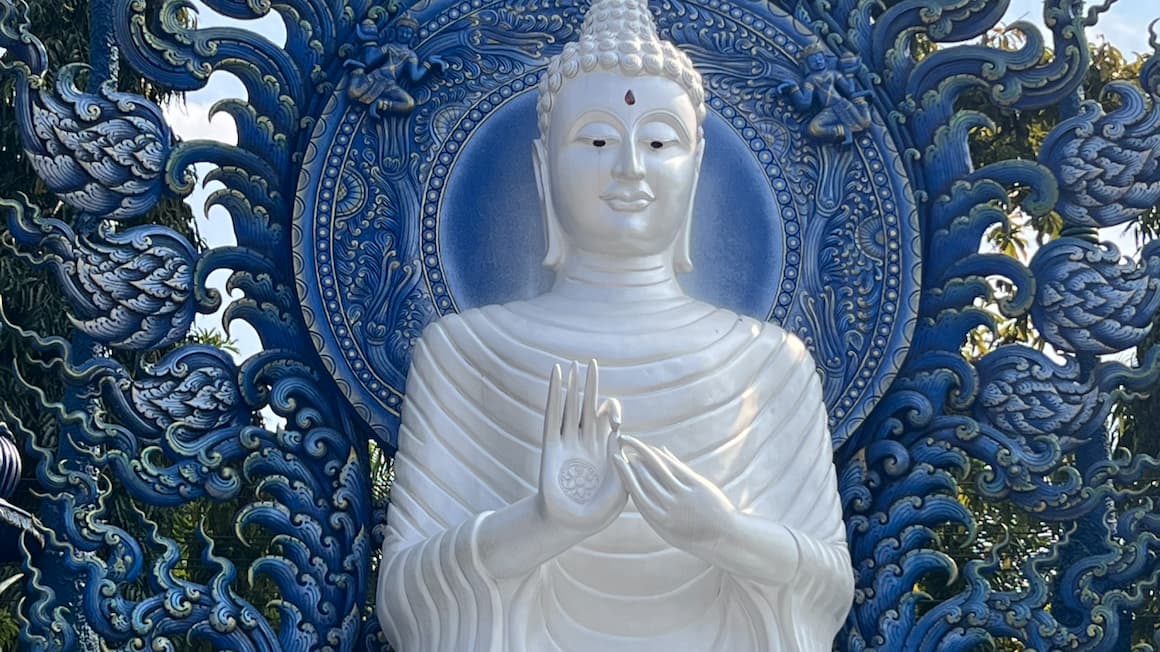
Photo: @amandaadraper
Most backpackers end up in this leafy, laid-back city at some point and with good reason. The historical, yet surprisingly cosmopolitan, walled city is surrounded by jungle and amazing hillside landscape. The area has become well known for homestays and hill-tribe trekking in Thailand.
Chiang Mai is well worth visiting, if not only for the vast array of temples, then for the quaint coffee shops that seem to match them in numbers, often serving locally grown coffee beans and free WiFi.
Why is travelling to Chiang Mai every vagabond’s dream? Street food… of course! Sweet, sweet magic is happening on these roads. Chiang Mai is also largely considered the digital nomad centre of the world (for better or worse). It has become not only one of the best places in Thailand to visit but also to live.
Backpacking Pai
- Best for: Backpackers, scooter explorers, slow-travellers.
- Budget vibe: Cheap. Hostels, street food, and scooters make it one of the most affordable stops.
- Time needed: 3 nights.
- Getting there: Minivan from Chiang Mai (3 hours of winding mountain roads), or motorbike, but please ONLY do this if you are experienced.
- Don’t miss: Pai Canyon, hot springs, sunset viewpoints.
- Skip if: You hate scooters, winding roads, or hippy-backpacker-town energy.
- Overrated: The “Pai walking street food”. It’s fun, but better food is found elsewhere.
- Where to base: Near the walking street or just outside town for quieter stays.
- Tip: Pai is deceptively spread out. Plan your route so you’re not zig-zagging all over town.
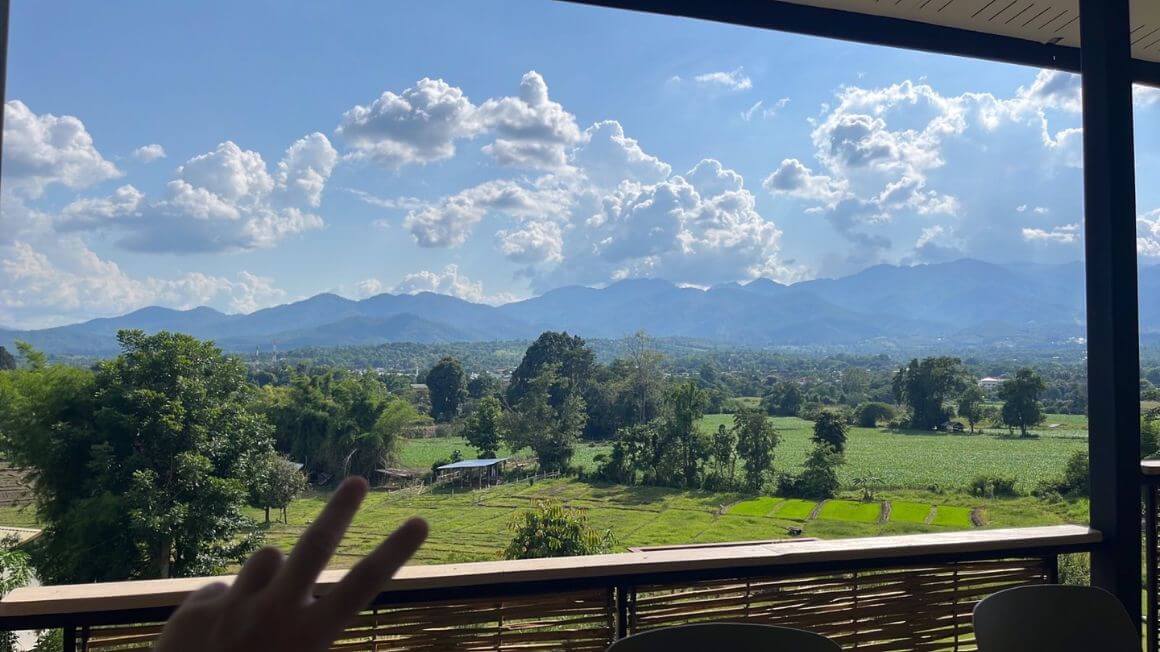
Photo: @monteiro.online
A small town in the north of Thailand near Myanmar’s border, Pai has recently made it onto the backpacker circuit and is super popular. I fucking love Pai. It’s one of those special sticky spots that draws travellers in, and somehow 4 weeks have passed!
Pai is worth a visit in and of itself. There are incredible street food stalls, rolling hills packed with things to do, circus hostels, jazz bars (yes, jazz bars!) and parties that seem to roll well past dawn. Hippies and freaks are drawn here like moths to a flame, partly because the weed and magic mushrooms are rather delectable. 😉
Now, if you have time, I strongly recommend getting closer to the Myanmar border and visiting some of the Karen villages in the area. The easiest way to do this is by motorbike.
There are also some cool and unique eco-resorts in Pai where your contributions help support local communities as well as lower your carbon footprint. Pai is such a special little getaway for any type of traveller – but especially for those digital nomads that end up living in Chiang Mai.
Backpacking Phuket
- Best for: Beach-hopping, first-timers, nightlife, resorts.
- Budget vibe: Mid. Cheap food + hostels exist, but beaches and transport can add up.
- Time needed: 3-4 nights.
- Getting there: Direct flights from Bangkok + most regional hubs.
- Don’t miss: Kata Beach, Nai Harn viewpoints, and island-hopping to the smaller bays.
- Skip if: You want quiet, undeveloped islands, Phuket is busy and built up
- Overrated: Patong Beach. It’s loud, crowded, and not the island’s best beach by any means.
- Where to base: Kata for balance, Karon for families, Rawai/Nai Harn for a calmer vibe.
- Tip: Use local buses or Grab to get around; distances are bigger than they look!
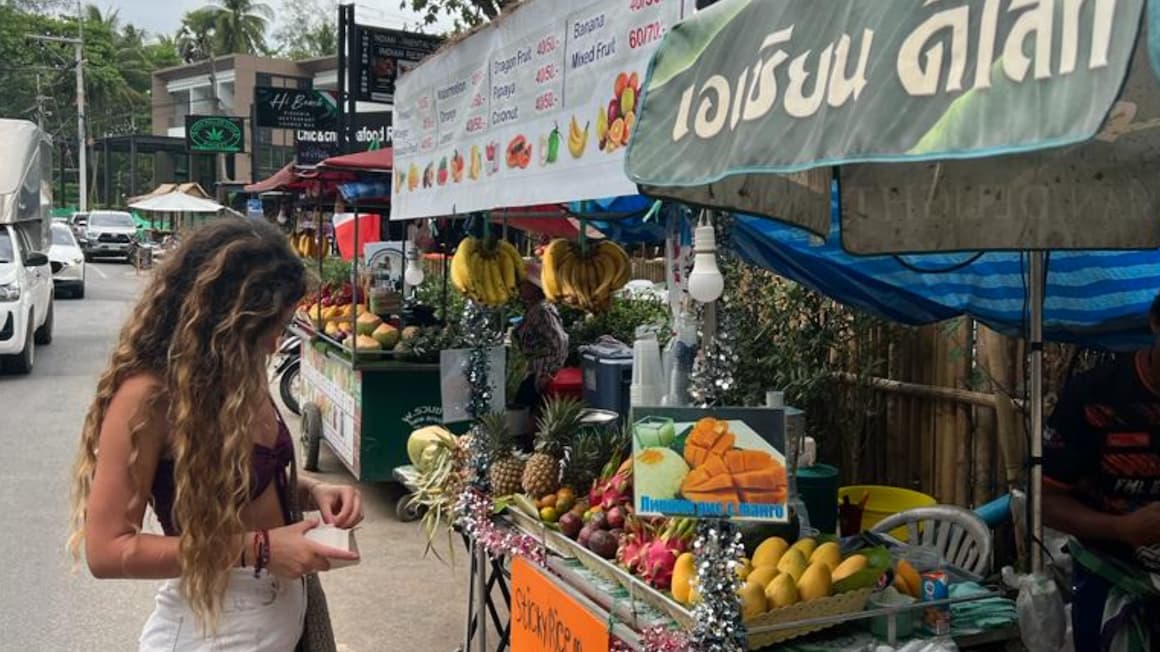
Photo: @amandaadraper
Phuket is Thailand’s biggest island and one of its most mixed bags. Home to gorgeous beaches on one side, but sleazy nightlife and built-up strips on the other. It’s got the reputation of being the Beniform of Thailand. It’s not a “bad” island, but it is one where choosing the right area makes or breaks your trip.
Stick to the south (Kata, Karon, Nai Harn, Rawai), and you get gorgeous beaches, chiller vibes and less party-goers. End up in Patong, and you’re in neon-lit chaos with crazy bars, traffic, and mega crowds.
If you treat Phuket as a base for beach-hopping, island-hopping, and discovering the quieter spots, it’s a solid stop. Just don’t expect an untouched paradise. The beauty is there, you just have to dodge the tacky bits to find it.
Backpacking Krabi
- Best for: Scenery lovers, climbers, and chilled-out beach time.
- Budget vibe: Cheap-mid. Longtail boats add up, but food + stays are great value.
- Time needed: 3-4 nights.
- Getting there: Flights from Bangkok; ferries connect to Phuket, Koh Lanta, and Phi Phi.
- Don’t miss: Railay viewpoints, island-hopping, Tonsai’s climbing scene.
- Skip if: You want crazy nightlife or a compact, walkable beach town.
- Overrated: Ao Nang’s main strip – convenient but not the prettiest, and a bit tacky.
- Where to base: Railay for scenery, Tonsai for backpackers, Ao Nang for convenience.
- Tip: Don’t stay in Krabi Town, there is nothing there for travellers, except the airport!
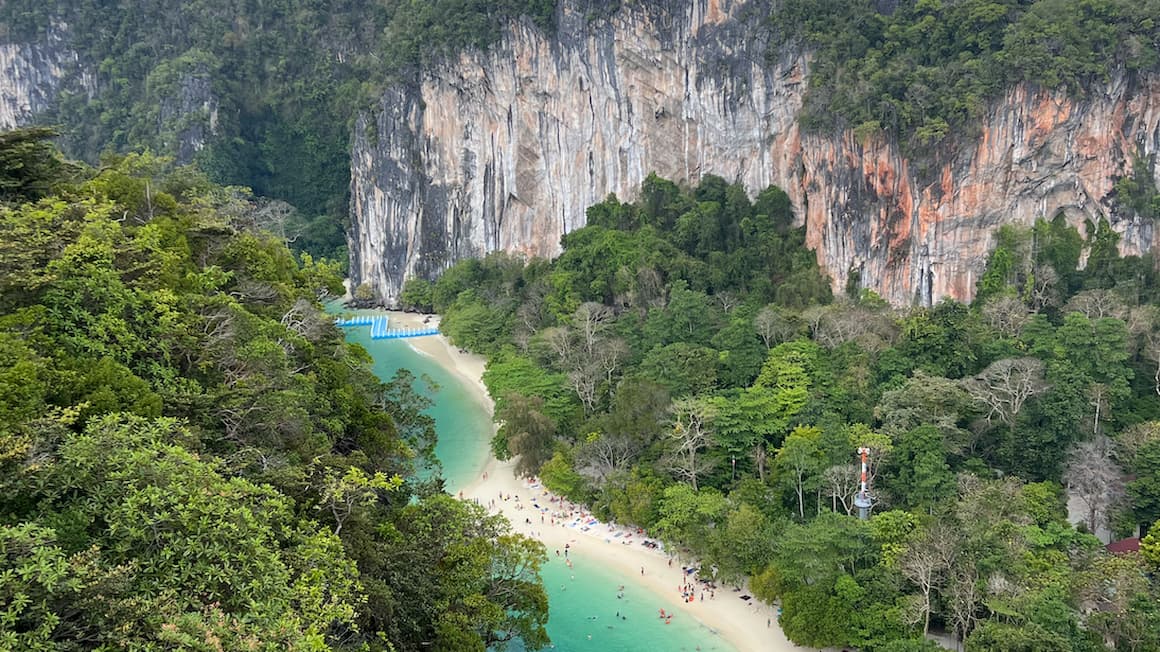
Photo: @amandaadraper
Krabi Town is the main hub of the region. It’s not on the coast proper, but rather further inland. Most people catch the first boat they can find to Railay, Tonsai, or one of the other nearby beaches. But there are a couple of solid hostels in town if you need to crash.
Tonsai and Railay are the most popular places to stay near Krabi. Railay is slightly more developed and a bit more refined. Tonsai is like a scene out of Lord of the Flies, complete with feral children. Stay in Tonsai if you want to party, or Railay if you want something a bit calmer.
From either Tonsai or Railay, you can organise lots of different day trips. I absolutely recommend going deep water soloing, which involves climbing (without gear!) directly over the ocean. It’s a bit nerve-wracking but totally worth it.
Backpacking Koh Tao
- Best for: Diving, snorkelling, and chilled beach days.
- Budget vibe: Cheap-mid. Great value for dive courses, hostels, and food.
- Time needed: 3-4 nights (longer if you’re diving).
- Getting there: Ferry from Chumphon or Koh Phangan/Koh Samui.
- Don’t miss: Shark Bay, Sairee sunsets, snorkelling around Koh Nang Yuan.
- Skip if: You want quiet, early nights. Sairee gets loud and very hostel-party heavy.
- Overrated: The “party” reputation, you can find quiet pockets if you want them.
- Where to base: Sairee for convenience and nightlife, Chalok for quiet, Hin Wong for snorkelling.
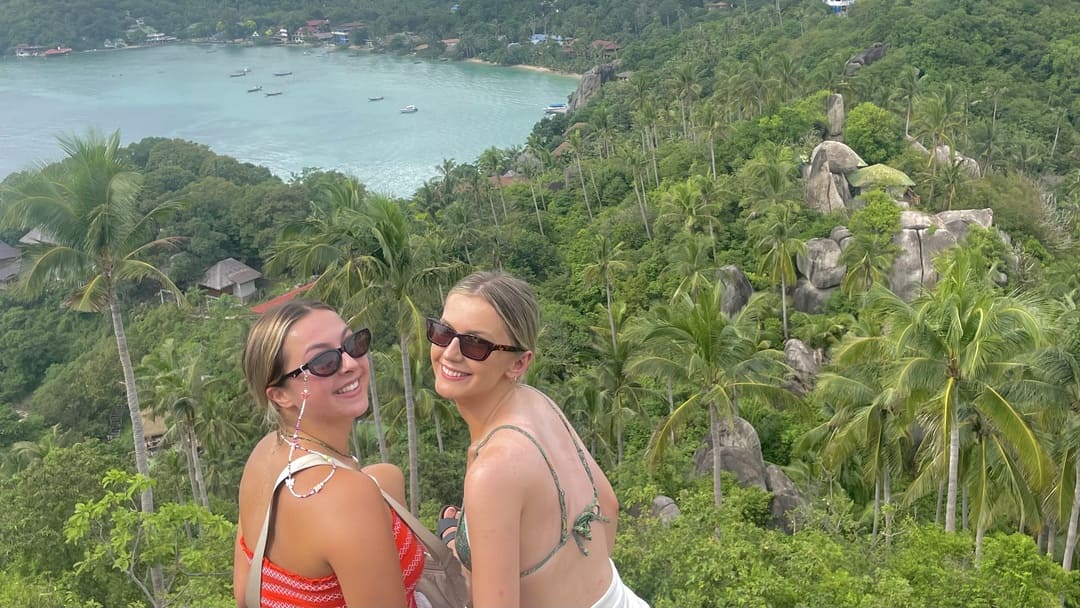
Photo: @taya.travels
Located on Thailand’s eastern coast, Koh Tao is without a doubt the best place to dive in the country. It is probably the cheapest place to get your diver’s license, and because of this, it attracts a TON of aspiring dive masters. It’s turned into a classic backpacker island, it’s small, social and built around diving all day and partying all night.
Even if you don’t dive, Koh Tao is a very chill place and worth spending at least a day on. Beyond the nightlife and the diving, the island is genuinely beautiful: clear water, beautiful snorkelling, and tiny bays. Broke Backpacker team member Taya has been perched up here for a good couple of years now and calls it her second home <3
Backpacking Koh Phangan
- Best for: Beaches, backpackers, parties, yoga/retreats.
- Budget vibe: Cheap-mid. Hostels + scooters are affordable, but the cute cafes can add up.
- Time needed: 3-5 nights.
- Getting there: Ferry from Koh Samui or Surat Thani.
- Don’t miss: Bottle Beach, Secret Beach, Thong Nai Pan, sunset bars on the west coast.
- Skip if: You want total quiet, even outside Full Moon, the island stays buzzing.
- Overrated: Haad Rin outside party dates – not the nicest beach when it’s empty.
- Where to base: Srithanu for chill, Thong Nai Pan for comfort, Haad Rin for nightlife.
- Tip: The island feels completely different depending on where you stay. Choose your area carefully.
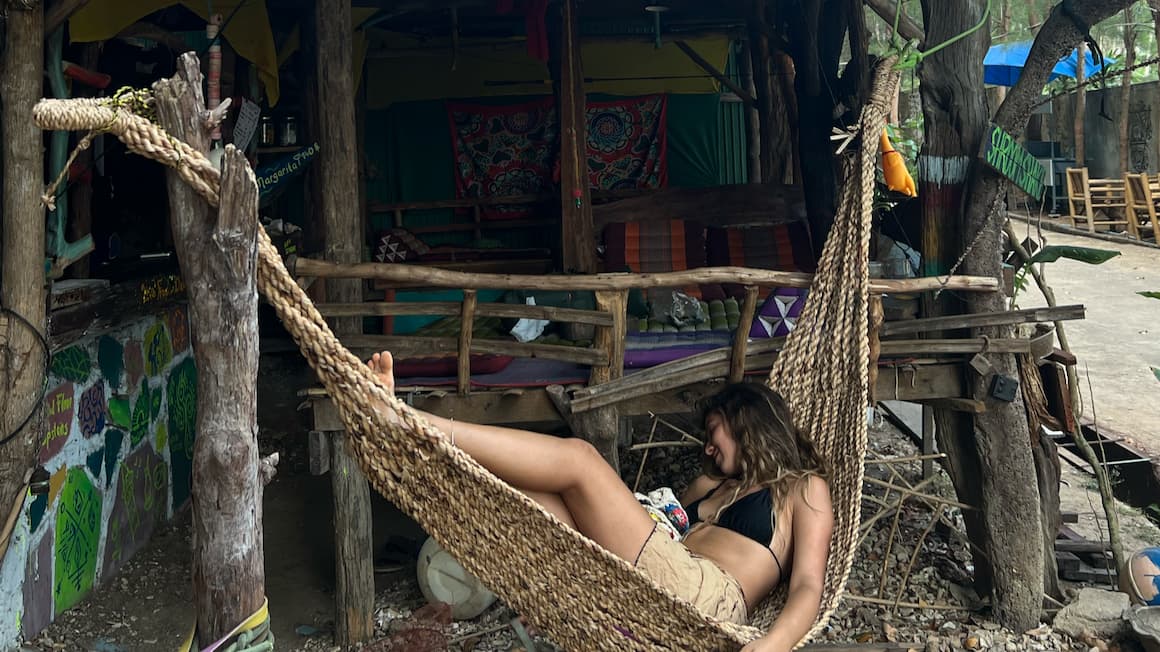
Photo: @amandaadraper
Koh Phangan is two islands in one: the loud, neon-lit Full Moon side, and the calm, jungled north where people come to actually relax. If you only know it for the parties, you’re missing the good stuff… the quiet bays, yoga shalas, beach cafes, and some of the clearest water in the Gulf also exist here.
The trick is choosing your base verrrry carefully! Haad Rin is pure and utter chaos around party dates, while places like Srithanu, Chaloklum, and Thong Nai Pan feel like a different island entirely.
And if I’m honest, the main full moon parties aren’t really that great – just a bunch of sloppy tourists drinking horrible liquor from a bucket and burning themselves on flaming jump ropes. In fact, there are many better parties on the island.
Backpacking in Koh Samui
- Best for: Resort holidays, couples, families, first-timers.
- Budget vibe: Mid-high. Hostels exist, but Samui leans more toward flash than backpacker.
- Time needed: 3-4 nights.
- Getting there: Direct flights from Bangkok; ferries from Surat Thani + Koh Phangan.
- Don’t miss: Fisherman’s Village, Lamai viewpoints, Ang Thong Marine Park.
- Skip if: You want a raw, low-key island. Samui is developed and spread out.
- Overrated: Chaweng’s main strip, it’s loud, busy, and not the island’s best beach.
- Where to base: Bophut for balance, Lamai for beaches, Maenam for quiet.
- Tip: Visit the south coast (around Laem Sor and Bang Kao), where Samui still feels peaceful.
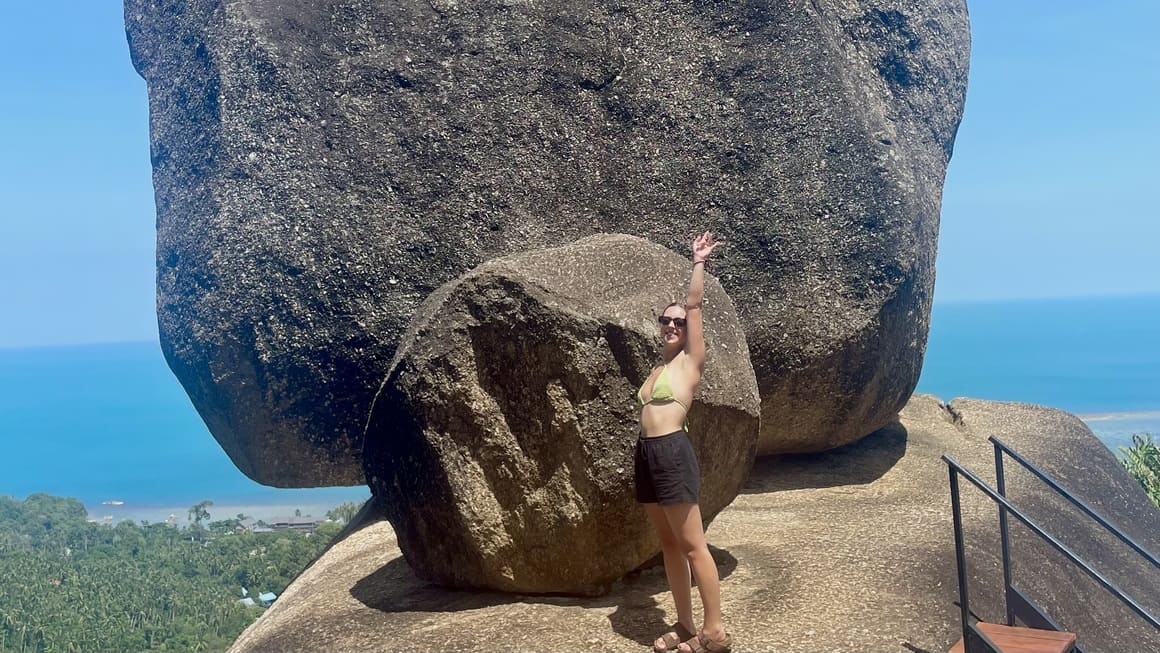
Photo: @taya.travels
Koh Samui is the “resort island,” mostly inhabited by older couples and Russians on holiday. It’s much bigger than either Koh Tao or Koh Phangan, which means there is a bit more to do on Samui. It is definitely more expensive, but luckily, there are some hostels dotted around the island for any backpackers who land here.
It’s an island where you’ll be able to trade backpacker chaos for modern comforts and convenience. It’s not necessarily a bad thing, just a different taste of Thailand.
Backpacking Koh Lanta
- Best for: Chill beaches, long stays, couples, digital nomads, laid-back backpackers.
- Budget vibe: Cheap-mid. Great value for bungalows, scooters, and food, but the prices creep up in the high season (Jan – April)
- Time needed: 3-5 nights (longer if you want to fully unwind).
- Getting there: Ferry from Krabi/Phuket; minivan connections from the mainland.
- Don’t miss: Long Beach sunsets, Mu Ko Lanta National Park, and Lanta Old Town shopping.
- Skip if: You want nightlife or a compact, walkable beach town.
- Overrated: The night market in Saladan. It’s okay, but it’s full of international flavours; you can find better local food elsewhere.
- Where to base: Klong Nin for balance, Long Beach for convenience, South for peace and quiet.
- Tip: Lanta is big and spread out, and a scooter makes the island feel twice as good.
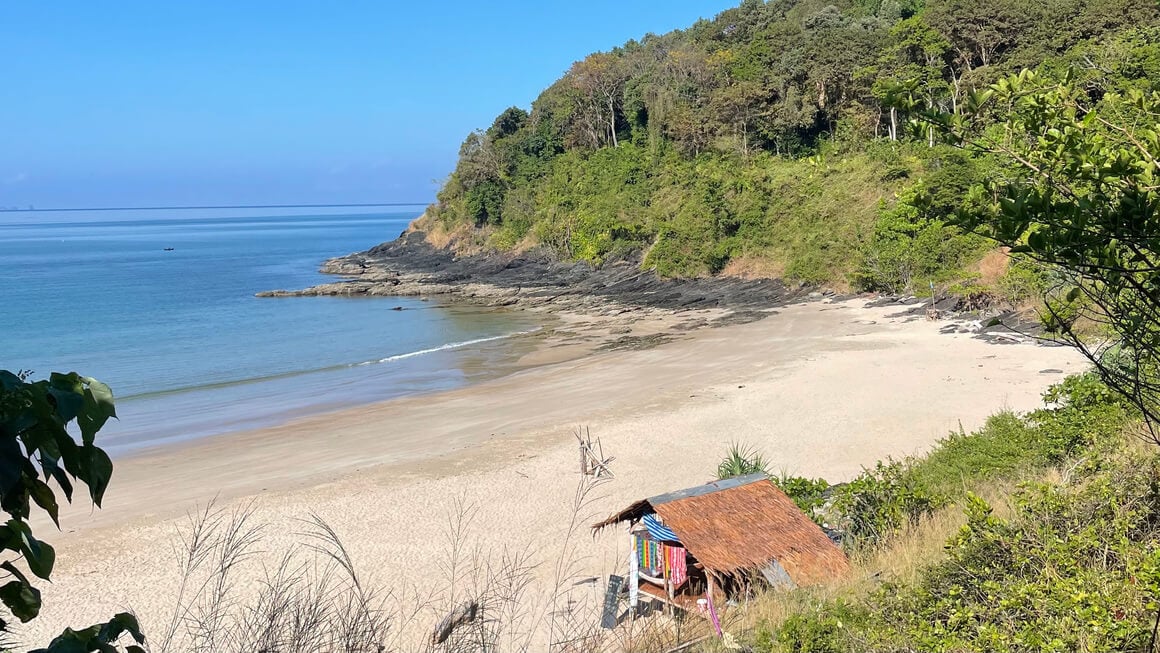
Photo: @danielle_wyatt
Koh Lanta is my favourite island to visit. In fact, I’d go as for as to say it could be my favourite island in the world. I’ve spent nearly a year of my life on this island, and it holds a very special place in my heart.
It doesn’t have the chaos of Phi Phi or Koh Tao. It’s a big island. If you want to dabble in the more bustling areas, stay toward the top half of the island on the west coast. If you want quiet and to hardly see another soul, stay south (toward the National Park).
The island has some of the best beaches in the country. If you need time to unwind after the high-energy of the cities and backpacker islands, you’ll love Koh Lanta.
Backpacking Koh Phi Phi
- Best for: Parties, beach-hopping, social backpackers.
- Budget vibe: Mid. Hostels + buckets are affordable, but creep up in high season. Tours can also add up.
- Time needed: 1-2 nights.
- Getting there: Ferries from Phuket, Krabi, and Koh Lanta.
- Don’t miss: Viewpoint hike, Maya Bay (go early to beat the crowds), snorkelling trips.
- Skip if: You want quiet, space, or anything resembling a calm island.
- Overrated: The main village beach – crowded, noisy, and not the best for swimming.
- Where to base: Tonsai for nightlife, Long Beach for quieter nights.
- Tip: If you don’t want to party, you can skip Koh Phi Phi.
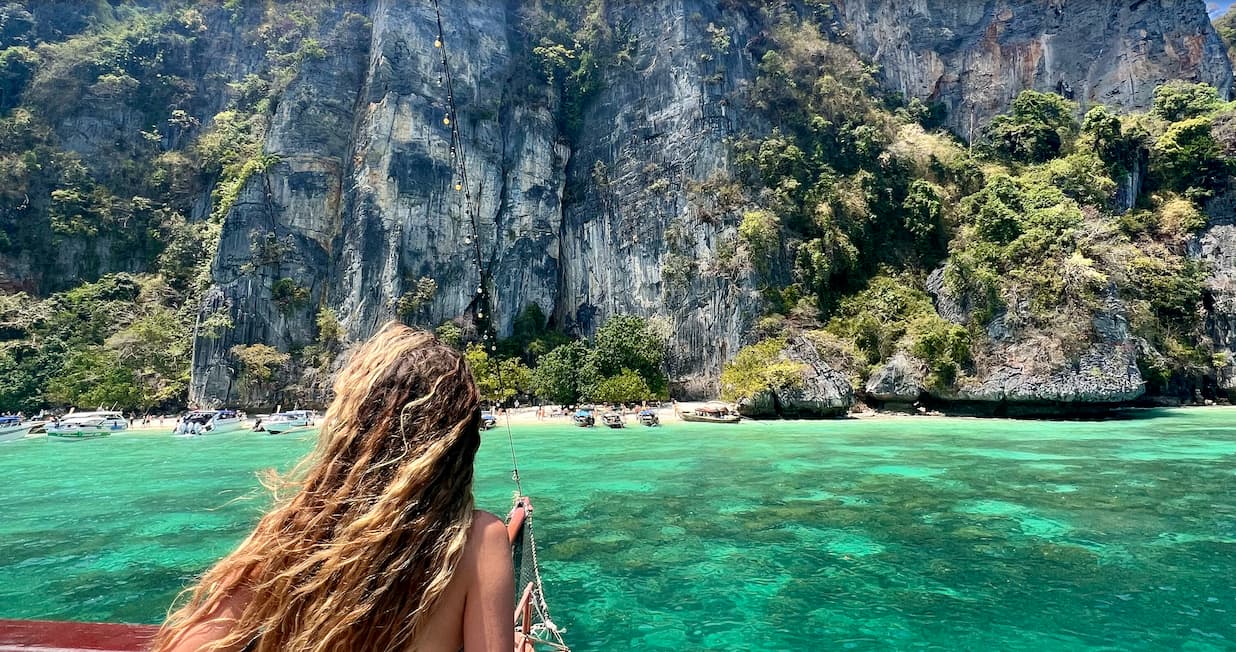
Photo: @amandaadraper
Koh Phi Phi is Thailand’s wild child. It’s loud, sweaty, social, and seriously chaotic. It’s a tiny island packed with hostels, bars, beach parties and drunk backpackers. If you want calm beaches and early nights, this is absolutely not your island. But if you’re in the mood for meeting people, dancing in the sand, and squeezing in a snorkelling trip in between hangovers, Phi Phi delivers.
Beyond the nightlife, the scenery is genuinely spectacular. It has impressive limestone cliffs, beautifully calm bays, and some of the best viewpoints in the south. It’s just busy… like realllllly busy.
If I’m honest, unless you want a wild night out, I’d skip it.
Backpacking Koh Chang
- Best for: Nature, long stays, off-the-beaten-path travel.
- Budget vibe: Cheap-mid. Great value for bungalows, food, and transport.
- Time needed: 3-5 nights.
- Getting there: Bus/minivan from Bangkok + ferry from Laem Ngop.
- Don’t miss: Lonely Beach, Klong Prao, jungle hikes, and island-hopping.
- Skip if: You want a tiny, walkable island. Koh Chang is big and spread out.
- Overrated: White Sand Beach, convenient but not the prettiest on the island.
- Where to base: Lonely Beach for backpacker energy, Klong Prao for quiet comfort
- Tip: Public songthaews make it easy to get around without renting anything.
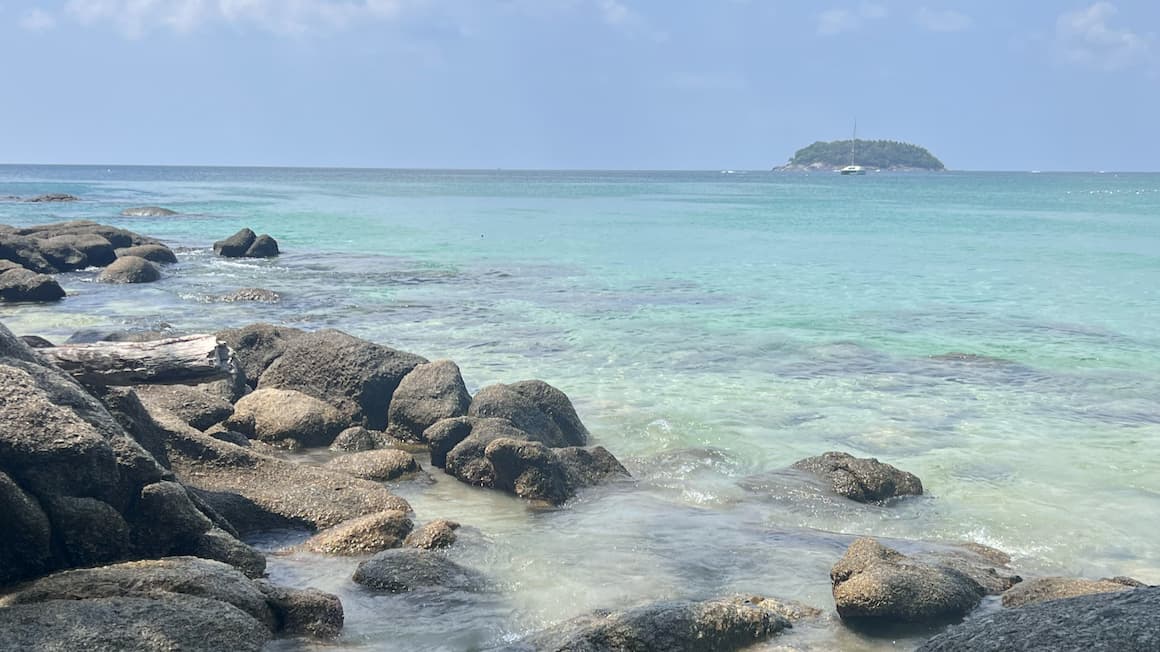
Photo: @amandaadraper
Koh Chang is one of the best alternatives to the southern islands. It’s quieter, greener, and far less developed, but still easy to reach from Bangkok. It’s big enough to explore without feeling crowded, and it has that laid-back, slightly scruffy vibe that we backpackers love. If you’re heading toward Cambodia next, it’s also perfectly placed for hopping over the border.
To get there, take a bus or minivan from Bangkok to Trat, then hop on the ferry to the island. Most companies sell a combined ticket, so the whole journey is pretty seamless. Once you arrive, it’s just a matter of choosing a beach and settling in! Guesthouses are spread along the west coast, and most can help you arrange local transport or day trips.
Avoid the elephant sanctuaries on Koh Chang. They reportedly are an unethical business of exploitive animal tourism. Stick to the beaches.
Off the Beaten Path Travel in Thailand
Thailand is definitely well on the beaten track as far as destinations go. Everyone loves to come here, and everyone wants to keep coming back. The thing is, people really love to come to the same destinations within the country. So, it doesn’t take a lot to step off the tourist trail and see another side of Thailand.
If you want to see a completely different side of Thailand, head east into Isan. This region borders Laos and Cambodia and feels worlds away from the beaches and backpacker hubs. Expect rice fields, river towns, Khmer ruins, night markets with zero tourists, and some of the best food in the country. Check out cities like Ubon Ratchathani, Khon Kaen, and Nong Khai.
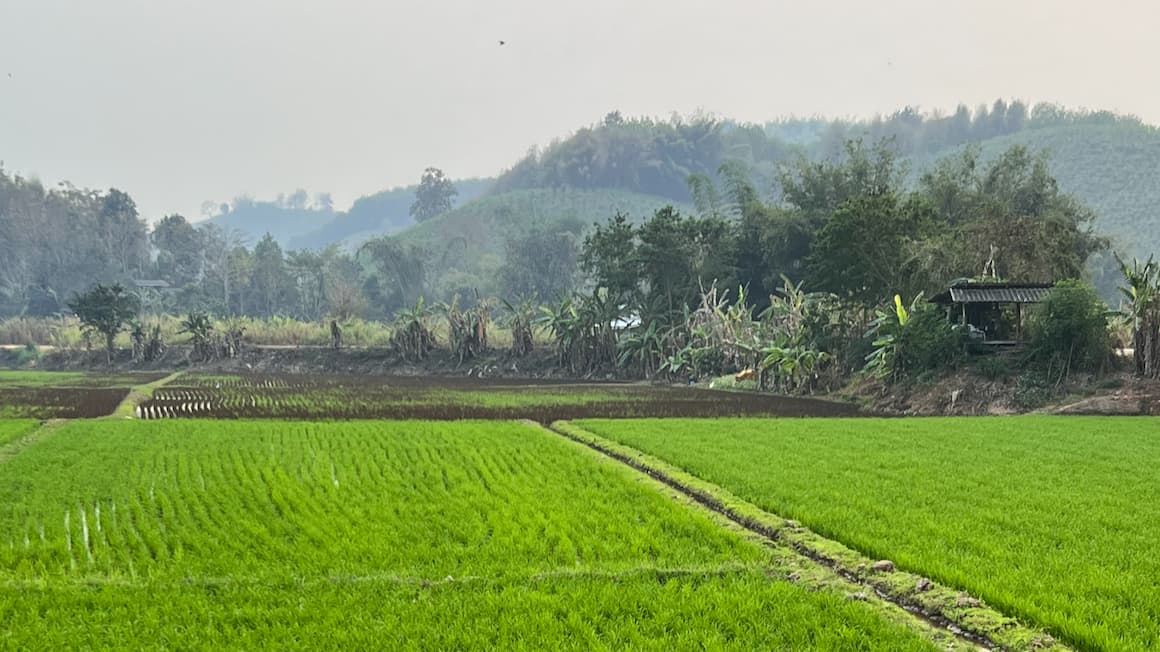
Photo: @amandaadraper
There are still some islands that feel wild. Even in the south, you can escape the usual circuit. Islands like Koh Tarutao and Koh Phayam are laid-back, quiet, and perfect if you want quiet beaches. The Similan Islands and other marine parks offer incredible diving and snorkelling far from the party boats.
If you want to travel off the beaten path, you simply have to avoid the tourists and sacrifice a few modern comforts 😉
Top Things to Do in Thailand
There are sooooo many awesome things to do in Thailand, and you won’t fit them into a single trip! But I’ve put together a best-of list that will inevitably ruffle some feathers, but this is a good start if you’re looking for some of the best things to do in Thailand:
1. Go Snorkelling or Scuba Diving
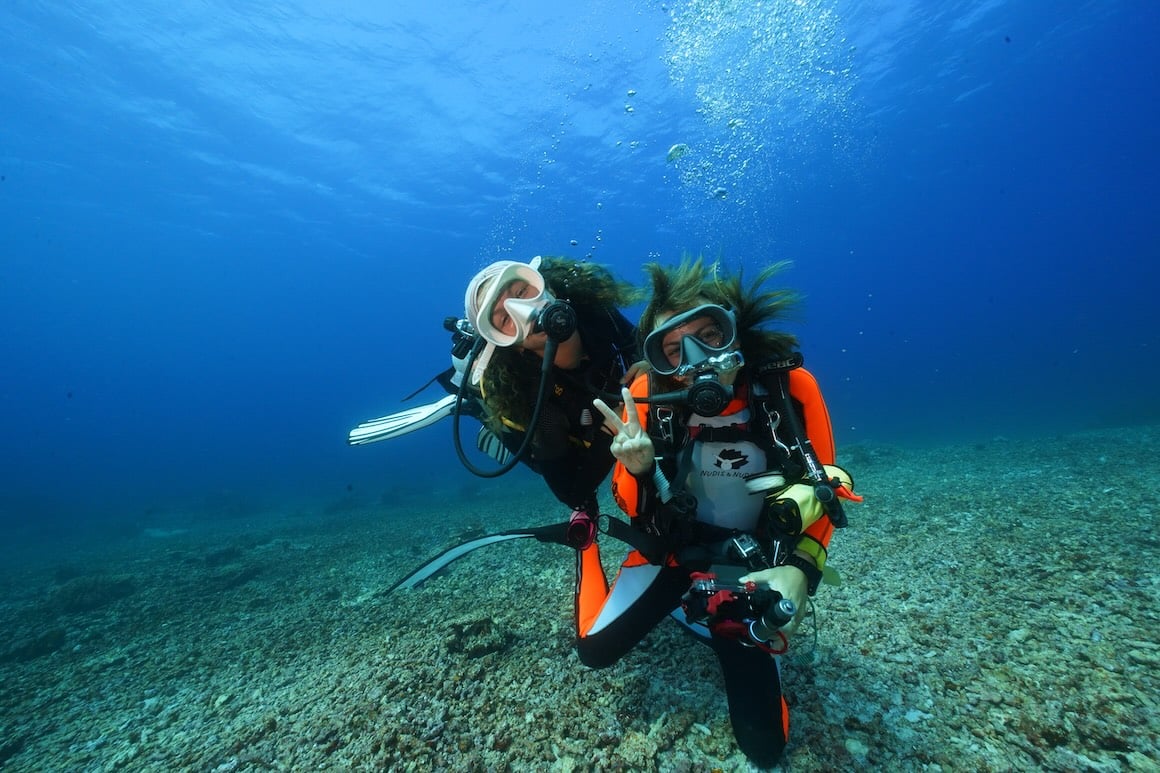
Photo: @audyscala
Thailand has some of the world’s best snorkelling and scuba diving venues in the region (the Similan Islands are out of this world). The problem is, the word is out. Millions of tourists flock to Thailand every year to enjoy the wonderful marine world the country has to offer.
You can get your diving certification in Koh Tao or Koh Samui, but it’s the other islands that take the cake when it comes to the best diving. Anywhere in the Andaman Sea is going to put on a delightful show for you. The soft corals are glorious here, as are the multitude of sea life they attract.
Koh Lanta and Koh Phi Phi islands give you a good chance of swimming with manta rays, while the more offbeat Surin Islands give you a better opportunity for swimming with whale sharks. The more offbeat islands, like the Surins or Similans, are best explored by liveaboard. Because, unless you have your own boat, being on a liveaboard is the only way to get out here!
2. Go Island-Hopping
Photo: @danielle_wyatt
Choose your islands: The Gulf (Koh Samui, Koh Phangan, Koh Tao), The Andaman Sea (Phuket, Koh Phi Phi, Koh Lanta), or Eastern Seaboard near Cambodia (Koh Chang, Koh Mak, Koh Kood). Each of these regions has ample smaller islands to explore, too. Check out the ferry timetables and spend your days hopping between the different islands.
Getting between each set of islands takes a little more planning, as you’ll have to travel overland. But if you’ve got time, you should 100% see them all.
3. Go Jungle Trekking
There’s incredible jungle trekking in Northern Thailand. The landscapes change fast once you’re away from the towns. Rice terraces, hill-tribe villages, bamboo forests, and epic ridgelines. Chiang Mai and Chiang Rai are the two main hubs, with Chiang Rai offering a more chilled-out base and some genuinely great hostels in the city centre.
Some of my favourite hikes are:
- Mae Hong Son Loop (multi-day, flexible): Not a single trail but a region full of treks! Great for guided multi-day hikes. This is also a popular motorbike loop!
- Doi Inthanon National Park (Chiang Mai): Home to Thailand’s highest peak. The Kew Mae Pan Nature Trail is the standout.
- Chiang Dao – Doi Luang Chiang Dao: A challenging but rewarding summit hike with limestone peaks and sunrise views. Usually done as an overnight with a guide.
- Phu Chi Fa (Chiang Rai): A sunrise hike above the clouds on the Laos border. Short but spectacular.
- Doi Mae Salong (Chiang Rai) Rolling hills, tea plantations. More cultural than hardcore.
- Doi Suthep-Pui National Park (Chiang Mai): Easy access from the city. Trails like Monk’s Trail and Doi Pui Summit give you jungle, temples, and epiccc viewpoints.
4. Explore Thailand’s Temples
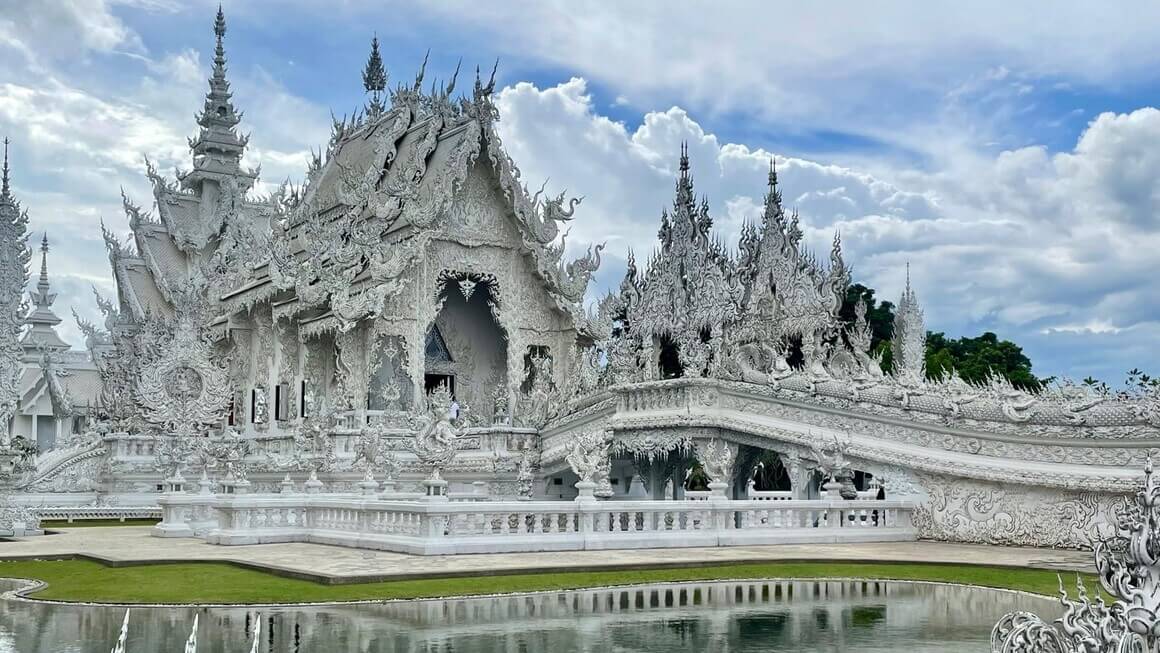
Photo: @danielle_wyatt
Temple hopping is one of the easiest ways to really get under the hood and to understand Thailand’s culture. It’s here that you’ll get to experience the essence of Thai culture: the architecture, the rituals, the colours, the incense and the monks in their saffron robes. Even if you’re not usually a “temple person,” you can’t miss Thailand’s glittering gold stupas or the white-on-white masterpiece.
The key is to pace yourself (temple fatigue is real). As they say, temples do start to all look the same after a while. So, pick the best ones and skip the rest.
Which are the best ones, I hear you ask? Well, these are my favs:
- Wat Pho (Bangkok): Home of the Reclining Buddha and traditional Thai massage.
- Wat Arun (Bangkok): Riverside temple with sunset views.
- Wat Phra That Doi Suthep (Chiang Mai): Hilltop temple overlooking the whole city.
- Wat Rong Khun – The White Temple (Chiang Rai): Surreal, and unlike anything else in Thailand.
- Wat Mahathat (Ayutthaya): Famous for the Buddha head entwined in tree roots.
5. Chow Down on Amazing Street Food
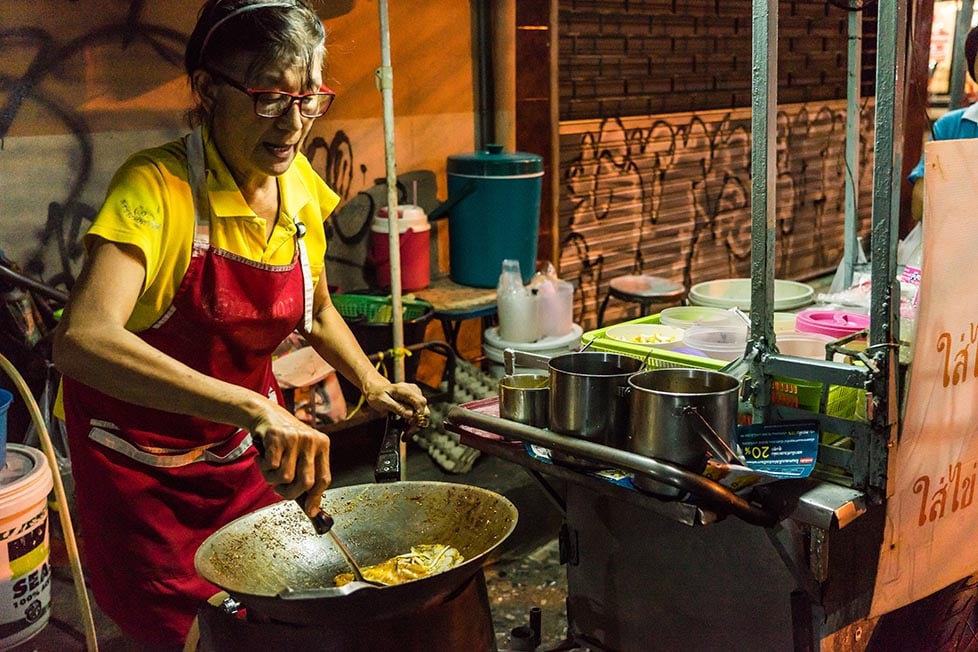
Image: Nic Hilditch-Short
Dude. Duuuuuuuuuuude, Thai food probably ranks as my favourite food in the whole world. It’s spicy in a way that kind of knocks you on your ass, but goddamn it’s so flavoursome. There’s a huge variety of types of food, too, but all of it focuses on fresh ingredients.
So not only are papaya salads and tom yum soups delicious, but they’re also available from every street cart. The street food in Thailand is cheap and off-the-charts delectable. Eat your way through this country’s pure goodness.
6. See Some Elephants ETHICALLY
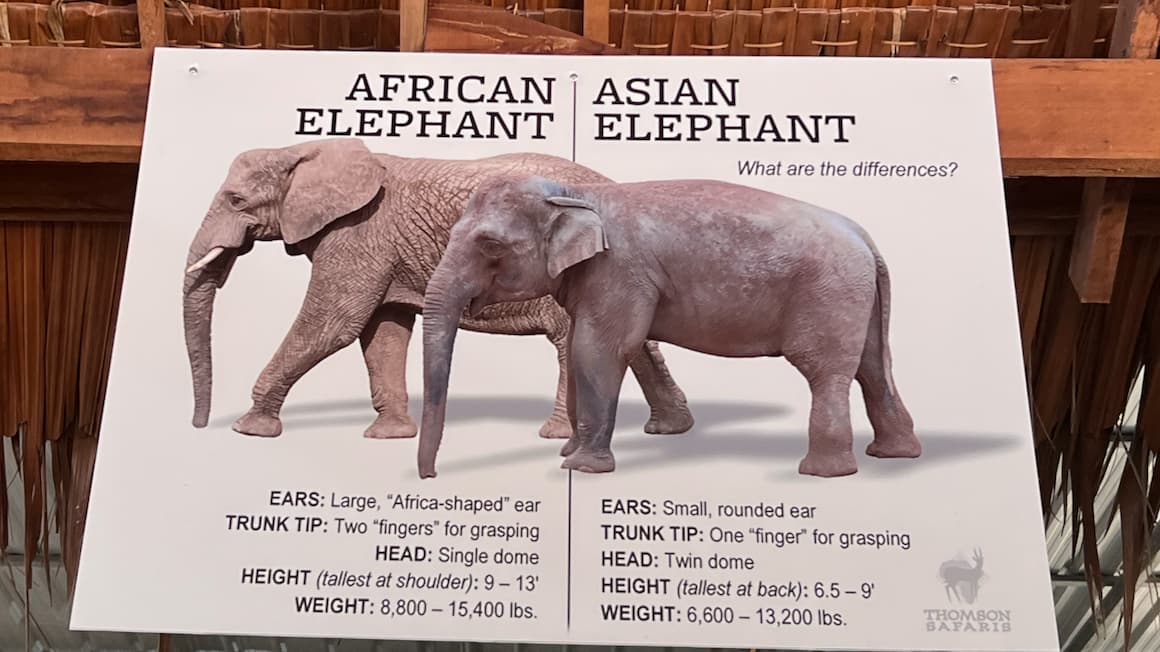
Photo: @amandaadraper
Look, we all adore elephants, but the sad truth is that not everywhere you go backpacking in Thailand will have the most upstanding treatment of the adorable fellows. If you want to see elephants in Thailand, do your research and find an ethical elephant sanctuary.
At the end of the day, I really don’t think that riding elephants can ever be ethical, but that doesn’t mean you can’t try and spot them in the wild. You can even go to the national parks and simply watch them in their natural habitat.
7. Party Like a Machine!
Probably the most popular backpacker party in the world is the Full Moon Party in Koh Phangan. 20,000 people partying until sunrise on Haat Rin Beach, Koh Phangan. It is extremely touristy, boozy, and the music is shit, but it is still worth a look.
I personally prefer the half-moon and Shiva Moon parties, as there are not quite so many people and so prices do not skyrocket as much. Suffice to say, you’ll find plenty of parties and nightlife in Koh Phangan that you dig, but you may just need to look outside the standards.
Option 3 is just getting fucked up partying in Bangkok… Now that I can get behind. If you’re looking for something a bit different, there are a bunch of other festivals in Thailand to consider.
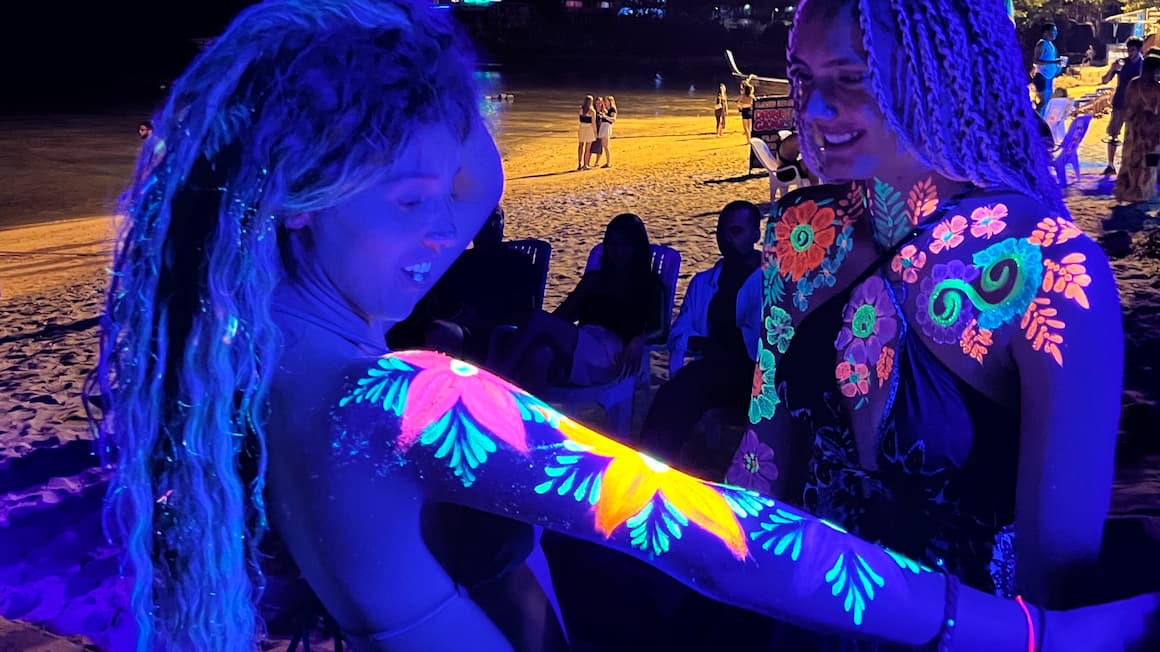
Photo: @amandaadraper
A Note on Sex, Drugs, and Rock ’n’ Roll in Thailand
Even though drugs are free-flowing in the half-moon and full-moon parties, Thailand has very strict laws against the possession of drugs, including imprisonment and the death penalty. Except weed that is! Drug tourism is now legally a thing in Thailand since it became the first country in Asia to legalise (and sell) cannabis in 2022.
Every now and again, unfortunate backpackers do get roofied, so be careful with your drinks and don’t accept random shit from strangers.
And, I’d be avoiding the elephant in the room if I didn’t talk about the sex industry in Thailand. Everything is cheap in Asia, including the services of sex workers. This has led to an industry in Southeast Asia that can be very ethically murky. While sex on the road is bound to happen, you can still be a respectful, good human about it. 🙂
Accommodation in Thailand
A huge pro about backpacking in Thailand is how easy accommodation is. You can find everything from party hostels to quiet guesthouses to fancy hotels. The hostels in Thailand are backpacker Meccas.
When you need a breather from hostel-livin’ (we’ve all been there), the guesthouses and budget hotels can give you privacy without blowing your budget. Long-term travellers often settle into Airbnbs for a bit of routine and a kitchen; they often offer discounts when booking for 7+ days.
You don’t need to book too far in advance unless you’re travelling in peak season (Dec-Feb), hitting the Full Moon Party, or eyeing up a famous hostel that fills up quickly. Otherwise, Thailand truly rewards spontaneity!
Best Places to Stay in Thailand
| Destination | Why Visit? | Best Hostel | Best Private Stay |
|---|---|---|---|
| Bangkok | Bangkok is the beating heart of Thailand. This is the city of saints and sinners and it’s sure to leave you with some stories to tell! | Here Hostel | Phranakorn-Nornlen |
| Chiang Mai | Chiang Mai is the gateway to the north of the country. It’s fairly laid back with plenty of adventure to be found nearby. Digital nomads will love the community here too. | Family Home Chiang Mai | The Opium Chiang Mai |
| Pai | Come eat some mushies, trip a little, and relax a lot. Pai is waiting to welcome you home. | Revolution Hostel Pai | Baan Aew Pai |
| Phuket | Phuket is Thailand’s big, bold island. It’s busy, but it’s also one of the easiest places to base yourself for island?hopping and day trips. | Black Planther Hostel | Shunli Hotel – SHA Extra Plus |
| Krabi | Krabi is all about scenery. It’s a great launchpad for Railay, island tours, and nature (with less chaos). | Pak-Up Hostel | Phu Pha Aonang Resort & Spa |
| Koh Tao | Koh Tao is the diver’s island. Cheap courses, clear water, and a social backpacker scene that makes it easy to meet people. | “Savage Hostel Koh Tao | Greenery Resort Koh Tao |
| Koh Phangan | Koh Phangan is two islands in one: the Full Moon party madness on one side, and chilled beaches, yoga, and cafés on the other. | Hideout Hostel | Sea Escapes Resort |
| Koh Samui | Oh Koh Samui! The diving, the island life, and the cheap beers all make this a pretty special spot to get stuck it. | Samui Backpacker Hostel | The Mud – Eco Hotel |
| Koh Lanta | Koh Lanta is the mellow one. Long beaches, slow days, and a relaxed vibe that pulls people in for longer than planned. | Blanco Hostel | Queen Lanta Resort |
| Koh Phi Phi | Koh Phi Phi is Thailand’s wild child: loud, sweaty, social, and ridiculously beautiful. Come for the parties, stay for the cliffs, bays, and boat trips. | The One Hostel | Chaokoh Phi Phi Island |
| Koh Chang | Koh Chang is the jungly, underrated island near Cambodia. Cheaper, quieter, and far less polished than the southern islands. | Pajamas Koh Chang | Oasis Koh Chang |
Backpacking Costs in Thailand
Although certainly still cheap in the global sense, compared to other countries in Southeast Asia, visiting Thailand is more expensive. A beer costs around $3, and a bed in a hostel will set you back between $10 to$15. Without too much effort, you can keep your daily costs in Thailand under $30 USD, depending on where you visit.
A lot of attractions in Thailand are cheap or even free, and transport is not too expensive either. Some of the bigger activities, like SCUBA diving or trekking, will be more expensive, for obvious reasons.
Daily Budget Ranges
| Area | Dorm bed | Food/day | Local transit/day | Intercity hop ?3h | Activities/day | Daily total (Shoestring) | Daily total (Mid?range) |
|---|---|---|---|---|---|---|---|
| Bangkok | 10–18 | 10–15 | 4–8 | 8–12 | 5–15 | 30–45 | 55–85 |
| Chiang Mai | 8–14 | 8–12 | 3–6 | 6–10 | 5–12 | 25–40 | 45–70 |
| Pai | 7–12 | 8–12 | 3–5 | 6–10 | 5–10 | 23–35 | 40–60 |
| Phuket | 12–20 | 12–18 | 6–10 | 10–15 | 8–20 | 40–55 | 70–110 |
| Krabi | 10–16 | 10–15 | 5–8 | 8–12 | 8–18 | 33–48 | 60–95 |
| Koh Tao | 10–18 | 10–15 | 5–8 | 10–15 | 10–25 (diving) | 35–55 | 70–120 |
| Koh Phangan | 10–18 | 10–15 | 5–8 | 10–15 | 8–20 | 35–55 | 60–100 |
| Koh Samui | 12–20 | 12–18 | 6–10 | 10–15 | 8–20 | 40–60 | 70–110 |
| Koh Lanta | 8–15 | 10–15 | 5–8 | 8–12 | 5–15 | 30–45 | 55–85 |
| Koh Phi Phi | 14–22 | 12–18 | 4–8 (walkable) | 10–15 | 10–25 | 40–60 | 70–120 |
| Koh Chang | 8–14 | 8–12 | 4–7 | 8–12 | 5–12 | 28–40 | 50–75 |
Thailand can be travelled on the smell of an oily rag, but only if done right. A few clever manoeuvres can stretch your money more than you realise. Make sure you stick to eating local food, using buses, and staying in budget-friendly hostels/ guesthouses.
If you’re really shoestringing it, Thailand is also great for camping, hitchhiking, and even cooking your own meals if you’re carrying a small stove. Couchsurfing exists, and can save you a chunk in the big cities, but it doesn’t really exist outside of them.
Prices jump around depending on the season, island, and transport. Ferries are the biggest budget-killer, and islands always cost more than the mainland. You can expect higher prices in December-February and around Full Moon Party weeks.
You’ll often overspend without even realising on taxis, beach bars – aka beer!, diving courses, and 7/11 snacks. Meanwhile, some parts of Thailand are surprisingly cheap, especially Isan, where food, transport, and accommodation can cost half of what you’d pay in the south.
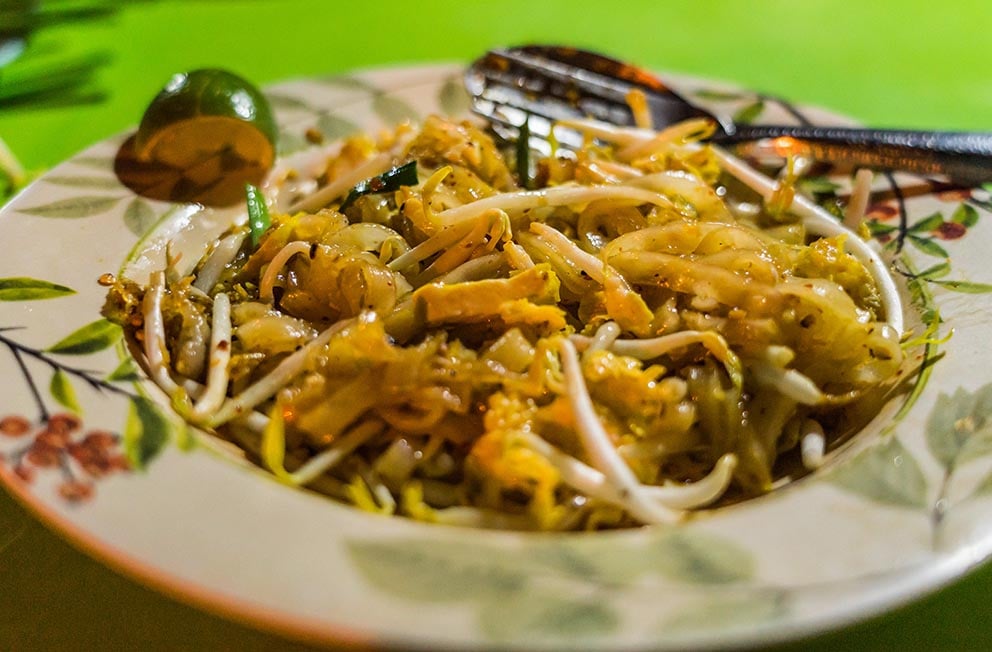
Image: Nic Hilditch-Short
How to Save Money in Thailand
To keep your spending to an absolute minimum whilst travelling in Thailand, I recommend sticking to the basic rules of budget backpacking…
- Haggle: Haggle your holy heart out! But keep it respectful, keep in mind when you’re haggling for $1. It often means more to them than to you.
- Keep it Local: Where possible, drink the local beer, eat the local delicacies, and for day trips, try to use local companies. Plus, supporting local businesses to thrive is awesome!
- Hitchhike: Surprisingly easy on the mainland and a fun way to cut transport costs.
- Avoid Western cravings: Western cafes, imported snacks, and cocktails drain your budget crazy fast.
- Travel slow: Fewer ferries, fewer flights, fewer transfers, and WAY less money burned.
- Drink less beer: THIS WAS MY BIGGEST SAVER. It’s hard to say no to a cold bevvy on the beach, but 3+ a day can add up more than you realise. A beer costs the same as a local meal in Thailand.
- Camp: With plenty of gorgeous natural places to camp, Thailand is an excellent place to take a tent.
- Cook your own food: I took a backpacking gas cooker with me to camp in Thailand, but you can also use the kitchens in hostels/ Airbnbs. If you think it’s cheap to eat out, imagine how cheap it is to cook at home. Thai ingredients are cheap, Western ones aren’t.
- Limited the number of ATM withdrawals: Each time you use an ATM, you are charged about $4. Take out more cash each time so that you reduce withdrawals. BUT hide your stash!!
When to Travel to Thailand
So, when is the best time to travel to Thailand? The peak tourist season in Thailand is from November to February. This is when the weather is beautiful across the country, but there’s a high chance you’ll run into A LOT of other tourists.
If you want to hit the beaches, the best time to visit both the Andaman Coast and the Gulf is January – March. Over these months, it’s a pretty safe bet that you’ll be greeted with beautifully calm seas, sunny days and good visibility!
It is best to avoid the northern areas of Thailand from February to April as the burning season starts and the mountains (and cities) will slowly be covered in smoke. Air quality drops fast, views disappear, and trekking becomes pretty unpleasant.
Northern Thailand can also experience heavy flooding during the monsoon, especially from July to October. It doesn’t usually shut travel down completely, but it can slow things down for sure, rerouting buses, or making trails muddy and unsafe. Always check the conditions!
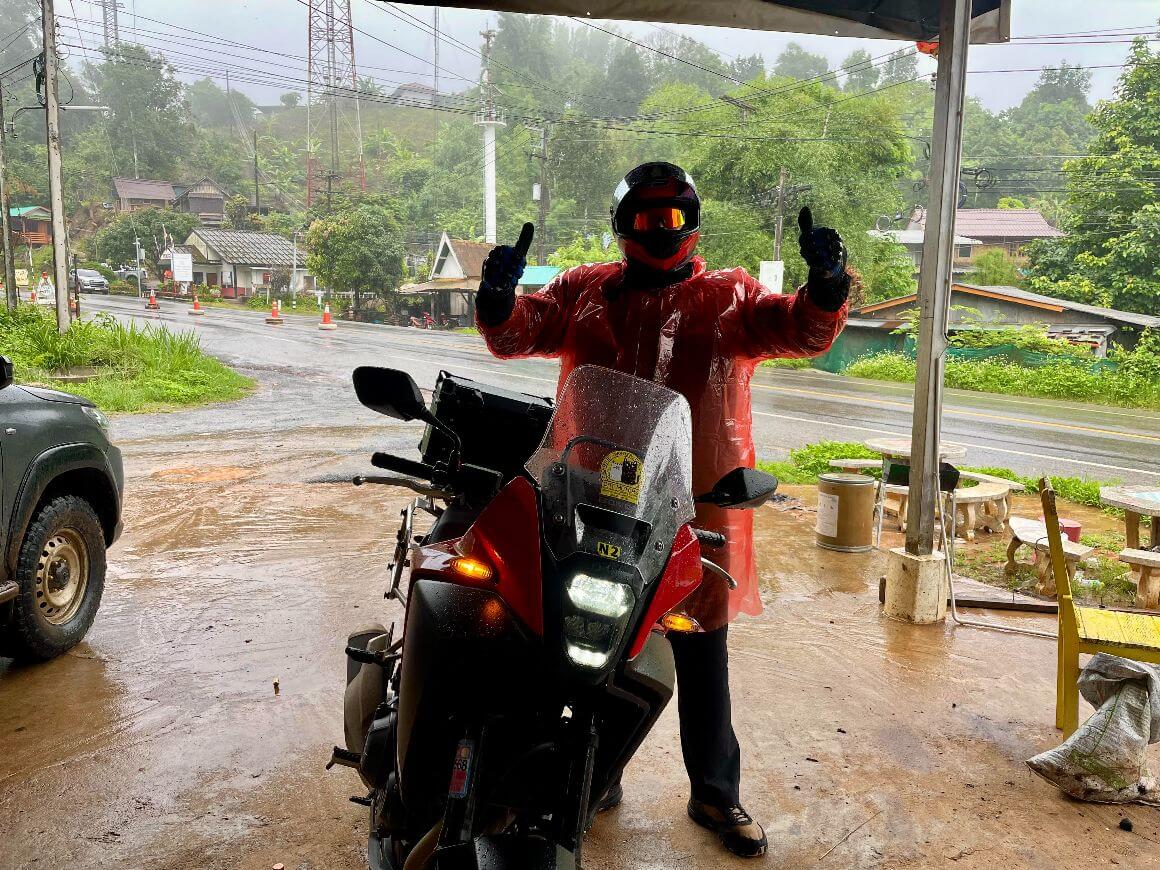
Photo: @danielle_wyatt
What to Pack for Thailand
Check out our guide on what to pack for Thailand for a big list. However, here are four key things I never go travelling without, especially if staying in hostels:

Ear Plugs
Snoring dorm-mates can ruin your nights rest and seriously damage the hostel experience. This is why I always travel with a pack of decent ear plugs.
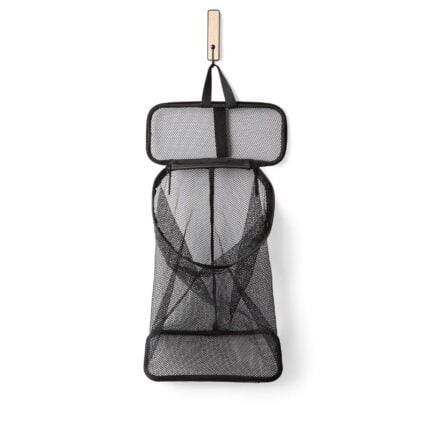
Hanging Laundry Bag
Trust us, this is an absolute game changer. Super compact, a hanging mesh laundry bag stops your dirty clothes from stinking, you don’t know how much you need one of these… so just get it, thank us later.
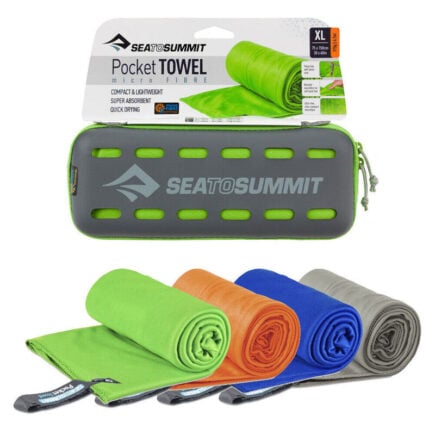
Sea To Summit Micro Towel
Hostel towels are scummy and take forever to dry. Microfibre towels dry quickly, are compact, lightweight, and can be used as a blanket or yoga mat if need be.
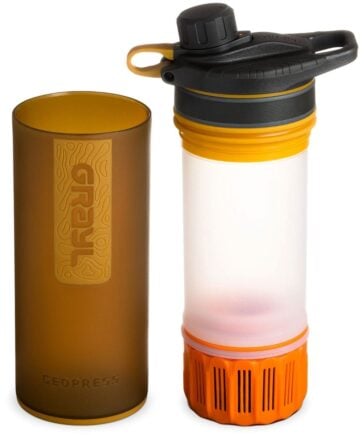
Grayl Geopress Water Bottle
Always travel with a water bottle! They save you money and reduce your plastic footprint on our planet. The Grayl Geopress acts as a purifier AND temperature regulator. Boom!
Staying Safe in Thailand
Honestly, Thailand is pretty safe to visit, and the people are keen on helping you out! Thailand has some pretty wild parties, though, and it’s important to be aware of your surroundings and be careful with drugs and alcohol when you’re out partying.
There are a few well-used scams in Thailand that you should be aware of:
- Don’t go on any “cheap tuk-tuk tour”. They will no doubt take you on a trip to see over-priced, low-quality gems or tailors that they are making a cut on.
- “Closed Attraction”. This one is similar. A friendly stranger will say that the attraction that you want to see is closed and instead, take you to the gem/ tailors. Make sure you check opening times online.
- Scooter “damage”. This one is a classic to be aware of all over the world. They will accuse you of causing damage that was already there and demand you pay for it. Take plenty of photos before you take the rental, and for the love of god, don’t leave your passport as a deposit. This can also happen with jet skis, surfboards, etc.
Then there is motorbiking…. Firstly, wear a helmet when you hop on a motorbike, ALWAYS. Despite being an experienced driver, I’ve had a total of 3 crashes in Southeast Asia over the last 10 years. On one occasion, I wasn’t wearing a helmet, and I split my head open and had to go to the hospital. It was an expensive mistake.
Being smart and trusting your gut are the keys to staying safe in Thailand. Look, if you follow standard backpacking safety tips, you should be fine.
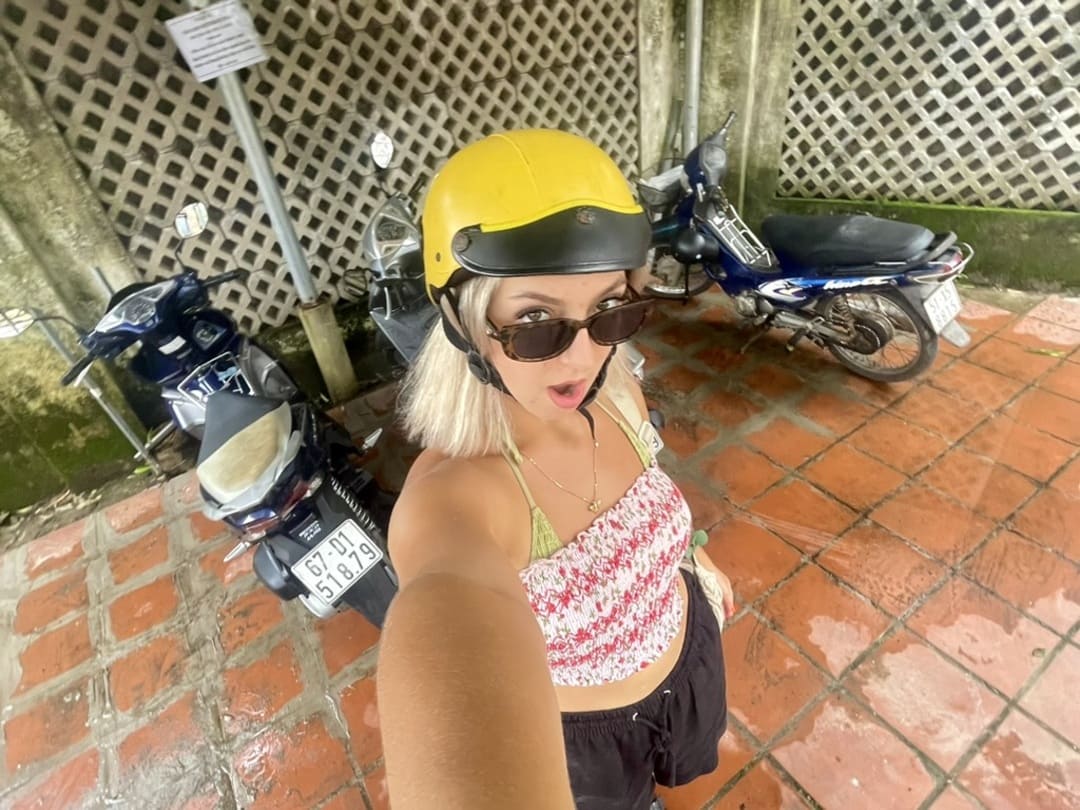
Photo: @taya.travels
Travel Insurance for Thailand
Travelling without insurance would be risky, so do consider getting good backpacker insurance sorted before you head off on an adventure. Make sure your policy covers what you’re going to be doing!
Sort out your insurance before you go. There are several good options, but our overall pick is SafetyWing. Most of the Broke Backpacker team has used it at one point or another, and we’ve filed claims for rabies jabs in Bali, a hospital stay in Mexico, and a clinic visit for a stomach bug that wouldn’t quit. All paid out.
It’s month-to-month, no lock-in, no itinerary required, and you can buy it after you’ve already left. A little over $2 a day if you’re under 40.
New SafetyWing customers: use code BROKEBACKPACKER for 8 free weeks of electronics theft coverage. You have to scroll down and click the pink camera on their landing page to enter it, and you have to do it before creating your account.
Click here to find the ideal policy for you.
How to Get Into Thailand
The easiest place to fly into is Bangkok, which has two major international airports and is a starting point for many backpackers coming to Southeast Asia. You can also fly directly into Chiang Mai, Krabi, Phuket, and Koh Samui, though these routes are more common from within Asia rather than from Europe or the US.
Thailand can also be entered overland from Malaysia, Cambodia, Laos, and Myanmar. The slow-boat from Laos and Northern Thailand along the Mekong are still running and are a popular backpacker option.
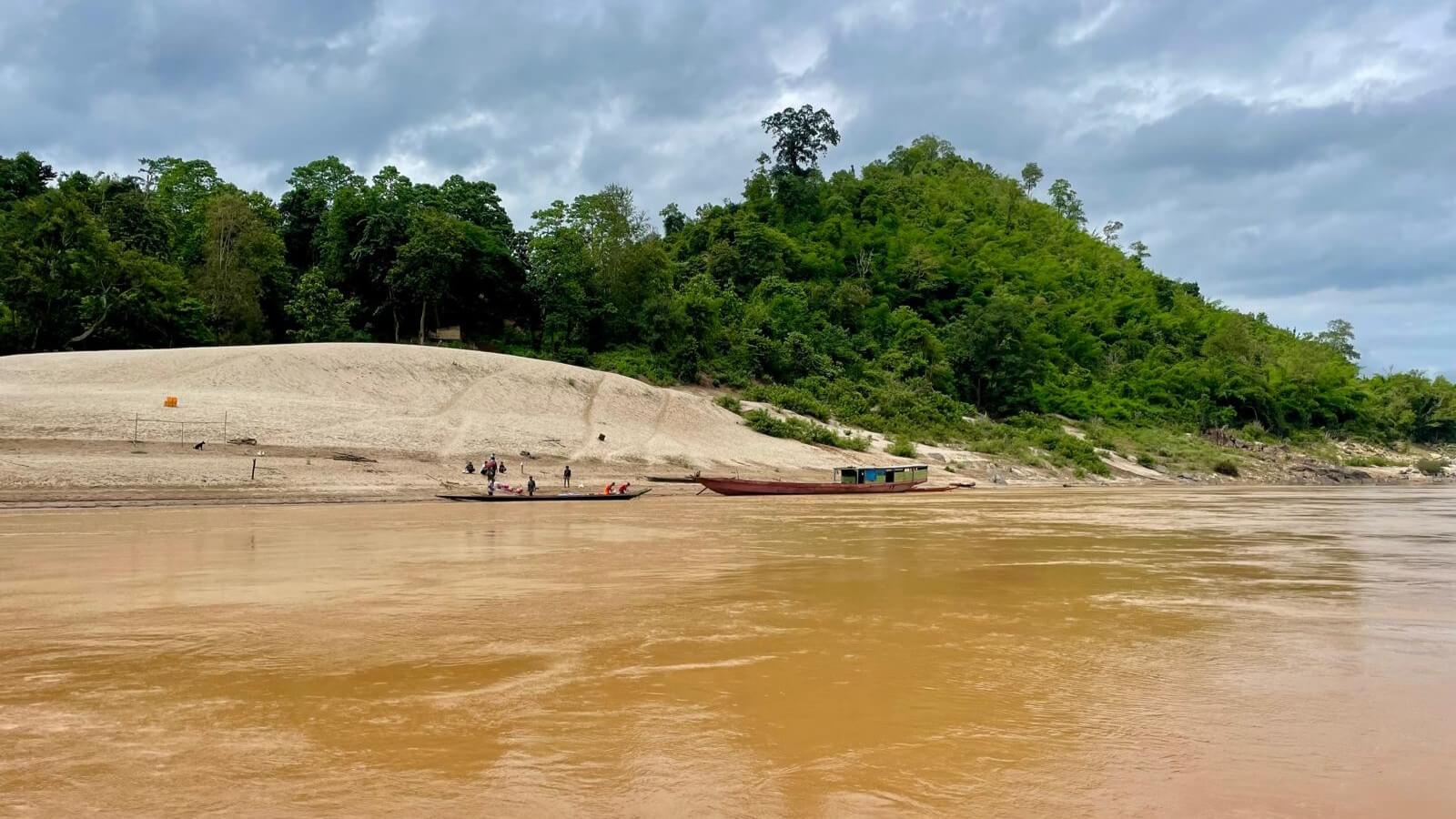
Photo: @danielle_wyatt
Entry Requirements for Thailand
- Most Western passport holders now receive a 60-day visa exemption on arrival. This applies whether you enter by air or land. You can extend this exemption once inside Thailand for an additional 30 days for a fee (around USD $60).
- The Thailand Digital Arrival Card (TDAC) is mandatory for all foreign visitors and must be completed before arrival. Travellers may be asked for:
- Proof of onward travel
- 6 months passport validity
- Proof of funds (rarely checked, but technically it’s required)
- Visa on Arrival still exists for certain nationalities and remains 15 days, but this applies only to countries not eligible for the 60-day exemption.
A note for long-term travellers: Immigration is applying stricter checks to frequent border-runners who appear to be living in Thailand on repeated tourist entries. If your nationality requires a visa or you want a longer stay (e.g., education, digital nomad, retirement), it’s still fairly straightforward to apply at a Thai embassy at home or abroad.
How to Get Around Thailand
Thailand is BIG, but getting around is easy. If you’re short on time, internal flights can save you hours- AirAsia and other cheap airlines are really affordable if you book early. Trains can be scenic but much slower and not the norm for backpackers, while buses are usually faster (but still pretty long) and more reliable for long distances.
It’s common for backpackers to explore by motorbike, too. However, this is usually within a destination, not between. Roads are well-marked in Thai and English, and if you’re carrying a tent, you can sleep almost anywhere!
In summary, these are your main transport options to get around Thailand:
- Internal flights: Fastest option. Book early for cheap fares.
- Buses: Reliable, cheap, and often faster than trains.
- Trains: Scenic but slow; good for overnight routes.
- Overnight buses/trains: Save time and a night’s accommodation. A classic backpacker trick.
- Motorbikes: Great for exploring; roads are fairly well-maintained and sign-posted.
- Grab (aka Thailand’s Uber): Best for city travel with fixed prices, so no worry about taxi-metre scams.
Hitchhiking in Thailand
Thailand is a great country to hitchhike in! As far as hitching goes, Thailand is a great place in Asia for beginner hitchhikers earning their stripes. But you have to be persistent and make sure the locals understand where you need to go, or you will end up getting dropped off at a bus station.
Hitchhiking in Thailand is pretty safe and easy; just find a good spot where the traffic is nice and slow and stick out your thumb. If you are backpacking in Thailand on your own, there is a good chance you can hitch a ride with motorbike riders.
Photo: @amandaadraper
Taking an Organised Tour in Thailand
While Thailand is relatively easy to backpack under your own volition, it remains a very popular country to explore by way of joining an organised tour. Organised tours are particularly valuable to those who are maybe inexperienced travellers, are short on time, or solo travellers in Thailand who would prefer to join a ready-made, friendly group of like-minded folk.
If you are looking to backpack around Thailand but don’t have the time to plan things yourself, then maybe take a look at Feel Free Travel, who are among the best providers of organised Thailand tours. Their flexible payment options, with deposits starting at under $2, make them every broke backpacker’s dream.
Their South to North: 15-day Thailand Group Tour is very much a ‘best of Thailand’ in a well-thought-out 2-week itinerary. You get experience a perfect balance of culture, adventure, chill time and nightlife.
Working in Thailand
LOADS of digital nomads have based themselves in Thailand, and there are big communities spread throughout the country (according to recent digital nomad stats). You can thank Thailand’s low cost of living, combined with a relatively high standard of living, for this.
Chiang Mai is an extremely popular place and is not only one of the best places in Thailand for digital nomads but arguably all of Asia. Gatherings, like the Chiang Mai SEO Conference, happen every year, and these are great opportunities to network with other nomadies.
Some prefer to work from Bangkok or one of the more well-connected islands in the south, like Koh Samui. Honestly, though, just about any city in Thailand is a good place to base yourself if you’re a digital nomad.
The internet in Thailand has become increasingly more reliable and faster. You can get free wi-fi at most hostels, hotels, cafes, etc. In the cities, you’ll see that Thai people are always connected and on their phones. You can get a SIM card for data pretty cheaply.
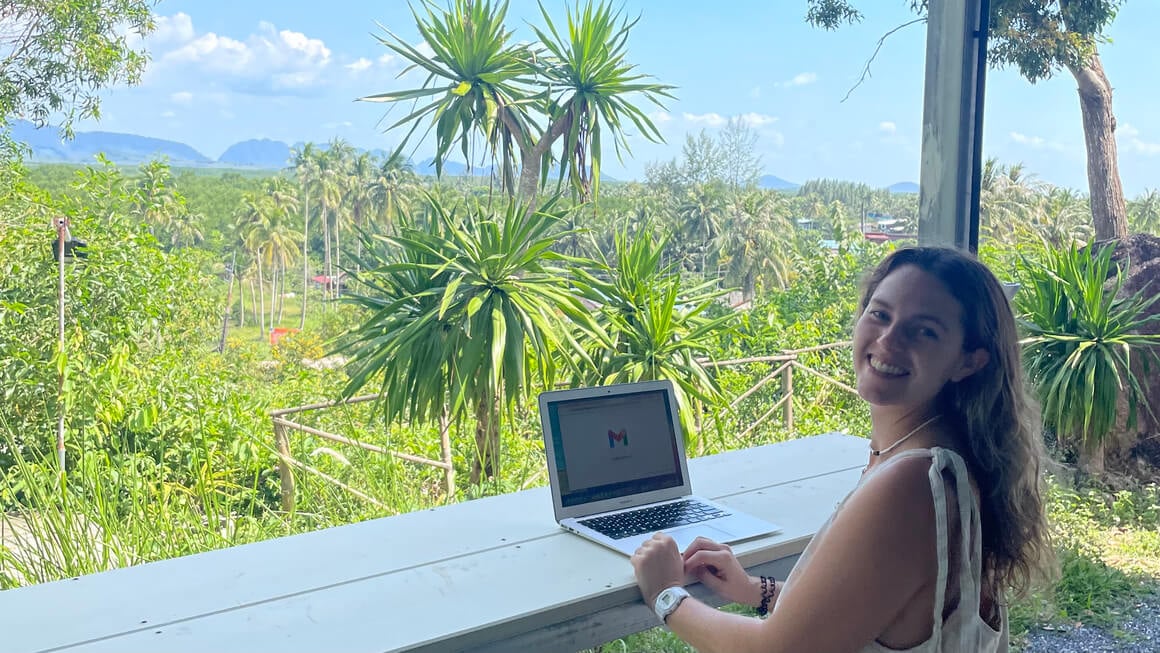
Photo: @danielle_wyatt

A new country, a new contract, a new piece of plastic – booooring. Instead, buy an eSIM!
GigSky eSIMs work just like an app: you download it, pick your plan, and BOOM! You’re connected the minute you land. It’s that easy.
Read about how eSIMs work or click below to see one of the top eSIM providers on the market and ditch the plastic.
Grab an eSIM!Thai Culture
The people in Thailand are some of the kindest and warmest people I have come across. The friendly aura of the Thai people is immediately noticed stepping off the plane, and despite Thailand being famous for its beaches and jungles, it’s the people I come back for.
Thailand is also one of the most welcoming countries in Asia for LGBTQ+ travellers. “Kathoey” or “Ladyboys” have long been part of Thai culture, and same-sex couples are widely accepted in daily life. Thai people widely accept transgender people, as well as same-sex couples.
The Buddhist culture in Thailand preaches non-violence and acceptance, so most of the time it’s extremely difficult to get Thai people visibly angry or upset. But don’t mistake this for them not being upset. Also, it’s frowned upon to get into loud disputes, so keep that in mind when you’re drinking. You don’t want to get carried away if you’re trying to start a life in Thailand.
Useful Travel Phrases for Thailand
While many Thais speak English in touristy areas, once you get off the beaten path, you’ll find almost no one speaks English. Even in popular cities, only basic English is spoken.
Knowing Thai travel phrases is one of the best pieces of advice I can give you to help you get around Thailand. But it’ll also help you connect with the culture!
- Hello – Sà-wàt-dee
- How are you? – Sà-baai dee mi
- Pleased to meet you – Yin dee têe dâi róo jàk
- Excuse me – Kor tôht
- Please – Kor …
- Cheers – Chon
- Crazy – Ding- dong! (Sounds adorable not offensive.)
- Son of a bitch – Ai hee-ah (Now that sounds more effective!)
- Ladyboy – Katoey (Very useful to know this in Bangkok!)
- No plastic bag – Mimi tihung phlastik
- No straw plastic please – Mimi fang pord
- No plastic cutlery please – Mimi mid phlastik pord
- Where’s the toilet? – Hông náam yòo n?i (crucial if you’re a lover of spicy South East Asian food)
- Yes – Chai
- No – Ma Chai
- Beer – Bia
- How much – Nee Tao Rai
What to Eat in Thailand
Thai food is honestly amazing. Their noodles and curries are full of flavour without being too heavy. They know how to cook something mouthwatering out of thin air. As well as tasting absolutely wonderful, Thai food is one of the healthiest foods in the world.
The thing about eating in Thailand is that it’s all done on the street. Everything you could possibly dream of can all be found as street food for a few bucks. Noodles, curries, grilled meats, fruit shakes – you name it!
Each region in Thailand has its own specialities. The food in the South is very different from the food in the North. Here are a few of my favourite regional dishes to try:
- Northern Thailand (Chiang Mai, Pai, Chiang Rai): Khao Soi: creamy curry noodle soup, Sai Ua: herby grilled sausage, Gaeng Hang Lay: Burmese-style pork curry.
- Isan / Northeast (Udon Thani, Khon Kaen, Nong Khai): Som Tam: spicy papaya salad, Larb: minced meat salad with herbs, Gai Yang: charcoal-grilled chicken and sticky rice with everything!!
- Central Thailand (Bangkok + surrounds): Pad Thai: the classic, Boat noodles: rich broth with beef or pork (ask what it’s made from after you try it), Khao Man Gai: Thai chicken rice.
- Southern Thailand (Phuket, Krabi, the islands): Massaman curry: mild, rich, and addictive, Roti with curry: a southern staple and fresh seafood grilled right on the beach
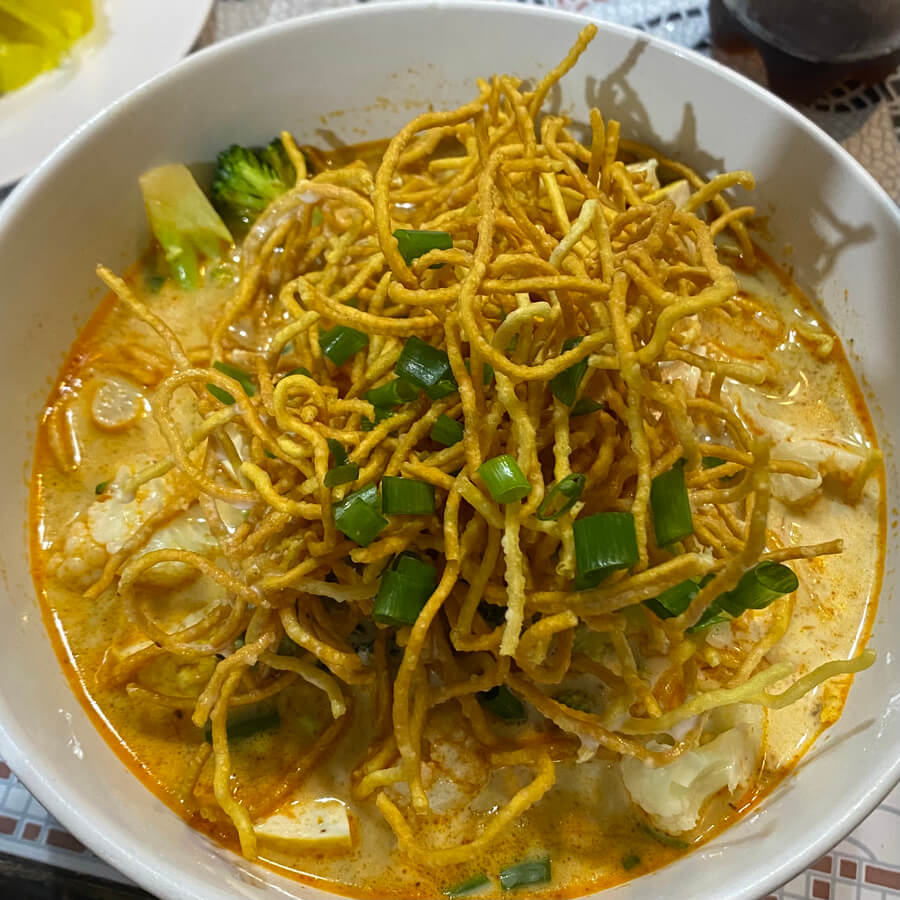
Photo: @danielle_wyatt
FAQs About Backpacking Thailand
You’ve got questions about backpacking in Thailand, and we’ve got answers! Before you head off, ask your questions and do your research to have a more enjoyable trip once you arrive.
What’s New for Backpacking in Thailand
Thailand has made a few changes recently, and it’s worth knowing the basics before you touch down in da Kingdom itself. The good news: most of it will make your life easier!
Firstly, let’s touch on the visas & arrival updates:
- Most travellers now get a 60-day visa exemption on arrival.
- You can extend it once for 30 more days at any immigration office for 1,900 THB, giving you up to 90 days without a formal visa (niiiice!)
- Eligibility details are listed on the Thai Ministry of Foreign Affairs website; check it out.
- The old paper TM6 cards are gone. You now fill out the Thailand Digital Arrival Card (TDAC) online within 72 hours before arrival. It’s free and gives you a QR code to show at immigration.
- There’s now a small tourist entry fee: 300 THB by air, 150 THB by land/sea, which includes basic accident insurance.
If you’re planning border runs, keep in mind that visa runs are capped. You’re generally allowed only two visa-exempt land entries per calendar year, and immigration is getting stricter with people doing multiple border runs. If you want to stay longer, there are other visas (like Digital Nomad or Education) that you can apply for that’ll make your life easier.
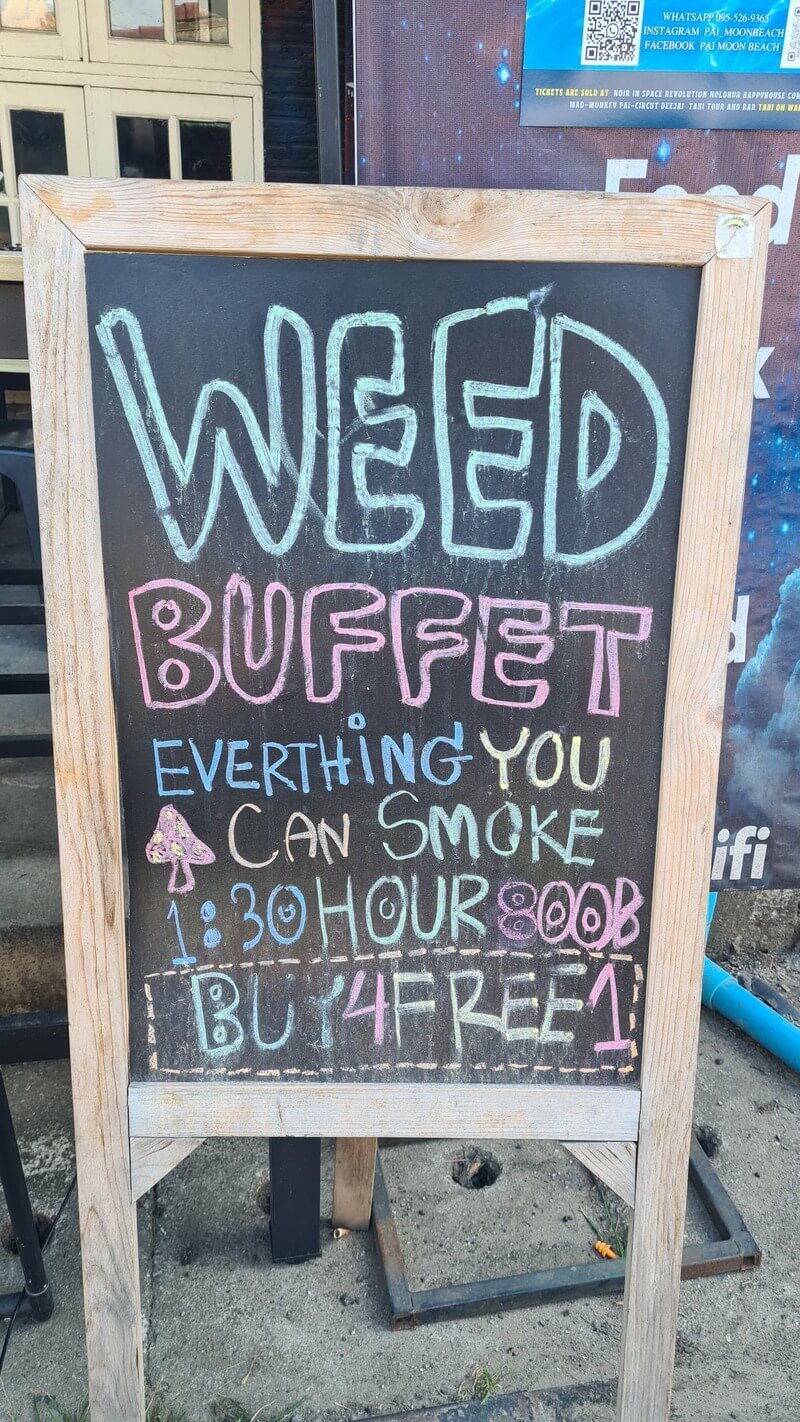
Photo: @Lauramcblonde
Then, we all know why many backpackers love Thailand… weed has been legalised, BUT things are cramping down.
Here is the latest on cannabis, vaping & smoking:
- Cannabis laws have sadly tightened again. Recreational use is technically prohibited, and buying cannabis flower now requires a medical reason or prescription. Clinics can issue these, but the rules are enforced more seriously than before. Cry.
- Public smoking is a big no-go and can lead to heavy fines. Thai Ministry of Public Health. has the latest updates on this. (HOWEVER, I still saw plenty of people smoking on the islands… so do with that what you will)
- Vaping is still fully illegal, and tourists are regularly fined for carrying e-cigarettes. However, again, there are some dodgy dealers around, and you’ll deffo see people puffing in hostels. But technically, they are a no-go.
When it comes to transport & payments, here are the key updates:
- Online taxi services aren’t just Grab anymore. Bolt and Indrive have become huge and are often cheaper (broke backpackers, it’ll be worth comparing prices before booking!).
- Thailand is moving quickly toward QR-based payments through PromptPay, but this is mostly for locals. But more cafes, hostels, and shops now accept Apple Pay and contactless cards. Horaay!
- You’ll still want mainly cash for street food, markets, islands, and rural areas, just not as much as before.
- Bangkok’s long-distance trains now run from the new Krung Thep Aphiwat Central Terminal, which has replaced most services that used to leave from Hua Lamphong.

Our GREATEST Travel Secrets…
Pop your email here & get the original Broke Backpacker Bible for FREE.
What I’d Do Differently Next Time
Looking back, there are definitely things I’d tweak next time I visit. Firstly, I’d give myself permission to slow down in the places that I connect to the most and not feel like I have to rush off to the next. I’d also be smarter with my budget; beers and 7/11 splurges add up!
Slowing down also helps with the budget as transport costs compound quick. Lastly, I’d get off the beaten path. Go to smaller islands like Koh Jum or Koh Muk and cities like Hua Hin. This is where the true magic happens!
Whatever you choose to do when you go backpacking in Thailand, know that you chose to do it. This is the country that many cut their backpacking teeth on – or even level up their digital nomad game.
Either way, you write your own manifesto and create one hell of a journey for yourself.
- Check out all the best places to visit in Thailand for planning the most dope trip.
- We’ve also got where to stay in Thailand covered with our epic guide.
- You’ll also wanna stay in the best hostels in Thailand too!
- Our ultimate Thailand packing list has all the info you’ll ever need.
- Sort out your travel insurance before your trip.
- Get your international SIM card organised to avoid hassle.
- Thailand is just the start of your awesome backpacking trip around Southeast Asia.